BASIC CTG TEACHING SALSO Sarawak General Hospital
BASELINE HEART RATE mean level of FHR when stable, acceleration and deceleration being absent Normal = 110 – 160 bpm
ACCELERATION A transient increase in FHR of 15 bpm or more and lasting for 15 seconds or more
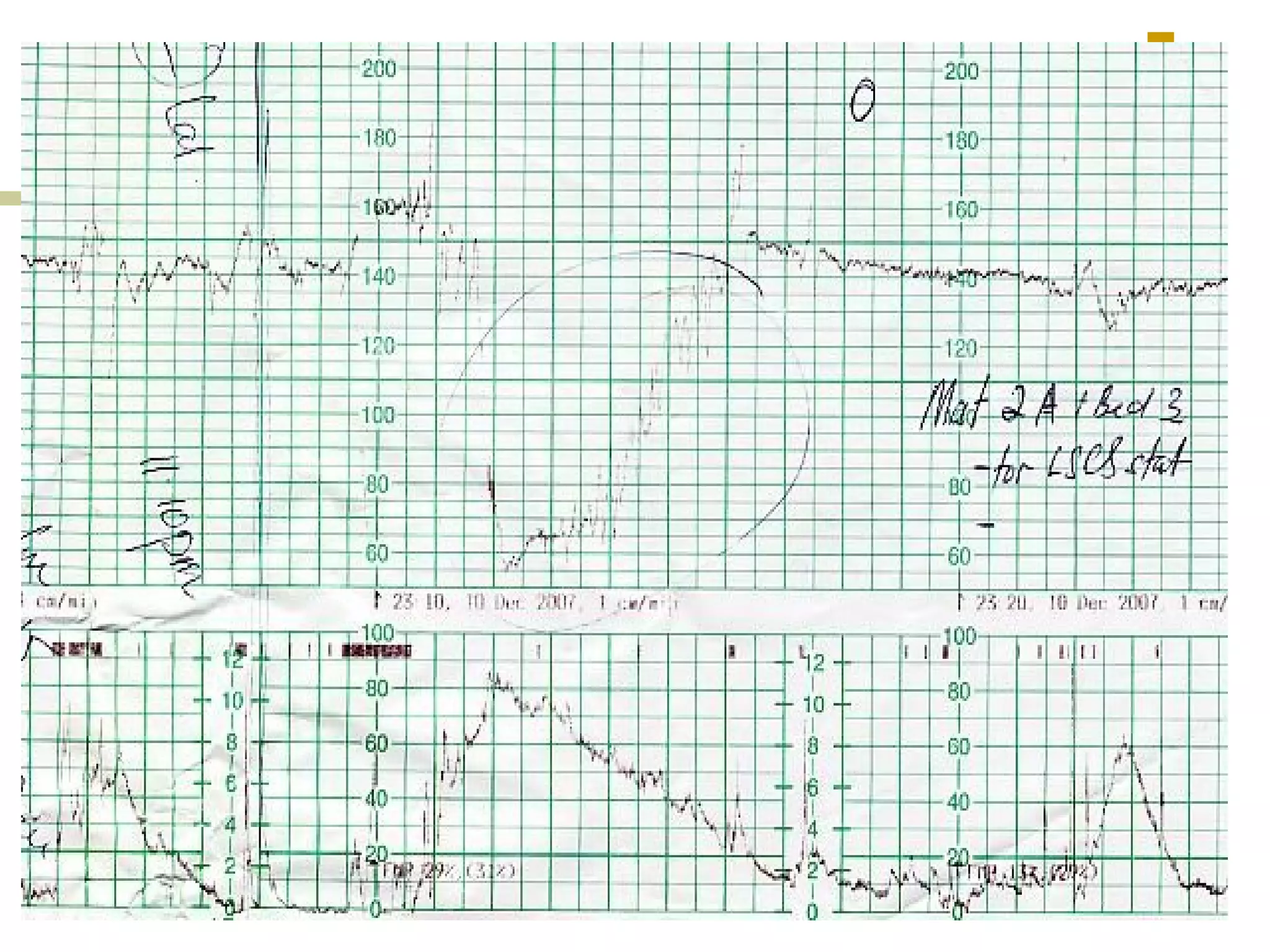
DECELERATION A transient episode of slowing of FHR below the baseline level more than 15 bpm and lasting 15 seconds or more
VARIABILITY Degree to which the baseline varies within a particular band width excluding acceleration and deceleration (5-15 bpm) Represent interaction of nervous system which determine the cardiac output and heart rate, in response to venous return and metabolic demands of fetus
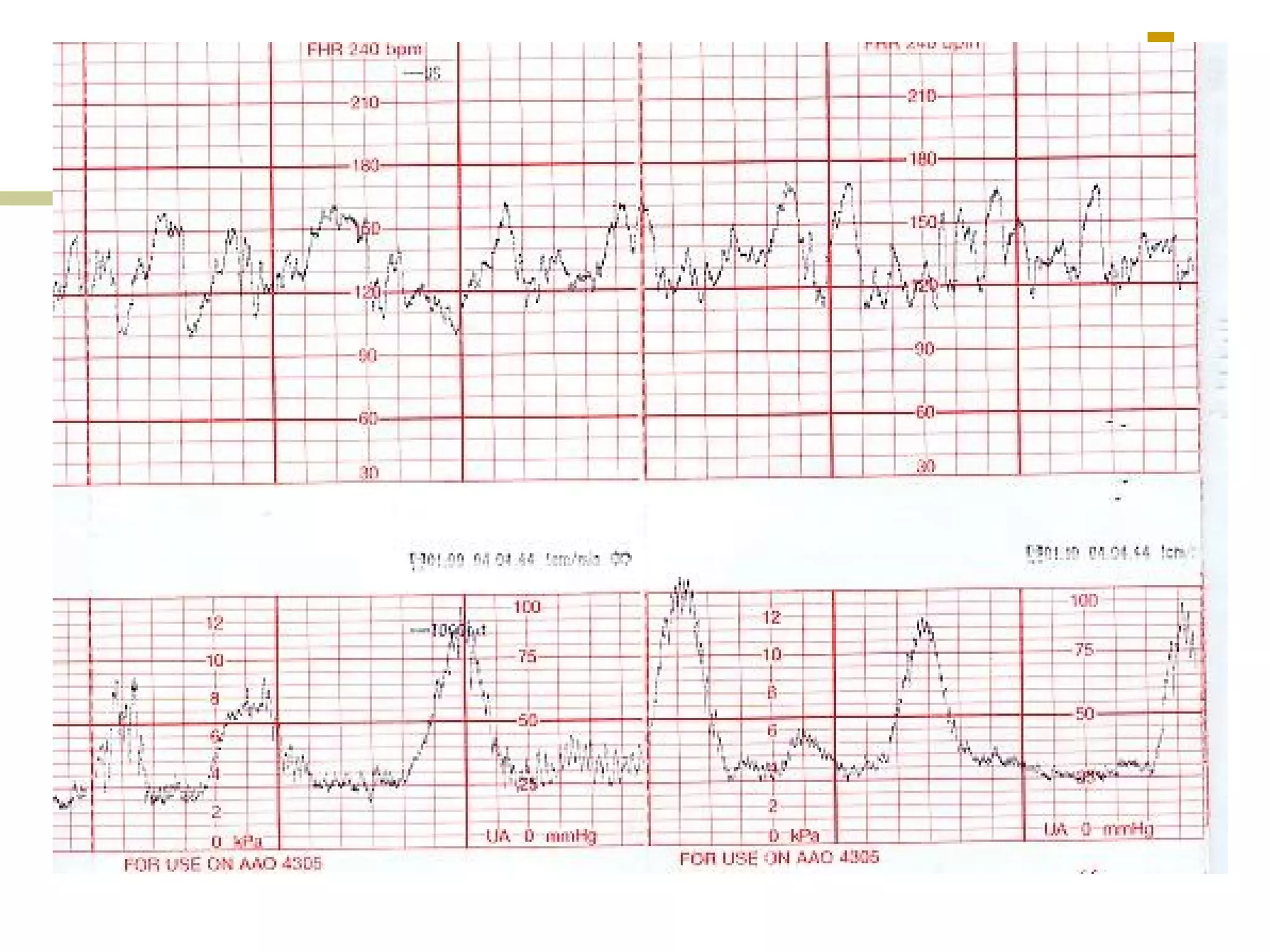
REACTIVE TRACE Normal baseline heart rate, variability, presence of acceleration (2 in 20 minutes trace) and absence of deceleration
 
BRADYCARDIA A baseline FHR persistently low than 110 bpm Causes : Gestational age > 40 w Cord compression/prolapsed Congenital heart malformation Drugs Late fetal hypoxia unknown
 
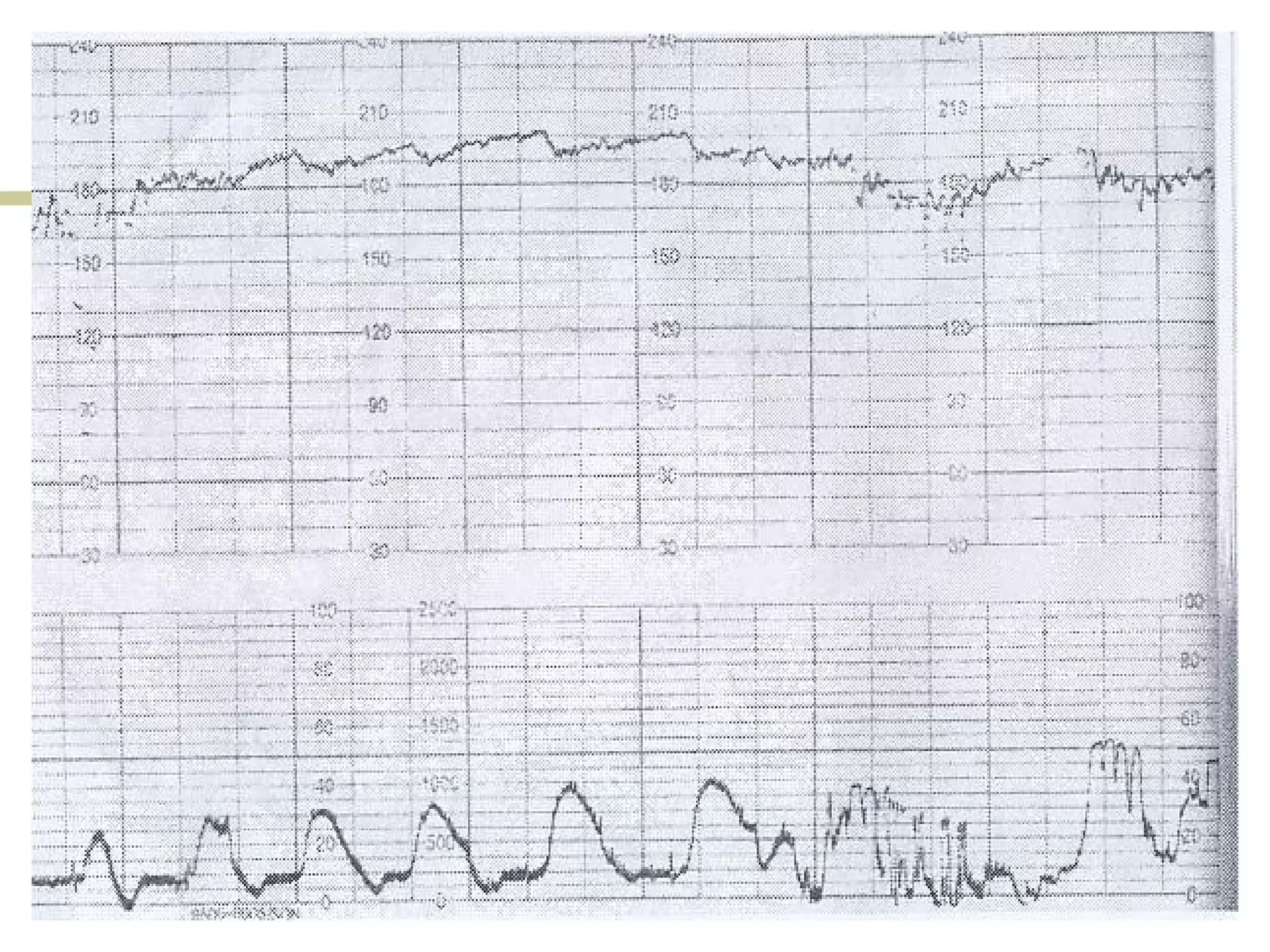
TACHYCARDIA Persistantly baseline > 160 bpm Causes : Maternal pyrexia Fetal infection Chronic hypoxia Hyperthyroidism or maternal stress Fetal hormones in response to stress Gestational age < 32 w Drugs Excessive fetal movements
 
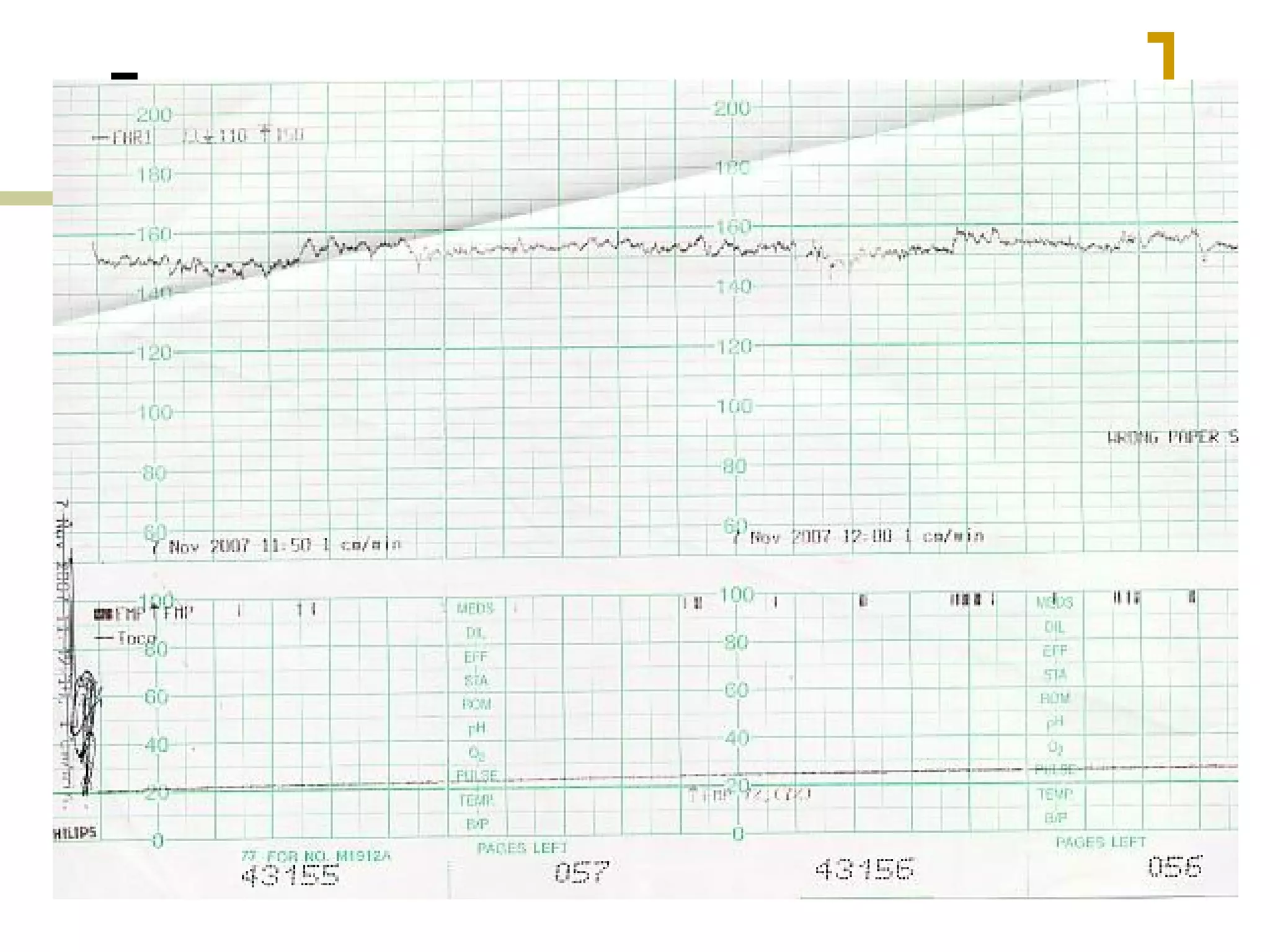
DECREASE VARIABILITY Variability < 5 bpm or absent Causes : Severe hypoxia Fetal sleeping pattern Maternal sedation Gestational age < 28 – 30w Congenital malformation
 
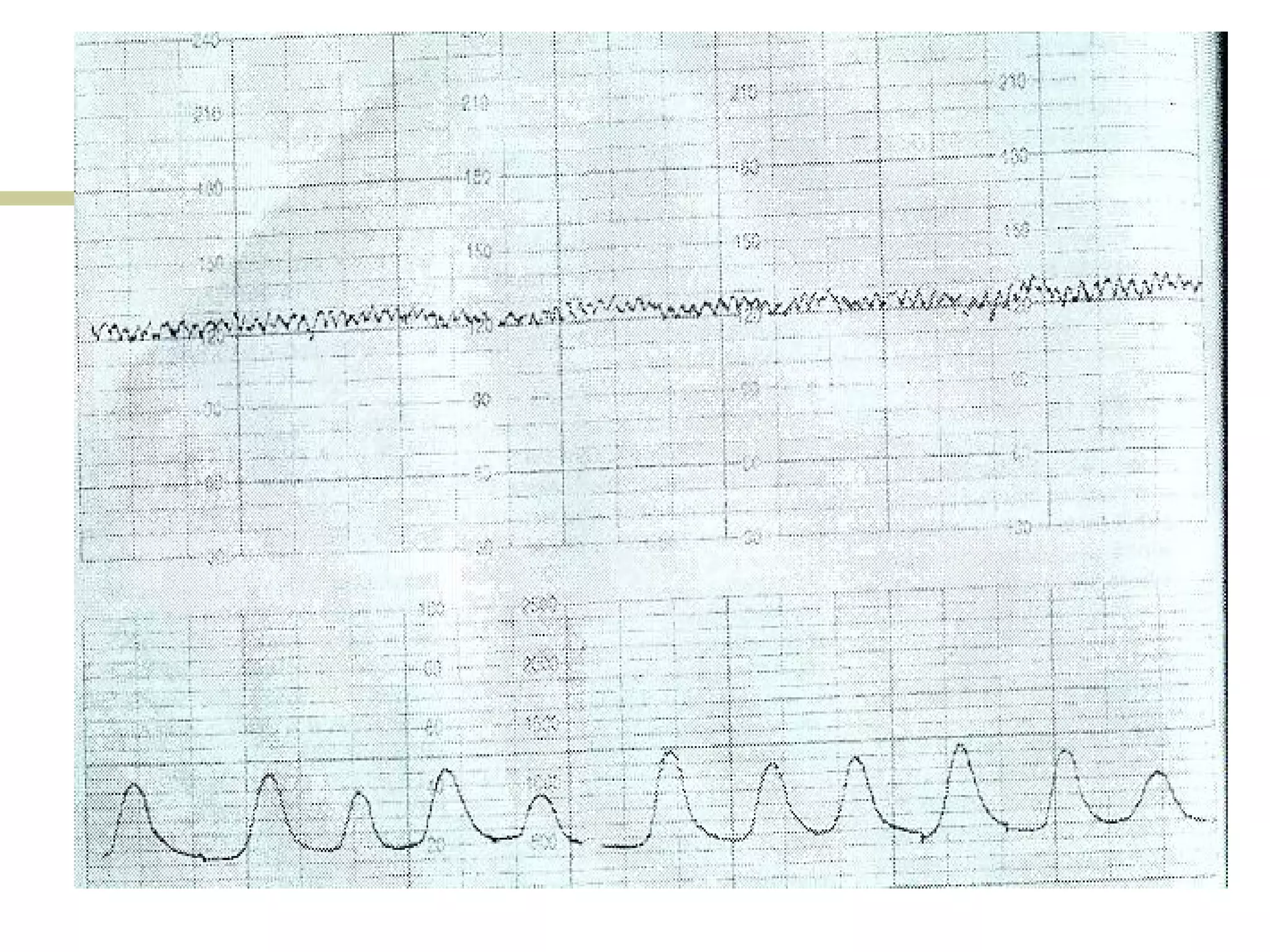
SINUSOIDAL A smooth, wave like baseline, absent beat to beat variability Causes : Severe hypoxia Anaemic fetus idiopathic
 
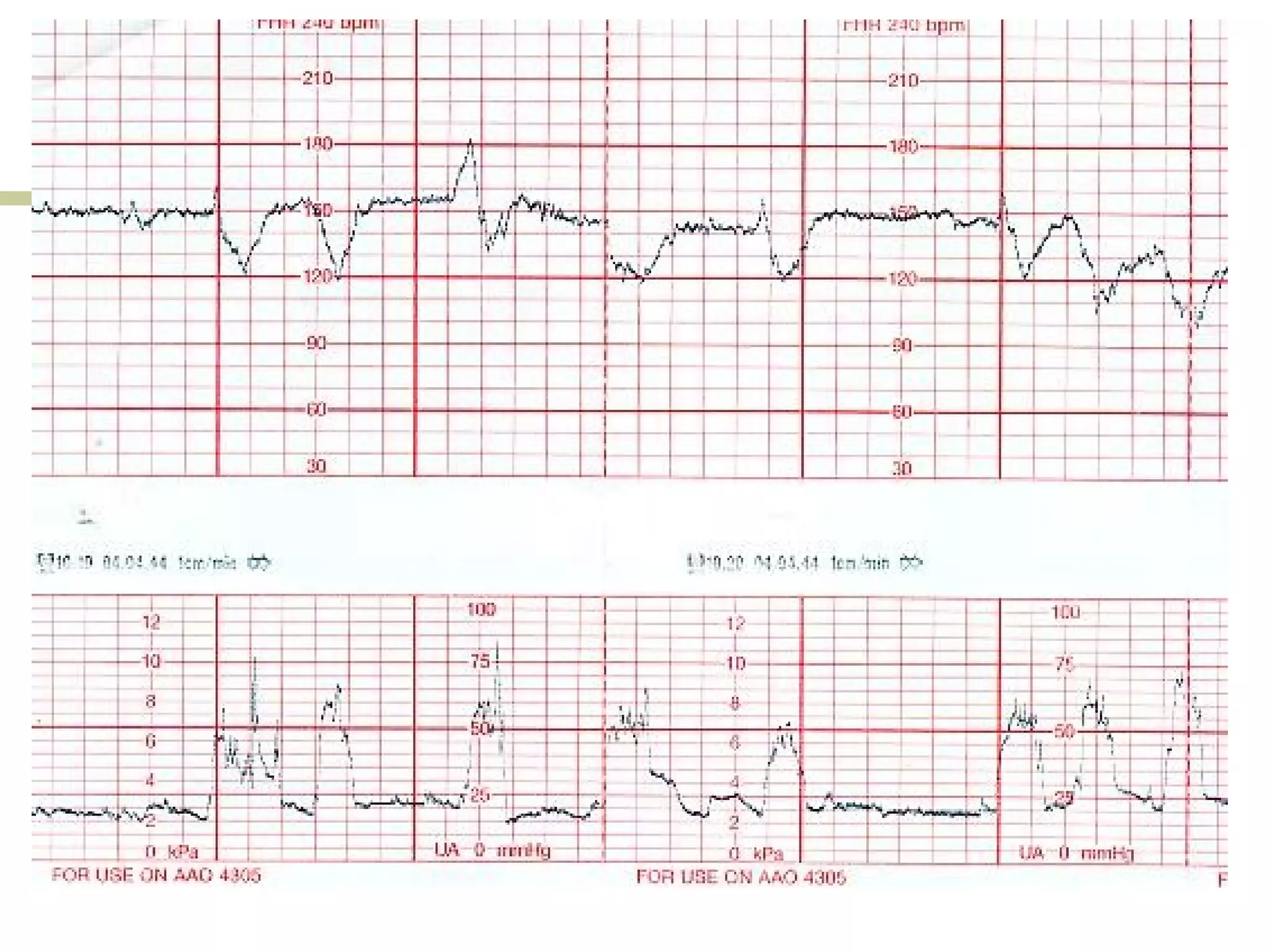
EARLY DECELERATION Onset of deceleration is at the onset of contraction Causes : Fetal head compression
 
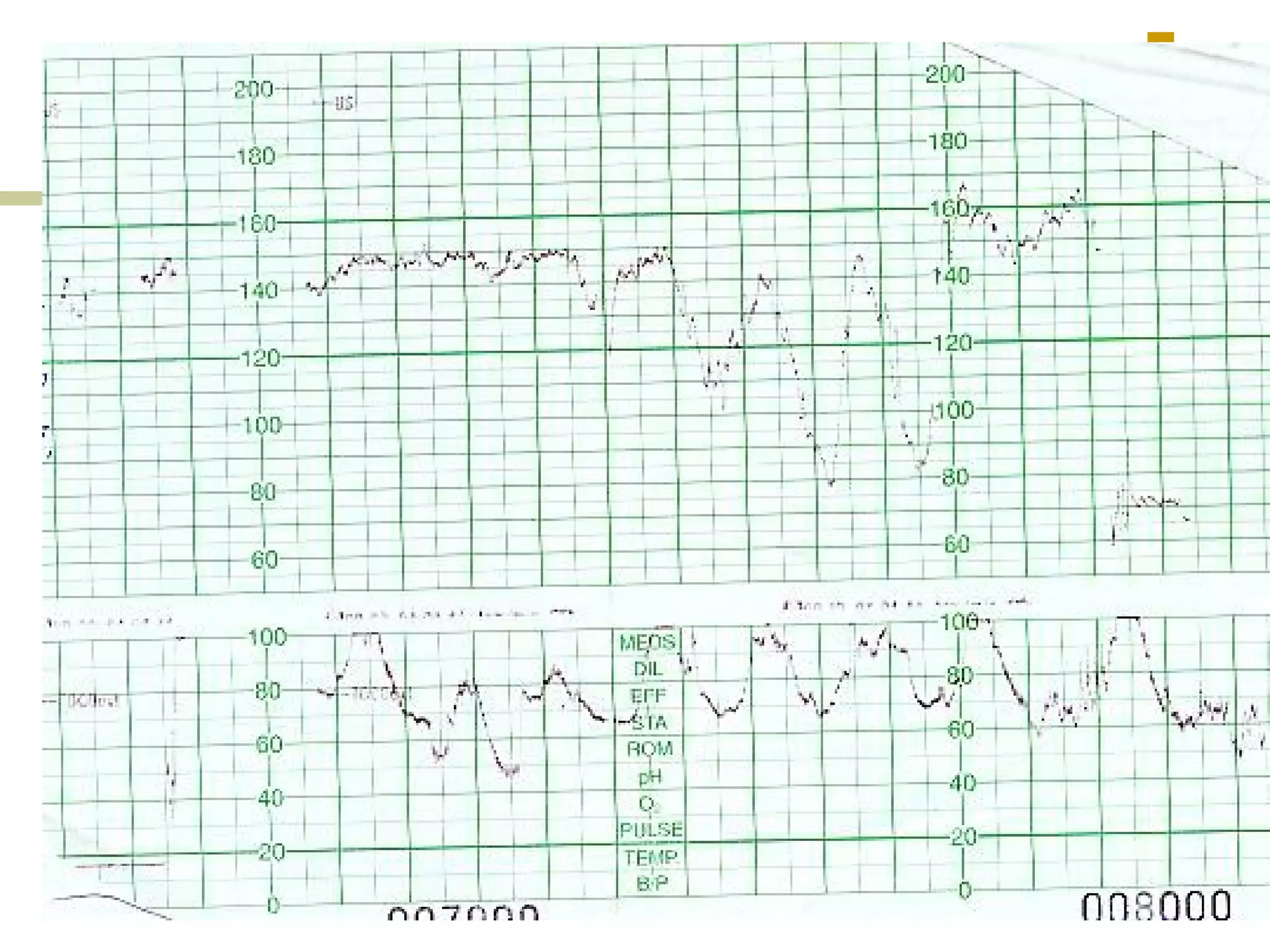
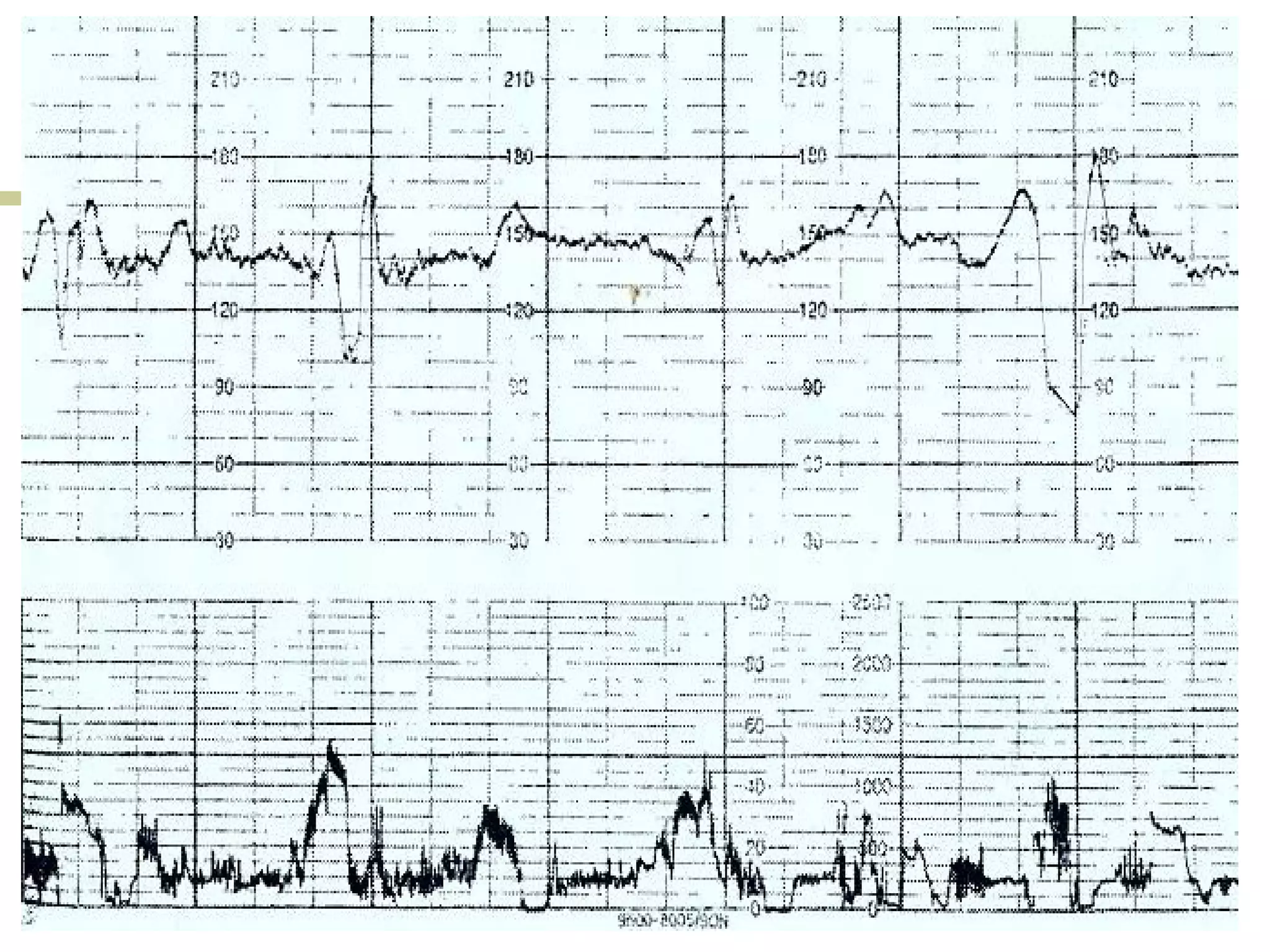
LATE DECELERATION Deceleration occur more than 15 seconds after the peak of contraction Causes : Reduction in placental blood flow (abruptio, hyperstimulation) Maternal related disease (PIH) Fetal compromised (IUGR, premature) Supine hypotension
 
VARIABLE DECELERATION Deceleration that inconsistent in shape and in timing with uterine contraction Causes :  Umbilical cord entanglement Cord round neck True knot Cord prolapsed
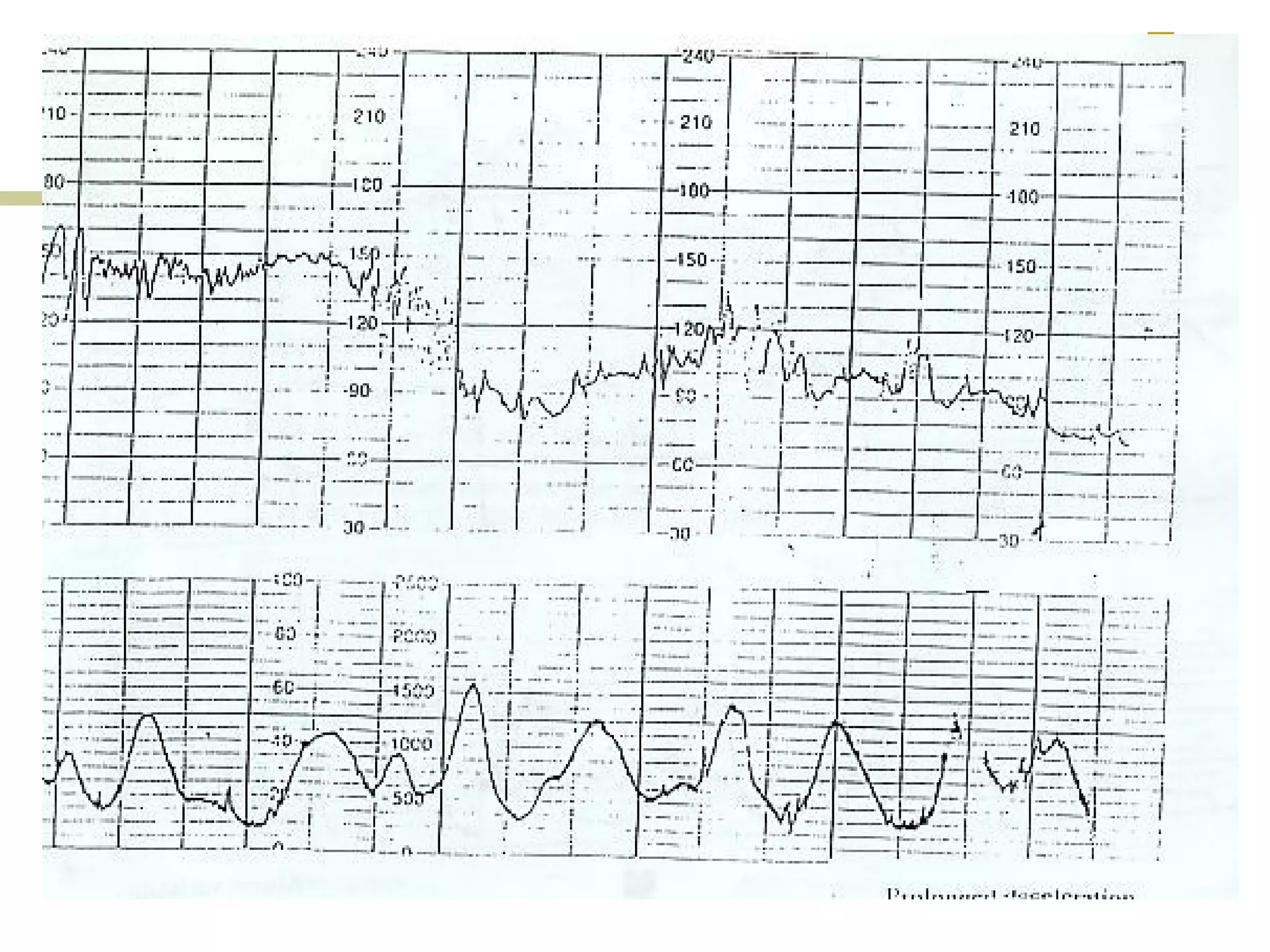
PROLONGED DECELERATION A consistent drop in fetal heart rate > 30 bpm, lasting 2 minutes Causes : Total umbilical cord occlusion Uterine hypertonic Maternal hypotension Cord compression
 
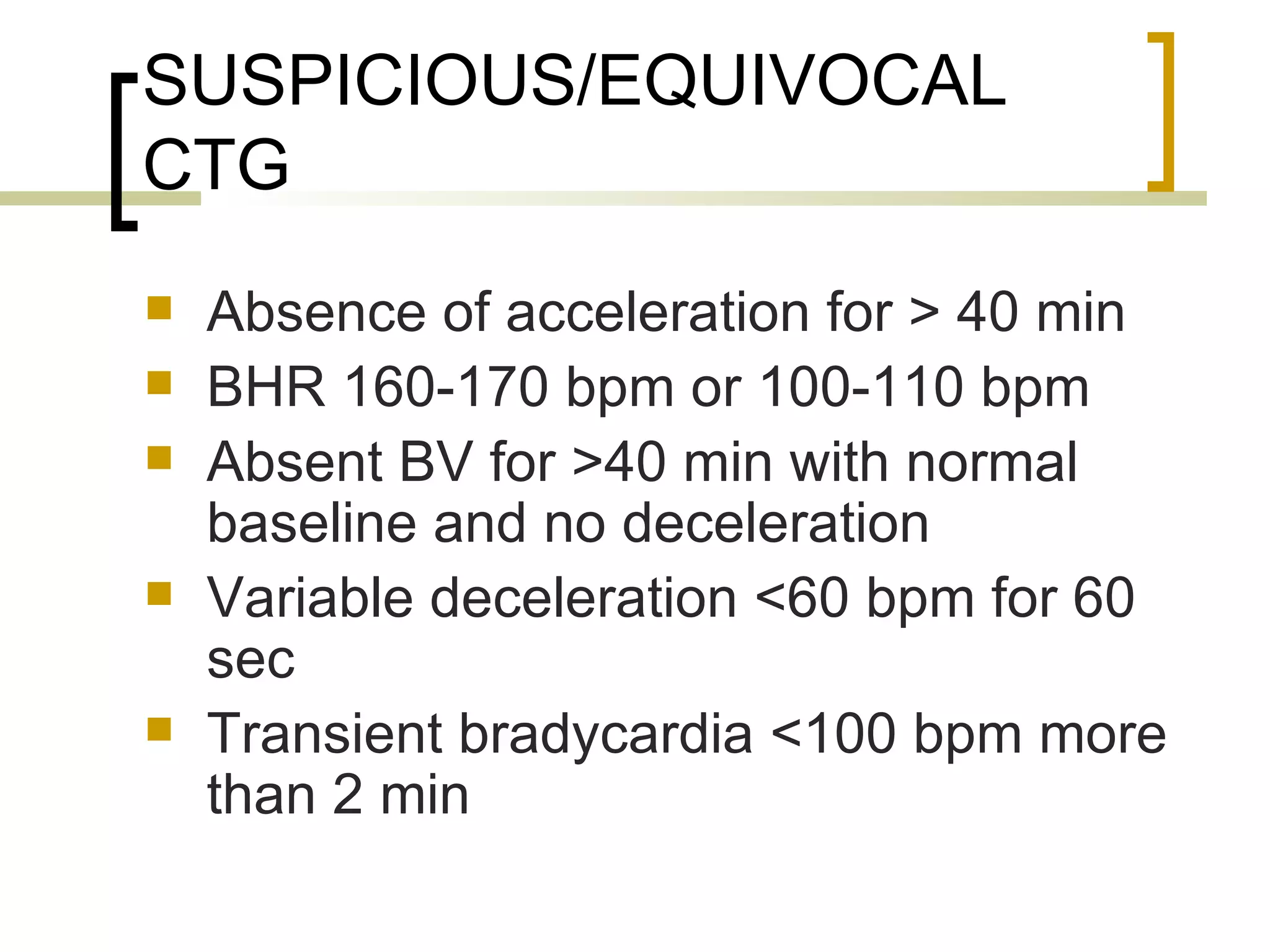
SUSPICIOUS/EQUIVOCAL CTG Absence of acceleration for > 40 min BHR 160-170 bpm or 100-110 bpm Absent BV for >40 min with normal baseline and no deceleration Variable deceleration <60 bpm for 60 sec Transient bradycardia <100 bpm more than 2 min
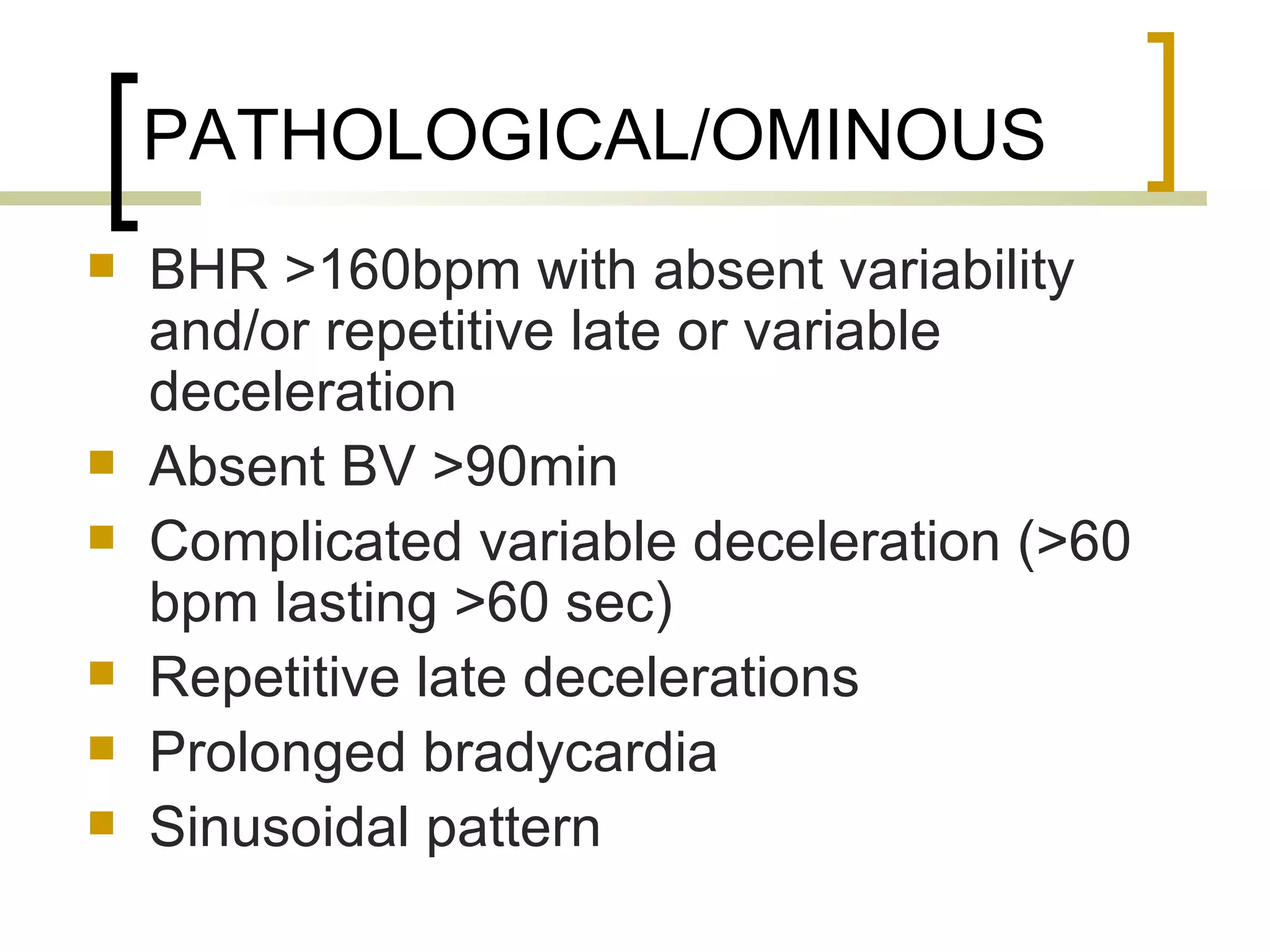
PATHOLOGICAL/OMINOUS BHR >160bpm with absent variability and/or repetitive late or variable deceleration Absent BV >90min Complicated variable deceleration (>60 bpm lasting >60 sec) Repetitive late decelerations Prolonged bradycardia Sinusoidal pattern
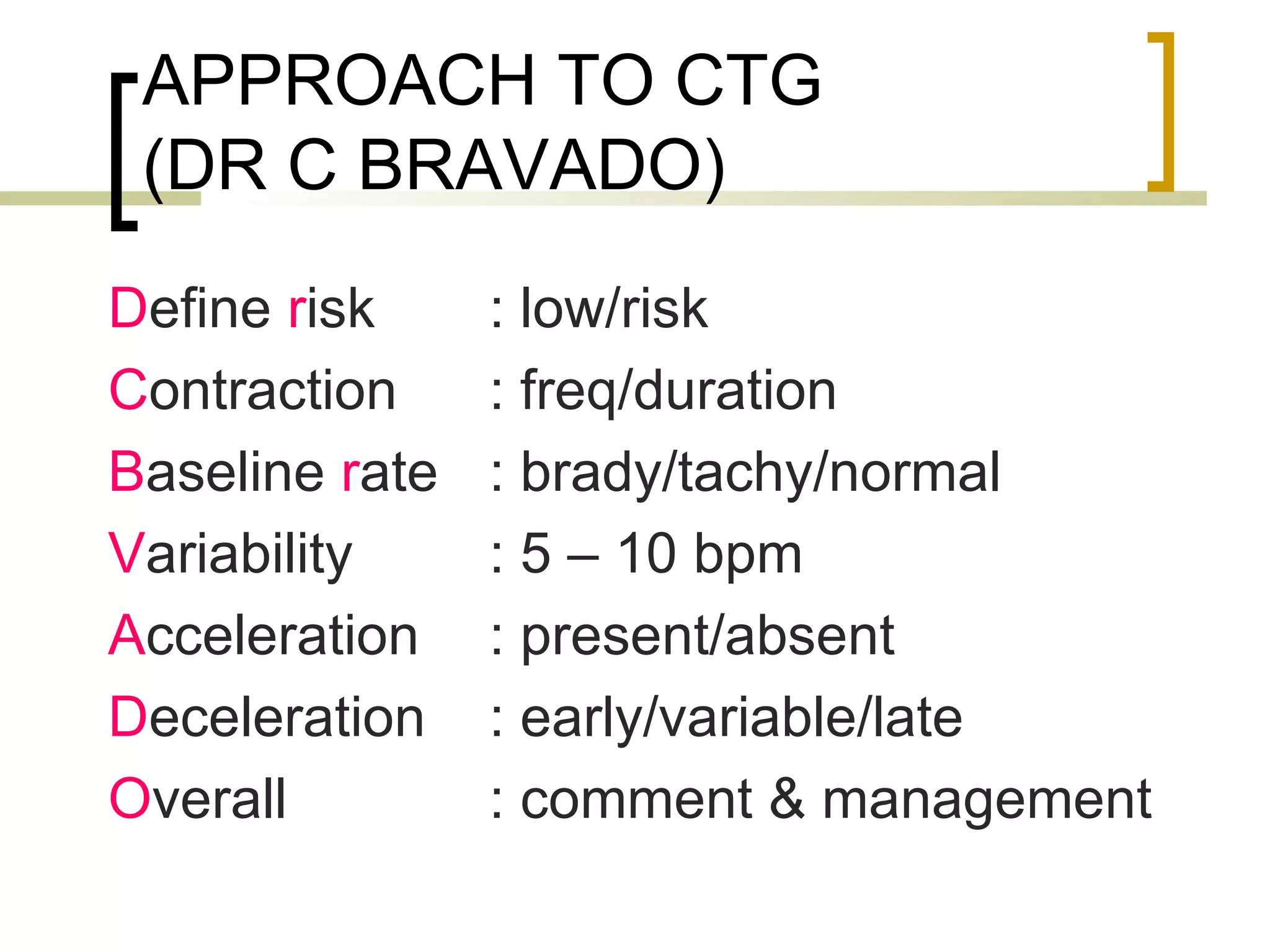
APPROACH TO CTG (DR C BRAVADO) D efine  r isk : low/risk C ontraction : freq/duration B aseline  r ate : brady/tachy/normal V ariability : 5 – 10 bpm A cceleration : present/absent D eceleration : early/variable/late O verall : comment & management
CLINICAL SCENARIO
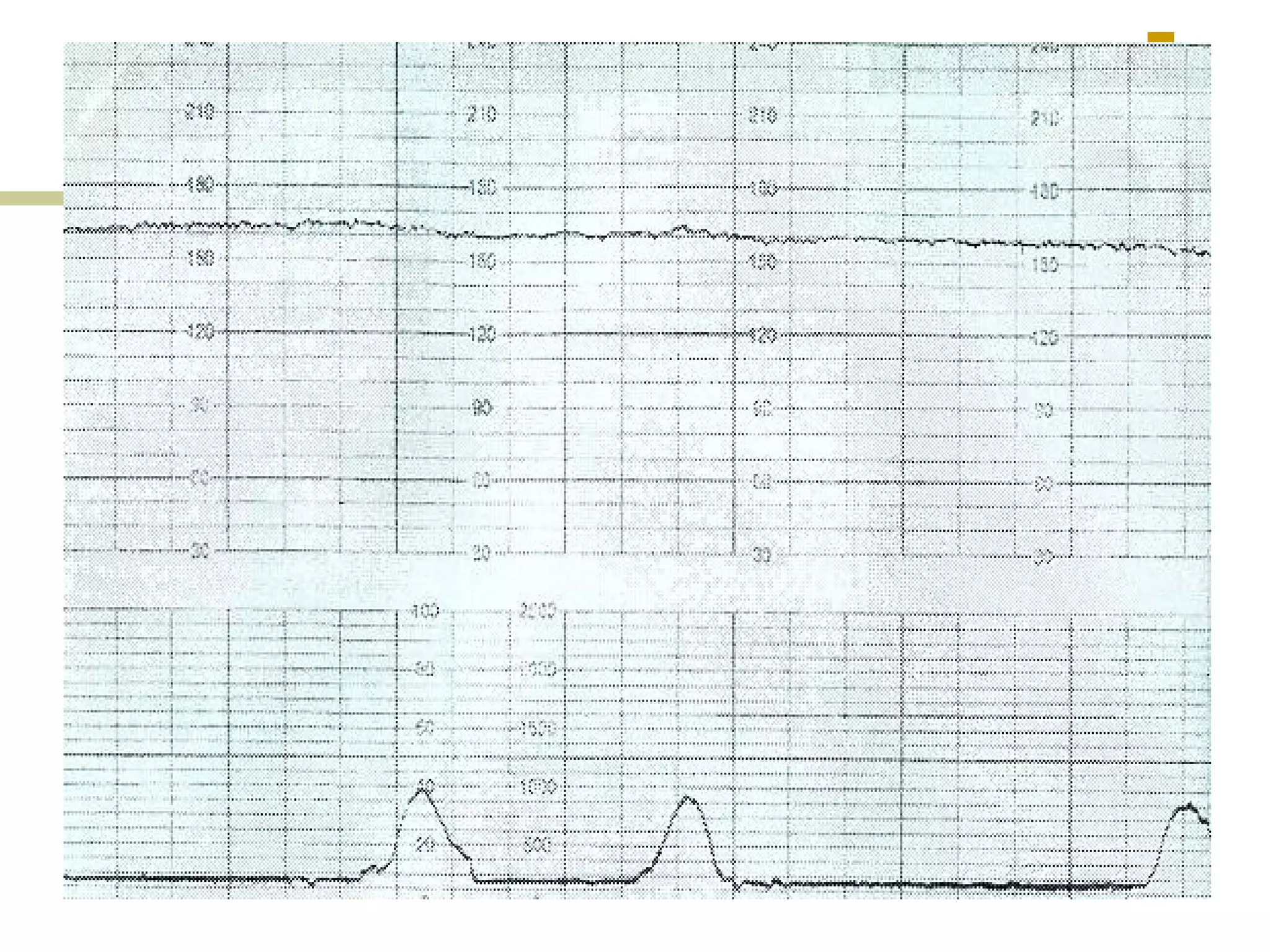
CASE 1 16 y old, G2P0 at 40w came with contraction pain. A/N uncomplicated Os 5cm, ARM clear liquor
 
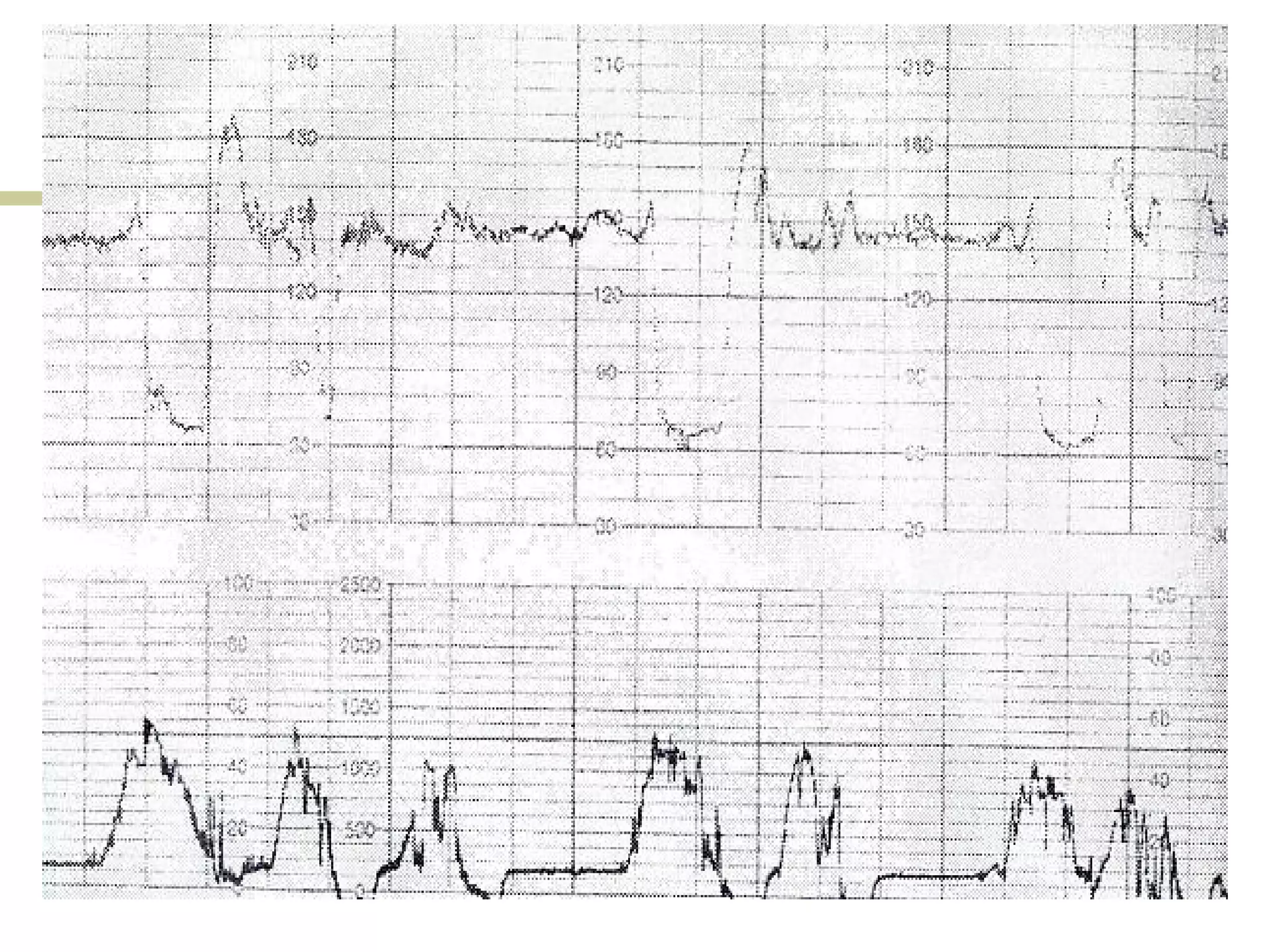
CASE 2 25 y, G1P0 at 40w + 11 days presented with contraction pain. At this time, os 2cm well effaced
 
Case 3 23 y old, G3P1 at 37 weeks came with contraction pain. She also PIH on treatment. Os 4cm, ARM minimal liquor
 
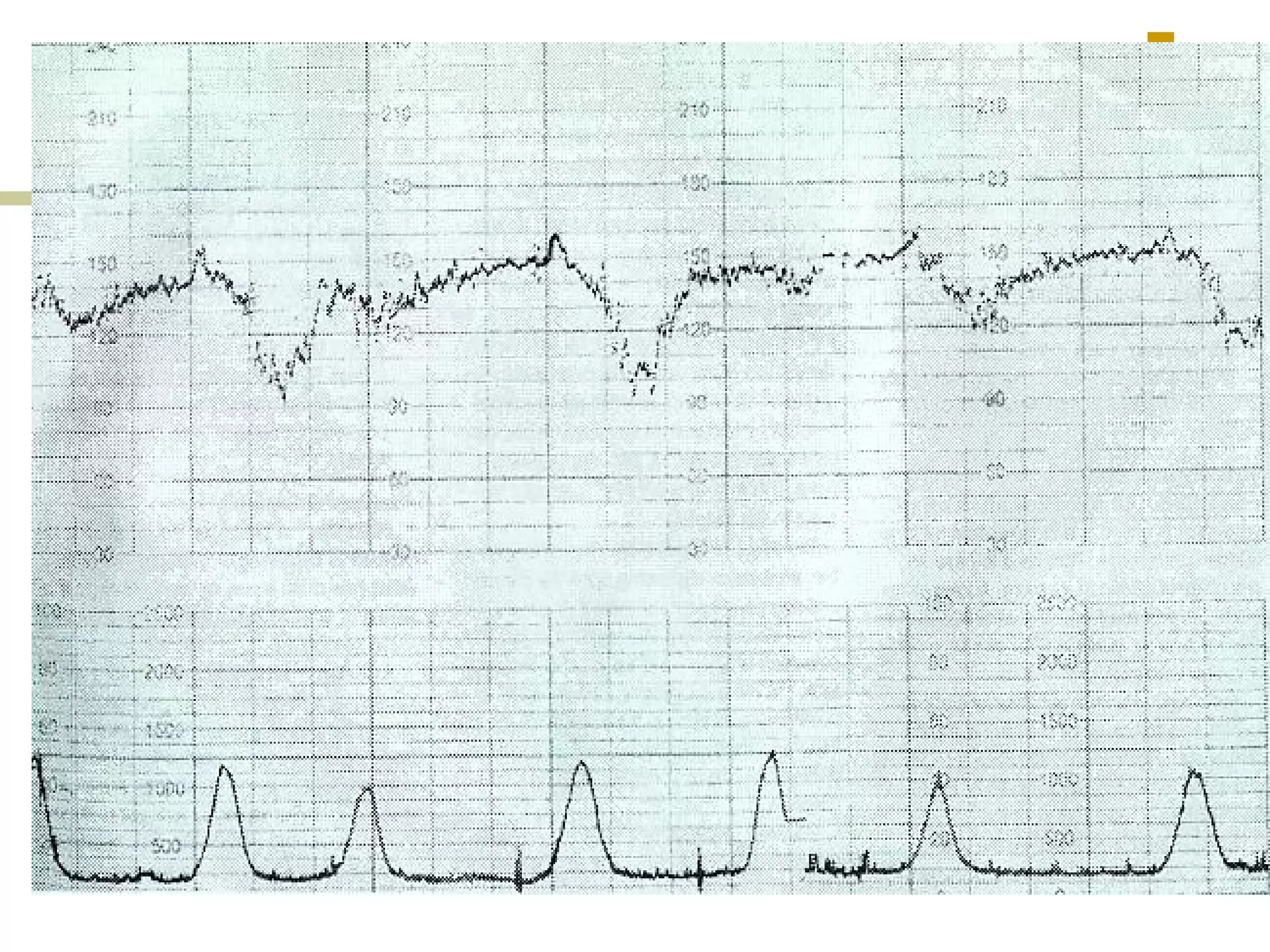
CASE 4 26, G2P1 at 41w Os already 7cm, clear liquor Good labour progress  Os become full then CTG show :
 
Case 5 25, G1P0 at 40w admitted with contraction Os 3cm, clear liquor and given pethidine as pt restless
 
Case 6 25, G1P0 at 40 w had contraction pain At that time os 7cm, clear liquor. 2 hours later progress to os 8 cm
 
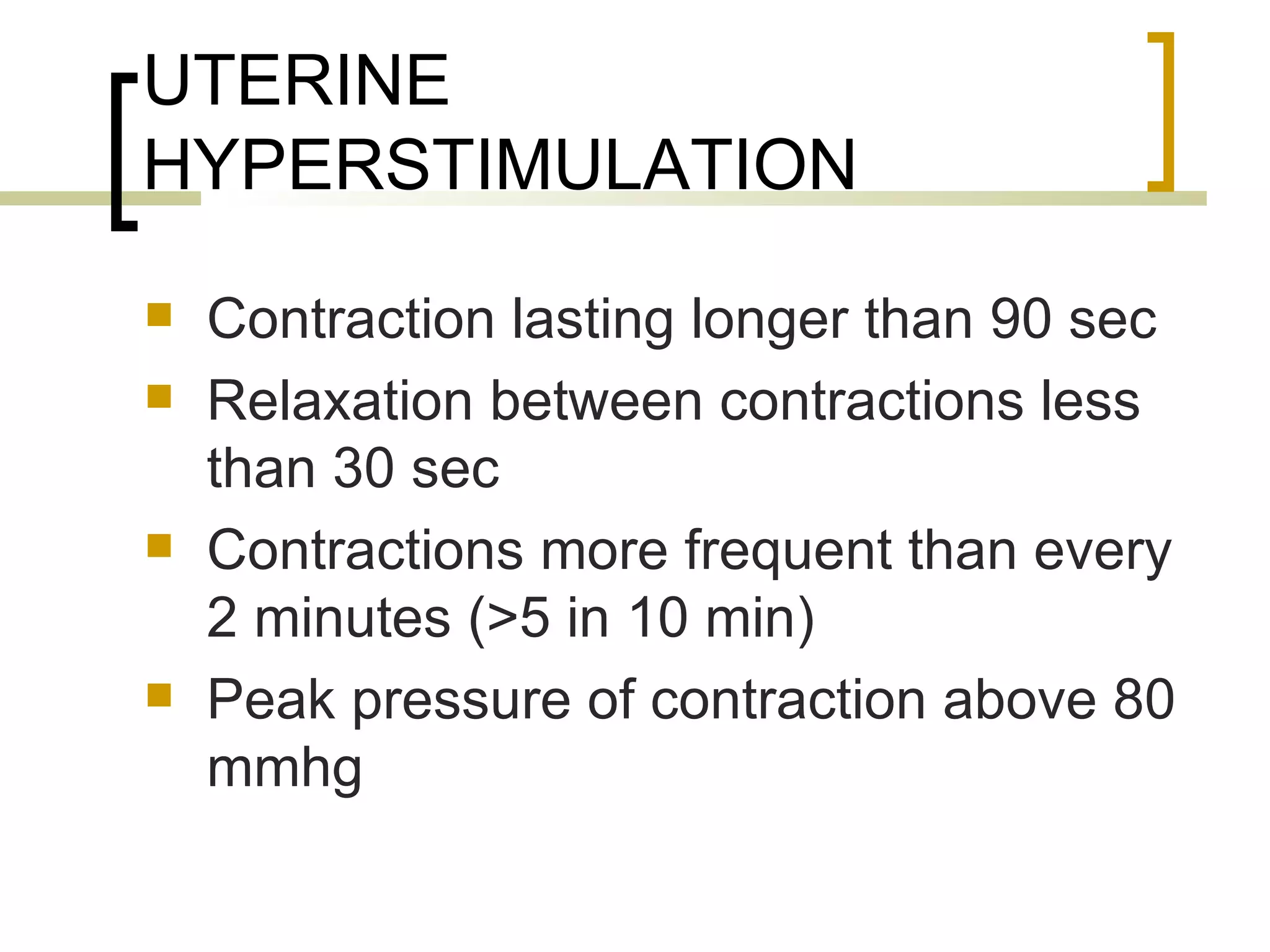
UTERINE HYPERSTIMULATION Contraction lasting longer than 90 sec Relaxation between contractions less than 30 sec Contractions more frequent than every 2 minutes (>5 in 10 min) Peak pressure of contraction above 80 mmhg
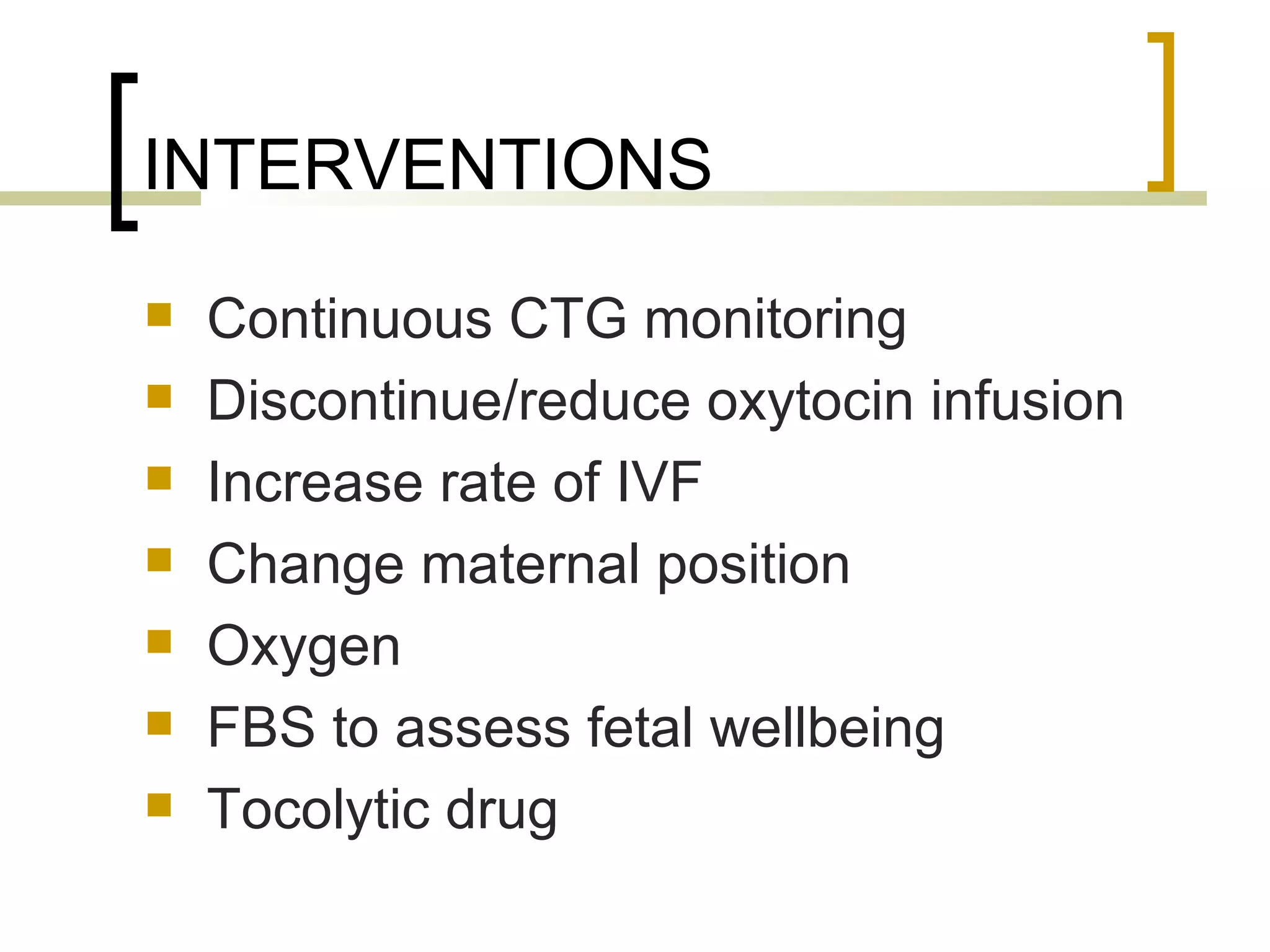
INTERVENTIONS Continuous CTG monitoring Discontinue/reduce oxytocin infusion Increase rate of IVF Change maternal position Oxygen FBS to assess fetal wellbeing Tocolytic drug

Cardiotocography (CTG)

  • 1.
    BASIC CTG TEACHINGSALSO Sarawak General Hospital
  • 2.
    BASELINE HEART RATEmean level of FHR when stable, acceleration and deceleration being absent Normal = 110 – 160 bpm
  • 3.
    ACCELERATION A transientincrease in FHR of 15 bpm or more and lasting for 15 seconds or more
  • 4.
    DECELERATION A transientepisode of slowing of FHR below the baseline level more than 15 bpm and lasting 15 seconds or more
  • 5.
    VARIABILITY Degree towhich the baseline varies within a particular band width excluding acceleration and deceleration (5-15 bpm) Represent interaction of nervous system which determine the cardiac output and heart rate, in response to venous return and metabolic demands of fetus
  • 6.
    REACTIVE TRACE Normalbaseline heart rate, variability, presence of acceleration (2 in 20 minutes trace) and absence of deceleration
  • 7.
  • 8.
    BRADYCARDIA A baselineFHR persistently low than 110 bpm Causes : Gestational age > 40 w Cord compression/prolapsed Congenital heart malformation Drugs Late fetal hypoxia unknown
  • 9.
  • 10.
    TACHYCARDIA Persistantly baseline> 160 bpm Causes : Maternal pyrexia Fetal infection Chronic hypoxia Hyperthyroidism or maternal stress Fetal hormones in response to stress Gestational age < 32 w Drugs Excessive fetal movements
  • 11.
  • 12.
    DECREASE VARIABILITY Variability< 5 bpm or absent Causes : Severe hypoxia Fetal sleeping pattern Maternal sedation Gestational age < 28 – 30w Congenital malformation
  • 13.
  • 14.
    SINUSOIDAL A smooth,wave like baseline, absent beat to beat variability Causes : Severe hypoxia Anaemic fetus idiopathic
  • 15.
  • 16.
    EARLY DECELERATION Onsetof deceleration is at the onset of contraction Causes : Fetal head compression
  • 17.
  • 18.
    LATE DECELERATION Decelerationoccur more than 15 seconds after the peak of contraction Causes : Reduction in placental blood flow (abruptio, hyperstimulation) Maternal related disease (PIH) Fetal compromised (IUGR, premature) Supine hypotension
  • 19.
  • 20.
    VARIABLE DECELERATION Decelerationthat inconsistent in shape and in timing with uterine contraction Causes : Umbilical cord entanglement Cord round neck True knot Cord prolapsed
  • 21.
    PROLONGED DECELERATION Aconsistent drop in fetal heart rate > 30 bpm, lasting 2 minutes Causes : Total umbilical cord occlusion Uterine hypertonic Maternal hypotension Cord compression
  • 22.
  • 23.
    SUSPICIOUS/EQUIVOCAL CTG Absenceof acceleration for > 40 min BHR 160-170 bpm or 100-110 bpm Absent BV for >40 min with normal baseline and no deceleration Variable deceleration <60 bpm for 60 sec Transient bradycardia <100 bpm more than 2 min
  • 24.
    PATHOLOGICAL/OMINOUS BHR >160bpmwith absent variability and/or repetitive late or variable deceleration Absent BV >90min Complicated variable deceleration (>60 bpm lasting >60 sec) Repetitive late decelerations Prolonged bradycardia Sinusoidal pattern
  • 25.
    APPROACH TO CTG(DR C BRAVADO) D efine r isk : low/risk C ontraction : freq/duration B aseline r ate : brady/tachy/normal V ariability : 5 – 10 bpm A cceleration : present/absent D eceleration : early/variable/late O verall : comment & management
  • 26.
  • 27.
    CASE 1 16y old, G2P0 at 40w came with contraction pain. A/N uncomplicated Os 5cm, ARM clear liquor
  • 28.
  • 29.
    CASE 2 25y, G1P0 at 40w + 11 days presented with contraction pain. At this time, os 2cm well effaced
  • 30.
  • 31.
    Case 3 23y old, G3P1 at 37 weeks came with contraction pain. She also PIH on treatment. Os 4cm, ARM minimal liquor
  • 32.
  • 33.
    CASE 4 26,G2P1 at 41w Os already 7cm, clear liquor Good labour progress Os become full then CTG show :
  • 34.
  • 35.
    Case 5 25,G1P0 at 40w admitted with contraction Os 3cm, clear liquor and given pethidine as pt restless
  • 36.
  • 37.
    Case 6 25,G1P0 at 40 w had contraction pain At that time os 7cm, clear liquor. 2 hours later progress to os 8 cm
  • 38.
  • 39.
    UTERINE HYPERSTIMULATION Contractionlasting longer than 90 sec Relaxation between contractions less than 30 sec Contractions more frequent than every 2 minutes (>5 in 10 min) Peak pressure of contraction above 80 mmhg
  • 40.
    INTERVENTIONS Continuous CTGmonitoring Discontinue/reduce oxytocin infusion Increase rate of IVF Change maternal position Oxygen FBS to assess fetal wellbeing Tocolytic drug