SUMANDEEP NURSING COLLEGE
SEMINAR ON DISORDERS OF MALE REPRODUCTIVESYSTEM
PRESENTEDBY NIKHIL VAISHNAV
FIRSTYEAR MS.CNURSING STUDENT
 Infertility is defined as a failure to
conceive within one or more years
of regular unprotected intercourse.
 There are two types of infertility.
1. Primary infertility: Primary infertility
denotes couples who have never been able
to conceive.
2. Secondary infertility: Secondary infertility
indicates difficulty in conceiving after
already having conceived.
 Incidence: Infertility problem affects 1
in 7 couples.
 Conception depends on fertility
potential of both male and female
partner.
1) Defective spermatogenesis.
2) Obstruction of Efferent duct.
3) Failure to deposit sperm high in the
vagina.
4) Errors in the seminal fluid.
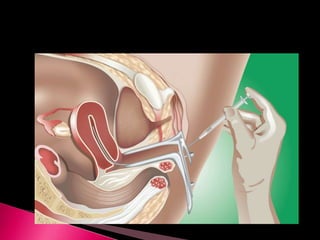
1. Congenital: Due to undescended testes
spermatogenesis is depressed.
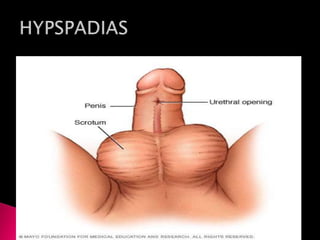
2. Hypospadias.
3. Thermal factor: Vericocele.
4. Infection: Mumps, Orchitis damage the
spermatogenesis.
5. Gonadotrophin suppression: It happens in
the malnutrition, heavy smoking and high
alcohol consumption.
6. Endocrine factors: Raised FSH level is seen
in idiopathic testicular failure.
7. Loss of sperm motility.
8. Genetic: Klienfelters syndrome (44+ xxy).
9. Iatrogenic: Cytotoxic drugs, radiation
therapy, and antidepressant drugs are likely
to obstruct spermatogenesis.
1. Gonococcal or tubercular infection.
2. Surgical trauma during vasectomy.
1) Erectile dysfunction.
2) Ejaculatory defects such as
premature retrograde or absence of
ejaculation.
3) Hypospadias.
1. Low fructose content.
2. High prostaglandin content.
3. Unusually low volume of ejaculation.
1. Problems with sexual function e.g.
difficulty with ejaculation, reduced sexual
desire.
2. Pain and swelling in the testicle area.
3. Recurrent respiratory tract infection.
4. Decreased facial or body hair.
5. Having a low sperm count.
6. Gynacomestia.
7. Inability to smell.
1. History collection.
2. Physical examination: General appearance,
external genitalia.
3. Semen analysis test: Semen volume,
sperm motility, semen culture.
4. Genetic test: Sex chromosome and
somatic mutation.
5. Endocrine test: Serum testosterone,
serum L.H and F.S.H.
 The treatment of male partner is
indicated in extreme oligospermia,
Azospermia, low volume ejaculation
and impotency.

 Treatment consists of:
1. Improvement of general health.
2. Avoiding medications.
3. Medications to treat specific causes.
4. Specific treatment.
5. Surgical management.
 Reduction of weight in obese.
 Avoidance of alcohol and heavy
smoking.
 Avoidance of occupation that may
elevate testicular temperature.
 Medication that interferes with the
spermatogenesis such as beta
blockers, anti depressant, Cytotoxic
drugs, cimetidine should be avoided.
A. HCG, HMG for hypogonadism.
B. Dopamine agonists (Carbergoline) to
improve low libido.
C. Clomophene citrate.
D. Antibiotics for genital tract infection.
 Specific treatment includes
Intrauterine insemination( IUI) , Invitro
fertilization( IVF), Intracytoplasmic
sperm injection(ICSI ).
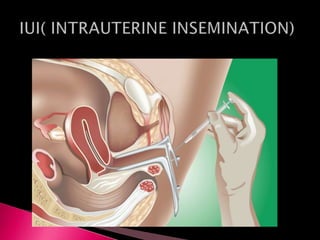
 IUI is a procedure in which a catheter
is inserted through the cervix into the
uterus to deposit a sperm sample
directly into the uterus.
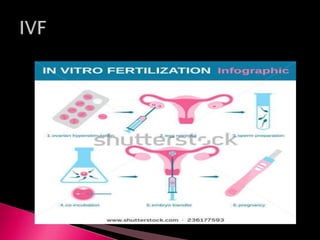
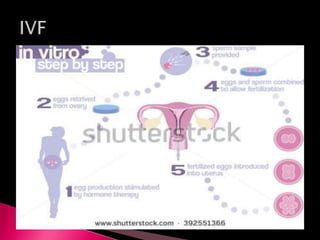
 IVF is a process by which an egg is
fertilized by sperm outside the body.
In Vitro= In glass.
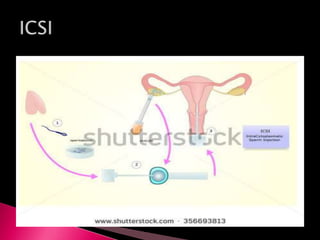
 ICSI is the most successful form of
treatment who are infertile.
 ICSI only requires one sperm which is
injected directly into the egg and
fertilized egg is transferred to uterus.
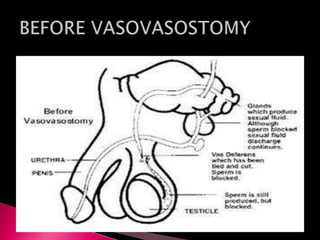
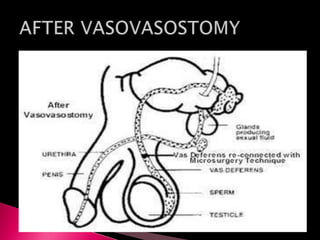
 Vasovasostomy: A Vasovasostomy is a
surgical procedure in which the effects of a
vasectomy are reversed.
 Vasovasostomy creates an opening between
the separated ends of the vas deferens .
 Causes of female infertility are:
1. Ovulation problems.
2. Fallopian tube damage.
3. Risk factors
1) An hormonal imbalance: FSH or LH
secretion.
2) Anovulation.
3) Polycystic ovarian disease.
4) Eating disorders such as anorexia or
bulimia
5) Stress.
6) Alcohol or drug use,
7) Intense exercise that causes a loss of
body fat.
1. Previous infection due to gonorrhea.
2. Fibroids.
3. Endometriosis: Appearance of
endometrial tissue outside the
womb. Causes pain
4. Ectopic pregnancy.
5. A congenital defect.
1. Age.
2. Poor diet.
3. Being overweight or underweight.
 Laboratory tests: Measurement of FSH
and progesterone.
 Endometrial biopsy is performed to
verify ovulation.
 Hysterosalpingography .
 Laparoscopy .
 Pap smear to check for signs of
infection.
 Treatment of female infertility consists of
fertility restoration drugs, fertility restoration
surgeries, Assisted reproductive
technologies( ART) .
To stimulate ovulation. Drugs are:
1. Clomophene citrate.
2. Human menopausal
gonadotrophins.
3. Follicle stimulating hormone.
4. Gonadotrophin releasing hormone
analog.
5. Bromocriptine.
 Tissue removal: This surgery removes
endometrial or pelvic adhesions with
lasers or ablation.
 Tubal surgeries: If fallopian tubes are
blocked or filled with fluid , tubal
surgery improve chances of becoming
pregnant.
 Laparoscopic surgery is performed to
remove adhesions and create a new
tubal opening.
 Salpingectomy: It can improve
chances of pregnancy with
invitrofertilization.
 ART involves removing of eggs from a
woman body and mixing with sperm
in the laboratory.
1. Intrauterine insemination.
2. Invitro fertilization.
3. Zygote intrafallopian transfer( ZIFT) .
4. Gamete intrafallopian transfer( GIFT) .
5. Intracytoplasmic sperm injection( ICSI) .
 ZIFT is an ART designed to transfer
the fertilized embryo into the fallopian
tube instead of the uterus.
 Here zygote is place in the fallopian
tube through which it will reach into
the uterus.
 It is similar to IUF.
 GIFT involves transferring eggs and
sperm into the women’s fallopian
tubes so fertilization occurs in the
woman’s body.

Infertility

  • 1.
    SUMANDEEP NURSING COLLEGE SEMINARON DISORDERS OF MALE REPRODUCTIVESYSTEM PRESENTEDBY NIKHIL VAISHNAV FIRSTYEAR MS.CNURSING STUDENT
  • 4.
     Infertility isdefined as a failure to conceive within one or more years of regular unprotected intercourse.
  • 6.
     There aretwo types of infertility. 1. Primary infertility: Primary infertility denotes couples who have never been able to conceive. 2. Secondary infertility: Secondary infertility indicates difficulty in conceiving after already having conceived.
  • 7.
     Incidence: Infertilityproblem affects 1 in 7 couples.
  • 8.
     Conception dependson fertility potential of both male and female partner.
  • 9.
    1) Defective spermatogenesis. 2)Obstruction of Efferent duct. 3) Failure to deposit sperm high in the vagina. 4) Errors in the seminal fluid.
  • 10.
    1. Congenital: Dueto undescended testes spermatogenesis is depressed. 2. Hypospadias. 3. Thermal factor: Vericocele. 4. Infection: Mumps, Orchitis damage the spermatogenesis. 5. Gonadotrophin suppression: It happens in the malnutrition, heavy smoking and high alcohol consumption.
  • 11.
    6. Endocrine factors:Raised FSH level is seen in idiopathic testicular failure. 7. Loss of sperm motility. 8. Genetic: Klienfelters syndrome (44+ xxy). 9. Iatrogenic: Cytotoxic drugs, radiation therapy, and antidepressant drugs are likely to obstruct spermatogenesis.
  • 12.
    1. Gonococcal ortubercular infection. 2. Surgical trauma during vasectomy.
  • 13.
    1) Erectile dysfunction. 2)Ejaculatory defects such as premature retrograde or absence of ejaculation. 3) Hypospadias.
  • 15.
    1. Low fructosecontent. 2. High prostaglandin content. 3. Unusually low volume of ejaculation.
  • 16.
    1. Problems withsexual function e.g. difficulty with ejaculation, reduced sexual desire. 2. Pain and swelling in the testicle area. 3. Recurrent respiratory tract infection. 4. Decreased facial or body hair. 5. Having a low sperm count. 6. Gynacomestia. 7. Inability to smell.
  • 17.
    1. History collection. 2.Physical examination: General appearance, external genitalia. 3. Semen analysis test: Semen volume, sperm motility, semen culture. 4. Genetic test: Sex chromosome and somatic mutation. 5. Endocrine test: Serum testosterone, serum L.H and F.S.H.
  • 18.
     The treatmentof male partner is indicated in extreme oligospermia, Azospermia, low volume ejaculation and impotency. 
  • 19.
     Treatment consistsof: 1. Improvement of general health. 2. Avoiding medications. 3. Medications to treat specific causes. 4. Specific treatment. 5. Surgical management.
  • 20.
     Reduction ofweight in obese.  Avoidance of alcohol and heavy smoking.  Avoidance of occupation that may elevate testicular temperature.
  • 21.
     Medication thatinterferes with the spermatogenesis such as beta blockers, anti depressant, Cytotoxic drugs, cimetidine should be avoided.
  • 22.
    A. HCG, HMGfor hypogonadism. B. Dopamine agonists (Carbergoline) to improve low libido. C. Clomophene citrate. D. Antibiotics for genital tract infection.
  • 23.
     Specific treatmentincludes Intrauterine insemination( IUI) , Invitro fertilization( IVF), Intracytoplasmic sperm injection(ICSI ).
  • 24.
     IUI isa procedure in which a catheter is inserted through the cervix into the uterus to deposit a sperm sample directly into the uterus.
  • 26.
     IVF isa process by which an egg is fertilized by sperm outside the body. In Vitro= In glass.
  • 28.
     ICSI isthe most successful form of treatment who are infertile.  ICSI only requires one sperm which is injected directly into the egg and fertilized egg is transferred to uterus.
  • 30.
     Vasovasostomy: AVasovasostomy is a surgical procedure in which the effects of a vasectomy are reversed.  Vasovasostomy creates an opening between the separated ends of the vas deferens .
  • 33.
     Causes offemale infertility are: 1. Ovulation problems. 2. Fallopian tube damage. 3. Risk factors
  • 34.
    1) An hormonalimbalance: FSH or LH secretion. 2) Anovulation. 3) Polycystic ovarian disease. 4) Eating disorders such as anorexia or bulimia 5) Stress. 6) Alcohol or drug use, 7) Intense exercise that causes a loss of body fat.
  • 35.
    1. Previous infectiondue to gonorrhea. 2. Fibroids. 3. Endometriosis: Appearance of endometrial tissue outside the womb. Causes pain 4. Ectopic pregnancy. 5. A congenital defect.
  • 36.
    1. Age. 2. Poordiet. 3. Being overweight or underweight.
  • 37.
     Laboratory tests:Measurement of FSH and progesterone.  Endometrial biopsy is performed to verify ovulation.  Hysterosalpingography .  Laparoscopy .  Pap smear to check for signs of infection.
  • 38.
     Treatment offemale infertility consists of fertility restoration drugs, fertility restoration surgeries, Assisted reproductive technologies( ART) .
  • 39.
    To stimulate ovulation.Drugs are: 1. Clomophene citrate. 2. Human menopausal gonadotrophins. 3. Follicle stimulating hormone. 4. Gonadotrophin releasing hormone analog. 5. Bromocriptine.
  • 40.
     Tissue removal:This surgery removes endometrial or pelvic adhesions with lasers or ablation.  Tubal surgeries: If fallopian tubes are blocked or filled with fluid , tubal surgery improve chances of becoming pregnant.
  • 41.
     Laparoscopic surgeryis performed to remove adhesions and create a new tubal opening.  Salpingectomy: It can improve chances of pregnancy with invitrofertilization.
  • 42.
     ART involvesremoving of eggs from a woman body and mixing with sperm in the laboratory.
  • 43.
    1. Intrauterine insemination. 2.Invitro fertilization. 3. Zygote intrafallopian transfer( ZIFT) . 4. Gamete intrafallopian transfer( GIFT) . 5. Intracytoplasmic sperm injection( ICSI) .
  • 46.
     ZIFT isan ART designed to transfer the fertilized embryo into the fallopian tube instead of the uterus.  Here zygote is place in the fallopian tube through which it will reach into the uterus.  It is similar to IUF.
  • 47.
     GIFT involvestransferring eggs and sperm into the women’s fallopian tubes so fertilization occurs in the woman’s body.