Downloaded 117 times

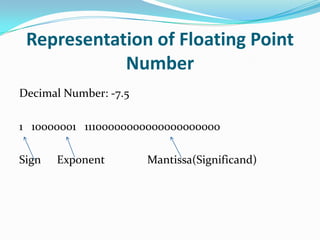

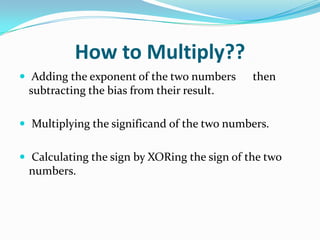
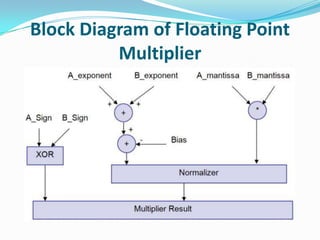

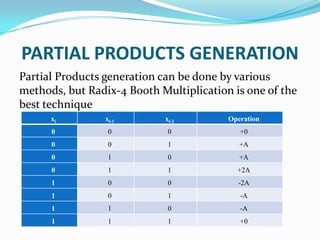
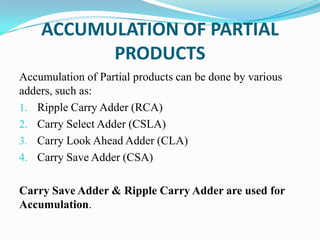
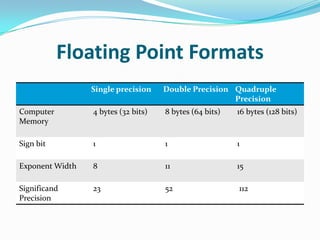
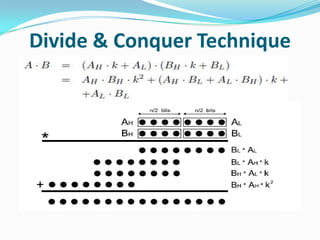



This document discusses the design of a floating point multiplier. It begins by explaining the representation of floating point numbers with sign, exponent, and significand. It then describes why floating point is used over fixed point for its wider range of values and greater precision over integers. The key steps for multiplying floating point numbers are described as adding the exponents and multiplying the significands, while XORing the signs. Block diagrams and techniques for partial product generation and accumulation are presented, including radix-4 Booth multiplication and use of carry save adders and ripple carry adders. Finally, floating point formats for single, double, and quadruple precision are shown along with using the divide and conquer technique for higher precision multiplication.


