An Introduction to FACTS
Presented by
T.S.L.V.Ayyarao
Assistant Pofessor
GMRIT
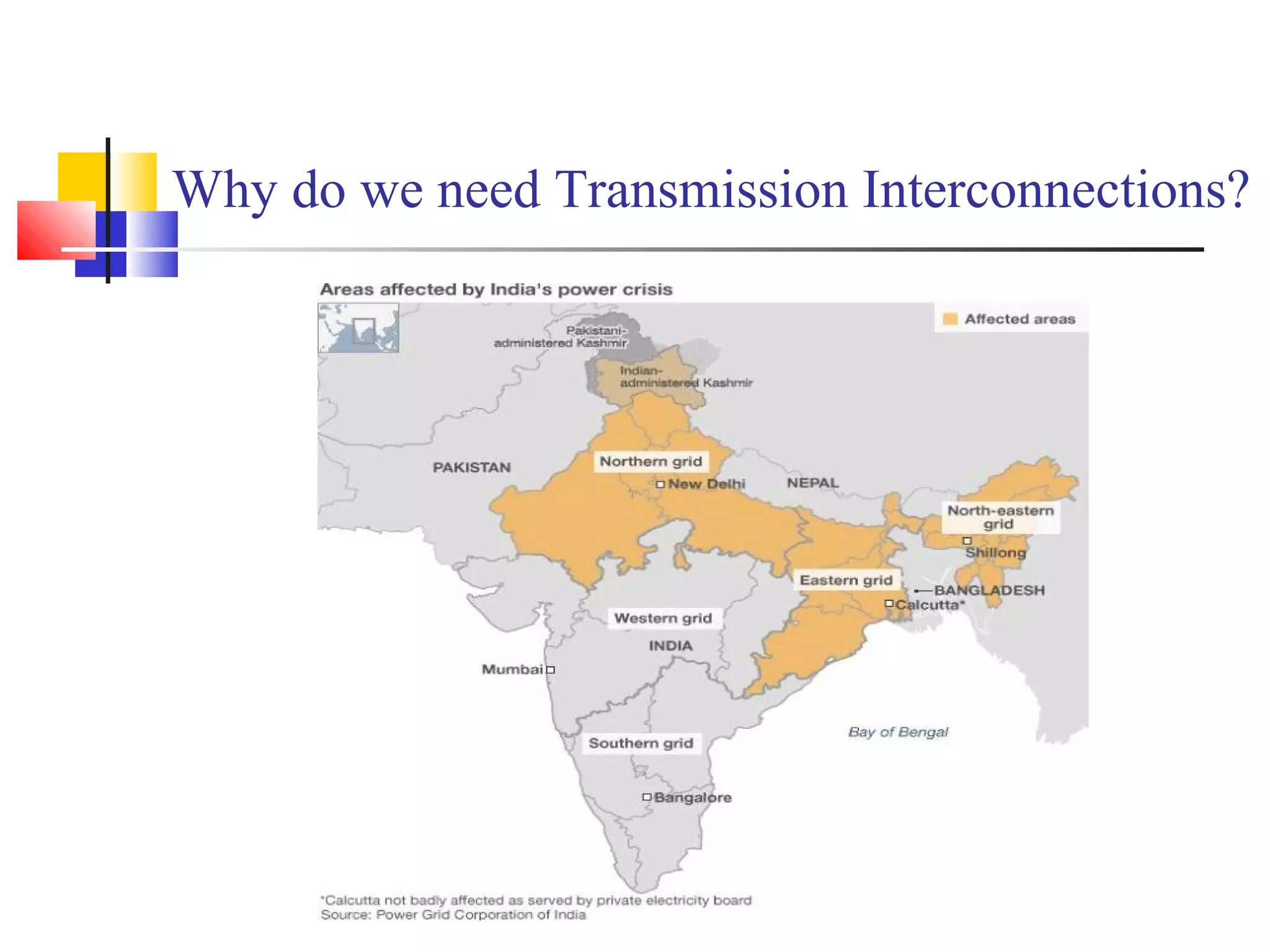
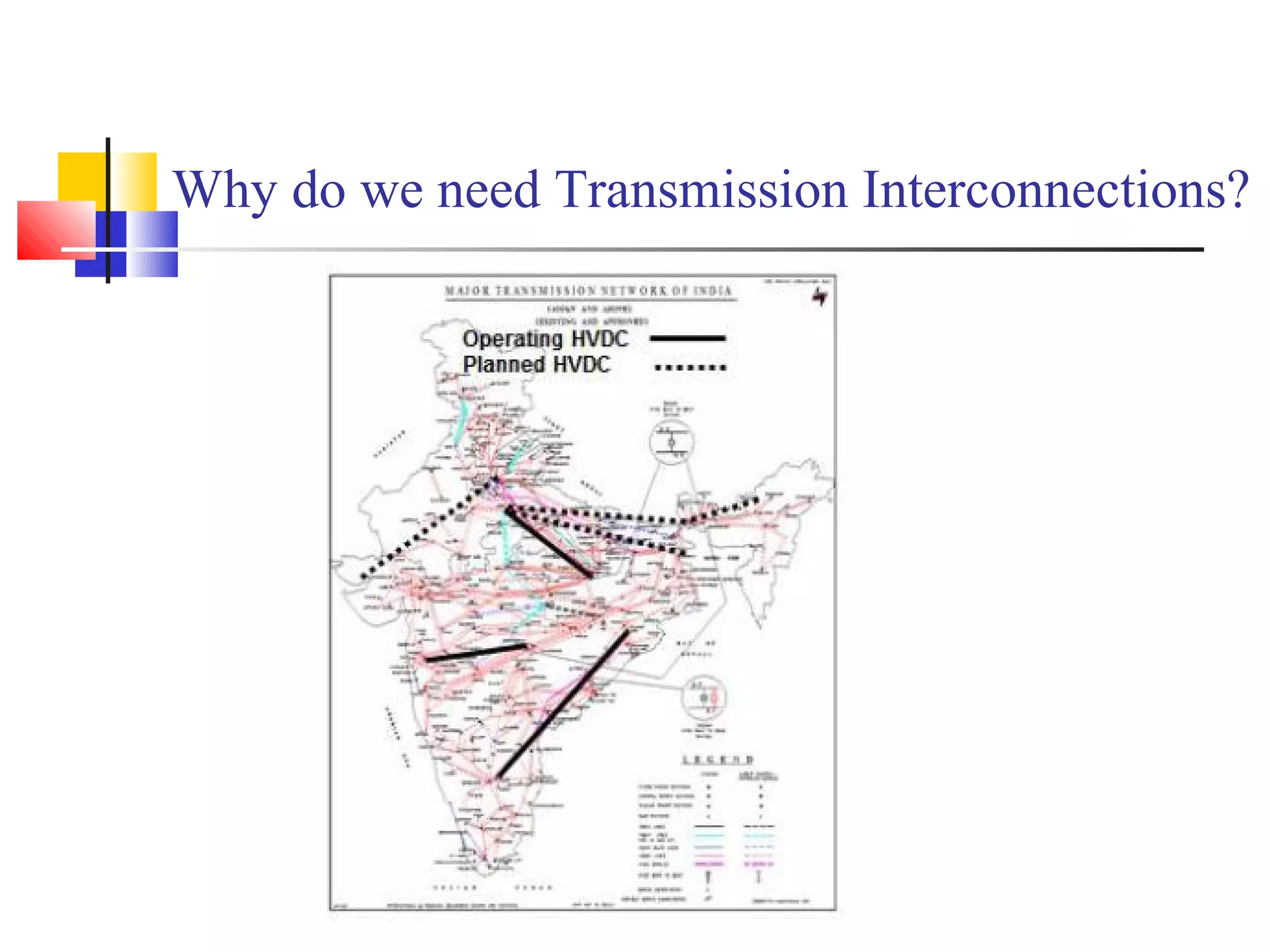
Why do we need Transmission Interconnections?
 India has an abundance of generation in the
Eastern and North-Eastern grids, primarily coal.
 But the other three grids are in deficit at peak
periods, regardless of season.
 Potentially significant swings in demand in the
Northern or Southern grids could quickly upset the
balance
Why do we need Transmission Interconnections?
 Delivery of Electrical Power
 To minimize the total power generation capacity
and Fuel cost.
 To supply electricity to the loads at minimum cost
with a required reliability.
 Transmission is an alternative to a new generation
resource.
 Economic energy or reserve sharing is constrained
by transmission capacity
Why do we need Transmission Interconnections?
Can we use the full potential of Transmission
interconnections?
 As power transfers grow, the system becomes
more complex to operate.
 The power systems of today are mechanically
controlled
If so what?
 Switching devices are mechanical and there is
little high speed
 Mechanical devices cannot be initiated frequently.
Why do we need Transmission Interconnections?
 Mechanical devices wear out quickly.
 In view point of both dynamic and steady state
operation, the system is really uncontrolled.
 In recent years, power demand increases day by
day.
 Increased demand and absence of long term
planning leads to less security and reduced quality
of supply.
Opportunities for FACTS
FACTS technology opens up opportunities to control
power and enhance the usage capability of line
 The current through the line can be controlled at
reasonable cost.
 Thus existing capacity of transmission lines can be
enhanced (opportunity).
Facts Controller
 Enables the power to flow under normal &
contingency conditions
 Control the interrelated parameters (series
impedance, shunt impedance, current, voltage, etc)
Opportunities for FACTS
 Damp oscillations at various frequencies below
rated frequency.
 Enable a line to carry power closer to its thermal
rating.
 These constraints cannot be overcome by
mechanical means without lowering transmission
capacity of line.
 Mechanical switching replaced with power
electronics
Opportunities for FACTS
 FACTS technology is not a single high power
controller.
 This technology needs incremental investment and
enhances transmission capacity step by step.
 Cost of FACTS controller are declining day by
day.
Power Flow in an AC System
 In ac system, the electrical generation and load
must balance at all times.
 The electrical system is self-regulating.
 If generation is less than load, voltage and
frequency drop.
 Active power flows from surplus generation areas
to deficit areas.
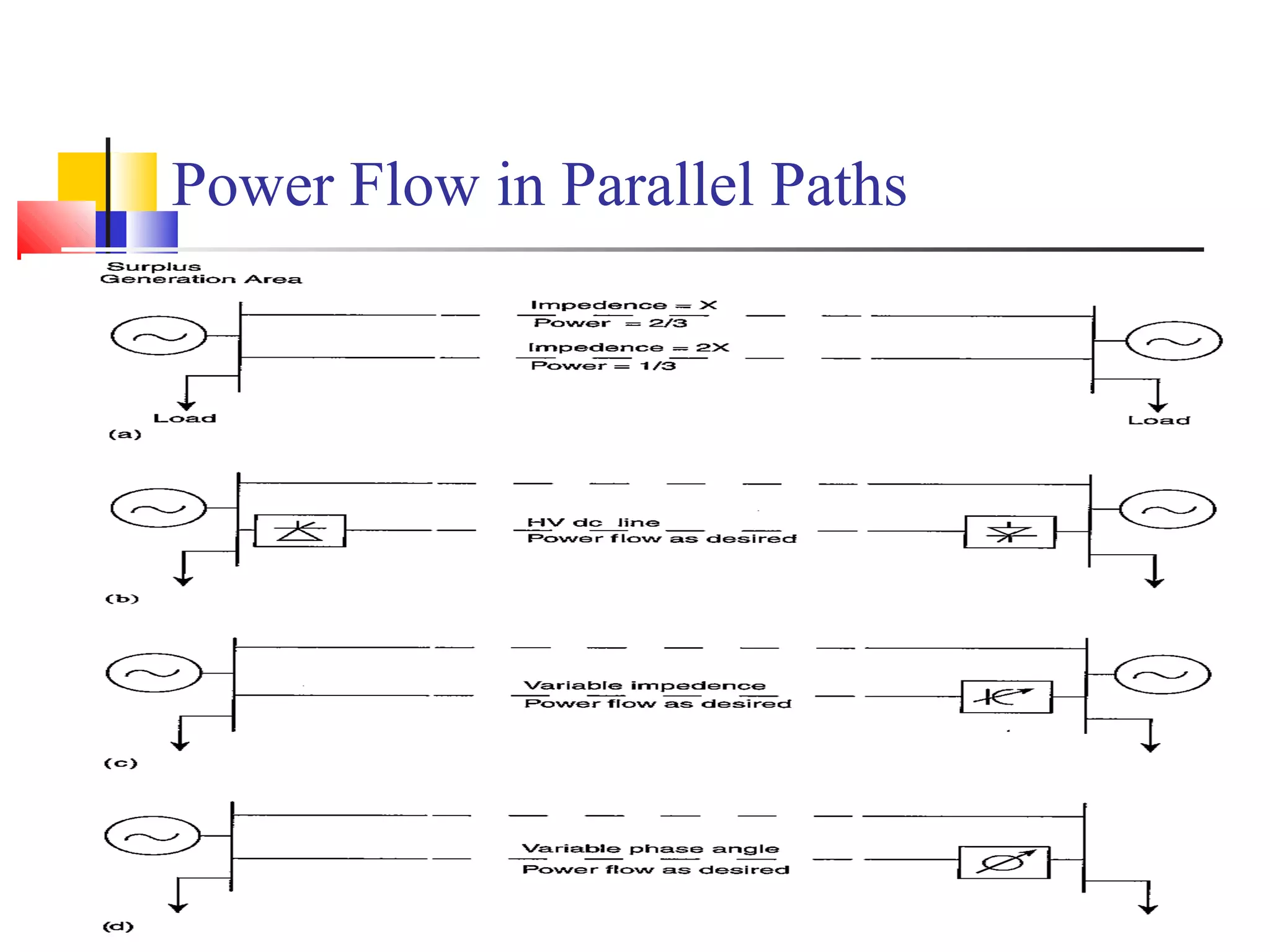
Power Flow in Parallel Paths
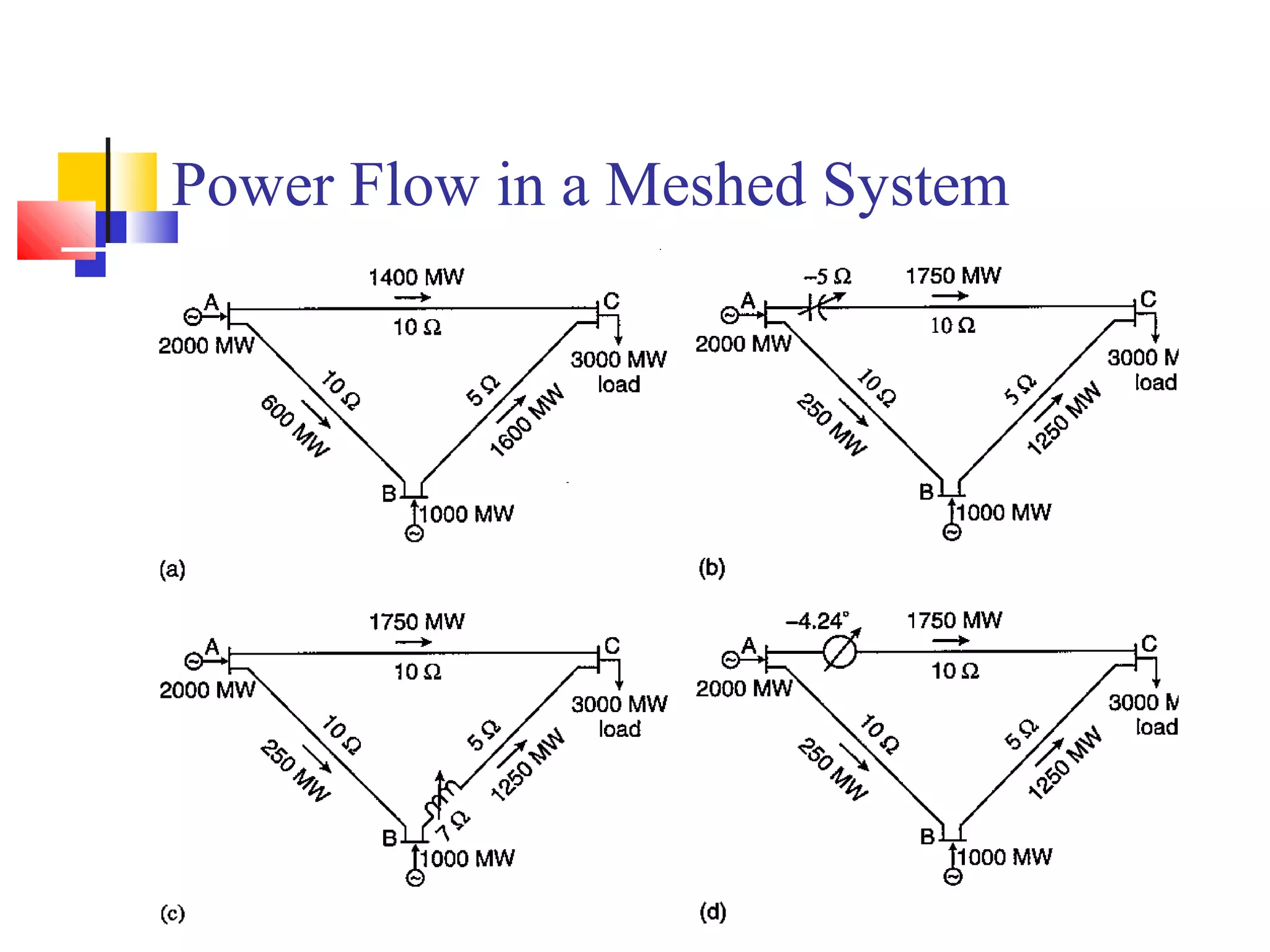
Power Flow in a Meshed System
 A adjustable series capacitor controls the power
flow
 Mechanically switched series capacitor is limited
by wear and tear.
 A series capacitor in a line may lead to
subsynchronous resonance.
 This occurs when mechanical resonance
frequencies of the shaft of a multiple turbine
generator unit coincides with 50hz minus the
electrical frequency of the line.
Power Flow in a Meshed System
If series capacitor is thyristor controlled
 It can be varied as often as required
 Rapidly damp any sub-synchronous resonance
conditions
 Damp low frequency oscillations in the power
flow
 Avoid risk of damage to generator shaft and
system collapse
 Greatly enhance stability of the network.
Limitations of loading capability
 For best use of transmission asset and to maximize
the loading capability, what are the limitations?
There are three kinds of limitations
 Thermal
 Dielectric
 Stability
Limitations of loading capability
 Thermal
For overhead line, thermal capability is a function of ambient
temperature, wind conditions, conditions of conductor, and
ground clearance. The FACTS technology can help in
making an effective used of newfound line capability.
 Dielectric
Being designed very conservatively, most lines can increase
operation voltage by 10% or even higher. FACTS
technology could be used to ensure acceptable over-
voltage and power flow conditions.
Limitations of loading capability
 Stability
The stability issues that limit the transmission capability
include:
1. Transient stability, dynamic stability, steady-state
stability, frequency collapse. Voltage collapse, and
sub-synchronous resonance.
2. The FACTS technology can certainly be used to
overcome any of the stability limits.

An introduction to FACTS Technology

  • 1.
    An Introduction toFACTS Presented by T.S.L.V.Ayyarao Assistant Pofessor GMRIT
  • 2.
    Why do weneed Transmission Interconnections?
  • 3.
    Why do weneed Transmission Interconnections?  India has an abundance of generation in the Eastern and North-Eastern grids, primarily coal.  But the other three grids are in deficit at peak periods, regardless of season.  Potentially significant swings in demand in the Northern or Southern grids could quickly upset the balance
  • 4.
    Why do weneed Transmission Interconnections?
  • 5.
    Why do weneed Transmission Interconnections?  Delivery of Electrical Power  To minimize the total power generation capacity and Fuel cost.  To supply electricity to the loads at minimum cost with a required reliability.  Transmission is an alternative to a new generation resource.  Economic energy or reserve sharing is constrained by transmission capacity
  • 6.
    Why do weneed Transmission Interconnections? Can we use the full potential of Transmission interconnections?  As power transfers grow, the system becomes more complex to operate.  The power systems of today are mechanically controlled If so what?  Switching devices are mechanical and there is little high speed  Mechanical devices cannot be initiated frequently.
  • 7.
    Why do weneed Transmission Interconnections?  Mechanical devices wear out quickly.  In view point of both dynamic and steady state operation, the system is really uncontrolled.  In recent years, power demand increases day by day.  Increased demand and absence of long term planning leads to less security and reduced quality of supply.
  • 8.
    Opportunities for FACTS FACTStechnology opens up opportunities to control power and enhance the usage capability of line  The current through the line can be controlled at reasonable cost.  Thus existing capacity of transmission lines can be enhanced (opportunity). Facts Controller  Enables the power to flow under normal & contingency conditions  Control the interrelated parameters (series impedance, shunt impedance, current, voltage, etc)
  • 9.
    Opportunities for FACTS Damp oscillations at various frequencies below rated frequency.  Enable a line to carry power closer to its thermal rating.  These constraints cannot be overcome by mechanical means without lowering transmission capacity of line.  Mechanical switching replaced with power electronics
  • 10.
    Opportunities for FACTS FACTS technology is not a single high power controller.  This technology needs incremental investment and enhances transmission capacity step by step.  Cost of FACTS controller are declining day by day.
  • 11.
    Power Flow inan AC System  In ac system, the electrical generation and load must balance at all times.  The electrical system is self-regulating.  If generation is less than load, voltage and frequency drop.  Active power flows from surplus generation areas to deficit areas.
  • 12.
    Power Flow inParallel Paths
  • 13.
    Power Flow ina Meshed System
  • 14.
    Power Flow ina Meshed System  A adjustable series capacitor controls the power flow  Mechanically switched series capacitor is limited by wear and tear.  A series capacitor in a line may lead to subsynchronous resonance.  This occurs when mechanical resonance frequencies of the shaft of a multiple turbine generator unit coincides with 50hz minus the electrical frequency of the line.
  • 15.
    Power Flow ina Meshed System If series capacitor is thyristor controlled  It can be varied as often as required  Rapidly damp any sub-synchronous resonance conditions  Damp low frequency oscillations in the power flow  Avoid risk of damage to generator shaft and system collapse  Greatly enhance stability of the network.
  • 16.
    Limitations of loadingcapability  For best use of transmission asset and to maximize the loading capability, what are the limitations? There are three kinds of limitations  Thermal  Dielectric  Stability
  • 17.
    Limitations of loadingcapability  Thermal For overhead line, thermal capability is a function of ambient temperature, wind conditions, conditions of conductor, and ground clearance. The FACTS technology can help in making an effective used of newfound line capability.  Dielectric Being designed very conservatively, most lines can increase operation voltage by 10% or even higher. FACTS technology could be used to ensure acceptable over- voltage and power flow conditions.
  • 18.
    Limitations of loadingcapability  Stability The stability issues that limit the transmission capability include: 1. Transient stability, dynamic stability, steady-state stability, frequency collapse. Voltage collapse, and sub-synchronous resonance. 2. The FACTS technology can certainly be used to overcome any of the stability limits.