DESIGN FOR
DISASSEMBLY
PRESENTED BY:
Sumra Noor
Adnan Shabbir
Fatimah Nawaz
INTRODUCTION
“Design for Disassembly (DFD) is the
process of designing products so that
they can be easily, cost-effectively
and rapidly taken apart at the end of
the product's life so that components
can be reused and/or recycled.”
• A framework of actions
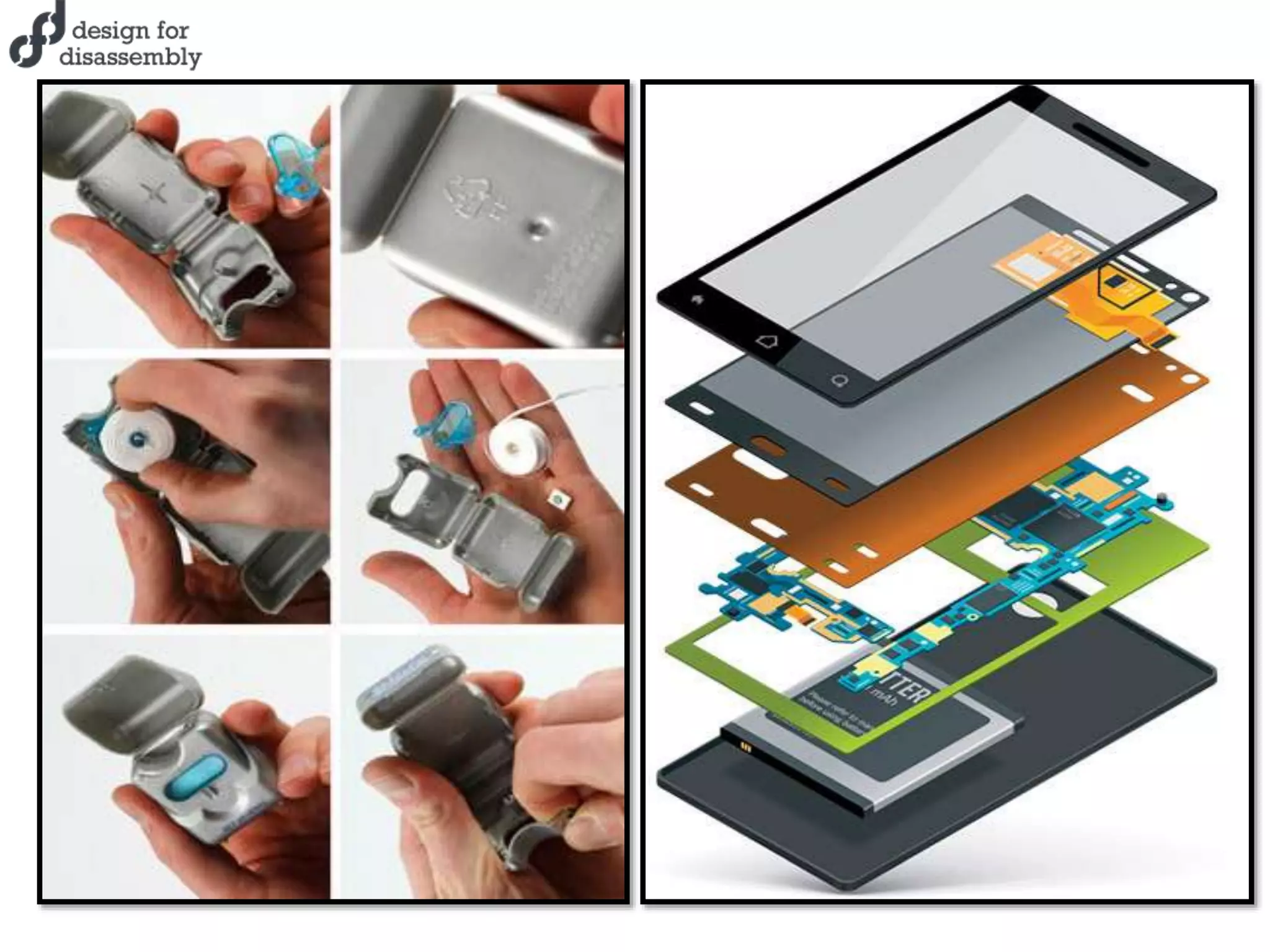
• It involves designing a product to be
disassembled for easier maintenance,
repair, recovery and reuse of
components/materials.
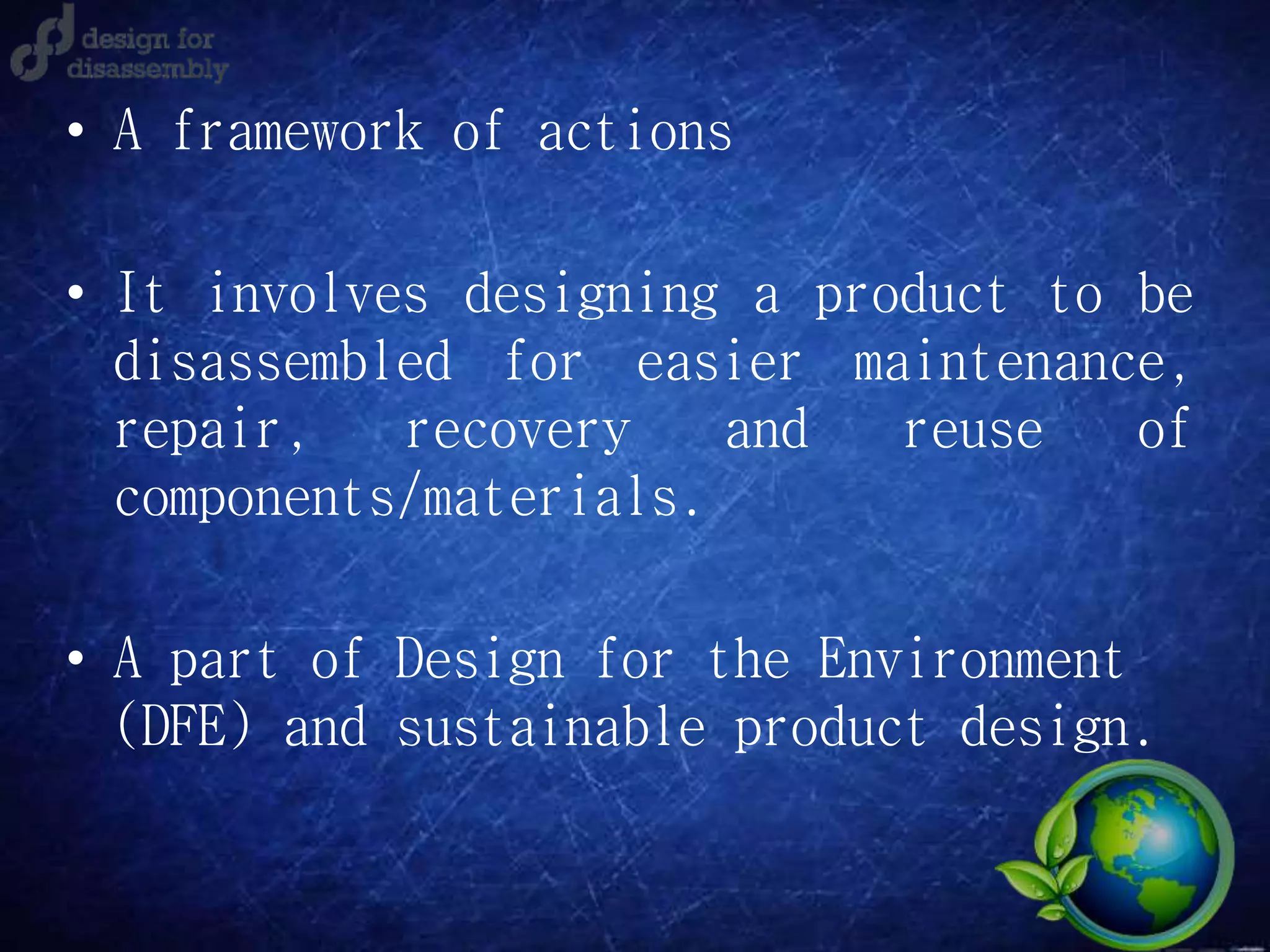
• A part of Design for the Environment
(DFE) and sustainable product design.
(Steven M. Greer)
“Alas, our technology has marched
ahead of our spiritual and social
evolution, making us, frankly, a
dangerous people.”
WHY DESIGN FOR
DISASSEMBLY
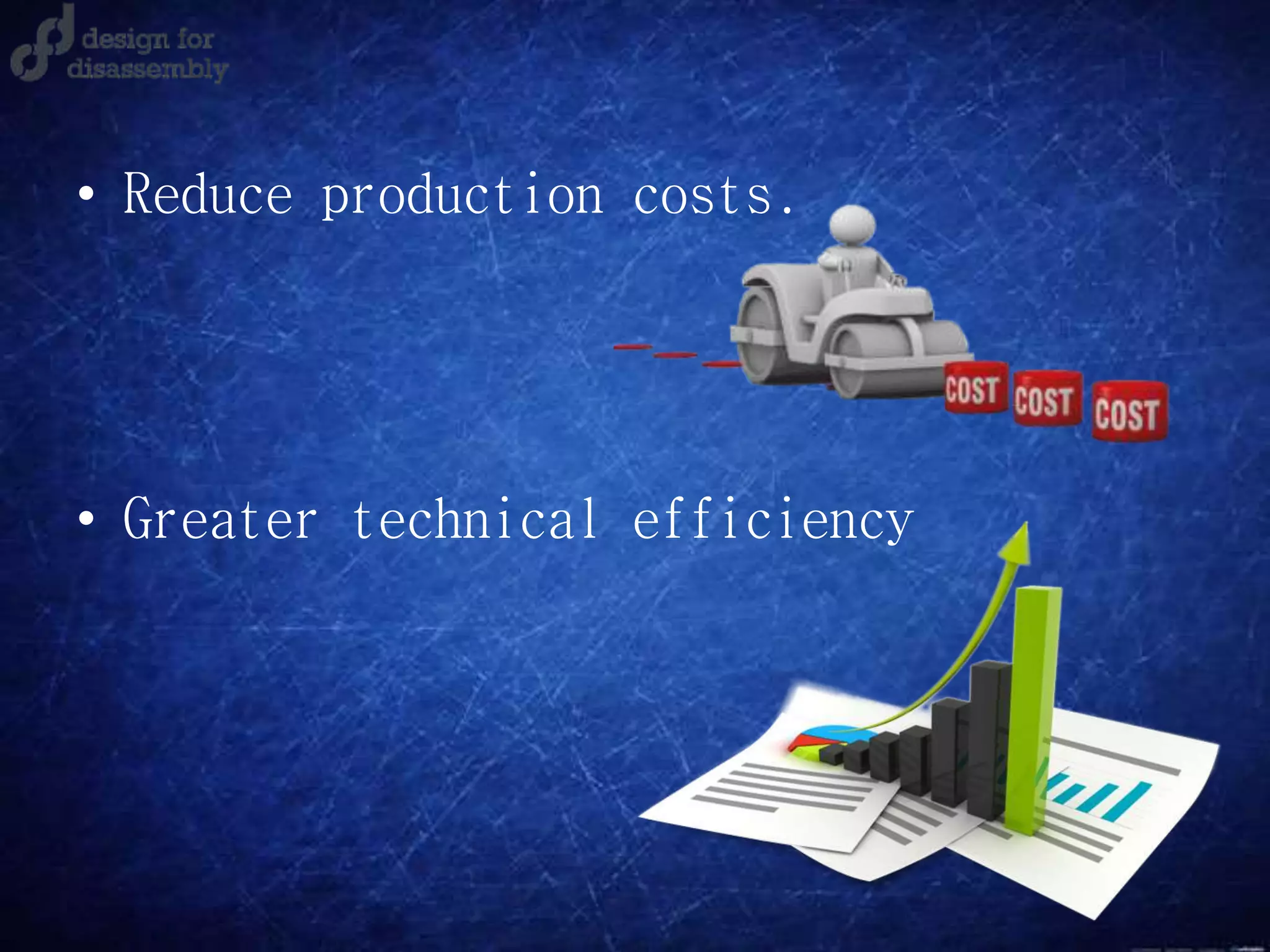
• Reduce production costs.
• Greater technical efficiency
• Greater flexibility during product
development
• Reducing the scale of resources
Design for ACTIVE DISASSEMBLY
• Involves the disassembly of
components using an all-encompassing
stimulus, rather than a fastener,
specific tool or machine.
• Offers the cleanest, non-destructive,
quick & efficient component
separation
It involves:
• use of smart materials
• account for both the product
architecture and fastener selection
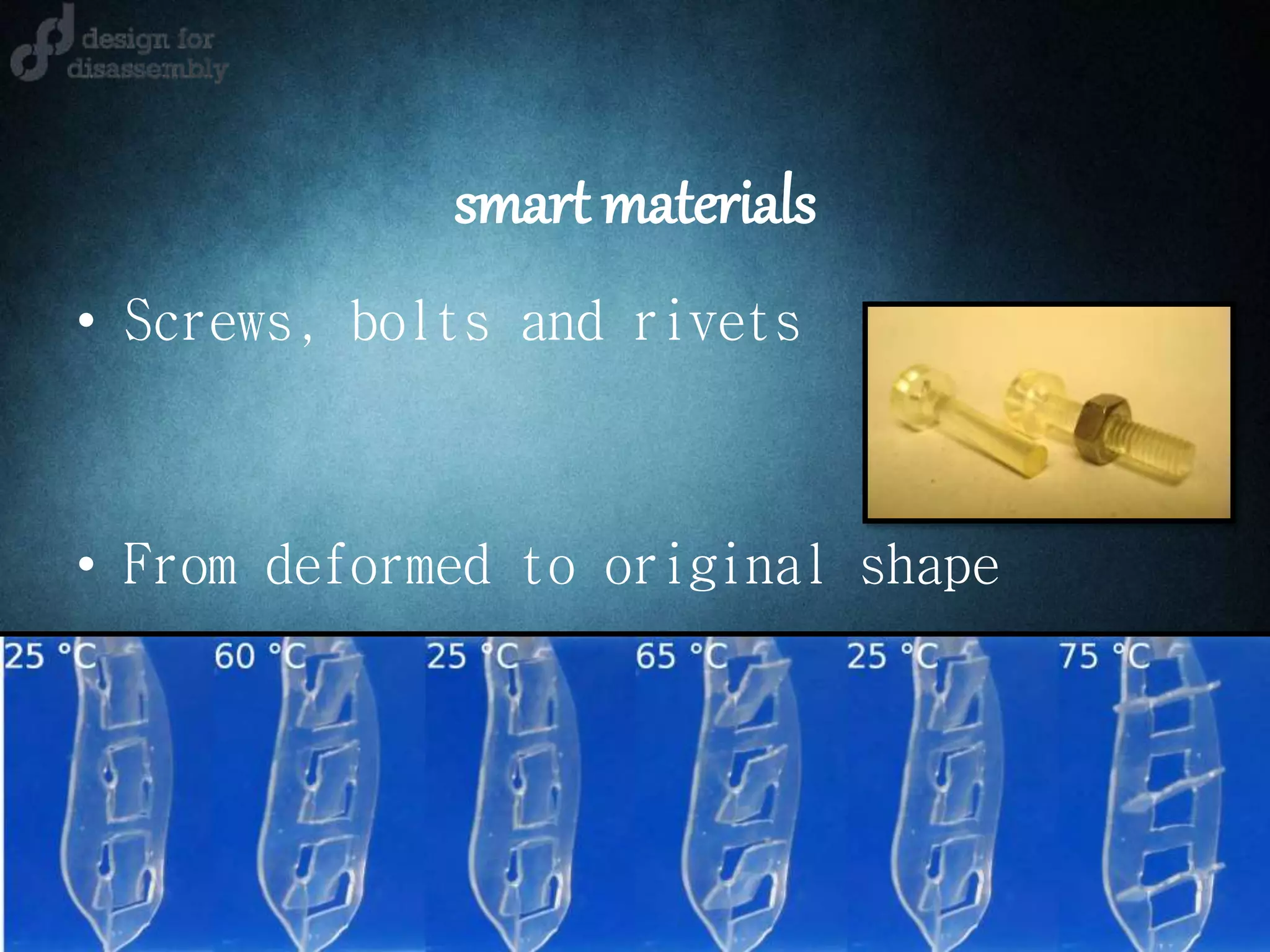
smart materials
• Self-disassembly at specific
temperatures
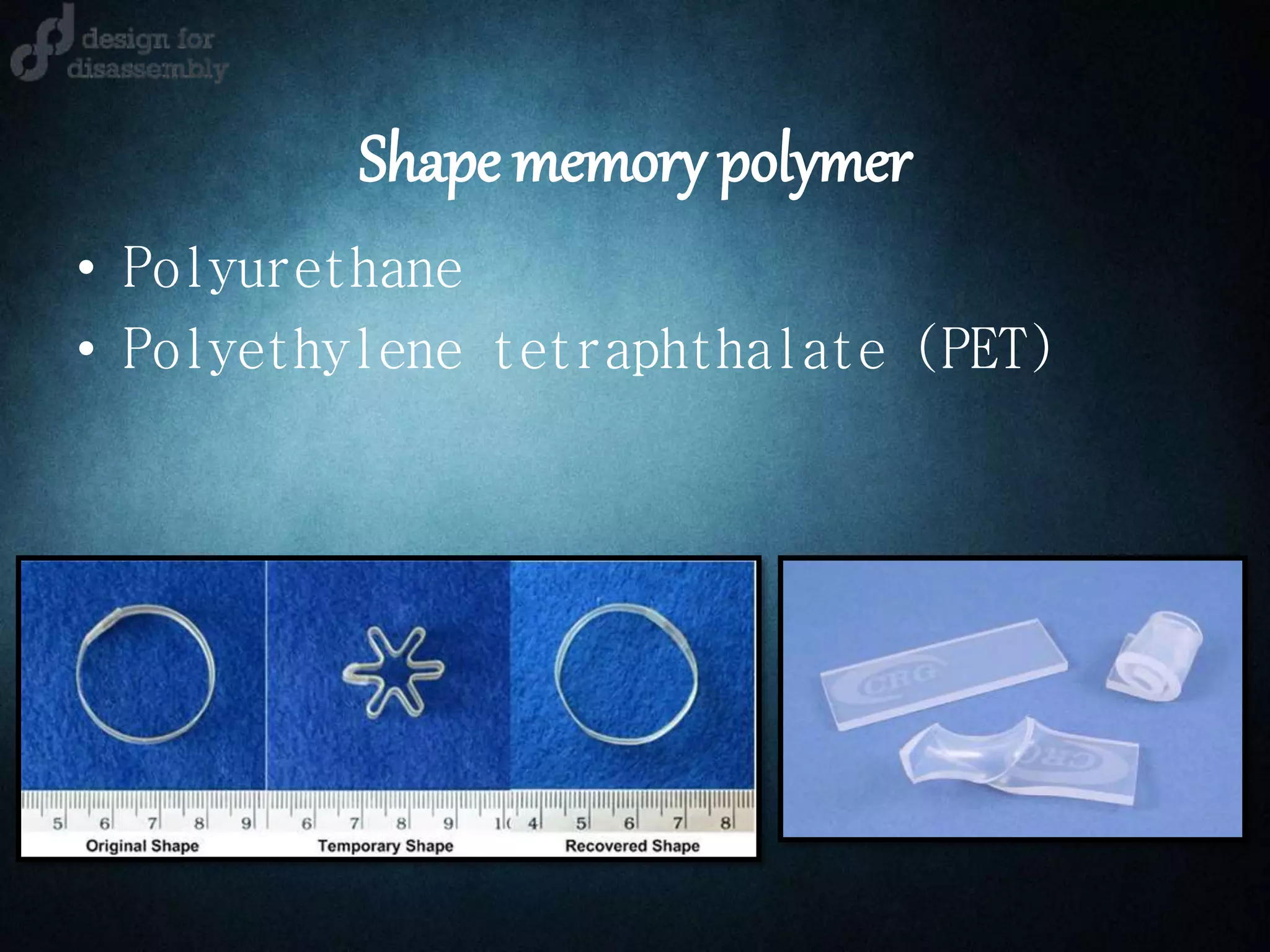
• Shape Memory Polymer and Shape Memory
Alloys
smart materials
• Screws, bolts and rivets
• From deformed to original shape
Shape memory polymer
• Polyurethane
• Polyethylene tetraphthalate (PET)
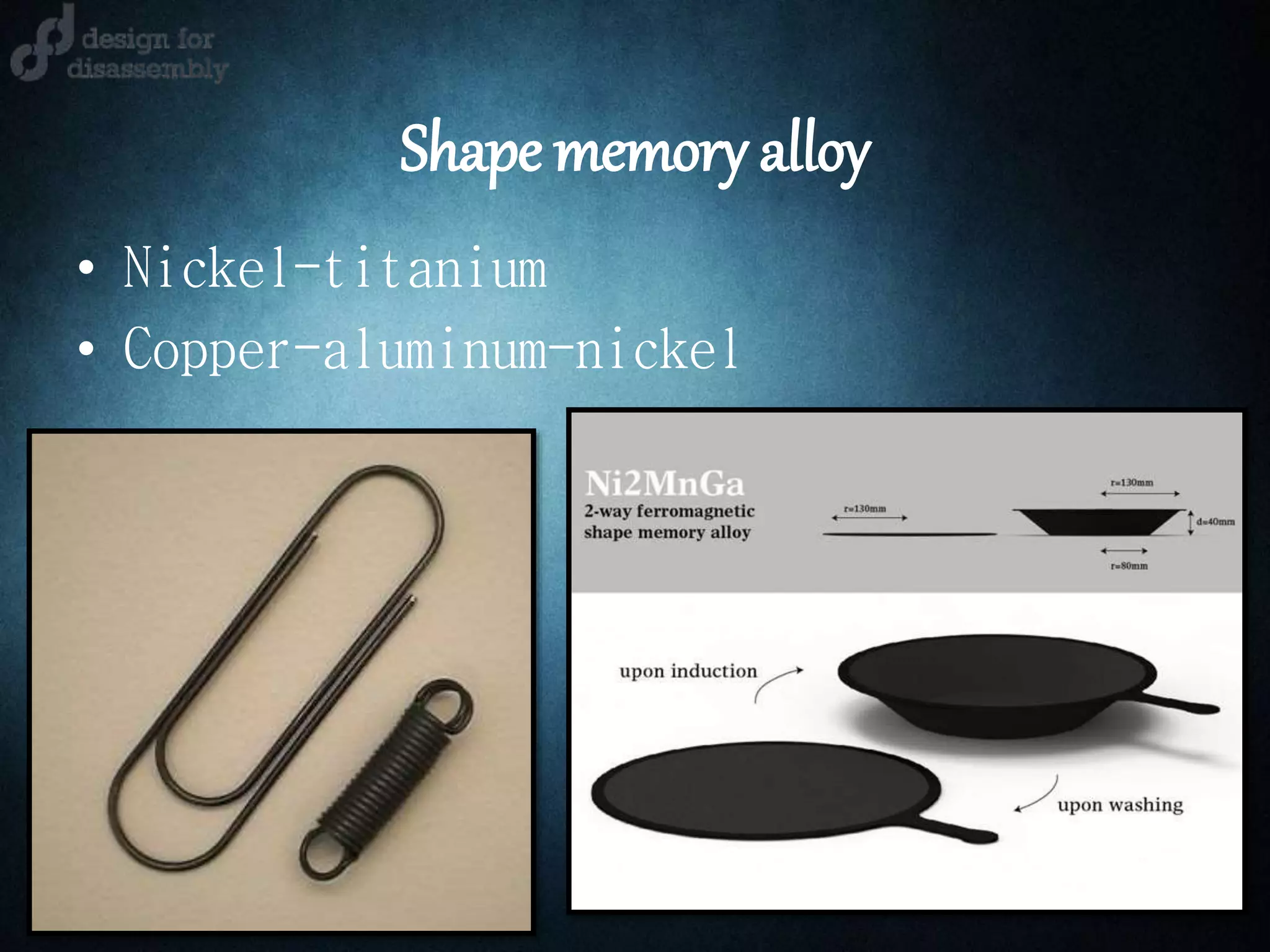
Shape memory alloy
• Nickel-titanium
• Copper-aluminum-nickel
principles for Design for
Disassembly
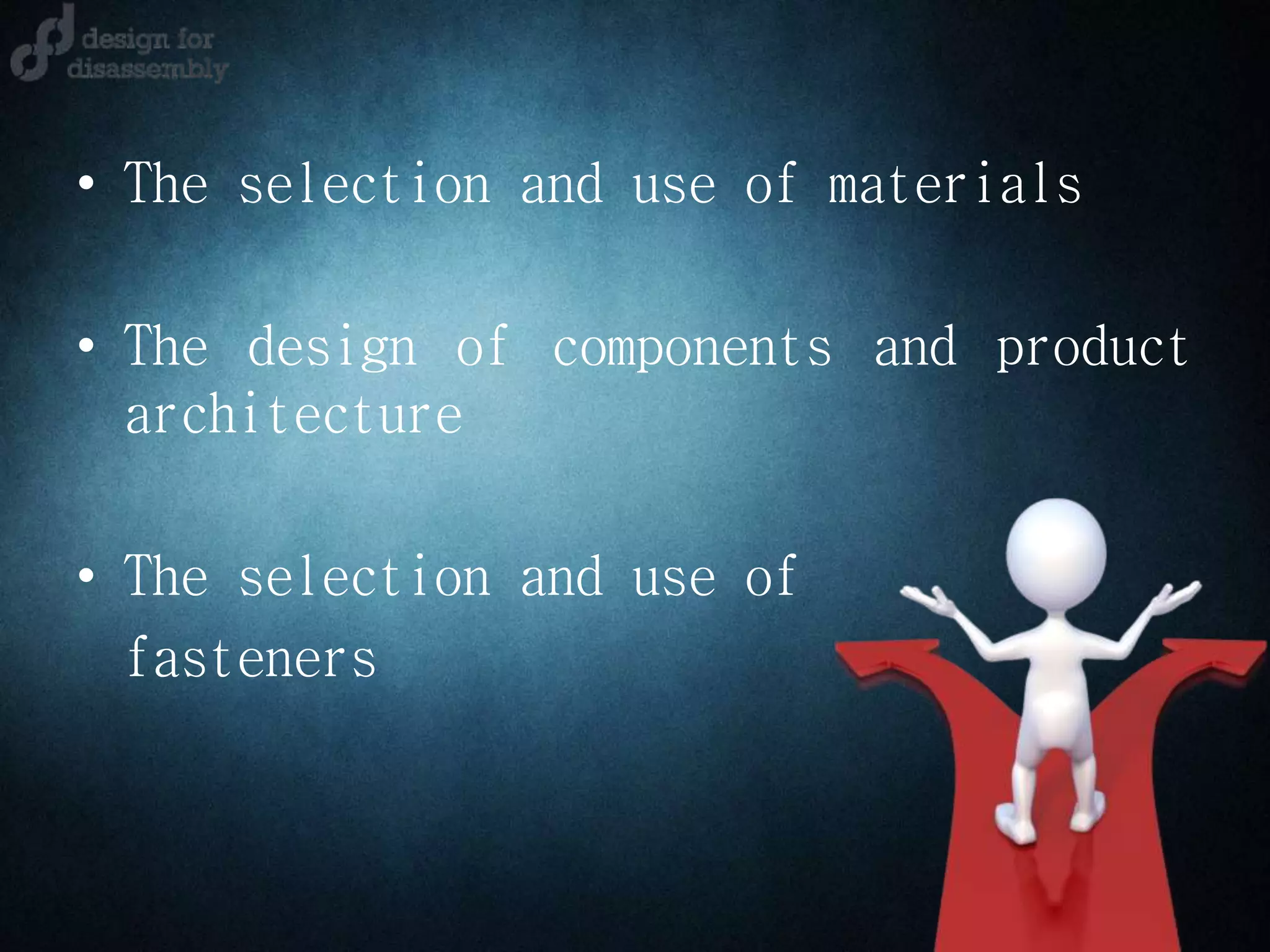
• The selection and use of materials
• The design of components and product
architecture
• The selection and use of
fasteners
Points to keep in mind for active
disassembly
• Choose recycling-compatible materials
• Avoid using materials which require
separating before recycling
• Use as few components and same
component types as possible
• Integrate components (which relate to
the same function) where possible.
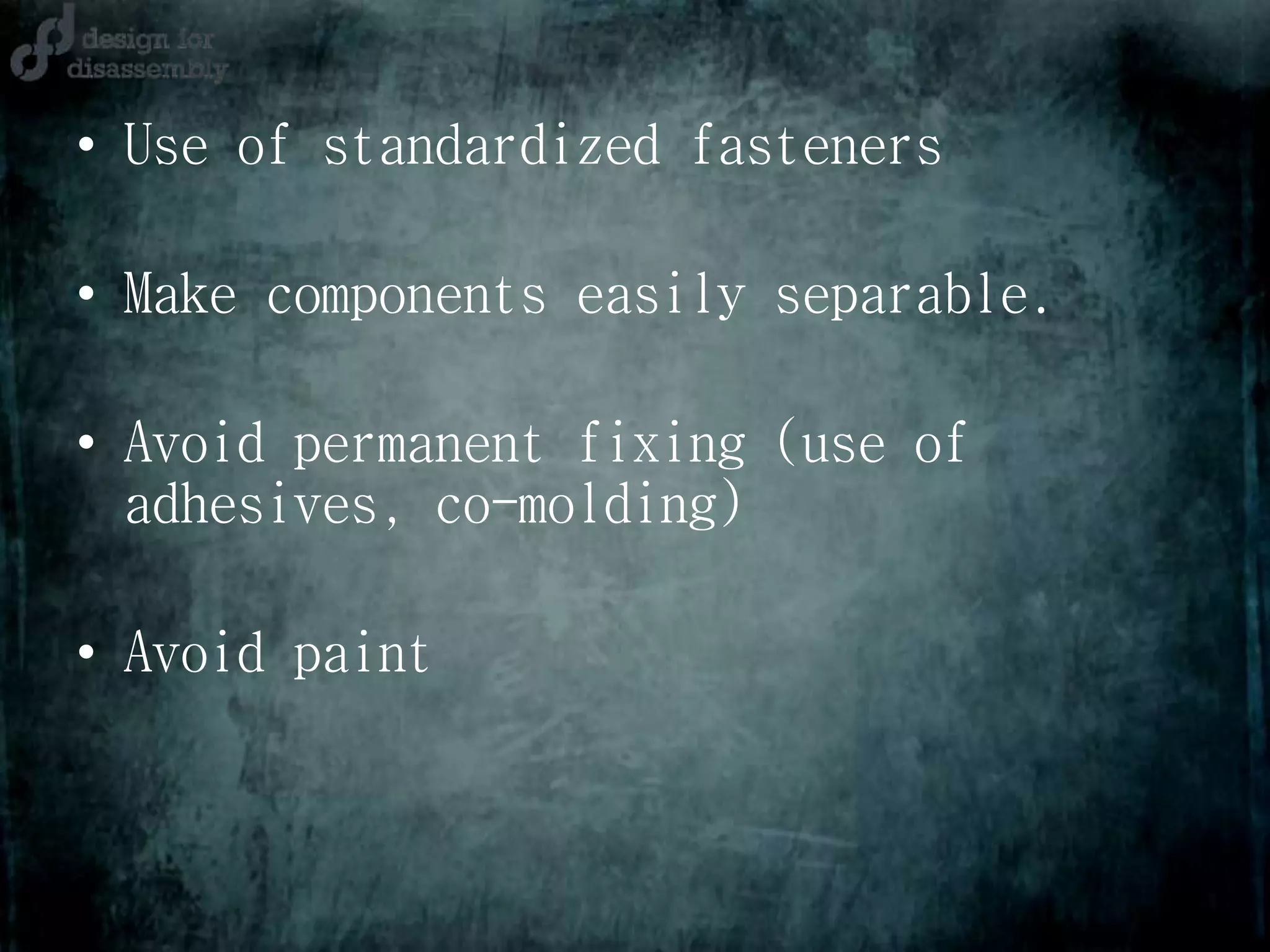
• Use of standardized fasteners
• Make components easily separable.
• Avoid permanent fixing (use of
adhesives, co-molding)
• Avoid paint
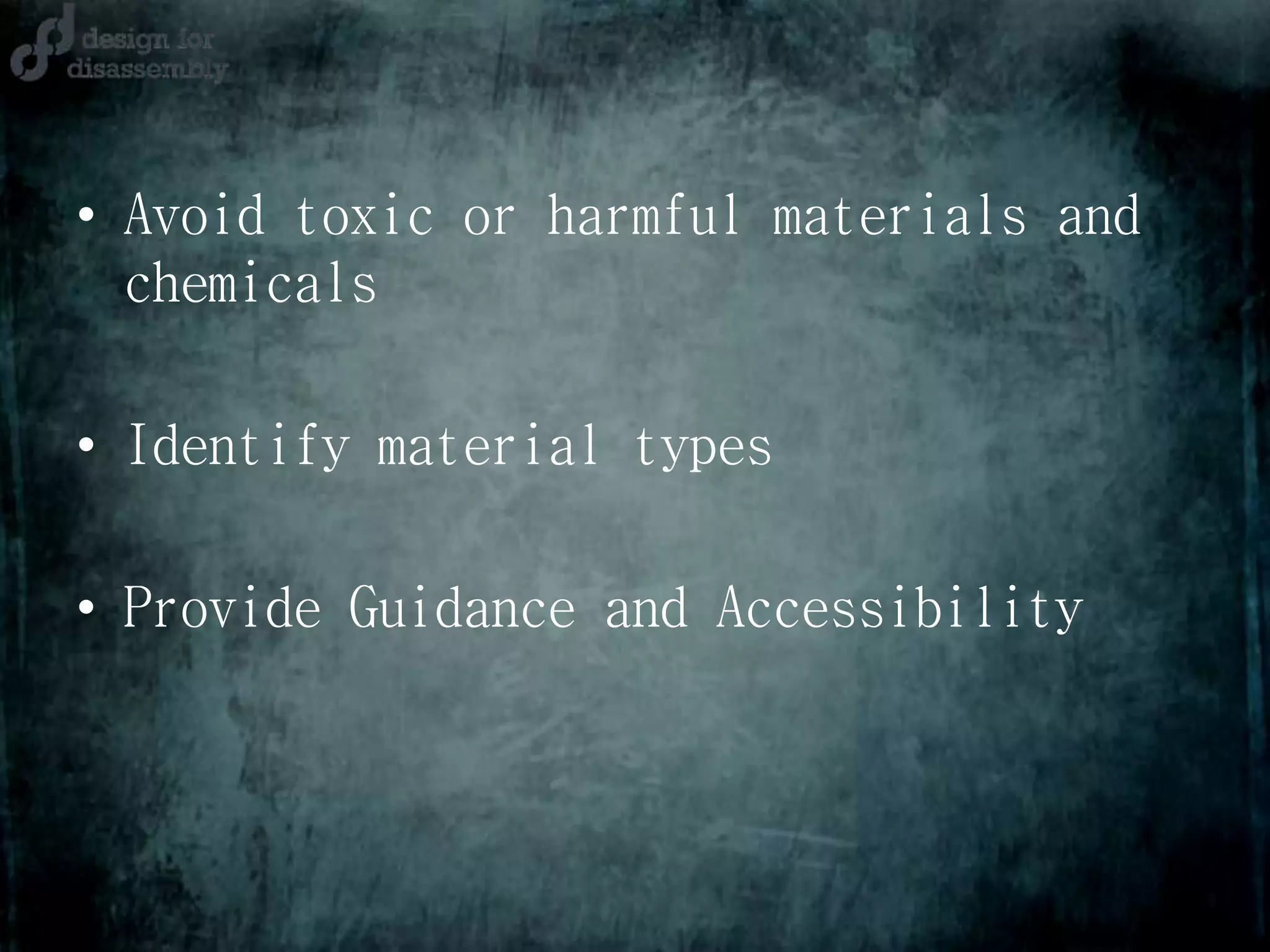
• Avoid toxic or harmful materials and
chemicals
• Identify material types
• Provide Guidance and Accessibility
WHAT DO SOME COMPANIES DO WITH THE
PRODUCTS AT THE END OF THEIR LIFE
Along with having so many benefits,
The Design For Disassembly adds to
the green environment and protects it
by allowing the products to be
Environment Friendly.
Design for-disassembly

Design for-disassembly

  • 2.
    DESIGN FOR DISASSEMBLY PRESENTED BY: SumraNoor Adnan Shabbir Fatimah Nawaz
  • 3.
    INTRODUCTION “Design for Disassembly(DFD) is the process of designing products so that they can be easily, cost-effectively and rapidly taken apart at the end of the product's life so that components can be reused and/or recycled.”
  • 5.
    • A frameworkof actions • It involves designing a product to be disassembled for easier maintenance, repair, recovery and reuse of components/materials. • A part of Design for the Environment (DFE) and sustainable product design.
  • 7.
    (Steven M. Greer) “Alas,our technology has marched ahead of our spiritual and social evolution, making us, frankly, a dangerous people.”
  • 8.
  • 9.
    • Reduce productioncosts. • Greater technical efficiency
  • 10.
    • Greater flexibilityduring product development • Reducing the scale of resources
  • 11.
    Design for ACTIVEDISASSEMBLY
  • 12.
    • Involves thedisassembly of components using an all-encompassing stimulus, rather than a fastener, specific tool or machine. • Offers the cleanest, non-destructive, quick & efficient component separation
  • 13.
    It involves: • useof smart materials • account for both the product architecture and fastener selection
  • 14.
    smart materials • Self-disassemblyat specific temperatures • Shape Memory Polymer and Shape Memory Alloys
  • 15.
    smart materials • Screws,bolts and rivets • From deformed to original shape
  • 16.
    Shape memory polymer •Polyurethane • Polyethylene tetraphthalate (PET)
  • 17.
    Shape memory alloy •Nickel-titanium • Copper-aluminum-nickel
  • 18.
    principles for Designfor Disassembly
  • 19.
    • The selectionand use of materials • The design of components and product architecture • The selection and use of fasteners
  • 20.
    Points to keepin mind for active disassembly
  • 21.
    • Choose recycling-compatiblematerials • Avoid using materials which require separating before recycling • Use as few components and same component types as possible • Integrate components (which relate to the same function) where possible.
  • 22.
    • Use ofstandardized fasteners • Make components easily separable. • Avoid permanent fixing (use of adhesives, co-molding) • Avoid paint
  • 23.
    • Avoid toxicor harmful materials and chemicals • Identify material types • Provide Guidance and Accessibility
  • 24.
    WHAT DO SOMECOMPANIES DO WITH THE PRODUCTS AT THE END OF THEIR LIFE
  • 26.
    Along with havingso many benefits, The Design For Disassembly adds to the green environment and protects it by allowing the products to be Environment Friendly.