PRODUCT
DESIGNING
AND
DEVELOPMENT
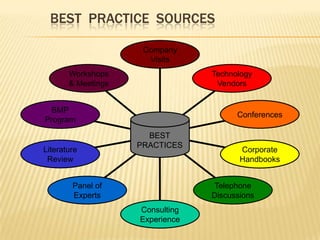
BEST PRACTICE SOURCES

                     Company
                      Visits
       Workshops                 Technology
       & Meetings                 Vendors


 BMP
                                       Conferences
Program
                      BEST
                    PRACTICES
Literature                              Corporate
 Review                                 Handbooks


        Panel of                 Telephone
        Experts                  Discussions
                    Consulting
                    Experience
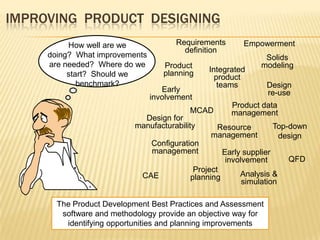
IMPROVING PRODUCT DESIGNING
          How well are we             Requirements         Empowerment
                                        definition
     doing? What improvements                                    Solids
     are needed? Where do we       Product                      modeling
                                   planning     Integrated
          start? Should we                        product
             benchmark?                            teams         Design
                                   Early                         re-use
                                involvement
                                                       Product data
                                          MCAD         management
                             Design for
                           manufacturability     Resource             Top-down
                                                management             design
                                Configuration
                                management           Early supplier
                                                      involvement        QFD
                                           Project
                             CAE          planning        Analysis &
                                                          simulation

       The Product Development Best Practices and Assessment
        software and methodology provide an objective way for
         identifying opportunities and planning improvements
IDENTIFYING CUSTOMER NEEDS

 Important to know their needs and effectively
  communicate them to the development team.
 Output results in:
     Customer needs statements
     Organized in a hierarchical order

     Each need is assigned a rating of importance
ESTABLISHING TARGET SPECIFICATIONS

 Specifications define what the product is
  supposed to do.
 Serves as a translation of customer needs
  into technical terms.
 Target specs are set early and refined as the
  team zeros in on a choice of product
  concept.
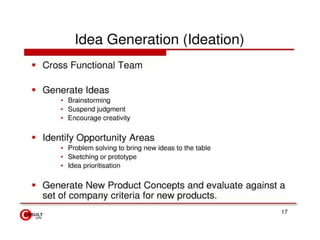
CONCEPT GENERATION
   The goal is to thoroughly explore the space of
    product concepts that may address the customer
    needs.
   Consists of:
       External searches
       Creative problem solving within the team
       Results in maybe 10 to 20 concepts, each with a sketch
        and brief description
CONCEPT SELECTION

 A process where each concept is evaluated
  to identify the most promising concepts.
 Requires several iterations and may cause
  additional concept generation and
  refinement.
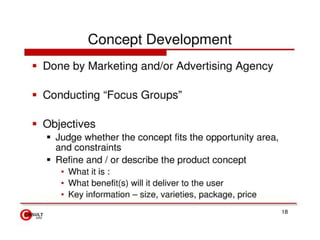
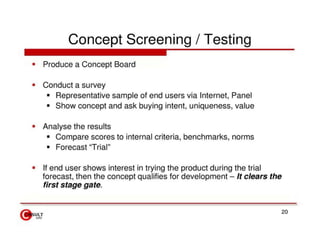
CONCEPT TESTING
   One or more concepts are tested to verify the
    customer needs have been met.
   To also assess the market potential of the product.
   I.D. any shortcomings before any further
    development.
   Poor customer feedback could result in terminating
    a project.
SETTING FINAL SPECIFICATIONS

      Previous target specifications are revisited
       AFTER a concept has been selected and
       tested.
      The project team needs to commit to specific
       values of metrics for the final specifications.
      Technical modeling done and they look at
       trade-offs between cost and performance.
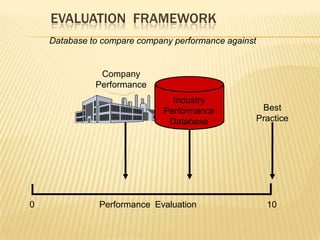
EVALUATION FRAMEWORK
    Database to compare company performance against


               Company
              Performance
                               Industry
                             Performance               Best
                              Database                Practice


0              Performance Evaluation                   10
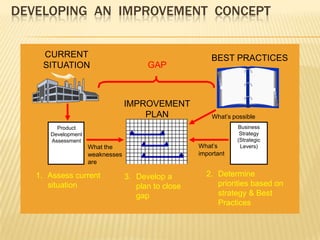
DEVELOPING AN IMPROVEMENT CONCEPT


    CURRENT                                             BEST PRACTICES
    SITUATION                          GAP


                                 IMPROVEMENT
                                     PLAN               What’s possible
        Product                                                 Business
      Development                                                Strategy
      Assessment                                                (Strategic
                    What the                        What’s       Levers)
                    weaknesses                      important
                    are

   1. Assess current             3. Develop a         2. Determine
      situation                     plan to close        priorities based on
                                    gap                  strategy & Best
                                                         Practices
S

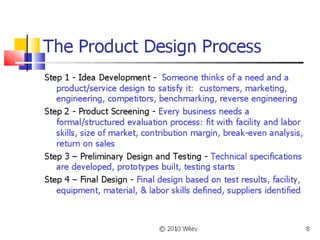
Product design and development

  • 1.
  • 3.
    BEST PRACTICE SOURCES Company Visits Workshops Technology & Meetings Vendors BMP Conferences Program BEST PRACTICES Literature Corporate Review Handbooks Panel of Telephone Experts Discussions Consulting Experience
  • 4.
    IMPROVING PRODUCT DESIGNING How well are we Requirements Empowerment definition doing? What improvements Solids are needed? Where do we Product modeling planning Integrated start? Should we product benchmark? teams Design Early re-use involvement Product data MCAD management Design for manufacturability Resource Top-down management design Configuration management Early supplier involvement QFD Project CAE planning Analysis & simulation The Product Development Best Practices and Assessment software and methodology provide an objective way for identifying opportunities and planning improvements
  • 5.
    IDENTIFYING CUSTOMER NEEDS Important to know their needs and effectively communicate them to the development team.  Output results in:  Customer needs statements  Organized in a hierarchical order  Each need is assigned a rating of importance
  • 6.
    ESTABLISHING TARGET SPECIFICATIONS Specifications define what the product is supposed to do.  Serves as a translation of customer needs into technical terms.  Target specs are set early and refined as the team zeros in on a choice of product concept.
  • 7.
    CONCEPT GENERATION  The goal is to thoroughly explore the space of product concepts that may address the customer needs.  Consists of:  External searches  Creative problem solving within the team  Results in maybe 10 to 20 concepts, each with a sketch and brief description
  • 8.
    CONCEPT SELECTION  Aprocess where each concept is evaluated to identify the most promising concepts.  Requires several iterations and may cause additional concept generation and refinement.
  • 9.
    CONCEPT TESTING  One or more concepts are tested to verify the customer needs have been met.  To also assess the market potential of the product.  I.D. any shortcomings before any further development.  Poor customer feedback could result in terminating a project.
  • 10.
    SETTING FINAL SPECIFICATIONS  Previous target specifications are revisited AFTER a concept has been selected and tested.  The project team needs to commit to specific values of metrics for the final specifications.  Technical modeling done and they look at trade-offs between cost and performance.
  • 13.
    EVALUATION FRAMEWORK Database to compare company performance against Company Performance Industry Performance Best Database Practice 0 Performance Evaluation 10
  • 25.
    DEVELOPING AN IMPROVEMENTCONCEPT CURRENT BEST PRACTICES SITUATION GAP IMPROVEMENT PLAN What’s possible Product Business Development Strategy Assessment (Strategic What the What’s Levers) weaknesses important are 1. Assess current 3. Develop a 2. Determine situation plan to close priorities based on gap strategy & Best Practices
  • 34.