Presented on
“QUALITY DAY”
By
Dr. Aqeel Ahmed Khan
TQM-ACH
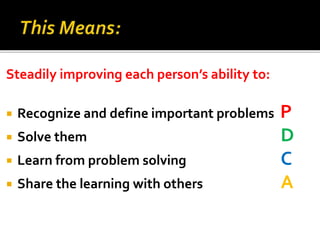
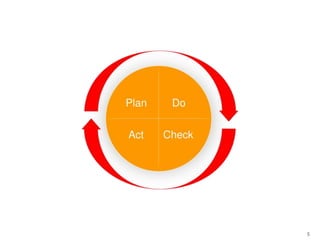
Steadily improving each person’s ability to:
 Recognize and define important problems P
 Solve them D
 Learn from problem solving C
 Share the learning with others A
 PDCA-CQI
 DMAIC
 DMADV
5
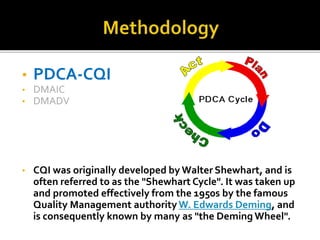
• PDCA-CQI
• DMAIC
• DMADV
• CQI was originally developed by Walter Shewhart, and is
often referred to as the "Shewhart Cycle". It was taken up
and promoted effectively from the 1950s by the famous
Quality Management authorityW. Edwards Deming, and
is consequently known by many as "the Deming Wheel".
7
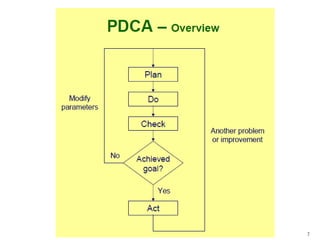
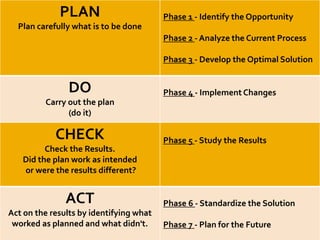
PLAN
Plan carefully what is to be done
Phase 1 - Identify the Opportunity
Phase 2 - Analyze the Current Process
Phase 3 - Develop the Optimal Solution
DO
Carry out the plan
(do it)
Phase 4 - Implement Changes
CHECK
Check the Results.
Did the plan work as intended
or were the results different?
Phase 5 - Study the Results
ACT
Act on the results by identifying what
worked as planned and what didn't.
Phase 6 - Standardize the Solution
Phase 7 - Plan for the Future
• PDCA-CQI
• DMAIC(duh-may-ick)
• DMADV
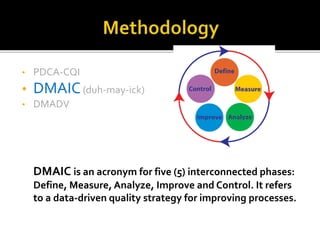
DMAIC is an acronym for five (5) interconnected phases:
Define, Measure, Analyze, Improve and Control. It refers
to a data-driven quality strategy for improving processes.
• PDCA-CQI
• DMAIC (duh-may-ick)
• DMADV
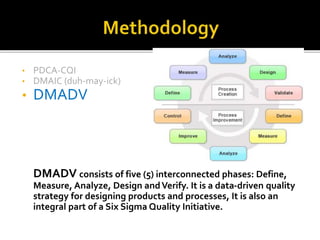
DMADV consists of five (5) interconnected phases: Define,
Measure, Analyze, Design andVerify. It is a data-driven quality
strategy for designing products and processes, It is also an
integral part of a Six Sigma Quality Initiative.
There are for the 7 BasicTools which we are going
to define.
Generally they can be subdivided into:
 mathematical statistical Tools
 logical tools
4/30/2014 11
The concept behind the seven basic tools came
from Kaoru Ishikawa, a renowned quality expert
from Japan.
According to Ishikawa, 95% of quality-related
problems can be resolved with these basic tools.
Basic Quality control tools
1. Cause and effect diagram
2. Control Charts
3. Check sheets
4. Histograms
5. Pareto charts
6. Scatter Diagram
7. Flow Charts
a. Deployment flow charts
b. Linear or activity flow charts
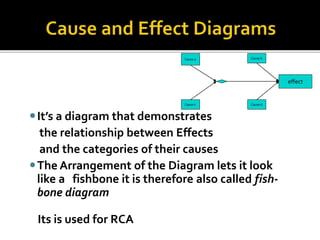
It’s a diagram that demonstrates
the relationship between Effects
and the categories of their causes
The Arrangement of the Diagram lets it look
like a fishbone it is therefore also called fish-
bone diagram
Its is used for RCA
14
effect
Cause bCause a
Cause dCause c
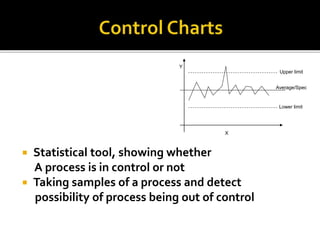
 Statistical tool, showing whether
A process is in control or not
 Taking samples of a process and detect
possibility of process being out of control
4/30/2014 15
Y
X
Upper limit
Lower limit
Average/Spec
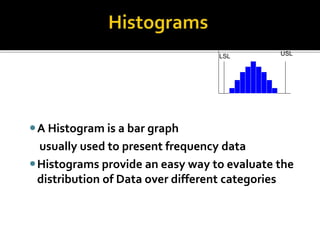
A Histogram is a bar graph
usually used to present frequency data
Histograms provide an easy way to evaluate the
distribution of Data over different categories
4/30/2014 16
LSL USL
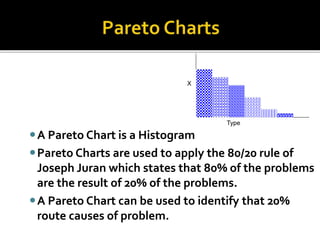
A Pareto Chart is a Histogram
Pareto Charts are used to apply the 80/20 rule of
Joseph Juran which states that 80% of the problems
are the result of 20% of the problems.
A Pareto Chart can be used to identify that 20%
route causes of problem.
4/30/2014 17
Type
X
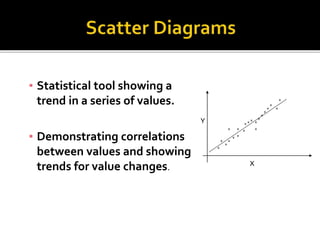
▪ Statistical tool showing a
trend in a series of values.
▪ Demonstrating correlations
between values and showing
trends for value changes.
4/30/2014 18
Y
X
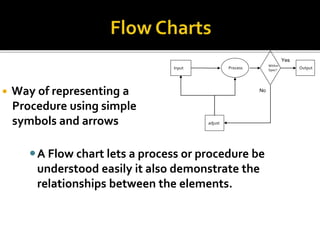
 Way of representing a
Procedure using simple
symbols and arrows
A Flow chart lets a process or procedure be
understood easily it also demonstrate the
relationships between the elements.
4/30/2014 19
Input
Within
Spec?
Process Output
adjust
Yes
No
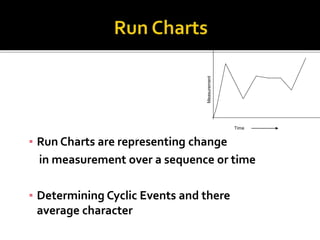
▪ Run Charts are representing change
in measurement over a sequence or time
▪ Determining Cyclic Events and there
average character
4/30/2014 20
Time
Measurement
The essentials of this tool set for full support for
complex decision making, identifying key
issues and causes of persistent problems.
It will show the ways to involve teams for
continuous improvements, performance
analysis and problem solving.
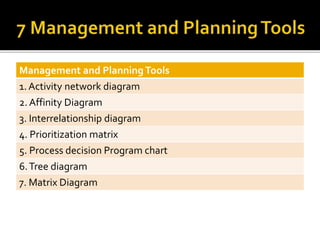
Management and PlanningTools
1. Activity network diagram
2. Affinity Diagram
3. Interrelationship diagram
4. Prioritization matrix
5. Process decision Program chart
6.Tree diagram
7. Matrix Diagram
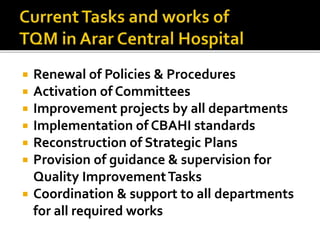
 Renewal of Policies & Procedures
 Activation of Committees
 Improvement projects by all departments
 Implementation of CBAHI standards
 Reconstruction of Strategic Plans
 Provision of guidance & supervision for
Quality ImprovementTasks
 Coordination & support to all departments
for all required works
THANK YOU

Quality Improvement Methodologies and Tools

  • 1.
    Presented on “QUALITY DAY” By Dr.Aqeel Ahmed Khan TQM-ACH
  • 2.
    Steadily improving eachperson’s ability to:  Recognize and define important problems P  Solve them D  Learn from problem solving C  Share the learning with others A
  • 4.
  • 5.
  • 6.
    • PDCA-CQI • DMAIC •DMADV • CQI was originally developed by Walter Shewhart, and is often referred to as the "Shewhart Cycle". It was taken up and promoted effectively from the 1950s by the famous Quality Management authorityW. Edwards Deming, and is consequently known by many as "the Deming Wheel".
  • 7.
  • 8.
    PLAN Plan carefully whatis to be done Phase 1 - Identify the Opportunity Phase 2 - Analyze the Current Process Phase 3 - Develop the Optimal Solution DO Carry out the plan (do it) Phase 4 - Implement Changes CHECK Check the Results. Did the plan work as intended or were the results different? Phase 5 - Study the Results ACT Act on the results by identifying what worked as planned and what didn't. Phase 6 - Standardize the Solution Phase 7 - Plan for the Future
  • 9.
    • PDCA-CQI • DMAIC(duh-may-ick) •DMADV DMAIC is an acronym for five (5) interconnected phases: Define, Measure, Analyze, Improve and Control. It refers to a data-driven quality strategy for improving processes.
  • 10.
    • PDCA-CQI • DMAIC(duh-may-ick) • DMADV DMADV consists of five (5) interconnected phases: Define, Measure, Analyze, Design andVerify. It is a data-driven quality strategy for designing products and processes, It is also an integral part of a Six Sigma Quality Initiative.
  • 11.
    There are forthe 7 BasicTools which we are going to define. Generally they can be subdivided into:  mathematical statistical Tools  logical tools 4/30/2014 11
  • 12.
    The concept behindthe seven basic tools came from Kaoru Ishikawa, a renowned quality expert from Japan. According to Ishikawa, 95% of quality-related problems can be resolved with these basic tools.
  • 13.
    Basic Quality controltools 1. Cause and effect diagram 2. Control Charts 3. Check sheets 4. Histograms 5. Pareto charts 6. Scatter Diagram 7. Flow Charts a. Deployment flow charts b. Linear or activity flow charts
  • 14.
    It’s a diagramthat demonstrates the relationship between Effects and the categories of their causes The Arrangement of the Diagram lets it look like a fishbone it is therefore also called fish- bone diagram Its is used for RCA 14 effect Cause bCause a Cause dCause c
  • 15.
     Statistical tool,showing whether A process is in control or not  Taking samples of a process and detect possibility of process being out of control 4/30/2014 15 Y X Upper limit Lower limit Average/Spec
  • 16.
    A Histogram isa bar graph usually used to present frequency data Histograms provide an easy way to evaluate the distribution of Data over different categories 4/30/2014 16 LSL USL
  • 17.
    A Pareto Chartis a Histogram Pareto Charts are used to apply the 80/20 rule of Joseph Juran which states that 80% of the problems are the result of 20% of the problems. A Pareto Chart can be used to identify that 20% route causes of problem. 4/30/2014 17 Type X
  • 18.
    ▪ Statistical toolshowing a trend in a series of values. ▪ Demonstrating correlations between values and showing trends for value changes. 4/30/2014 18 Y X
  • 19.
     Way ofrepresenting a Procedure using simple symbols and arrows A Flow chart lets a process or procedure be understood easily it also demonstrate the relationships between the elements. 4/30/2014 19 Input Within Spec? Process Output adjust Yes No
  • 20.
    ▪ Run Chartsare representing change in measurement over a sequence or time ▪ Determining Cyclic Events and there average character 4/30/2014 20 Time Measurement
  • 21.
    The essentials ofthis tool set for full support for complex decision making, identifying key issues and causes of persistent problems. It will show the ways to involve teams for continuous improvements, performance analysis and problem solving.
  • 22.
    Management and PlanningTools 1.Activity network diagram 2. Affinity Diagram 3. Interrelationship diagram 4. Prioritization matrix 5. Process decision Program chart 6.Tree diagram 7. Matrix Diagram
  • 23.
     Renewal ofPolicies & Procedures  Activation of Committees  Improvement projects by all departments  Implementation of CBAHI standards  Reconstruction of Strategic Plans  Provision of guidance & supervision for Quality ImprovementTasks  Coordination & support to all departments for all required works
  • 24.