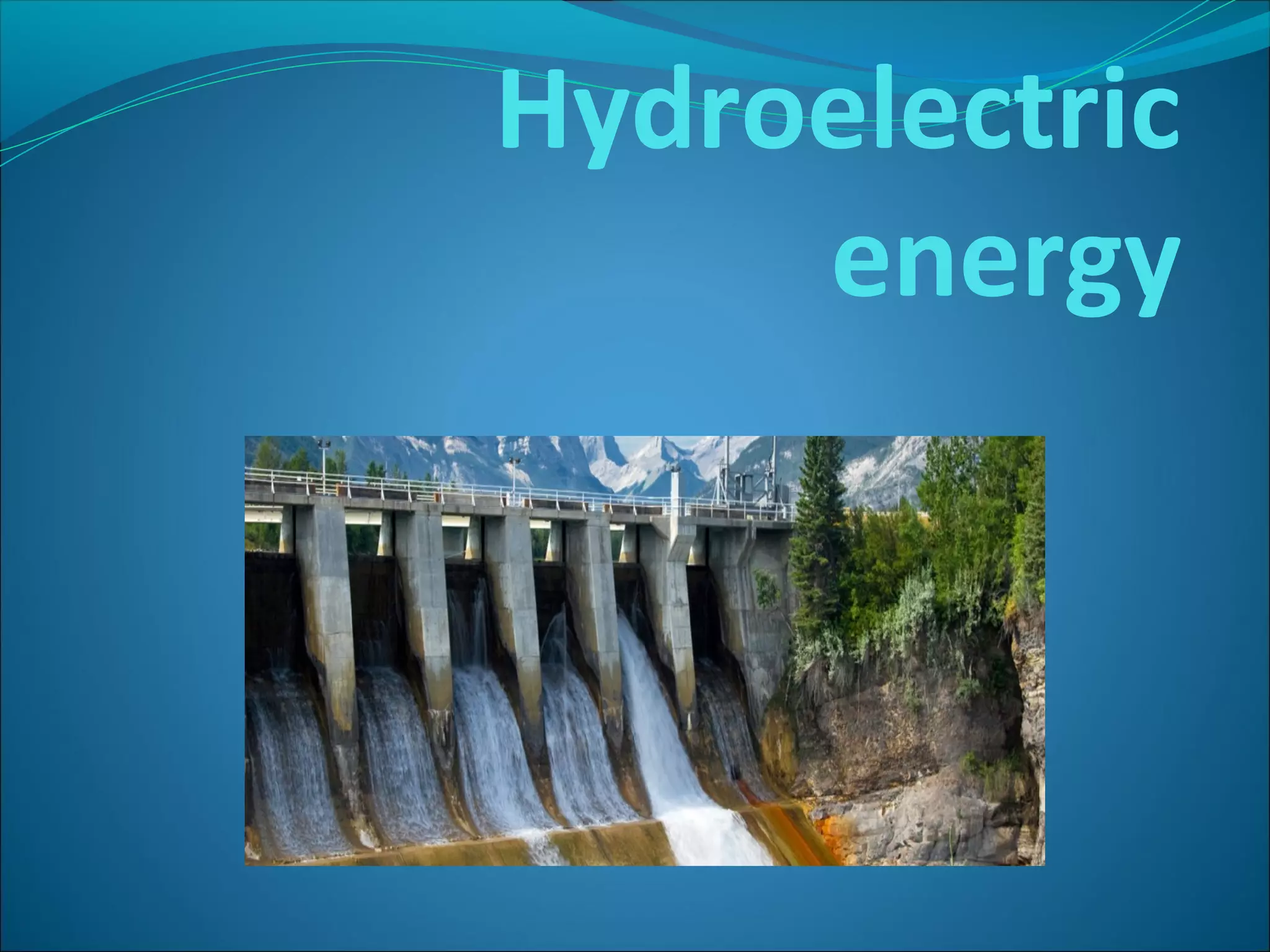
Hydroelectric
energy
Index
●1-What is hydraulic energy?
●2-How is this energy produced?
●3-Hydraulic power plants
●4-Advantages and disadvantages
●5-Definition of renewable and non-renewable energy
●6-Hydraulic power plants in Galicia, Spain and Europe
●7-Environmental impact
●8-Conclusions
●9-Video
●10-Credits
1-What is hydraulic energy?
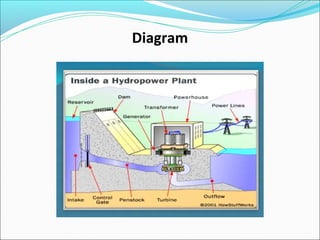
The water that produces hydraulic energy is stored in
reservoirs and lakes at a high altitude, so it has a
potential gravitational energy. At a given time, it falls
down to a lower level. The energy released is
transformed into kinetic energy and then into electrical
energy at a hydroelectric power plant.
Diagram
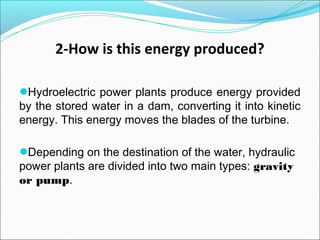
2-How is this energy produced?
●Hydroelectric power plants produce energy provided
by the stored water in a dam, converting it into kinetic
energy. This energy moves the blades of the turbine.
●Depending on the destination of the water, hydraulic
power plants are divided into two main types: gravity
or pump.
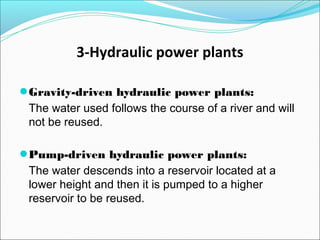
3-Hydraulic power plants
●Gravity-driven hydraulic power plants:
The water used follows the course of a river and will
not be reused.
●Pump-driven hydraulic power plants:
The water descends into a reservoir located at a
lower height and then it is pumped to a higher
reservoir to be reused.
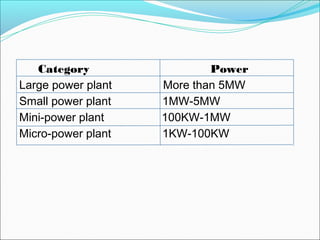
Category Power
Large power plant More than 5MW
Small power plant 1MW-5MW
Mini-power plant 100KW-1MW
Micro-power plant 1KW-100KW
4-Advantages and disadvantages
-Advantages:
It is a clean energy source, without any waste products and it
is easy to store. Also, the water stored in reservoirs situated
at a certain altitude permits the regulation of the flow of the
river.
-Disadvantages:
The construction of hydroelectric plants is expensive and
needs large networks of power cables. Reservoirs also mean
the loss of productive soil and fauna due to the flooding of
their habitat.
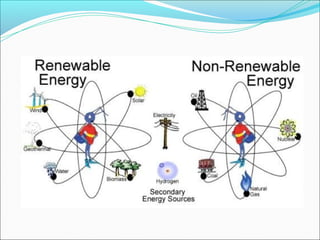
5-Definition of renewable and
non-renewable energy
Renewable:
This energy is abundant and inexhaustible.
Non-renewable:
-This energy is not abundant.
-It runs out when we use it all up.
-It cannot be renewed in a short period of time.
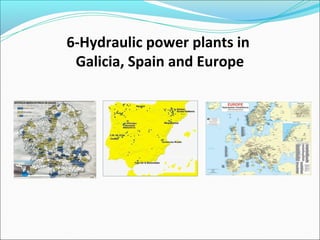
6-Hydraulic power plants in
Galicia, Spain and Europe
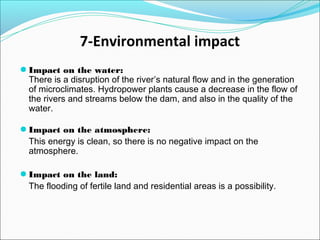
7-Environmental impact
● Impact on the water:
There is a disruption of the river’s natural flow and in the generation
of microclimates. Hydropower plants cause a decrease in the flow of
the rivers and streams below the dam, and also in the quality of the
water.
● Impact on the atmosphere:
This energy is clean, so there is no negative impact on the
atmosphere.
● Impact on the land:
The flooding of fertile land and residential areas is a possibility.
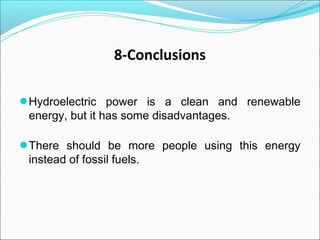
8-Conclusions
●Hydroelectric power is a clean and renewable
energy, but it has some disadvantages.
●There should be more people using this energy
instead of fossil fuels.
9-Video
10-Credits
Done by:
CAROU LAÍÑO, MIRANDA
REGADES TUBÍO, EVA
SAAVEDRA FUNGUEIRIÑO, JORGE
Bilingual section of Technology
Group 3º ESO-B
IES Praia Barraña - Boiro (Spain)
March, 2016

Hydroelectric power plants

  • 1.
  • 2.
    Index ●1-What is hydraulicenergy? ●2-How is this energy produced? ●3-Hydraulic power plants ●4-Advantages and disadvantages ●5-Definition of renewable and non-renewable energy ●6-Hydraulic power plants in Galicia, Spain and Europe ●7-Environmental impact ●8-Conclusions ●9-Video ●10-Credits
  • 3.
    1-What is hydraulicenergy? The water that produces hydraulic energy is stored in reservoirs and lakes at a high altitude, so it has a potential gravitational energy. At a given time, it falls down to a lower level. The energy released is transformed into kinetic energy and then into electrical energy at a hydroelectric power plant.
  • 4.
  • 5.
    2-How is thisenergy produced? ●Hydroelectric power plants produce energy provided by the stored water in a dam, converting it into kinetic energy. This energy moves the blades of the turbine. ●Depending on the destination of the water, hydraulic power plants are divided into two main types: gravity or pump.
  • 6.
    3-Hydraulic power plants ●Gravity-drivenhydraulic power plants: The water used follows the course of a river and will not be reused. ●Pump-driven hydraulic power plants: The water descends into a reservoir located at a lower height and then it is pumped to a higher reservoir to be reused.
  • 7.
    Category Power Large powerplant More than 5MW Small power plant 1MW-5MW Mini-power plant 100KW-1MW Micro-power plant 1KW-100KW
  • 8.
    4-Advantages and disadvantages -Advantages: Itis a clean energy source, without any waste products and it is easy to store. Also, the water stored in reservoirs situated at a certain altitude permits the regulation of the flow of the river. -Disadvantages: The construction of hydroelectric plants is expensive and needs large networks of power cables. Reservoirs also mean the loss of productive soil and fauna due to the flooding of their habitat.
  • 9.
    5-Definition of renewableand non-renewable energy Renewable: This energy is abundant and inexhaustible. Non-renewable: -This energy is not abundant. -It runs out when we use it all up. -It cannot be renewed in a short period of time.
  • 11.
    6-Hydraulic power plantsin Galicia, Spain and Europe
  • 12.
    7-Environmental impact ● Impacton the water: There is a disruption of the river’s natural flow and in the generation of microclimates. Hydropower plants cause a decrease in the flow of the rivers and streams below the dam, and also in the quality of the water. ● Impact on the atmosphere: This energy is clean, so there is no negative impact on the atmosphere. ● Impact on the land: The flooding of fertile land and residential areas is a possibility.
  • 13.
    8-Conclusions ●Hydroelectric power isa clean and renewable energy, but it has some disadvantages. ●There should be more people using this energy instead of fossil fuels.
  • 14.
  • 15.
    10-Credits Done by: CAROU LAÍÑO,MIRANDA REGADES TUBÍO, EVA SAAVEDRA FUNGUEIRIÑO, JORGE Bilingual section of Technology Group 3º ESO-B IES Praia Barraña - Boiro (Spain) March, 2016