Prove that such angles are equal.
The Hypothesis :
Two angles are in different
planes but each side of one is
parallel to the corresponding
side of the other, and has also
the same direction
The Conclusion :
The angles are equal
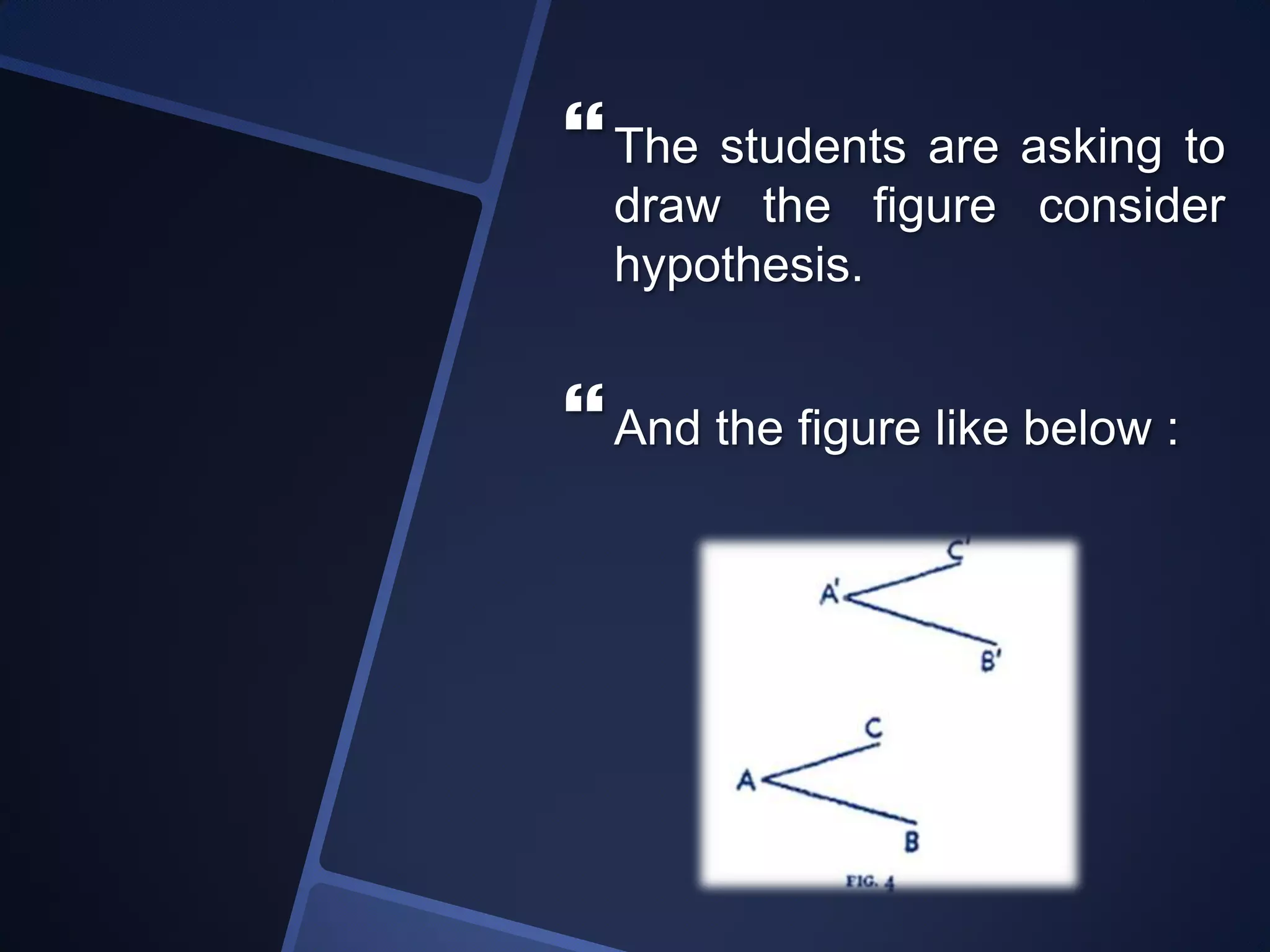
The students are asking to
draw the figure consider
hypothesis.
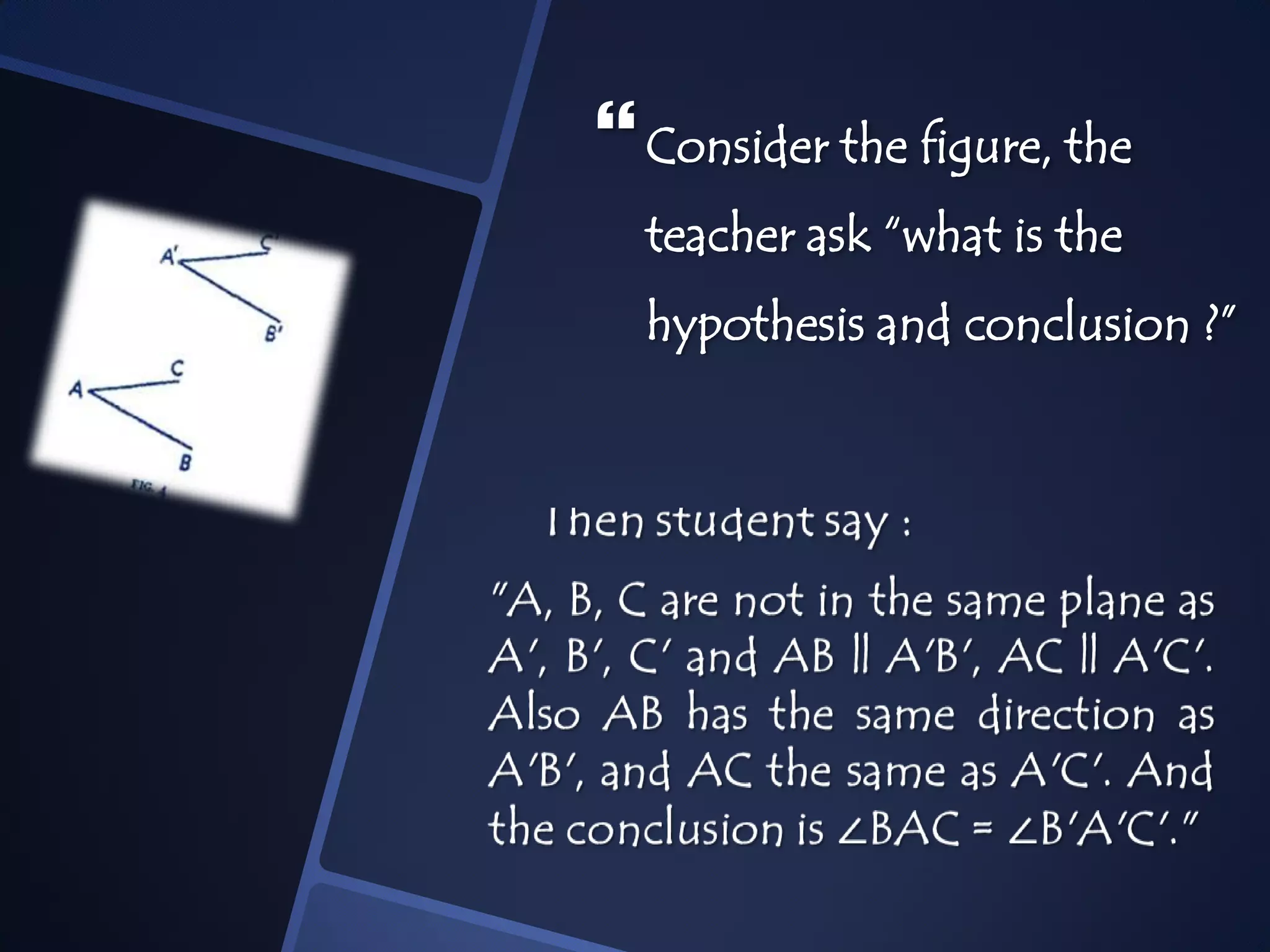
And the figure like below :
Consider the figure, the
teacher ask “what is the
hypothesis and conclusion ?”
Consider the conclusion,
students are asking to think of
a familiar theorem having the
same or a similar conclusion,
“ If two triangles are congruent,
the corresponding angles are
equal.”
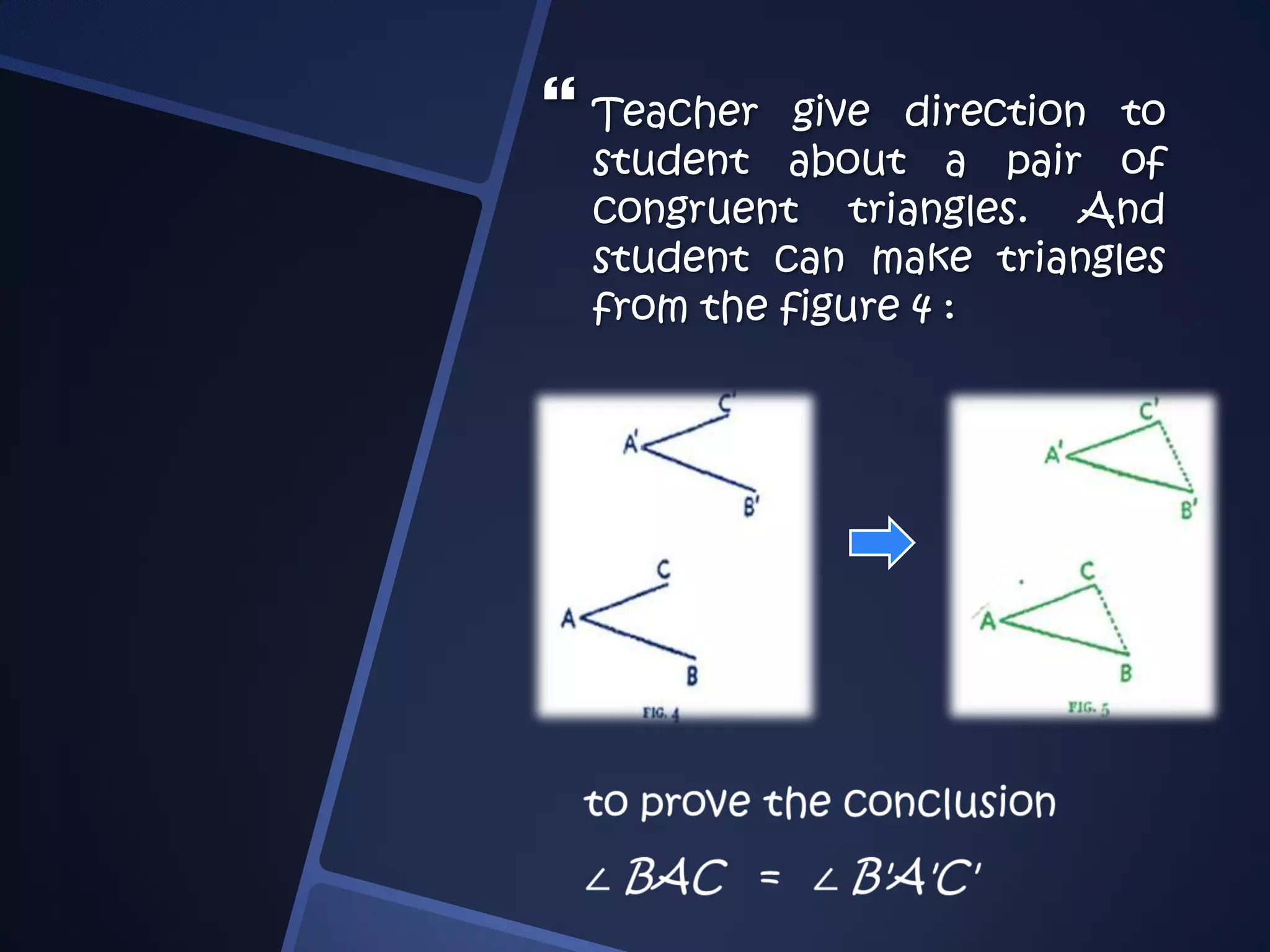
 Teacher give direction to
student about a pair of
congruent triangles. And
student can make triangles
from the figure 4 :
New aim at a conclusion
“Two triangles are congruent
if only if the three sides of
the one are equal
respectively to the three
sides of the other.”
If we knew that BC = B’C’
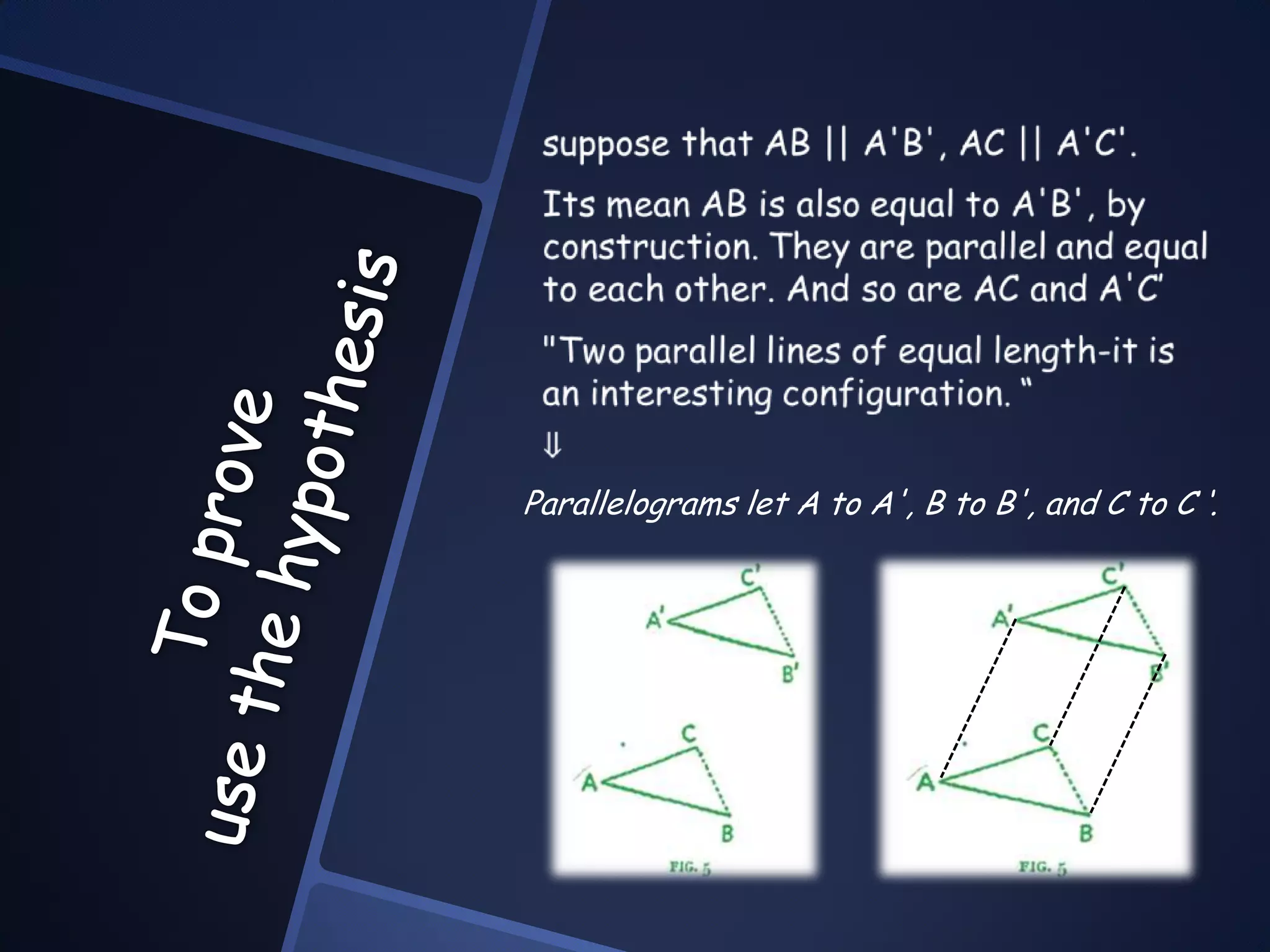
Parallelograms let A to A', B to B', and C to C ‘.
Problem solving

Problem solving

  • 2.
    Prove that suchangles are equal.
  • 3.
    The Hypothesis : Twoangles are in different planes but each side of one is parallel to the corresponding side of the other, and has also the same direction The Conclusion : The angles are equal
  • 4.
    The students areasking to draw the figure consider hypothesis. And the figure like below :
  • 5.
    Consider the figure,the teacher ask “what is the hypothesis and conclusion ?”
  • 6.
    Consider the conclusion, studentsare asking to think of a familiar theorem having the same or a similar conclusion, “ If two triangles are congruent, the corresponding angles are equal.”
  • 7.
     Teacher givedirection to student about a pair of congruent triangles. And student can make triangles from the figure 4 :
  • 8.
    New aim ata conclusion “Two triangles are congruent if only if the three sides of the one are equal respectively to the three sides of the other.” If we knew that BC = B’C’
  • 10.
    Parallelograms let Ato A', B to B', and C to C ‘.