Mitochondrion: “power house” of the cell
• Outer membrane
• Inner membrane folded into
cristae
• Matrix (fluid-filled interior)
• Site of aerobic respiration
• Own DNA and ribosomes
1
Making Energy
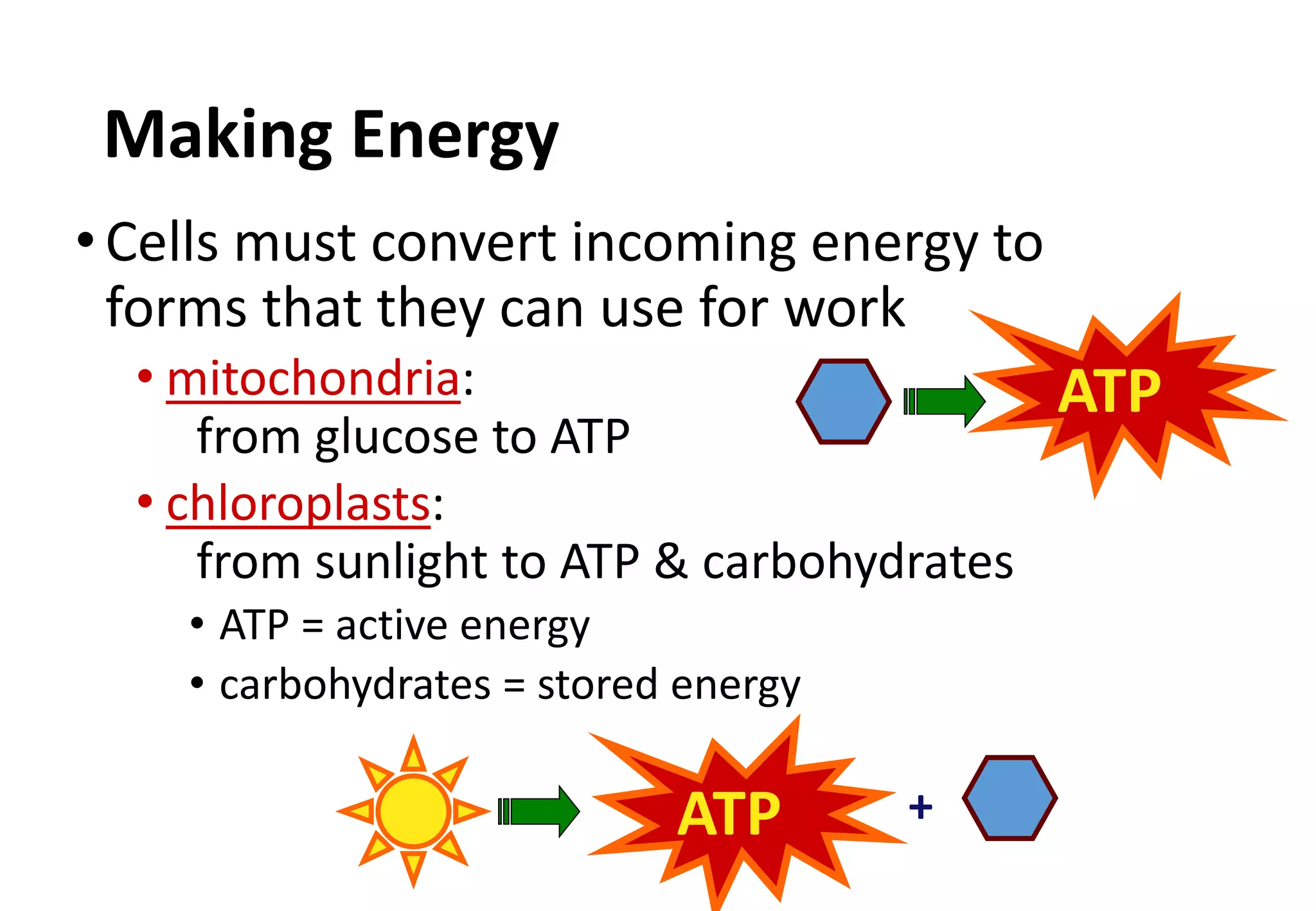
•Cells must convert incoming energy to
forms that they can use for work
• mitochondria:
from glucose to ATP
• chloroplasts:
from sunlight to ATP & carbohydrates
• ATP = active energy
• carbohydrates = stored energy
+
ATP
ATP
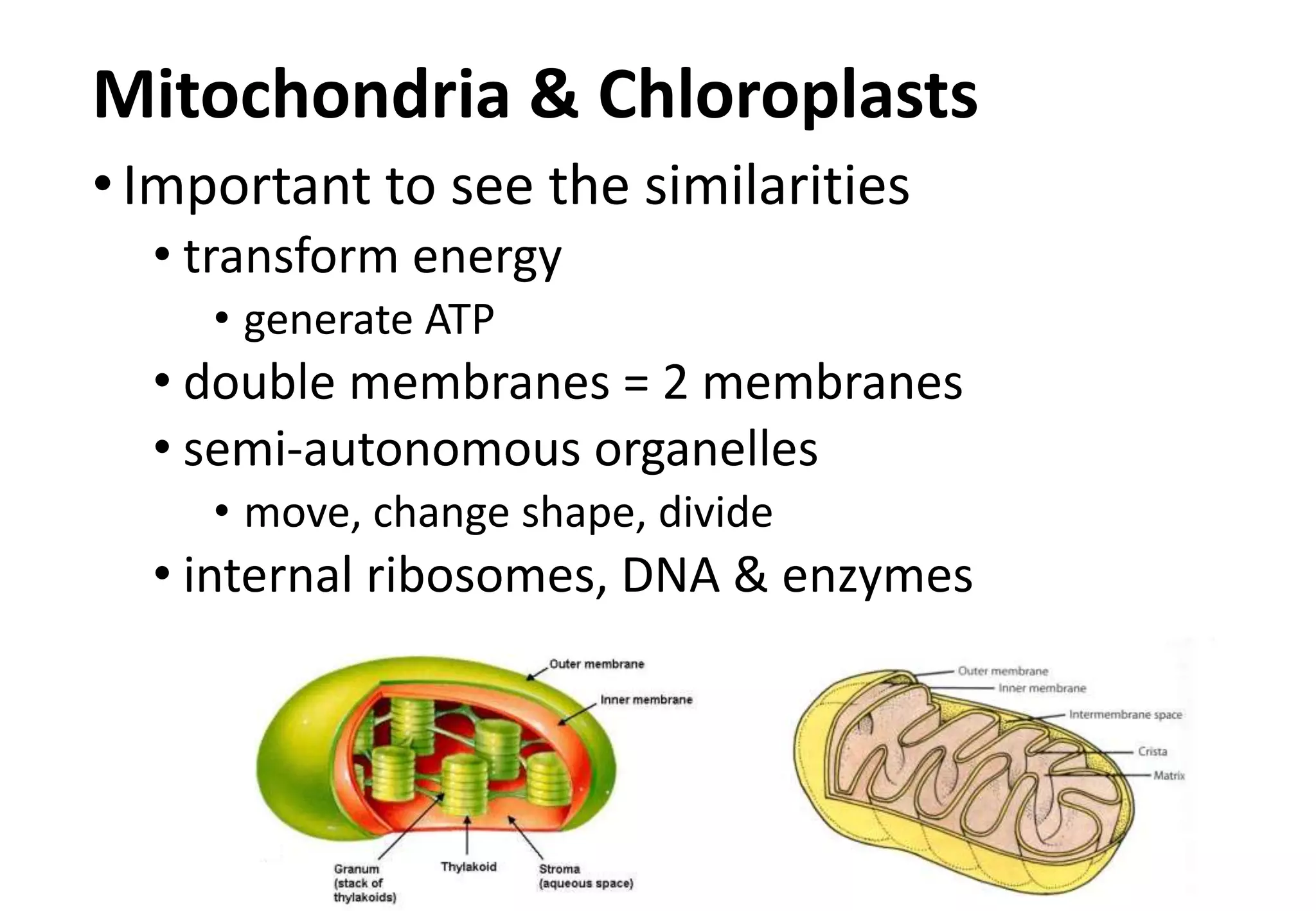
Mitochondria & Chloroplasts
•Important to see the similarities
• transform energy
• generate ATP
• double membranes = 2 membranes
• semi-autonomous organelles
• move, change shape, divide
• internal ribosomes, DNA & enzymes
Mitochondria
•Function
•cellular respiration
•generate ATP
• from breakdown of sugars,
fats & other fuels
• in the presence of oxygen
• break down larger molecules
into smaller to generate
energy = catabolism
• generate energy in presence
of O2 = aerobic respiration
Respiration – Making ATP energy molecules
Mitochondria
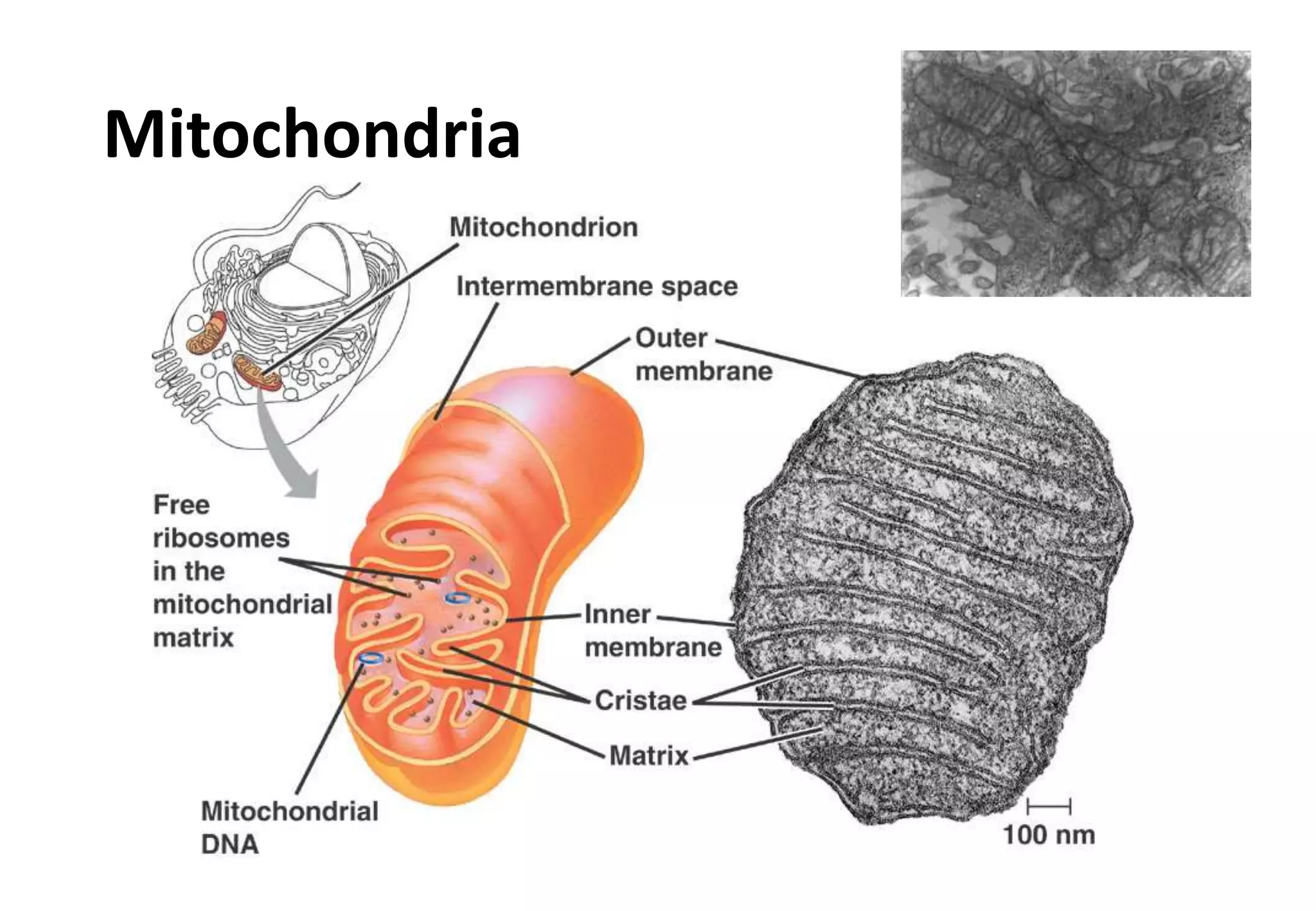
• Structure
• 2 membranes
• smooth outer membrane
• highly folded inner membrane
• cristae
• fluid-filled space between
2 membranes
• internal fluid-filled space
• mitochondrial matrix
• DNA, ribosomes & enzymes
Why 2 membranes?
increase surface area for membrane-bound enzymes that synthesize ATP
Mitochondria
Dividing Mitochondria
Who else divides like
that?
What does this tell us about the
evolution of eukaryotes?
Mitochondria
• Almost all eukaryotic cells have mitochondria
• there may be 1 very large mitochondrion or
100s to 1000s of individual mitochondria
• number of mitochondria is correlated with
aerobic metabolic activity
• more activity = more energy
needed = more mitochondria
What cells would have
a lot of mitochondria?
active cells:
• muscle cells
• nerve cells
Mitochondria are everywhere!!
animal cells plant cells

Mitochondria

  • 1.
    Mitochondrion: “power house”of the cell • Outer membrane • Inner membrane folded into cristae • Matrix (fluid-filled interior) • Site of aerobic respiration • Own DNA and ribosomes 1
  • 2.
    Making Energy •Cells mustconvert incoming energy to forms that they can use for work • mitochondria: from glucose to ATP • chloroplasts: from sunlight to ATP & carbohydrates • ATP = active energy • carbohydrates = stored energy + ATP ATP
  • 3.
    Mitochondria & Chloroplasts •Importantto see the similarities • transform energy • generate ATP • double membranes = 2 membranes • semi-autonomous organelles • move, change shape, divide • internal ribosomes, DNA & enzymes
  • 4.
    Mitochondria •Function •cellular respiration •generate ATP •from breakdown of sugars, fats & other fuels • in the presence of oxygen • break down larger molecules into smaller to generate energy = catabolism • generate energy in presence of O2 = aerobic respiration
  • 5.
    Respiration – MakingATP energy molecules
  • 6.
    Mitochondria • Structure • 2membranes • smooth outer membrane • highly folded inner membrane • cristae • fluid-filled space between 2 membranes • internal fluid-filled space • mitochondrial matrix • DNA, ribosomes & enzymes Why 2 membranes? increase surface area for membrane-bound enzymes that synthesize ATP
  • 7.
  • 8.
    Dividing Mitochondria Who elsedivides like that? What does this tell us about the evolution of eukaryotes?
  • 9.
    Mitochondria • Almost alleukaryotic cells have mitochondria • there may be 1 very large mitochondrion or 100s to 1000s of individual mitochondria • number of mitochondria is correlated with aerobic metabolic activity • more activity = more energy needed = more mitochondria What cells would have a lot of mitochondria? active cells: • muscle cells • nerve cells
  • 10.