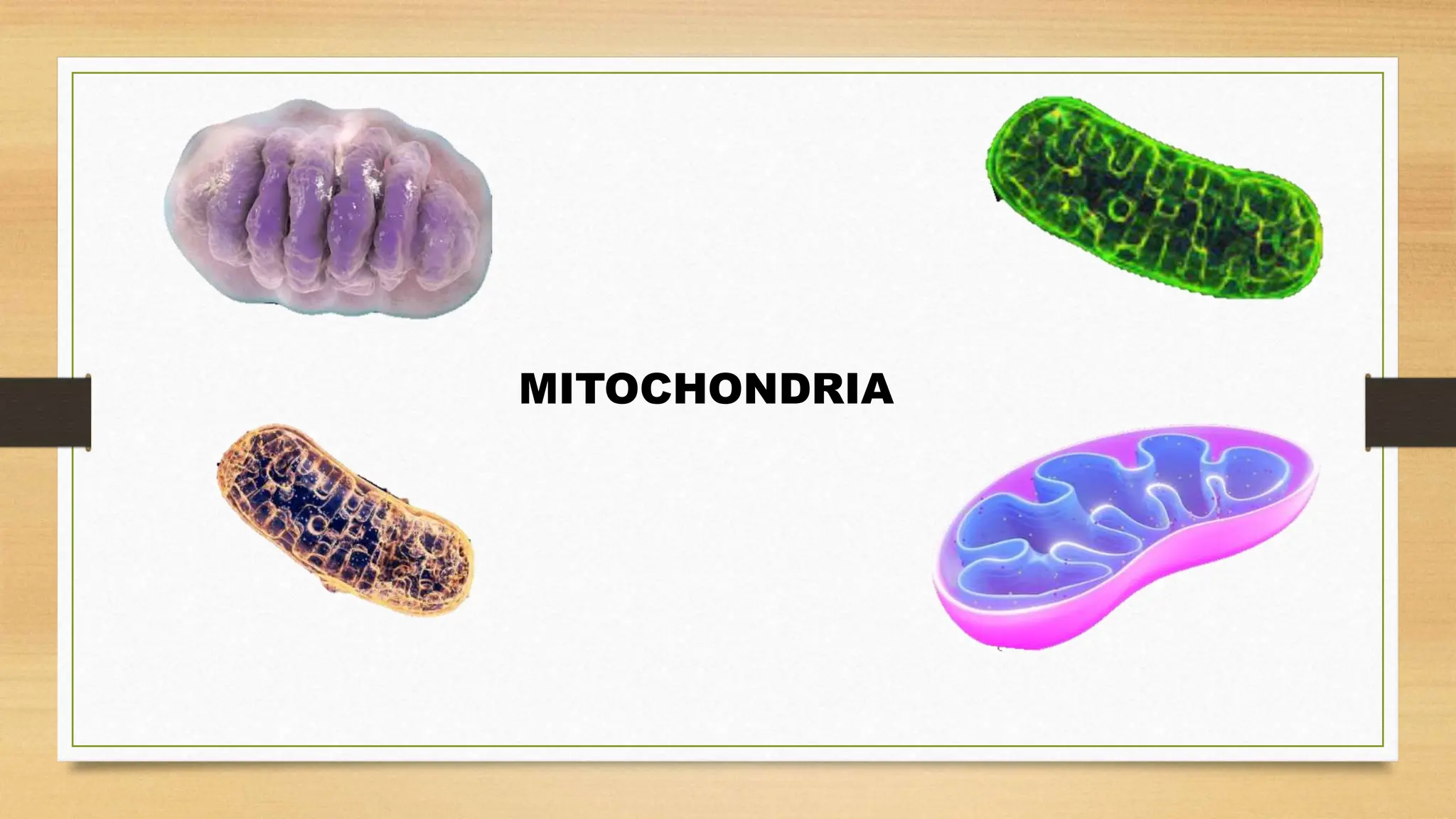
MITOCHONDRIA
β€’ Anaerobes β€”organisms that capture and utilize energy using oxygen‐independent
(anaerobic) metabolism
β€’ Aerobes ----organisms that incorporated O 2 into their metabolism could completely oxidize
such compounds to CO 2 and H 2 O and, in the process, extract a much larger percentage of
their energy content.
In eukaryotes, the utilization of oxygen as a means of energy extraction takes place in a
specialized organelle, the mitochondrion
ROLES OF MITOCHONDRIA
1. Generation of ATP: 2. Site of synthesis of various substances
β€’ Primary role
β€’ Used to run most of the
cellular activities
Eg: amino acids, the
heme group
3. Uptake of and release of calcium ions 4. The process of cell death is also regulated to a large
extend by the events that occur in mitochondria
when Ca 2+
concentrations rise to
abnormally high levels in
the cytosol, a Ca 2+
transporter in the inner
mitochondrial membrane
takes up some of the
excess Ca 2+ ions
β€’ Bean-shaped
organelle
β€’ Length range: 1 to 4
micrometers
β€’ Highly branched,
interconnected
tubular network
Mitochondrial
membrane
Outer
membrane
Inner
membrane
Double
membrane
Inner
mitochondrial
membrane
Inner boundary
membrane
Cristae
β€’ rich in the proteins
responsible for the import
of mitochondrial proteins.
β€’ Series of invaginated
membranous sheets.
β€’ Contains a large
amount of membrane
surface which houses
the machinery needed
for aerobic respiration
and ATP formation.
**The inner boundary membrane and internal cristae membranes are joined to one another by narrow tubular
connections called β€˜cristae junctions’
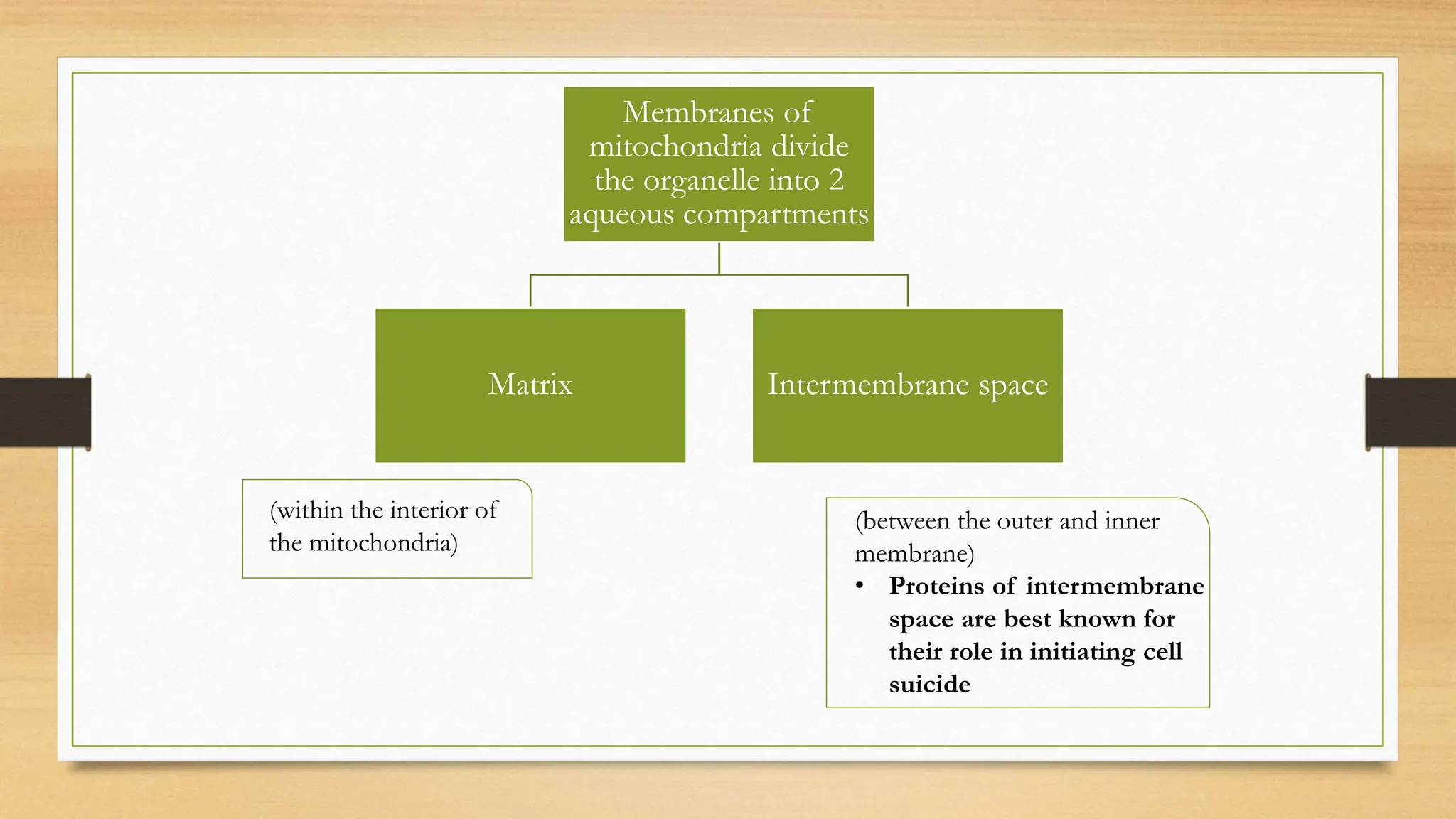
Membranes of
mitochondria divide
the organelle into 2
aqueous compartments
Matrix Intermembrane space
(within the interior of
the mitochondria)
(between the outer and inner
membrane)
β€’ Proteins of intermembrane
space are best known for
their role in initiating cell
suicide
MITOCHONDRIAL MATRIX
β€’ It has a gel-like consistency due to the presence of a high concentration of water-soluble proteins.
β€’ It contains ribosomes(considerably smaller in size as compared to those in the cytosol).
β€’ It contains several molecules of DNA, which are circular in higher plants and animals.
β€’ Mitochondria has its genetic material and machinery to manufacture its RNAs and proteins.
β€’ The non-chromosomal DNA encodes a small number of mitochondrial peptides that are tightly integrated into
the inner mitochondrial membrane
β€’ Mitochondria are also partly independent or semi-autonomous as they can manufacture some of the proteins
required for their effective functioning with the help of their DNA, RNAs, enzymes, and ribosomes & and
obtain others from the cytoplasm.
β€’ Human mitochondrial DNA encodes 2 rRNAs and 22 tRNAs, used in the synthesis of protein inside the
mitochondria.
β€’ RNA polymerase, in mitochondria, is a single subunit enzyme, similar to bacterial viruses.

mitochondria.pptx

  • 1.
  • 2.
    β€’ Anaerobes β€”organismsthat capture and utilize energy using oxygen‐independent (anaerobic) metabolism β€’ Aerobes ----organisms that incorporated O 2 into their metabolism could completely oxidize such compounds to CO 2 and H 2 O and, in the process, extract a much larger percentage of their energy content. In eukaryotes, the utilization of oxygen as a means of energy extraction takes place in a specialized organelle, the mitochondrion
  • 3.
    ROLES OF MITOCHONDRIA 1.Generation of ATP: 2. Site of synthesis of various substances β€’ Primary role β€’ Used to run most of the cellular activities Eg: amino acids, the heme group 3. Uptake of and release of calcium ions 4. The process of cell death is also regulated to a large extend by the events that occur in mitochondria when Ca 2+ concentrations rise to abnormally high levels in the cytosol, a Ca 2+ transporter in the inner mitochondrial membrane takes up some of the excess Ca 2+ ions
  • 4.
    β€’ Bean-shaped organelle β€’ Lengthrange: 1 to 4 micrometers β€’ Highly branched, interconnected tubular network
  • 5.
    Mitochondrial membrane Outer membrane Inner membrane Double membrane Inner mitochondrial membrane Inner boundary membrane Cristae β€’ richin the proteins responsible for the import of mitochondrial proteins. β€’ Series of invaginated membranous sheets. β€’ Contains a large amount of membrane surface which houses the machinery needed for aerobic respiration and ATP formation. **The inner boundary membrane and internal cristae membranes are joined to one another by narrow tubular connections called β€˜cristae junctions’
  • 6.
    Membranes of mitochondria divide theorganelle into 2 aqueous compartments Matrix Intermembrane space (within the interior of the mitochondria) (between the outer and inner membrane) β€’ Proteins of intermembrane space are best known for their role in initiating cell suicide
  • 7.
    MITOCHONDRIAL MATRIX β€’ Ithas a gel-like consistency due to the presence of a high concentration of water-soluble proteins. β€’ It contains ribosomes(considerably smaller in size as compared to those in the cytosol). β€’ It contains several molecules of DNA, which are circular in higher plants and animals. β€’ Mitochondria has its genetic material and machinery to manufacture its RNAs and proteins. β€’ The non-chromosomal DNA encodes a small number of mitochondrial peptides that are tightly integrated into the inner mitochondrial membrane β€’ Mitochondria are also partly independent or semi-autonomous as they can manufacture some of the proteins required for their effective functioning with the help of their DNA, RNAs, enzymes, and ribosomes & and obtain others from the cytoplasm. β€’ Human mitochondrial DNA encodes 2 rRNAs and 22 tRNAs, used in the synthesis of protein inside the mitochondria. β€’ RNA polymerase, in mitochondria, is a single subunit enzyme, similar to bacterial viruses.