A Stepwise Approach to the
Interpretation of Pulmonary
Function Tests
Dr Suman Roy
PGT
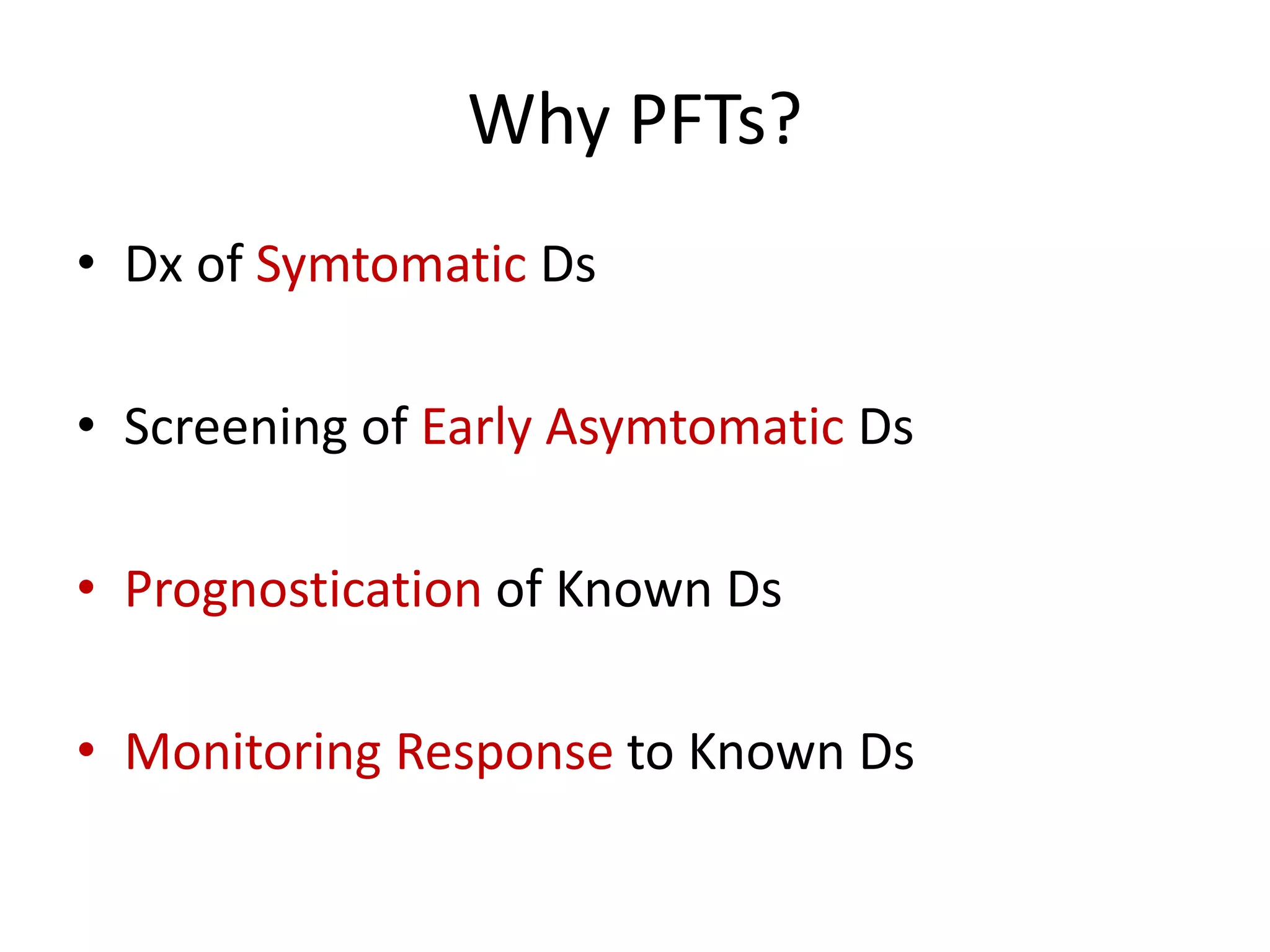
Why PFTs?
• Dx of Symtomatic Ds
• Screening of Early Asymtomatic Ds
• Prognostication of Known Ds
• Monitoring Response to Known Ds
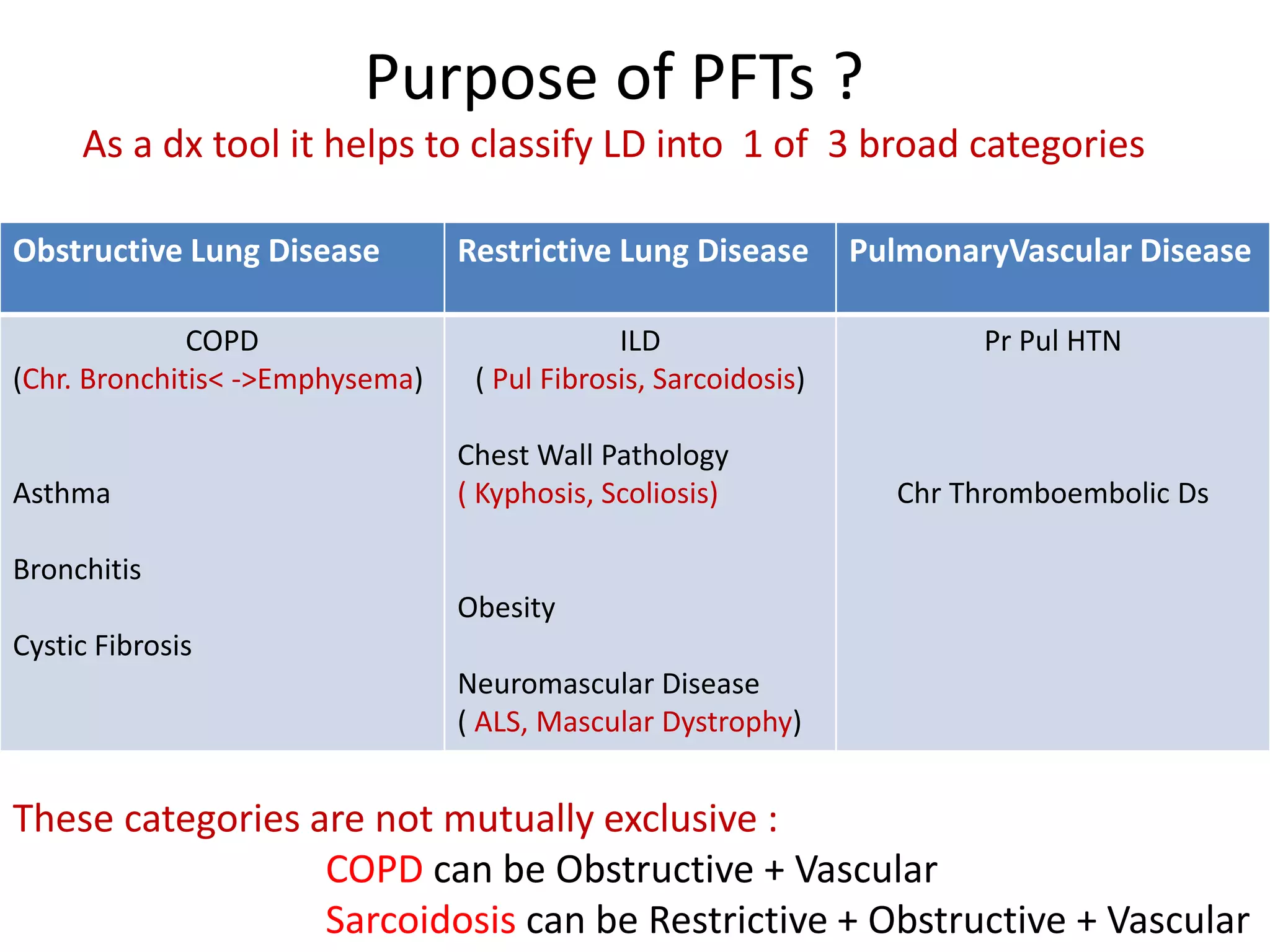
Purpose of PFTs ?
As a dx tool it helps to classify LD into 1 of 3 broad categories
Obstructive Lung Disease Restrictive Lung Disease PulmonaryVascular Disease
COPD
(Chr. Bronchitis< ->Emphysema)
Asthma
Bronchitis
Cystic Fibrosis
ILD
( Pul Fibrosis, Sarcoidosis)
Chest Wall Pathology
( Kyphosis, Scoliosis)
Obesity
Neuromascular Disease
( ALS, Mascular Dystrophy)
Pr Pul HTN
Chr Thromboembolic Ds
These categories are not mutually exclusive :
COPD can be Obstructive + Vascular
Sarcoidosis can be Restrictive + Obstructive + Vascular
Function of Pulmonary System Tested by PFTs
• Airways
Large & Small Airways
• Parenchyma
Alveoli
Interstitium
• Pulmonary Vasculature
• Bellows/Pump Mechanism
Diaphragm
Chest Wall
• Neural Control of Ventilation
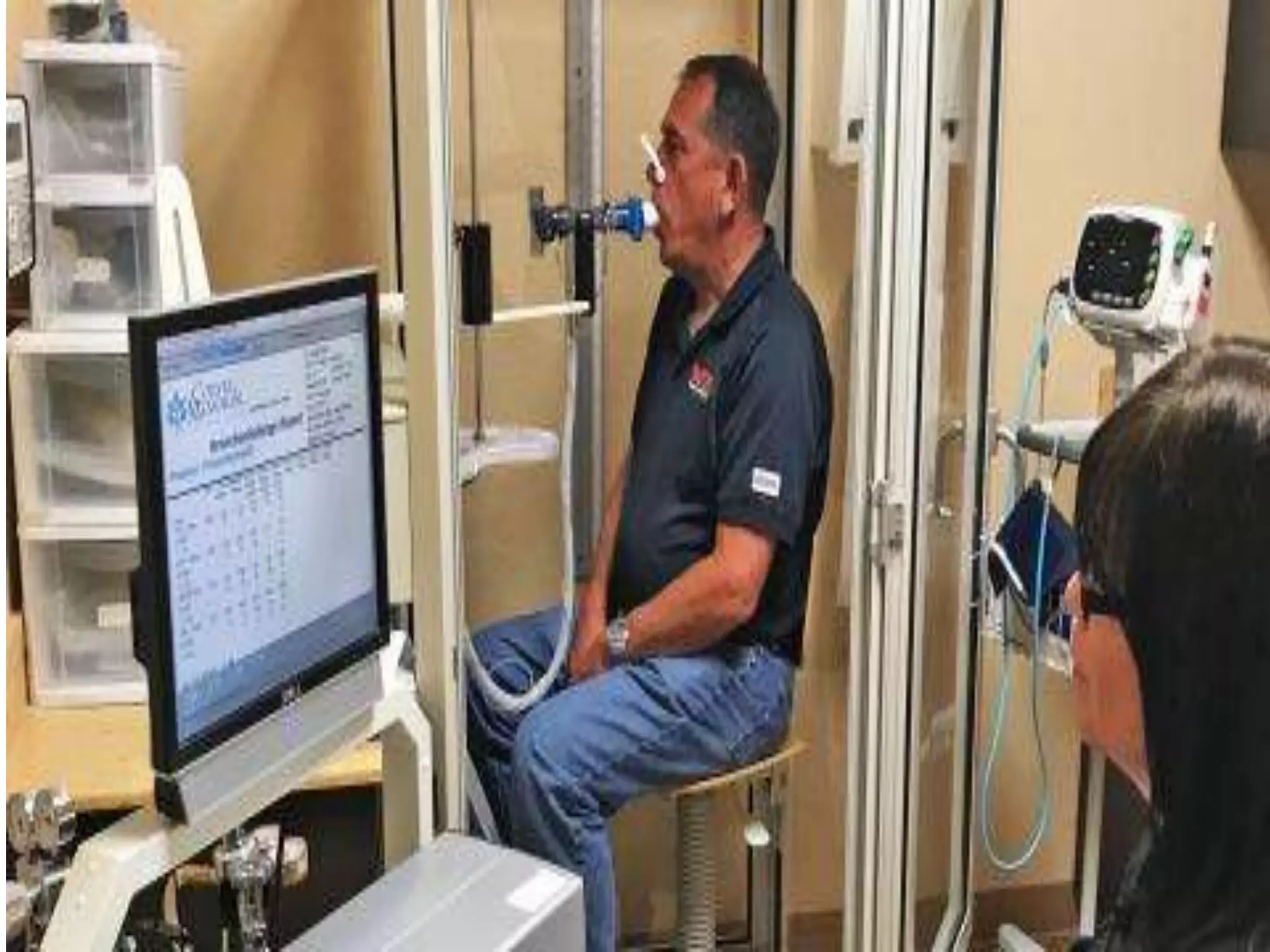
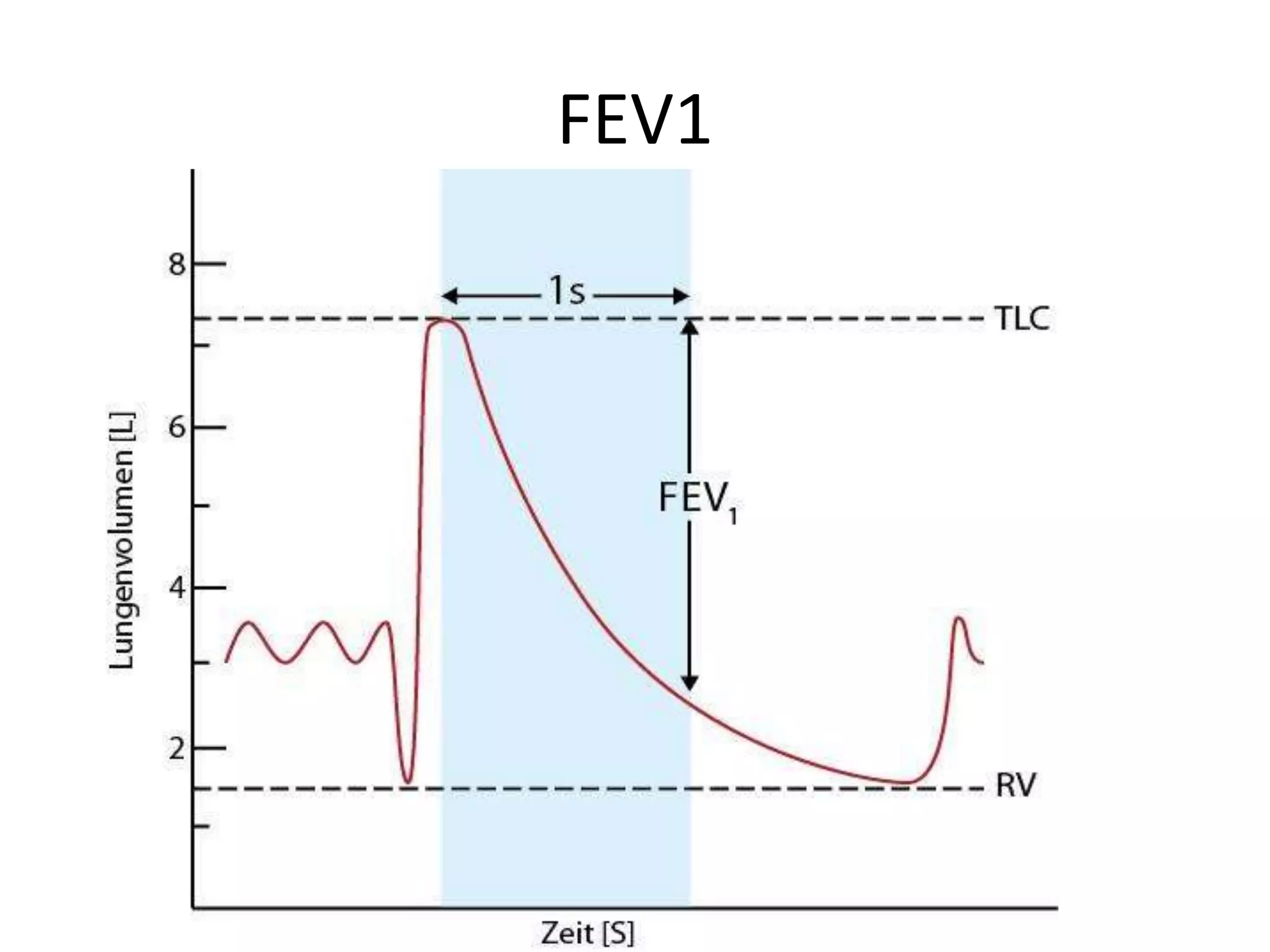
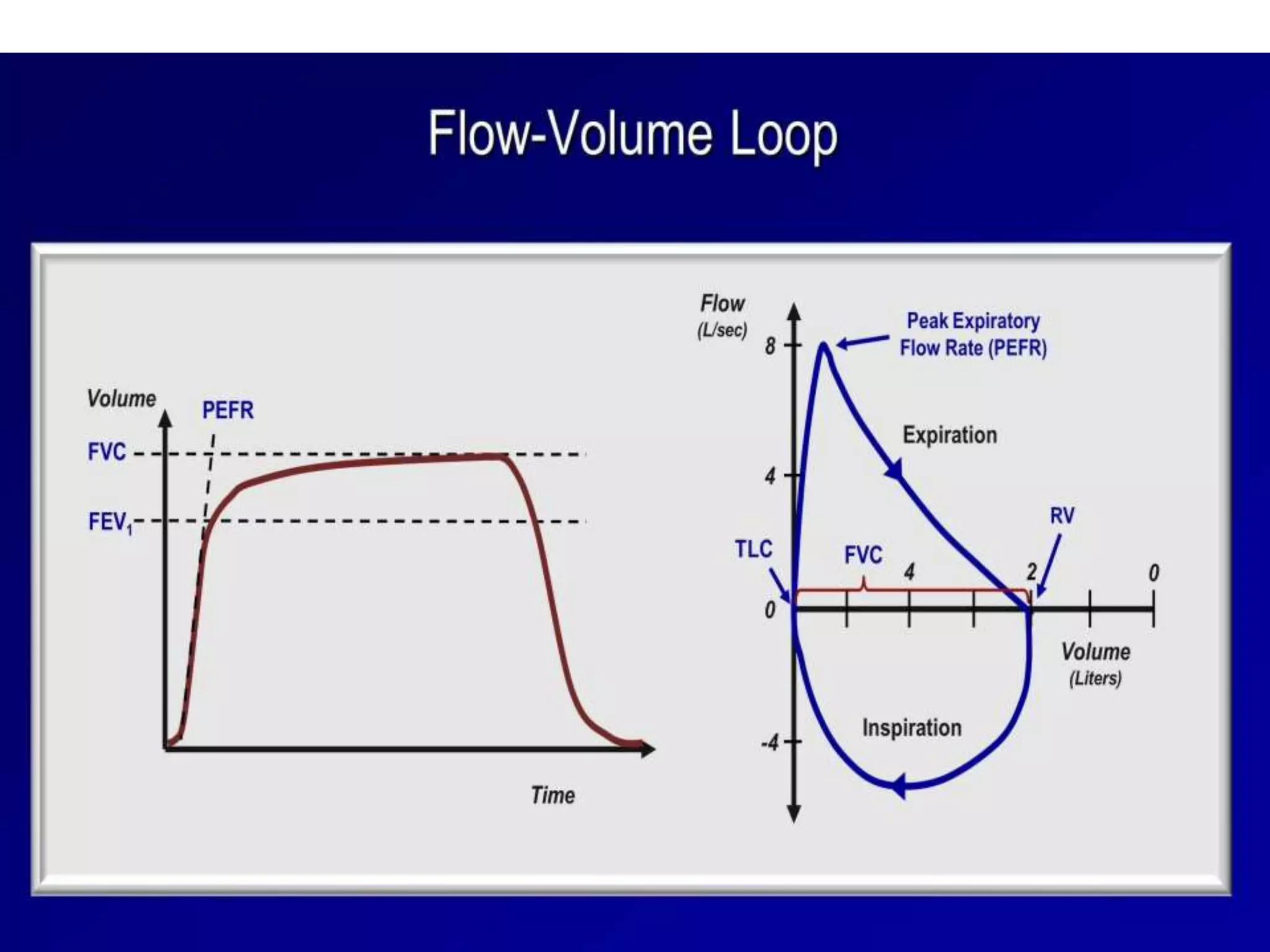
How Spirometry is performed?
FEV1
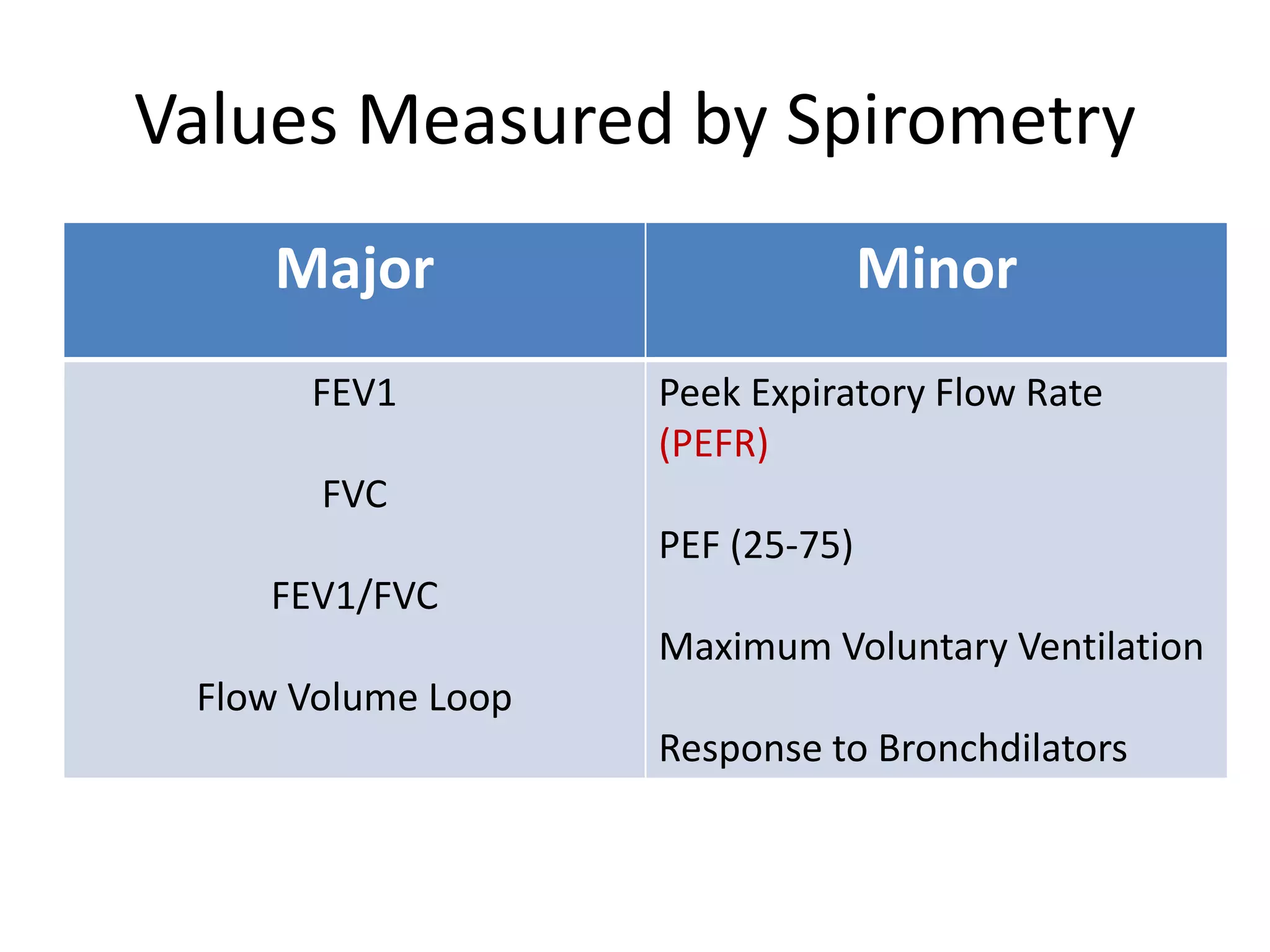
Values Measured by Spirometry
Major Minor
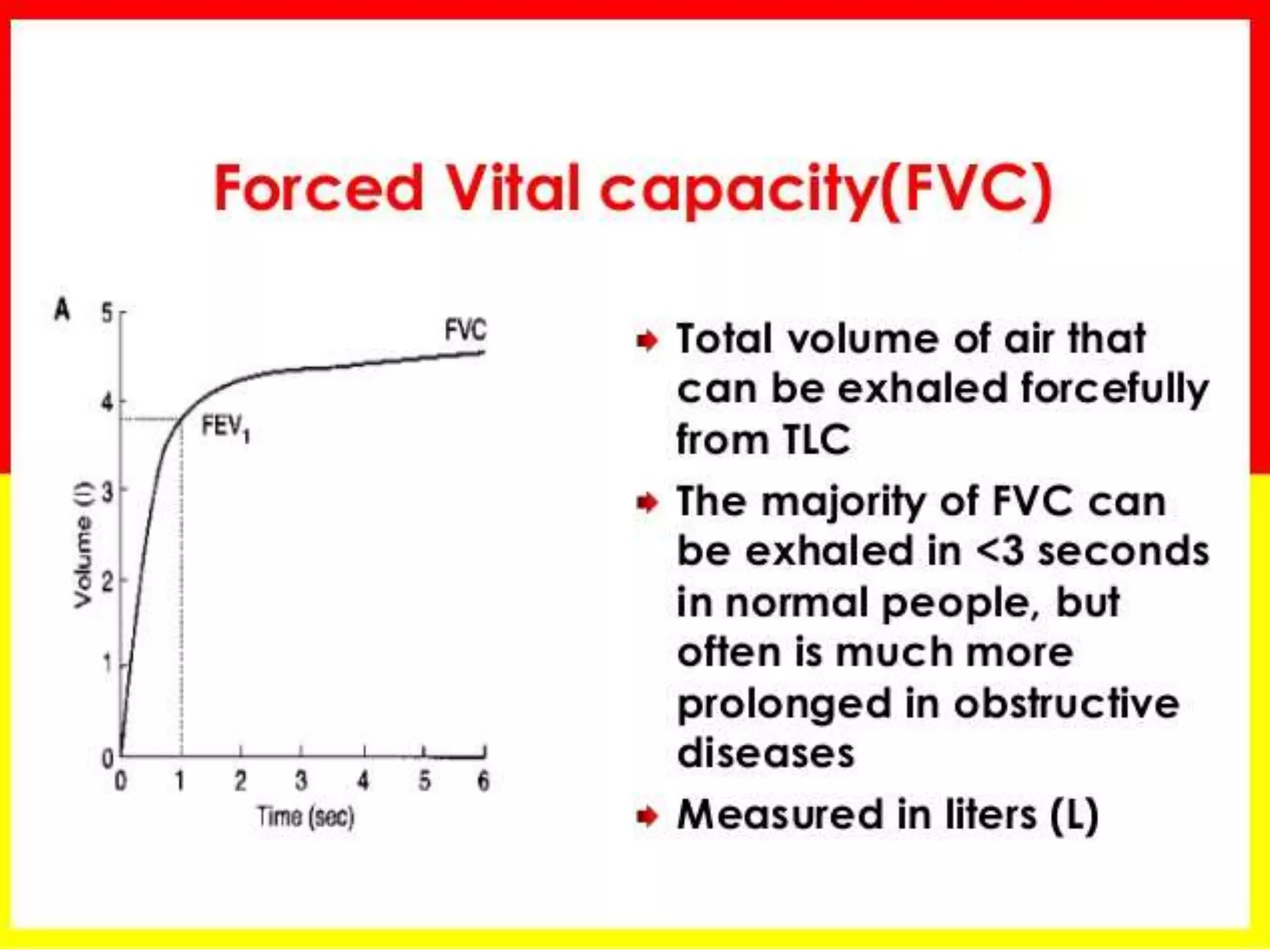
FEV1
FVC
FEV1/FVC
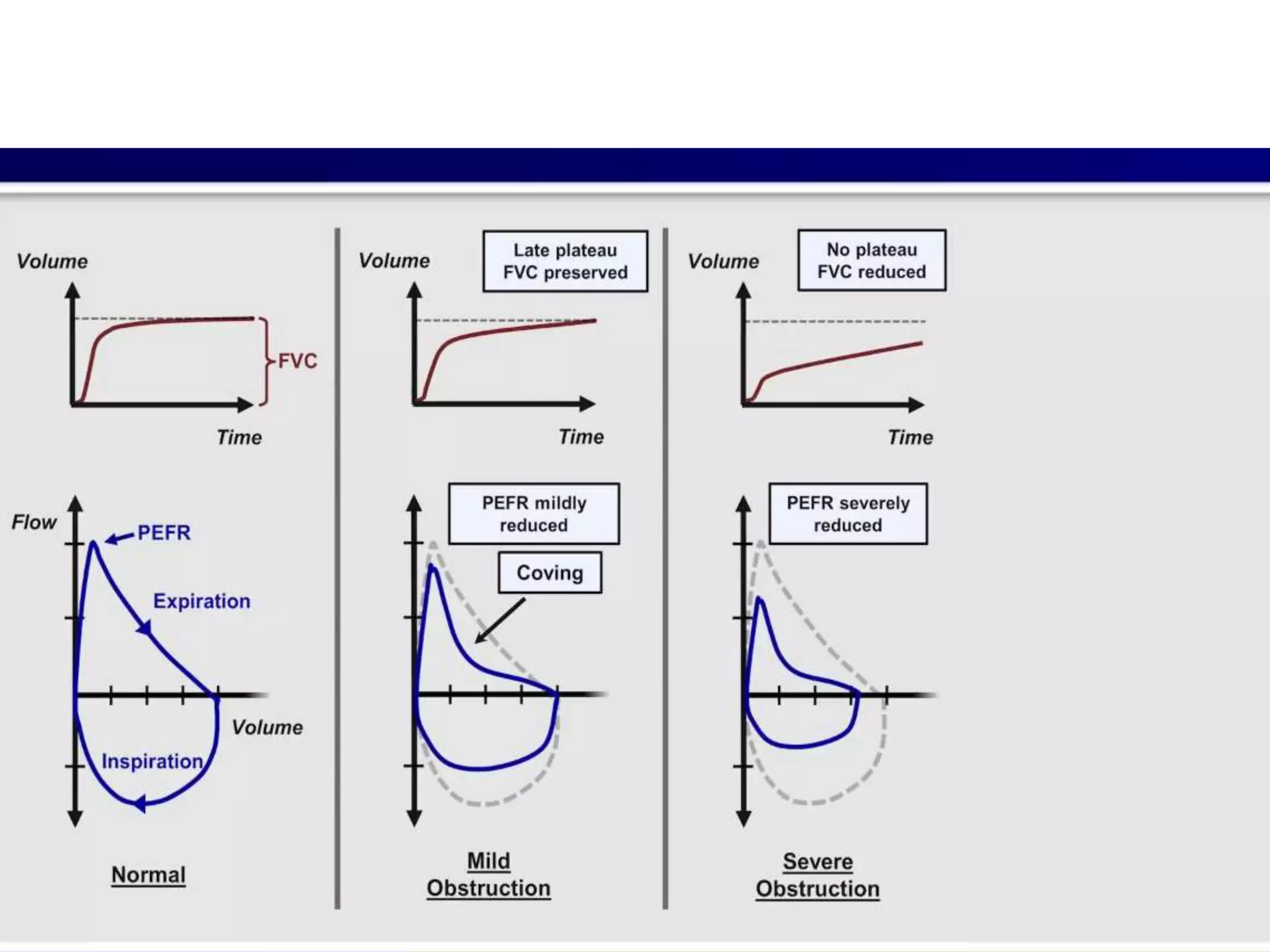
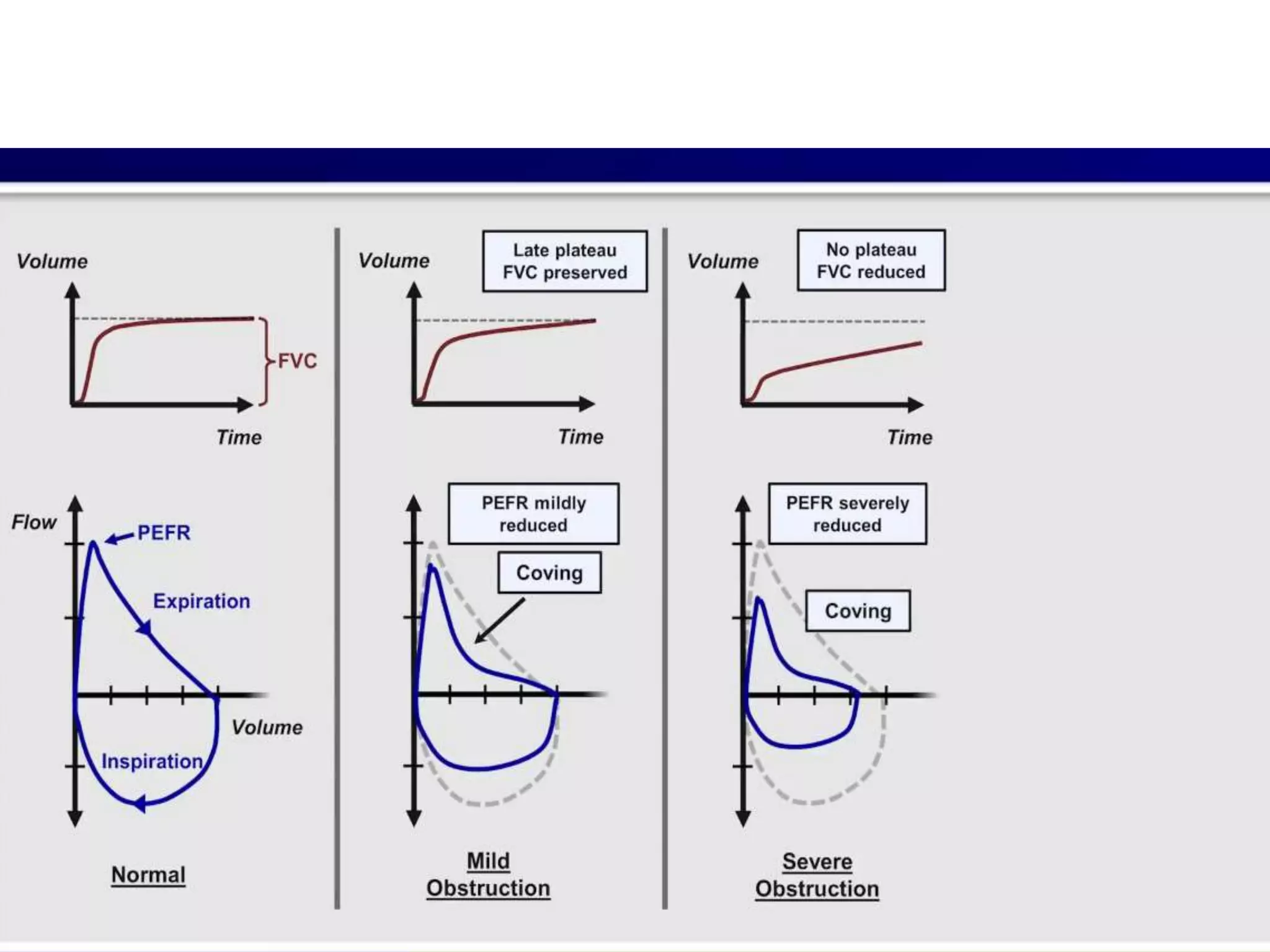
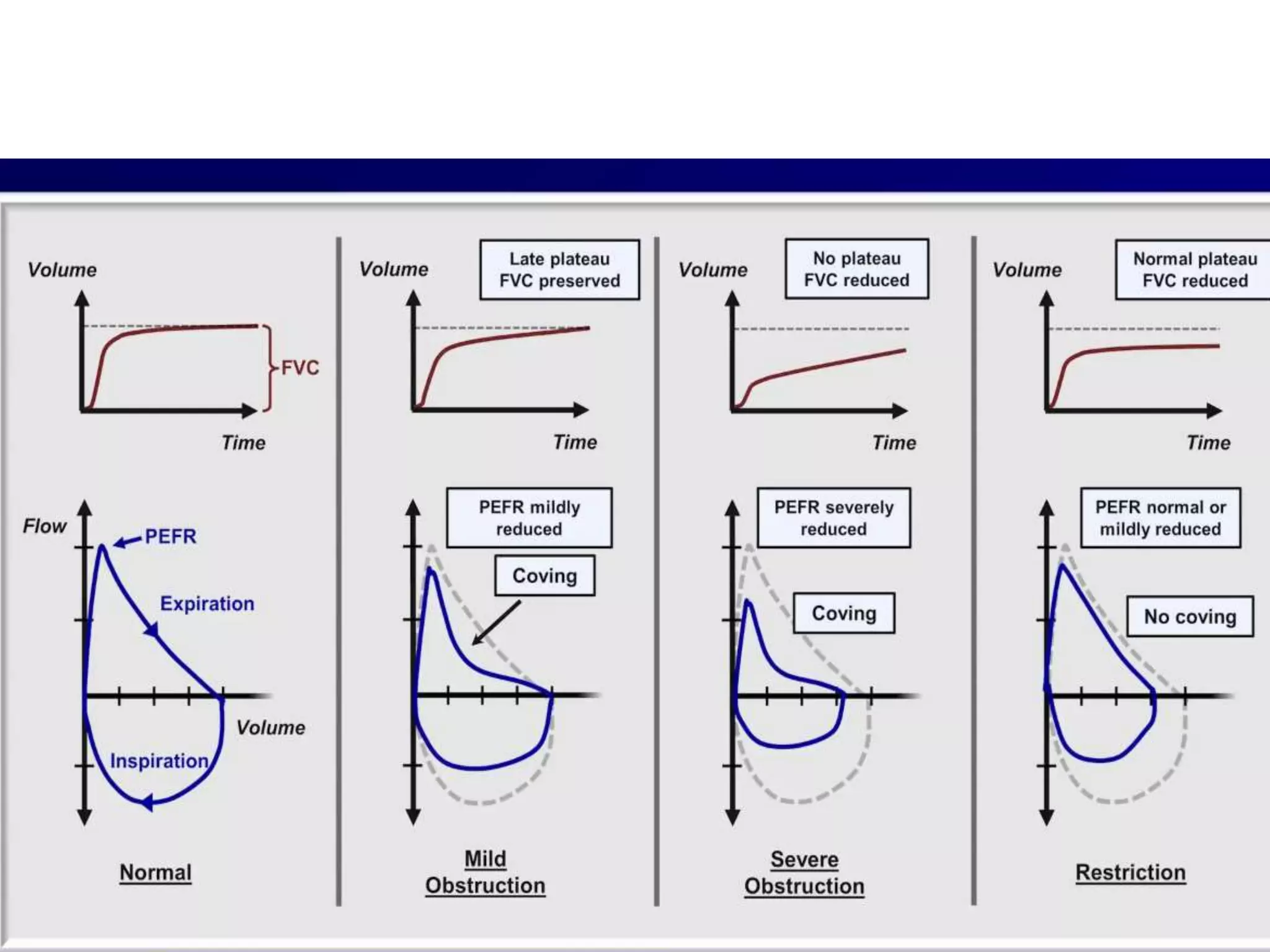
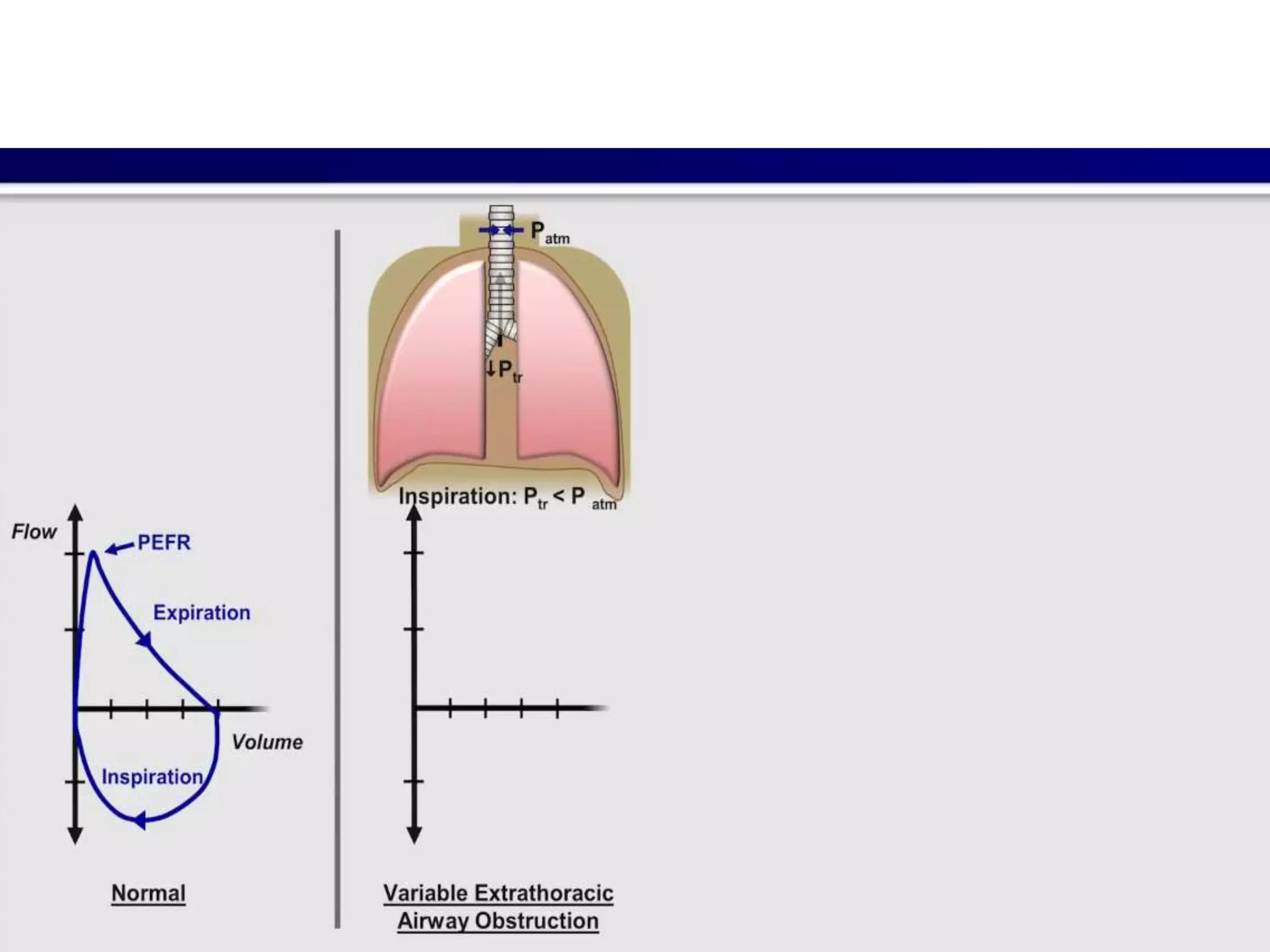
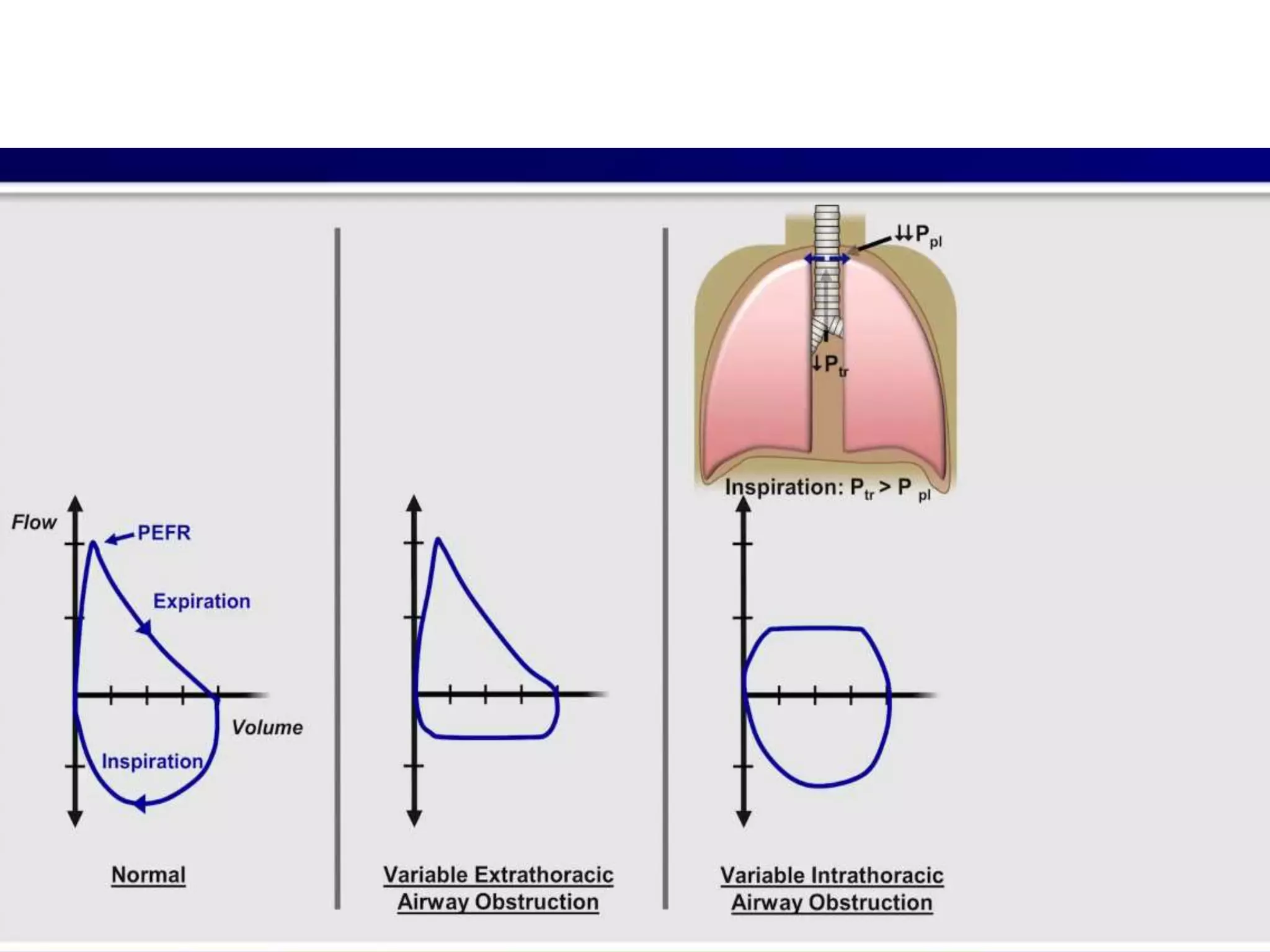
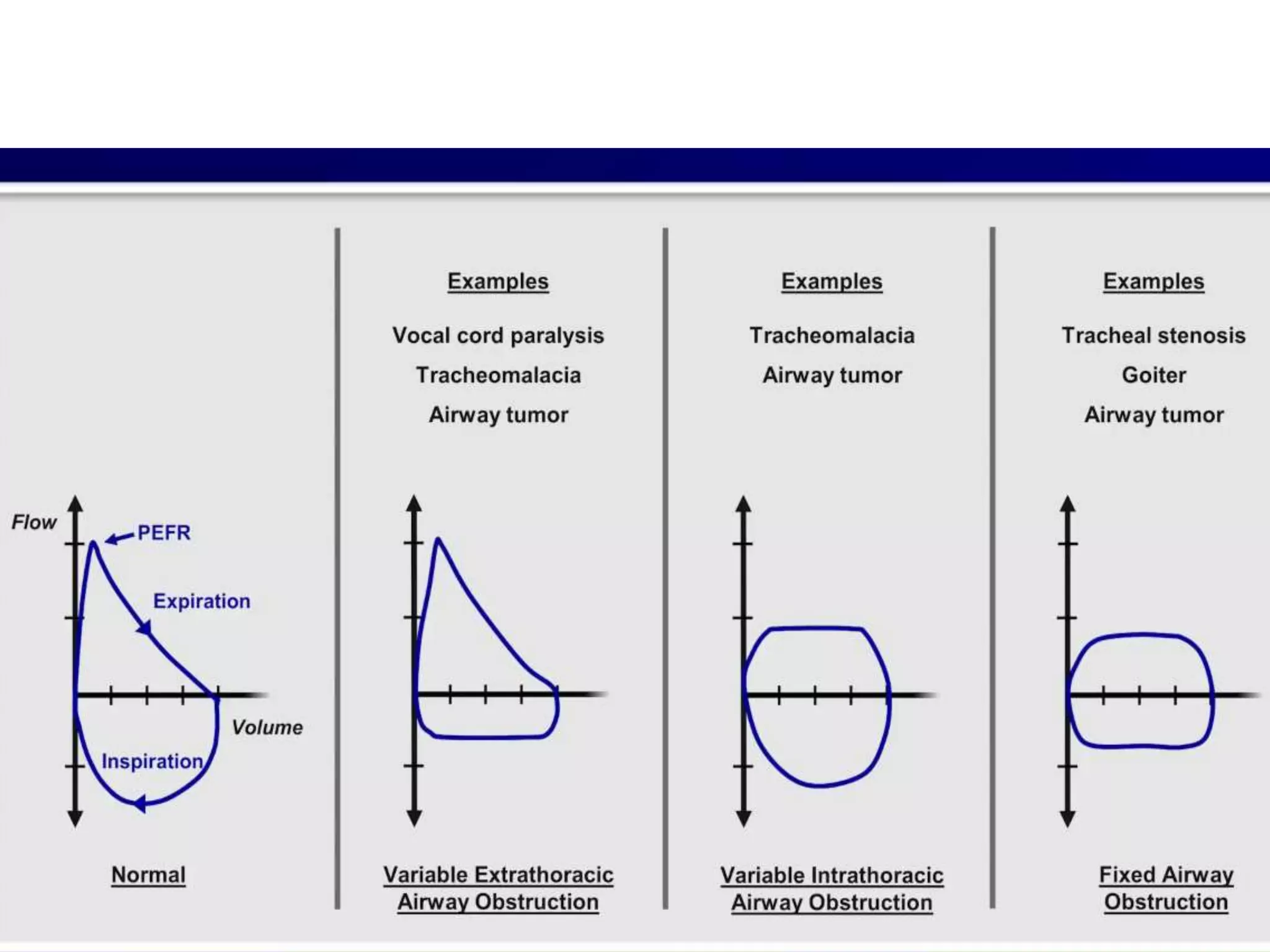
Flow Volume Loop
Peek Expiratory Flow Rate
(PEFR)
PEF (25-75)
Maximum Voluntary Ventilation
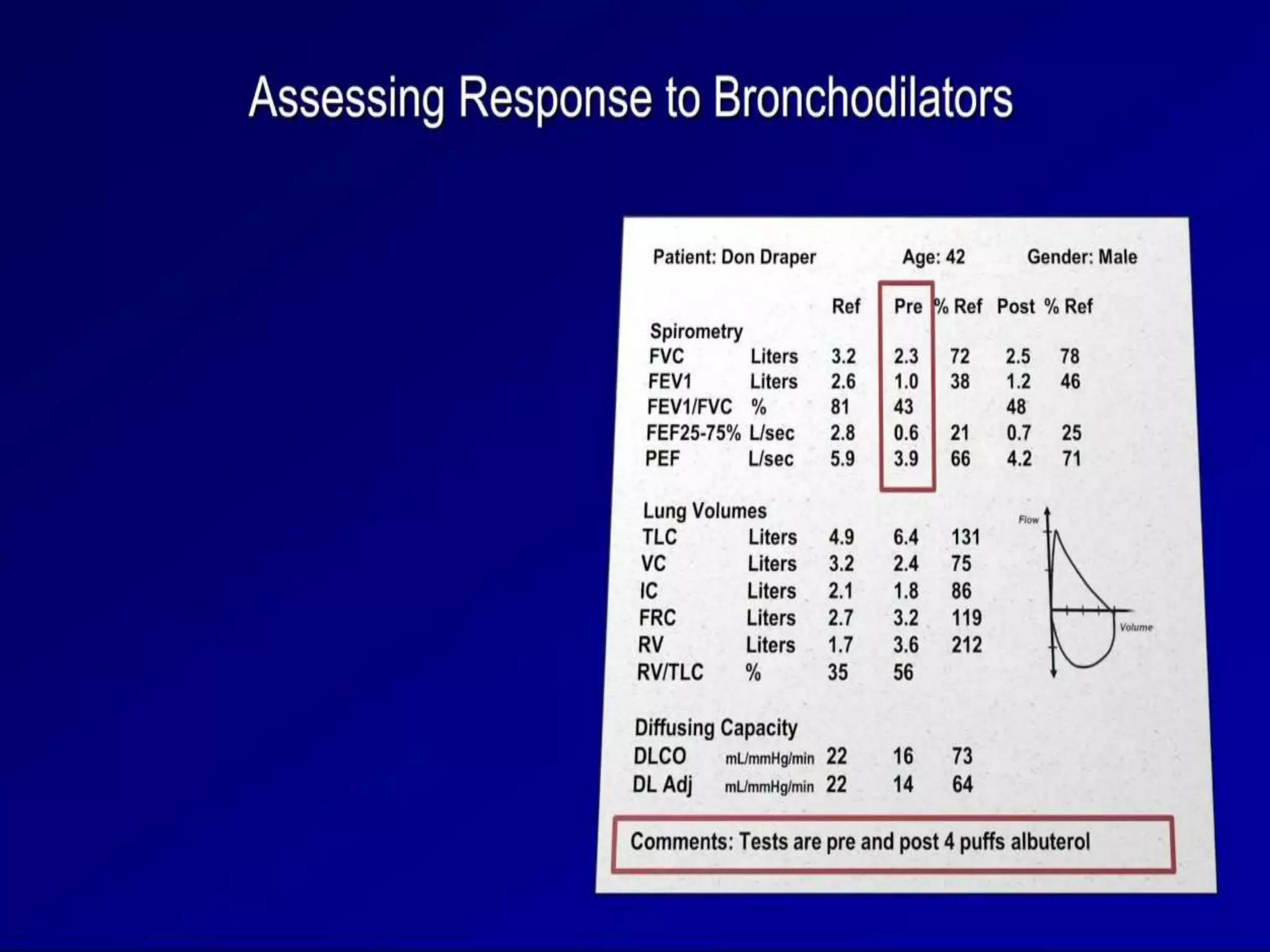
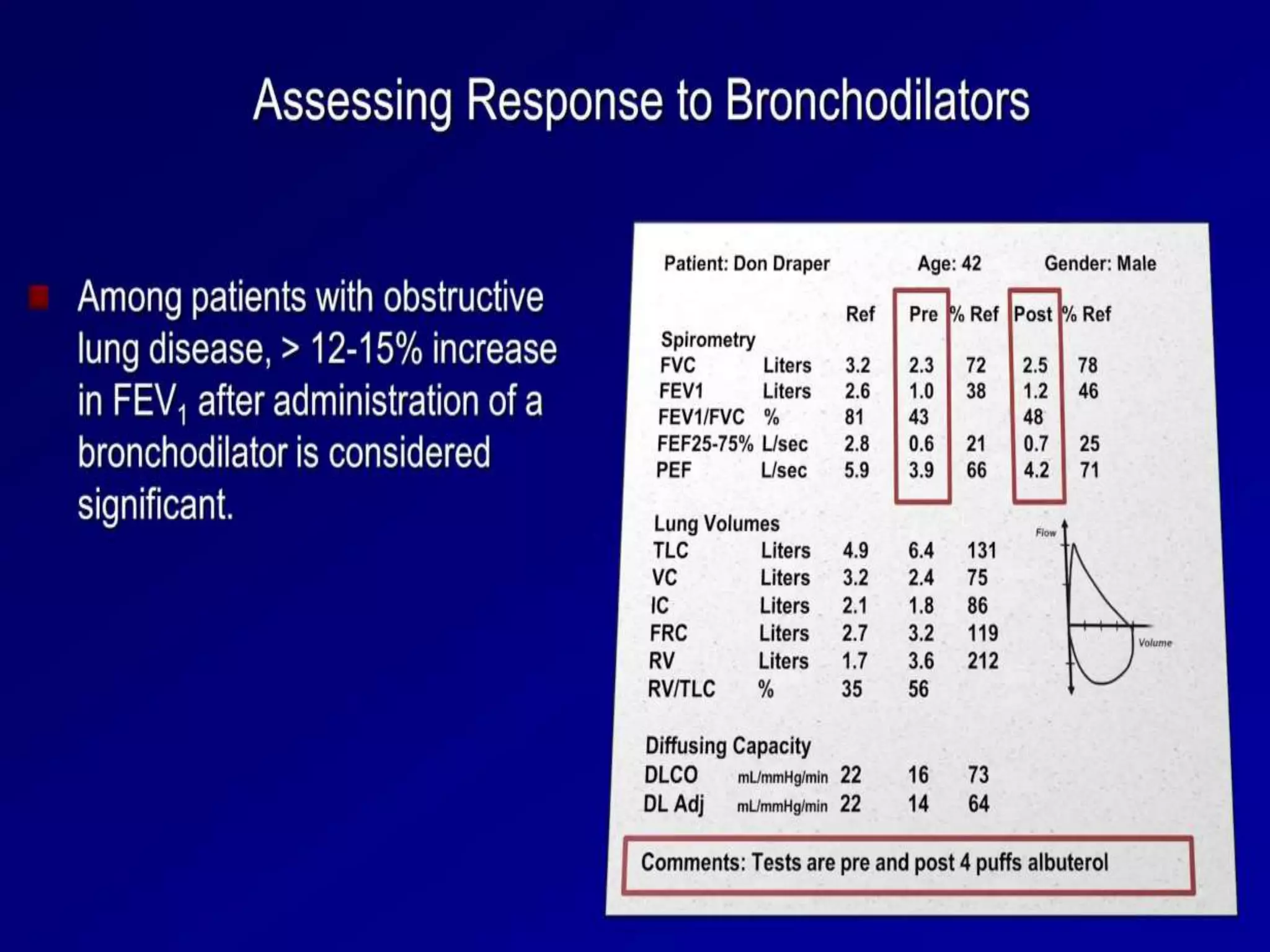
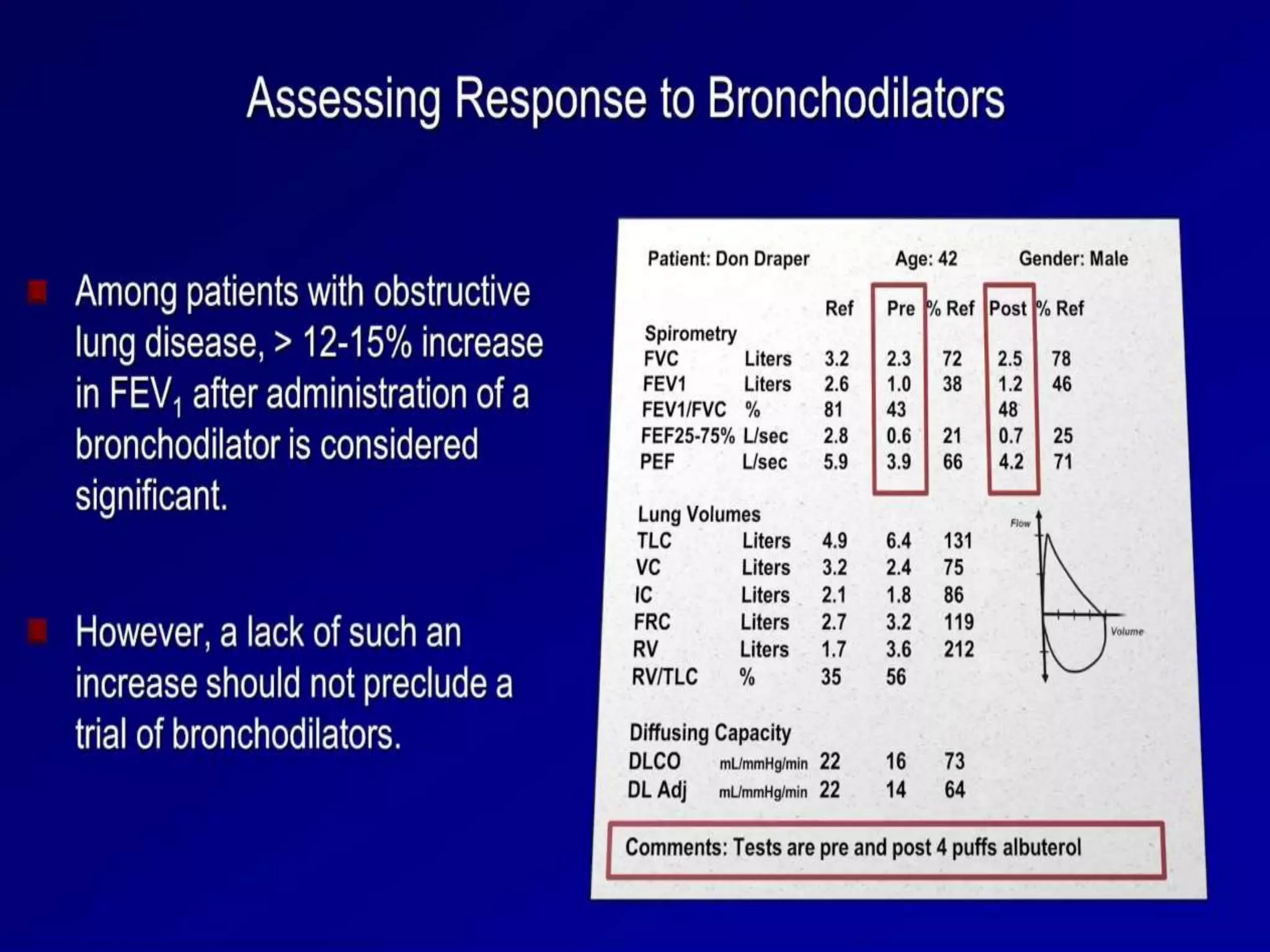
Response to Bronchdilators
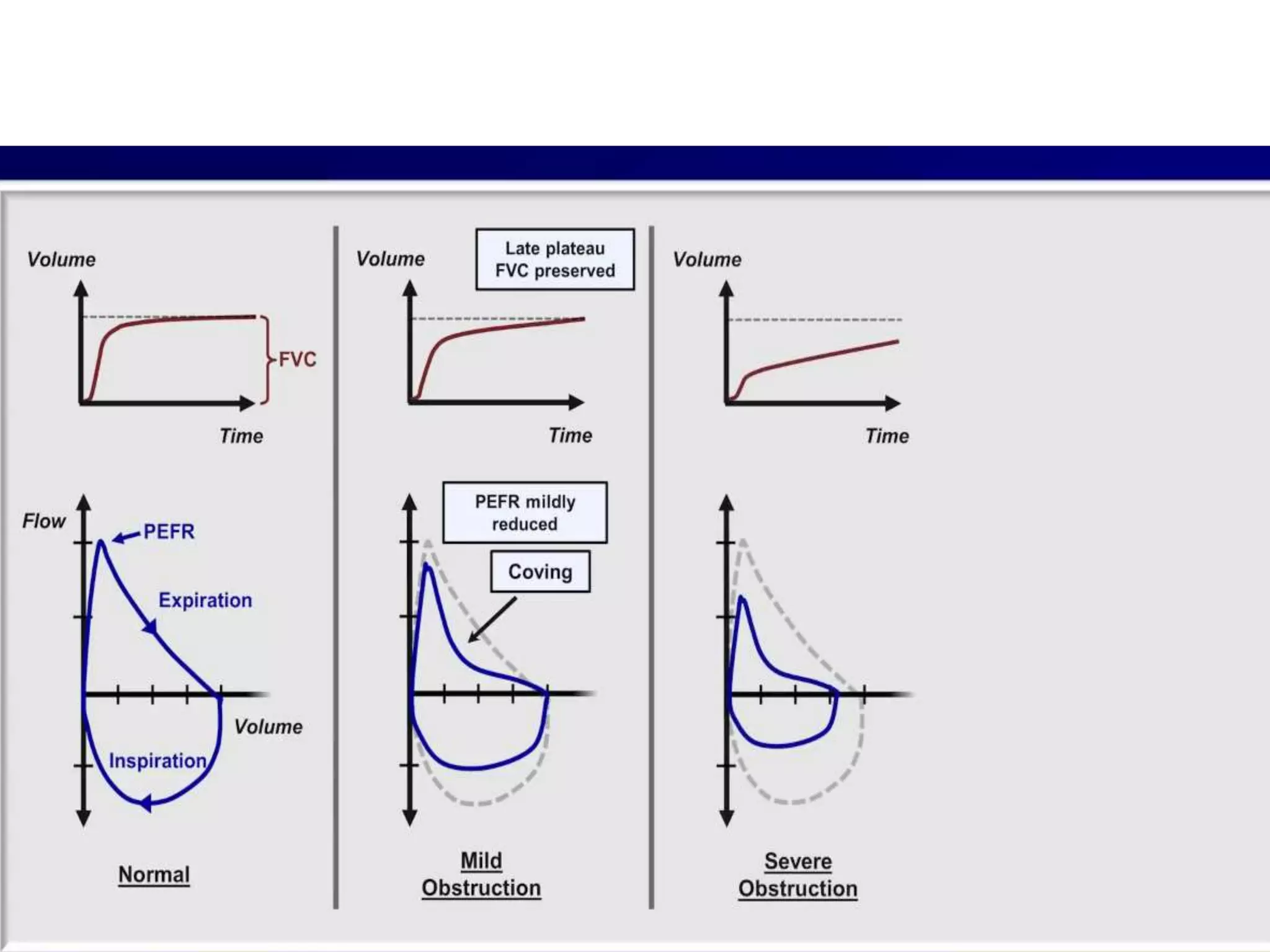
Interpretation of FEV1, FVC
& FEV1/FVC Ratio
FEV1 FVC FEV1 / FVC Ratio
( Tiffeneau Index)
Obstructive Lung
Disease
Normal
Very mild obstruction
or Decreased
Mod / Severe
Obstruction
Normal
Mild / Moderate
obstruction
Decreased
Severe obstruction
Decreased
< 70%
Restrictive Lung
Disease
Normal
or Decreased
Decreased Normal
or Increased
70 % or More
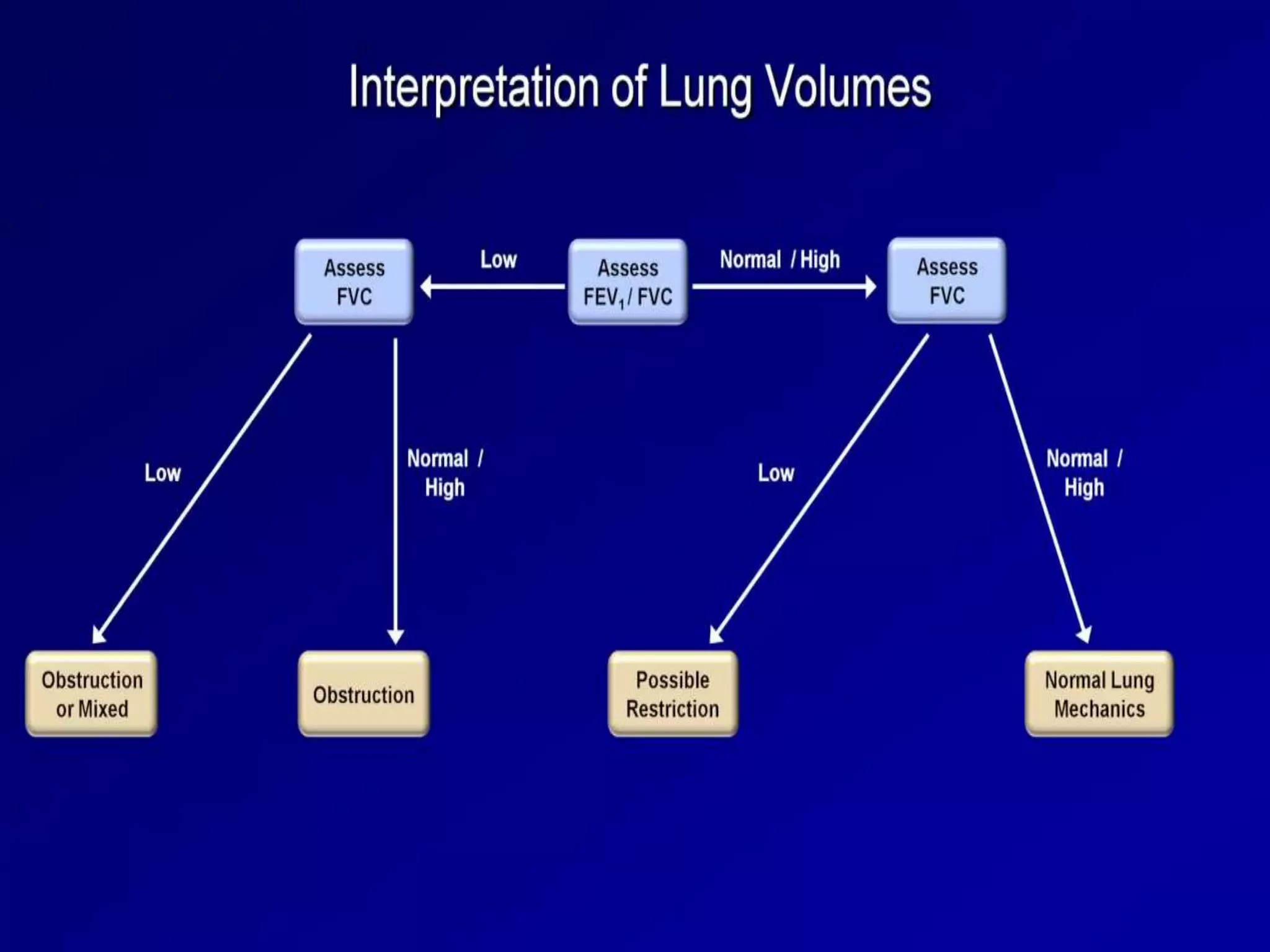
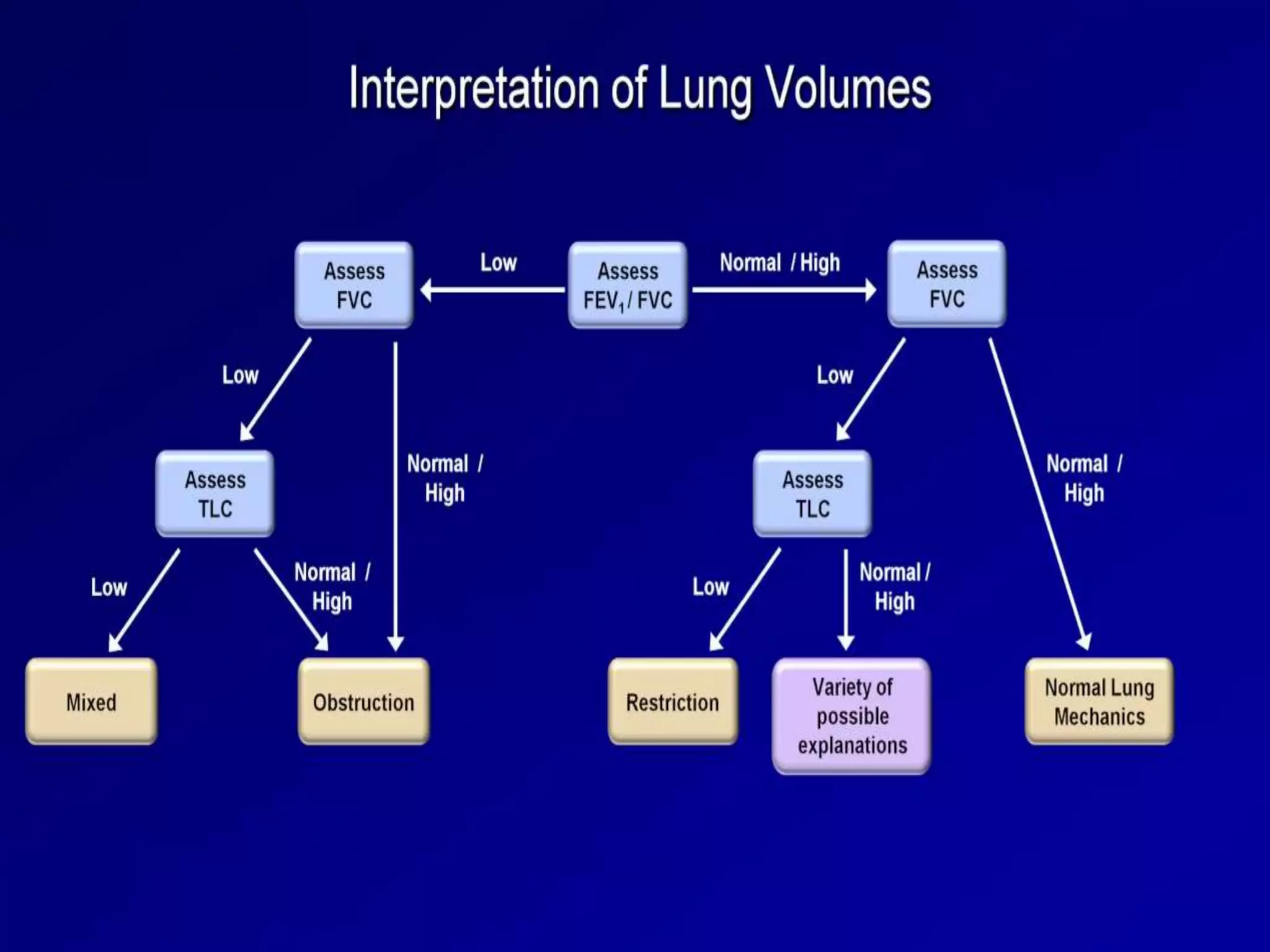
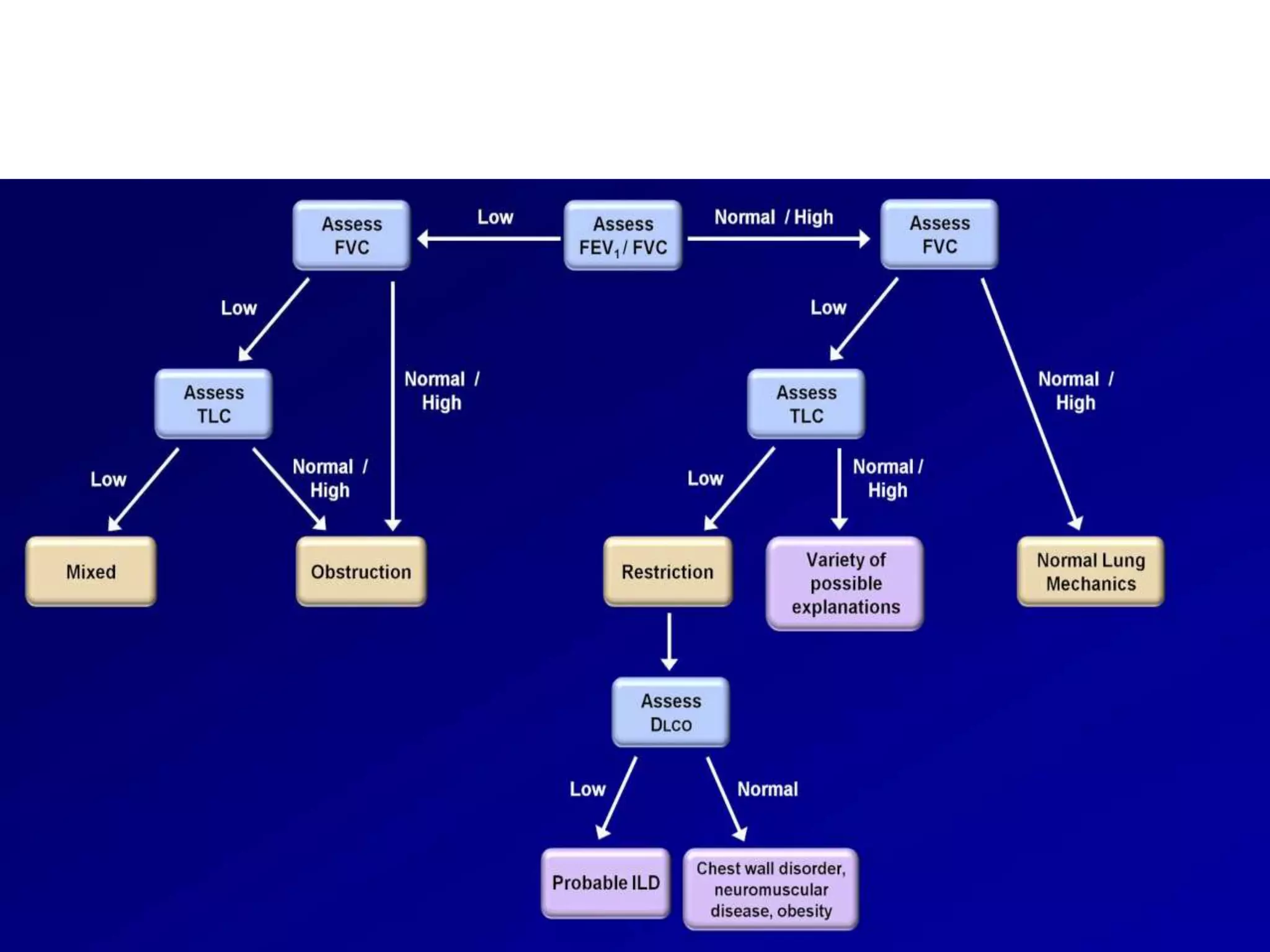
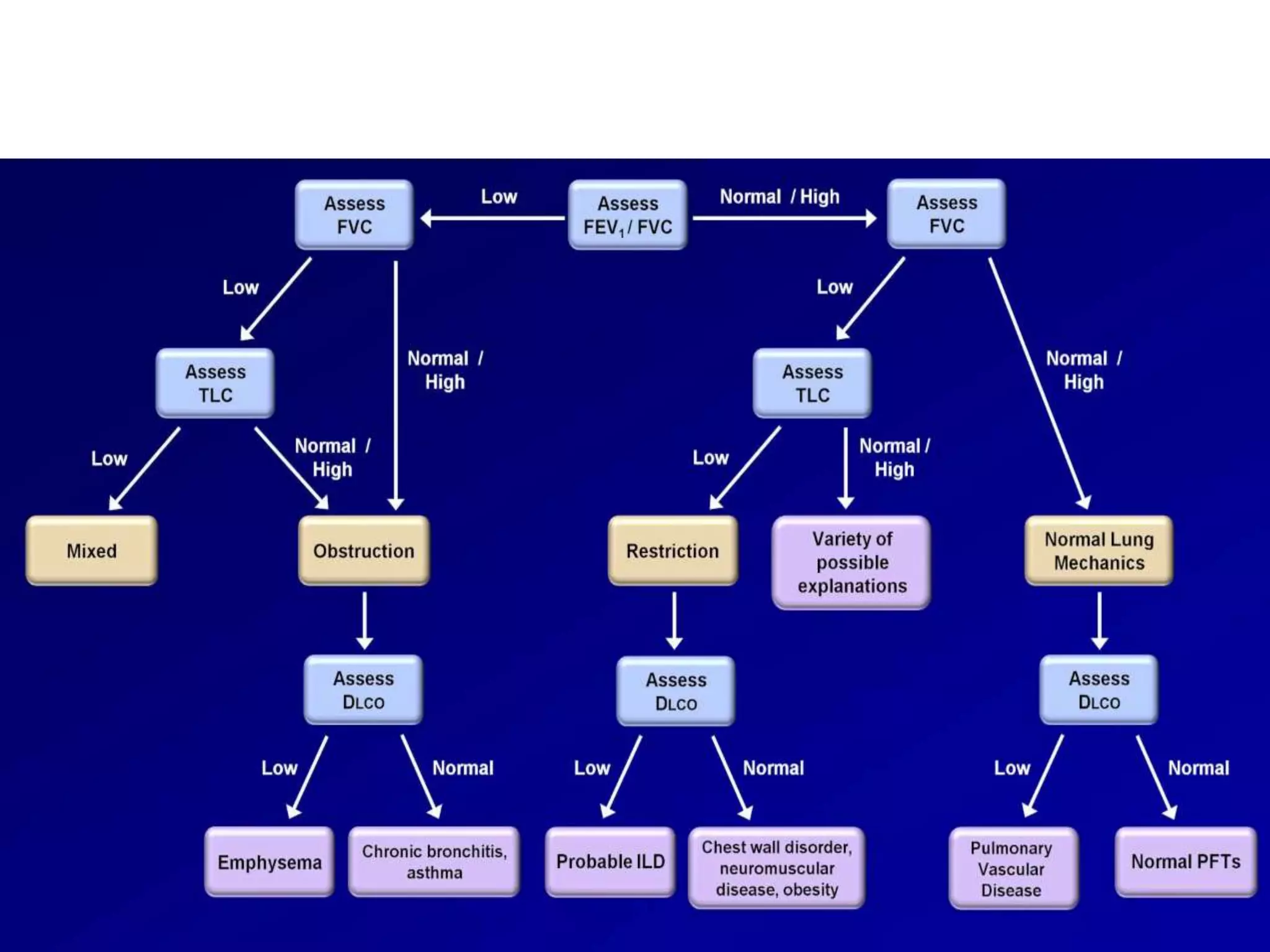
Interpretation of Spirometry
Assess Low Assess Normal/High Assess
FVC FEV1/FVC FVC
LOW Normal Low Normal
Obstruction Obstruction Possible Normal Lung
Or Mixed Restriction Mechanics
Where is Pulmonary Vascular Disease ?
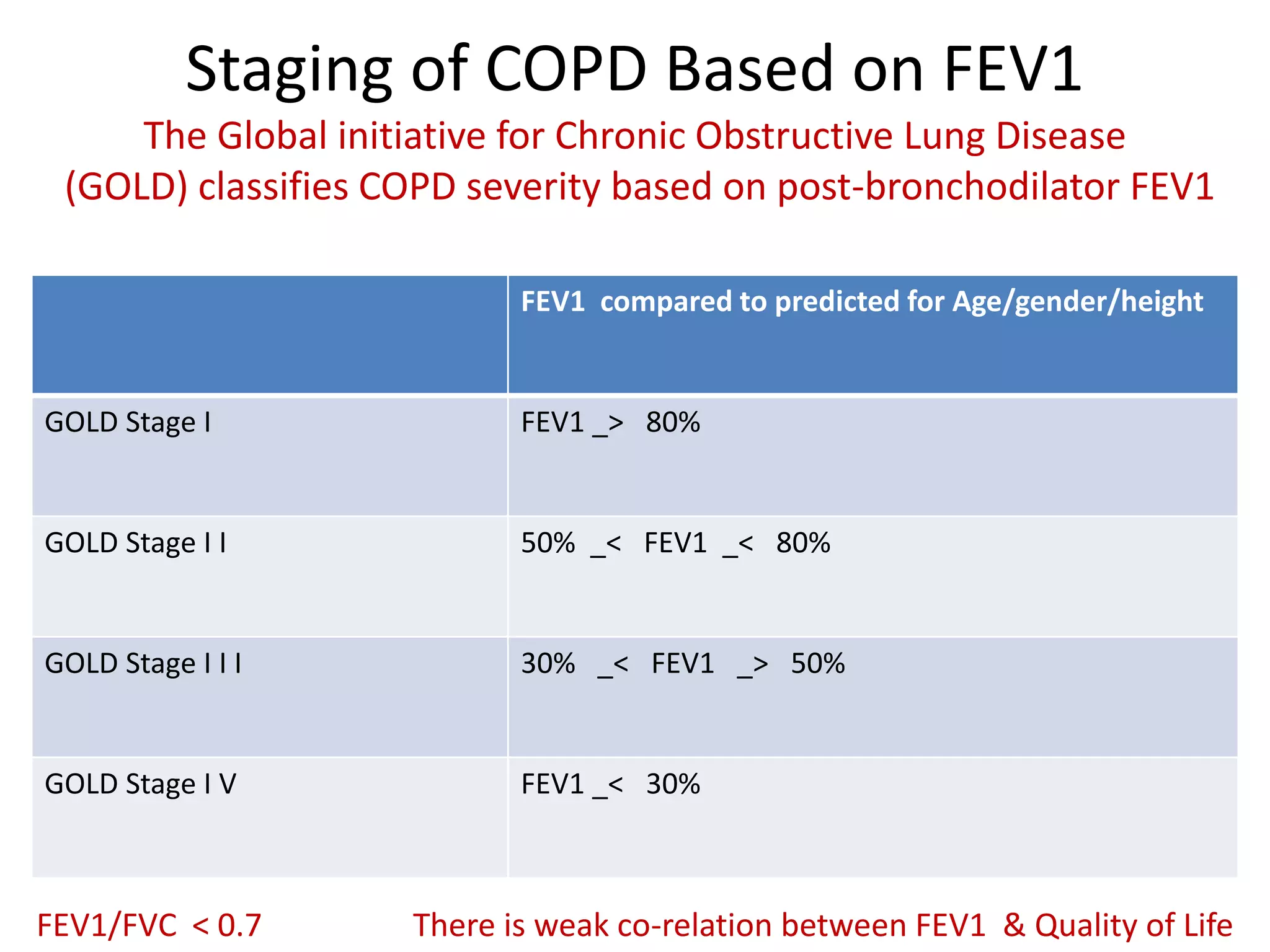
Staging of COPD Based on FEV1
The Global initiative for Chronic Obstructive Lung Disease
(GOLD) classifies COPD severity based on post-bronchodilator FEV1
FEV1 compared to predicted for Age/gender/height
GOLD Stage I FEV1 _> 80%
GOLD Stage I I 50% _< FEV1 _< 80%
GOLD Stage I I I 30% _< FEV1 _> 50%
GOLD Stage I V FEV1 _< 30%
FEV1/FVC < 0.7 There is weak co-relation between FEV1 & Quality of Life
GOLD Criteria for Severity of Airflow Obstruction in COPD
GOLD Stage Severity Spirometry
• I Mild FEV1/FVC <0.7
FEV1 ≥80% predicted
• II Moderate FEV1/FVC <0.7
FEV1 ≥50% but <80% predicted
• III Severe FEV1/FVC <0.7
FEV1 ≥30% but <50% predicted
• IV Very severe FEV1/FVC <0.7
FEV1 <30% predicted
Interpretation of Pulmonary Function Test

Interpretation of Pulmonary Function Test

  • 1.
    A Stepwise Approachto the Interpretation of Pulmonary Function Tests Dr Suman Roy PGT
  • 6.
    Why PFTs? • Dxof Symtomatic Ds • Screening of Early Asymtomatic Ds • Prognostication of Known Ds • Monitoring Response to Known Ds
  • 7.
    Purpose of PFTs? As a dx tool it helps to classify LD into 1 of 3 broad categories Obstructive Lung Disease Restrictive Lung Disease PulmonaryVascular Disease COPD (Chr. Bronchitis< ->Emphysema) Asthma Bronchitis Cystic Fibrosis ILD ( Pul Fibrosis, Sarcoidosis) Chest Wall Pathology ( Kyphosis, Scoliosis) Obesity Neuromascular Disease ( ALS, Mascular Dystrophy) Pr Pul HTN Chr Thromboembolic Ds These categories are not mutually exclusive : COPD can be Obstructive + Vascular Sarcoidosis can be Restrictive + Obstructive + Vascular
  • 8.
    Function of PulmonarySystem Tested by PFTs • Airways Large & Small Airways • Parenchyma Alveoli Interstitium • Pulmonary Vasculature • Bellows/Pump Mechanism Diaphragm Chest Wall • Neural Control of Ventilation
  • 14.
  • 16.
  • 20.
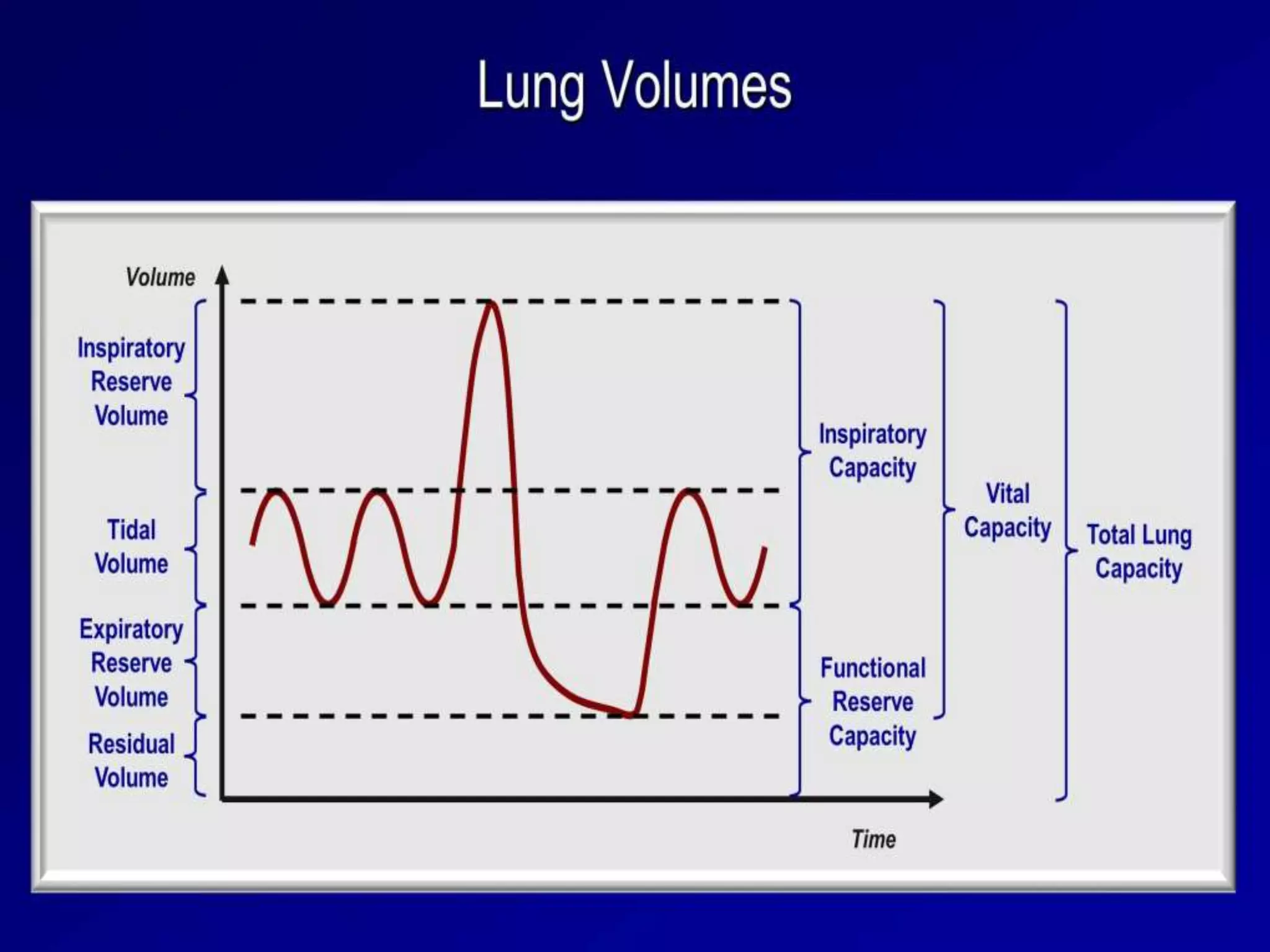
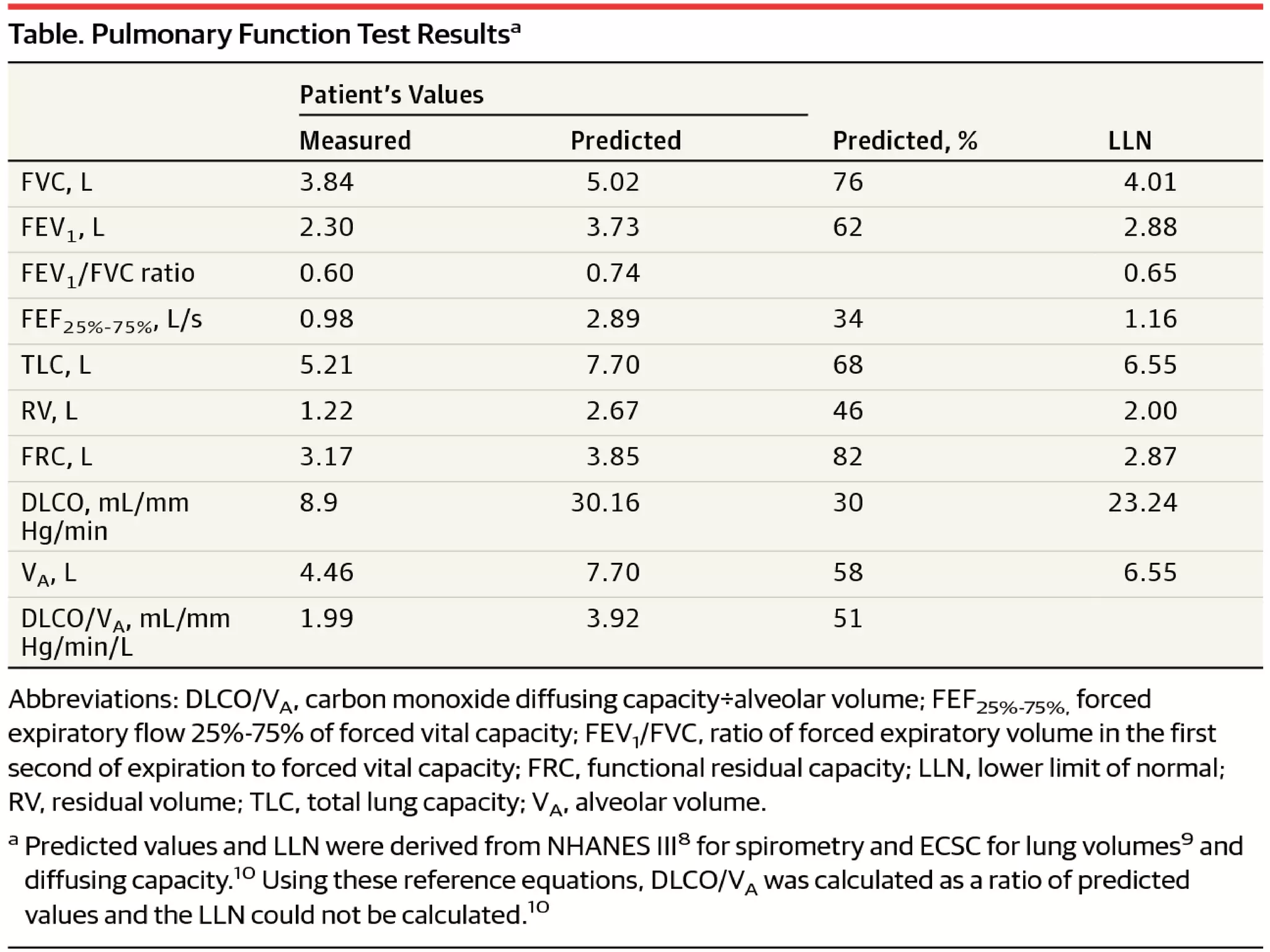
    Values Measured bySpirometry Major Minor FEV1 FVC FEV1/FVC Flow Volume Loop Peek Expiratory Flow Rate (PEFR) PEF (25-75) Maximum Voluntary Ventilation Response to Bronchdilators
  • 21.
    Interpretation of FEV1,FVC & FEV1/FVC Ratio FEV1 FVC FEV1 / FVC Ratio ( Tiffeneau Index) Obstructive Lung Disease Normal Very mild obstruction or Decreased Mod / Severe Obstruction Normal Mild / Moderate obstruction Decreased Severe obstruction Decreased < 70% Restrictive Lung Disease Normal or Decreased Decreased Normal or Increased 70 % or More
  • 22.
    Interpretation of Spirometry AssessLow Assess Normal/High Assess FVC FEV1/FVC FVC LOW Normal Low Normal Obstruction Obstruction Possible Normal Lung Or Mixed Restriction Mechanics Where is Pulmonary Vascular Disease ?
  • 40.
    Staging of COPDBased on FEV1 The Global initiative for Chronic Obstructive Lung Disease (GOLD) classifies COPD severity based on post-bronchodilator FEV1 FEV1 compared to predicted for Age/gender/height GOLD Stage I FEV1 _> 80% GOLD Stage I I 50% _< FEV1 _< 80% GOLD Stage I I I 30% _< FEV1 _> 50% GOLD Stage I V FEV1 _< 30% FEV1/FVC < 0.7 There is weak co-relation between FEV1 & Quality of Life
  • 41.
    GOLD Criteria forSeverity of Airflow Obstruction in COPD GOLD Stage Severity Spirometry • I Mild FEV1/FVC <0.7 FEV1 ≥80% predicted • II Moderate FEV1/FVC <0.7 FEV1 ≥50% but <80% predicted • III Severe FEV1/FVC <0.7 FEV1 ≥30% but <50% predicted • IV Very severe FEV1/FVC <0.7 FEV1 <30% predicted