



UNIT 4A
Human beings
interaction.
INDEX
 NEW WORDS.
 THE INTERACTION FUNCTION.
 THE SENSE ORGANS.
 THE NERVOUS SYSTEM COMPONENTS.
 THE NERVOUS SYSTEM FUNCTION.
 ACTIVITIES AND EXPERIMENTS.
1. New words.
Unit 4(a). Human beings interaction.
Sight- vista
Hearing- oído
Smell- olfato
Taste- Gusto
Touch- Tacto
Nerves- nervios.
Stimuli- estímulos
Receptors- receptores
Effectors- efectores
Nervous system- sistema nervioso
Brain-cerebro
Network-red
Neurons- neuronas
Balance- equilibrio
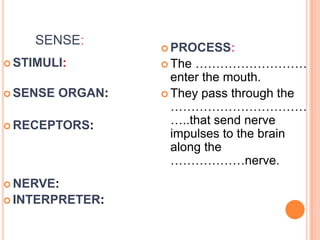
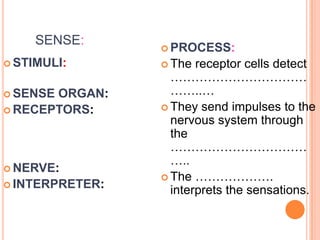
SENSE:
 STIMULI:
 SENSE ORGAN:
 RECEPTORS:
 NERVE:
 INTERPRETER:
 PROCESS:
 The sound enters through
the
……………………………..
 Those vibrations are
transmitted across
the………………… to the
……………….
 In the cochlea there are
receptors cells which send
nerves impulses to the
brain along the
………………………….
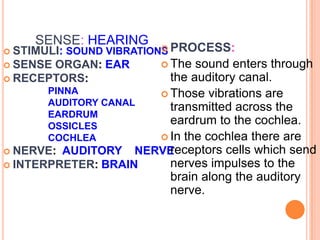
SENSE: HEARING
 STIMULI: SOUND VIBRATIONS
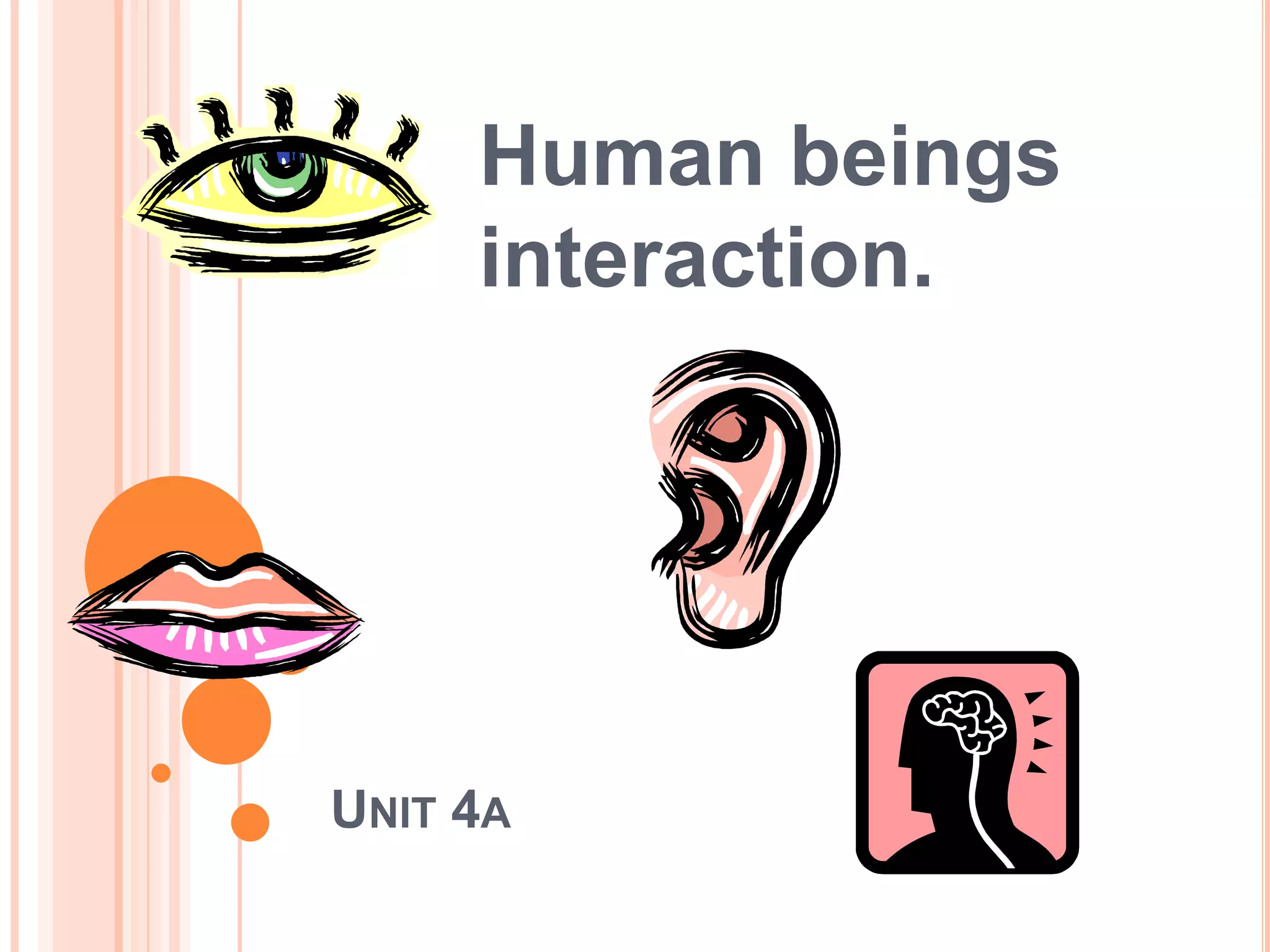
 SENSE ORGAN: EAR
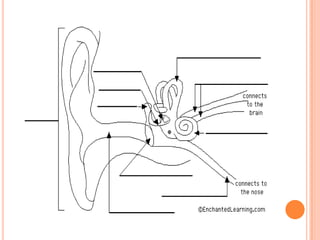
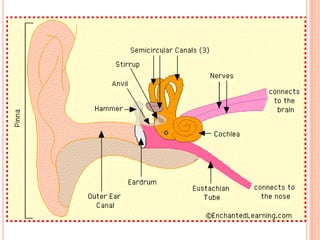
 RECEPTORS:
PINNA
AUDITORY CANAL
EARDRUM
OSSICLES
COCHLEA
 NERVE: AUDITORY NERVE
 INTERPRETER: BRAIN
 PROCESS:
 The sound enters through
the auditory canal.
 Those vibrations are
transmitted across the
eardrum to the cochlea.
 In the cochlea there are
receptors cells which send
nerves impulses to the
brain along the auditory
nerve.
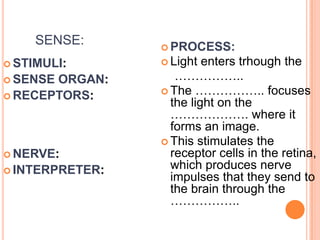
SIGHT
SENSE:
 STIMULI:
 SENSE ORGAN:
 RECEPTORS:
 NERVE:
 INTERPRETER:
 PROCESS:
 Light enters trhough the
……………..
 The …………….. focuses
the light on the
………………. where it
forms an image.
 This stimulates the
receptor cells in the retina,
which produces nerve
impulses that they send to
the brain through the
……………..
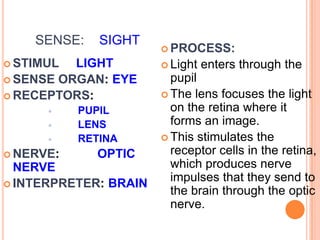
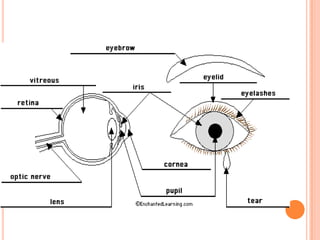
SENSE: SIGHT
 STIMUL LIGHT
 SENSE ORGAN: EYE
 RECEPTORS:
 PUPIL
 LENS
 RETINA
 NERVE: OPTIC
NERVE
 INTERPRETER: BRAIN
 PROCESS:
 Light enters through the
pupil
 The lens focuses the light
on the retina where it
forms an image.
 This stimulates the
receptor cells in the retina,
which produces nerve
impulses that they send to
the brain through the optic
nerve.
SMELL
SENSE:
 STIMULI
 SENSE ORGAN:
 RECEPTORS:
 NERVE:
 INTERPRETER:
 PROCESS:
 The …………………….
floating in the air enter the
nose.
 They go through the
……………………………
…...
 This pituitary gland sends
a nerve inmpulse to the
brain along the
……………………………
……..
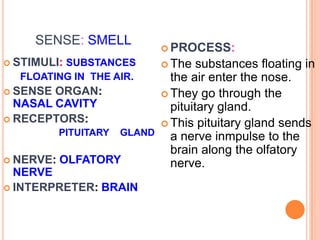
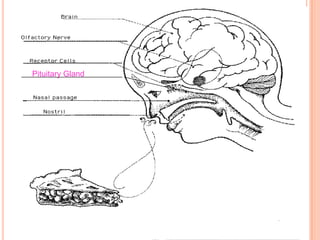
SENSE: SMELL
 STIMULI: SUBSTANCES
FLOATING IN THE AIR.
 SENSE ORGAN:
NASAL CAVITY
 RECEPTORS:
PITUITARY GLAND
 NERVE: OLFATORY
NERVE
 INTERPRETER: BRAIN
 PROCESS:
 The substances floating in
the air enter the nose.
 They go through the
pituitary gland.
 This pituitary gland sends
a nerve inmpulse to the
brain along the olfatory
nerve.
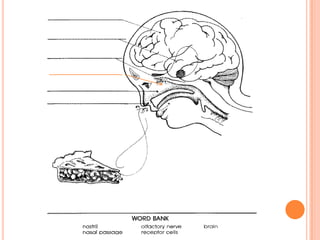
Pituitary Gland
TASTE
SENSE:
 STIMULI:
 SENSE ORGAN:
 RECEPTORS:
 NERVE:
 INTERPRETER:
 PROCESS:
 The ………………………
enter the mouth.
 They pass through the
……………………………
…..that send nerve
impulses to the brain
along the
………………nerve.
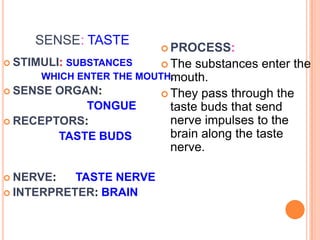
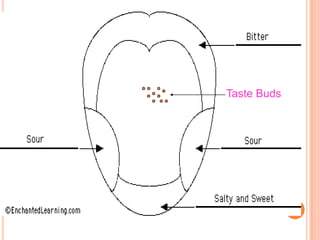
SENSE: TASTE
 STIMULI: SUBSTANCES
WHICH ENTER THE MOUTH.
 SENSE ORGAN:
TONGUE
 RECEPTORS:
TASTE BUDS
 NERVE: TASTE NERVE
 INTERPRETER: BRAIN
 PROCESS:
 The substances enter the
mouth.
 They pass through the
taste buds that send
nerve impulses to the
brain along the taste
nerve.
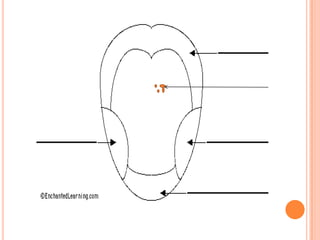
Taste Buds
TOUCH
SENSE:
 STIMULI:
 SENSE ORGAN:
 RECEPTORS:
 NERVE:
 INTERPRETER:
 PROCESS:
 The receptor cells detect
……………………………
……..…
 They send impulses to the
nervous system through
the
……………………………
…..
 The ……………….
interprets the sensations.
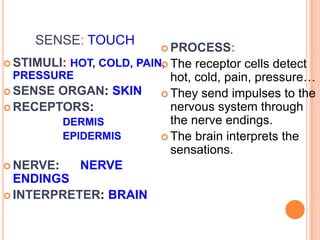
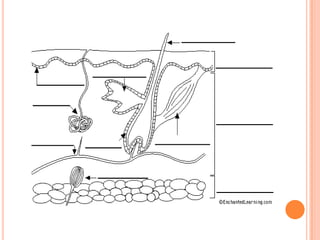
SENSE: TOUCH
 STIMULI: HOT, COLD, PAIN,
PRESSURE
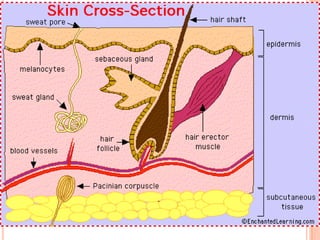
 SENSE ORGAN: SKIN
 RECEPTORS:
DERMIS
EPIDERMIS
 NERVE: NERVE
ENDINGS
 INTERPRETER: BRAIN
 PROCESS:
 The receptor cells detect
hot, cold, pain, pressure…
 They send impulses to the
nervous system through
the nerve endings.
 The brain interprets the
sensations.
THE NERVOUS
SYSTEM
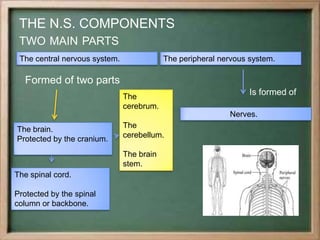
THE N.S. COMPONENTS
TWO MAIN PARTS
Formed of two parts
with
three
parts
The central nervous system. The peripheral nervous system.
The brain.
Protected by the cranium.
The spinal cord.
Protected by the spinal
column or backbone.
The
cerebrum.
The
cerebellum.
The brain
stem.
Nerves.
Is formed of
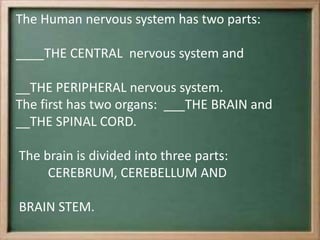
The Human nervous system has two parts:
____THE CENTRAL nervous system and
__THE PERIPHERAL nervous system.
The first has two organs: ___THE BRAIN and
__THE SPINAL CORD.
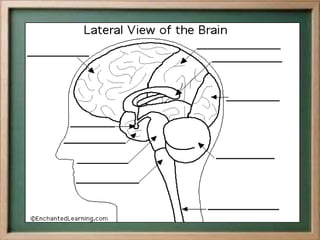
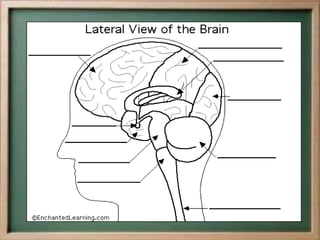
The brain is divided into three parts:
CEREBRUM, CEREBELLUM AND
BRAIN STEM.
THE NERVOUS SYSTEM:
 FUNCTIONS.
 Receives information from the receptors (senses).
 Elaborates a response,
 Sends instructions to the effectors (bones and
muscles).
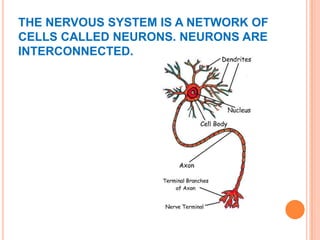
THE NERVOUS SYSTEM IS A NETWORK OF
CELLS CALLED NEURONS. NEURONS ARE
INTERCONNECTED.
THE NERVOUS
SYSTEM
FUNCTIONS
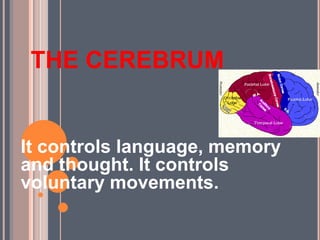
THE CEREBRUM
It controls language, memory
and thought. It controls
voluntary movements.
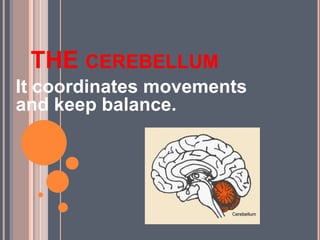
THE CEREBELLUM
It coordinates movements
and keep balance.
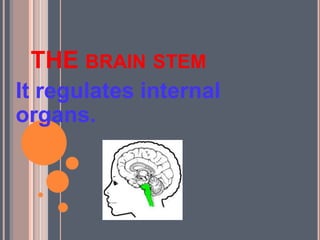
THE BRAIN STEM
It regulates internal
organs.
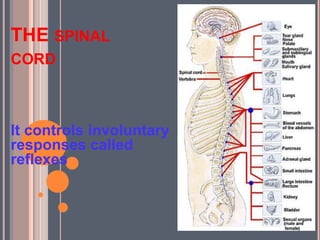
THE SPINAL
CORD
It controls involuntary
responses called
reflexes
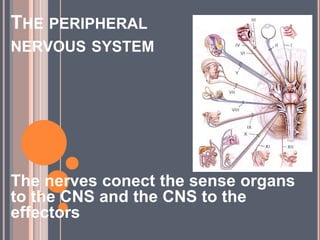
THE PERIPHERAL
NERVOUS SYSTEM
The nerves conect the sense organs
to the CNS and the CNS to the
effectors
THE EFFECTORS
FUNCTION: They execute the responses.
UNIT 4B
THE LOCOMOTOR SYSTEM
 IS FORMED BY
 A)THE MUSCULAR SYSTEM
 B) THE SKELETAL SYSTEM
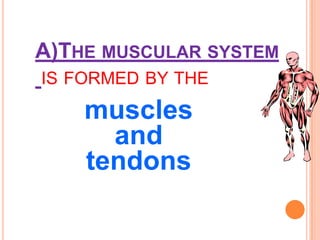
A)THE MUSCULAR SYSTEM
IS FORMED BY THE
muscles
and
tendons
THE MUSCLES
 The muscles are formed of muscular cells that
contract when they receive a nerve impulse. If the
nerve impulse stops they return to their initial
position.
 FIND OUT HOW A MUSCLE MOVES.
 For example an arm.
HOW MANY MUSCLES DO WE HAVE?
 We have about 650
muscles in my body.
 Our muscles make up
half of my body weight.
 ??? How much do your
muscles weigh?
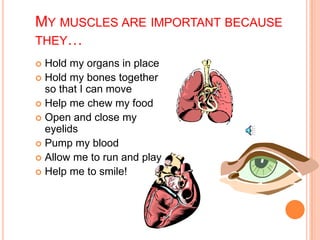
MY MUSCLES ARE IMPORTANT BECAUSE
THEY…
 Hold my organs in place
 Hold my bones together
so that I can move
 Help me chew my food
 Open and close my
eyelids
 Pump my blood
 Allow me to run and play
 Help me to smile!
DID YOU KNOW?????
It takes more
muscles to
frown
than to
smile?
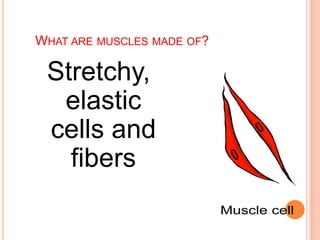
WHAT ARE MUSCLES MADE OF?
Stretchy,
elastic
cells and
fibers
WHY DO I NEED TENDONS?
Tendons attach my muscles to my bone helping my
body move.
Feel your tendon right above
your heel in the back of your
leg.
This is the thickest tendon in your body.
ONE WAY TO KEEP MY MUSCLES
STRONG…
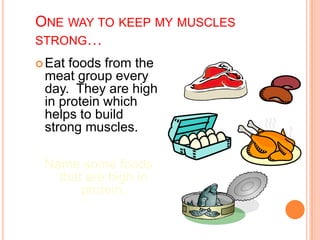
Eat foods from the
meat group every
day. They are high
in protein which
helps to build
strong muscles.
Name some foods
that are high in
protein.
ANOTHER WAY TO KEEP STRONG
MUSCLES…
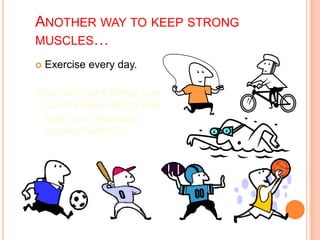
 Exercise every day.
What are some things you
can do every day to help
keep your muscular
system healthy?
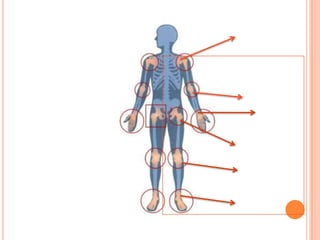
THE SKELETON
FUNCTIONS
 TO BE A FRAME FOR THE BODY,
 PROTECT THE INTERNAL ORGANS and
 TO HELP THE MOVEMENT OF THE BODY.
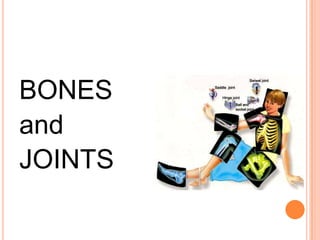
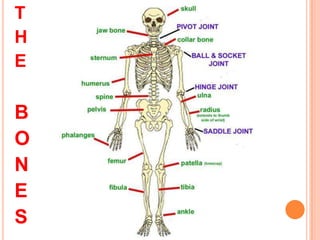
THE SKELETON IS MADE UP OF
BONES
and
JOINTS
T
H
E
B
O
N
E
S
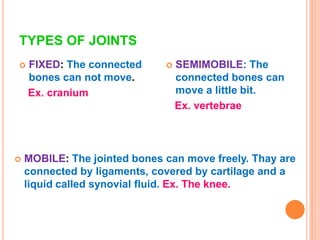
TYPES OF JOINTS
 FIXED: The connected
bones can not move.
Ex. cranium
 MOBILE: The jointed bones can move freely. Thay are
connected by ligaments, covered by cartilage and a
liquid called synovial fluid. Ex. The knee.
 SEMIMOBILE: The
connected bones can
move a little bit.
Ex. vertebrae
INVESTIGATE
 1.- How many bones do we have?
 2.- What bones do protect your heart and lungs?
 3.-Which are the smallest bones in the body?
 4.-And the biggest one?
 5.- How many pairs of ribs do we have?
GOOD BYE

Unit 4a human interactions april

  • 1.
  • 2.
    INDEX  NEW WORDS. THE INTERACTION FUNCTION.  THE SENSE ORGANS.  THE NERVOUS SYSTEM COMPONENTS.  THE NERVOUS SYSTEM FUNCTION.  ACTIVITIES AND EXPERIMENTS.
  • 3.
    1. New words. Unit4(a). Human beings interaction. Sight- vista Hearing- oído Smell- olfato Taste- Gusto Touch- Tacto Nerves- nervios. Stimuli- estímulos Receptors- receptores Effectors- efectores Nervous system- sistema nervioso Brain-cerebro Network-red Neurons- neuronas Balance- equilibrio
  • 4.
    SENSE:  STIMULI:  SENSEORGAN:  RECEPTORS:  NERVE:  INTERPRETER:  PROCESS:  The sound enters through the ……………………………..  Those vibrations are transmitted across the………………… to the ……………….  In the cochlea there are receptors cells which send nerves impulses to the brain along the ………………………….
  • 5.
    SENSE: HEARING  STIMULI:SOUND VIBRATIONS  SENSE ORGAN: EAR  RECEPTORS: PINNA AUDITORY CANAL EARDRUM OSSICLES COCHLEA  NERVE: AUDITORY NERVE  INTERPRETER: BRAIN  PROCESS:  The sound enters through the auditory canal.  Those vibrations are transmitted across the eardrum to the cochlea.  In the cochlea there are receptors cells which send nerves impulses to the brain along the auditory nerve.
  • 8.
  • 9.
    SENSE:  STIMULI:  SENSEORGAN:  RECEPTORS:  NERVE:  INTERPRETER:  PROCESS:  Light enters trhough the ……………..  The …………….. focuses the light on the ………………. where it forms an image.  This stimulates the receptor cells in the retina, which produces nerve impulses that they send to the brain through the ……………..
  • 10.
    SENSE: SIGHT  STIMULLIGHT  SENSE ORGAN: EYE  RECEPTORS:  PUPIL  LENS  RETINA  NERVE: OPTIC NERVE  INTERPRETER: BRAIN  PROCESS:  Light enters through the pupil  The lens focuses the light on the retina where it forms an image.  This stimulates the receptor cells in the retina, which produces nerve impulses that they send to the brain through the optic nerve.
  • 13.
  • 14.
    SENSE:  STIMULI  SENSEORGAN:  RECEPTORS:  NERVE:  INTERPRETER:  PROCESS:  The ……………………. floating in the air enter the nose.  They go through the …………………………… …...  This pituitary gland sends a nerve inmpulse to the brain along the …………………………… ……..
  • 15.
    SENSE: SMELL  STIMULI:SUBSTANCES FLOATING IN THE AIR.  SENSE ORGAN: NASAL CAVITY  RECEPTORS: PITUITARY GLAND  NERVE: OLFATORY NERVE  INTERPRETER: BRAIN  PROCESS:  The substances floating in the air enter the nose.  They go through the pituitary gland.  This pituitary gland sends a nerve inmpulse to the brain along the olfatory nerve.
  • 17.
  • 18.
  • 19.
    SENSE:  STIMULI:  SENSEORGAN:  RECEPTORS:  NERVE:  INTERPRETER:  PROCESS:  The ……………………… enter the mouth.  They pass through the …………………………… …..that send nerve impulses to the brain along the ………………nerve.
  • 20.
    SENSE: TASTE  STIMULI:SUBSTANCES WHICH ENTER THE MOUTH.  SENSE ORGAN: TONGUE  RECEPTORS: TASTE BUDS  NERVE: TASTE NERVE  INTERPRETER: BRAIN  PROCESS:  The substances enter the mouth.  They pass through the taste buds that send nerve impulses to the brain along the taste nerve.
  • 22.
  • 23.
  • 24.
    SENSE:  STIMULI:  SENSEORGAN:  RECEPTORS:  NERVE:  INTERPRETER:  PROCESS:  The receptor cells detect …………………………… ……..…  They send impulses to the nervous system through the …………………………… …..  The ………………. interprets the sensations.
  • 25.
    SENSE: TOUCH  STIMULI:HOT, COLD, PAIN, PRESSURE  SENSE ORGAN: SKIN  RECEPTORS: DERMIS EPIDERMIS  NERVE: NERVE ENDINGS  INTERPRETER: BRAIN  PROCESS:  The receptor cells detect hot, cold, pain, pressure…  They send impulses to the nervous system through the nerve endings.  The brain interprets the sensations.
  • 28.
  • 29.
    THE N.S. COMPONENTS TWOMAIN PARTS Formed of two parts with three parts The central nervous system. The peripheral nervous system. The brain. Protected by the cranium. The spinal cord. Protected by the spinal column or backbone. The cerebrum. The cerebellum. The brain stem. Nerves. Is formed of
  • 30.
    The Human nervoussystem has two parts: ____THE CENTRAL nervous system and __THE PERIPHERAL nervous system. The first has two organs: ___THE BRAIN and __THE SPINAL CORD. The brain is divided into three parts: CEREBRUM, CEREBELLUM AND BRAIN STEM.
  • 33.
    THE NERVOUS SYSTEM: FUNCTIONS.  Receives information from the receptors (senses).  Elaborates a response,  Sends instructions to the effectors (bones and muscles).
  • 34.
    THE NERVOUS SYSTEMIS A NETWORK OF CELLS CALLED NEURONS. NEURONS ARE INTERCONNECTED.
  • 35.
  • 36.
    THE CEREBRUM It controlslanguage, memory and thought. It controls voluntary movements.
  • 37.
    THE CEREBELLUM It coordinatesmovements and keep balance.
  • 38.
    THE BRAIN STEM Itregulates internal organs.
  • 39.
    THE SPINAL CORD It controlsinvoluntary responses called reflexes
  • 40.
    THE PERIPHERAL NERVOUS SYSTEM Thenerves conect the sense organs to the CNS and the CNS to the effectors
  • 41.
    THE EFFECTORS FUNCTION: Theyexecute the responses. UNIT 4B
  • 42.
    THE LOCOMOTOR SYSTEM IS FORMED BY  A)THE MUSCULAR SYSTEM  B) THE SKELETAL SYSTEM
  • 43.
    A)THE MUSCULAR SYSTEM ISFORMED BY THE muscles and tendons
  • 44.
    THE MUSCLES  Themuscles are formed of muscular cells that contract when they receive a nerve impulse. If the nerve impulse stops they return to their initial position.  FIND OUT HOW A MUSCLE MOVES.  For example an arm.
  • 45.
    HOW MANY MUSCLESDO WE HAVE?  We have about 650 muscles in my body.  Our muscles make up half of my body weight.  ??? How much do your muscles weigh?
  • 46.
    MY MUSCLES AREIMPORTANT BECAUSE THEY…  Hold my organs in place  Hold my bones together so that I can move  Help me chew my food  Open and close my eyelids  Pump my blood  Allow me to run and play  Help me to smile!
  • 47.
    DID YOU KNOW????? Ittakes more muscles to frown than to smile?
  • 48.
    WHAT ARE MUSCLESMADE OF? Stretchy, elastic cells and fibers
  • 49.
    WHY DO INEED TENDONS? Tendons attach my muscles to my bone helping my body move. Feel your tendon right above your heel in the back of your leg. This is the thickest tendon in your body.
  • 50.
    ONE WAY TOKEEP MY MUSCLES STRONG… Eat foods from the meat group every day. They are high in protein which helps to build strong muscles. Name some foods that are high in protein.
  • 51.
    ANOTHER WAY TOKEEP STRONG MUSCLES…  Exercise every day. What are some things you can do every day to help keep your muscular system healthy?
  • 52.
  • 53.
    FUNCTIONS  TO BEA FRAME FOR THE BODY,  PROTECT THE INTERNAL ORGANS and  TO HELP THE MOVEMENT OF THE BODY.
  • 54.
    THE SKELETON ISMADE UP OF BONES and JOINTS
  • 55.
  • 57.
    TYPES OF JOINTS FIXED: The connected bones can not move. Ex. cranium  MOBILE: The jointed bones can move freely. Thay are connected by ligaments, covered by cartilage and a liquid called synovial fluid. Ex. The knee.  SEMIMOBILE: The connected bones can move a little bit. Ex. vertebrae
  • 58.
    INVESTIGATE  1.- Howmany bones do we have?  2.- What bones do protect your heart and lungs?  3.-Which are the smallest bones in the body?  4.-And the biggest one?  5.- How many pairs of ribs do we have?
  • 59.