natural
Unit
1
Interaction, a life process
Living things interact with each other
and the world around them in many
ways.
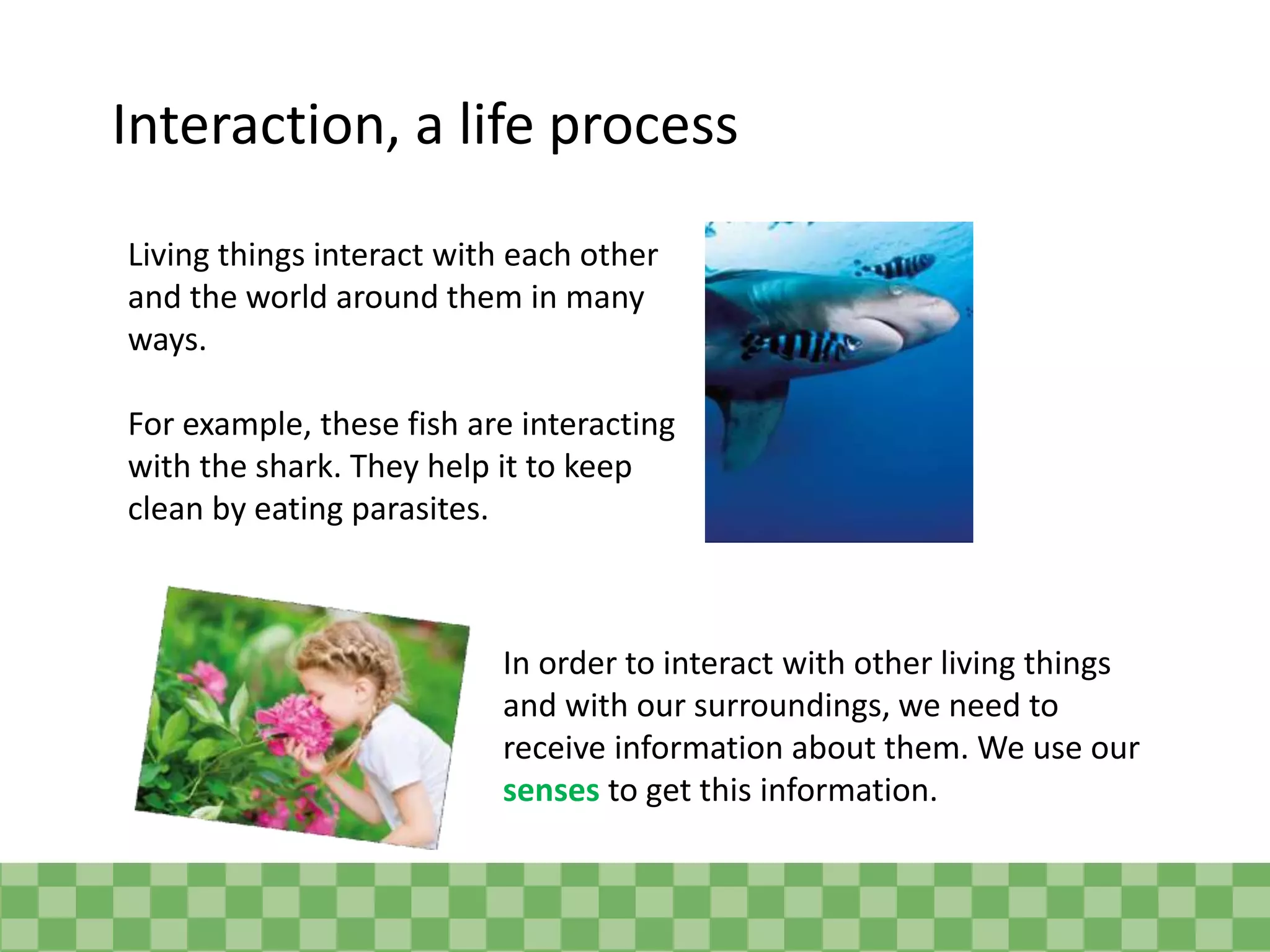
For example, these fish are interacting
with the shark. They help it to keep
clean by eating parasites.
In order to interact with other living things
and with our surroundings, we need to
receive information about them. We use our
senses to get this information.
Which organs make up the
nervous system?
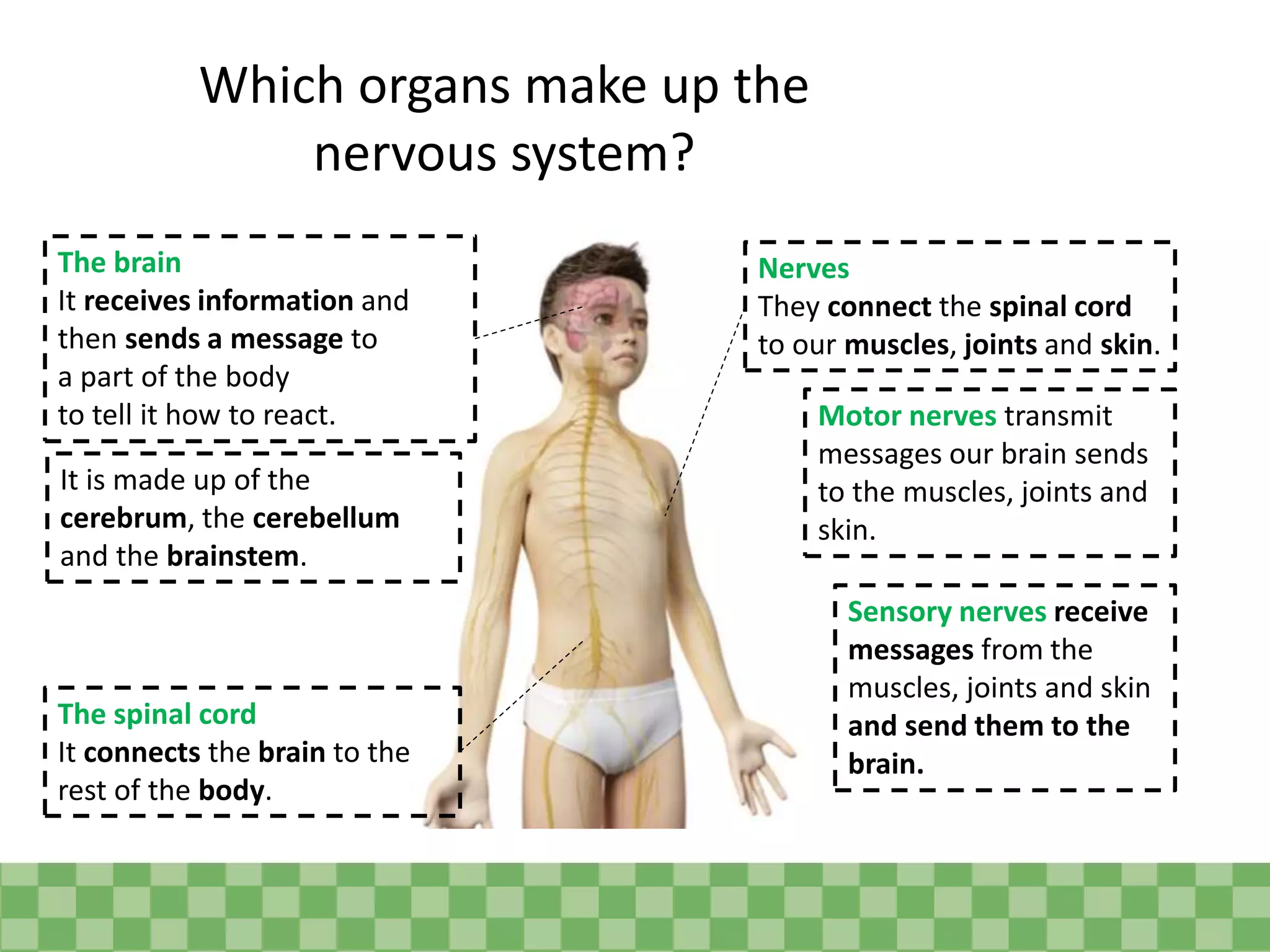
The brain
It receives information and
then sends a message to
a part of the body
to tell it how to react.
The spinal cord
It connects the brain to the
rest of the body.
Nerves
They connect the spinal cord
to our muscles, joints and skin.
Motor nerves transmit
messages our brain sends
to the muscles, joints and
skin.
Sensory nerves receive
messages from the
muscles, joints and skin
and send them to the
brain.
It is made up of the
cerebrum, the cerebellum
and the brainstem.
How does the nervous system work?
The nervous system is made up of millions of neurons, which receive and
transmit messages from different parts of the body and from the brain.
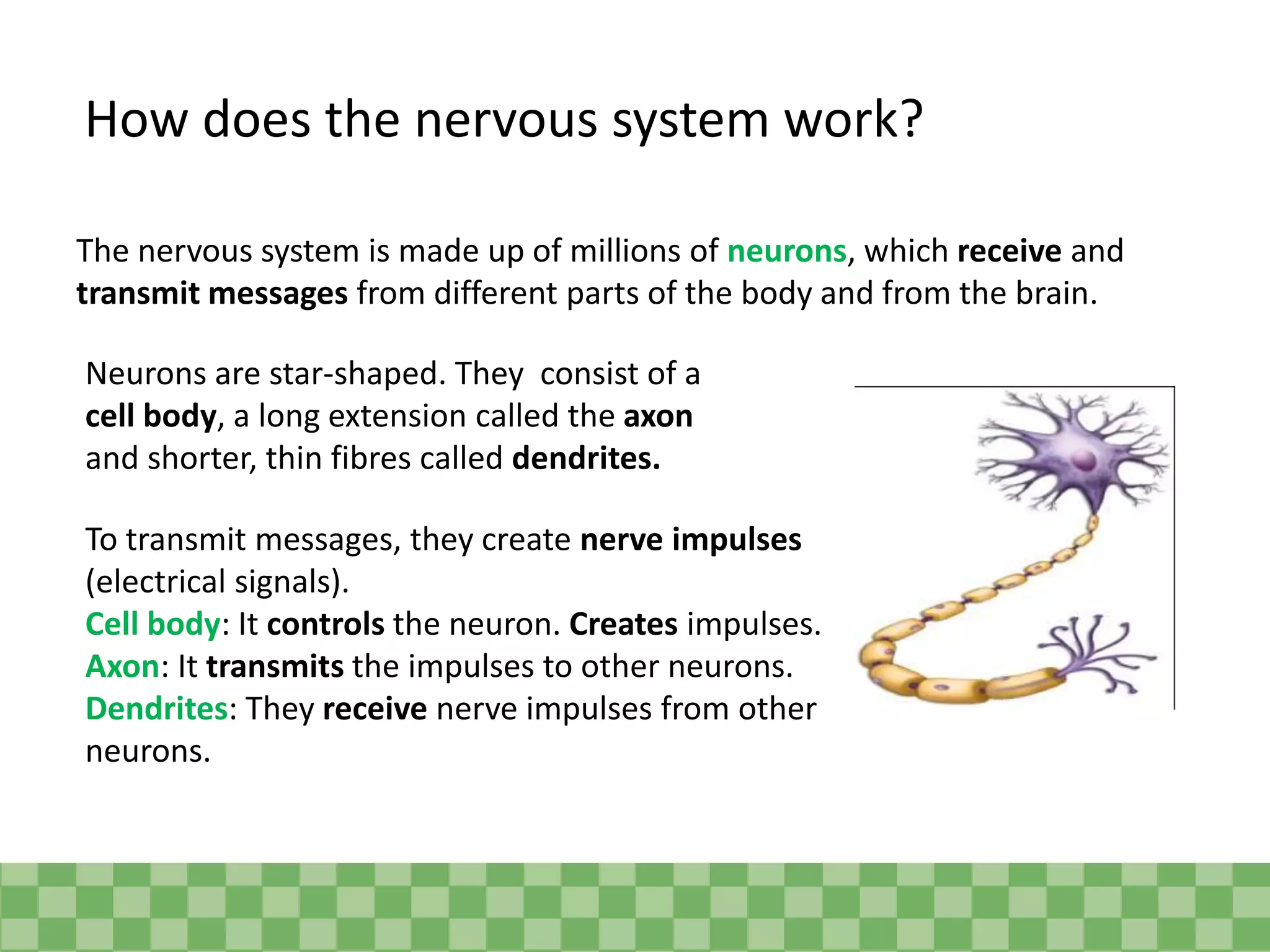
Neurons are star-shaped. They consist of a
cell body, a long extension called the axon
and shorter, thin fibres called dendrites.
To transmit messages, they create nerve impulses
(electrical signals).
Cell body: It controls the neuron. Creates impulses.
Axon: It transmits the impulses to other neurons.
Dendrites: They receive nerve impulses from other
neurons.
How do we see?
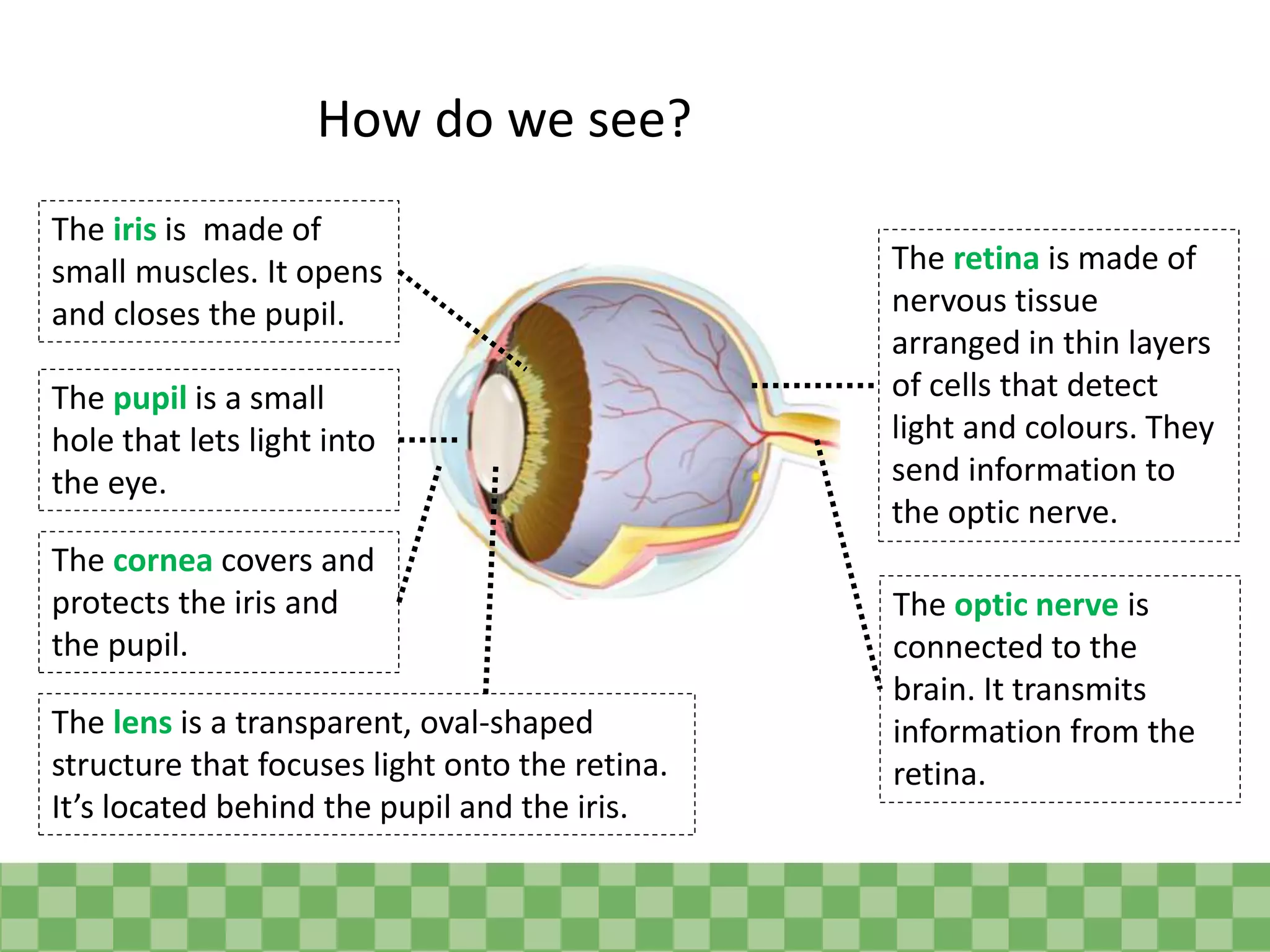
The iris is made of
small muscles. It opens
and closes the pupil.
The pupil is a small
hole that lets light into
the eye.
The cornea covers and
protects the iris and
the pupil.
The lens is a transparent, oval-shaped
structure that focuses light onto the retina.
It’s located behind the pupil and the iris.
The retina is made of
nervous tissue
arranged in thin layers
of cells that detect
light and colours. They
send information to
the optic nerve.
The optic nerve is
connected to the
brain. It transmits
information from the
retina.
How do we hear?
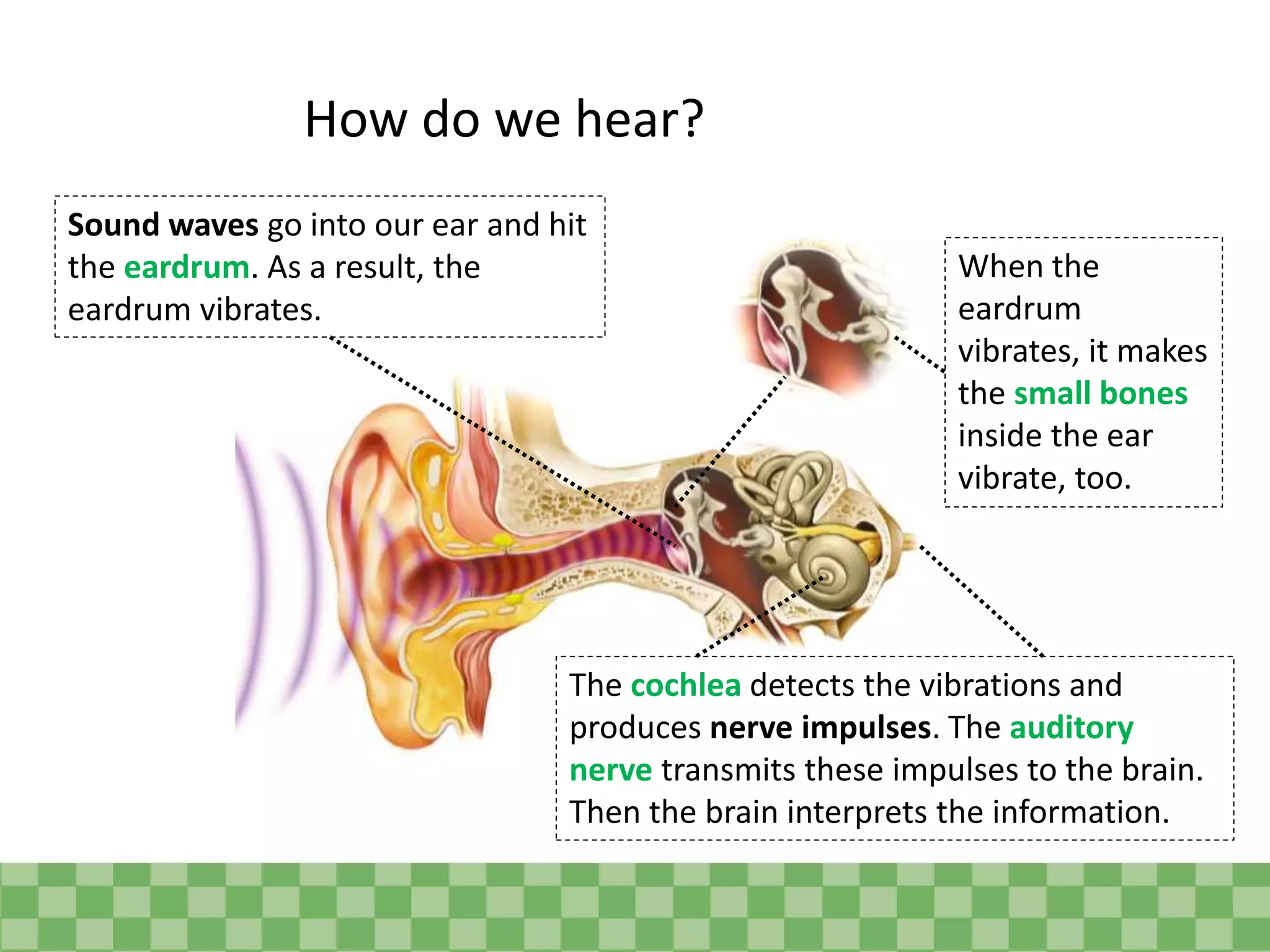
Sound waves go into our ear and hit
the eardrum. As a result, the
eardrum vibrates.
When the
eardrum
vibrates, it makes
the small bones
inside the ear
vibrate, too.
The cochlea detects the vibrations and
produces nerve impulses. The auditory
nerve transmits these impulses to the brain.
Then the brain interprets the information.
How do we taste and smell?
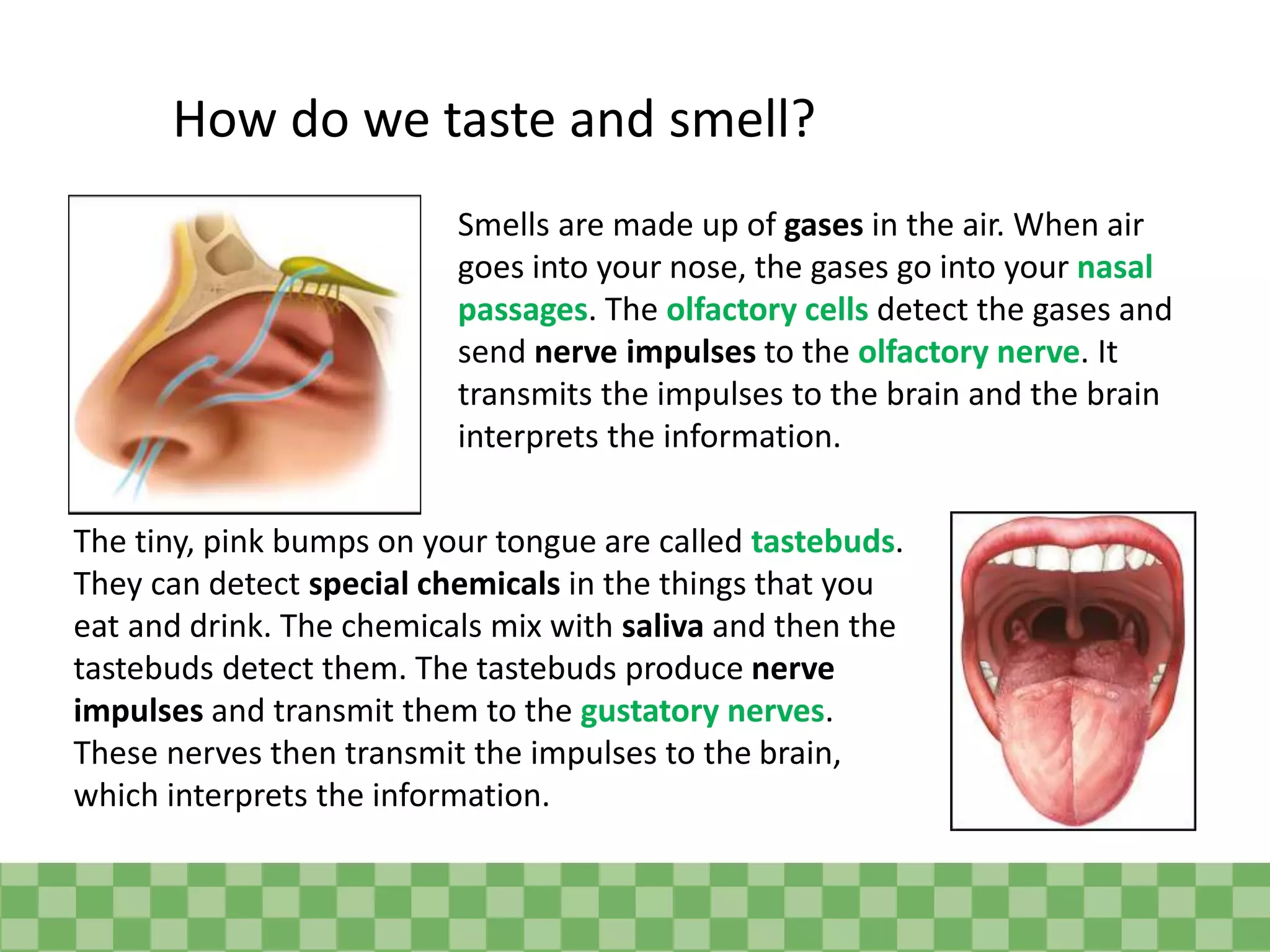
Smells are made up of gases in the air. When air
goes into your nose, the gases go into your nasal
passages. The olfactory cells detect the gases and
send nerve impulses to the olfactory nerve. It
transmits the impulses to the brain and the brain
interprets the information.
The tiny, pink bumps on your tongue are called tastebuds.
They can detect special chemicals in the things that you
eat and drink. The chemicals mix with saliva and then the
tastebuds detect them. The tastebuds produce nerve
impulses and transmit them to the gustatory nerves.
These nerves then transmit the impulses to the brain,
which interprets the information.
How can we keep our nervous
system healthy?
You should look after your brain and your muscles, because the nervous
system is responsible for movement, breathing and your heartbeat.
Keeping your brain healthy
• You should exercise it for example by
doing puzzles or playing thinking
games.
• You can also train your memory and
solve mathematical or linguistic
problems. I
• t’s also important to rest your brain.
Have enough hours of sleep.
• A balanced diet is also important for a
healthy brain.
• You should also drink lots of water.
Keeping your muscles healthy
• Do regular exercise. This
guarantees a regular supply of
blood and oxygen to your muscles.
• By doing exercise, you’re also
exercising your heart and lungs.

Interaction unit 1

  • 1.
  • 2.
    Interaction, a lifeprocess Living things interact with each other and the world around them in many ways. For example, these fish are interacting with the shark. They help it to keep clean by eating parasites. In order to interact with other living things and with our surroundings, we need to receive information about them. We use our senses to get this information.
  • 3.
    Which organs makeup the nervous system? The brain It receives information and then sends a message to a part of the body to tell it how to react. The spinal cord It connects the brain to the rest of the body. Nerves They connect the spinal cord to our muscles, joints and skin. Motor nerves transmit messages our brain sends to the muscles, joints and skin. Sensory nerves receive messages from the muscles, joints and skin and send them to the brain. It is made up of the cerebrum, the cerebellum and the brainstem.
  • 4.
    How does thenervous system work? The nervous system is made up of millions of neurons, which receive and transmit messages from different parts of the body and from the brain. Neurons are star-shaped. They consist of a cell body, a long extension called the axon and shorter, thin fibres called dendrites. To transmit messages, they create nerve impulses (electrical signals). Cell body: It controls the neuron. Creates impulses. Axon: It transmits the impulses to other neurons. Dendrites: They receive nerve impulses from other neurons.
  • 5.
    How do wesee? The iris is made of small muscles. It opens and closes the pupil. The pupil is a small hole that lets light into the eye. The cornea covers and protects the iris and the pupil. The lens is a transparent, oval-shaped structure that focuses light onto the retina. It’s located behind the pupil and the iris. The retina is made of nervous tissue arranged in thin layers of cells that detect light and colours. They send information to the optic nerve. The optic nerve is connected to the brain. It transmits information from the retina.
  • 6.
    How do wehear? Sound waves go into our ear and hit the eardrum. As a result, the eardrum vibrates. When the eardrum vibrates, it makes the small bones inside the ear vibrate, too. The cochlea detects the vibrations and produces nerve impulses. The auditory nerve transmits these impulses to the brain. Then the brain interprets the information.
  • 7.
    How do wetaste and smell? Smells are made up of gases in the air. When air goes into your nose, the gases go into your nasal passages. The olfactory cells detect the gases and send nerve impulses to the olfactory nerve. It transmits the impulses to the brain and the brain interprets the information. The tiny, pink bumps on your tongue are called tastebuds. They can detect special chemicals in the things that you eat and drink. The chemicals mix with saliva and then the tastebuds detect them. The tastebuds produce nerve impulses and transmit them to the gustatory nerves. These nerves then transmit the impulses to the brain, which interprets the information.
  • 8.
    How can wekeep our nervous system healthy? You should look after your brain and your muscles, because the nervous system is responsible for movement, breathing and your heartbeat. Keeping your brain healthy • You should exercise it for example by doing puzzles or playing thinking games. • You can also train your memory and solve mathematical or linguistic problems. I • t’s also important to rest your brain. Have enough hours of sleep. • A balanced diet is also important for a healthy brain. • You should also drink lots of water. Keeping your muscles healthy • Do regular exercise. This guarantees a regular supply of blood and oxygen to your muscles. • By doing exercise, you’re also exercising your heart and lungs.