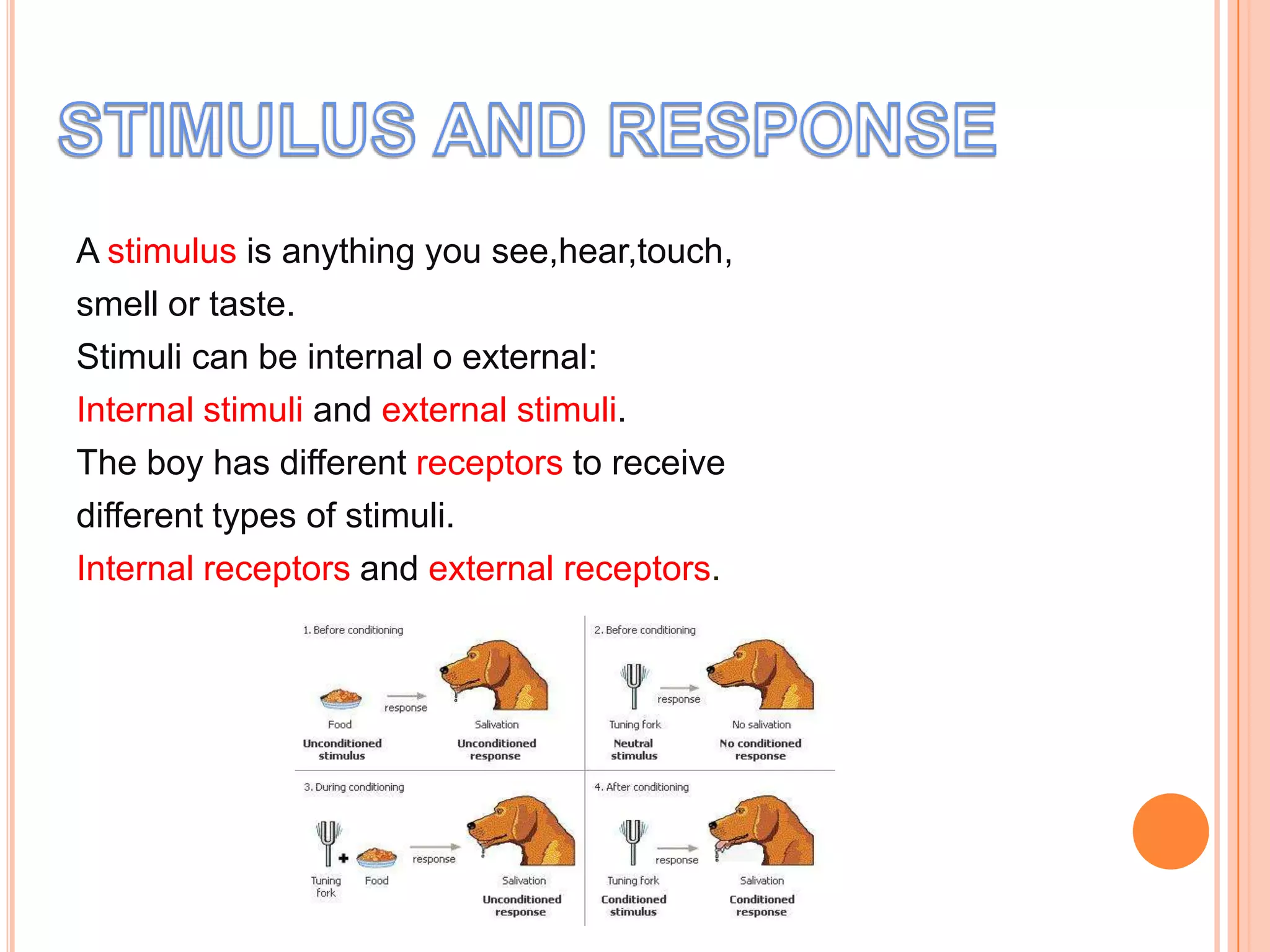
A stimulus is anything you see,hear,touch,
smell or taste.
Stimuli can be internal o external:
Internal stimuli and external stimuli.
The boy has different receptors to receive
different types of stimuli.
Internal receptors and external receptors.
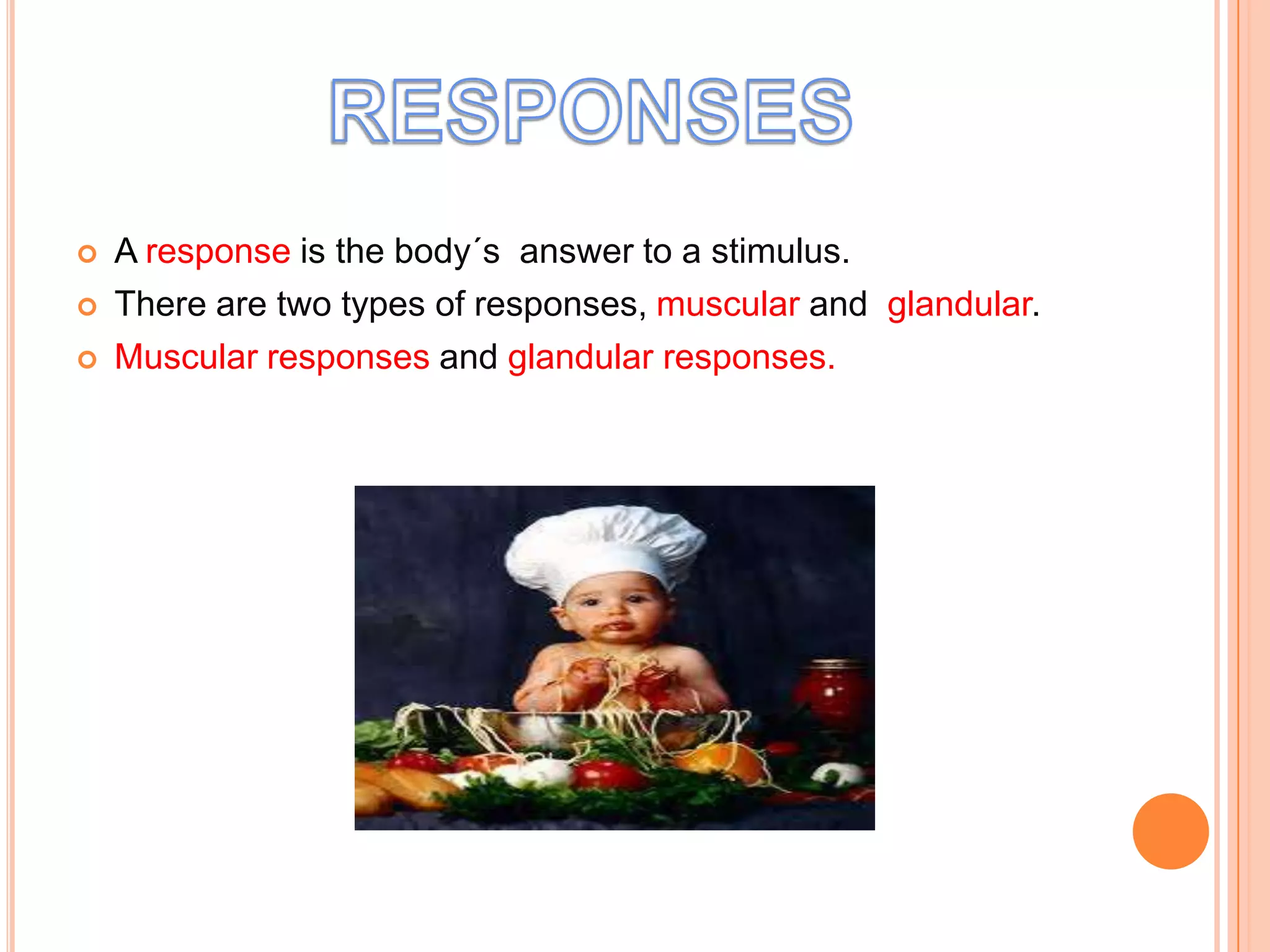
   A response is the body´s answer to a stimulus.
   There are two types of responses, muscular and glandular.
   Muscular responses and glandular responses.
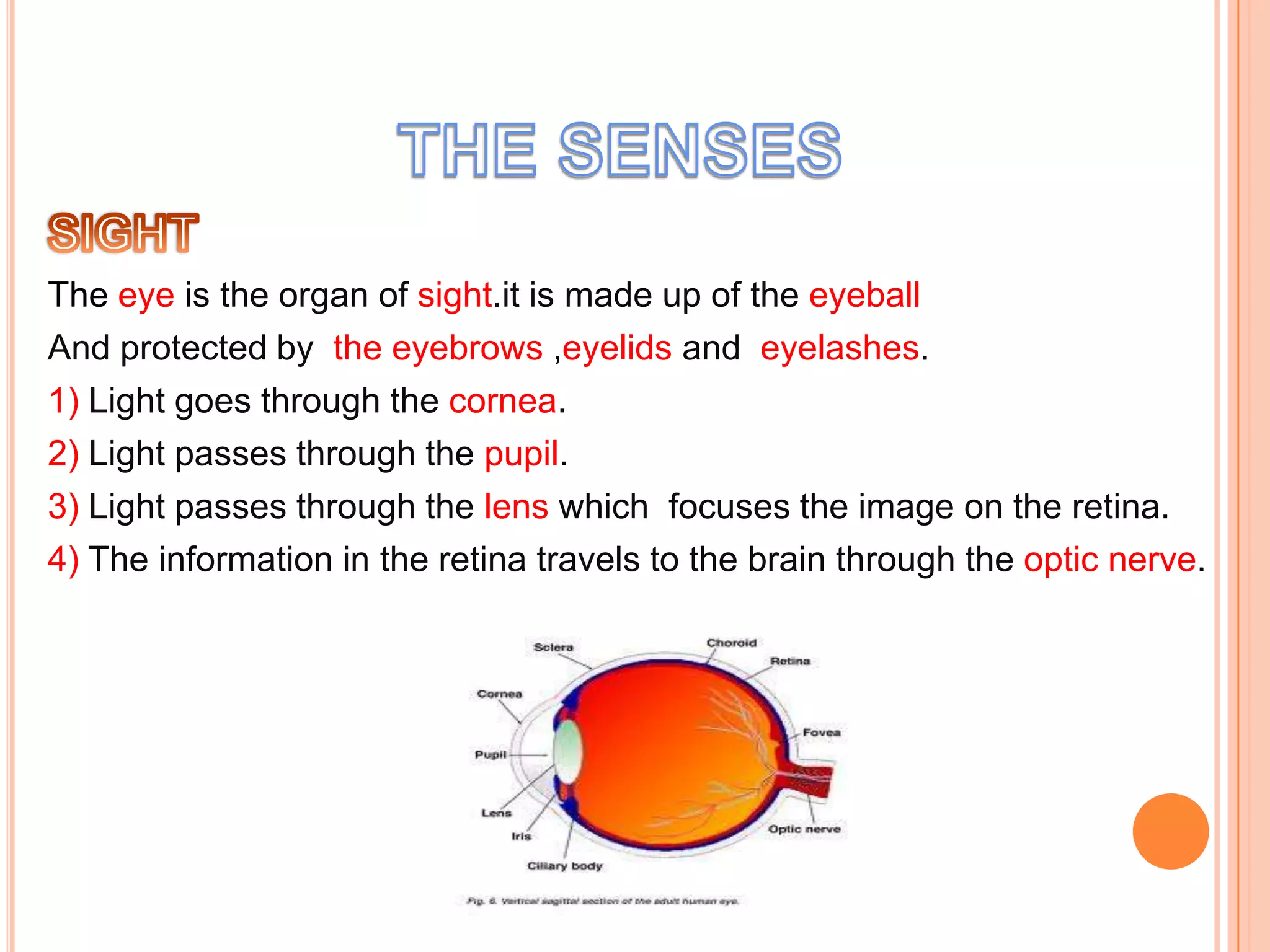
The eye is the organ of sight.it is made up of the eyeball
And protected by the eyebrows ,eyelids and eyelashes.
1) Light goes through the cornea.
2) Light passes through the pupil.
3) Light passes through the lens which focuses the image on the retina.
4) The information in the retina travels to the brain through the optic nerve.
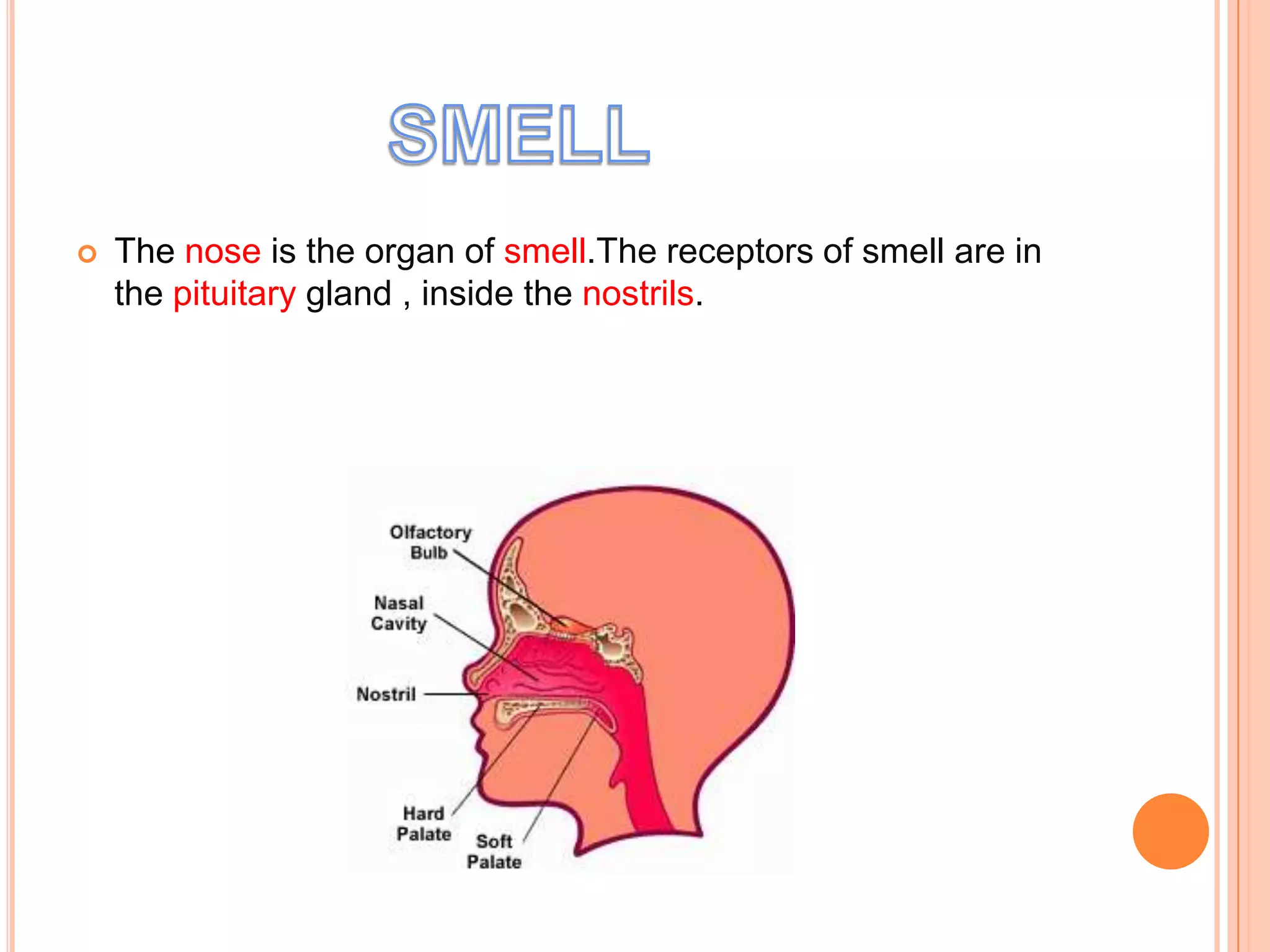
   The nose is the organ of smell.The receptors of smell are in
    the pituitary gland , inside the nostrils.
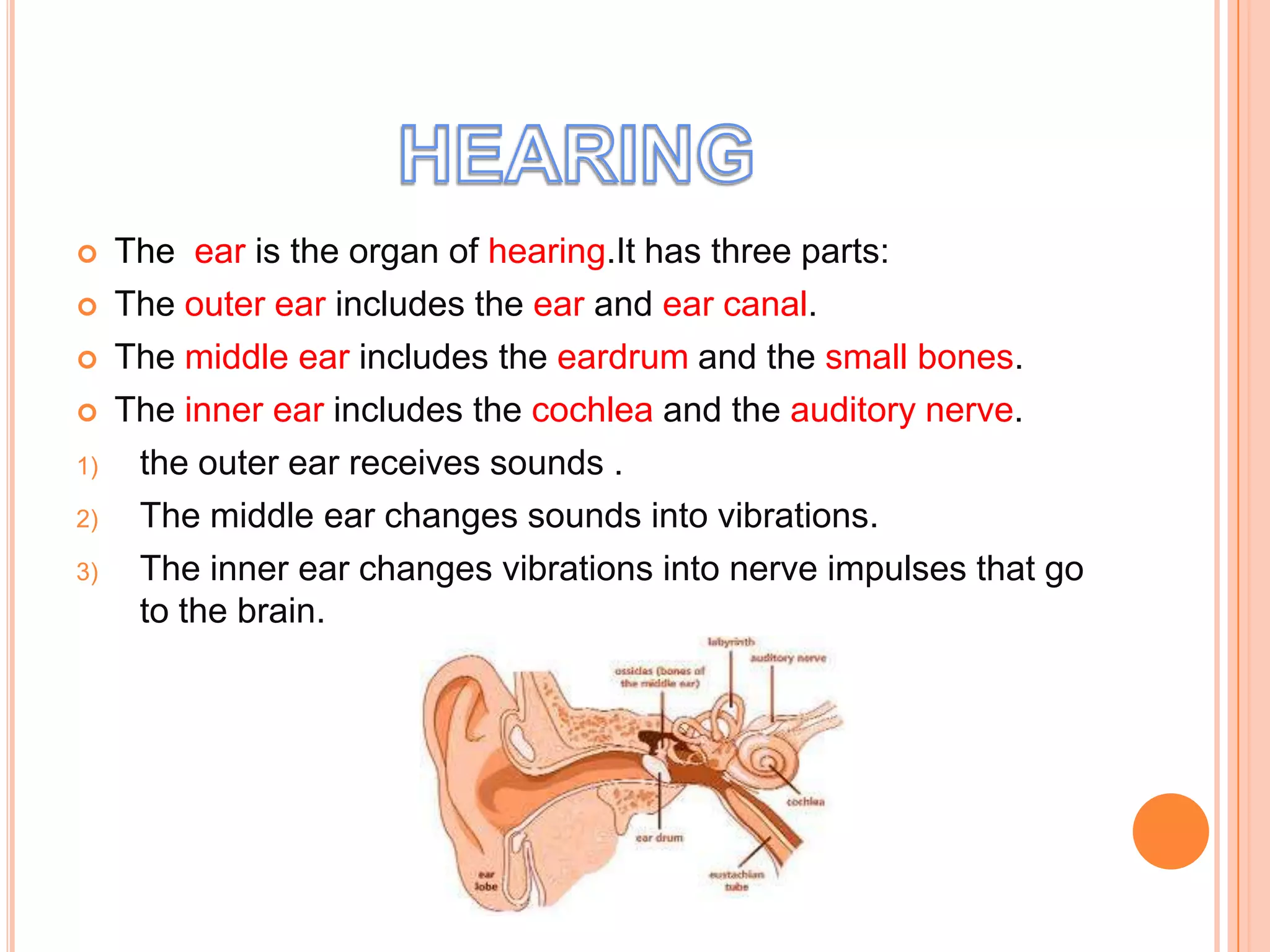
    The ear is the organ of hearing.It has three parts:
    The outer ear includes the ear and ear canal.
    The middle ear includes the eardrum and the small bones.
    The inner ear includes the cochlea and the auditory nerve.
1)    the outer ear receives sounds .
2)    The middle ear changes sounds into vibrations.
3)    The inner ear changes vibrations into nerve impulses that go
      to the brain.
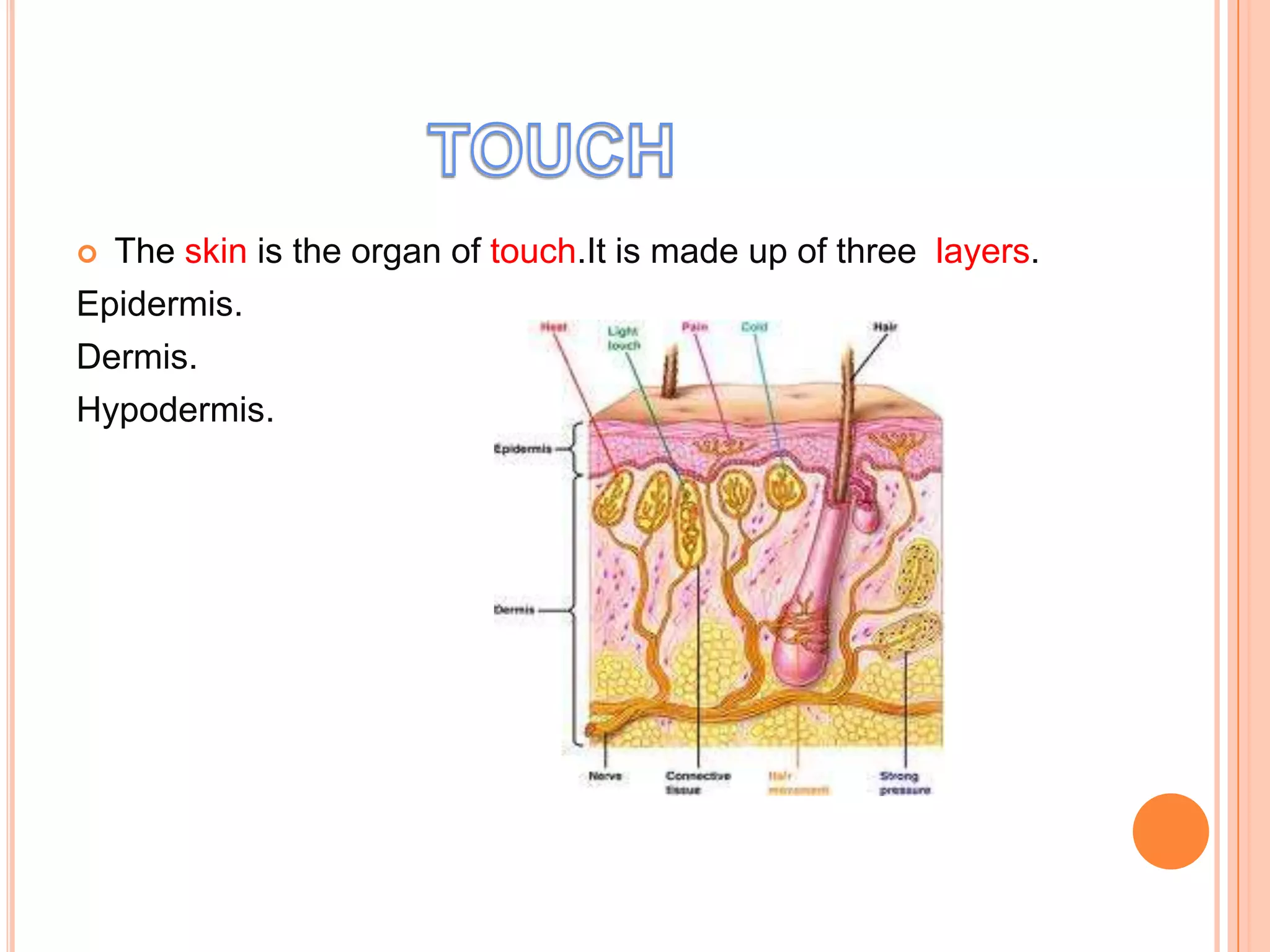
 The skin is the organ of touch.It is made up of three layers.
Epidermis.
Dermis.
Hypodermis.
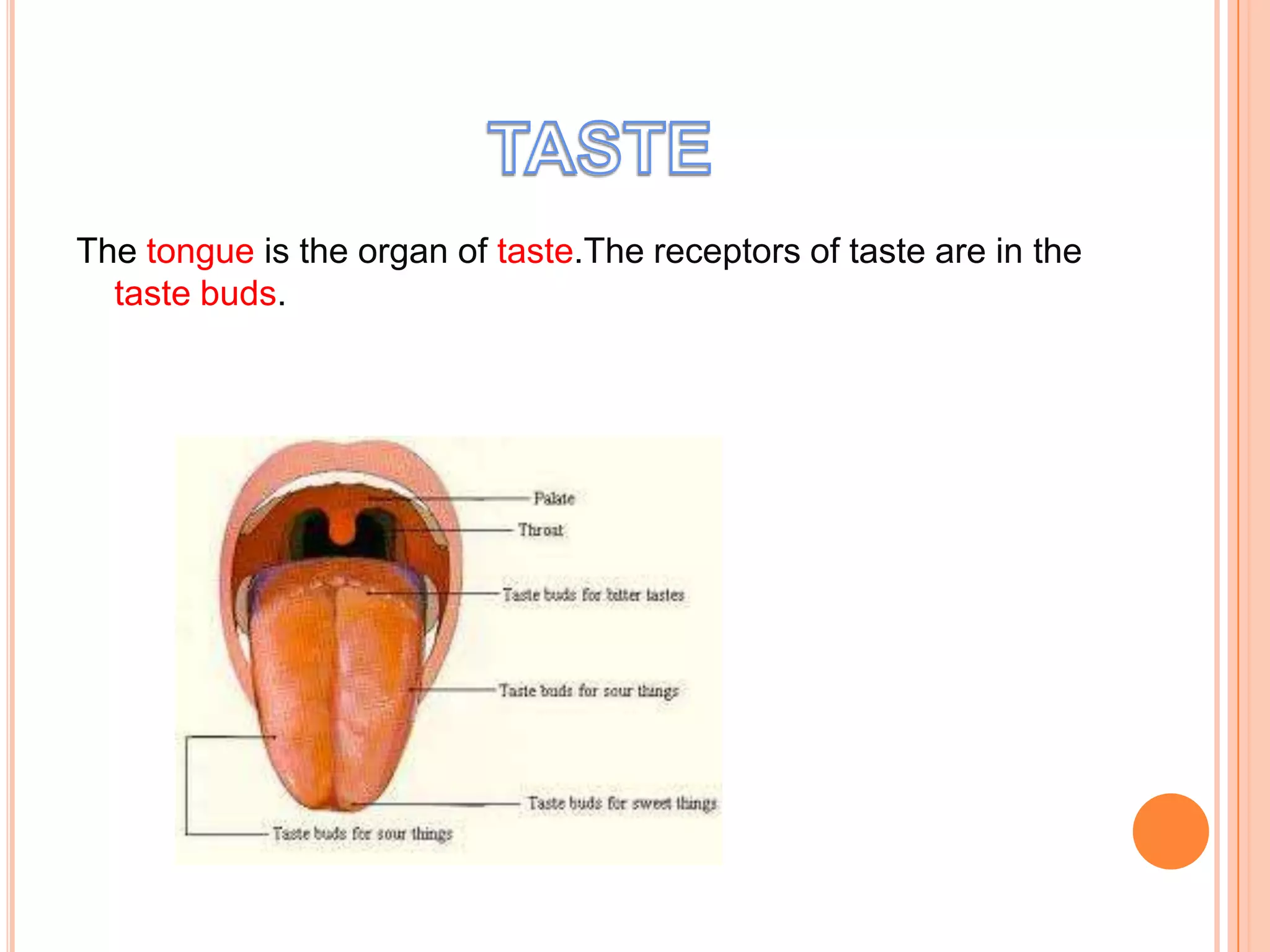
The tongue is the organ of taste.The receptors of taste are in the
  taste buds.
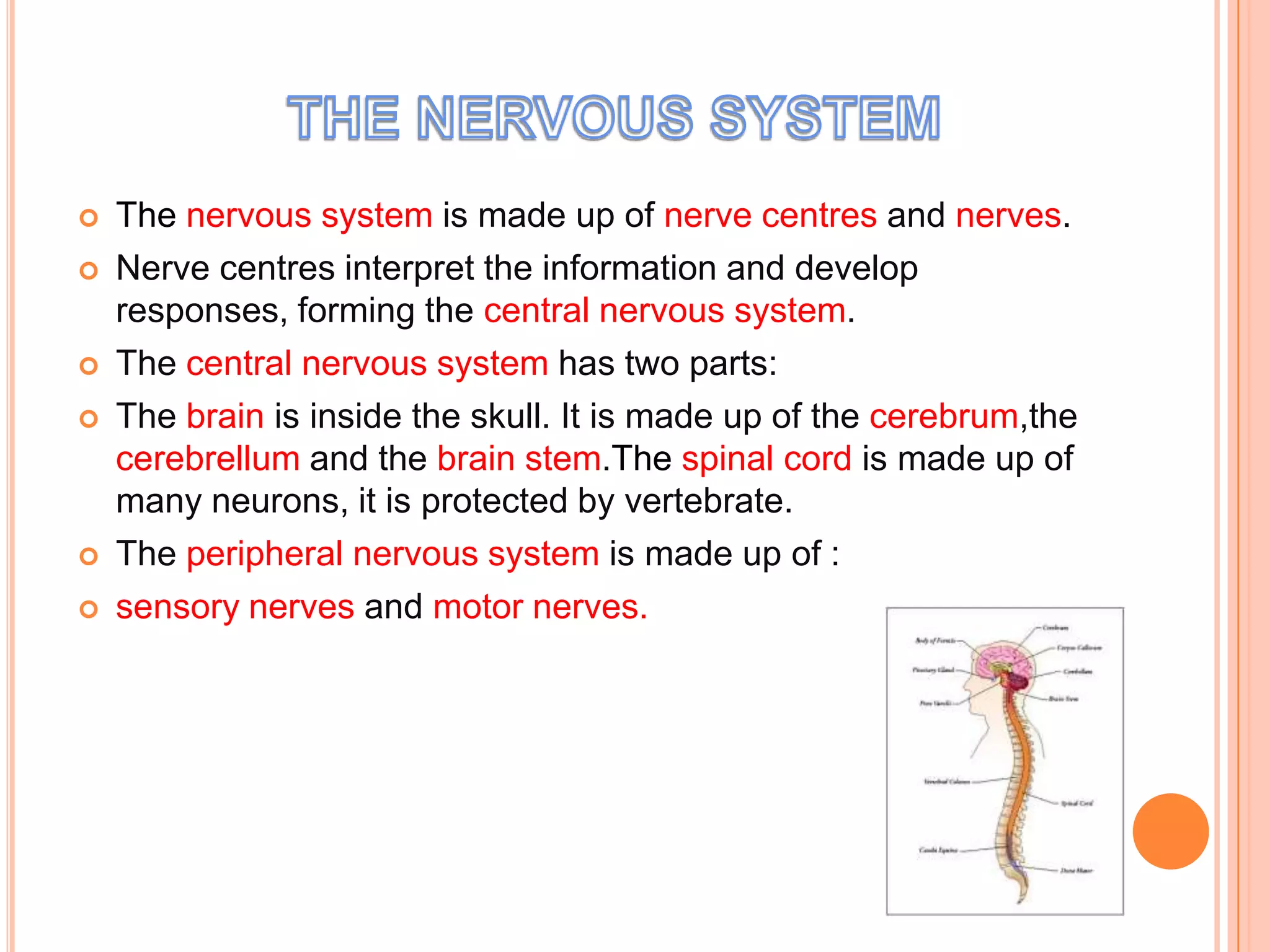
   The nervous system is made up of nerve centres and nerves.
   Nerve centres interpret the information and develop
    responses, forming the central nervous system.
   The central nervous system has two parts:
   The brain is inside the skull. It is made up of the cerebrum,the
    cerebrellum and the brain stem.The spinal cord is made up of
    many neurons, it is protected by vertebrate.
   The peripheral nervous system is made up of :
   sensory nerves and motor nerves.
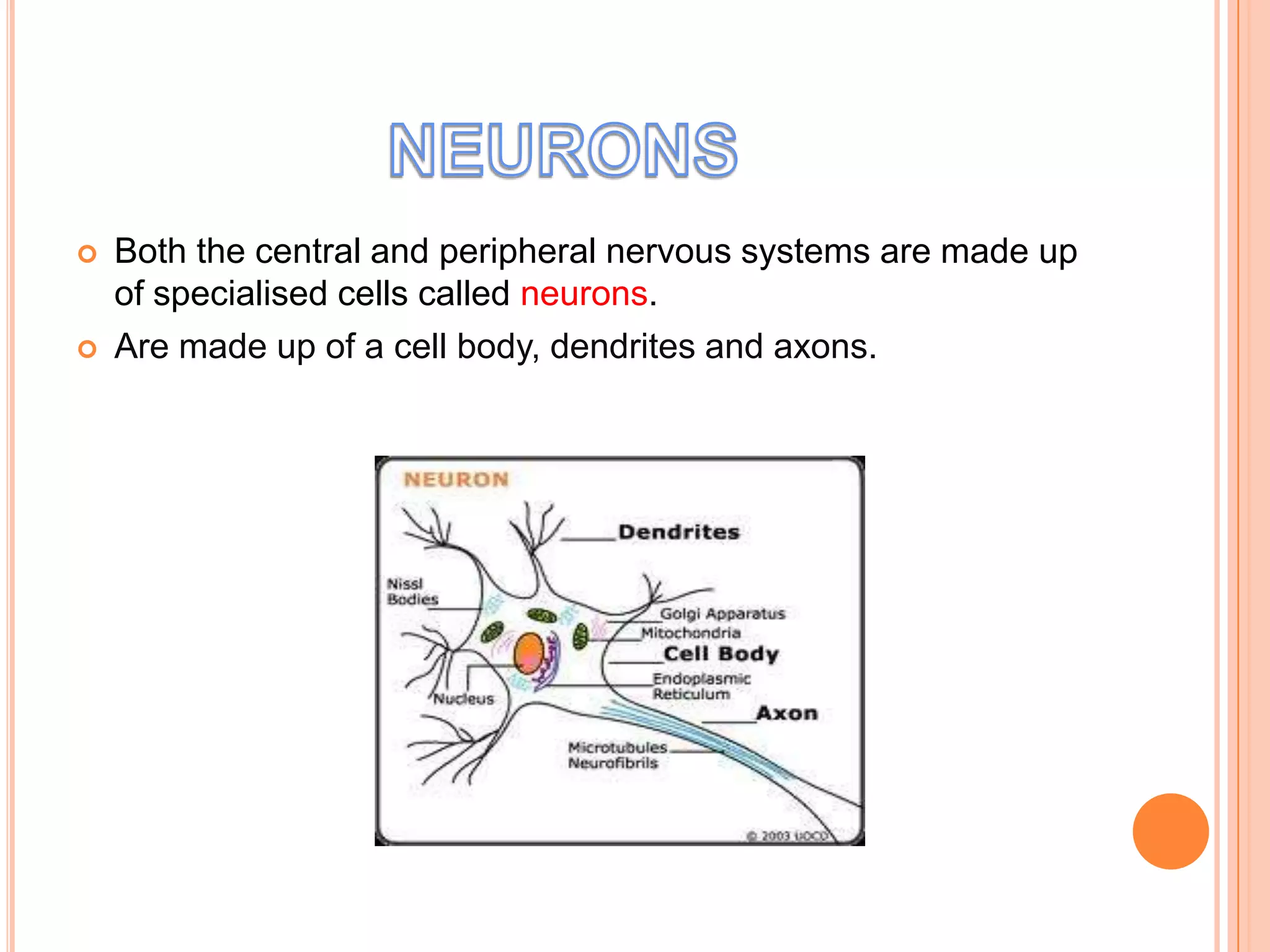
   Both the central and peripheral nervous systems are made up
    of specialised cells called neurons.
   Are made up of a cell body, dendrites and axons.
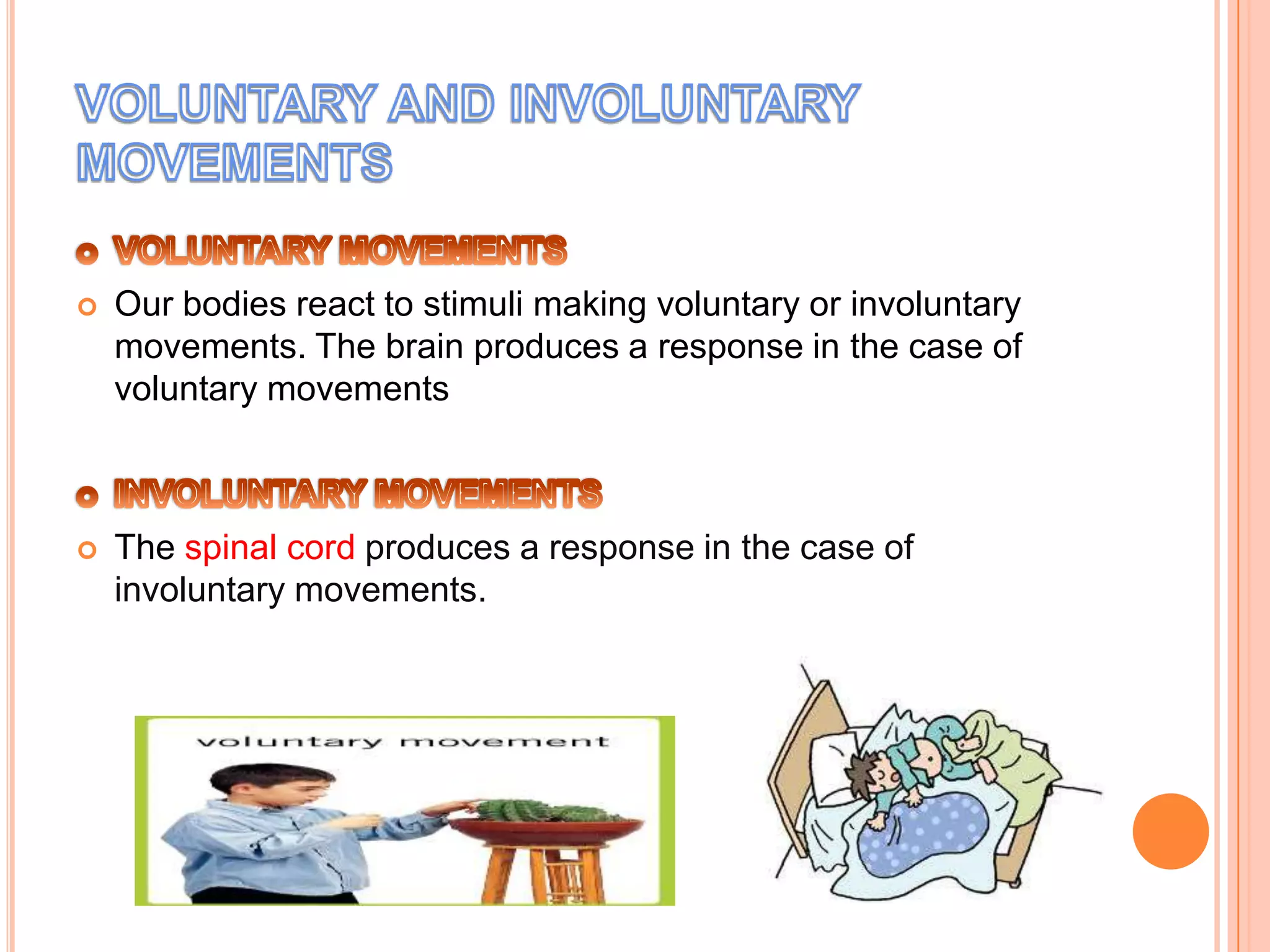
   Our bodies react to stimuli making voluntary or involuntary
    movements. The brain produces a response in the case of
    voluntary movements


   The spinal cord produces a response in the case of
    involuntary movements.
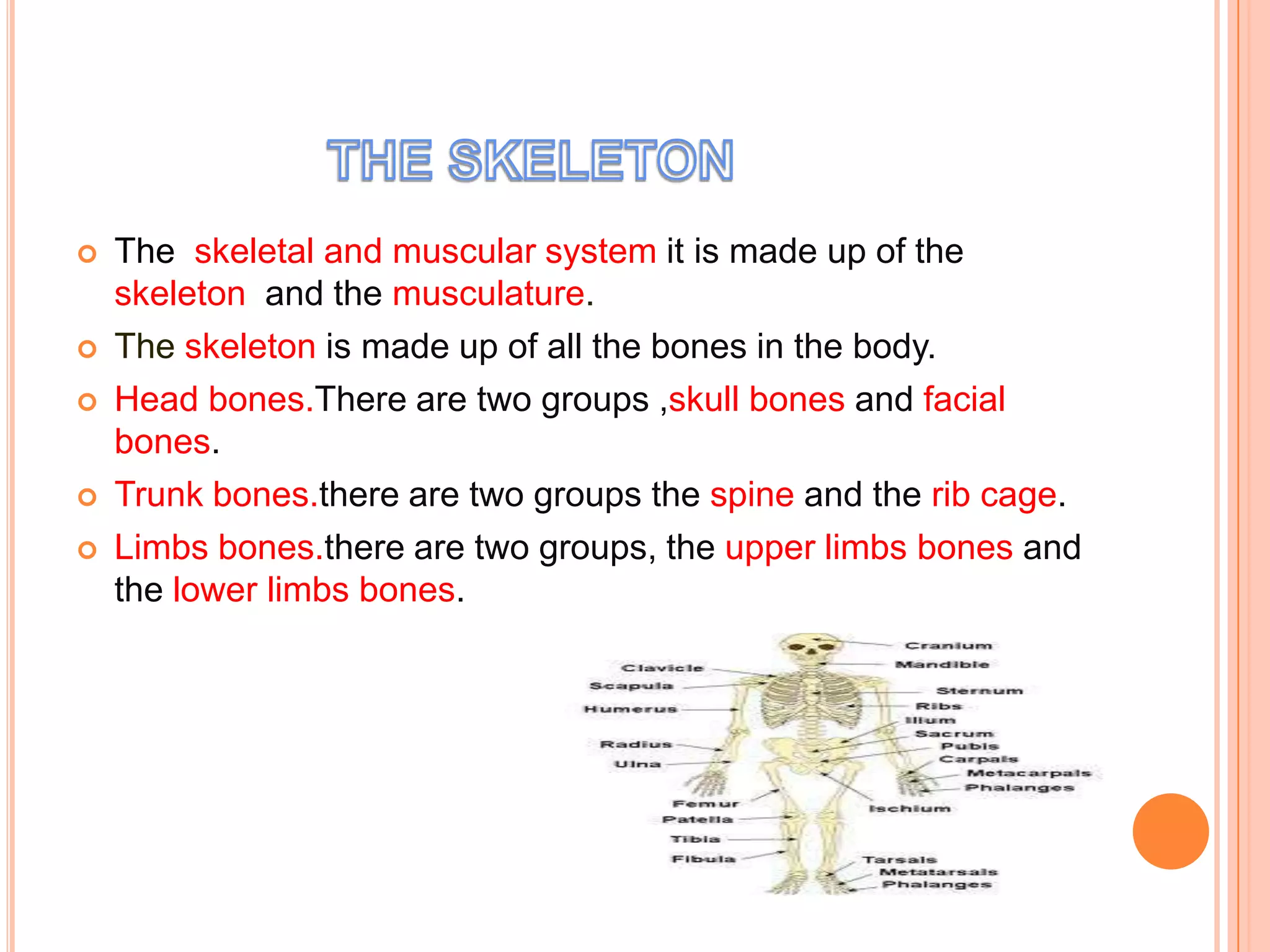
   The skeletal and muscular system it is made up of the
    skeleton and the musculature.
   The skeleton is made up of all the bones in the body.
   Head bones.There are two groups ,skull bones and facial
    bones.
   Trunk bones.there are two groups the spine and the rib cage.
   Limbs bones.there are two groups, the upper limbs bones and
    the lower limbs bones.
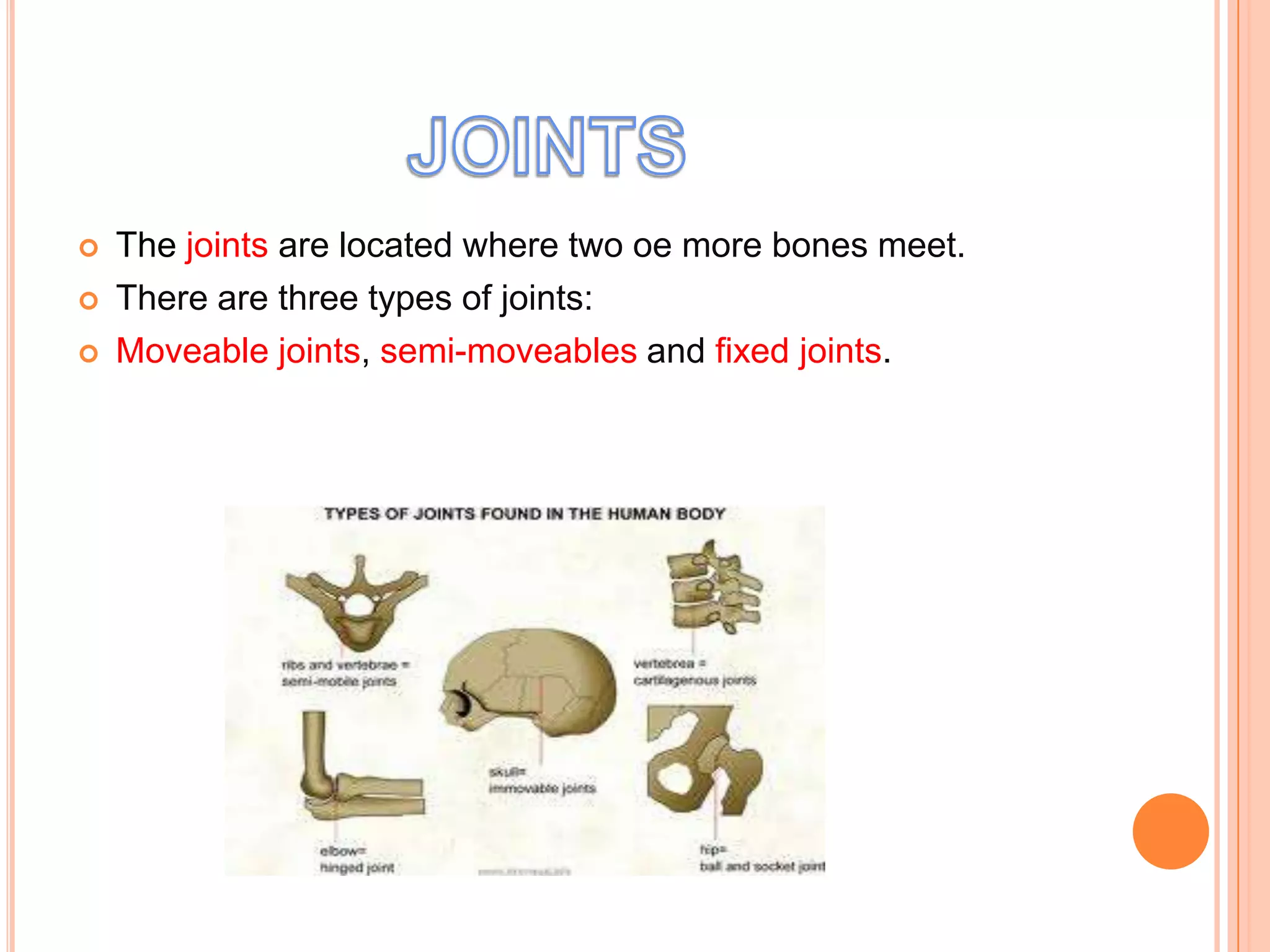
   The joints are located where two oe more bones meet.
   There are three types of joints:
   Moveable joints, semi-moveables and fixed joints.
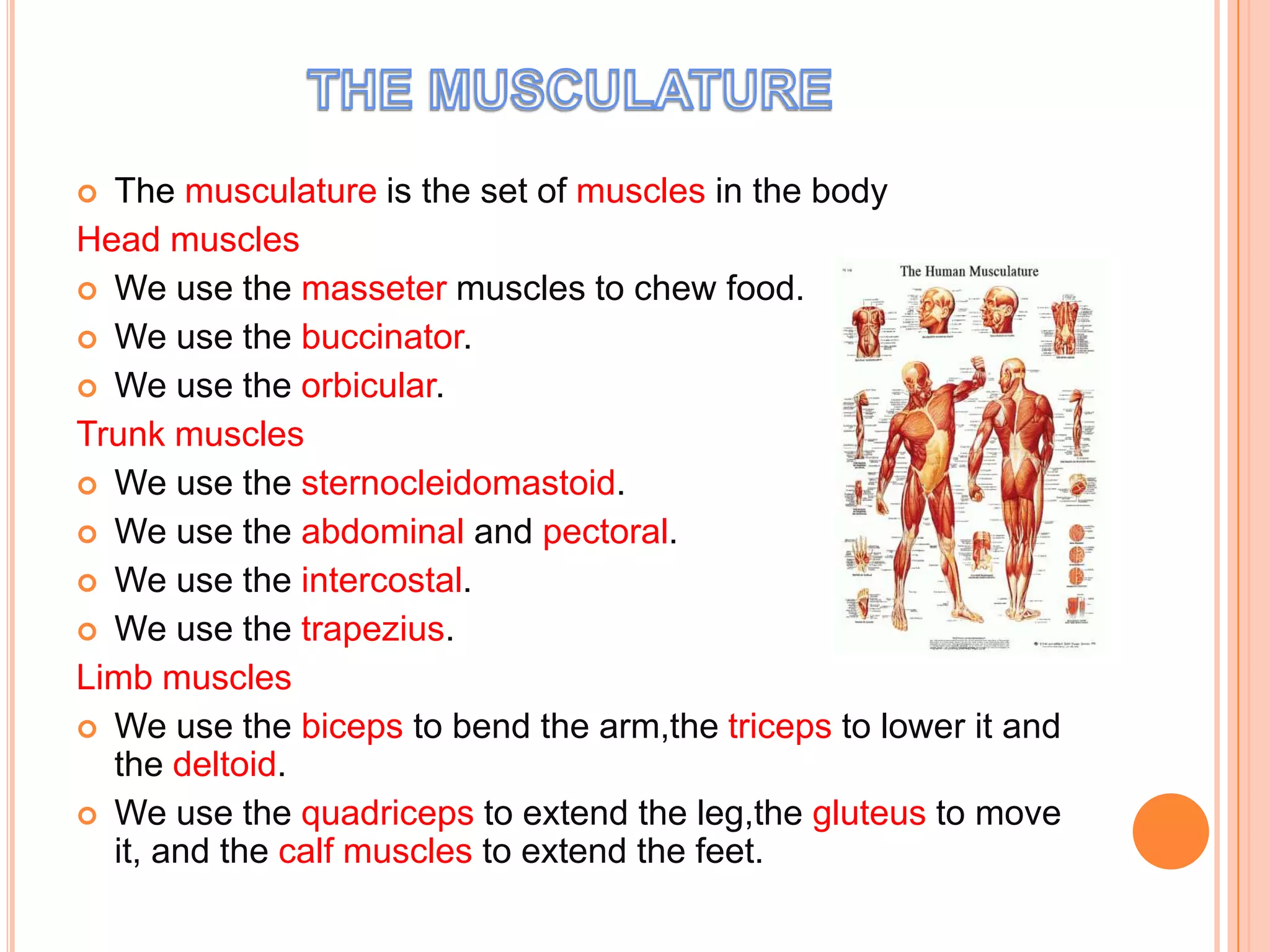
 The musculature is the set of muscles in the body
Head muscles
 We use the masseter muscles to chew food.
 We use the buccinator.
 We use the orbicular.
Trunk muscles
 We use the sternocleidomastoid.
 We use the abdominal and pectoral.
 We use the intercostal.
 We use the trapezius.
Limb muscles
 We use the biceps to bend the arm,the triceps to lower it and
  the deltoid.
 We use the quadriceps to extend the leg,the gluteus to move
  it, and the calf muscles to extend the feet.
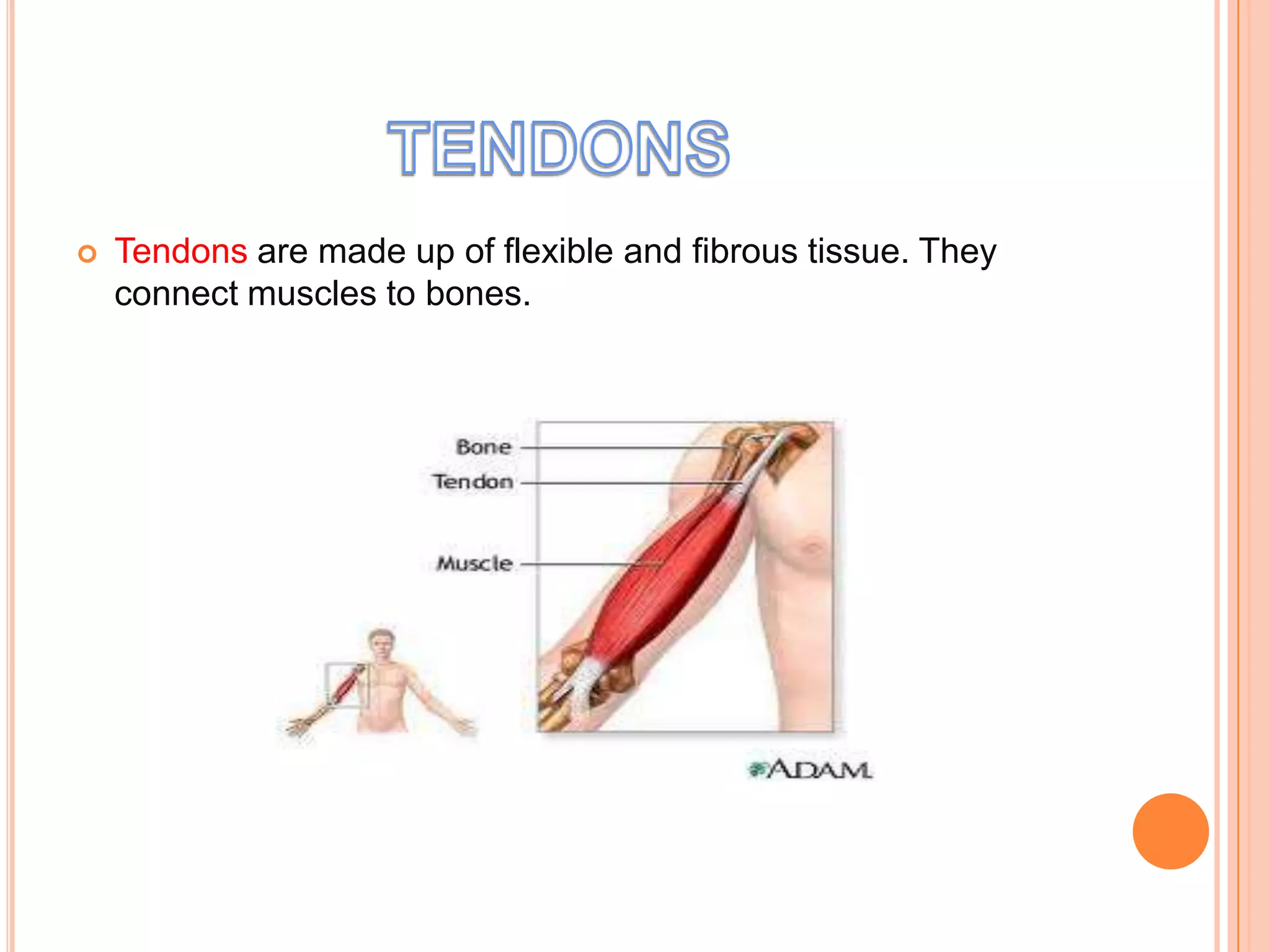
   Tendons are made up of flexible and fibrous tissue. They
    connect muscles to bones.
Sensitivity and Coordination by Sacha

Sensitivity and Coordination by Sacha

  • 2.
    A stimulus isanything you see,hear,touch, smell or taste. Stimuli can be internal o external: Internal stimuli and external stimuli. The boy has different receptors to receive different types of stimuli. Internal receptors and external receptors.
  • 3.
    A response is the body´s answer to a stimulus.  There are two types of responses, muscular and glandular.  Muscular responses and glandular responses.
  • 4.
    The eye isthe organ of sight.it is made up of the eyeball And protected by the eyebrows ,eyelids and eyelashes. 1) Light goes through the cornea. 2) Light passes through the pupil. 3) Light passes through the lens which focuses the image on the retina. 4) The information in the retina travels to the brain through the optic nerve.
  • 5.
    The nose is the organ of smell.The receptors of smell are in the pituitary gland , inside the nostrils.
  • 6.
    The ear is the organ of hearing.It has three parts:  The outer ear includes the ear and ear canal.  The middle ear includes the eardrum and the small bones.  The inner ear includes the cochlea and the auditory nerve. 1) the outer ear receives sounds . 2) The middle ear changes sounds into vibrations. 3) The inner ear changes vibrations into nerve impulses that go to the brain.
  • 7.
     The skinis the organ of touch.It is made up of three layers. Epidermis. Dermis. Hypodermis.
  • 8.
    The tongue isthe organ of taste.The receptors of taste are in the taste buds.
  • 9.
    The nervous system is made up of nerve centres and nerves.  Nerve centres interpret the information and develop responses, forming the central nervous system.  The central nervous system has two parts:  The brain is inside the skull. It is made up of the cerebrum,the cerebrellum and the brain stem.The spinal cord is made up of many neurons, it is protected by vertebrate.  The peripheral nervous system is made up of :  sensory nerves and motor nerves.
  • 10.
    Both the central and peripheral nervous systems are made up of specialised cells called neurons.  Are made up of a cell body, dendrites and axons.
  • 11.
    Our bodies react to stimuli making voluntary or involuntary movements. The brain produces a response in the case of voluntary movements  The spinal cord produces a response in the case of involuntary movements.
  • 12.
    The skeletal and muscular system it is made up of the skeleton and the musculature.  The skeleton is made up of all the bones in the body.  Head bones.There are two groups ,skull bones and facial bones.  Trunk bones.there are two groups the spine and the rib cage.  Limbs bones.there are two groups, the upper limbs bones and the lower limbs bones.
  • 13.
    The joints are located where two oe more bones meet.  There are three types of joints:  Moveable joints, semi-moveables and fixed joints.
  • 14.
     The musculatureis the set of muscles in the body Head muscles  We use the masseter muscles to chew food.  We use the buccinator.  We use the orbicular. Trunk muscles  We use the sternocleidomastoid.  We use the abdominal and pectoral.  We use the intercostal.  We use the trapezius. Limb muscles  We use the biceps to bend the arm,the triceps to lower it and the deltoid.  We use the quadriceps to extend the leg,the gluteus to move it, and the calf muscles to extend the feet.
  • 15.
    Tendons are made up of flexible and fibrous tissue. They connect muscles to bones.