Unit 5 ECOSYSTEMS SUMMARY
1
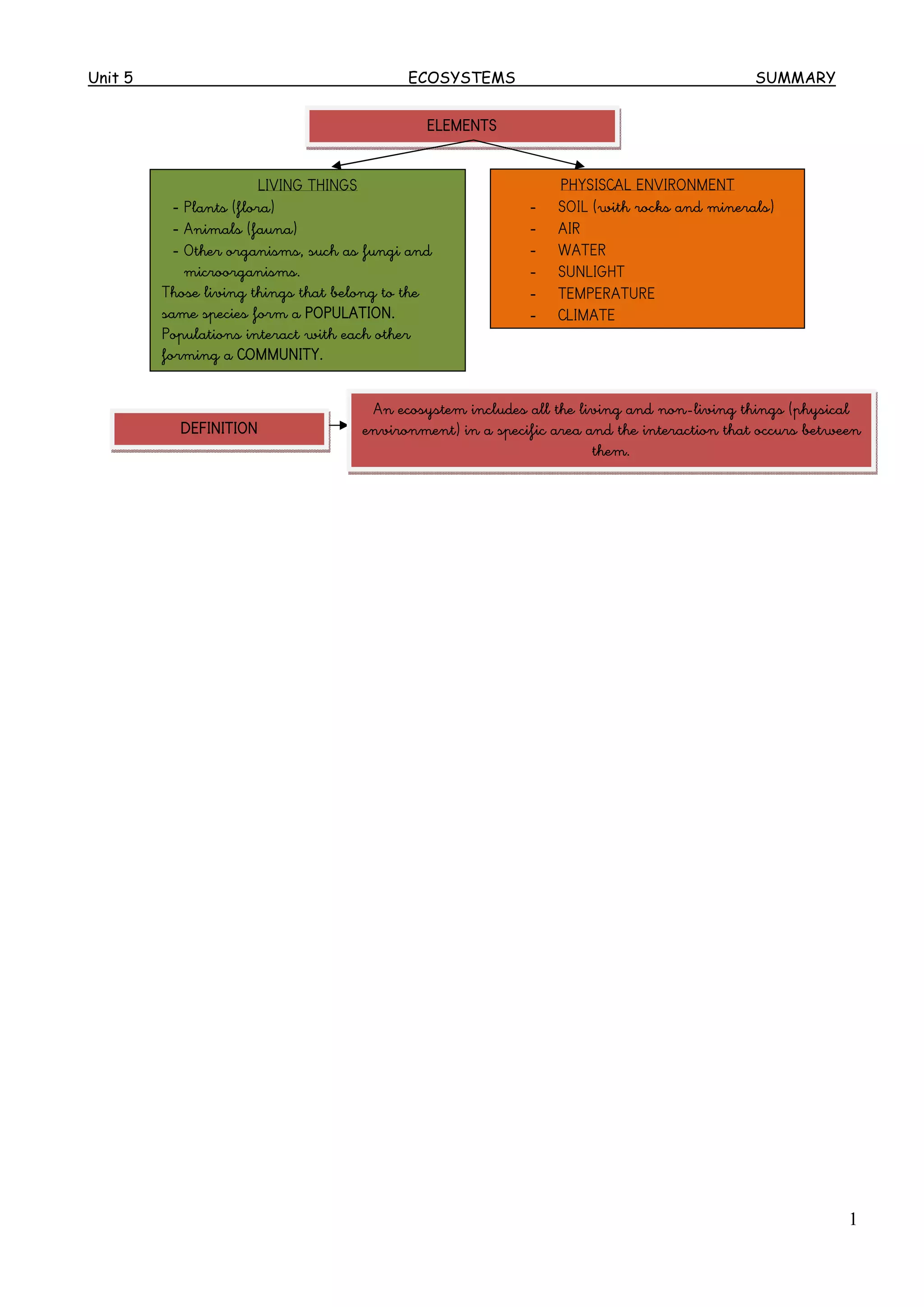
ELEMENTS
LIVING THINGS
- Plants (flora)
- Animals (fauna)
- Other organisms, such as fungi and
microorganisms.
Those living things that belong to the
same species form a POPULATION.
Populations interact with each other
forming a COMMUNITY.
PHYSISCAL ENVIRONMENT
- SOIL (with rocks and minerals)
- AIR
- WATER
- SUNLIGHT
- TEMPERATURE
- CLIMATE
DEFINITION
An ecosystem includes all the living and non-living things (physical
environment) in a specific area and the interaction that occurs between
them.
Unit 5 ECOSYSTEMS SUMMARY
2
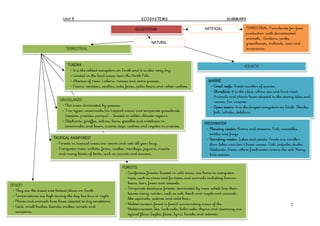
ECOSYSTEMS
TERRESTRIAL
AQUATIC
DESERT
- They are the driest and hottest places on Earth.
- Temperatures are high during the day but low at night.
- Plants and animals here have adapted to dry conditions.
- Cacti, small bushes, lizards, snakes, camels and
scorpions.
FORESTS
- Coniferous forests: located in cold areas, are home to evergreen
trees, such as pines and fir trees, and animals including brown
bears, deer, foxes and weasels.
- Temperate deciduous forests: dominated by trees which lose their
leaves every winter, such as oak, beech and maple and animals
like squirrels, rodents and wild boar.
- Mediterranean forest is found surrounding areas of the
Mediterranean Sea. Cork oaks, holm oaks, thyme and rosemary are
typical flora. Eagles, foxes, lynx, hawks and rodents.
TROPICAL RAINFOREST
- Forests in tropical areas are warm and wet all year long.
- Evergreen trees, orchids, ferns, snakes, monkeys, jaguars, insects
and many kinds of birds, such as parrots and toucans.
GRASSLANDS
- Flat areas dominated by grasses.
- Two types: savannahs (in tropical areas) and temperate grasslands
(steppes, prairies, pampa) ... located in colder climate regions.
- Elephants, giraffes, zebras, lions, gazelles and antelopes in
savannahs, and bison, prairie dogs, wolves and coyotes in prairies.
TUNDRA
- It is the coldest ecosystem on Earth and it is also very dry.
- Located in the land areas near the North Pole.
- Absence of trees. Lichens, mosses and some grasses.
- Fauna: reindeer, caribou, artic foxes, polar bears and white wolves.
MARINE
- Coral reefs: Great number of species.
- Shoreline: It is the place where sea and land meet.
Animals and plants have adapted to the strong tides and
waves. Ex. Limpets.
- Open ocean: it is the largest ecosystem on Earth. Sharks,
fish, whales, dolphins
FRESHWATER
- Flowing water: Rivers and streams. Fish, crocodiles,
turtles and frogs.
- Standing water: Lakes and ponds. Ponds are smaller
than lakes and don’t have waves. Fish, tadpoles, ducks.
Wetlands: Areas where freshwater covers the soil. Many
bird species.
NATURAL
ARTIFICIAL TERRESTRIAL: Farmlands for food
production with domesticated
animals . Gardens, parks,
greenhouses, orchards, zoos and
terrariums.

Unit 5 diagram (1)

  • 1.
    Unit 5 ECOSYSTEMSSUMMARY 1 ELEMENTS LIVING THINGS - Plants (flora) - Animals (fauna) - Other organisms, such as fungi and microorganisms. Those living things that belong to the same species form a POPULATION. Populations interact with each other forming a COMMUNITY. PHYSISCAL ENVIRONMENT - SOIL (with rocks and minerals) - AIR - WATER - SUNLIGHT - TEMPERATURE - CLIMATE DEFINITION An ecosystem includes all the living and non-living things (physical environment) in a specific area and the interaction that occurs between them.
  • 2.
    Unit 5 ECOSYSTEMSSUMMARY 2 ECOSYSTEMS TERRESTRIAL AQUATIC DESERT - They are the driest and hottest places on Earth. - Temperatures are high during the day but low at night. - Plants and animals here have adapted to dry conditions. - Cacti, small bushes, lizards, snakes, camels and scorpions. FORESTS - Coniferous forests: located in cold areas, are home to evergreen trees, such as pines and fir trees, and animals including brown bears, deer, foxes and weasels. - Temperate deciduous forests: dominated by trees which lose their leaves every winter, such as oak, beech and maple and animals like squirrels, rodents and wild boar. - Mediterranean forest is found surrounding areas of the Mediterranean Sea. Cork oaks, holm oaks, thyme and rosemary are typical flora. Eagles, foxes, lynx, hawks and rodents. TROPICAL RAINFOREST - Forests in tropical areas are warm and wet all year long. - Evergreen trees, orchids, ferns, snakes, monkeys, jaguars, insects and many kinds of birds, such as parrots and toucans. GRASSLANDS - Flat areas dominated by grasses. - Two types: savannahs (in tropical areas) and temperate grasslands (steppes, prairies, pampa) ... located in colder climate regions. - Elephants, giraffes, zebras, lions, gazelles and antelopes in savannahs, and bison, prairie dogs, wolves and coyotes in prairies. TUNDRA - It is the coldest ecosystem on Earth and it is also very dry. - Located in the land areas near the North Pole. - Absence of trees. Lichens, mosses and some grasses. - Fauna: reindeer, caribou, artic foxes, polar bears and white wolves. MARINE - Coral reefs: Great number of species. - Shoreline: It is the place where sea and land meet. Animals and plants have adapted to the strong tides and waves. Ex. Limpets. - Open ocean: it is the largest ecosystem on Earth. Sharks, fish, whales, dolphins FRESHWATER - Flowing water: Rivers and streams. Fish, crocodiles, turtles and frogs. - Standing water: Lakes and ponds. Ponds are smaller than lakes and don’t have waves. Fish, tadpoles, ducks. Wetlands: Areas where freshwater covers the soil. Many bird species. NATURAL ARTIFICIAL TERRESTRIAL: Farmlands for food production with domesticated animals . Gardens, parks, greenhouses, orchards, zoos and terrariums.