Unit 1 Evolution and Change Andrew Shaw AP Biology 5 th
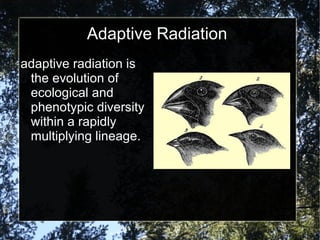
Adaptive Radiation adaptive radiation is the evolution of ecological and phenotypic diversity within a rapidly multiplying lineage.
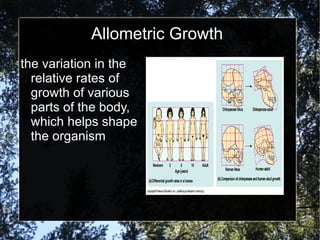
Allometric Growth the variation in the relative rates of growth of various parts of the body, which helps shape the organism
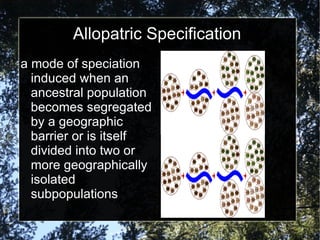
Allopatric Specification a mode of speciation induced when an ancestral population becomes segregated by a geographic barrier or is itself divided into two or more geographically isolated subpopulations
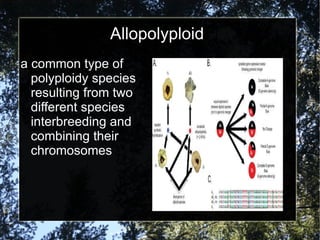
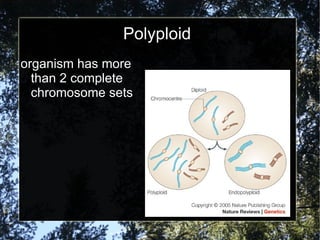
Allopolyploid a common type of polyploidy species resulting from two different species interbreeding and combining their chromosomes
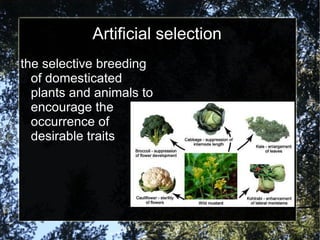
Artificial selection the selective breeding of domesticated plants and animals to encourage the occurrence of desirable traits
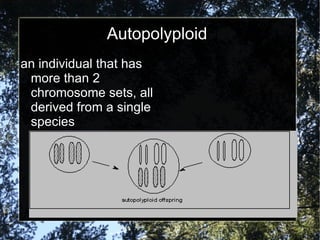
Autopolyploid an individual that has more than 2 chromosome sets, all derived from a single species
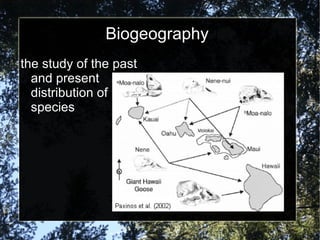
Biogeography the study of the past and present distribution of species
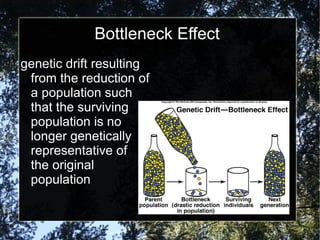
Bottleneck Effect genetic drift resulting from the reduction of a population such that the surviving population is no longer genetically representative of  the original population
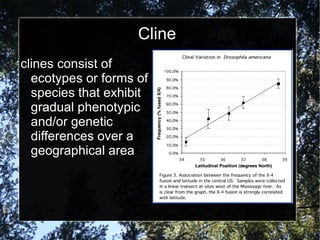
Cline clines consist of ecotypes or forms of species that exhibit gradual phenotypic and/or genetic differences over a geographical area
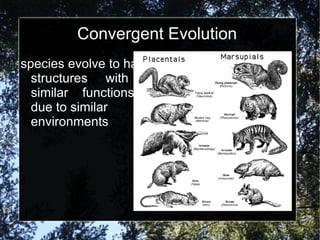
Convergent Evolution species evolve to have structures  with similar  functions due to similar  environments
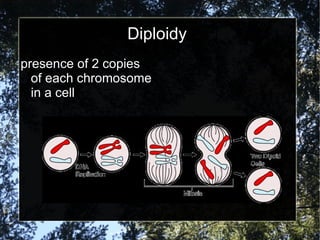
Diploidy presence of 2 copies of each chromosome in a cell
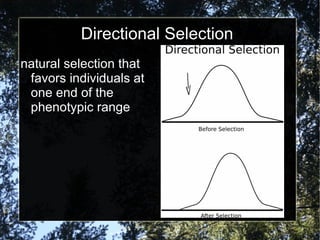
Directional Selection natural selection that favors individuals at one end of the phenotypic range
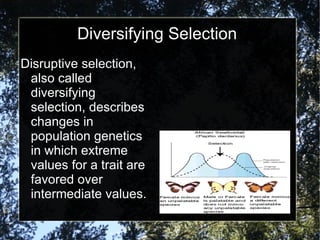
Diversifying Selection Disruptive selection, also called diversifying selection, describes changes in population genetics in which extreme values for a trait are favored over intermediate values.
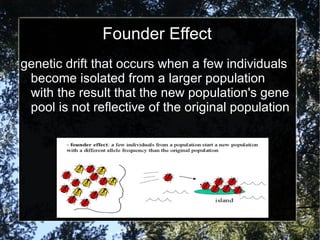
Founder Effect genetic drift that occurs when a few individuals become isolated from a larger population with the result that the new population's gene pool is not reflective of the original population
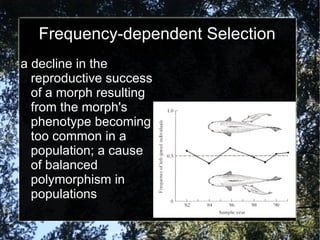
Frequency-dependent Selection a decline in the reproductive success of a morph resulting from the morph's phenotype becoming too common in a population; a cause of balanced polymorphism in populations
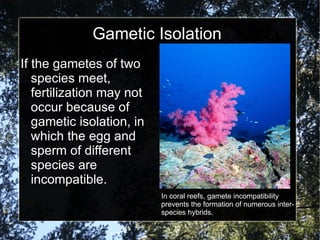
Gametic Isolation If the gametes of two species meet, fertilization may not occur because of gametic isolation, in which the egg and sperm of different species are incompatible. In coral reefs, gamete incompatibility prevents the formation of numerous inter-species hybrids.
Genetic Drift unpredictable fluctuations in allele frequencies from one generation to the next because of a population's finite size
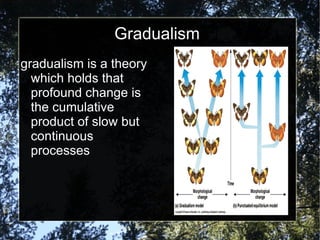
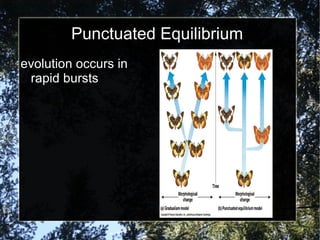
Gradualism gradualism is a theory which holds that profound change is the cumulative product of slow but continuous processes
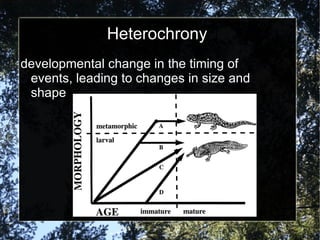
Heterochrony developmental change in the timing of events, leading to changes in size and shape
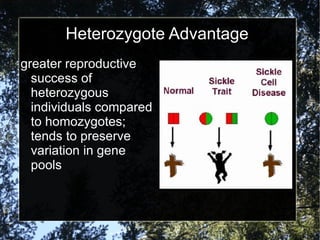
Heterozygote Advantage greater reproductive success of heterozygous individuals compared to homozygotes; tends to preserve variation in gene pools
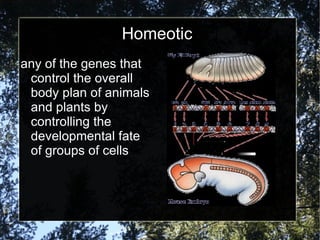
Homeotic any of the genes that control the overall body plan of animals and plants by controlling the developmental fate of groups of cells
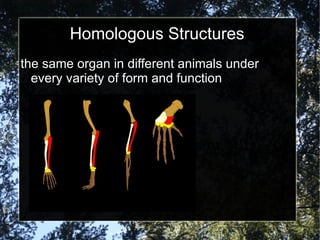
Homologous Structures the same organ in different animals under every variety of form and function
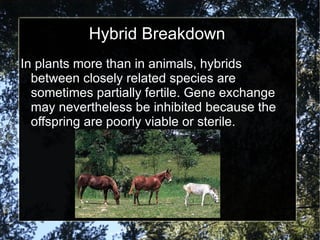
Hybrid Breakdown In plants more than in animals, hybrids between closely related species are sometimes partially fertile. Gene exchange may nevertheless be inhibited because the offspring are poorly viable or sterile.
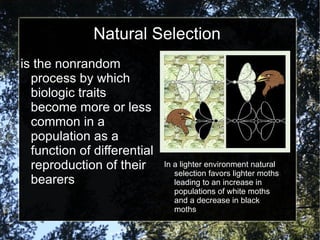
Natural Selection is the nonrandom process by which biologic traits become more or less common in a population as a function of differential reproduction of their bearers In a lighter environment natural selection favors lighter moths leading to an increase in populations of white moths and a decrease in black moths
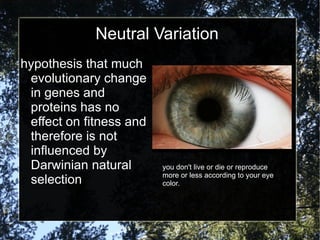
Neutral Variation hypothesis that much evolutionary change in genes and proteins has no effect on fitness and therefore is not influenced by Darwinian natural selection you don't live or die or reproduce more or less according to your eye color.
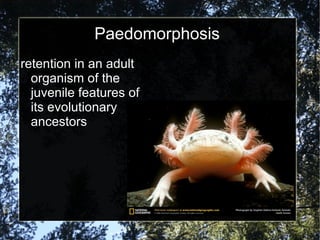
Paedomorphosis retention in an adult organism of the juvenile features of its evolutionary ancestors
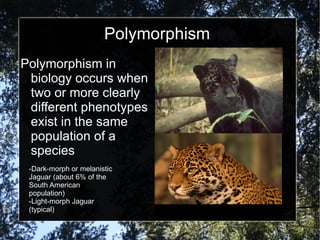
Polymorphism Polymorphism in biology occurs when two or more clearly different phenotypes exist in the same population of a species -Dark-morph or melanistic Jaguar (about 6% of the South American population) -Light-morph Jaguar (typical)
Polyploid organism has more than 2 complete chromosome sets
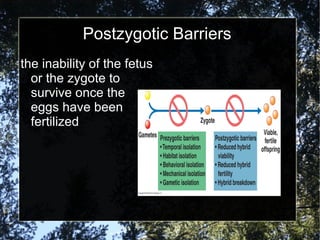
Postzygotic Barriers the inability of the fetus or the zygote to survive once the eggs have been fertilized
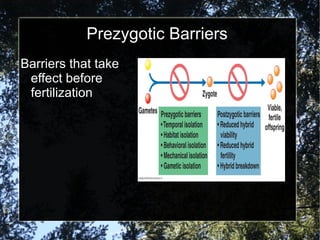
Prezygotic Barriers Barriers that take effect before fertilization
Punctuated Equilibrium evolution occurs in rapid bursts
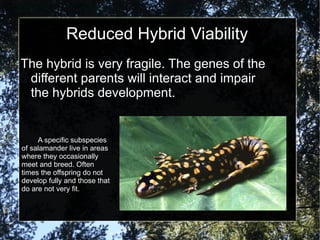
Reduced Hybrid Viability The hybrid is very fragile. The genes of the different parents will interact and impair the hybrids development. A specific subspecies of salamander live in areas where they occasionally meet and breed. Often times the offspring do not develop fully and those that do are not very fit.
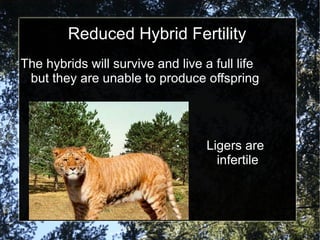
Reduced Hybrid Fertility The hybrids will survive and live a full life but they are unable to produce offspring Ligers are infertile
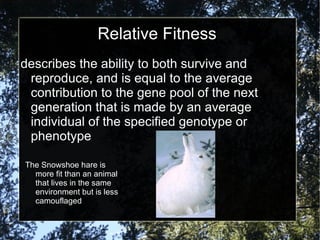
Relative Fitness describes the ability to both survive and reproduce, and is equal to the average contribution to the gene pool of the next generation that is made by an average individual of the specified genotype or phenotype The Snowshoe hare is more fit than an animal that lives in the same environment but is less camouflaged
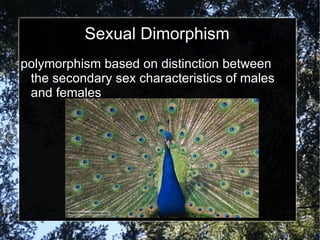
Sexual Dimorphism polymorphism based on distinction between the secondary sex characteristics of males and females
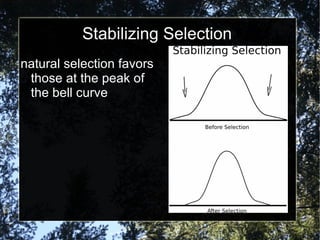
Stabilizing Selection natural selection favors those at the peak of the bell curve
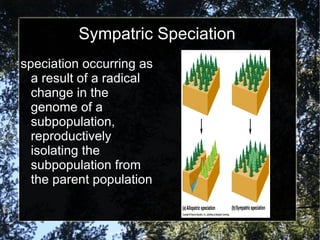
Sympatric Speciation speciation occurring as a result of a radical change in the genome of a subpopulation, reproductively isolating the subpopulation from the parent population
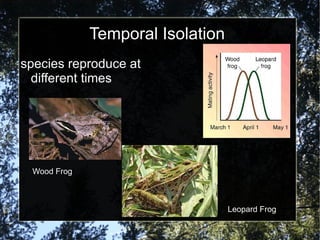
Temporal Isolation species reproduce at different times Wood Frog Leopard Frog
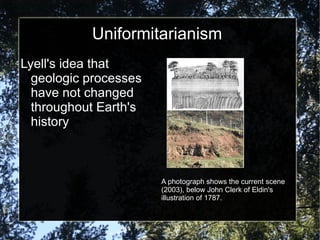
Uniformitarianism Lyell's idea that geologic processes have not changed throughout Earth's history A photograph shows the current scene (2003), below John Clerk of Eldin's illustration of 1787.
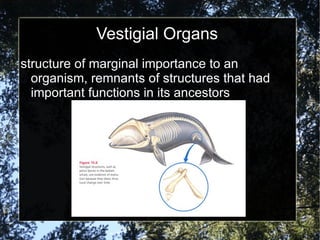
Vestigial Organs structure of marginal importance to an organism, remnants of structures that had important functions in its ancestors

Unit 1 AP Bio Vocab

  • 1.
    Unit 1 Evolutionand Change Andrew Shaw AP Biology 5 th
  • 2.
    Adaptive Radiation adaptiveradiation is the evolution of ecological and phenotypic diversity within a rapidly multiplying lineage.
  • 3.
    Allometric Growth thevariation in the relative rates of growth of various parts of the body, which helps shape the organism
  • 4.
    Allopatric Specification amode of speciation induced when an ancestral population becomes segregated by a geographic barrier or is itself divided into two or more geographically isolated subpopulations
  • 5.
    Allopolyploid a commontype of polyploidy species resulting from two different species interbreeding and combining their chromosomes
  • 6.
    Artificial selection theselective breeding of domesticated plants and animals to encourage the occurrence of desirable traits
  • 7.
    Autopolyploid an individualthat has more than 2 chromosome sets, all derived from a single species
  • 8.
    Biogeography the studyof the past and present distribution of species
  • 9.
    Bottleneck Effect geneticdrift resulting from the reduction of a population such that the surviving population is no longer genetically representative of the original population
  • 10.
    Cline clines consistof ecotypes or forms of species that exhibit gradual phenotypic and/or genetic differences over a geographical area
  • 11.
    Convergent Evolution speciesevolve to have structures with similar functions due to similar environments
  • 12.
    Diploidy presence of2 copies of each chromosome in a cell
  • 13.
    Directional Selection naturalselection that favors individuals at one end of the phenotypic range
  • 14.
    Diversifying Selection Disruptiveselection, also called diversifying selection, describes changes in population genetics in which extreme values for a trait are favored over intermediate values.
  • 15.
    Founder Effect geneticdrift that occurs when a few individuals become isolated from a larger population with the result that the new population's gene pool is not reflective of the original population
  • 16.
    Frequency-dependent Selection adecline in the reproductive success of a morph resulting from the morph's phenotype becoming too common in a population; a cause of balanced polymorphism in populations
  • 17.
    Gametic Isolation Ifthe gametes of two species meet, fertilization may not occur because of gametic isolation, in which the egg and sperm of different species are incompatible. In coral reefs, gamete incompatibility prevents the formation of numerous inter-species hybrids.
  • 18.
    Genetic Drift unpredictablefluctuations in allele frequencies from one generation to the next because of a population's finite size
  • 19.
    Gradualism gradualism isa theory which holds that profound change is the cumulative product of slow but continuous processes
  • 20.
    Heterochrony developmental changein the timing of events, leading to changes in size and shape
  • 21.
    Heterozygote Advantage greaterreproductive success of heterozygous individuals compared to homozygotes; tends to preserve variation in gene pools
  • 22.
    Homeotic any ofthe genes that control the overall body plan of animals and plants by controlling the developmental fate of groups of cells
  • 23.
    Homologous Structures thesame organ in different animals under every variety of form and function
  • 24.
    Hybrid Breakdown Inplants more than in animals, hybrids between closely related species are sometimes partially fertile. Gene exchange may nevertheless be inhibited because the offspring are poorly viable or sterile.
  • 25.
    Natural Selection isthe nonrandom process by which biologic traits become more or less common in a population as a function of differential reproduction of their bearers In a lighter environment natural selection favors lighter moths leading to an increase in populations of white moths and a decrease in black moths
  • 26.
    Neutral Variation hypothesisthat much evolutionary change in genes and proteins has no effect on fitness and therefore is not influenced by Darwinian natural selection you don't live or die or reproduce more or less according to your eye color.
  • 27.
    Paedomorphosis retention inan adult organism of the juvenile features of its evolutionary ancestors
  • 28.
    Polymorphism Polymorphism inbiology occurs when two or more clearly different phenotypes exist in the same population of a species -Dark-morph or melanistic Jaguar (about 6% of the South American population) -Light-morph Jaguar (typical)
  • 29.
    Polyploid organism hasmore than 2 complete chromosome sets
  • 30.
    Postzygotic Barriers theinability of the fetus or the zygote to survive once the eggs have been fertilized
  • 31.
    Prezygotic Barriers Barriersthat take effect before fertilization
  • 32.
    Punctuated Equilibrium evolutionoccurs in rapid bursts
  • 33.
    Reduced Hybrid ViabilityThe hybrid is very fragile. The genes of the different parents will interact and impair the hybrids development. A specific subspecies of salamander live in areas where they occasionally meet and breed. Often times the offspring do not develop fully and those that do are not very fit.
  • 34.
    Reduced Hybrid FertilityThe hybrids will survive and live a full life but they are unable to produce offspring Ligers are infertile
  • 35.
    Relative Fitness describesthe ability to both survive and reproduce, and is equal to the average contribution to the gene pool of the next generation that is made by an average individual of the specified genotype or phenotype The Snowshoe hare is more fit than an animal that lives in the same environment but is less camouflaged
  • 36.
    Sexual Dimorphism polymorphismbased on distinction between the secondary sex characteristics of males and females
  • 37.
    Stabilizing Selection naturalselection favors those at the peak of the bell curve
  • 38.
    Sympatric Speciation speciationoccurring as a result of a radical change in the genome of a subpopulation, reproductively isolating the subpopulation from the parent population
  • 39.
    Temporal Isolation speciesreproduce at different times Wood Frog Leopard Frog
  • 40.
    Uniformitarianism Lyell's ideathat geologic processes have not changed throughout Earth's history A photograph shows the current scene (2003), below John Clerk of Eldin's illustration of 1787.
  • 41.
    Vestigial Organs structureof marginal importance to an organism, remnants of structures that had important functions in its ancestors