
Pulse Oximeter
How does it work and how can it be used in home care?
www.silverlinemeditech.com
Pulse oximeter is used to measure the oxygen level in the blood and also check your heart rate. A fing
er pulse oxymeter for home use is small, lightweight and painlessly attaches to a finger tip so that it ca
n monitor the amount of oxygen that is carried in the body.
The device should show an oxygen level greater than 95% to be considered normal.
Oxygen levels lower than 92% are considered as low. In addition to this, the device also displays the p
ulse rate. Around 60-80 beats per minute is considered as normal. It is common for heart beat to incre
ase with some exercise and the oxygen saturation may decrease – although it should remain at 90%
or more to be normal.
Introduction
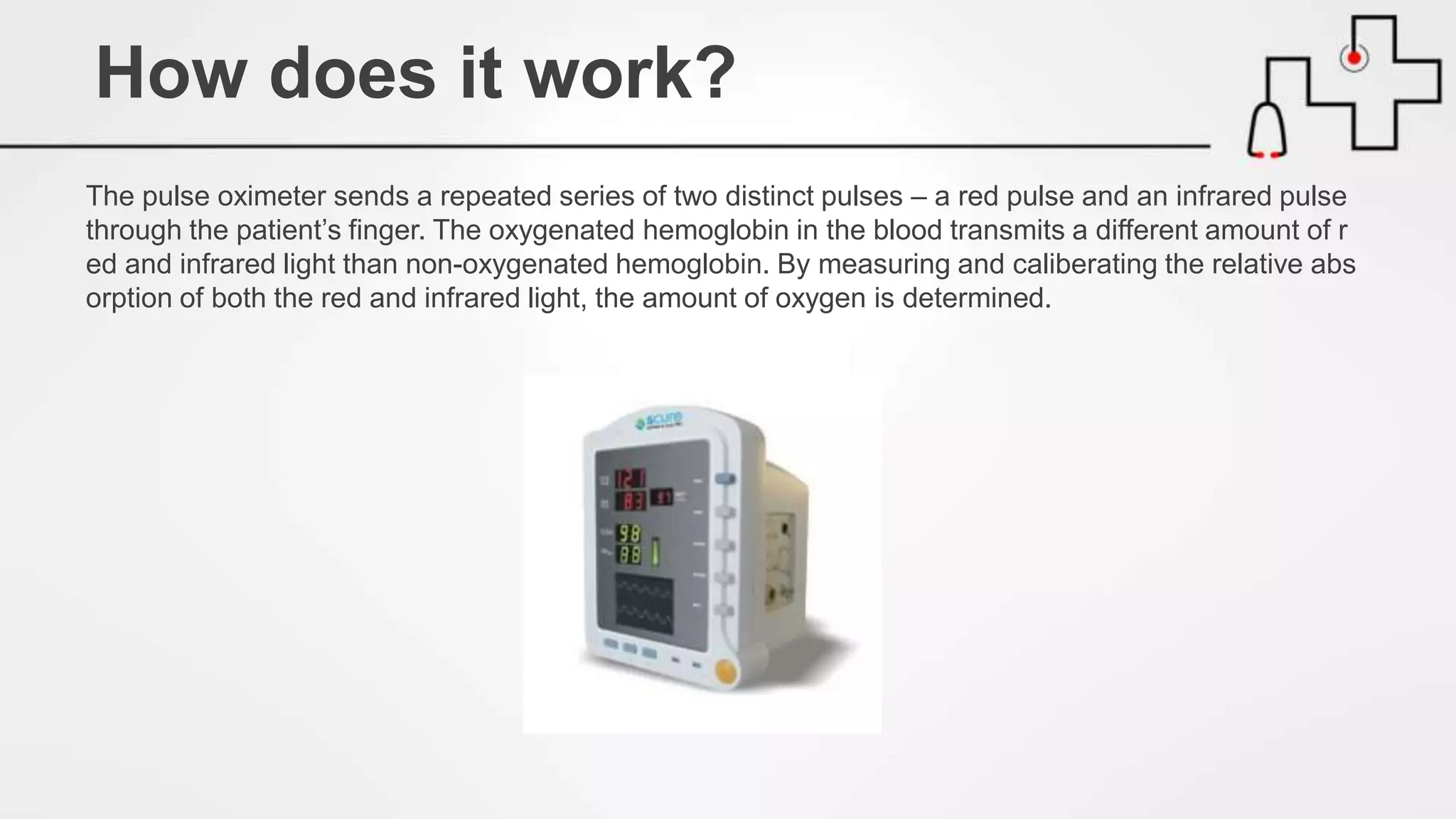
The pulse oximeter sends a repeated series of two distinct pulses – a red pulse and an infrared pulse
through the patient’s finger. The oxygenated hemoglobin in the blood transmits a different amount of r
ed and infrared light than non-oxygenated hemoglobin. By measuring and caliberating the relative abs
orption of both the red and infrared light, the amount of oxygen is determined.
How does it work?
As compared to drawing blood and testing in a lab, the home pulse oximeter definitely has some adva
ntages.
• The very first advantage is that it is non-invasive and hence all the potential risks of an invasive type
test (such as drawing blood for testing) are eliminated. Infections caused due to drawing blood from th
e finger can be avoided.
• Secondly, since the light pulses are extremely fast, you get the results instantly. In around 10 second
s, you know what the results are. This kind of speed is extremely important in case of emergencies. E
specially for high performance athletes and pilots flying over a 10000 feet where oxygen becomes dilu
ted.
Advantages of a Home Oximeter
One of the main disadvantages of the oximeter that uses red and infrared light is that – just by sendin
g light pulses through the fingertip, it is not possible to determine the exactl volume of blood that is sa
mpled by the light and hence may not be an accurate estimate.
The measurement of oxygen saturation in the blood is only relative. It gives the relative ratio of the oxy
genated hemoglobin concentration vs the non-oxygenated hemoglobin concentration.
If you get a lower reading on the oximeter, one factor could be the oxygenated hemoglobin definiency
and the other reason could be the deficiency of hemoglobin itself.
Disadvantages of a pulse oximeter
However, this home care device is a good place to begin with. If you suspect greater reasons for the l
ower reading, you always have some solid backing to base your blood tests on. Other than that, for ho
me care, the finger pulse oximeter should suffice.
Sliverline Meditech, is a leading Suppliers & Exporters of Pulse Oximeter In India & Other Home H
ealth Care Products. A pulse oximeter is the most important monitoring tool in modern anaesthesia pr
actice. Feel free to call us at +91-79-2689 0389.
Conclusion
However, this home care device is a good place to begin with. If you suspect greater reasons for the l
ower reading, you always have some solid backing to base your blood tests on. Other than that, for ho
me care, the finger pulse oximeter should suffice.
Sliverline Meditech, is a leading Suppliers & Exporters of Pulse Oximeter In India & Other Home H
ealth Care Products. A pulse oximeter is the most important monitoring tool in modern anaesthesia pr
actice. Feel free to call us at +91-79-2689 0389.
Conclusion
Visit us @ www.silverlinemeditech.com
/Silverline-Meditech-280224919040326/
/silverlinemed

Pulse oximeter – how does it work and how can it be used in home care?

  • 1.
    Pulse Oximeter How doesit work and how can it be used in home care? www.silverlinemeditech.com
  • 2.
    Pulse oximeter isused to measure the oxygen level in the blood and also check your heart rate. A fing er pulse oxymeter for home use is small, lightweight and painlessly attaches to a finger tip so that it ca n monitor the amount of oxygen that is carried in the body. The device should show an oxygen level greater than 95% to be considered normal. Oxygen levels lower than 92% are considered as low. In addition to this, the device also displays the p ulse rate. Around 60-80 beats per minute is considered as normal. It is common for heart beat to incre ase with some exercise and the oxygen saturation may decrease – although it should remain at 90% or more to be normal. Introduction
  • 3.
    The pulse oximetersends a repeated series of two distinct pulses – a red pulse and an infrared pulse through the patient’s finger. The oxygenated hemoglobin in the blood transmits a different amount of r ed and infrared light than non-oxygenated hemoglobin. By measuring and caliberating the relative abs orption of both the red and infrared light, the amount of oxygen is determined. How does it work?
  • 4.
    As compared todrawing blood and testing in a lab, the home pulse oximeter definitely has some adva ntages. • The very first advantage is that it is non-invasive and hence all the potential risks of an invasive type test (such as drawing blood for testing) are eliminated. Infections caused due to drawing blood from th e finger can be avoided. • Secondly, since the light pulses are extremely fast, you get the results instantly. In around 10 second s, you know what the results are. This kind of speed is extremely important in case of emergencies. E specially for high performance athletes and pilots flying over a 10000 feet where oxygen becomes dilu ted. Advantages of a Home Oximeter
  • 5.
    One of themain disadvantages of the oximeter that uses red and infrared light is that – just by sendin g light pulses through the fingertip, it is not possible to determine the exactl volume of blood that is sa mpled by the light and hence may not be an accurate estimate. The measurement of oxygen saturation in the blood is only relative. It gives the relative ratio of the oxy genated hemoglobin concentration vs the non-oxygenated hemoglobin concentration. If you get a lower reading on the oximeter, one factor could be the oxygenated hemoglobin definiency and the other reason could be the deficiency of hemoglobin itself. Disadvantages of a pulse oximeter
  • 6.
    However, this homecare device is a good place to begin with. If you suspect greater reasons for the l ower reading, you always have some solid backing to base your blood tests on. Other than that, for ho me care, the finger pulse oximeter should suffice. Sliverline Meditech, is a leading Suppliers & Exporters of Pulse Oximeter In India & Other Home H ealth Care Products. A pulse oximeter is the most important monitoring tool in modern anaesthesia pr actice. Feel free to call us at +91-79-2689 0389. Conclusion
  • 7.
    However, this homecare device is a good place to begin with. If you suspect greater reasons for the l ower reading, you always have some solid backing to base your blood tests on. Other than that, for ho me care, the finger pulse oximeter should suffice. Sliverline Meditech, is a leading Suppliers & Exporters of Pulse Oximeter In India & Other Home H ealth Care Products. A pulse oximeter is the most important monitoring tool in modern anaesthesia pr actice. Feel free to call us at +91-79-2689 0389. Conclusion
  • 8.
    Visit us @www.silverlinemeditech.com /Silverline-Meditech-280224919040326/ /silverlinemed