Dr.NANMA.S
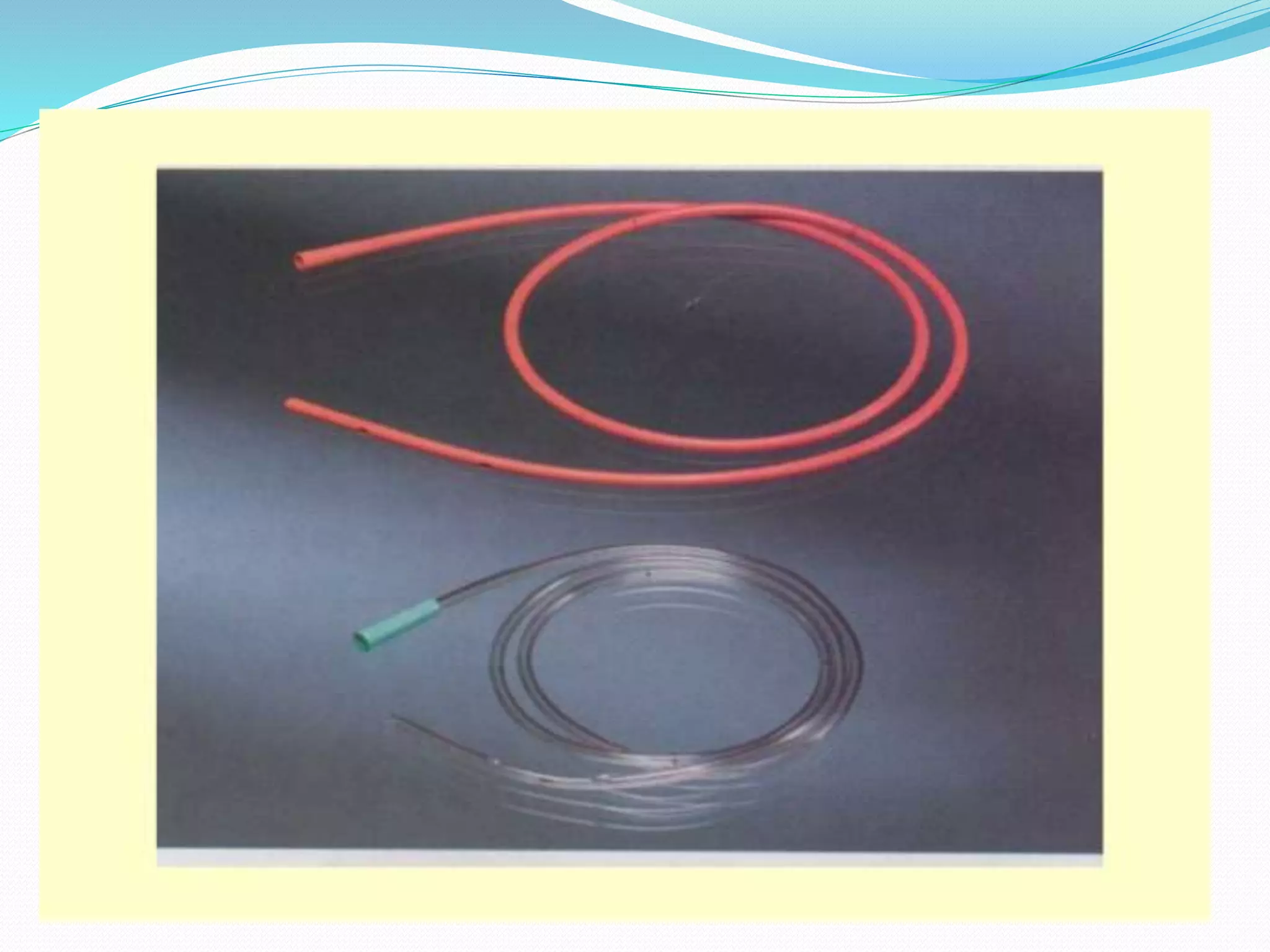
Types of tubes
Short tubes: passed through nose into stomach
Medium tubes:through nose to duodenum & jejunum
Long tubes: through nose ,esophagus,stomach into the
intestine
SIZE:10F to 20F
LENGTH:105-120 cm
Tip
Body
Base
COMPONENTS
Gamma rays irradiation at the bhabha
atomic research
Ethylene oxide gas sterilization
Boiling
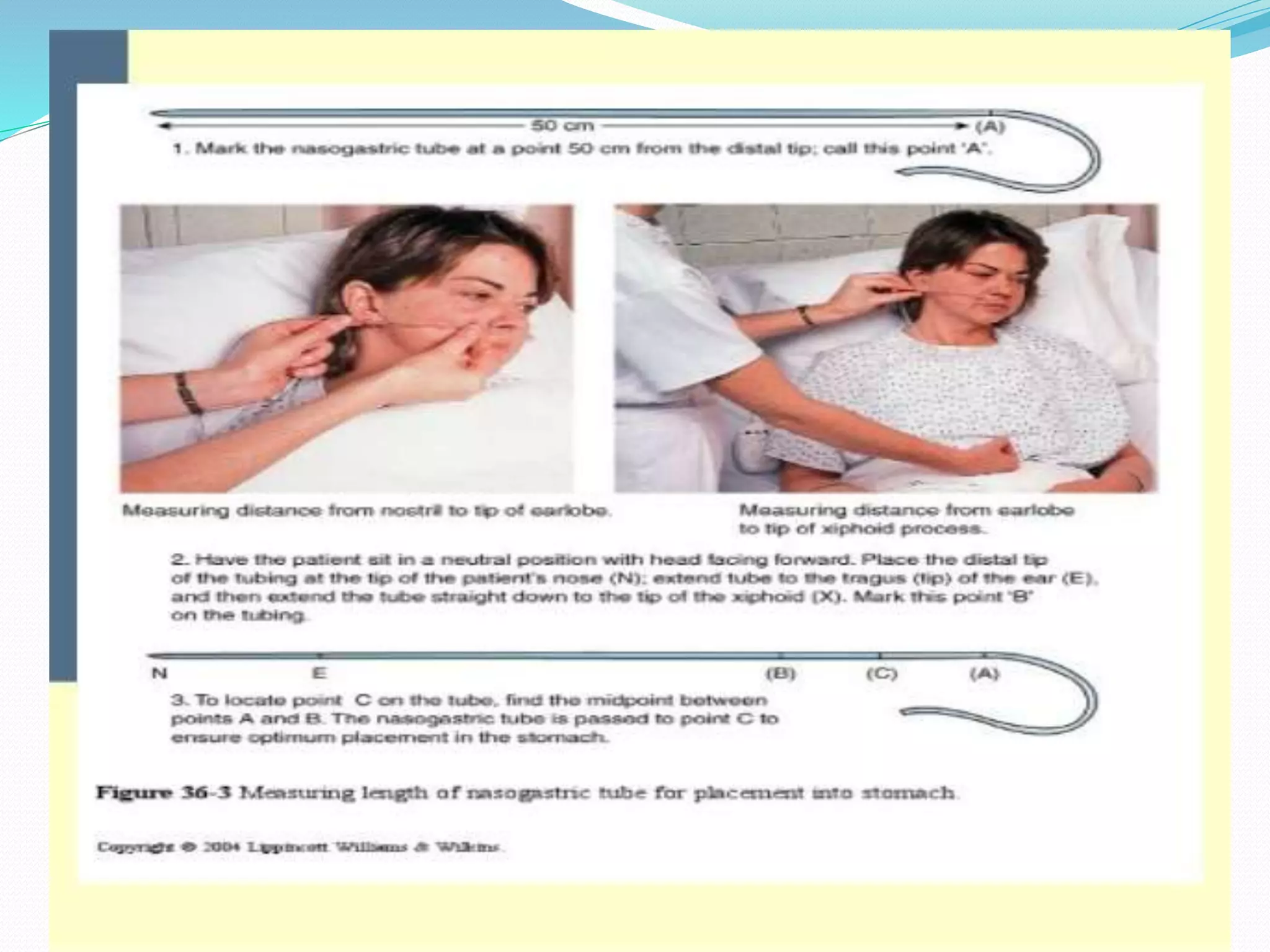
Determine the length of tube to be inserted
Measure distance from tip of nose to earlobe&
to xyphoid process of sternum
 Tube:lubricated with sterile paraffin or jelly
Nose:wider nostril selected
Nostril cleaned with pledgent of cotton wool
Moistened with savlon in water
Patient:sitting position /fowler’s position
When patient is lying ,head should be flexed by one hand
Tip-passed along nasal septum & horizontally along floor of nose
FIXING THE TUBE:
In unconscious patient:
•By magill’s endotracheal tube
Duodenal Aspiration:
•Passed upto 55cm
•Patient lie on right side
•Tube advanced slowly at rate of
1cm/min for 20 min
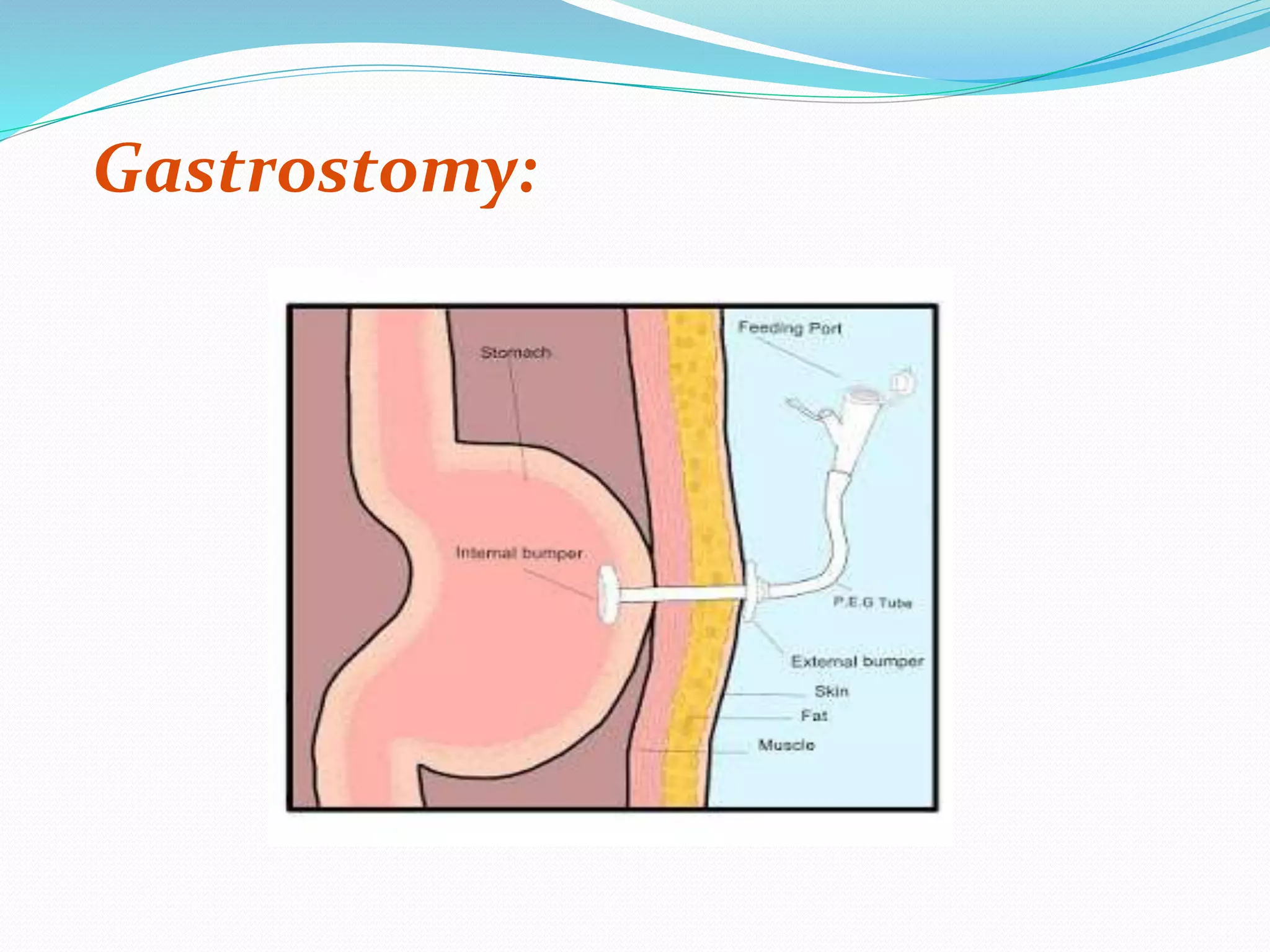
Gastrostomy:
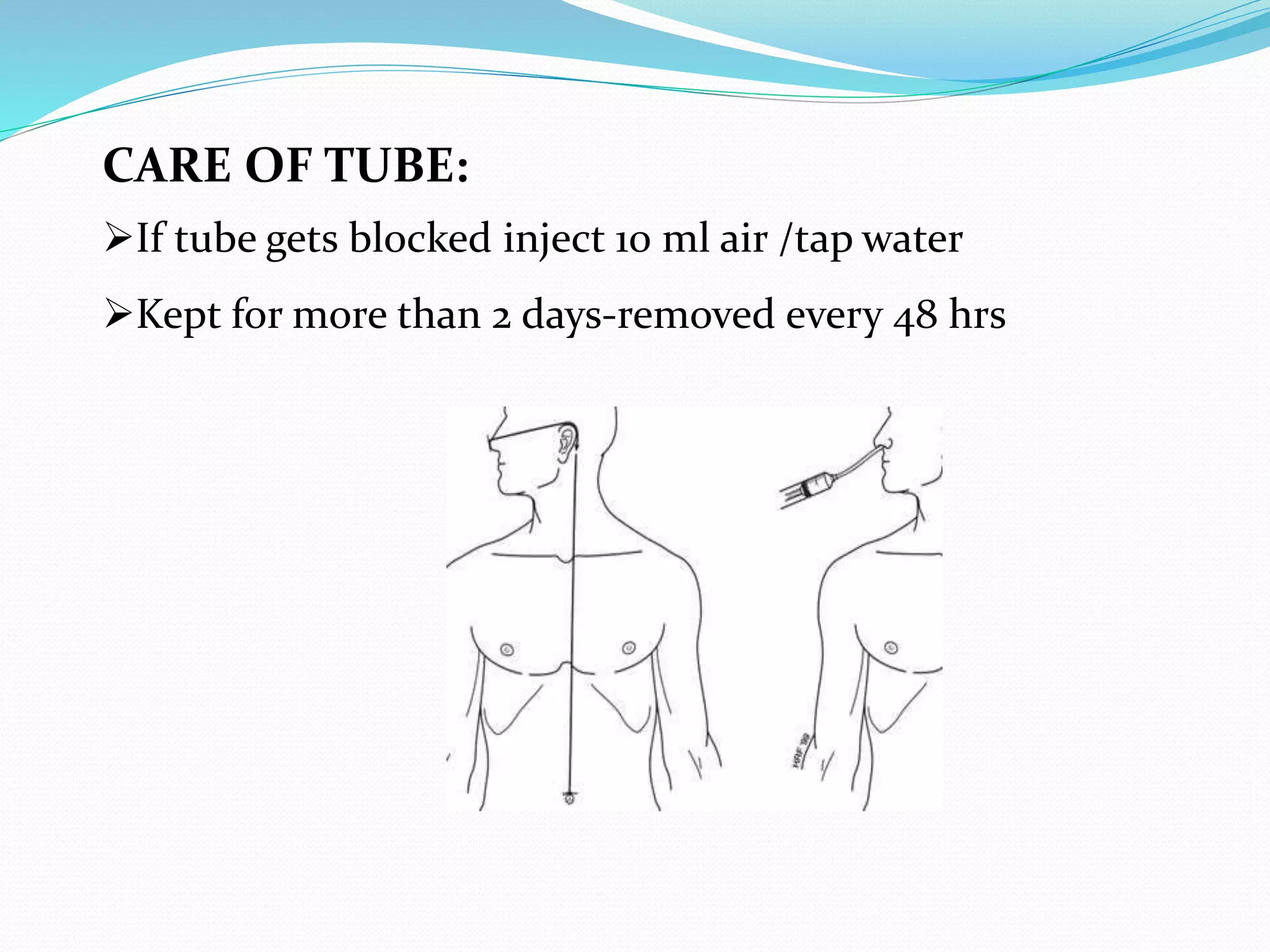
CARE OF TUBE:
If tube gets blocked inject 10 ml air /tap water
Kept for more than 2 days-removed every 48 hrs
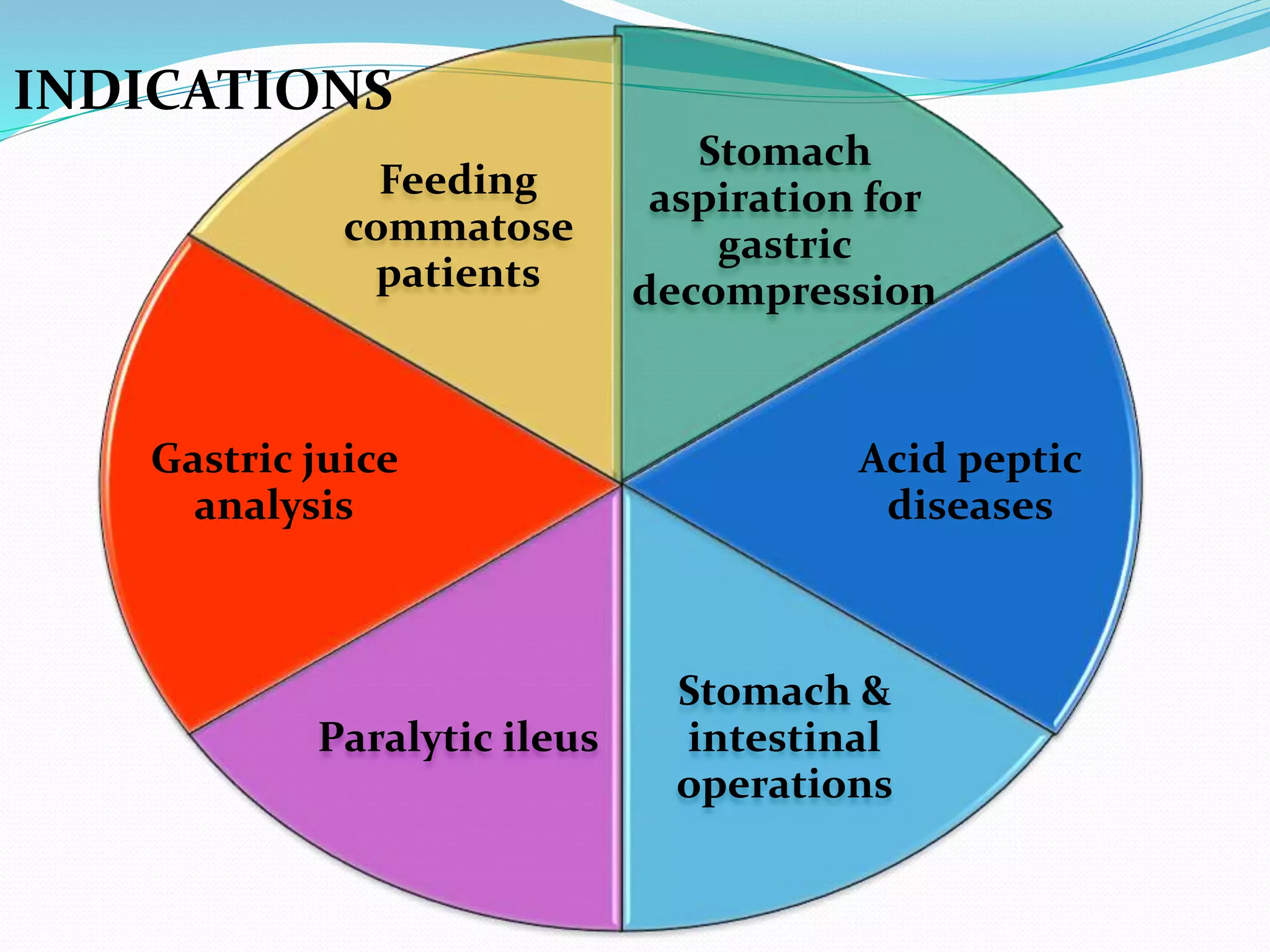
Stomach
aspiration for
gastric
decompression
Acid peptic
diseases
Stomach &
intestinal
operations
Paralytic ileus
Gastric juice
analysis
Feeding
commatose
patients
INDICATIONS
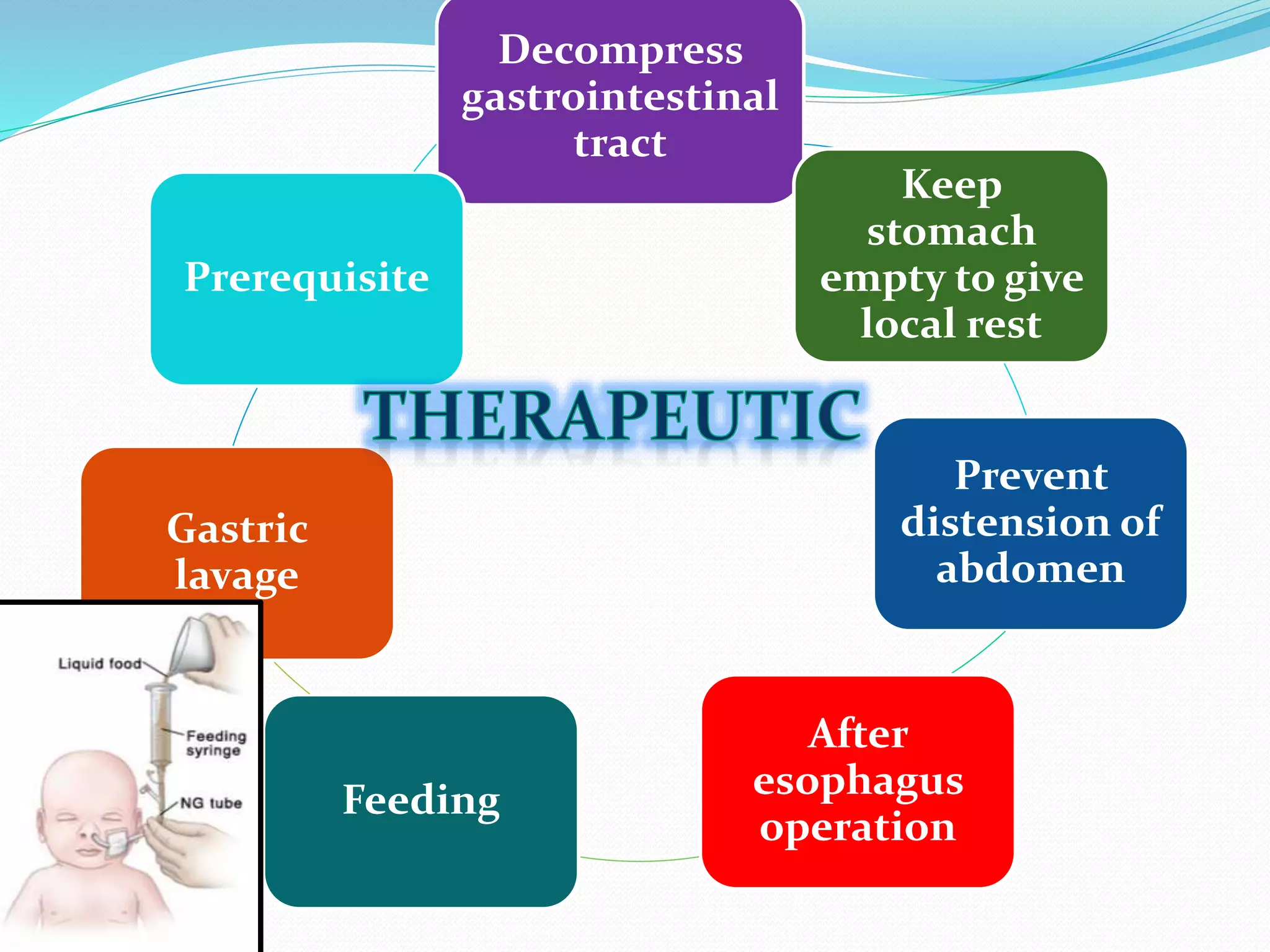
Therapeutic
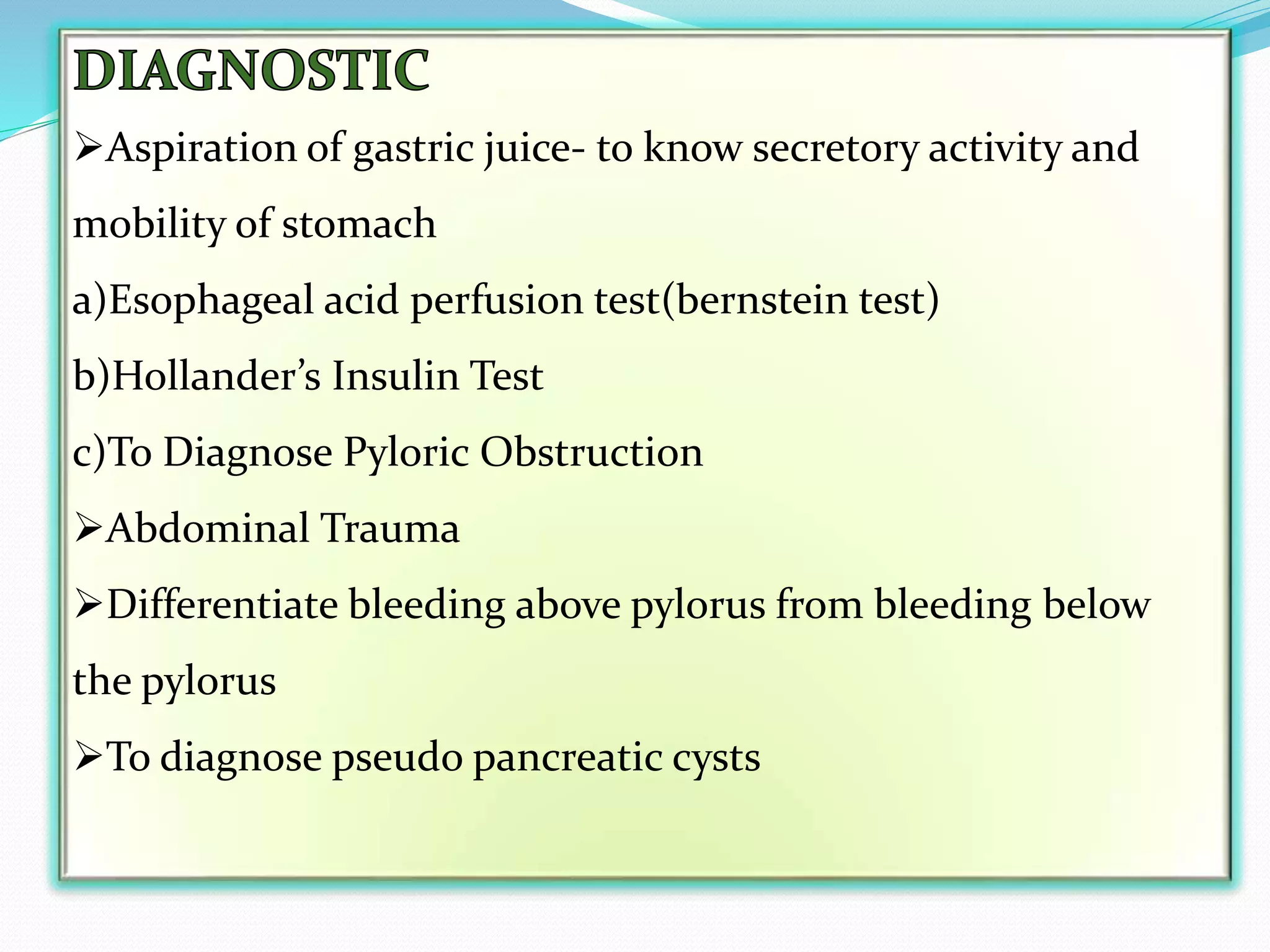
Diagnostic
Uses:
Decompress
gastrointestinal
tract
Keep
stomach
empty to give
local rest
Prevent
distension of
abdomen
After
esophagus
operation
Feeding
Gastric
lavage
Prerequisite
Aspiration of gastric juice- to know secretory activity and
mobility of stomach
a)Esophageal acid perfusion test(bernstein test)
b)Hollander’s Insulin Test
c)To Diagnose Pyloric Obstruction
Abdominal Trauma
Differentiate bleeding above pylorus from bleeding below
the pylorus
To diagnose pseudo pancreatic cysts
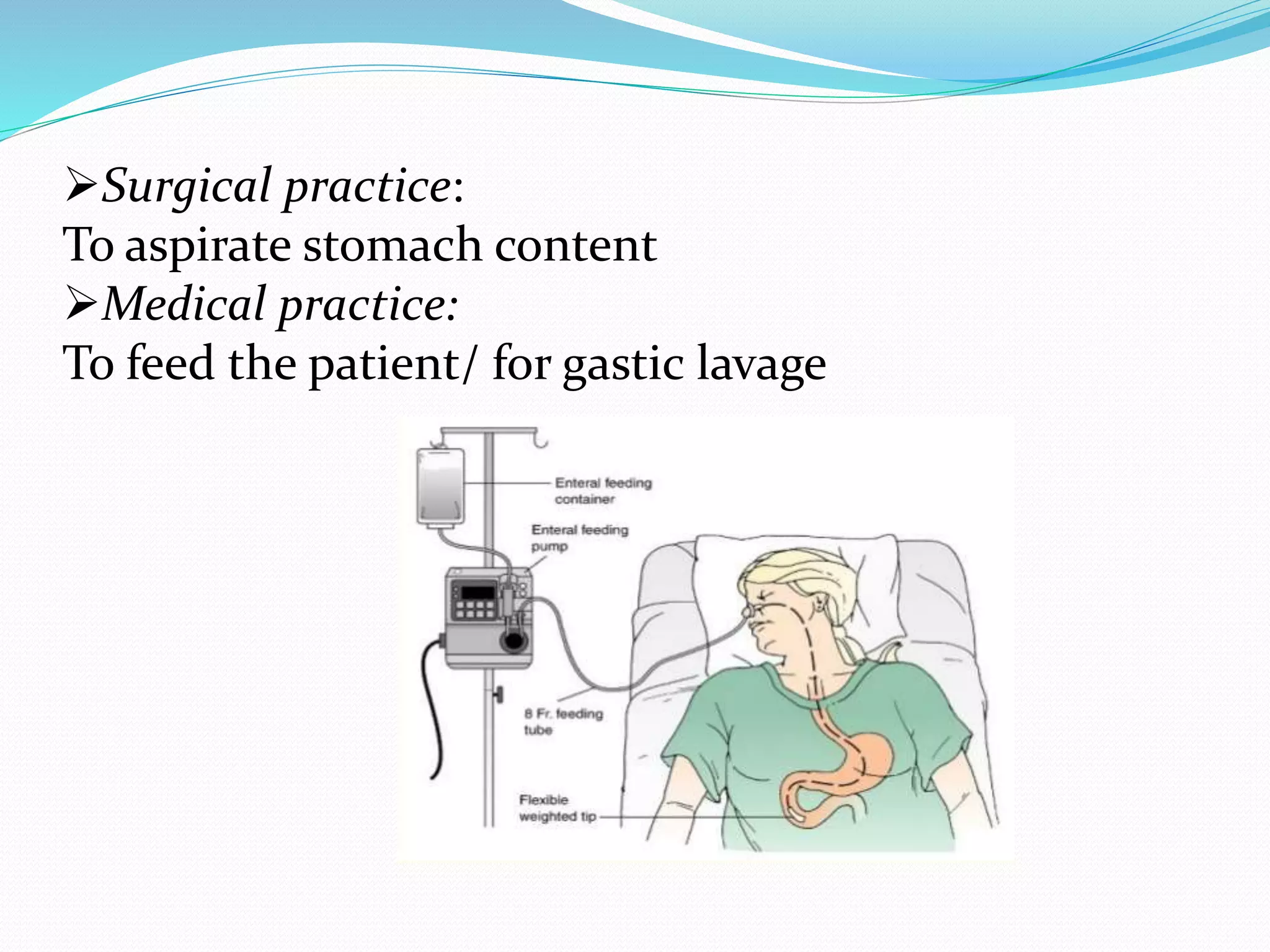
Surgical practice:
To aspirate stomach content
Medical practice:
To feed the patient/ for gastic lavage
Sinusitis
Epistaxis
Otitis media
Upper respiratory tract
infection
Esophageal
ulceration
Esophageal
perforation
COMPLICATIONS
Contra indications
REMOVAL
•At first,inject some air into tube inorder to empty it of any
secretion
•Tube-pinched ,shut,brought out gently
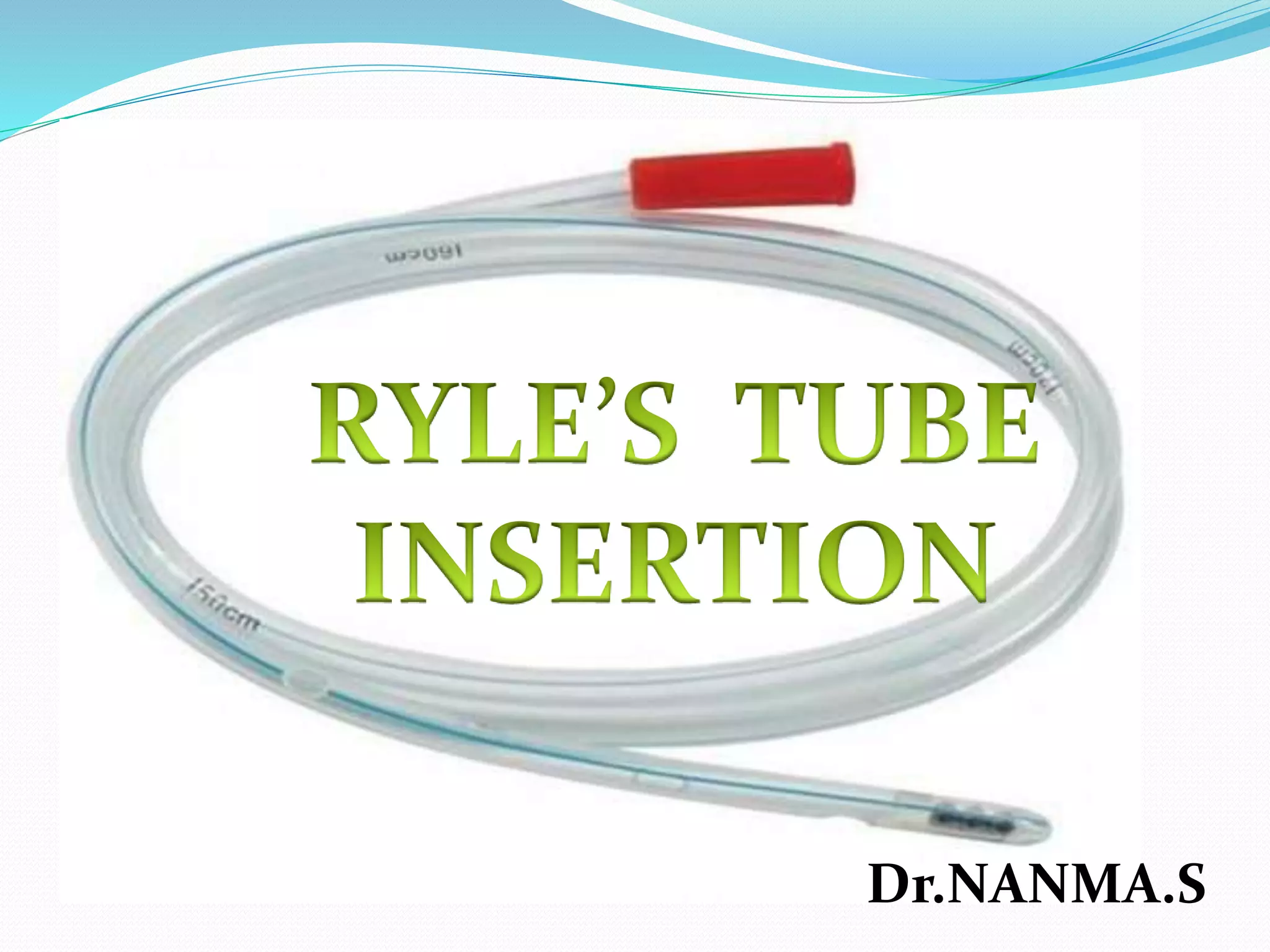
Ryles tube insertion

Ryles tube insertion