LARYNGOSCOPE
INDICATIONS
 In Infants
 Prior to endotracheal intubation in:
• Neonatal asphyxia
• Meconium aspiration
• Respiratory distress syndrome
• Tracheo oesophageal fistula
• Mechanical ventilation
.
In Older Children
  Prior to endotracheal intubation:
• Resuscitation
• During admoinistration of general anaesthesia
• Epiglottitis
• Kerosene poisoning
 Direct Laryngoscopy
• In cord palsy
• Anatomical lesions
• Foreign body
Contraindications
• Diseases or injuries of cervical spine.
• Moderate or marked respiratory obstruction.
PROCEDURE
1. Gauze piece placed on upper teeth to protect
   against trauma.
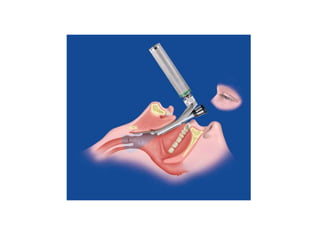
2. After lubrication, the laryngoscope is held by the
   handle in the left hand. Right hand is used to
   retract the lips and guide the scope.
3. It is introduced by one side of the tongue which
   is pushed to the opposite side till posterior third
   of tongue is reached.
4. It is advanced behind the epiglottis and lifted
   forward without levering it on the upper teeth or
   jaw
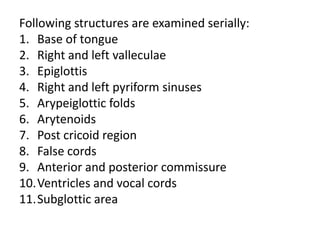
Following structures are examined serially:
1. Base of tongue
2. Right and left valleculae
3. Epiglottis
4. Right and left pyriform sinuses
5. Arypeiglottic folds
6. Arytenoids
7. Post cricoid region
8. False cords
9. Anterior and posterior commissure
10.Ventricles and vocal cords
11.Subglottic area
Complications
• Mechanical injury
   injury to local tissues like teeth,tongue,palate
• Stimulation of posterior pharyngeal wall may
  cause vago-vagal episode leading to hypoxia,
  bradycardia.
• Hyperextension of neck may cause damage to
  cervical spine.

Laryngoscope

  • 1.
  • 3.
    INDICATIONS  In Infants Prior to endotracheal intubation in: • Neonatal asphyxia • Meconium aspiration • Respiratory distress syndrome • Tracheo oesophageal fistula • Mechanical ventilation
  • 4.
    . In Older Children Prior to endotracheal intubation: • Resuscitation • During admoinistration of general anaesthesia • Epiglottitis • Kerosene poisoning  Direct Laryngoscopy • In cord palsy • Anatomical lesions • Foreign body
  • 5.
    Contraindications • Diseases orinjuries of cervical spine. • Moderate or marked respiratory obstruction.
  • 6.
    PROCEDURE 1. Gauze pieceplaced on upper teeth to protect against trauma. 2. After lubrication, the laryngoscope is held by the handle in the left hand. Right hand is used to retract the lips and guide the scope. 3. It is introduced by one side of the tongue which is pushed to the opposite side till posterior third of tongue is reached. 4. It is advanced behind the epiglottis and lifted forward without levering it on the upper teeth or jaw
  • 8.
    Following structures areexamined serially: 1. Base of tongue 2. Right and left valleculae 3. Epiglottis 4. Right and left pyriform sinuses 5. Arypeiglottic folds 6. Arytenoids 7. Post cricoid region 8. False cords 9. Anterior and posterior commissure 10.Ventricles and vocal cords 11.Subglottic area
  • 9.
    Complications • Mechanical injury injury to local tissues like teeth,tongue,palate • Stimulation of posterior pharyngeal wall may cause vago-vagal episode leading to hypoxia, bradycardia. • Hyperextension of neck may cause damage to cervical spine.