Designing Learning-oriented
Assessment for a Digital
Future
Transforming Assessment in a Digital Era
31st July - 1st August 2013
Professor Mike Keppell
Executive Director
Australian Digital Futures Institute
Director, Digital Futures - CRN
1Thursday, 1 August 13
Overview
n Trends and challenges
n New generation students
n Interactions
n Learning-oriented
assessment
n Personalised learning
n Challenges
n New mindsets
2
2Thursday, 1 August 13
What Trends do we Need
to Consider?
3Thursday, 1 August 13
Beyond Current Horizons
n Networking and
connections - distributed
cognition
n Increasing
personalisation and
customisation of
experience
n New forms of literacy
n Openness of ownership of
knowledge (Jewitt, 2009).
4
4Thursday, 1 August 13
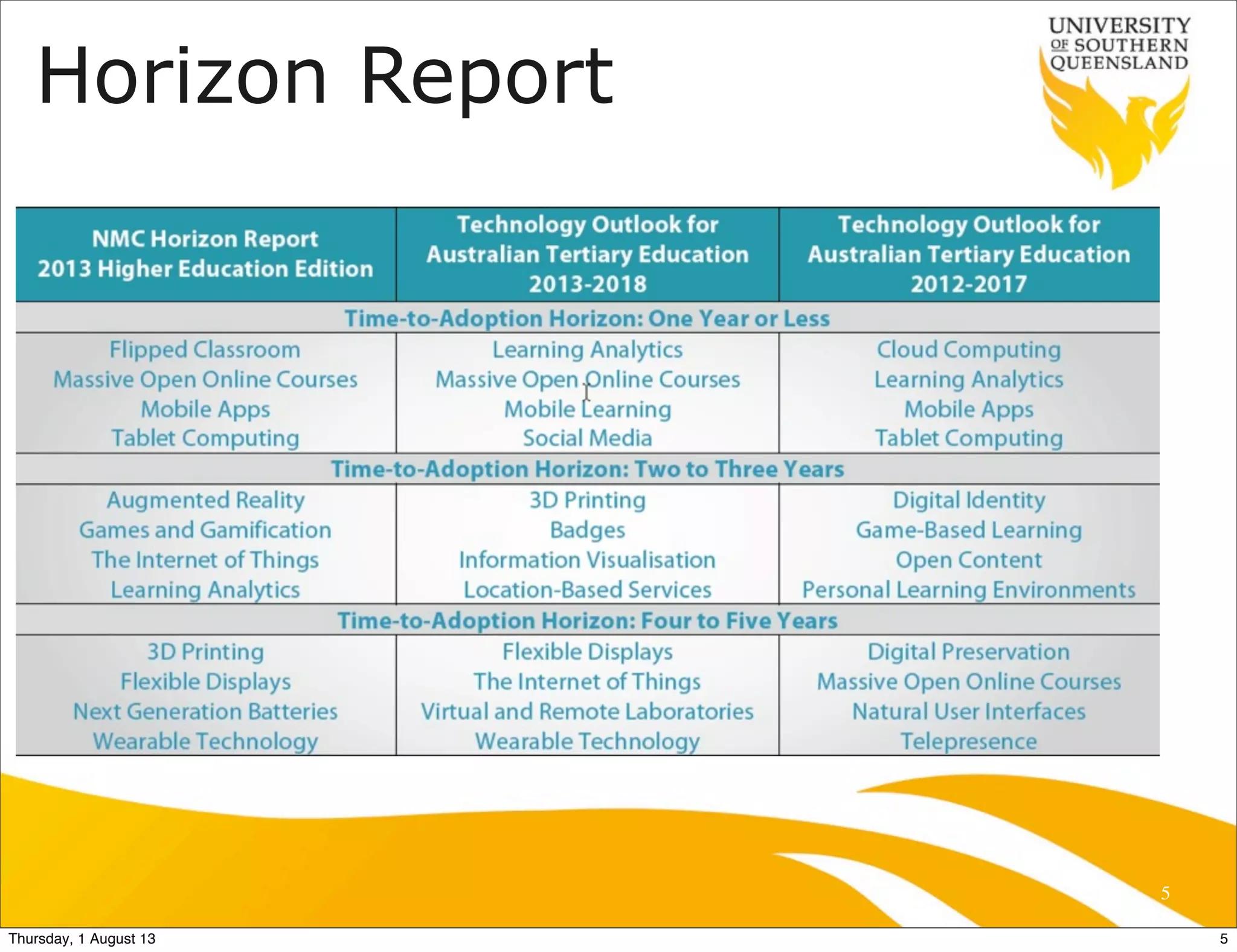
Horizon Report
5
5Thursday, 1 August 13
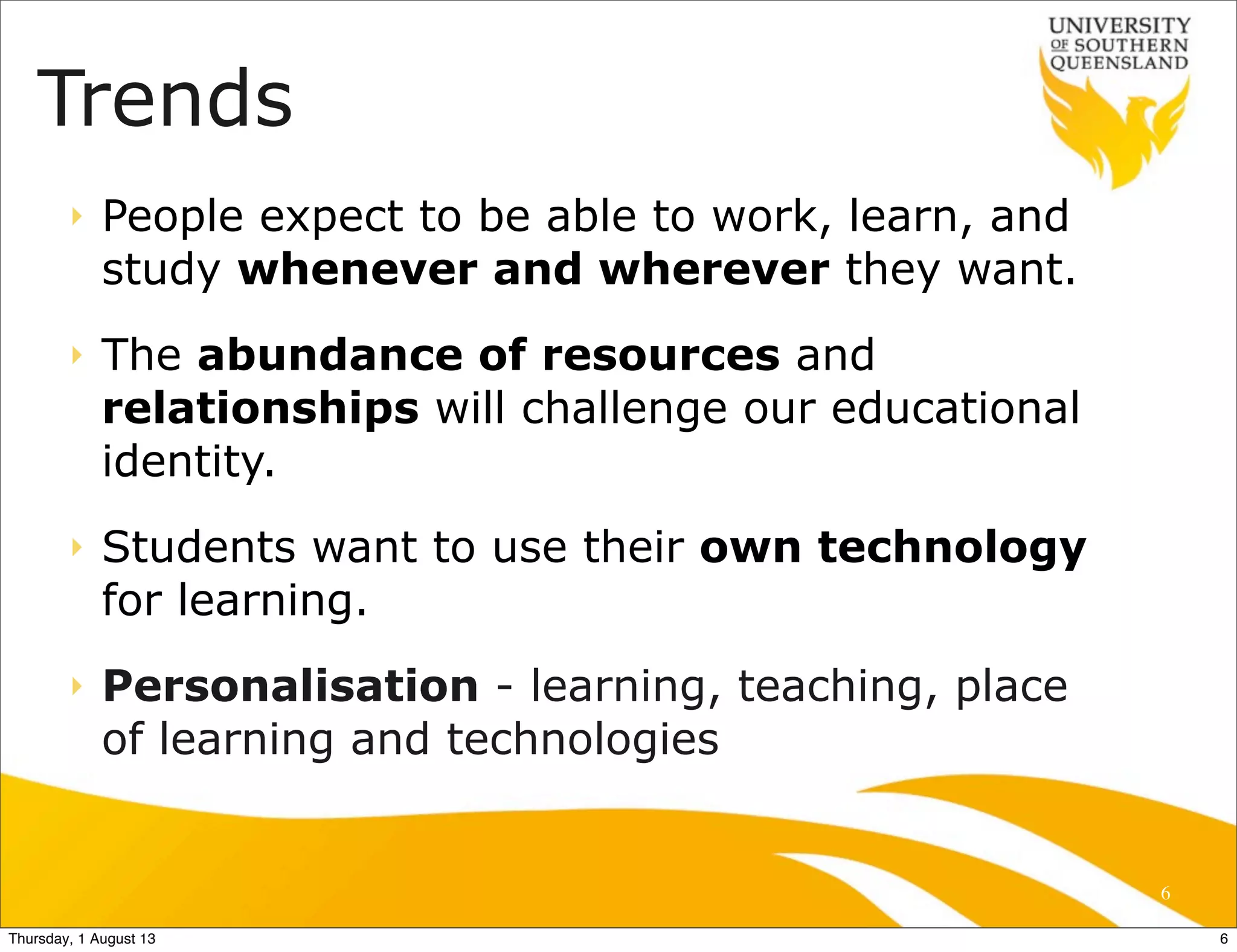
Trends
‣ People expect to be able to work, learn, and
study whenever and wherever they want.
‣ The abundance of resources and
relationships will challenge our educational
identity.
‣ Students want to use their own technology
for learning.
‣ Personalisation - learning, teaching, place
of learning and technologies
6
6Thursday, 1 August 13
New Generation Students
7Thursday, 1 August 13
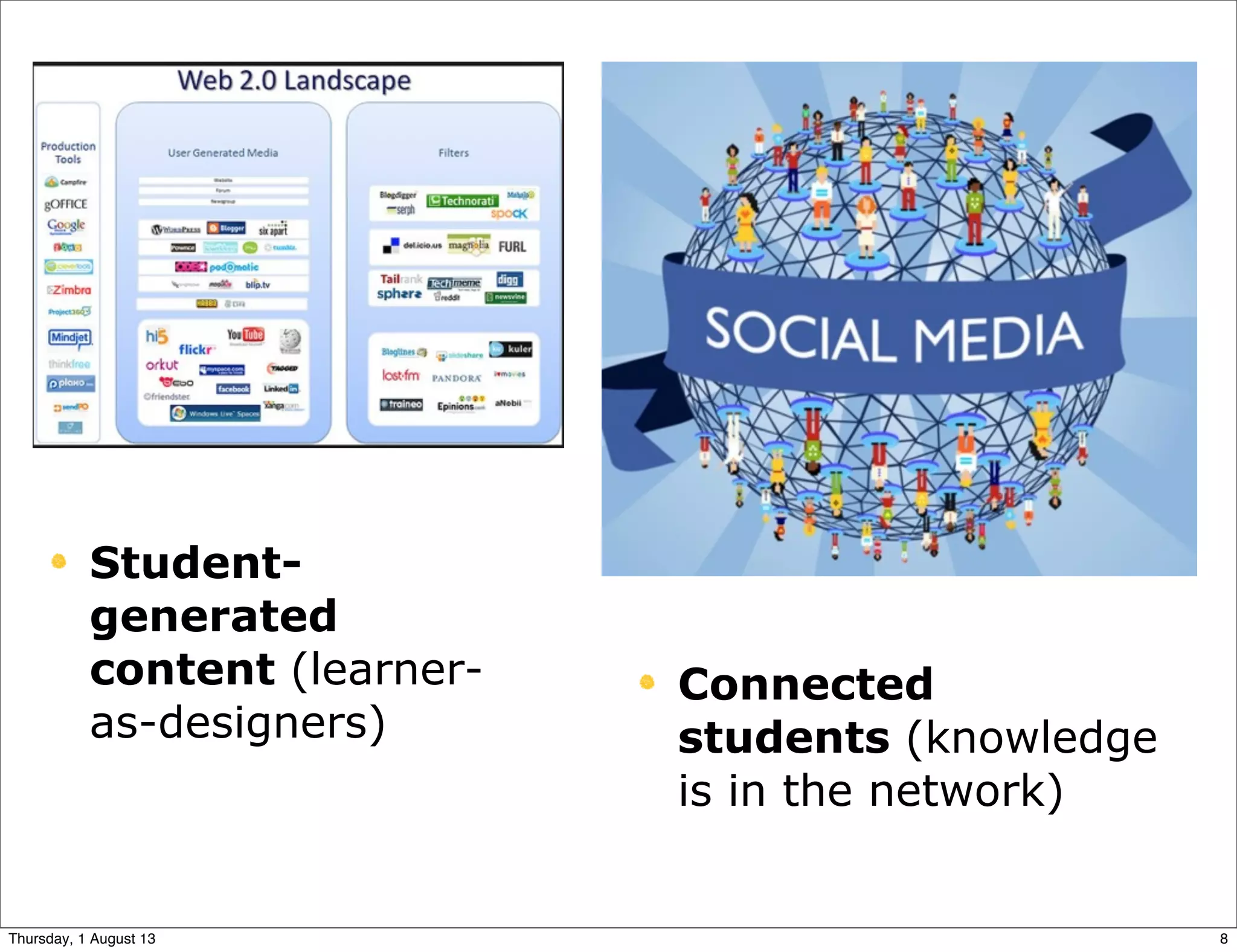
Student-
generated
content (learner-
as-designers)
Connected
students (knowledge
is in the network)
8Thursday, 1 August 13
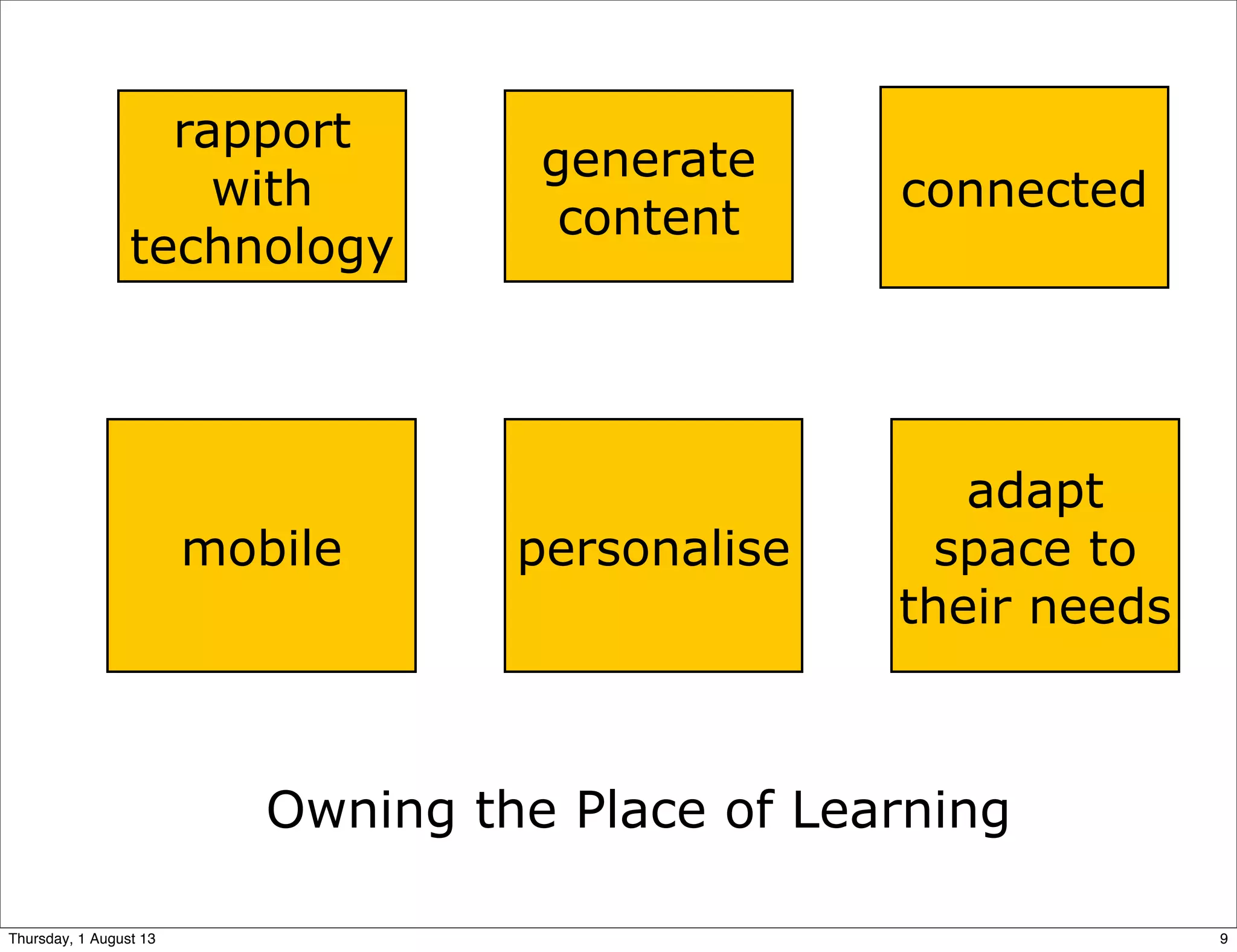
Owning the Place of Learning
rapport
with
technology
mobile
generate
content
personalise
connected
adapt
space to
their needs
9Thursday, 1 August 13
Interactions
10Thursday, 1 August 13
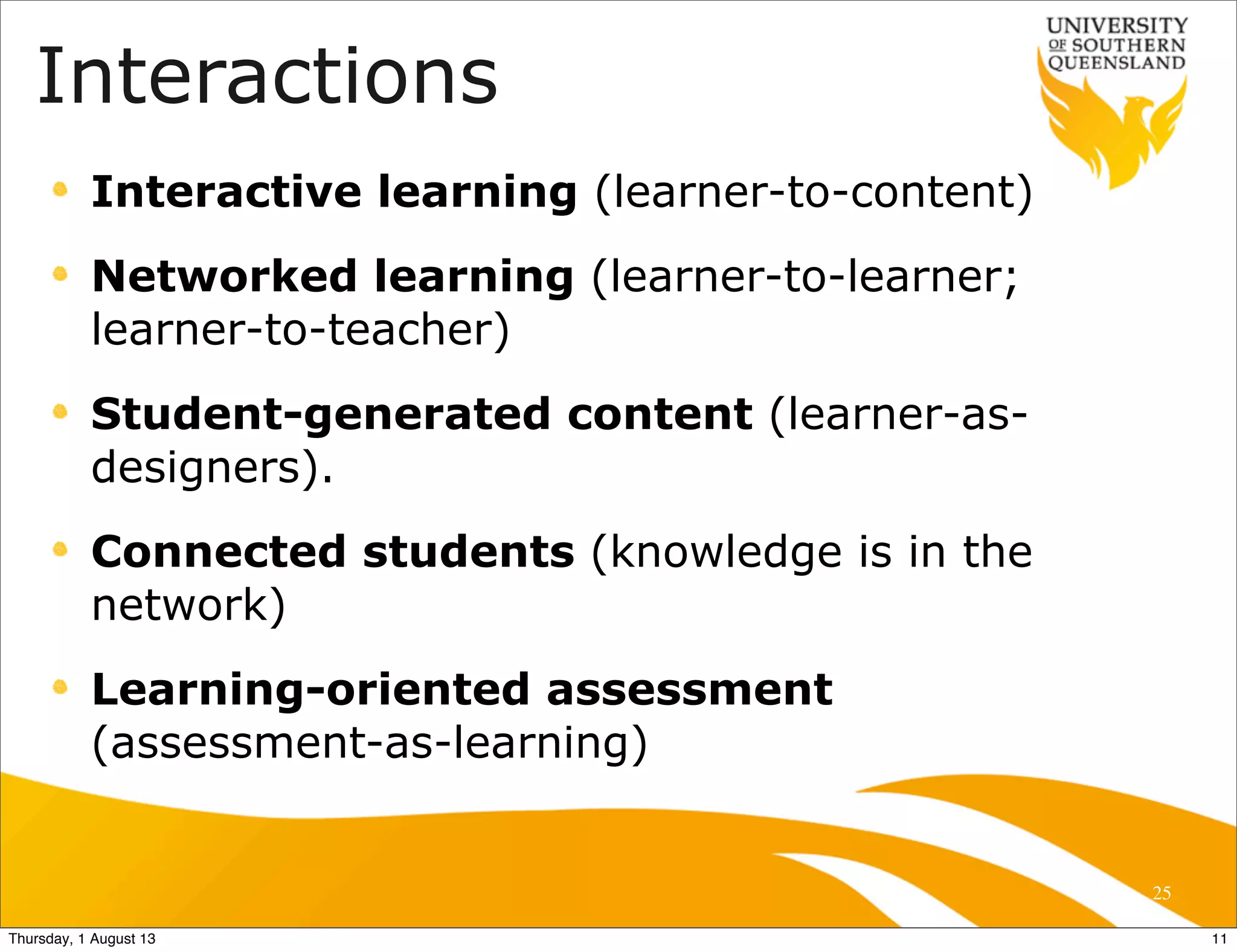
25
Interactive learning (learner-to-content)
Networked learning (learner-to-learner;
learner-to-teacher)
Student-generated content (learner-as-
designers).
Connected students (knowledge is in the
network)
Learning-oriented assessment
(assessment-as-learning)
Interactions
11Thursday, 1 August 13
Learning-oriented
Assessment
12Thursday, 1 August 13
Assessment 2020
Assessment has been most
effective when:
n feedback is used to actively
improve student learning
n students and teachers become
responsible partners in learning
and assessment
n assessment for learning is
placed at the centre of subject
and program design
13
13Thursday, 1 August 13
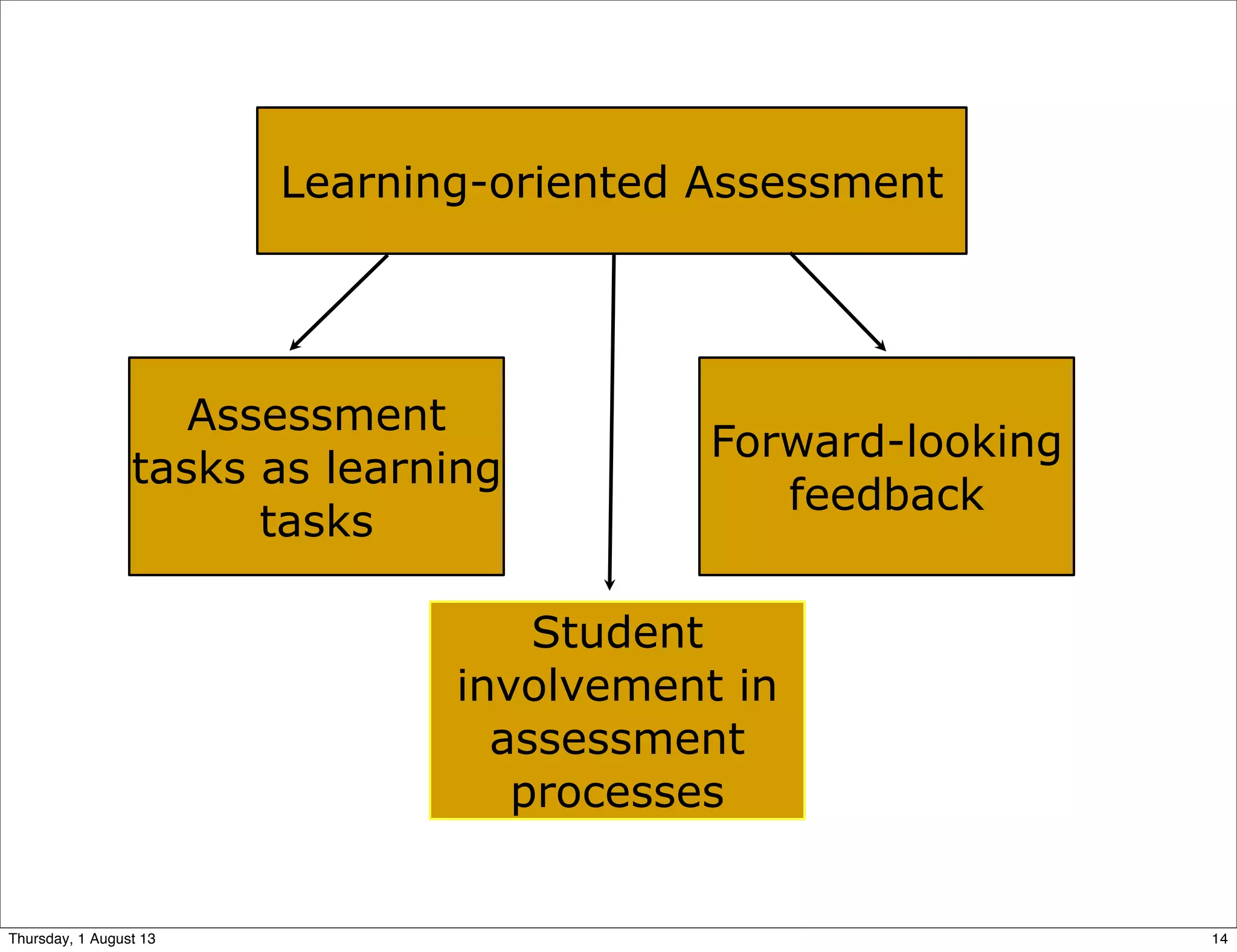
Learning-oriented Assessment
Assessment
tasks as learning
tasks
Student
involvement in
assessment
processes
Forward-looking
feedback
14Thursday, 1 August 13
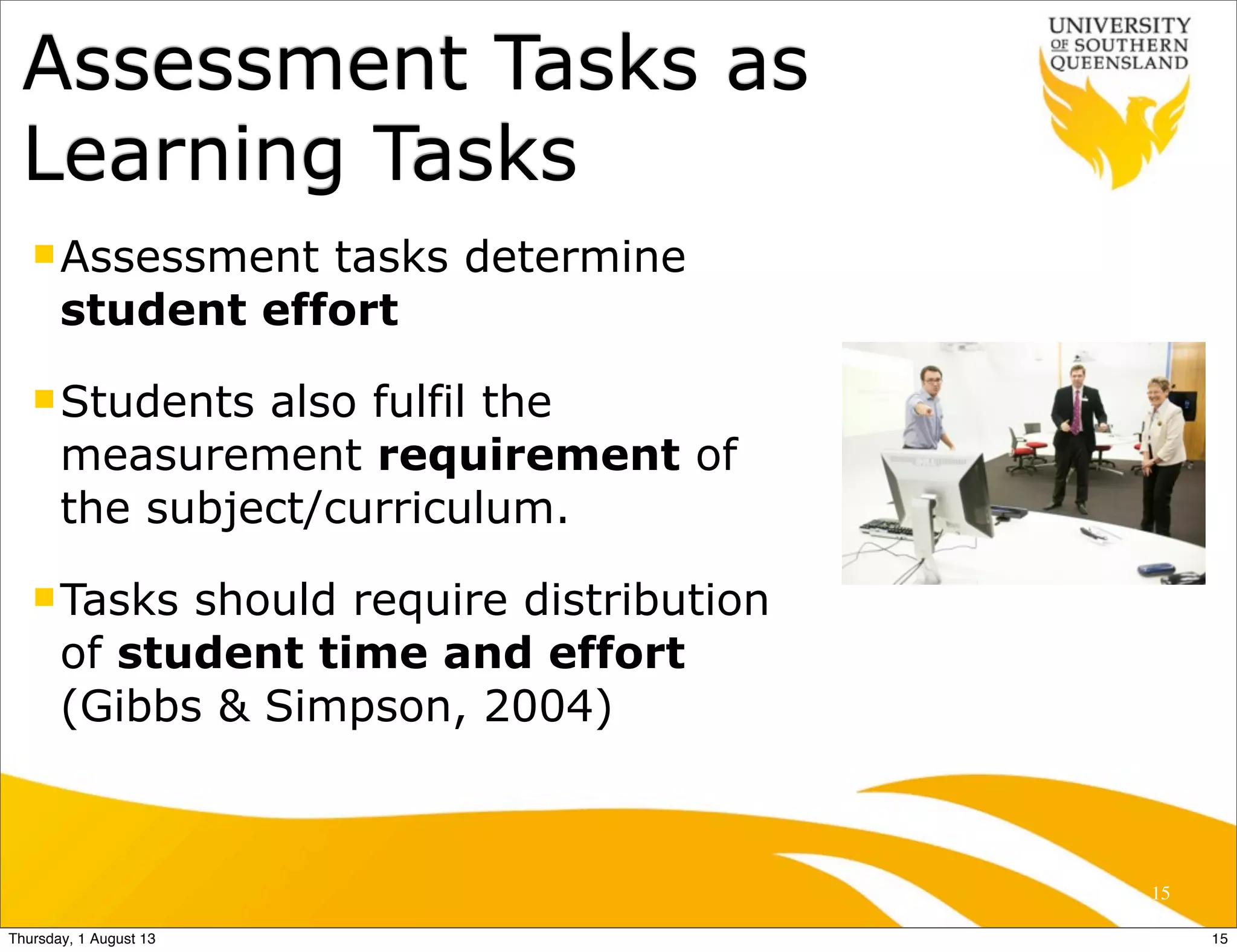
nAssessment tasks determine
student effort
nStudents also fulfil the
measurement requirement of
the subject/curriculum.
nTasks should require distribution
of student time and effort
(Gibbs & Simpson, 2004)
Assessment Tasks as
Learning Tasks
15
15Thursday, 1 August 13
Student Involvement in
Assessment
nStudents begin to learn about assessment
nStudents begin to determine the quality of
their own work
nStudents learn about reflection, peer
feedback and self-evaluation
nSome degree of student choice in
assessment tasks.
16
16Thursday, 1 August 13
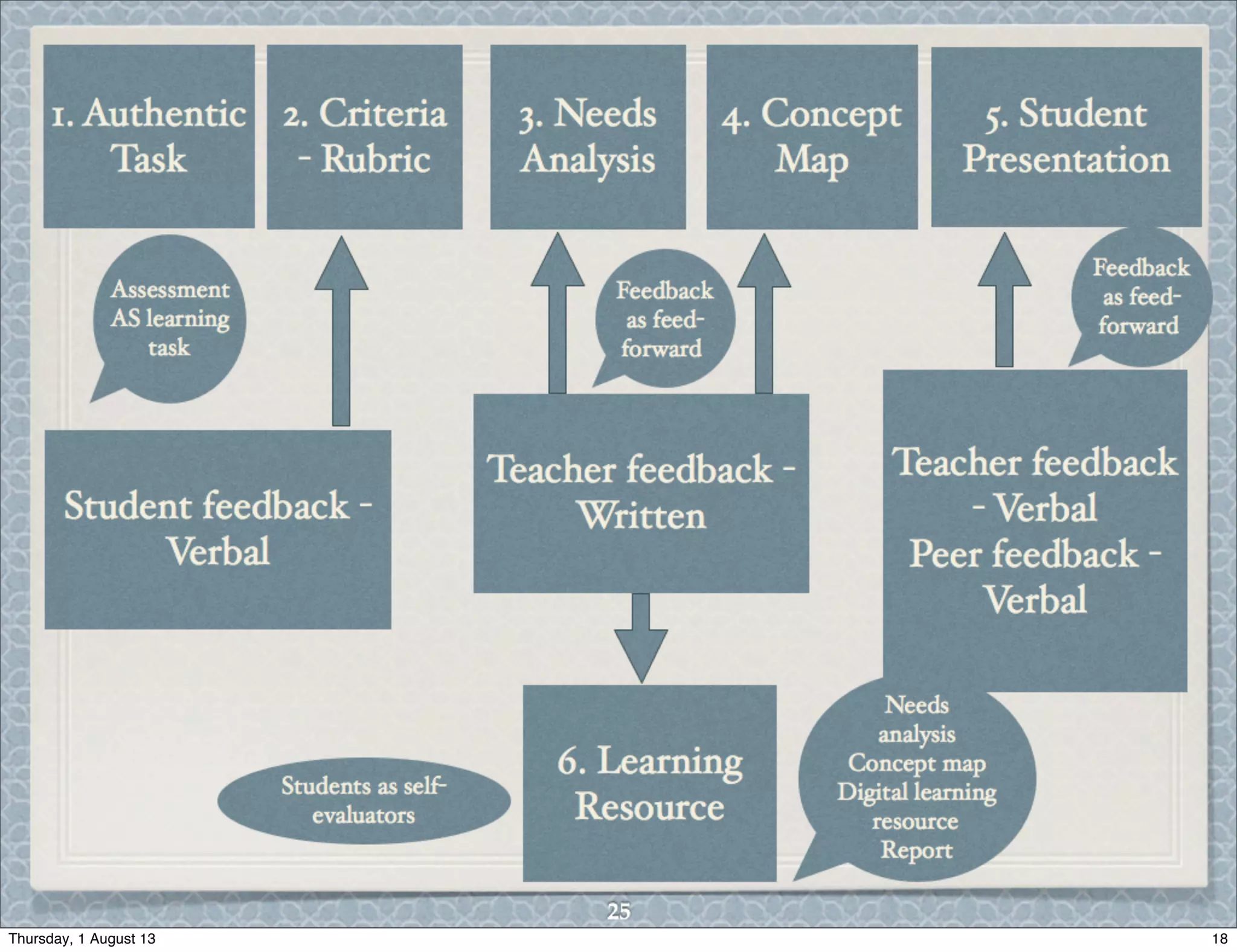
Forward-looking Feedback
nStudents need to receive appropriate feedback
which they can use to ‘feed forward’ into
future work.
nFeedback should be less final and judgemental
(Boud, 1995)
nFeedback should be more interactive and
forward-looking (Carless, 2002)
nFeedback should be timely and with a potential
to be acted upon (Gibbs & Simpson, 2004)
17
17Thursday, 1 August 13
18Thursday, 1 August 13
Personalised Learning
19Thursday, 1 August 13
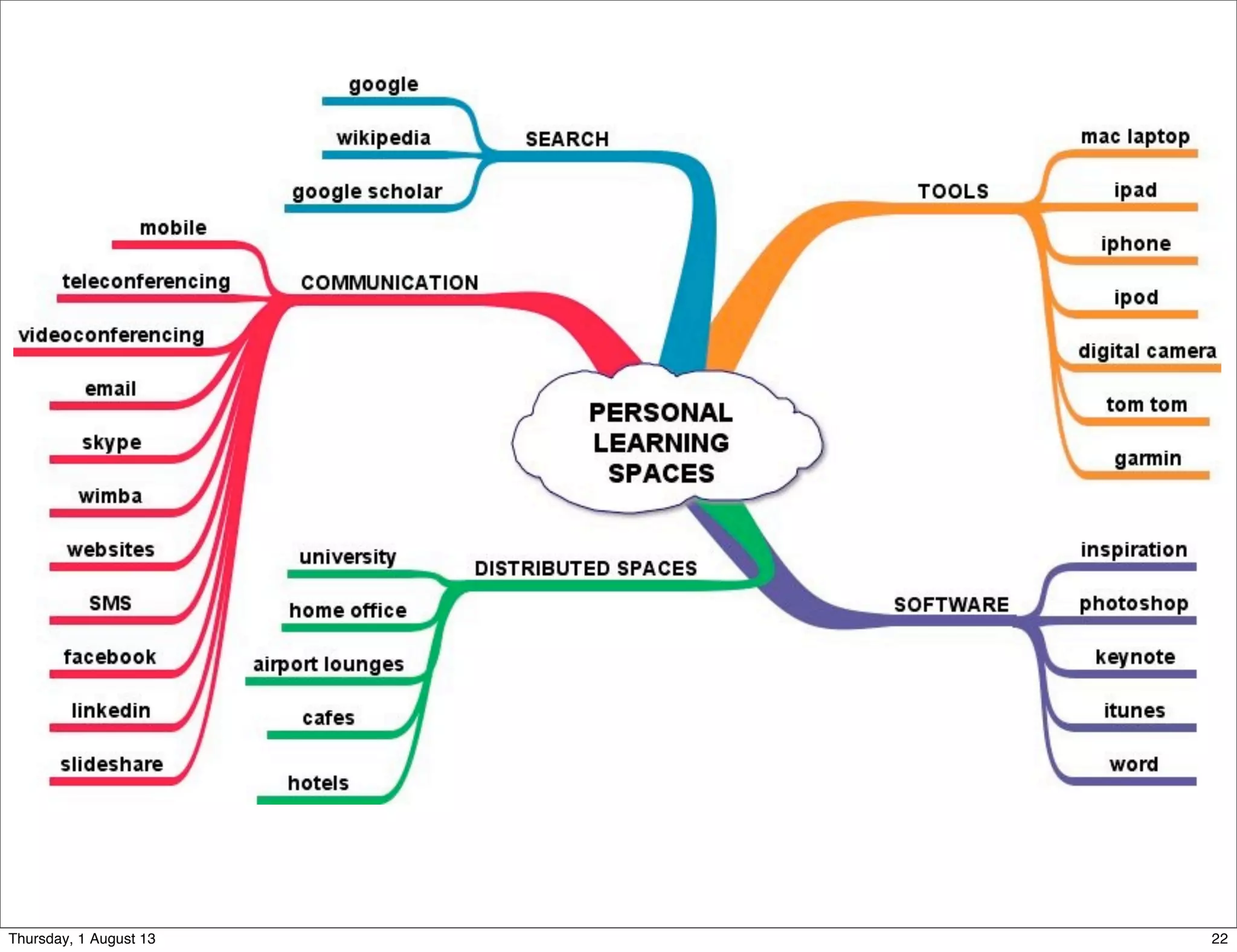
Personal Learning Spaces
‣ Integrate formal and informal learning
spaces
‣ Customised by the individual to suit their
needs
‣ Allow individuals to create their own
identities.
‣ Recognises ongoing learning and the need
for tools to support life-long and life-wide
learning.
20
20Thursday, 1 August 13
Connectivism
‣ Knowledge has changed to networks and
ecologies (Siemens, 2006).
‣ Need improved lines of communication in
networks.
‣ “Connectivism is the assertion that learning is
primarily a network-forming process” (p.
15).
21
21Thursday, 1 August 13
22Thursday, 1 August 13
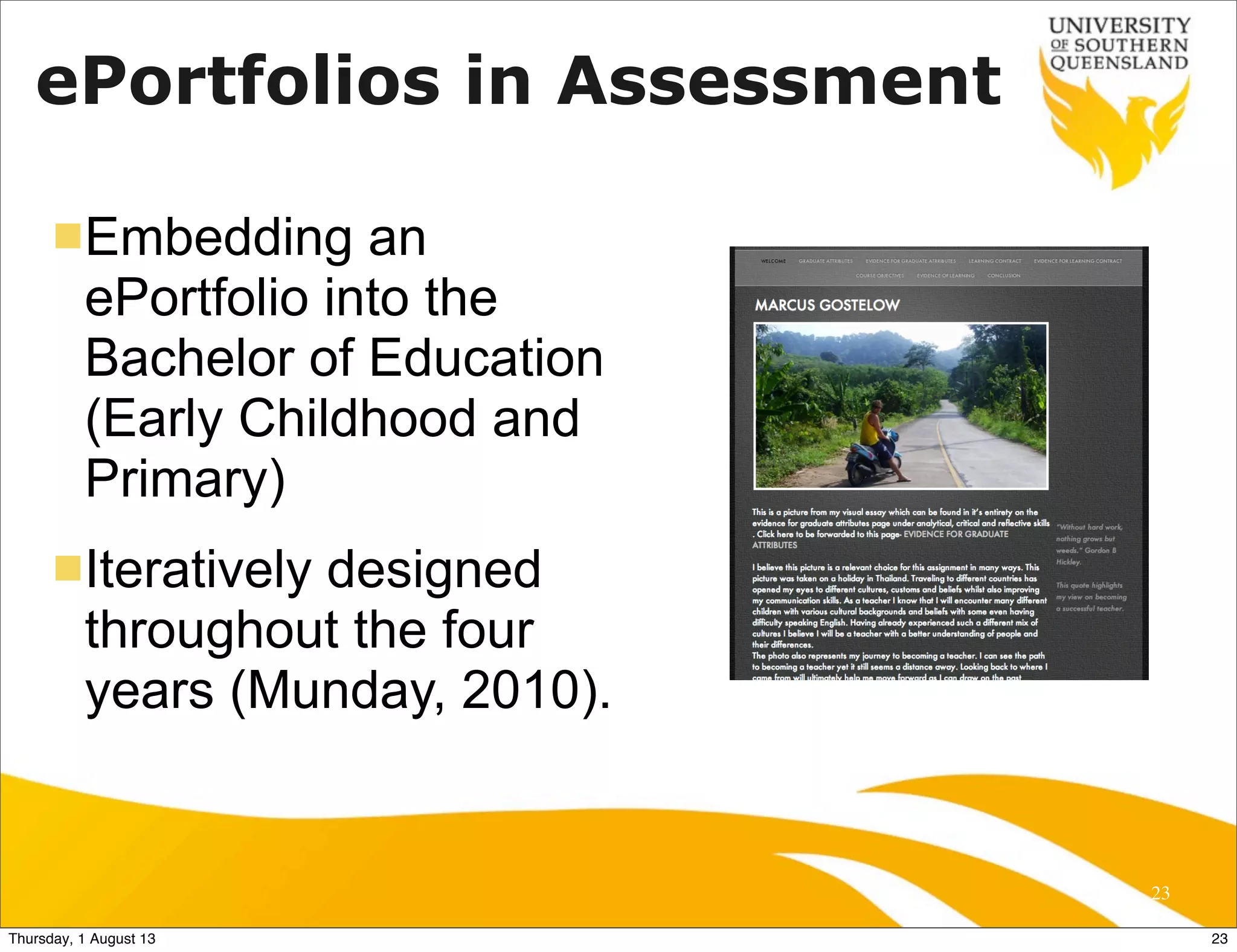
ePortfolios in Assessment
nEmbedding an
ePortfolio into the
Bachelor of Education
(Early Childhood and
Primary)
nIteratively designed
throughout the four
years (Munday, 2010).
23
!
23Thursday, 1 August 13
Types and Purposes of
ePortfolios
n Assessment - formative and summative, learning-
oriented, feed-forward
n Showcase ‘best’ work to peers, teachers, potential
employers
n Development over time to show changes in
thinking.
n Reflective - personal and professional, critical/
analytical as opposed to descriptive (Stefani,
Mason & Pegler, 2007)
24
24Thursday, 1 August 13
Embedding of
ePortfolios
nDifferent purposes of ePortfolios
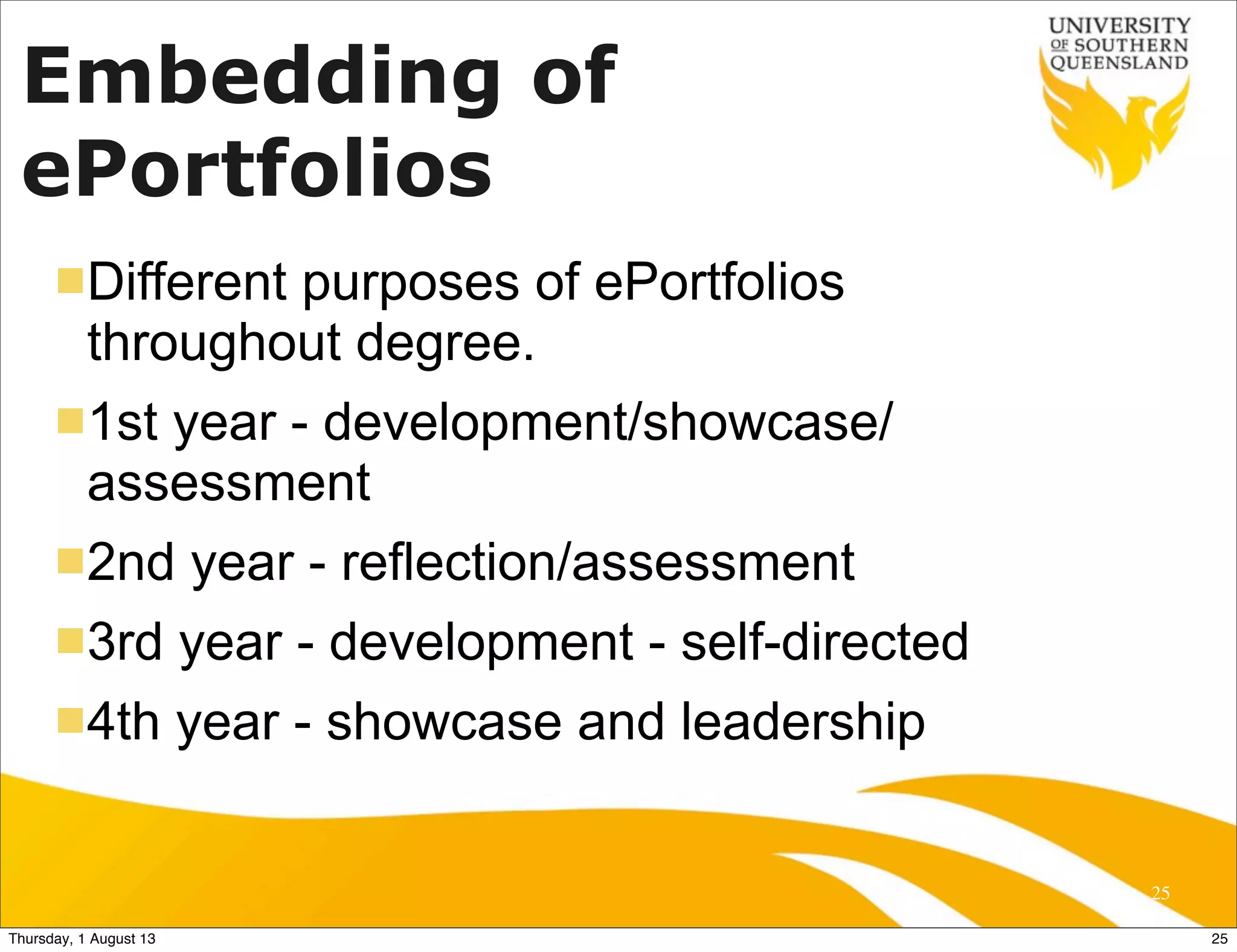
throughout degree.
n1st year - development/showcase/
assessment
n2nd year - reflection/assessment
n3rd year - development - self-directed
n4th year - showcase and leadership
25
25Thursday, 1 August 13
Characteristics of the
Assessment Task
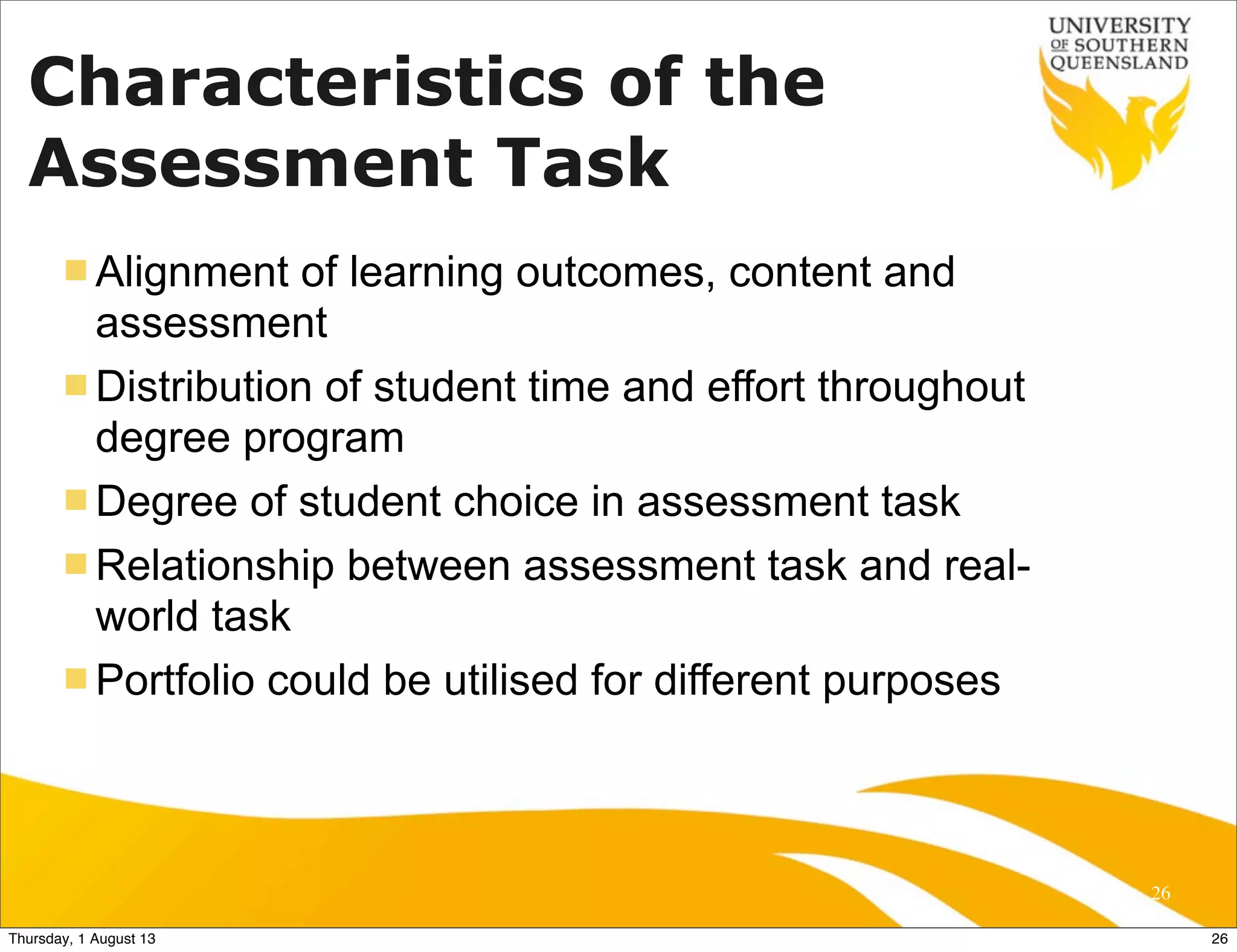
n Alignment of learning outcomes, content and
assessment
n Distribution of student time and effort throughout
degree program
n Degree of student choice in assessment task
n Relationship between assessment task and real-
world task
n Portfolio could be utilised for different purposes
26
26Thursday, 1 August 13
Challenges
27Thursday, 1 August 13
Digital Literacies
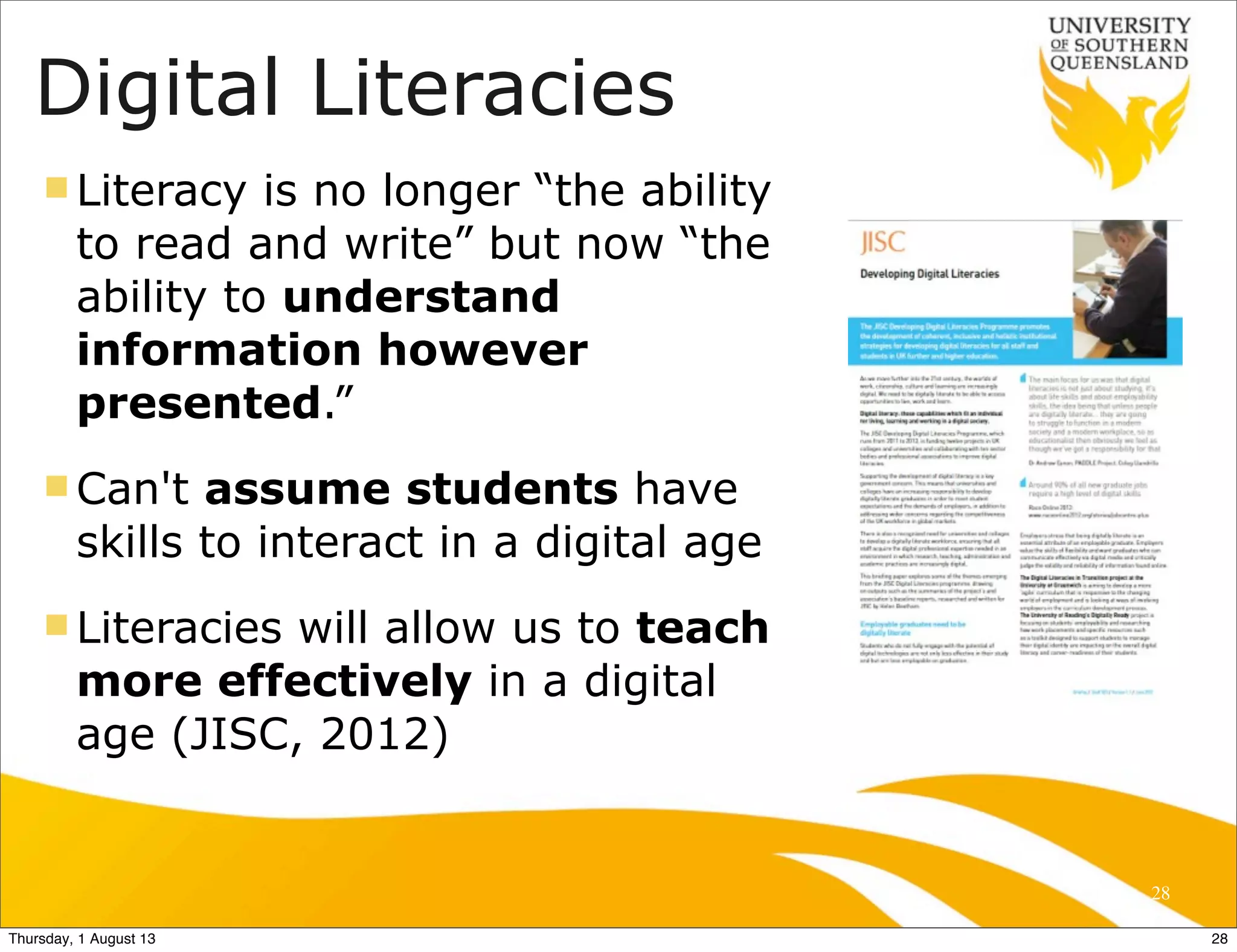
n Literacy is no longer “the ability
to read and write” but now “the
ability to understand
information however
presented.”
n Can't assume students have
skills to interact in a digital age
n Literacies will allow us to teach
more effectively in a digital
age (JISC, 2012)
28
28Thursday, 1 August 13
29Thursday, 1 August 13
Accountability and Trust
nAccountability of
assessment practices is
common due to the need
for standards
nPlagiarism and a lack of
trust may influence the
types of assessment
undertaken
30
30Thursday, 1 August 13
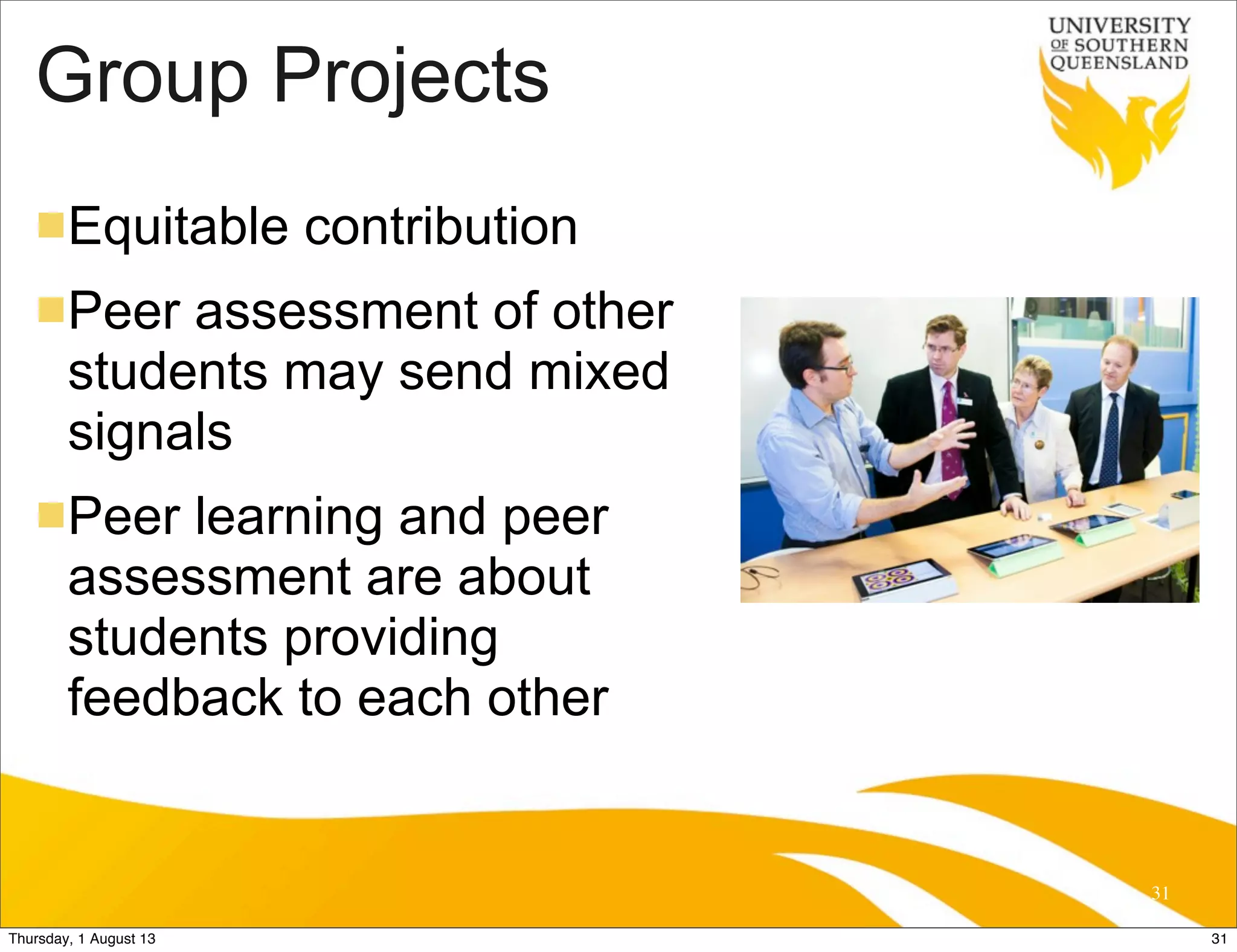
Group Projects
nEquitable contribution
nPeer assessment of other
students may send mixed
signals
nPeer learning and peer
assessment are about
students providing
feedback to each other
31
31Thursday, 1 August 13
New Mindsets
32Thursday, 1 August 13
New Mindsets
n Privileging mobile learning and
teaching access
n Embedding digital literacies into
all aspects of learning, teaching
and curriculum
n Privileging diverse places of
learning as opposed to a
singular place of learning
33
33Thursday, 1 August 13
New Mindsets
n Assisting teachers and students
to develop their own
personalised learning strategy
n Privileging user-generated
content
n Privileging learning-oriented
assessment
34
34Thursday, 1 August 13
35
Questions?
35Thursday, 1 August 13

Digital Assessment

  • 1.
    Designing Learning-oriented Assessment fora Digital Future Transforming Assessment in a Digital Era 31st July - 1st August 2013 Professor Mike Keppell Executive Director Australian Digital Futures Institute Director, Digital Futures - CRN 1Thursday, 1 August 13
  • 2.
    Overview n Trends andchallenges n New generation students n Interactions n Learning-oriented assessment n Personalised learning n Challenges n New mindsets 2 2Thursday, 1 August 13
  • 3.
    What Trends dowe Need to Consider? 3Thursday, 1 August 13
  • 4.
    Beyond Current Horizons nNetworking and connections - distributed cognition n Increasing personalisation and customisation of experience n New forms of literacy n Openness of ownership of knowledge (Jewitt, 2009). 4 4Thursday, 1 August 13
  • 5.
  • 6.
    Trends ‣ People expectto be able to work, learn, and study whenever and wherever they want. ‣ The abundance of resources and relationships will challenge our educational identity. ‣ Students want to use their own technology for learning. ‣ Personalisation - learning, teaching, place of learning and technologies 6 6Thursday, 1 August 13
  • 7.
  • 8.
  • 9.
    Owning the Placeof Learning rapport with technology mobile generate content personalise connected adapt space to their needs 9Thursday, 1 August 13
  • 10.
  • 11.
    25 Interactive learning (learner-to-content) Networkedlearning (learner-to-learner; learner-to-teacher) Student-generated content (learner-as- designers). Connected students (knowledge is in the network) Learning-oriented assessment (assessment-as-learning) Interactions 11Thursday, 1 August 13
  • 12.
  • 13.
    Assessment 2020 Assessment hasbeen most effective when: n feedback is used to actively improve student learning n students and teachers become responsible partners in learning and assessment n assessment for learning is placed at the centre of subject and program design 13 13Thursday, 1 August 13
  • 14.
    Learning-oriented Assessment Assessment tasks aslearning tasks Student involvement in assessment processes Forward-looking feedback 14Thursday, 1 August 13
  • 15.
    nAssessment tasks determine studenteffort nStudents also fulfil the measurement requirement of the subject/curriculum. nTasks should require distribution of student time and effort (Gibbs & Simpson, 2004) Assessment Tasks as Learning Tasks 15 15Thursday, 1 August 13
  • 16.
    Student Involvement in Assessment nStudentsbegin to learn about assessment nStudents begin to determine the quality of their own work nStudents learn about reflection, peer feedback and self-evaluation nSome degree of student choice in assessment tasks. 16 16Thursday, 1 August 13
  • 17.
    Forward-looking Feedback nStudents needto receive appropriate feedback which they can use to ‘feed forward’ into future work. nFeedback should be less final and judgemental (Boud, 1995) nFeedback should be more interactive and forward-looking (Carless, 2002) nFeedback should be timely and with a potential to be acted upon (Gibbs & Simpson, 2004) 17 17Thursday, 1 August 13
  • 18.
  • 19.
  • 20.
    Personal Learning Spaces ‣Integrate formal and informal learning spaces ‣ Customised by the individual to suit their needs ‣ Allow individuals to create their own identities. ‣ Recognises ongoing learning and the need for tools to support life-long and life-wide learning. 20 20Thursday, 1 August 13
  • 21.
    Connectivism ‣ Knowledge haschanged to networks and ecologies (Siemens, 2006). ‣ Need improved lines of communication in networks. ‣ “Connectivism is the assertion that learning is primarily a network-forming process” (p. 15). 21 21Thursday, 1 August 13
  • 22.
  • 23.
    ePortfolios in Assessment nEmbeddingan ePortfolio into the Bachelor of Education (Early Childhood and Primary) nIteratively designed throughout the four years (Munday, 2010). 23 ! 23Thursday, 1 August 13
  • 24.
    Types and Purposesof ePortfolios n Assessment - formative and summative, learning- oriented, feed-forward n Showcase ‘best’ work to peers, teachers, potential employers n Development over time to show changes in thinking. n Reflective - personal and professional, critical/ analytical as opposed to descriptive (Stefani, Mason & Pegler, 2007) 24 24Thursday, 1 August 13
  • 25.
    Embedding of ePortfolios nDifferent purposesof ePortfolios throughout degree. n1st year - development/showcase/ assessment n2nd year - reflection/assessment n3rd year - development - self-directed n4th year - showcase and leadership 25 25Thursday, 1 August 13
  • 26.
    Characteristics of the AssessmentTask n Alignment of learning outcomes, content and assessment n Distribution of student time and effort throughout degree program n Degree of student choice in assessment task n Relationship between assessment task and real- world task n Portfolio could be utilised for different purposes 26 26Thursday, 1 August 13
  • 27.
  • 28.
    Digital Literacies n Literacyis no longer “the ability to read and write” but now “the ability to understand information however presented.” n Can't assume students have skills to interact in a digital age n Literacies will allow us to teach more effectively in a digital age (JISC, 2012) 28 28Thursday, 1 August 13
  • 29.
  • 30.
    Accountability and Trust nAccountabilityof assessment practices is common due to the need for standards nPlagiarism and a lack of trust may influence the types of assessment undertaken 30 30Thursday, 1 August 13
  • 31.
    Group Projects nEquitable contribution nPeerassessment of other students may send mixed signals nPeer learning and peer assessment are about students providing feedback to each other 31 31Thursday, 1 August 13
  • 32.
  • 33.
    New Mindsets n Privilegingmobile learning and teaching access n Embedding digital literacies into all aspects of learning, teaching and curriculum n Privileging diverse places of learning as opposed to a singular place of learning 33 33Thursday, 1 August 13
  • 34.
    New Mindsets n Assistingteachers and students to develop their own personalised learning strategy n Privileging user-generated content n Privileging learning-oriented assessment 34 34Thursday, 1 August 13
  • 35.