Teaching-Learning Processes and
Curriculum Development
Take Off
One of the most often repeated definitions of a
curriculum is that curriculum is the total
learning experience.
This lesson will focus on the teaching learning
processes as salient components of the
curriculum.
Teaching as a process in curriculum
 Good teaching is difficult to agree upon.
 Because of the changing paradigms of teaching, several
definitions have evolved based on the theories of
teaching and learning that have come about.
 Some view teaching as an organization of meaningful
learning.
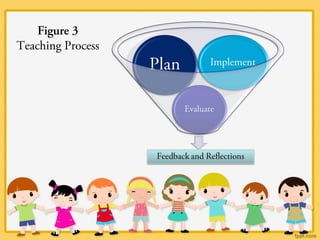
 Teaching process: PLANNING, IMPLEMENTING,
and EVALUATING.
Figure 3
Teaching Process
Implementation phase
Requires the teacher to implement what has
been planned.
Two important players: Teacher and the
Learner.
 In planning phases:
 Need of the learners
 Achievable goals and objectives to meet the needs.
 The selection of the content to be taught.
 The motivation to carry out the goals
 Strategies most fit to carry out the goals and
 The evaluation process to measure learning
outcomes.
Evaluation Phase
A match of the objectives with the learning
outcomes will be made.
The evaluation phase will answer the
question if the plans and implementation
have been successfully achieved.
 In all three phases of teaching, a continuous
process of feedback and reflection is made.
 Feedback - reflection on the feedback
 Reflection - is a process embedded in teaching
where the teacher inquires into his o her
actions and provides deep and critical
thinking.
Assumptions
That teaching is goal oriented with the change of
behaviour as the ultimate end.
That teachers are the ones who shape actively their own
actions.
That teaching is a rational and a reflective process.
That teachers by their actions can influence learners to
change their own thinking.
Process of good teaching
 Well planed and where activities are inter-related to each
other.
 Is one that provides learning experiences.
 Is based on the theories of learning.
 Is one where the learner is stimulated to think and reason.
 Utilizes prior learning and its application to new situations.
 Is governed by democratic principles.
 Embeds a sound evaluation process.
Learning as a process in Curriculum
 "To teach is to make someone to learn"
 Learning is usually defined as a change in an
individual's behaviour caused by the experiences or self
- activity.
 Behavioural learning theories
 Cognitive learning theories.
 Discovery learning of Jerome Bruner states that the
individual learns from his own discovery of the
environment.
Events of learning by Robert Gagne
Motivation phase
Apprehending phase
Acquisition phase
Retention phase
Recall phase
Generalization phase
Feedback phase
Describing learning
 Does not take place in an empty vessel.
 Is a social process.
 Is a result of individual experiences and self-activity.
 Is both observable and measurable.
 Takes place when all the senses are utilized.
 Will be enhanced when the learner is stimulated.
 Each learner has his own learning styles.
Teaching and Learning Go Together
Teaching as a process cannot be taken
independently into its entirely.
The hand concepts of learning have become so
vast that the simple stimulus-response theory
alone cannot explain it.
Teaching is the cause and effect of learning.
Some ways of doing teaching and learning
 The different methods of teaching can be clustered according to
the number of students being taught.
 Inductive method
 Deductive method
 Type study method
 Project method
 Laboratory method
 Question and answer method
 Lecture method
Ways of learning
• Learning by trial and error.
• Learning by conditioning
• Learning by insight
• Learning by observation and imitation through
modelling.
Teaching and learning in the curriculum
 One of the crucial issues raised today in education is
not what the students should learn but rather how the
student should learn how to learn.
 Teaching and learning give life and meaning to the
curriculum.
 Each complement and supplement each other.
 The value placed in teaching will reap the same value of
learning, thus a good curriculum can be judged by the
kind of teaching and the quality of learning derived
from it.
Thank You For Listening


Teaching learning processes and curriculum development

  • 1.
  • 2.
    Take Off One ofthe most often repeated definitions of a curriculum is that curriculum is the total learning experience. This lesson will focus on the teaching learning processes as salient components of the curriculum.
  • 3.
    Teaching as aprocess in curriculum  Good teaching is difficult to agree upon.  Because of the changing paradigms of teaching, several definitions have evolved based on the theories of teaching and learning that have come about.  Some view teaching as an organization of meaningful learning.  Teaching process: PLANNING, IMPLEMENTING, and EVALUATING.
  • 4.
  • 5.
    Implementation phase Requires theteacher to implement what has been planned. Two important players: Teacher and the Learner.
  • 6.
     In planningphases:  Need of the learners  Achievable goals and objectives to meet the needs.  The selection of the content to be taught.  The motivation to carry out the goals  Strategies most fit to carry out the goals and  The evaluation process to measure learning outcomes.
  • 7.
    Evaluation Phase A matchof the objectives with the learning outcomes will be made. The evaluation phase will answer the question if the plans and implementation have been successfully achieved.
  • 8.
     In allthree phases of teaching, a continuous process of feedback and reflection is made.  Feedback - reflection on the feedback  Reflection - is a process embedded in teaching where the teacher inquires into his o her actions and provides deep and critical thinking.
  • 9.
    Assumptions That teaching isgoal oriented with the change of behaviour as the ultimate end. That teachers are the ones who shape actively their own actions. That teaching is a rational and a reflective process. That teachers by their actions can influence learners to change their own thinking.
  • 10.
    Process of goodteaching  Well planed and where activities are inter-related to each other.  Is one that provides learning experiences.  Is based on the theories of learning.  Is one where the learner is stimulated to think and reason.  Utilizes prior learning and its application to new situations.  Is governed by democratic principles.  Embeds a sound evaluation process.
  • 11.
    Learning as aprocess in Curriculum  "To teach is to make someone to learn"  Learning is usually defined as a change in an individual's behaviour caused by the experiences or self - activity.  Behavioural learning theories  Cognitive learning theories.  Discovery learning of Jerome Bruner states that the individual learns from his own discovery of the environment.
  • 13.
    Events of learningby Robert Gagne Motivation phase Apprehending phase Acquisition phase Retention phase Recall phase Generalization phase Feedback phase
  • 14.
    Describing learning  Doesnot take place in an empty vessel.  Is a social process.  Is a result of individual experiences and self-activity.  Is both observable and measurable.  Takes place when all the senses are utilized.  Will be enhanced when the learner is stimulated.  Each learner has his own learning styles.
  • 15.
    Teaching and LearningGo Together Teaching as a process cannot be taken independently into its entirely. The hand concepts of learning have become so vast that the simple stimulus-response theory alone cannot explain it. Teaching is the cause and effect of learning.
  • 16.
    Some ways ofdoing teaching and learning  The different methods of teaching can be clustered according to the number of students being taught.  Inductive method  Deductive method  Type study method  Project method  Laboratory method  Question and answer method  Lecture method
  • 17.
    Ways of learning •Learning by trial and error. • Learning by conditioning • Learning by insight • Learning by observation and imitation through modelling.
  • 18.
    Teaching and learningin the curriculum  One of the crucial issues raised today in education is not what the students should learn but rather how the student should learn how to learn.  Teaching and learning give life and meaning to the curriculum.  Each complement and supplement each other.  The value placed in teaching will reap the same value of learning, thus a good curriculum can be judged by the kind of teaching and the quality of learning derived from it.
  • 19.
    Thank You ForListening 