WELCOME
SEMINAR ON
LYDIA HALLS
THEORY
PRESENTED BY,
UMADEVI.K
IST YEAR MSC NURSING
THE OXFORD COLLEGE OF NURSING
BENGALURU
THEORY
A theory refers to a coherent group of general
prepositions used as principles of explanation
Or
A set of statements or principles devised to
explain a group of facts or phenomena,
especially one that has been repeatedly tested
or is widely accepted and can be used to make
predictions about natural phenomena.
NURSING THEORY
 NURSING theory is the set of
concepts,definitions,relationships
 and assumptions or prepositions
 derived from nursing models or
 other disiplines and project a
purposive,systematic view of
 phenomena by designing specific
interrelationship among concepts
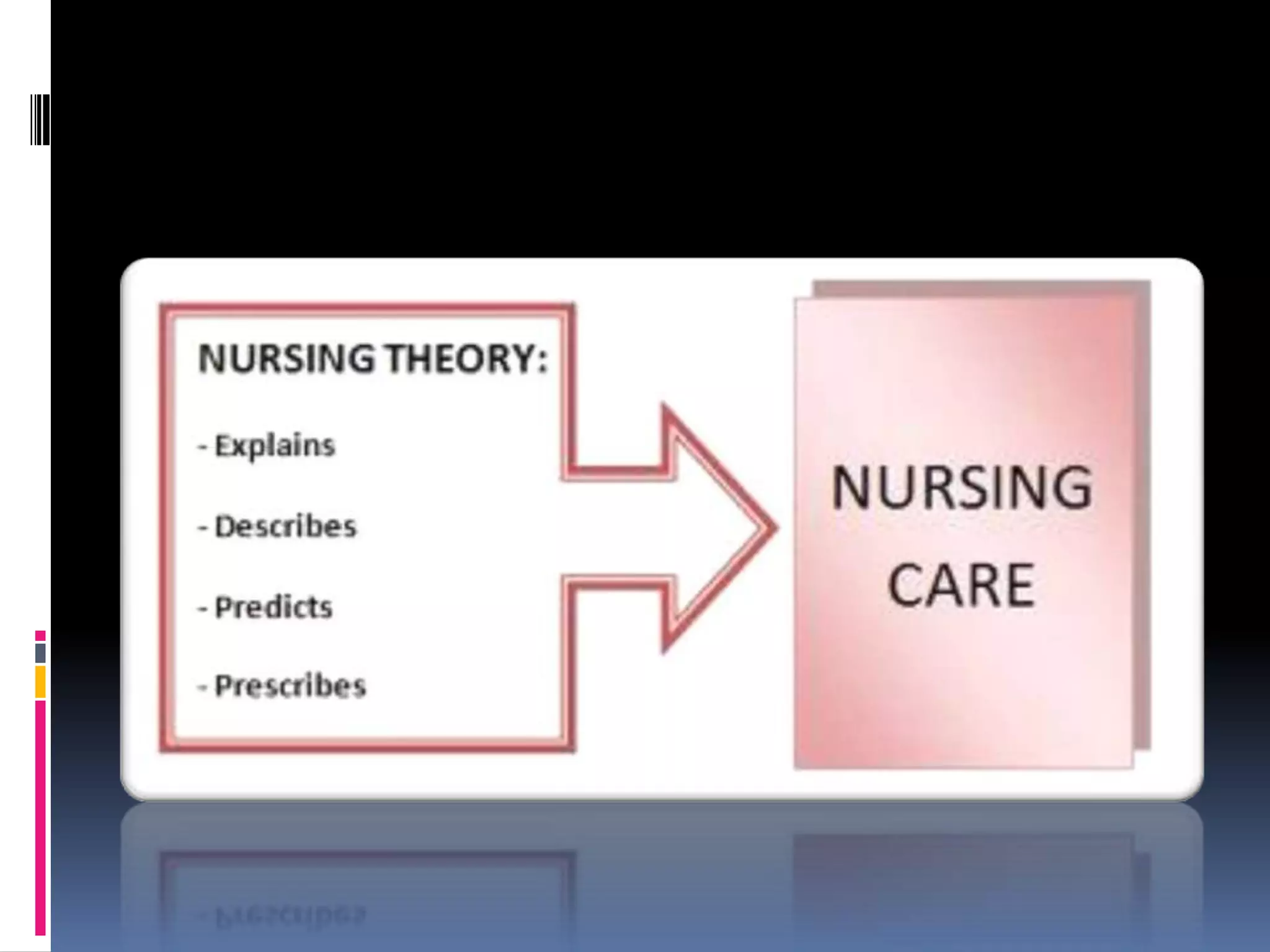
 for the purpose of
describing,explaining,predicting
 or prescribing.
LYDIA HALLS
THEORY
LYDIA HALLS
THE THEORIST – LYDIA HALL
 was born in New York City on September

21, 1906.
 Basic nursing education in 1927
 Bachelors in Public Health Nursing in 1937
 Masters in teaching Natural Sciences in
1942
 First director of Loeb Center for Nursing
 Nursing experience in clinical, education,
research and supervisor role
Theory Overview
 Theory developed in late 1960’s
 Nursing care can be delivered on three

interlocking levels
 Care = Hands on bodily care
 Core = Using self in relationship to patient
 Cure = The disease applying medical
knowledge
 Patient care from only trained nurses
 Defines nursing as care performed by a

trained professional
 Care focused on individuals, families and
communities
 Care focused on maintaining optimal health
and quality life from birth to end of life
 Care is ongoing matrix of learning and
teaching
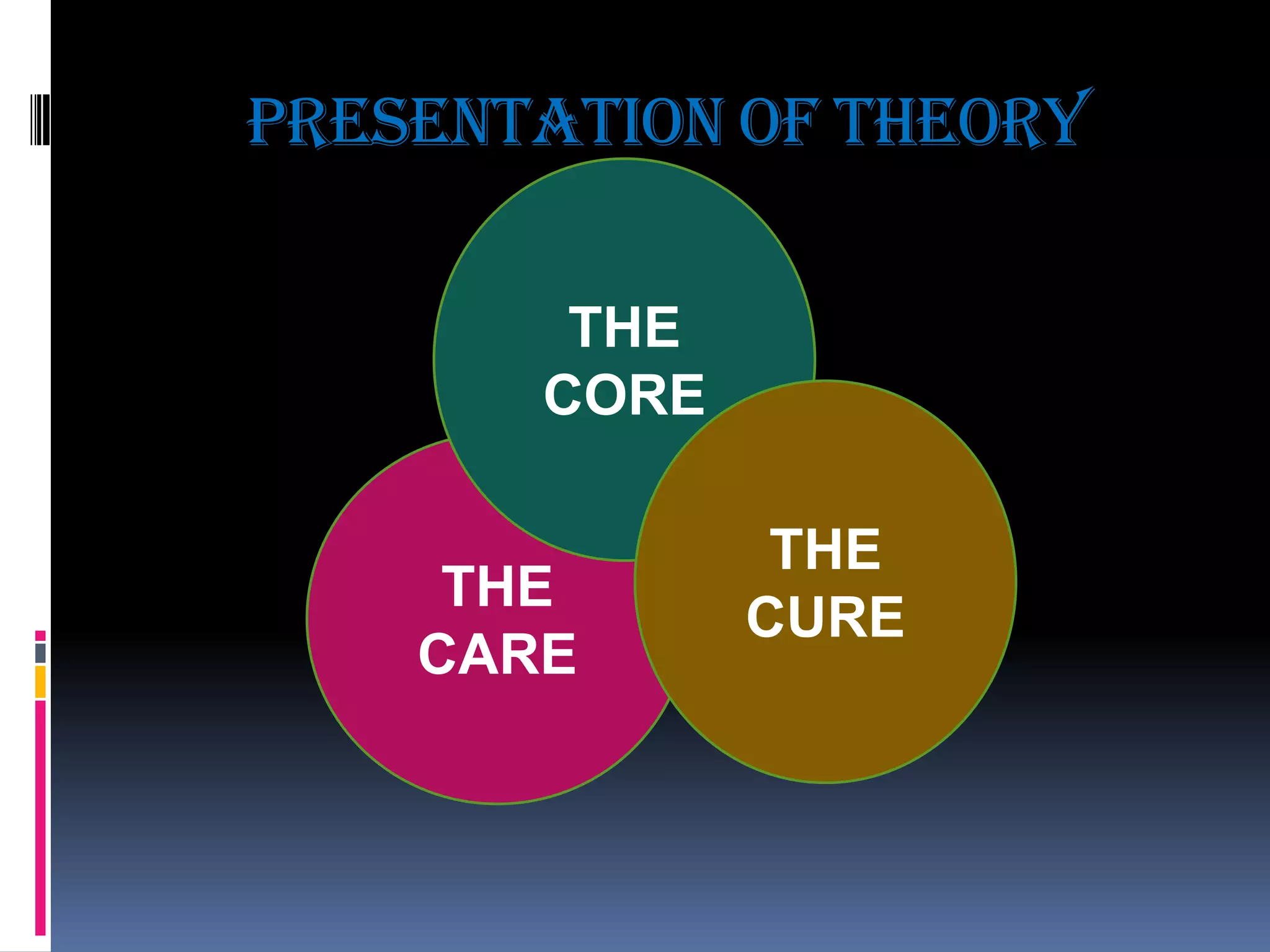
PRESENTATION OF THEORY
THE
CORE
THE
CARE

THE
CURE
Care Circle

THE CARE
Care
 Nurturing component of care
 It is exclusive to nursing

 “Mothering”
 Provides teaching and learning activities
 Nurses goal is to “comfort” the patient

 Patient may explore and share feelings with
nurse
 Nurse is concerned with intimate bodily

care
 Nurse applies knowledge of natuaral and

biological sciences
 Nurse act as potential comforter
 INTERPERSONAL RELATIONSHIP

 EXPLORATION OF FEELINGS
CORE CIRCLE

THE
CORE
Core
 Patient care is based on social sciences
 Therapeutic use of self
 Helps patient learn their role is in the

healing process
 Patient is able to maintain who they are
 Patient able to develop a maturity level
when nurse listens to them and acts as
sounding board
 Patient able to make informed decisions
 Emphasis on social,emotional,spiritual and

intellectual needs
 Patient makes more rapid progress towards
recovery and rehabilitation

INTERPERSONAL PROCESS

UNDERSTANDING
THEMSELVES

PROBLEM FOCUSSING AND
PROBLEM SOLVING
CURE CIRCLE

THE
CURE
Cure
 Care based on pathological and therapeutic
sciences
 Application of medical knowledge by nurses
 Nurse assisting the doctor in performing tasks
 Nurse is patient advocate in this area
 Nurse is a patient advocate
 Nurses role changes from positive quality to
negative quality
 Medical surgical and rehabilitative care
 COPERATE WITH FAMILIES OR CARE
GIVERS
Interaction All Three
Aspects

THE CORE

THE CARE

THE
CURE
 Emphasis placed on the importance of total

person
 Importance placed on all three aspects

functioning together
 All three aspects interact and change in size
HALLS THEORY AND NURSING
PARADIGMS





INDIVIDUAL
HEALTH
ENVIRONMENT
NURSING
HALLS THEORY AND NURSING
PROCESS






ASSESMENT
NURSING DIAGNOSIS
PLANNING
IMPLEMENTATION
EVALUATION
LIMITATIONS
 ACUTE STAGE ILLNESS PATIENTS ARE
NOT INCLUDED

 ONLY REFERS ADULT PATIENTS
 ONLY TOOL OF THERAPEUTIC
COMMUNICATION IS REFLECTION
 FAMILY MENTIONED ONLY IN CURE
CIRCLE
 RELATES ONLY TO THOSE WHO ARE ILL
 WAS NOT PLEASED WITH CONCEPT OF
“TEAM NURSING”
APPLICATIONS
 IN BUERGERS DISEASE

 IN OPERATING ROOM
 IN CRITICAL CARE UNIT
 IN NURSING EDUCATION

 IN COMMUNITY HEALTH NURSING
 IN DIALYSIS UNIT
CONCLUSION
SUMMARY
 THEORY
 NURSING THEORY

 LYDIA HALLS THEORY
 CARE
 CORE

 CURE
 PARADIGMS
 NURSING PROCESS

 LIMITATIONS
 APPLICATIONS OF THEORY
THANK UUUUUUU…..

lydia Halls theory

  • 1.
  • 2.
    SEMINAR ON LYDIA HALLS THEORY PRESENTEDBY, UMADEVI.K IST YEAR MSC NURSING THE OXFORD COLLEGE OF NURSING BENGALURU
  • 3.
    THEORY A theory refersto a coherent group of general prepositions used as principles of explanation Or A set of statements or principles devised to explain a group of facts or phenomena, especially one that has been repeatedly tested or is widely accepted and can be used to make predictions about natural phenomena.
  • 5.
    NURSING THEORY  NURSINGtheory is the set of concepts,definitions,relationships  and assumptions or prepositions  derived from nursing models or  other disiplines and project a purposive,systematic view of  phenomena by designing specific interrelationship among concepts  for the purpose of describing,explaining,predicting  or prescribing.
  • 7.
  • 8.
  • 9.
    THE THEORIST –LYDIA HALL  was born in New York City on September 21, 1906.  Basic nursing education in 1927  Bachelors in Public Health Nursing in 1937  Masters in teaching Natural Sciences in 1942  First director of Loeb Center for Nursing  Nursing experience in clinical, education, research and supervisor role
  • 10.
    Theory Overview  Theorydeveloped in late 1960’s  Nursing care can be delivered on three interlocking levels  Care = Hands on bodily care  Core = Using self in relationship to patient  Cure = The disease applying medical knowledge  Patient care from only trained nurses
  • 11.
     Defines nursingas care performed by a trained professional  Care focused on individuals, families and communities  Care focused on maintaining optimal health and quality life from birth to end of life  Care is ongoing matrix of learning and teaching
  • 12.
  • 13.
  • 14.
    Care  Nurturing componentof care  It is exclusive to nursing  “Mothering”  Provides teaching and learning activities  Nurses goal is to “comfort” the patient  Patient may explore and share feelings with nurse
  • 15.
     Nurse isconcerned with intimate bodily care  Nurse applies knowledge of natuaral and biological sciences  Nurse act as potential comforter
  • 16.
     INTERPERSONAL RELATIONSHIP EXPLORATION OF FEELINGS
  • 17.
  • 18.
    Core  Patient careis based on social sciences  Therapeutic use of self  Helps patient learn their role is in the healing process  Patient is able to maintain who they are  Patient able to develop a maturity level when nurse listens to them and acts as sounding board  Patient able to make informed decisions
  • 19.
     Emphasis onsocial,emotional,spiritual and intellectual needs  Patient makes more rapid progress towards recovery and rehabilitation  INTERPERSONAL PROCESS UNDERSTANDING THEMSELVES PROBLEM FOCUSSING AND PROBLEM SOLVING
  • 20.
  • 21.
    Cure  Care basedon pathological and therapeutic sciences  Application of medical knowledge by nurses  Nurse assisting the doctor in performing tasks  Nurse is patient advocate in this area  Nurse is a patient advocate  Nurses role changes from positive quality to negative quality  Medical surgical and rehabilitative care  COPERATE WITH FAMILIES OR CARE GIVERS
  • 22.
    Interaction All Three Aspects THECORE THE CARE THE CURE
  • 23.
     Emphasis placedon the importance of total person  Importance placed on all three aspects functioning together  All three aspects interact and change in size
  • 24.
    HALLS THEORY ANDNURSING PARADIGMS     INDIVIDUAL HEALTH ENVIRONMENT NURSING
  • 25.
    HALLS THEORY ANDNURSING PROCESS      ASSESMENT NURSING DIAGNOSIS PLANNING IMPLEMENTATION EVALUATION
  • 26.
    LIMITATIONS  ACUTE STAGEILLNESS PATIENTS ARE NOT INCLUDED  ONLY REFERS ADULT PATIENTS  ONLY TOOL OF THERAPEUTIC COMMUNICATION IS REFLECTION  FAMILY MENTIONED ONLY IN CURE CIRCLE  RELATES ONLY TO THOSE WHO ARE ILL  WAS NOT PLEASED WITH CONCEPT OF “TEAM NURSING”
  • 27.
    APPLICATIONS  IN BUERGERSDISEASE  IN OPERATING ROOM  IN CRITICAL CARE UNIT  IN NURSING EDUCATION  IN COMMUNITY HEALTH NURSING  IN DIALYSIS UNIT
  • 28.
  • 29.
    SUMMARY  THEORY  NURSINGTHEORY  LYDIA HALLS THEORY  CARE  CORE  CURE  PARADIGMS  NURSING PROCESS  LIMITATIONS  APPLICATIONS OF THEORY
  • 30.