Lydia HallCare, Core, and Cure
Lydia HallBasic nursing education in 1972Bachelors in Public Health Nursing in 1973Masters in teaching Natural Sciences in 1942First director of Loeb Center for NursingNursing experience in clinical, education, research and supervisor roleNursing Philosophy based on patient care
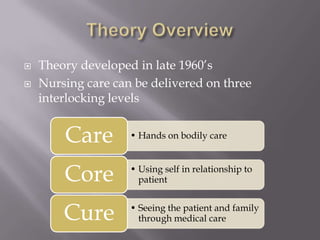
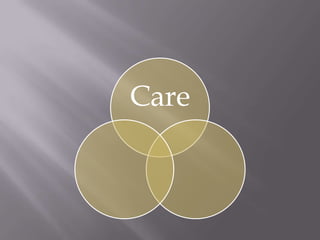
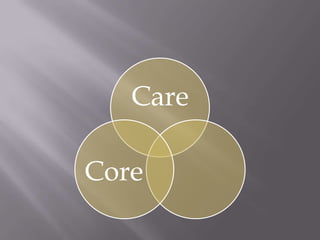
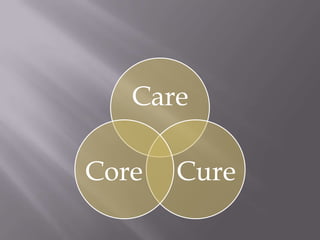
Theory OverviewTheory developed in late 1960’sNursing care can be delivered on three interlocking levels
Theory continuedPatient care only from trained nursesDefines nursing as care performed by a professionalCare focused on individuals, families and communitiesCare focused on maintaining optimal health and quality life from birth to end of life
Care Nurturing component of care and is exclusive to nursing “mothering” (care and comfort of the person)Provides teaching and learning activitiesNurses goal is to give “care” and “comfort” to the patientNurse provides bodily care for the patientPatient may explore and share feelings with the nurseWhen functioning in the care circle, the nurse applies knowledge of the natural and biological sciences.The patient views the nurse as a potential comforter, one who provides care and comfort through the laying of hands.
Core Patient care is based on social sciencesInvolves the use of therapeutic use of self, and is shared with other members of the teamBy developing an interpersonal relationship with the patient, the nurse is able to help the patient verbally express feelings regarding the disease process and its effects.Patient is able to gain self-identity and further develop maturity.Patient is able to make conscious decisions
Cure Care based on pathological and therapeutic sciencesNurse helps patient through the medical, surgical and rehabilitative prescriptions made by the physician The cure aspect is different from the care circle because many of the nurse’s actions take on a negative quality of avoidance of pain rather than a positive quality of comforting.Nurses role changes to positive quality to negative quality.
Interaction of All Three AspectsEmphasis placed on the importance of total person.Importance placed on all three aspects functioning togetherAll three aspects interact and change in sizeSize of the circles represents the degree to which the patient is progressing.
Hall’s Nursing’s MetaparadigmIndividualHuman who is 16 years older and past the acute stage of long-term illness is the focus of nursing care in Hall’s work.Hall emphasizes the importance of an individual as unique, capable of growth and learning, and requiring a total person approach.
Health Inferred to be a state of self-awareness with conscious selection of behaviors.Hall stresses the need to help the person explore the meaning of his or her behavior to identify and overcome problems through developing self-identity and maturity.
NursingIdentified as consisting participation in the care, core, and cure aspects of patient care.Care is the sole function of nurses.Major purpose of care is to achieve an interpersonal relationship with the individual.
Lydia hall

Lydia hall

  • 1.
  • 2.
    Lydia HallBasic nursingeducation in 1972Bachelors in Public Health Nursing in 1973Masters in teaching Natural Sciences in 1942First director of Loeb Center for NursingNursing experience in clinical, education, research and supervisor roleNursing Philosophy based on patient care
  • 3.
    Theory OverviewTheory developedin late 1960’sNursing care can be delivered on three interlocking levels
  • 4.
    Theory continuedPatient careonly from trained nursesDefines nursing as care performed by a professionalCare focused on individuals, families and communitiesCare focused on maintaining optimal health and quality life from birth to end of life
  • 6.
    Care Nurturing componentof care and is exclusive to nursing “mothering” (care and comfort of the person)Provides teaching and learning activitiesNurses goal is to give “care” and “comfort” to the patientNurse provides bodily care for the patientPatient may explore and share feelings with the nurseWhen functioning in the care circle, the nurse applies knowledge of the natural and biological sciences.The patient views the nurse as a potential comforter, one who provides care and comfort through the laying of hands.
  • 8.
    Core Patient careis based on social sciencesInvolves the use of therapeutic use of self, and is shared with other members of the teamBy developing an interpersonal relationship with the patient, the nurse is able to help the patient verbally express feelings regarding the disease process and its effects.Patient is able to gain self-identity and further develop maturity.Patient is able to make conscious decisions
  • 10.
    Cure Care basedon pathological and therapeutic sciencesNurse helps patient through the medical, surgical and rehabilitative prescriptions made by the physician The cure aspect is different from the care circle because many of the nurse’s actions take on a negative quality of avoidance of pain rather than a positive quality of comforting.Nurses role changes to positive quality to negative quality.
  • 11.
    Interaction of AllThree AspectsEmphasis placed on the importance of total person.Importance placed on all three aspects functioning togetherAll three aspects interact and change in sizeSize of the circles represents the degree to which the patient is progressing.
  • 12.
    Hall’s Nursing’s MetaparadigmIndividualHumanwho is 16 years older and past the acute stage of long-term illness is the focus of nursing care in Hall’s work.Hall emphasizes the importance of an individual as unique, capable of growth and learning, and requiring a total person approach.
  • 13.
    Health Inferred tobe a state of self-awareness with conscious selection of behaviors.Hall stresses the need to help the person explore the meaning of his or her behavior to identify and overcome problems through developing self-identity and maturity.
  • 14.
    NursingIdentified as consistingparticipation in the care, core, and cure aspects of patient care.Care is the sole function of nurses.Major purpose of care is to achieve an interpersonal relationship with the individual.