
Chapter four
Theoretical foundations in Nursing
practice
Omar Osman Eid
Lecturer
Faculty of Medicine & Health Science
Somali National University
Nursing foundation
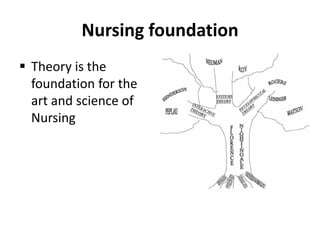
 Theory is the
foundation for the
art and science of
Nursing
Theory
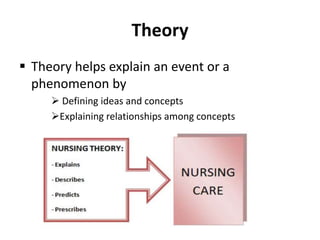
 Theory helps explain an event or a
phenomenon by
 Defining ideas and concepts
Explaining relationships among concepts
Nursing Theory
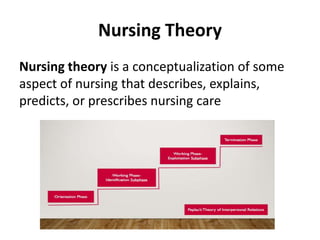
Nursing theory is a conceptualization of some
aspect of nursing that describes, explains,
predicts, or prescribes nursing care
The domain of Nursing
 The Domain of Nursing is the perspective of a
profession or professional territory.
Nursing Paradigm
 A paradigm is a pattern of thought that is
useful in describing the domain of a discipline.
 The paradigm of nursing includes four links:
the person, health, environment/situation,
and nursing
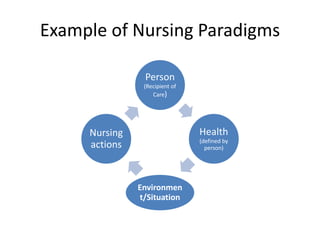
Example of Nursing Paradigms
Person
(Recipient of
Care)
Health
(defined by
person)
Environmen
t/Situation
Nursing
actions
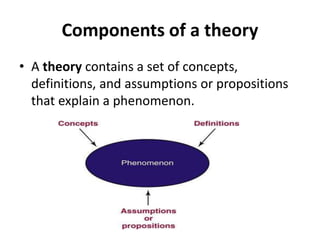
Components of a theory
• A theory contains a set of concepts,
definitions, and assumptions or propositions
that explain a phenomenon.
Phenomenon
 Nursing theories focus on the phenomena of
nursing and nursing care. A phenomenon is
the term, description, or label given to
describe an idea or responses about an event.
 Examples include caring, self-care, and patient
responses to stress.
Concepts.
• A theory also consists of interrelated
concepts. These concepts can be simple or
complex and relate to an object or event that
comes from individual perceptual experiences
Definitions
 The definitions within a theory communicate
the general meaning of the concepts.
Assumptions
 Assumptions are the “taken-for-granted”
statements that explain the nature of the
concepts, definitions, purpose, relationships,
and structure of a theory
Types of Theory
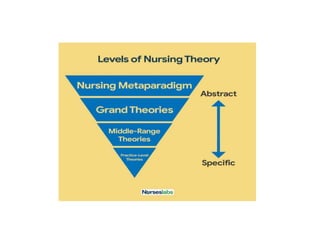
Grand theories
 Systematic and broad in scope, complex, and
therefore require further specification through
research.
 A grand theory does not provide guidance for
specific nursing interventions; but it provides
the structural framework for a broad and
abstract ideas about nursing.
 e.g. Neuman’s systems model
Cont..
Middle-range theories
 Are more limited in scope and less abstract.
They address a specific phenomenon and
reflect practice
Cont..
Descriptive theories
 Are the first level of theory development.
They describe phenomena, identifies
circumstances in which phenomena occur
Cont..
Prescriptive theories address nursing
interventions for a phenomenon, describe the
conditions under which the prescription (i.e.,
nursing interventions) occurs, and predict the
consequences
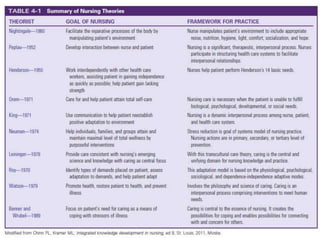
SELECTED NURSING THEORIES
• Definitions and theories of nursing can help
you understand the practice of nursing.
selected theories and their concepts
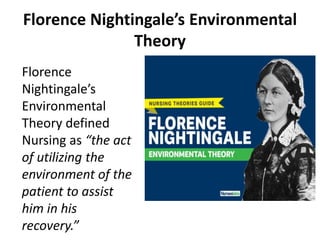
Florence Nightingale’s Environmental
Theory
Florence
Nightingale’s
Environmental
Theory defined
Nursing as “the act
of utilizing the
environment of the
patient to assist
him in his
recovery.”
Peplau’s theory
 Hildegard E. Peplau’s theory defined Nursing
as “An interpersonal process of therapeutic
interactions between an individual who is sick
or in need of health services and a nurse
especially educated to recognize, respond to
the need for help.”
Peplau’s theory
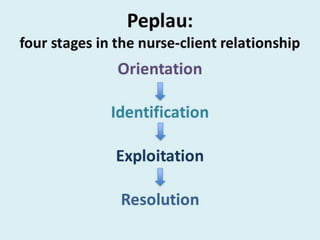
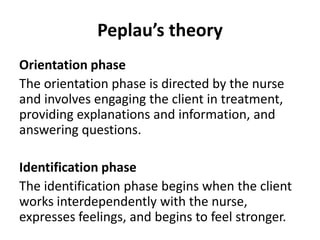
Orientation phase
The orientation phase is directed by the nurse
and involves engaging the client in treatment,
providing explanations and information, and
answering questions.
Identification phase
The identification phase begins when the client
works interdependently with the nurse,
expresses feelings, and begins to feel stronger.
Cont..
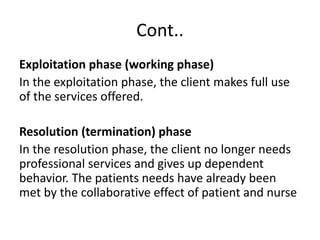
Exploitation phase (working phase)
In the exploitation phase, the client makes full use
of the services offered.
Resolution (termination) phase
In the resolution phase, the client no longer needs
professional services and gives up dependent
behavior. The patients needs have already been
met by the collaborative effect of patient and nurse
REVIEW QUESTIONS
• Which of the following are components of the
paradigm of nursing?
A. The person, health, environment, and theory
B. Health, theory, concepts, and environment
C. Nurses, physicians, health, and patient needs
D. The person, health, environment/situation,
and nursing
Cont..
• A theory is a set of concepts, definitions,
relationships, and assumptions that:
A. Formulate legislation.
B. Explain a phenomenon.
C. Measure nursing functions.
D. Reflect the domain of nursing practice.
Chapter five
Health and Wellness
Omar Osman Eid
Lecturer
FAMHS. JUS
Definition of Health
• Defining health is difficult.
• The World Health Organization (WHO) defines
health as a “state of complete physical,
mental, and social well-being, not merely the
absence of disease or infirmity”
• But Each person has a personal concept of
Health.
MODELS OF HEALTH AND ILLNESS
• A model is a theoretical way of understanding
a concept or idea.
• Models represent different ways of
approaching complex issues. Because health
and illness are complex concepts, models are
used to understand the relationships between
these concepts and the patient’s attitudes
toward health and health behaviors.
Health Belief Model
 Health belief model (Fig. 6-1) addresses the
relationship between a person’s beliefs and
behaviors. The health belief model helps you
understand factors influencing patients’
perceptions, beliefs, and behavior to plan care
that will most effectively assist patients in
maintaining or restoring health and
preventing illness
Continued

Chapter four. Theoretical found. in nursing practice

  • 1.
    Chapter four Theoretical foundationsin Nursing practice Omar Osman Eid Lecturer Faculty of Medicine & Health Science Somali National University
  • 2.
    Nursing foundation  Theoryis the foundation for the art and science of Nursing
  • 3.
    Theory  Theory helpsexplain an event or a phenomenon by  Defining ideas and concepts Explaining relationships among concepts
  • 4.
    Nursing Theory Nursing theoryis a conceptualization of some aspect of nursing that describes, explains, predicts, or prescribes nursing care
  • 5.
    The domain ofNursing  The Domain of Nursing is the perspective of a profession or professional territory.
  • 6.
    Nursing Paradigm  Aparadigm is a pattern of thought that is useful in describing the domain of a discipline.  The paradigm of nursing includes four links: the person, health, environment/situation, and nursing
  • 7.
    Example of NursingParadigms Person (Recipient of Care) Health (defined by person) Environmen t/Situation Nursing actions
  • 8.
    Components of atheory • A theory contains a set of concepts, definitions, and assumptions or propositions that explain a phenomenon.
  • 9.
    Phenomenon  Nursing theoriesfocus on the phenomena of nursing and nursing care. A phenomenon is the term, description, or label given to describe an idea or responses about an event.  Examples include caring, self-care, and patient responses to stress.
  • 10.
    Concepts. • A theoryalso consists of interrelated concepts. These concepts can be simple or complex and relate to an object or event that comes from individual perceptual experiences
  • 11.
    Definitions  The definitionswithin a theory communicate the general meaning of the concepts.
  • 12.
    Assumptions  Assumptions arethe “taken-for-granted” statements that explain the nature of the concepts, definitions, purpose, relationships, and structure of a theory
  • 13.
    Types of Theory Grandtheories  Systematic and broad in scope, complex, and therefore require further specification through research.  A grand theory does not provide guidance for specific nursing interventions; but it provides the structural framework for a broad and abstract ideas about nursing.  e.g. Neuman’s systems model
  • 15.
    Cont.. Middle-range theories  Aremore limited in scope and less abstract. They address a specific phenomenon and reflect practice
  • 16.
    Cont.. Descriptive theories  Arethe first level of theory development. They describe phenomena, identifies circumstances in which phenomena occur
  • 17.
    Cont.. Prescriptive theories addressnursing interventions for a phenomenon, describe the conditions under which the prescription (i.e., nursing interventions) occurs, and predict the consequences
  • 18.
    SELECTED NURSING THEORIES •Definitions and theories of nursing can help you understand the practice of nursing. selected theories and their concepts
  • 19.
    Florence Nightingale’s Environmental Theory Florence Nightingale’s Environmental Theorydefined Nursing as “the act of utilizing the environment of the patient to assist him in his recovery.”
  • 20.
    Peplau’s theory  HildegardE. Peplau’s theory defined Nursing as “An interpersonal process of therapeutic interactions between an individual who is sick or in need of health services and a nurse especially educated to recognize, respond to the need for help.”
  • 22.
    Peplau’s theory Orientation phase Theorientation phase is directed by the nurse and involves engaging the client in treatment, providing explanations and information, and answering questions. Identification phase The identification phase begins when the client works interdependently with the nurse, expresses feelings, and begins to feel stronger.
  • 23.
    Cont.. Exploitation phase (workingphase) In the exploitation phase, the client makes full use of the services offered. Resolution (termination) phase In the resolution phase, the client no longer needs professional services and gives up dependent behavior. The patients needs have already been met by the collaborative effect of patient and nurse
  • 25.
    REVIEW QUESTIONS • Whichof the following are components of the paradigm of nursing? A. The person, health, environment, and theory B. Health, theory, concepts, and environment C. Nurses, physicians, health, and patient needs D. The person, health, environment/situation, and nursing
  • 26.
    Cont.. • A theoryis a set of concepts, definitions, relationships, and assumptions that: A. Formulate legislation. B. Explain a phenomenon. C. Measure nursing functions. D. Reflect the domain of nursing practice.
  • 27.
    Chapter five Health andWellness Omar Osman Eid Lecturer FAMHS. JUS
  • 28.
    Definition of Health •Defining health is difficult. • The World Health Organization (WHO) defines health as a “state of complete physical, mental, and social well-being, not merely the absence of disease or infirmity” • But Each person has a personal concept of Health.
  • 29.
    MODELS OF HEALTHAND ILLNESS • A model is a theoretical way of understanding a concept or idea. • Models represent different ways of approaching complex issues. Because health and illness are complex concepts, models are used to understand the relationships between these concepts and the patient’s attitudes toward health and health behaviors.
  • 30.
    Health Belief Model Health belief model (Fig. 6-1) addresses the relationship between a person’s beliefs and behaviors. The health belief model helps you understand factors influencing patients’ perceptions, beliefs, and behavior to plan care that will most effectively assist patients in maintaining or restoring health and preventing illness
  • 31.