
Downloaded 3,506 times
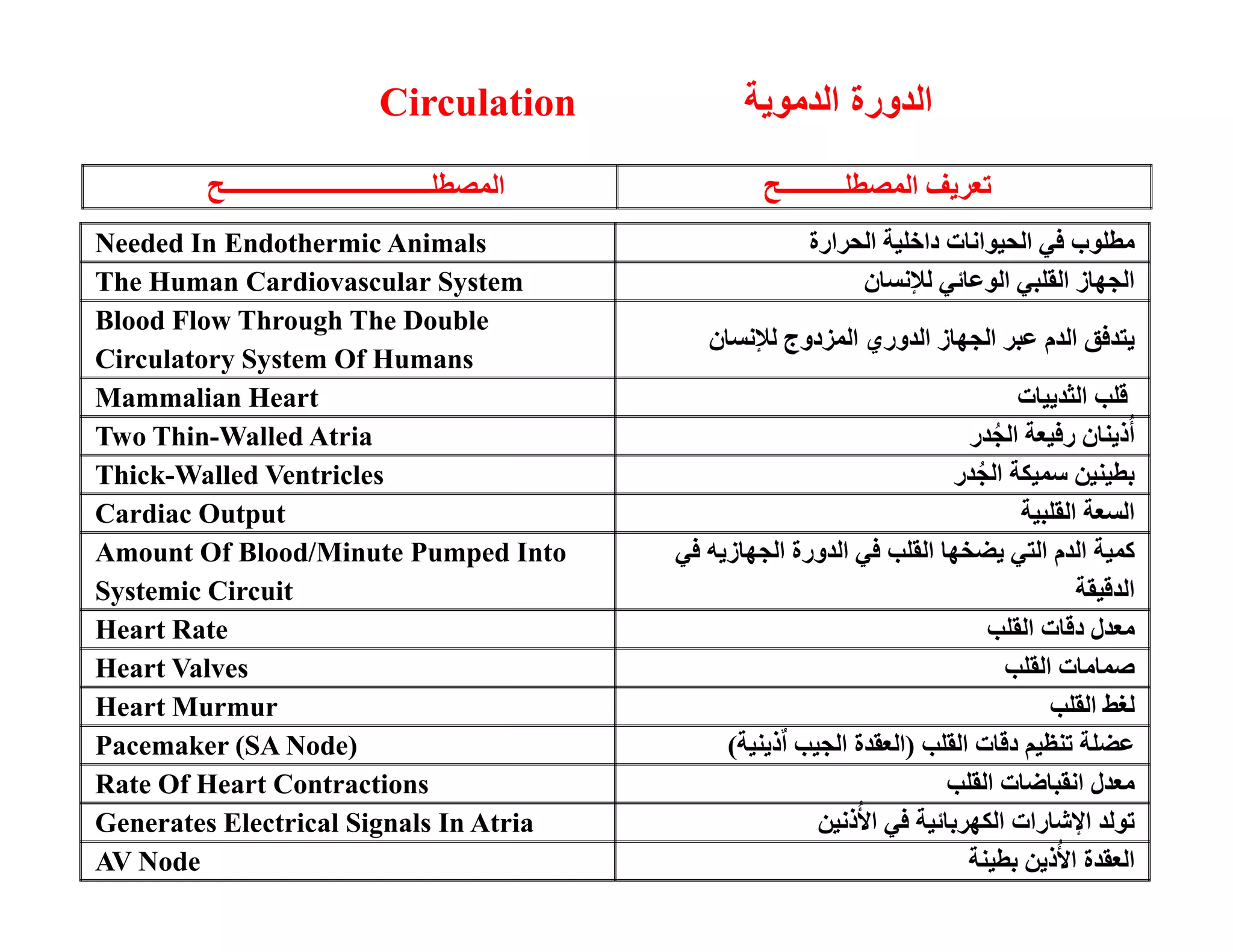
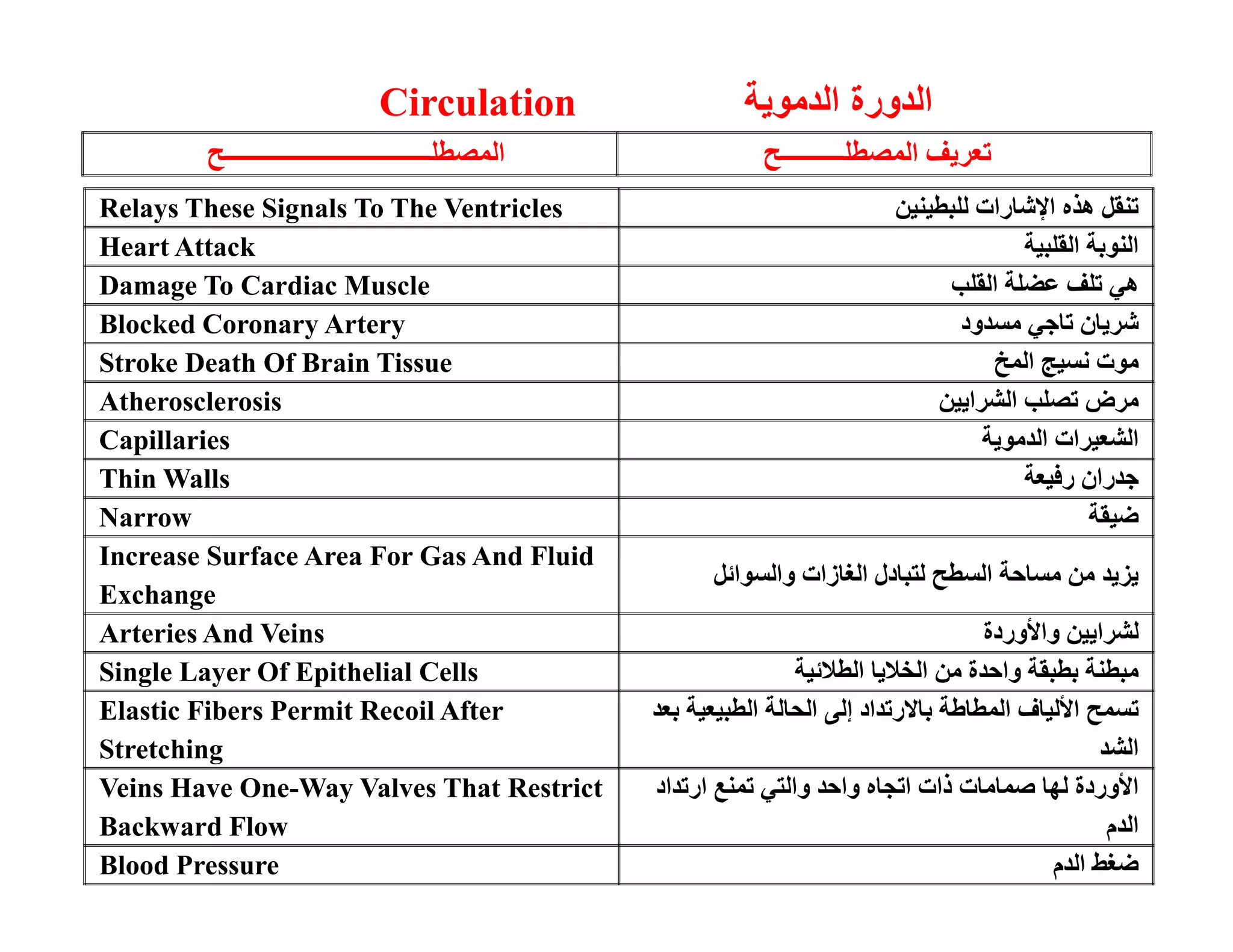
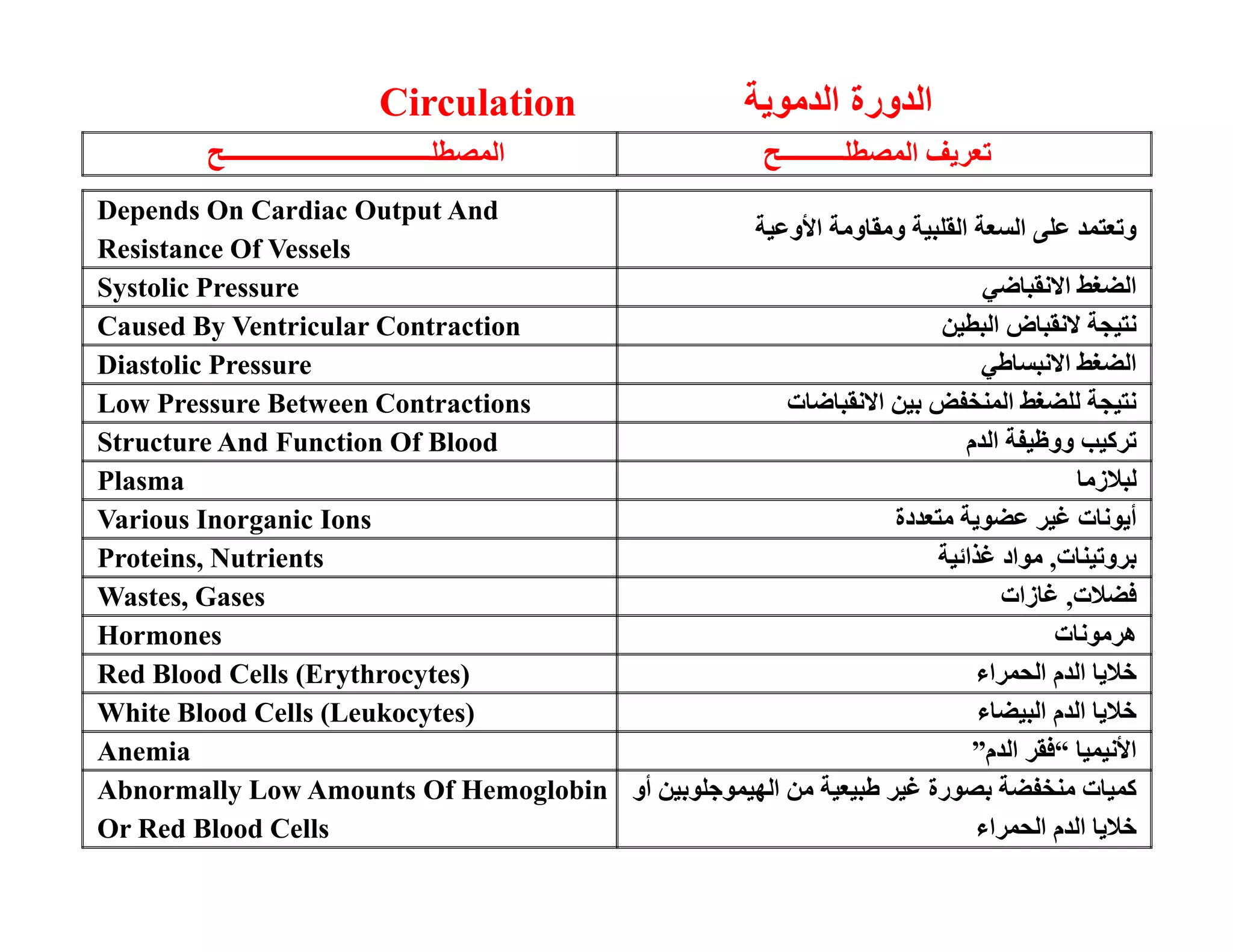
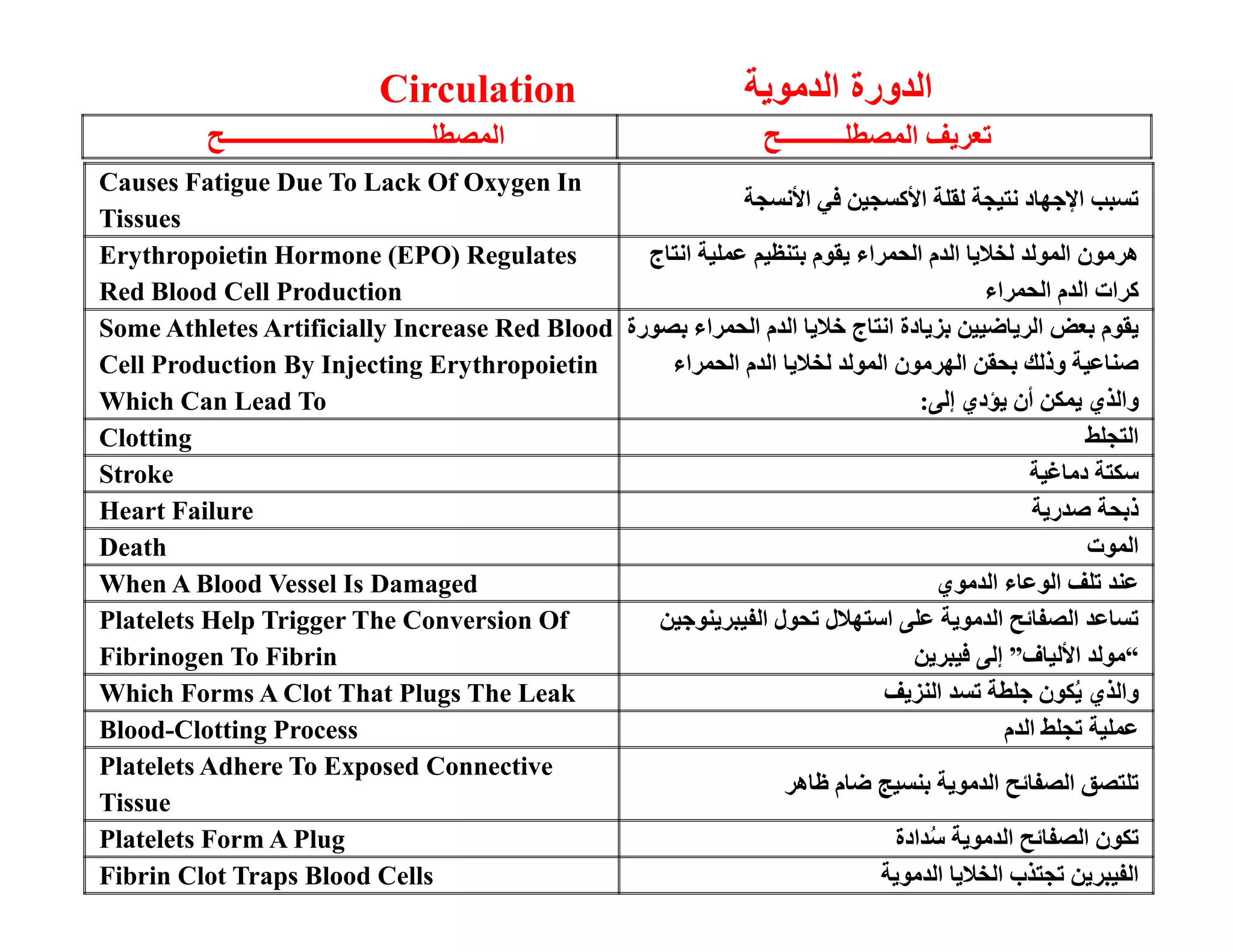
The document summarizes key points about circulation and the cardiovascular system from Chapter 23 of Biology: Concepts & Connections. It discusses how circulatory systems facilitate exchange between tissues and the environment. Both open and closed circulatory systems are described. The evolution of the vertebrate heart from two-chambered to four-chambered designs is covered. Key aspects of the human cardiovascular system like blood flow through the heart and blood vessel structure and function are summarized.
Introduction to the chapter on circulation from the 'Biology: Concepts & Connections' textbook.
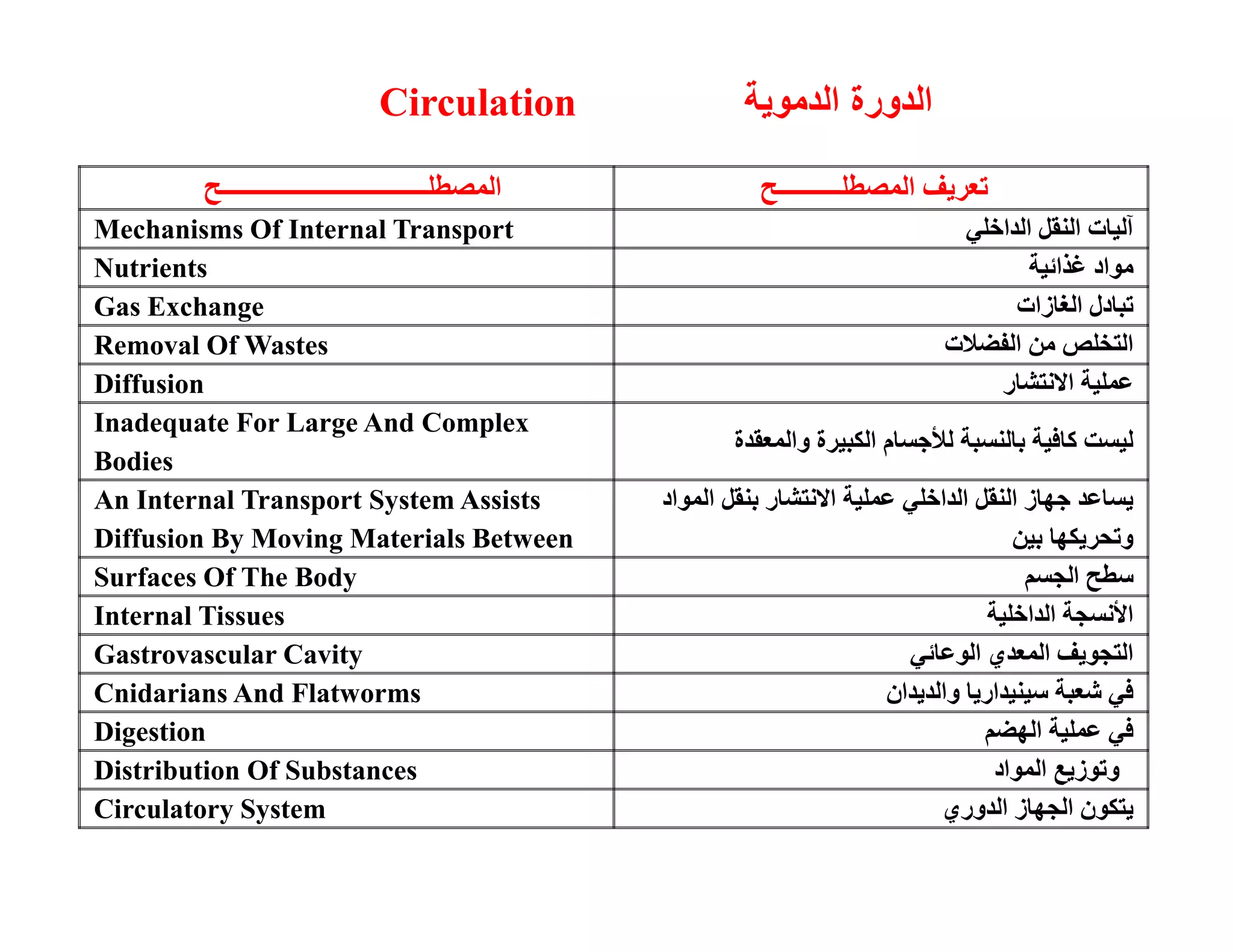
Overview of mechanisms involved in internal transport within biological systems.
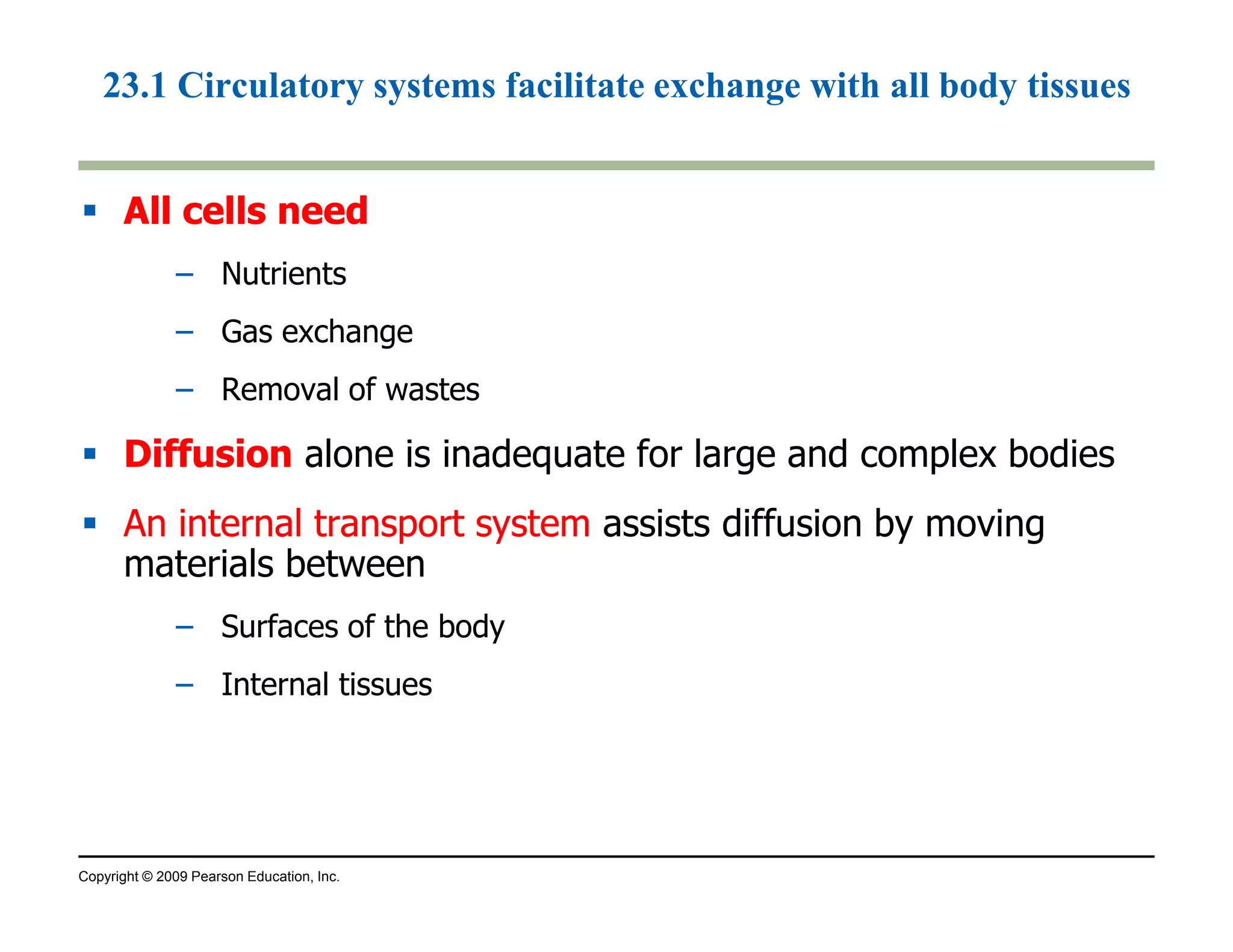
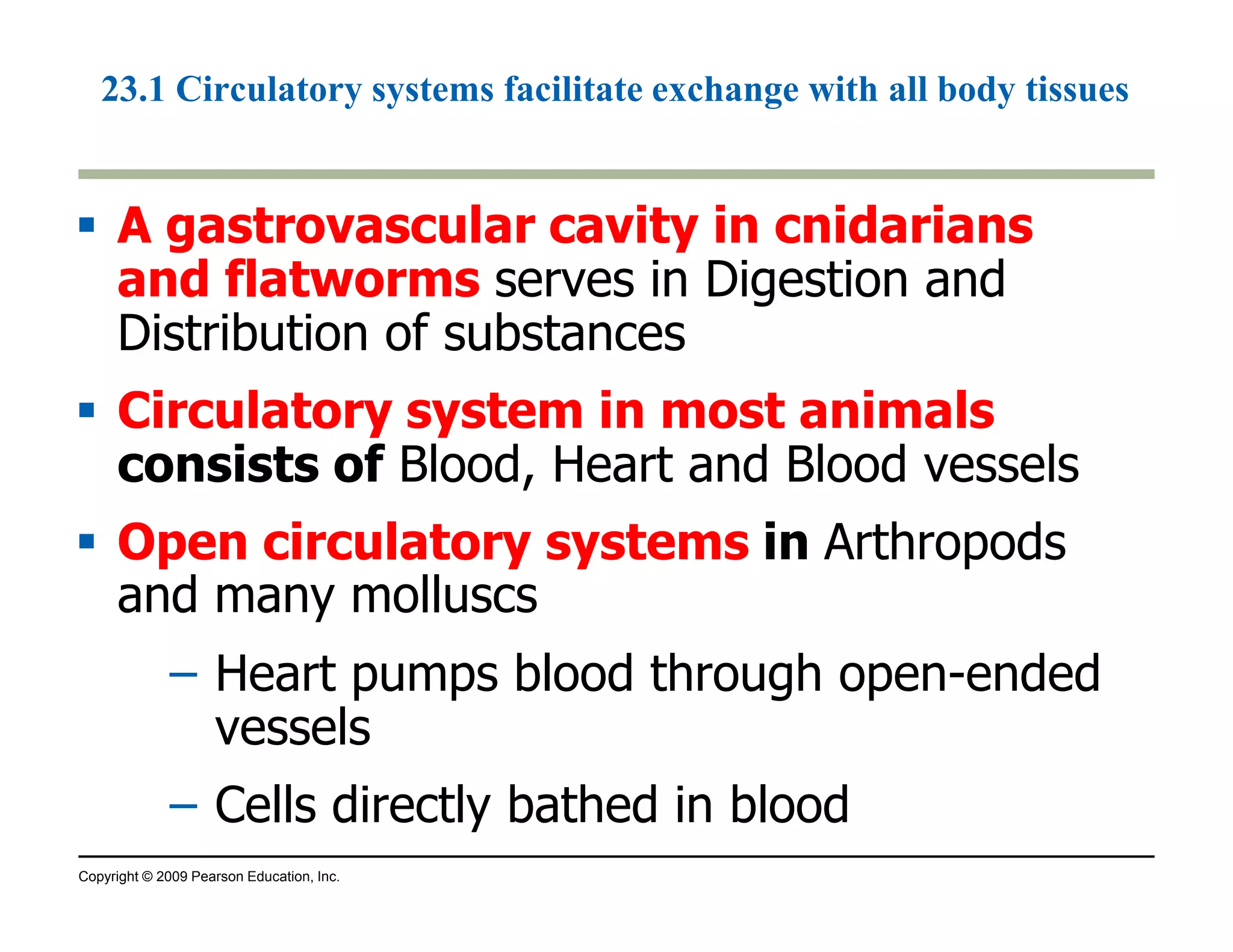
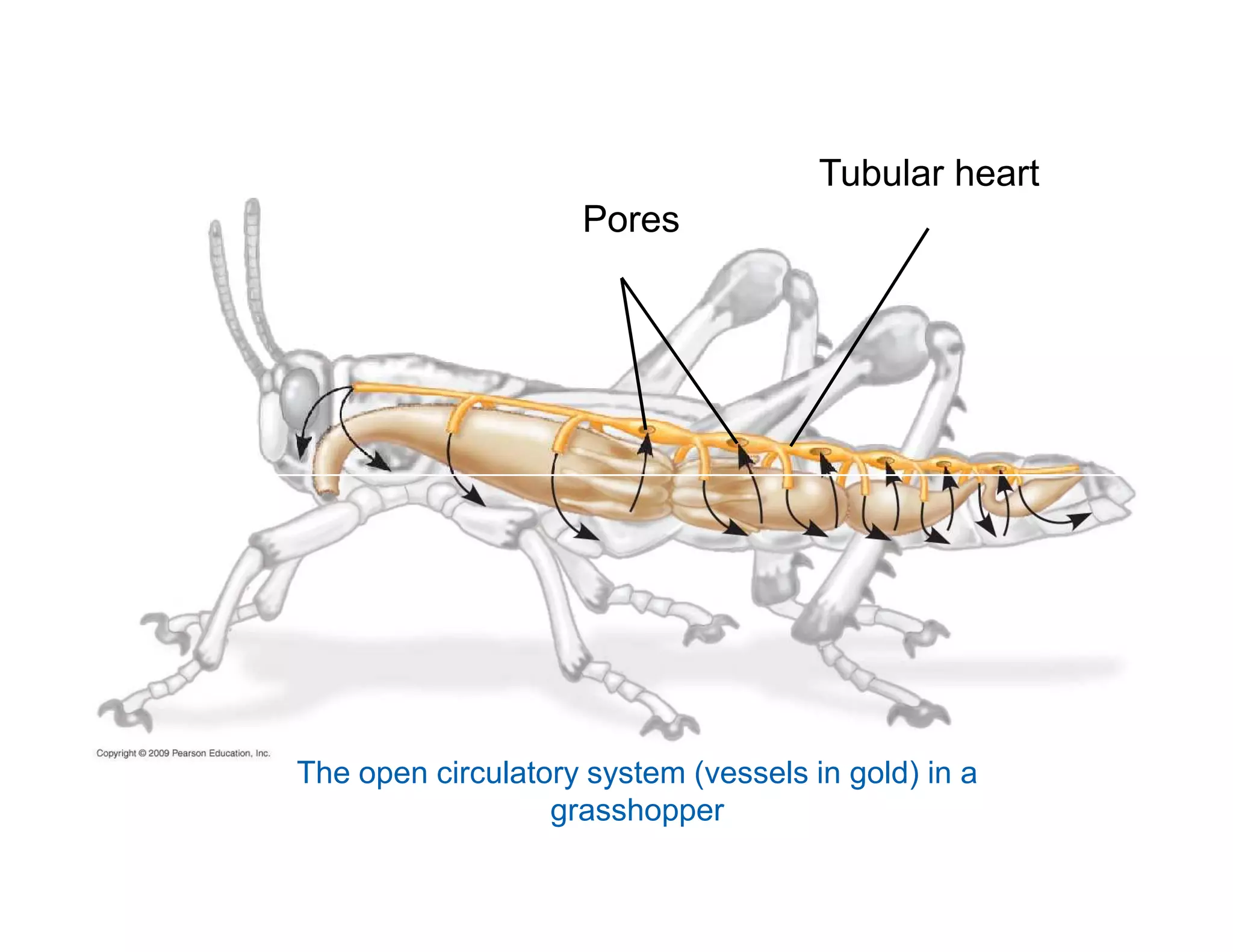
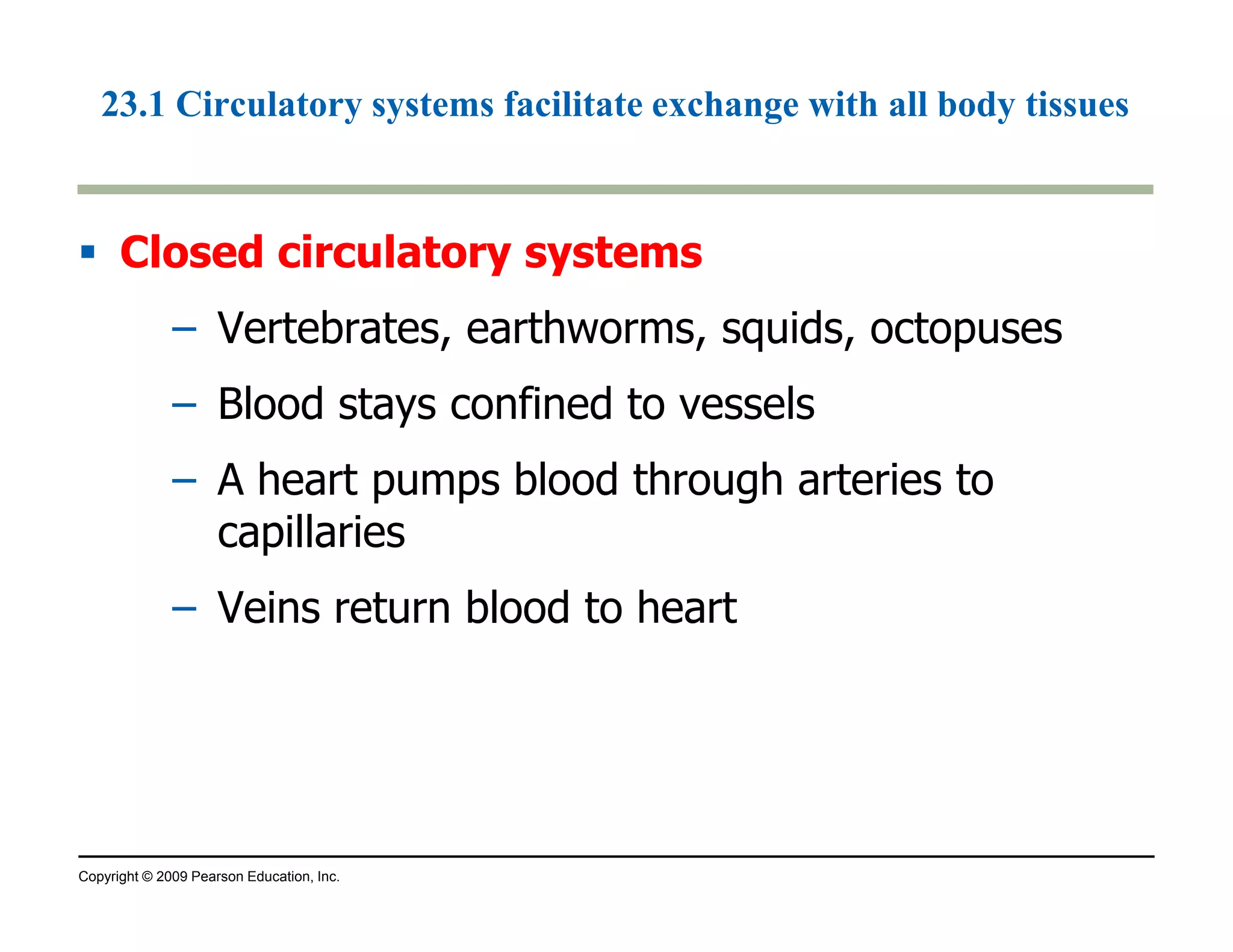
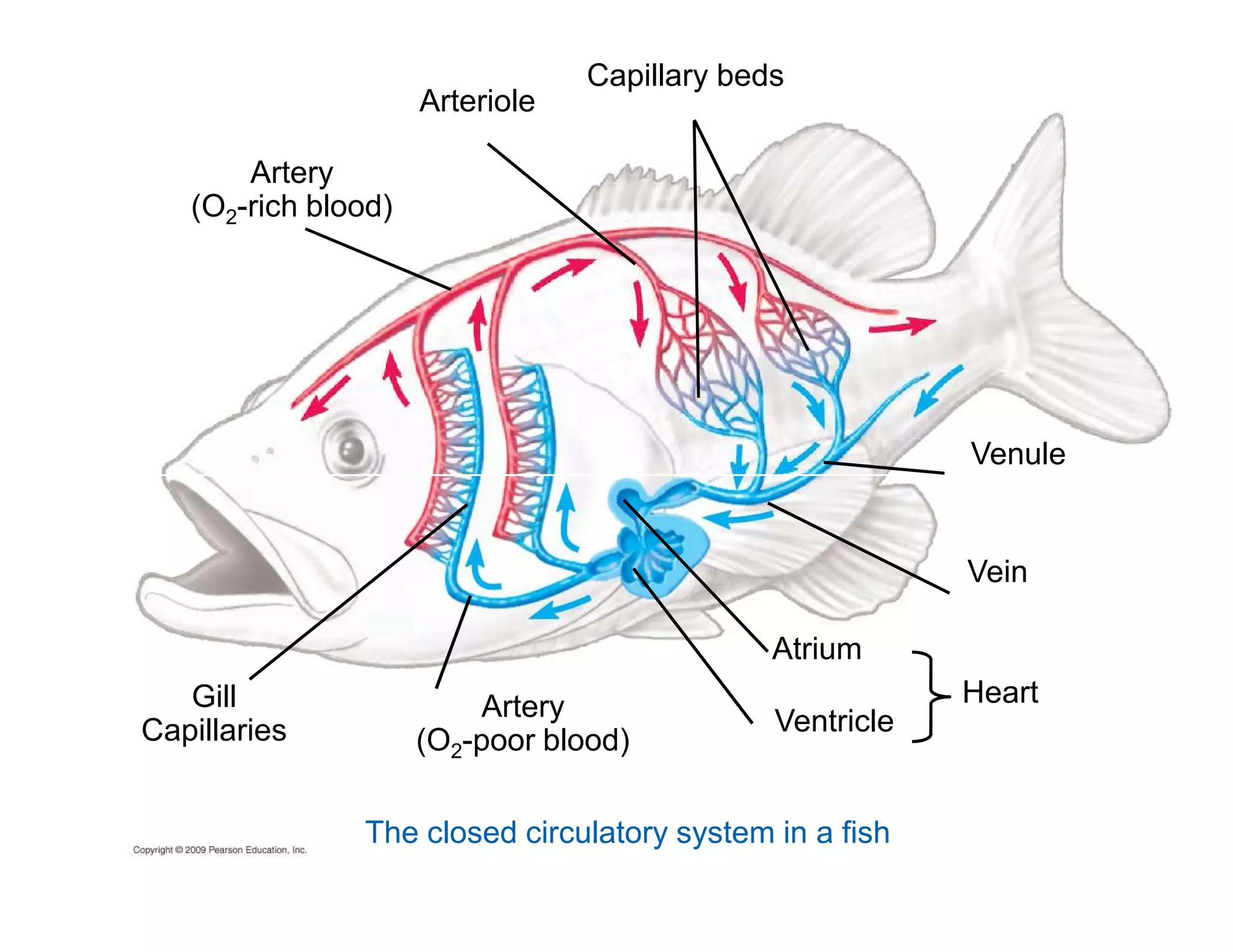
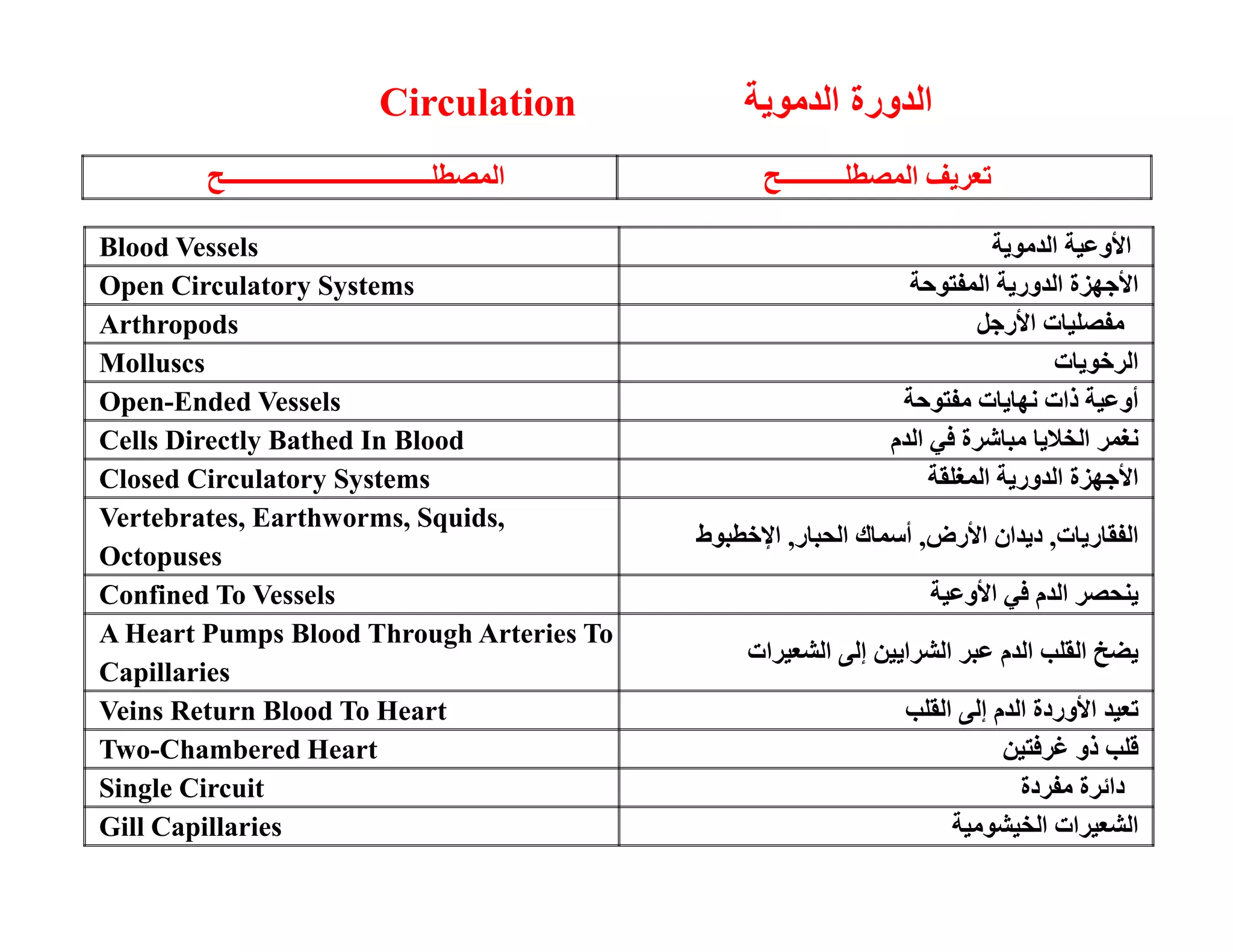
Circulatory systems ensure that nutrients, gases, and waste are exchanged throughout tissues via diffusion and are classified into open or closed systems.
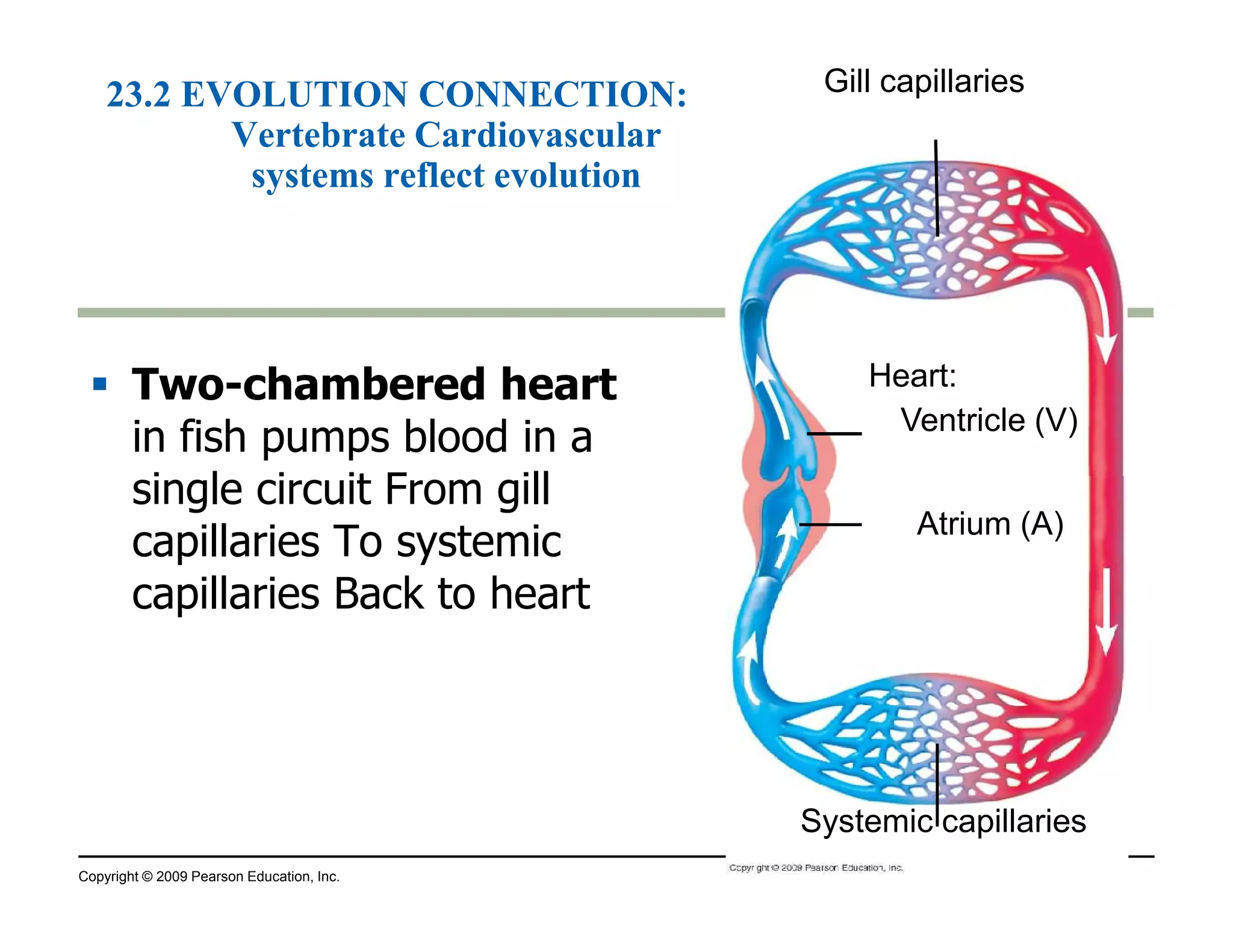
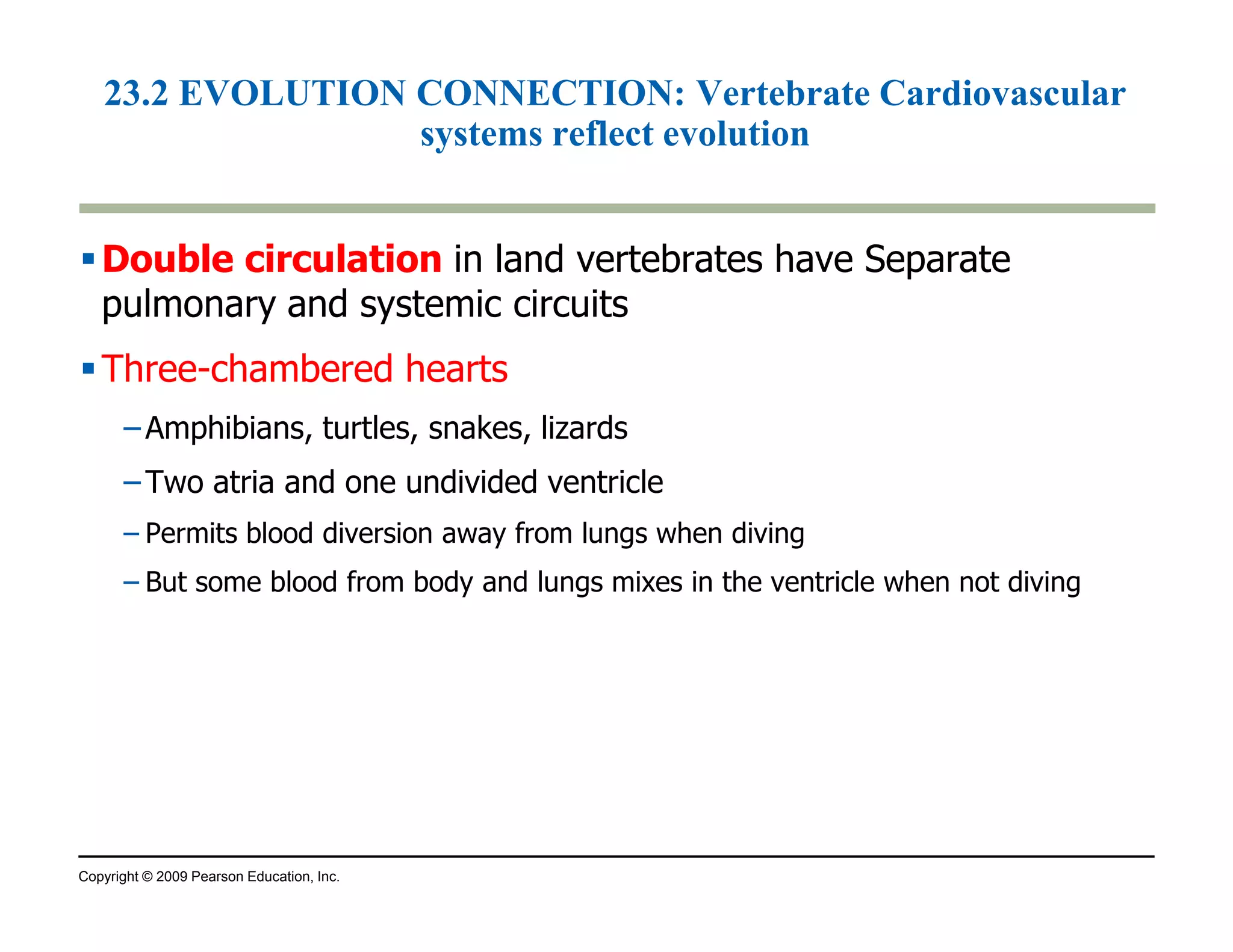
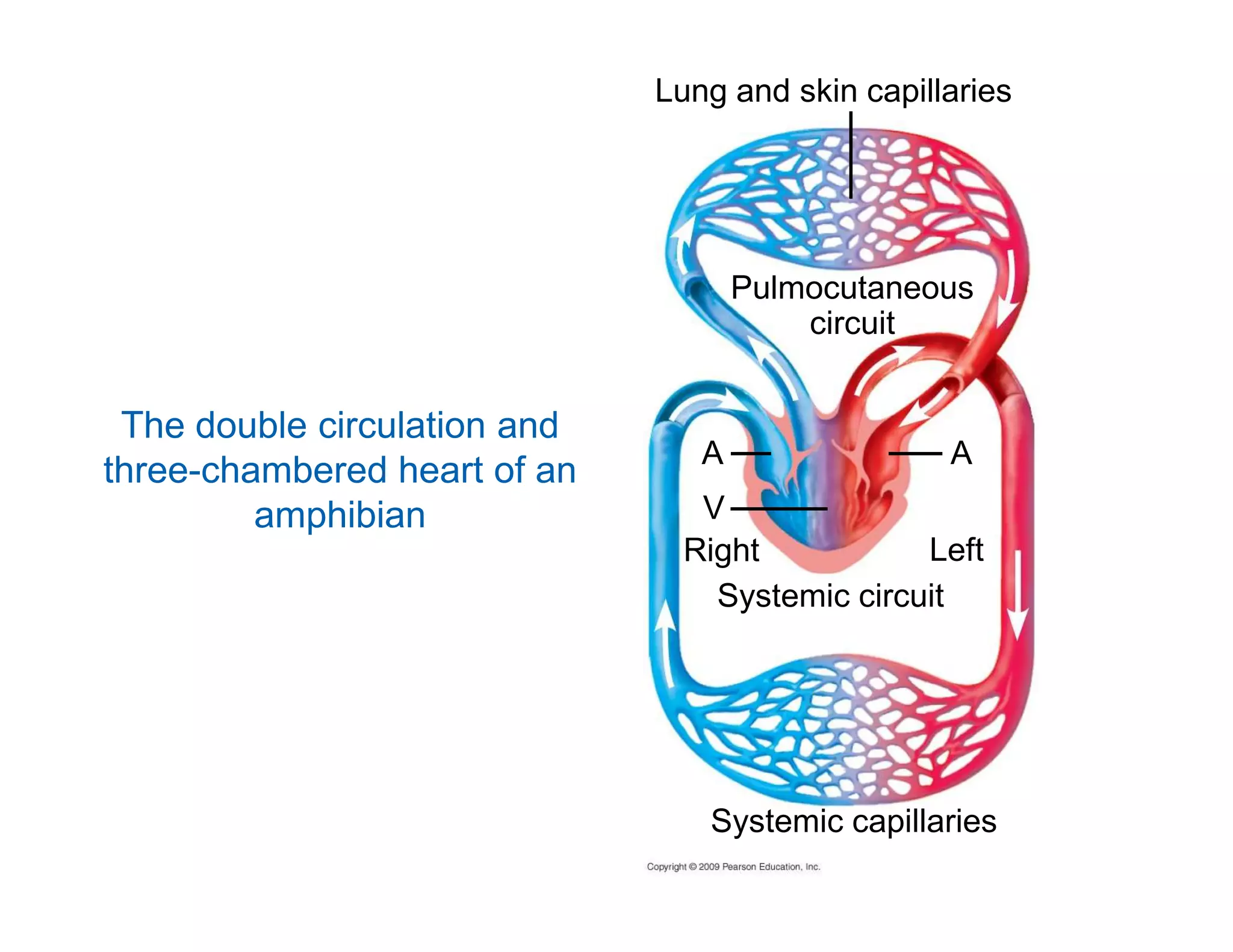
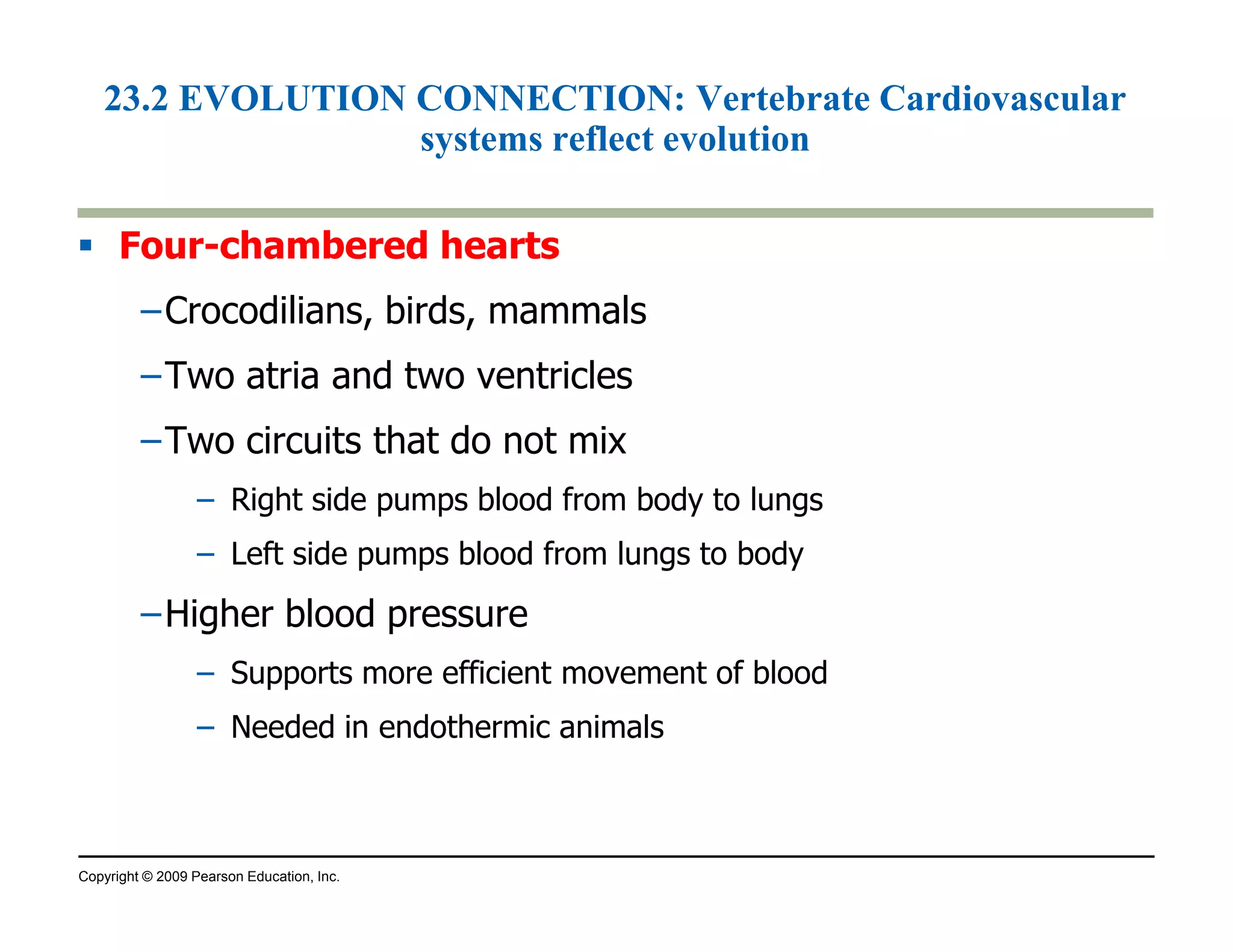
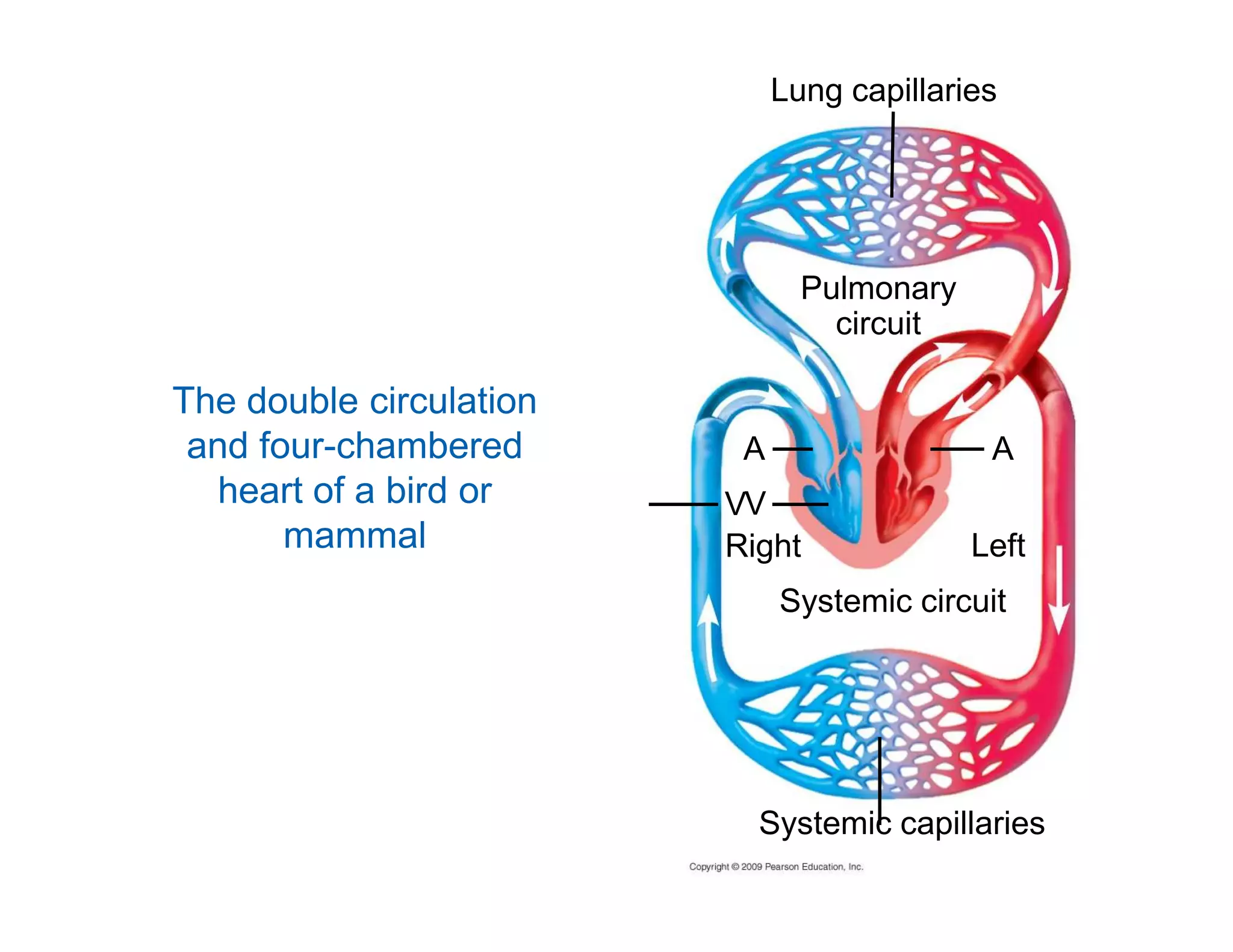
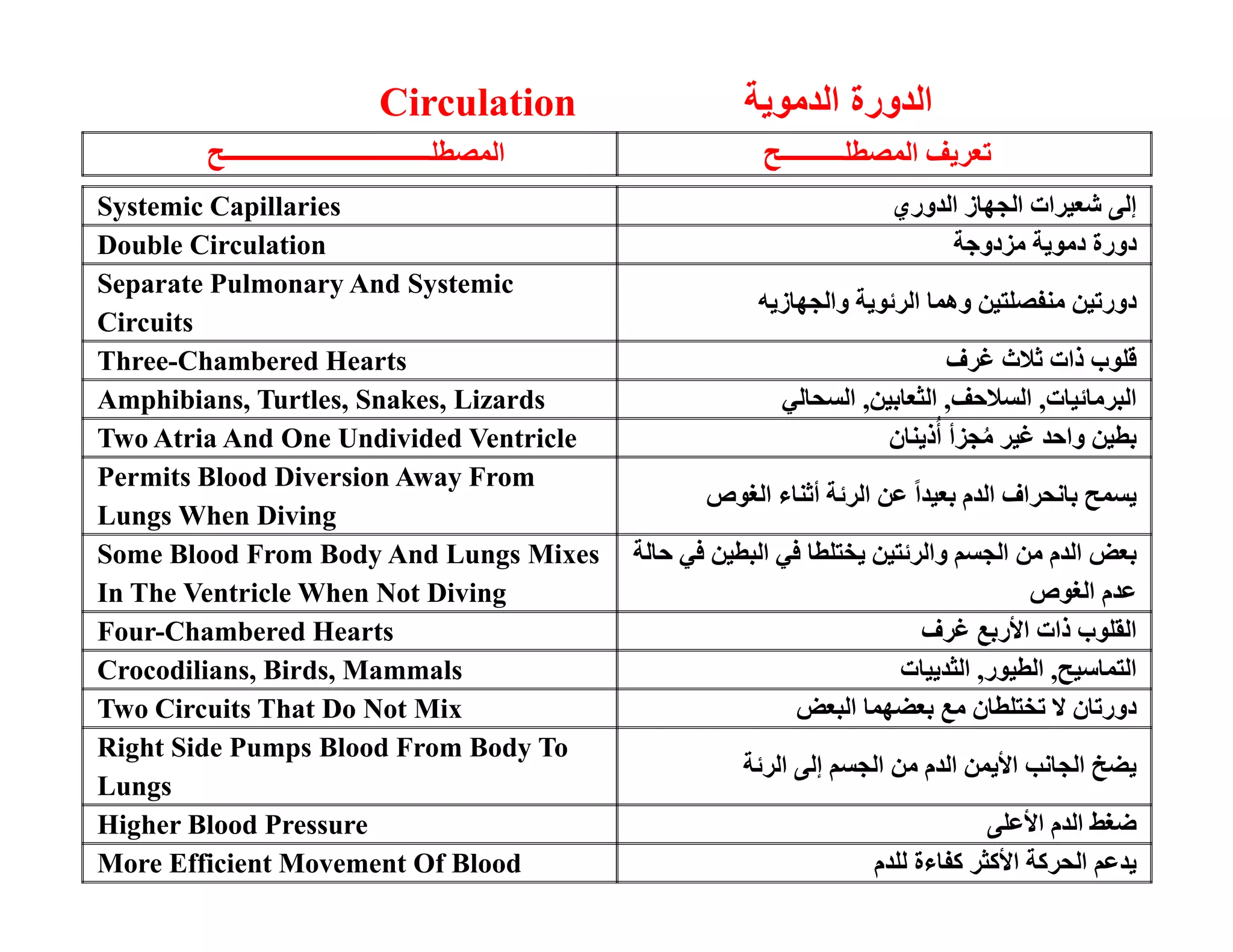
Details on the evolution of vertebrate cardiovascular systems, including different heart structures and their functions across species.
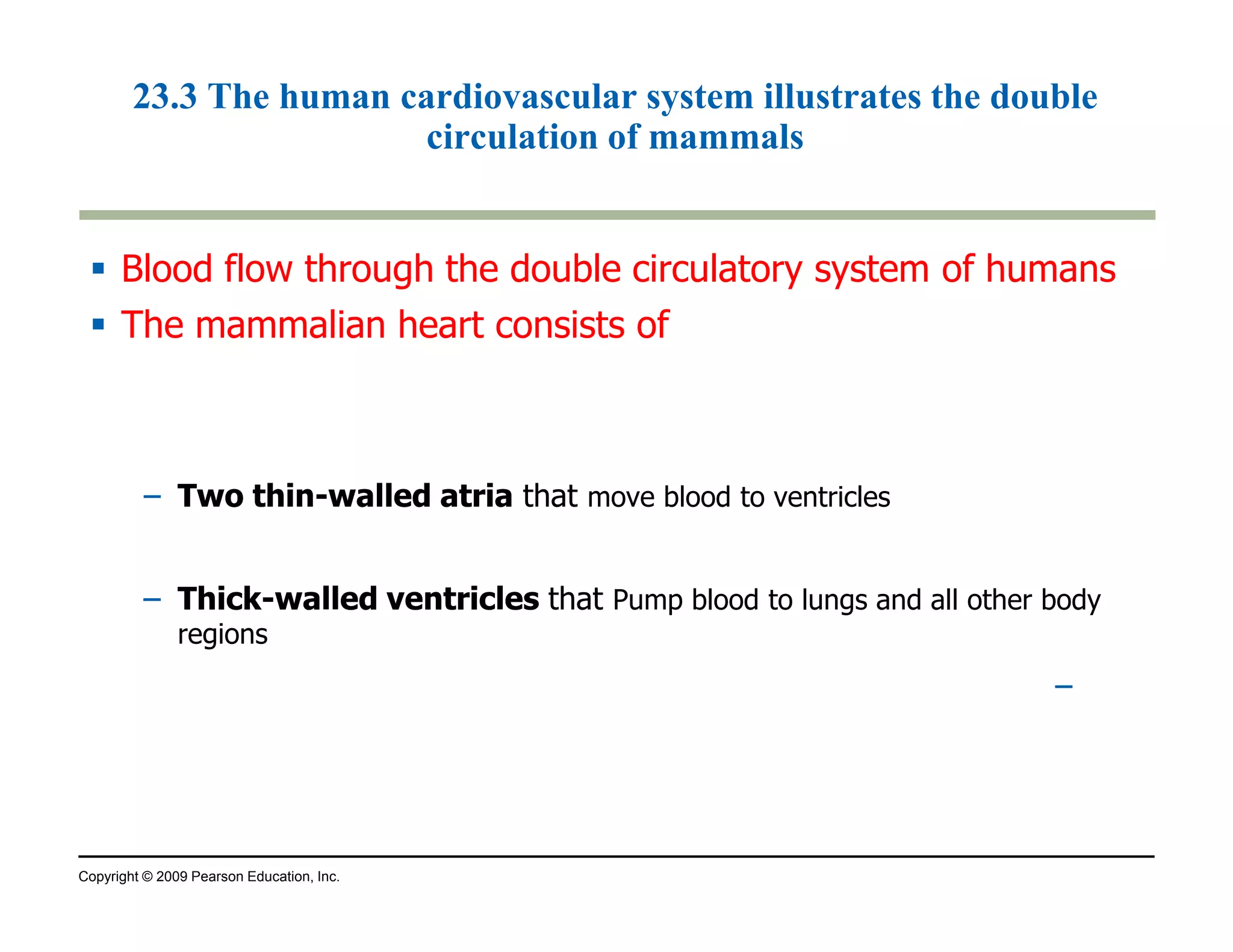
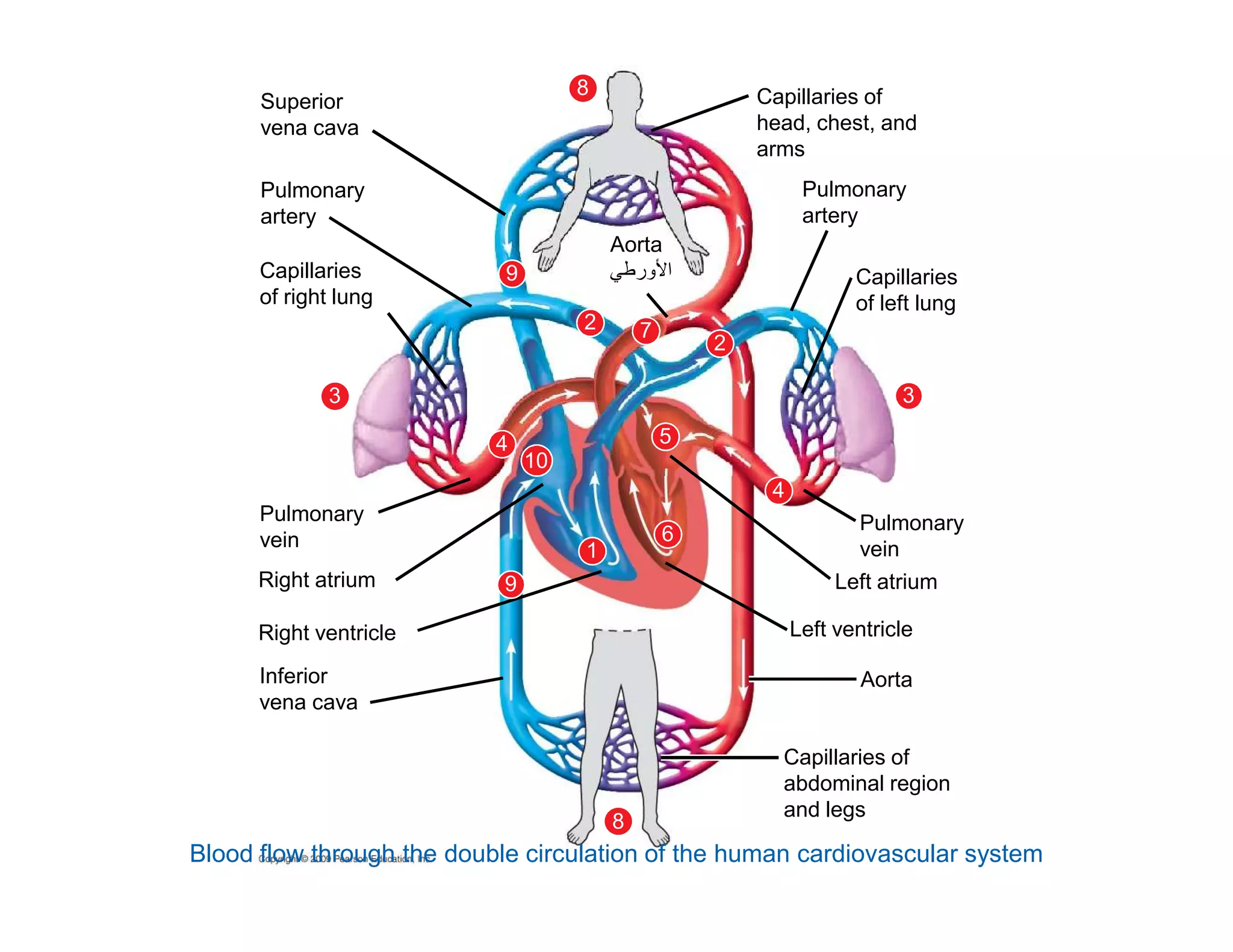
Introduction to the human cardiovascular system and its double circulation mechanism.
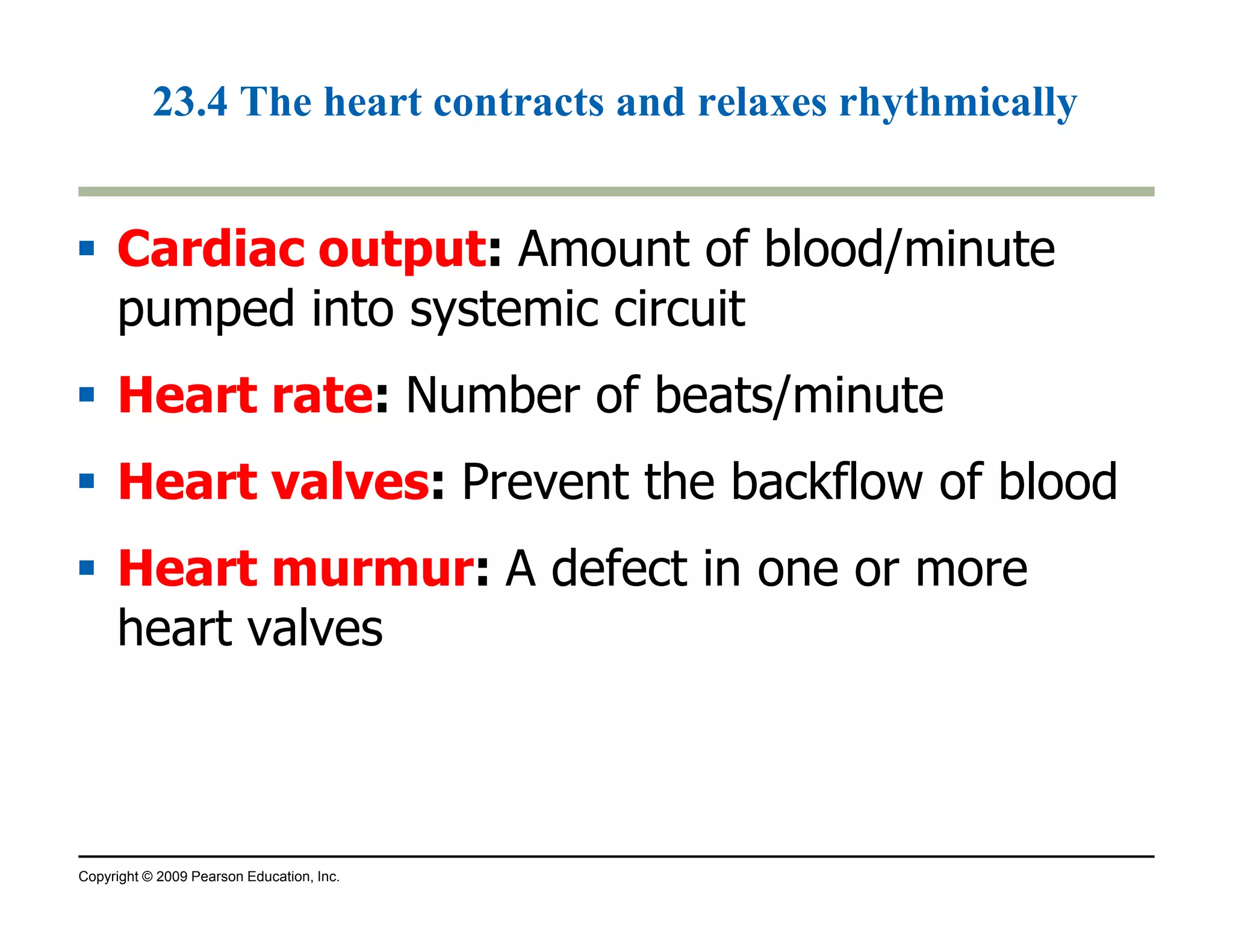
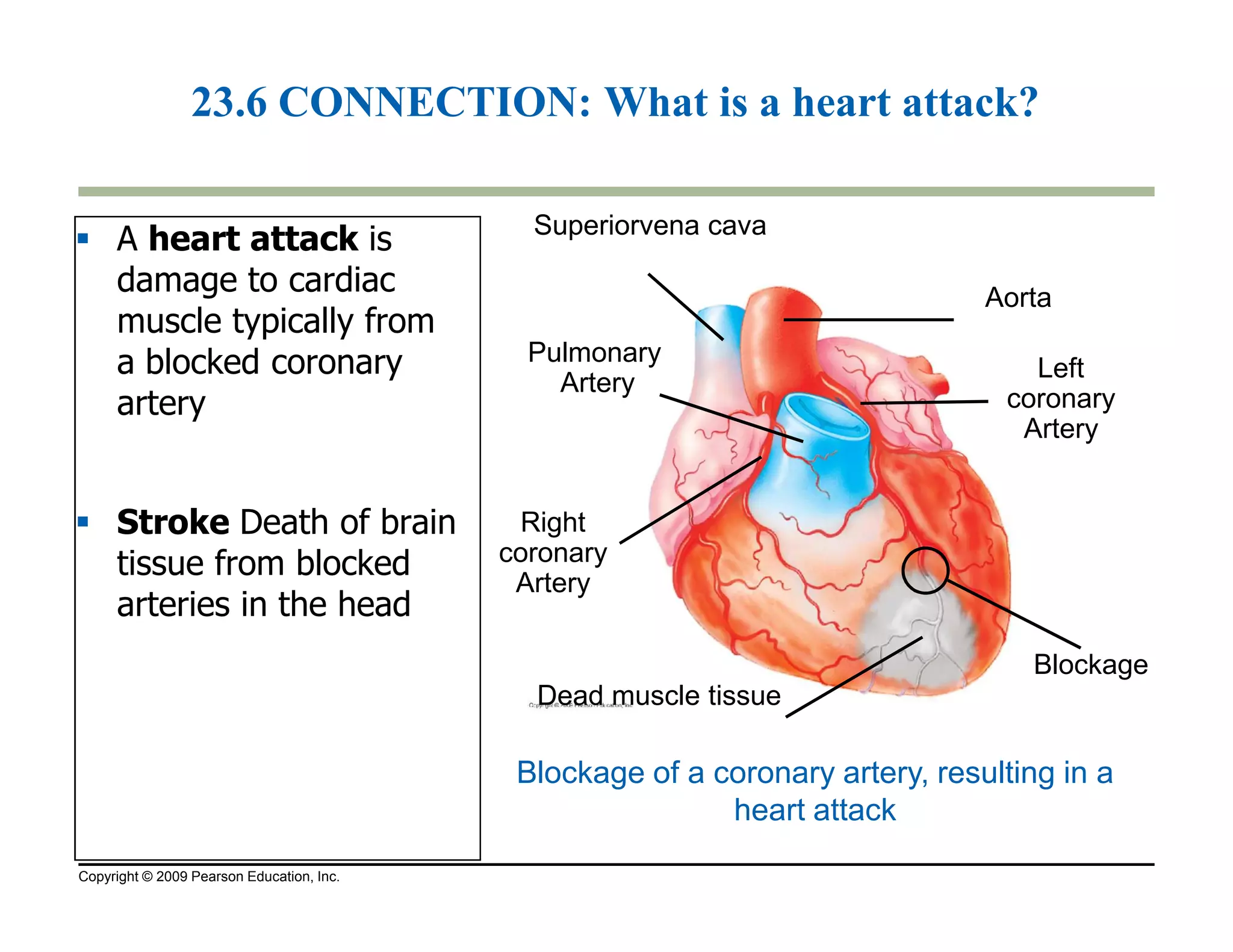
Heart function, including cardiac output, heart rate, heart valves, and conditions like heart attacks and strokes.
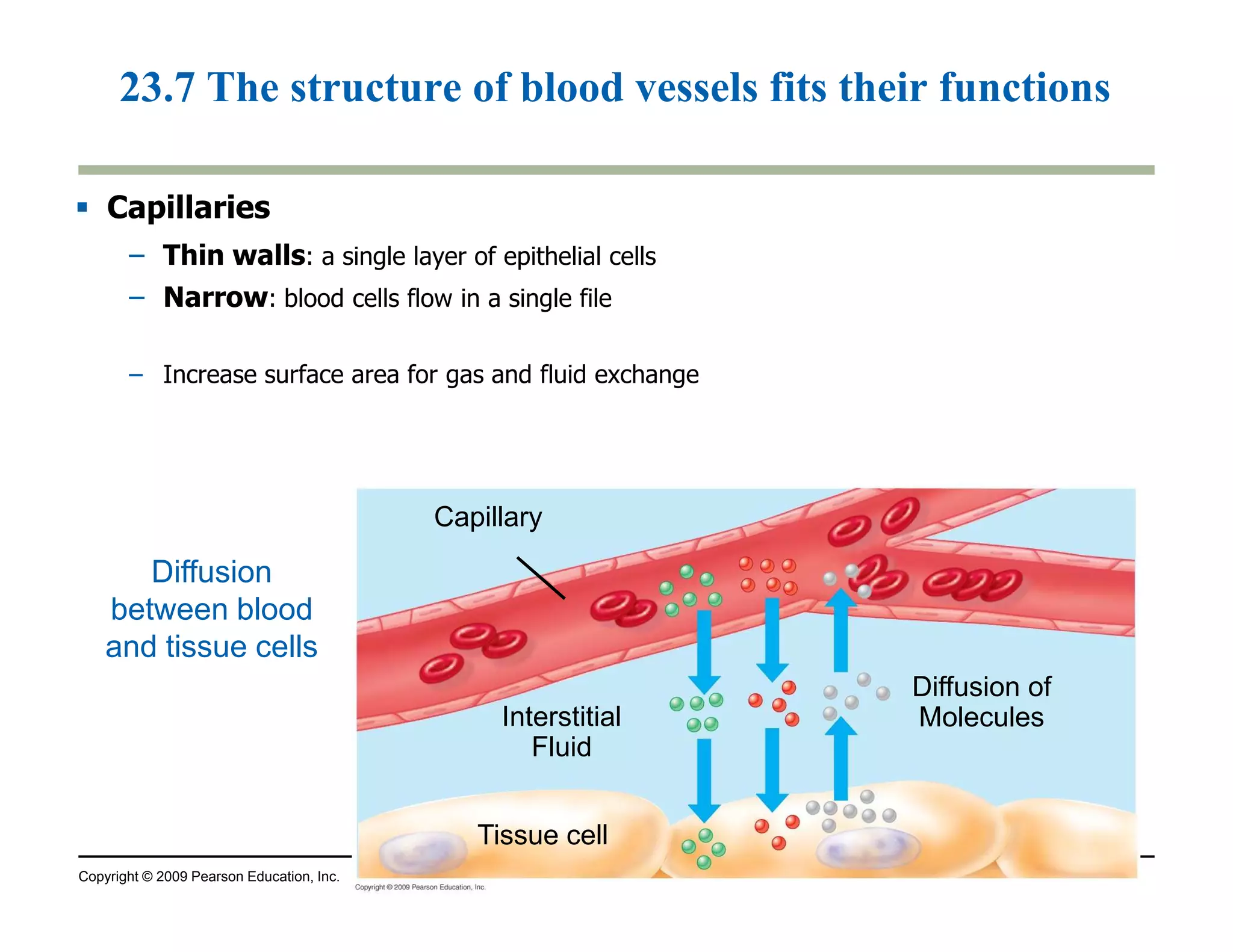
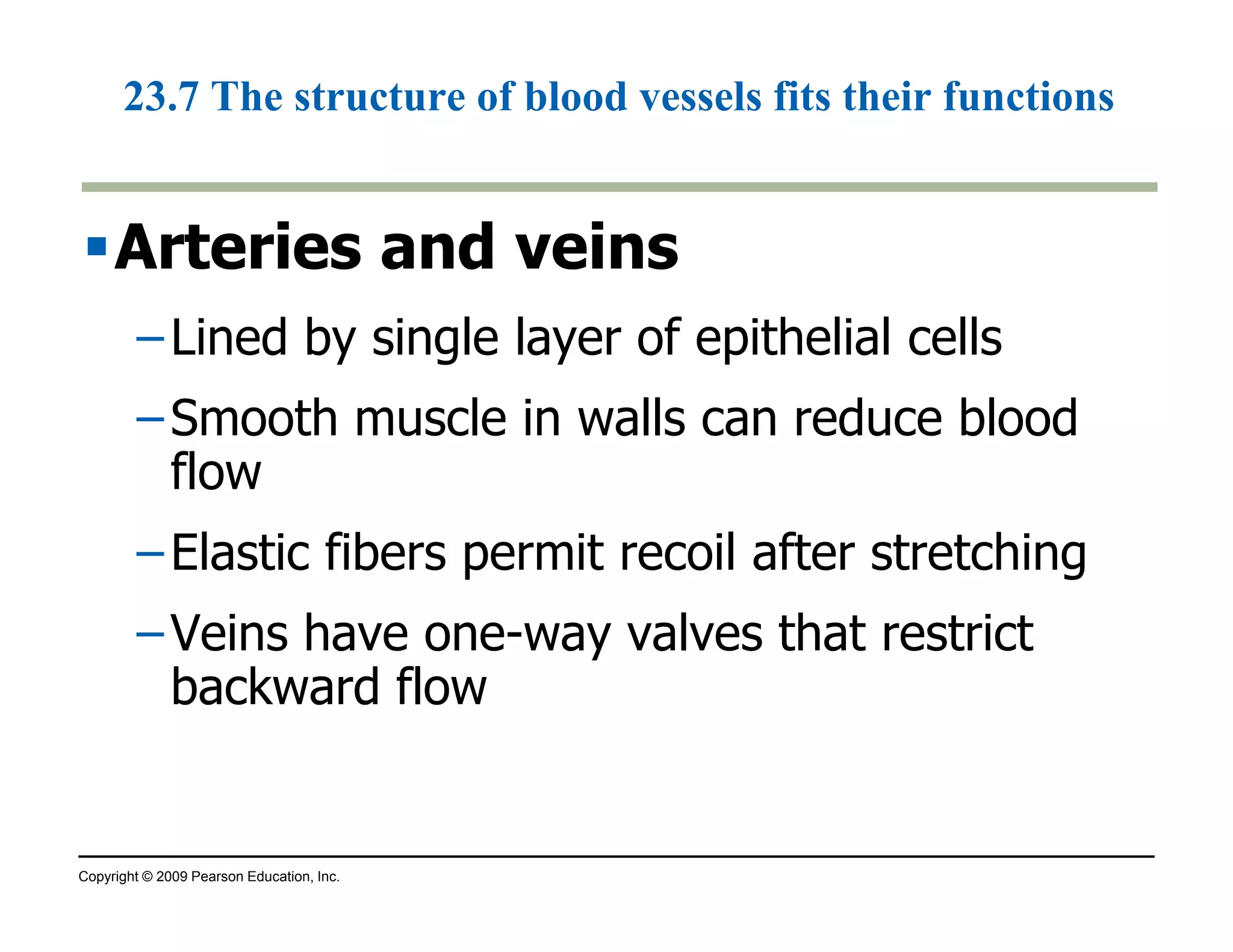
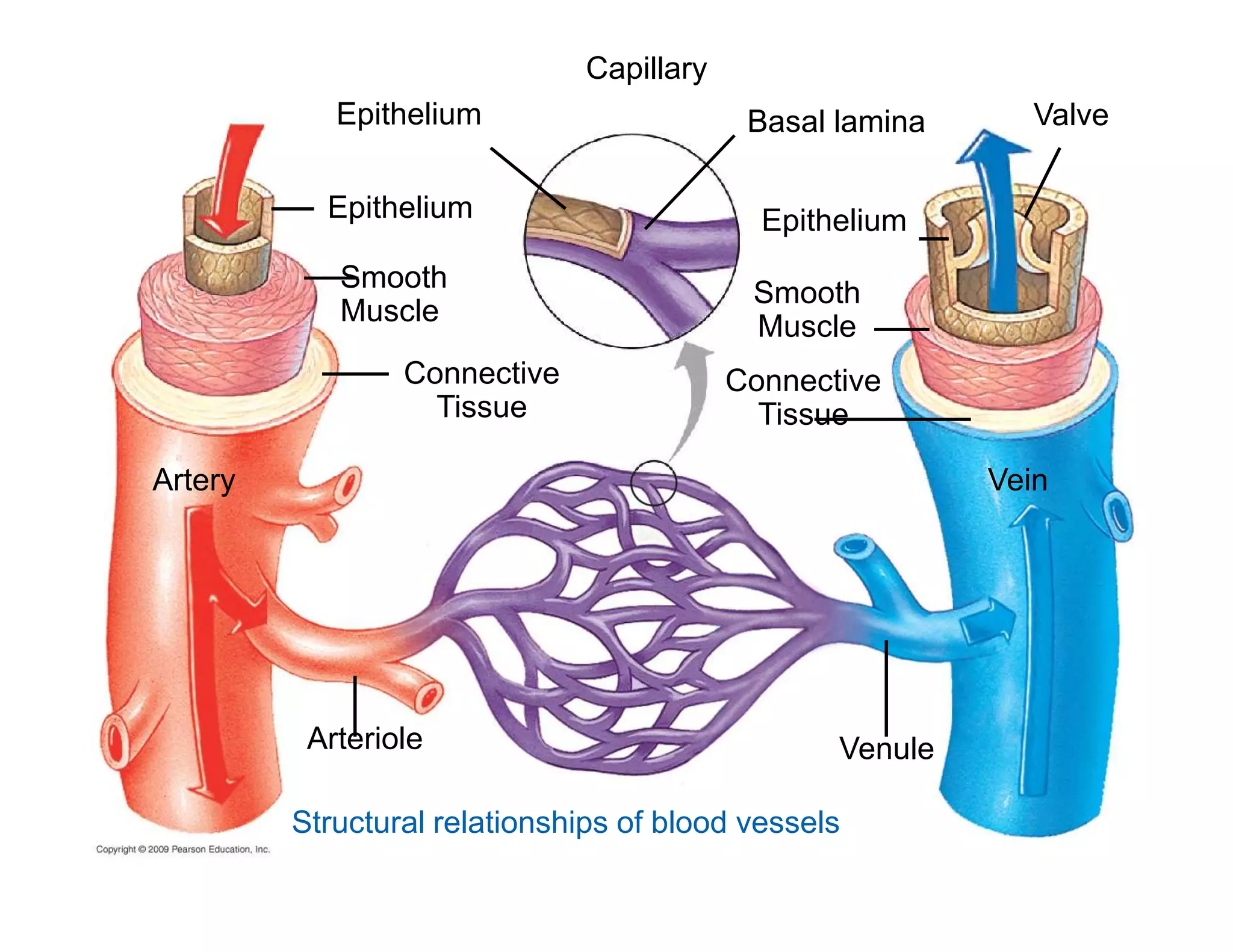
Description of blood vessel structure and the relationship to functions in circulation.
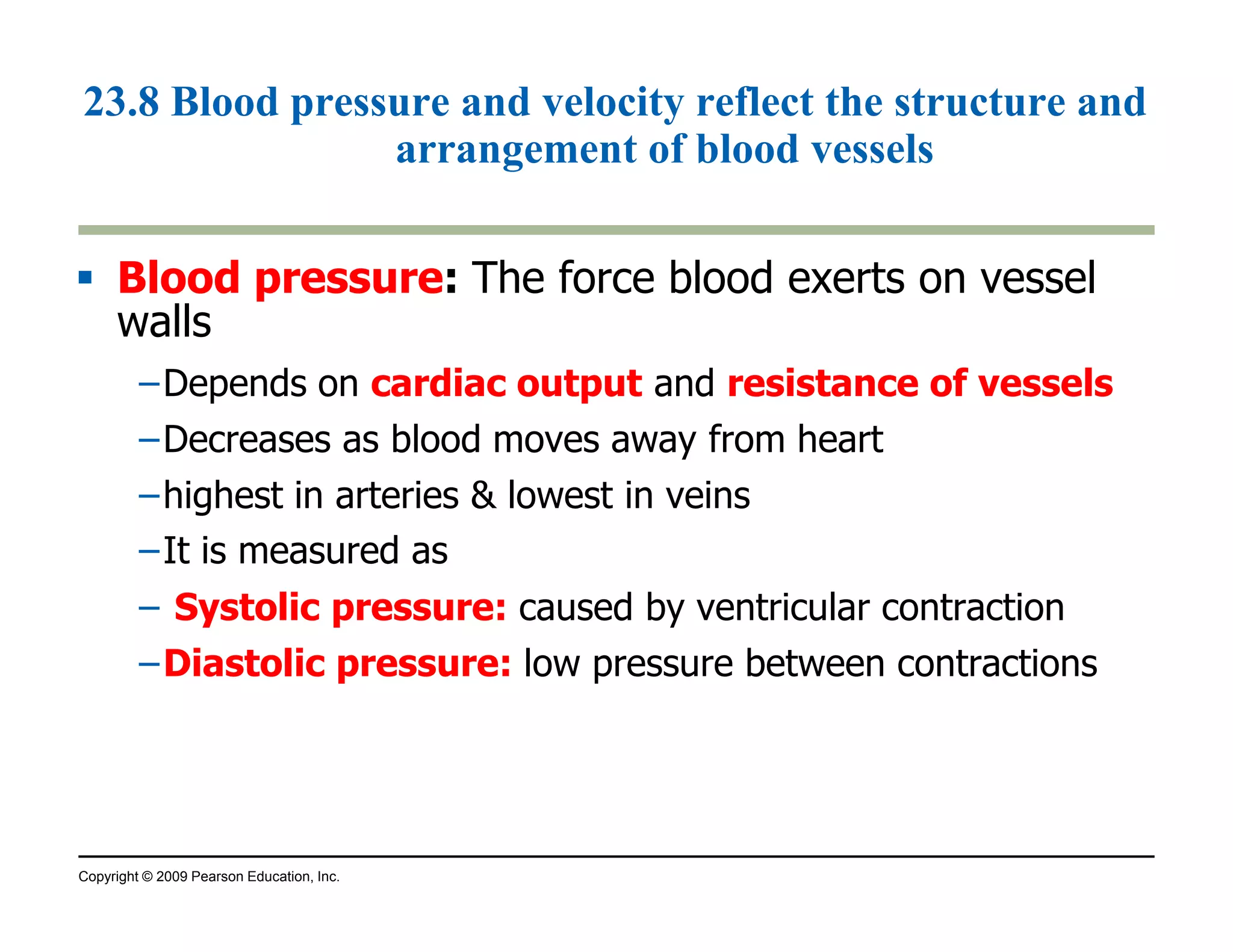
Explanation of blood pressure measurements, systolic and diastolic pressures, and their significance.
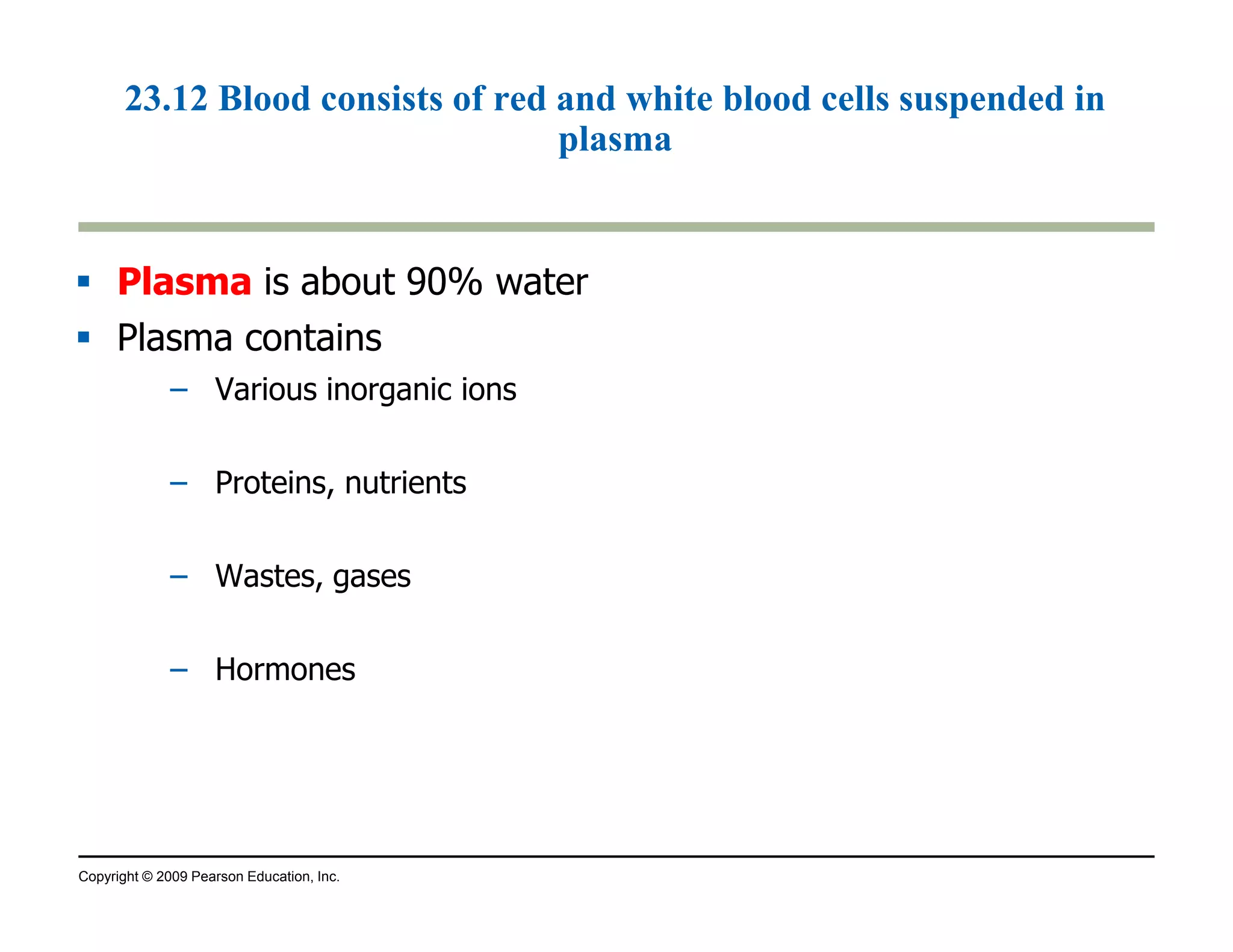
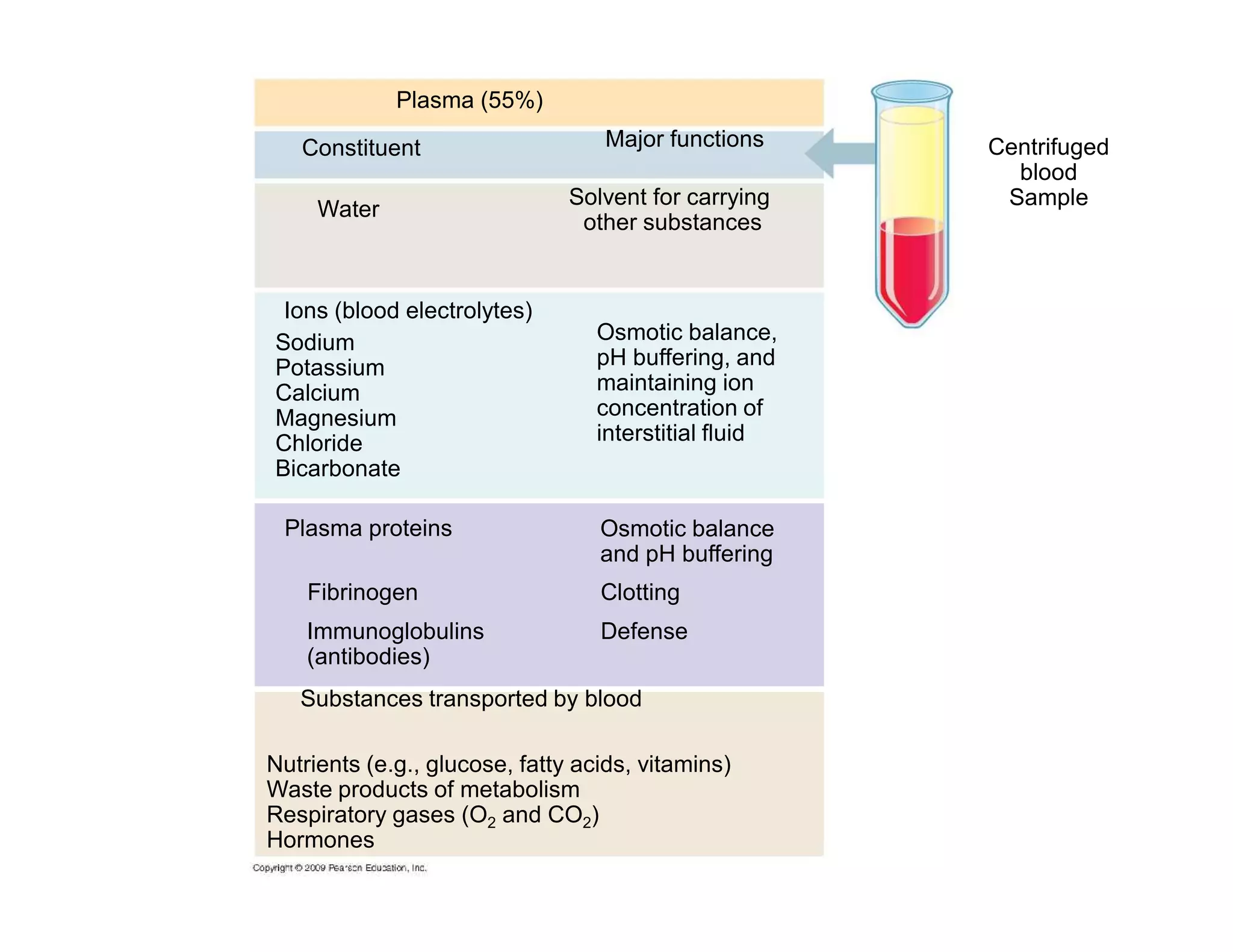
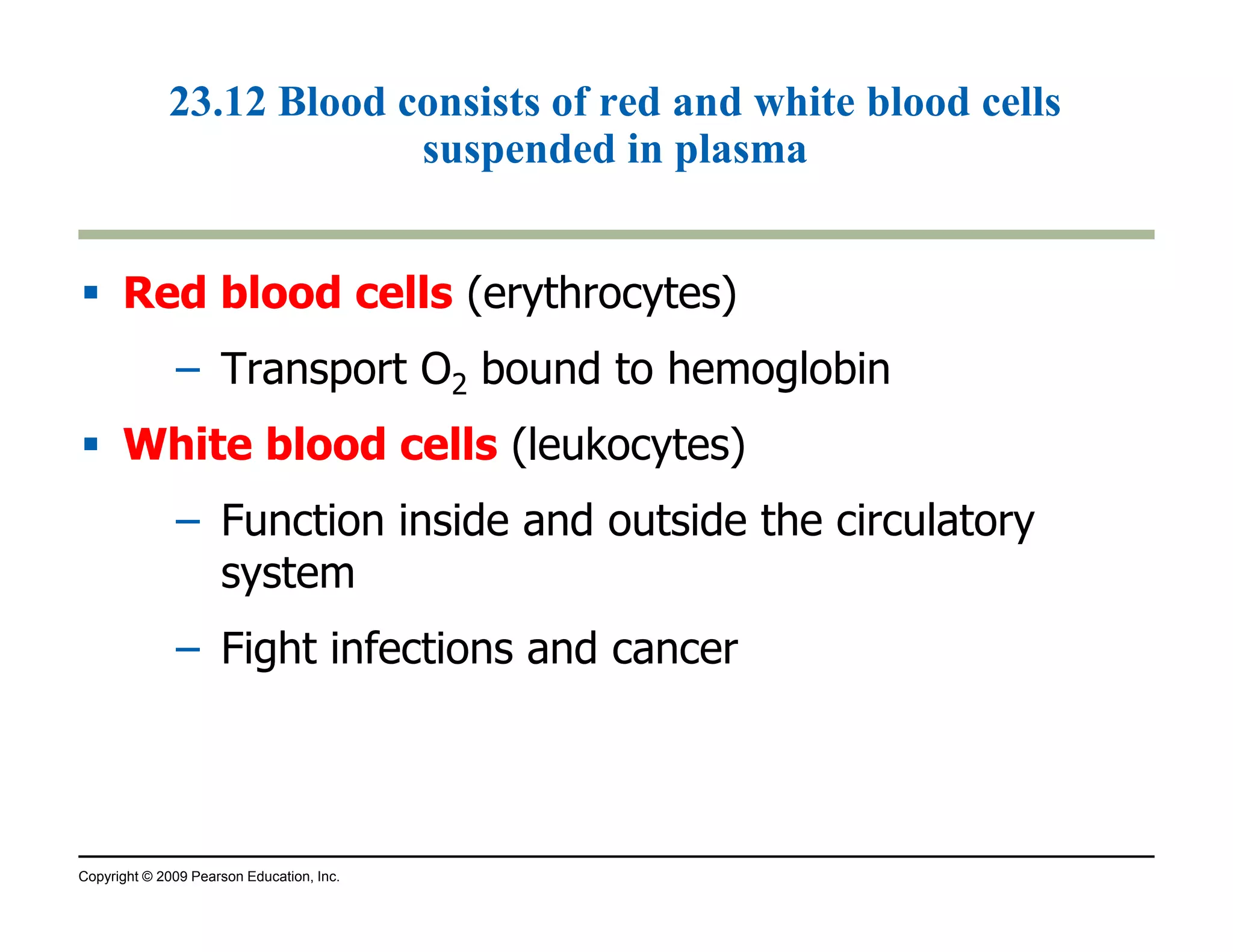
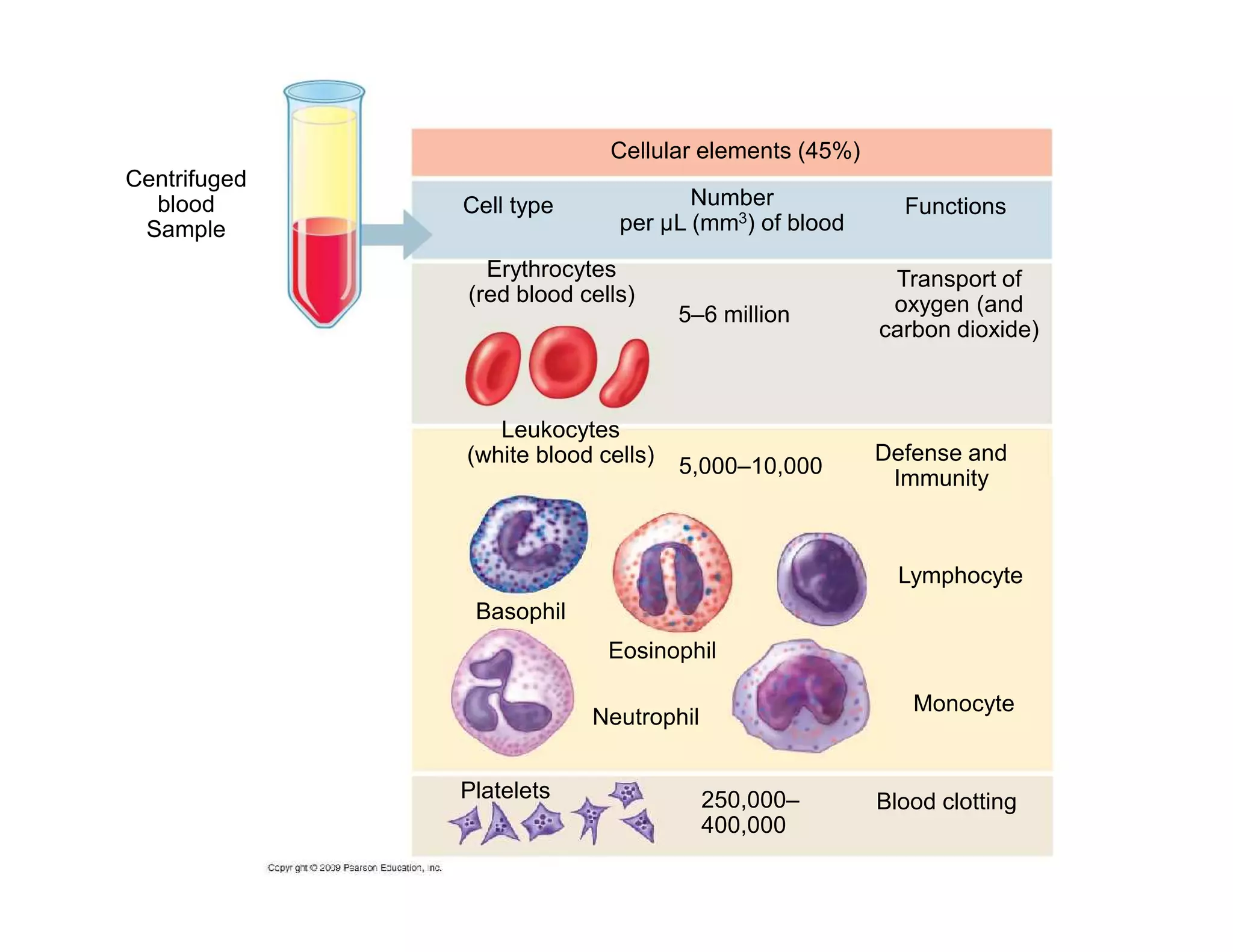
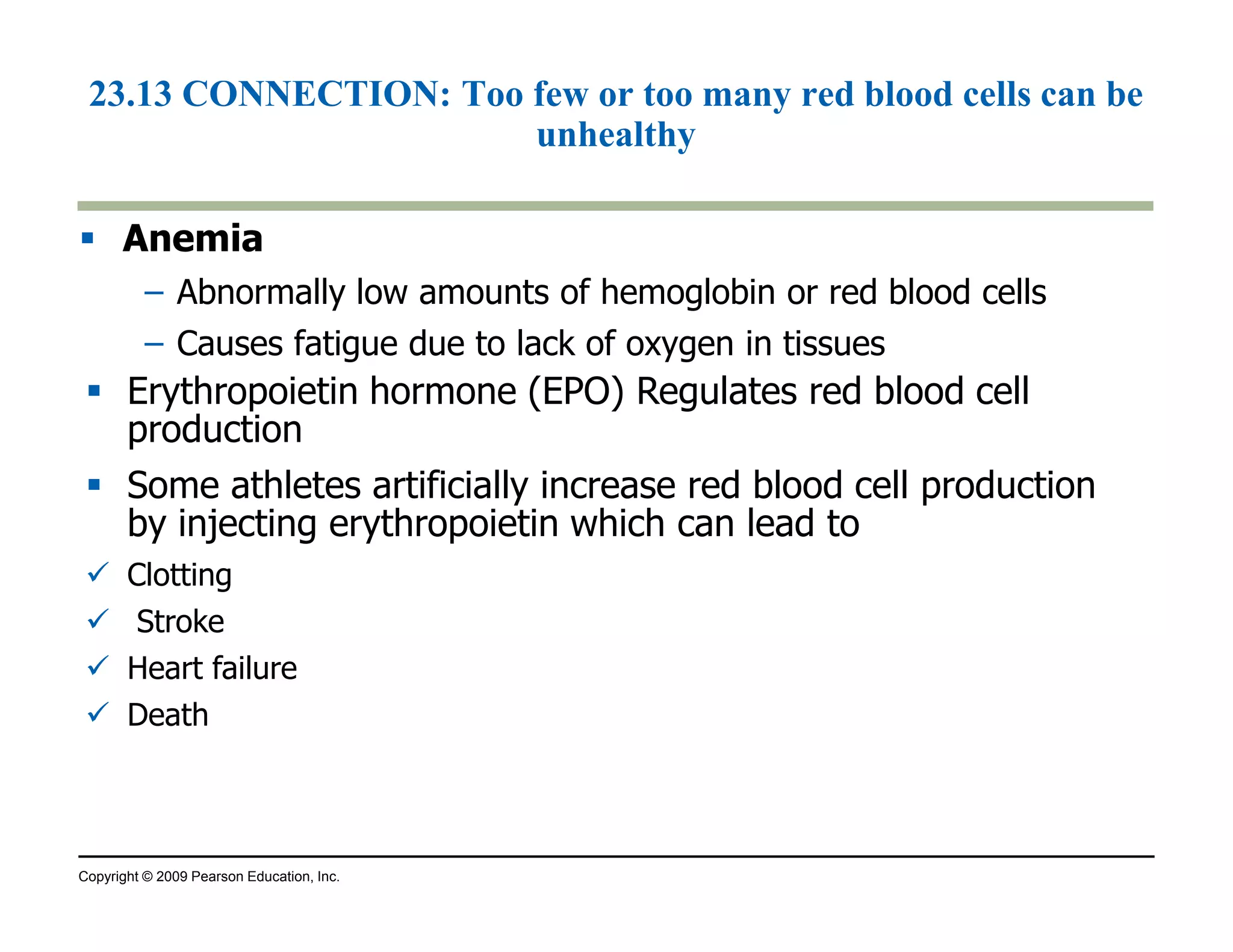
Overview of blood components including plasma, red and white blood cells, their functions, and health implications.
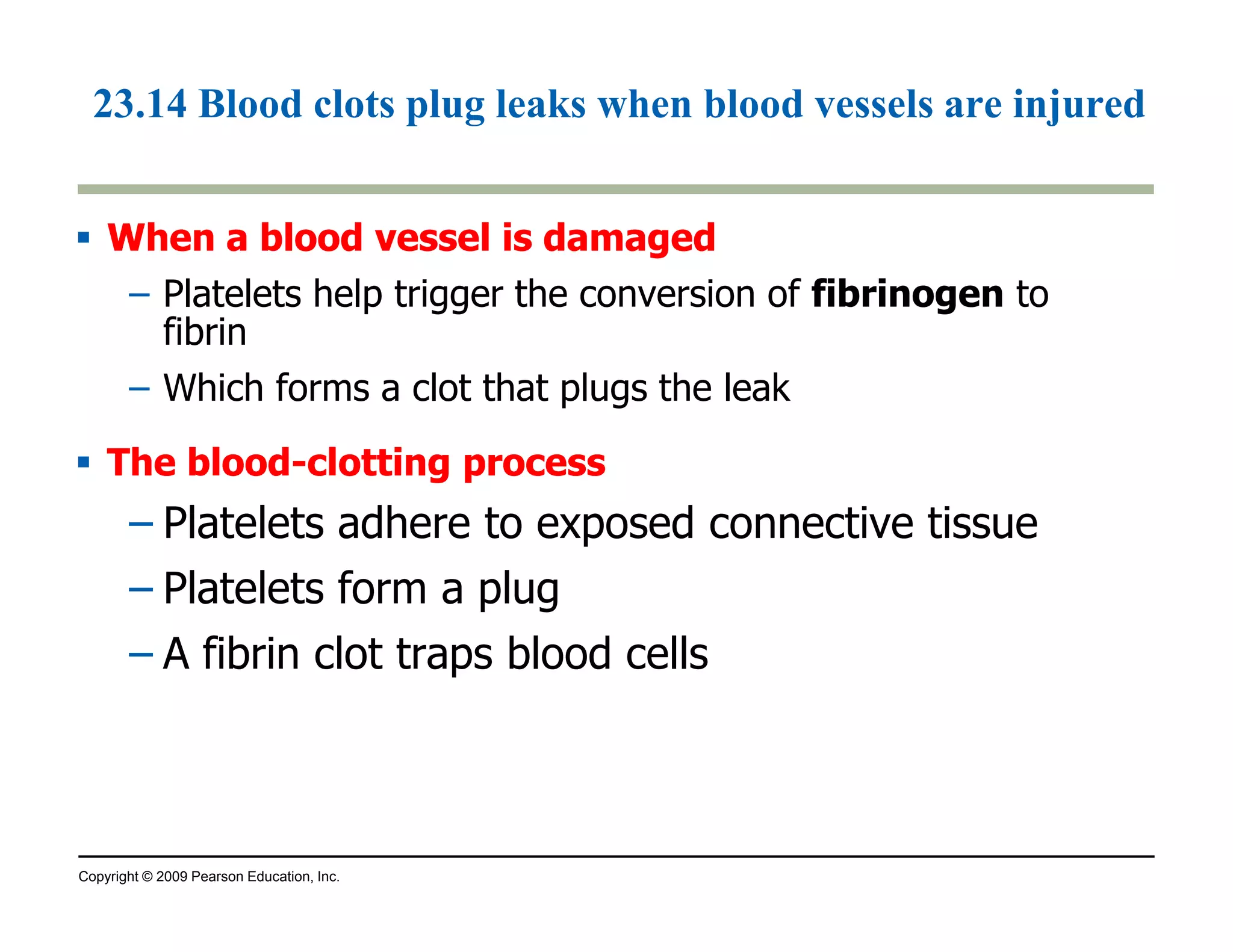
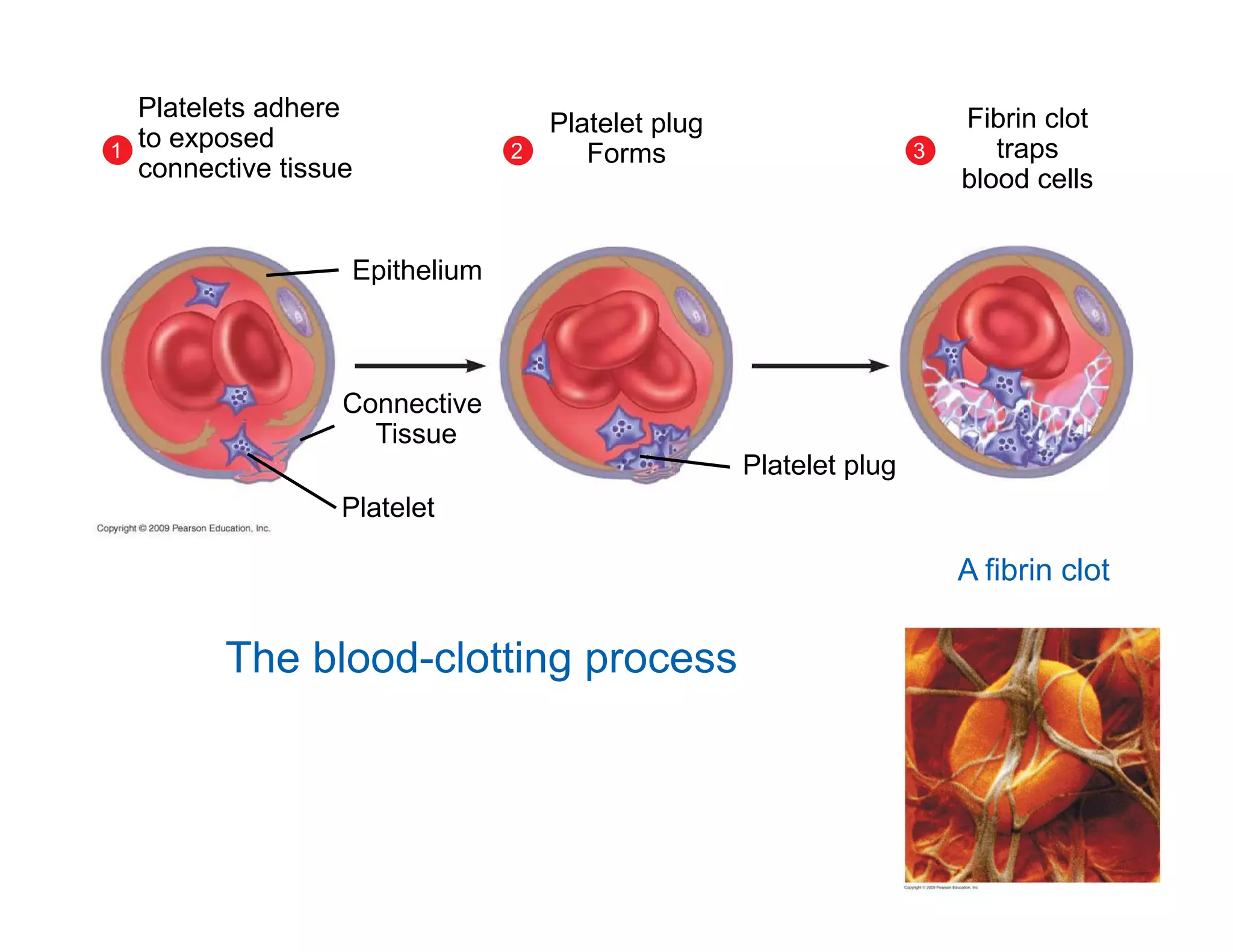
Mechanisms of blood clotting, including the role of platelets and fibrin in preventing blood loss.
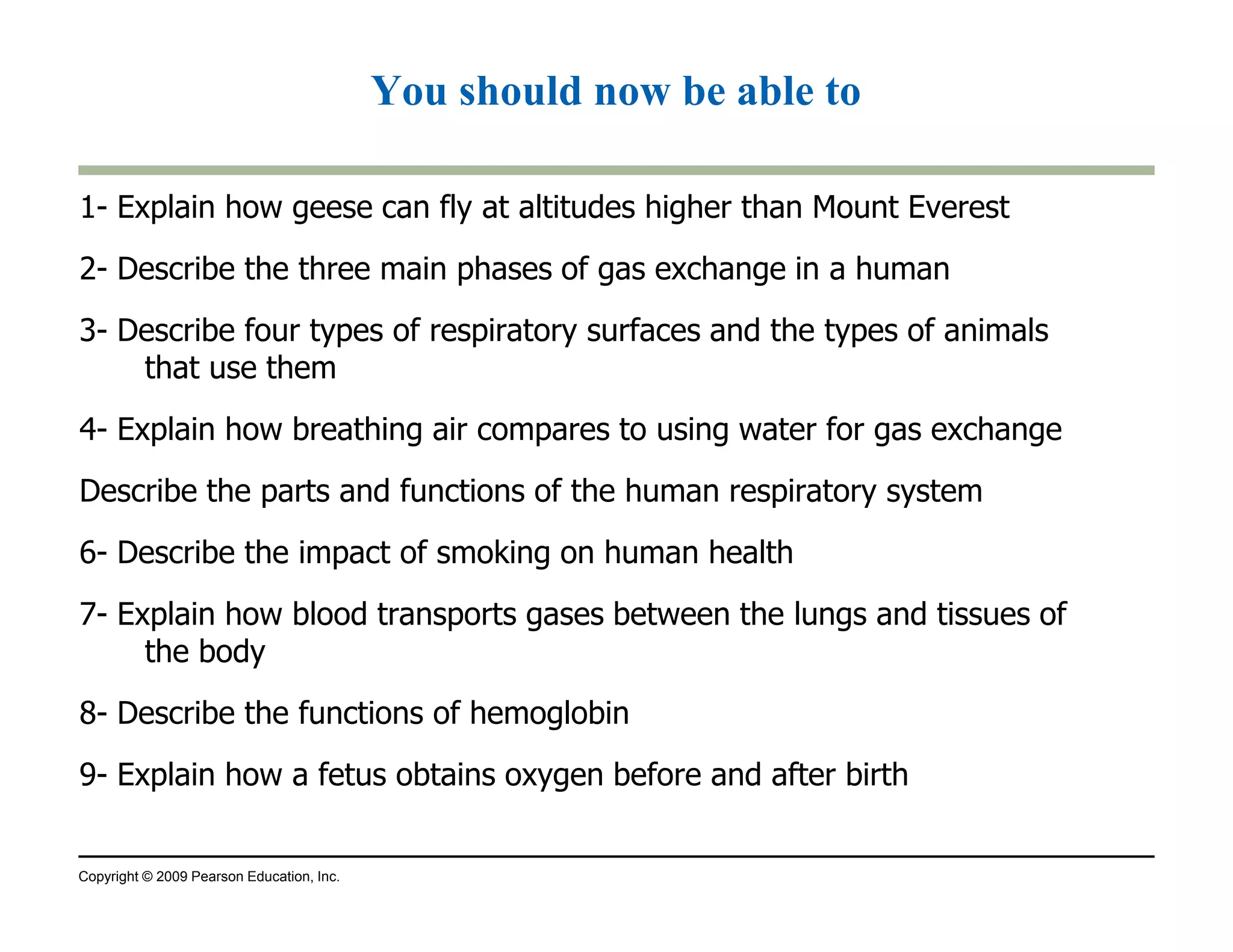
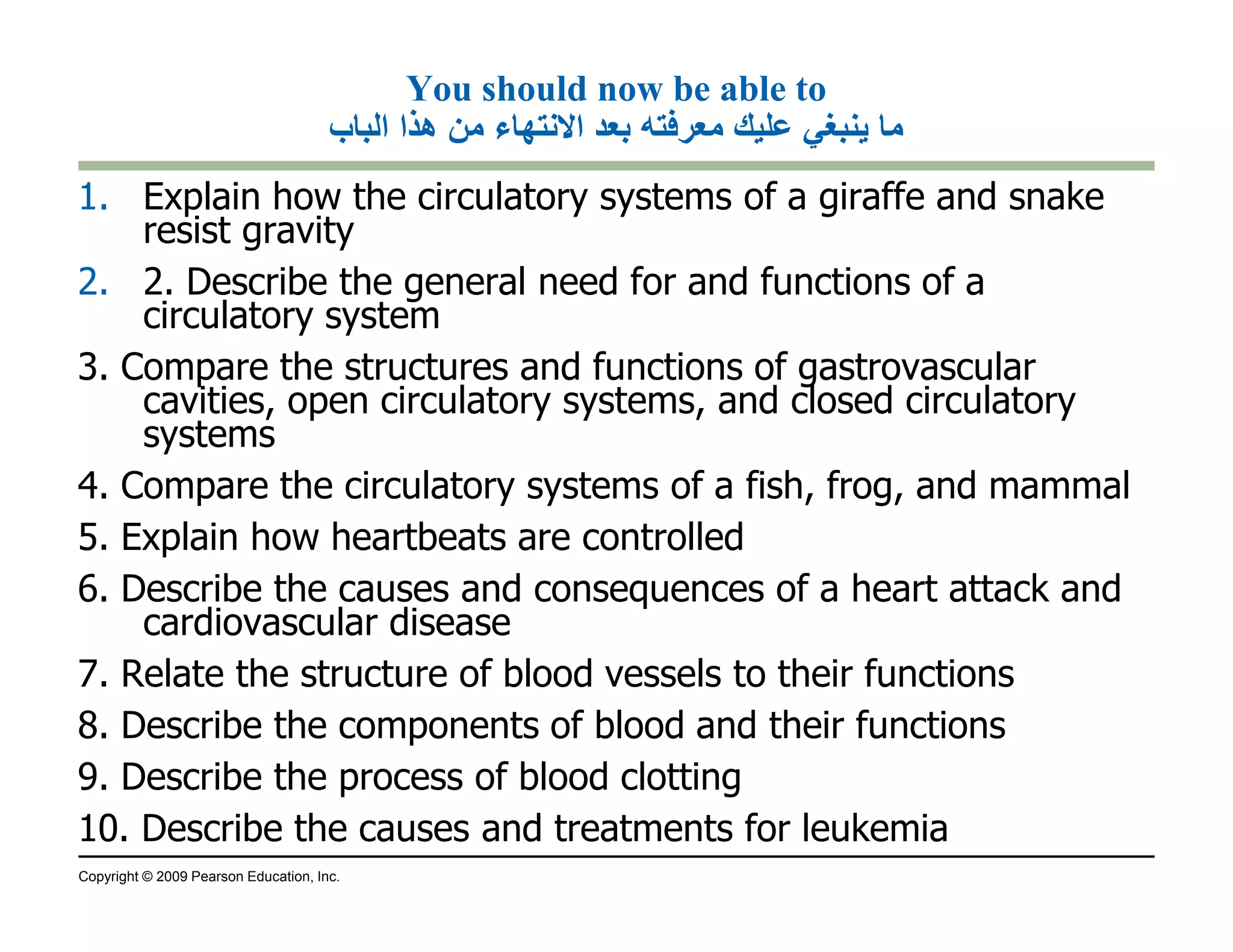
Summary of what students should be able to explain about circulation, respiratory gas exchange, and cardiovascular diseases. Recap and expectations following the chapter, featuring comparisons and critical information on circulatory systems. Insights into the evolution of various heart structures and their implications for circulatory efficiency.
Explains heart types across species (four-chambered hearts in mammals, birds, etc.) and functional relevance.
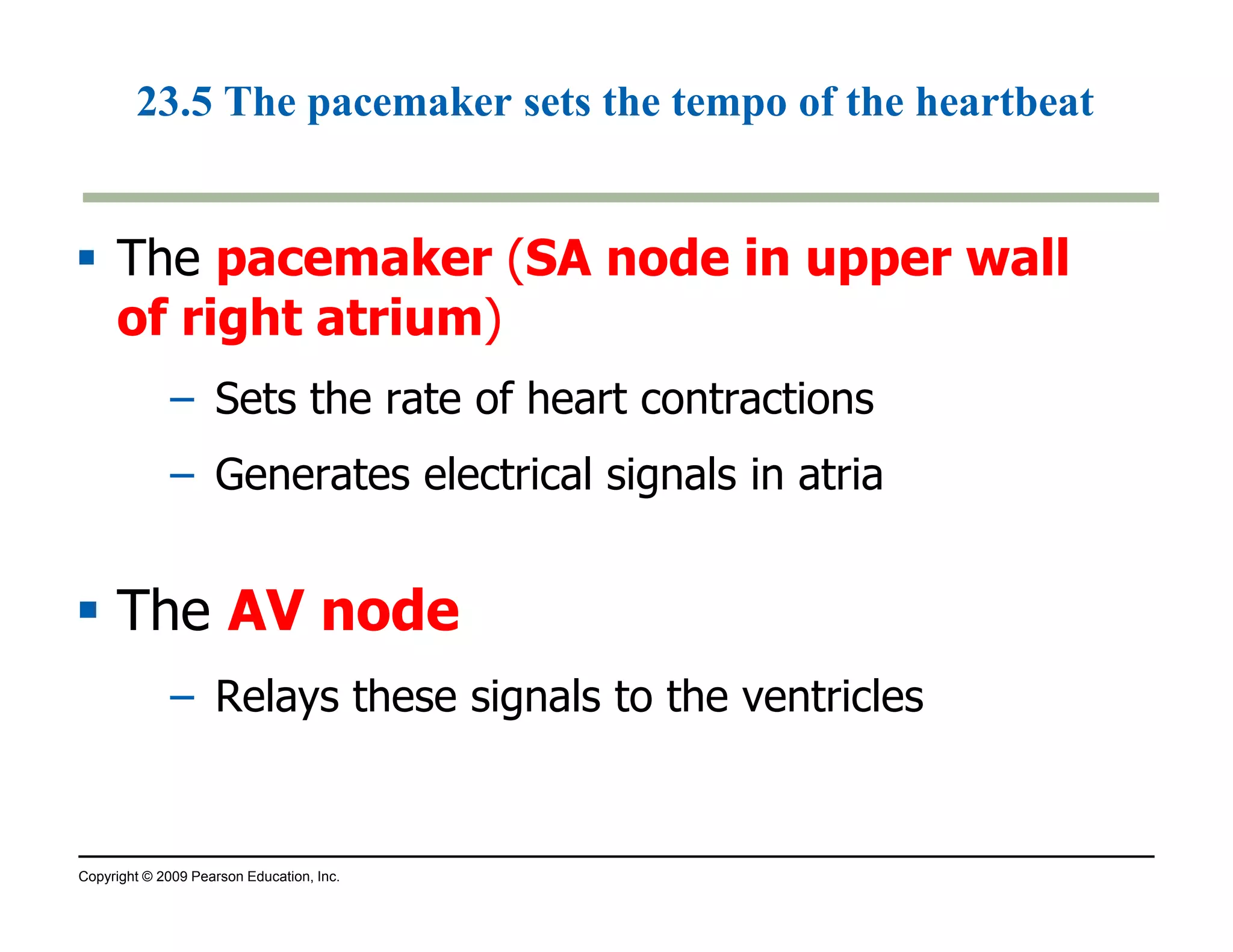
Detailing the human heart structure and the pacemaker's role in cardiac function.
Details on heart rhythm and how signals are relayed within the heart.
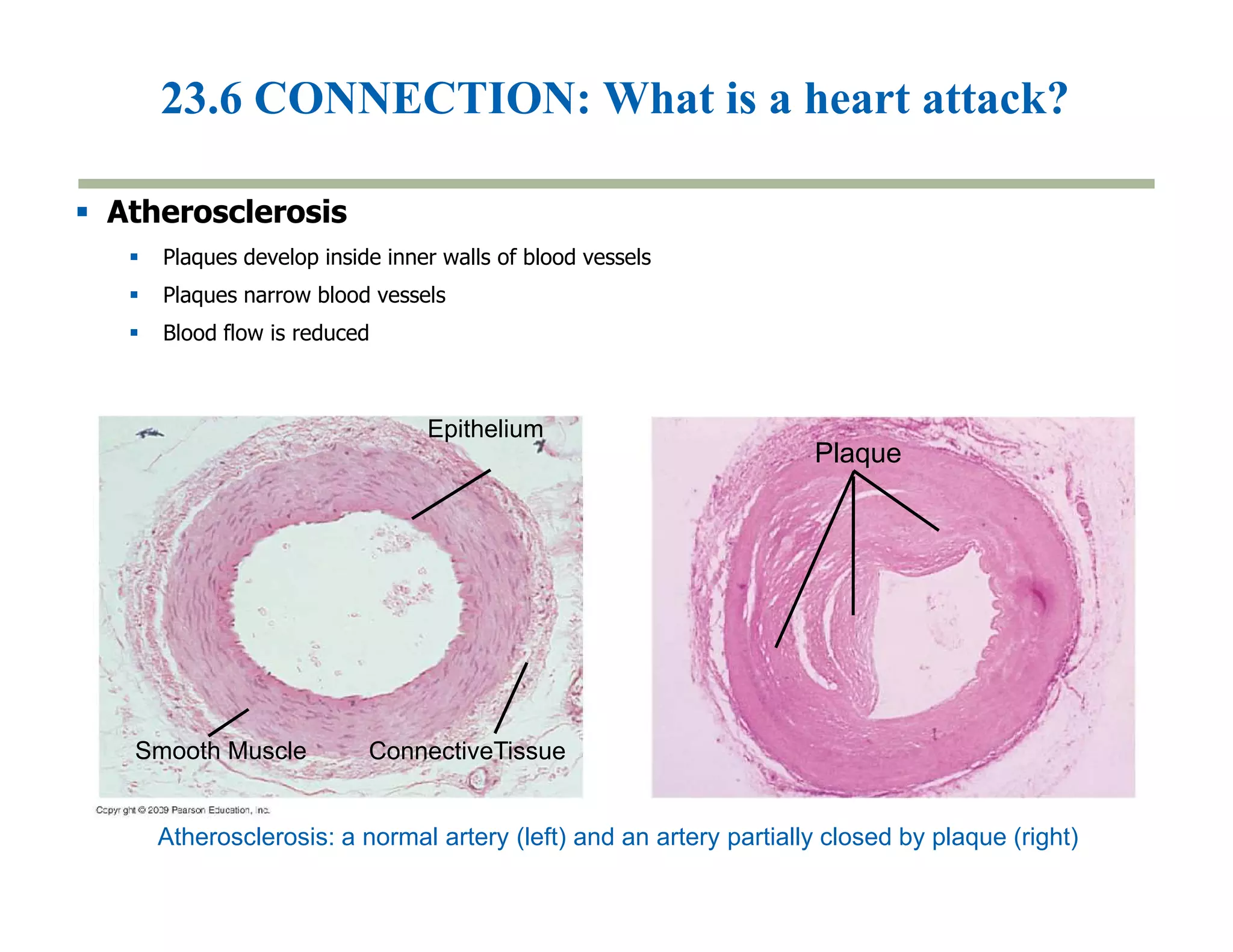
Discussion of heart conditions including heart attacks, strokes, and underlying risks such as atherosclerosis.
Describes how the structure of blood vessels correlates with their physiological functions.
In-depth look at blood composition including components and their roles in the body.
Functionality of red and white blood cells, including disorders like anemia and their treatments.
Explained conditions linked to abnormal red blood cell counts and their health impact.
Explains the blood clotting mechanisms and processes that protect against bleeding.

![Chapter 25: Excretion [compatibility mode]](https://cdn.slidesharecdn.com/ss_thumbnails/chapter25-excretioncompatibilitymode-141214135059-conversion-gate01-thumbnail.jpg?width=640&height=640&fit=bounds)
![Chapter 27 reproduction [compatibility mode]](https://cdn.slidesharecdn.com/ss_thumbnails/chapter27-reproductioncompatibilitymode-141214135921-conversion-gate01-thumbnail.jpg?width=640&height=640&fit=bounds)
![Chapter 22 gas exchange [compatibility mode]](https://cdn.slidesharecdn.com/ss_thumbnails/chapter22-gasexchangecompatibilitymode-141214134225-conversion-gate01-thumbnail.jpg?width=640&height=640&fit=bounds)
![Chapter 21 nutrition and digestion [compatibility mode]](https://cdn.slidesharecdn.com/ss_thumbnails/chapter21-nutritionanddigestioncompatibilitymode-141214134103-conversion-gate01-thumbnail.jpg?width=640&height=640&fit=bounds)


![03 [chapter 3 the cellular level of organization]](https://cdn.slidesharecdn.com/ss_thumbnails/03chapter3thecellularleveloforganization-170828035521-thumbnail.jpg?width=640&height=640&fit=bounds)
![Chapter 8: Genetics [compatibility mode]](https://cdn.slidesharecdn.com/ss_thumbnails/chapter8-geneticscompatibilitymode-141214140247-conversion-gate02-thumbnail.jpg?width=640&height=640&fit=bounds)
![Chapter 7 photosynthesis [compatibility mode]](https://cdn.slidesharecdn.com/ss_thumbnails/chapter7-photosynthesiscompatibilitymode-141214133517-conversion-gate02-thumbnail.jpg?width=640&height=640&fit=bounds)
![Chapter 6 cell energy [compatibility mode]](https://cdn.slidesharecdn.com/ss_thumbnails/chapter6-cellenergycompatibilitymode-141214133046-conversion-gate01-thumbnail.jpg?width=640&height=640&fit=bounds)
![Chapter 5 the working cells [compatibility mode]](https://cdn.slidesharecdn.com/ss_thumbnails/chapter5-theworkingcellscompatibilitymode-141214132834-conversion-gate01-thumbnail.jpg?width=640&height=640&fit=bounds)
![Chapter 16 biodiversity [compatibility mode]](https://cdn.slidesharecdn.com/ss_thumbnails/chapter16-biodiversitycompatibilitymode-141214135452-conversion-gate02-thumbnail.jpg?width=640&height=640&fit=bounds)


![Chapter 4 cell & tissues (1) [compatibility mode]](https://cdn.slidesharecdn.com/ss_thumbnails/chapter4-celltissues1compatibilitymode-141214131430-conversion-gate01-thumbnail.jpg?width=640&height=640&fit=bounds)
![Chapter 3 [compatibility mode]](https://cdn.slidesharecdn.com/ss_thumbnails/chapter3compatibilitymode-141214125513-conversion-gate02-thumbnail.jpg?width=640&height=640&fit=bounds)
![1 introduction 2015 [compatibility mode]](https://cdn.slidesharecdn.com/ss_thumbnails/1-introduction2015compatibilitymode-141214123928-conversion-gate02-thumbnail.jpg?width=640&height=640&fit=bounds)


