Temporary
Pacemakers
Topics to be covered
• Indications
• Pacemaker nomenclature
• Insertion Technique
• Complications
• Orientation to “the box” (Pacemaker)
General indications for a temporary
pacemaker
• Heart rate is slow, causing hemodynamic compromise
• Sick sinus syndrome
sinus bradycardia or atrial fibrillation with slow heart rate
response (generally < 40bpm)
• Heart block
3rd
degree
2nd
degree type 2 (Mobitz)
• Malignant Tachyarrhythmia caused by bradycardia
 Torsades de Pointes
Clinical settings for temporary
pacemaker
• Syncope
• Myocardial infarction
Especially inferior
• Shock due to bradycardia
• Myocarditis
• Lyme disease
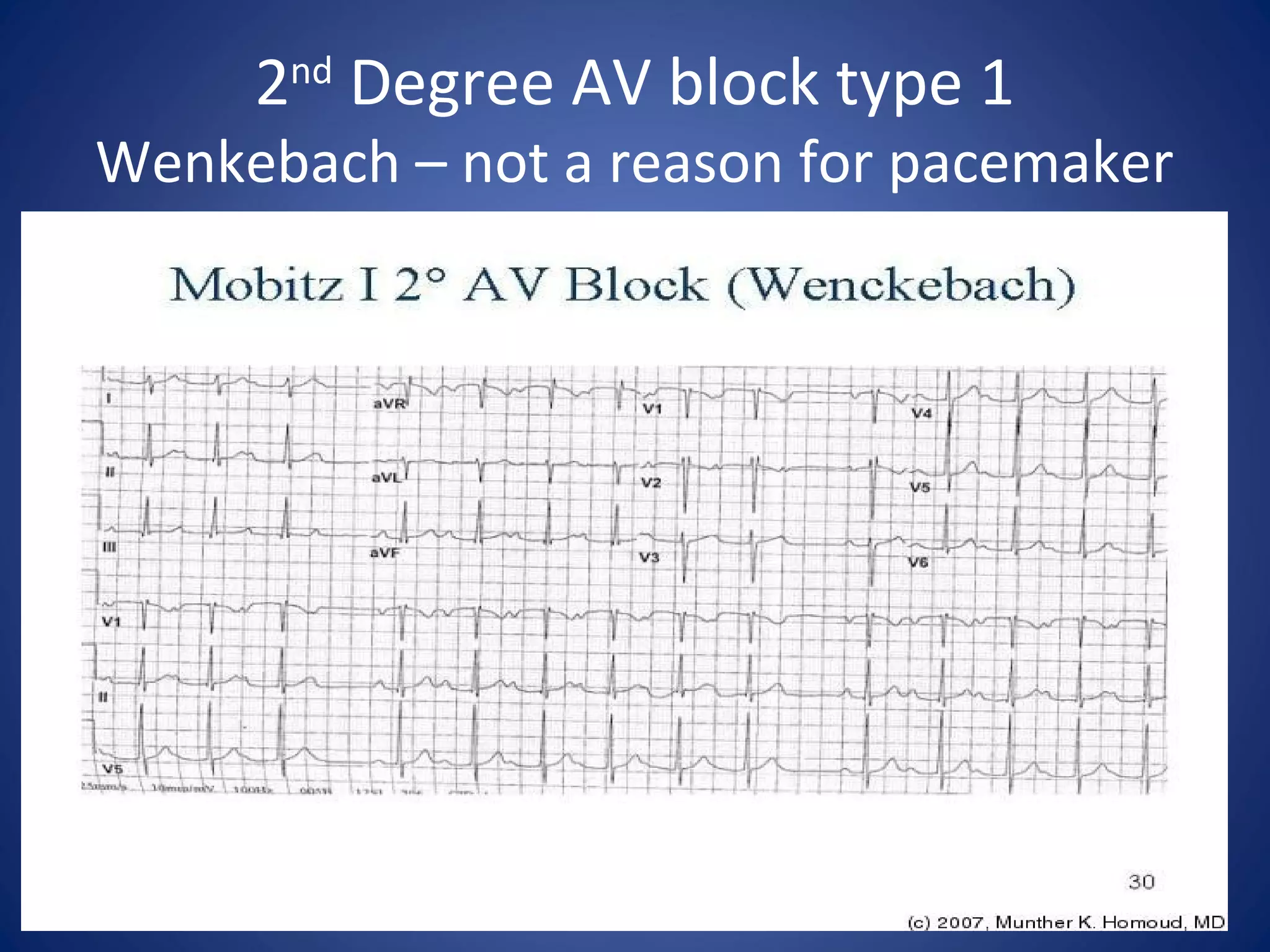
2nd
Degree AV block type 1
Wenkebach – not a reason for pacemaker
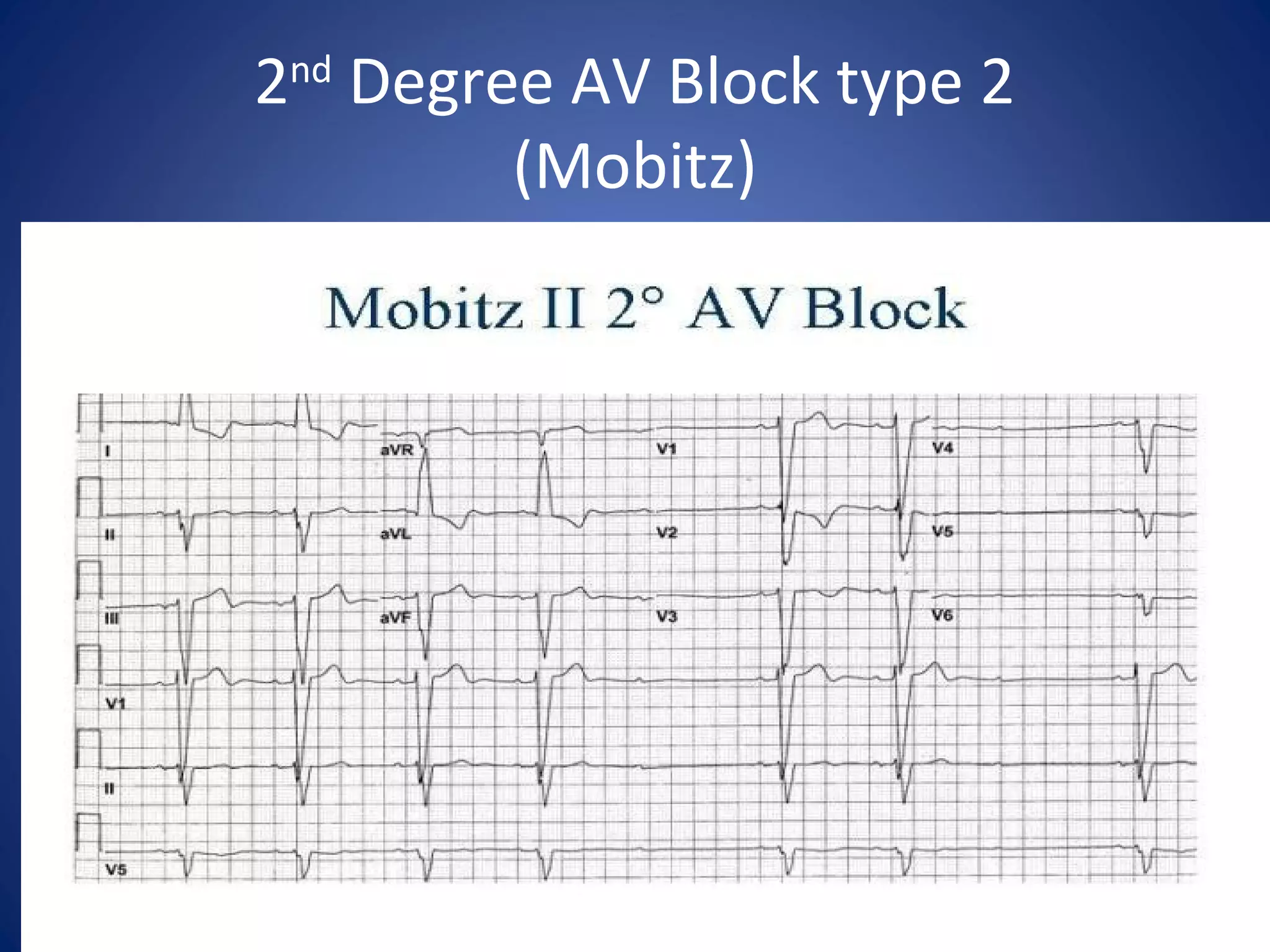
2nd
Degree AV Block type 2
(Mobitz)
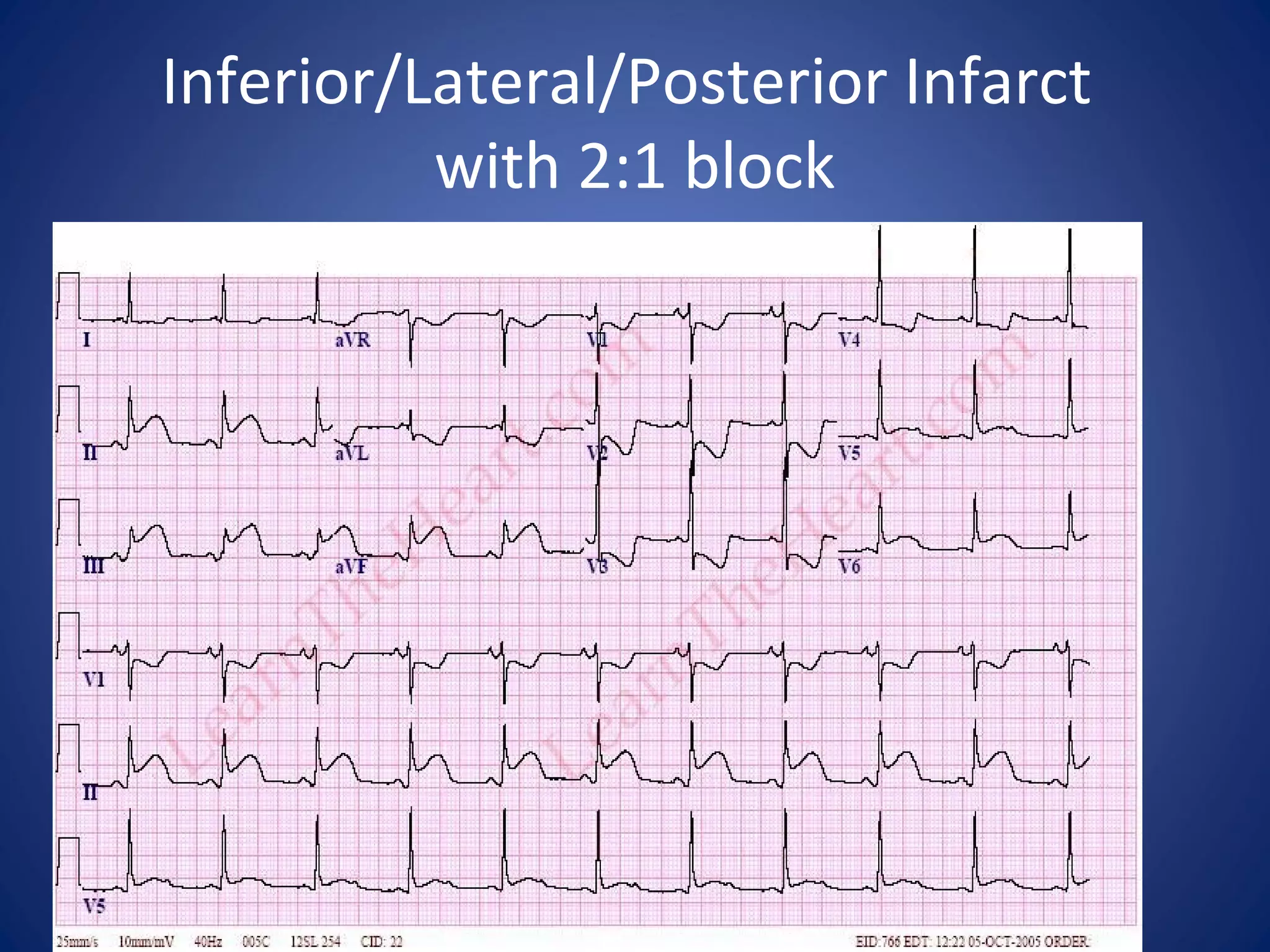
Inferior/Lateral/Posterior Infarct
with 2:1 block
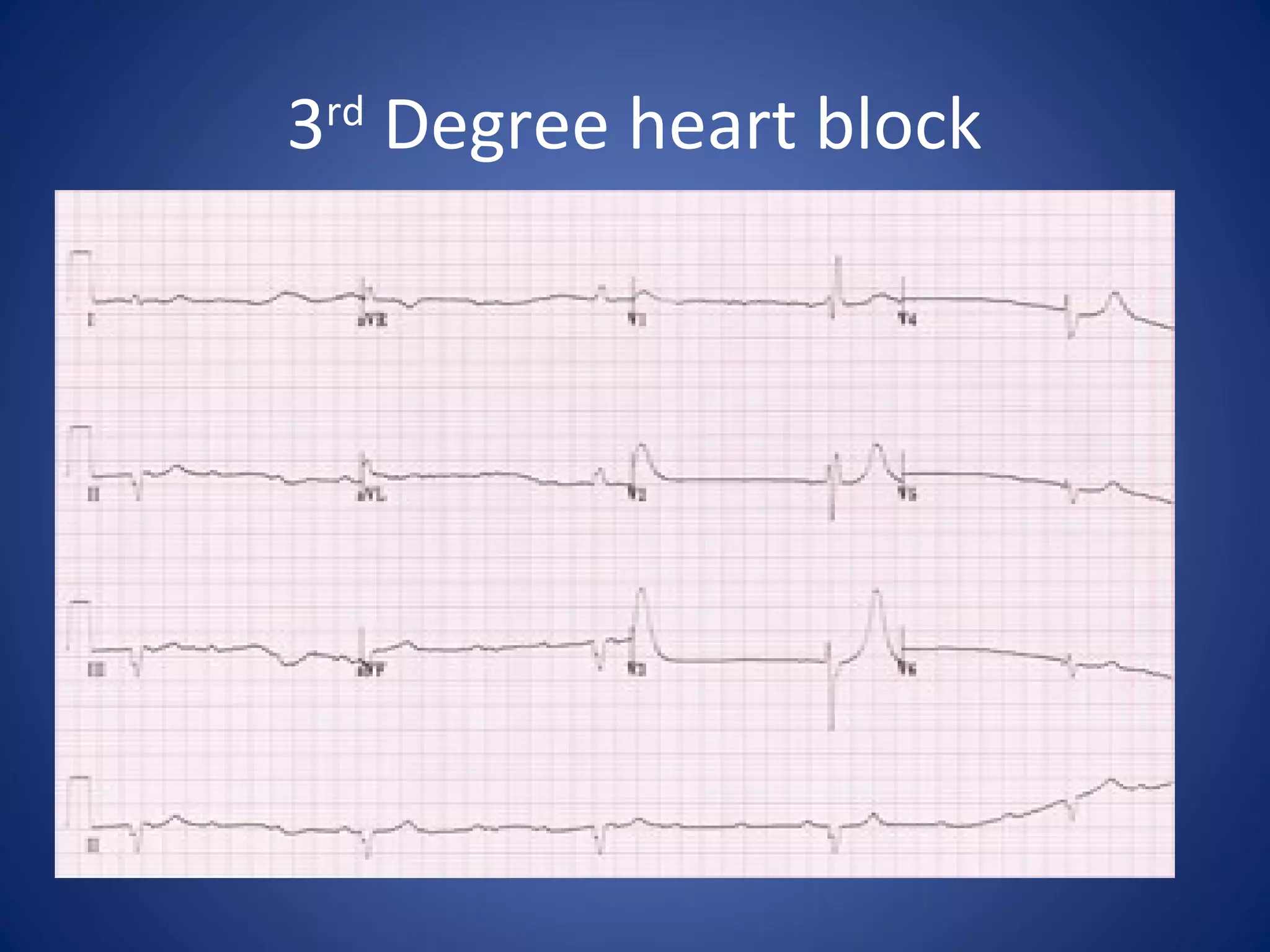
3rd
Degree heart block
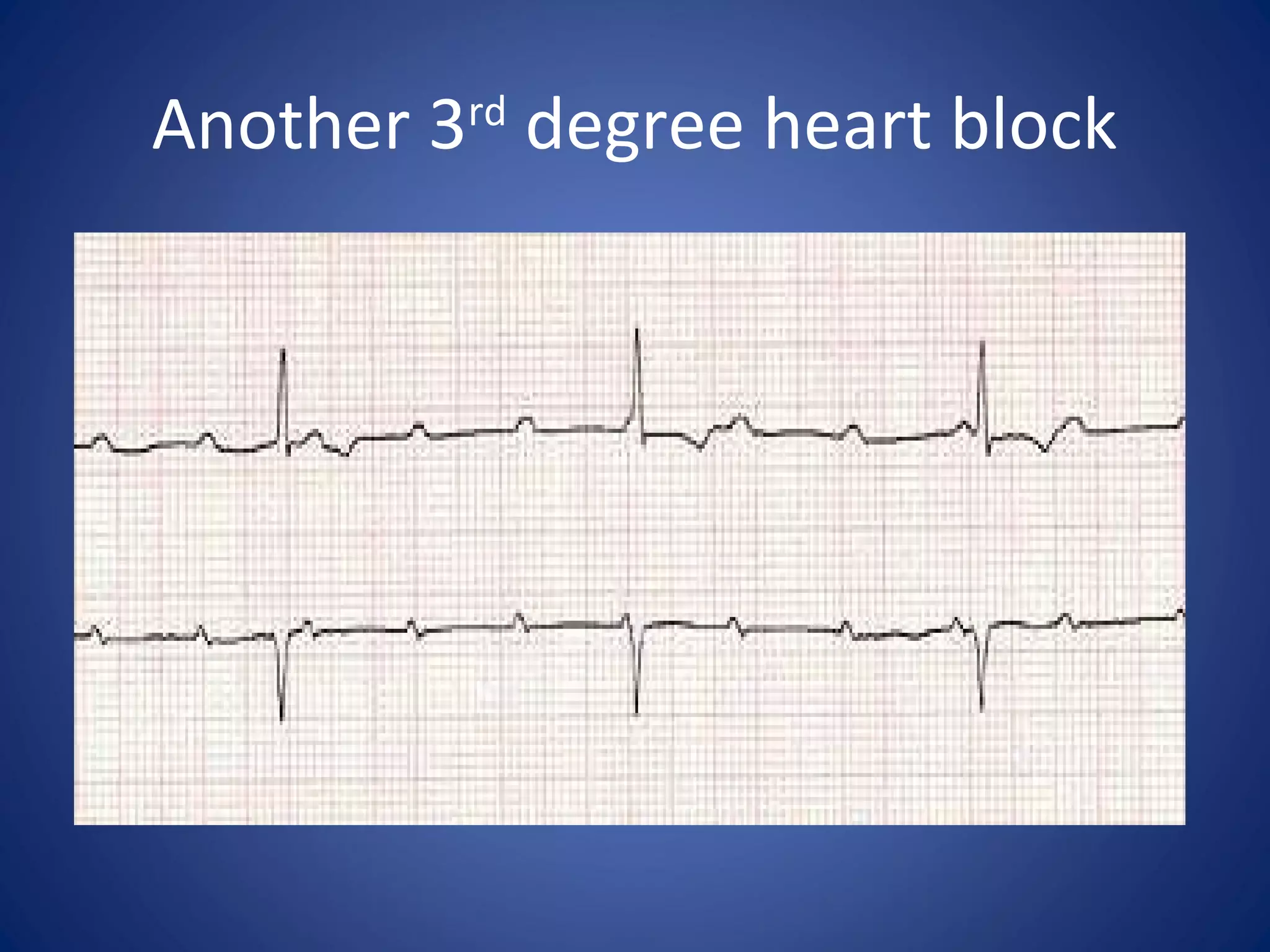
Another 3rd
degree heart block
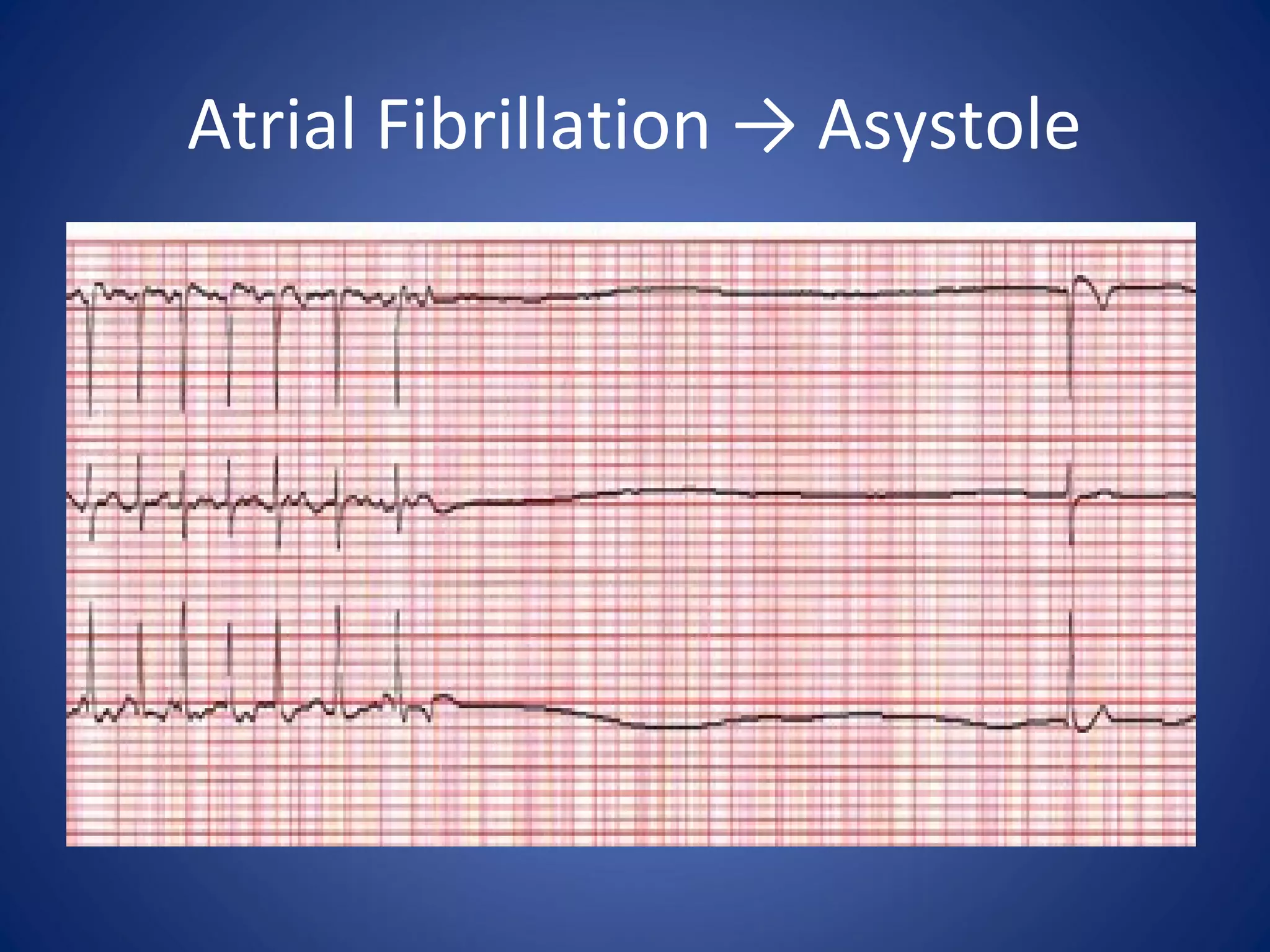
Atrial Fibrillation → Asystole
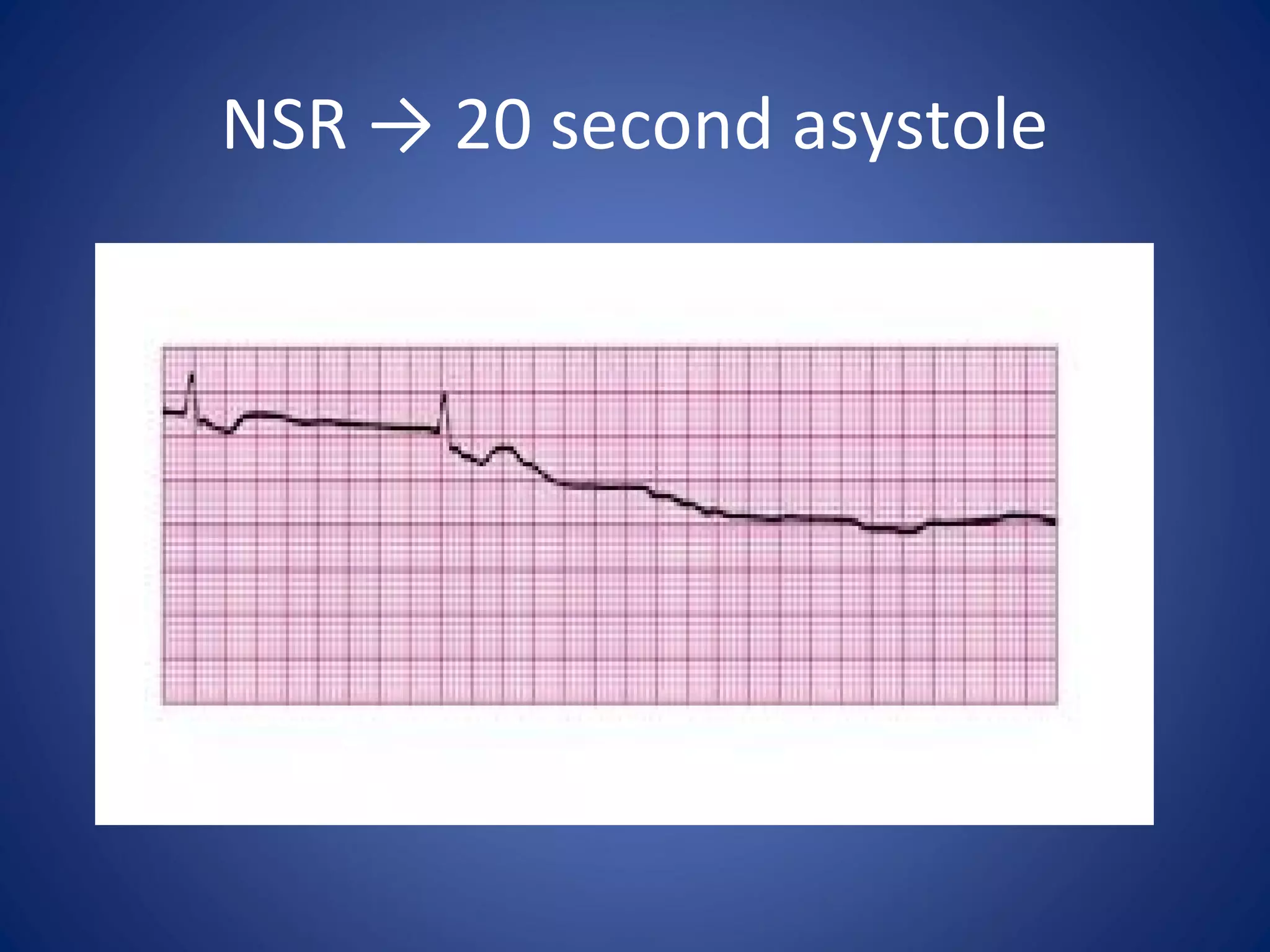
NSR → 20 second asystole
Pacemaker Nomenclature
• Common Modes
 VVI – Single chamber (ventricle)
 DDD – Dual chamber
 AAI (uncommon) – Single chamber (atrium)
• 1st
Letter is chamber PACED
• 2nd
Letter is chamber SENSED
• 3rd
Letter is response
 I = Inhibit
 T= Triggered (Unusual)
 D= Dual (Inhibit or pace)
• 4th
Letter R= Rate responsive (permanent pacers)
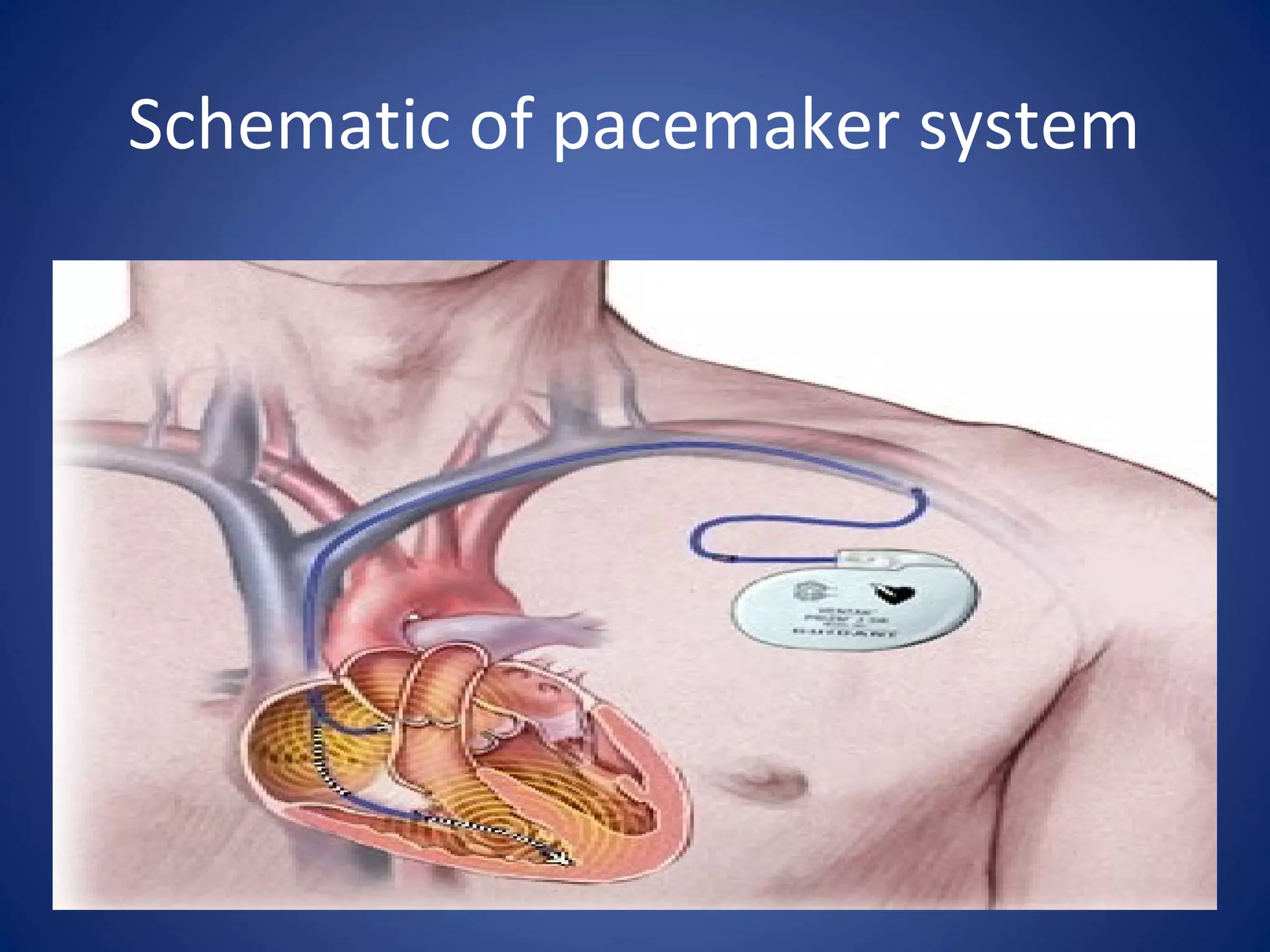
Components of a pacemakers system
• Lead
Wire connects to heart
Percutaneous
 Ventricular wire sits in RV apex
Epicardial (post surgery)
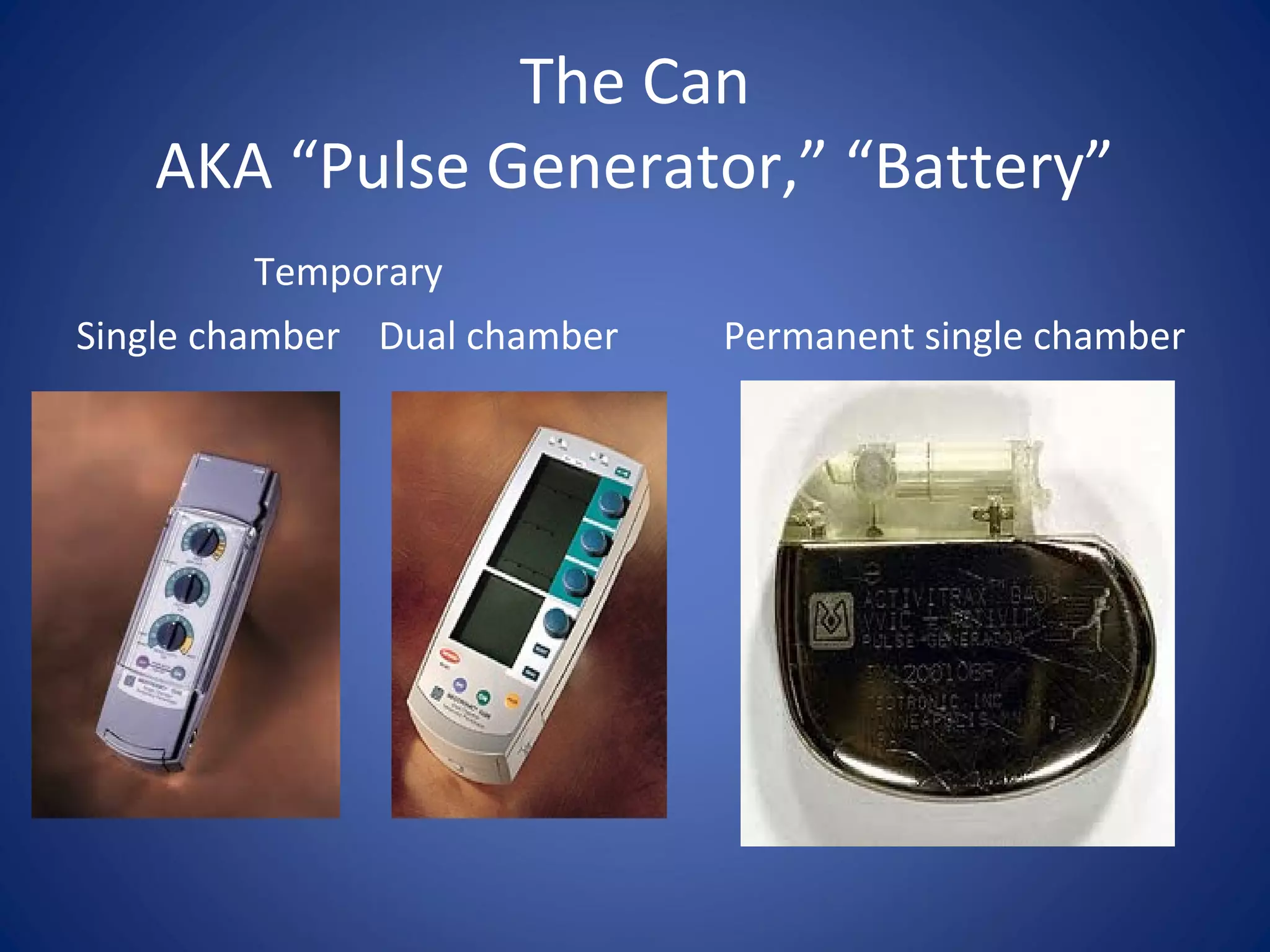
The Can
AKA “Pulse Generator,” “Battery”
Temporary
Single chamber Dual chamber Permanent single chamber
Schematic of pacemaker system
Sites of insertion for a temporary
pacemakers
• Right internal jugular
• Left subclavian vein
• Right subclavian vein
• Either femoral vein (Fluoroscopy required)
• Left IJ is possible but very difficult
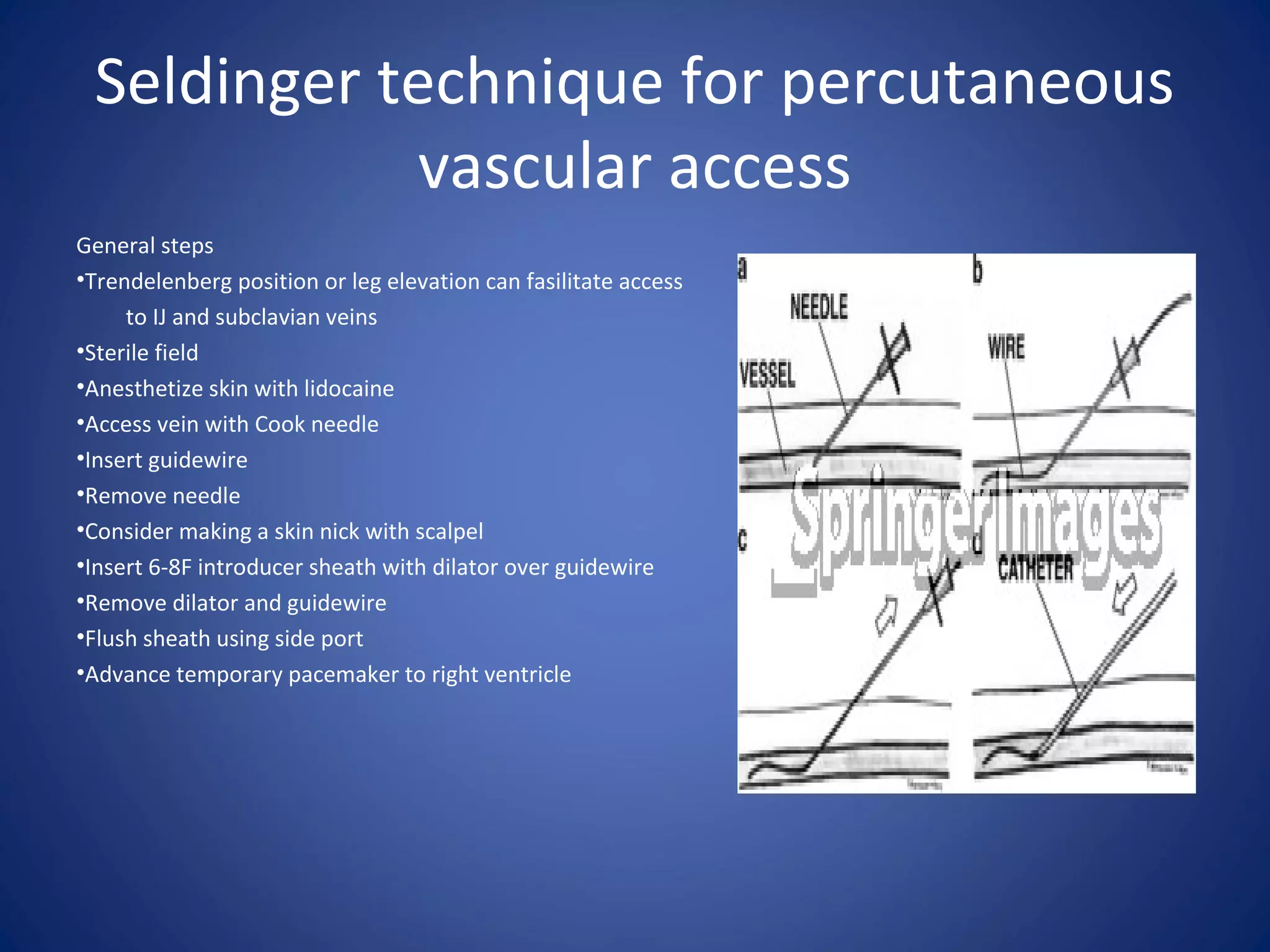
Seldinger technique for percutaneous
vascular access
General steps
•Trendelenberg position or leg elevation can fasilitate access
to IJ and subclavian veins
•Sterile field
•Anesthetize skin with lidocaine
•Access vein with Cook needle
•Insert guidewire
•Remove needle
•Consider making a skin nick with scalpel
•Insert 6-8F introducer sheath with dilator over guidewire
•Remove dilator and guidewire
•Flush sheath using side port
•Advance temporary pacemaker to right ventricle
Complication of temporary pacemaker
insertion
• Blood loss/hematoma
• Infection
• Arrhythmia (especially during insertion)
PVC’s are common
Heart block
Especially in patients with underlying LBBB
Bundle branch block
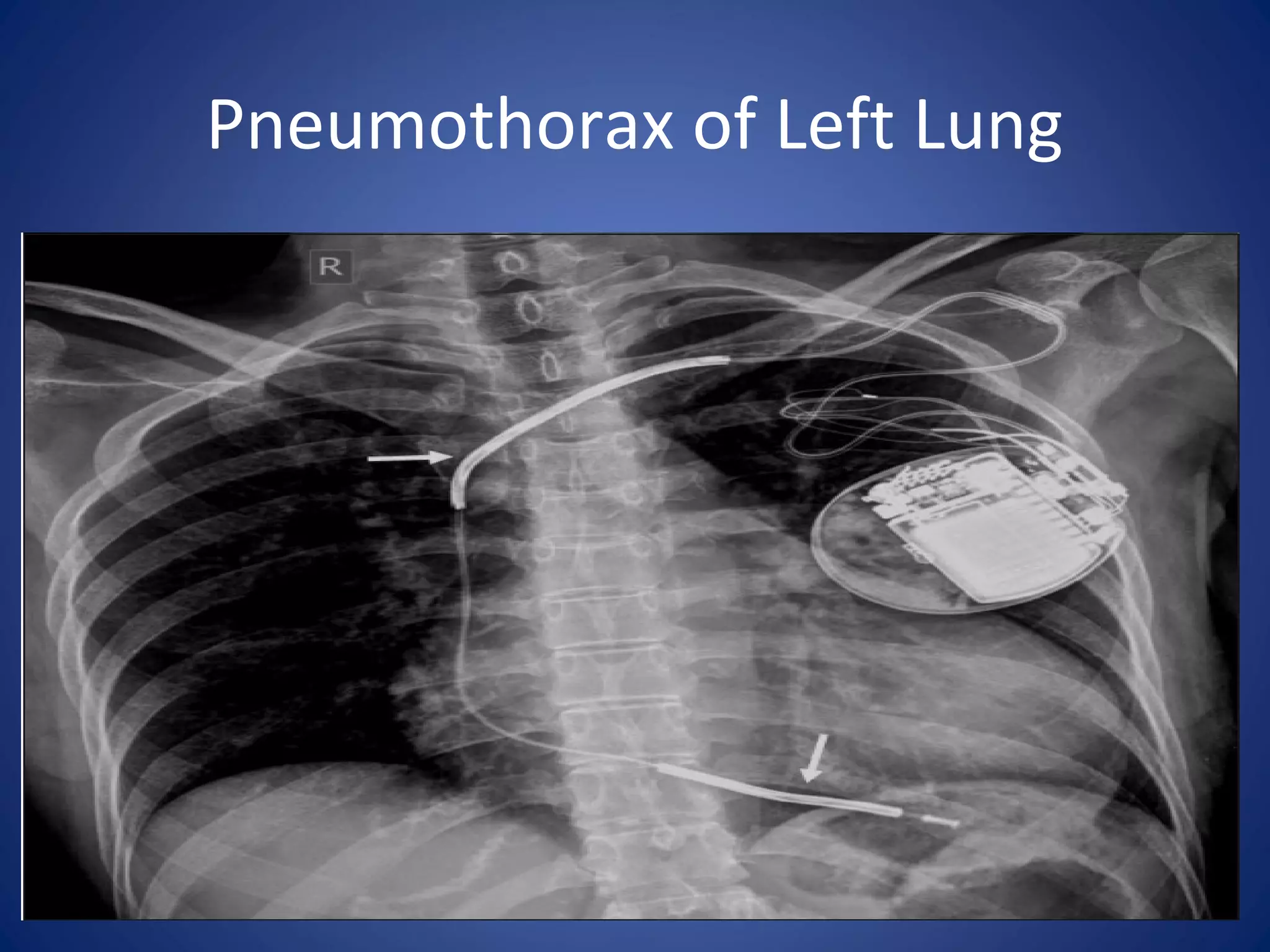
• Pneumothorax (about 1+% when subclavian
access used)
• Cardiac perforation → Tamponade
Pneumothorax of Left Lung
Functions of a pacemaker
• Sensing
The device ‘sees’ a native heart beat
• Pacing
The device delivers a shock to stimulate a heart
beat
VVI Explained
• A VVI pacemaker
Paces the ventricle
Senses the ventricle
In response to a sensed event it INHIBITS the
pacing response
So if it doesn’t SENSE a native heart beat in a specified
period, it will deliver a pace.
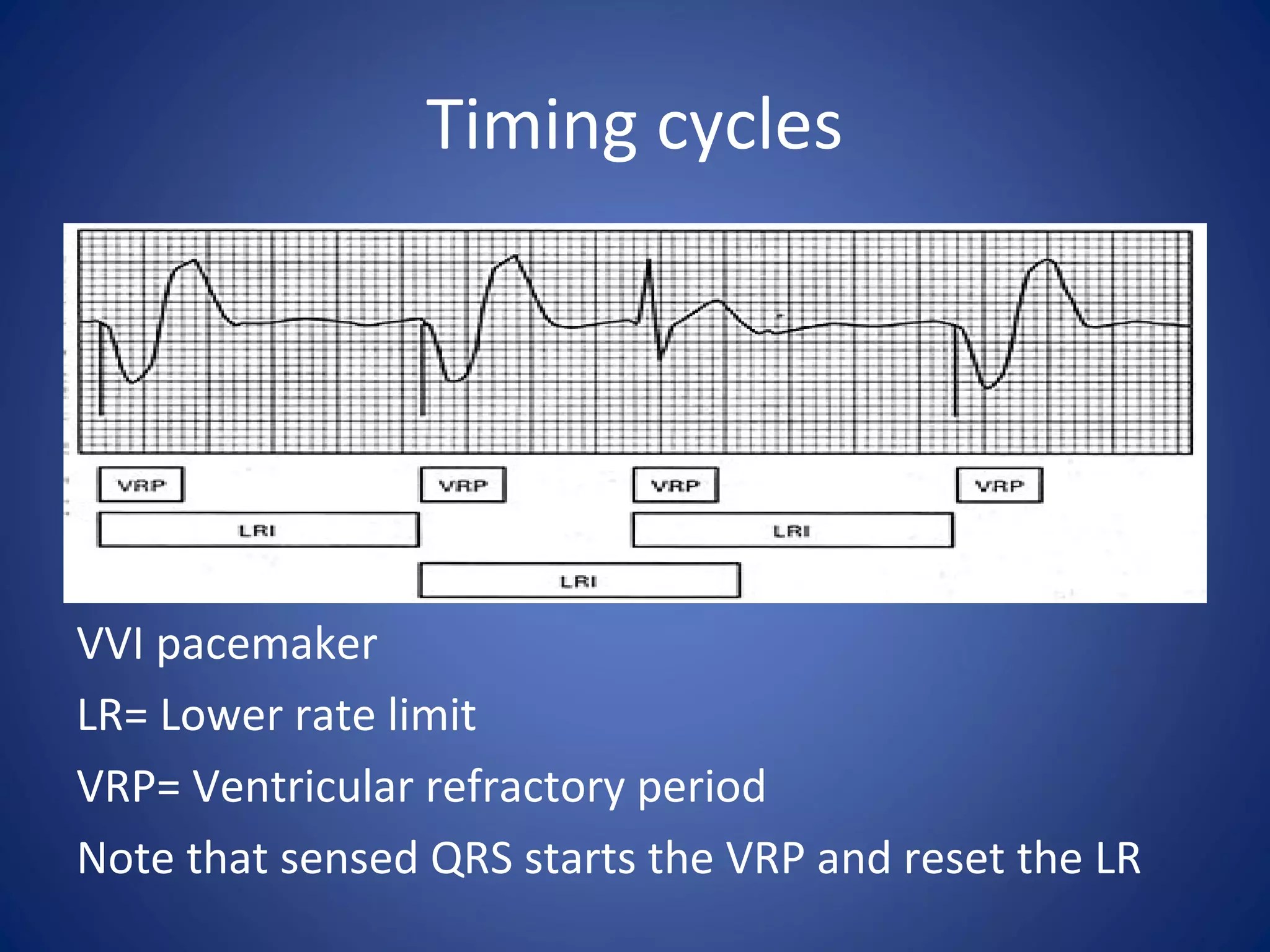
Timing cycles
VVI pacemaker
LR= Lower rate limit
VRP= Ventricular refractory period
Note that sensed QRS starts the VRP and reset the LR
The dials on the Temporary
pacemaker
• Rate
Determines the lower rate limit of the device
Heart rate should not go lower than the set rate
• Output
In milliamps, the amount of ‘juice’ the device
outputs with each pacer spike
Sensitivity
• Sensitivity → asynchronous
In millivolts, the amount of energy that has to be
detected in order for the device to ‘sense’ a beat
• Higher millivolts = less sensitive
More likely for the pacemaker to pace at the lower
rate regardless of what the heart does on its own
• Lower millivolts = more sensitive
More likely to pick up noise, and ‘sense’ a ventricular
beat even though nothing actually happened
Testing thresholds
• Output Threshold
Set sensitivity to ‘asynchronous’
Set Rate just above the native heart rate
60-80 bpm
Start output at 5-10 mA, and gradually turn down
until ventricular capture is lost
The last point before losing capture is the
threshold
Pacemaker output should be set as 2-3x the
threshold
Testing Thresholds
• Sensitivity Threshold
Not always necessary
Testing the amplitude of native QRS complexes as
seen by the can
Set Rate just below native heart rate
Set output at 2-3x the Pacing threshold
Start asynchonrous, then slowly turn dial down.
Pacemaker spikes will disappear when the sensitivity
threshold is reached. The pacemaker can now ‘see’
the native QRS complexes
The pacemaker should be set at a sensitivity 1/3 to
1/2 the sensitivity threshold
Troubleshooting Pacemakers
• Normal behavior that looks strange
• Failure to capture
• Undersensing
• Oversensing
• Cross Talk (Dual Chamber only)

Pacemaker

  • 1.
  • 2.
    Topics to becovered • Indications • Pacemaker nomenclature • Insertion Technique • Complications • Orientation to “the box” (Pacemaker)
  • 3.
    General indications fora temporary pacemaker • Heart rate is slow, causing hemodynamic compromise • Sick sinus syndrome sinus bradycardia or atrial fibrillation with slow heart rate response (generally < 40bpm) • Heart block 3rd degree 2nd degree type 2 (Mobitz) • Malignant Tachyarrhythmia caused by bradycardia  Torsades de Pointes
  • 4.
    Clinical settings fortemporary pacemaker • Syncope • Myocardial infarction Especially inferior • Shock due to bradycardia • Myocarditis • Lyme disease
  • 5.
    2nd Degree AV blocktype 1 Wenkebach – not a reason for pacemaker
  • 6.
    2nd Degree AV Blocktype 2 (Mobitz)
  • 7.
  • 8.
  • 9.
  • 10.
  • 11.
    NSR → 20second asystole
  • 12.
    Pacemaker Nomenclature • CommonModes  VVI – Single chamber (ventricle)  DDD – Dual chamber  AAI (uncommon) – Single chamber (atrium) • 1st Letter is chamber PACED • 2nd Letter is chamber SENSED • 3rd Letter is response  I = Inhibit  T= Triggered (Unusual)  D= Dual (Inhibit or pace) • 4th Letter R= Rate responsive (permanent pacers)
  • 13.
    Components of apacemakers system • Lead Wire connects to heart Percutaneous  Ventricular wire sits in RV apex Epicardial (post surgery)
  • 14.
    The Can AKA “PulseGenerator,” “Battery” Temporary Single chamber Dual chamber Permanent single chamber
  • 15.
  • 16.
    Sites of insertionfor a temporary pacemakers • Right internal jugular • Left subclavian vein • Right subclavian vein • Either femoral vein (Fluoroscopy required) • Left IJ is possible but very difficult
  • 17.
    Seldinger technique forpercutaneous vascular access General steps •Trendelenberg position or leg elevation can fasilitate access to IJ and subclavian veins •Sterile field •Anesthetize skin with lidocaine •Access vein with Cook needle •Insert guidewire •Remove needle •Consider making a skin nick with scalpel •Insert 6-8F introducer sheath with dilator over guidewire •Remove dilator and guidewire •Flush sheath using side port •Advance temporary pacemaker to right ventricle
  • 18.
    Complication of temporarypacemaker insertion • Blood loss/hematoma • Infection • Arrhythmia (especially during insertion) PVC’s are common Heart block Especially in patients with underlying LBBB Bundle branch block • Pneumothorax (about 1+% when subclavian access used) • Cardiac perforation → Tamponade
  • 19.
  • 20.
    Functions of apacemaker • Sensing The device ‘sees’ a native heart beat • Pacing The device delivers a shock to stimulate a heart beat
  • 21.
    VVI Explained • AVVI pacemaker Paces the ventricle Senses the ventricle In response to a sensed event it INHIBITS the pacing response So if it doesn’t SENSE a native heart beat in a specified period, it will deliver a pace.
  • 22.
    Timing cycles VVI pacemaker LR=Lower rate limit VRP= Ventricular refractory period Note that sensed QRS starts the VRP and reset the LR
  • 23.
    The dials onthe Temporary pacemaker • Rate Determines the lower rate limit of the device Heart rate should not go lower than the set rate • Output In milliamps, the amount of ‘juice’ the device outputs with each pacer spike
  • 24.
    Sensitivity • Sensitivity →asynchronous In millivolts, the amount of energy that has to be detected in order for the device to ‘sense’ a beat • Higher millivolts = less sensitive More likely for the pacemaker to pace at the lower rate regardless of what the heart does on its own • Lower millivolts = more sensitive More likely to pick up noise, and ‘sense’ a ventricular beat even though nothing actually happened
  • 25.
    Testing thresholds • OutputThreshold Set sensitivity to ‘asynchronous’ Set Rate just above the native heart rate 60-80 bpm Start output at 5-10 mA, and gradually turn down until ventricular capture is lost The last point before losing capture is the threshold Pacemaker output should be set as 2-3x the threshold
  • 26.
    Testing Thresholds • SensitivityThreshold Not always necessary Testing the amplitude of native QRS complexes as seen by the can Set Rate just below native heart rate Set output at 2-3x the Pacing threshold Start asynchonrous, then slowly turn dial down. Pacemaker spikes will disappear when the sensitivity threshold is reached. The pacemaker can now ‘see’ the native QRS complexes The pacemaker should be set at a sensitivity 1/3 to 1/2 the sensitivity threshold
  • 27.
    Troubleshooting Pacemakers • Normalbehavior that looks strange • Failure to capture • Undersensing • Oversensing • Cross Talk (Dual Chamber only)