GPS (Global Positioning System) Presented by Ashok Kumar Narendra Kumar Pankaj
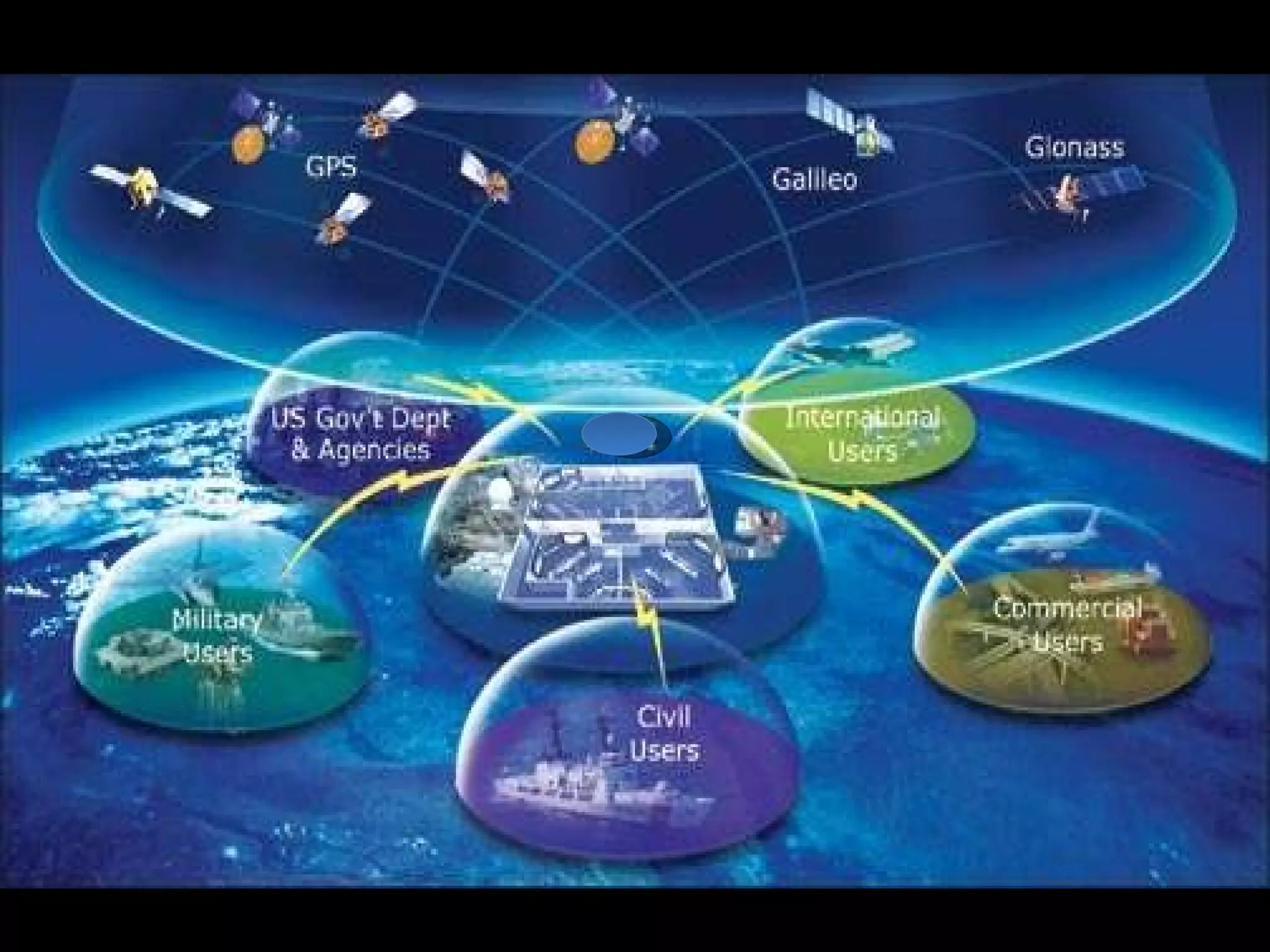
The Global Positioning System (GPS) is a U.S. space-based global navigation satellite system. US military owns it. Provides reliable positioning, navigation, and timing services to worldwide users on a continuous basis in all weather, day and night, anywhere on or near the Earth. Why do we need GPS?
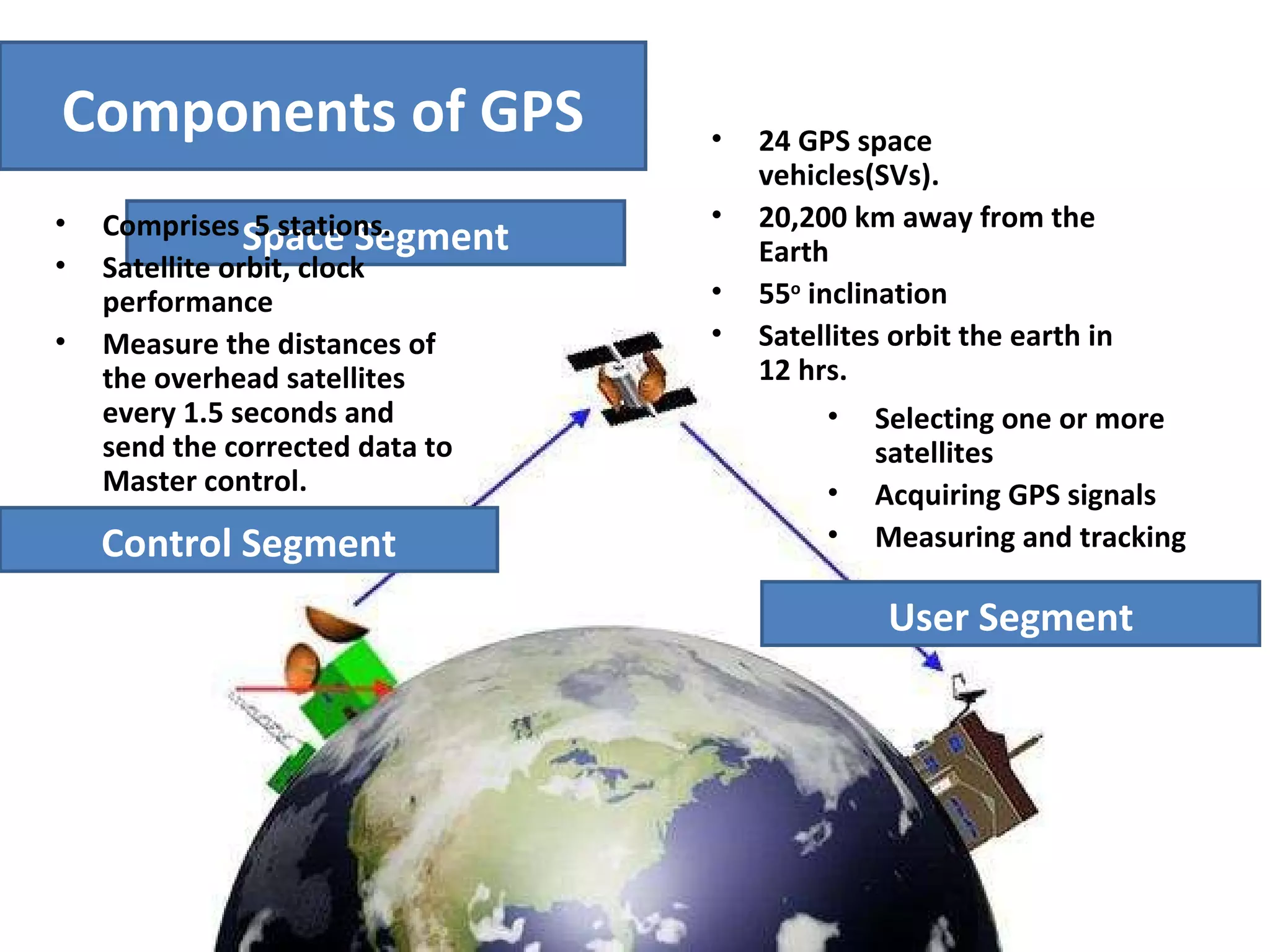
Components of GPS Space Segment Control Segment User Segment 24 GPS space vehicles(SVs). 20,200 km away from the Earth 55 o  inclination Satellites orbit the earth in 12 hrs. Selecting one or more satellites Acquiring GPS signals Measuring and tracking Comprises  5 stations. Satellite orbit, clock performance Measure the distances of the overhead satellites every 1.5 seconds and send the corrected data to Master control.
 
How GPS Works
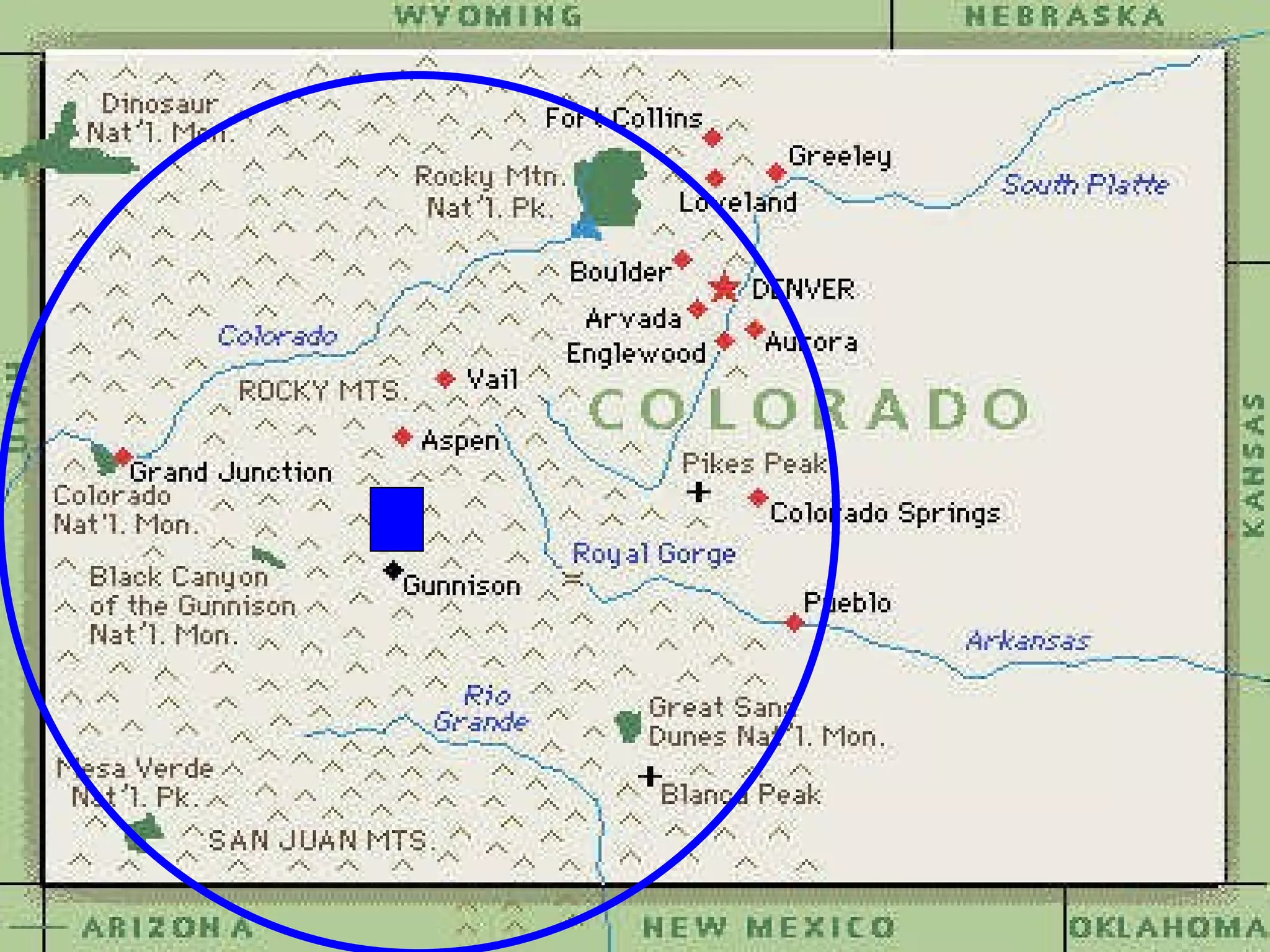
How do you use these satellites to calculate your position? The Global Positioning System is a constellation of 24  satellites that is used to calculate your position.
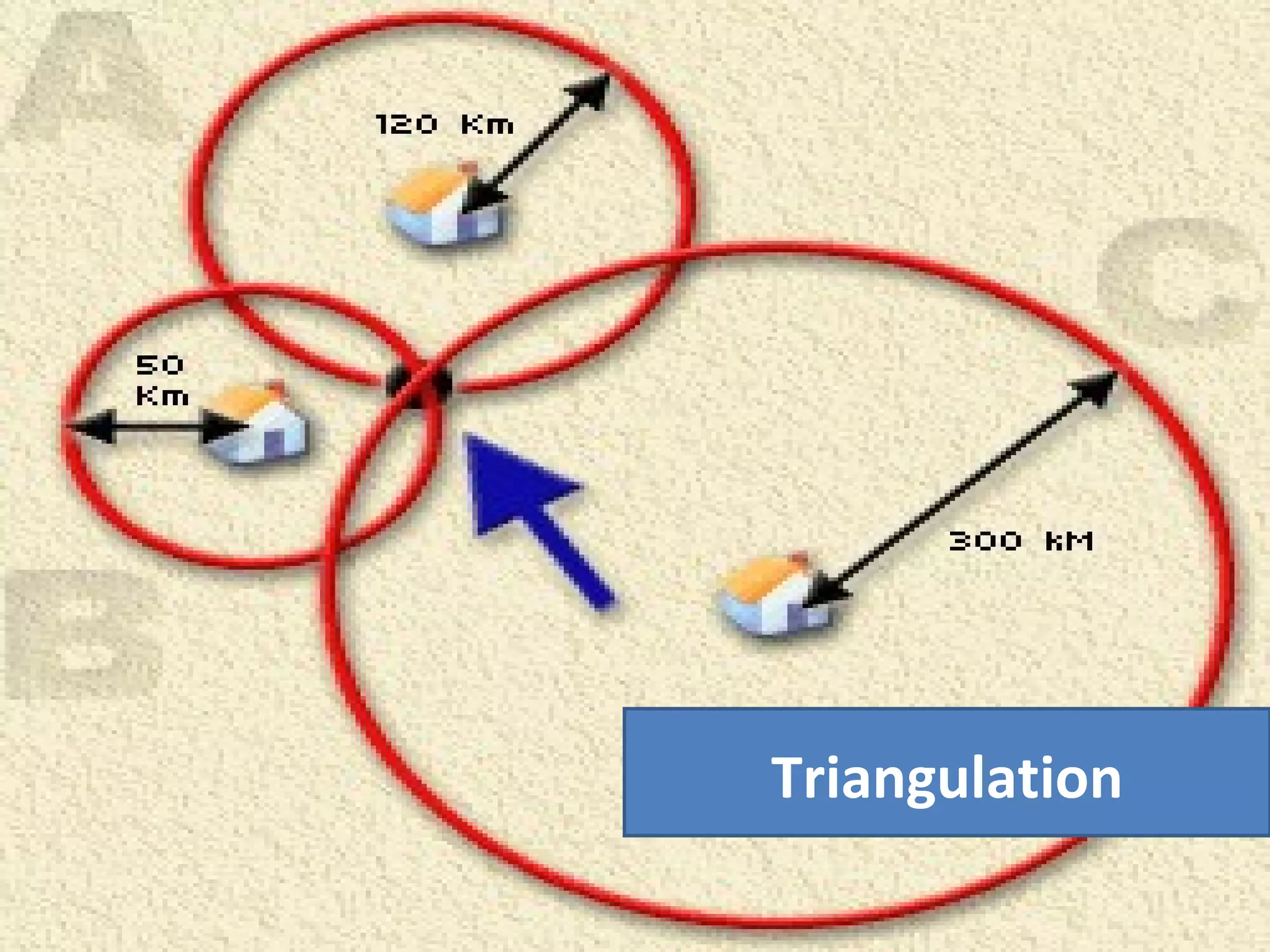
Triangulation


It compares that signal with all the known codes (there are currently 37).  The receiver determines which satellite it is. It decodes the timing information, multiplies by the speed of light to find the radius of the sphere. Once it has done that for 3 satellites, it can determine the location. When GPS receives a signal
L1 freq. (1575.42 Mhz) carries the SPS code and the navigation message L2 freq. (1227.60 Mhz) used to measure ionosphere delays by PPS receivers GPS Satellite Signal:
If the clocks are perfect sync the satellite range will intersect at a single point, otherwise not The receiver looks for a common correction that will make all the satellite intersect at the same point Getting Perfect timing
95% due to hardware ,environment and atmosphere Troposphere causes delays in code and carrier Errors due to Multipath Receiver noise Gravitational potential distribution, Earth is not a perfect sphere  Other heavenly bodies attract the satellite Not a perfect vacuum in the earth’s atmosphere Solar radiation effects (largest unknown errors source) Error Sources
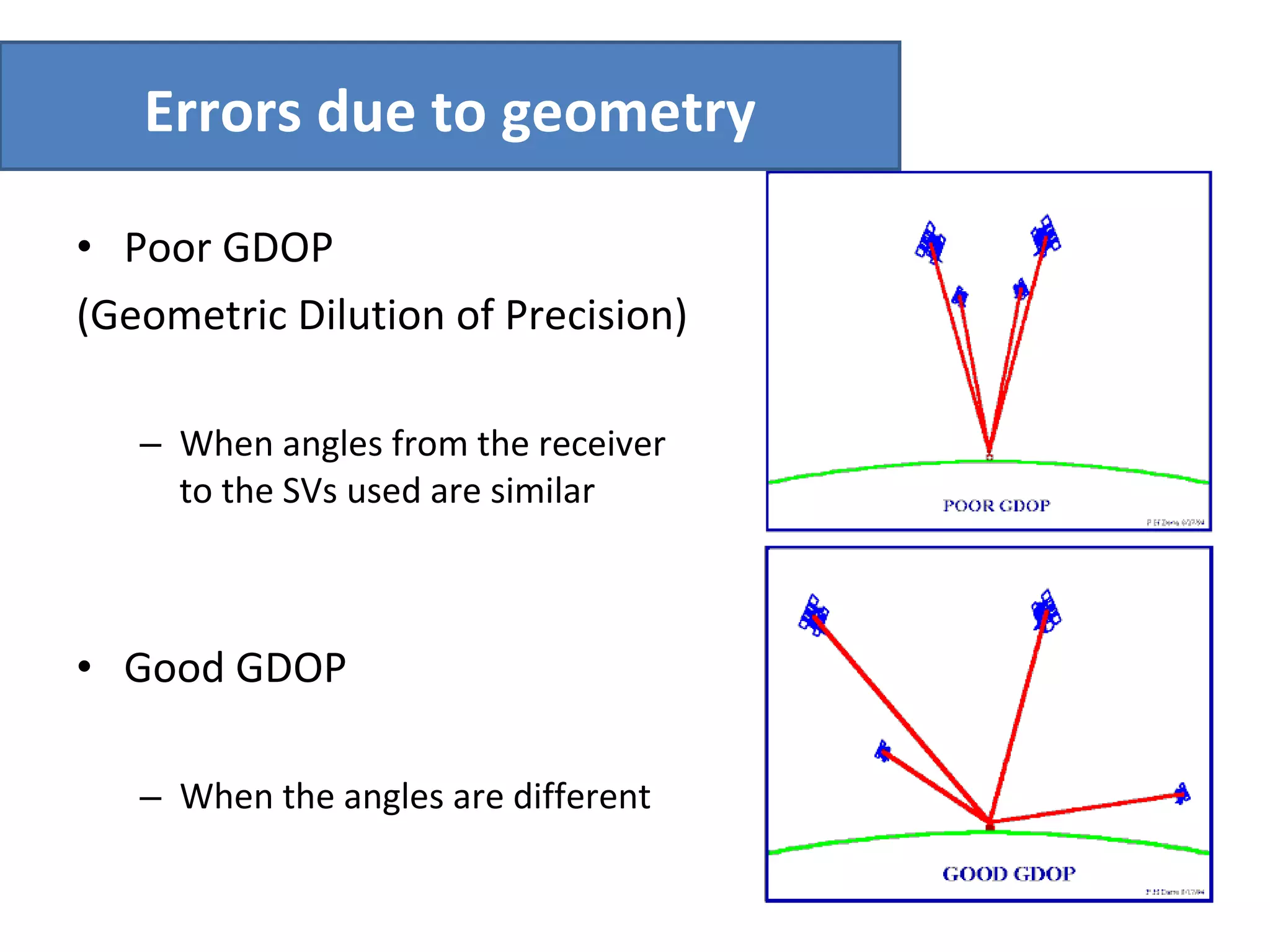
Poor GDOP  (Geometric Dilution of Precision) When angles from the receiver to the SVs used are similar Good GDOP When the angles are different Errors due to geometry
Atmospheric errors can be removed by Dual freq measurement (low freq get refracted more than high freq thus by comparing delays of L1 and L2 errors can be eliminated) Error correction
Differential Global Positioning System  (DGPS) is an enhancement to Global Positioning System  Uses a network ground-based reference stations to broadcast the difference between the positions indicated by the satellite systems and the known fixed positions.  DGPS
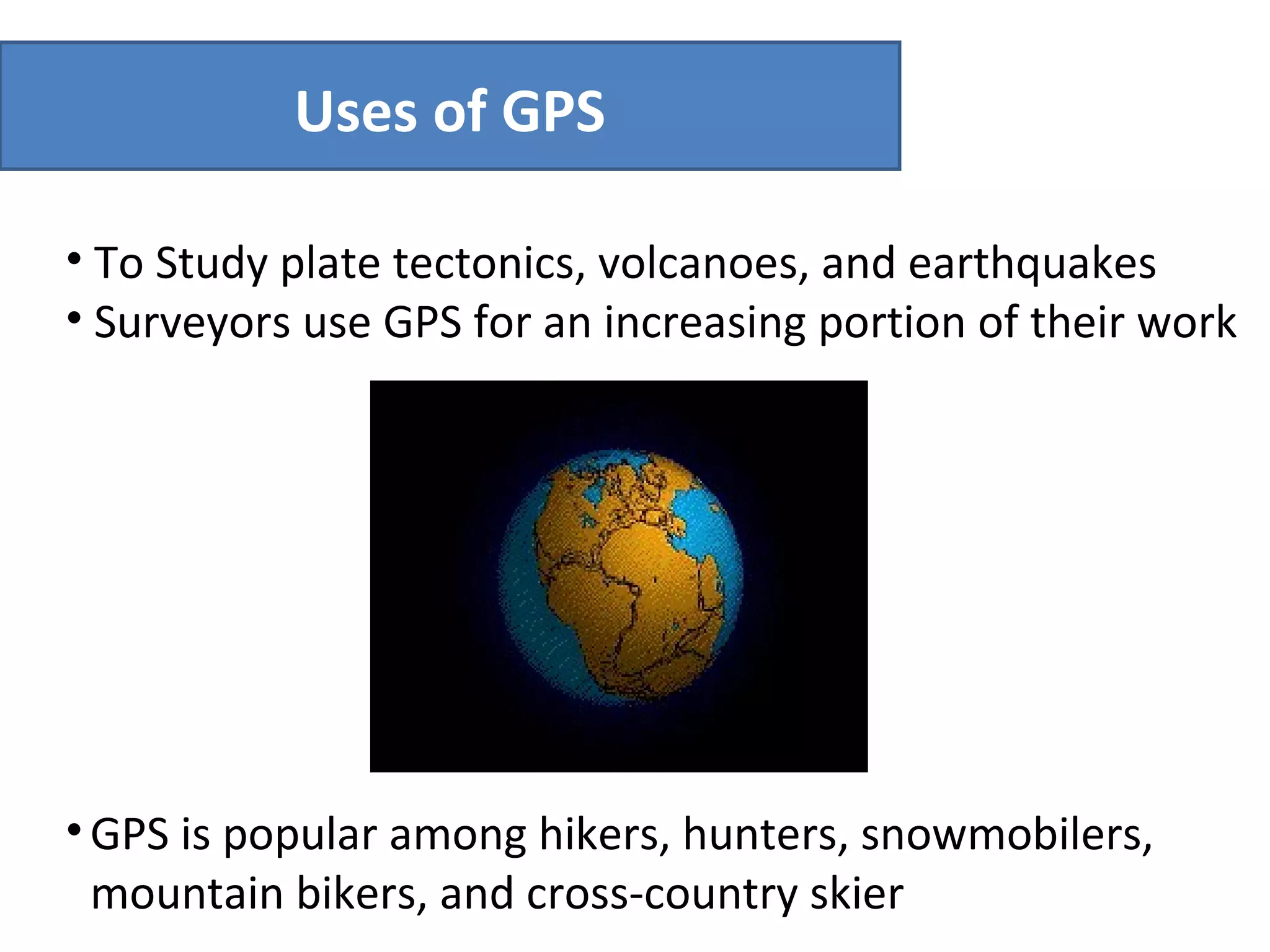
To Study plate tectonics, volcanoes, and earthquakes Surveyors use GPS for an increasing portion of their work  Uses of GPS GPS is popular among hikers, hunters, snowmobilers, mountain bikers, and cross-country skier
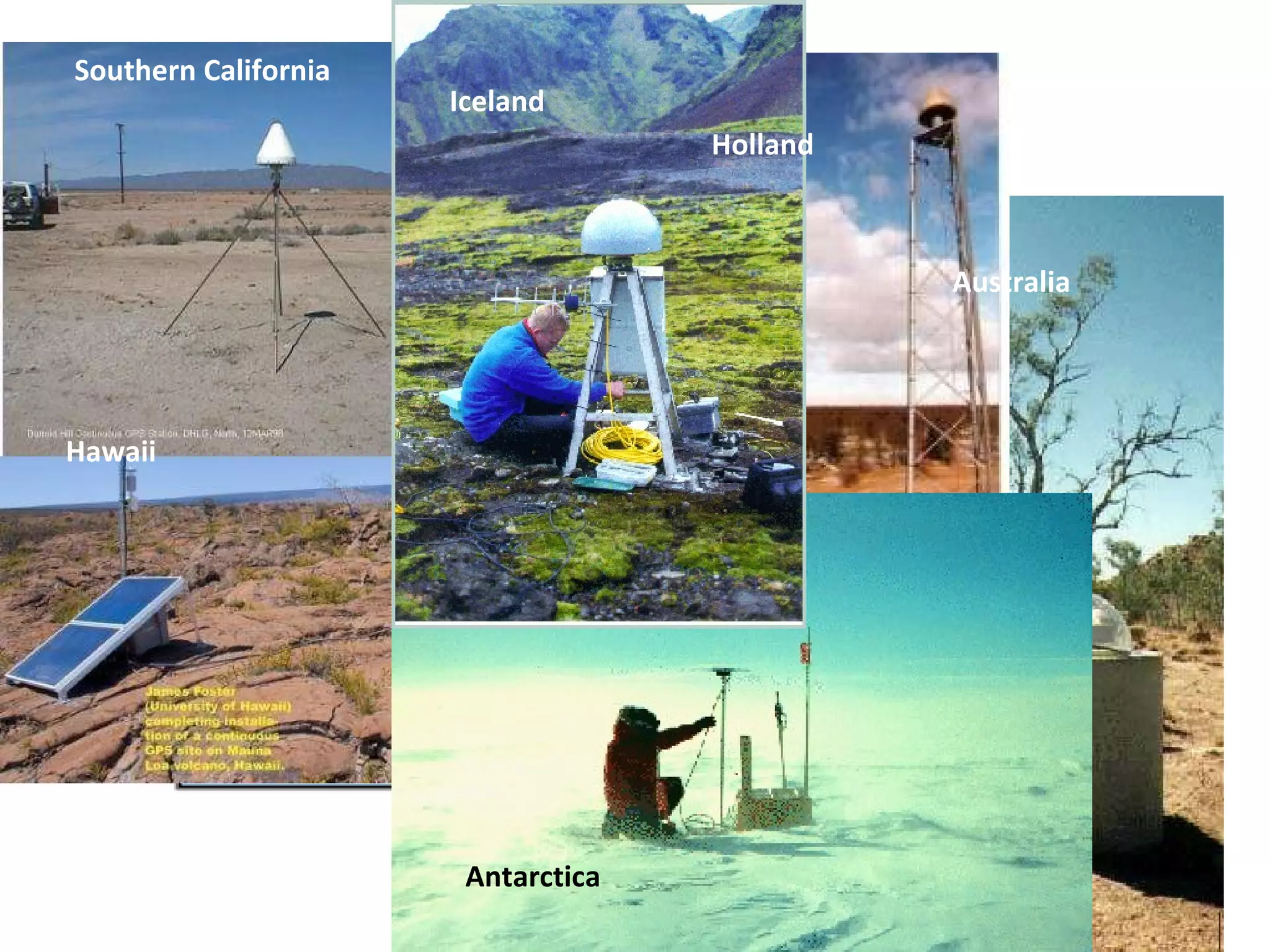
We have GPS receivers operating all over the world. Southern California Hawaii Antarctica Australia Iceland Holland
They use codes!  Binary codes. Each satellite has a different code. How do GPS signals send all this information?
THANK YOU

Gps

  • 1.
    GPS (Global PositioningSystem) Presented by Ashok Kumar Narendra Kumar Pankaj
  • 2.
    The Global PositioningSystem (GPS) is a U.S. space-based global navigation satellite system. US military owns it. Provides reliable positioning, navigation, and timing services to worldwide users on a continuous basis in all weather, day and night, anywhere on or near the Earth. Why do we need GPS?
  • 3.
    Components of GPSSpace Segment Control Segment User Segment 24 GPS space vehicles(SVs). 20,200 km away from the Earth 55 o inclination Satellites orbit the earth in 12 hrs. Selecting one or more satellites Acquiring GPS signals Measuring and tracking Comprises 5 stations. Satellite orbit, clock performance Measure the distances of the overhead satellites every 1.5 seconds and send the corrected data to Master control.
  • 4.
  • 5.
  • 6.
    How do youuse these satellites to calculate your position? The Global Positioning System is a constellation of 24 satellites that is used to calculate your position.
  • 7.
  • 8.
  • 9.
  • 10.
  • 11.
    It compares thatsignal with all the known codes (there are currently 37). The receiver determines which satellite it is. It decodes the timing information, multiplies by the speed of light to find the radius of the sphere. Once it has done that for 3 satellites, it can determine the location. When GPS receives a signal
  • 12.
    L1 freq. (1575.42Mhz) carries the SPS code and the navigation message L2 freq. (1227.60 Mhz) used to measure ionosphere delays by PPS receivers GPS Satellite Signal:
  • 13.
    If the clocksare perfect sync the satellite range will intersect at a single point, otherwise not The receiver looks for a common correction that will make all the satellite intersect at the same point Getting Perfect timing
  • 14.
    95% due tohardware ,environment and atmosphere Troposphere causes delays in code and carrier Errors due to Multipath Receiver noise Gravitational potential distribution, Earth is not a perfect sphere Other heavenly bodies attract the satellite Not a perfect vacuum in the earth’s atmosphere Solar radiation effects (largest unknown errors source) Error Sources
  • 15.
    Poor GDOP (Geometric Dilution of Precision) When angles from the receiver to the SVs used are similar Good GDOP When the angles are different Errors due to geometry
  • 16.
    Atmospheric errors canbe removed by Dual freq measurement (low freq get refracted more than high freq thus by comparing delays of L1 and L2 errors can be eliminated) Error correction
  • 17.
    Differential Global PositioningSystem (DGPS) is an enhancement to Global Positioning System Uses a network ground-based reference stations to broadcast the difference between the positions indicated by the satellite systems and the known fixed positions. DGPS
  • 18.
    To Study platetectonics, volcanoes, and earthquakes Surveyors use GPS for an increasing portion of their work Uses of GPS GPS is popular among hikers, hunters, snowmobilers, mountain bikers, and cross-country skier
  • 19.
    We have GPSreceivers operating all over the world. Southern California Hawaii Antarctica Australia Iceland Holland
  • 20.
    They use codes! Binary codes. Each satellite has a different code. How do GPS signals send all this information?
  • 21.

Editor's Notes