Never say No, never say, ‘I cannot’, for
you are infinite. Even time and space
are as nothing compared with your
nature. You can do anything and
everything.
-- Swami Vivekananda
….. foundation of clinical medicine
Shashidhar Venkatesh Murthy
A/Prof & Head of Pathology
College of Medicine & Dentistry
Clinical Pathology:
RBC 1.3: Hemolytic Anemia - Acquired
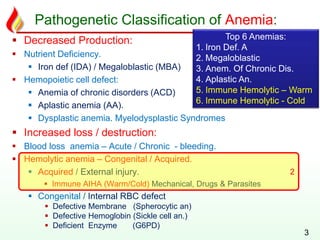
Pathogenetic Classification of Anemia:
 Decreased Production:
 Nutrient Deficiency.
 Iron def (IDA) / Megaloblastic (MBA)
 Hemopoietic cell defect:
 Anemia of chronic disorders (ACD)
 Aplastic anemia (AA).
 Dysplastic anemia. Myelodysplastic Syndromes
 Increased loss / destruction:
 Blood loss anemia – Acute / Chronic - bleeding.
 Hemolytic anemia – Congenital / Acquired.
 Acquired / External injury.
 Immune AIHA (Warm/Cold) Mechanical, Drugs & Parasites
 Congenital / Internal RBC defect
 Defective Membrane (Spherocytic an)
 Defective Hemoglobin (Sickle cell an.)
 Deficient Enzyme (G6PD)
3
2
Top 6 Anemias:
1. Iron Def. A
2. Megaloblastic
3. Anem. Of Chronic Dis.
4. Aplastic An.
5. Immune Hemolytic – Warm
6. Immune Hemolytic - Cold
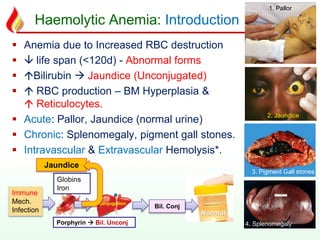
Haemolytic Anemia: Introduction
 Anemia due to Increased RBC destruction
  life span (<120d) - Abnormal forms
 Bilirubin  Jaundice (Unconjugated)
  RBC production – BM Hyperplasia &
 Reticulocytes.
 Acute: Pallor, Jaundice (normal urine)
 Chronic: Splenomegaly, pigment gall stones.
 Intravascular & Extravascular Hemolysis*.
Jaundice
2. Jaundice
4. Splenomegaly
3. Pigment Gall stones
1. Pallor
Immune
Mech.
Infection
Porphyrin  Bil. Unconj
Globins
Iron
Bil. Conj
Conjugation
Normal
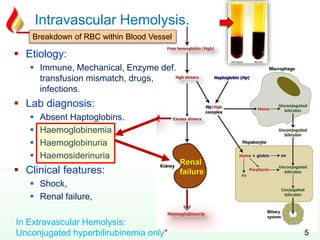
Intravascular Hemolysis.
 Etiology:
 Immune, Mechanical, Enzyme def.
transfusion mismatch, drugs,
infections.
 Lab diagnosis:
 Absent Haptoglobins.
 Haemoglobinemia
 Haemoglobinuria
 Haemosiderinuria
 Clinical features:
 Shock,
 Renal failure,
In Extravascular Hemolysis:
Unconjugated hyperbilirubinemia only* 5
Breakdown of RBC within Blood Vessel
Renal
failure
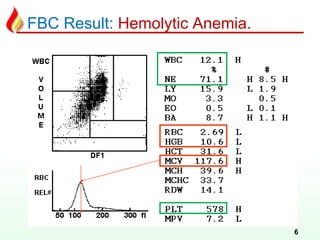
FBC Result: Hemolytic Anemia.
6
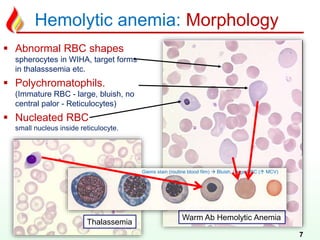
Hemolytic anemia: Morphology
7
 Abnormal RBC shapes
spherocytes in WIHA, target forms
in thalasssemia etc.
 Polychromatophils.
(Immature RBC - large, bluish, no
central palor - Reticulocytes)
 Nucleated RBC
small nucleus inside reticulocyte.
Thalassemia
Warm Ab Hemolytic Anemia
Giems stain (routine blood film)  Bluish, Large RBC ( MCV)
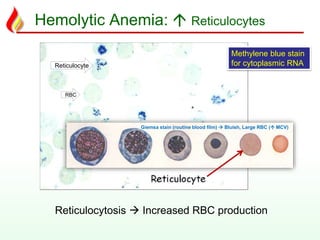
Hemolytic Anemia:  Reticulocytes
Reticulocyte
RBC
Reticulocytosis  Increased RBC production
Methylene blue stain
for cytoplasmic RNA
Giemsa stain (routine blood film)  Bluish, Large RBC ( MCV)
Only educated person is
one who has learned how
to learn and change.
-- Carl Rogers
Cell Mem
Hb
Enzymes
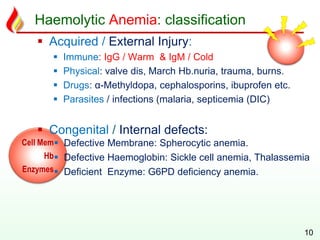
Haemolytic Anemia: classification
 Acquired / External Injury:
 Immune: IgG / Warm & IgM / Cold
 Physical: valve dis, March Hb.nuria, trauma, burns.
 Drugs: α-Methyldopa, cephalosporins, ibuprofen etc.
 Parasites / infections (malaria, septicemia (DIC)
 Congenital / Internal defects:
 Defective Membrane: Spherocytic anemia.
 Defective Haemoglobin: Sickle cell anemia, Thalassemia
 Deficient Enzyme: G6PD deficiency anemia.
10
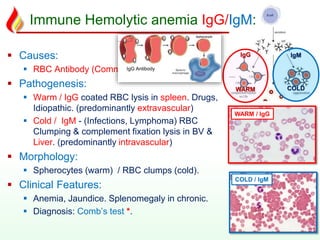
Immune Hemolytic anemia IgG/IgM:
 Causes:
 RBC Antibody (Commonest.)
 Pathogenesis:
 Warm / IgG coated RBC lysis in spleen. Drugs,
Idiopathic. (predominantly extravascular)
 Cold / IgM - (Infections, Lymphoma) RBC
Clumping & complement fixation lysis in BV &
Liver. (predominantly intravascular)
 Morphology:
 Spherocytes (warm) / RBC clumps (cold).
 Clinical Features:
 Anemia, Jaundice. Splenomegaly in chronic.
 Diagnosis: Comb’s test *.
IgG
WARM
IgM
COLD
WARM / IgG
COLD / IgM
IgG Antibody
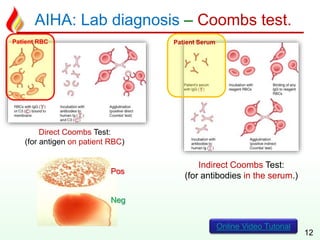
AIHA: Lab diagnosis – Coombs test.
12
Direct Coombs Test:
(for antigen on patient RBC)
Indirect Coombs Test:
(for antibodies in the serum.)
Pos
Neg
Online Video Tutorial
Patient RBC Patient Serum
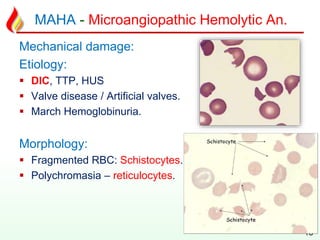
MAHA - Microangiopathic Hemolytic An.
Mechanical damage:
Etiology:
 DIC, TTP, HUS
 Valve disease / Artificial valves.
 March Hemoglobinuria.
Morphology:
 Fragmented RBC: Schistocytes.
 Polychromasia – reticulocytes.
13
14
The only person who never makes
a mistake is a person who
never does anything…!
- Theodore Roosevelt
Need help? contact me…
1. Office location: DB39-136 (Townsville)
2. Office Tel: 4781 4566
3. Email: venkatesh.shashidhar@jcu.edu.au
4. Emergency?: 0416933704
Need personal coaching?
Email me for an appointment.
You are the stone..
The pessimist waits for better times,
and expects to keep on waiting; the
optimist goes to work with the best
that is at hand now, and proceeds to
create better times.
-- Christian D. Larson

Anemia3 Hemolytic acquired

  • 1.
    Never say No,never say, ‘I cannot’, for you are infinite. Even time and space are as nothing compared with your nature. You can do anything and everything. -- Swami Vivekananda
  • 2.
    ….. foundation ofclinical medicine Shashidhar Venkatesh Murthy A/Prof & Head of Pathology College of Medicine & Dentistry Clinical Pathology: RBC 1.3: Hemolytic Anemia - Acquired
  • 3.
    Pathogenetic Classification ofAnemia:  Decreased Production:  Nutrient Deficiency.  Iron def (IDA) / Megaloblastic (MBA)  Hemopoietic cell defect:  Anemia of chronic disorders (ACD)  Aplastic anemia (AA).  Dysplastic anemia. Myelodysplastic Syndromes  Increased loss / destruction:  Blood loss anemia – Acute / Chronic - bleeding.  Hemolytic anemia – Congenital / Acquired.  Acquired / External injury.  Immune AIHA (Warm/Cold) Mechanical, Drugs & Parasites  Congenital / Internal RBC defect  Defective Membrane (Spherocytic an)  Defective Hemoglobin (Sickle cell an.)  Deficient Enzyme (G6PD) 3 2 Top 6 Anemias: 1. Iron Def. A 2. Megaloblastic 3. Anem. Of Chronic Dis. 4. Aplastic An. 5. Immune Hemolytic – Warm 6. Immune Hemolytic - Cold
  • 4.
    Haemolytic Anemia: Introduction Anemia due to Increased RBC destruction   life span (<120d) - Abnormal forms  Bilirubin  Jaundice (Unconjugated)   RBC production – BM Hyperplasia &  Reticulocytes.  Acute: Pallor, Jaundice (normal urine)  Chronic: Splenomegaly, pigment gall stones.  Intravascular & Extravascular Hemolysis*. Jaundice 2. Jaundice 4. Splenomegaly 3. Pigment Gall stones 1. Pallor Immune Mech. Infection Porphyrin  Bil. Unconj Globins Iron Bil. Conj Conjugation Normal
  • 5.
    Intravascular Hemolysis.  Etiology: Immune, Mechanical, Enzyme def. transfusion mismatch, drugs, infections.  Lab diagnosis:  Absent Haptoglobins.  Haemoglobinemia  Haemoglobinuria  Haemosiderinuria  Clinical features:  Shock,  Renal failure, In Extravascular Hemolysis: Unconjugated hyperbilirubinemia only* 5 Breakdown of RBC within Blood Vessel Renal failure
  • 6.
  • 7.
    Hemolytic anemia: Morphology 7 Abnormal RBC shapes spherocytes in WIHA, target forms in thalasssemia etc.  Polychromatophils. (Immature RBC - large, bluish, no central palor - Reticulocytes)  Nucleated RBC small nucleus inside reticulocyte. Thalassemia Warm Ab Hemolytic Anemia Giems stain (routine blood film)  Bluish, Large RBC ( MCV)
  • 8.
    Hemolytic Anemia: Reticulocytes Reticulocyte RBC Reticulocytosis  Increased RBC production Methylene blue stain for cytoplasmic RNA Giemsa stain (routine blood film)  Bluish, Large RBC ( MCV)
  • 9.
    Only educated personis one who has learned how to learn and change. -- Carl Rogers
  • 10.
    Cell Mem Hb Enzymes Haemolytic Anemia:classification  Acquired / External Injury:  Immune: IgG / Warm & IgM / Cold  Physical: valve dis, March Hb.nuria, trauma, burns.  Drugs: α-Methyldopa, cephalosporins, ibuprofen etc.  Parasites / infections (malaria, septicemia (DIC)  Congenital / Internal defects:  Defective Membrane: Spherocytic anemia.  Defective Haemoglobin: Sickle cell anemia, Thalassemia  Deficient Enzyme: G6PD deficiency anemia. 10
  • 11.
    Immune Hemolytic anemiaIgG/IgM:  Causes:  RBC Antibody (Commonest.)  Pathogenesis:  Warm / IgG coated RBC lysis in spleen. Drugs, Idiopathic. (predominantly extravascular)  Cold / IgM - (Infections, Lymphoma) RBC Clumping & complement fixation lysis in BV & Liver. (predominantly intravascular)  Morphology:  Spherocytes (warm) / RBC clumps (cold).  Clinical Features:  Anemia, Jaundice. Splenomegaly in chronic.  Diagnosis: Comb’s test *. IgG WARM IgM COLD WARM / IgG COLD / IgM IgG Antibody
  • 12.
    AIHA: Lab diagnosis– Coombs test. 12 Direct Coombs Test: (for antigen on patient RBC) Indirect Coombs Test: (for antibodies in the serum.) Pos Neg Online Video Tutorial Patient RBC Patient Serum
  • 13.
    MAHA - MicroangiopathicHemolytic An. Mechanical damage: Etiology:  DIC, TTP, HUS  Valve disease / Artificial valves.  March Hemoglobinuria. Morphology:  Fragmented RBC: Schistocytes.  Polychromasia – reticulocytes. 13
  • 14.
    14 The only personwho never makes a mistake is a person who never does anything…! - Theodore Roosevelt
  • 15.
    Need help? contactme… 1. Office location: DB39-136 (Townsville) 2. Office Tel: 4781 4566 3. Email: venkatesh.shashidhar@jcu.edu.au 4. Emergency?: 0416933704 Need personal coaching? Email me for an appointment. You are the stone..
  • 16.
    The pessimist waitsfor better times, and expects to keep on waiting; the optimist goes to work with the best that is at hand now, and proceeds to create better times. -- Christian D. Larson