ANTIPHOSPHOLIPID ANTIBODY SYNDROME Dr.PraveenNagula
A discovery is said to be an accident meeting a prepared mind.A discovery is said to be an accident meeting a prepared mind.A discovery is said to be an accident meeting a prepared mind
Case description in brief.A young female was admitted in casualty  with swelling of rt lower limb.On examination pulses absent.USG showed thrombus.h/o revealed –marriage life 0f 18 months---2 months later had an ischemic stroke---after 7 months became pregnant---6 months miscarriage,severe pl. insufficiency---after 2 months she had swelling of rt lower limb—DVT---on 1stjune had abd pain—hemorrhagic cyst of ovary—stopped acitrom---DVT.INR---3.3 at dischargeDiagnosis suspected of APLSAPL ab positive---Ig G ACL—90GPL,IgM ,IgA were positive.Patient was kept on warfarin----to be followed up.
INTRODUCTIONAlso known as HUGHES SYNDROME.LUPUS ANTI COAGULANT SYNDROME (misnomer)Autoimmune disorder.----acquired thrombophilic disorder.Mostly assosciated with SLE.Responsible for frequent miscarriages in young females (15%).CATASTROPHIC APS---Asherson’s syndrome.MC thrombotic defect leading to fetal wastage.
Graham R.V. Hughes
DEFINITIONA patient with definite APS must have persistent high titer antiphospholipid antibodies(APL) assosciated with a history of arterial or venous thrombosis or both ,or recurrent pregnancy morbidity.—(clinical criteria) and laboratory criteria.CAPSAsymptomatic antiphospholipid antibodiesProbable antiphospholipid syndromeSeronegativeantiphospholipid syndrome(SNAP)Microangiopathicantiphospholipid syndromeDrug inducedInfection assosciatedMalignancy assosciated.
CLINICAL CRITERIA—( SAPPORO CRITERIA)APS is present if at least one of the clinical criteria and one of the laboratory criteria that follow are met….Clinical criteria---1.vascular thrombosis      One or more clinical episodes of arterial,venousor small vessel thrombosis,occuring in any tissue or organ.to be confirmed by objective validated criteria.histopathologically thrombosis should be present without significant evidence of inflammation in the vessel wall.2.pregnancy morbiditya.one or more unexplained deaths of morphologically normal fetuses at or after the 10 week of gestation.b.one or more premature births of morphologically normal neonates before the 34th week of gestation—ecclampsia,sev pl insufficiencyc.three or more unexplained consequtive sp abortions before the 10th week of gestation—anatomic,hormonalabn excluded.
Sapporo,JAPAN…SYDNEY
Laboratory criteria1.lupus anticoagulant present in plasma.2.aCL of IgG and or IgMisotypein serum or plasma,present in medium or high titer(>40GPL,40MPL,>99TH percentile)3.anti β2GP1IgG or IgMisotypein serum or plasmaOn two or more occasions at least 12 weeks apart.  Diagnostic clues for individual patients but not as classification criteria for the purpose of clinical trialsCardiac valve disease,livedoreticularis,thrombocytopenia,renal thrombotic microangiopathy,neurological manifestations-choreaNon criteria antibodies—IgAaCL,IgAantiΒ2gp1,antiphosphatidylserine ab,antiphosphatidyl ethanolamine ab,ab against prothrombinalone,ab to Ph.serine-PT complex.
criteria
Advances in criteria1999---sapporoconcensus conference2004---sydney conference revised Numerous modifications were made to the initial statement.Better defining of clinical criteria by confirmation.Stratification of patients with APS presence or absence of other inherited or acquired contributing cause of thrombosis.APS with or without assosciated rheumatic disease.CAPSAsymptomatic aPLTime interval increased to 12 weeksTransient positivity to be excludedAdd of b2gp1 abDiagnostic clues J thrombhaemost 2006:4:295-306                                                                                                                               Arthritis Rheum 1999;42:1309-11JAPI,mar 2010—176-183
EPIDEMIOLOGYIn young,app healthy people---for LA,antiCL is 1-5%Prevalence ↑ with age ,in elderly with chronic disease.Risk of thrombosis is 0.5-30%Women :men is 5:1Mean age of onset-31 yrsLow age 8 monthsFemales---arthritis,livedo,migraineMales—MI,epilepsy,lower extremity arterial thrombosisACA ass with thrombosis>LA ---5:1Acl in elderlyMore common in africanamericans.Without rheumatic disease at younger age and with rh –olderApl ab—30-40% in SLE---10% have APLSIdiopathically—ACL-24%,LA-4%
The clinical manifestation of thrombosis is similar whether the APL is primary or secondary.Removed in 2006.Common auto immune diseases ass with APL ab are1.SLE-25-50%2.sjogren’s –42%3.RA-33%4.AITP-30%5.AIHA-unknown6.PA-28%7.SS-25%8.MCD-22%9.behcet-20%10.PMR-20%
etiologyUnknown causePossible triggers identified and stratified accordingly.Most of the autoimmune disorders ass with APLabWHETHER IT ITSELF INVOLVED IN PATHOGENESIS OR IS AN EPIPHENOMENON IS ?Relatives of persons with known APS—33% freq have APLabHLA –DRW53,DR7—HISPANIC,DR4 white.
PATHOGENESISHomeostatic regulation of blood coagulation is altered.1.defect in cellular apoptosis---exposure of membrane phospholipids to the binding of various plasma proteins---b2gp1---complex—epitope---target for autoantibodies.2.oxidized b2GP1---activates dendritic cells –autoantibodies are produced.3.production of antibodies against prothrombin,proteinC,Sannexins.4.activation of platelets to enhance endothelial adherence.5.activation of vascular endothelium—platelet and monocyte binding.6.ab against oxidized LDL—atherosclerosis.
Complement activation has been increasingly recognised as a possible significant role in the pathogenesis of APS.Blood. Jan 15 2007;109(2):422-30. Nat Med. Nov 2004;10(11):1222-6.   The family of APL  ab are heterogenous and the targets vary.APS  can be caused by –LA,ACA,B2GP1  or  other  antibodies.There are distinct clinical ,laboratory and biochemical differences between the disorders  mediated  by the different antibodies.ACL---risk of stroke—arterial thrombosisLA-venousTNF alpha –pregnancy loss
Mechanism of thrombosisPrecise mechanism is unclear.Heterogenous---several mechanisms are responsible.‘phospholipids are an integral part of platelet And endothelial cell surface membranes ,it is expected that these antibodies have a effect on them.’
How do they  mediate????Inhibition of endothelial cell prostacyclin productionClinApplThrombHemost 1999;5;s76Procoagulant effect on plateletsBr  J Haematol 2002:119;781 Impairement of fibrinolysisInterference with the thrombomodulin-proteinS-proteinC pathway                                       J Autoimmun 2007;28(2-3):129-33 Induction of procoagulant activity on endothelial cells and/or monocytesClin Exp Immuno 2000;120:537 Disruption of the annexinVcellular shield FertilSteril 2002l;77:805Abnormal cytotrophoblast expression of adhesion molecules in pregnancy                                NEJM2002;346 (10);752-63
Anionic phospholipids
pathology
pathogenesis
Coagulation pathway
Annexin V
In pregnancy
ACA–  are directed against cardiolipinThey may be b2 gp1 dependent or independentIndependent—syphilisB2 gp1-----apolipoprotein HBind with cardiolipinab --thrombosis
What do the animal models say???Question the non inflammatory ,thrombotic stateEvidence for complement activation is crucial for complications in pregnancy.Inflammation mediated tissue injury in pregnancyTherapy should be against inflammationAnn N Y AcadSci 2005 ;1051:413-20Mouse model of APS---heparin prevents complement activation induced by APL.Use of specific complement inhibitors in APS—future TNF alpha– as a critical effector in pregnancy loss—TNF blockade
Risk factors for thrombosisAge >55 in men,>65 in womenRisk factor for CVD*Inherited thrombophiliasOral contraceptivesNephrotic syndromeMalignancyImmobilizationSurgery*htn,DM2,LDL,↓HDL,cigarette smoking,family h/oBMI>30kg/m2,microalbuminuria,GFR<60ml/min
CLINICAL FEATURES(SPECTRUM)1.VENOUS THROMBOSISLower extremities29-55% caes>50% have asymptomatic pulmonary embolismSeen at unsual sitesCerebral veins may be affectedSuperior sagittal sinus SeminThrombHemost 1999;25:333-50
Superficial thrombophlebitis
Retinal vein thrombosis
2.ARTERIAL THROMBOSISLess commonMalesPresent with TIA or stroke 50%,MI(25%)Presence of anti CL ab—risk factorInvolvement of large and small vessels—uniqueBrachial,subclavian arteriesPeripheral arteriesNEJM 2002;346;752-63Dis Mon 2003;49:696-741SeminThrombHemost 1999:25;333-50
gangrene
Retinal artery thrombosis
3. CARDIAC disordersThrombotic or embolicPremature athreosclerosis—occlusionApl inv in young age with no risk factors for  CaVDValvular thickening—M.,AVegetations ----libmann sacksPremature coronary disease Myocardial infarctionDiffuse cardiomyopathyCHFPericardial effusionPulmonary hypertensionIn SLE---pericarditis is common,novalvularreg,withhtn –HF,onlyepicardial ischemia.J thrombthrombolysis 2005;20;105-12
endocarditis
4.NEUROLOGICAL disordersThrombotic or embolicLA—venous,ACL—arterial---risk factor for stroke in youngRecurrent strokes—multi infarct dementiaNo other risk factors are present“chorea is another clinical diosrder that has been strongly linked to presence of APL”Migraine,TM,GBS,ON,ICH,psychosisMimics multiple sclerosis—cognitive dysfunctionDiff—chorea,migraine,seizure ,dysarthria mc in apl,ON,bowel ,bladder ,gait—MSNon enhancing with gadolinium,stronglypoisitiveab---APLSDis Mon 2003;49(12):696-741,Thromb Res 2004;114;489-99,Ann N Y AcadSci 2005
5.obstetrical disordersRecurrent miscarriagesFetal demiseEcclampsiaIUGROligohydramniosHELLP syndromeMay be the prsenting feature of APLSMC thrombotic defect leading to fetal demise---15% of miscarriagesHaemtolOncolClin North Am 2008;22;33-52
miscarriages
6.DERMATOLOGICALMay be the presenting featureNoninflammatory vascular thrombosisLivedoreticularis is more commonCutaneuos ulcerationsSubungual splinter hemorrhagesAnetodermaPatients with livedoreticularis and APS frequently have cardiac and cerebral thrombotic events,epilepsy,migraine headachesCerebral---SNEDDON’S syndromeClin Exp Rheumatol 2005;23;499-504
Livedoreticularis
Splinter hemorrhages
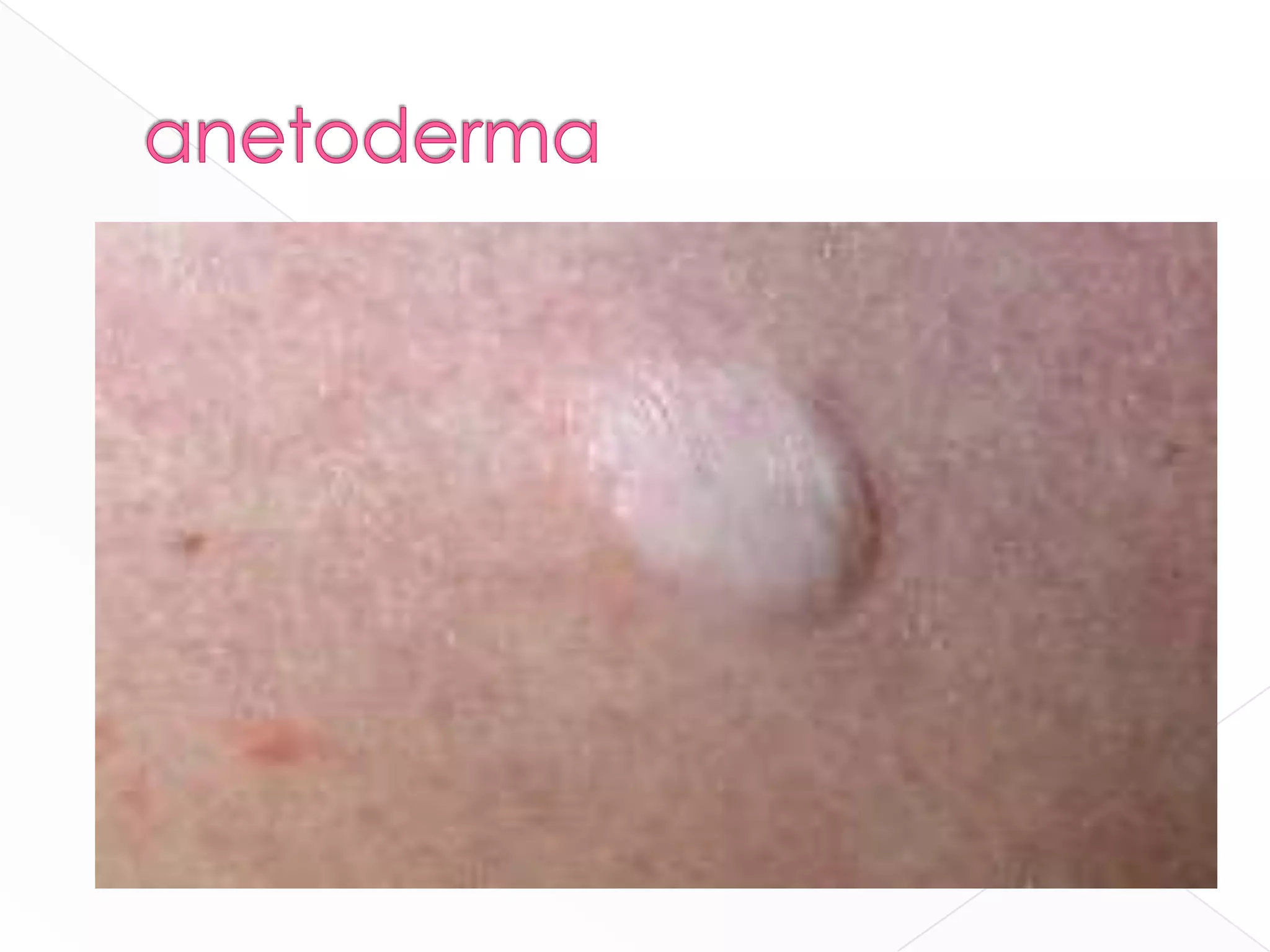
anetoderma
Subungual splinter hemorrhage
7.PULMONARYMost frequent arterial complicationThromboembolism of lung arteriesARDSDiffuse alveolar hemorrhage—non thrombotic manifestation of APSHigh mortality 8.ABDOMINALHepatic involvement is commonAcalculouscholecystitisGiant gastric ulceration9.ENDOCRINEAdrenal insufficiencyThyroid10.RETINAL---CRAO,CRVO,ON,CiRAO11.HEMATOLOGY-----thrombocytopenia<1,00,000.Severe—CAPS,TTP<50,000—bleeding
12.RENALAPLN---renal manifestation of APLSThrombosis at any site.Non thrombotic –glomerulonephritis25% patients have renal ---mostly IgGabNil/membranous nephropathyPatient—with flank pain,RVT,proteinuria---check for APLUrine analysis---mod proteinuria,hematuriaIschemic mesangiolysis,vessel hyperplasia<10%--ARF—recurrenceWarfarin,steroids,plasmapheresis	                                                                                         Lupus 2006,15;485-9
Catastrophic Antiphospholipid Syndrome(CAPS)A syndrome of multisystem involvement .<1% of patients.Multiple small vessel occlusions---multi organ failure.Acute onset3 different organ systems Acute microangiopathy is characteristicARF,ARDS,CEREBRAL INJURY,MYOCARDIAL ischemia.Potentially lethalTrigger factors involved---infections,trauma,neoplasia,pregnancy,lupus flares. ICU SLE-higher mortality.
PPts of CAPS
Catastrophic antiphospholipid syndrome
A note on other syndromesAsymptomatic---???Apl---risk factor,requires other trigger for APLS—double hit theory.h/o thrombosis,LA,aclIgG---FIVE FOLDProbable– Lack the clinical criteria of vascular thrombosis or pregnancy loss.Livedo,chorea,thrombocytopenia.Livedoreticularis the first manifestation—41%SeronegativeClinical manifestations but no identifiable abRepeat testing---positive.MicroangiopathicMicrovascular---TTP,HELLP,CAPSDrug inducedInfection assosciatedmalignancy
DRUG inducedCardiac---procainamide,quinidine,propanolol,hydralazine.Neuroleptic or psychiatric—phenytoin,chlorpromazine.Other-interferon alpha,quinine,amoxicillinInfection—SyphilisHCVHIVHTLV type 1MalariaSepticemia.
LAB DIAGNOSISAPA---IgG,IgA,IgMSEVERAL antibodies are recognisedRecently—antibodies against annexinV,protein CIgMacl---HEMOLYTIC ANEMIA.IgG ACL –thrombosisFalse positive test result for syphilisACL—membrane phospholipidsLA-plasma coagulation moleculesElongates APTT,Kaolin clotting time,diluterussells viper venom time.
Kaolin clotting test
Lab assessment
INRThe ISI—1.0-2.0INR—5 high chance of bleeding0.5--- clot formationNormal range is 0.9-1.3Warfarin ---2.0-3.0Prosthetic valves—3.0-4.0
LUPUS ANTICOAGULANTLABORATORY artifact.Interferes with the action of phospholipid cofactors in the coagulation cascade in lab assays—prolongation of time to clot—mimics anticoagulant response.Misnomer—ass with thrombosis.Inhibits the formation of prothrombinase complex within the coagulation  cascade.It blocks the binding of prothrombin and factor Xa to phospholipids---thrombin formation inhibited.It can be Ig G,A,M10%of SLEVenous thrombosis
How you diagnose LANormal Platelets-- poor plasma is mixed with patient’s plasmaIf a clotting factor is deficient,the addition of normal plasma corrects the prolonged clotting time.If the clotting time does not normalize ,an inhibitor is present.The absence of a specific clotting factor inhibitor confirms that LA is present.
What if LA,ACL are negativeIf patient experiencing thrombosis or recurrent miscarriagesOrder Antibodies  to  b2 gp1Ab to phosphatidylserine,ethonalamine,glycerol,inositolAnnexin VPhosphatidylcholine.
DRVVTDetection of LAIn vitro test ---ability of venom of russells viper to induce thrombosis.Coagulant in venom directly activates factor X—turns prothrombin to thrombin in presence of factor V and phospholipid.In drvvt assay time is set to 23-27 secA prolonged clotting time of 30 sec or greater that does not correct with addition of an equal volume of normal plasma suggests the presence of LA.Excess phospholipid is added. NormalisedBoth the tests are determined to a ratio.>1.2---may have.1.6 ---confirm.More sensitive than APTT for LA
Diluted Russells viper venom test
Imaging studiesFor confirmationUSGCOLOR DOPPLERCT SCANMRI2D ECHOHistology----non inflammatory bland thrombosis with no signs of perivascular inflammation or leukocytoclasticvasculitis.
DVT
DIFFERENTIAL DIAGNOSISThink of any other thrombophilic states before making a diagnosis of APLS.MalignancyOCPHomocysteinemiaAntithrombin 111 defProtein C,S defFactor V leiden mutation
TREATMENTAsymptomatic individuals in whom blood test findings are positive do not requires specific treatment.In pregnancy---use heparin and aspirinPreviously prednisolone was used—no benefit as per trialsIncreases premnaturity,hypertension.No beneficial role of immunoglobulins in pregnancy.1.with one fetal loss or mulitple abortions---aspirin plus heparin.Warfarin only after organogenesis is completeNursing is safe
Prophylactic therapy—Eliminate other risk factorsLow dose aspirin,clopidogrelSLE—hydroxychloroquine—intrinsic antithrombotic properties.Statins may be used—fluvastatin.Thrombosis---IV /sc heparin---warfarinReasonable INR is 2.0-3.0 for venous,3.0 for arterial,recurrent—3.0-4.0---think of bleeding if >5.0Life long anticoagulation
Obstetric---Prophylaxis for with no h/o thrombosisFull anticoagulation with h/o thrombosis.Sc heparin,low dose aspirinWith held at the time of delivery.CAPS—steroidsRecurrent DVT ---ivc filter.Patient educationAvoid prolonged immobilization.
Current recommendationsPrimary thrombosis prevention---lack of evidence based approach.                                      Arthritis Rheum 2004;50;s640-1for sec prevention—life long warfarin.Duration,intensity ---still debate.In case of fetal loss h/o-low dose aspirin+LMWH-----fail-----Ivig effective only in reports.        CurrRheumatol Report2002(4);379-86CAPS—anticoagulation,steroids,IVIG,plasma exchange.Arthritis Rheumat 2003;48(12);3320-7Elimination of reversible risk factorsProphylaxis during high risk periods are crucial
How much warfarin should be used?Both moderate INR 2-3 and high intensity anticoagulation (INR 3-4) are similar protective in APS patients after the first thrombosis---NEJM 2003;349;1133-8,J ThrombHaemost 2005;3:848-53Excess of minor bleeding in high intensity group. target of INR 2.5High target in case of recurrence.Intensity in case of arterial events is still deabte?????///
No data to support primary prevention of stroke in asymptomatic carriers of APL.Risk factors—use low dose aspirin.Anticoagulate patients with INR 3.0Long term warfarin therapy.How long should we use warfarin???/LifelongRecurrence may not be higher in APL patients on discontinuation of warfarin—10%What is the effect of discontinuation—trials are going on..
Is warfarin complete treatment?Efficacy in microangiopathicnephropathy,valvular heart disease ,livedoreticularis, leg ulcers is not supported by data.In asymptomatic patients???????///178 persistently positive patients---thrombosis free were followed for three years witrhout anticoagulation---no patient developed thrombosis.J Rheuma 2004,31;1560-7
Alternatives to warfarinDipyridamole,ticlopidine,clopidogrel---sec prevention of non cardio embolic strokes---only clopidogrel effective.Recurrence rate is 5-10% with these agents.Direct thrombin inhibitors role ???But can be used in HITCAPS---rituximab,an anti CD20  MONOCLONAL ABHYDROXYXHLOROQUINEStatins—fluvastatin decreases thrombus size.
Ximelagatran—first oral thrombin inhibitor.Neutralises clot bound thrombin.Melgatran—rapid onset of action,shorter half life.No interactionSuperior to warfarin after TKRS.Cause LFT changesNot approved by FDA in 2004-----www.astrazeneca.com
dosesWarfarin---5-15mg/day qd for 2-5 days  INR 2.5-3.5LMWH—low dose 20-40mg/day SC,1 mg/kg SC bid –high dose.Unfractionated—SC 5000-10,000u q12hIV—5,000 U ---1000-2000U/HrWeight based 80U/Kg ---18U/Kg/h ivAPTT  2 times baseline----factor Xa assays in case of LA. aspirin 81mg/dayHydroxychloroquine—6-7mg/kg/d---200-400mg/d Cyclophosphamide 2-3 mg/kg/d PO OD,Steroids—prednisolone 1 mg/kg bwIV ig---400mg/kg/d iv for 5 daysStatins ---atorva 10mg,pravastatin 40m g,fluvastatin 5 mg
New drugsRituximab 1000mg iv for 2 doses.seperated by 2 weeks.Rate at 50mg/heculizumab
FOLLOW UPFrequent check upsAdequate patient educationAvoidance of smokingStrict control with anticoagulants.In case of bleeding –hospital.Normal healthy life
TRIALSEculizumab to Enable Renal Transplantation in Patients With History of Catastrophic Antiphospholipid Antibody Syndrome             by john hopkinsuniversity,nov 2009.Genetic Risk Factors Associated With Antiphospholipid Antibody Syndrome---JUNE 2006---JULY 2009---Individuals with APL and family h/o  APL compared with APL  patients with h/o of only othr rheumatic disorders.—observationalPilot Study of Cyclophosphamide in Patients With Life-Threatening Systemic Lupus ErythematosusorAntiphospholipid Antibody Syndrome----
Reliability of Point-of-Care INR Measurements in Patients With Antiphospholipid-Antibody SyndromeTreated With Warfarin----comparing with venupuncturePredictors of Pregnancy Outcome in Systemic Lupus Erythematosus (SLE) and Antiphospholipid Syndrome (APS) (PROMISSE)Antiphospholipid Syndrome Collaborative Registry (APSCORE)effects of Fluvastatin on Proinflammatory and Prothrombotic Markers in AntiphospholipidSyndromePatientsHematopoietic Stem Cell Transplantation in Patients With Antiphospholipid SyndromeA Pilot Study of Rituximab for the Anticoagulation Resistant Manifestations of Antiphospholipid Syndrome(RITAPS)
Low-molecular-weight Heparin (LMWH) Versus Unfractionated Heparin (UFH) in Pregnant Women With History of Recurrent Abortion Secondary to Antiphospholipid Syndrome.Steroids and Antiphospholipid Syndrome- Related Pregnancy LossLow Molecular Weight Heparin and Aspirin in the Treatment of Recurrent Pregnancy Loss: A RCT (HepASA)Pharmacokinetics of Low Molecular Weight and Unfractionated Heparin in PregnancyLOG on to clinicaltrials.gov
futureTarget based treatmentSpecific complement inhibitorsUsing anticoagulation in times of need.Primary prevention drugAlternative effective drug to warfarin.
TAKE HOME MESSAGEThink of APLS in a young female with thrombosis,fetal wastage.Recurrent migraine headaches in a young female –do APLINR  to be individualized and mainatined at 2.0-3.0Recurrent –3.0-4.0LA—DRVVTHEPARIN –FACTOR XAIgG ACL –THROMBOSISIg M ACL—HEMOLYTIC ANEMIALIVEDO RETICULARIS –THINK OF APLSCHOREA IN YOUNG –THINK OF APLSACL –INCREASES WITH AGEACL—ARTERIAL,LA—VENOUSLIFE LONG ANTICOAGULATIONCAPS—ICU CARE
SUMMARY An autoimmune disease ,acquired, assosciated with heterogenous antibodies which act through various mechanisms—leading to thrombosis---diagnosis by sapporo criteria—confirmation on thrombosis for diagnosis---seperation of lab tests by 12 weeks---warfarin life long therapy—heparin in pregnancy----CAPS– acute emergency---INR to be monitored----risk  to be explained.---future trends of target therapy awaited.
References,siteswww.emedicine.comwww.lupus.orgwww.wikipedia.comwww.lupusawarenessandresearch.comwww.japi.orgwww.clinicaltrials.govHARRISON’S PRINCIPLES OF INTERNAL MEDICINE,17 ED.
Thank yousagittarian
discussion1.what you do in a case of a female who is diagnosed as having APLS,was kept on warfarin –had previous miscarriage—now wants to conceive----?Ans—stop warfarin if the patient wants to conceive.and put her on heparin.again shift her to warfarin postpartum.You said after she diagnosed as pregnant
2.what you will do in 2 cases with  status epilepticus---patient treated,both being young was advised—CT scan brain—one had infarct,othernormal,both APL being positive .with no h/o of previous thrombosis or APL postivityAns—the APL positivity to be confirmed again after 12 weeks.if they are positive then attribute it to APLS.the false positivty of APL ab are high---the drugs used for the treatment of status epilepticus—phenytoin –may also cause an increase in APL ab.in both the test to be confirmed after 12 weeks.and treatment of thrombosis to be started at that timeYou said treatment for the one having thrombosis to be taken.
queriesYour vocabulary is not appropriate,adequate.You were stopping in  the middle.You could not explain the drvvt.You could not explain CAPS adequately.
Read aboutWhat is the one causing LA to lead to thrombosis  or per se it causes thrombosis?Normally coagulation takes place on exposure of the endothelium—how is the endothelium exposed in case of APLS?What were the patients with pregnancy using in case of PROMISSE trial?Normally complement  activation leads to hemolysis—how is it causing thrombosi?Annexin v ab to be explained?Pathogenesis to be explained?LA is a coagulant not an anticoagulant.
All were present during my presentation.Juniors were presentTotal duration was 42 min.—exhaustive.I lost the tempo.Date of presentation—23-06-2010.

Antiphospholipid antibody syndrome

  • 1.
  • 2.
    A discovery issaid to be an accident meeting a prepared mind.A discovery is said to be an accident meeting a prepared mind.A discovery is said to be an accident meeting a prepared mind
  • 3.
    Case description inbrief.A young female was admitted in casualty with swelling of rt lower limb.On examination pulses absent.USG showed thrombus.h/o revealed –marriage life 0f 18 months---2 months later had an ischemic stroke---after 7 months became pregnant---6 months miscarriage,severe pl. insufficiency---after 2 months she had swelling of rt lower limb—DVT---on 1stjune had abd pain—hemorrhagic cyst of ovary—stopped acitrom---DVT.INR---3.3 at dischargeDiagnosis suspected of APLSAPL ab positive---Ig G ACL—90GPL,IgM ,IgA were positive.Patient was kept on warfarin----to be followed up.
  • 4.
    INTRODUCTIONAlso known asHUGHES SYNDROME.LUPUS ANTI COAGULANT SYNDROME (misnomer)Autoimmune disorder.----acquired thrombophilic disorder.Mostly assosciated with SLE.Responsible for frequent miscarriages in young females (15%).CATASTROPHIC APS---Asherson’s syndrome.MC thrombotic defect leading to fetal wastage.
  • 5.
  • 6.
    DEFINITIONA patient withdefinite APS must have persistent high titer antiphospholipid antibodies(APL) assosciated with a history of arterial or venous thrombosis or both ,or recurrent pregnancy morbidity.—(clinical criteria) and laboratory criteria.CAPSAsymptomatic antiphospholipid antibodiesProbable antiphospholipid syndromeSeronegativeantiphospholipid syndrome(SNAP)Microangiopathicantiphospholipid syndromeDrug inducedInfection assosciatedMalignancy assosciated.
  • 7.
    CLINICAL CRITERIA—( SAPPOROCRITERIA)APS is present if at least one of the clinical criteria and one of the laboratory criteria that follow are met….Clinical criteria---1.vascular thrombosis One or more clinical episodes of arterial,venousor small vessel thrombosis,occuring in any tissue or organ.to be confirmed by objective validated criteria.histopathologically thrombosis should be present without significant evidence of inflammation in the vessel wall.2.pregnancy morbiditya.one or more unexplained deaths of morphologically normal fetuses at or after the 10 week of gestation.b.one or more premature births of morphologically normal neonates before the 34th week of gestation—ecclampsia,sev pl insufficiencyc.three or more unexplained consequtive sp abortions before the 10th week of gestation—anatomic,hormonalabn excluded.
  • 8.
  • 9.
    Laboratory criteria1.lupus anticoagulantpresent in plasma.2.aCL of IgG and or IgMisotypein serum or plasma,present in medium or high titer(>40GPL,40MPL,>99TH percentile)3.anti β2GP1IgG or IgMisotypein serum or plasmaOn two or more occasions at least 12 weeks apart. Diagnostic clues for individual patients but not as classification criteria for the purpose of clinical trialsCardiac valve disease,livedoreticularis,thrombocytopenia,renal thrombotic microangiopathy,neurological manifestations-choreaNon criteria antibodies—IgAaCL,IgAantiΒ2gp1,antiphosphatidylserine ab,antiphosphatidyl ethanolamine ab,ab against prothrombinalone,ab to Ph.serine-PT complex.
  • 10.
  • 12.
    Advances in criteria1999---sapporoconcensusconference2004---sydney conference revised Numerous modifications were made to the initial statement.Better defining of clinical criteria by confirmation.Stratification of patients with APS presence or absence of other inherited or acquired contributing cause of thrombosis.APS with or without assosciated rheumatic disease.CAPSAsymptomatic aPLTime interval increased to 12 weeksTransient positivity to be excludedAdd of b2gp1 abDiagnostic clues J thrombhaemost 2006:4:295-306 Arthritis Rheum 1999;42:1309-11JAPI,mar 2010—176-183
  • 13.
    EPIDEMIOLOGYIn young,app healthypeople---for LA,antiCL is 1-5%Prevalence ↑ with age ,in elderly with chronic disease.Risk of thrombosis is 0.5-30%Women :men is 5:1Mean age of onset-31 yrsLow age 8 monthsFemales---arthritis,livedo,migraineMales—MI,epilepsy,lower extremity arterial thrombosisACA ass with thrombosis>LA ---5:1Acl in elderlyMore common in africanamericans.Without rheumatic disease at younger age and with rh –olderApl ab—30-40% in SLE---10% have APLSIdiopathically—ACL-24%,LA-4%
  • 14.
    The clinical manifestationof thrombosis is similar whether the APL is primary or secondary.Removed in 2006.Common auto immune diseases ass with APL ab are1.SLE-25-50%2.sjogren’s –42%3.RA-33%4.AITP-30%5.AIHA-unknown6.PA-28%7.SS-25%8.MCD-22%9.behcet-20%10.PMR-20%
  • 15.
    etiologyUnknown causePossible triggersidentified and stratified accordingly.Most of the autoimmune disorders ass with APLabWHETHER IT ITSELF INVOLVED IN PATHOGENESIS OR IS AN EPIPHENOMENON IS ?Relatives of persons with known APS—33% freq have APLabHLA –DRW53,DR7—HISPANIC,DR4 white.
  • 16.
    PATHOGENESISHomeostatic regulation ofblood coagulation is altered.1.defect in cellular apoptosis---exposure of membrane phospholipids to the binding of various plasma proteins---b2gp1---complex—epitope---target for autoantibodies.2.oxidized b2GP1---activates dendritic cells –autoantibodies are produced.3.production of antibodies against prothrombin,proteinC,Sannexins.4.activation of platelets to enhance endothelial adherence.5.activation of vascular endothelium—platelet and monocyte binding.6.ab against oxidized LDL—atherosclerosis.
  • 17.
    Complement activation hasbeen increasingly recognised as a possible significant role in the pathogenesis of APS.Blood. Jan 15 2007;109(2):422-30. Nat Med. Nov 2004;10(11):1222-6. The family of APL ab are heterogenous and the targets vary.APS can be caused by –LA,ACA,B2GP1 or other antibodies.There are distinct clinical ,laboratory and biochemical differences between the disorders mediated by the different antibodies.ACL---risk of stroke—arterial thrombosisLA-venousTNF alpha –pregnancy loss
  • 18.
    Mechanism of thrombosisPrecisemechanism is unclear.Heterogenous---several mechanisms are responsible.‘phospholipids are an integral part of platelet And endothelial cell surface membranes ,it is expected that these antibodies have a effect on them.’
  • 19.
    How do they mediate????Inhibition of endothelial cell prostacyclin productionClinApplThrombHemost 1999;5;s76Procoagulant effect on plateletsBr J Haematol 2002:119;781 Impairement of fibrinolysisInterference with the thrombomodulin-proteinS-proteinC pathway J Autoimmun 2007;28(2-3):129-33 Induction of procoagulant activity on endothelial cells and/or monocytesClin Exp Immuno 2000;120:537 Disruption of the annexinVcellular shield FertilSteril 2002l;77:805Abnormal cytotrophoblast expression of adhesion molecules in pregnancy NEJM2002;346 (10);752-63
  • 20.
  • 21.
  • 22.
  • 25.
  • 26.
  • 27.
  • 28.
    ACA– aredirected against cardiolipinThey may be b2 gp1 dependent or independentIndependent—syphilisB2 gp1-----apolipoprotein HBind with cardiolipinab --thrombosis
  • 29.
    What do theanimal models say???Question the non inflammatory ,thrombotic stateEvidence for complement activation is crucial for complications in pregnancy.Inflammation mediated tissue injury in pregnancyTherapy should be against inflammationAnn N Y AcadSci 2005 ;1051:413-20Mouse model of APS---heparin prevents complement activation induced by APL.Use of specific complement inhibitors in APS—future TNF alpha– as a critical effector in pregnancy loss—TNF blockade
  • 30.
    Risk factors forthrombosisAge >55 in men,>65 in womenRisk factor for CVD*Inherited thrombophiliasOral contraceptivesNephrotic syndromeMalignancyImmobilizationSurgery*htn,DM2,LDL,↓HDL,cigarette smoking,family h/oBMI>30kg/m2,microalbuminuria,GFR<60ml/min
  • 31.
    CLINICAL FEATURES(SPECTRUM)1.VENOUS THROMBOSISLowerextremities29-55% caes>50% have asymptomatic pulmonary embolismSeen at unsual sitesCerebral veins may be affectedSuperior sagittal sinus SeminThrombHemost 1999;25:333-50
  • 32.
  • 33.
  • 34.
    2.ARTERIAL THROMBOSISLess commonMalesPresentwith TIA or stroke 50%,MI(25%)Presence of anti CL ab—risk factorInvolvement of large and small vessels—uniqueBrachial,subclavian arteriesPeripheral arteriesNEJM 2002;346;752-63Dis Mon 2003;49:696-741SeminThrombHemost 1999:25;333-50
  • 35.
  • 36.
  • 37.
    3. CARDIAC disordersThromboticor embolicPremature athreosclerosis—occlusionApl inv in young age with no risk factors for CaVDValvular thickening—M.,AVegetations ----libmann sacksPremature coronary disease Myocardial infarctionDiffuse cardiomyopathyCHFPericardial effusionPulmonary hypertensionIn SLE---pericarditis is common,novalvularreg,withhtn –HF,onlyepicardial ischemia.J thrombthrombolysis 2005;20;105-12
  • 38.
  • 39.
    4.NEUROLOGICAL disordersThrombotic orembolicLA—venous,ACL—arterial---risk factor for stroke in youngRecurrent strokes—multi infarct dementiaNo other risk factors are present“chorea is another clinical diosrder that has been strongly linked to presence of APL”Migraine,TM,GBS,ON,ICH,psychosisMimics multiple sclerosis—cognitive dysfunctionDiff—chorea,migraine,seizure ,dysarthria mc in apl,ON,bowel ,bladder ,gait—MSNon enhancing with gadolinium,stronglypoisitiveab---APLSDis Mon 2003;49(12):696-741,Thromb Res 2004;114;489-99,Ann N Y AcadSci 2005
  • 40.
    5.obstetrical disordersRecurrent miscarriagesFetaldemiseEcclampsiaIUGROligohydramniosHELLP syndromeMay be the prsenting feature of APLSMC thrombotic defect leading to fetal demise---15% of miscarriagesHaemtolOncolClin North Am 2008;22;33-52
  • 41.
  • 43.
    6.DERMATOLOGICALMay be thepresenting featureNoninflammatory vascular thrombosisLivedoreticularis is more commonCutaneuos ulcerationsSubungual splinter hemorrhagesAnetodermaPatients with livedoreticularis and APS frequently have cardiac and cerebral thrombotic events,epilepsy,migraine headachesCerebral---SNEDDON’S syndromeClin Exp Rheumatol 2005;23;499-504
  • 44.
  • 45.
  • 46.
  • 47.
  • 49.
    7.PULMONARYMost frequent arterialcomplicationThromboembolism of lung arteriesARDSDiffuse alveolar hemorrhage—non thrombotic manifestation of APSHigh mortality 8.ABDOMINALHepatic involvement is commonAcalculouscholecystitisGiant gastric ulceration9.ENDOCRINEAdrenal insufficiencyThyroid10.RETINAL---CRAO,CRVO,ON,CiRAO11.HEMATOLOGY-----thrombocytopenia<1,00,000.Severe—CAPS,TTP<50,000—bleeding
  • 50.
    12.RENALAPLN---renal manifestation ofAPLSThrombosis at any site.Non thrombotic –glomerulonephritis25% patients have renal ---mostly IgGabNil/membranous nephropathyPatient—with flank pain,RVT,proteinuria---check for APLUrine analysis---mod proteinuria,hematuriaIschemic mesangiolysis,vessel hyperplasia<10%--ARF—recurrenceWarfarin,steroids,plasmapheresis Lupus 2006,15;485-9
  • 51.
    Catastrophic Antiphospholipid Syndrome(CAPS)Asyndrome of multisystem involvement .<1% of patients.Multiple small vessel occlusions---multi organ failure.Acute onset3 different organ systems Acute microangiopathy is characteristicARF,ARDS,CEREBRAL INJURY,MYOCARDIAL ischemia.Potentially lethalTrigger factors involved---infections,trauma,neoplasia,pregnancy,lupus flares. ICU SLE-higher mortality.
  • 54.
  • 55.
  • 56.
    A note onother syndromesAsymptomatic---???Apl---risk factor,requires other trigger for APLS—double hit theory.h/o thrombosis,LA,aclIgG---FIVE FOLDProbable– Lack the clinical criteria of vascular thrombosis or pregnancy loss.Livedo,chorea,thrombocytopenia.Livedoreticularis the first manifestation—41%SeronegativeClinical manifestations but no identifiable abRepeat testing---positive.MicroangiopathicMicrovascular---TTP,HELLP,CAPSDrug inducedInfection assosciatedmalignancy
  • 57.
    DRUG inducedCardiac---procainamide,quinidine,propanolol,hydralazine.Neuroleptic orpsychiatric—phenytoin,chlorpromazine.Other-interferon alpha,quinine,amoxicillinInfection—SyphilisHCVHIVHTLV type 1MalariaSepticemia.
  • 58.
    LAB DIAGNOSISAPA---IgG,IgA,IgMSEVERAL antibodiesare recognisedRecently—antibodies against annexinV,protein CIgMacl---HEMOLYTIC ANEMIA.IgG ACL –thrombosisFalse positive test result for syphilisACL—membrane phospholipidsLA-plasma coagulation moleculesElongates APTT,Kaolin clotting time,diluterussells viper venom time.
  • 59.
  • 60.
  • 61.
    INRThe ISI—1.0-2.0INR—5 highchance of bleeding0.5--- clot formationNormal range is 0.9-1.3Warfarin ---2.0-3.0Prosthetic valves—3.0-4.0
  • 62.
    LUPUS ANTICOAGULANTLABORATORY artifact.Interfereswith the action of phospholipid cofactors in the coagulation cascade in lab assays—prolongation of time to clot—mimics anticoagulant response.Misnomer—ass with thrombosis.Inhibits the formation of prothrombinase complex within the coagulation cascade.It blocks the binding of prothrombin and factor Xa to phospholipids---thrombin formation inhibited.It can be Ig G,A,M10%of SLEVenous thrombosis
  • 63.
    How you diagnoseLANormal Platelets-- poor plasma is mixed with patient’s plasmaIf a clotting factor is deficient,the addition of normal plasma corrects the prolonged clotting time.If the clotting time does not normalize ,an inhibitor is present.The absence of a specific clotting factor inhibitor confirms that LA is present.
  • 64.
    What if LA,ACLare negativeIf patient experiencing thrombosis or recurrent miscarriagesOrder Antibodies to b2 gp1Ab to phosphatidylserine,ethonalamine,glycerol,inositolAnnexin VPhosphatidylcholine.
  • 65.
    DRVVTDetection of LAInvitro test ---ability of venom of russells viper to induce thrombosis.Coagulant in venom directly activates factor X—turns prothrombin to thrombin in presence of factor V and phospholipid.In drvvt assay time is set to 23-27 secA prolonged clotting time of 30 sec or greater that does not correct with addition of an equal volume of normal plasma suggests the presence of LA.Excess phospholipid is added. NormalisedBoth the tests are determined to a ratio.>1.2---may have.1.6 ---confirm.More sensitive than APTT for LA
  • 66.
  • 67.
    Imaging studiesFor confirmationUSGCOLORDOPPLERCT SCANMRI2D ECHOHistology----non inflammatory bland thrombosis with no signs of perivascular inflammation or leukocytoclasticvasculitis.
  • 68.
  • 69.
    DIFFERENTIAL DIAGNOSISThink ofany other thrombophilic states before making a diagnosis of APLS.MalignancyOCPHomocysteinemiaAntithrombin 111 defProtein C,S defFactor V leiden mutation
  • 70.
    TREATMENTAsymptomatic individuals inwhom blood test findings are positive do not requires specific treatment.In pregnancy---use heparin and aspirinPreviously prednisolone was used—no benefit as per trialsIncreases premnaturity,hypertension.No beneficial role of immunoglobulins in pregnancy.1.with one fetal loss or mulitple abortions---aspirin plus heparin.Warfarin only after organogenesis is completeNursing is safe
  • 71.
    Prophylactic therapy—Eliminate otherrisk factorsLow dose aspirin,clopidogrelSLE—hydroxychloroquine—intrinsic antithrombotic properties.Statins may be used—fluvastatin.Thrombosis---IV /sc heparin---warfarinReasonable INR is 2.0-3.0 for venous,3.0 for arterial,recurrent—3.0-4.0---think of bleeding if >5.0Life long anticoagulation
  • 72.
    Obstetric---Prophylaxis for withno h/o thrombosisFull anticoagulation with h/o thrombosis.Sc heparin,low dose aspirinWith held at the time of delivery.CAPS—steroidsRecurrent DVT ---ivc filter.Patient educationAvoid prolonged immobilization.
  • 73.
    Current recommendationsPrimary thrombosisprevention---lack of evidence based approach. Arthritis Rheum 2004;50;s640-1for sec prevention—life long warfarin.Duration,intensity ---still debate.In case of fetal loss h/o-low dose aspirin+LMWH-----fail-----Ivig effective only in reports. CurrRheumatol Report2002(4);379-86CAPS—anticoagulation,steroids,IVIG,plasma exchange.Arthritis Rheumat 2003;48(12);3320-7Elimination of reversible risk factorsProphylaxis during high risk periods are crucial
  • 77.
    How much warfarinshould be used?Both moderate INR 2-3 and high intensity anticoagulation (INR 3-4) are similar protective in APS patients after the first thrombosis---NEJM 2003;349;1133-8,J ThrombHaemost 2005;3:848-53Excess of minor bleeding in high intensity group. target of INR 2.5High target in case of recurrence.Intensity in case of arterial events is still deabte?????///
  • 78.
    No data tosupport primary prevention of stroke in asymptomatic carriers of APL.Risk factors—use low dose aspirin.Anticoagulate patients with INR 3.0Long term warfarin therapy.How long should we use warfarin???/LifelongRecurrence may not be higher in APL patients on discontinuation of warfarin—10%What is the effect of discontinuation—trials are going on..
  • 79.
    Is warfarin completetreatment?Efficacy in microangiopathicnephropathy,valvular heart disease ,livedoreticularis, leg ulcers is not supported by data.In asymptomatic patients???????///178 persistently positive patients---thrombosis free were followed for three years witrhout anticoagulation---no patient developed thrombosis.J Rheuma 2004,31;1560-7
  • 80.
    Alternatives to warfarinDipyridamole,ticlopidine,clopidogrel---secprevention of non cardio embolic strokes---only clopidogrel effective.Recurrence rate is 5-10% with these agents.Direct thrombin inhibitors role ???But can be used in HITCAPS---rituximab,an anti CD20 MONOCLONAL ABHYDROXYXHLOROQUINEStatins—fluvastatin decreases thrombus size.
  • 82.
    Ximelagatran—first oral thrombininhibitor.Neutralises clot bound thrombin.Melgatran—rapid onset of action,shorter half life.No interactionSuperior to warfarin after TKRS.Cause LFT changesNot approved by FDA in 2004-----www.astrazeneca.com
  • 83.
    dosesWarfarin---5-15mg/day qd for2-5 days INR 2.5-3.5LMWH—low dose 20-40mg/day SC,1 mg/kg SC bid –high dose.Unfractionated—SC 5000-10,000u q12hIV—5,000 U ---1000-2000U/HrWeight based 80U/Kg ---18U/Kg/h ivAPTT 2 times baseline----factor Xa assays in case of LA. aspirin 81mg/dayHydroxychloroquine—6-7mg/kg/d---200-400mg/d Cyclophosphamide 2-3 mg/kg/d PO OD,Steroids—prednisolone 1 mg/kg bwIV ig---400mg/kg/d iv for 5 daysStatins ---atorva 10mg,pravastatin 40m g,fluvastatin 5 mg
  • 84.
    New drugsRituximab 1000mgiv for 2 doses.seperated by 2 weeks.Rate at 50mg/heculizumab
  • 85.
    FOLLOW UPFrequent checkupsAdequate patient educationAvoidance of smokingStrict control with anticoagulants.In case of bleeding –hospital.Normal healthy life
  • 86.
    TRIALSEculizumab to EnableRenal Transplantation in Patients With History of Catastrophic Antiphospholipid Antibody Syndrome by john hopkinsuniversity,nov 2009.Genetic Risk Factors Associated With Antiphospholipid Antibody Syndrome---JUNE 2006---JULY 2009---Individuals with APL and family h/o APL compared with APL patients with h/o of only othr rheumatic disorders.—observationalPilot Study of Cyclophosphamide in Patients With Life-Threatening Systemic Lupus ErythematosusorAntiphospholipid Antibody Syndrome----
  • 87.
    Reliability of Point-of-CareINR Measurements in Patients With Antiphospholipid-Antibody SyndromeTreated With Warfarin----comparing with venupuncturePredictors of Pregnancy Outcome in Systemic Lupus Erythematosus (SLE) and Antiphospholipid Syndrome (APS) (PROMISSE)Antiphospholipid Syndrome Collaborative Registry (APSCORE)effects of Fluvastatin on Proinflammatory and Prothrombotic Markers in AntiphospholipidSyndromePatientsHematopoietic Stem Cell Transplantation in Patients With Antiphospholipid SyndromeA Pilot Study of Rituximab for the Anticoagulation Resistant Manifestations of Antiphospholipid Syndrome(RITAPS)
  • 88.
    Low-molecular-weight Heparin (LMWH)Versus Unfractionated Heparin (UFH) in Pregnant Women With History of Recurrent Abortion Secondary to Antiphospholipid Syndrome.Steroids and Antiphospholipid Syndrome- Related Pregnancy LossLow Molecular Weight Heparin and Aspirin in the Treatment of Recurrent Pregnancy Loss: A RCT (HepASA)Pharmacokinetics of Low Molecular Weight and Unfractionated Heparin in PregnancyLOG on to clinicaltrials.gov
  • 89.
    futureTarget based treatmentSpecificcomplement inhibitorsUsing anticoagulation in times of need.Primary prevention drugAlternative effective drug to warfarin.
  • 90.
    TAKE HOME MESSAGEThinkof APLS in a young female with thrombosis,fetal wastage.Recurrent migraine headaches in a young female –do APLINR to be individualized and mainatined at 2.0-3.0Recurrent –3.0-4.0LA—DRVVTHEPARIN –FACTOR XAIgG ACL –THROMBOSISIg M ACL—HEMOLYTIC ANEMIALIVEDO RETICULARIS –THINK OF APLSCHOREA IN YOUNG –THINK OF APLSACL –INCREASES WITH AGEACL—ARTERIAL,LA—VENOUSLIFE LONG ANTICOAGULATIONCAPS—ICU CARE
  • 91.
    SUMMARY An autoimmunedisease ,acquired, assosciated with heterogenous antibodies which act through various mechanisms—leading to thrombosis---diagnosis by sapporo criteria—confirmation on thrombosis for diagnosis---seperation of lab tests by 12 weeks---warfarin life long therapy—heparin in pregnancy----CAPS– acute emergency---INR to be monitored----risk to be explained.---future trends of target therapy awaited.
  • 93.
  • 95.
  • 96.
    discussion1.what you doin a case of a female who is diagnosed as having APLS,was kept on warfarin –had previous miscarriage—now wants to conceive----?Ans—stop warfarin if the patient wants to conceive.and put her on heparin.again shift her to warfarin postpartum.You said after she diagnosed as pregnant
  • 97.
    2.what you willdo in 2 cases with status epilepticus---patient treated,both being young was advised—CT scan brain—one had infarct,othernormal,both APL being positive .with no h/o of previous thrombosis or APL postivityAns—the APL positivity to be confirmed again after 12 weeks.if they are positive then attribute it to APLS.the false positivty of APL ab are high---the drugs used for the treatment of status epilepticus—phenytoin –may also cause an increase in APL ab.in both the test to be confirmed after 12 weeks.and treatment of thrombosis to be started at that timeYou said treatment for the one having thrombosis to be taken.
  • 98.
    queriesYour vocabulary isnot appropriate,adequate.You were stopping in the middle.You could not explain the drvvt.You could not explain CAPS adequately.
  • 99.
    Read aboutWhat isthe one causing LA to lead to thrombosis or per se it causes thrombosis?Normally coagulation takes place on exposure of the endothelium—how is the endothelium exposed in case of APLS?What were the patients with pregnancy using in case of PROMISSE trial?Normally complement activation leads to hemolysis—how is it causing thrombosi?Annexin v ab to be explained?Pathogenesis to be explained?LA is a coagulant not an anticoagulant.
  • 100.
    All were presentduring my presentation.Juniors were presentTotal duration was 42 min.—exhaustive.I lost the tempo.Date of presentation—23-06-2010.