Good
Morning!!
GOOD MORNING!!!
SEMINAR :
FLUID CYTOLOGY
PART I
• MODERATOR: DR B P NAG
• STUDENT: DR TASHI AGARWAL
Fluid Cytology
• Cerebrospinal Fluid
• Serous cavity fluids
1. Pleural cavity fluid
2. Pericardial cavity fluid
3. Peritoneal cavity fluid
• Synovial fluid
CEREBROSPINAL FLUID
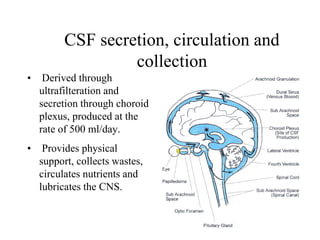
• Derived through
ultrafilteration and
secretion through choroid
plexus, produced at the
rate of 500 ml/day.
• Provides physical
support, collects wastes,
circulates nutrients and
lubricates the CNS.
CSF secretion, circulation and
collection
Normal CSF volumes:
• In Adults: 90 - 150 ml
• In Neonates: 10 - 60 ml
Total CSF volume is replaced every 5-7 hours.
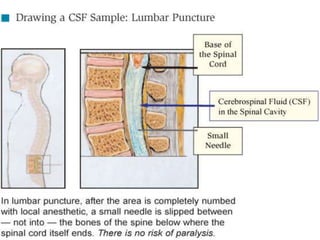
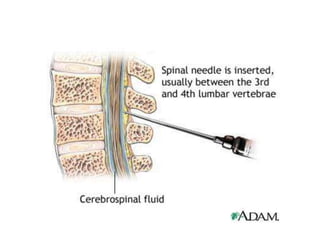
COLLECTION
• Lumbar puncture, Cisternal puncture, Lateral cervical
puncture, Shunts and cannulas
• Opening pressure – 90-180 mm H2O
• Approximately 15-20 cc fluid collected
INDICATIONS OF LUMBAR
PUNCTURE
Bacterial tuberculosis Infectious Polyneuritis
Fungal meningitis Paraspinal abscess
Viral meningitis Meningeal malignancy
SAH Intracranial haemorrhage
Multiple sclerosis Viral encephalitis
CNS Syphillis Subdural haematoma
CONTRAINDICATIONS OF
LUMBAR PUNCTURE
Absolute
• Infection in the skin overlying the access site.
Relative
• Papilloedema
• Bleeding diathesis, platelet count of 50,000 or lower.
• Severe pulmonary disease or respiratory distress.
Glass tubes should be avoided
• 3 serially collected sterile tubes.
1. Tube 1 for chemistry and immunology studies.
2. Tube 2 for microbiological examination.
3. Tube 3 for cell count
and differential/cytology.
• Specimens should be
delivered to the laboratory and
processed quickly to minimize
cellular degradation, which begins
within one hour of collection.
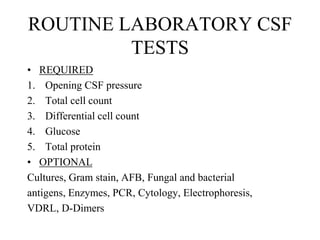
ROUTINE LABORATORY CSF
TESTS
• REQUIRED
1. Opening CSF pressure
2. Total cell count
3. Differential cell count
4. Glucose
5. Total protein
• OPTIONAL
Cultures, Gram stain, AFB, Fungal and bacterial
antigens, Enzymes, PCR, Cytology, Electrophoresis,
VDRL, D-Dimers
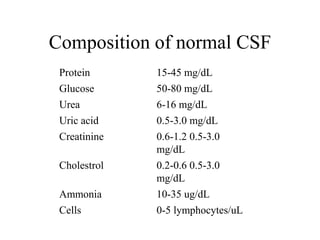
Composition of normal CSF
Protein 15-45 mg/dL
Glucose 50-80 mg/dL
Urea 6-16 mg/dL
Uric acid 0.5-3.0 mg/dL
Creatinine 0.6-1.2 0.5-3.0
mg/dL
Cholestrol 0.2-0.6 0.5-3.0
mg/dL
Ammonia 10-35 ug/dL
Cells 0-5 lymphocytes/uL
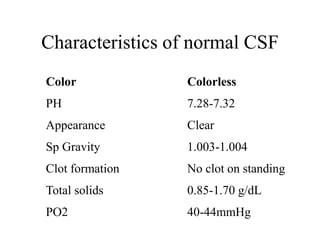
Characteristics of normal CSF
Color Colorless
PH 7.28-7.32
Appearance Clear
Sp Gravity 1.003-1.004
Clot formation No clot on standing
Total solids 0.85-1.70 g/dL
PO2 40-44mmHg
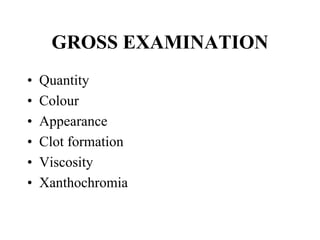
• Quantity
• Colour
• Appearance
• Clot formation
• Viscosity
• Xanthochromia
GROSS EXAMINATION
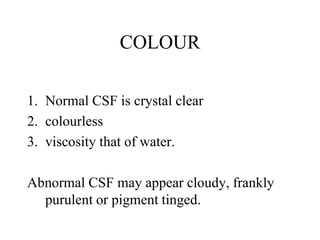
COLOUR
1. Normal CSF is crystal clear
2. colourless
3. viscosity that of water.
Abnormal CSF may appear cloudy, frankly
purulent or pigment tinged.
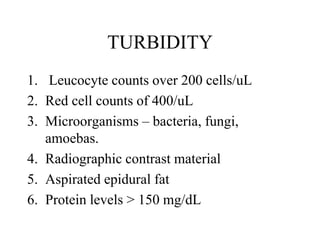
TURBIDITY
1. Leucocyte counts over 200 cells/uL
2. Red cell counts of 400/uL
3. Microorganisms – bacteria, fungi,
amoebas.
4. Radiographic contrast material
5. Aspirated epidural fat
6. Protein levels > 150 mg/dL
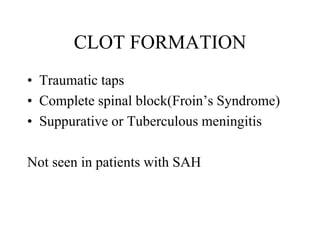
CLOT FORMATION
• Traumatic taps
• Complete spinal block(Froin’s Syndrome)
• Suppurative or Tuberculous meningitis
Not seen in patients with SAH
VISCOSITY
• Metastatic mucin producing adenocarcinomas
• Cryptococcal meningitis
• Liquid nucleus pulposus
XANTHOCHROMIA
• Xanthochromia refers to a pale pink to yellow colour in the
supernatant of centrifuged CSF, although other colours
may be present.
• Xanthochromic CSF is pink, orange, or yellow owing to
RBC lysis and hemoglobin breakdown.
• Pale pink to orange xanthochromia is observed on lumbar
puncture performed 2-4 hours after the onset of SAH.
• Yellow xanthochromia is derived from bilirubin. Develops
12 hours after a subarachnoid bleed.
• Brown xanthochromia is seen in meningeal metastatic
melanoma.
Visible CSF Xanthochromia
• Oxyhemoglobin resulting from artifactual red cell lysis
• Bilirubin in jaundiced patients
• CSF protein levels > 150 mg/dL
• Carotenoids
• Melanin
• Rifampin thereapy
BLOODY CSF
• Usually indicates the presence of blood.
• Grossly bloody when the red blood cell counts
exceed 6000/uL.
CAUSES
1. SAH
2. Intracerebral haemorrhage
3. Cerebral infarct
4. Traumatic spinal tap
Differential Diagnosis of bloody CSF:
1. In a traumatic tap the haemorrhagic fluid
disappears by third tube, remains uniform in
SAH.
2. Xanthochromia, microscopic evidence of
erythrophagocytosis, haemosiderin laden
macrophages indicate SAH.
MICROSCOPIC
EXAMINATION
• TOTAL CELL COUNT
• DIFFERENTIAL CELL COUNT
TOTAL CELL COUNT
TLC in CSF can be done by:
I. Manual method
II. Automated method
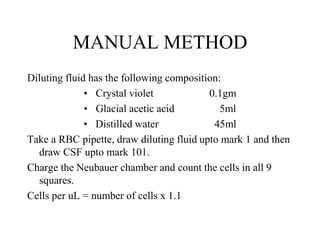
MANUAL METHOD
Diluting fluid has the following composition:
• Crystal violet 0.1gm
• Glacial acetic acid 5ml
• Distilled water 45ml
Take a RBC pipette, draw diluting fluid upto mark 1 and then
draw CSF upto mark 101.
Charge the Neubauer chamber and count the cells in all 9
squares.
Cells per uL = number of cells x 1.1
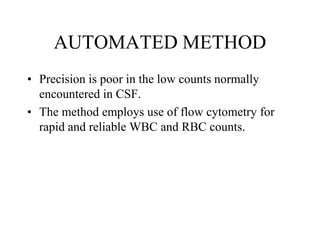
AUTOMATED METHOD
• Precision is poor in the low counts normally
encountered in CSF.
• The method employs use of flow cytometry for
rapid and reliable WBC and RBC counts.
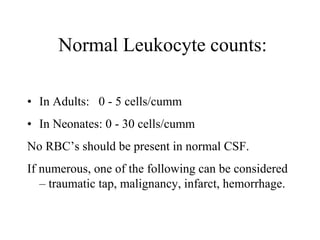
Normal Leukocyte counts:
• In Adults: 0 - 5 cells/cumm
• In Neonates: 0 - 30 cells/cumm
No RBC’s should be present in normal CSF.
If numerous, one of the following can be considered
– traumatic tap, malignancy, infarct, hemorrhage.
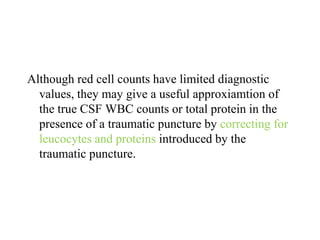
Although red cell counts have limited diagnostic
values, they may give a useful approxiamtion of
the true CSF WBC counts or total protein in the
presence of a traumatic puncture by correcting for
leucocytes and proteins introduced by the
traumatic puncture.
Corrected WBC count:
WBC corr = WBC obs – WBC added
Where:
WBC added = WBCBLD x RBCCSF / RBCBLD
In the presence of normal peripheral blood RBC count, these
corrections amount to 1 WBC for every 700 RBC’c
Corrected protein:
TP added = [TP serum x (1 – HCT)] x RBCCSF/ RBCBLD
In the presence of normal serum protein, these corrections
amount to 8mg/dL protein for every 10,000 RBC’s/uL.
DIFFERENTIAL CELL COUNT
PREPARATION BY CENTRIFUGE
Other techniques:
 Cytocentrifuge
 Sedimentation
 Cell catch
 Filtration
• Differential counts performed in a chamber has
poor precision.
• Direct smears of the centrifuged smear is also
subject to significant error from cellular distortion
and fragmentation.
• Filteration and sedimentation methods are too
cumbersome for routine use.
• Cytocentrifuge is rapid and is the recommended
method of choice for differential cell counts in all
body fluids.
NORMAL CELLS SEEN IN
CSF
• Lymphocytes and monocytes are normally present
in small numbers in a ratio of 70:30. Monocytes
are more in number in neonates and children.
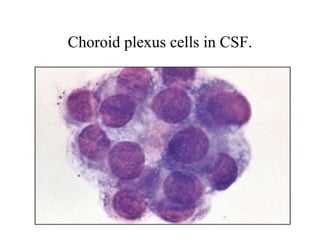
• Choroid plexus and ependymal cells are rarely
seen in hydrocephalus and after intra-thecal
chemotherapy
• Cartilage, ganglion cells and artificial admixture
of hematopoietic cells.
Choroid plexus cells in CSF.
• Contaminants : fungus and bacteria.
• Erythrocytes due to minor traumatic
bleeeding are commonly seen, specially in
infants.
• Small clusters of neutrophils may also be
seen in ‘normal’ CSF specimens, most
likely as a result of minor hemorrhage.
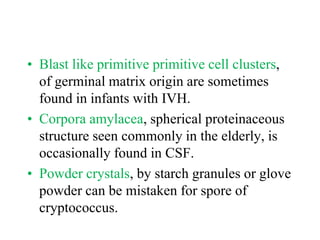
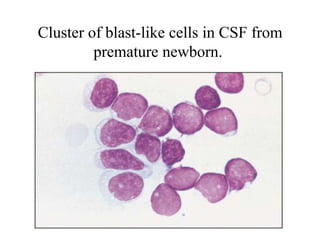
• Blast like primitive primitive cell clusters,
of germinal matrix origin are sometimes
found in infants with IVH.
• Corpora amylacea, spherical proteinaceous
structure seen commonly in the elderly, is
occasionally found in CSF.
• Powder crystals, by starch granules or glove
powder can be mistaken for spore of
cryptococcus.
Cluster of blast-like cells in CSF from
premature newborn.
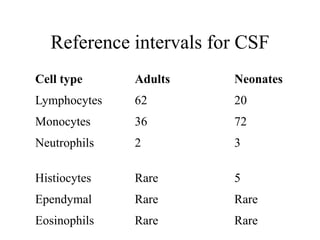
Reference intervals for CSF
Cell type Adults Neonates
Lymphocytes 62 20
Monocytes 36 72
Neutrophils 2 3
Histiocytes Rare 5
Ependymal Rare Rare
Eosinophils Rare Rare
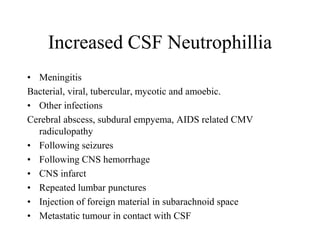
Increased CSF Neutrophillia
• Meningitis
Bacterial, viral, tubercular, mycotic and amoebic.
• Other infections
Cerebral abscess, subdural empyema, AIDS related CMV
radiculopathy
• Following seizures
• Following CNS hemorrhage
• CNS infarct
• Repeated lumbar punctures
• Injection of foreign material in subarachnoid space
• Metastatic tumour in contact with CSF
Increased CSF lymphocytosis
• Meningitis
Viral, tubercular, fungal, syphilitic, leptospiral, parasitic
• Degenerative disorders
Subacute sclerosing panencephalitis, Multiple sclerosis, Drug
abuse encephalopathy, Guillain Barre syndrome, Acute
disseminated encephalomyelitis.
• Other inflammatory disorders
Sarcoidosis, Polyneuritis, CNS periarteritis, Handl syndrome
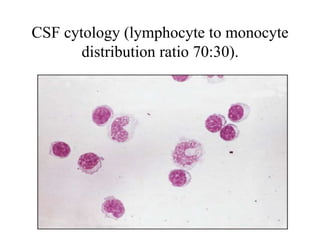
CSF cytology (lymphocyte to monocyte
distribution ratio 70:30).
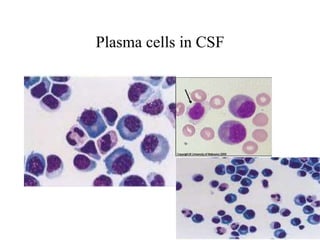
CSF Plasmacytosis
• Acute viral infections
• Guillain Barre syndrome
• Multiple sclerosis
• Parasitic CNS infections
• Sarcoidosis
• Tuberculous meningitis
• Subacute sclerosing panencephalitis
• Syphilitic meningoencephalitis
• Rarely, multiple myeloma
Plasma cells in CSF
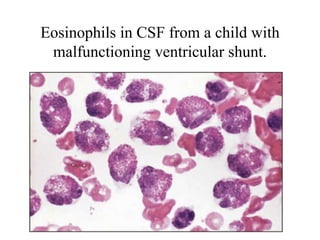
CSF Eosinophillia
Commonly
• Post surgery
• Acute polyneurtis
• CNS reaction to foreign material
• Fungal infections
• Idiopathic hypereosinophillic syndrome
• Parasitic infections
Infrequently
• Bacterial, viral and tubercular meningitis, Leukaemia,
Lymphoma, Myeloproliferative disorders,
Neurosarcoidosis, Primary brain tumours.
Eosinophils in CSF from a child with
malfunctioning ventricular shunt.
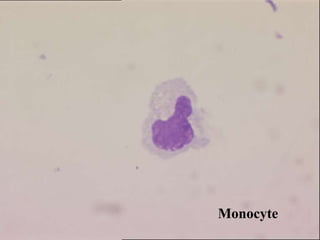
Increased CSF Monocytes
• They lack diagnostic specificity
• Are usually a part of mixed cell reaction that
includes neutrophils, lymphocytes, and plasma
cells
• Causes include: tuberculous and fungal
meningitis, chronic bacterial meningitis,
leptospiral meningitis, ruptured brain abscess,
toxoplasma and amebic meningitis.
Monocyte
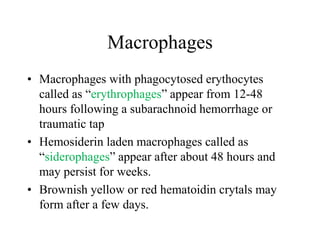
Macrophages
• Macrophages with phagocytosed erythocytes
called as “erythrophages” appear from 12-48
hours following a subarachnoid hemorrhage or
traumatic tap
• Hemosiderin laden macrophages called as
“siderophages” appear after about 48 hours and
may persist for weeks.
• Brownish yellow or red hematoidin crytals may
form after a few days.
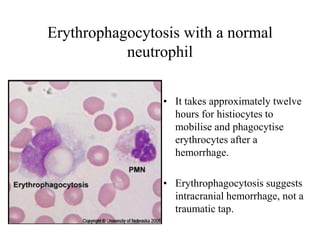
Erythrophagocytosis with a normal
neutrophil
• It takes approximately twelve
hours for histiocytes to
mobilise and phagocytise
erythrocytes after a
hemorrhage.
• Erythrophagocytosis suggests
intracranial hemorrhage, not a
traumatic tap.
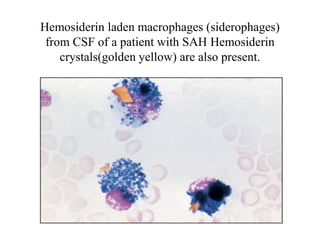
Hemosiderin laden macrophages (siderophages)
from CSF of a patient with SAH Hemosiderin
crystals(golden yellow) are also present.
OTHER CELLS
• CSF examination for tumor cells has
moderate sensitivity and high specificity.
• Amoebae, fungi (specially cryptococcus
neoformans) and Toxoplasma gondii
organisms are present in centrifuged
specimens, but are difficult to identify
without confirmatory stains.
Tumor cells in CSF
• CSF examination for leukemic patients has
the highest specificity, followed by
• metastatic carcinoma and
• primary CNS malignancies.
Leukemia in CSF
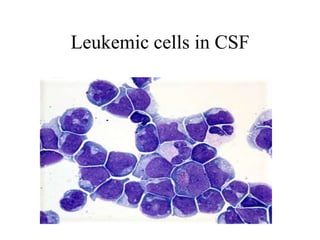
• Leukemic involvement of the tumors is more frequent
in ALL than in AML.
• A leukocyte count over 5cells/uL with unequivocal
lymphoblasts in centrifuged preparations is commonly
accepted as evidence of CSF involvement.
• Lymphomatous involvement produces a very cellular
smear which is composed of monomorphic appearing
atypical lymphoid cells and calls for
immunocytochemical studies and flow cytometry.
• Acute lymphoblastic leukaemia is the most common
lymphoproliferative disorder involving the
subarachnoid space in children. Diagnostic difficulties
arise when there are only a few abnormal cells
admixed with reactive lymphocytes in the CSF. IHC,
including positivity for CD10, cALLA, CD22, kappa
lambda and flow cytometric analysis are helpful.
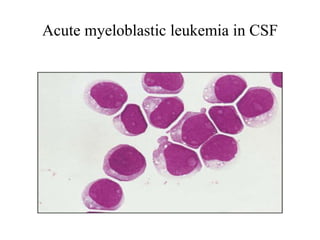
• Immature myloid cells or blasts can be identified in
CSF. Blasts have generally large nuclei, irregular
nuclear membranes, powdery chromatin, bizzarely
shaped nucleoli and abnormal mitoses.
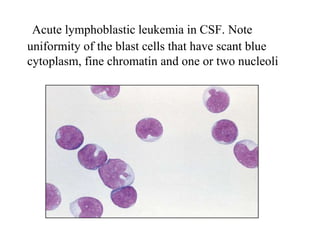
Acute lymphoblastic leukemia in CSF. Note
uniformity of the blast cells that have scant blue
cytoplasm, fine chromatin and one or two nucleoli
Acute myeloblastic leukemia in CSF
Leukemic cells in CSF
Lymphoma in CSF
Non Hodjkin’s lymphoma involving the leptomeninges are usually
high grade tumors with prominent nucleoli and expresses a B-
cell phenotype (CD20 and CD 79a positive)
• Lymphoblastic
• Large cell immunoblastic
• Burkitt’s lymphoma
CSF cytology is of diagnostic value in only upto 30% of primary
CNS lymphomas and 80% of systemic lymphomas involving
the CNS. Therefore, differential diagnosis should always
include lymphocytic pleocytosis, which can be due to radiation,
chemotherapy and infections in immunosuppressed patients
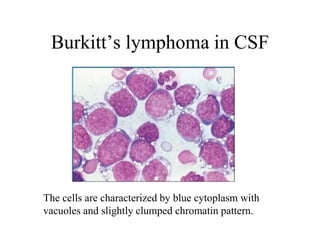
Burkitt’s lymphoma in CSF
The cells are characterized by blue cytoplasm with
vacuoles and slightly clumped chromatin pattern.
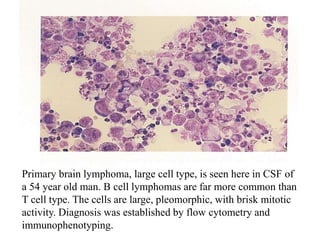
Primary brain lymphoma, large cell type, is seen here in CSF of
a 54 year old man. B cell lymphomas are far more common than
T cell type. The cells are large, pleomorphic, with brisk mitotic
activity. Diagnosis was established by flow cytometry and
immunophenotyping.
Metastatic tumors in CSF
• Metastasis represent half of the tumors found in CSF specimens.
• In adults, the most common malignancies to spread to CSF are
in order of frequency: carcinoma of breast, lung and melanoma
etc.
• Mostly the primary tumor is already known.
• Cells shed from these tumors have malignant cytologic
appearance. They all have in common cells with a high nuclear
to cytoplasmic ratio, irregular nuclei, coarse chromatin and
nucleoli, with dense sharply defined cytoplasm.
• Immunocytochemical studies are warranted if the primary is
unknown as they do not retain their morphological
characteristics.
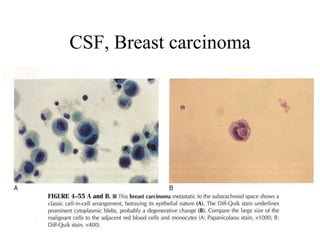
CSF, Breast carcinoma
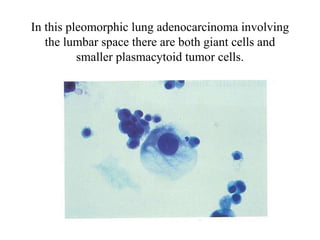
In this pleomorphic lung adenocarcinoma involving
the lumbar space there are both giant cells and
smaller plasmacytoid tumor cells.
Primary CNS tumors
• Primary CNS tumors form only10-20% of positive CSF
specimens.
• High grade glioma in adults and medulloblastoma / PNET in
children are the main tumors that lead to a positive CSF in
patients who have a primary CNS neoplasm.
• In high grade glioma, tmor cells have meager, wispy cytoplasm
and pleomorphic irregular nuclei with vesicular chromatin.
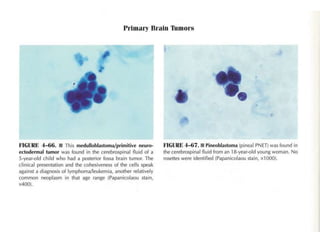
• Medulloblastoma are composed of small round blue cells
arranged in clusters. These cells have scant basophillic
cytoplasm, molded dark nuclei and inconspicuous nucleoli.
• However., clinical history and immunostains are required to
avoid a diagnostic error.
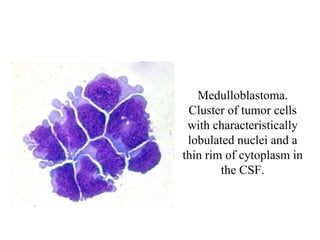
Medulloblastoma.
Cluster of tumor cells
with characteristically
lobulated nuclei and a
thin rim of cytoplasm in
the CSF.
CSF tumor markers
• Carcinoembryonic antigen(CEA)
Metastatic carcinoma of leptomeninges
• Human chorionic gonadotropin(HCG)
Choriocarcinoma and malignant germ cell tumors
with a trophoblastic component.
• Alpha fetoprotein
Increased in germ cell tumors with yolk sac elements
• Elevation of CSF Ferittin is a sensitive indicator
for CNS malignancy but has very low specificity.
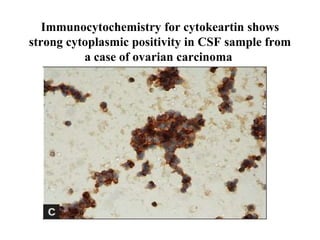
Immunocytochemistry for cytokeartin shows
strong cytoplasmic positivity in CSF sample from
a case of ovarian carcinoma
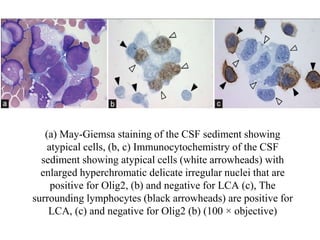
(a) May-Giemsa staining of the CSF sediment showing
atypical cells, (b, c) Immunocytochemistry of the CSF
sediment showing atypical cells (white arrowheads) with
enlarged hyperchromatic delicate irregular nuclei that are
positive for Olig2, (b) and negative for LCA (c), The
surrounding lymphocytes (black arrowheads) are positive for
LCA, (c) and negative for Olig2 (b) (100 × objective)
Bacterial Meningitis
• Usually diagnosed clinically.
• The fluid contains many acute inflammatory cells
(>1,000 per mm3), majority being neutrophil polymorphs.
• Cloudy and turbid CSF (if severe).
• Raised protein >1.5 g/L.
• Glucose level is <50% of the plasma level.
• May see organisms, eg Gram-negative diplococci
in Neisseria meningitidis.
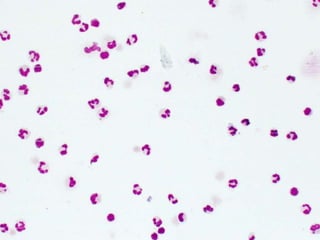
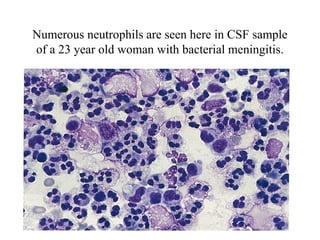
Numerous neutrophils are seen here in CSF sample
of a 23 year old woman with bacterial meningitis.
Tuberculous meningitis
• Clear or slightly cloudy appearance
• Raised protein >1.5 g/L (much higher than bacterial
meningitis).
• Glucose level is <50% of the plasma level.
• Cell count is high with a mixed pleocytosis and mainly
lymphocytes (small and reactive).
• Rarely clumps of epithelioid cells and giant cells may be
seen.
• Sensitivity of CSF for acid fast stains is highly variable.
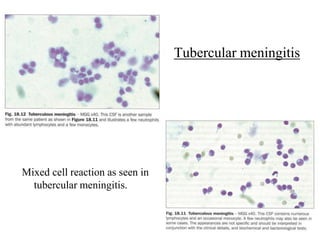
Tubercular meningitis
Mixed cell reaction as seen in
tubercular meningitis.
Viral meningitis
• Clear CSF.
• Protein is raised or at the high end of normal.
• Glucose level is usually within normal limits.
• Predominance of polymorphs can occur in the first 6 hours.
• Lymphocytosis with reactive lymphocytes and occasional
plasma cell.
• IHC helpful in differentiation from lymphoma in atypical
cells.
• No organisms usually and PCR or special stains may be
needed to identify cause.
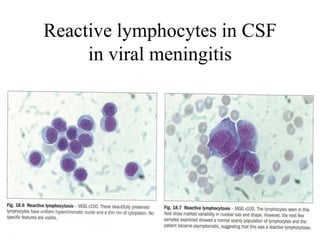
Reactive lymphocytes in CSF
in viral meningitis
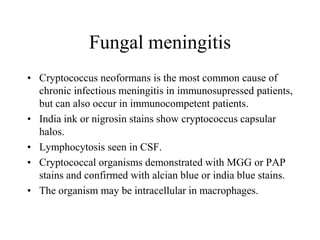
Fungal meningitis
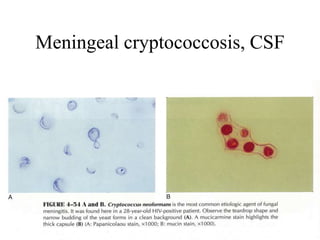
• Cryptococcus neoformans is the most common cause of
chronic infectious meningitis in immunosupressed patients,
but can also occur in immunocompetent patients.
• India ink or nigrosin stains show cryptococcus capsular
halos.
• Lymphocytosis seen in CSF.
• Cryptococcal organisms demonstrated with MGG or PAP
stains and confirmed with alcian blue or india blue stains.
• The organism may be intracellular in macrophages.
Meningeal cryptococcosis, CSF
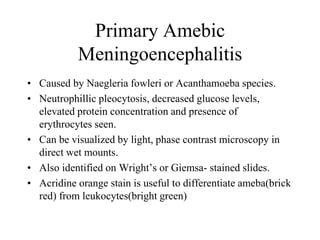
Primary Amebic
Meningoencephalitis
• Caused by Naegleria fowleri or Acanthamoeba species.
• Neutrophillic pleocytosis, decreased glucose levels,
elevated protein concentration and presence of
erythrocytes seen.
• Can be visualized by light, phase contrast microscopy in
direct wet mounts.
• Also identified on Wright’s or Giemsa- stained slides.
• Acridine orange stain is useful to differentiate ameba(brick
red) from leukocytes(bright green)
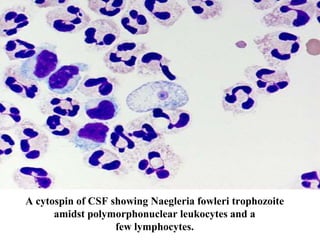
A cytospin of CSF showing Naegleria fowleri trophozoite
amidst polymorphonuclear leukocytes and a
few lymphocytes.
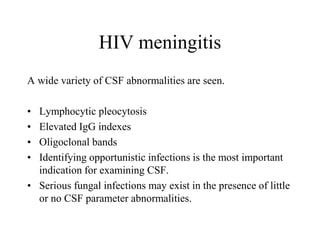
HIV meningitis
A wide variety of CSF abnormalities are seen.
• Lymphocytic pleocytosis
• Elevated IgG indexes
• Oligoclonal bands
• Identifying opportunistic infections is the most important
indication for examining CSF.
• Serious fungal infections may exist in the presence of little
or no CSF parameter abnormalities.
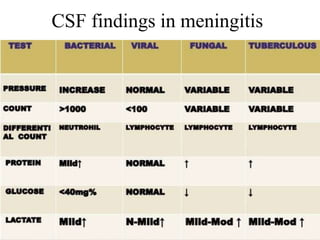
CSF findings in meningitis
References
1. Henry’s clinical diagnosis and management by laboratory
methods. In Joseph A, Knight MD, Carl R. Kjeldsberg
MD, editors. Cerebrospinal, synovial and serous body
fluid. Twenty first edition. Richard A. Mcpherson,
Matthew R Pincus.
2. Winifred Gray, Gabriella Kocjan, Diagnostic
cytopathology. In malcom Galloway, Maria Thorn,
editors. Brain and cerebrospinal fluid. Third Edition.
Fluid cytology in CSF

Fluid cytology in CSF

  • 1.
  • 2.
    SEMINAR : FLUID CYTOLOGY PARTI • MODERATOR: DR B P NAG • STUDENT: DR TASHI AGARWAL
  • 3.
    Fluid Cytology • CerebrospinalFluid • Serous cavity fluids 1. Pleural cavity fluid 2. Pericardial cavity fluid 3. Peritoneal cavity fluid • Synovial fluid
  • 4.
  • 5.
    • Derived through ultrafilterationand secretion through choroid plexus, produced at the rate of 500 ml/day. • Provides physical support, collects wastes, circulates nutrients and lubricates the CNS. CSF secretion, circulation and collection
  • 6.
    Normal CSF volumes: •In Adults: 90 - 150 ml • In Neonates: 10 - 60 ml Total CSF volume is replaced every 5-7 hours. COLLECTION • Lumbar puncture, Cisternal puncture, Lateral cervical puncture, Shunts and cannulas • Opening pressure – 90-180 mm H2O • Approximately 15-20 cc fluid collected
  • 7.
    INDICATIONS OF LUMBAR PUNCTURE Bacterialtuberculosis Infectious Polyneuritis Fungal meningitis Paraspinal abscess Viral meningitis Meningeal malignancy SAH Intracranial haemorrhage Multiple sclerosis Viral encephalitis CNS Syphillis Subdural haematoma
  • 8.
    CONTRAINDICATIONS OF LUMBAR PUNCTURE Absolute •Infection in the skin overlying the access site. Relative • Papilloedema • Bleeding diathesis, platelet count of 50,000 or lower. • Severe pulmonary disease or respiratory distress.
  • 11.
    Glass tubes shouldbe avoided • 3 serially collected sterile tubes. 1. Tube 1 for chemistry and immunology studies. 2. Tube 2 for microbiological examination. 3. Tube 3 for cell count and differential/cytology. • Specimens should be delivered to the laboratory and processed quickly to minimize cellular degradation, which begins within one hour of collection.
  • 12.
    ROUTINE LABORATORY CSF TESTS •REQUIRED 1. Opening CSF pressure 2. Total cell count 3. Differential cell count 4. Glucose 5. Total protein • OPTIONAL Cultures, Gram stain, AFB, Fungal and bacterial antigens, Enzymes, PCR, Cytology, Electrophoresis, VDRL, D-Dimers
  • 13.
    Composition of normalCSF Protein 15-45 mg/dL Glucose 50-80 mg/dL Urea 6-16 mg/dL Uric acid 0.5-3.0 mg/dL Creatinine 0.6-1.2 0.5-3.0 mg/dL Cholestrol 0.2-0.6 0.5-3.0 mg/dL Ammonia 10-35 ug/dL Cells 0-5 lymphocytes/uL
  • 14.
    Characteristics of normalCSF Color Colorless PH 7.28-7.32 Appearance Clear Sp Gravity 1.003-1.004 Clot formation No clot on standing Total solids 0.85-1.70 g/dL PO2 40-44mmHg
  • 15.
    • Quantity • Colour •Appearance • Clot formation • Viscosity • Xanthochromia GROSS EXAMINATION
  • 16.
    COLOUR 1. Normal CSFis crystal clear 2. colourless 3. viscosity that of water. Abnormal CSF may appear cloudy, frankly purulent or pigment tinged.
  • 17.
    TURBIDITY 1. Leucocyte countsover 200 cells/uL 2. Red cell counts of 400/uL 3. Microorganisms – bacteria, fungi, amoebas. 4. Radiographic contrast material 5. Aspirated epidural fat 6. Protein levels > 150 mg/dL
  • 18.
    CLOT FORMATION • Traumatictaps • Complete spinal block(Froin’s Syndrome) • Suppurative or Tuberculous meningitis Not seen in patients with SAH
  • 19.
    VISCOSITY • Metastatic mucinproducing adenocarcinomas • Cryptococcal meningitis • Liquid nucleus pulposus
  • 20.
    XANTHOCHROMIA • Xanthochromia refersto a pale pink to yellow colour in the supernatant of centrifuged CSF, although other colours may be present. • Xanthochromic CSF is pink, orange, or yellow owing to RBC lysis and hemoglobin breakdown. • Pale pink to orange xanthochromia is observed on lumbar puncture performed 2-4 hours after the onset of SAH. • Yellow xanthochromia is derived from bilirubin. Develops 12 hours after a subarachnoid bleed. • Brown xanthochromia is seen in meningeal metastatic melanoma.
  • 21.
    Visible CSF Xanthochromia •Oxyhemoglobin resulting from artifactual red cell lysis • Bilirubin in jaundiced patients • CSF protein levels > 150 mg/dL • Carotenoids • Melanin • Rifampin thereapy
  • 22.
    BLOODY CSF • Usuallyindicates the presence of blood. • Grossly bloody when the red blood cell counts exceed 6000/uL. CAUSES 1. SAH 2. Intracerebral haemorrhage 3. Cerebral infarct 4. Traumatic spinal tap
  • 23.
    Differential Diagnosis ofbloody CSF: 1. In a traumatic tap the haemorrhagic fluid disappears by third tube, remains uniform in SAH. 2. Xanthochromia, microscopic evidence of erythrophagocytosis, haemosiderin laden macrophages indicate SAH.
  • 24.
    MICROSCOPIC EXAMINATION • TOTAL CELLCOUNT • DIFFERENTIAL CELL COUNT
  • 25.
    TOTAL CELL COUNT TLCin CSF can be done by: I. Manual method II. Automated method
  • 26.
    MANUAL METHOD Diluting fluidhas the following composition: • Crystal violet 0.1gm • Glacial acetic acid 5ml • Distilled water 45ml Take a RBC pipette, draw diluting fluid upto mark 1 and then draw CSF upto mark 101. Charge the Neubauer chamber and count the cells in all 9 squares. Cells per uL = number of cells x 1.1
  • 27.
    AUTOMATED METHOD • Precisionis poor in the low counts normally encountered in CSF. • The method employs use of flow cytometry for rapid and reliable WBC and RBC counts.
  • 28.
    Normal Leukocyte counts: •In Adults: 0 - 5 cells/cumm • In Neonates: 0 - 30 cells/cumm No RBC’s should be present in normal CSF. If numerous, one of the following can be considered – traumatic tap, malignancy, infarct, hemorrhage.
  • 29.
    Although red cellcounts have limited diagnostic values, they may give a useful approxiamtion of the true CSF WBC counts or total protein in the presence of a traumatic puncture by correcting for leucocytes and proteins introduced by the traumatic puncture.
  • 30.
    Corrected WBC count: WBCcorr = WBC obs – WBC added Where: WBC added = WBCBLD x RBCCSF / RBCBLD In the presence of normal peripheral blood RBC count, these corrections amount to 1 WBC for every 700 RBC’c Corrected protein: TP added = [TP serum x (1 – HCT)] x RBCCSF/ RBCBLD In the presence of normal serum protein, these corrections amount to 8mg/dL protein for every 10,000 RBC’s/uL.
  • 31.
    DIFFERENTIAL CELL COUNT PREPARATIONBY CENTRIFUGE Other techniques:  Cytocentrifuge  Sedimentation  Cell catch  Filtration
  • 32.
    • Differential countsperformed in a chamber has poor precision. • Direct smears of the centrifuged smear is also subject to significant error from cellular distortion and fragmentation. • Filteration and sedimentation methods are too cumbersome for routine use. • Cytocentrifuge is rapid and is the recommended method of choice for differential cell counts in all body fluids.
  • 33.
    NORMAL CELLS SEENIN CSF • Lymphocytes and monocytes are normally present in small numbers in a ratio of 70:30. Monocytes are more in number in neonates and children. • Choroid plexus and ependymal cells are rarely seen in hydrocephalus and after intra-thecal chemotherapy • Cartilage, ganglion cells and artificial admixture of hematopoietic cells.
  • 34.
  • 35.
    • Contaminants :fungus and bacteria. • Erythrocytes due to minor traumatic bleeeding are commonly seen, specially in infants. • Small clusters of neutrophils may also be seen in ‘normal’ CSF specimens, most likely as a result of minor hemorrhage.
  • 36.
    • Blast likeprimitive primitive cell clusters, of germinal matrix origin are sometimes found in infants with IVH. • Corpora amylacea, spherical proteinaceous structure seen commonly in the elderly, is occasionally found in CSF. • Powder crystals, by starch granules or glove powder can be mistaken for spore of cryptococcus.
  • 37.
    Cluster of blast-likecells in CSF from premature newborn.
  • 38.
    Reference intervals forCSF Cell type Adults Neonates Lymphocytes 62 20 Monocytes 36 72 Neutrophils 2 3 Histiocytes Rare 5 Ependymal Rare Rare Eosinophils Rare Rare
  • 39.
    Increased CSF Neutrophillia •Meningitis Bacterial, viral, tubercular, mycotic and amoebic. • Other infections Cerebral abscess, subdural empyema, AIDS related CMV radiculopathy • Following seizures • Following CNS hemorrhage • CNS infarct • Repeated lumbar punctures • Injection of foreign material in subarachnoid space • Metastatic tumour in contact with CSF
  • 41.
    Increased CSF lymphocytosis •Meningitis Viral, tubercular, fungal, syphilitic, leptospiral, parasitic • Degenerative disorders Subacute sclerosing panencephalitis, Multiple sclerosis, Drug abuse encephalopathy, Guillain Barre syndrome, Acute disseminated encephalomyelitis. • Other inflammatory disorders Sarcoidosis, Polyneuritis, CNS periarteritis, Handl syndrome
  • 42.
    CSF cytology (lymphocyteto monocyte distribution ratio 70:30).
  • 43.
    CSF Plasmacytosis • Acuteviral infections • Guillain Barre syndrome • Multiple sclerosis • Parasitic CNS infections • Sarcoidosis • Tuberculous meningitis • Subacute sclerosing panencephalitis • Syphilitic meningoencephalitis • Rarely, multiple myeloma
  • 44.
  • 45.
    CSF Eosinophillia Commonly • Postsurgery • Acute polyneurtis • CNS reaction to foreign material • Fungal infections • Idiopathic hypereosinophillic syndrome • Parasitic infections Infrequently • Bacterial, viral and tubercular meningitis, Leukaemia, Lymphoma, Myeloproliferative disorders, Neurosarcoidosis, Primary brain tumours.
  • 46.
    Eosinophils in CSFfrom a child with malfunctioning ventricular shunt.
  • 47.
    Increased CSF Monocytes •They lack diagnostic specificity • Are usually a part of mixed cell reaction that includes neutrophils, lymphocytes, and plasma cells • Causes include: tuberculous and fungal meningitis, chronic bacterial meningitis, leptospiral meningitis, ruptured brain abscess, toxoplasma and amebic meningitis.
  • 48.
  • 49.
    Macrophages • Macrophages withphagocytosed erythocytes called as “erythrophages” appear from 12-48 hours following a subarachnoid hemorrhage or traumatic tap • Hemosiderin laden macrophages called as “siderophages” appear after about 48 hours and may persist for weeks. • Brownish yellow or red hematoidin crytals may form after a few days.
  • 50.
    Erythrophagocytosis with anormal neutrophil • It takes approximately twelve hours for histiocytes to mobilise and phagocytise erythrocytes after a hemorrhage. • Erythrophagocytosis suggests intracranial hemorrhage, not a traumatic tap.
  • 51.
    Hemosiderin laden macrophages(siderophages) from CSF of a patient with SAH Hemosiderin crystals(golden yellow) are also present.
  • 52.
    OTHER CELLS • CSFexamination for tumor cells has moderate sensitivity and high specificity. • Amoebae, fungi (specially cryptococcus neoformans) and Toxoplasma gondii organisms are present in centrifuged specimens, but are difficult to identify without confirmatory stains.
  • 53.
    Tumor cells inCSF • CSF examination for leukemic patients has the highest specificity, followed by • metastatic carcinoma and • primary CNS malignancies.
  • 54.
    Leukemia in CSF •Leukemic involvement of the tumors is more frequent in ALL than in AML. • A leukocyte count over 5cells/uL with unequivocal lymphoblasts in centrifuged preparations is commonly accepted as evidence of CSF involvement. • Lymphomatous involvement produces a very cellular smear which is composed of monomorphic appearing atypical lymphoid cells and calls for immunocytochemical studies and flow cytometry.
  • 55.
    • Acute lymphoblasticleukaemia is the most common lymphoproliferative disorder involving the subarachnoid space in children. Diagnostic difficulties arise when there are only a few abnormal cells admixed with reactive lymphocytes in the CSF. IHC, including positivity for CD10, cALLA, CD22, kappa lambda and flow cytometric analysis are helpful. • Immature myloid cells or blasts can be identified in CSF. Blasts have generally large nuclei, irregular nuclear membranes, powdery chromatin, bizzarely shaped nucleoli and abnormal mitoses.
  • 56.
    Acute lymphoblastic leukemiain CSF. Note uniformity of the blast cells that have scant blue cytoplasm, fine chromatin and one or two nucleoli
  • 57.
  • 58.
  • 59.
    Lymphoma in CSF NonHodjkin’s lymphoma involving the leptomeninges are usually high grade tumors with prominent nucleoli and expresses a B- cell phenotype (CD20 and CD 79a positive) • Lymphoblastic • Large cell immunoblastic • Burkitt’s lymphoma CSF cytology is of diagnostic value in only upto 30% of primary CNS lymphomas and 80% of systemic lymphomas involving the CNS. Therefore, differential diagnosis should always include lymphocytic pleocytosis, which can be due to radiation, chemotherapy and infections in immunosuppressed patients
  • 60.
    Burkitt’s lymphoma inCSF The cells are characterized by blue cytoplasm with vacuoles and slightly clumped chromatin pattern.
  • 61.
    Primary brain lymphoma,large cell type, is seen here in CSF of a 54 year old man. B cell lymphomas are far more common than T cell type. The cells are large, pleomorphic, with brisk mitotic activity. Diagnosis was established by flow cytometry and immunophenotyping.
  • 62.
    Metastatic tumors inCSF • Metastasis represent half of the tumors found in CSF specimens. • In adults, the most common malignancies to spread to CSF are in order of frequency: carcinoma of breast, lung and melanoma etc. • Mostly the primary tumor is already known. • Cells shed from these tumors have malignant cytologic appearance. They all have in common cells with a high nuclear to cytoplasmic ratio, irregular nuclei, coarse chromatin and nucleoli, with dense sharply defined cytoplasm. • Immunocytochemical studies are warranted if the primary is unknown as they do not retain their morphological characteristics.
  • 63.
  • 64.
    In this pleomorphiclung adenocarcinoma involving the lumbar space there are both giant cells and smaller plasmacytoid tumor cells.
  • 65.
    Primary CNS tumors •Primary CNS tumors form only10-20% of positive CSF specimens. • High grade glioma in adults and medulloblastoma / PNET in children are the main tumors that lead to a positive CSF in patients who have a primary CNS neoplasm. • In high grade glioma, tmor cells have meager, wispy cytoplasm and pleomorphic irregular nuclei with vesicular chromatin. • Medulloblastoma are composed of small round blue cells arranged in clusters. These cells have scant basophillic cytoplasm, molded dark nuclei and inconspicuous nucleoli. • However., clinical history and immunostains are required to avoid a diagnostic error.
  • 66.
    Medulloblastoma. Cluster of tumorcells with characteristically lobulated nuclei and a thin rim of cytoplasm in the CSF.
  • 68.
    CSF tumor markers •Carcinoembryonic antigen(CEA) Metastatic carcinoma of leptomeninges • Human chorionic gonadotropin(HCG) Choriocarcinoma and malignant germ cell tumors with a trophoblastic component. • Alpha fetoprotein Increased in germ cell tumors with yolk sac elements • Elevation of CSF Ferittin is a sensitive indicator for CNS malignancy but has very low specificity.
  • 69.
    Immunocytochemistry for cytokeartinshows strong cytoplasmic positivity in CSF sample from a case of ovarian carcinoma
  • 70.
    (a) May-Giemsa stainingof the CSF sediment showing atypical cells, (b, c) Immunocytochemistry of the CSF sediment showing atypical cells (white arrowheads) with enlarged hyperchromatic delicate irregular nuclei that are positive for Olig2, (b) and negative for LCA (c), The surrounding lymphocytes (black arrowheads) are positive for LCA, (c) and negative for Olig2 (b) (100 × objective)
  • 71.
    Bacterial Meningitis • Usuallydiagnosed clinically. • The fluid contains many acute inflammatory cells (>1,000 per mm3), majority being neutrophil polymorphs. • Cloudy and turbid CSF (if severe). • Raised protein >1.5 g/L. • Glucose level is <50% of the plasma level. • May see organisms, eg Gram-negative diplococci in Neisseria meningitidis.
  • 72.
    Numerous neutrophils areseen here in CSF sample of a 23 year old woman with bacterial meningitis.
  • 73.
    Tuberculous meningitis • Clearor slightly cloudy appearance • Raised protein >1.5 g/L (much higher than bacterial meningitis). • Glucose level is <50% of the plasma level. • Cell count is high with a mixed pleocytosis and mainly lymphocytes (small and reactive). • Rarely clumps of epithelioid cells and giant cells may be seen. • Sensitivity of CSF for acid fast stains is highly variable.
  • 74.
    Tubercular meningitis Mixed cellreaction as seen in tubercular meningitis.
  • 75.
    Viral meningitis • ClearCSF. • Protein is raised or at the high end of normal. • Glucose level is usually within normal limits. • Predominance of polymorphs can occur in the first 6 hours. • Lymphocytosis with reactive lymphocytes and occasional plasma cell. • IHC helpful in differentiation from lymphoma in atypical cells. • No organisms usually and PCR or special stains may be needed to identify cause.
  • 76.
    Reactive lymphocytes inCSF in viral meningitis
  • 77.
    Fungal meningitis • Cryptococcusneoformans is the most common cause of chronic infectious meningitis in immunosupressed patients, but can also occur in immunocompetent patients. • India ink or nigrosin stains show cryptococcus capsular halos. • Lymphocytosis seen in CSF. • Cryptococcal organisms demonstrated with MGG or PAP stains and confirmed with alcian blue or india blue stains. • The organism may be intracellular in macrophages.
  • 78.
  • 79.
    Primary Amebic Meningoencephalitis • Causedby Naegleria fowleri or Acanthamoeba species. • Neutrophillic pleocytosis, decreased glucose levels, elevated protein concentration and presence of erythrocytes seen. • Can be visualized by light, phase contrast microscopy in direct wet mounts. • Also identified on Wright’s or Giemsa- stained slides. • Acridine orange stain is useful to differentiate ameba(brick red) from leukocytes(bright green)
  • 80.
    A cytospin ofCSF showing Naegleria fowleri trophozoite amidst polymorphonuclear leukocytes and a few lymphocytes.
  • 81.
    HIV meningitis A widevariety of CSF abnormalities are seen. • Lymphocytic pleocytosis • Elevated IgG indexes • Oligoclonal bands • Identifying opportunistic infections is the most important indication for examining CSF. • Serious fungal infections may exist in the presence of little or no CSF parameter abnormalities.
  • 82.
    CSF findings inmeningitis
  • 83.
    References 1. Henry’s clinicaldiagnosis and management by laboratory methods. In Joseph A, Knight MD, Carl R. Kjeldsberg MD, editors. Cerebrospinal, synovial and serous body fluid. Twenty first edition. Richard A. Mcpherson, Matthew R Pincus. 2. Winifred Gray, Gabriella Kocjan, Diagnostic cytopathology. In malcom Galloway, Maria Thorn, editors. Brain and cerebrospinal fluid. Third Edition.