CSF & body cavity fluid
examination
1
Outline
 Fluid (Routine examination)
 Cerebrospinal fluid
 Pleural fluid
 Peritoneal fluid
 Pericardial fluid
 Synovial fluid
 Fluid (Cytology)
2
 Introduction
 Specimen collection
 Gross examination
 Microscopic examination
 Chemical examination
 Microbiological examination
3
Objective
 Determining the etiologic cause of fluid accumulation in
various body cavities is critical for proper treatment of
disorders.
 Therefore appropriate laboratory examination of these
fluids is critical for the diagnosis of numerous diseases
(i.e., bacterial, viral and fungal infections,metastatic
malignancies)
4
Cerebrospinal fluid
 Introduction:
The CSF is a clear, colourless, transparent
fluid in the cerebral ventricles, spinal canal and
sub- arachnoid spaces.
 Normal adult CSF production rate is 500 ml/day (.3 to
.4 ml/min)
5
CSF FORMATION
6
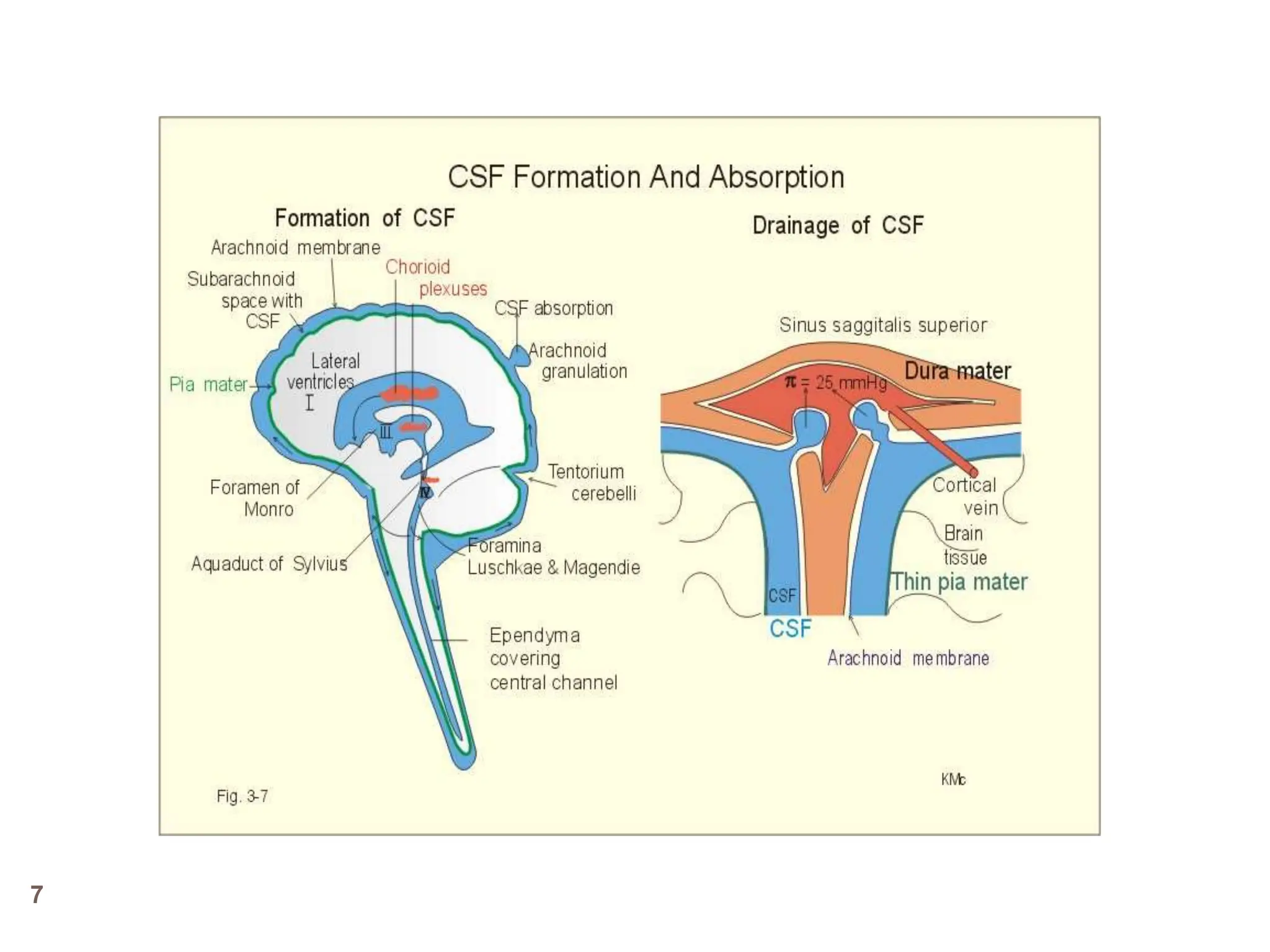
CSF is largely formed by the choroid plexus
of the lateral ventricle and remainder in the
third and fourth ventricles.
Small amount of the CSF is also formed from
the ependymal cells lining the ventricles and
other brain capillaries.
7
Functions of CSF
 Provides physical support to brain
 Provides protective effect against sudden change in
pressure(Shock absorber i.e.
respiratory,postural,impact &arterial)
 Vehicle for the excretion of waste product from
brain(Brain-no lymphatic system)
 Maintains ionic homeostasis
8
Indications
 In the diagnosis of Bacterial, viral or fungal
meningitis.
 Encephalitis.
 Malignant infiltrates like in acute
leukemia,lymphoma.
 Subarachnoid hemorrhage.
 Spinal canal blockage leading to elevated
intracranial tension.
 Sub acute sclerosing pan encephalitis (SSPE)
9
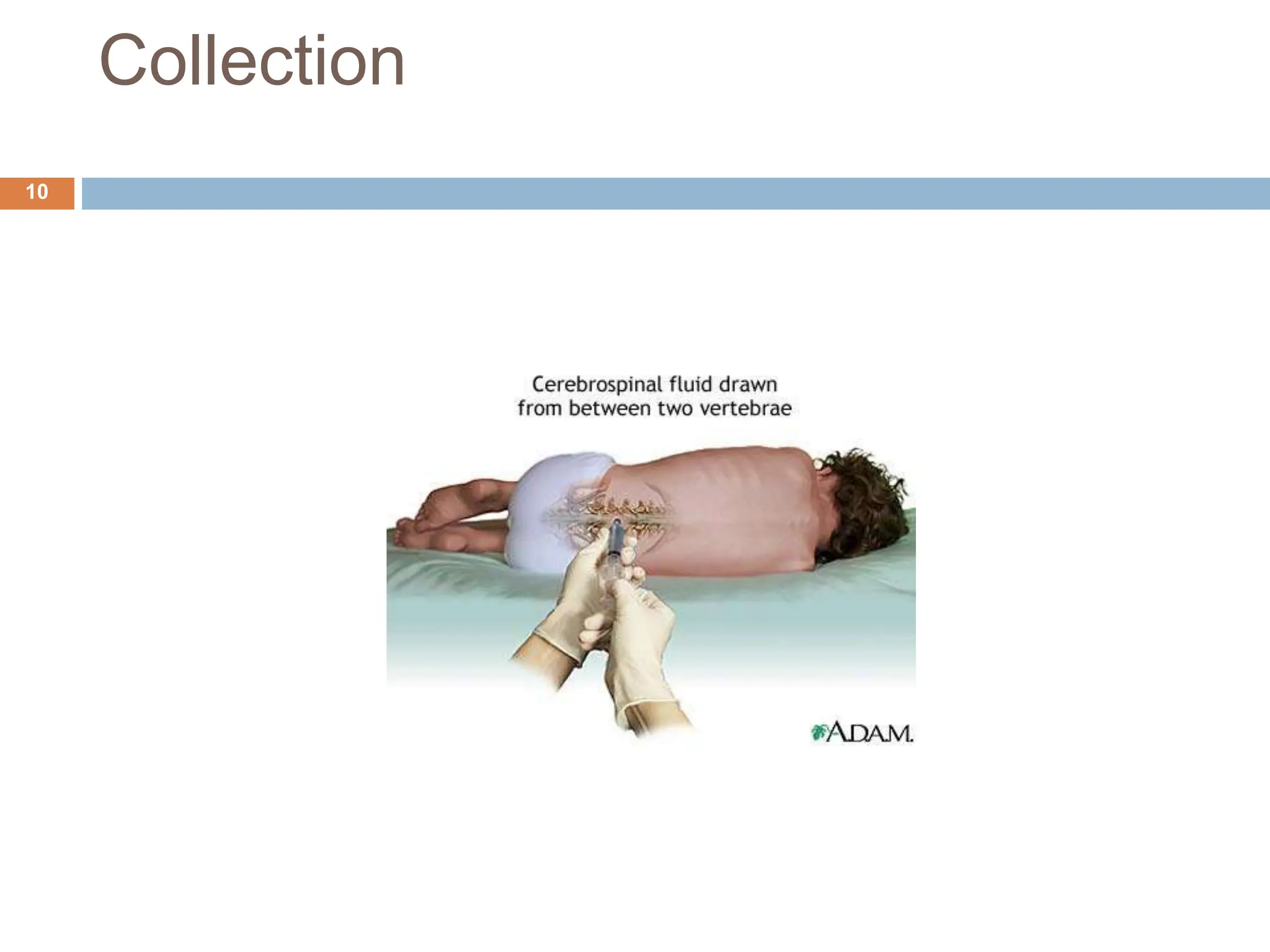
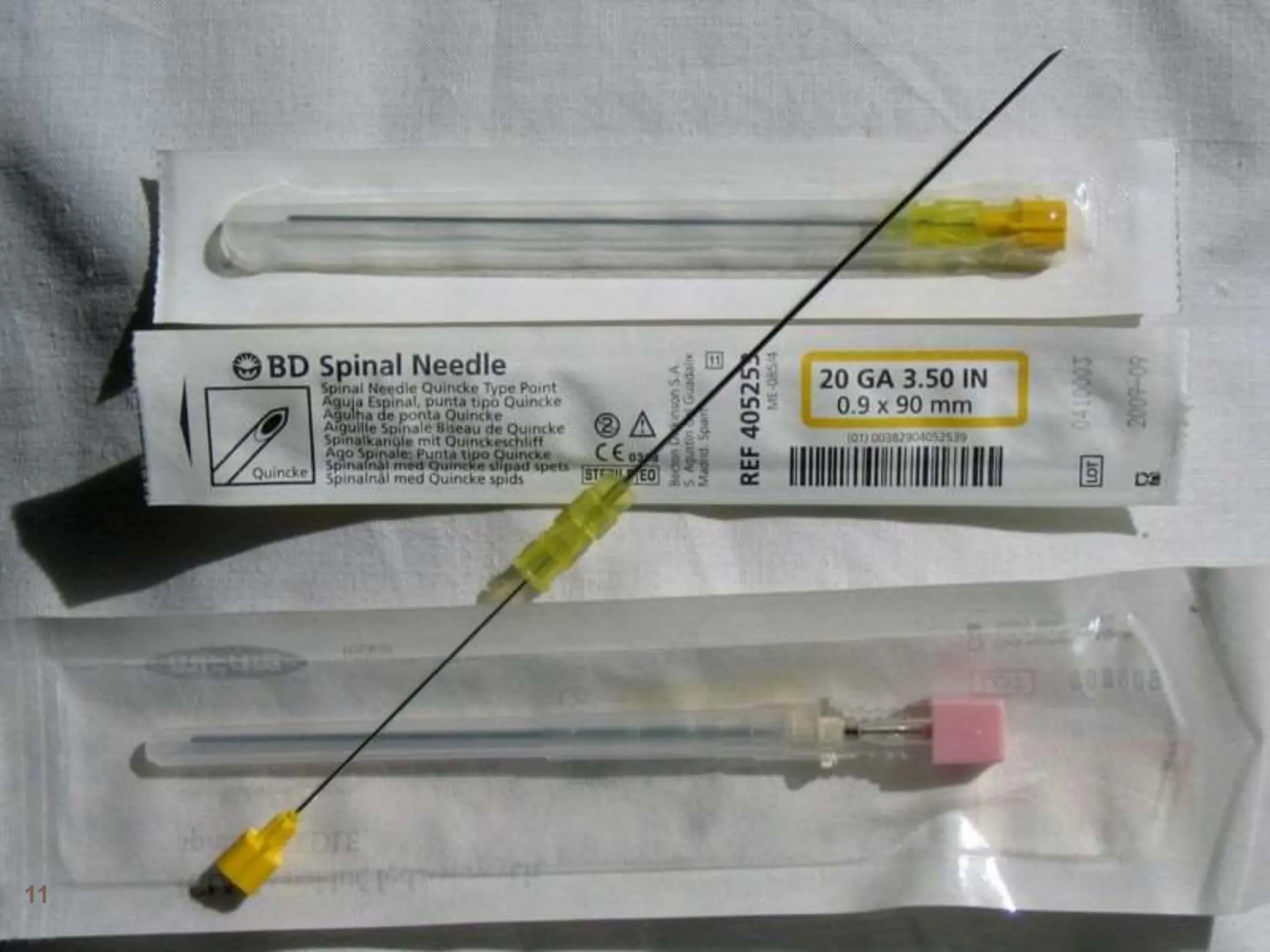
Collection
10
11
 Manometer is attached to syringe to measure opening
pressure
 Normal Opening Pressure in adult 90 to 180 mm of
water
 In infant & children upto 6-8 years 10 to 100 mm of
water
Raised opening pressure(>200mm of water)
1. meningitis
2. Intracranial mass lesion
3. cerebral edema
4. subarachnoid hemorrhage
5. CCF
6. Benign intracranial hypertension(pseudotumor cerebri)
12
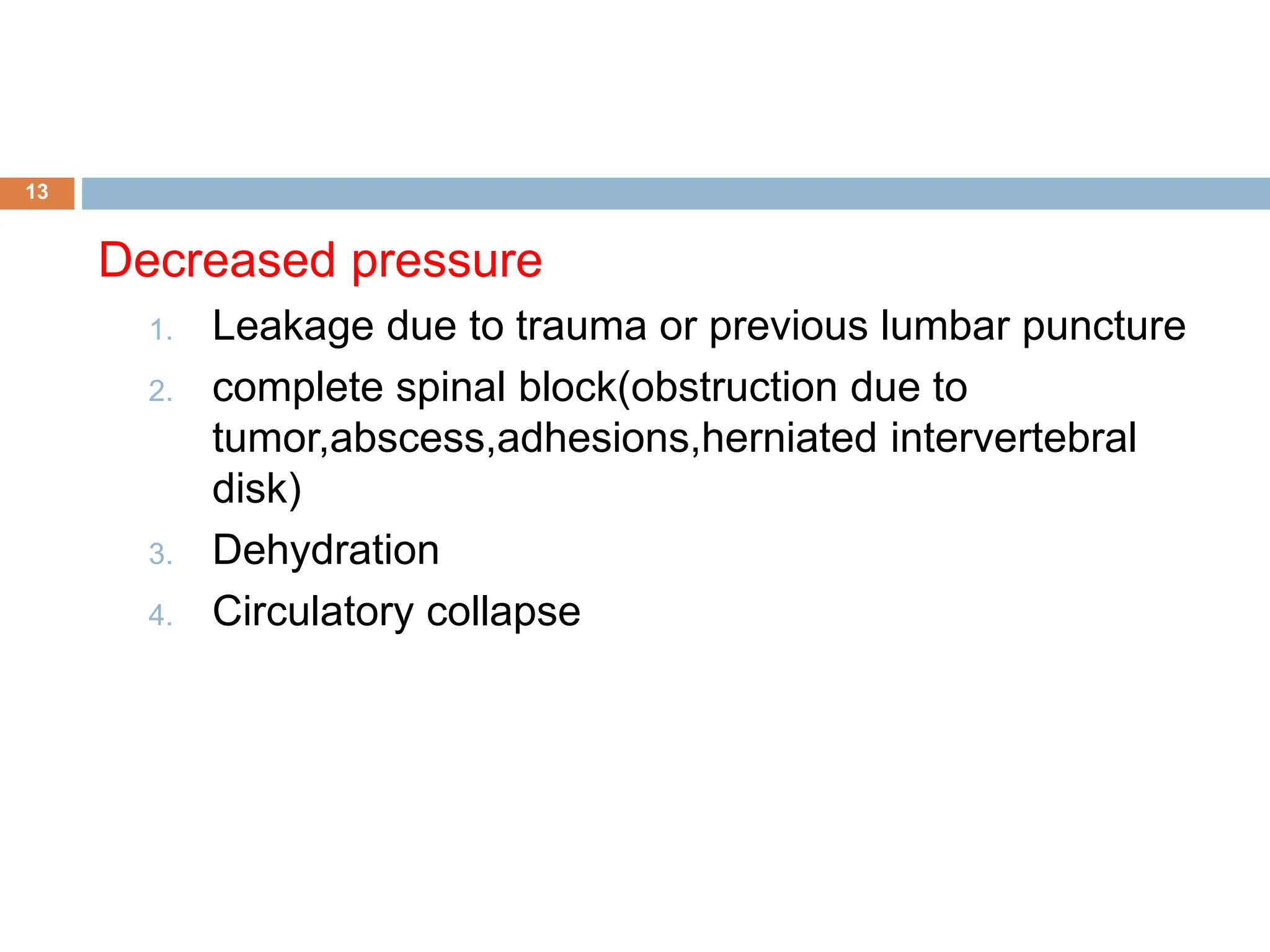
Decreased pressure
1. Leakage due to trauma or previous lumbar puncture
2. complete spinal block(obstruction due to
tumor,abscess,adhesions,herniated intervertebral
disk)
3. Dehydration
4. Circulatory collapse
13
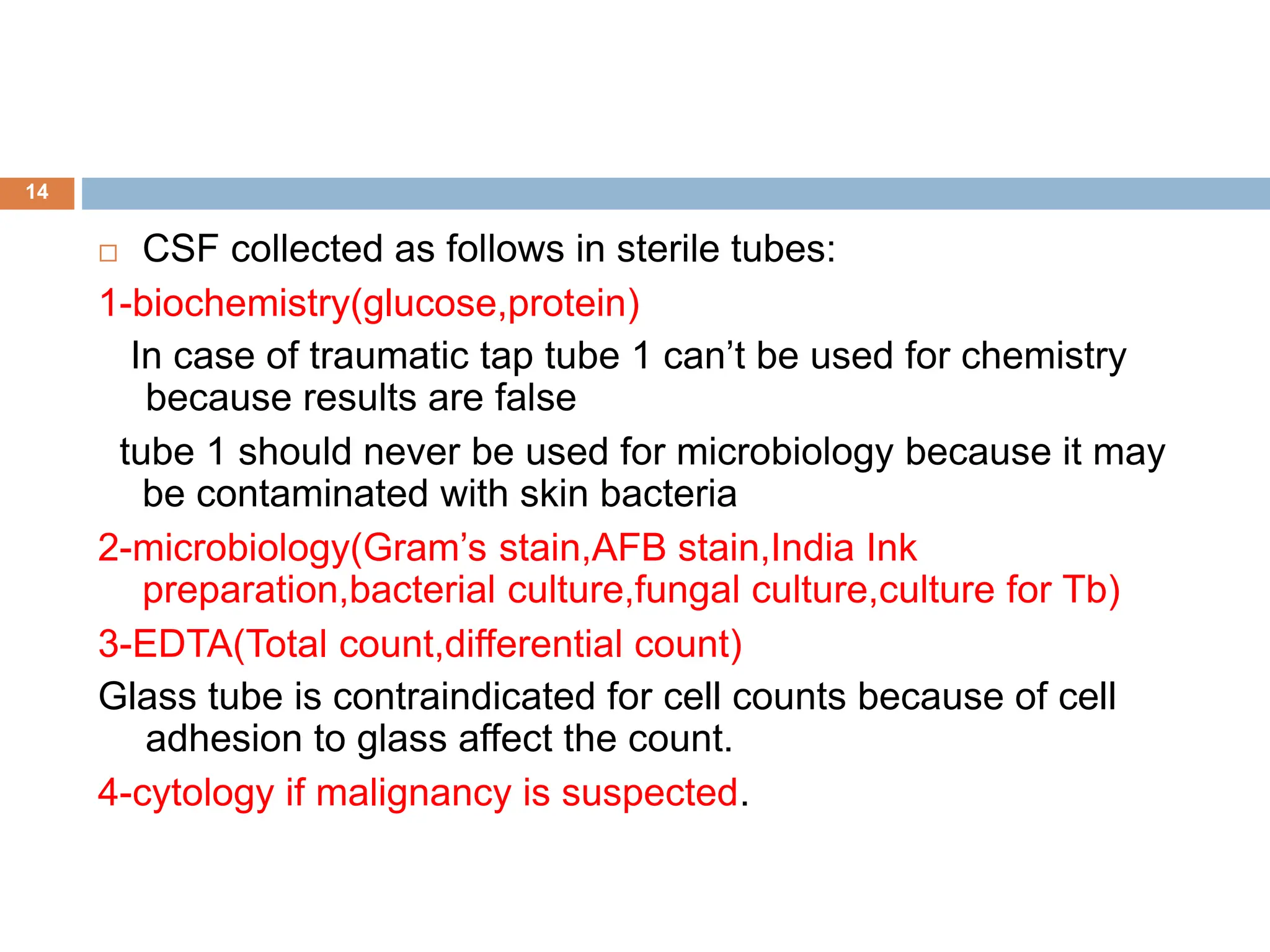
 CSF collected as follows in sterile tubes:
1-biochemistry(glucose,protein)
In case of traumatic tap tube 1 can’t be used for chemistry
because results are false
tube 1 should never be used for microbiology because it may
be contaminated with skin bacteria
2-microbiology(Gram’s stain,AFB stain,India Ink
preparation,bacterial culture,fungal culture,culture for Tb)
3-EDTA(Total count,differential count)
Glass tube is contraindicated for cell counts because of cell
adhesion to glass affect the count.
4-cytology if malignancy is suspected.
14
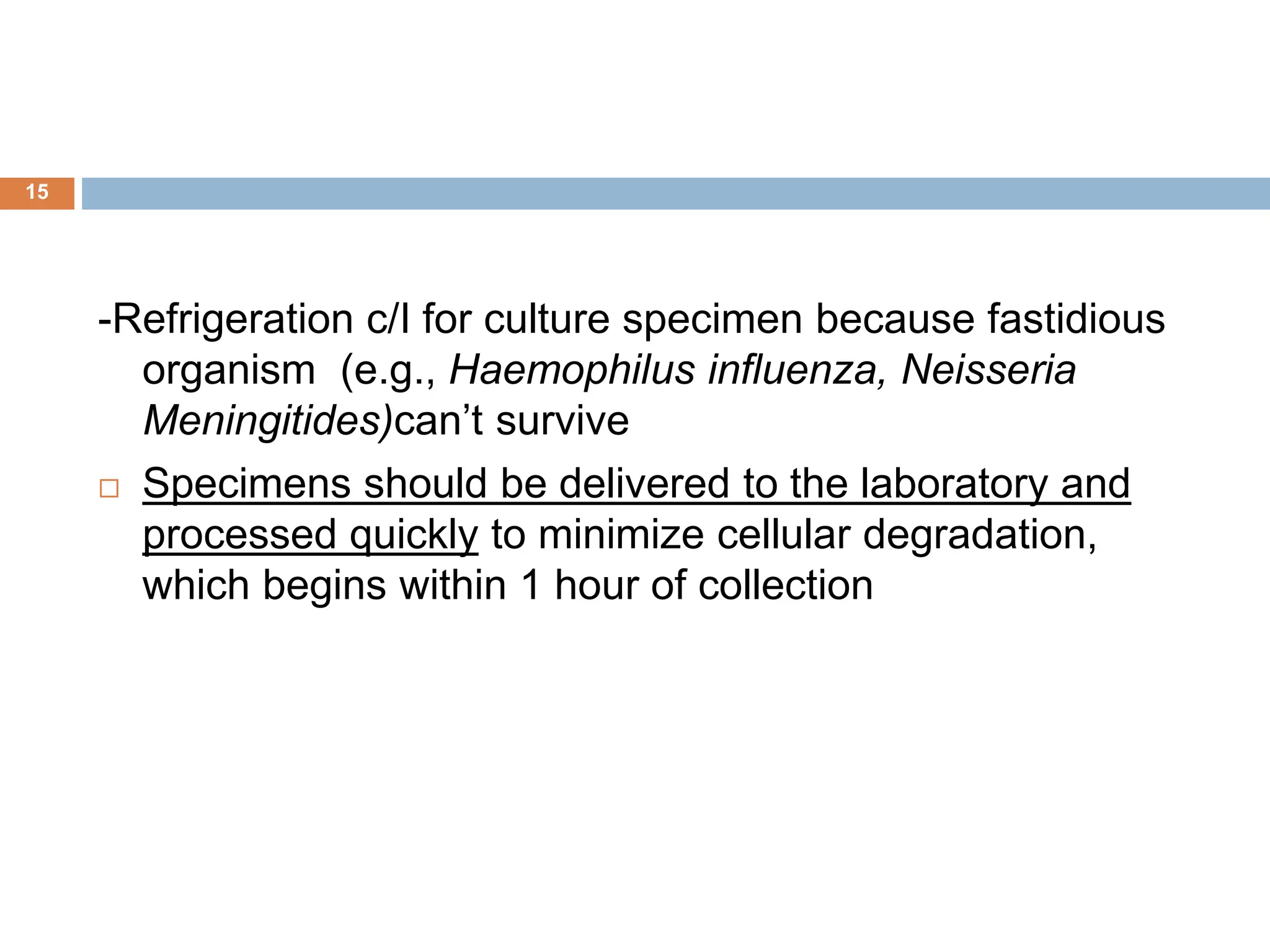
-Refrigeration c/I for culture specimen because fastidious
organism (e.g., Haemophilus influenza, Neisseria
Meningitides)can’t survive
 Specimens should be delivered to the laboratory and
processed quickly to minimize cellular degradation,
which begins within 1 hour of collection
15
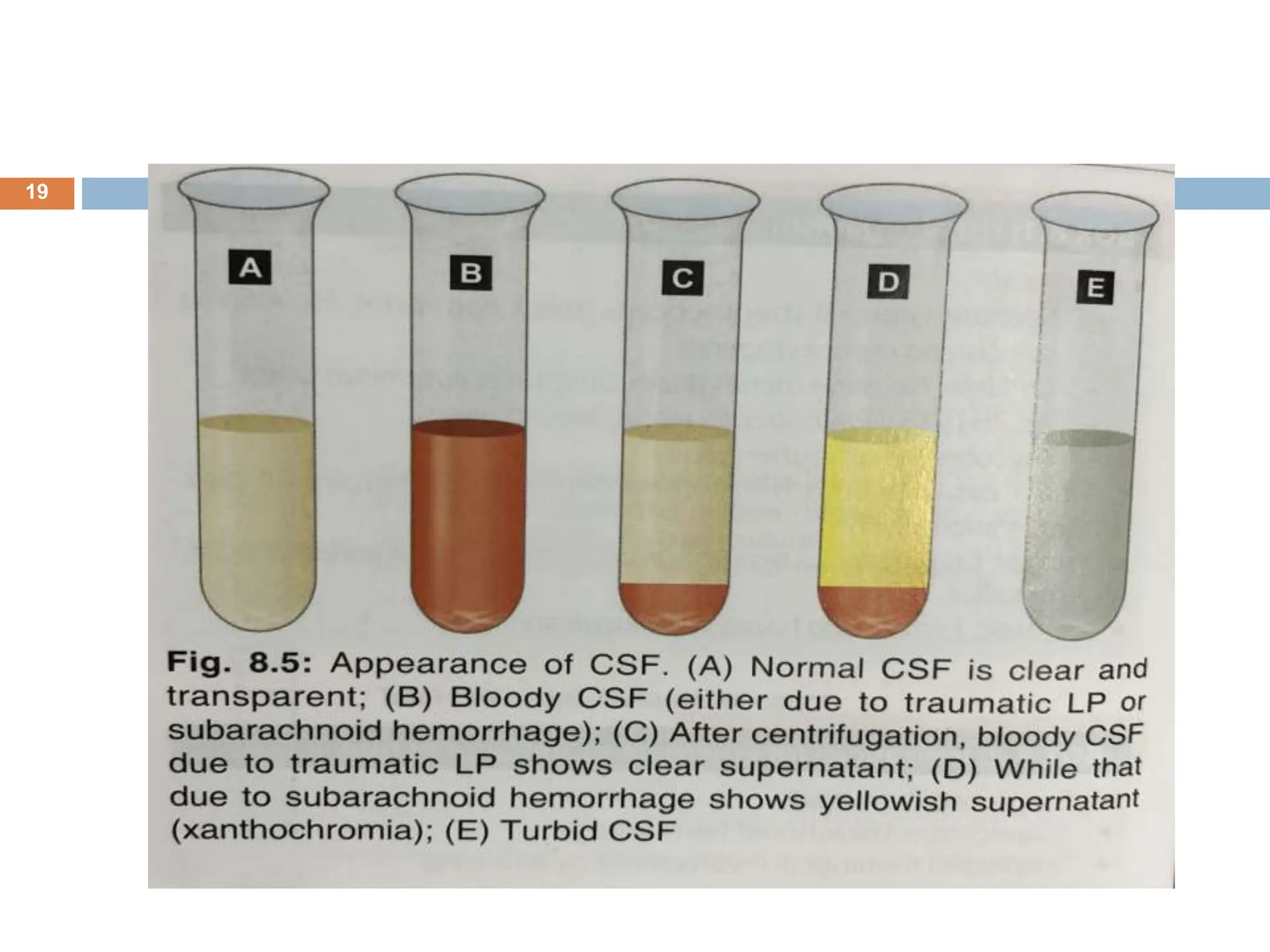
Gross Examination:
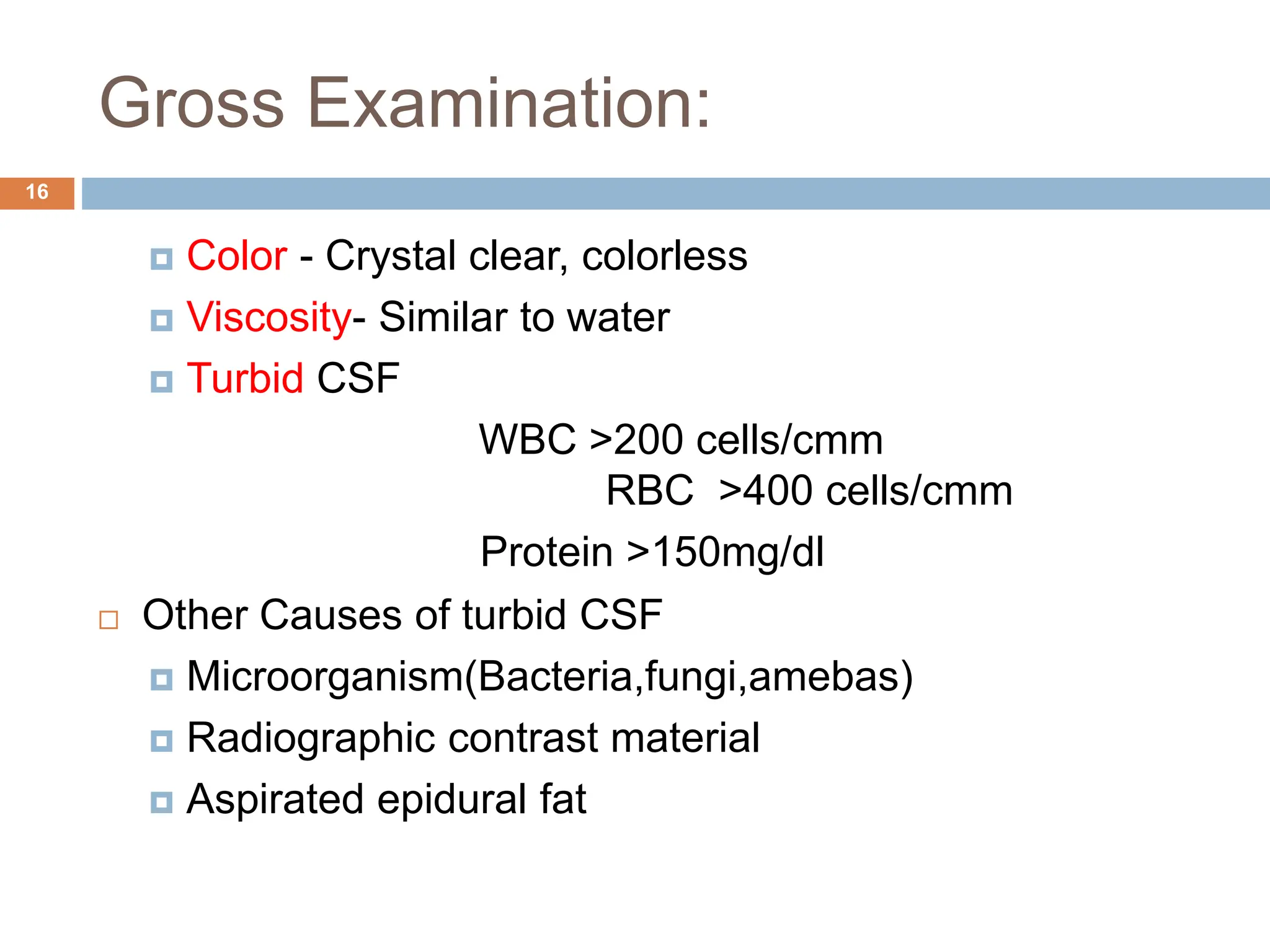
 Color - Crystal clear, colorless
 Viscosity- Similar to water
 Turbid CSF
WBC >200 cells/cmm
RBC >400 cells/cmm
Protein >150mg/dl
 Other Causes of turbid CSF
 Microorganism(Bacteria,fungi,amebas)
 Radiographic contrast material
 Aspirated epidural fat
16
• Clot formation in CSF
1.Traumatic tap
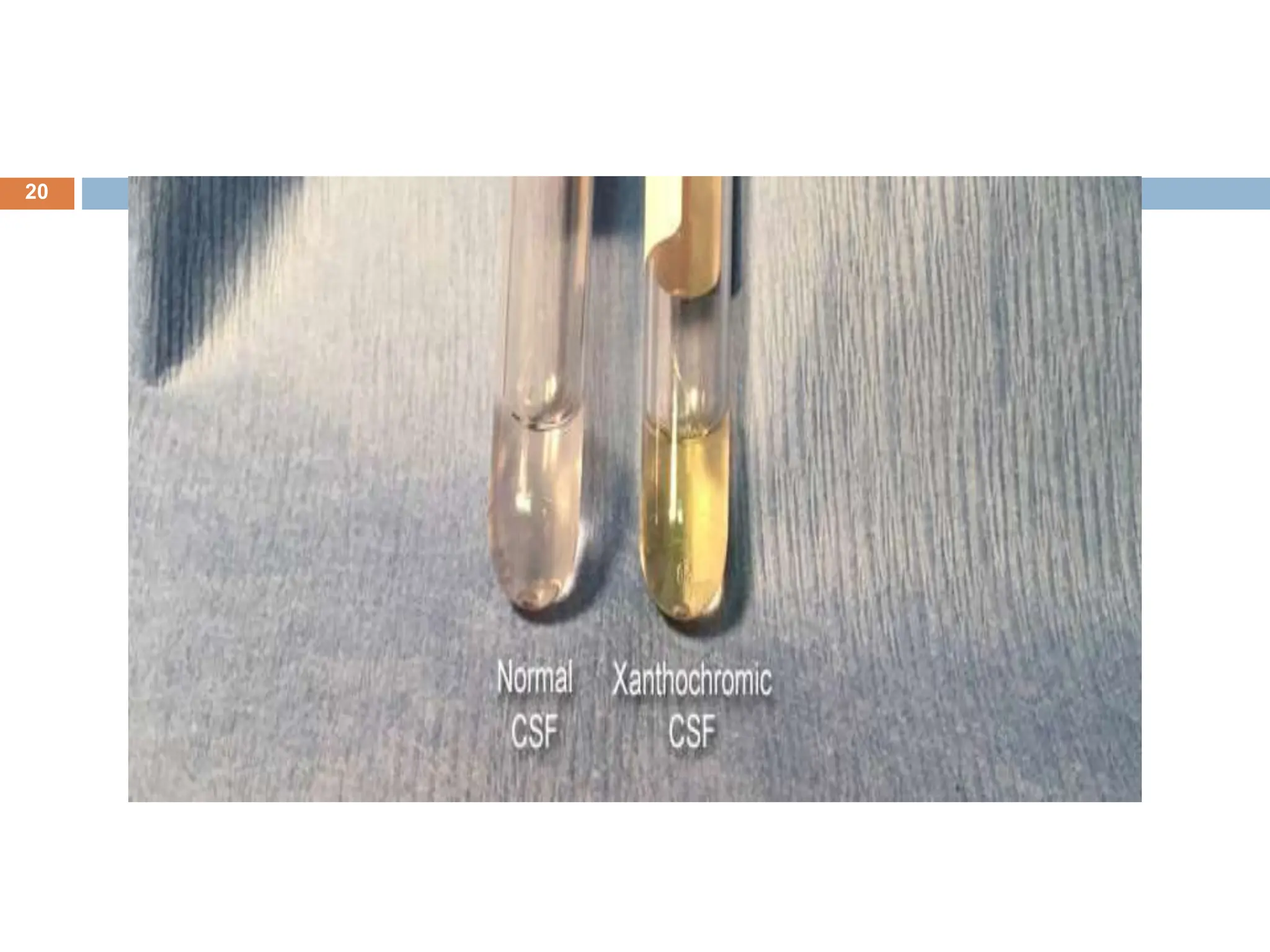
2. Complete Spinal block(Froin’s syndrome-triad
of xanthochromia, excess protein in csf, spontaneous
formation of coagulum on standing)
3.suppurative & T.B meningitis
17
 Viscous CSF
1.Metastatic mucin producing carcinoma
2.Cryptococal meningitis – Capsular
polysaccharide
3.liquid nucleus pulposus resulting from needle
injury to the annulus fibrosus
 Pink red CSF –
1.Traumatic tap
2. Subarachnoid hemorrhage
3. Intracerebral hemorrhage
4. Cerebral infarct
18
19
20
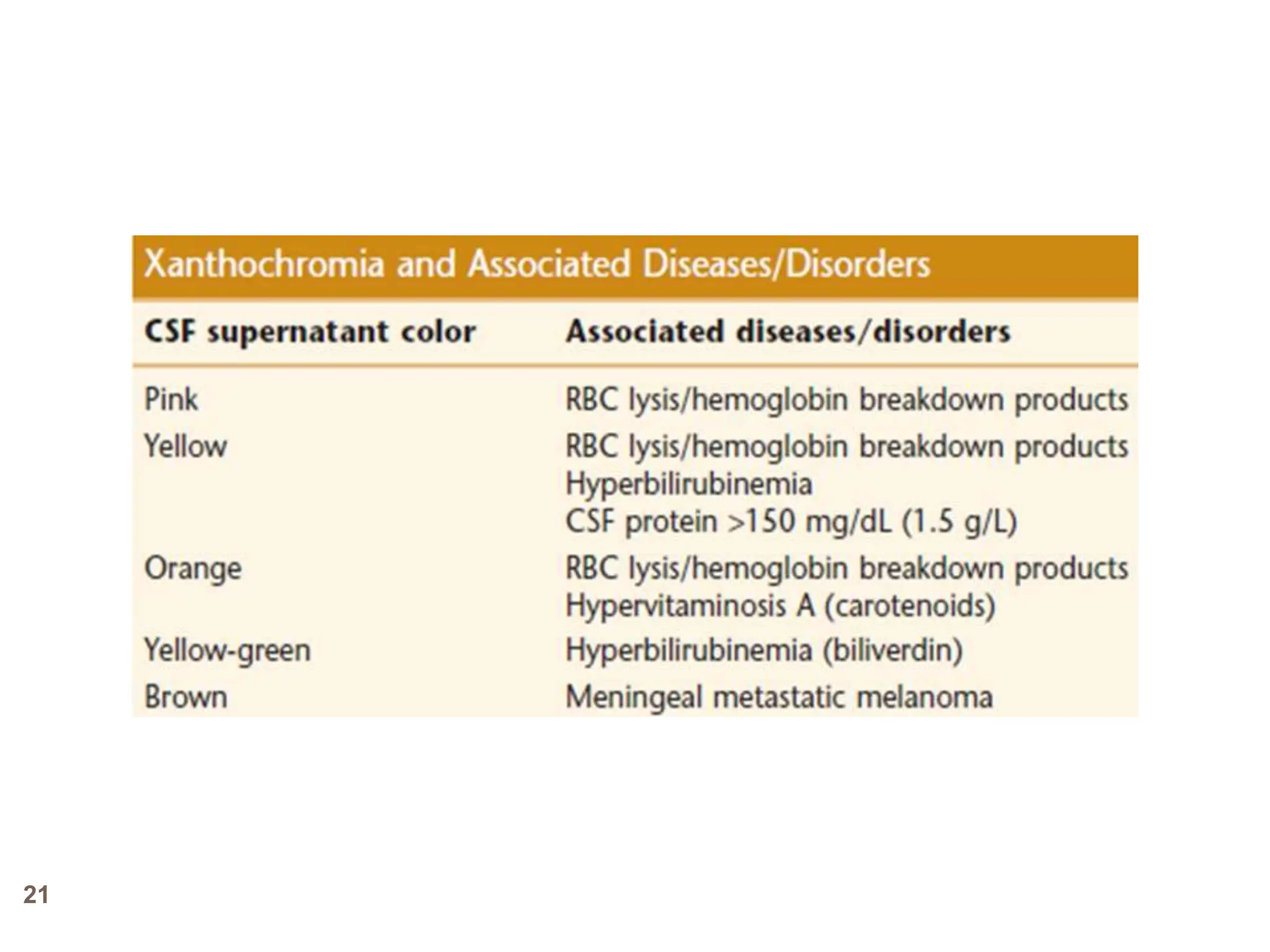
21
Microscopic Examination:
22
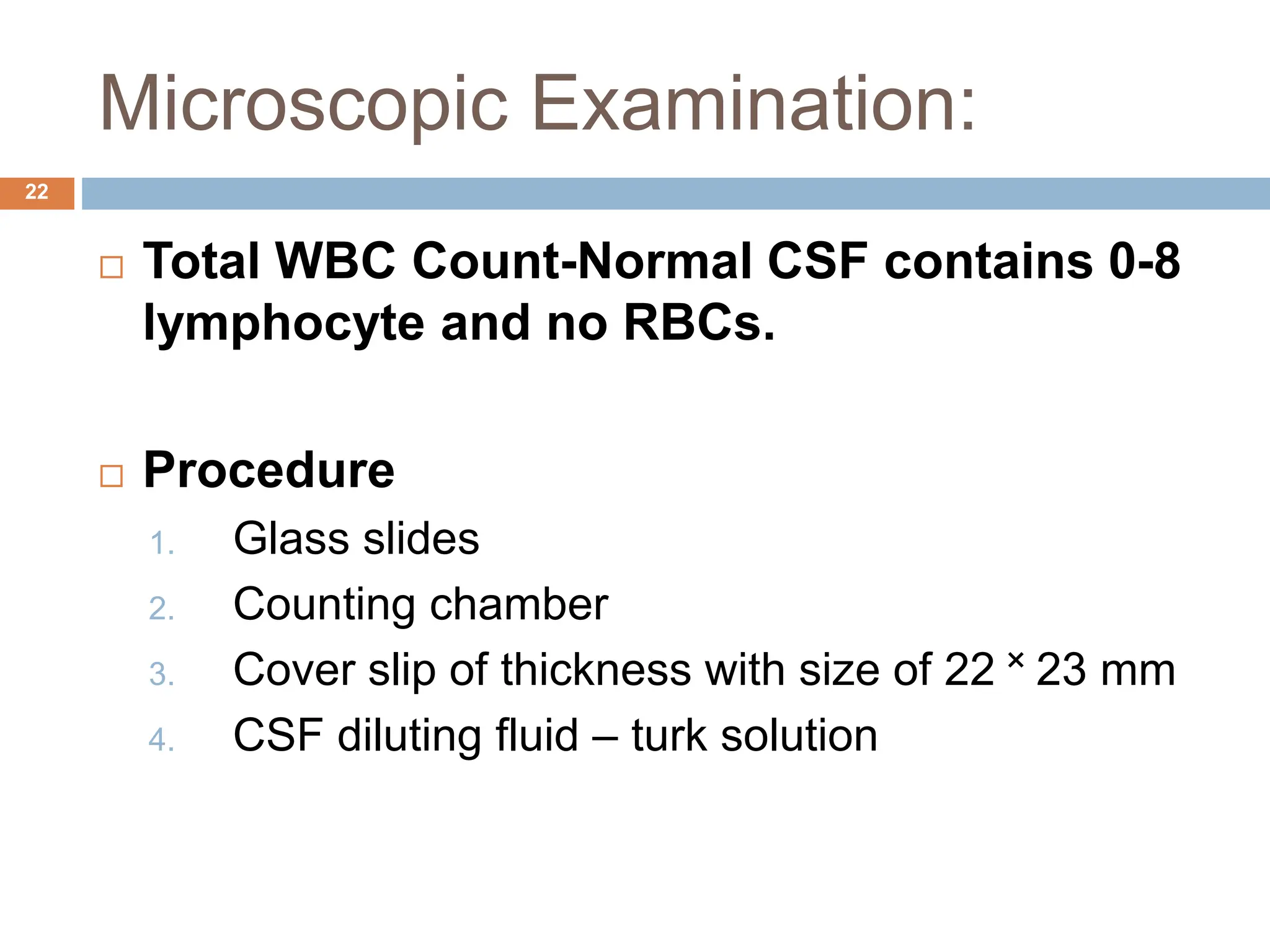
 Total WBC Count-Normal CSF contains 0-8
lymphocyte and no RBCs.
 Procedure
1. Glass slides
2. Counting chamber
3. Cover slip of thickness with size of 22 ˟ 23 mm
4. CSF diluting fluid – turk solution
Calculation:
23
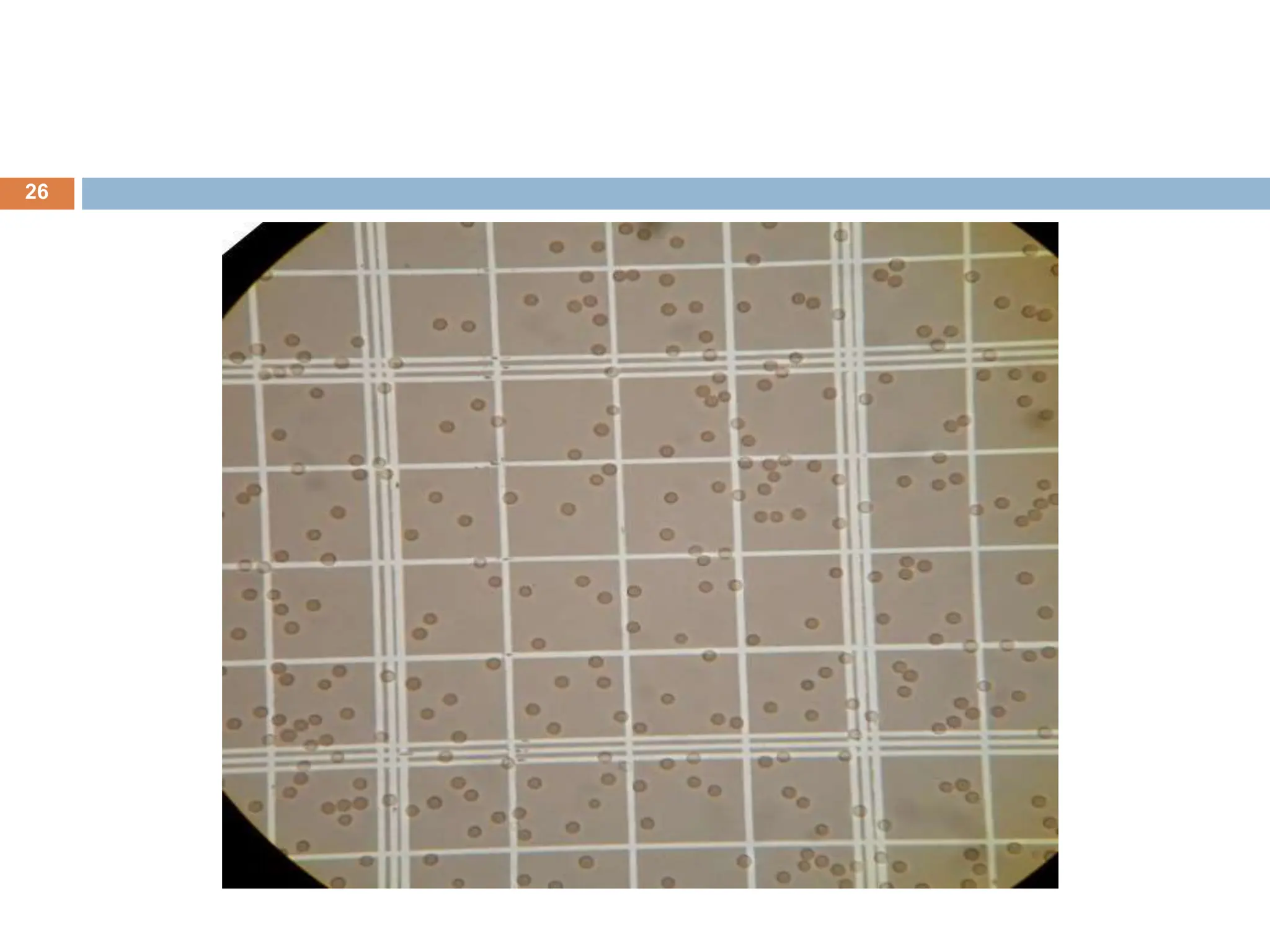
 If CSF is cloudy then make a dilution of 1:10 or 1:20 [is
made using 0.05 ml of CSF and 0.95 ml of turk solution]
 Charge the counting chamber properly without any air
bubbles.
• Wait for 5 minutes before counting, to allow the cells in CSF
to settle down.
• Count the cells in all 4 squares by using low power
objective.
 Calculation
WBC in CSF/cumm (μL)=
No.of cell x dilution factor
total volume
=counted cells x10 x20
4
24
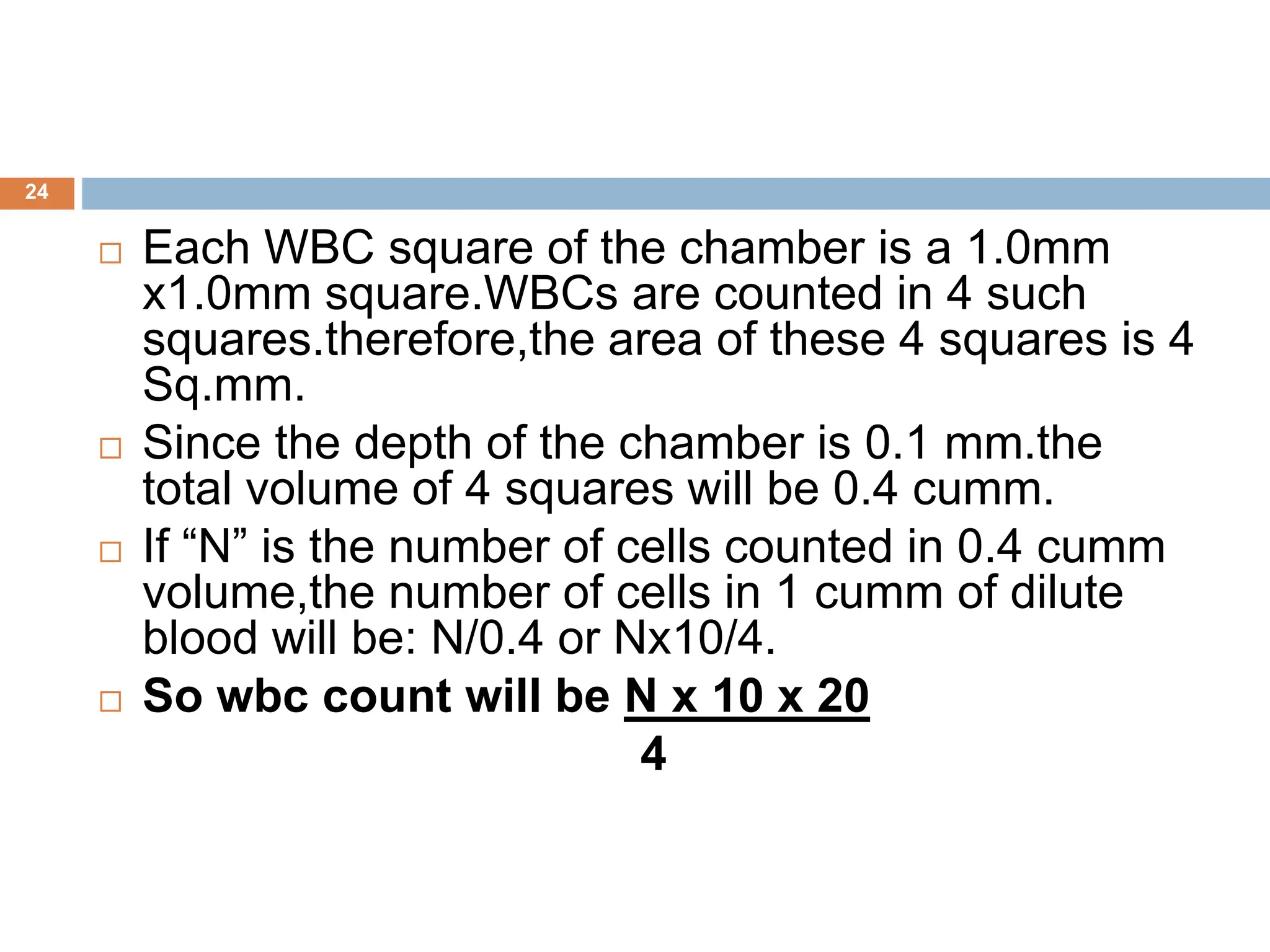
 Each WBC square of the chamber is a 1.0mm
x1.0mm square.WBCs are counted in 4 such
squares.therefore,the area of these 4 squares is 4
Sq.mm.
 Since the depth of the chamber is 0.1 mm.the
total volume of 4 squares will be 0.4 cumm.
 If “N” is the number of cells counted in 0.4 cumm
volume,the number of cells in 1 cumm of dilute
blood will be: N/0.4 or Nx10/4.
 So wbc count will be N x 10 x 20
4
25
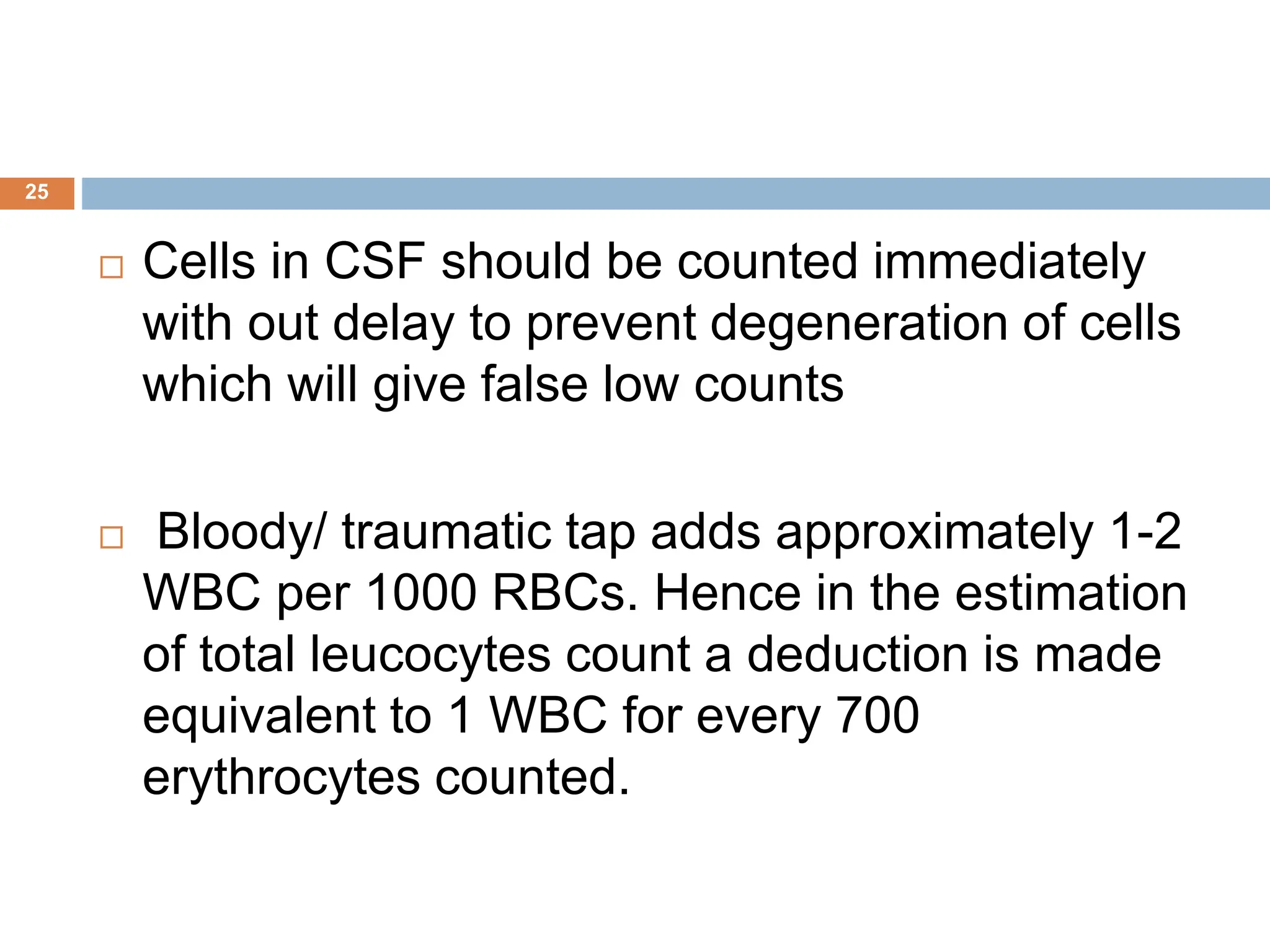
 Cells in CSF should be counted immediately
with out delay to prevent degeneration of cells
which will give false low counts
 Bloody/ traumatic tap adds approximately 1-2
WBC per 1000 RBCs. Hence in the estimation
of total leucocytes count a deduction is made
equivalent to 1 WBC for every 700
erythrocytes counted.
26
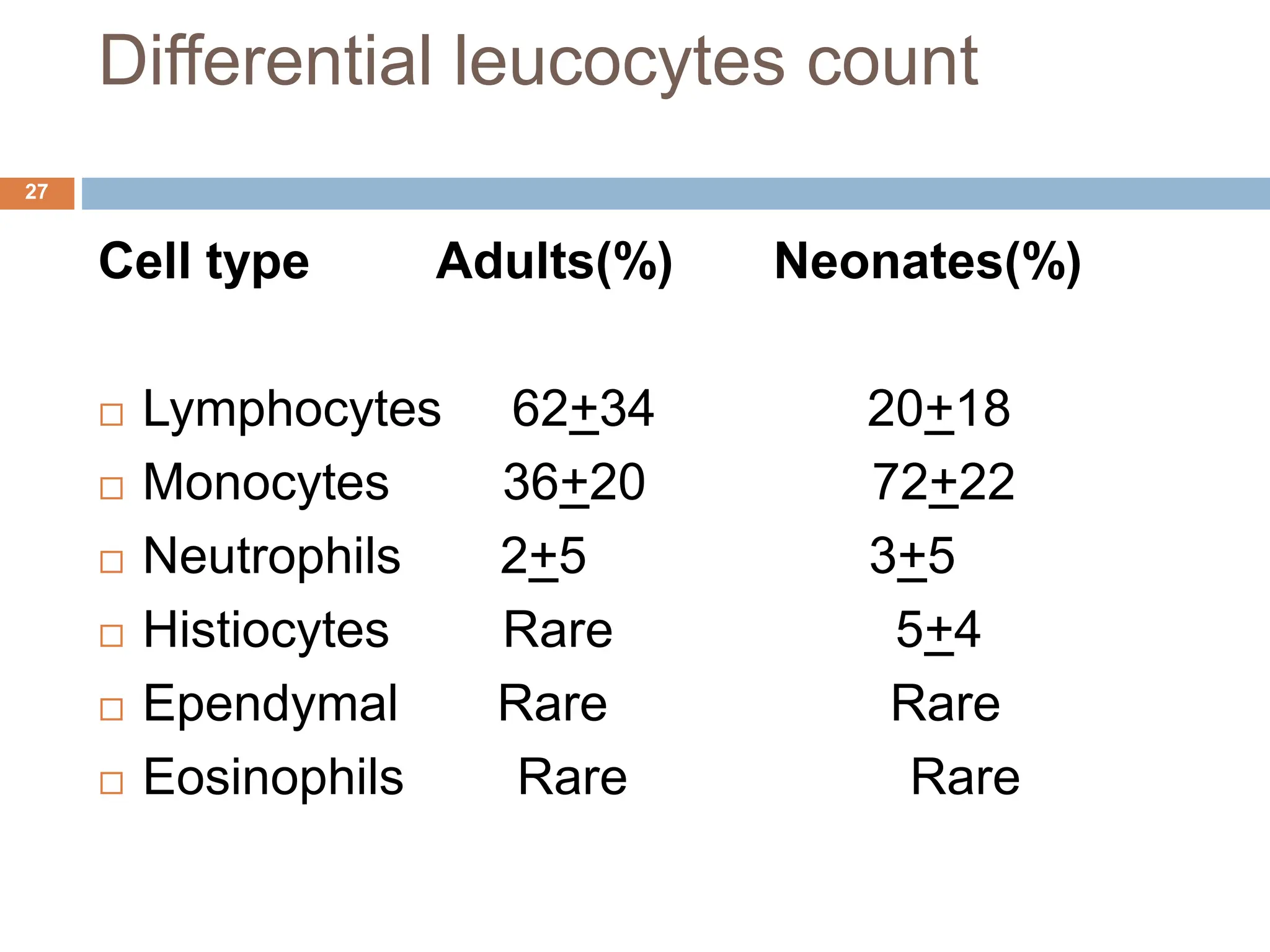
Differential leucocytes count
27
Cell type Adults(%) Neonates(%)
 Lymphocytes 62+34 20+18
 Monocytes 36+20 72+22
 Neutrophils 2+5 3+5
 Histiocytes Rare 5+4
 Ependymal Rare Rare
 Eosinophils Rare Rare
28
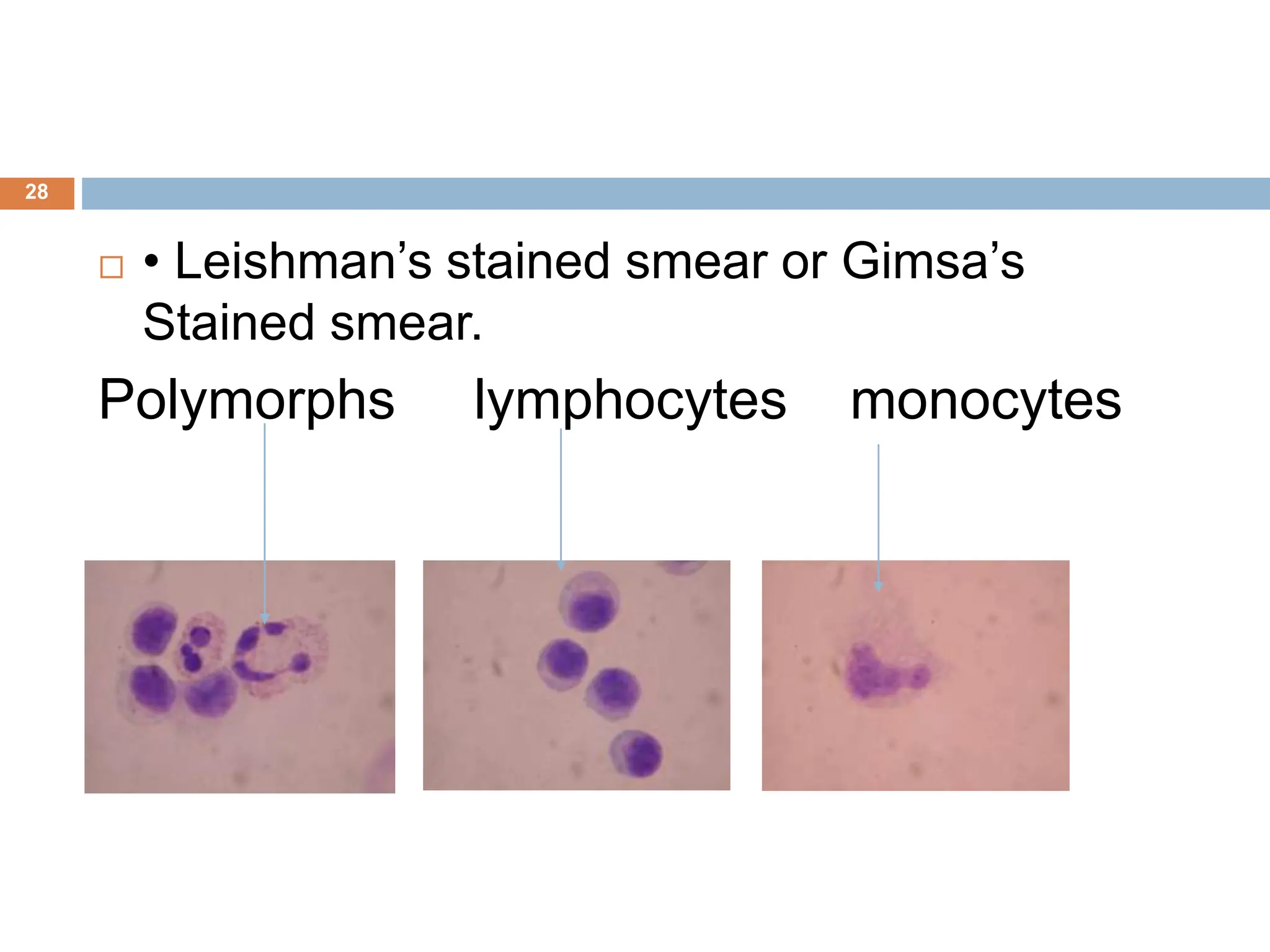
 • Leishman’s stained smear or Gimsa’s
Stained smear.
Polymorphs lymphocytes monocytes
29
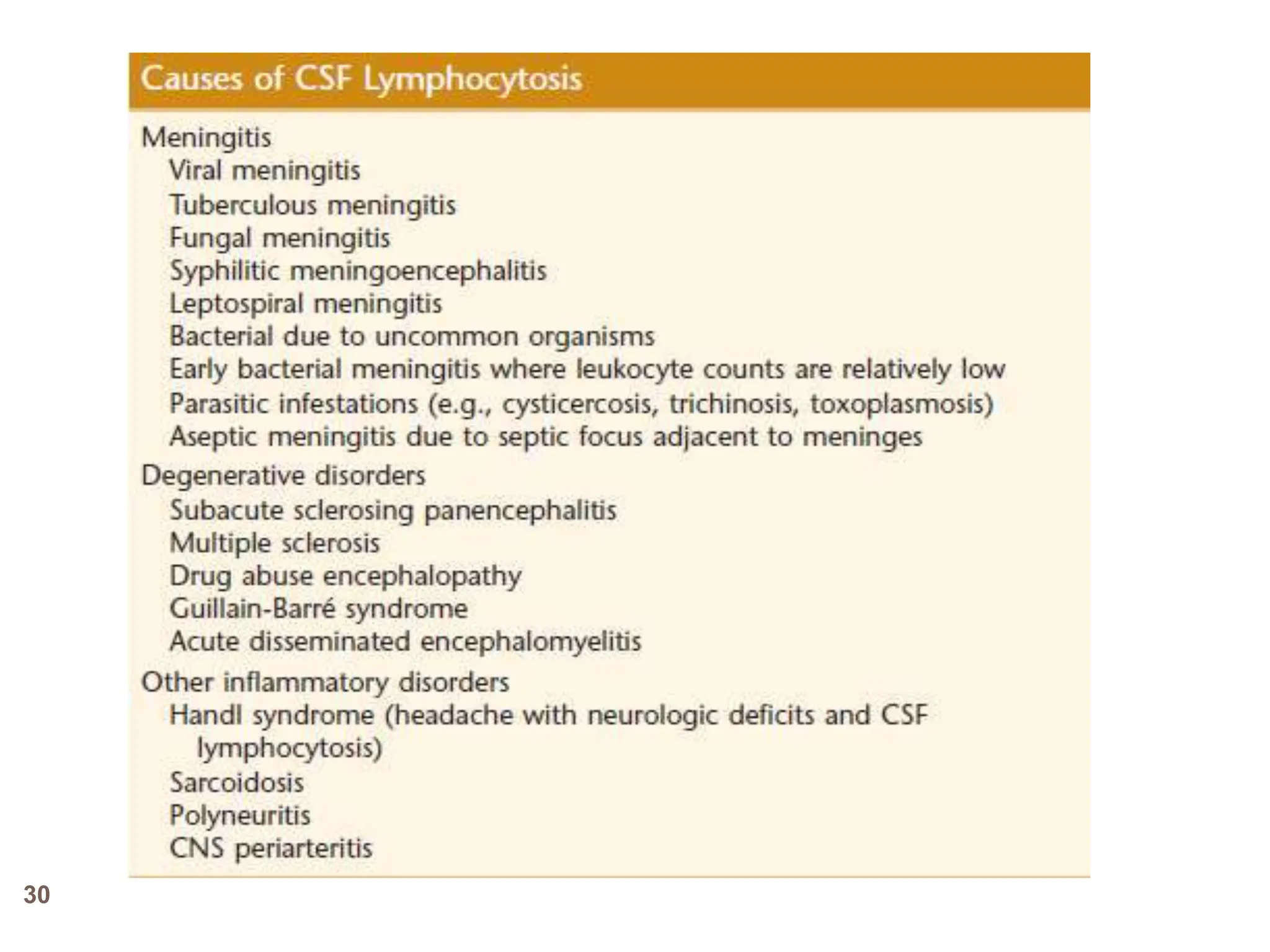
30
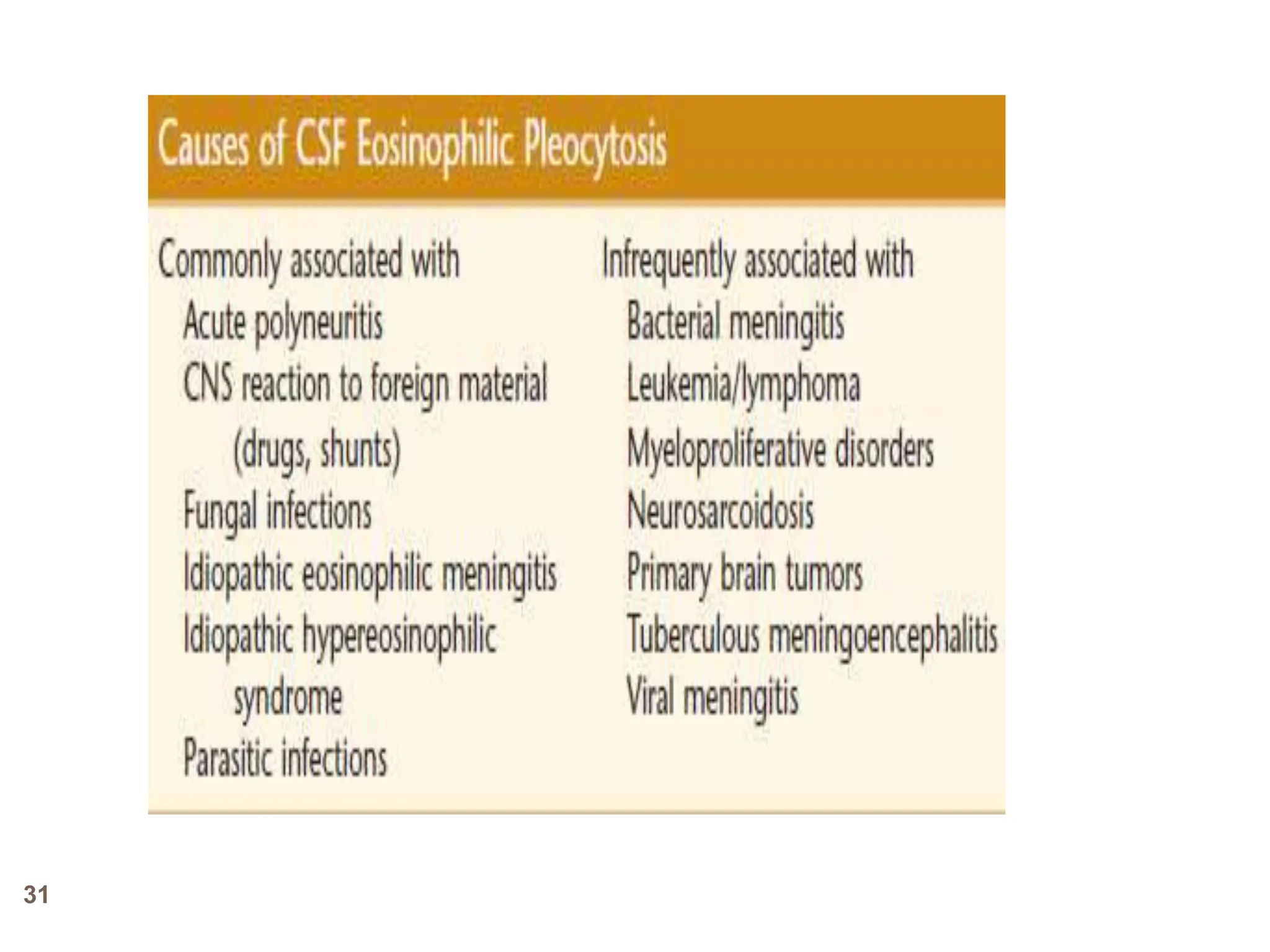
31
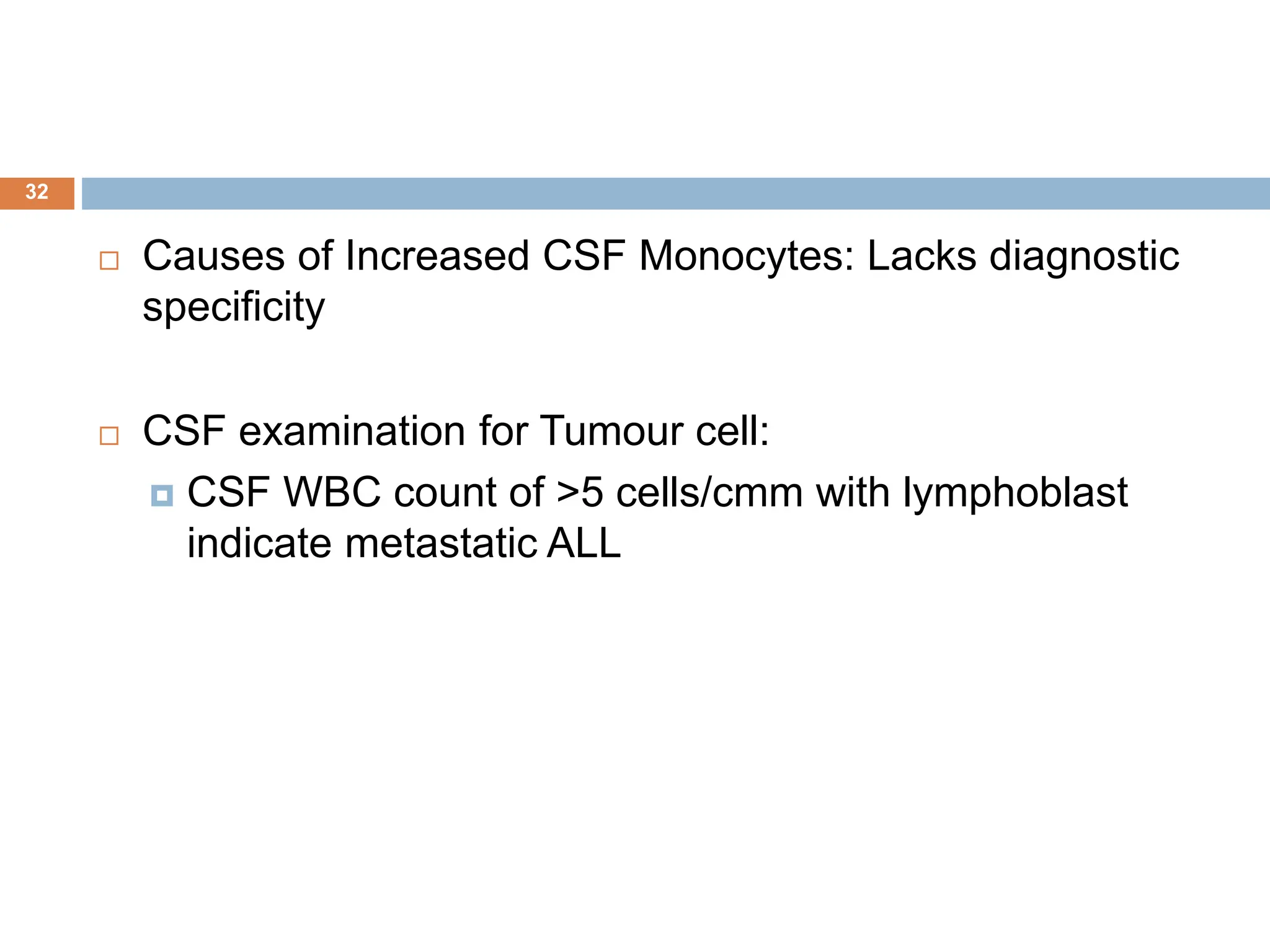
 Causes of Increased CSF Monocytes: Lacks diagnostic
specificity
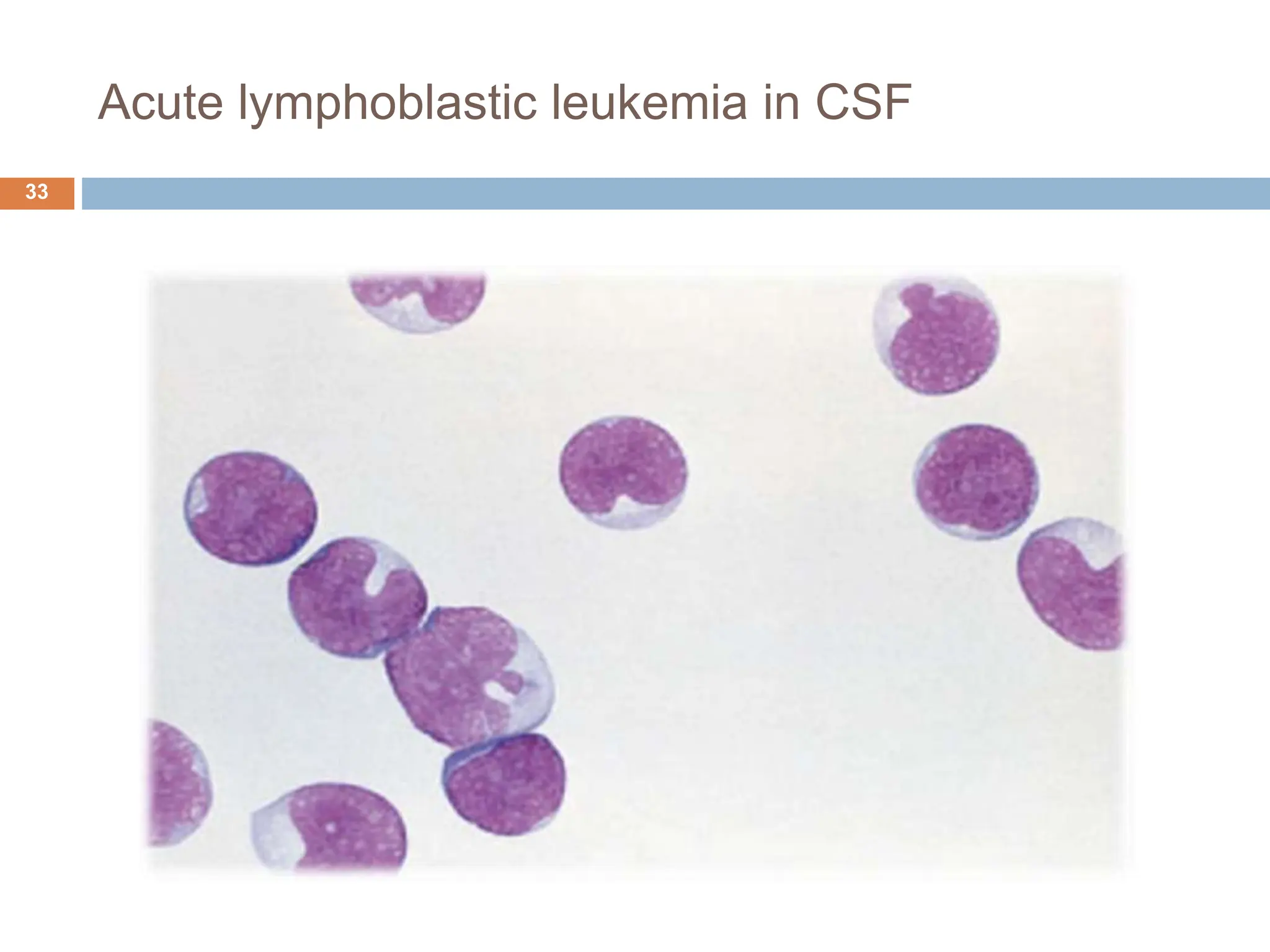
 CSF examination for Tumour cell:
 CSF WBC count of >5 cells/cmm with lymphoblast
indicate metastatic ALL
32
Acute lymphoblastic leukemia in CSF
33
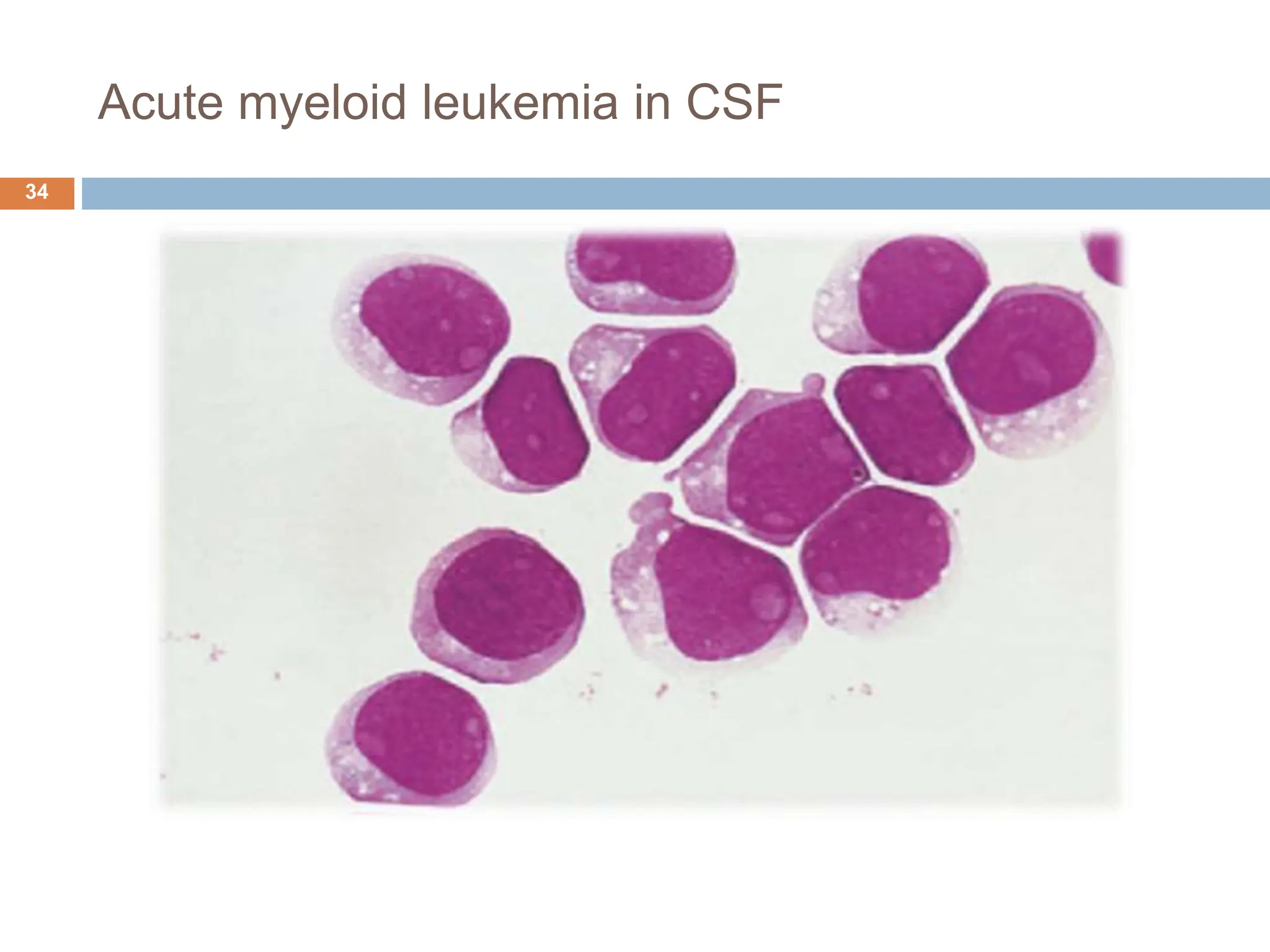
Acute myeloid leukemia in CSF
34
Chemical examination
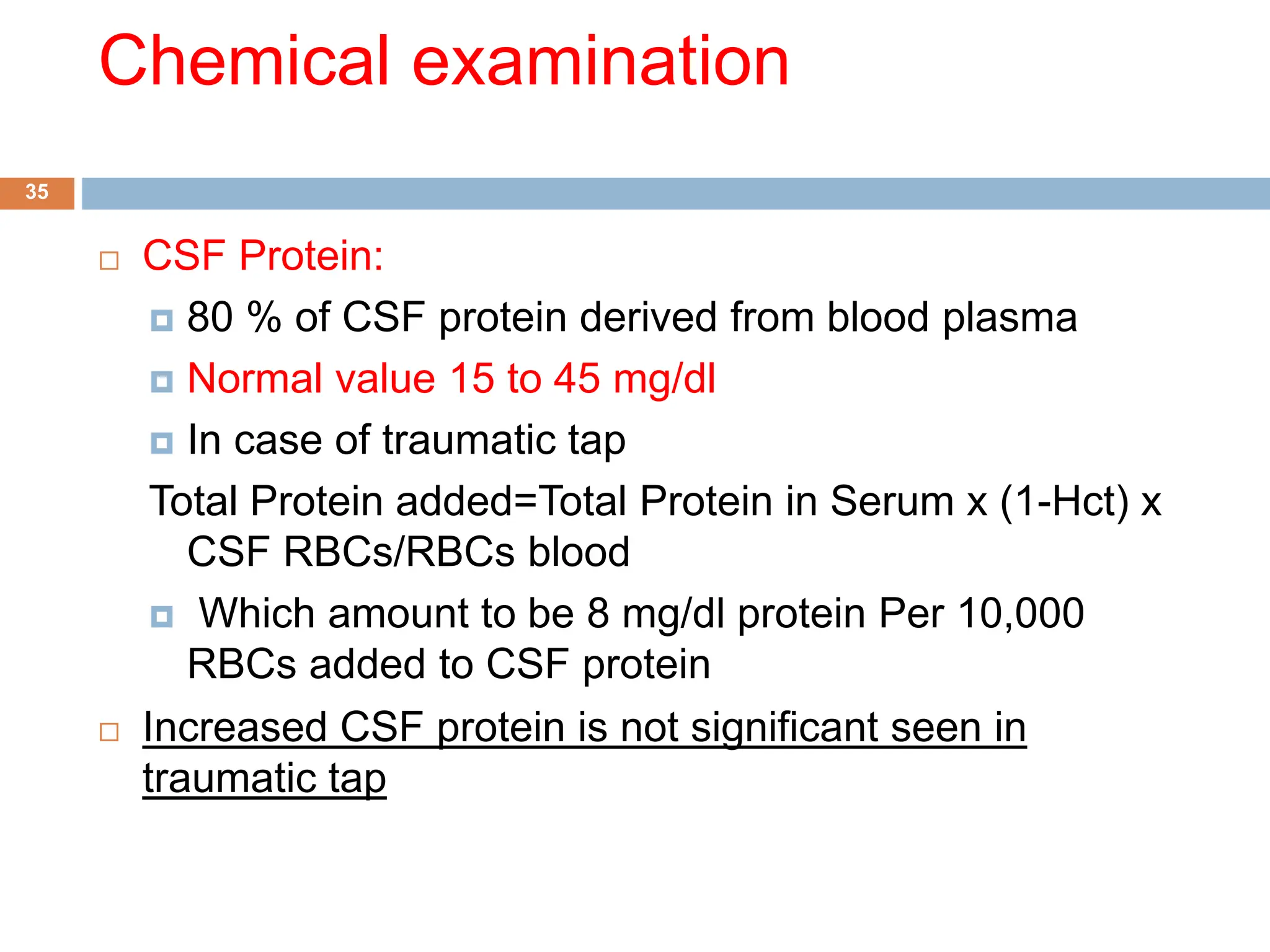
 CSF Protein:
 80 % of CSF protein derived from blood plasma
 Normal value 15 to 45 mg/dl
 In case of traumatic tap
Total Protein added=Total Protein in Serum x (1-Hct) x
CSF RBCs/RBCs blood
 Which amount to be 8 mg/dl protein Per 10,000
RBCs added to CSF protein
 Increased CSF protein is not significant seen in
traumatic tap
35
36
 Turbidimetric method using trichloroacetic acid for
precipitation of proteins is commonly used.
 If facilities for estimation of CSF proteins are not
available, then pandy’s test using saturated solution of
phenol is used for estimation of globulins.
 Along with CSF protein, it is necessary to
simultaneously measure serum protein for proper
interpretation of results.
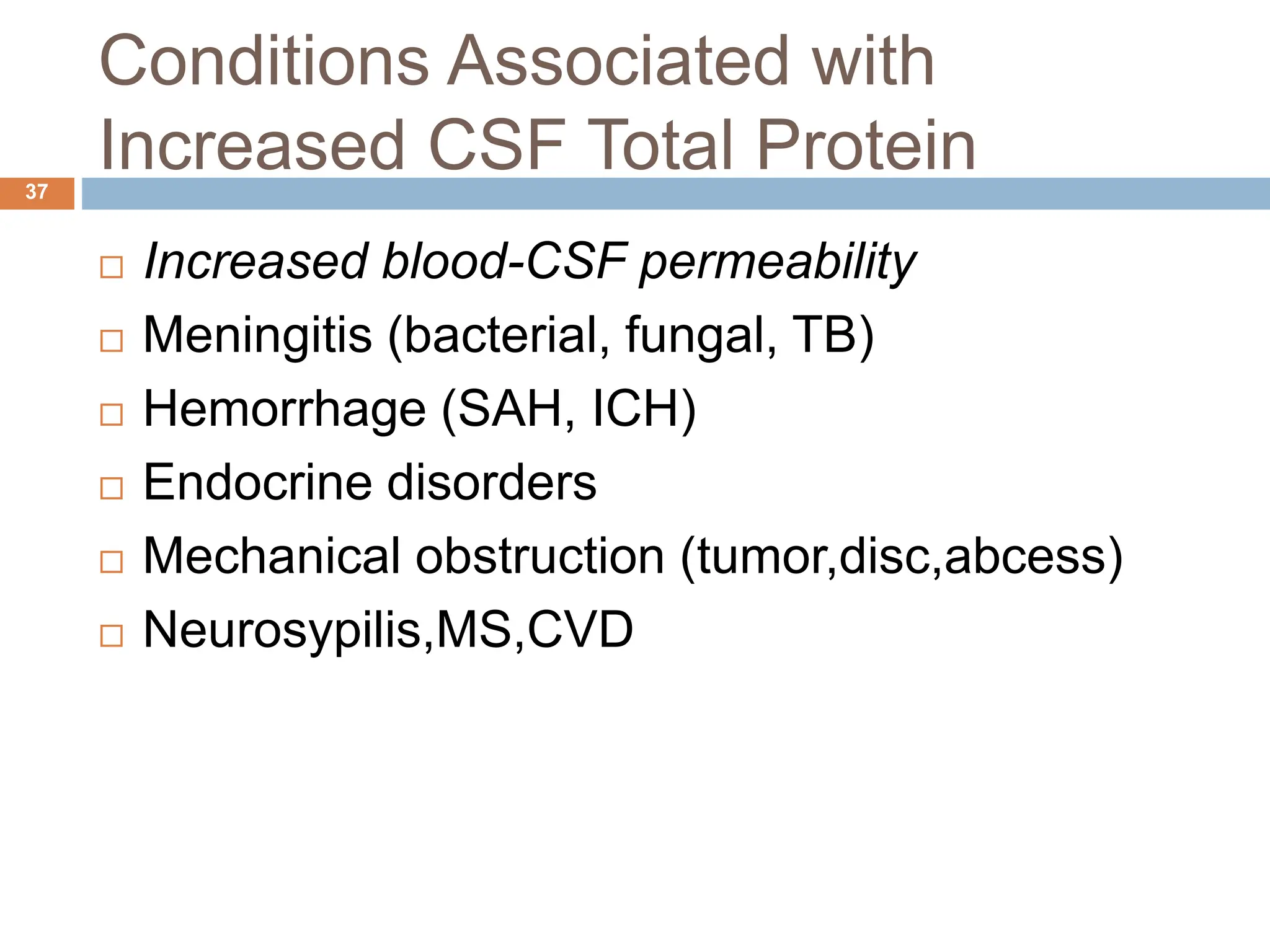
Conditions Associated with
Increased CSF Total Protein
37
 Increased blood-CSF permeability
 Meningitis (bacterial, fungal, TB)
 Hemorrhage (SAH, ICH)
 Endocrine disorders
 Mechanical obstruction (tumor,disc,abcess)
 Neurosypilis,MS,CVD
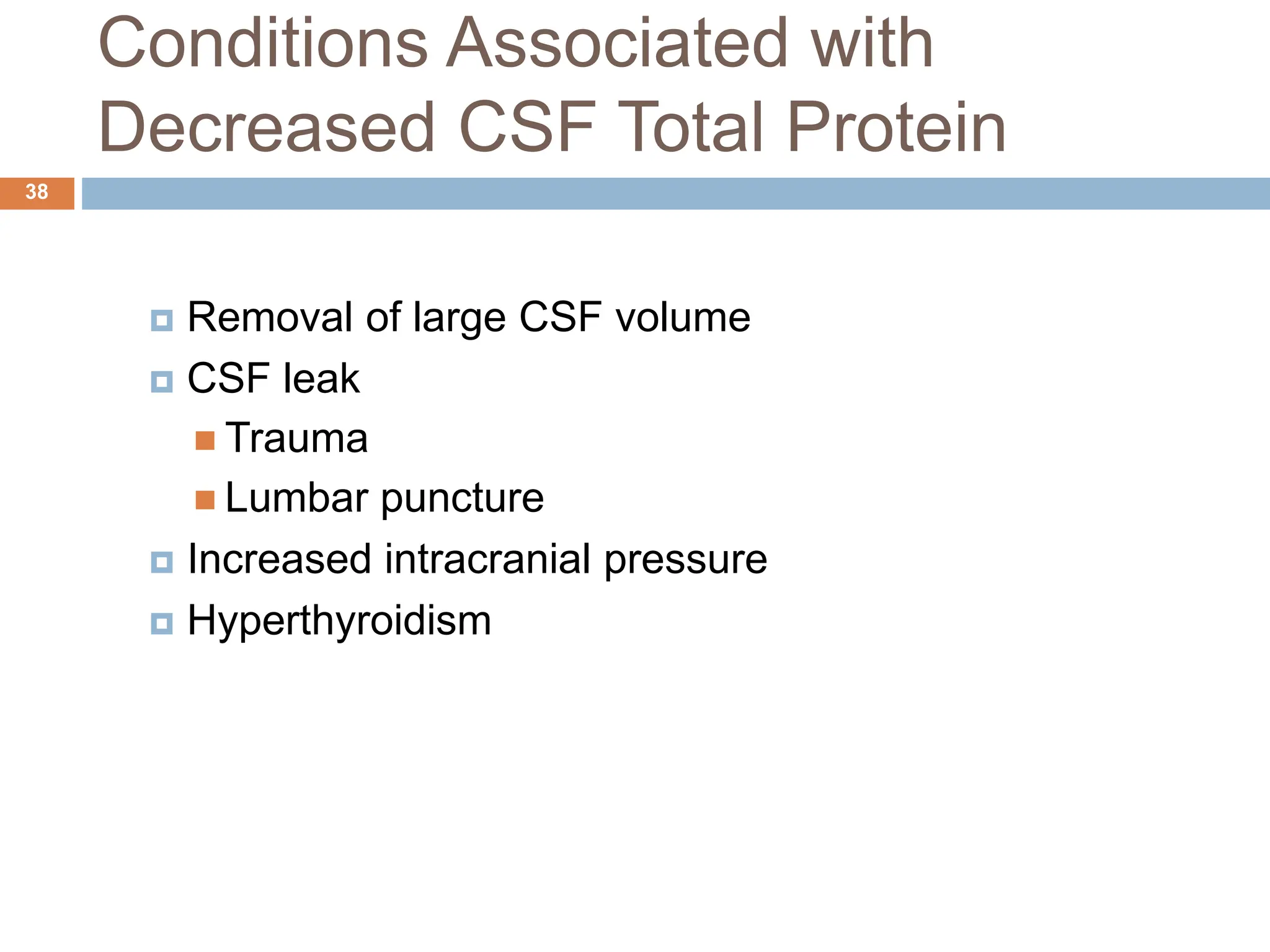
Conditions Associated with
Decreased CSF Total Protein
 Removal of large CSF volume
 CSF leak
 Trauma
 Lumbar puncture
 Increased intracranial pressure
 Hyperthyroidism
38
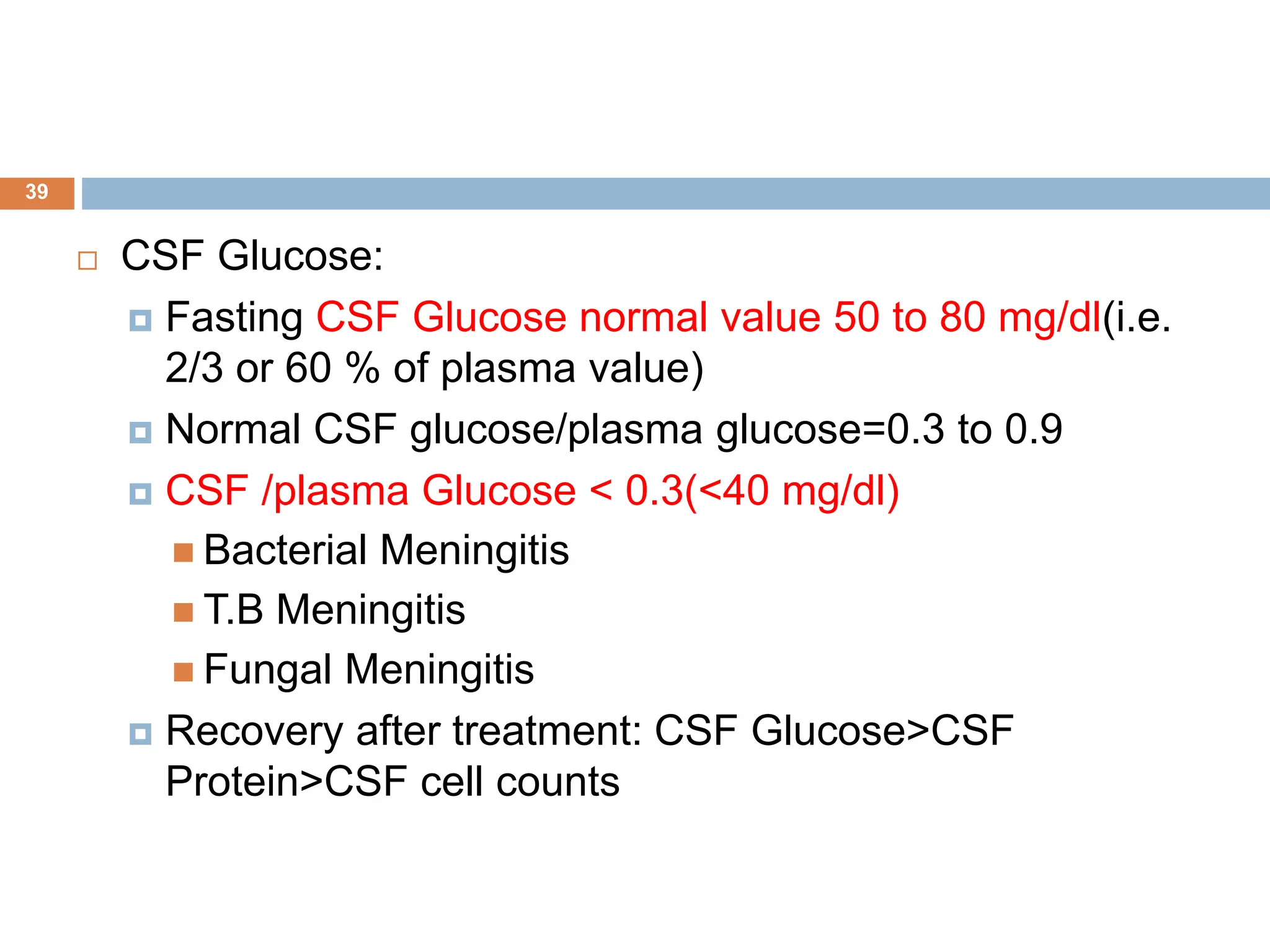
 CSF Glucose:
 Fasting CSF Glucose normal value 50 to 80 mg/dl(i.e.
2/3 or 60 % of plasma value)
 Normal CSF glucose/plasma glucose=0.3 to 0.9
 CSF /plasma Glucose < 0.3(<40 mg/dl)
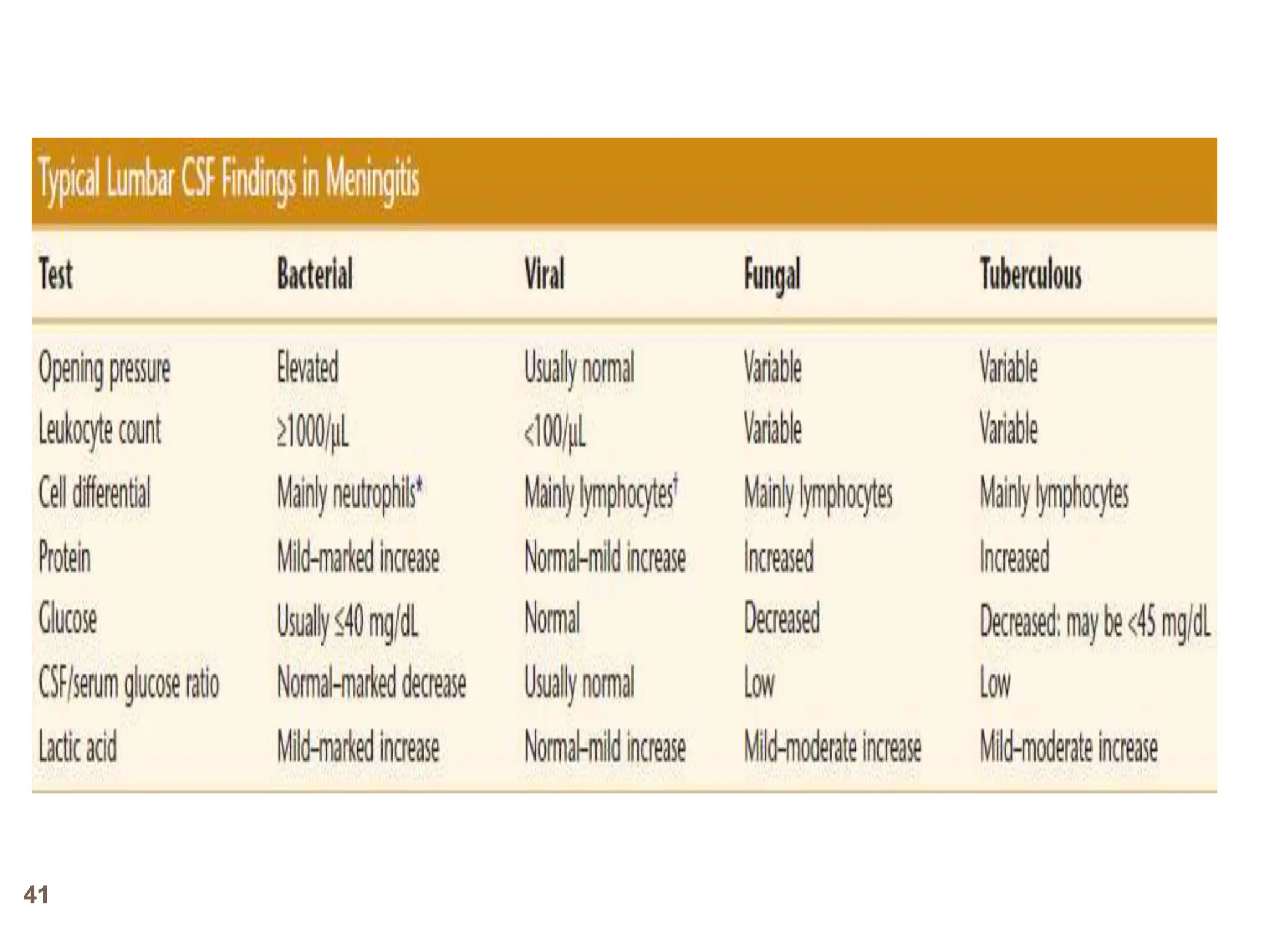
 Bacterial Meningitis
 T.B Meningitis
 Fungal Meningitis
 Recovery after treatment: CSF Glucose>CSF
Protein>CSF cell counts
39
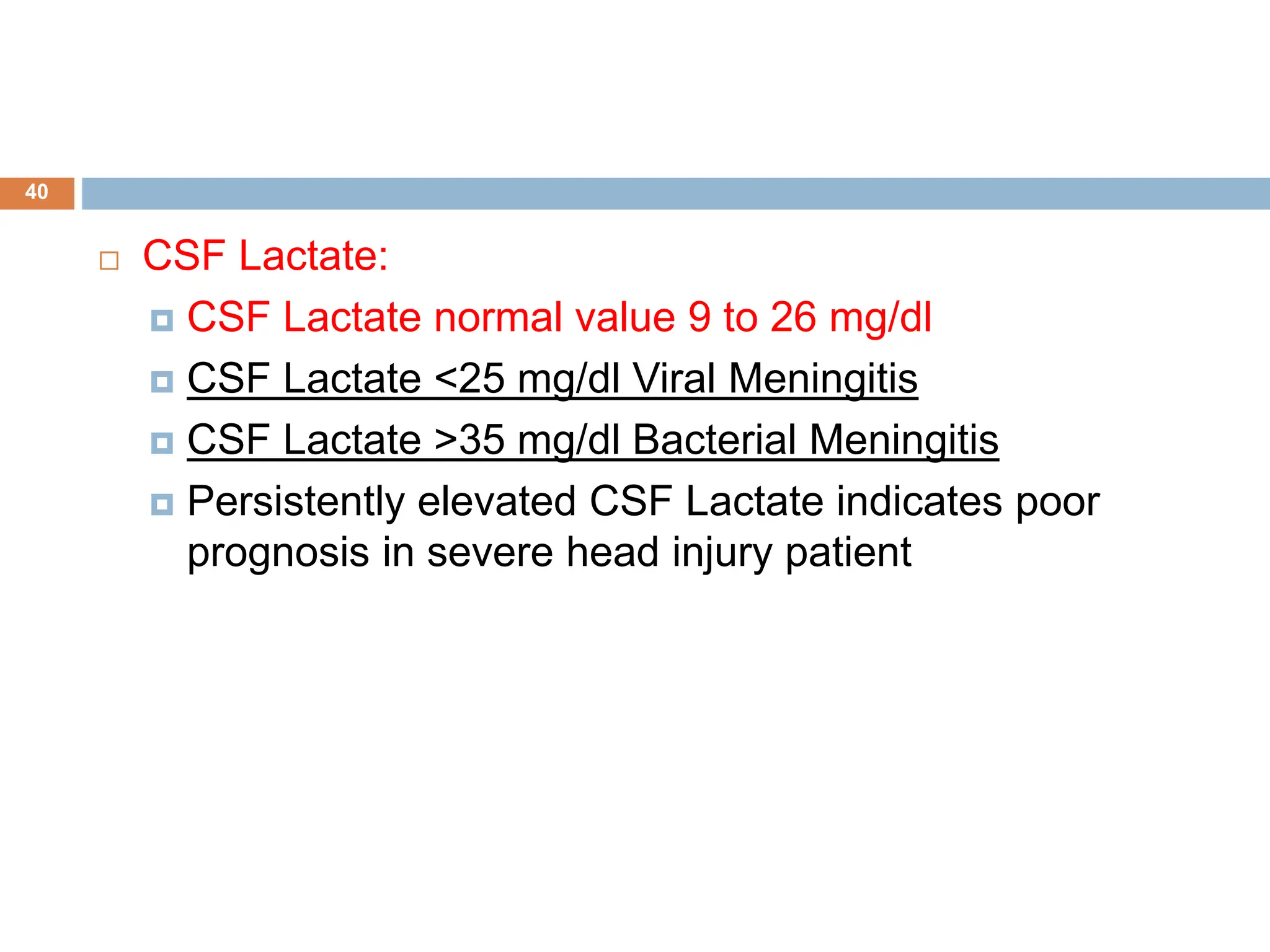
 CSF Lactate:
 CSF Lactate normal value 9 to 26 mg/dl
 CSF Lactate <25 mg/dl Viral Meningitis
 CSF Lactate >35 mg/dl Bacterial Meningitis
 Persistently elevated CSF Lactate indicates poor
prognosis in severe head injury patient
40
41
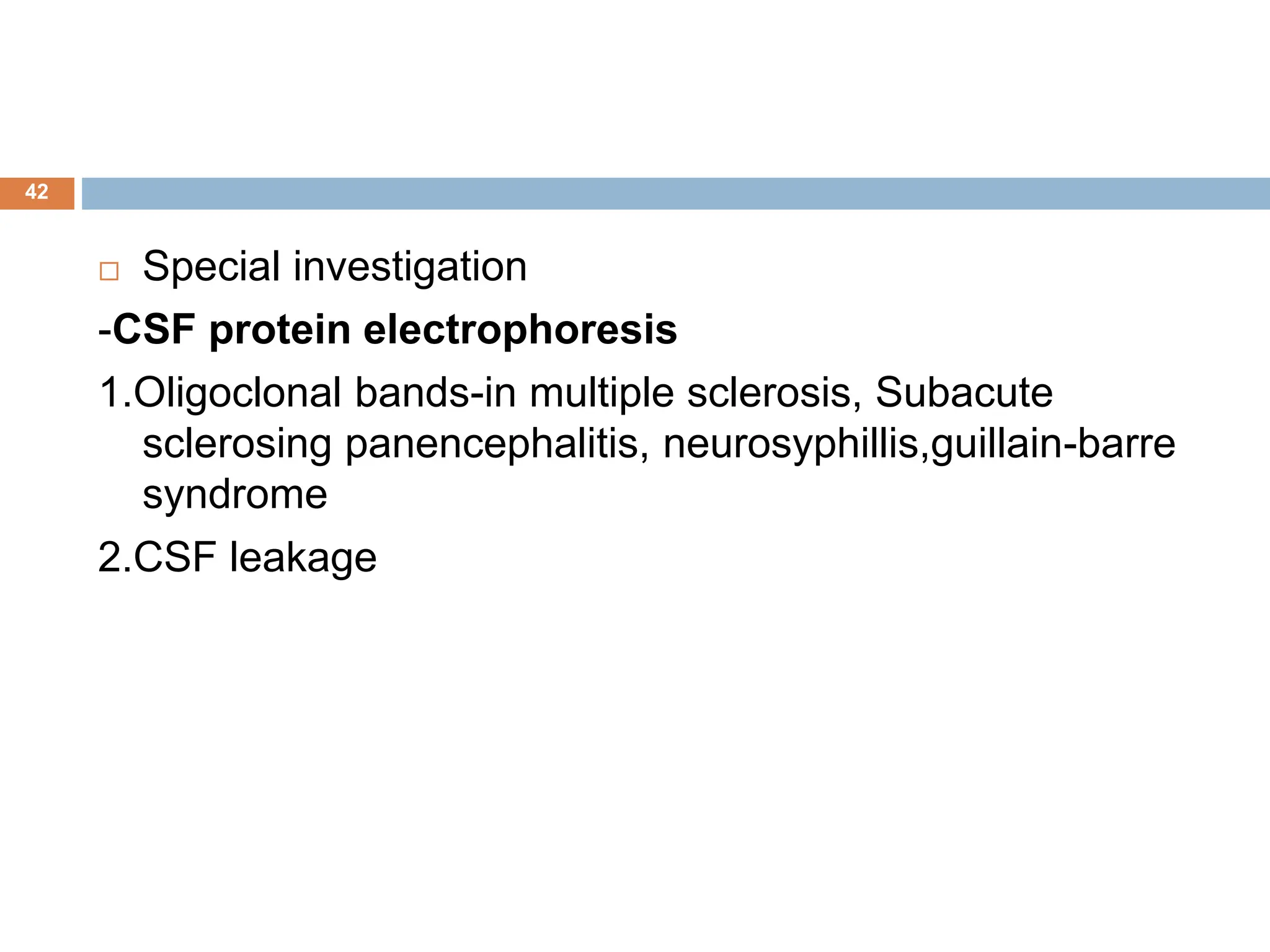
 Special investigation
-CSF protein electrophoresis
1.Oligoclonal bands-in multiple sclerosis, Subacute
sclerosing panencephalitis, neurosyphillis,guillain-barre
syndrome
2.CSF leakage
42
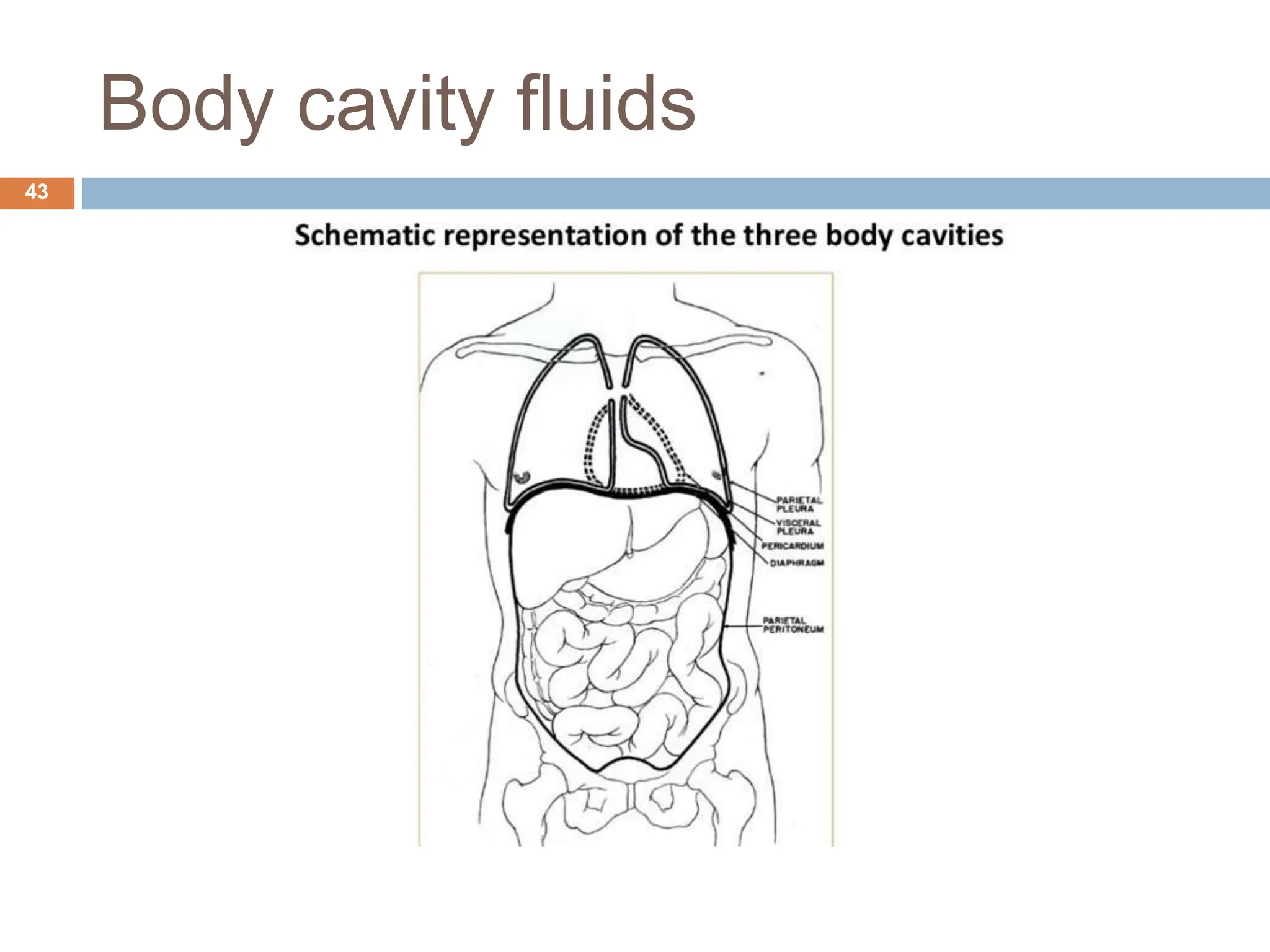
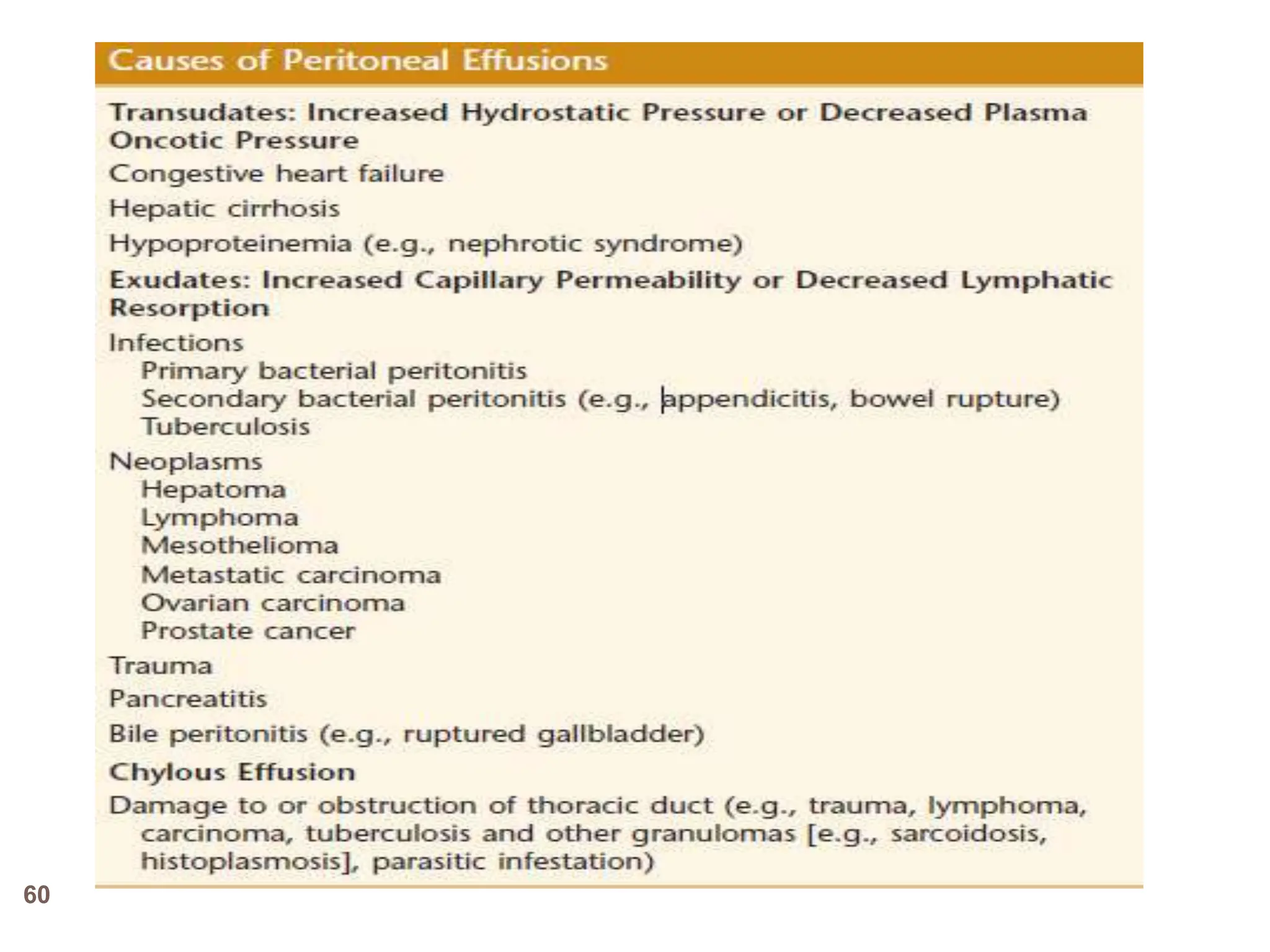
Body cavity fluids
43
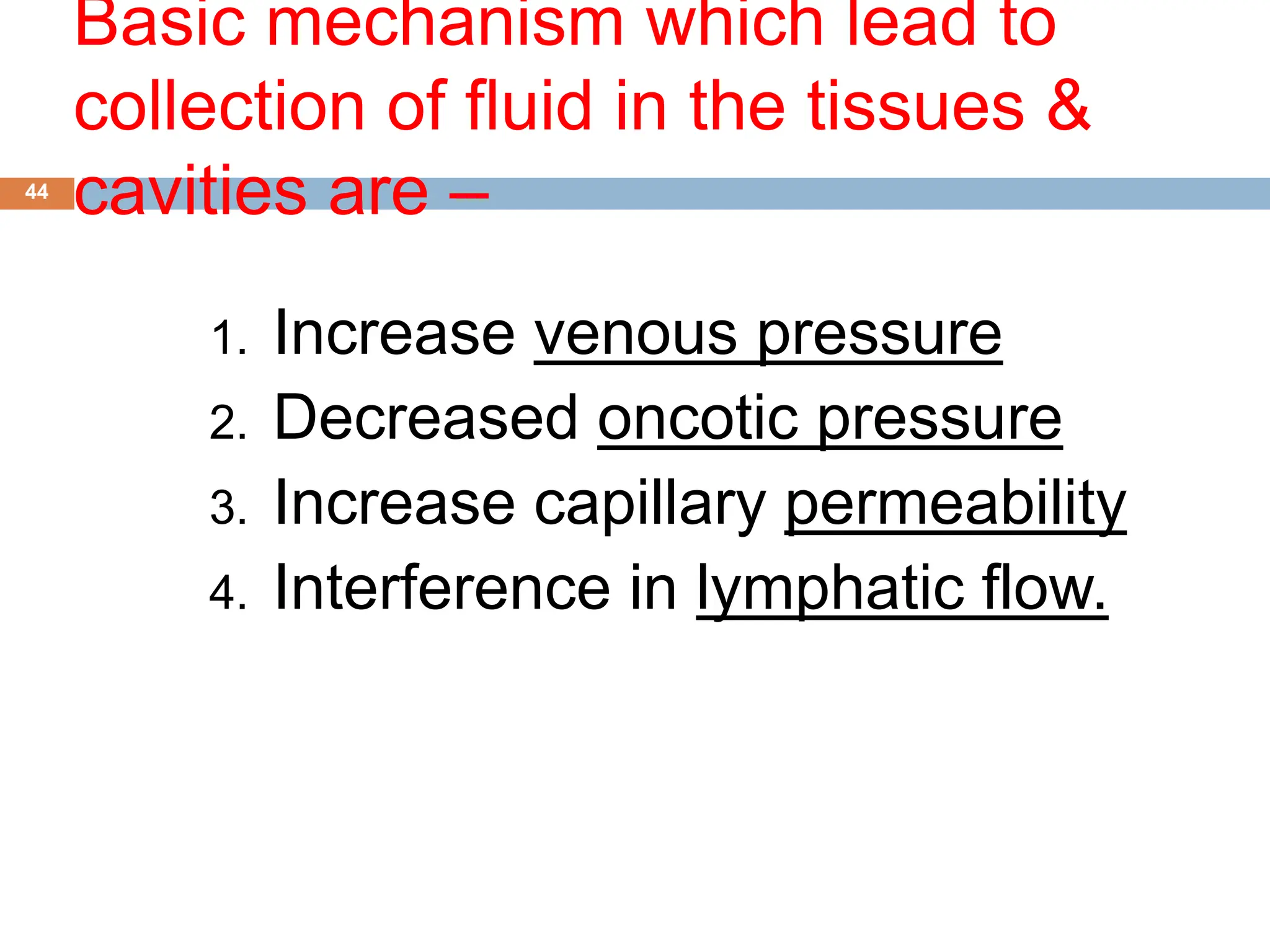
Basic mechanism which lead to
collection of fluid in the tissues &
cavities are –
44
1. Increase venous pressure
2. Decreased oncotic pressure
3. Increase capillary permeability
4. Interference in lymphatic flow.
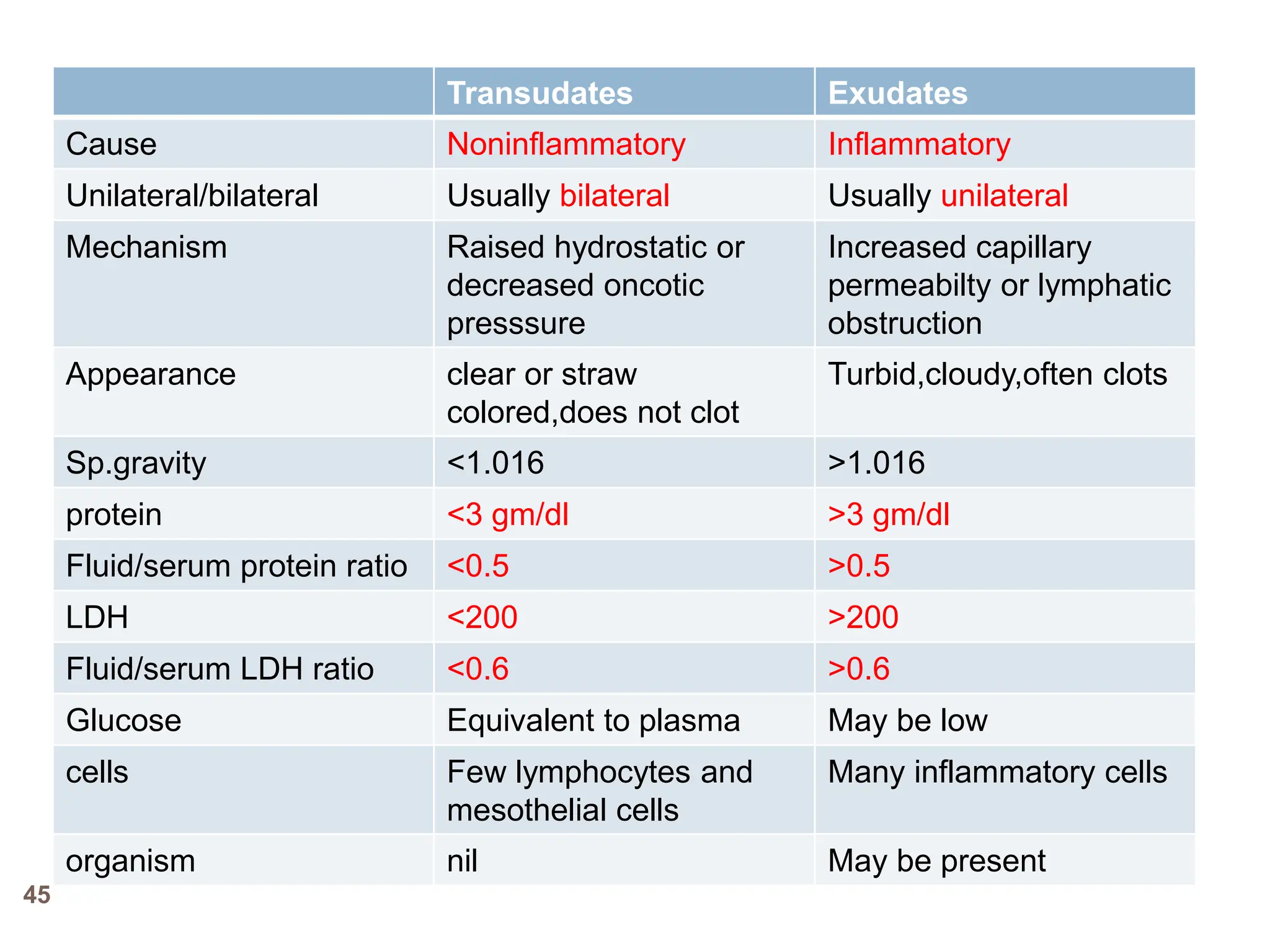
Transudates Exudates
Cause Noninflammatory Inflammatory
Unilateral/bilateral Usually bilateral Usually unilateral
Mechanism Raised hydrostatic or
decreased oncotic
presssure
Increased capillary
permeabilty or lymphatic
obstruction
Appearance clear or straw
colored,does not clot
Turbid,cloudy,often clots
Sp.gravity <1.016 >1.016
protein <3 gm/dl >3 gm/dl
Fluid/serum protein ratio <0.5 >0.5
LDH <200 >200
Fluid/serum LDH ratio <0.6 >0.6
Glucose Equivalent to plasma May be low
cells Few lymphocytes and
mesothelial cells
Many inflammatory cells
organism nil May be present
45
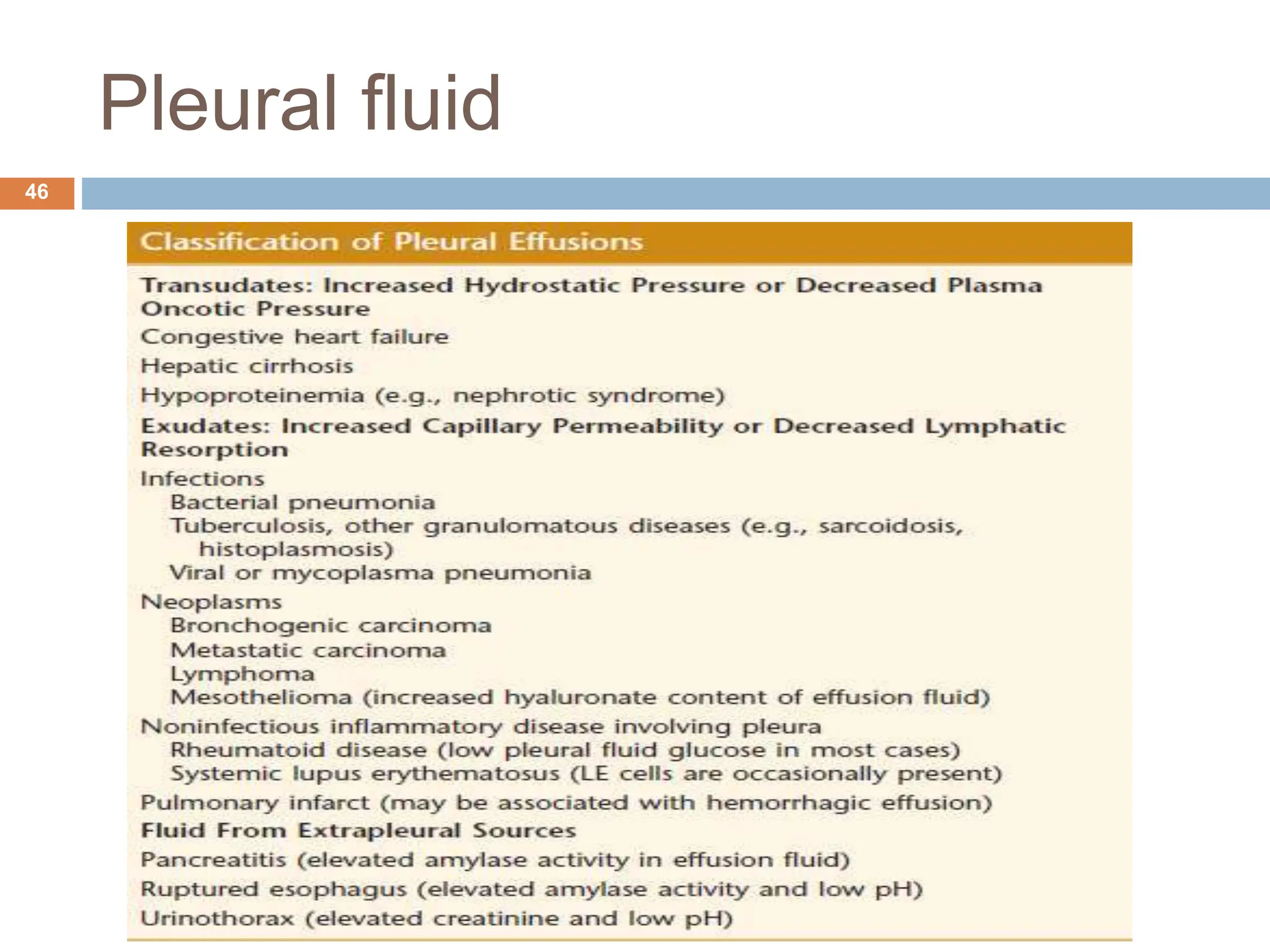
Pleural fluid
46
Gross examination
 Appearance
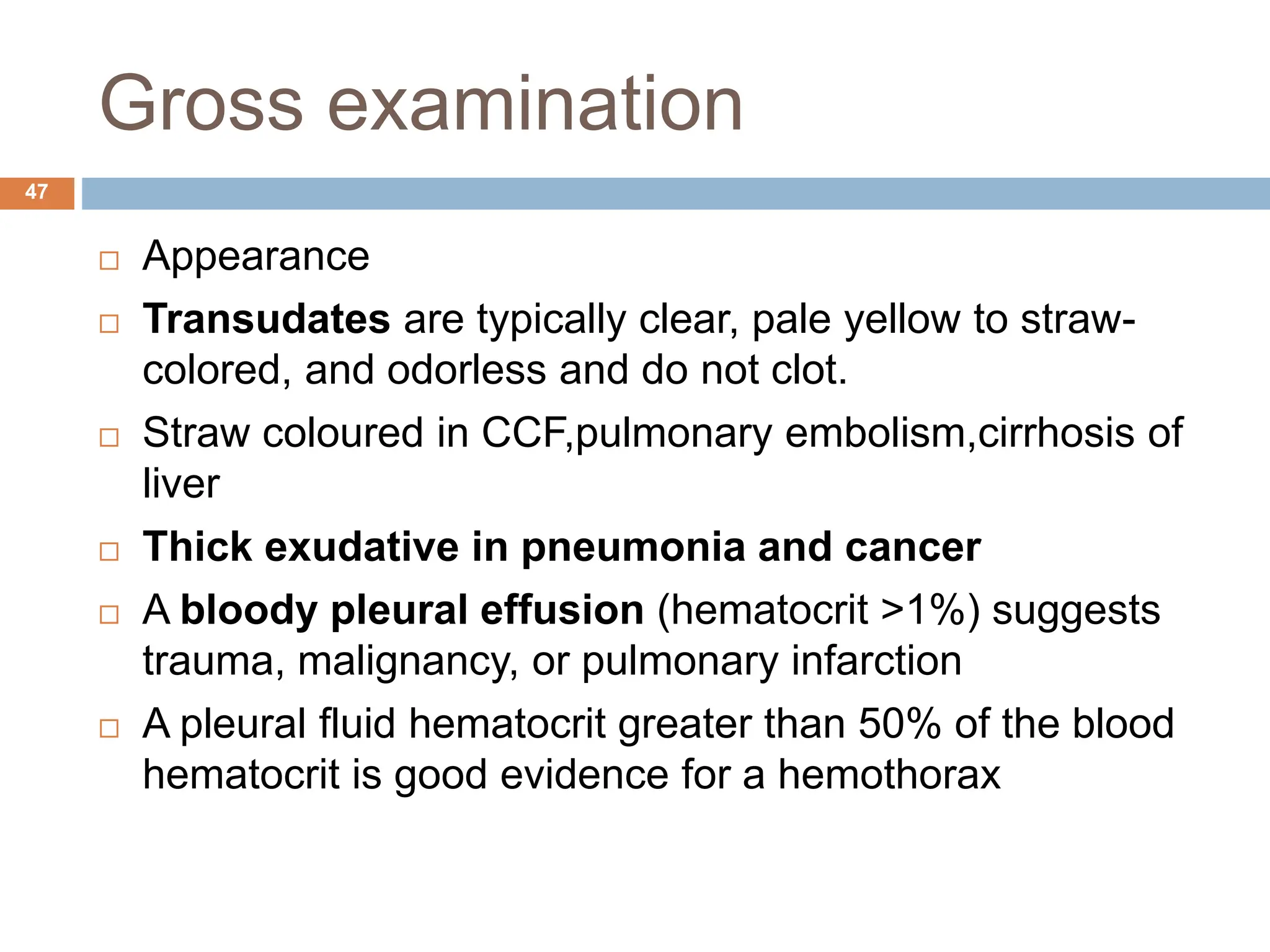
 Transudates are typically clear, pale yellow to straw-
colored, and odorless and do not clot.
 Straw coloured in CCF,pulmonary embolism,cirrhosis of
liver
 Thick exudative in pneumonia and cancer
 A bloody pleural effusion (hematocrit >1%) suggests
trauma, malignancy, or pulmonary infarction
 A pleural fluid hematocrit greater than 50% of the blood
hematocrit is good evidence for a hemothorax
47
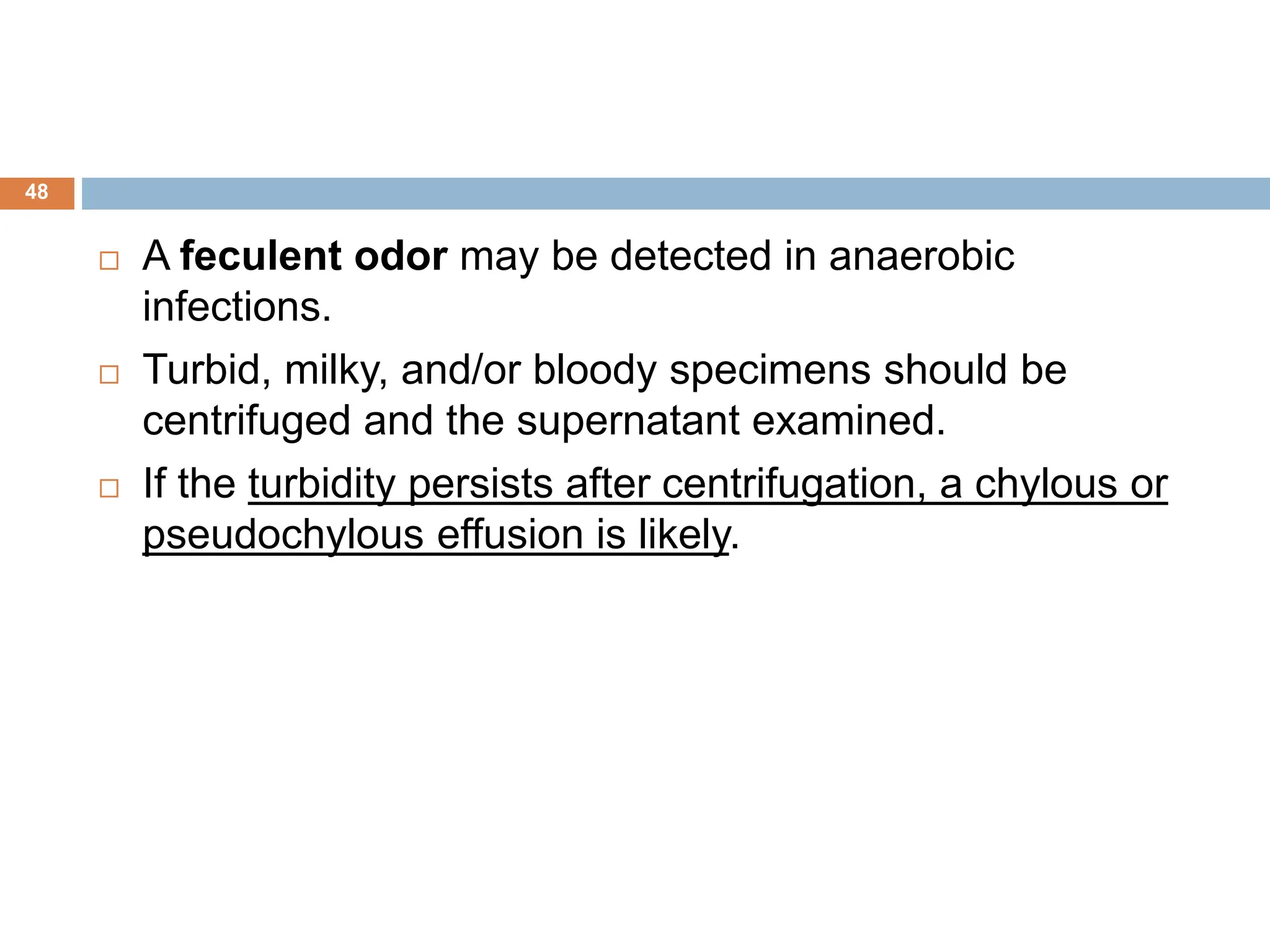
 A feculent odor may be detected in anaerobic
infections.
 Turbid, milky, and/or bloody specimens should be
centrifuged and the supernatant examined.
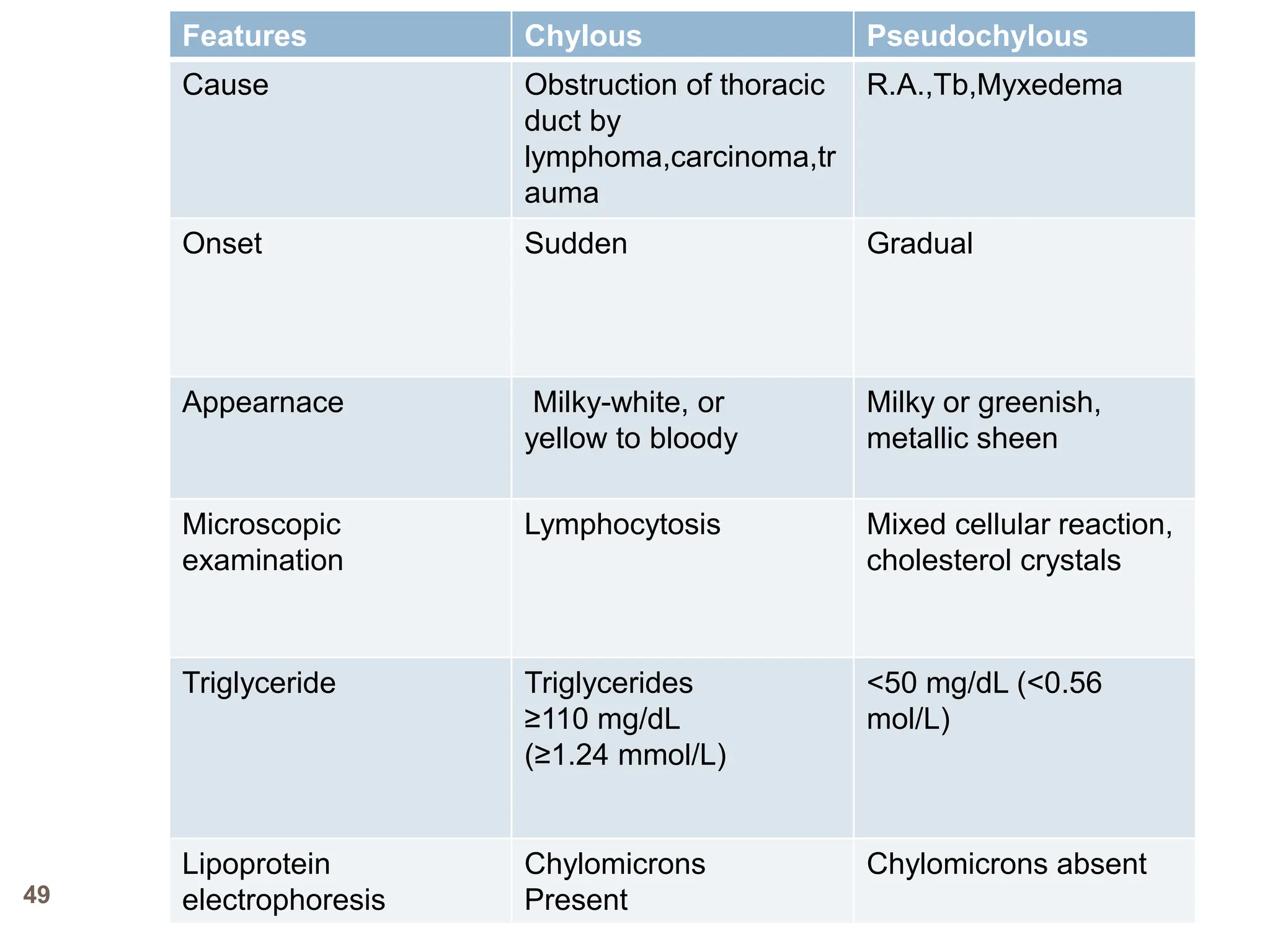
 If the turbidity persists after centrifugation, a chylous or
pseudochylous effusion is likely.
48
Features Chylous Pseudochylous
Cause Obstruction of thoracic
duct by
lymphoma,carcinoma,tr
auma
R.A.,Tb,Myxedema
Onset Sudden Gradual
Appearnace Milky-white, or
yellow to bloody
Milky or greenish,
metallic sheen
Microscopic
examination
Lymphocytosis Mixed cellular reaction,
cholesterol crystals
Triglyceride Triglycerides
≥110 mg/dL
(≥1.24 mmol/L)
<50 mg/dL (<0.56
mol/L)
Lipoprotein
electrophoresis
Chylomicrons
Present
Chylomicrons absent
49
Microscopic examination
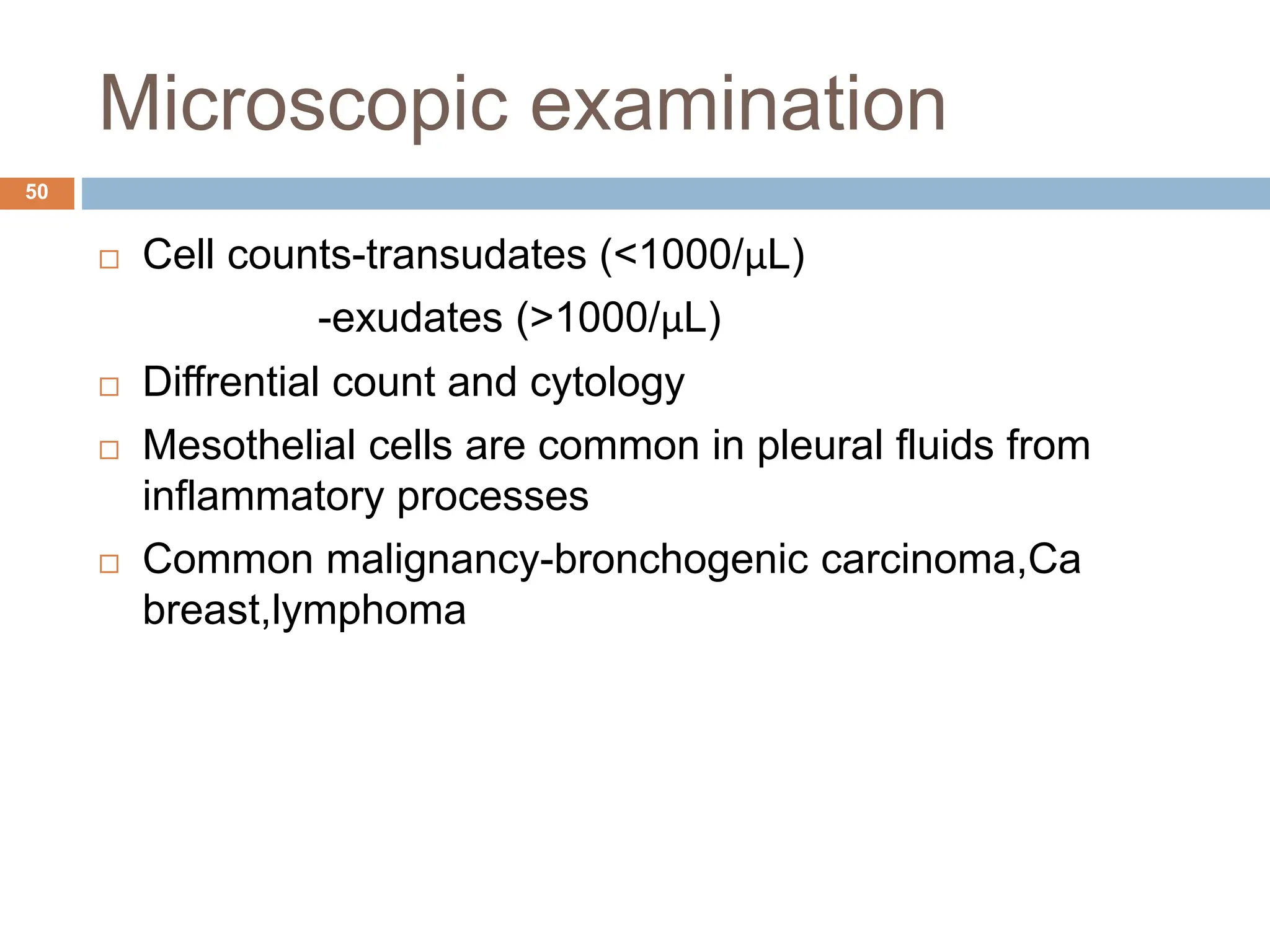
 Cell counts-transudates (<1000/μL)
-exudates (>1000/μL)
 Diffrential count and cytology
 Mesothelial cells are common in pleural fluids from
inflammatory processes
 Common malignancy-bronchogenic carcinoma,Ca
breast,lymphoma
50
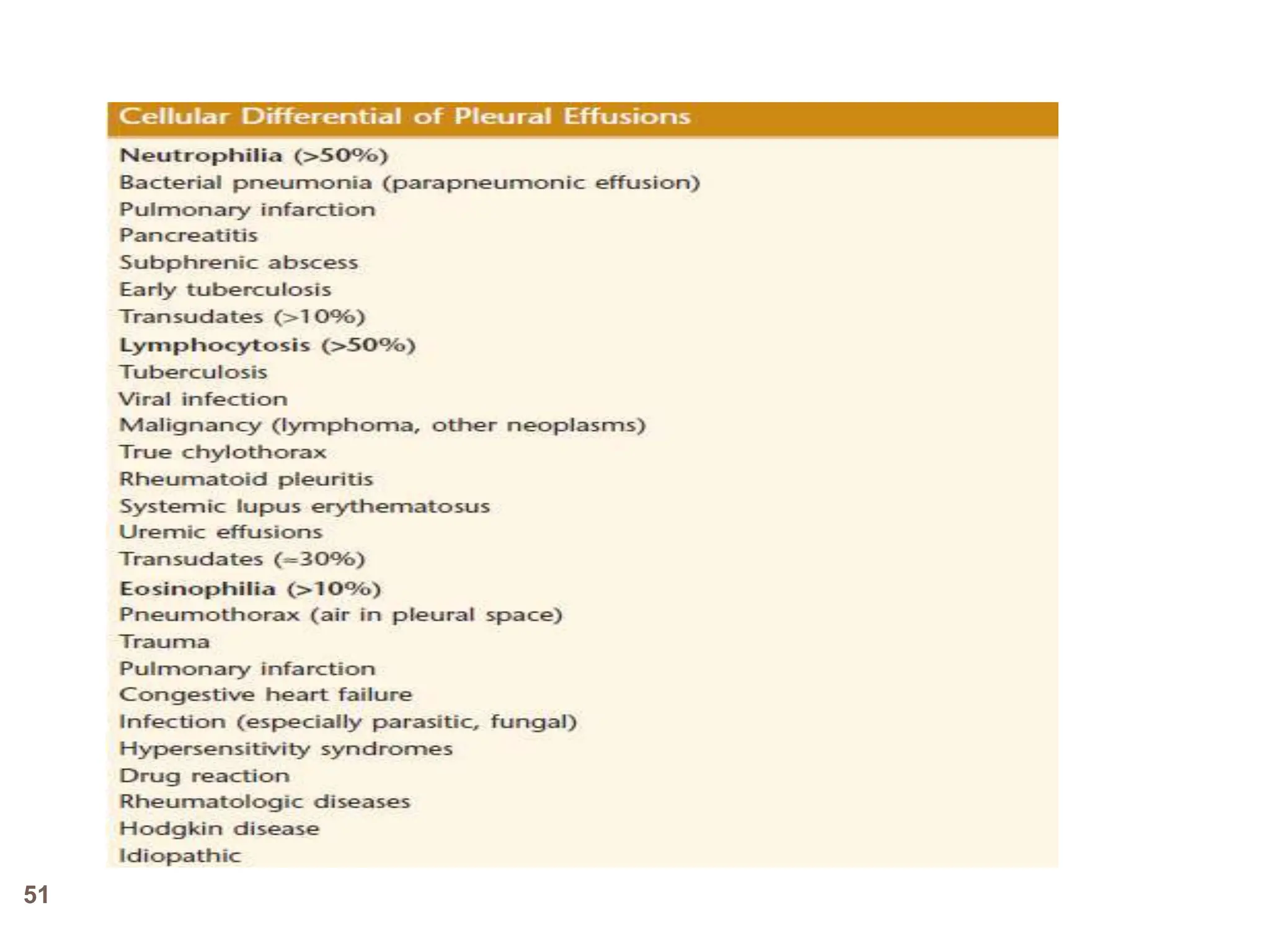
51
Chemical examination
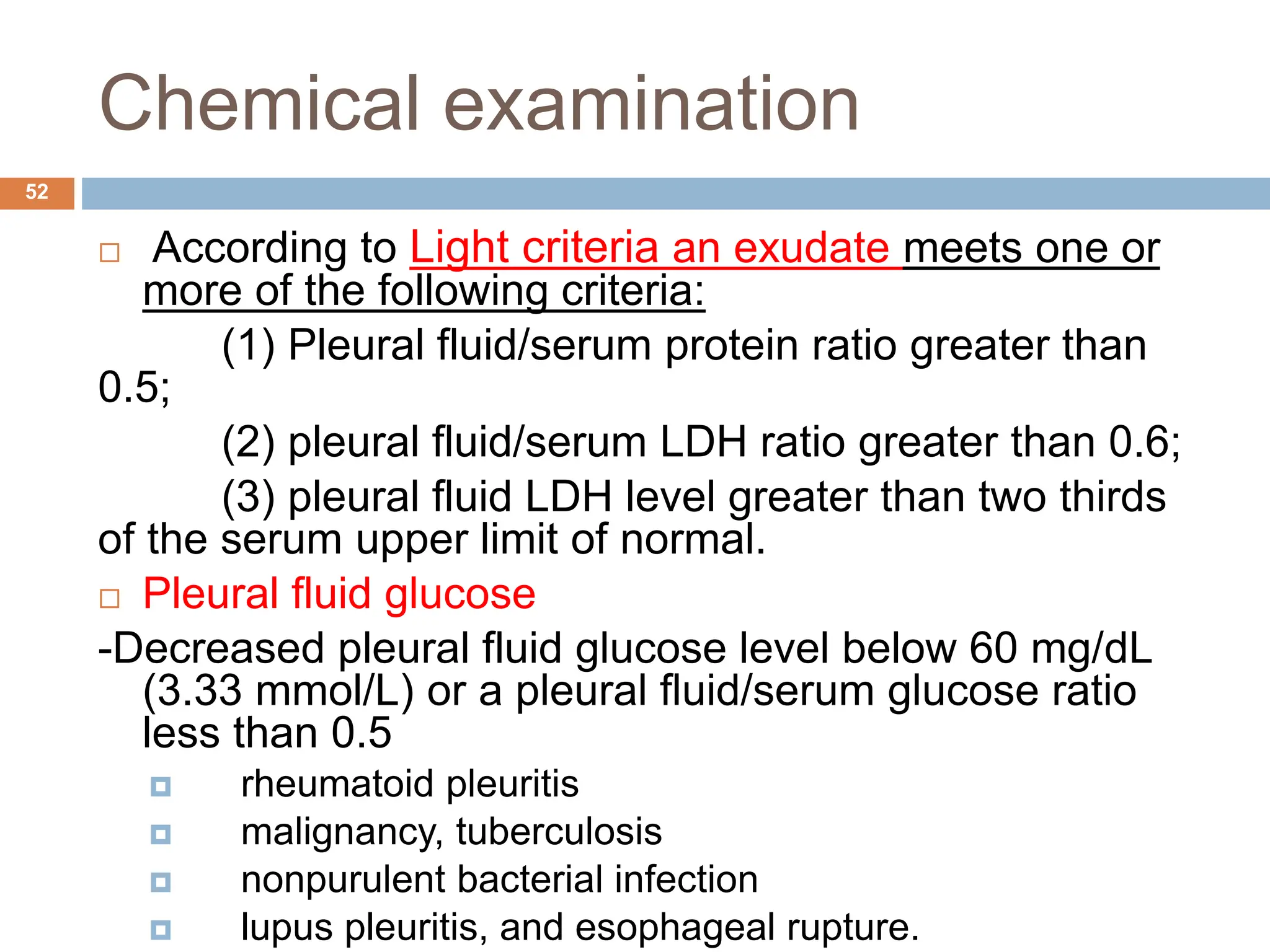
 According to Light criteria an exudate meets one or
more of the following criteria:
(1) Pleural fluid/serum protein ratio greater than
0.5;
(2) pleural fluid/serum LDH ratio greater than 0.6;
(3) pleural fluid LDH level greater than two thirds
of the serum upper limit of normal.
 Pleural fluid glucose
-Decreased pleural fluid glucose level below 60 mg/dL
(3.33 mmol/L) or a pleural fluid/serum glucose ratio
less than 0.5
 rheumatoid pleuritis
 malignancy, tuberculosis
 nonpurulent bacterial infection
 lupus pleuritis, and esophageal rupture.
52
53
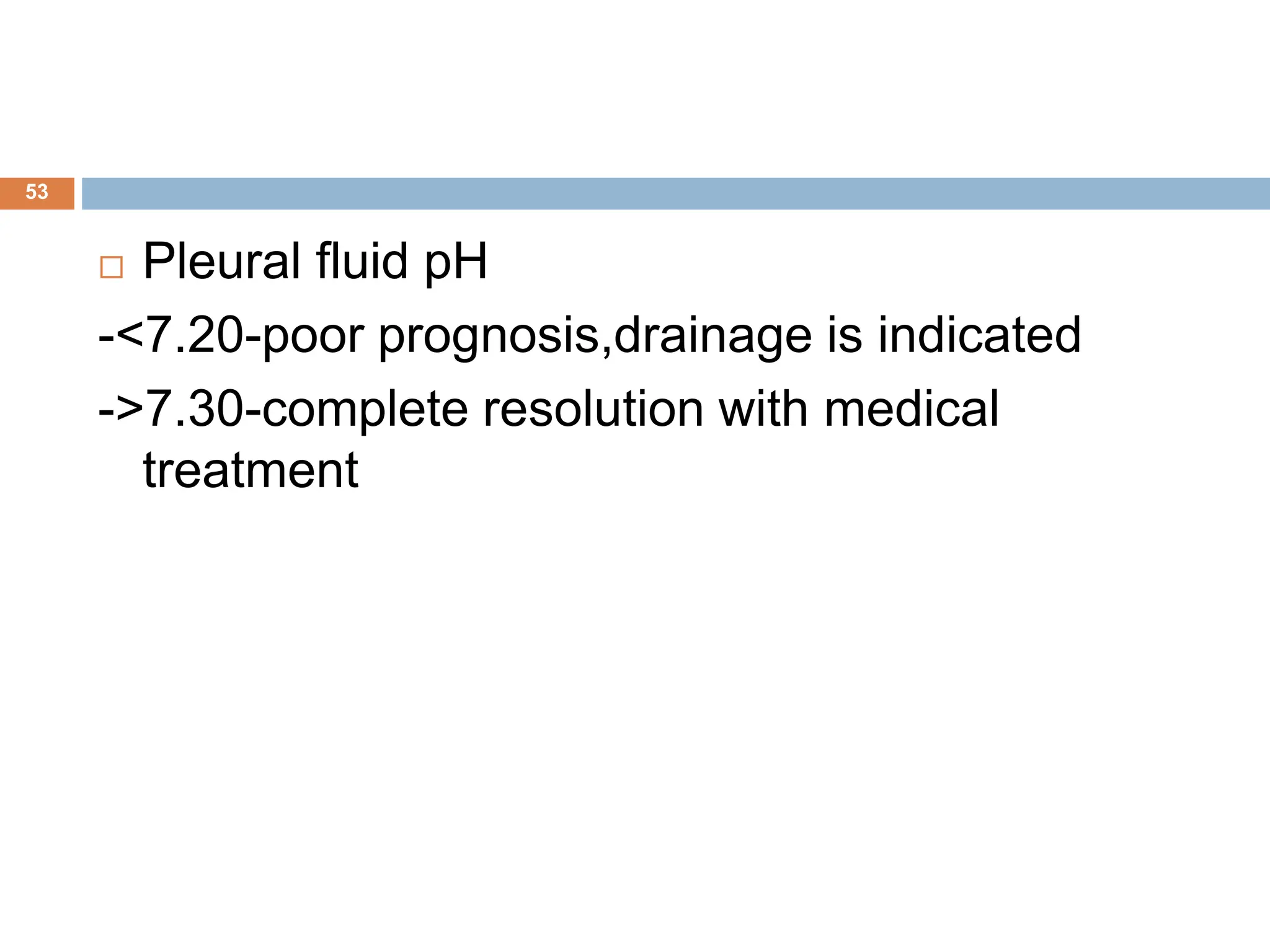
 Pleural fluid pH
-<7.20-poor prognosis,drainage is indicated
->7.30-complete resolution with medical
treatment
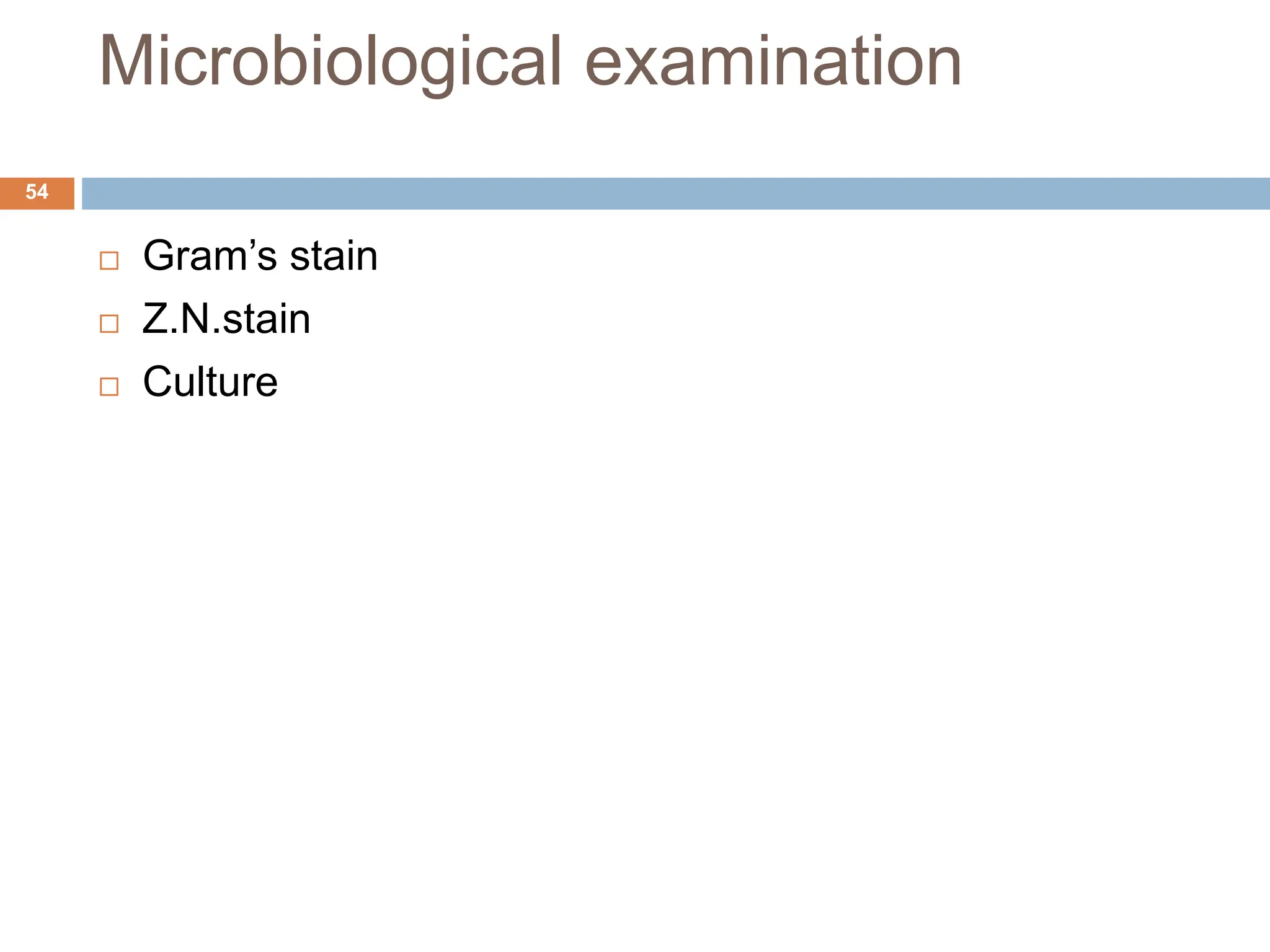
Microbiological examination
 Gram’s stain
 Z.N.stain
 Culture
54
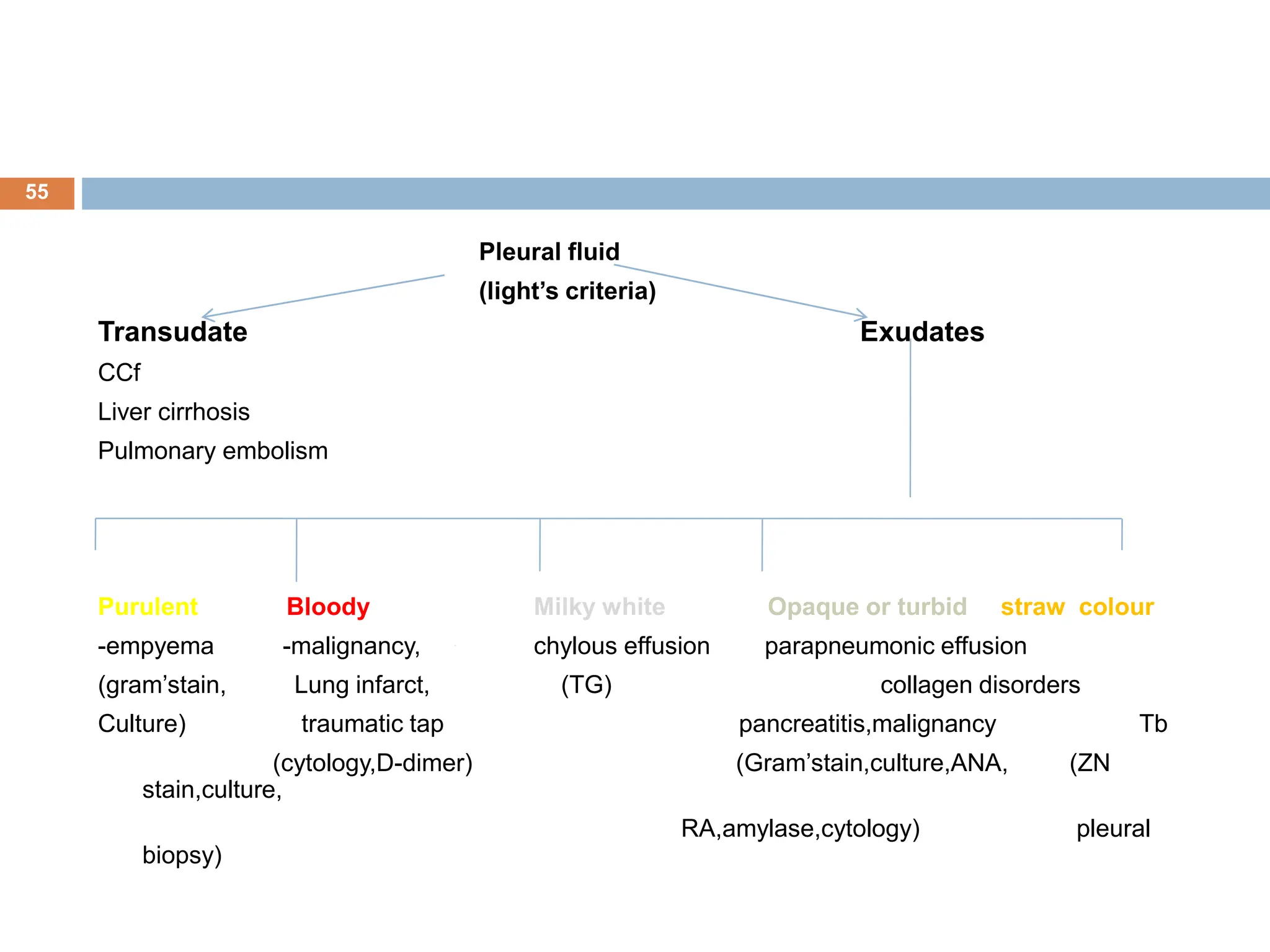
Pleural fluid
(light’s criteria)
Transudate Exudates
CCf
Liver cirrhosis
Pulmonary embolism
Purulent Bloody Milky white Opaque or turbid straw colour
-empyema -malignancy, chylous effusion parapneumonic effusion
(gram’stain, Lung infarct, (TG) collagen disorders
Culture) traumatic tap pancreatitis,malignancy Tb
(cytology,D-dimer) (Gram’stain,culture,ANA, (ZN
stain,culture,
RA,amylase,cytology) pleural
biopsy)
55
Pericardial fluid
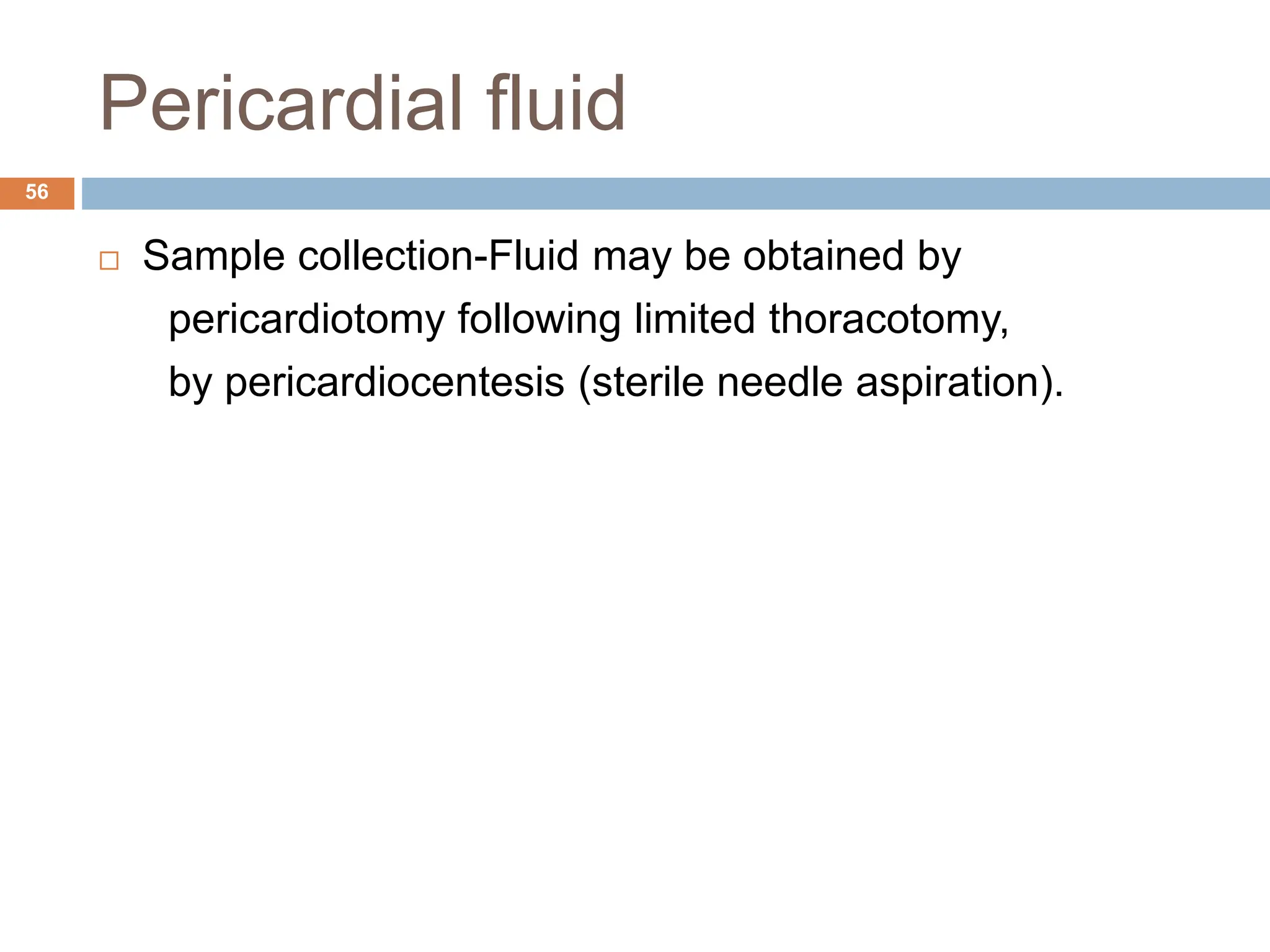
 Sample collection-Fluid may be obtained by
pericardiotomy following limited thoracotomy,
by pericardiocentesis (sterile needle aspiration).
56
Gross examination
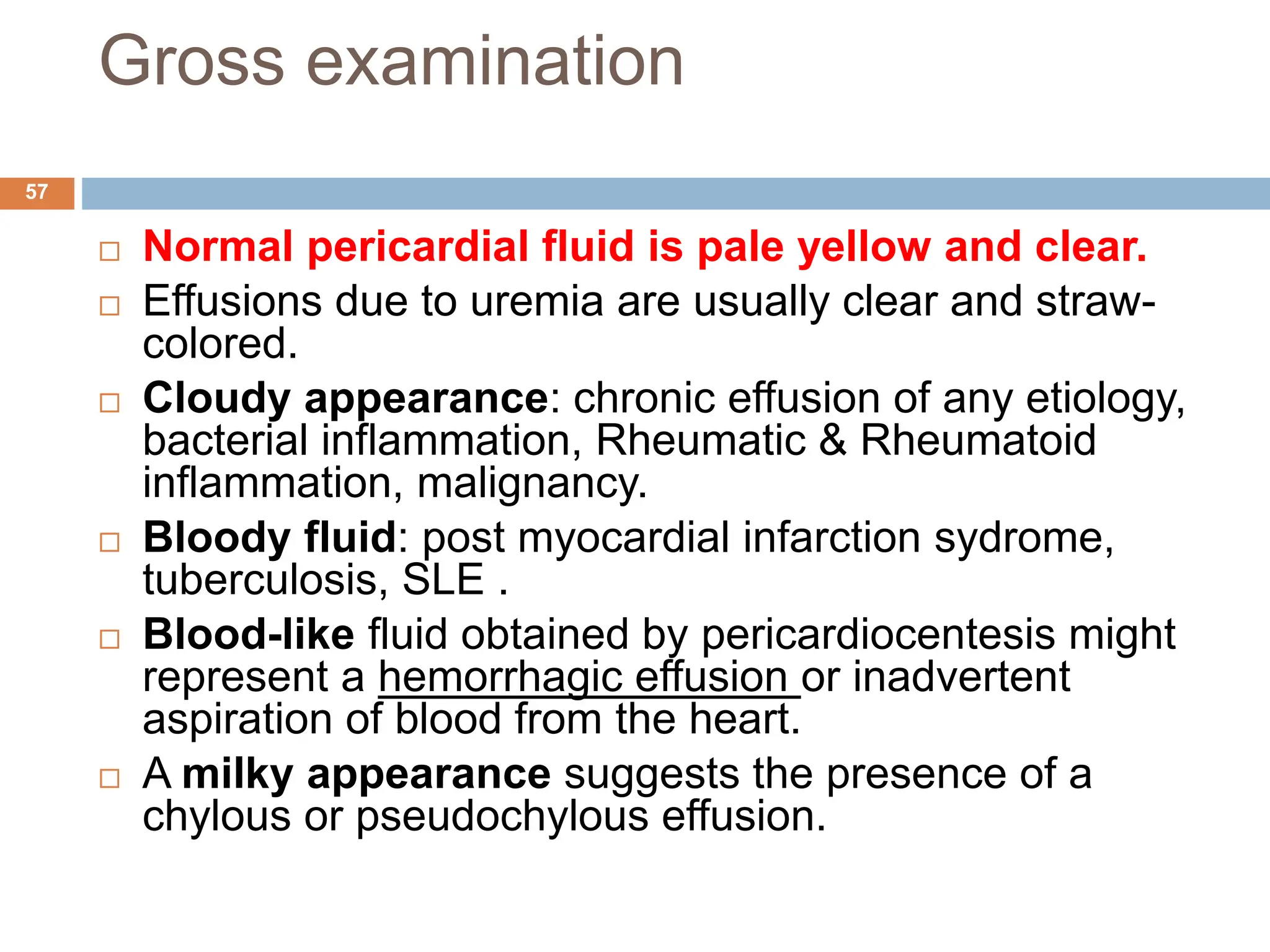
 Normal pericardial fluid is pale yellow and clear.
 Effusions due to uremia are usually clear and straw-
colored.
 Cloudy appearance: chronic effusion of any etiology,
bacterial inflammation, Rheumatic & Rheumatoid
inflammation, malignancy.
 Bloody fluid: post myocardial infarction sydrome,
tuberculosis, SLE .
 Blood-like fluid obtained by pericardiocentesis might
represent a hemorrhagic effusion or inadvertent
aspiration of blood from the heart.
 A milky appearance suggests the presence of a
chylous or pseudochylous effusion.
57
58
Peritoneal fluid
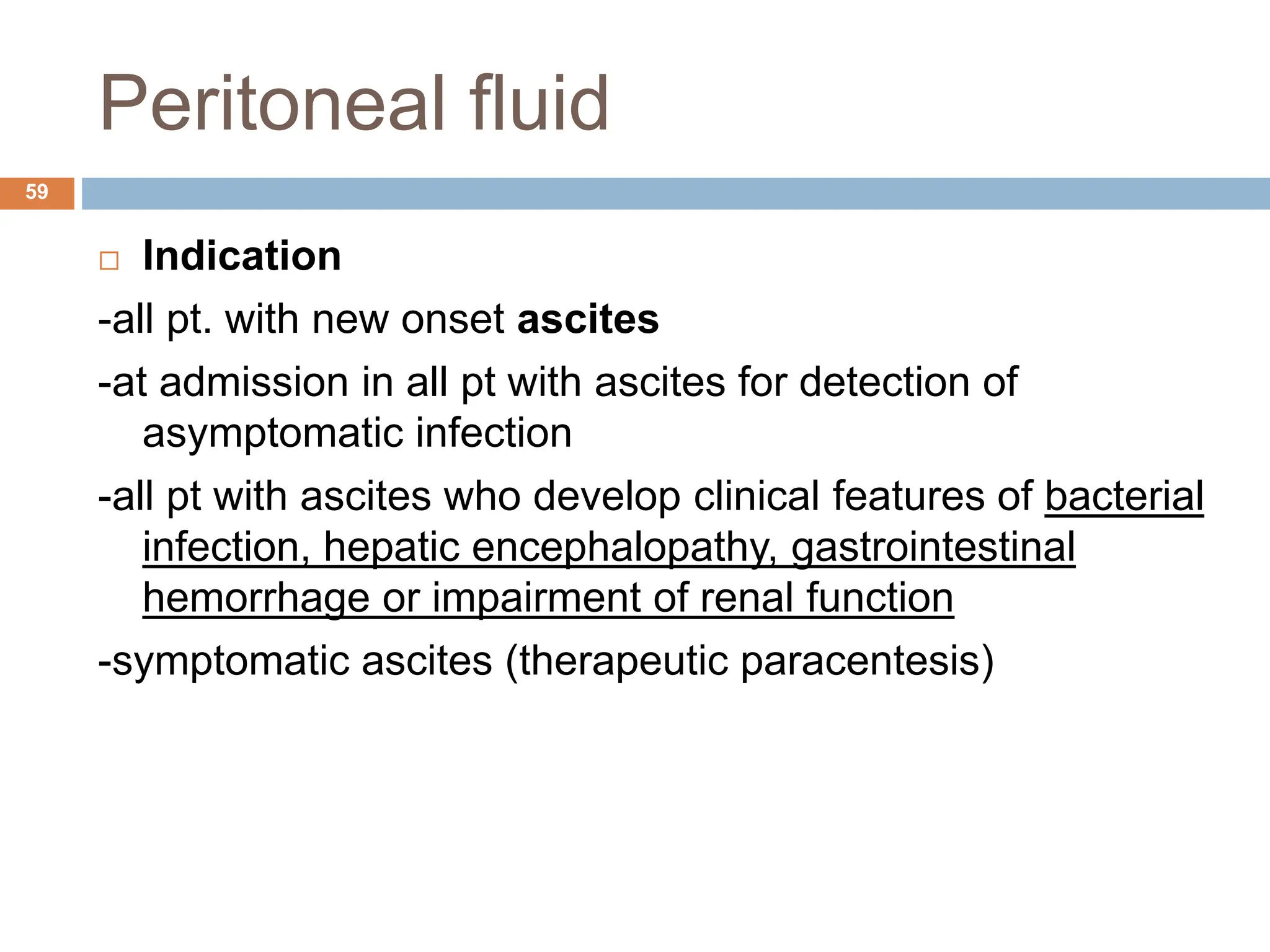
 Indication
-all pt. with new onset ascites
-at admission in all pt with ascites for detection of
asymptomatic infection
-all pt with ascites who develop clinical features of bacterial
infection, hepatic encephalopathy, gastrointestinal
hemorrhage or impairment of renal function
-symptomatic ascites (therapeutic paracentesis)
59
60
Sample collection
 For complete evaluation- a minimum of 30 ml is needed.
 For cytological evaluation- at least 100 ml is needed.
 Samples for cell counts should be placed in an EDTA-
anticoagulated venipuncture tube.
 Culture specimens should include blood culture bottles
that have been inoculated at the bedside with ascitic
fluid (10 mL per culture bottle).
61
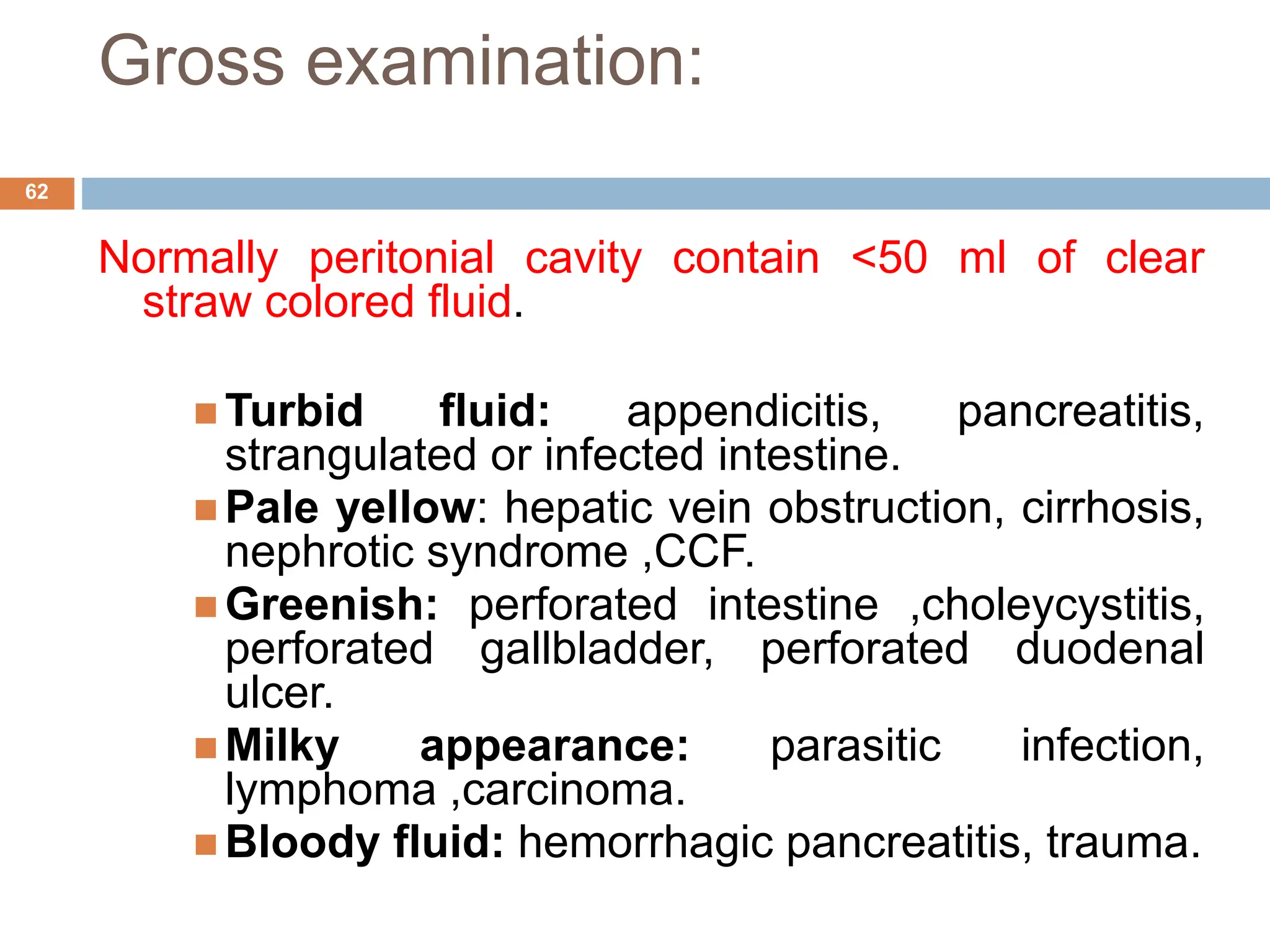
Gross examination:
Normally peritonial cavity contain <50 ml of clear
straw colored fluid.
 Turbid fluid: appendicitis, pancreatitis,
strangulated or infected intestine.
 Pale yellow: hepatic vein obstruction, cirrhosis,
nephrotic syndrome ,CCF.
 Greenish: perforated intestine ,choleycystitis,
perforated gallbladder, perforated duodenal
ulcer.
 Milky appearance: parasitic infection,
lymphoma ,carcinoma.
 Bloody fluid: hemorrhagic pancreatitis, trauma.
62
Microscopic examination
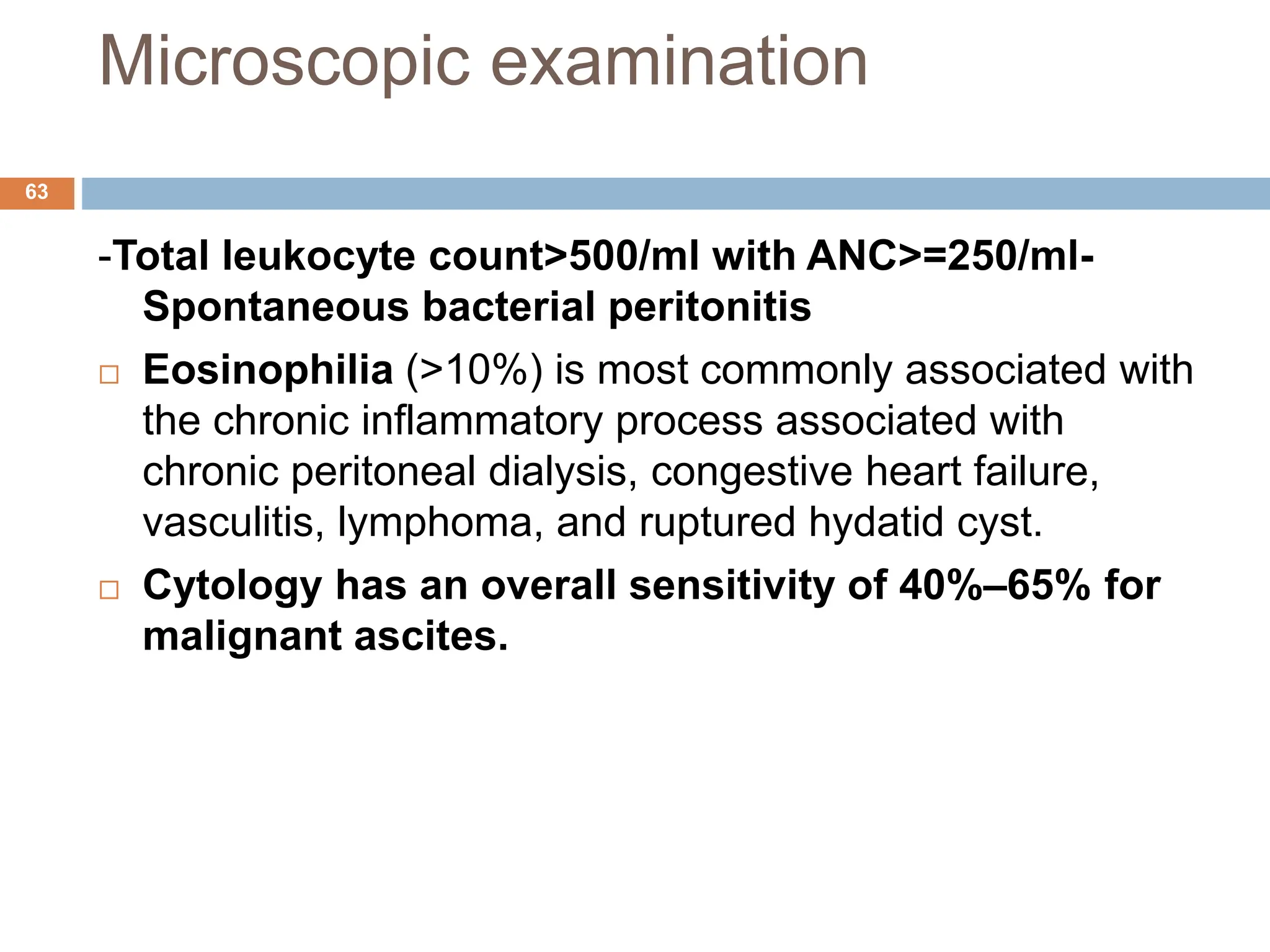
-Total leukocyte count>500/ml with ANC>=250/ml-
Spontaneous bacterial peritonitis
 Eosinophilia (>10%) is most commonly associated with
the chronic inflammatory process associated with
chronic peritoneal dialysis, congestive heart failure,
vasculitis, lymphoma, and ruptured hydatid cyst.
 Cytology has an overall sensitivity of 40%–65% for
malignant ascites.
63
Chemical examination
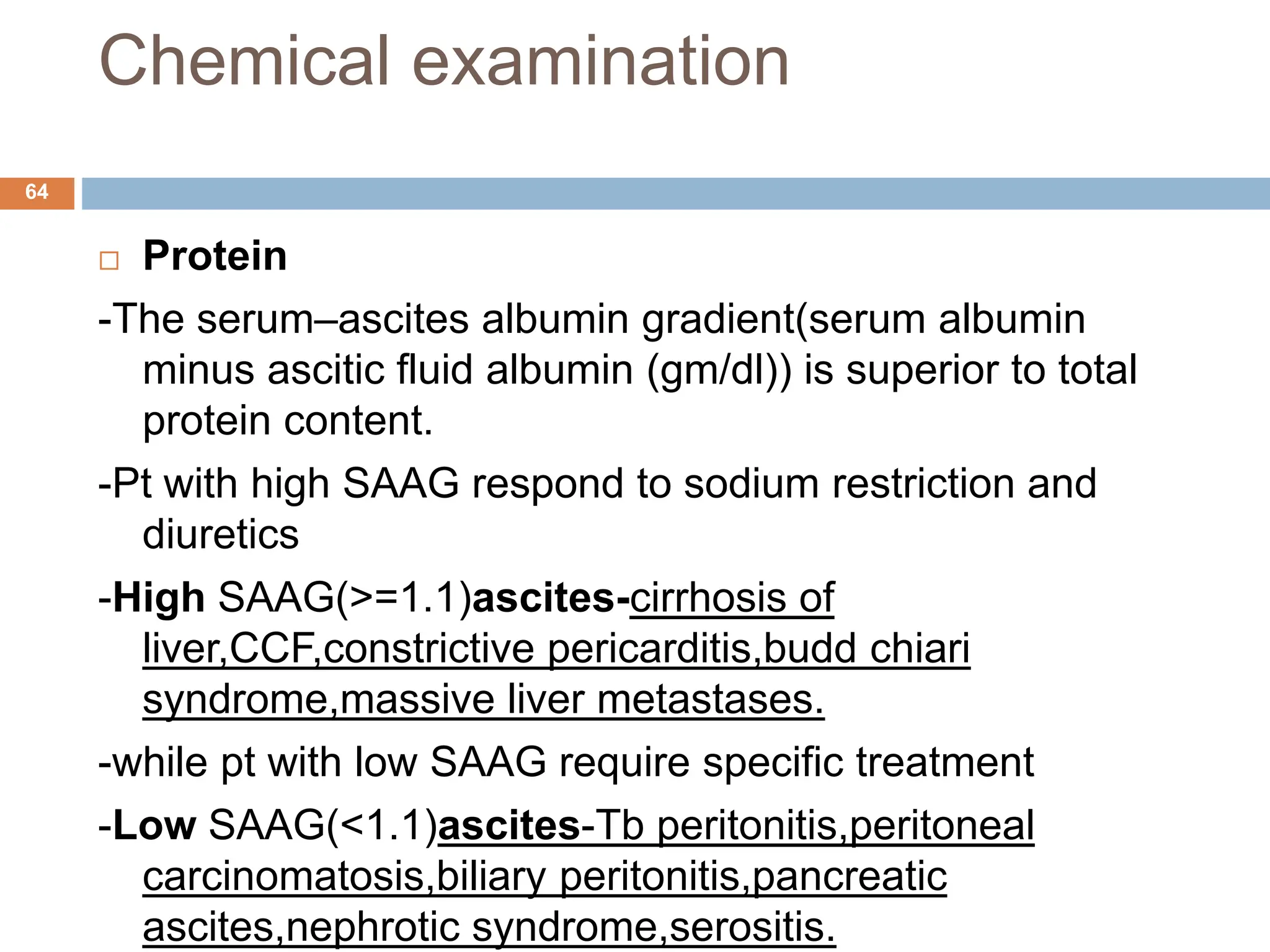
 Protein
-The serum–ascites albumin gradient(serum albumin
minus ascitic fluid albumin (gm/dl)) is superior to total
protein content.
-Pt with high SAAG respond to sodium restriction and
diuretics
-High SAAG(>=1.1)ascites-cirrhosis of
liver,CCF,constrictive pericarditis,budd chiari
syndrome,massive liver metastases.
-while pt with low SAAG require specific treatment
-Low SAAG(<1.1)ascites-Tb peritonitis,peritoneal
carcinomatosis,biliary peritonitis,pancreatic
ascites,nephrotic syndrome,serositis.
64
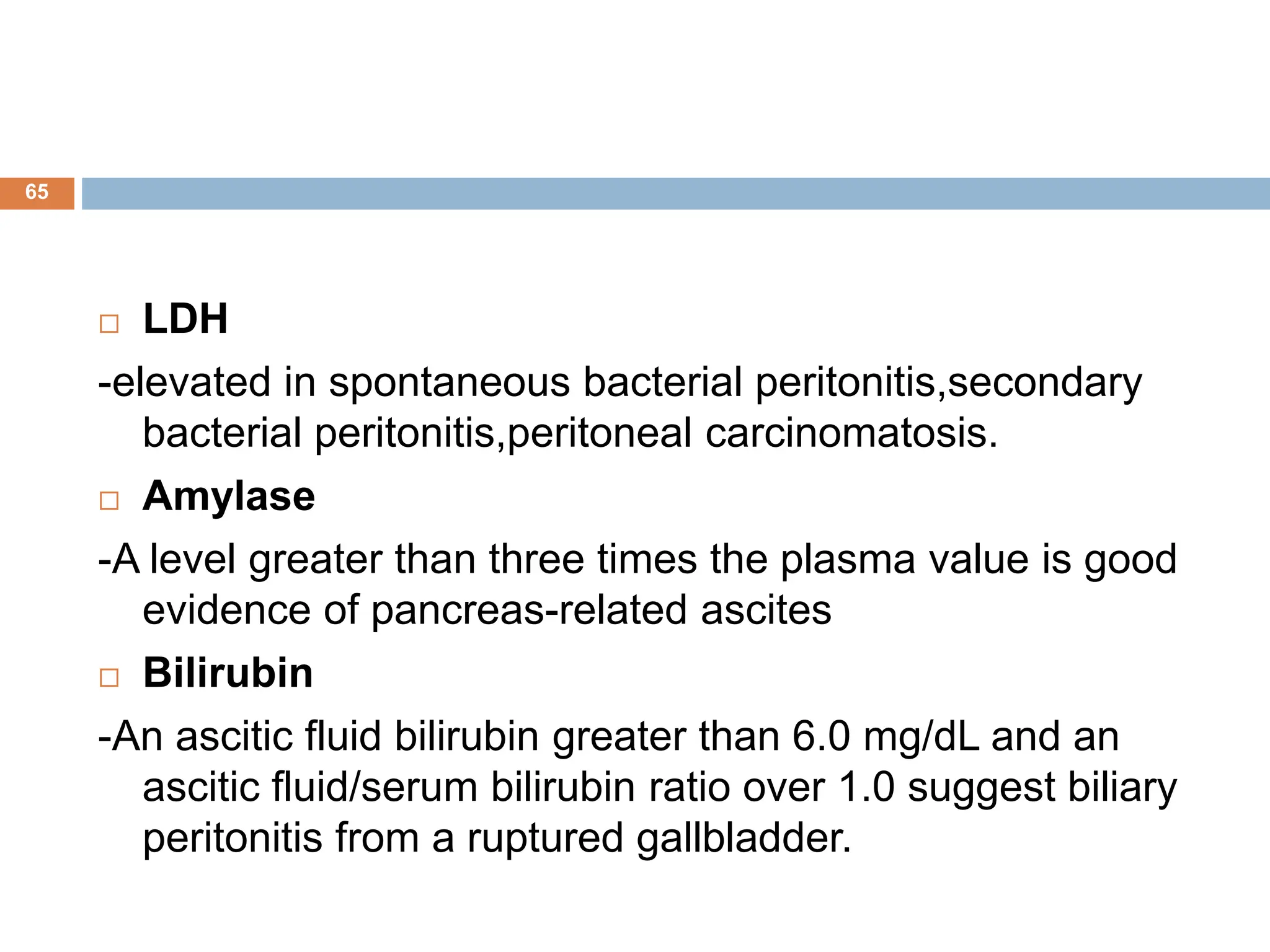
 LDH
-elevated in spontaneous bacterial peritonitis,secondary
bacterial peritonitis,peritoneal carcinomatosis.
 Amylase
-A level greater than three times the plasma value is good
evidence of pancreas-related ascites
 Bilirubin
-An ascitic fluid bilirubin greater than 6.0 mg/dL and an
ascitic fluid/serum bilirubin ratio over 1.0 suggest biliary
peritonitis from a ruptured gallbladder.
65
Microbiological examination
 Gram’s stain
 Z.N.stain
 Culture
66
Synovial fluid
 Synovium refers to the tissue lining synovial tendon
sheaths, bursae, and diarthrodial joints, except for the
articular surface.
 It is composed of one to three cell layers that form a
discontinuous surface overlying fatty, fibrous, or
periosteal joint tissue.
 Synovial fluid is an imperfect ultrafiltrate of blood plasma
combined with hyaluronic acid produced by the synovial
cells.
67
Sample collection
 Synovial fluid must be collected with sterile, disposable
needles and plastic syringes to avoid contamination by
birefringent particulates.
 The syringe may be heparinized with 25 U of sodium
heparin/mL of SF in routine arthrocentesis. Oxalate,
lithium heparin, and powdered
ethylenediaminetetraacetic acid (EDTA) anticoagulants
should be avoided because they form crystal artifacts
that may be misleading during the microscopic
examination.
 Before aspiration, turn or manipulate the joint to ensure
mixing of its contents.
68
Gross examination
 Colour
Synovial fluid is normally pale yellow. In
haemarthroses it will be red or orange and in
inflammatory arthropathies may appear cream or
white. Occasionally in septic arthritis it may be
coloured by bacterial chromogens.
 Clarity
Normal synovial fluid is clear.
 Viscosity
Normal synovial fluid has a thick mucoid
consistency
69
Microscopic examination
 TC-Total leukocyte counts should be performed promptly
to avoid degenerative cell loss, which begins as soon as
1 hour following arthrocentesis.
 Tubes must be inverted before sampling to ensure
uniform mixing.
 The upper reference level for SF leukocytes is 150–
200/μl
70
 DC- Neutrophils normally account for about 20% of SF
leukocytes.
-Neutrophils generally exceed 50% in urate gout,
pseudogout, and rheumatoid arthritis (RA)
they most often exceed 75% in acute bacterial arthritis
71
 Lupus erythematosus (LE) cells, commonly present in
patients with lupus arthritis, are most often neutrophils
that have phagocytosed the nuclei of degenerating cells
 Lymphocytes, normally constituting about 15% of SF
cells, are prominent in early RA and other collagen
disorders, as well as in chronic infections.
 Monocytes and macrophages are the most common
cells present in normal SF, accounting for
approximately 65% of the cell count.
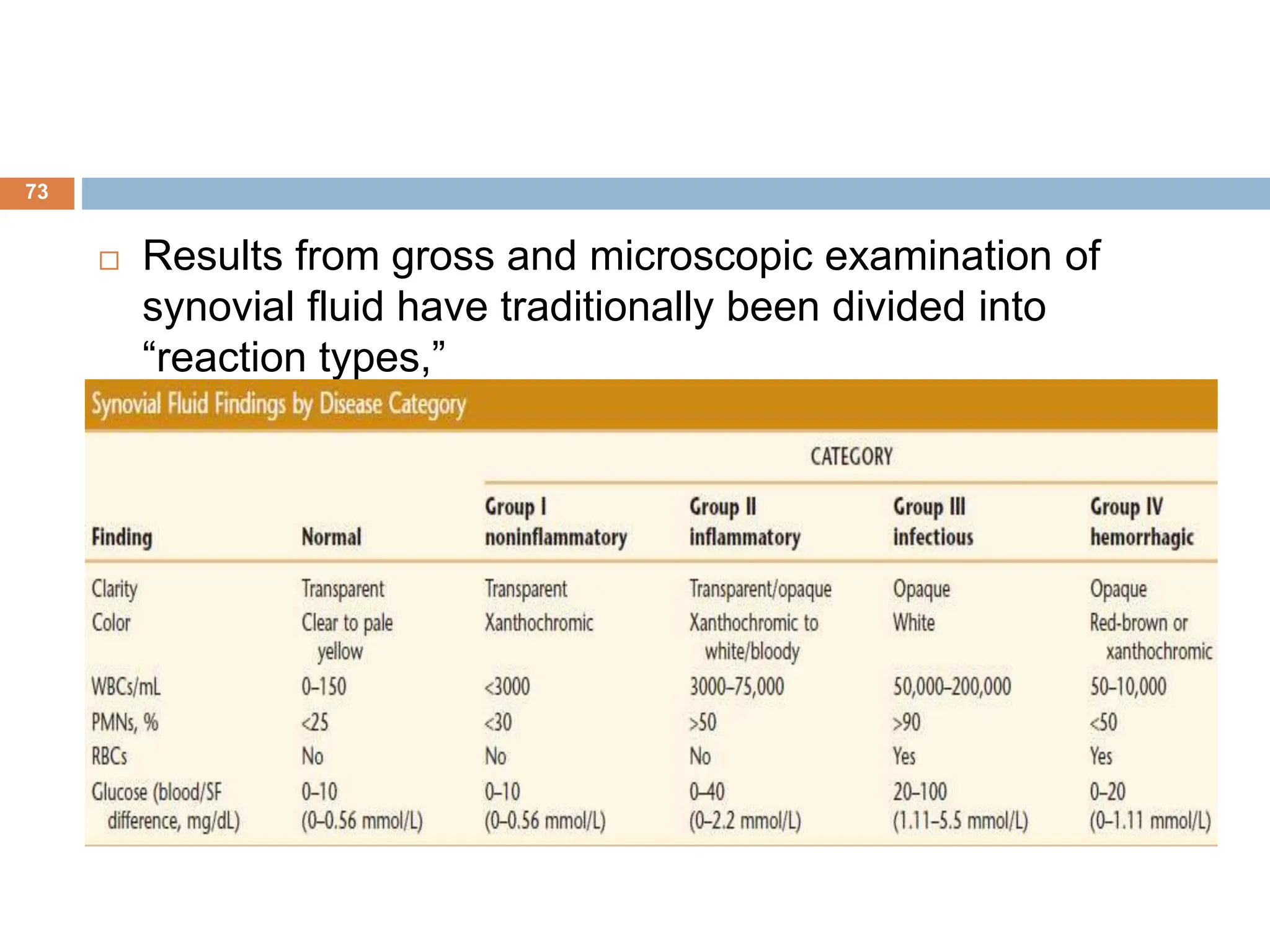
72
 Results from gross and microscopic examination of
synovial fluid have traditionally been divided into
“reaction types,”
73
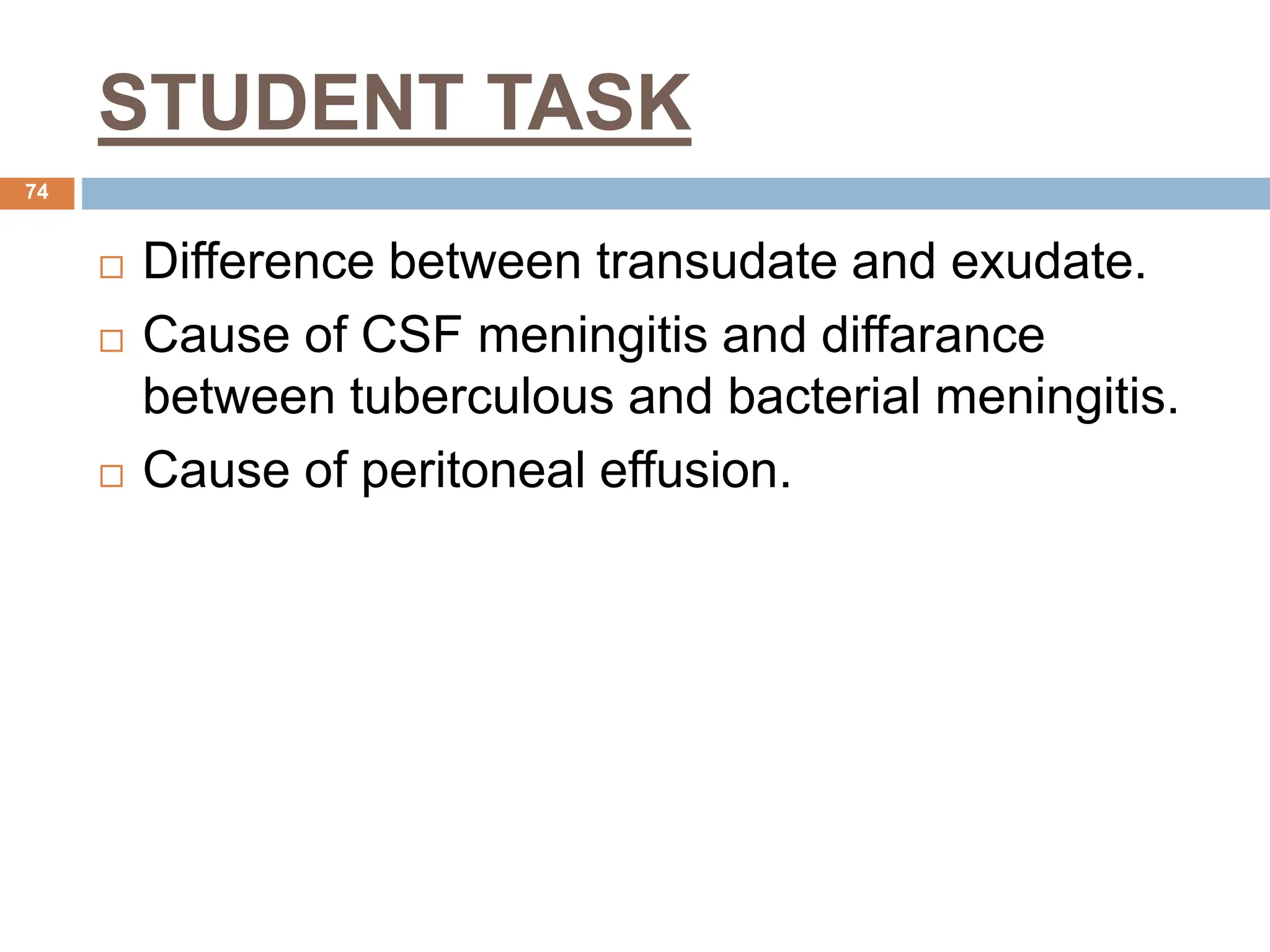
STUDENT TASK
74
 Difference between transudate and exudate.
 Cause of CSF meningitis and diffarance
between tuberculous and bacterial meningitis.
 Cause of peritoneal effusion.
Thank You
75

CSF & Body Cavity Fluid Examination.ppt

  • 1.
    CSF & bodycavity fluid examination 1
  • 2.
    Outline  Fluid (Routineexamination)  Cerebrospinal fluid  Pleural fluid  Peritoneal fluid  Pericardial fluid  Synovial fluid  Fluid (Cytology) 2
  • 3.
     Introduction  Specimencollection  Gross examination  Microscopic examination  Chemical examination  Microbiological examination 3
  • 4.
    Objective  Determining theetiologic cause of fluid accumulation in various body cavities is critical for proper treatment of disorders.  Therefore appropriate laboratory examination of these fluids is critical for the diagnosis of numerous diseases (i.e., bacterial, viral and fungal infections,metastatic malignancies) 4
  • 5.
    Cerebrospinal fluid  Introduction: TheCSF is a clear, colourless, transparent fluid in the cerebral ventricles, spinal canal and sub- arachnoid spaces.  Normal adult CSF production rate is 500 ml/day (.3 to .4 ml/min) 5
  • 6.
    CSF FORMATION 6 CSF islargely formed by the choroid plexus of the lateral ventricle and remainder in the third and fourth ventricles. Small amount of the CSF is also formed from the ependymal cells lining the ventricles and other brain capillaries.
  • 7.
  • 8.
    Functions of CSF Provides physical support to brain  Provides protective effect against sudden change in pressure(Shock absorber i.e. respiratory,postural,impact &arterial)  Vehicle for the excretion of waste product from brain(Brain-no lymphatic system)  Maintains ionic homeostasis 8
  • 9.
    Indications  In thediagnosis of Bacterial, viral or fungal meningitis.  Encephalitis.  Malignant infiltrates like in acute leukemia,lymphoma.  Subarachnoid hemorrhage.  Spinal canal blockage leading to elevated intracranial tension.  Sub acute sclerosing pan encephalitis (SSPE) 9
  • 10.
  • 11.
  • 12.
     Manometer isattached to syringe to measure opening pressure  Normal Opening Pressure in adult 90 to 180 mm of water  In infant & children upto 6-8 years 10 to 100 mm of water Raised opening pressure(>200mm of water) 1. meningitis 2. Intracranial mass lesion 3. cerebral edema 4. subarachnoid hemorrhage 5. CCF 6. Benign intracranial hypertension(pseudotumor cerebri) 12
  • 13.
    Decreased pressure 1. Leakagedue to trauma or previous lumbar puncture 2. complete spinal block(obstruction due to tumor,abscess,adhesions,herniated intervertebral disk) 3. Dehydration 4. Circulatory collapse 13
  • 14.
     CSF collectedas follows in sterile tubes: 1-biochemistry(glucose,protein) In case of traumatic tap tube 1 can’t be used for chemistry because results are false tube 1 should never be used for microbiology because it may be contaminated with skin bacteria 2-microbiology(Gram’s stain,AFB stain,India Ink preparation,bacterial culture,fungal culture,culture for Tb) 3-EDTA(Total count,differential count) Glass tube is contraindicated for cell counts because of cell adhesion to glass affect the count. 4-cytology if malignancy is suspected. 14
  • 15.
    -Refrigeration c/I forculture specimen because fastidious organism (e.g., Haemophilus influenza, Neisseria Meningitides)can’t survive  Specimens should be delivered to the laboratory and processed quickly to minimize cellular degradation, which begins within 1 hour of collection 15
  • 16.
    Gross Examination:  Color- Crystal clear, colorless  Viscosity- Similar to water  Turbid CSF WBC >200 cells/cmm RBC >400 cells/cmm Protein >150mg/dl  Other Causes of turbid CSF  Microorganism(Bacteria,fungi,amebas)  Radiographic contrast material  Aspirated epidural fat 16
  • 17.
    • Clot formationin CSF 1.Traumatic tap 2. Complete Spinal block(Froin’s syndrome-triad of xanthochromia, excess protein in csf, spontaneous formation of coagulum on standing) 3.suppurative & T.B meningitis 17
  • 18.
     Viscous CSF 1.Metastaticmucin producing carcinoma 2.Cryptococal meningitis – Capsular polysaccharide 3.liquid nucleus pulposus resulting from needle injury to the annulus fibrosus  Pink red CSF – 1.Traumatic tap 2. Subarachnoid hemorrhage 3. Intracerebral hemorrhage 4. Cerebral infarct 18
  • 19.
  • 20.
  • 21.
  • 22.
    Microscopic Examination: 22  TotalWBC Count-Normal CSF contains 0-8 lymphocyte and no RBCs.  Procedure 1. Glass slides 2. Counting chamber 3. Cover slip of thickness with size of 22 ˟ 23 mm 4. CSF diluting fluid – turk solution
  • 23.
    Calculation: 23  If CSFis cloudy then make a dilution of 1:10 or 1:20 [is made using 0.05 ml of CSF and 0.95 ml of turk solution]  Charge the counting chamber properly without any air bubbles. • Wait for 5 minutes before counting, to allow the cells in CSF to settle down. • Count the cells in all 4 squares by using low power objective.  Calculation WBC in CSF/cumm (μL)= No.of cell x dilution factor total volume =counted cells x10 x20 4
  • 24.
    24  Each WBCsquare of the chamber is a 1.0mm x1.0mm square.WBCs are counted in 4 such squares.therefore,the area of these 4 squares is 4 Sq.mm.  Since the depth of the chamber is 0.1 mm.the total volume of 4 squares will be 0.4 cumm.  If “N” is the number of cells counted in 0.4 cumm volume,the number of cells in 1 cumm of dilute blood will be: N/0.4 or Nx10/4.  So wbc count will be N x 10 x 20 4
  • 25.
    25  Cells inCSF should be counted immediately with out delay to prevent degeneration of cells which will give false low counts  Bloody/ traumatic tap adds approximately 1-2 WBC per 1000 RBCs. Hence in the estimation of total leucocytes count a deduction is made equivalent to 1 WBC for every 700 erythrocytes counted.
  • 26.
  • 27.
    Differential leucocytes count 27 Celltype Adults(%) Neonates(%)  Lymphocytes 62+34 20+18  Monocytes 36+20 72+22  Neutrophils 2+5 3+5  Histiocytes Rare 5+4  Ependymal Rare Rare  Eosinophils Rare Rare
  • 28.
    28  • Leishman’sstained smear or Gimsa’s Stained smear. Polymorphs lymphocytes monocytes
  • 29.
  • 30.
  • 31.
  • 32.
     Causes ofIncreased CSF Monocytes: Lacks diagnostic specificity  CSF examination for Tumour cell:  CSF WBC count of >5 cells/cmm with lymphoblast indicate metastatic ALL 32
  • 33.
  • 34.
  • 35.
    Chemical examination  CSFProtein:  80 % of CSF protein derived from blood plasma  Normal value 15 to 45 mg/dl  In case of traumatic tap Total Protein added=Total Protein in Serum x (1-Hct) x CSF RBCs/RBCs blood  Which amount to be 8 mg/dl protein Per 10,000 RBCs added to CSF protein  Increased CSF protein is not significant seen in traumatic tap 35
  • 36.
    36  Turbidimetric methodusing trichloroacetic acid for precipitation of proteins is commonly used.  If facilities for estimation of CSF proteins are not available, then pandy’s test using saturated solution of phenol is used for estimation of globulins.  Along with CSF protein, it is necessary to simultaneously measure serum protein for proper interpretation of results.
  • 37.
    Conditions Associated with IncreasedCSF Total Protein 37  Increased blood-CSF permeability  Meningitis (bacterial, fungal, TB)  Hemorrhage (SAH, ICH)  Endocrine disorders  Mechanical obstruction (tumor,disc,abcess)  Neurosypilis,MS,CVD
  • 38.
    Conditions Associated with DecreasedCSF Total Protein  Removal of large CSF volume  CSF leak  Trauma  Lumbar puncture  Increased intracranial pressure  Hyperthyroidism 38
  • 39.
     CSF Glucose: Fasting CSF Glucose normal value 50 to 80 mg/dl(i.e. 2/3 or 60 % of plasma value)  Normal CSF glucose/plasma glucose=0.3 to 0.9  CSF /plasma Glucose < 0.3(<40 mg/dl)  Bacterial Meningitis  T.B Meningitis  Fungal Meningitis  Recovery after treatment: CSF Glucose>CSF Protein>CSF cell counts 39
  • 40.
     CSF Lactate: CSF Lactate normal value 9 to 26 mg/dl  CSF Lactate <25 mg/dl Viral Meningitis  CSF Lactate >35 mg/dl Bacterial Meningitis  Persistently elevated CSF Lactate indicates poor prognosis in severe head injury patient 40
  • 41.
  • 42.
     Special investigation -CSFprotein electrophoresis 1.Oligoclonal bands-in multiple sclerosis, Subacute sclerosing panencephalitis, neurosyphillis,guillain-barre syndrome 2.CSF leakage 42
  • 43.
  • 44.
    Basic mechanism whichlead to collection of fluid in the tissues & cavities are – 44 1. Increase venous pressure 2. Decreased oncotic pressure 3. Increase capillary permeability 4. Interference in lymphatic flow.
  • 45.
    Transudates Exudates Cause NoninflammatoryInflammatory Unilateral/bilateral Usually bilateral Usually unilateral Mechanism Raised hydrostatic or decreased oncotic presssure Increased capillary permeabilty or lymphatic obstruction Appearance clear or straw colored,does not clot Turbid,cloudy,often clots Sp.gravity <1.016 >1.016 protein <3 gm/dl >3 gm/dl Fluid/serum protein ratio <0.5 >0.5 LDH <200 >200 Fluid/serum LDH ratio <0.6 >0.6 Glucose Equivalent to plasma May be low cells Few lymphocytes and mesothelial cells Many inflammatory cells organism nil May be present 45
  • 46.
  • 47.
    Gross examination  Appearance Transudates are typically clear, pale yellow to straw- colored, and odorless and do not clot.  Straw coloured in CCF,pulmonary embolism,cirrhosis of liver  Thick exudative in pneumonia and cancer  A bloody pleural effusion (hematocrit >1%) suggests trauma, malignancy, or pulmonary infarction  A pleural fluid hematocrit greater than 50% of the blood hematocrit is good evidence for a hemothorax 47
  • 48.
     A feculentodor may be detected in anaerobic infections.  Turbid, milky, and/or bloody specimens should be centrifuged and the supernatant examined.  If the turbidity persists after centrifugation, a chylous or pseudochylous effusion is likely. 48
  • 49.
    Features Chylous Pseudochylous CauseObstruction of thoracic duct by lymphoma,carcinoma,tr auma R.A.,Tb,Myxedema Onset Sudden Gradual Appearnace Milky-white, or yellow to bloody Milky or greenish, metallic sheen Microscopic examination Lymphocytosis Mixed cellular reaction, cholesterol crystals Triglyceride Triglycerides ≥110 mg/dL (≥1.24 mmol/L) <50 mg/dL (<0.56 mol/L) Lipoprotein electrophoresis Chylomicrons Present Chylomicrons absent 49
  • 50.
    Microscopic examination  Cellcounts-transudates (<1000/μL) -exudates (>1000/μL)  Diffrential count and cytology  Mesothelial cells are common in pleural fluids from inflammatory processes  Common malignancy-bronchogenic carcinoma,Ca breast,lymphoma 50
  • 51.
  • 52.
    Chemical examination  Accordingto Light criteria an exudate meets one or more of the following criteria: (1) Pleural fluid/serum protein ratio greater than 0.5; (2) pleural fluid/serum LDH ratio greater than 0.6; (3) pleural fluid LDH level greater than two thirds of the serum upper limit of normal.  Pleural fluid glucose -Decreased pleural fluid glucose level below 60 mg/dL (3.33 mmol/L) or a pleural fluid/serum glucose ratio less than 0.5  rheumatoid pleuritis  malignancy, tuberculosis  nonpurulent bacterial infection  lupus pleuritis, and esophageal rupture. 52
  • 53.
    53  Pleural fluidpH -<7.20-poor prognosis,drainage is indicated ->7.30-complete resolution with medical treatment
  • 54.
    Microbiological examination  Gram’sstain  Z.N.stain  Culture 54
  • 55.
    Pleural fluid (light’s criteria) TransudateExudates CCf Liver cirrhosis Pulmonary embolism Purulent Bloody Milky white Opaque or turbid straw colour -empyema -malignancy, chylous effusion parapneumonic effusion (gram’stain, Lung infarct, (TG) collagen disorders Culture) traumatic tap pancreatitis,malignancy Tb (cytology,D-dimer) (Gram’stain,culture,ANA, (ZN stain,culture, RA,amylase,cytology) pleural biopsy) 55
  • 56.
    Pericardial fluid  Samplecollection-Fluid may be obtained by pericardiotomy following limited thoracotomy, by pericardiocentesis (sterile needle aspiration). 56
  • 57.
    Gross examination  Normalpericardial fluid is pale yellow and clear.  Effusions due to uremia are usually clear and straw- colored.  Cloudy appearance: chronic effusion of any etiology, bacterial inflammation, Rheumatic & Rheumatoid inflammation, malignancy.  Bloody fluid: post myocardial infarction sydrome, tuberculosis, SLE .  Blood-like fluid obtained by pericardiocentesis might represent a hemorrhagic effusion or inadvertent aspiration of blood from the heart.  A milky appearance suggests the presence of a chylous or pseudochylous effusion. 57
  • 58.
  • 59.
    Peritoneal fluid  Indication -allpt. with new onset ascites -at admission in all pt with ascites for detection of asymptomatic infection -all pt with ascites who develop clinical features of bacterial infection, hepatic encephalopathy, gastrointestinal hemorrhage or impairment of renal function -symptomatic ascites (therapeutic paracentesis) 59
  • 60.
  • 61.
    Sample collection  Forcomplete evaluation- a minimum of 30 ml is needed.  For cytological evaluation- at least 100 ml is needed.  Samples for cell counts should be placed in an EDTA- anticoagulated venipuncture tube.  Culture specimens should include blood culture bottles that have been inoculated at the bedside with ascitic fluid (10 mL per culture bottle). 61
  • 62.
    Gross examination: Normally peritonialcavity contain <50 ml of clear straw colored fluid.  Turbid fluid: appendicitis, pancreatitis, strangulated or infected intestine.  Pale yellow: hepatic vein obstruction, cirrhosis, nephrotic syndrome ,CCF.  Greenish: perforated intestine ,choleycystitis, perforated gallbladder, perforated duodenal ulcer.  Milky appearance: parasitic infection, lymphoma ,carcinoma.  Bloody fluid: hemorrhagic pancreatitis, trauma. 62
  • 63.
    Microscopic examination -Total leukocytecount>500/ml with ANC>=250/ml- Spontaneous bacterial peritonitis  Eosinophilia (>10%) is most commonly associated with the chronic inflammatory process associated with chronic peritoneal dialysis, congestive heart failure, vasculitis, lymphoma, and ruptured hydatid cyst.  Cytology has an overall sensitivity of 40%–65% for malignant ascites. 63
  • 64.
    Chemical examination  Protein -Theserum–ascites albumin gradient(serum albumin minus ascitic fluid albumin (gm/dl)) is superior to total protein content. -Pt with high SAAG respond to sodium restriction and diuretics -High SAAG(>=1.1)ascites-cirrhosis of liver,CCF,constrictive pericarditis,budd chiari syndrome,massive liver metastases. -while pt with low SAAG require specific treatment -Low SAAG(<1.1)ascites-Tb peritonitis,peritoneal carcinomatosis,biliary peritonitis,pancreatic ascites,nephrotic syndrome,serositis. 64
  • 65.
     LDH -elevated inspontaneous bacterial peritonitis,secondary bacterial peritonitis,peritoneal carcinomatosis.  Amylase -A level greater than three times the plasma value is good evidence of pancreas-related ascites  Bilirubin -An ascitic fluid bilirubin greater than 6.0 mg/dL and an ascitic fluid/serum bilirubin ratio over 1.0 suggest biliary peritonitis from a ruptured gallbladder. 65
  • 66.
    Microbiological examination  Gram’sstain  Z.N.stain  Culture 66
  • 67.
    Synovial fluid  Synoviumrefers to the tissue lining synovial tendon sheaths, bursae, and diarthrodial joints, except for the articular surface.  It is composed of one to three cell layers that form a discontinuous surface overlying fatty, fibrous, or periosteal joint tissue.  Synovial fluid is an imperfect ultrafiltrate of blood plasma combined with hyaluronic acid produced by the synovial cells. 67
  • 68.
    Sample collection  Synovialfluid must be collected with sterile, disposable needles and plastic syringes to avoid contamination by birefringent particulates.  The syringe may be heparinized with 25 U of sodium heparin/mL of SF in routine arthrocentesis. Oxalate, lithium heparin, and powdered ethylenediaminetetraacetic acid (EDTA) anticoagulants should be avoided because they form crystal artifacts that may be misleading during the microscopic examination.  Before aspiration, turn or manipulate the joint to ensure mixing of its contents. 68
  • 69.
    Gross examination  Colour Synovialfluid is normally pale yellow. In haemarthroses it will be red or orange and in inflammatory arthropathies may appear cream or white. Occasionally in septic arthritis it may be coloured by bacterial chromogens.  Clarity Normal synovial fluid is clear.  Viscosity Normal synovial fluid has a thick mucoid consistency 69
  • 70.
    Microscopic examination  TC-Totalleukocyte counts should be performed promptly to avoid degenerative cell loss, which begins as soon as 1 hour following arthrocentesis.  Tubes must be inverted before sampling to ensure uniform mixing.  The upper reference level for SF leukocytes is 150– 200/μl 70
  • 71.
     DC- Neutrophilsnormally account for about 20% of SF leukocytes. -Neutrophils generally exceed 50% in urate gout, pseudogout, and rheumatoid arthritis (RA) they most often exceed 75% in acute bacterial arthritis 71
  • 72.
     Lupus erythematosus(LE) cells, commonly present in patients with lupus arthritis, are most often neutrophils that have phagocytosed the nuclei of degenerating cells  Lymphocytes, normally constituting about 15% of SF cells, are prominent in early RA and other collagen disorders, as well as in chronic infections.  Monocytes and macrophages are the most common cells present in normal SF, accounting for approximately 65% of the cell count. 72
  • 73.
     Results fromgross and microscopic examination of synovial fluid have traditionally been divided into “reaction types,” 73
  • 74.
    STUDENT TASK 74  Differencebetween transudate and exudate.  Cause of CSF meningitis and diffarance between tuberculous and bacterial meningitis.  Cause of peritoneal effusion.
  • 75.