APPROACH TO 
Hamad Emad H. Dhuhayr
CONTENTS 
• Introduction about diarrhea 
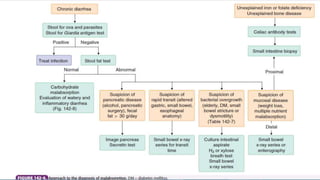
• Chronic diarrhea 
• Refferences
INRODUCTION 
• Definition: 
change of the normal bowel habits in the form of: 
. Increase in frequency 
. Increase in amount 
. Fluid consistency 
. Feces exceeding 200 gm/day when the dietary fiber content is low
PATHOGENESIS 
• 1. OSMOTIC DIARRHEA: 
Ø due to: presence of high concentration of non - absorbed hypertonic 
Substances in intestine which will attract fluid from the blood to 
Intestine à loose stools. 
Ø examples: in disaccharidase deficiency: high concentration of lactose. In 
Malabsorption syndrome: high concentration of solutes. Ingestion of non - 
Absorbable substances, e.G. Lactulose. 
Ø diarrhea stops when the patient is fasting
2. Secretory diarrhea: 
Ø due to: active intestinal secretions of fluid & electrolytes. 
Ø examples: enterotoxins; cholera & e.Coli. 
Ø diarrhea does not stop when the patient is fasting. 
3. Inflammatory diarrhea: "mucosal destruction" 
Ø due to: damage to the intestinal mucosa, causing loss of fluid & blood 
Defective absorption. 
Ø examples: bacillary dysentery. Ulcerative colitis. 
Ø diarrhea partially improves when the patient is fasting.
• 4. Abnormal motility: 
• Ø due to: hypermotility which causes defective absorption. 
• Ø examples: thyrotoxicosis & post-vagotomy. 
• Ø diarrhea partially improves when the patient is fasting
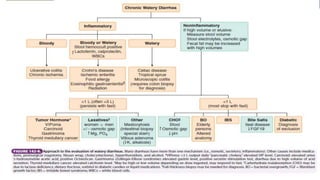
CHRONIC DIARRHEA 
• Diarrhea persisting for more than four weeks. 
• An estimated 5% of the U.S. Population suffers from chronic diarrhea, and about 
40% of these individuals are older than 60 years of age. In 25 to 50% of cases, 
expert history and physical examination may be sufficient to make a definitive 
diagnosis
EATIOLOGY 
A. Diseases of the colon: 
1. Amoebic colitis. 
2. AIDS: due to opportunistic infections . 
3. Bilharzial colitis. 
4. Cancer colon. 
5. Crohn's disease of the colon OR ulcerative colitis. 
6. Diverticulosis.
B. Diseases of the small intestine same causes of intestinal malabsorption. 
C. Endocrinal causes: 
1. Diabetic neuropathy. 
2. Thyrotoxicosis. 
3. Addison's disease. 
4. Gastrinoma: "zollinger - ellison syndrome." 
5. Verner - morrison syndrome: " pancreatic cholera“ 
D. DRUGS: 
1. ANTIBIOTICS: ESPECIALLY CLINDAMYCIN WHICH CAUSES PSEUDOMEMBRANOUS 
COLITIS 
2. PURGATIVE ABUSE. 
E. MISCELLANEOUS: 
1. OBSTRUCTIVE JAUNDICE. 
2. PELLAGRA. 
3. VITAMIN B12 DEFICIENCY.
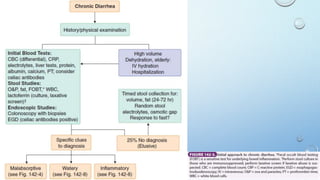
INVESTIGATION 
1. Stool analysis and culture 
2. Sigmoidoscopy: in bloody diarrhea not improving in 10 days 
3. Barium enema 
4. Malabsorption test
DIAGNOSIS 
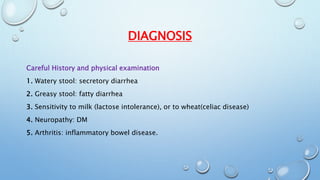
Careful History and physical examination 
1. Watery stool: secretory diarrhea 
2. Greasy stool: fatty diarrhea 
3. Sensitivity to milk (lactose intolerance), or to wheat(celiac disease) 
4. Neuropathy: DM 
5. Arthritis: inflammatory bowel disease.
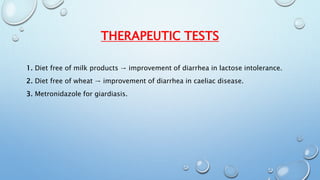
THERAPEUTIC TESTS 
1. Diet free of milk products → improvement of diarrhea in lactose intolerance. 
2. Diet free of wheat → improvement of diarrhea in caeliac disease. 
3. Metronidazole for giardiasis.
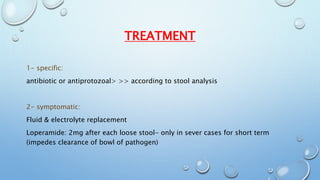
TREATMENT 
1- specific: 
antibiotic or antiprotozoal> >> according to stool analysis 
2- symptomatic: 
Fluid & electrolyte replacement 
Loperamide: 2mg after each loose stool- only in sever cases for short term 
(impedes clearance of bowl of pathogen)
REFFERENCES 
• KUMAR 
• CECIEL 
• WEBSITE

Approch to chronic diarrhea

  • 1.
    APPROACH TO HamadEmad H. Dhuhayr
  • 2.
    CONTENTS • Introductionabout diarrhea • Chronic diarrhea • Refferences
  • 3.
    INRODUCTION • Definition: change of the normal bowel habits in the form of: . Increase in frequency . Increase in amount . Fluid consistency . Feces exceeding 200 gm/day when the dietary fiber content is low
  • 4.
    PATHOGENESIS • 1.OSMOTIC DIARRHEA: Ø due to: presence of high concentration of non - absorbed hypertonic Substances in intestine which will attract fluid from the blood to Intestine à loose stools. Ø examples: in disaccharidase deficiency: high concentration of lactose. In Malabsorption syndrome: high concentration of solutes. Ingestion of non - Absorbable substances, e.G. Lactulose. Ø diarrhea stops when the patient is fasting
  • 5.
    2. Secretory diarrhea: Ø due to: active intestinal secretions of fluid & electrolytes. Ø examples: enterotoxins; cholera & e.Coli. Ø diarrhea does not stop when the patient is fasting. 3. Inflammatory diarrhea: "mucosal destruction" Ø due to: damage to the intestinal mucosa, causing loss of fluid & blood Defective absorption. Ø examples: bacillary dysentery. Ulcerative colitis. Ø diarrhea partially improves when the patient is fasting.
  • 6.
    • 4. Abnormalmotility: • Ø due to: hypermotility which causes defective absorption. • Ø examples: thyrotoxicosis & post-vagotomy. • Ø diarrhea partially improves when the patient is fasting
  • 7.
    CHRONIC DIARRHEA •Diarrhea persisting for more than four weeks. • An estimated 5% of the U.S. Population suffers from chronic diarrhea, and about 40% of these individuals are older than 60 years of age. In 25 to 50% of cases, expert history and physical examination may be sufficient to make a definitive diagnosis
  • 8.
    EATIOLOGY A. Diseasesof the colon: 1. Amoebic colitis. 2. AIDS: due to opportunistic infections . 3. Bilharzial colitis. 4. Cancer colon. 5. Crohn's disease of the colon OR ulcerative colitis. 6. Diverticulosis.
  • 9.
    B. Diseases ofthe small intestine same causes of intestinal malabsorption. C. Endocrinal causes: 1. Diabetic neuropathy. 2. Thyrotoxicosis. 3. Addison's disease. 4. Gastrinoma: "zollinger - ellison syndrome." 5. Verner - morrison syndrome: " pancreatic cholera“ D. DRUGS: 1. ANTIBIOTICS: ESPECIALLY CLINDAMYCIN WHICH CAUSES PSEUDOMEMBRANOUS COLITIS 2. PURGATIVE ABUSE. E. MISCELLANEOUS: 1. OBSTRUCTIVE JAUNDICE. 2. PELLAGRA. 3. VITAMIN B12 DEFICIENCY.
  • 10.
    INVESTIGATION 1. Stoolanalysis and culture 2. Sigmoidoscopy: in bloody diarrhea not improving in 10 days 3. Barium enema 4. Malabsorption test
  • 11.
    DIAGNOSIS Careful Historyand physical examination 1. Watery stool: secretory diarrhea 2. Greasy stool: fatty diarrhea 3. Sensitivity to milk (lactose intolerance), or to wheat(celiac disease) 4. Neuropathy: DM 5. Arthritis: inflammatory bowel disease.
  • 12.
    THERAPEUTIC TESTS 1.Diet free of milk products → improvement of diarrhea in lactose intolerance. 2. Diet free of wheat → improvement of diarrhea in caeliac disease. 3. Metronidazole for giardiasis.
  • 13.
    TREATMENT 1- specific: antibiotic or antiprotozoal> >> according to stool analysis 2- symptomatic: Fluid & electrolyte replacement Loperamide: 2mg after each loose stool- only in sever cases for short term (impedes clearance of bowl of pathogen)
  • 17.
    REFFERENCES • KUMAR • CECIEL • WEBSITE