CHRONIC DIARRHEA
Dr. A.K.M. Mahbubur Rahman
Dr. Md. Monjurul Morshed
MD Phase A Resident,Nephrology
CHRONIC DIARRHEA
 Diarrhea is defined as passage of three or
more loose or liquid stools per day.
 Chronic Diarrhea-lasting > 4 weeks
 Most of the causes are Non infectious
 Occur in 5 % population
CLASSIFICATION
 1.Secretory diarrhea
 2.Osmotic diarrhea
 3.Steatorrheal diarrhea
 4.Inflammatory diarrhea
 5.Dysmotility causes
 6.Factitial diarrhea
 7.latrogenic causes
 Also classified as
 1. Small bowel diseases.
 2. Colonic diseases.
 3. Malabsorption.
SECRETORY DIARRHEA
 Due to derangements in fluid and electrolyte transport across
the entero-colonic mucosa.
 The mechanism is net secretion of anions ( chloride or
bicarbonate ),potassium or net inhibition of sodium
absorption.
 Lack of sufficient absorptive surface area limits electrolyte
absorption (sodium ).
 Characterized by -watery ,large volume fecal output,painless
and persist with fasting.
 No or <50mosm/kg fecal osmotic gap
[Fecal osmotic gap=serum osmolarity-{2*(fecal Na+K conc.)}]
Secretory Diarrhea
1. Exogenous stimulant laxative (senna, cascara, bisacodyl)
2. Chronic ethanol ingestion
3. Other drugs and toxins (oral ARB like olmesartan,arsenic)
4. Endogenous laxatives ( Dihydroxy bile acids)
5. Idiopathic secretory diarrhea
6. Bowel resection or fistula or disease(decreased Absorption)
7. Partial bowel obstruction/ impaction
8. Hormone producing tumors ( VIPoma,
Carcinoid ,Gastrinoma,somatostatinoma)
9. Addison 's disease
10. Congenital electrolyte absorption defects
11. Certain bacterial infection.( cholera ,E.coli)
12. Diverticulitis
13. Endocrinopathies - Hyperthyroidism,
Mastocytosis,Medullary Carcinoma thyroid ,
pheochromocytoma
14. Ileal bile acid malabsorption
15. IBD- Crohn 's disease, colitis, Microscopic colitis
16. Neoplasia - Colon cancer, lymphoma, Villousadenoma
in rectum
17.Vasculitis
OSMOTIC DIARRHEA
 Osmotic diarrhea occurs when ingested poorly absorbed
osmotically active solutes draw enough fluid into the
lumen to exceed the reabsorptive capacity of the
colon.
 Fecal water output increases in proportion to
soluteload.
 Characteristically ceases with fasting or with
discontinuation of the causative agent.
 Less voluminous than secretory diarrhea.
 Fecal osmotic gap (>100mosmol/kg)
 Causes include:
 1. Osmotic laxatives
 2. Ions - Magnesium, sulphate, phosphate
 3. Lactase and disaccharide deficiencies
 4. Non absorbable carbohydrates - sorbitol,
lactulose,mannitol,polyethylene glycol
 5. Foods -FODMAPs intolerance- (Fermentable
oligosaccharides,disaccharides, monosaccharides,
and polyols)
STEATORRHEAL DIARRHEA
 Fat malabsorption lead to greasy,foul
smelling,difficult to flush diarrhea.
 Associated with weight loss and nutritional
deficiencies due malabsorption of amino
acids and vitamins.
 Quantitatively steatorrhea is defined as
stool fat exceeding 7g/day.
Causes:
 1.Intraluminal maldigestion:
-Pancreatic exocrine insufficiency
-Bacterial overgrowth
-Bariatric surgery
-Liver disease
-Inadequate luminal bile acid sequestration
 2. Mucosal malabsorption:
-Celiac disease
-Tropical sprue
-Whipple's disease
-Infections-Giardia
-Abeta lipoproteinemia
-Mesenteric Ischemia
-Short bowel syndrome
-Small intestinal bacterial over growth
 3. Post mucosal obstruction - Primary or Secondary lymphatic
obstruction.
INFLAMMATORY DIARRHEA
 Accompanied by fever, pain, bleeding.
 Mechanism -Exudation of fluid
-Fat malabsorption
-Disrupted fluid / electrolyte absortption
-Hyper secretion or hyper motility
 Stool analysis - presence of Leukocytes or leukocyte derived
proteins Calprotectin.
CAUSES
1.Inflammatory bowel disease - Crohn 's disease and Chronic
ulcerative colitis
2. Lymphocytic and collagenous colitis
3.Immune related mucosal diseases - primary and secondary
immunodeficiency, food allergy , eosinophilic gastroenteritis
4.Infections - Tuberculosis, yersiniosis, Amebiasis,
Strongyloidasis,Pseudomembranous colitis, Cytomegalovirus, HSVs.
5.Radiation colitis
6.Gastrointestinal malignancies - Colon cancer, Iymphoma
7.Diverticulitis
8.Ischemic colitis
DYSMOTOLITY CASUES
 Rapid transit – maldigestion
 Hypermotility - intestinal hurry
 Irritable bowel syndrome
 Visceral neuromyopathies
 Drugs like prokinetic agents
 Post vagotomy and Post sympathectomy
 Diabetic autonomic neuropathy
 Hyperthyroidism
IATROGENIC CAUSES
Cholecystectomy
Ileal resection
Bariatric surgery
Vagotomy
Fundoplication
FACTITIAL CASUES
Munchausen`s syndrome
Eating disorders
APPROACH
HISTORY
1 Duration-> 4 weeks
2.Onset- congenital : Na malabsorption
abrupt : infectious
gradual : all except congenital and abrupt cause
3. Pattern - Continuous , intermittent
4. Volume/amount of stool
5.Dry mouth , increased thirst, decreased urine output ,weakness,Dehydration
6. Abdominal pain - location, relation to meal, relation to bowel movements,
7.Fever,arthritis,oral ulcer
8.Weight loss
9. Flatulence
10. Bloating or gaseous distension
11. Abdominal cramps
12.Systemic diseases: endocrine, collagen-vascular disease, neoplastic,
immunologic
13.Extra intestinal manifestations- skin changes, arthralgia, oral
apthous ulcer.
14.Fecal incontinence/ urgency-present or absent, relationship of
defecation to meals / fasting
15. Aggravating factors - diet, stress
16. Relieving factors -diet, drugs
17. Previous evaluation.
18. Family history – IBD
19.Stool characteristics : watery, bloody, oil/food particles,
frequency, volume
20.Epidemiology (Food, water, travel history)
21.Iatrogenic factors -drugs, laxative abuse, radiation, previous
abdominal surgery.
22. Diet history
AGE:
-young pt : IBD, IBS
-older pt : colon ca.,Diverticulitis
Diarrhea with abdominal pain:
-suggests IBS if pain in lt. lower quadrent or suprapubic region
-disease of small bowel(e.g. Crohn`s disease) if pain in periumbilical or in rt lower quadrent
-gastrinoma(ZES) responsible for upper abdominal pain
Relation to food:
-after meal: IBS
-stops with fasting: osmotic diarrhea
-occurs in spite of fasting & during sleep: secretory diarrhea
Diarrhea alternates with constipation:
-colon cancer
-laxative abuse
-diverticulitis
-IBS
Stool characteristics:
-Watery: osmotic & secretory diarrhea
-Greasy & malodorous : fat malabsorption
-Visible blood : inflammatory
Stool volume:
-Large volume: small intestine
-small volume: large intestine
Stool characteristics Small bowel Large bowel
Appearance Watery Blood and/or mucous
Volume Large Small
Frequency Increased Highly increased
Blood Possibly +ve but never
gross blood
Commonly gross blood
pH Possibly <5.5 >5.5
Reducing substance +ve -ve
WBCs <5 HPF >10 HPF
Serum WBC Normal Leukocytosis
Intermittent diarrhea :
-Malabsorption
-IBS
Persistent diarrhea:
-IBD
-laxative abuse
Diarrhea with blood:
-Ulcerative colitis
-colonic neoplasm
-haemorrhoid
-intestinal ischemia
Morning diarrhea & after meals:
-Gastric cause
-IBS
Nocturnal diarrhea(always organic):
-Diabetic neuropathy(autonomic)
-IBD
Diarrhea with wt loss despite normal appetite:
-Hyperthyroidism
-Malabsorption
Wt loss prior to diarrhea onset:
-Pancreatic ca.
-Hyperthyroidism
-Tuberculosis
-Diabetes mellitus
-Malabsorption
PHYSICAL EXAMINATION
FINDING POTENTIAL
IMPLICATION
Hypotension Dehydration
Muscle wasting , edema Malnutrition
Hyperpigmentation Addison's disease
Migratory necrotizing erythema Glucagonoma
Flushing, wheezing, right sided
heart murmur
Carcinoid syndrome
Dermatitis herpetiformis Celiac disease
Tremor, lid lag Hyperthyroidism
Arthritis IBD, Whipple's disease
Lymphadenopathy HIV infection, Lymphoma,
cancer
Anal sphincter weakness Fecal incontinence
Abdominal bruits or aortic
aneurysm
Chronic mesenteric
ischemia
Erythema nodosum &
pyoderma gangrenosum
IBD
Abdominal Examination
 Surgical scars
-Bowel resection
-Gastrectomy with vagotomy
-Jejunoileal bypass
 Abdominal tenderness
 Abdominal masses
 Hepatosplenomegaly
-HIV infection
-Lymphoma
 Borborygmus on auscultation
-Malabsorption
-bacterial overgrowth
-obstruction or rapid intestinal transit
Note:There may be no abdominal findings. Findings are not obvious in all cases.
Perineal & Rectal Examination
 Signs of incontinence
-skin changes from chronic irritation
-gaping anus
-weak sphincter tone
 Crohn`s disease
-perianal skin tags
-ulcers
-fissures
-abcesses
-fistulas
 Fecal impaction or masses might be noted
Diagnostic tests
Given the broad differential diagnosis and pathophysiology of
chronic diarrhoea there are numerous Diagnostic test
directed at site of origin and pathophysiologic mechanism.
Blood tests
 CBC - Low Hb / anaemia- Indicate blood loss or
nutritional deficiency
 Peripheral blood Leukocytosis, high ESR & CRP – indicate
inflammation
 Eosinophilia – Indicate parasitosis, neoplasia, collagen
vascular disease, allergy or eosinophilic gastroenteritis
Stool analysis
 Random sample / timed sample
 Daily stool weight
 1. Stool Na+, K+
 2. Stool pH- acidic (<6) increased cabohydrate fermentation in
colon
 3. Occult blood test
 4. White blood cells
 5. Stool water analyzed for Laxatives- Mg, PO , SO , Bisacodyl,
₄ ₄
Anthraquinones
 6. Osmotic gap-
< 50 mOsm/kg – Secretory diarrhoea
> 100 mOsm/kg – Osmotic diarrhoea
 7. Fat contents-
Steatorrhea- excessive loss of fat in stool
● 7 gm or > 9% of intake for 24 hours.
● > 14 gm/ 24 hr – fat malabsorption
 8. Lactoferrin or Calprotectin
 9. Chemical test- Carbohydrates- Anthrone reagent
Alpha 1 anti trypsin clearance to detect protein losing
enteropathy.
Basic Laboratory Tests to consider in
patients with chronic diarrhoea
Breath test
Consist of determining hydrogen or methane in parts per million(ppm) , in the
air that is exhaled for a certain length of time after the administration of
substrate such as glucose , lactulose , lactose , fructose or sorbitol.
A positive test conducted with glucose or lactulose will establish the diagnosis of
SIBO and in case of other carbohydrate positive test signifies intolerance to
ingested CHO.
Fecal Biomarkers
 Fecal leukocyte test- less useful for chronic diarrhoea
 Ova , parasite examination and stool culture – low sensitivity and specificity
 Giardia antigen for giardiasis
 C. difficile toxin for clostidium infection
 Fecal calprotectin and lactoferrin – useful for IBD screening
Serological biomarker
 Antibodies for detecting celiac disease- Anti-endomysial Ab ,Anti tissue
transglutaminase IgA Ab
 Ab for detecting IBD- UC( antineutrophil cytoplasmic ab that target
proteinase-3)
Chron’s disease(anti-saccharomyces cerevisiae ab and anti flagellin X)
Malabsorption test
 Serum beta carotene
 Fecal fat – The qualitative determination is carried out through Sudan lll
staining with glacial acetic acid
Quantitatively level > 7g/24 hr are consider abnormal and stool weight above
1000g/24 hr indicate severe cause of malabsorption.
 D-xylose test
 Test for pancreatic insufficiency
Pancreolauryl
Fecal elastase -1
Secretin or CCK stimulation test
Bile acid malabsorption test
 75 SeHCAT(Selenium Homocholic Acid Taurin)
 7Alpha Hydroxycholestenone
Motility Test
Wireless motility capsule (ingestable device with PH and
Pressure sensors ,measures small bowel transit time )
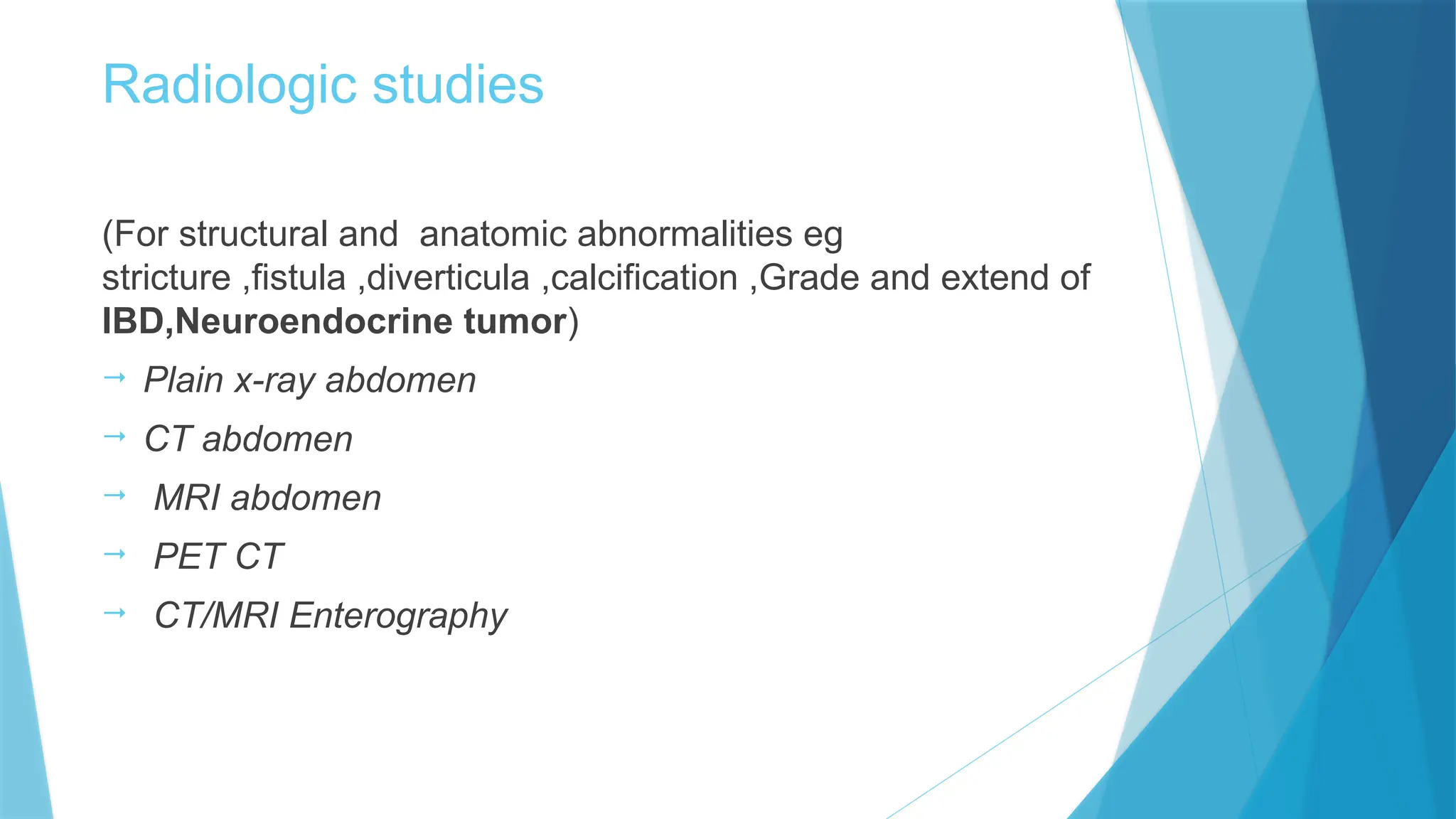
Radiologic studies
(For structural and anatomic abnormalities eg
stricture ,fistula ,diverticula ,calcification ,Grade and extend of
IBD,Neuroendocrine tumor)
 Plain x-ray abdomen
 CT abdomen
 MRI abdomen
 PET CT
 CT/MRI Enterography
Endoscopic studies :
Help to diagnose chronic diarrhoea by confirming microscopic lesion and
by enabling biopsies to be taken for histopathological diagnosis
Modalities
 Colonoscopy
 Upper GIT Endoscopy
 Enteroscopy and Video Capsule Endoscopy
Implications of stool characteristics in patients with chronic diarrhoea
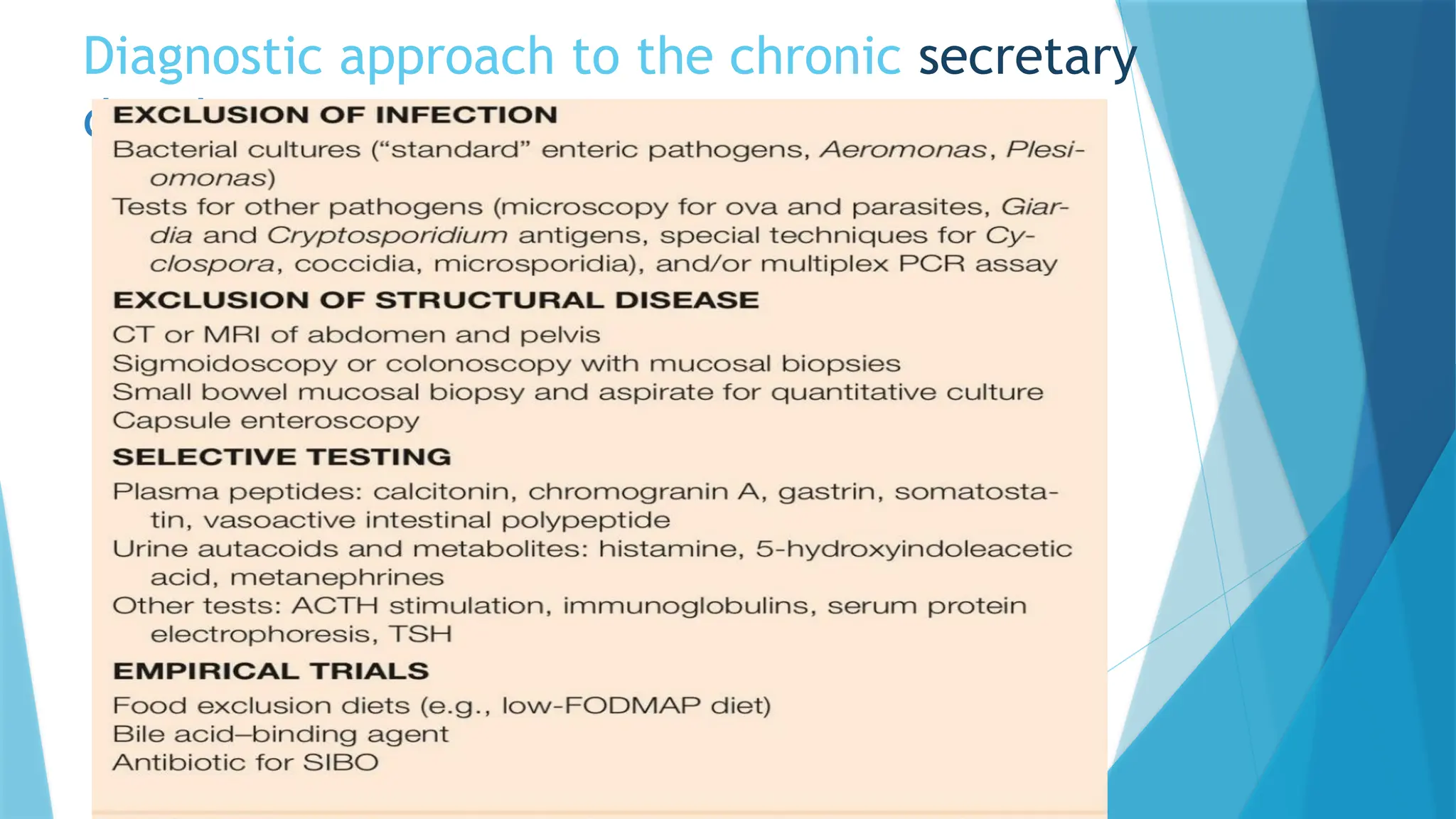
Diagnostic approach to the chronic secretary
diarrhoea
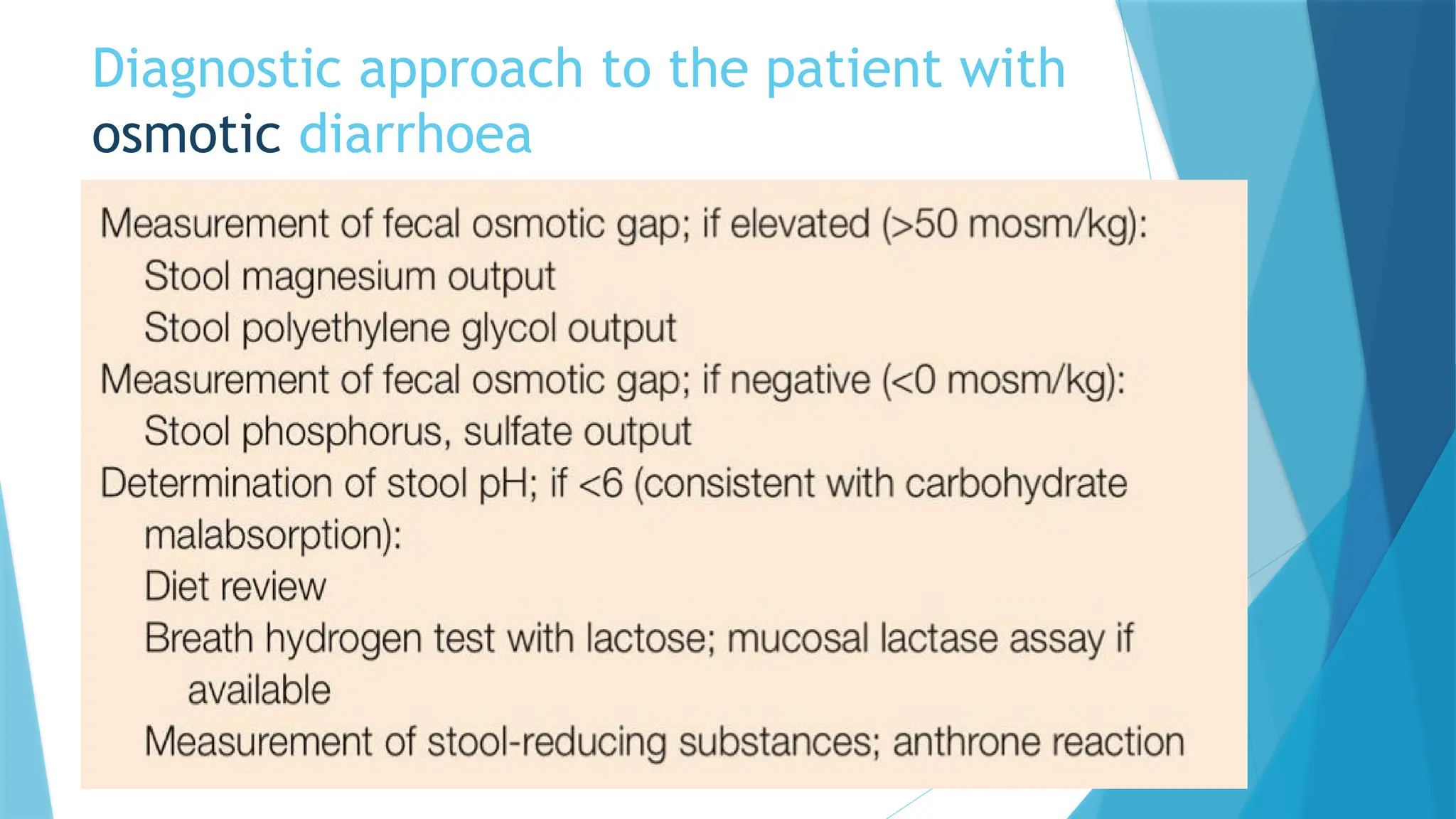
Diagnostic approach to the patient with
osmotic diarrhoea
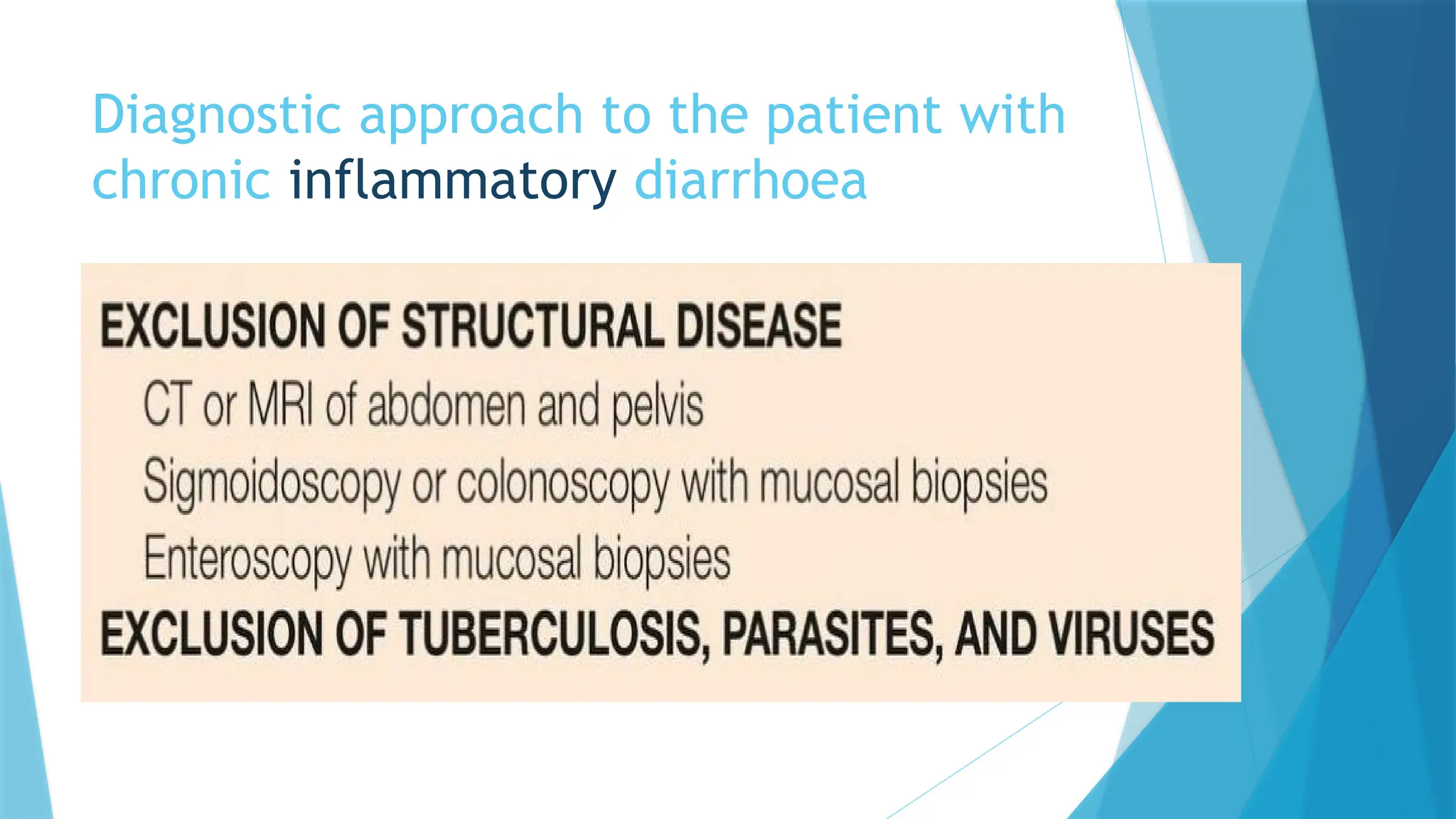
Diagnostic approach to the patient with
chronic inflammatory diarrhoea
Diagnostic approach to the patient with
chronic fatty diarrhoea
Treatment
 Fluid and electrolyte replenishment- oral rehydration therapy
or intravenous fluid therapy.
 Empirical antibiotic therapy: less useful
 Therapeutic trials of pancreatic enzyme replacement
and conjugated bile acid supplementation.
Other treatment options may includes:
 Opiates – Codeine, Opium or Morphine.
 Octreotide – Carcinoid syndrome, Endocrinopathies,
Dumping syndrome, Chemotherapy induced diarrhoea
and AIDS
 Clonidine – Diabetic diarrhoera
 Crofelemer - Non infectious diarrhoea in AIDS patient
on ART
 Probiotics by modifying the colony Flora stimulate local
immunity and speed resolution in Traveler's diarrhoea,
antibiotic associated diarrhoea and infantile diarrhoea.
 Others non specific agents :
Herbal remedies- gold- enseal, barberry, arrowroot
Stool modifying agents- psyllium
Pectin
Calcium 1-2 gm/d
Non specific drug therapy for chronic diarrhoea
 Therapeutic option of chronic diarrhoea according to causes :
CHRONIC DIARRHEA an symptomatic approach.pptx

CHRONIC DIARRHEA an symptomatic approach.pptx

  • 1.
    CHRONIC DIARRHEA Dr. A.K.M.Mahbubur Rahman Dr. Md. Monjurul Morshed MD Phase A Resident,Nephrology
  • 2.
    CHRONIC DIARRHEA  Diarrheais defined as passage of three or more loose or liquid stools per day.  Chronic Diarrhea-lasting > 4 weeks  Most of the causes are Non infectious  Occur in 5 % population
  • 3.
    CLASSIFICATION  1.Secretory diarrhea 2.Osmotic diarrhea  3.Steatorrheal diarrhea  4.Inflammatory diarrhea  5.Dysmotility causes  6.Factitial diarrhea  7.latrogenic causes
  • 4.
     Also classifiedas  1. Small bowel diseases.  2. Colonic diseases.  3. Malabsorption.
  • 5.
    SECRETORY DIARRHEA  Dueto derangements in fluid and electrolyte transport across the entero-colonic mucosa.  The mechanism is net secretion of anions ( chloride or bicarbonate ),potassium or net inhibition of sodium absorption.  Lack of sufficient absorptive surface area limits electrolyte absorption (sodium ).  Characterized by -watery ,large volume fecal output,painless and persist with fasting.  No or <50mosm/kg fecal osmotic gap [Fecal osmotic gap=serum osmolarity-{2*(fecal Na+K conc.)}]
  • 6.
    Secretory Diarrhea 1. Exogenousstimulant laxative (senna, cascara, bisacodyl) 2. Chronic ethanol ingestion 3. Other drugs and toxins (oral ARB like olmesartan,arsenic) 4. Endogenous laxatives ( Dihydroxy bile acids) 5. Idiopathic secretory diarrhea 6. Bowel resection or fistula or disease(decreased Absorption) 7. Partial bowel obstruction/ impaction 8. Hormone producing tumors ( VIPoma, Carcinoid ,Gastrinoma,somatostatinoma) 9. Addison 's disease 10. Congenital electrolyte absorption defects 11. Certain bacterial infection.( cholera ,E.coli) 12. Diverticulitis
  • 7.
    13. Endocrinopathies -Hyperthyroidism, Mastocytosis,Medullary Carcinoma thyroid , pheochromocytoma 14. Ileal bile acid malabsorption 15. IBD- Crohn 's disease, colitis, Microscopic colitis 16. Neoplasia - Colon cancer, lymphoma, Villousadenoma in rectum 17.Vasculitis
  • 8.
    OSMOTIC DIARRHEA  Osmoticdiarrhea occurs when ingested poorly absorbed osmotically active solutes draw enough fluid into the lumen to exceed the reabsorptive capacity of the colon.  Fecal water output increases in proportion to soluteload.  Characteristically ceases with fasting or with discontinuation of the causative agent.  Less voluminous than secretory diarrhea.  Fecal osmotic gap (>100mosmol/kg)
  • 9.
     Causes include: 1. Osmotic laxatives  2. Ions - Magnesium, sulphate, phosphate  3. Lactase and disaccharide deficiencies  4. Non absorbable carbohydrates - sorbitol, lactulose,mannitol,polyethylene glycol  5. Foods -FODMAPs intolerance- (Fermentable oligosaccharides,disaccharides, monosaccharides, and polyols)
  • 10.
    STEATORRHEAL DIARRHEA  Fatmalabsorption lead to greasy,foul smelling,difficult to flush diarrhea.  Associated with weight loss and nutritional deficiencies due malabsorption of amino acids and vitamins.  Quantitatively steatorrhea is defined as stool fat exceeding 7g/day.
  • 11.
    Causes:  1.Intraluminal maldigestion: -Pancreaticexocrine insufficiency -Bacterial overgrowth -Bariatric surgery -Liver disease -Inadequate luminal bile acid sequestration
  • 12.
     2. Mucosalmalabsorption: -Celiac disease -Tropical sprue -Whipple's disease -Infections-Giardia -Abeta lipoproteinemia -Mesenteric Ischemia -Short bowel syndrome -Small intestinal bacterial over growth  3. Post mucosal obstruction - Primary or Secondary lymphatic obstruction.
  • 13.
    INFLAMMATORY DIARRHEA  Accompaniedby fever, pain, bleeding.  Mechanism -Exudation of fluid -Fat malabsorption -Disrupted fluid / electrolyte absortption -Hyper secretion or hyper motility  Stool analysis - presence of Leukocytes or leukocyte derived proteins Calprotectin.
  • 14.
    CAUSES 1.Inflammatory bowel disease- Crohn 's disease and Chronic ulcerative colitis 2. Lymphocytic and collagenous colitis 3.Immune related mucosal diseases - primary and secondary immunodeficiency, food allergy , eosinophilic gastroenteritis 4.Infections - Tuberculosis, yersiniosis, Amebiasis, Strongyloidasis,Pseudomembranous colitis, Cytomegalovirus, HSVs. 5.Radiation colitis 6.Gastrointestinal malignancies - Colon cancer, Iymphoma 7.Diverticulitis 8.Ischemic colitis
  • 15.
    DYSMOTOLITY CASUES  Rapidtransit – maldigestion  Hypermotility - intestinal hurry  Irritable bowel syndrome  Visceral neuromyopathies  Drugs like prokinetic agents  Post vagotomy and Post sympathectomy  Diabetic autonomic neuropathy  Hyperthyroidism
  • 16.
  • 17.
  • 18.
    APPROACH HISTORY 1 Duration-> 4weeks 2.Onset- congenital : Na malabsorption abrupt : infectious gradual : all except congenital and abrupt cause 3. Pattern - Continuous , intermittent 4. Volume/amount of stool 5.Dry mouth , increased thirst, decreased urine output ,weakness,Dehydration 6. Abdominal pain - location, relation to meal, relation to bowel movements, 7.Fever,arthritis,oral ulcer 8.Weight loss
  • 19.
    9. Flatulence 10. Bloatingor gaseous distension 11. Abdominal cramps 12.Systemic diseases: endocrine, collagen-vascular disease, neoplastic, immunologic 13.Extra intestinal manifestations- skin changes, arthralgia, oral apthous ulcer. 14.Fecal incontinence/ urgency-present or absent, relationship of defecation to meals / fasting 15. Aggravating factors - diet, stress
  • 20.
    16. Relieving factors-diet, drugs 17. Previous evaluation. 18. Family history – IBD 19.Stool characteristics : watery, bloody, oil/food particles, frequency, volume 20.Epidemiology (Food, water, travel history) 21.Iatrogenic factors -drugs, laxative abuse, radiation, previous abdominal surgery. 22. Diet history
  • 21.
    AGE: -young pt :IBD, IBS -older pt : colon ca.,Diverticulitis Diarrhea with abdominal pain: -suggests IBS if pain in lt. lower quadrent or suprapubic region -disease of small bowel(e.g. Crohn`s disease) if pain in periumbilical or in rt lower quadrent -gastrinoma(ZES) responsible for upper abdominal pain Relation to food: -after meal: IBS -stops with fasting: osmotic diarrhea -occurs in spite of fasting & during sleep: secretory diarrhea
  • 22.
    Diarrhea alternates withconstipation: -colon cancer -laxative abuse -diverticulitis -IBS Stool characteristics: -Watery: osmotic & secretory diarrhea -Greasy & malodorous : fat malabsorption -Visible blood : inflammatory Stool volume: -Large volume: small intestine -small volume: large intestine
  • 23.
    Stool characteristics Smallbowel Large bowel Appearance Watery Blood and/or mucous Volume Large Small Frequency Increased Highly increased Blood Possibly +ve but never gross blood Commonly gross blood pH Possibly <5.5 >5.5 Reducing substance +ve -ve WBCs <5 HPF >10 HPF Serum WBC Normal Leukocytosis
  • 25.
    Intermittent diarrhea : -Malabsorption -IBS Persistentdiarrhea: -IBD -laxative abuse Diarrhea with blood: -Ulcerative colitis -colonic neoplasm -haemorrhoid -intestinal ischemia Morning diarrhea & after meals: -Gastric cause -IBS Nocturnal diarrhea(always organic): -Diabetic neuropathy(autonomic) -IBD Diarrhea with wt loss despite normal appetite: -Hyperthyroidism -Malabsorption Wt loss prior to diarrhea onset: -Pancreatic ca. -Hyperthyroidism -Tuberculosis -Diabetes mellitus -Malabsorption
  • 26.
    PHYSICAL EXAMINATION FINDING POTENTIAL IMPLICATION HypotensionDehydration Muscle wasting , edema Malnutrition Hyperpigmentation Addison's disease Migratory necrotizing erythema Glucagonoma Flushing, wheezing, right sided heart murmur Carcinoid syndrome Dermatitis herpetiformis Celiac disease Tremor, lid lag Hyperthyroidism
  • 27.
    Arthritis IBD, Whipple'sdisease Lymphadenopathy HIV infection, Lymphoma, cancer Anal sphincter weakness Fecal incontinence Abdominal bruits or aortic aneurysm Chronic mesenteric ischemia Erythema nodosum & pyoderma gangrenosum IBD
  • 28.
    Abdominal Examination  Surgicalscars -Bowel resection -Gastrectomy with vagotomy -Jejunoileal bypass  Abdominal tenderness  Abdominal masses  Hepatosplenomegaly -HIV infection -Lymphoma  Borborygmus on auscultation -Malabsorption -bacterial overgrowth -obstruction or rapid intestinal transit Note:There may be no abdominal findings. Findings are not obvious in all cases.
  • 29.
    Perineal & RectalExamination  Signs of incontinence -skin changes from chronic irritation -gaping anus -weak sphincter tone  Crohn`s disease -perianal skin tags -ulcers -fissures -abcesses -fistulas  Fecal impaction or masses might be noted
  • 31.
    Diagnostic tests Given thebroad differential diagnosis and pathophysiology of chronic diarrhoea there are numerous Diagnostic test directed at site of origin and pathophysiologic mechanism. Blood tests  CBC - Low Hb / anaemia- Indicate blood loss or nutritional deficiency  Peripheral blood Leukocytosis, high ESR & CRP – indicate inflammation  Eosinophilia – Indicate parasitosis, neoplasia, collagen vascular disease, allergy or eosinophilic gastroenteritis
  • 32.
    Stool analysis  Randomsample / timed sample  Daily stool weight  1. Stool Na+, K+  2. Stool pH- acidic (<6) increased cabohydrate fermentation in colon  3. Occult blood test  4. White blood cells  5. Stool water analyzed for Laxatives- Mg, PO , SO , Bisacodyl, ₄ ₄ Anthraquinones
  • 33.
     6. Osmoticgap- < 50 mOsm/kg – Secretory diarrhoea > 100 mOsm/kg – Osmotic diarrhoea  7. Fat contents- Steatorrhea- excessive loss of fat in stool ● 7 gm or > 9% of intake for 24 hours. ● > 14 gm/ 24 hr – fat malabsorption  8. Lactoferrin or Calprotectin  9. Chemical test- Carbohydrates- Anthrone reagent Alpha 1 anti trypsin clearance to detect protein losing enteropathy.
  • 34.
    Basic Laboratory Teststo consider in patients with chronic diarrhoea
  • 35.
    Breath test Consist ofdetermining hydrogen or methane in parts per million(ppm) , in the air that is exhaled for a certain length of time after the administration of substrate such as glucose , lactulose , lactose , fructose or sorbitol. A positive test conducted with glucose or lactulose will establish the diagnosis of SIBO and in case of other carbohydrate positive test signifies intolerance to ingested CHO. Fecal Biomarkers  Fecal leukocyte test- less useful for chronic diarrhoea  Ova , parasite examination and stool culture – low sensitivity and specificity
  • 36.
     Giardia antigenfor giardiasis  C. difficile toxin for clostidium infection  Fecal calprotectin and lactoferrin – useful for IBD screening Serological biomarker  Antibodies for detecting celiac disease- Anti-endomysial Ab ,Anti tissue transglutaminase IgA Ab  Ab for detecting IBD- UC( antineutrophil cytoplasmic ab that target proteinase-3) Chron’s disease(anti-saccharomyces cerevisiae ab and anti flagellin X)
  • 37.
    Malabsorption test  Serumbeta carotene  Fecal fat – The qualitative determination is carried out through Sudan lll staining with glacial acetic acid Quantitatively level > 7g/24 hr are consider abnormal and stool weight above 1000g/24 hr indicate severe cause of malabsorption.  D-xylose test  Test for pancreatic insufficiency Pancreolauryl Fecal elastase -1 Secretin or CCK stimulation test
  • 38.
    Bile acid malabsorptiontest  75 SeHCAT(Selenium Homocholic Acid Taurin)  7Alpha Hydroxycholestenone Motility Test Wireless motility capsule (ingestable device with PH and Pressure sensors ,measures small bowel transit time )
  • 39.
    Radiologic studies (For structuraland anatomic abnormalities eg stricture ,fistula ,diverticula ,calcification ,Grade and extend of IBD,Neuroendocrine tumor)  Plain x-ray abdomen  CT abdomen  MRI abdomen  PET CT  CT/MRI Enterography
  • 40.
    Endoscopic studies : Helpto diagnose chronic diarrhoea by confirming microscopic lesion and by enabling biopsies to be taken for histopathological diagnosis Modalities  Colonoscopy  Upper GIT Endoscopy  Enteroscopy and Video Capsule Endoscopy
  • 41.
    Implications of stoolcharacteristics in patients with chronic diarrhoea
  • 42.
    Diagnostic approach tothe chronic secretary diarrhoea
  • 43.
    Diagnostic approach tothe patient with osmotic diarrhoea
  • 44.
    Diagnostic approach tothe patient with chronic inflammatory diarrhoea
  • 45.
    Diagnostic approach tothe patient with chronic fatty diarrhoea
  • 46.
    Treatment  Fluid andelectrolyte replenishment- oral rehydration therapy or intravenous fluid therapy.  Empirical antibiotic therapy: less useful  Therapeutic trials of pancreatic enzyme replacement and conjugated bile acid supplementation. Other treatment options may includes:  Opiates – Codeine, Opium or Morphine.  Octreotide – Carcinoid syndrome, Endocrinopathies, Dumping syndrome, Chemotherapy induced diarrhoea and AIDS
  • 47.
     Clonidine –Diabetic diarrhoera  Crofelemer - Non infectious diarrhoea in AIDS patient on ART  Probiotics by modifying the colony Flora stimulate local immunity and speed resolution in Traveler's diarrhoea, antibiotic associated diarrhoea and infantile diarrhoea.  Others non specific agents : Herbal remedies- gold- enseal, barberry, arrowroot Stool modifying agents- psyllium Pectin Calcium 1-2 gm/d
  • 48.
    Non specific drugtherapy for chronic diarrhoea
  • 49.
     Therapeutic optionof chronic diarrhoea according to causes :