SCABIES
DEFINITION
• Scabies is an itchy skin condition caused by a
tiny burrowing mite called Sarcoptes scabiei.
• Scabies is contagious and can spread quickly
through close physical contact in a family,
child care group, school, class or nursing
home.
CAUSES
• Close physical contact and, less often, sharing
clothing or bedding with an infected person
can spread the mites.
• Dogs, cats and humans all are affected by their
own distinct species of mite.
• The eight-legged mite that causes scabies in humans is
microscopic.
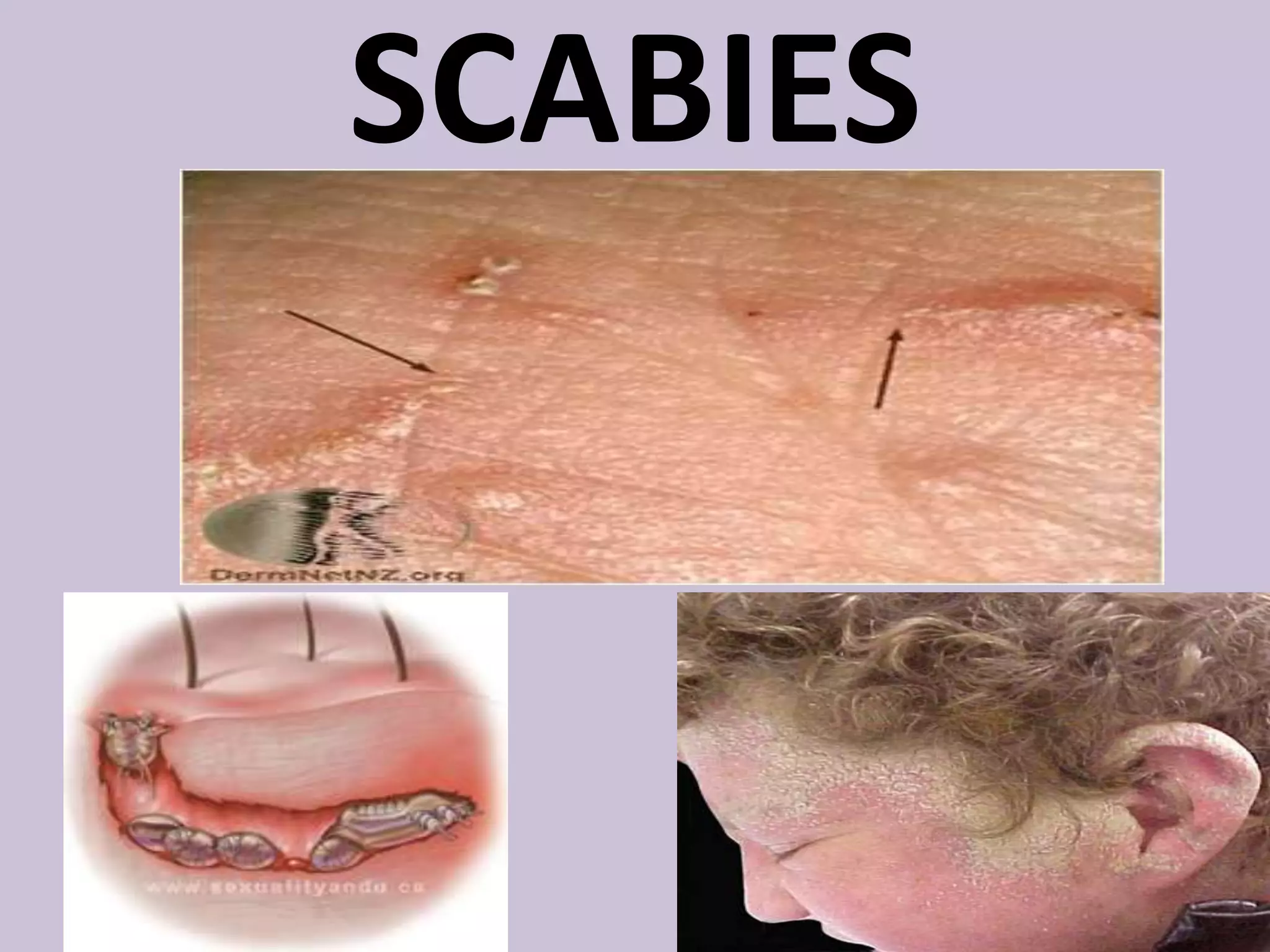
• The female mite burrows just beneath the skin and
produces a tunnel in which it deposits eggs. The eggs
hatch in three to four days, and the mite larvae work
their way to the surface of your skin, where they
mature and can spread to other areas of your skin or to
the skin of other people.
• The itching of scabies results from your body's allergic
reaction to the mites, their eggs and their waste.
SITES
• In children, common sites of infestation
include the:
• Scalp
• Face
• Neck
• Palms of the hands
• Soles of the feet
SYMPTOMS
• Itching, often severe and usually worse at
night.
• Thin, irregular burrow tracks made up of tiny
blisters or bumps on your skin
TESTS AND DIAGNOSIS
• To diagnose scabies, doctor examines skin,
looking for signs of mites, including the
characteristic burrows.
• When doctor locates a mite burrow, he or she
may take a scraping from that area of skin to
examine under a microscope. The microscopic
examination can determine the presence of
mites or their eggs.
TREATMENT
• Scabies treatment involves eliminating the
infestation with medications. Several creams and
lotions are available. The person usually apply the
medication over all body, from neck down, and
leave the medication on for at least eight hours. A
second treatment is needed if new burrows and
rash appear.
• Because scabies spreads so easily, the doctor may
recommend treatment for all family members
and other close contacts, even if they show no
signs of scabies infestation.
• Medications commonly prescribed for scabies include:
• Permethrin 5 percent (Elimite): Your doctor may
recommend that you apply this cream — which
contains chemicals that kill scabies mites and their eggs
— twice, with a week or so between each application.
Permethrin is generally considered safe for children and
adults of all ages, including women who are pregnant
or nursing.
• Lindane. This medication — also a chemical treatment
— is available as a cream, lotion and shampoo. This
medication isn't safe for children younger than age 2
years, women who are pregnant or nursing, or people
with weakened immune systems.
• Crotamiton (Eurax). This nonchemical medication is
applied once a day for two to five days. Your doctor
may recommend it if the baby has scabies.
• Although these medications kill the mites promptly,
you may find that the itching doesn't stop entirely
for several weeks.
• Doctors sometimes prescribe the oral medication
ivermectin (Stromectol) for people with altered
immune systems, for people who have crusted
scabies, or for people who don't respond to the
prescription lotions and creams.
Prevention
• Prevention
• To prevent re-infestation and to prevent the mites
from spreading to other people, take these steps:
• Clean all clothes and linen. Use hot, soapy water to
wash all clothing, towels and bedding used at least
three days before treatment. Dry with high heat.
Dry-clean items that can't be washed at home.
• Starve the mites. Consider placing items can't be
washed, in a sealed plastic bag and leaving it in an
out-of-the-way place, such as in garage, for a couple
of weeks. Mites die if they don't eat for a week.
Lifestyle and home remedies
• Itching may persist for some time after you apply
medication to kill the mites. These steps may help you
find relief from itching:
• Cool and soak skin. Soaking in cool water or applying a
cool, wet washcloth to irritated areas of skin may
minimize itching.
• Apply soothing lotion. Calamine lotion, available
without a prescription, can effectively relieve the pain
and itching of minor skin irritations.
• Take antihistamines. At doctor's suggestion, the person
may find that over-the-counter antihistamines relieve
the allergic symptoms caused by scabies

Scabies

  • 1.
  • 2.
    DEFINITION • Scabies isan itchy skin condition caused by a tiny burrowing mite called Sarcoptes scabiei. • Scabies is contagious and can spread quickly through close physical contact in a family, child care group, school, class or nursing home.
  • 3.
    CAUSES • Close physicalcontact and, less often, sharing clothing or bedding with an infected person can spread the mites. • Dogs, cats and humans all are affected by their own distinct species of mite.
  • 4.
    • The eight-leggedmite that causes scabies in humans is microscopic. • The female mite burrows just beneath the skin and produces a tunnel in which it deposits eggs. The eggs hatch in three to four days, and the mite larvae work their way to the surface of your skin, where they mature and can spread to other areas of your skin or to the skin of other people. • The itching of scabies results from your body's allergic reaction to the mites, their eggs and their waste.
  • 5.
    SITES • In children,common sites of infestation include the: • Scalp • Face • Neck • Palms of the hands • Soles of the feet
  • 6.
    SYMPTOMS • Itching, oftensevere and usually worse at night. • Thin, irregular burrow tracks made up of tiny blisters or bumps on your skin
  • 7.
    TESTS AND DIAGNOSIS •To diagnose scabies, doctor examines skin, looking for signs of mites, including the characteristic burrows. • When doctor locates a mite burrow, he or she may take a scraping from that area of skin to examine under a microscope. The microscopic examination can determine the presence of mites or their eggs.
  • 8.
    TREATMENT • Scabies treatmentinvolves eliminating the infestation with medications. Several creams and lotions are available. The person usually apply the medication over all body, from neck down, and leave the medication on for at least eight hours. A second treatment is needed if new burrows and rash appear. • Because scabies spreads so easily, the doctor may recommend treatment for all family members and other close contacts, even if they show no signs of scabies infestation.
  • 9.
    • Medications commonlyprescribed for scabies include: • Permethrin 5 percent (Elimite): Your doctor may recommend that you apply this cream — which contains chemicals that kill scabies mites and their eggs — twice, with a week or so between each application. Permethrin is generally considered safe for children and adults of all ages, including women who are pregnant or nursing. • Lindane. This medication — also a chemical treatment — is available as a cream, lotion and shampoo. This medication isn't safe for children younger than age 2 years, women who are pregnant or nursing, or people with weakened immune systems.
  • 10.
    • Crotamiton (Eurax).This nonchemical medication is applied once a day for two to five days. Your doctor may recommend it if the baby has scabies. • Although these medications kill the mites promptly, you may find that the itching doesn't stop entirely for several weeks. • Doctors sometimes prescribe the oral medication ivermectin (Stromectol) for people with altered immune systems, for people who have crusted scabies, or for people who don't respond to the prescription lotions and creams.
  • 11.
    Prevention • Prevention • Toprevent re-infestation and to prevent the mites from spreading to other people, take these steps: • Clean all clothes and linen. Use hot, soapy water to wash all clothing, towels and bedding used at least three days before treatment. Dry with high heat. Dry-clean items that can't be washed at home. • Starve the mites. Consider placing items can't be washed, in a sealed plastic bag and leaving it in an out-of-the-way place, such as in garage, for a couple of weeks. Mites die if they don't eat for a week.
  • 12.
    Lifestyle and homeremedies • Itching may persist for some time after you apply medication to kill the mites. These steps may help you find relief from itching: • Cool and soak skin. Soaking in cool water or applying a cool, wet washcloth to irritated areas of skin may minimize itching. • Apply soothing lotion. Calamine lotion, available without a prescription, can effectively relieve the pain and itching of minor skin irritations. • Take antihistamines. At doctor's suggestion, the person may find that over-the-counter antihistamines relieve the allergic symptoms caused by scabies