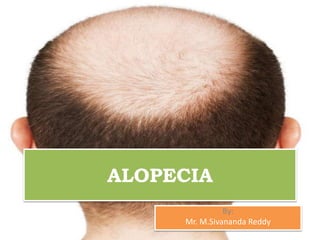
ALOPECIA
By:
Mr. M.Sivananda Reddy
Definition:
• Alopecia is defined as the loss of hair from
areas where hair normally grows
• Partial or complete baldness or loss of hair.
Forms of Alopecia:
There are different types of alopecia. the main
types of hair loss are:
• Alopecia Areata (AA)
• Alopecia Totalis (AT)
• Alopecia Universalis (AU)
• Alopecia Barbae
• Androgenetic Alopecia (AGA)
• Scarring Alopecias (Cicatricial Alopecias)
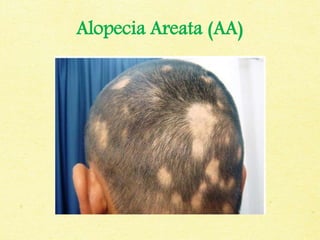
Alopecia Areata (AA):
• Alopecia areata is an autoimmune condition
which causes patchy hair loss. It can result in a
single bald patch or extensive patchy hair loss.
Alopecia Areata (AA)
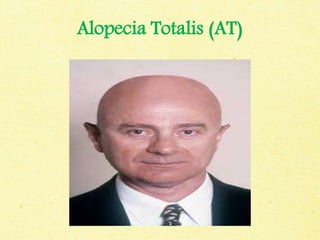
Alopecia Totalis (AT)
• Alopecia totalis is a more advanced form of
alopecia areata which results in total loss of all hair
on the scalp.
Alopecia Totalis (AT)
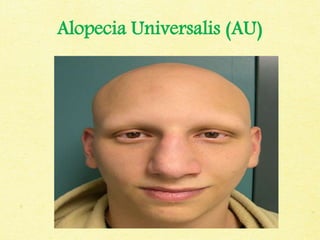
Alopecia Universalis (AU)
• Alopecia universalis is the most advanced form
of alopecia areata which results in total loss of
all hair on the body, including eyelashes and
eyebrows.
Alopecia Universalis (AU)
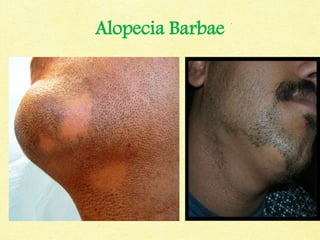
• Alopecia Barbae
• Alopecia barbae is alopecia areata that is localised
to the beard area. It can be a single bald patch or
more extensive hair loss across the whole of the
beard area.
Alopecia Barbae
Androgenetic Alopecia (AGA)
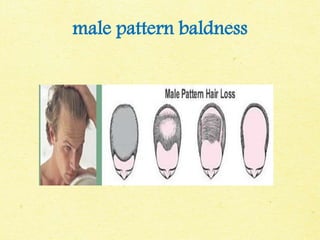
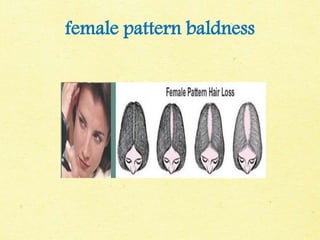
• Also known as male pattern baldness or female pattern baldness.
• It is a thinning of the hair to an almost transparent state, in both
men or women.
• It is hereditary
• In both men and women, it's linked to having an excess of male
hormones (androgens) around the hair follicles, which can block
hair growth.
• Women are more likely to develop androgenic alopecia after
menopause, when they have fewer female hormones.
• Most cases of hair loss are due to androgenic alopecia.
male pattern baldness
female pattern baldness
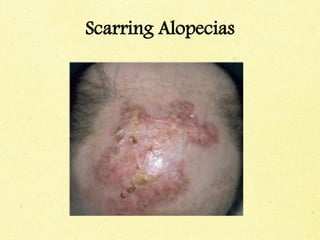
Scarring Alopecias (Cicatricial Alopecias):
• Scarring alopecias refers to a group of rare
disorders which cause permanent hair loss.
• Caused by any inflammatory processes which
causes permanent damage to hair follicles.(burns,
bacterial infections, autoimmune diseases )
Scarring Alopecias
Causes of alopecia:
• Exposure to allergens, irritants, toxins, burns,
injuries, and infections.
• Certain medications (especially anabolic steroids
like testosterone)
• Chronic kidney failure
• Radiation and chemotherapy .
• Malnutrition
Treatment
• Although hair loss rarely needs to be treated,
many people seek treatment for cosmetic
reasons.
• There is no cure for alopecia and no
universally proven therapy to induce hair re-
growth.
• Many cases of hair loss are temporary, for
example, due to chemotherapy, or they're a
natural part of ageing and don't need
treatment.
• If hair loss is caused by an infection or
another condition , treating the underlying
problem may help prevent further hair loss.
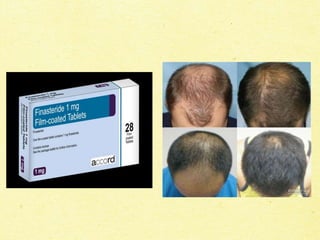
Finasteride:
• It acts by preventing the hormone testosterone being
converted to the hormone dihydrotestosterone (DHT).
• DHT causes the hair follicles to shrink, so blocking its
production allows the hair follicles to regain their
normal size.
• The balding process usually resumes within six to 12
months if treatment is stopped
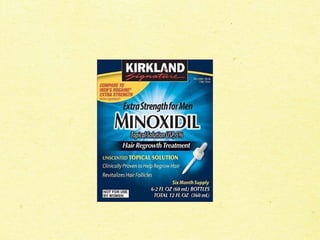
• Minoxidil:
• Minoxidil is available as a lotion you rub on your
scalp every day
• It's not clear how minoxidil works, but evidence
suggests it can cause hair regrowth in some men.
• Minoxidil is currently the only medicine available
to treat female-pattern baldness.
Corticosteroid injections:
• Acts by suppressing the immune system.
• This is useful in alopecia Areata because the
condition is thought to be caused by the
immune system damaging the hair follicles.
Retin A / Tretinoin:
• Retin-A was originally used for the treatment of
acne and other skin problems.
• However studies have shown that Retin-A, when
used alone in the form of a gel, which is rubbed
onto the area of hair loss, or in combination with
topical Minoxidil can result in moderate to good
hair growth in individuals with Alopecia.
• Immunosuppressive drugs
• Ultraviolet light treatment
• Wigs
-Synthetic wigs- made of acrylic
-Real hair wigs
• Hair transplantation
Alopecia

Alopecia

  • 1.
  • 2.
    Definition: • Alopecia isdefined as the loss of hair from areas where hair normally grows • Partial or complete baldness or loss of hair.
  • 3.
    Forms of Alopecia: Thereare different types of alopecia. the main types of hair loss are: • Alopecia Areata (AA) • Alopecia Totalis (AT) • Alopecia Universalis (AU) • Alopecia Barbae • Androgenetic Alopecia (AGA) • Scarring Alopecias (Cicatricial Alopecias)
  • 4.
    Alopecia Areata (AA): •Alopecia areata is an autoimmune condition which causes patchy hair loss. It can result in a single bald patch or extensive patchy hair loss.
  • 5.
  • 6.
    Alopecia Totalis (AT) •Alopecia totalis is a more advanced form of alopecia areata which results in total loss of all hair on the scalp.
  • 7.
  • 8.
    Alopecia Universalis (AU) •Alopecia universalis is the most advanced form of alopecia areata which results in total loss of all hair on the body, including eyelashes and eyebrows.
  • 9.
  • 10.
    • Alopecia Barbae •Alopecia barbae is alopecia areata that is localised to the beard area. It can be a single bald patch or more extensive hair loss across the whole of the beard area.
  • 11.
  • 12.
    Androgenetic Alopecia (AGA) •Also known as male pattern baldness or female pattern baldness. • It is a thinning of the hair to an almost transparent state, in both men or women. • It is hereditary • In both men and women, it's linked to having an excess of male hormones (androgens) around the hair follicles, which can block hair growth. • Women are more likely to develop androgenic alopecia after menopause, when they have fewer female hormones. • Most cases of hair loss are due to androgenic alopecia.
  • 13.
  • 14.
  • 15.
    Scarring Alopecias (CicatricialAlopecias): • Scarring alopecias refers to a group of rare disorders which cause permanent hair loss. • Caused by any inflammatory processes which causes permanent damage to hair follicles.(burns, bacterial infections, autoimmune diseases )
  • 16.
  • 17.
    Causes of alopecia: •Exposure to allergens, irritants, toxins, burns, injuries, and infections. • Certain medications (especially anabolic steroids like testosterone) • Chronic kidney failure • Radiation and chemotherapy . • Malnutrition
  • 18.
    Treatment • Although hairloss rarely needs to be treated, many people seek treatment for cosmetic reasons. • There is no cure for alopecia and no universally proven therapy to induce hair re- growth.
  • 19.
    • Many casesof hair loss are temporary, for example, due to chemotherapy, or they're a natural part of ageing and don't need treatment. • If hair loss is caused by an infection or another condition , treating the underlying problem may help prevent further hair loss.
  • 20.
    Finasteride: • It actsby preventing the hormone testosterone being converted to the hormone dihydrotestosterone (DHT). • DHT causes the hair follicles to shrink, so blocking its production allows the hair follicles to regain their normal size. • The balding process usually resumes within six to 12 months if treatment is stopped
  • 22.
    • Minoxidil: • Minoxidilis available as a lotion you rub on your scalp every day • It's not clear how minoxidil works, but evidence suggests it can cause hair regrowth in some men. • Minoxidil is currently the only medicine available to treat female-pattern baldness.
  • 24.
    Corticosteroid injections: • Actsby suppressing the immune system. • This is useful in alopecia Areata because the condition is thought to be caused by the immune system damaging the hair follicles.
  • 25.
    Retin A /Tretinoin: • Retin-A was originally used for the treatment of acne and other skin problems. • However studies have shown that Retin-A, when used alone in the form of a gel, which is rubbed onto the area of hair loss, or in combination with topical Minoxidil can result in moderate to good hair growth in individuals with Alopecia.
  • 26.
    • Immunosuppressive drugs •Ultraviolet light treatment • Wigs -Synthetic wigs- made of acrylic -Real hair wigs • Hair transplantation