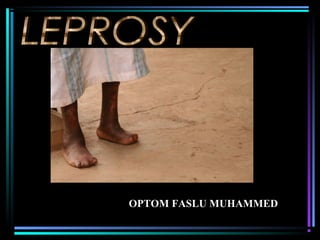
OPTOM FASLU MUHAMMED
A Day in the Patient’s Life
Mother Teresa
http://i193.photobucket.com/albums/z96/whengzky/FR%20Joy%20pix/641c.jpg
• Leprosy is an infectious disease
• derived from the French work "leper"
and from the Greek word "lepros“
•
• which means scaly, referring to the
scales that form on the skin
• disfiguring skin sores
• nerve damage
• progressive debilitation
Alternative Name of Leprosy
• Hansen's disease
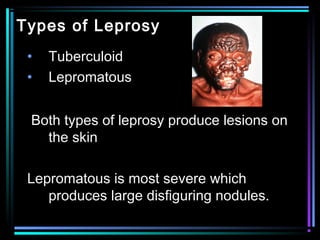
Types of Leprosy
• Tuberculoid
• Lepromatous
Both types of leprosy produce lesions on
the skin
Lepromatous is most severe which
produces large disfiguring nodules.
WHO classifications
• Indeterminate leprosy
-a few hypopigmented macules;
- can heal spontaneously
• Tuberculoid leprosy
- a few hypopigmented macules ,
- (lose pain sensation
-nerves become enlarged
• Borderline tuberculoid leprosy
-lesions like tuberculoid leprosy
-numerous with less nerve enlargement
• Mid-borderline leprosy
-many reddish plaques
-swollen lymph nodes
Borderline lepromatous leprosy
• many skin lesions with macules (flat
lesions) papules
• (raised bumps),
•
• plaques, and nodules,
Lepromatous leprosy
• Early lesions are pale macules
• Alopecia (hair loss
• often patients have no eyebrows or
eyelashes
• and limb weakness
• disfigurement of many areas including
the face
Causes of Leprosy
• Mycobacterium leprae
• rod-shaped bacilli
• grow slowly
• mainly affect the skin, nerves, and
mucous membrane
TRANSMISSION
Person to Person:
• spreads through infected respiratory
droplets
• can infect others by entering breaks in the
skin.
• cannot infect intact skin
Signs & Symptoms of Leprosy
• Eye Problems
• Muscle Weakness
• Skin Rash
• Skin Stiffness
• Skin lesions that are lighter than your
normal skin color
– Lesions have decreased sensation to
touch, heat, or pain
– Lesions do not heal after several weeks to
months
• Numbness or absent sensation in the
hands, arms, feet, and legs
Diagnosis of Leprosy
• question about patient's symptoms,
• current medical condition,
• and medication etc.
• doing a test called a skin biopsy.
• Lepromin skin test can be used to
distinguish lepromatous from
tuberculoid leprosy
Skin scraping examination for acid fast
bacteria
• When special stains are used for
microscopic analysis, it stains red on a
blue background due to mycolic acid
content in its cell walls
Complications of Leprosy
• Cosmetic Disfigurement
• Muscle Weakness
• Nerve Damage in the Extremities
• Sensory Loss in the Skin
OCULAR MANIFESTATION
• lagophthalmos,
• loss of eyebrows,
• corneal exposure
• keratitis
• uveitis
• scleritis
• loss of sensation with corneal
ulceration with scarring.
Treatments of Leprosy
• Treatment of leprosy typically involves
medicines along with supportive care
• Supportive care is aimed at treating
symptoms and associated
complications
• A number of different antibiotics are
used to kill the bacteria that causes the
disease.
• Aspirin, prednisone, or thalidomide are
used to control inflammation
PREVENTION
• Avoiding  physical contact with
untreated people
• People who are in immediate contact
with the leprosy patient should be
tested for leprosy.
• Annual examinations
• Comprehensive care involves teaching
patients to care for themselves.
• Physiotherapy exercises are taught to
the patients to prevent the deformities
from worsening
Leprosy

Leprosy

  • 1.
  • 2.
    A Day inthe Patient’s Life Mother Teresa http://i193.photobucket.com/albums/z96/whengzky/FR%20Joy%20pix/641c.jpg
  • 3.
    • Leprosy isan infectious disease • derived from the French work "leper" and from the Greek word "lepros“ • • which means scaly, referring to the scales that form on the skin
  • 4.
    • disfiguring skinsores • nerve damage • progressive debilitation
  • 5.
    Alternative Name ofLeprosy • Hansen's disease
  • 6.
    Types of Leprosy •Tuberculoid • Lepromatous Both types of leprosy produce lesions on the skin Lepromatous is most severe which produces large disfiguring nodules.
  • 7.
    WHO classifications • Indeterminateleprosy -a few hypopigmented macules; - can heal spontaneously • Tuberculoid leprosy - a few hypopigmented macules , - (lose pain sensation -nerves become enlarged
  • 8.
    • Borderline tuberculoidleprosy -lesions like tuberculoid leprosy -numerous with less nerve enlargement • Mid-borderline leprosy -many reddish plaques -swollen lymph nodes
  • 9.
    Borderline lepromatous leprosy •many skin lesions with macules (flat lesions) papules • (raised bumps), • • plaques, and nodules,
  • 10.
    Lepromatous leprosy • Earlylesions are pale macules • Alopecia (hair loss • often patients have no eyebrows or eyelashes • and limb weakness
  • 11.
    • disfigurement ofmany areas including the face
  • 12.
    Causes of Leprosy •Mycobacterium leprae • rod-shaped bacilli • grow slowly • mainly affect the skin, nerves, and mucous membrane
  • 13.
    TRANSMISSION Person to Person: •spreads through infected respiratory droplets • can infect others by entering breaks in the skin. • cannot infect intact skin
  • 14.
    Signs & Symptomsof Leprosy • Eye Problems • Muscle Weakness • Skin Rash • Skin Stiffness
  • 15.
    • Skin lesionsthat are lighter than your normal skin color – Lesions have decreased sensation to touch, heat, or pain – Lesions do not heal after several weeks to months • Numbness or absent sensation in the hands, arms, feet, and legs
  • 16.
    Diagnosis of Leprosy •question about patient's symptoms, • current medical condition, • and medication etc. • doing a test called a skin biopsy. • Lepromin skin test can be used to distinguish lepromatous from tuberculoid leprosy
  • 17.
    Skin scraping examinationfor acid fast bacteria • When special stains are used for microscopic analysis, it stains red on a blue background due to mycolic acid content in its cell walls
  • 18.
    Complications of Leprosy •Cosmetic Disfigurement • Muscle Weakness • Nerve Damage in the Extremities • Sensory Loss in the Skin
  • 19.
    OCULAR MANIFESTATION • lagophthalmos, •loss of eyebrows, • corneal exposure • keratitis • uveitis • scleritis • loss of sensation with corneal ulceration with scarring.
  • 20.
    Treatments of Leprosy •Treatment of leprosy typically involves medicines along with supportive care • Supportive care is aimed at treating symptoms and associated complications
  • 21.
    • A numberof different antibiotics are used to kill the bacteria that causes the disease. • Aspirin, prednisone, or thalidomide are used to control inflammation
  • 22.
    PREVENTION • Avoiding  physicalcontact with untreated people • People who are in immediate contact with the leprosy patient should be tested for leprosy. • Annual examinations
  • 23.
    • Comprehensive careinvolves teaching patients to care for themselves. • Physiotherapy exercises are taught to the patients to prevent the deformities from worsening