GASTROINTESTINAL BLEEDINGNUR JASHIMAH IDAYU JAMALUDINTAN LAY TENGMOHD HANAFI RAMLEE1/81
CONTENTSAnatomyDefinitionEpidemiologyClinical featuresAetiologyHistory & ExaminationInvestigationManagement2/81
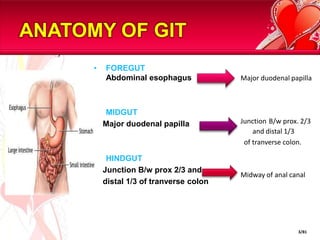
Major duodenal papillaJunctionB/w prox. 2/3 and distal 1/3   of tranverse colon.     Midway of anal canal                                 FOREGUTAbdominal esophagusMIDGUT    Major duodenal papillaHINDGUT    Junction B/w prox 2/3 and 	   distal 1/3 of tranverse colon ANATOMY OF GIT3/81
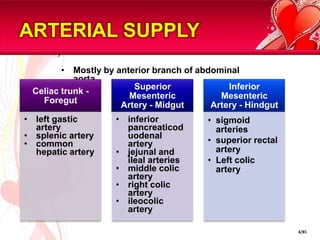
ARTERIAL SUPPLYMostly by anterior branch of abdominal aorta4/81
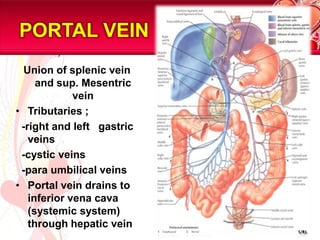
PORTAL VEINUnion of splenic vein and sup. Mesentric veinTributaries ;  -right and left   gastric veins  -cystic veins  -para umbilical veinsPortal vein drains to inferior vena cava (systemic system) through hepatic vein5/81
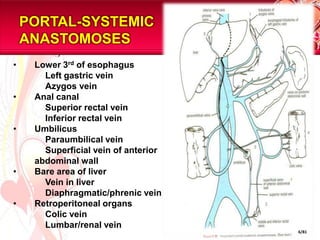
PORTAL-SYSTEMIC ANASTOMOSESLower 3rd of esophagus		Left gastric veinAzygosveinAnal canal		Superior rectal vein		Inferior rectal veinUmbilicus Paraumbilicalvein		Superficial vein of anterior abdominal wallBare area of liver		Vein in liver		Diaphragmatic/phrenicveinRetroperitoneal organs		Colic vein		Lumbar/renal vein 6/81
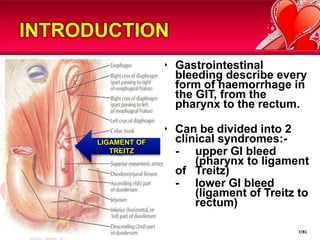
INTRODUCTIONGastrointestinal bleeding describe every form of haemorrhage in the GIT, from the pharynx to the rectum.Can be divided into 2 clinical syndromes:-	-  	upper GI bleed 	(pharynx to ligament of 	Treitz)	-  	lower GI bleed 	(ligament of Treitz to 	rectum)LIGAMENT OF TREITZ7/81
UPPERGASTROINTESTINAL BLEEDING8/81
EPIDEMIOLOGYUpper GI bleed remains a major medical problem.About 75% of patient presenting to the emergency room with GI bleeding have an upper source.In-hospital mortality of 5% can be expected.The most common cause are peptic ulcer, erosions, Mallory-Weiss tear & esophageal varices.9/81
CLINICAL FEATURESHaematemesis : vomiting of blood whether fresh and red or digested and black.Melaena : passage of loose, black tarry stools with a characteristic foul smell.Coffee ground vomiting : blood clot in the vomitus.Hematochezia: passage of bright red blood per rectum (if the haemorrhage is severe).10/81
CLINICAL FEATURESHaematemesis without malaenais generally due to lesions proximal to the ligament of Treitz, since blood entering the GIT below the duodenum rarely enters the stomach.Malaena without haematemesisis usually due to lesions distal to the pylorusApproximately 60mL of blood is required to produced a single black stool.11/81
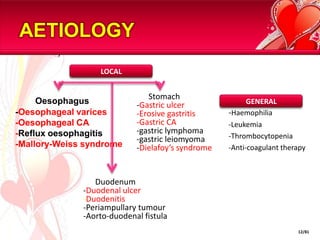
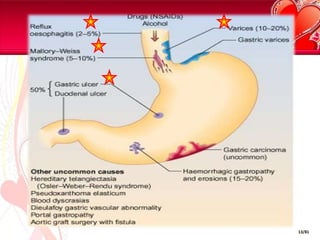
AETIOLOGYOesophagus	-Oesophagealvarices	-Oesophageal CA	-Reflux oesophagitis	-Mallory-Weiss syndromeLOCAL      Stomach-Gastric ulcerErosive gastritis-Gastric CA-gastric lymphoma-gastric leiomyoma-Dielafoy’s syndrome-Haemophilia	-Leukemia	-Thrombocytopenia	-Anti-coagulant therapyGENERAL      Duodenum-Duodenal ulcer-Duodenitis-Periampullarytumour-Aorto-duodenal fistula12/81
13/81
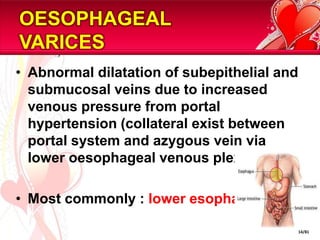
OESOPHAGEAL VARICESAbnormal dilatation of subepithelial and submucosal veins due to increased venous pressure from portal hypertension (collateral exist between portal system and azygous vein via lower oesophageal venous plexus).Most commonly : lower esophagus.14/81
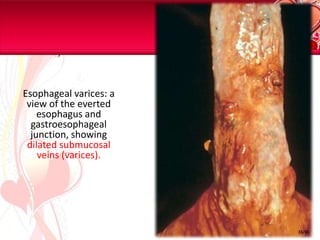
Esophageal varices: a view of the everted esophagus and gastroesophageal junction, showing dilated submucosal veins (varices). 15/81
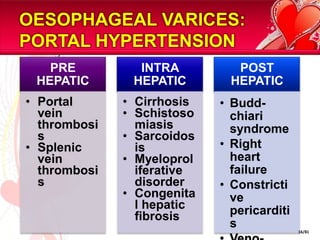
OESOPHAGEAL VARICES: PORTAL HYPERTENSION16/81
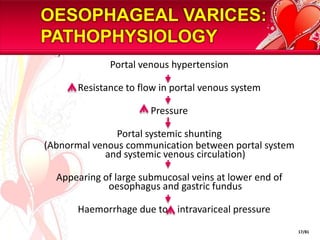
OESOPHAGEAL VARICES: PATHOPHYSIOLOGYPortal venous hypertensionResistance to flow in portal venous systemPressurePortal systemic shunting(Abnormal venous communication between portal system and systemic venous circulation)Appearing of large submucosal veins at lower end of oesophagus and gastric fundusHaemorrhage due to    intravariceal pressure17/81
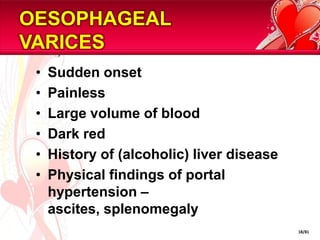
OESOPHAGEAL VARICESSudden onsetPainlessLarge volume of bloodDark redHistory of (alcoholic) liver diseasePhysical findings of portal hypertension – ascites, splenomegaly18/81
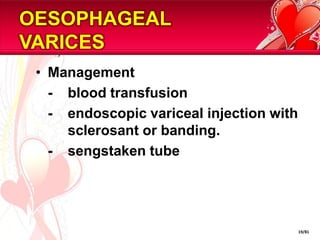
OESOPHAGEAL VARICESManagement	-	blood transfusion	-	endoscopic variceal injection with 	sclerosant or banding.	-	sengstaken tube19/81
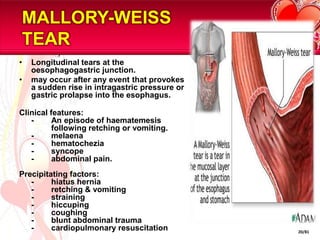
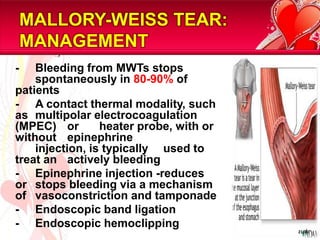
MALLORY-WEISS TEARLongitudinal tears at the oesophagogastric junction.may occur after any event that provokes a sudden rise in intragastric pressure or gastric prolapse into the esophagus. Clinical features:	-	An episode of haematemesis		following retching or vomiting.	-	melaena	-	hematochezia	-	syncope	-	abdominal pain.Precipitating factors:	-	hiatus hernia			-	retching & vomiting		-	straining	-	hiccuping	-	coughing	-    	blunt abdominal trauma 	-    	cardiopulmonary resuscitation20/81
MALLORY-WEISS TEAR: MANAGEMENT	-	Bleeding from MWTs stops 	spontaneously in 80-90% of patients 	-	A contact thermal modality, such as 	multipolarelectrocoagulation (MPEC) 	or 	heater probe, with or without 	epinephrine 	injection, is typically 	used to treat an 	actively bleeding 	-	Epinephrine injection -reduces or 	stops bleeding via a mechanism of  	vasoconstriction and tamponade	-	Endoscopic band ligation 	-	Endoscopic hemoclipping21/81
ESOPHAGEAL CANCER8th most common cancer seen throughout the world.40% occur in the middle 3rd of the oesophagus and are squamous carcinomas.adenoCA (45%) occur in the lower 3rd of the oesophagus and at the cardia.Tumours of the upper 3rd are rare (15%)22/81
ESOPHAGEAL CANCERSQUAMUS CELL CARCINOMAADENOCARCINOMA-more common in men.-risk factor:		-  tobacco smoking		-  heavy alcohol		   intake		-  plummer-vinson 	   syndrome		-  achalasia		-  coeliac disease		-  tylosis		-  diet deficient in		   vitaminshigh dietary carotenoids & vitamin C possibly decrease the risk.	-	arise in the columnar 	lined epithelium of 	the lower 	oesophagus.	-	risk factor:		-  long-standing GORD		-  barrett’soesophagus		-  tobacco smoking23/81
ESOPHAGEAL CANCER: CLINICAL FEATURESDysphagia	-	progressive & 	unrelenting	-	initially there is difficulty in swallowing 	solids, but eventually dysphagia for	     liquids also occur.Odynophagia	-	retrosternal pain on 	swallowing.RegurgitationAspiration pneumonitisWeight lossAnorexiaAnemiaLassitude24/81
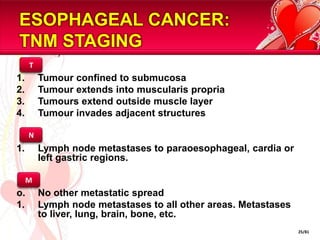
ESOPHAGEAL CANCER:              TNM STAGINGTTumour confined to submucosaTumour extends into muscularispropriaTumours extend outside muscle layerTumour invades adjacent structuresLymph node metastases to paraoesophageal, cardia or left gastric regions.No other metastatic spreadLymph node metastases to all other areas. Metastases to liver, lung, brain, bone, etc.NM25/81
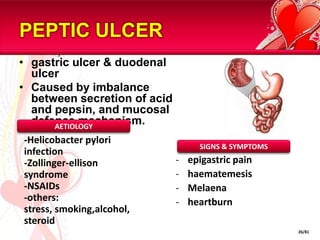
PEPTIC ULCERgastric ulcer & duodenal ulcerCaused by imbalance between secretion of acid and pepsin, and mucosal defence mechanism.AETIOLOGY-Helicobacter pylori infection-Zollinger-ellison syndrome-NSAIDs-others: stress, smoking,alcohol, steroidSIGNS & SYMPTOMS epigastric pain
haematemesis
Melaena
heartburn26/81
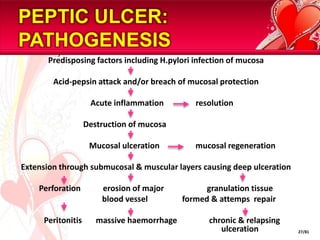
PEPTIC ULCER: PATHOGENESISPredisposing factors including H.pylori infection of mucosaAcid-pepsin attack and/or breach of mucosal protection      Acute inflammation                resolution			        Destruction of mucosa			           Mucosal ulceration                  mucosal regenerationExtension through submucosal & muscular layers causing deep ulcerationPerforation	erosion of major 		    granulation tissue		                 blood vessel 	         formed & attemps repair                 Peritonitis       massive haemorrhage                chronic & relapsing 			              			    ulceration27/81
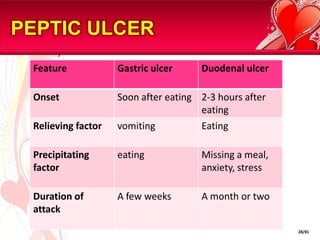
PEPTIC ULCER28/81
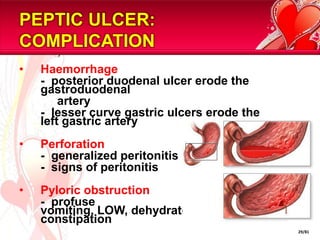
PEPTIC ULCER: COMPLICATIONHaemorrhage	-	posterior duodenal ulcer erode the gastroduodenal	     artery	-	lesser curve gastric ulcers erode the left gastric arteryPerforation	-	generalized peritonitis	-	signs of peritonitisPyloric obstruction	-	profuse vomiting, LOW, dehydrated, weakness, constipation29/81
PEPTIC ULCER: TREATMENTAntacid – aluminium/Mg hydroxide, Mg TrisiclateMucosal protective agents – sucralfateProstaglandin analogues – misoprostolH2 receptor antagonist – cimetidine & ranitidineProton pump inhibitor – omeprazole & lansoprazoleH.pylori eradication		-  triple therapy :metronidazole,amoxycilin,erythromycinsurgery should be done if 		-failed medical treatment		-vagotomy, gastrectomy, pyloroplasty30/81
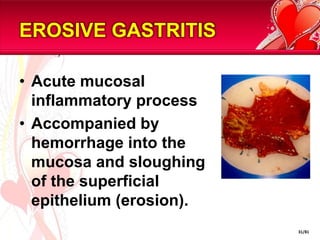
EROSIVE GASTRITISAcute mucosal inflammatory processAccompanied by hemorrhage into the mucosa and sloughing of the superficial epithelium (erosion).31/81
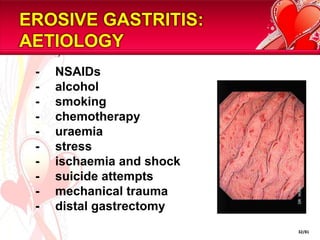
EROSIVE GASTRITIS: AETIOLOGY	-	NSAIDs	-	alcohol	-	smoking	-	chemotherapy	-	uraemia	-	stress -	ischaemia and shock	-	suicide attempts 	-	mechanical trauma	-	distal gastrectomy32/81
EROSIVE GASTRITIS: CLINICAL FEATURES	-	asymptomatic	-	epigastric pain with nausea & vomiting	-	haematemesis and melaena	-	fatal blood lossIt is one of the major causes of haemetemesis, particularly in alcoholic!33/81
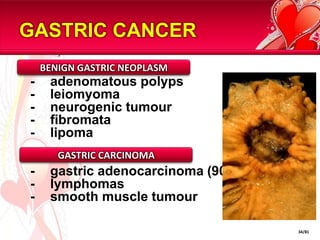
GASTRIC CANCERBENIGN GASTRIC NEOPLASM	-	adenomatous polyps	-	leiomyoma	-	neurogenictumour	-	fibromata	-	lipoma	-	gastric adenocarcinoma (90%)	-	lymphomas	-	smooth muscle tumourGASTRIC CARCINOMA34/81
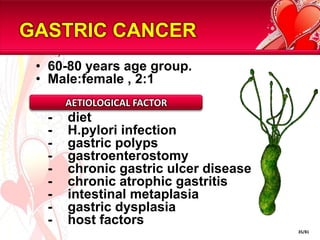
GASTRIC CANCER60-80 years age group.Male:female , 2:1	-	diet	-	H.pylori infection	-	gastric polyps	-	gastroenterostomy	-	chronic gastric ulcer disease	-	chronic atrophic gastritis	-	intestinal metaplasia	-	gastric dysplasia	-	host factorsAETIOLOGICAL FACTOR35/81
GASTRIC CANCER: TNM STAGINGTT1		tumour extends to lamina propria or submucosa.T2		tumour extend into muscleT3		tumour extend into serosaT4		tumour invades adjacent structuresN0		no lymph node involvementN1		fewer than 7 lymph node involved by tumourN2		7-15 lymph node involved by tumourN3		more than 15 lymph node involved by tumourM0	no metastasesM1	metastases presentNM36/81
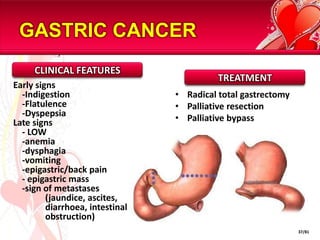
GASTRIC CANCEREarly signs    -Indigestion    -Flatulence    -DyspepsiaLate signs    - LOW    -anemia    -dysphagia    -vomiting    -epigastric/back pain    - epigastric mass    -sign of metastases 		(jaundice, ascites, 	diarrhoea, intestinal 	obstruction)CLINICAL FEATURESTREATMENTRadical total gastrectomy
Palliative resection
Palliative bypass37/81
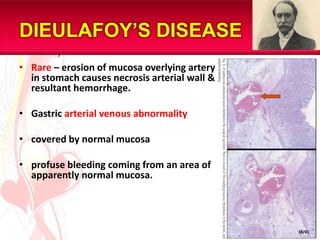
DIEULAFOY’S DISEASERare – erosion of mucosa overlying artery in stomach causes necrosis arterial wall & resultant hemorrhage.
Gastric arterial venous abnormality
covered by normal mucosa
profuse bleeding coming from an area of apparently normal mucosa.38/81
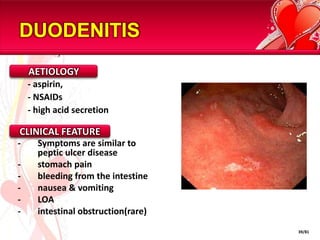
DUODENITISAETIOLOGY	- aspirin, 	- NSAIDs	- high acid secretion CLINICAL FEATURE	-	Symptoms are similar to 	peptic ulcer disease	-	stomach pain	-bleeding from the intestine	-	nausea & vomiting	-	LOA	-	intestinal obstruction(rare) 39/81
DUODENITISINVESTIGATIONMANAGEMENT- 	endoscopy, may be some redness and nodules in the wall of the small intestine. -   Sometimes, it can be more severe and there may be shallow, eroded areas in the wall of the intestine, along with some bleedingstop all medications that can make things worse (aspirin & NSAIDS)
H2 receptor blockers                    (ranitidine/cimetidine) or proton pump inhibitors (omeprazole) reduce the acid secretion by the stomach40/81
HISTORY TAKING	-	when?	-	have u vomited blood/passed black tarry stools?	-	had both haematemesis & malaena?	-	have u had, bleeding from the nose? Bloody 	expectoration? A dental extraction?-what is the color, the appearance of the vomited 	blood?	-	red? Dark red? Brown? Black?	-	‘coffee ground appearance?	-	bright red & frothy?	-	what is the color of the stool? Bright red? Black 	tarry?	-	have u vomited blood only once/several times?	-	has the bleeding been abrupt/massive?	-	have u had >1 black, tarry stool within a 24-h 	period?	-	for how long have the tarry stools persisted?MODE OF ONSETCHARACTEREXTENT AND RATE41/81
HISTORY TAKING	-	retching & severe nonbloody vomiting?	-	lightheadedness? Nausea? Thirst? Sweating?	-	faintness when lying down/when standing/syncope?	-	following the haemorrhage did you have diarrhea?	-	aspirin? anticoagulant therapy? iron preparation?	- 	age of the patient?	-	what is your smoke/alcohol intake?	-	have there been similar episode in the past? When? 	Diagnosis?	-	were u hospitalized on this occasion? Did u receive a 	transfusion?	-	are there any other members of your family who 	have intestinal disease/bleeding tendency/peptic 	ulcer/liver disease, History of Malignancy?OTHER SYMPTOMSIATROGENIC FACTORSPREVIOUS EPISODESFAMILY HISTORY42/81
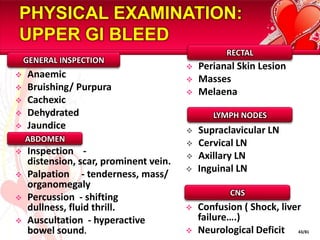
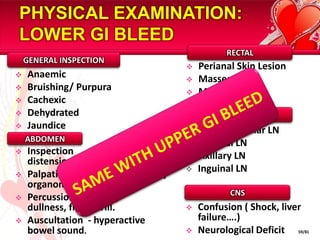
PHYSICAL EXAMINATION:UPPER GI BLEEDRECTALGENERAL INSPECTIONPerianal Skin Lesion
Masses
Melaena
SupraclavicularLN
Cervical LN
AxillaryLN
Inguinal LN
Confusion ( Shock, liver failure….)
Neurological Deficit
Anaemic
Bruishing/ Purpura
Cachexic
Dehydrated
Jaundice
Inspection    - distension, scar, prominent vein.
Palpation     - tenderness, mass/ organomegaly
Percussion  - shifting dullness, fluid thrill.
Auscultation  - hyperactive bowel sound.LYMPH NODESABDOMENCNS43/81
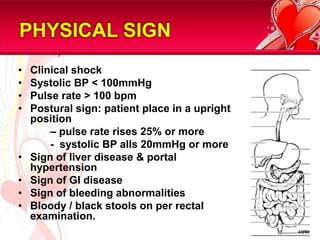
PHYSICAL SIGNClinical shockSystolic BP < 100mmHgPulse rate > 100 bpmPostural sign: patient place in a upright position 		– pulse rate rises 25% or more		-  systolic BP alls 20mmHg or moreSign of liver disease & portal hypertensionSign of GI diseaseSign of bleeding abnormalitiesBloody / black stools on per rectal examination.44/81
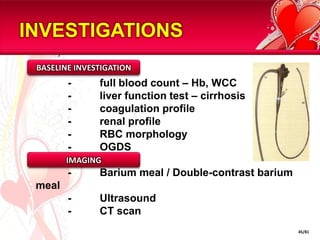
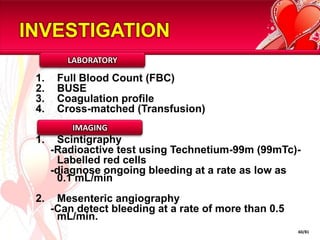
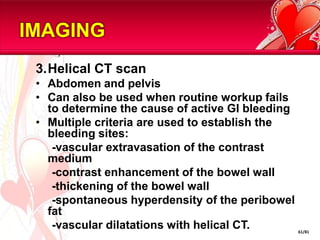
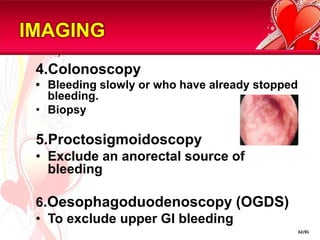
INVESTIGATIONS	-	full blood count – Hb, WCC	-	liver function test – cirrhosis	-	coagulation profile	-	renal profile	-	RBC morphology	-	OGDS	-	Barium meal / Double-contrast barium meal	-	Ultrasound	-	CT scanBASELINE INVESTIGATIONIMAGING45/81
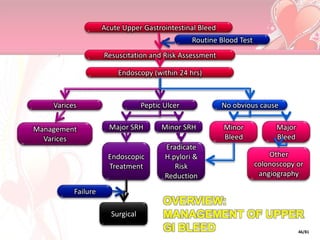
Acute Upper Gastrointestinal BleedRoutine Blood TestResuscitation and Risk AssessmentEndoscopy (within 24 hrs)VaricesPeptic UlcerNo obvious causeMajor SRHMinor SRHMinor BleedMajor BleedManagement VaricesEradicate H.pylori & Risk ReductionEndoscopic TreatmentOther colonoscopy or angiographyFailureOVERVIEW:MANAGEMENT OF UPPER GI BLEEDSurgical46/81
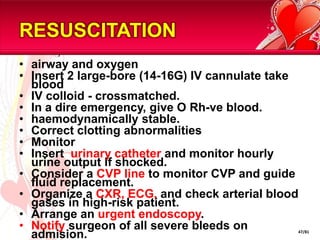
RESUSCITATIONairway and oxygenInsert 2 large-bore (14-16G) IV cannulate take bloodIV colloid - crossmatched. In a dire emergency, give O Rh-ve blood.haemodynamically stable.Correct clotting abnormalitiesMonitorInsert  urinary catheter and monitor hourly urine output if shocked.Consider a CVP line to monitor CVP and guide fluid replacement.Organize a CXR, ECG, and check arterial blood gases in high-risk patient.Arrange an urgent endoscopy.Notify surgeon of all severe bleeds on admision.47/81
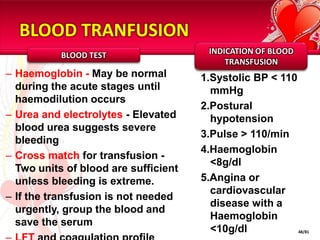
BLOOD TRANFUSIONINDICATION OF BLOOD TRANSFUSIONBLOOD TESTHaemoglobin - May be normal during the acute stages until haemodilution occursUrea and electrolytes - Elevated blood urea suggests severe bleedingCross match for transfusion - Two units of blood are sufficient unless bleeding is extreme.If the transfusion is not needed urgently, group the blood and save the serumLFT and coagulation profile1.Systolic BP < 110 mmHg2.Postural hypotension3.Pulse > 110/min4.Haemoglobin <8g/dl5.Angina or cardiovascular disease with a Haemoglobin <10g/dl48/81
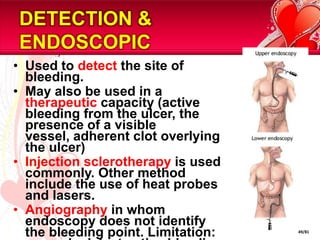
DETECTION & ENDOSCOPICUsed to detect the site of bleeding.May also be used in a therapeutic capacity (active bleeding from the ulcer, the presence of a visible vessel, adherent clot overlying the ulcer)Injection sclerotherapyis used commonly. Other method include the use of heat probes and lasers.Angiography in whom endoscopy does not identify the bleeding point. Limitation: can only detect active bleeding of greater than 1mL/min.49/81
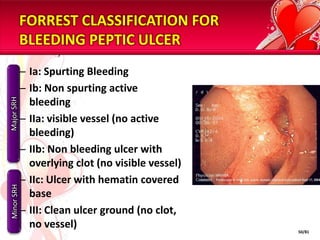
FORREST CLASSIFICATION FOR BLEEDING PEPTIC ULCERIa: Spurting BleedingIb: Non spurting active bleedingIIa: visible vessel (no active bleeding)IIb: Non bleeding ulcer with overlying clot (no visible vessel)IIc: Ulcer with hematin covered baseIII: Clean ulcer ground (no clot, no vessel)Major SRHMinor SRH50/81
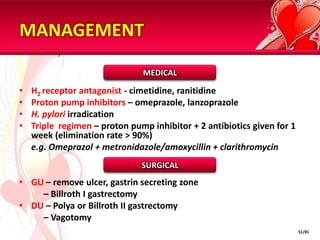
MANAGEMENTMEDICALH2 receptor antagonist - cimetidine, ranitidineProton pump inhibitors – omeprazole, lanzoprazoleH. pyloriirradicationTriple  regimen – proton pump inhibitor + 2 antibiotics given for 1 week (elimination rate > 90%) 	e.g. Omeprazol + metronidazole/amoxycillin + clarithromycinGU– remove ulcer, gastrin secreting zone            – Billroth I gastrectomyDU – Polya or Billroth II gastrectomy           – VagotomySURGICAL51/81
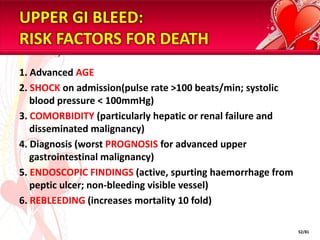
UPPER GI BLEED:RISK FACTORS FOR DEATH1. Advanced AGE2. SHOCKon admission(pulse rate >100 beats/min; systolic blood pressure < 100mmHg)3. COMORBIDITY (particularly hepatic or renal failure and disseminated malignancy)4. Diagnosis (worst PROGNOSISfor advanced upper gastrointestinal malignancy)5. ENDOSCOPIC FINDINGS (active, spurting haemorrhage from peptic ulcer; non-bleeding visible vessel)6. REBLEEDING(increases mortality 10 fold)52/81
GASTROINTESTINAL BLEEDINGLOWER53/81
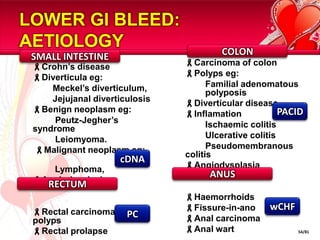
LOWER GI BLEED: AETIOLOGYCOLONSMALL INTESTINE	Carcinoma of colon	Polyps eg: 		Familial adenomatouspolyposis	Diverticular disease	InflamationIschaemic colitis		Ulcerative colitisPseudomembranous colitis	Angiodysplasia	Haemorrhoids	Fissure-in-ano	Anal carcinoma	Anal wartCrohn’s disease	Diverticulaeg: Meckel’sdiverticulum,Jejujanaldiverticulosis	Benign neoplasm eg:Peutz-Jegher’s syndrome Leiomyoma.  	 Malignant neoplasm eg:  	                Lymphoma, 		Angiodysplasia	Rectal carcinoma and polyps	Rectal prolapsePACIDcDNAANUSRECTUMwCHFPC54/81
HISTORY TAKING:RECTAL BLEEDINGBlood on its own or streaking the stool:		Rectum	: polyps or carcinoma, prolapsed		Anus	: Haemorrhoids, Fissure-in-ano, Anal carcinoma.Stool mixed with blood:		GIT above sigmoid colon. 		Sigmoid carcinoma or diverticular disease.Blood separate from the stool:		Follows defaecation	: Anal condition eg: Haemorrhoids.		Blood is passed by itself	: Rapidly bleeding carcinoma, 	inflammatory bowel disease, diverticulitis, or passed down 	from high 	up in the gut. Blood is on the surface of the stool: suggest a lesion such as polyp or carcinoma further proximally either in the rectum or descending colonBlood on the toilet paper:Fissure-in-ano, Heamorrhoids.Loose, black, tarry, foul smelling stool:from the proximal of DJ flexure55/81
HISTORY TAKING:COLOUR OF BLOOD/DISCHARGEBright red/ Fresh blood: Rectum and anus.Dark blood:	Upper GIT to above rectum.	Drugs eg: iron tablets- appear as greenish black formed stool.Discharge apart from blood:-	-Mucus- irritable bowel syndrome	-Copious mucus- villous adenoma, frank cancer of the rectum	-Mucus and pus- IBD, diverticular disease56/81

Gastrointestinal Bleeding

  • 1.
    GASTROINTESTINAL BLEEDINGNUR JASHIMAHIDAYU JAMALUDINTAN LAY TENGMOHD HANAFI RAMLEE1/81
  • 2.
  • 3.
    Major duodenal papillaJunctionB/wprox. 2/3 and distal 1/3 of tranverse colon. Midway of anal canal FOREGUTAbdominal esophagusMIDGUT Major duodenal papillaHINDGUT Junction B/w prox 2/3 and distal 1/3 of tranverse colon ANATOMY OF GIT3/81
  • 4.
    ARTERIAL SUPPLYMostly byanterior branch of abdominal aorta4/81
  • 5.
    PORTAL VEINUnion ofsplenic vein and sup. Mesentric veinTributaries ; -right and left gastric veins -cystic veins -para umbilical veinsPortal vein drains to inferior vena cava (systemic system) through hepatic vein5/81
  • 6.
    PORTAL-SYSTEMIC ANASTOMOSESLower 3rdof esophagus Left gastric veinAzygosveinAnal canal Superior rectal vein Inferior rectal veinUmbilicus Paraumbilicalvein Superficial vein of anterior abdominal wallBare area of liver Vein in liver Diaphragmatic/phrenicveinRetroperitoneal organs Colic vein Lumbar/renal vein 6/81
  • 7.
    INTRODUCTIONGastrointestinal bleeding describeevery form of haemorrhage in the GIT, from the pharynx to the rectum.Can be divided into 2 clinical syndromes:- - upper GI bleed (pharynx to ligament of Treitz) - lower GI bleed (ligament of Treitz to rectum)LIGAMENT OF TREITZ7/81
  • 8.
  • 9.
    EPIDEMIOLOGYUpper GI bleedremains a major medical problem.About 75% of patient presenting to the emergency room with GI bleeding have an upper source.In-hospital mortality of 5% can be expected.The most common cause are peptic ulcer, erosions, Mallory-Weiss tear & esophageal varices.9/81
  • 10.
    CLINICAL FEATURESHaematemesis :vomiting of blood whether fresh and red or digested and black.Melaena : passage of loose, black tarry stools with a characteristic foul smell.Coffee ground vomiting : blood clot in the vomitus.Hematochezia: passage of bright red blood per rectum (if the haemorrhage is severe).10/81
  • 11.
    CLINICAL FEATURESHaematemesis withoutmalaenais generally due to lesions proximal to the ligament of Treitz, since blood entering the GIT below the duodenum rarely enters the stomach.Malaena without haematemesisis usually due to lesions distal to the pylorusApproximately 60mL of blood is required to produced a single black stool.11/81
  • 12.
    AETIOLOGYOesophagus -Oesophagealvarices -Oesophageal CA -Reflux oesophagitis -Mallory-WeisssyndromeLOCAL Stomach-Gastric ulcerErosive gastritis-Gastric CA-gastric lymphoma-gastric leiomyoma-Dielafoy’s syndrome-Haemophilia -Leukemia -Thrombocytopenia -Anti-coagulant therapyGENERAL Duodenum-Duodenal ulcer-Duodenitis-Periampullarytumour-Aorto-duodenal fistula12/81
  • 13.
  • 14.
    OESOPHAGEAL VARICESAbnormal dilatationof subepithelial and submucosal veins due to increased venous pressure from portal hypertension (collateral exist between portal system and azygous vein via lower oesophageal venous plexus).Most commonly : lower esophagus.14/81
  • 15.
    Esophageal varices: aview of the everted esophagus and gastroesophageal junction, showing dilated submucosal veins (varices). 15/81
  • 16.
  • 17.
    OESOPHAGEAL VARICES: PATHOPHYSIOLOGYPortalvenous hypertensionResistance to flow in portal venous systemPressurePortal systemic shunting(Abnormal venous communication between portal system and systemic venous circulation)Appearing of large submucosal veins at lower end of oesophagus and gastric fundusHaemorrhage due to intravariceal pressure17/81
  • 18.
    OESOPHAGEAL VARICESSudden onsetPainlessLargevolume of bloodDark redHistory of (alcoholic) liver diseasePhysical findings of portal hypertension – ascites, splenomegaly18/81
  • 19.
    OESOPHAGEAL VARICESManagement - blood transfusion - endoscopicvariceal injection with sclerosant or banding. - sengstaken tube19/81
  • 20.
    MALLORY-WEISS TEARLongitudinal tearsat the oesophagogastric junction.may occur after any event that provokes a sudden rise in intragastric pressure or gastric prolapse into the esophagus. Clinical features: - An episode of haematemesis following retching or vomiting. - melaena - hematochezia - syncope - abdominal pain.Precipitating factors: - hiatus hernia - retching & vomiting - straining - hiccuping - coughing - blunt abdominal trauma - cardiopulmonary resuscitation20/81
  • 21.
    MALLORY-WEISS TEAR: MANAGEMENT - Bleedingfrom MWTs stops spontaneously in 80-90% of patients - A contact thermal modality, such as multipolarelectrocoagulation (MPEC) or heater probe, with or without epinephrine injection, is typically used to treat an actively bleeding - Epinephrine injection -reduces or stops bleeding via a mechanism of vasoconstriction and tamponade - Endoscopic band ligation - Endoscopic hemoclipping21/81
  • 22.
    ESOPHAGEAL CANCER8th mostcommon cancer seen throughout the world.40% occur in the middle 3rd of the oesophagus and are squamous carcinomas.adenoCA (45%) occur in the lower 3rd of the oesophagus and at the cardia.Tumours of the upper 3rd are rare (15%)22/81
  • 23.
    ESOPHAGEAL CANCERSQUAMUS CELLCARCINOMAADENOCARCINOMA-more common in men.-risk factor: - tobacco smoking - heavy alcohol intake - plummer-vinson syndrome - achalasia - coeliac disease - tylosis - diet deficient in vitaminshigh dietary carotenoids & vitamin C possibly decrease the risk. - arise in the columnar lined epithelium of the lower oesophagus. - risk factor: - long-standing GORD - barrett’soesophagus - tobacco smoking23/81
  • 24.
    ESOPHAGEAL CANCER: CLINICALFEATURESDysphagia - progressive & unrelenting - initially there is difficulty in swallowing solids, but eventually dysphagia for liquids also occur.Odynophagia - retrosternal pain on swallowing.RegurgitationAspiration pneumonitisWeight lossAnorexiaAnemiaLassitude24/81
  • 25.
    ESOPHAGEAL CANCER: TNM STAGINGTTumour confined to submucosaTumour extends into muscularispropriaTumours extend outside muscle layerTumour invades adjacent structuresLymph node metastases to paraoesophageal, cardia or left gastric regions.No other metastatic spreadLymph node metastases to all other areas. Metastases to liver, lung, brain, bone, etc.NM25/81
  • 26.
    PEPTIC ULCERgastric ulcer& duodenal ulcerCaused by imbalance between secretion of acid and pepsin, and mucosal defence mechanism.AETIOLOGY-Helicobacter pylori infection-Zollinger-ellison syndrome-NSAIDs-others: stress, smoking,alcohol, steroidSIGNS & SYMPTOMS epigastric pain
  • 27.
  • 28.
  • 29.
  • 30.
    PEPTIC ULCER: PATHOGENESISPredisposingfactors including H.pylori infection of mucosaAcid-pepsin attack and/or breach of mucosal protection Acute inflammation resolution Destruction of mucosa Mucosal ulceration mucosal regenerationExtension through submucosal & muscular layers causing deep ulcerationPerforation erosion of major granulation tissue blood vessel formed & attemps repair Peritonitis massive haemorrhage chronic & relapsing ulceration27/81
  • 31.
  • 32.
    PEPTIC ULCER: COMPLICATIONHaemorrhage - posteriorduodenal ulcer erode the gastroduodenal artery - lesser curve gastric ulcers erode the left gastric arteryPerforation - generalized peritonitis - signs of peritonitisPyloric obstruction - profuse vomiting, LOW, dehydrated, weakness, constipation29/81
  • 33.
    PEPTIC ULCER: TREATMENTAntacid– aluminium/Mg hydroxide, Mg TrisiclateMucosal protective agents – sucralfateProstaglandin analogues – misoprostolH2 receptor antagonist – cimetidine & ranitidineProton pump inhibitor – omeprazole & lansoprazoleH.pylori eradication - triple therapy :metronidazole,amoxycilin,erythromycinsurgery should be done if -failed medical treatment -vagotomy, gastrectomy, pyloroplasty30/81
  • 34.
    EROSIVE GASTRITISAcute mucosalinflammatory processAccompanied by hemorrhage into the mucosa and sloughing of the superficial epithelium (erosion).31/81
  • 35.
    EROSIVE GASTRITIS: AETIOLOGY - NSAIDs - alcohol - smoking - chemotherapy - uraemia - stress- ischaemia and shock - suicide attempts - mechanical trauma - distal gastrectomy32/81
  • 36.
    EROSIVE GASTRITIS: CLINICALFEATURES - asymptomatic - epigastric pain with nausea & vomiting - haematemesis and melaena - fatal blood lossIt is one of the major causes of haemetemesis, particularly in alcoholic!33/81
  • 37.
    GASTRIC CANCERBENIGN GASTRICNEOPLASM - adenomatous polyps - leiomyoma - neurogenictumour - fibromata - lipoma - gastric adenocarcinoma (90%) - lymphomas - smooth muscle tumourGASTRIC CARCINOMA34/81
  • 38.
    GASTRIC CANCER60-80 yearsage group.Male:female , 2:1 - diet - H.pylori infection - gastric polyps - gastroenterostomy - chronic gastric ulcer disease - chronic atrophic gastritis - intestinal metaplasia - gastric dysplasia - host factorsAETIOLOGICAL FACTOR35/81
  • 39.
    GASTRIC CANCER: TNMSTAGINGTT1 tumour extends to lamina propria or submucosa.T2 tumour extend into muscleT3 tumour extend into serosaT4 tumour invades adjacent structuresN0 no lymph node involvementN1 fewer than 7 lymph node involved by tumourN2 7-15 lymph node involved by tumourN3 more than 15 lymph node involved by tumourM0 no metastasesM1 metastases presentNM36/81
  • 40.
    GASTRIC CANCEREarly signs -Indigestion -Flatulence -DyspepsiaLate signs - LOW -anemia -dysphagia -vomiting -epigastric/back pain - epigastric mass -sign of metastases (jaundice, ascites, diarrhoea, intestinal obstruction)CLINICAL FEATURESTREATMENTRadical total gastrectomy
  • 41.
  • 42.
  • 43.
    DIEULAFOY’S DISEASERare –erosion of mucosa overlying artery in stomach causes necrosis arterial wall & resultant hemorrhage.
  • 44.
  • 45.
  • 46.
    profuse bleeding comingfrom an area of apparently normal mucosa.38/81
  • 47.
    DUODENITISAETIOLOGY - aspirin, -NSAIDs - high acid secretion CLINICAL FEATURE - Symptoms are similar to peptic ulcer disease - stomach pain -bleeding from the intestine - nausea & vomiting - LOA - intestinal obstruction(rare) 39/81
  • 48.
    DUODENITISINVESTIGATIONMANAGEMENT- endoscopy, maybe some redness and nodules in the wall of the small intestine. - Sometimes, it can be more severe and there may be shallow, eroded areas in the wall of the intestine, along with some bleedingstop all medications that can make things worse (aspirin & NSAIDS)
  • 49.
    H2 receptor blockers (ranitidine/cimetidine) or proton pump inhibitors (omeprazole) reduce the acid secretion by the stomach40/81
  • 50.
    HISTORY TAKING - when? - have uvomited blood/passed black tarry stools? - had both haematemesis & malaena? - have u had, bleeding from the nose? Bloody expectoration? A dental extraction?-what is the color, the appearance of the vomited blood? - red? Dark red? Brown? Black? - ‘coffee ground appearance? - bright red & frothy? - what is the color of the stool? Bright red? Black tarry? - have u vomited blood only once/several times? - has the bleeding been abrupt/massive? - have u had >1 black, tarry stool within a 24-h period? - for how long have the tarry stools persisted?MODE OF ONSETCHARACTEREXTENT AND RATE41/81
  • 51.
    HISTORY TAKING - retching &severe nonbloody vomiting? - lightheadedness? Nausea? Thirst? Sweating? - faintness when lying down/when standing/syncope? - following the haemorrhage did you have diarrhea? - aspirin? anticoagulant therapy? iron preparation? - age of the patient? - what is your smoke/alcohol intake? - have there been similar episode in the past? When? Diagnosis? - were u hospitalized on this occasion? Did u receive a transfusion? - are there any other members of your family who have intestinal disease/bleeding tendency/peptic ulcer/liver disease, History of Malignancy?OTHER SYMPTOMSIATROGENIC FACTORSPREVIOUS EPISODESFAMILY HISTORY42/81
  • 52.
    PHYSICAL EXAMINATION:UPPER GIBLEEDRECTALGENERAL INSPECTIONPerianal Skin Lesion
  • 53.
  • 54.
  • 55.
  • 56.
  • 57.
  • 58.
  • 59.
    Confusion ( Shock,liver failure….)
  • 60.
  • 61.
  • 62.
  • 63.
  • 64.
  • 65.
  • 66.
    Inspection - distension, scar, prominent vein.
  • 67.
    Palpation - tenderness, mass/ organomegaly
  • 68.
    Percussion -shifting dullness, fluid thrill.
  • 69.
    Auscultation -hyperactive bowel sound.LYMPH NODESABDOMENCNS43/81
  • 70.
    PHYSICAL SIGNClinical shockSystolicBP < 100mmHgPulse rate > 100 bpmPostural sign: patient place in a upright position – pulse rate rises 25% or more - systolic BP alls 20mmHg or moreSign of liver disease & portal hypertensionSign of GI diseaseSign of bleeding abnormalitiesBloody / black stools on per rectal examination.44/81
  • 71.
    INVESTIGATIONS - full blood count– Hb, WCC - liver function test – cirrhosis - coagulation profile - renal profile - RBC morphology - OGDS - Barium meal / Double-contrast barium meal - Ultrasound - CT scanBASELINE INVESTIGATIONIMAGING45/81
  • 72.
    Acute Upper GastrointestinalBleedRoutine Blood TestResuscitation and Risk AssessmentEndoscopy (within 24 hrs)VaricesPeptic UlcerNo obvious causeMajor SRHMinor SRHMinor BleedMajor BleedManagement VaricesEradicate H.pylori & Risk ReductionEndoscopic TreatmentOther colonoscopy or angiographyFailureOVERVIEW:MANAGEMENT OF UPPER GI BLEEDSurgical46/81
  • 73.
    RESUSCITATIONairway and oxygenInsert2 large-bore (14-16G) IV cannulate take bloodIV colloid - crossmatched. In a dire emergency, give O Rh-ve blood.haemodynamically stable.Correct clotting abnormalitiesMonitorInsert urinary catheter and monitor hourly urine output if shocked.Consider a CVP line to monitor CVP and guide fluid replacement.Organize a CXR, ECG, and check arterial blood gases in high-risk patient.Arrange an urgent endoscopy.Notify surgeon of all severe bleeds on admision.47/81
  • 74.
    BLOOD TRANFUSIONINDICATION OFBLOOD TRANSFUSIONBLOOD TESTHaemoglobin - May be normal during the acute stages until haemodilution occursUrea and electrolytes - Elevated blood urea suggests severe bleedingCross match for transfusion - Two units of blood are sufficient unless bleeding is extreme.If the transfusion is not needed urgently, group the blood and save the serumLFT and coagulation profile1.Systolic BP < 110 mmHg2.Postural hypotension3.Pulse > 110/min4.Haemoglobin <8g/dl5.Angina or cardiovascular disease with a Haemoglobin <10g/dl48/81
  • 75.
    DETECTION & ENDOSCOPICUsedto detect the site of bleeding.May also be used in a therapeutic capacity (active bleeding from the ulcer, the presence of a visible vessel, adherent clot overlying the ulcer)Injection sclerotherapyis used commonly. Other method include the use of heat probes and lasers.Angiography in whom endoscopy does not identify the bleeding point. Limitation: can only detect active bleeding of greater than 1mL/min.49/81
  • 76.
    FORREST CLASSIFICATION FORBLEEDING PEPTIC ULCERIa: Spurting BleedingIb: Non spurting active bleedingIIa: visible vessel (no active bleeding)IIb: Non bleeding ulcer with overlying clot (no visible vessel)IIc: Ulcer with hematin covered baseIII: Clean ulcer ground (no clot, no vessel)Major SRHMinor SRH50/81
  • 77.
    MANAGEMENTMEDICALH2 receptor antagonist- cimetidine, ranitidineProton pump inhibitors – omeprazole, lanzoprazoleH. pyloriirradicationTriple regimen – proton pump inhibitor + 2 antibiotics given for 1 week (elimination rate > 90%) e.g. Omeprazol + metronidazole/amoxycillin + clarithromycinGU– remove ulcer, gastrin secreting zone – Billroth I gastrectomyDU – Polya or Billroth II gastrectomy – VagotomySURGICAL51/81
  • 78.
    UPPER GI BLEED:RISKFACTORS FOR DEATH1. Advanced AGE2. SHOCKon admission(pulse rate >100 beats/min; systolic blood pressure < 100mmHg)3. COMORBIDITY (particularly hepatic or renal failure and disseminated malignancy)4. Diagnosis (worst PROGNOSISfor advanced upper gastrointestinal malignancy)5. ENDOSCOPIC FINDINGS (active, spurting haemorrhage from peptic ulcer; non-bleeding visible vessel)6. REBLEEDING(increases mortality 10 fold)52/81
  • 79.
  • 80.
    LOWER GI BLEED:AETIOLOGYCOLONSMALL INTESTINE Carcinoma of colon Polyps eg: Familial adenomatouspolyposis Diverticular disease InflamationIschaemic colitis Ulcerative colitisPseudomembranous colitis Angiodysplasia Haemorrhoids Fissure-in-ano Anal carcinoma Anal wartCrohn’s disease Diverticulaeg: Meckel’sdiverticulum,Jejujanaldiverticulosis Benign neoplasm eg:Peutz-Jegher’s syndrome Leiomyoma. Malignant neoplasm eg: Lymphoma, Angiodysplasia Rectal carcinoma and polyps Rectal prolapsePACIDcDNAANUSRECTUMwCHFPC54/81
  • 81.
    HISTORY TAKING:RECTAL BLEEDINGBloodon its own or streaking the stool: Rectum : polyps or carcinoma, prolapsed Anus : Haemorrhoids, Fissure-in-ano, Anal carcinoma.Stool mixed with blood: GIT above sigmoid colon. Sigmoid carcinoma or diverticular disease.Blood separate from the stool: Follows defaecation : Anal condition eg: Haemorrhoids. Blood is passed by itself : Rapidly bleeding carcinoma, inflammatory bowel disease, diverticulitis, or passed down from high up in the gut. Blood is on the surface of the stool: suggest a lesion such as polyp or carcinoma further proximally either in the rectum or descending colonBlood on the toilet paper:Fissure-in-ano, Heamorrhoids.Loose, black, tarry, foul smelling stool:from the proximal of DJ flexure55/81
  • 82.
    HISTORY TAKING:COLOUR OFBLOOD/DISCHARGEBright red/ Fresh blood: Rectum and anus.Dark blood: Upper GIT to above rectum. Drugs eg: iron tablets- appear as greenish black formed stool.Discharge apart from blood:- -Mucus- irritable bowel syndrome -Copious mucus- villous adenoma, frank cancer of the rectum -Mucus and pus- IBD, diverticular disease56/81

Editor's Notes

  • #32 Is an acute mucosal inflammatory process usually of a transient nature.May be accompanied by hemorrhage into the mucosa and in more severe circumstances, by sloughing of the superficial epithelium (erosion).
  • #33  - heavy use of NSAIDs - excessive alcohol consumption - heavy smoking - treatment with cancer chemotherapy drugs - uraemia - severe stress (e.g. trauma, burns, surgery) - ischaemia and shock - suicide attempts with acid and alkali - mechanical trauma - after distal gastrectomy with reflux of bilious material
  • #39 Rare – erosion of mucosa overlying artery in stomach causes necrosis arterial wall &amp; resultant hemorrhage.Gastric arterial venous abnormality that has a characteristically histological apperance.The lesion itself is covered by normal mucosa and, when not bleeding, it may be invisible.If it can be seen while bleeding, all that may be visible is profuse bleeding coming from an area of apparently normal mucosa
  • #40 inflammation and irritation of the wall of the first part of the small intestine.
  • #41 endoscopy, may be some redness and nodules in the wall of the small intestine. - Sometimes, it can be more severe and there may be shallow, eroded areas in the wall of the intestine, along with some bleeding
  • #45 Clinical shock: restlessness, acute hypotension, tachycardia, thready peripheral pulse, pallor, cold clammy skin.Sign of liver disease &amp; portal hypertension: spider naevi, bruising, palmarerythema, clubbing, jaundice, hepatomegaly, ascites.Sign of GI disease: lymphadenopathy, Virchow’s node, abdominal tenderness or masses.Sign of bleeding abnormalities: telangiectasis, purpura, ecchymoses, petichiae, bleeding gums, lymphadenopathy.Bloody / black stools on per rectal examination.
  • #46 coagulation profile – primary or secondary clotting defectsRBC morphology – hypochomic, microcytic anemia, chronic blood loss
  • #48 Protect airway and give high-flow oxygenInsert 2 large-bore (14-16G) IV cannulate take blood for FBC, U&amp;E, LFT, clotting, cross-match 4-6 units (1 unit per g/dL &lt; 14g/dL)Give IV colloid while waiting for blood to be crossmatched. In a dire emergency, give group O Rh-ve blood.Transfuse until haemodynamically stable.Correct clotting abnormalities (vit K, FFP, platelet)Monitor pulse, BP, and CVP at least hourly until stable.Insert urinary catheter and monitor hourly urine output if shocked.Consider a CVP line to monitor CVP and guide fluid replacement.Organize a CXR, ECG, and check arterial blood gases in high-risk patient.Arrange an urgent endoscopy.Notify surgeon of all severe bleeds on admision.