ZERO ENERGY BUILDING
Presented by:-
Shankha Shubhra Goswami
Indira Gandhi Institute of Technology (IGIT), Sarang
PhD Research Scholar
Department of mechanical engineering
OVERVIEW
• Introduction
• What is zero energy building?
• Why zero energy building?
• How to adopt zero energy?
• Advantage
• Disadvantage
• Zero energy buildings in India
• Zero energy building versus green building
INTRODUCTION
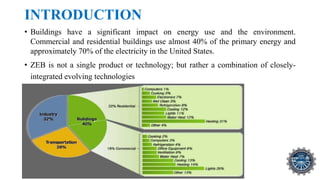
• Buildings have a significant impact on energy use and the environment.
Commercial and residential buildings use almost 40% of the primary energy and
approximately 70% of the electricity in the United States.
• ZEB is not a single product or technology; but rather a combination of closely-
integrated evolving technologies
WHAT IS ZERO ENERGY BUILDING?
• A zero-energy building is a building with zero net energy
consumption.
• The total amount of energy used by the building on an annual basis is
roughly equal to the amount of energy generated on the site through
renewable sources.
• These buildings consequently contribute less overall greenhouse gas to
the atmosphere than similar non-ZNE buildings.
WHY ZERO ENERGY BUILDING?
• To overcome energy crisis
• Reduces Energy Consumption
• Reduces Green House Gases (Carbon Emissions) & Global Warming
• Reduces Dependence on Fossil Fuels
• Protects Our Environment for Future Generations
HOW TO ADOPT ZERO ENERGY?
• Site selection & orientation
• Reduce heating, cooling, and lighting loads through passive
solar design and building envelope design.
• Employ renewable or high efficiency energy sources.
Site selection and orientation
• Orientation, layout and location on site will all influence the amount of
sun a building receives and therefore its year-round temperatures and
comfort.
• Be flat or north-sloping.
• Be free of obstructions to the north (and be unlikely to be built out in
future).
• Be able to accommodate a building with a relatively large north-facing
wall or walls for maximum solar gain (as well as north-facing outdoor
areas if those are wanted).
Passive solar design
• In passive solar building design, windows, walls, and floors are made
to collect, store, and distribute solar energy in the form of heat in the
winter and reject solar heat in the summer.
• This is called passive solar design because, unlike active solar heating
systems, it does not involve the use of mechanical and electrical
devices.
• Use of thermal mass and phase-change materials for slowing indoor
air temperature swings, solar cookers, the solar chimney for enhancing
natural ventilation, and earth sheltering.
Building envelope design
• Use high performance building envelopes select walls, roofs, and other
assemblies based on long term insulation, air barrier performance, and
durability requirements
• Damp proofing
• Waterproofing Membranes
• Insulation Materials
• Water stops
• Drainage Pipe
Employing renewable energy sources
Renewable energy: Renewable energy is energy which is generated
from natural sources i.e. sun, wind, rain, tides and can be generated
again and again as and when required.
Use of renewable energy can increase energy security and reduce
dependence on imported fuels, while reducing or eliminating
greenhouse gas emissions associated with energy use.
Sun as a renewable energy sources
• Zero Energy Homes should be designed to use the sun’s energy as much as possible, for such
things as: generating electricity, heating hot water, and utilizing passive solar space heating.
• Solar panels are placed on the rooftop or windows of the building, or anywhere where
maximum solar energy is received throughout the year.
• The energy generated can be used for cooking, heating, generating electricity etc.
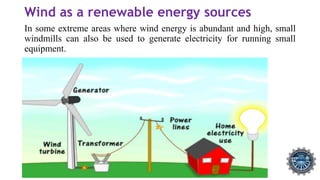
Wind as a renewable energy sources
In some extreme areas where wind energy is abundant and high, small
windmills can also be used to generate electricity for running small
equipment.
ADVANTAGES
• Isolation for building owners from future energy price increases
• Increased comfort due to more-uniform interior temperatures
• reduced requirement for energy
• Reduced Total cost of ownership due to improved energy efficiency
• Reduced total net monthly cost of living
• Minimized extra cost
DISADVANTAGES
• Initial costs can be higher
• Lack of skills or experience to build ZEBs
• ZEB may not reduce the required power plant capacity.
• Solar energy capture using the house envelope only works in locations
unobstructed from the sun.
• Without an optimised thermal envelope the embodied energy, heating
and cooling energy and resource usage is higher than needed.
ZERO ENERGY BUILDINGS IN INDIA
1. The Indira Paryavaran Bhavan,
New Delhi
• Constructed with adoption of solar passive
design and energy-efficient building
materials.
• Installed capacity of 930 kW peak power,
the building has the largest rooftop solar
system among multi-storied buildings in
India.
• More than 50 per cent area outside the
building is a soft area with plantation and
grass.
• The building has a robotic parking system
in the basement that can accommodate 330
cars.
2. Sun Carrier Omega, Bhopal
Sun Carrier Omega is the first company to
bring to India the Sun Tracking Intelligent
Solar PV System, which generates about
40% more energy than fixed systems. Sun
Carrier Omega has commissioned India's
first commercial Net-Zero Energy
Building
3. Akshay Urja Bhavan, Panchkula
• The Department of Renewable
Energy/HAREDA, has constructed its
office building “Akshay Urja Bhawan” on
an institutional plot measuring one Acre, at
sector 17 Panchkula.
• This building is being constructed based on
solar passive design techniques having
Building Integrated Photovoltaic (BIPV)
system of 42.50 KW capacity, Solar
Chimney, evaporative cooling, cavity walls,
Use of Fly ash based bricks water recycling
and Energy Efficient Lighting etc.
ZERO ENERGY BUIDING VERSUS
GREEN BUILDING
• The goal of green building and sustainable architecture is to use
resources more efficiently and reduce a building's negative impact on
the environment.
• Zero energy buildings achieve one key green-building goal of
completely or very significantly reducing energy use and greenhouse
gas emissions for the life of the building.
• Zero energy buildings may or may not be considered "green" in all
areas, such as reducing waste, using recycled building materials etc.
Zero Energy Building

Zero Energy Building

  • 1.
    ZERO ENERGY BUILDING Presentedby:- Shankha Shubhra Goswami Indira Gandhi Institute of Technology (IGIT), Sarang PhD Research Scholar Department of mechanical engineering
  • 2.
    OVERVIEW • Introduction • Whatis zero energy building? • Why zero energy building? • How to adopt zero energy? • Advantage • Disadvantage • Zero energy buildings in India • Zero energy building versus green building
  • 3.
    INTRODUCTION • Buildings havea significant impact on energy use and the environment. Commercial and residential buildings use almost 40% of the primary energy and approximately 70% of the electricity in the United States. • ZEB is not a single product or technology; but rather a combination of closely- integrated evolving technologies
  • 4.
    WHAT IS ZEROENERGY BUILDING? • A zero-energy building is a building with zero net energy consumption. • The total amount of energy used by the building on an annual basis is roughly equal to the amount of energy generated on the site through renewable sources. • These buildings consequently contribute less overall greenhouse gas to the atmosphere than similar non-ZNE buildings.
  • 5.
    WHY ZERO ENERGYBUILDING? • To overcome energy crisis • Reduces Energy Consumption • Reduces Green House Gases (Carbon Emissions) & Global Warming • Reduces Dependence on Fossil Fuels • Protects Our Environment for Future Generations
  • 6.
    HOW TO ADOPTZERO ENERGY? • Site selection & orientation • Reduce heating, cooling, and lighting loads through passive solar design and building envelope design. • Employ renewable or high efficiency energy sources.
  • 7.
    Site selection andorientation • Orientation, layout and location on site will all influence the amount of sun a building receives and therefore its year-round temperatures and comfort. • Be flat or north-sloping. • Be free of obstructions to the north (and be unlikely to be built out in future). • Be able to accommodate a building with a relatively large north-facing wall or walls for maximum solar gain (as well as north-facing outdoor areas if those are wanted).
  • 8.
    Passive solar design •In passive solar building design, windows, walls, and floors are made to collect, store, and distribute solar energy in the form of heat in the winter and reject solar heat in the summer. • This is called passive solar design because, unlike active solar heating systems, it does not involve the use of mechanical and electrical devices. • Use of thermal mass and phase-change materials for slowing indoor air temperature swings, solar cookers, the solar chimney for enhancing natural ventilation, and earth sheltering.
  • 9.
    Building envelope design •Use high performance building envelopes select walls, roofs, and other assemblies based on long term insulation, air barrier performance, and durability requirements • Damp proofing • Waterproofing Membranes • Insulation Materials • Water stops • Drainage Pipe
  • 10.
    Employing renewable energysources Renewable energy: Renewable energy is energy which is generated from natural sources i.e. sun, wind, rain, tides and can be generated again and again as and when required. Use of renewable energy can increase energy security and reduce dependence on imported fuels, while reducing or eliminating greenhouse gas emissions associated with energy use.
  • 11.
    Sun as arenewable energy sources • Zero Energy Homes should be designed to use the sun’s energy as much as possible, for such things as: generating electricity, heating hot water, and utilizing passive solar space heating. • Solar panels are placed on the rooftop or windows of the building, or anywhere where maximum solar energy is received throughout the year. • The energy generated can be used for cooking, heating, generating electricity etc.
  • 12.
    Wind as arenewable energy sources In some extreme areas where wind energy is abundant and high, small windmills can also be used to generate electricity for running small equipment.
  • 13.
    ADVANTAGES • Isolation forbuilding owners from future energy price increases • Increased comfort due to more-uniform interior temperatures • reduced requirement for energy • Reduced Total cost of ownership due to improved energy efficiency • Reduced total net monthly cost of living • Minimized extra cost
  • 14.
    DISADVANTAGES • Initial costscan be higher • Lack of skills or experience to build ZEBs • ZEB may not reduce the required power plant capacity. • Solar energy capture using the house envelope only works in locations unobstructed from the sun. • Without an optimised thermal envelope the embodied energy, heating and cooling energy and resource usage is higher than needed.
  • 15.
    ZERO ENERGY BUILDINGSIN INDIA 1. The Indira Paryavaran Bhavan, New Delhi • Constructed with adoption of solar passive design and energy-efficient building materials. • Installed capacity of 930 kW peak power, the building has the largest rooftop solar system among multi-storied buildings in India. • More than 50 per cent area outside the building is a soft area with plantation and grass. • The building has a robotic parking system in the basement that can accommodate 330 cars.
  • 16.
    2. Sun CarrierOmega, Bhopal Sun Carrier Omega is the first company to bring to India the Sun Tracking Intelligent Solar PV System, which generates about 40% more energy than fixed systems. Sun Carrier Omega has commissioned India's first commercial Net-Zero Energy Building
  • 17.
    3. Akshay UrjaBhavan, Panchkula • The Department of Renewable Energy/HAREDA, has constructed its office building “Akshay Urja Bhawan” on an institutional plot measuring one Acre, at sector 17 Panchkula. • This building is being constructed based on solar passive design techniques having Building Integrated Photovoltaic (BIPV) system of 42.50 KW capacity, Solar Chimney, evaporative cooling, cavity walls, Use of Fly ash based bricks water recycling and Energy Efficient Lighting etc.
  • 18.
    ZERO ENERGY BUIDINGVERSUS GREEN BUILDING • The goal of green building and sustainable architecture is to use resources more efficiently and reduce a building's negative impact on the environment. • Zero energy buildings achieve one key green-building goal of completely or very significantly reducing energy use and greenhouse gas emissions for the life of the building. • Zero energy buildings may or may not be considered "green" in all areas, such as reducing waste, using recycled building materials etc.