Zero Energy Building

By:
Name: Raghav Gupta
Branch: EEE
Roll Number: CUN110103039
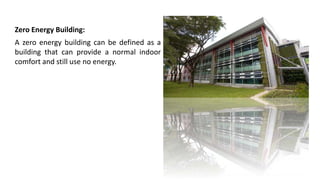
Zero Energy Building:

A zero energy building can be defined as a
building that can provide a normal indoor
comfort and still use no energy.
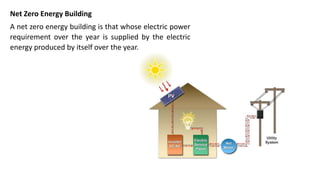
Net Zero Energy Building
A net zero energy building is that whose electric power
requirement over the year is supplied by the electric
energy produced by itself over the year.
1. Design and construction: The most cost-effective step
towards reduction in a building's energy consumption
usually occurs during the design process.
• It Begins with the Design
• The Site
• The Basis of Design
• Size and Shape Matter
• Design to Use the Sun
• Design with a Continuous Air Barrier
• Windows and Doors
• Other Design Considerations
• It Begins with the Design
• The Site
• The Basis of Design
• Size and Shape Matter
• Design to Use the Sun
• Design with a Continuous Air Barrier
• Windows and Doors
• Other Design Considerations
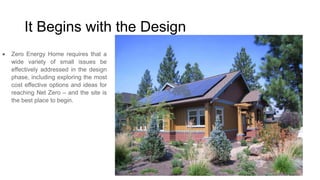
It Begins with the Design
Zero Energy Home requires that a
wide variety of small issues be
effectively addressed in the design
phase, including exploring the most
cost effective options and ideas for
reaching Net Zero – and the site is
the best place to begin.
• It Begins with the Design
• The Site
• The Basis of Design
• Size and Shape Matter
• Design to Use the Sun
• Design with a Continuous Air Barrier
• Windows and Doors
• Other Design Considerations
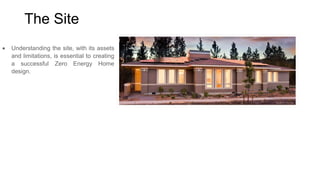
The Site
Understanding the site, with its assets
and limitations, is essential to creating
a successful Zero Energy Home
design.
• It Begins with the Design
• The Site
• The Basis of Design
• Size and Shape Matter

• Design to Use the Sun
• Design with a Continuous Air Barrier
• Windows and Doors

• Other Design Considerations
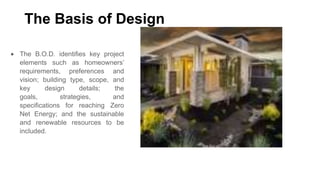
The Basis of Design
The B.O.D. identifies key project
elements such as homeowners’
requirements, preferences and
vision; building type, scope, and
key
design
details;
the
goals,
strategies,
and
specifications for reaching Zero
Net Energy; and the sustainable
and renewable resources to be
included.
• It Begins with the Design
• The Site
• The Basis of Design
• Size and Shape Matter
• Design to Use the Sun
• Design with a Continuous Air Barrier
• Windows and Doors

• Other Design Considerations
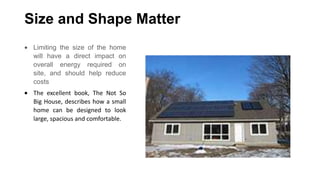
Size and Shape Matter
Limiting the size of the home
will have a direct impact on
overall energy required on
site, and should help reduce
costs
The excellent book, The Not So
Big House, describes how a small
home can be designed to look
large, spacious and comfortable.
• It Begins with the Design
• The Site

• The Basis of Design
• Size and Shape Matter
• Design to Use the Sun

• Design with a Continuous Air Barrier
• Windows and Doors
• Other Design Considerations
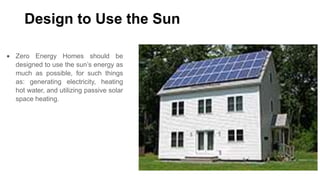
Design to Use the Sun
Zero Energy Homes should be
designed to use the sun’s energy as
much as possible, for such things
as: generating electricity, heating
hot water, and utilizing passive solar
space heating.
• It Begins with the Design

• The Site
• The Basis of Design
• Size and Shape Matter

• Design to Use the Sun
• Design with a Continuous Air Barrier
• Windows and Doors

• Other Design Considerations
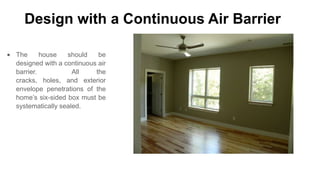
Design with a Continuous Air Barrier
The
house
should
be
designed with a continuous air
barrier.
All
the
cracks, holes, and exterior
envelope penetrations of the
home’s six-sided box must be
systematically sealed.
• It Begins with the Design

• The Site
• The Basis of Design
• Size and Shape Matter

• Design to Use the Sun
• Design with a Continuous Air Barrier
• Windows and Doors
• Other Design Considerations
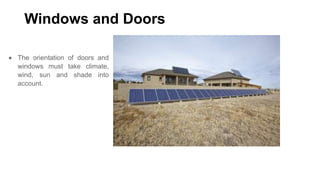
Windows and Doors
The orientation of doors and
windows must take climate,
wind, sun and shade into
account.
• It Begins with the Design
• The Site
• The Basis of Design

• Size and Shape Matter
• Design to Use the Sun
• Design with a Continuous Air Barrier
• Windows and Doors
• Other Design Considerations
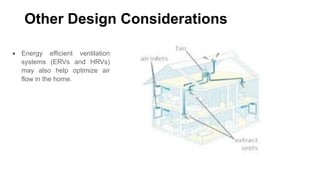
Other Design Considerations
Energy efficient ventilation
systems (ERVs and HRVs)
may also help optimize air
flow in the home.
Conclusion
• While affordable Zero Energy Homes should be designed using as
many standard building techniques as possible, some aspects of
building Zero Energy Homes, such as double offset walls, may be new
to builders and subcontractors. So all such building strategies should
be clearly outlined and specified on the design and in accompanying
notes. Clearly outlining all the details required to make a Zero Energy
Home makes it possible for any experienced builder and
subcontractor to successfully build an affordable Zero Net Energy
home.
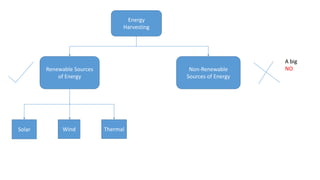
Energy
Harvesting

Renewable Sources
of Energy

Solar

Wind

Non-Renewable
Sources of Energy

Thermal

A big
NO
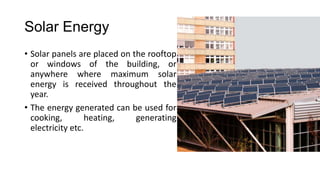
Solar Energy
• Solar panels are placed on the rooftop
or windows of the building, or
anywhere where maximum solar
energy is received throughout the
year.
• The energy generated can be used for
cooking,
heating,
generating
electricity etc.
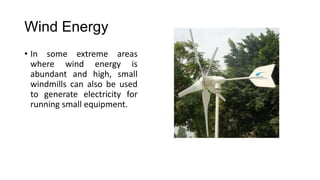
Wind Energy
• In some extreme areas
where wind energy is
abundant and high, small
windmills can also be used
to generate electricity for
running small equipment.
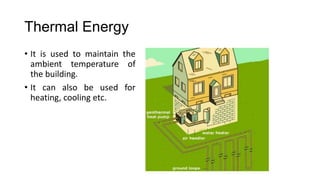
Thermal Energy
• It is used to maintain the
ambient temperature of
the building.
• It can also be used for
heating, cooling etc.
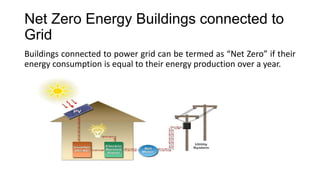
Net Zero Energy Buildings connected to
Grid
Buildings connected to power grid can be termed as “Net Zero” if their
energy consumption is equal to their energy production over a year.
Advantages of connecting to grid:
• Surplus energy if present, is not wasted.
• If generated energy is less than demand, the demand is
fulfilled by the power grid.
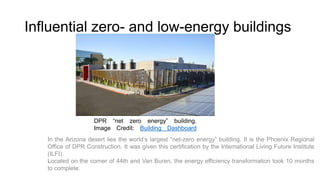
Influential zero- and low-energy buildings

DPR “net zero energy” building.
Image Credit: Building Dashboard
In the Arizona desert lies the world’s largest “net-zero energy” building. It is the Phoenix Regional
Office of DPR Construction. It was given this certification by the International Living Future Institute
(ILFI).
Located on the corner of 44th and Van Buren, the energy efficiency transformation took 10 months
to complete.
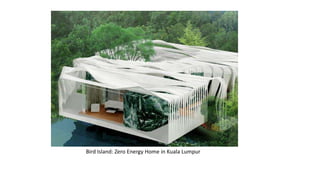
Bird Island: Zero Energy Home in Kuala Lumpur
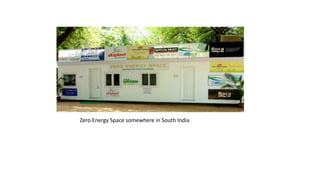
Zero Energy Space somewhere in South India
Development Efforts:
• The Google photovoltaic campus
• The Microsoft 480-kilowatt photovoltaic campus
• Zero Energy Home model for India presented by 3C company at Acres
2011.
Advantages and Disadvantages of ZEBs
• Advantages:
1. isolation for building owners from future energy price increases
2. increased comfort due to more-uniform interior temperatures
3. reduced requirement for energy austerity
4. reduced total cost of ownership due to improved energy efficiency
5. reduced total net monthly cost of living
6. improved reliability – photovoltaic systems have 25-year warranties
– seldom fail during weather problems – the 1982 photovoltaic
systems on the Walt Disney World EPCOT Energy Pavilion are still
working fine today, after going through 3 hurricanes
• Disadvantages:
1. initial costs can be higher – effort required to understand, apply,
and qualify for ZEB subsidies
2. very few designers or builders have the necessary skills or
experience to build ZEBs
3. new photovoltaic solar cells equipment technology price has been
falling at roughly 17% per year – It will lessen the value of capital
invested in a solar electric generating system – Current subsidies
will be phased out as photovoltaic mass production lowers future
price
4. while the individual house may use an average of net zero energy
over a year, it may demand energy at the time when peak demand
for the grid occurs. In such a case, the capacity of the grid must still
provide electricity to all loads. Therefore, a ZEB may not reduce the
Conclusion
With the advancement in renewable technology, Net Zero Energy Buildings
are the future. Many governments have framed Zero Energy building laws.
Few governments are also providing subsidies to individuals and
organizations for creating Zero Energy Buildings. But the goal of zero energy
buildings would not be fulfilled till the time all the people don’t understand
their responsibility and contribute towards reducing energy consumption.
Zero energy building

Zero energy building

  • 1.
    Zero Energy Building By: Name:Raghav Gupta Branch: EEE Roll Number: CUN110103039
  • 2.
    Zero Energy Building: Azero energy building can be defined as a building that can provide a normal indoor comfort and still use no energy.
  • 3.
    Net Zero EnergyBuilding A net zero energy building is that whose electric power requirement over the year is supplied by the electric energy produced by itself over the year.
  • 4.
    1. Design andconstruction: The most cost-effective step towards reduction in a building's energy consumption usually occurs during the design process. • It Begins with the Design • The Site • The Basis of Design • Size and Shape Matter • Design to Use the Sun • Design with a Continuous Air Barrier • Windows and Doors • Other Design Considerations
  • 5.
    • It Beginswith the Design • The Site • The Basis of Design • Size and Shape Matter • Design to Use the Sun • Design with a Continuous Air Barrier • Windows and Doors • Other Design Considerations
  • 6.
    It Begins withthe Design Zero Energy Home requires that a wide variety of small issues be effectively addressed in the design phase, including exploring the most cost effective options and ideas for reaching Net Zero – and the site is the best place to begin.
  • 7.
    • It Beginswith the Design • The Site • The Basis of Design • Size and Shape Matter • Design to Use the Sun • Design with a Continuous Air Barrier • Windows and Doors • Other Design Considerations
  • 8.
    The Site Understanding thesite, with its assets and limitations, is essential to creating a successful Zero Energy Home design.
  • 9.
    • It Beginswith the Design • The Site • The Basis of Design • Size and Shape Matter • Design to Use the Sun • Design with a Continuous Air Barrier • Windows and Doors • Other Design Considerations
  • 10.
    The Basis ofDesign The B.O.D. identifies key project elements such as homeowners’ requirements, preferences and vision; building type, scope, and key design details; the goals, strategies, and specifications for reaching Zero Net Energy; and the sustainable and renewable resources to be included.
  • 11.
    • It Beginswith the Design • The Site • The Basis of Design • Size and Shape Matter • Design to Use the Sun • Design with a Continuous Air Barrier • Windows and Doors • Other Design Considerations
  • 12.
    Size and ShapeMatter Limiting the size of the home will have a direct impact on overall energy required on site, and should help reduce costs The excellent book, The Not So Big House, describes how a small home can be designed to look large, spacious and comfortable.
  • 13.
    • It Beginswith the Design • The Site • The Basis of Design • Size and Shape Matter • Design to Use the Sun • Design with a Continuous Air Barrier • Windows and Doors • Other Design Considerations
  • 14.
    Design to Usethe Sun Zero Energy Homes should be designed to use the sun’s energy as much as possible, for such things as: generating electricity, heating hot water, and utilizing passive solar space heating.
  • 15.
    • It Beginswith the Design • The Site • The Basis of Design • Size and Shape Matter • Design to Use the Sun • Design with a Continuous Air Barrier • Windows and Doors • Other Design Considerations
  • 16.
    Design with aContinuous Air Barrier The house should be designed with a continuous air barrier. All the cracks, holes, and exterior envelope penetrations of the home’s six-sided box must be systematically sealed.
  • 17.
    • It Beginswith the Design • The Site • The Basis of Design • Size and Shape Matter • Design to Use the Sun • Design with a Continuous Air Barrier • Windows and Doors • Other Design Considerations
  • 18.
    Windows and Doors Theorientation of doors and windows must take climate, wind, sun and shade into account.
  • 19.
    • It Beginswith the Design • The Site • The Basis of Design • Size and Shape Matter • Design to Use the Sun • Design with a Continuous Air Barrier • Windows and Doors • Other Design Considerations
  • 20.
    Other Design Considerations Energyefficient ventilation systems (ERVs and HRVs) may also help optimize air flow in the home.
  • 21.
    Conclusion • While affordableZero Energy Homes should be designed using as many standard building techniques as possible, some aspects of building Zero Energy Homes, such as double offset walls, may be new to builders and subcontractors. So all such building strategies should be clearly outlined and specified on the design and in accompanying notes. Clearly outlining all the details required to make a Zero Energy Home makes it possible for any experienced builder and subcontractor to successfully build an affordable Zero Net Energy home.
  • 22.
  • 23.
    Solar Energy • Solarpanels are placed on the rooftop or windows of the building, or anywhere where maximum solar energy is received throughout the year. • The energy generated can be used for cooking, heating, generating electricity etc.
  • 24.
    Wind Energy • Insome extreme areas where wind energy is abundant and high, small windmills can also be used to generate electricity for running small equipment.
  • 25.
    Thermal Energy • Itis used to maintain the ambient temperature of the building. • It can also be used for heating, cooling etc.
  • 26.
    Net Zero EnergyBuildings connected to Grid Buildings connected to power grid can be termed as “Net Zero” if their energy consumption is equal to their energy production over a year.
  • 27.
    Advantages of connectingto grid: • Surplus energy if present, is not wasted. • If generated energy is less than demand, the demand is fulfilled by the power grid.
  • 28.
    Influential zero- andlow-energy buildings DPR “net zero energy” building. Image Credit: Building Dashboard In the Arizona desert lies the world’s largest “net-zero energy” building. It is the Phoenix Regional Office of DPR Construction. It was given this certification by the International Living Future Institute (ILFI). Located on the corner of 44th and Van Buren, the energy efficiency transformation took 10 months to complete.
  • 29.
    Bird Island: ZeroEnergy Home in Kuala Lumpur
  • 30.
    Zero Energy Spacesomewhere in South India
  • 31.
    Development Efforts: • TheGoogle photovoltaic campus • The Microsoft 480-kilowatt photovoltaic campus • Zero Energy Home model for India presented by 3C company at Acres 2011.
  • 32.
    Advantages and Disadvantagesof ZEBs • Advantages: 1. isolation for building owners from future energy price increases 2. increased comfort due to more-uniform interior temperatures 3. reduced requirement for energy austerity 4. reduced total cost of ownership due to improved energy efficiency 5. reduced total net monthly cost of living 6. improved reliability – photovoltaic systems have 25-year warranties – seldom fail during weather problems – the 1982 photovoltaic systems on the Walt Disney World EPCOT Energy Pavilion are still working fine today, after going through 3 hurricanes
  • 33.
    • Disadvantages: 1. initialcosts can be higher – effort required to understand, apply, and qualify for ZEB subsidies 2. very few designers or builders have the necessary skills or experience to build ZEBs 3. new photovoltaic solar cells equipment technology price has been falling at roughly 17% per year – It will lessen the value of capital invested in a solar electric generating system – Current subsidies will be phased out as photovoltaic mass production lowers future price 4. while the individual house may use an average of net zero energy over a year, it may demand energy at the time when peak demand for the grid occurs. In such a case, the capacity of the grid must still provide electricity to all loads. Therefore, a ZEB may not reduce the
  • 34.
    Conclusion With the advancementin renewable technology, Net Zero Energy Buildings are the future. Many governments have framed Zero Energy building laws. Few governments are also providing subsidies to individuals and organizations for creating Zero Energy Buildings. But the goal of zero energy buildings would not be fulfilled till the time all the people don’t understand their responsibility and contribute towards reducing energy consumption.