CAPSTONE PROJECT
PLANNING
ZERO ENERGY BUILDING
CONTENT
 WHAT IS ZERO ENERGY BUILDING ?
 DESIGN AND CONSTRUCTION
 BASIC CONSTRUCTION OF ZERO ENENGY BUILDING ?
 ENERGY HARVEST
 NET ZERO ENERGY BUILDING CONNECTED TO GRID
 VARIOUS TYPE OF NET ZERO BUILDING
 HOW TO ACHIEVE ZERO ENERGY
 ZERO ENERGY VERSUS GREEN BUILDING
 WHERE CAN BE ZERO ENERGY CONCEPT BE APPLIED ?
 ADVANTAGES AND DISADVANTAGES
 CONCLUSION
 REFERENCE
WHAT IS ZERO ENERGY BUILDING ?
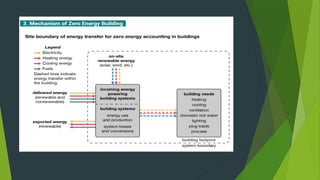
 A zero energy building is a building with zero net energy
consumption.
 Generates more energy than it consumers.
 Building contribute less overall greenhouse gases to the
atmosphere than a similar non energy building.
 Reduce carbon emissions and dependenace on fuels whis is the
ZERO NET-ENENRY CONSUPTION PRINCIPLE.
DESIGN AND CONSTRUCTION
 PASSIVE SOLAR BUILDING DESIGN :
Walls, floors and windows distribute heat during winter and reject
the solar heat during summer.
 BUILDING ENERGY SIMULATION :
Predicts the performance of ZNE building depending on the
energy usage before it is built.
 ENERGY SAVING FEATURES :
Include heating and cooling loads, insulation and ventilation
depending on the
climate
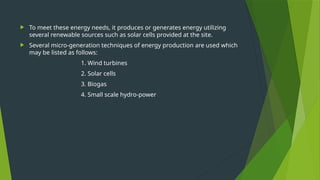
 To meet these energy needs, it produces or generates energy utilizing
several renewable sources such as solar cells provided at the site.
 Several micro-generation techniques of energy production are used which
may be listed as follows:
1. Wind turbines
2. Solar cells
3. Biogas
4. Small scale hydro-power
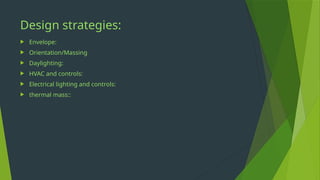
Design strategies:
 Envelope:
 Orientation/Massing
 Daylighting:
 HVAC and controls:
 Electrical lighting and controls:
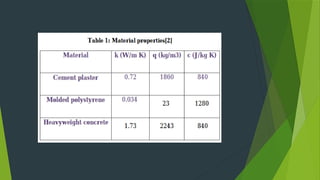
 thermal mass::
ENERGY HARVEST
 Solar Cells
 Wind Turbiones
 Solar Thermal Collectors linked to Seasonal Thermal Energy Storage
 Solar Thermal Collectors – collects by absorbing sunlight.
 Seasonal Thermal Energy Storage (STES)- storage of heat or cold up to several months.
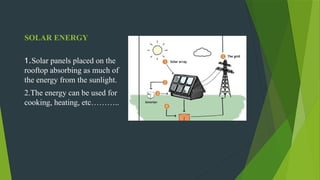
SOLAR ENERGY
1.Solar panels placed on the
rooftop absorbing as much of
the energy from the sunlight.
2.The energy can be used for
cooking, heating, etc………..
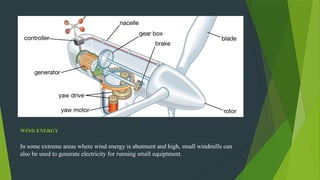
WIND ENERGY
In some extreme areas where wind energy is abutment and high, small windmills can
also be used to generate electricity for running small equiptment.
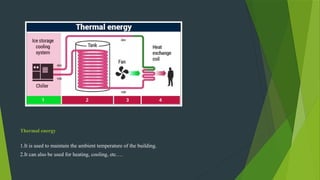
Thermal energy
1.It is used to maintain the ambient temperature of the building.
2.It can also be used for heating, cooling, etc….
Net Zero Energy Building Connected To
Grid
 Building connected to power grid can be termed as “Net Zero” if their energy
consumption is equal to their energy production over a year.
Various types of net-zero energy
buildings
 Net Zero Site Energy
 Net Zero Source Energy
 Net Zero Energy Costs
 Net Zero Emissions
How to achieve zero energy?
 A ZEB in only possible if three things happen:
 1. The goal is set early and the project team makes integrated
decision.
 2. Energy consumption is cut dramatically.
 3. An investment in on-site power generation is made(PV).
Zero Energy Building versus Green
Building
 Green Building is a building process depending on the environment and efficient
resources available.
 Green Building reduces negative impact on the environment.
 Zero Energy Building reduces more energy usage and greeanhouse gases emission.
 Zero energy building may not be considered Green in all areas.
Where can “ZERO ENERGY” concept be
adopted ?
 Residential Areas
 Commercial Buildings
 Industries
 New Construction and existing building.
Advantages
 1. Reduction in the net monthly expense of living
 2. Higher resale value
 3. Increased comfort in living
 4. Better reliability
 5. Economical even in the long run
 6. Isolation from the future energy rate increase
 7. Environmentally compatible
 8. Lower emission of carbon
Disadvantages
 Very few designers or builders have the necessary skills or experience to build ZEB.
 Solar Energy capture is only applicable for sun prone areas.
CONCLUSION
We successfully complete ppt of zero energy building
We learn about following point
 WHAT IS ZERO ENERGY BUILDING ?
 DESIGN AND CONSTRUCTION
 BASIC CONSTRUCTION OF ZERO ENENGY BUILDING ?
 ENERGY HARVEST
 NET ZERO ENERGY BUILDING CONNECTED TO GRID
 ZERO ENERGY VERSUS GREEN BUILDING
 WHERE CAN BE ZERO ENERGY CONCEPT BE APPLIED ?
 ADVANTAGES AND DISADVANTAGES
References
 [1] P.Torcellini,S. Pless, M. Deru, D. Crawley, Zero Energy Buildings: A Critical Look at The
Definition, in: ACEEE Summer Stud, Pacific Grove, California, USA, 2006
 [2] Sami A. Al-Sanea , M.F. Zedan, S.N. Al-Hussain. Effect of thermal mass on performance
of insulated building walls and the concept of energy savings potential,2011,
www.elsevier.com/ locate/apenergy
 [3] M. Noguchi, A. Athienitis, V. Delisle, J. Ayoub, B. Berneche, Net Zero Energy Homes of
the Future: A Case Study of the ÉcoTerraTM House in Canada, in: Renewable Energy
Congress, Glasgow, Scotland, July, 2008.
 [4] T.V. Esbensen, V. Korsgaard, Dimensioning of the solar heating system in the zero energy
house in Denmark, Solar Energy 19 (2) (1977) 195–199.
 [5] A.J. Marszal, et al., Zero Energy Building – A review of definitions and calculation
methodologies, Energy Buildings (2011), doi:10.1016/j.enbuild.2010.12.022
THANK YOU !!!

Capstone project planning Zero energy building

  • 1.
  • 2.
    CONTENT  WHAT ISZERO ENERGY BUILDING ?  DESIGN AND CONSTRUCTION  BASIC CONSTRUCTION OF ZERO ENENGY BUILDING ?  ENERGY HARVEST  NET ZERO ENERGY BUILDING CONNECTED TO GRID  VARIOUS TYPE OF NET ZERO BUILDING  HOW TO ACHIEVE ZERO ENERGY  ZERO ENERGY VERSUS GREEN BUILDING  WHERE CAN BE ZERO ENERGY CONCEPT BE APPLIED ?  ADVANTAGES AND DISADVANTAGES  CONCLUSION  REFERENCE
  • 3.
    WHAT IS ZEROENERGY BUILDING ?  A zero energy building is a building with zero net energy consumption.  Generates more energy than it consumers.  Building contribute less overall greenhouse gases to the atmosphere than a similar non energy building.  Reduce carbon emissions and dependenace on fuels whis is the ZERO NET-ENENRY CONSUPTION PRINCIPLE.
  • 4.
    DESIGN AND CONSTRUCTION PASSIVE SOLAR BUILDING DESIGN : Walls, floors and windows distribute heat during winter and reject the solar heat during summer.  BUILDING ENERGY SIMULATION : Predicts the performance of ZNE building depending on the energy usage before it is built.  ENERGY SAVING FEATURES : Include heating and cooling loads, insulation and ventilation depending on the climate
  • 6.
     To meetthese energy needs, it produces or generates energy utilizing several renewable sources such as solar cells provided at the site.  Several micro-generation techniques of energy production are used which may be listed as follows: 1. Wind turbines 2. Solar cells 3. Biogas 4. Small scale hydro-power
  • 7.
    Design strategies:  Envelope: Orientation/Massing  Daylighting:  HVAC and controls:  Electrical lighting and controls:  thermal mass::
  • 9.
    ENERGY HARVEST  SolarCells  Wind Turbiones  Solar Thermal Collectors linked to Seasonal Thermal Energy Storage  Solar Thermal Collectors – collects by absorbing sunlight.  Seasonal Thermal Energy Storage (STES)- storage of heat or cold up to several months.
  • 10.
    SOLAR ENERGY 1.Solar panelsplaced on the rooftop absorbing as much of the energy from the sunlight. 2.The energy can be used for cooking, heating, etc………..
  • 11.
    WIND ENERGY In someextreme areas where wind energy is abutment and high, small windmills can also be used to generate electricity for running small equiptment.
  • 12.
    Thermal energy 1.It isused to maintain the ambient temperature of the building. 2.It can also be used for heating, cooling, etc….
  • 13.
    Net Zero EnergyBuilding Connected To Grid  Building connected to power grid can be termed as “Net Zero” if their energy consumption is equal to their energy production over a year.
  • 14.
    Various types ofnet-zero energy buildings  Net Zero Site Energy  Net Zero Source Energy  Net Zero Energy Costs  Net Zero Emissions
  • 15.
    How to achievezero energy?  A ZEB in only possible if three things happen:  1. The goal is set early and the project team makes integrated decision.  2. Energy consumption is cut dramatically.  3. An investment in on-site power generation is made(PV).
  • 16.
    Zero Energy Buildingversus Green Building  Green Building is a building process depending on the environment and efficient resources available.  Green Building reduces negative impact on the environment.  Zero Energy Building reduces more energy usage and greeanhouse gases emission.  Zero energy building may not be considered Green in all areas.
  • 17.
    Where can “ZEROENERGY” concept be adopted ?  Residential Areas  Commercial Buildings  Industries  New Construction and existing building.
  • 18.
    Advantages  1. Reductionin the net monthly expense of living  2. Higher resale value  3. Increased comfort in living  4. Better reliability  5. Economical even in the long run  6. Isolation from the future energy rate increase  7. Environmentally compatible  8. Lower emission of carbon
  • 19.
    Disadvantages  Very fewdesigners or builders have the necessary skills or experience to build ZEB.  Solar Energy capture is only applicable for sun prone areas.
  • 20.
    CONCLUSION We successfully completeppt of zero energy building We learn about following point  WHAT IS ZERO ENERGY BUILDING ?  DESIGN AND CONSTRUCTION  BASIC CONSTRUCTION OF ZERO ENENGY BUILDING ?  ENERGY HARVEST  NET ZERO ENERGY BUILDING CONNECTED TO GRID  ZERO ENERGY VERSUS GREEN BUILDING  WHERE CAN BE ZERO ENERGY CONCEPT BE APPLIED ?  ADVANTAGES AND DISADVANTAGES
  • 21.
    References  [1] P.Torcellini,S.Pless, M. Deru, D. Crawley, Zero Energy Buildings: A Critical Look at The Definition, in: ACEEE Summer Stud, Pacific Grove, California, USA, 2006  [2] Sami A. Al-Sanea , M.F. Zedan, S.N. Al-Hussain. Effect of thermal mass on performance of insulated building walls and the concept of energy savings potential,2011, www.elsevier.com/ locate/apenergy  [3] M. Noguchi, A. Athienitis, V. Delisle, J. Ayoub, B. Berneche, Net Zero Energy Homes of the Future: A Case Study of the ÉcoTerraTM House in Canada, in: Renewable Energy Congress, Glasgow, Scotland, July, 2008.  [4] T.V. Esbensen, V. Korsgaard, Dimensioning of the solar heating system in the zero energy house in Denmark, Solar Energy 19 (2) (1977) 195–199.  [5] A.J. Marszal, et al., Zero Energy Building – A review of definitions and calculation methodologies, Energy Buildings (2011), doi:10.1016/j.enbuild.2010.12.022
  • 22.