ZERO
ENERGY
BUILDINGA.GOWTHAM
ZERO ENGERGY BUILDING
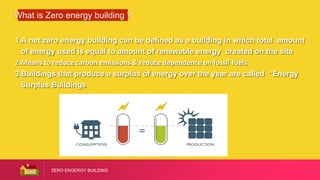
1.A net zero energy building can be defined as a building in which total amount
of energy used is equal to amount of renewable energy created on the site
2.Means to reduce carbon emissions & reduce dependence on fossil fuels
3.Buildings that produce a surplus of energy over the year are called “Energy
Surplus Buildings
What is Zero energy building ?
ZERO ENERGY BUILDING
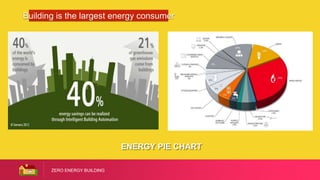
Building is the largest energy consumer
ENERGY PIE CHART
ZERO ENERGY BUILDING
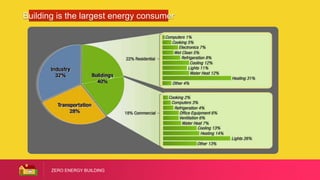
Building is the largest energy consumer
ZERO ENERGY BUILDING
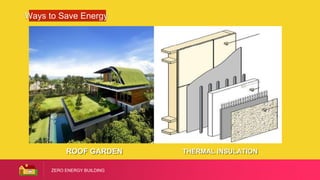
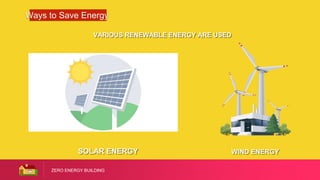
Ways to Save Energy
ROOF GARDEN THERMAL INSULATION
ZERO ENERGY BUILDING
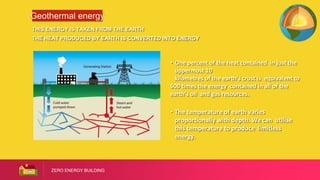
Ways to Save Energy
SOLAR ENERGY WIND ENERGY
VARIOUS RENEWABLE ENERGY ARE USED
ZERO ENERGY BUILDING
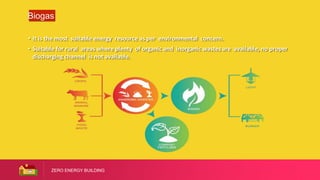
Geothermal energy
THIS ENERGY IS TAKEN FROM THE EARTH
THE HEAT PRODUCED BY EARTH IS CONVERTED INTO ENERGY
• One percent of the heat contained in just the
uppermost 10
kilometres of the earth’s crust is equivalent to
500 times the energy contained in all of the
earth's oil and gas resources.
• The temperature of earth varies
proportionally with depth. We can utilise
this temperature to produce limitless
energy.
ZERO ENERGY BUILDING
Biogas
• It is the most suitable energy resource as per environmental concern.
• Suitable for rural areas where plenty of organic and inorganic wastes are available, no proper
discharging channel is not available.
ZERO ENERGY BUILDING
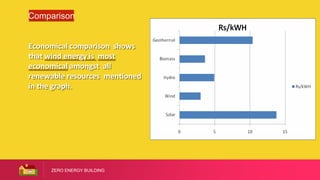
Comparison
Economical comparison shows
that wind energy is most
economical amongst all
renewable resources mentioned
in the graph.
ZERO ENERGY BUILDING
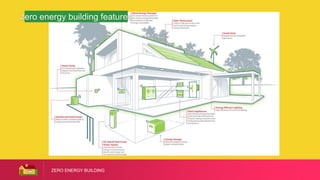
zero energy building features
ZERO ENGERGY BUILDING
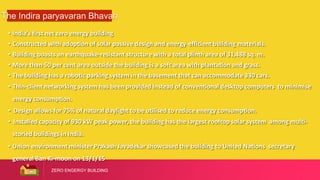
The Indira paryavaran Bhavan
• India’s first net zero energy building
• Constructed with adoption of solar passive design and energy-efficient building materials.
• Building boasts an earthquake-resistant structure with a total plinth area of 31,488 sq. m.
• More than 50 per cent area outside the building is a soft area with plantation and grass.
• The building has a robotic parking system in the basement that can accommodate 330 cars.
• Thin-client networking system has been provided instead of conventional desktop computers to minimise
energy consumption.
• Design allows for 75% of natural daylight to be utilised to reduce energy consumption.
• Installed capacity of 930 kW peak power, the building has the largest rooftop solar system among multi-
storied buildings in India.
• Union environment minister Prakash Javadekar showcased the building to United Nations secretary
general Ban Ki-moon on 13/1/15
ZERO ENGERGY BUILDING
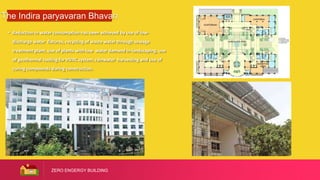
The Indira paryavaran Bhavan
• Reduction in water consumption has been achieved by use of low-
discharge water fixtures, recycling of waste water through sewage
treatment plant, use of plants with low water demand in landscaping, use
of geothermal cooling for HVAC system, rainwater harvesting and use of
curing compounds during construction.
ZERO ENERGY BUILDING
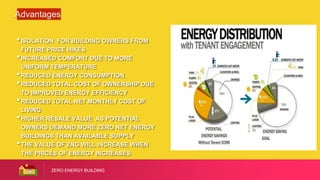
Advantages
•ISOLATION FOR BUILDING OWNERS FROM
FUTURE PRICE HIKES
•INCREASED COMFORT DUE TO MORE
UNIFORM TEMPERATURE
•REDUCED ENERGY CONSUMPTION
•REDUCED TOTAL COST OF OWNERSHIP DUE
TO IMPROVED ENERGY EFFICIENCY
•REDUCED TOTAL NET MONTHLY COST OF
LIVING
•HIGHER RESALE VALUE AS POTENTIAL
OWNERS DEMAND MORE ZERO NET ENERGY
BUILDINGS THAN AVAILABLE SUPPLY
•THE VALUE OF ZNG WILL INCREASE WHEN
THE PRICES OF ENERGY INCREASES
ZERO ENERGY BUILDING
Disadvantages
initial costs can be higher - effort required to understand, apply, and qualify for ZEB
subsidies
very few designers or builders have the necessary skills or experience to build Zero Net
Energy Buildings
challenge to recover higher initial costs on resale of building
climate-specific design may limit future ability to respond to rising-or-falling ambient
temperatures (global warming)
Gowtham
THANK
YOU

Net Zero Energy Building

  • 1.
  • 2.
    ZERO ENGERGY BUILDING 1.Anet zero energy building can be defined as a building in which total amount of energy used is equal to amount of renewable energy created on the site 2.Means to reduce carbon emissions & reduce dependence on fossil fuels 3.Buildings that produce a surplus of energy over the year are called “Energy Surplus Buildings What is Zero energy building ?
  • 3.
    ZERO ENERGY BUILDING Buildingis the largest energy consumer ENERGY PIE CHART
  • 4.
    ZERO ENERGY BUILDING Buildingis the largest energy consumer
  • 5.
    ZERO ENERGY BUILDING Waysto Save Energy ROOF GARDEN THERMAL INSULATION
  • 6.
    ZERO ENERGY BUILDING Waysto Save Energy SOLAR ENERGY WIND ENERGY VARIOUS RENEWABLE ENERGY ARE USED
  • 7.
    ZERO ENERGY BUILDING Geothermalenergy THIS ENERGY IS TAKEN FROM THE EARTH THE HEAT PRODUCED BY EARTH IS CONVERTED INTO ENERGY • One percent of the heat contained in just the uppermost 10 kilometres of the earth’s crust is equivalent to 500 times the energy contained in all of the earth's oil and gas resources. • The temperature of earth varies proportionally with depth. We can utilise this temperature to produce limitless energy.
  • 8.
    ZERO ENERGY BUILDING Biogas •It is the most suitable energy resource as per environmental concern. • Suitable for rural areas where plenty of organic and inorganic wastes are available, no proper discharging channel is not available.
  • 9.
    ZERO ENERGY BUILDING Comparison Economicalcomparison shows that wind energy is most economical amongst all renewable resources mentioned in the graph.
  • 10.
    ZERO ENERGY BUILDING zeroenergy building features
  • 11.
    ZERO ENGERGY BUILDING TheIndira paryavaran Bhavan • India’s first net zero energy building • Constructed with adoption of solar passive design and energy-efficient building materials. • Building boasts an earthquake-resistant structure with a total plinth area of 31,488 sq. m. • More than 50 per cent area outside the building is a soft area with plantation and grass. • The building has a robotic parking system in the basement that can accommodate 330 cars. • Thin-client networking system has been provided instead of conventional desktop computers to minimise energy consumption. • Design allows for 75% of natural daylight to be utilised to reduce energy consumption. • Installed capacity of 930 kW peak power, the building has the largest rooftop solar system among multi- storied buildings in India. • Union environment minister Prakash Javadekar showcased the building to United Nations secretary general Ban Ki-moon on 13/1/15
  • 12.
    ZERO ENGERGY BUILDING TheIndira paryavaran Bhavan • Reduction in water consumption has been achieved by use of low- discharge water fixtures, recycling of waste water through sewage treatment plant, use of plants with low water demand in landscaping, use of geothermal cooling for HVAC system, rainwater harvesting and use of curing compounds during construction.
  • 13.
    ZERO ENERGY BUILDING Advantages •ISOLATIONFOR BUILDING OWNERS FROM FUTURE PRICE HIKES •INCREASED COMFORT DUE TO MORE UNIFORM TEMPERATURE •REDUCED ENERGY CONSUMPTION •REDUCED TOTAL COST OF OWNERSHIP DUE TO IMPROVED ENERGY EFFICIENCY •REDUCED TOTAL NET MONTHLY COST OF LIVING •HIGHER RESALE VALUE AS POTENTIAL OWNERS DEMAND MORE ZERO NET ENERGY BUILDINGS THAN AVAILABLE SUPPLY •THE VALUE OF ZNG WILL INCREASE WHEN THE PRICES OF ENERGY INCREASES
  • 14.
    ZERO ENERGY BUILDING Disadvantages initialcosts can be higher - effort required to understand, apply, and qualify for ZEB subsidies very few designers or builders have the necessary skills or experience to build Zero Net Energy Buildings challenge to recover higher initial costs on resale of building climate-specific design may limit future ability to respond to rising-or-falling ambient temperatures (global warming)
  • 15.