Downloaded 243 times
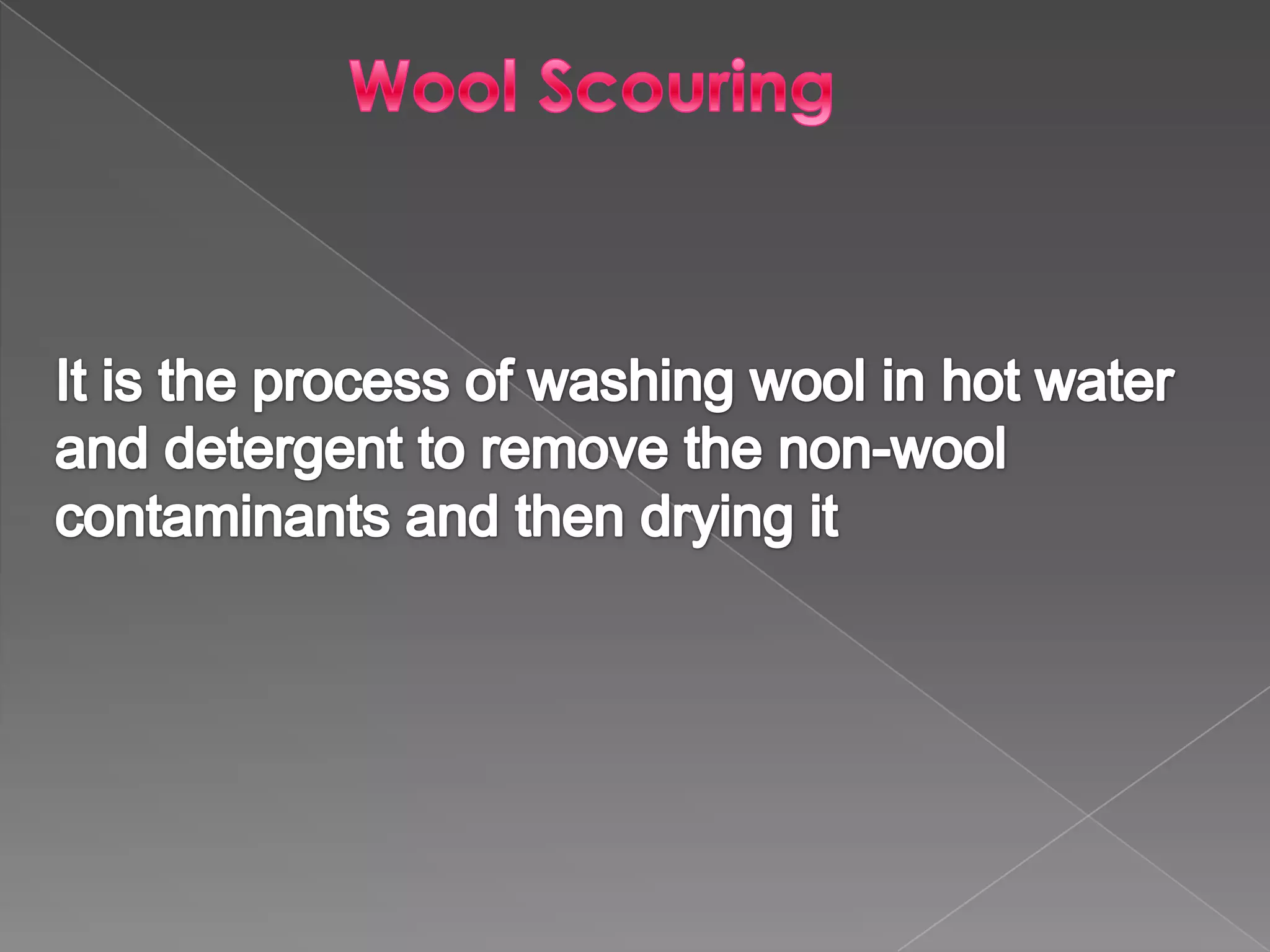
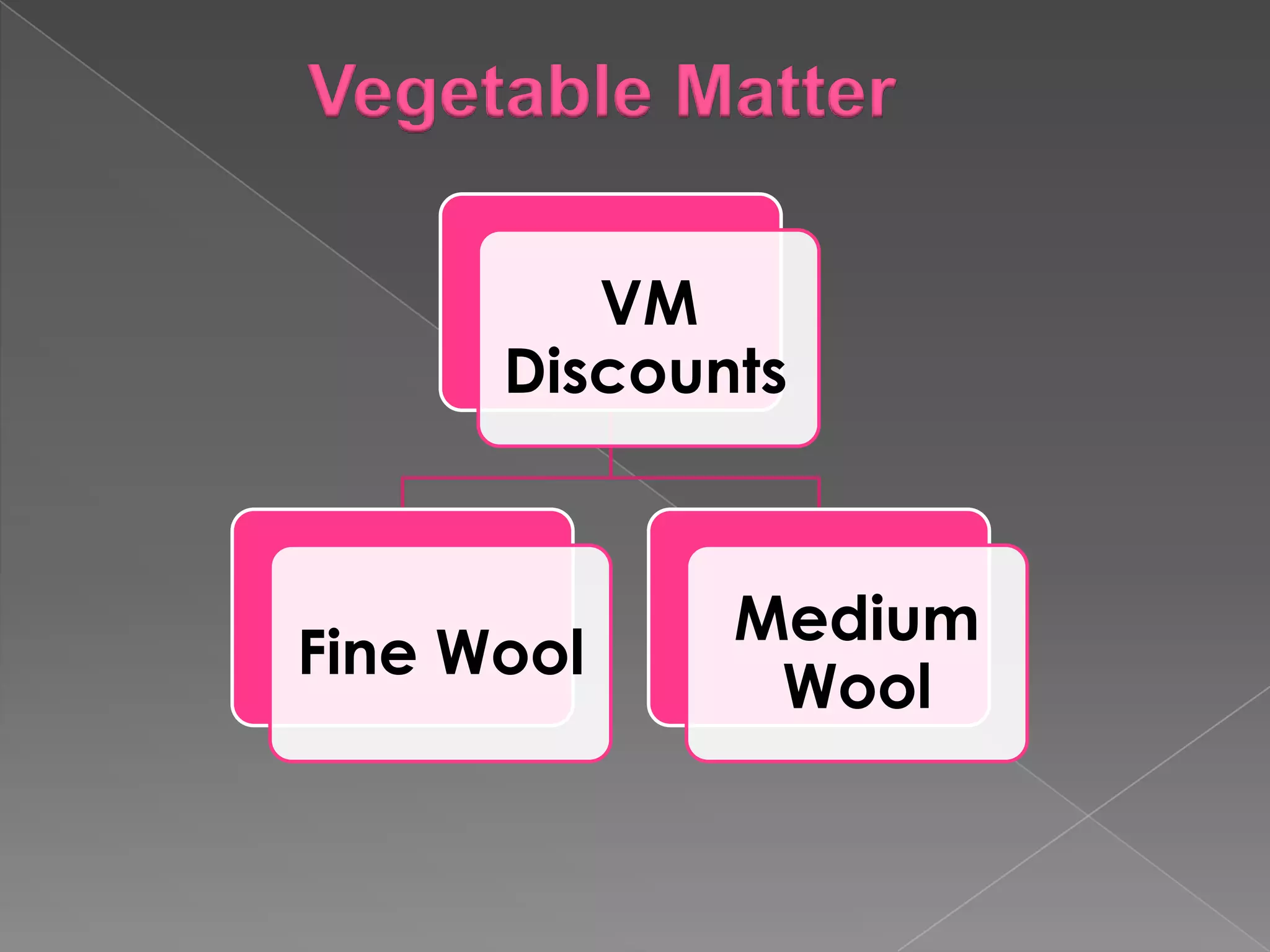
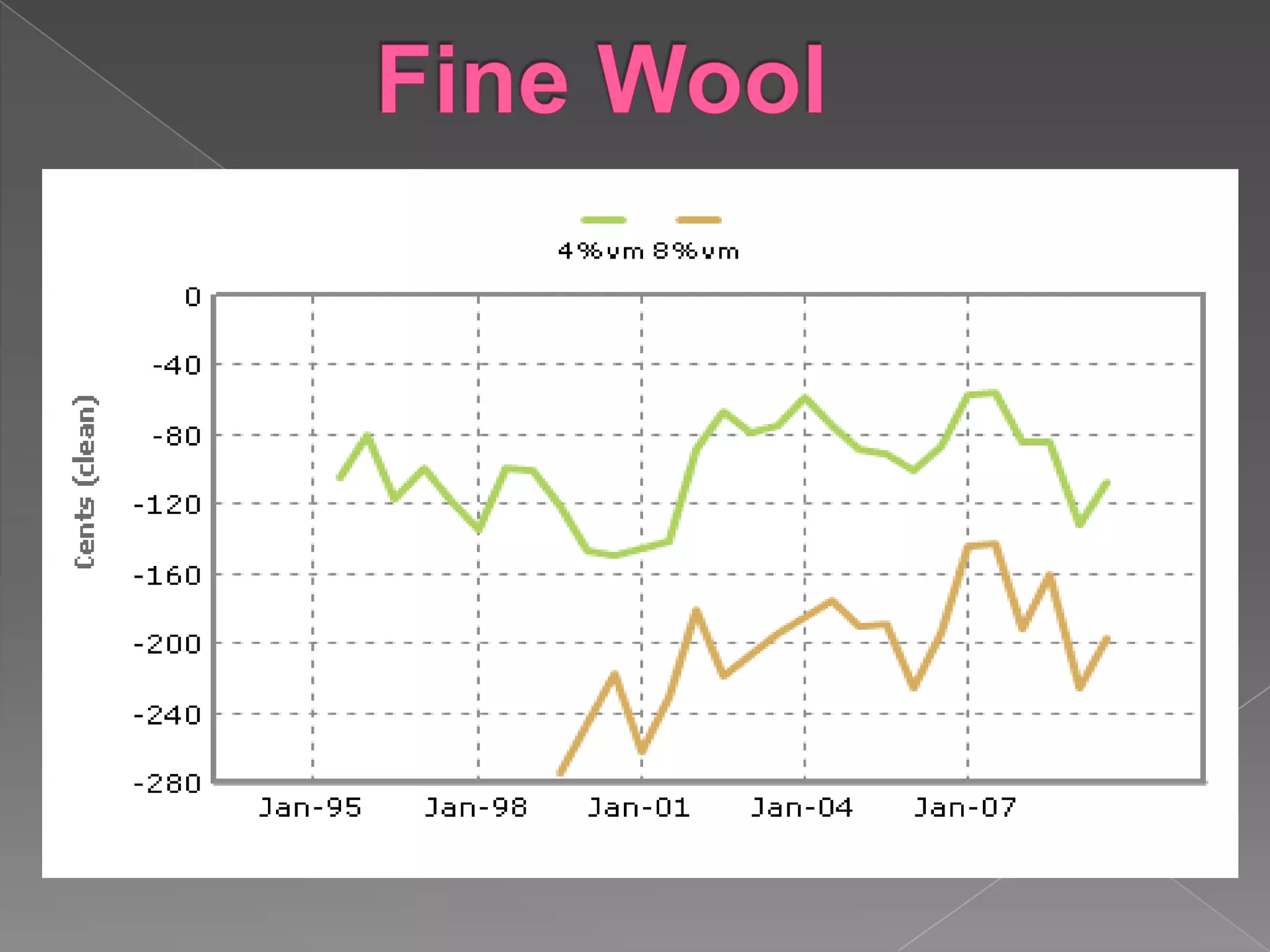
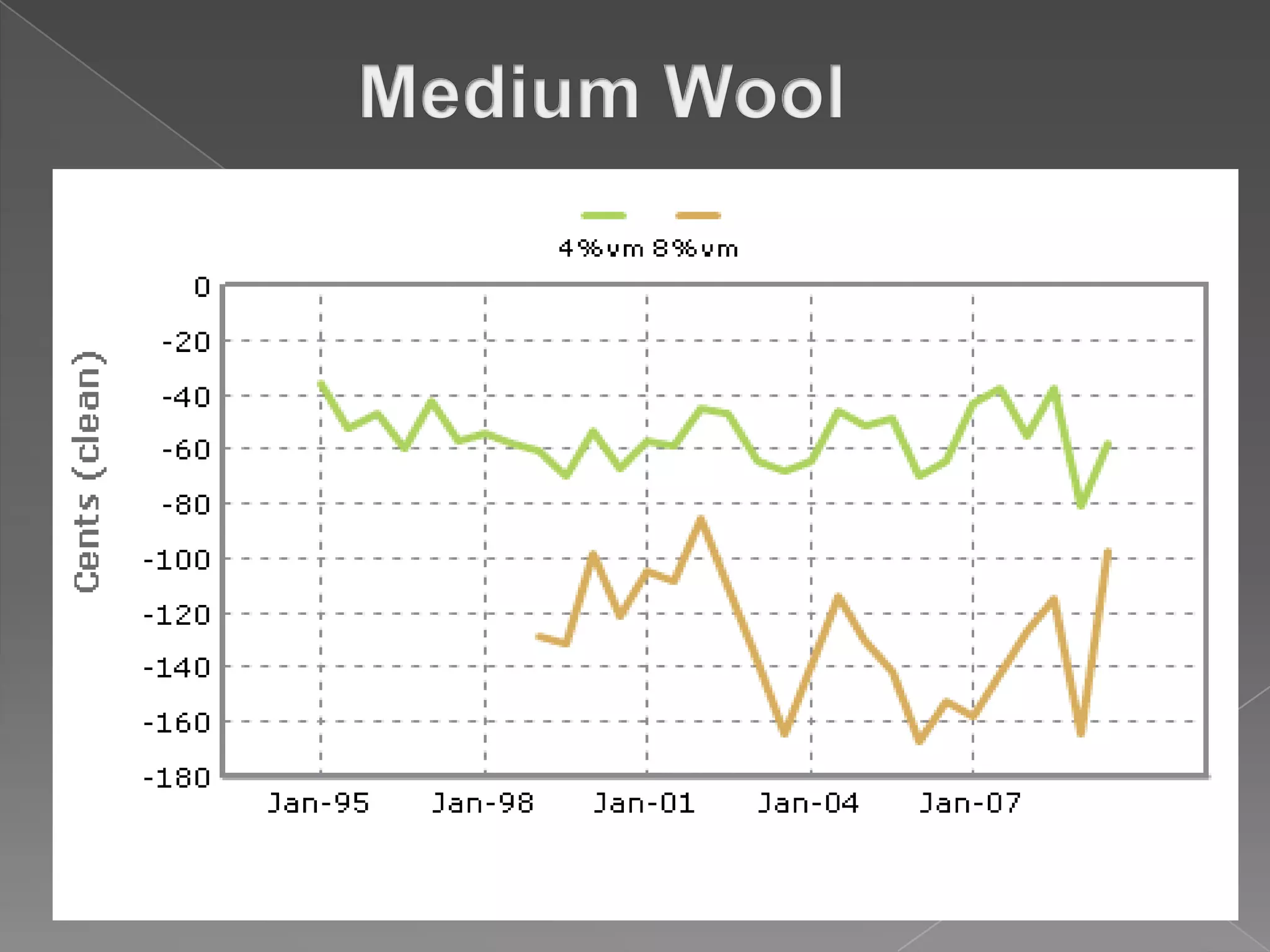
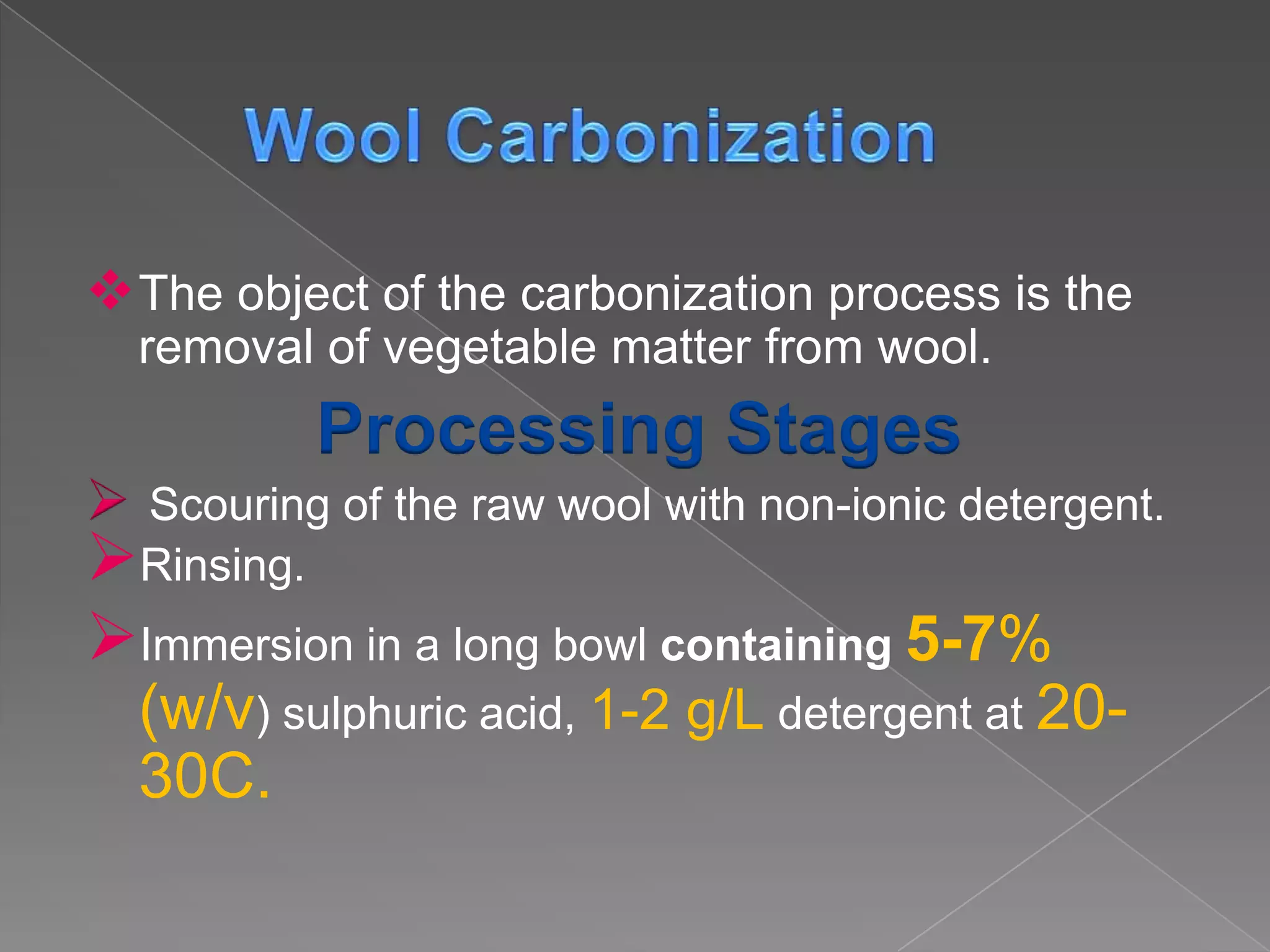
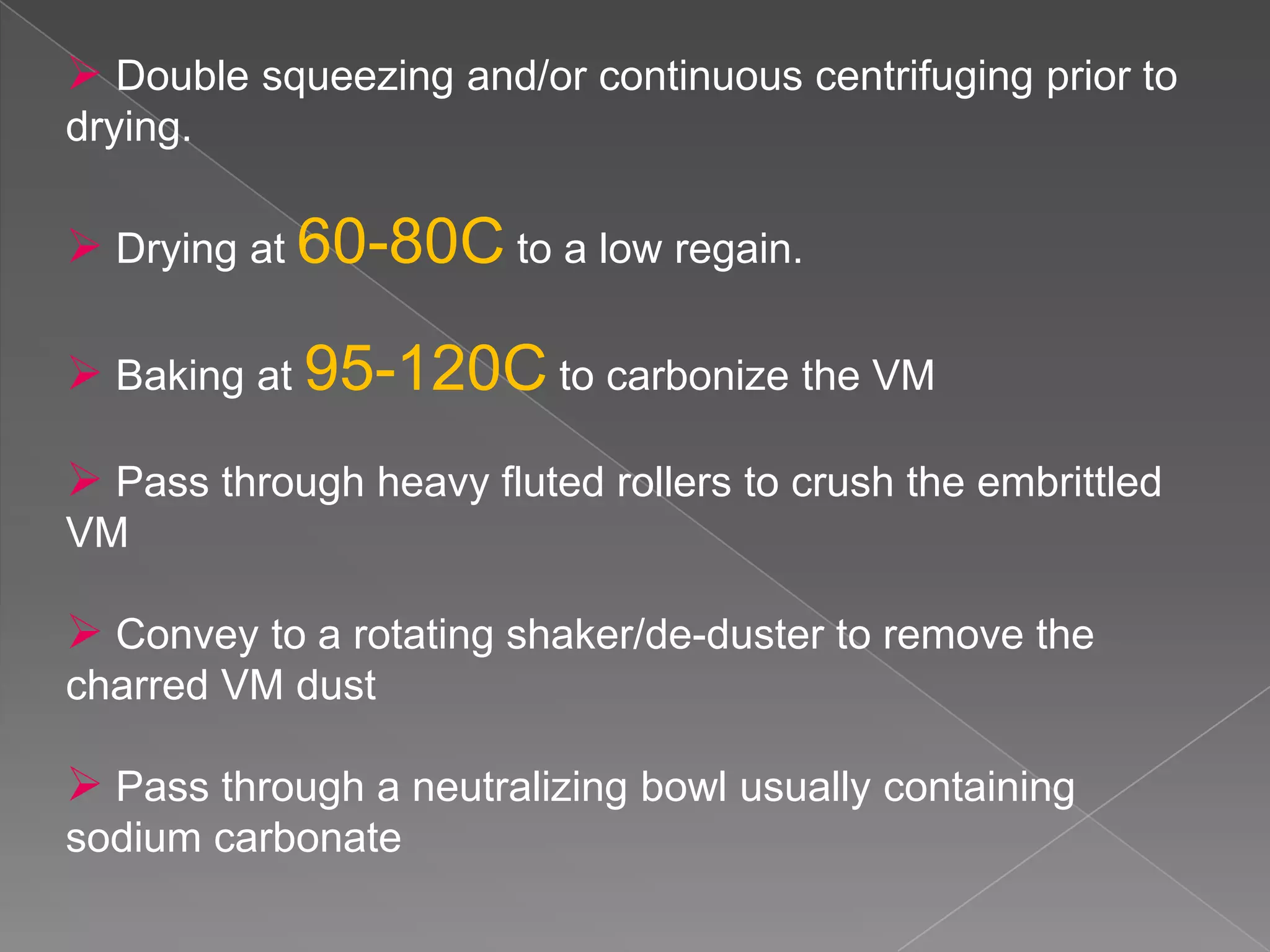
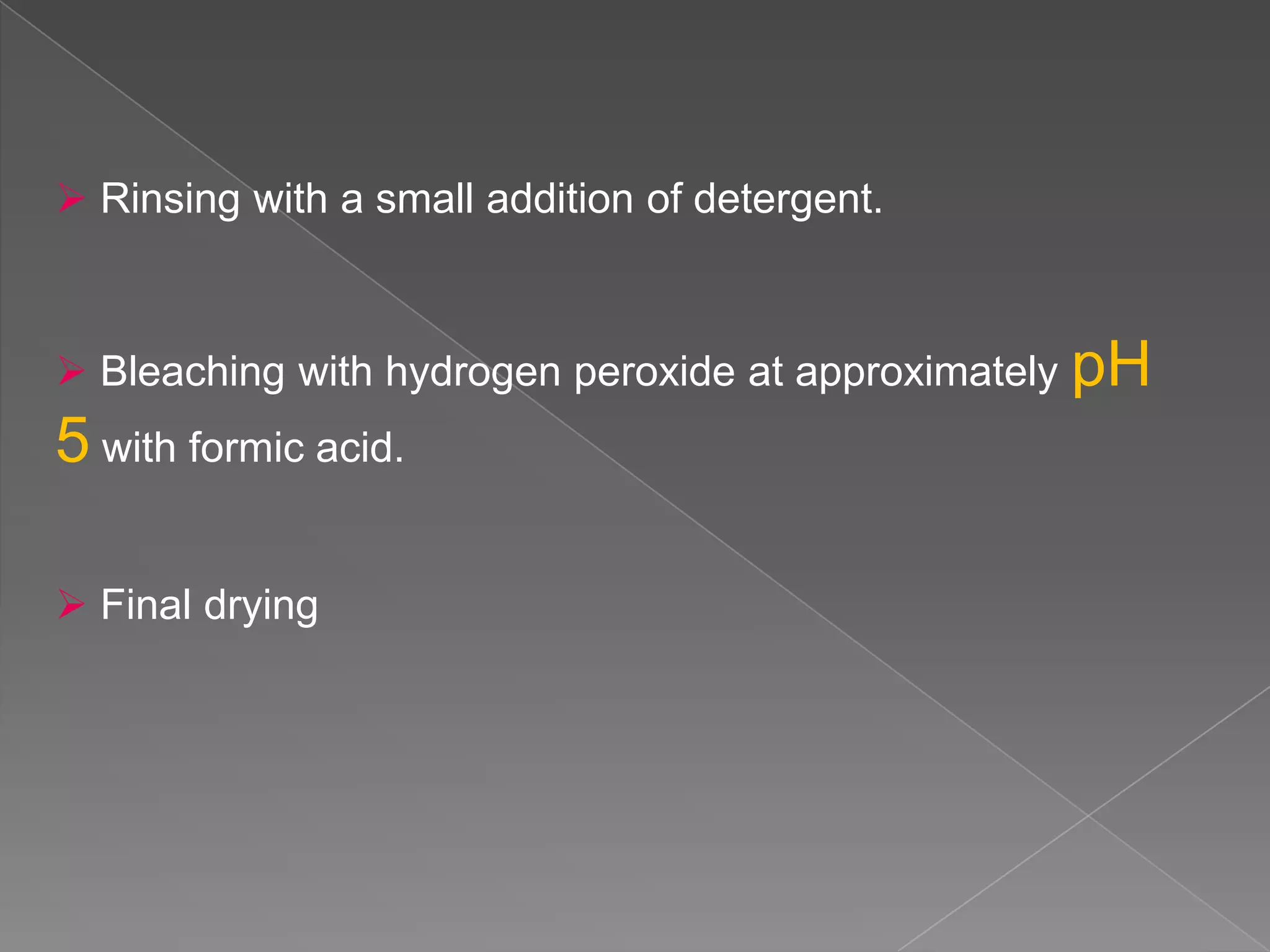
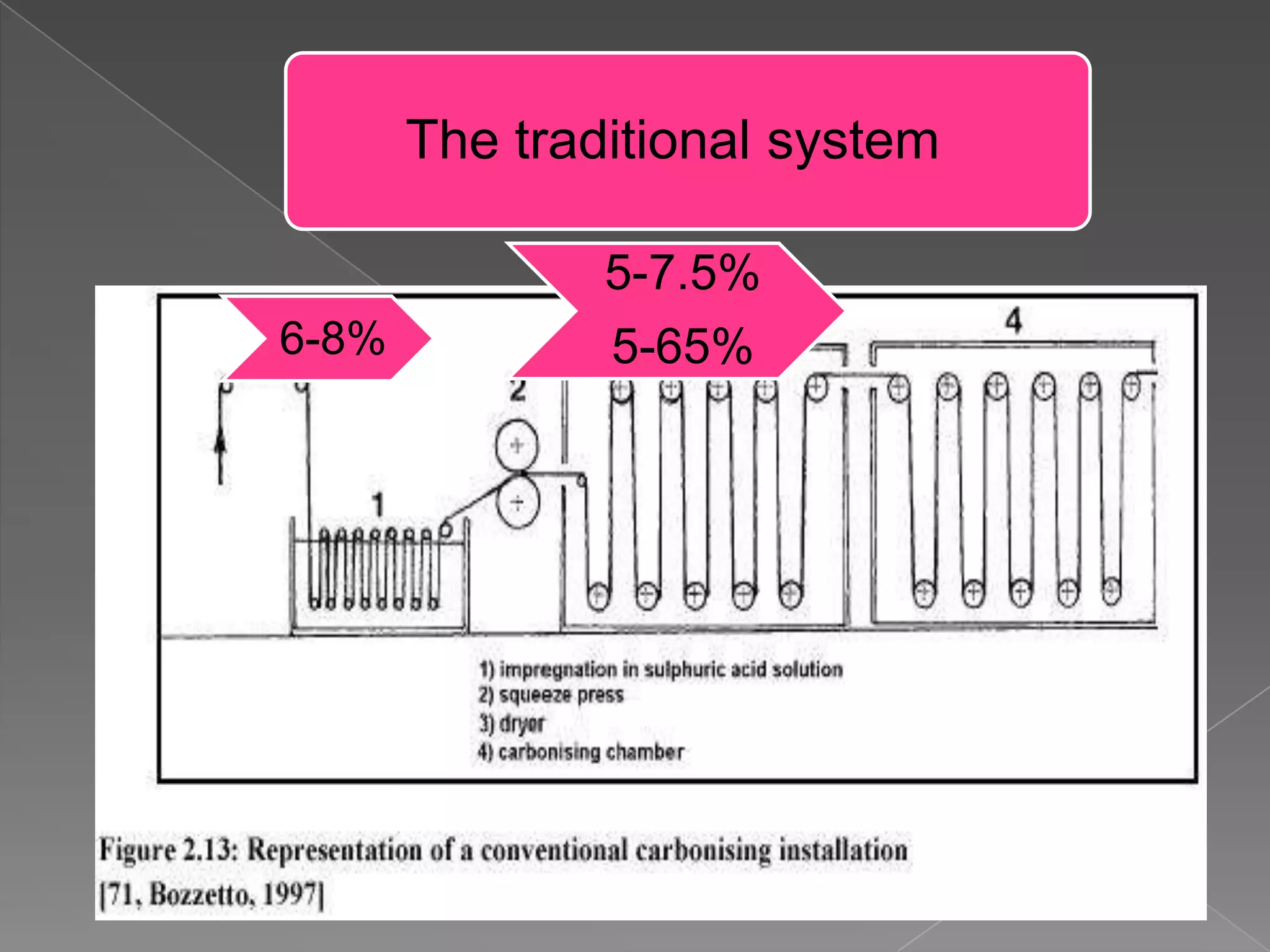
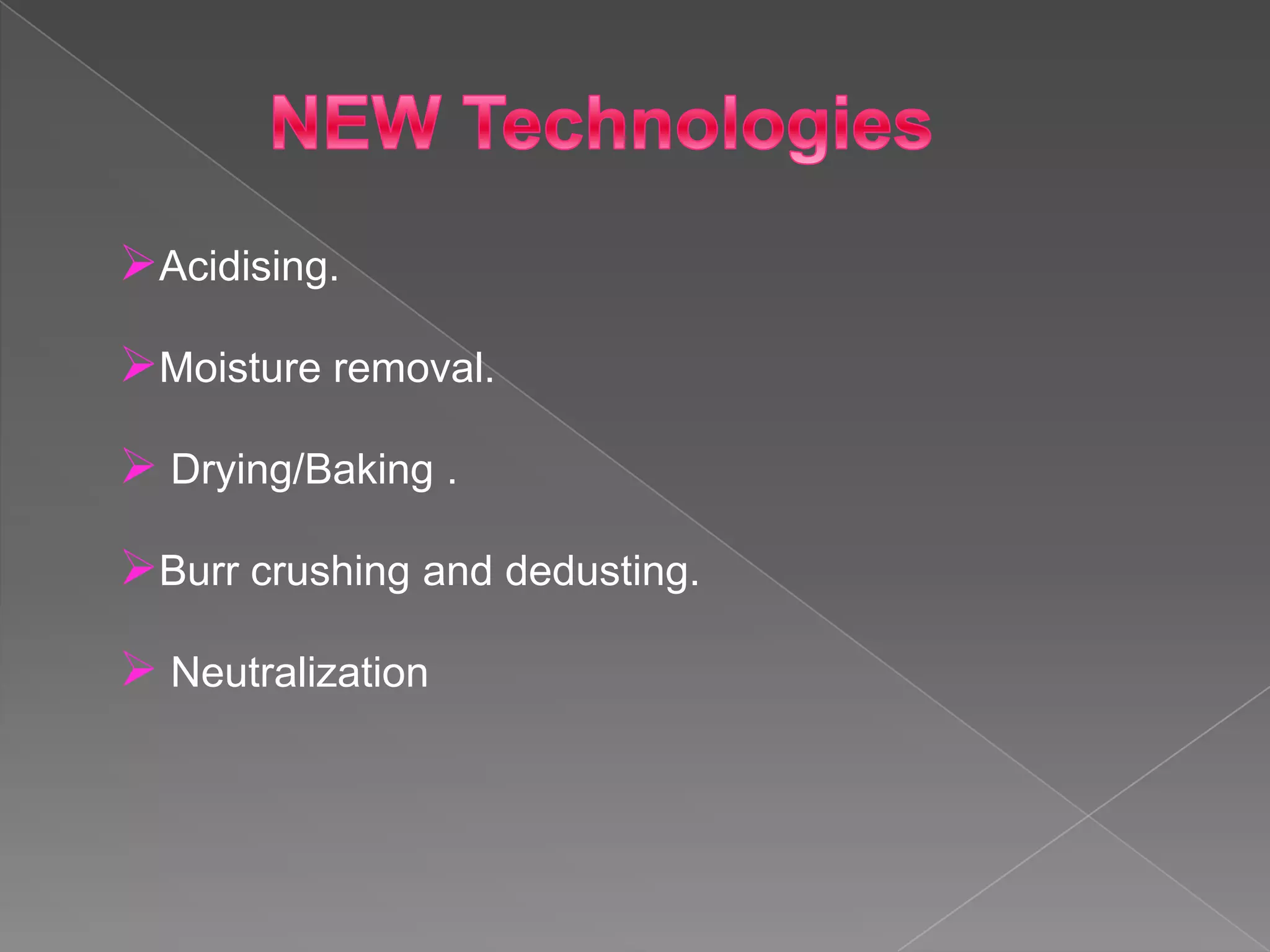
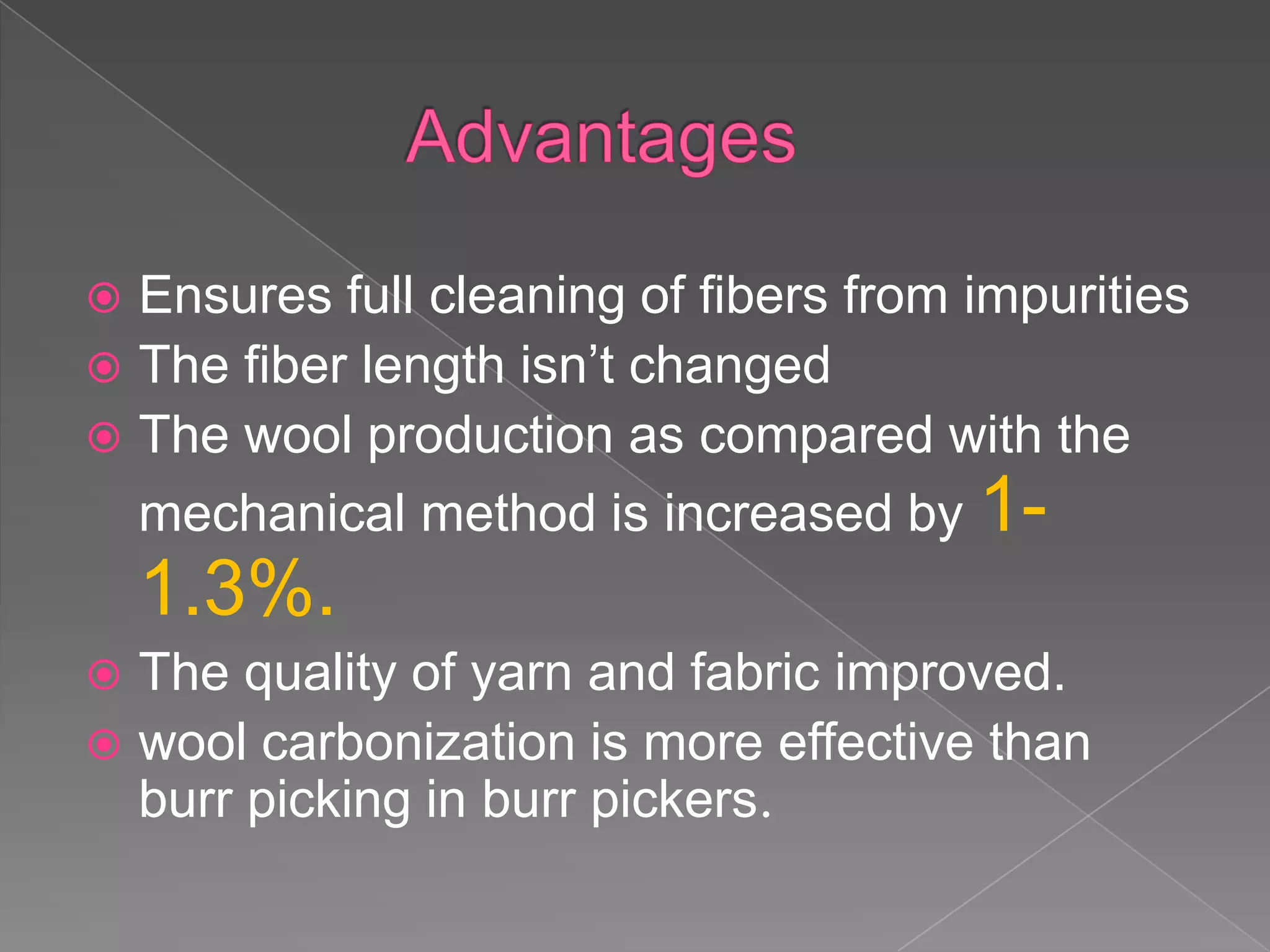



The document discusses the carbonization process used to remove vegetable matter from wool. It describes the traditional processing stages which include scouring, acid treatment, drying, baking to carbonize the vegetable matter, crushing the matter, and removing it. It also discusses the advantages of ensuring clean fibers while maintaining length and increasing yield, as well as the disadvantage of fiber breakage. Newer carbonization technologies aim to control the process more precisely.
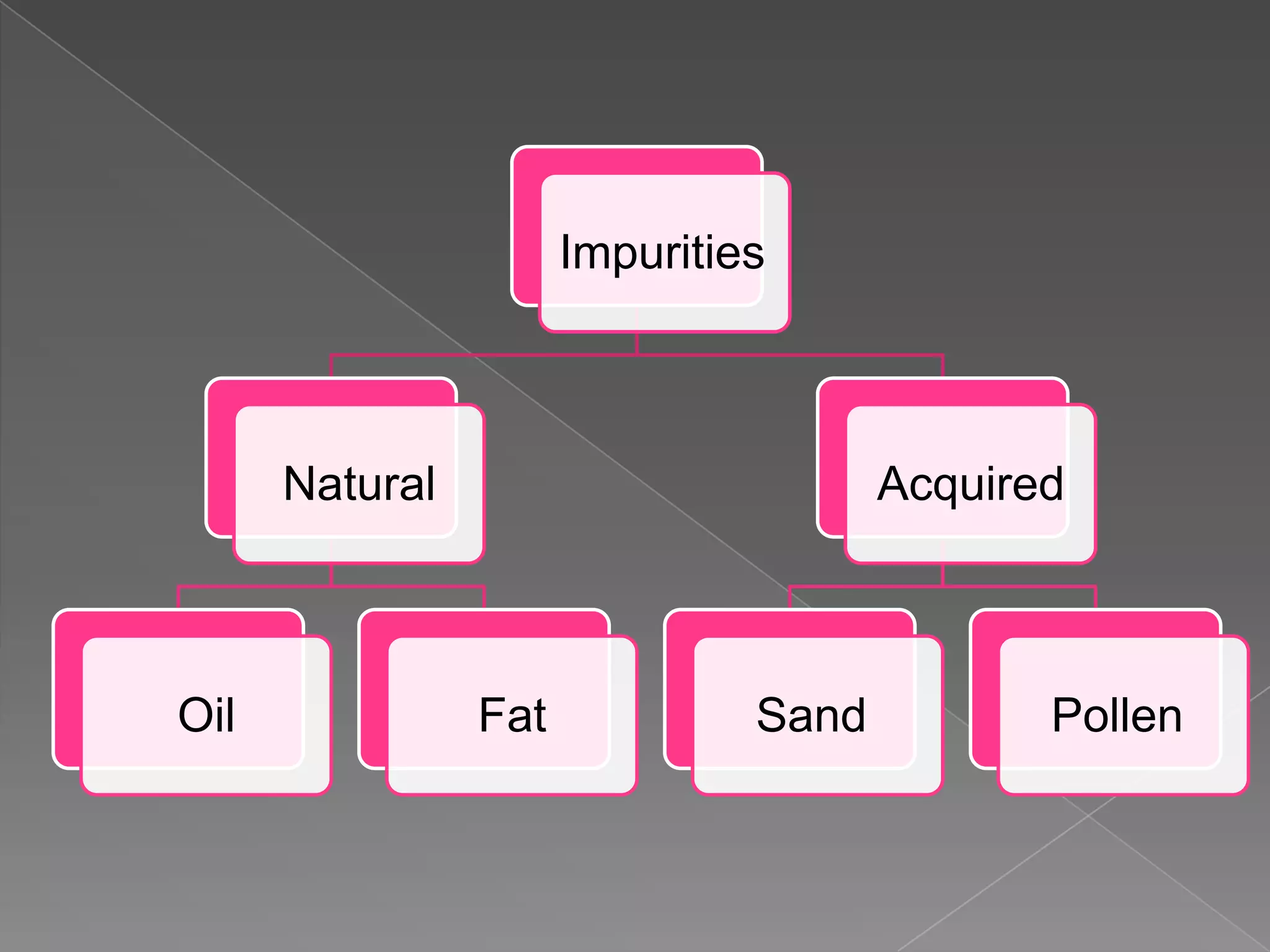
Discusses impurities in wool, including natural (oil, fat) and acquired (sand, pollen). Highlights the effects of vegetable matter on wool quality.
Details the carbonization process for removing vegetable matter, involving scouring, acid immersion, drying, and neutralization.
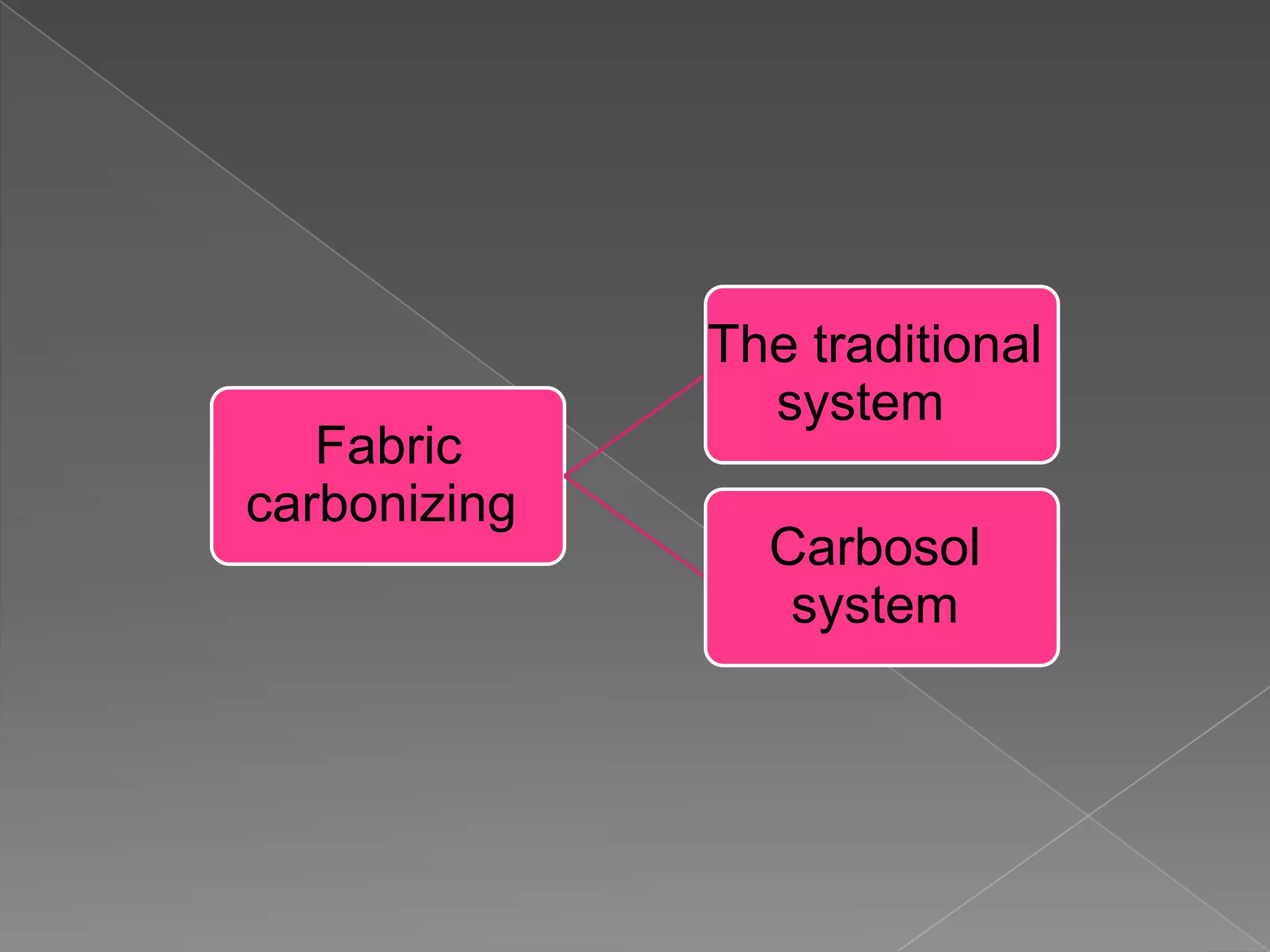
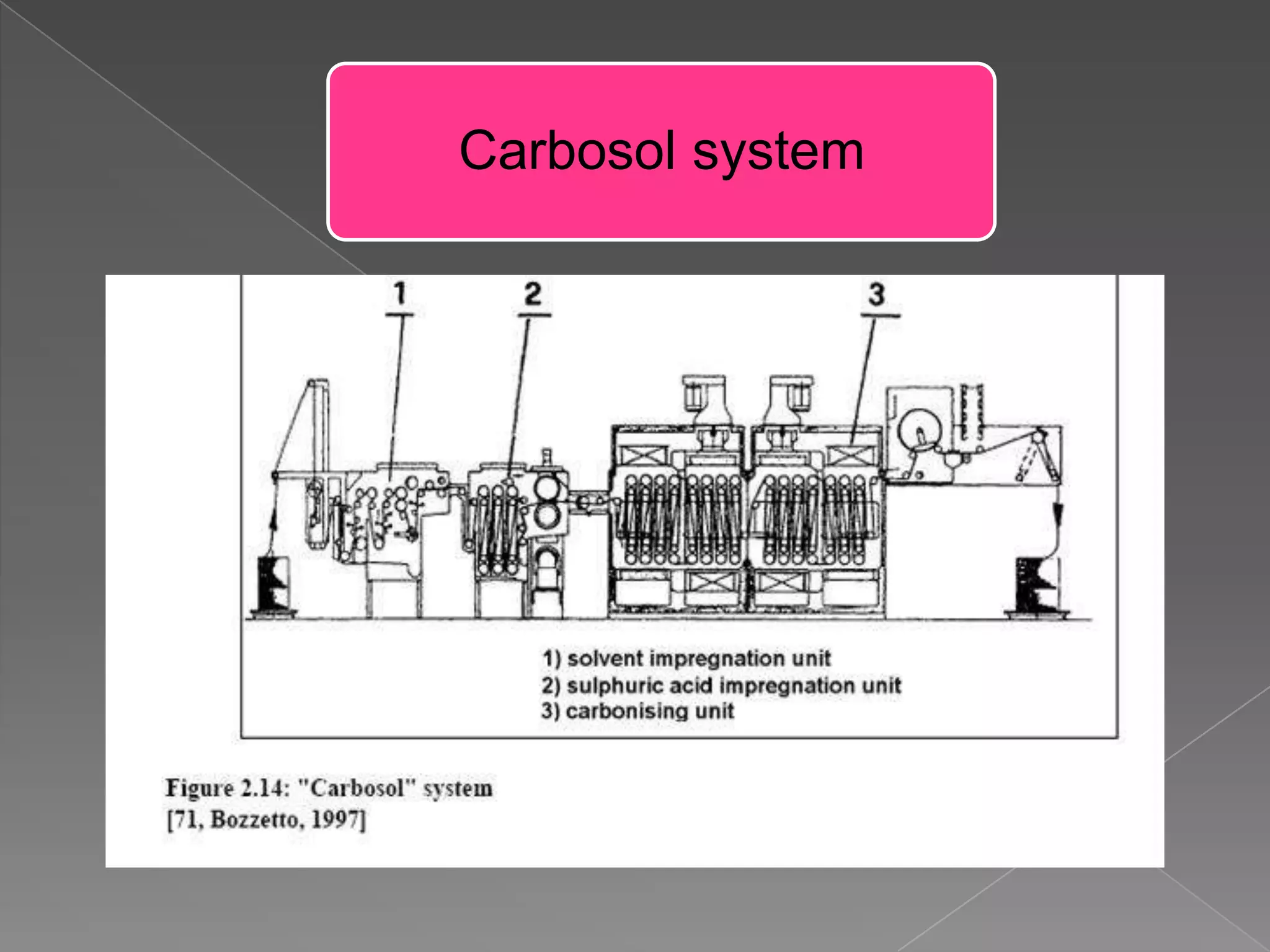
Compares traditional fabric carbonizing with the Carbosol system, emphasizing variations in procedure and effectiveness.
Outlines critical stages of carbonization control, the impact on fiber quality, and efficiency improvements over mechanical methods.


![Moho Pro 14.4 Crack for MacOS Works Until 2050 [Latest] pptx](https://cdn.slidesharecdn.com/ss_thumbnails/softwareoverview-251207192639-797289c4-thumbnail.jpg?width=640&height=640&fit=bounds)

![CleanMyMac X v5.2.8 Crack for MacOS Full Version [Latest] pptx](https://cdn.slidesharecdn.com/ss_thumbnails/softwareoverview-251207194121-a81f0142-thumbnail.jpg?width=640&height=640&fit=bounds)
![Soundtoys Mac v5.5.5.0 Crack for MacOS Full Version [Latest] pptx](https://cdn.slidesharecdn.com/ss_thumbnails/softwareoverview-251207193711-91d8ae6b-thumbnail.jpg?width=640&height=640&fit=bounds)
![Chapter4_Initiation_of_Sediment_Motion_v2[1].pptx](https://cdn.slidesharecdn.com/ss_thumbnails/chapter4initiationofsedimentmotionv21-251208223747-f94ef163-thumbnail.jpg?width=640&height=640&fit=bounds)


