Presented by :
  GOVIND CHINTARAM
BISSOONAUTH RISHTA
 To analyse the effect of reactive dyes on
  Wool
 To observe the dye left in the bath at the
  end of dyeing.
 To observe the amount of dye coming out
  during after treatment
 Wool can be dyed with non mets dyes , mordant
dyes, pre met dyes, acid dyes and reactive dyes,
our practical has been based on the reactive dyes.

   wool is positively charge while the dye are
    negatively charge and dye absorption takes
    place in in the positive sites of the fiber. wool
    dyeing is done under an acidic condition.
 Reaction   to alkalis:
 Wool is quickly damaged by strong alkalis.
 Reaction to acids:
 1. Wool is damaged by hot sulphuric acid.
 2. The fibre is not affected by other acids.
 Affinity for dyes:
 Wool fibre has high affinity for certain types
  of dyes, i.e. Acid, reactive dyes, Basic dye
 Reactive Dyes„ Form a covalent bond
  between the dye and fiber
 „ Simplify dyeing procedure
 ‰No oxidation is used
 „ Introduced to the market by ICI in 1956
 „ Show improved fastness properties
 ‰Great improvement for cellulosic fibers
Dyeing occurs in two stages: Exhaustion and Fixation
exhaustion occurs by normal physical forces of attraction
   between dye and fibre.
Fixing involves the formation of the covalent bond between
    the dye and the fibre.

   The dye is covalently bound to the fibre

   High Fixation;
fibre tippiness -All anionic dyes on wool exhibit uneven strike which
    can result in tippiness
     With reactive dyes, if covalent attachment at tips occurs before
     boiling.
A sample of wool fiber was used
 Wool was scoured
 Mass of sample : 3g


 Reactive   dye : Lanasol 2% O.M.F
 Glauber Salt: 0.5%
 Acetic Acid: 2.0%
 Ammonium Sulphate
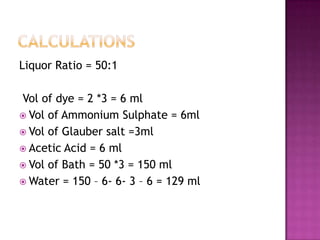
Liquor Ratio = 50:1

Vol of dye = 2 *3 = 6 ml
 Vol of Ammonium Sulphate = 6ml
 Vol of Glauber salt =3ml
 Acetic Acid = 6 ml
 Vol of Bath = 50 *3 = 150 ml
 Water = 150 – 6- 6- 3 – 6 = 129 ml
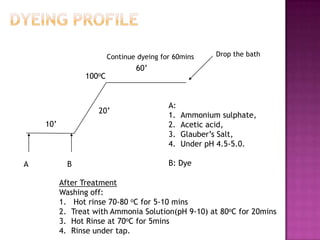
Continue dyeing for 60mins     Drop the bath

                                60’
                100oC


                                          A:
                    20’
                                          1.   Ammonium sulphate,
    10’                                   2.   Acetic acid,
                                          3.   Glauber’s Salt,
                                          4.   Under pH 4.5-5.0.

A           B                             B: Dye

          After Treatment
          Washing off:
          1. Hot rinse 70-80 oC for 5-10 mins
          2. Treat with Ammonia Solution(pH 9-10) at 80oC for 20mins
          3. Hot Rinse at 70oC for 5mins
          4. Rinse under tap.
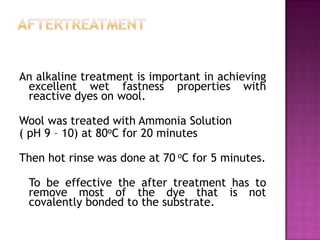
An alkaline treatment is important in achieving
 excellent wet fastness properties with
 reactive dyes on wool.

Wool was treated with Ammonia Solution
( pH 9 – 10) at 80oC for 20 minutes

Then hot rinse was done at 70 oC for 5 minutes.

 To be effective the after treatment has to
 remove most of the dye that is not
 covalently bonded to the substrate.
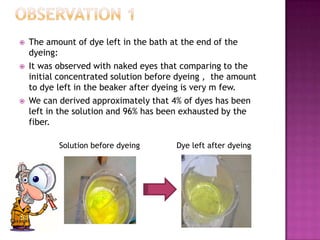
   The amount of dye left in the bath at the end of the
    dyeing:
   It was observed with naked eyes that comparing to the
    initial concentrated solution before dyeing , the amount
    to dye left in the beaker after dyeing is very m few.
   We can derived approximately that 4% of dyes has been
    left in the solution and 96% has been exhausted by the
    fiber.

           Solution before dyeing       Dye left after dyeing
   As wool is positively charged and reactive dyes are
    anionic, so there is a strong linkage which occur between
    the positive fiber and negative dye and the substantively is
    very high which facilities the exhaustion of the bath.
   The molecule of the fiber is covalently bond to that of the
    dye, and this bond cannot be break down, so once the
    dyes is migrated into the fiber under acidic conditions, the
    maximum dyes is being taken up by the fiber retains inside
    and the hydrolysed dyes remains into the bath itself, which
    are the 4% estimated remaining dyes in the bath.
   While dyeing, the pH is kept under acidic conditions which
    is (pH 4.5-5) and the dyes reacts more with the fiber and
   More dyes go into the fiber.
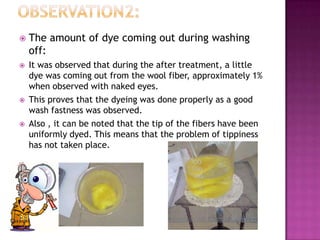
   The amount of dye coming out during washing
    off:
   It was observed that during the after treatment, a little
    dye was coming out from the wool fiber, approximately 1%
    when observed with naked eyes.
   This proves that the dyeing was done properly as a good
    wash fastness was observed.
   Also , it can be noted that the tip of the fibers have been
    uniformly dyed. This means that the problem of tippiness
    has not taken place.
 The  dye left in the beaker during after
  treatment are the few hydrolised dyes which
  has more affinity for the solution rather than
  the fiber.
 As ammonium sulphate is used, it is a
  swelling agent,so it swells the fiber and all
  dead dyes get out which are the remaining
  dyes in the beaker after treatment.

Application of reactive dyes to wool

  • 1.
    Presented by : GOVIND CHINTARAM BISSOONAUTH RISHTA
  • 2.
     To analysethe effect of reactive dyes on Wool  To observe the dye left in the bath at the end of dyeing.  To observe the amount of dye coming out during after treatment
  • 3.
     Wool canbe dyed with non mets dyes , mordant dyes, pre met dyes, acid dyes and reactive dyes, our practical has been based on the reactive dyes.  wool is positively charge while the dye are negatively charge and dye absorption takes place in in the positive sites of the fiber. wool dyeing is done under an acidic condition.
  • 4.
     Reaction to alkalis:  Wool is quickly damaged by strong alkalis.  Reaction to acids:  1. Wool is damaged by hot sulphuric acid.  2. The fibre is not affected by other acids.  Affinity for dyes:  Wool fibre has high affinity for certain types of dyes, i.e. Acid, reactive dyes, Basic dye
  • 5.
     Reactive Dyes„Form a covalent bond between the dye and fiber  „ Simplify dyeing procedure  ‰No oxidation is used  „ Introduced to the market by ICI in 1956  „ Show improved fastness properties  ‰Great improvement for cellulosic fibers
  • 6.
    Dyeing occurs intwo stages: Exhaustion and Fixation exhaustion occurs by normal physical forces of attraction between dye and fibre. Fixing involves the formation of the covalent bond between the dye and the fibre.  The dye is covalently bound to the fibre  High Fixation; fibre tippiness -All anionic dyes on wool exhibit uneven strike which can result in tippiness With reactive dyes, if covalent attachment at tips occurs before boiling.
  • 7.
    A sample ofwool fiber was used  Wool was scoured  Mass of sample : 3g  Reactive dye : Lanasol 2% O.M.F  Glauber Salt: 0.5%  Acetic Acid: 2.0%  Ammonium Sulphate
  • 8.
    Liquor Ratio =50:1 Vol of dye = 2 *3 = 6 ml  Vol of Ammonium Sulphate = 6ml  Vol of Glauber salt =3ml  Acetic Acid = 6 ml  Vol of Bath = 50 *3 = 150 ml  Water = 150 – 6- 6- 3 – 6 = 129 ml
  • 9.
    Continue dyeing for60mins Drop the bath 60’ 100oC A: 20’ 1. Ammonium sulphate, 10’ 2. Acetic acid, 3. Glauber’s Salt, 4. Under pH 4.5-5.0. A B B: Dye After Treatment Washing off: 1. Hot rinse 70-80 oC for 5-10 mins 2. Treat with Ammonia Solution(pH 9-10) at 80oC for 20mins 3. Hot Rinse at 70oC for 5mins 4. Rinse under tap.
  • 10.
    An alkaline treatmentis important in achieving excellent wet fastness properties with reactive dyes on wool. Wool was treated with Ammonia Solution ( pH 9 – 10) at 80oC for 20 minutes Then hot rinse was done at 70 oC for 5 minutes. To be effective the after treatment has to remove most of the dye that is not covalently bonded to the substrate.
  • 11.
    The amount of dye left in the bath at the end of the dyeing:  It was observed with naked eyes that comparing to the initial concentrated solution before dyeing , the amount to dye left in the beaker after dyeing is very m few.  We can derived approximately that 4% of dyes has been left in the solution and 96% has been exhausted by the fiber. Solution before dyeing Dye left after dyeing
  • 12.
    As wool is positively charged and reactive dyes are anionic, so there is a strong linkage which occur between the positive fiber and negative dye and the substantively is very high which facilities the exhaustion of the bath.  The molecule of the fiber is covalently bond to that of the dye, and this bond cannot be break down, so once the dyes is migrated into the fiber under acidic conditions, the maximum dyes is being taken up by the fiber retains inside and the hydrolysed dyes remains into the bath itself, which are the 4% estimated remaining dyes in the bath.  While dyeing, the pH is kept under acidic conditions which is (pH 4.5-5) and the dyes reacts more with the fiber and  More dyes go into the fiber.
  • 13.
    The amount of dye coming out during washing off:  It was observed that during the after treatment, a little dye was coming out from the wool fiber, approximately 1% when observed with naked eyes.  This proves that the dyeing was done properly as a good wash fastness was observed.  Also , it can be noted that the tip of the fibers have been uniformly dyed. This means that the problem of tippiness has not taken place.
  • 14.
     The dye left in the beaker during after treatment are the few hydrolised dyes which has more affinity for the solution rather than the fiber.  As ammonium sulphate is used, it is a swelling agent,so it swells the fiber and all dead dyes get out which are the remaining dyes in the beaker after treatment.

Editor's Notes

  • #15 [12:28:15 AM] ashnaa4: since reactive group is responsible for bonding dye to the fiber, it is therefore responsible for wet fastness