SCOURING & BLEACHING
WOOL
SCOURING
Scouring of wool differs from cotton in the following respects
 Raw wool contains anything from 30% to 60% of wool
grease, compared with 0.5% of oil and wax in cotton
 Wool is very rapidly degraded by alkali
So the alkali that must be applied should be mild and at
temperature well below boiling
Sodium hydroxide is never used
Mild alkali like sodium carbonate or ammonium carbonate
or ammonia is used
• Raw wool is scoured by counter – current method
• The machine contains generally four to five bowls containing scouring
liquor and water
• The wool fibres are moved continuously from the 1st bowl to the last bowl
• Scouring is done in the 1st three bowls and washing is done in the 4th bowl
• Soap and alkali are added in the 1st component and detergent in the 2nd
and 3rd bowls
Soap (%) in solution Alkali (Sodium
carbonate %)
Temperature (0C)
First Bowl 0.8 0.2 50
Second Bowl 0.4 - 45-48
Third Bowl 0.37 - 42-45
Fourth Bowl Water only - 40
The pH should never be allowed to rise above 10 and the temperature not above
600C
BLEACHING
• Bleaching using reducing agents
– The bleaching action of reducing agents used for bleaching is due to
the action of bi-sulphite ions (HSO3
-)
– In practice wool can be bleached either exposing the wool to
• Sodium bi-sulphite (NaHSO3) , or
• Sulphur dioxide (SO2)
• The use of reducing agents used for bleaching wool is limited
– The whiteness is not permanent due to aerial oxidation
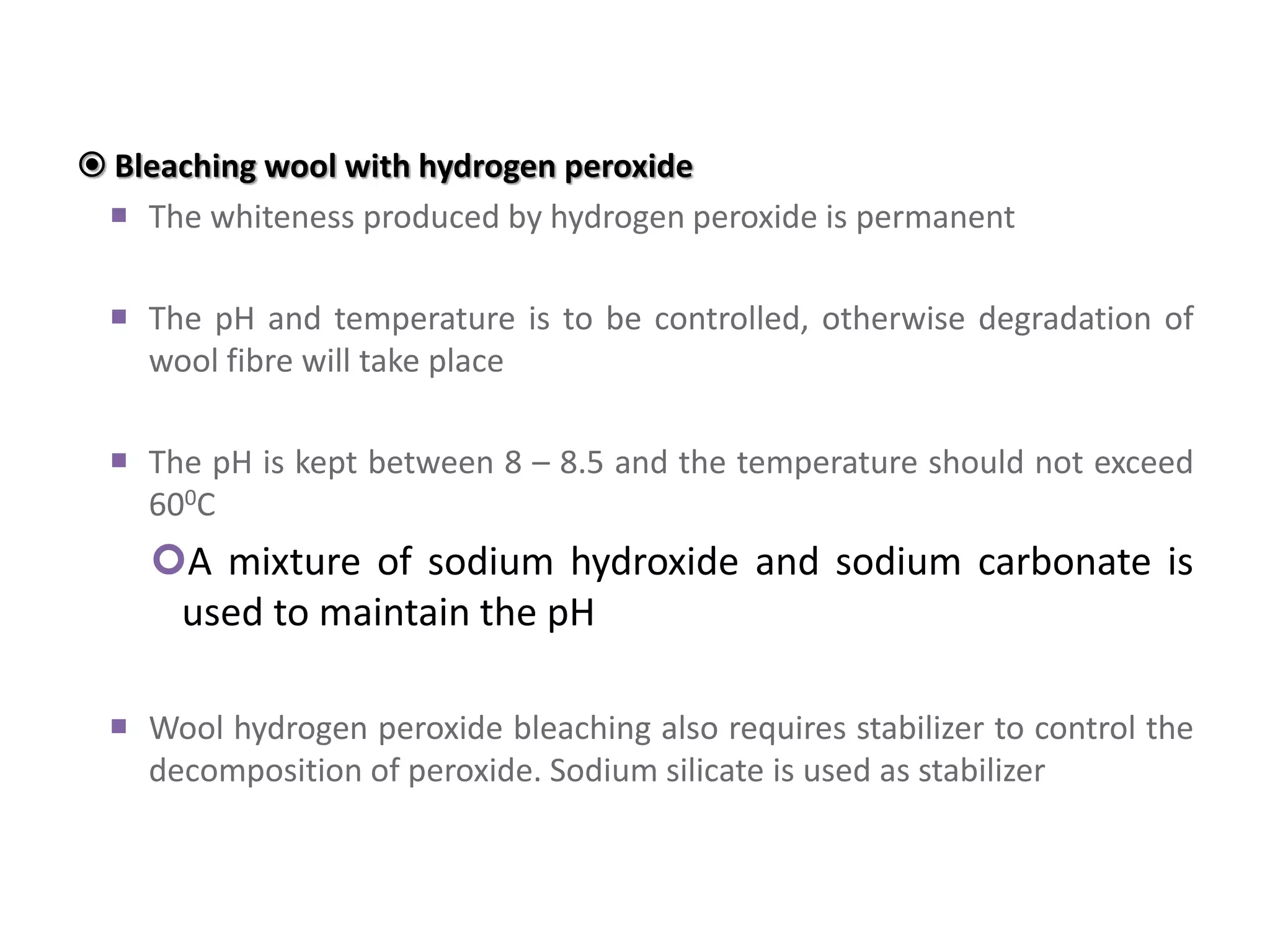
 Bleaching wool with hydrogen peroxide
 The whiteness produced by hydrogen peroxide is permanent
 The pH and temperature is to be controlled, otherwise degradation of
wool fibre will take place
 The pH is kept between 8 – 8.5 and the temperature should not exceed
600C
A mixture of sodium hydroxide and sodium carbonate is
used to maintain the pH
 Wool hydrogen peroxide bleaching also requires stabilizer to control the
decomposition of peroxide. Sodium silicate is used as stabilizer
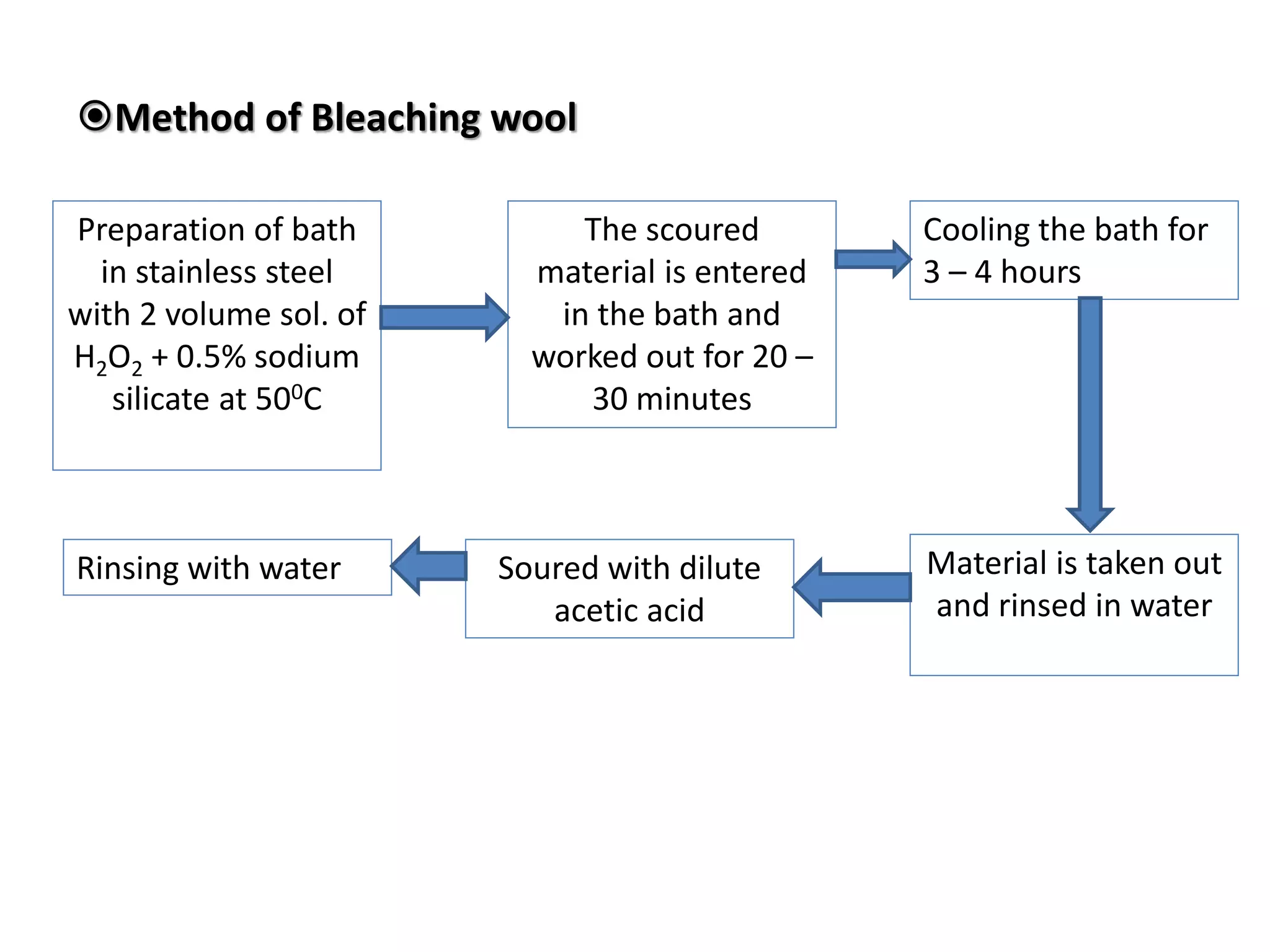
Method of Bleaching wool
Preparation of bath
in stainless steel
with 2 volume sol. of
H2O2 + 0.5% sodium
silicate at 500C
The scoured
material is entered
in the bath and
worked out for 20 –
30 minutes
Cooling the bath for
3 – 4 hours
Material is taken out
and rinsed in water
Soured with dilute
acetic acid
Rinsing with water
Degumming & Bleaching
SILK
• Raw silk is composed of ‘fibroins’ connected with a gum like protein
known as ‘sericin’
• The presence of sericin gives the silk a harsh feeling
• Therefore, the sericin is to be removed from raw silk to increase the lustre
and softness of the silk filaments
• Again, since the silk filament contain some natural colouring material,
hence, it requires removal to get white silk filaments
DEGUMMING
• Silk gum or sericin is removed
• The process is commonly known as “boiling off’ or
‘degumming’
• Degumming is done by using hot soap solution (mild alkali can
also be used)
• Degumming is carried out by treating the silk for 2 hours, or
more if necessary at 950C with liquor ratio of 1:30
 The solubility of sericin depends upon the alkalinity produced by hydrolysis
 Silk can also be degummed with a mixture of sodium carbonate and
sodium bi-carbonate at pH 10 (this process however is not so efficient as
soap)
Recipe:
Soap solution – 0.5% to 0.75%
Temperature – 950C
Time – 2 hours
M:L ratio – 1:30
** It is to be noted that during degumming, vigorous mechanical stresses
are to be avoided or else rupture of fibroin filament will take place
Bleaching
• Oxidative or reductive bleaching can be used for silk
• Bleaching generally follows the degumming
• For a full-white optical whiteners can be added to the subsequent
reducing bleach bath after oxidative pre-bleaching
• Hydrogen peroxide bleaching is most preferable
SCOURING & BLEACHING
MANMADE FIBRES
SCOURING
• Manmade fibres are comparatively free from impurities
• So, milder methods of scouring is sufficient
Rayon
• Scouring is done at 70 – 900C
• Scoured with soap and detergent
Recipe: Soda ash: 1 – 2 g/L
Detergent: 1 – 2 g/L
Temperature: 700C
Time: 30 min
Cellulose Acetate
• Chance of hydrolysis if the temperature is too high and if the scouring
liquor is more alkaline
• Only soap is used for scouring (slightly alkaline)
Recipe: Detergent: 1 g/L
Temperature 800C
Time 30 min
Polyester
• Same recipe as that of rayon
BLEACHING
• Polyester
– Normally bleaching is not required for the man-made fibres
– Bleaching is done in exceptional cases
– Best bleaching agent is NaClO2
Recipe: Sodium chlorite 1 – 5 g/L
Sodium nitrate 1 – 3 g/L
Formic acid 1 – 2 g/L
Temp At boil (≈ 1000C)
Time 60 – 90 min
Polyamide (Nylon) bleaching
• Nylon fabric is rarely bleached
• If at all bleaching is required, a mild sodium chlorite plus formic
acid/acetic acid (for pH 4) bleaching treatment is given at 700C
Recipe: Sodium chlorite 1 g/L
acetic acid / formic acid 2 g/L
Temperature Boil
Time 30 minutes
Acrylic Bleaching
• Does not require bleaching normally
• For extra white, it requires bleaching
• Sodium chlorite is used
Recipe: Sodium chlorite 2 – 3 g/L
Sodium nitrate 2 – 5 g/L
pH (Formic acid) 4
Temperature 850C
Time 30 – 45 minutes

Wool and silk scouring

  • 1.
  • 2.
    SCOURING Scouring of wooldiffers from cotton in the following respects  Raw wool contains anything from 30% to 60% of wool grease, compared with 0.5% of oil and wax in cotton  Wool is very rapidly degraded by alkali So the alkali that must be applied should be mild and at temperature well below boiling Sodium hydroxide is never used Mild alkali like sodium carbonate or ammonium carbonate or ammonia is used
  • 3.
    • Raw woolis scoured by counter – current method • The machine contains generally four to five bowls containing scouring liquor and water • The wool fibres are moved continuously from the 1st bowl to the last bowl • Scouring is done in the 1st three bowls and washing is done in the 4th bowl • Soap and alkali are added in the 1st component and detergent in the 2nd and 3rd bowls
  • 4.
    Soap (%) insolution Alkali (Sodium carbonate %) Temperature (0C) First Bowl 0.8 0.2 50 Second Bowl 0.4 - 45-48 Third Bowl 0.37 - 42-45 Fourth Bowl Water only - 40 The pH should never be allowed to rise above 10 and the temperature not above 600C
  • 5.
    BLEACHING • Bleaching usingreducing agents – The bleaching action of reducing agents used for bleaching is due to the action of bi-sulphite ions (HSO3 -) – In practice wool can be bleached either exposing the wool to • Sodium bi-sulphite (NaHSO3) , or • Sulphur dioxide (SO2) • The use of reducing agents used for bleaching wool is limited – The whiteness is not permanent due to aerial oxidation
  • 6.
     Bleaching woolwith hydrogen peroxide  The whiteness produced by hydrogen peroxide is permanent  The pH and temperature is to be controlled, otherwise degradation of wool fibre will take place  The pH is kept between 8 – 8.5 and the temperature should not exceed 600C A mixture of sodium hydroxide and sodium carbonate is used to maintain the pH  Wool hydrogen peroxide bleaching also requires stabilizer to control the decomposition of peroxide. Sodium silicate is used as stabilizer
  • 7.
    Method of Bleachingwool Preparation of bath in stainless steel with 2 volume sol. of H2O2 + 0.5% sodium silicate at 500C The scoured material is entered in the bath and worked out for 20 – 30 minutes Cooling the bath for 3 – 4 hours Material is taken out and rinsed in water Soured with dilute acetic acid Rinsing with water
  • 8.
  • 9.
    • Raw silkis composed of ‘fibroins’ connected with a gum like protein known as ‘sericin’ • The presence of sericin gives the silk a harsh feeling • Therefore, the sericin is to be removed from raw silk to increase the lustre and softness of the silk filaments • Again, since the silk filament contain some natural colouring material, hence, it requires removal to get white silk filaments
  • 10.
    DEGUMMING • Silk gumor sericin is removed • The process is commonly known as “boiling off’ or ‘degumming’ • Degumming is done by using hot soap solution (mild alkali can also be used) • Degumming is carried out by treating the silk for 2 hours, or more if necessary at 950C with liquor ratio of 1:30
  • 11.
     The solubilityof sericin depends upon the alkalinity produced by hydrolysis  Silk can also be degummed with a mixture of sodium carbonate and sodium bi-carbonate at pH 10 (this process however is not so efficient as soap) Recipe: Soap solution – 0.5% to 0.75% Temperature – 950C Time – 2 hours M:L ratio – 1:30 ** It is to be noted that during degumming, vigorous mechanical stresses are to be avoided or else rupture of fibroin filament will take place
  • 12.
    Bleaching • Oxidative orreductive bleaching can be used for silk • Bleaching generally follows the degumming • For a full-white optical whiteners can be added to the subsequent reducing bleach bath after oxidative pre-bleaching • Hydrogen peroxide bleaching is most preferable
  • 13.
  • 14.
    SCOURING • Manmade fibresare comparatively free from impurities • So, milder methods of scouring is sufficient Rayon • Scouring is done at 70 – 900C • Scoured with soap and detergent Recipe: Soda ash: 1 – 2 g/L Detergent: 1 – 2 g/L Temperature: 700C Time: 30 min
  • 15.
    Cellulose Acetate • Chanceof hydrolysis if the temperature is too high and if the scouring liquor is more alkaline • Only soap is used for scouring (slightly alkaline) Recipe: Detergent: 1 g/L Temperature 800C Time 30 min Polyester • Same recipe as that of rayon
  • 16.
    BLEACHING • Polyester – Normallybleaching is not required for the man-made fibres – Bleaching is done in exceptional cases – Best bleaching agent is NaClO2 Recipe: Sodium chlorite 1 – 5 g/L Sodium nitrate 1 – 3 g/L Formic acid 1 – 2 g/L Temp At boil (≈ 1000C) Time 60 – 90 min
  • 17.
    Polyamide (Nylon) bleaching •Nylon fabric is rarely bleached • If at all bleaching is required, a mild sodium chlorite plus formic acid/acetic acid (for pH 4) bleaching treatment is given at 700C Recipe: Sodium chlorite 1 g/L acetic acid / formic acid 2 g/L Temperature Boil Time 30 minutes
  • 18.
    Acrylic Bleaching • Doesnot require bleaching normally • For extra white, it requires bleaching • Sodium chlorite is used Recipe: Sodium chlorite 2 – 3 g/L Sodium nitrate 2 – 5 g/L pH (Formic acid) 4 Temperature 850C Time 30 – 45 minutes