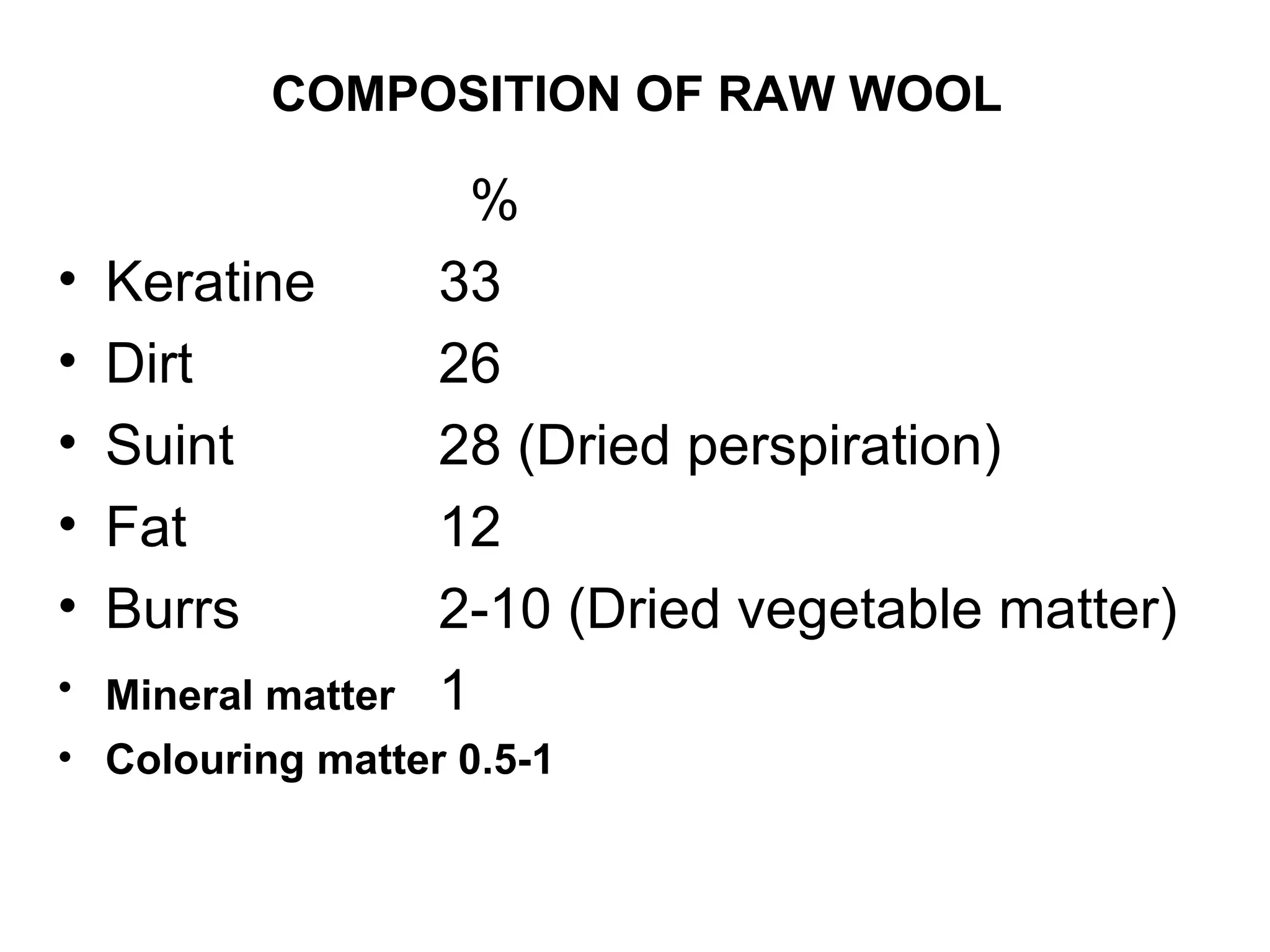
The document discusses the preparatory processes involved for wool before manufacturing. It describes the composition of raw wool which mainly consists of keratin protein along with impurities like dirt, suint, fat, and burrs. It then explains processes like carbonization and scouring used to remove these impurities. Carbonization uses sulfuric acid to remove burrs while scouring is done through emulsion, solvent, or freezing methods to remove dirt and fat without degrading the wool. Bleaching methods for wool include reductive bleaching using sodium hydrosulphite or oxidative bleaching using hydrogen peroxide.
PREPARATORY PROCESSES FORWOOL R.B.CHAVAN Department of Textile Technology Indian Institute of Technology Hauz-Khas, New Delhi 110016
2.
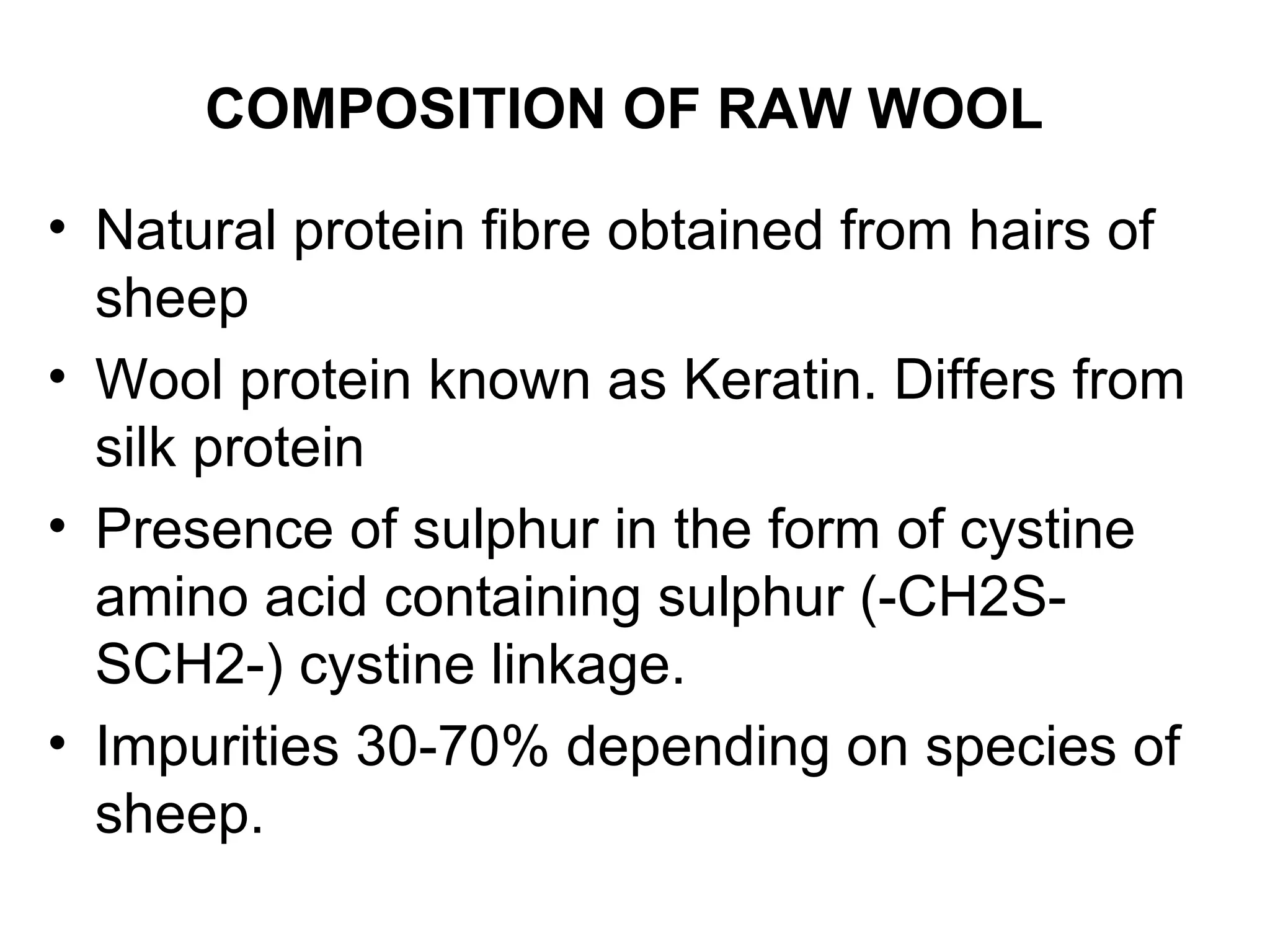
COMPOSITION OF RAWWOOL Natural protein fibre obtained from hairs of sheep Wool protein known as Keratin. Differs from silk protein Presence of sulphur in the form of cystine amino acid containing sulphur (-CH2S-SCH2-) cystine linkage. Impurities 30-70% depending on species of sheep.
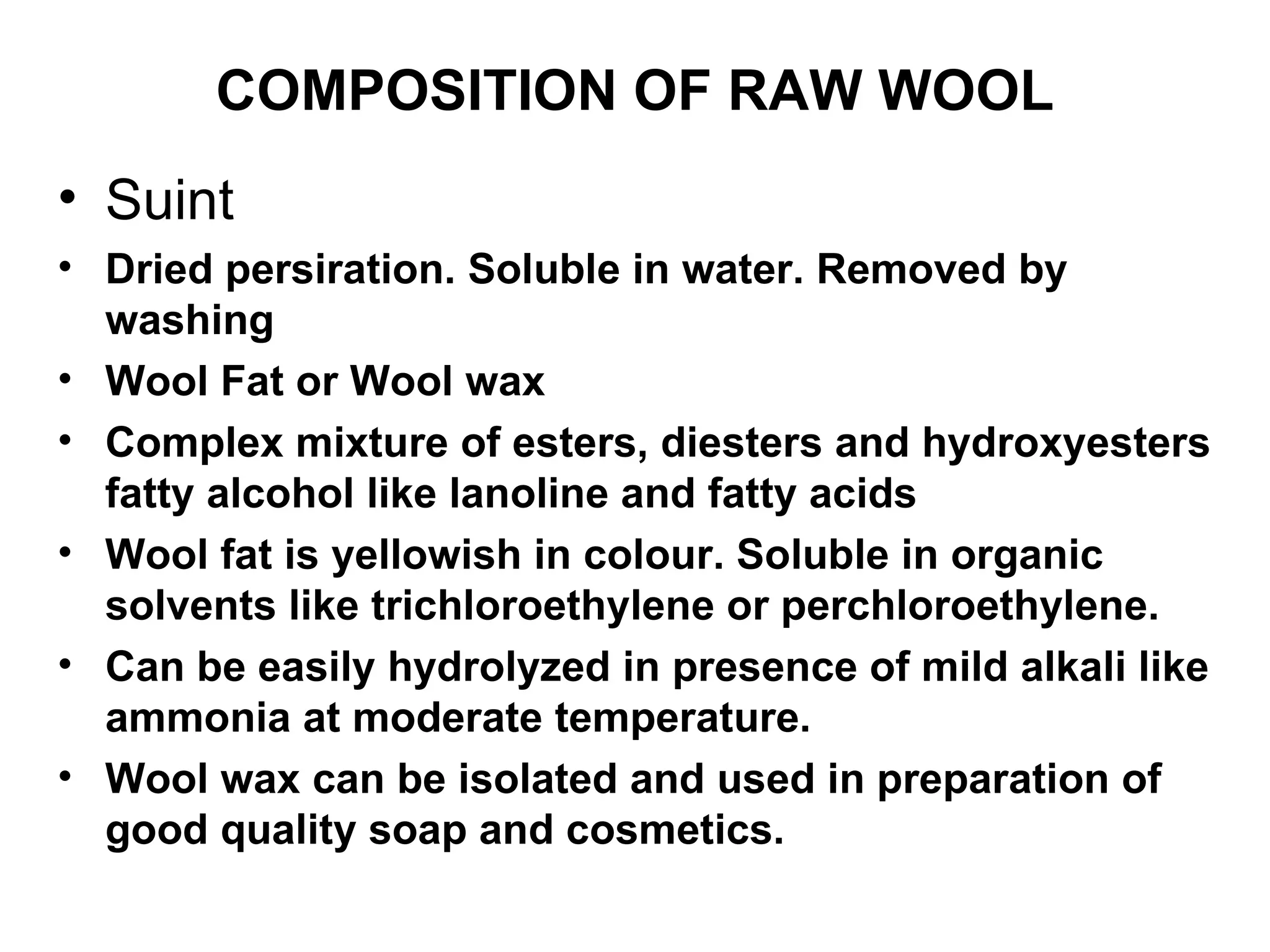
COMPOSITION OF RAWWOOL Suint Dried persiration. Soluble in water. Removed by washing Wool Fat or Wool wax Complex mixture of esters, diesters and hydroxyesters fatty alcohol like lanoline and fatty acids Wool fat is yellowish in colour. Soluble in organic solvents like trichloroethylene or perchloroethylene. Can be easily hydrolyzed in presence of mild alkali like ammonia at moderate temperature. Wool wax can be isolated and used in preparation of good quality soap and cosmetics.
5.
COMPOSITION OF RAWWOOL Dirt It is held by adhesive action of suint and wool fat. Removed during scouring and washing operation. Burrs Vegetable fragments consisting of dried grass, straw, sticks etc. Collected on the body of sheep during grazing and scraching the body against bush or tree to relieve itching.
6.
WOOL CARBONIZATION Woolis resistant to acids Burrs being vegetable matter not resistant to acid. This property used for the removal of burr. Treatment of wool with 5-7% sulphuric acid for 2 hours. Hydro extract Dry at 80-90 deg. C for 20-30 min. Hydrolysis and carbonization of burr takes place Carbonized burr removed by washing with maechanical agitation. Process known as carbonization.
7.
WOOL SCOURING Scouring of wool differs fromm cotton scouring Wax contaent of wool is higher than that of cotton Cotton can withstand strong alkaline conditions at high temperature. Wool is sensitive to alkali. Sodium hydroxide is never used for wool scouring. Wool wax can be hydrolyzed by mild alkali like sodium carbonate or ammonia.
8.
WOOL SCOURING Emulsionscouring Raw wool scoured in tanks filled with detergent or oleate soap (2-4% conc. Owf) pH 8-10, Temp. 55-60 deg.C time 30-45 min. Wash with water.
9.
WOOL SCOURING Solventscouring Widely used Ready solubility of wool wax in solvents like Trichloroethylene, perchloro ethylene or carbon tetrachloride. No danger of wool degradation. Wax can be easily recovered in pure form by solvent evaporation during solvent recovery. Solvent recovery is essential for economic benefits.
10.
WOOL SCOURING FreezingRaw wool is subjected to low temperature of -30deg.C Wool wax becomes hard Crushed mechanically at low temperature Remvoved by mechanical shaking of wool on a sieve. All operations to be carried out at low temperature
11.
WOOL BLEACHING Colouringmatter Melanin Present in dark colour wool (Black, Brown) Phenomelanin present in light coloured wool (Cream) A large proportion of wool fabric is finished in natural colours or dyed without bleaching Bleaching is required for pale shade dyeings. Bleaching is carried out either in yarn or fabric form Two methods Reductive bleaching Oxidative bleaching with hydrogen peroxide.
12.
REDUCTIVE BLEACHING Sodiumhydrosulphite or sodium sulphoxylate formaldehyde are commonly used. Sodium hydrosulphite 5-10 g/l Sodium pyrophosphate 3-4 g/l (Buffer) pH neutral Temp. 55-60 deg.C Time 1-2 hours Wash with warm and cold water.
13.
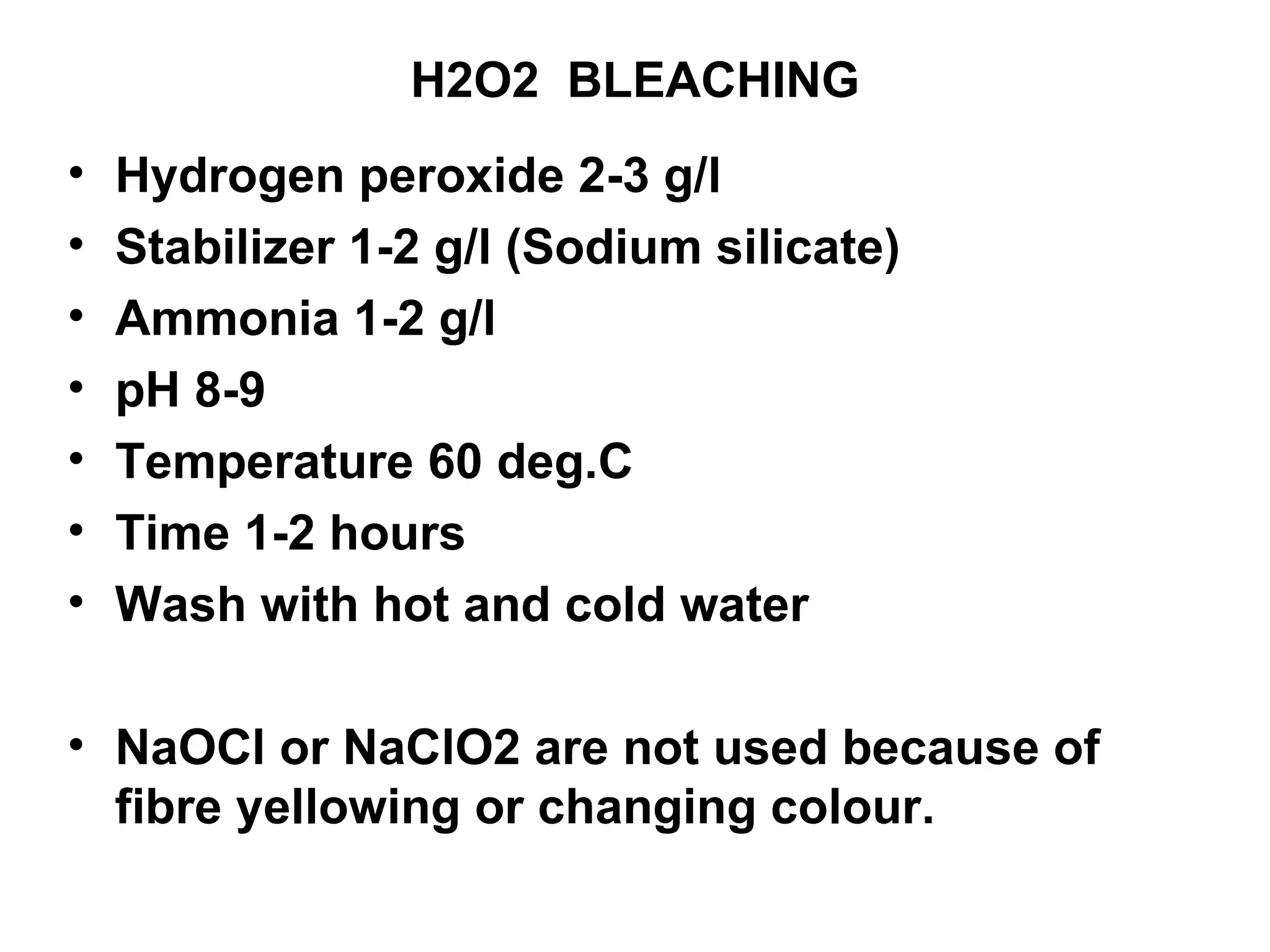
H2O2 BLEACHINGHydrogen peroxide 2-3 g/l Stabilizer 1-2 g/l (Sodium silicate) Ammonia 1-2 g/l pH 8-9 Temperature 60 deg.C Time 1-2 hours Wash with hot and cold water NaOCl or NaClO2 are not used because of fibre yellowing or changing colour.
14.
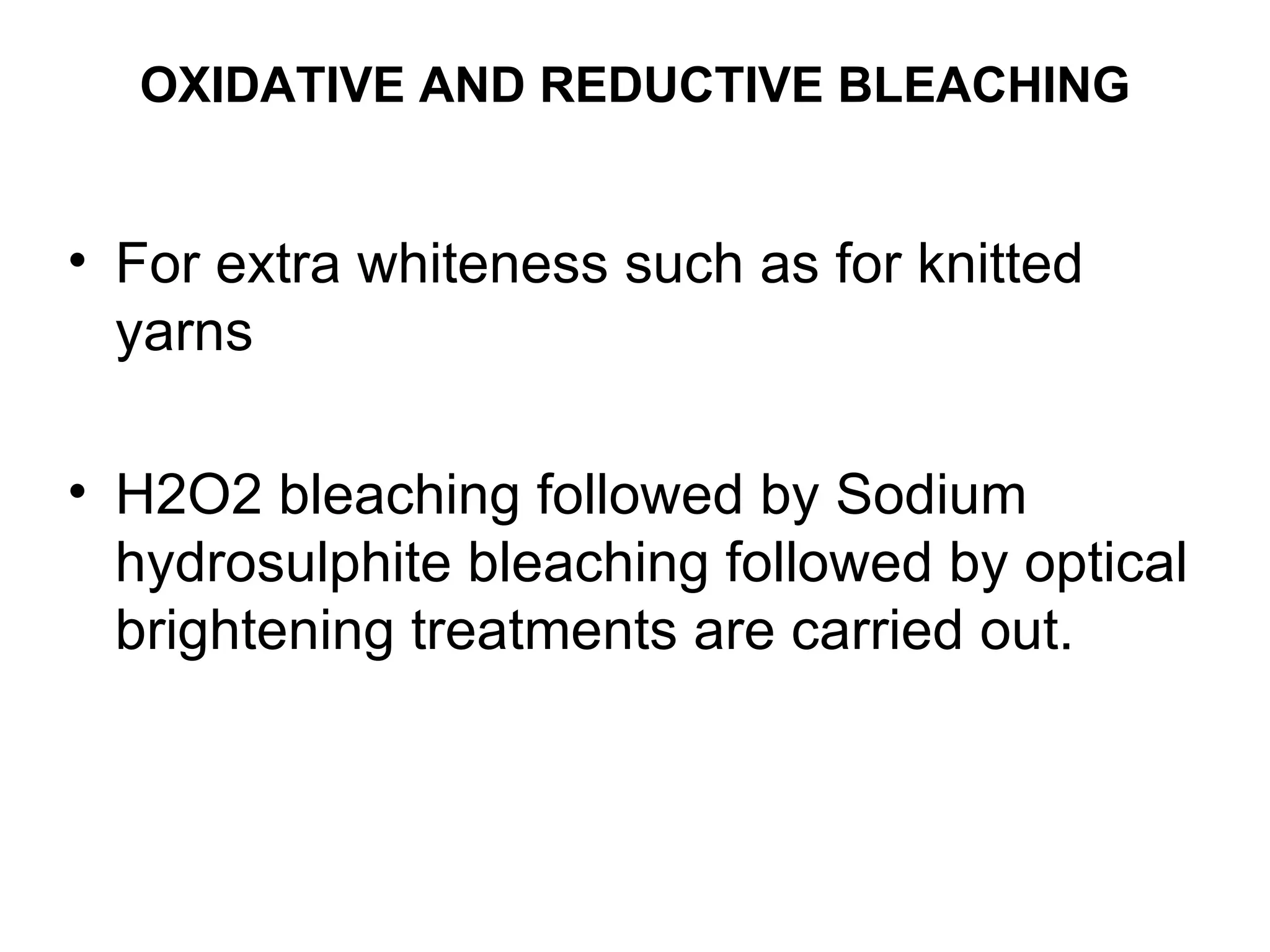
OXIDATIVE AND REDUCTIVEBLEACHING For extra whiteness such as for knitted yarns H2O2 bleaching followed by Sodium hydrosulphite bleaching followed by optical brightening treatments are carried out.