
WI-FI AND IT’S
APPLICATIONS


                 GROUP MEMBERS
                 M.Amin Zafar
                 Saad Mazhar
                 M.Azfer
CONTENTS
What is Wi-Fi
History
Uses
Benefits
Security Goals And Strategies
Range
Application Of Wi-Fi Technology
What is Wi-Fi?
Wi-Fi stands for Wireless-Fidelity. It’s a wireless
 technology brand that is owned by Wi-Fi Alliance.
 Alliance is a consortium of separate and
 independent companies agreeing to a set of
 common interoperable products based on the
 family of IEEE 802.11 standards.
History
 802.11 technology has its origins in a 1985 ruling by the
  US Federal Communications Commission that released
  the ISM band for unlicensed use.
 In 1991 NCR Corporation with AT&T invented the
  precursor to 802.11 intended for use in cashier systems.
 Vic Hayes has been called the “Father of Wi-Fi“, he was
  involved in designing the initial standards within the IEEE.
 In 1999, the Wi-Fi Alliance was formed as a trade
  association to hold the Wi-Fi trademark under which most
  products are sold.
Uses
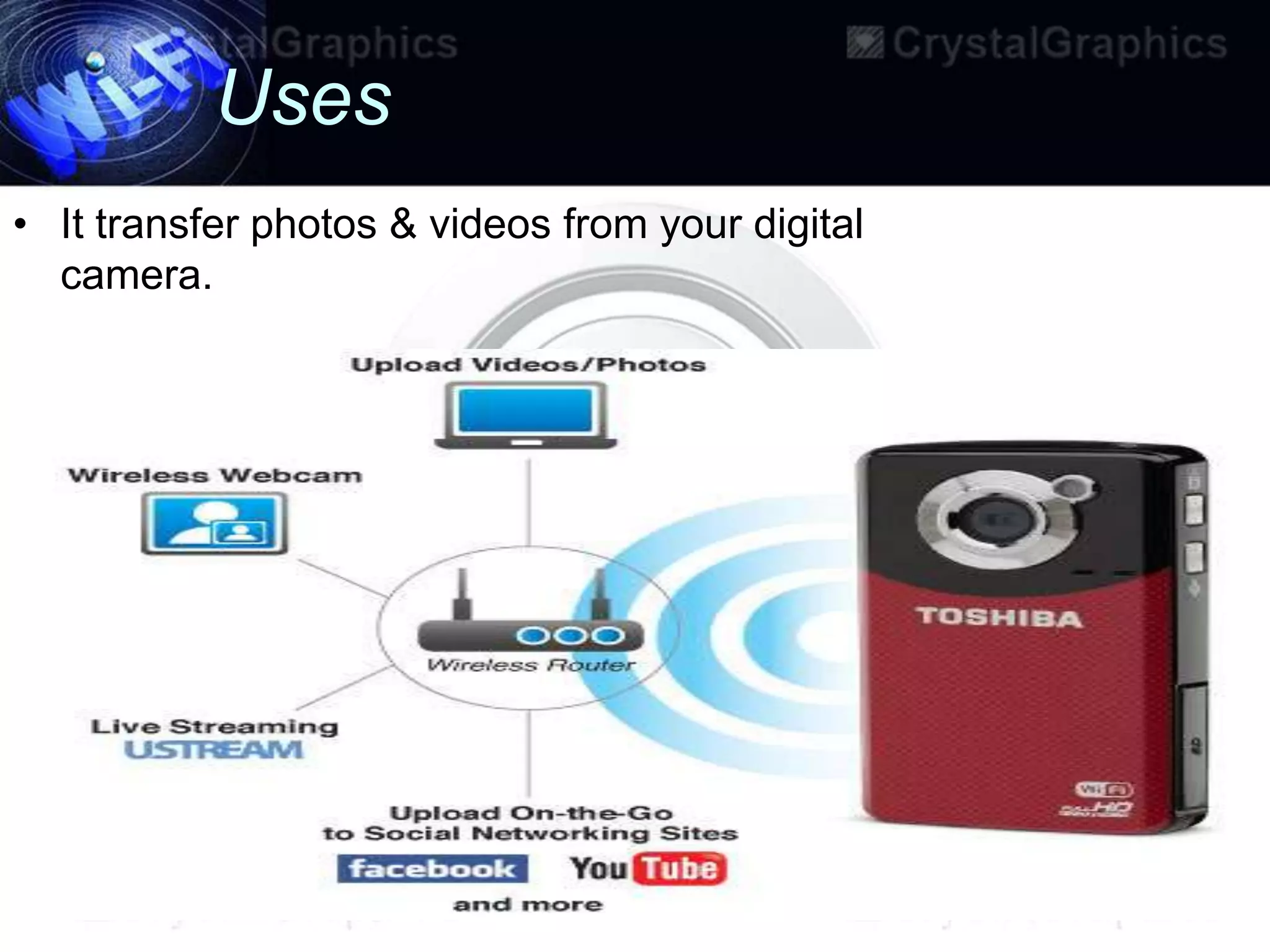
• It transfer photos & videos from your digital
  camera.
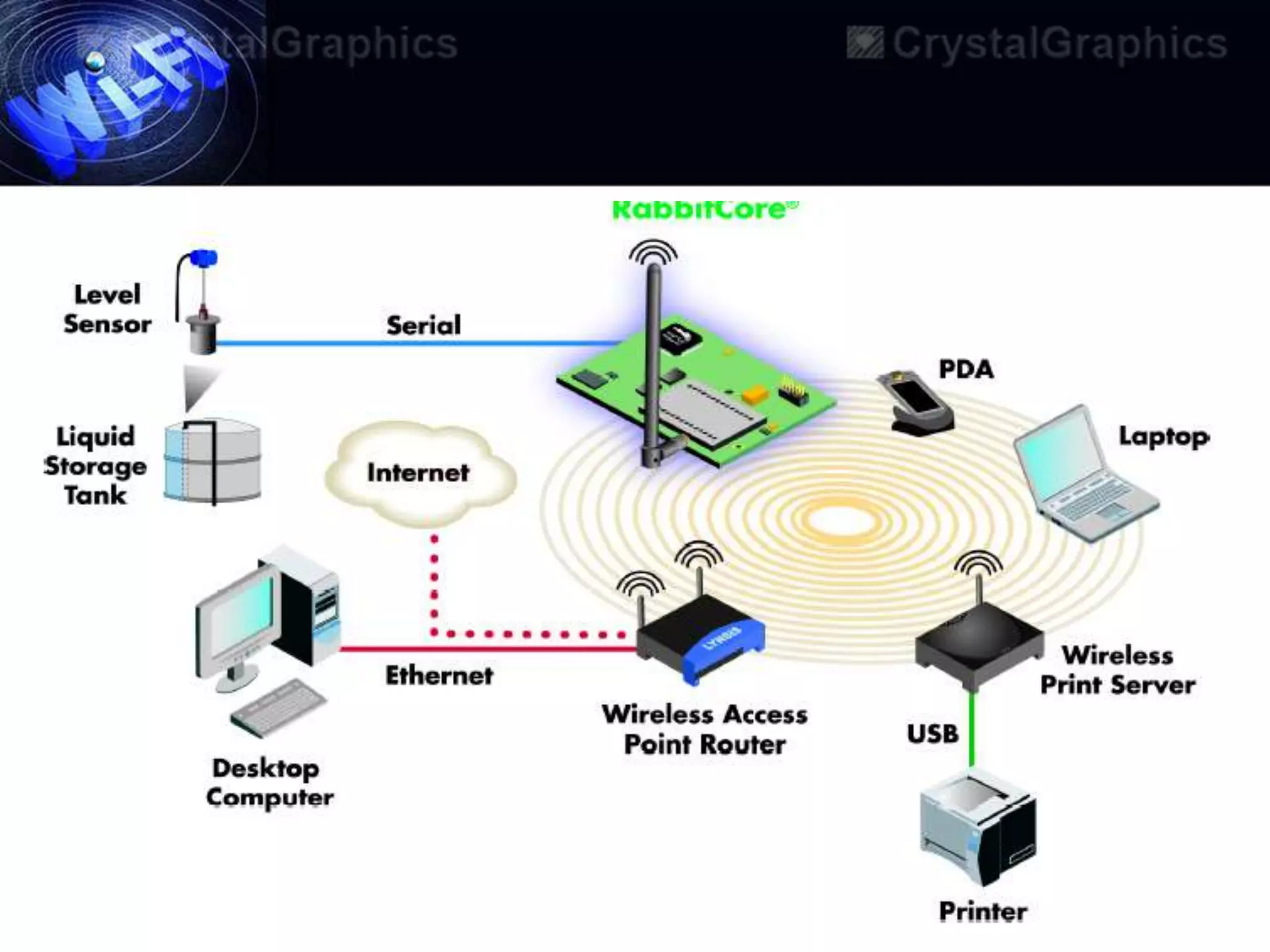
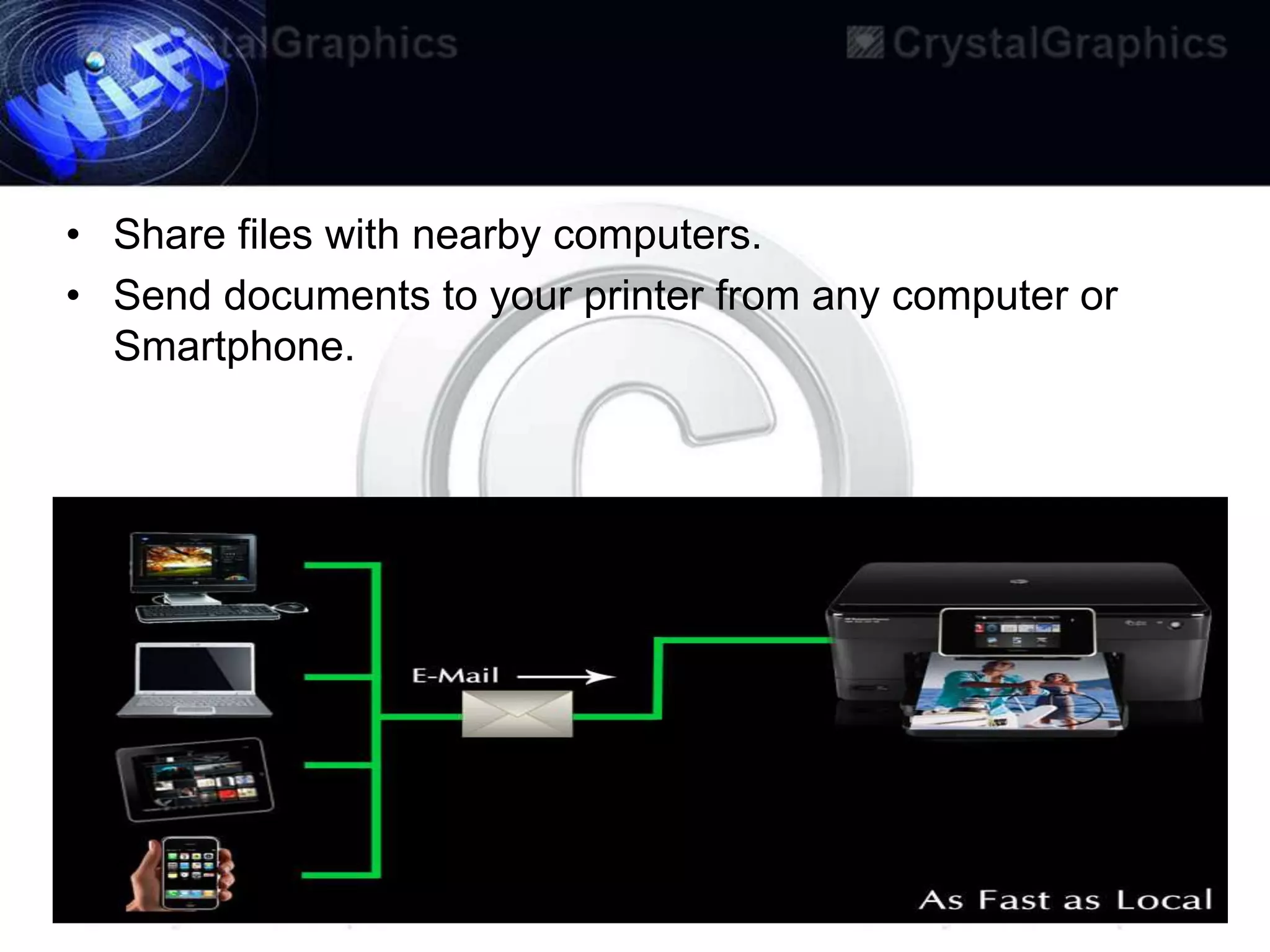
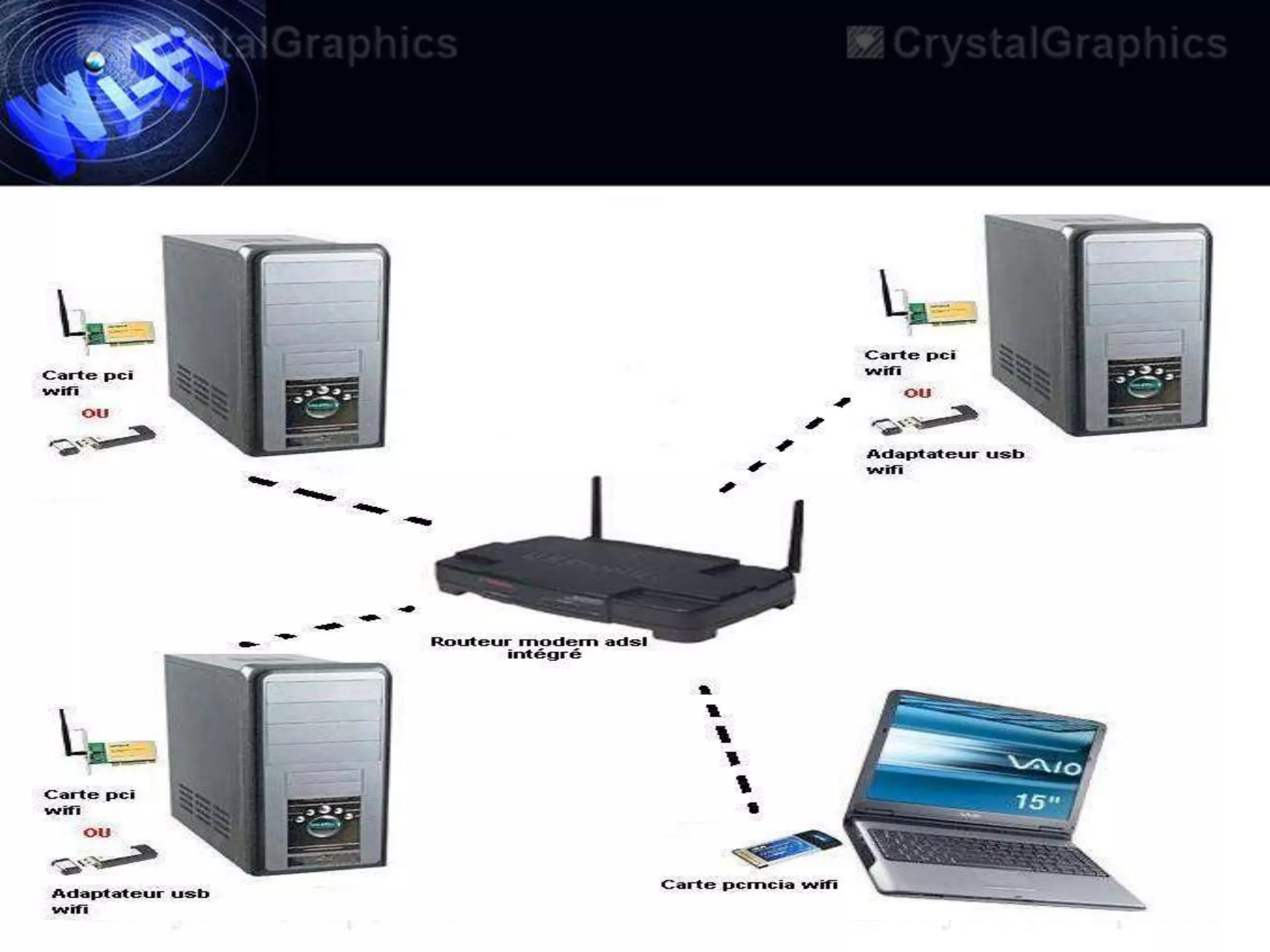
• Share files with nearby computers.
• Send documents to your printer from any computer or
  Smartphone.
Uses
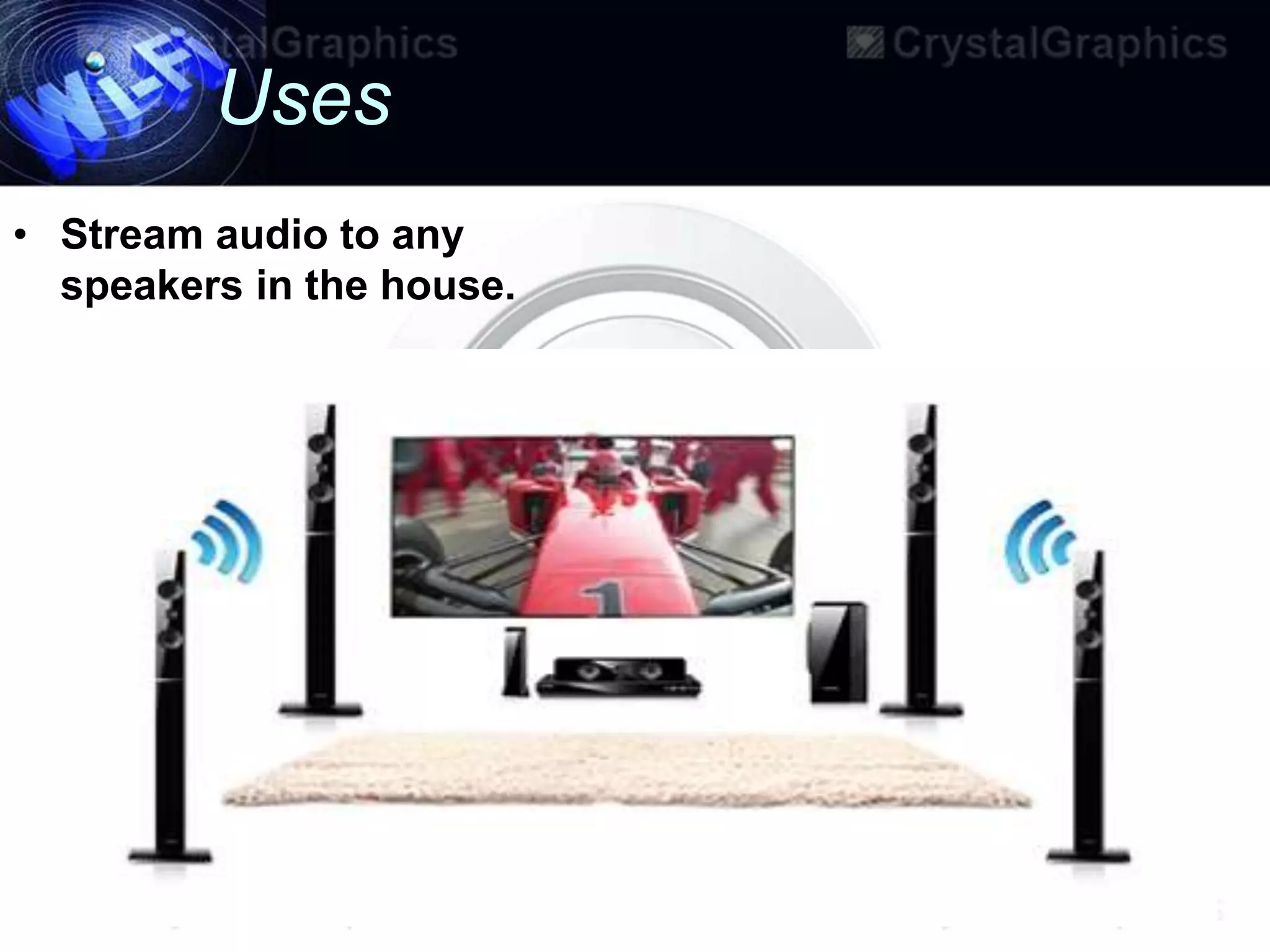
• Stream audio to any
  speakers in the house.
Uses
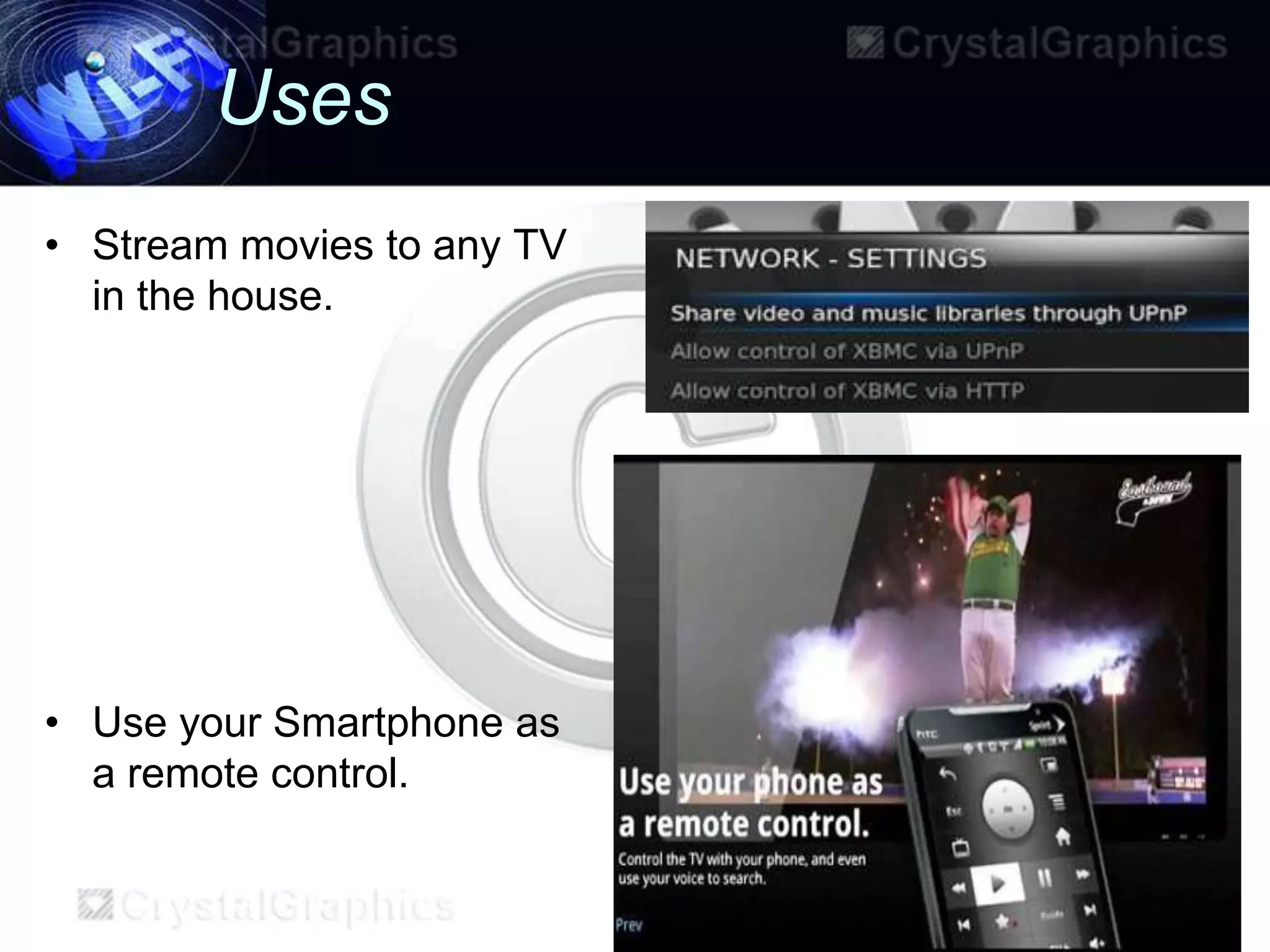
• Stream movies to any TV
  in the house.


• Use your Smartphone as
  a remote control.
• Sync your music library, photo library, or other
  files with your Smartphone USB-free.
Benefits
• Wireless Ethernet : Wi-Fi is an Ethernet replacement. Wi-Fi
  and Ethernet, both IEEE 802 networks , share some core
  elements.
• Extended Access : The absence of wires and cables extends
  access to places where wires and cables cannot go or where it
  is too expensive for them to go.
• Cost Reduction : The absence of wires and cables brings
  down cost, no need for trenching, drilling and other methods
  that may be necessary to make physical connections.
• Mobility : Wireless means you have the freedom to change
  your location without losing your connection
• Flexibility : Create opportunities for new applications as well
  as the possibility of creative new solutions for legacy
  applications.
Security Goals & Strategies
• Mutual Authentication : The goal of mutual
  authentication is to make sure that both the client and AP
  are who they say they are.
• Private Communication :The goal of privacy addresses
  the challenge of sending information through open space,
  which is accessible to everyone, friend and foe alike.
• Data Integrity : The goal of integrity means that the data
  is intact when it is received.
Range
• A typical wireless access point
  using 802.11b or 802.11g with a stock antenna might
  have a range of 32 m (120 ft) indoors and 95 m (300 ft)
  outdoors. IEEE 802.11n.
• Wi-Fi in the 2.4 GHz frequency block has slightly better
  range than Wi-Fi in the 5 GHz frequency block which is
  used by 802.11a and optionally by 802.11n.
• The maximum amount of power that a Wi-Fi device can
  transmit is limited by local regulations, such as FCC Part
  15 in the US.
• Wi-Fi has fairly high power consumption compared to
  some other standards.
Application Of Wi-Fi
         Technology
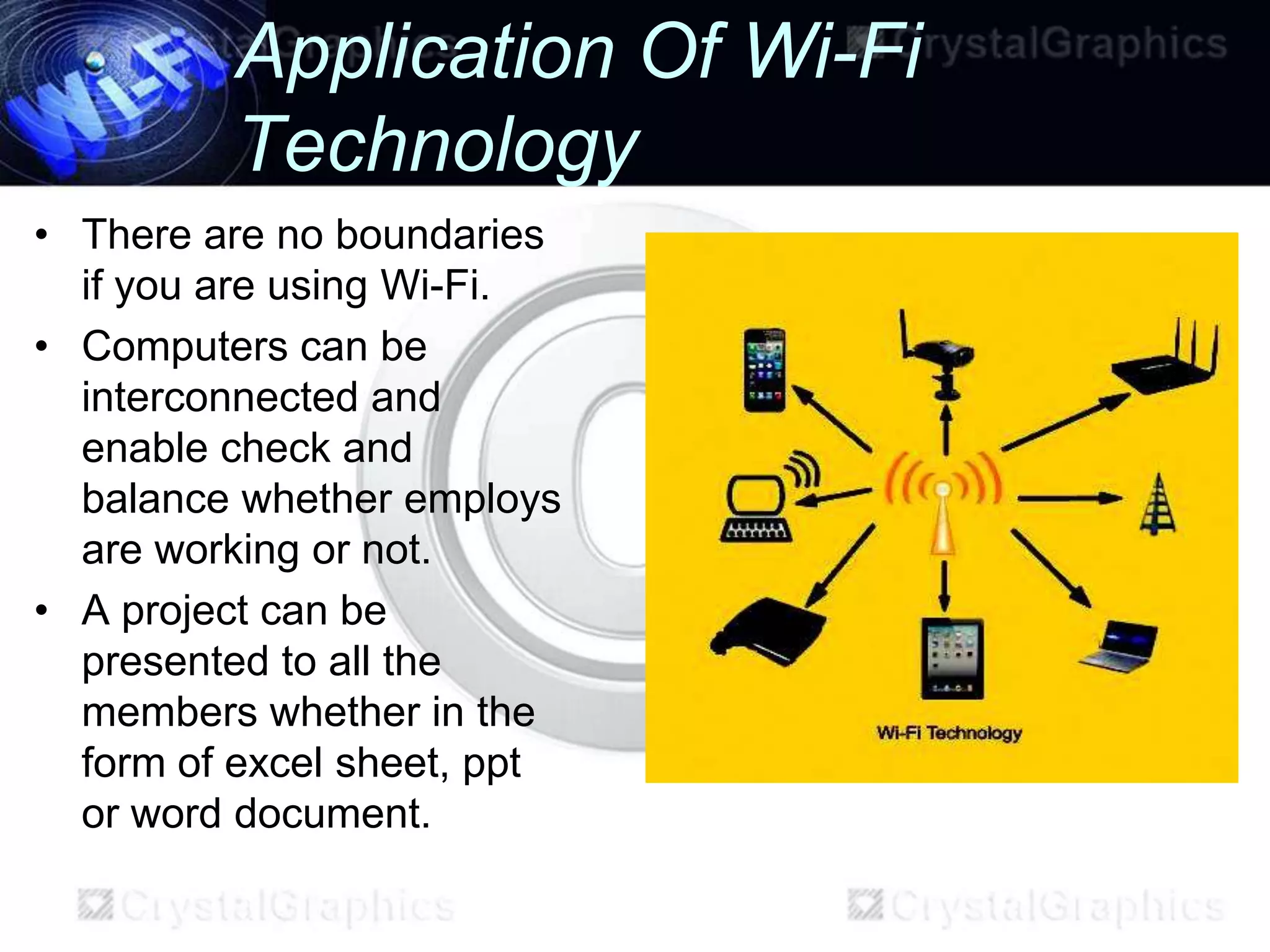
• There are no boundaries
  if you are using Wi-Fi.
• Computers can be
  interconnected and
  enable check and
  balance whether employs
  are working or not.
• A project can be
  presented to all the
  members whether in the
  form of excel sheet, ppt
  or word document.
Application Of Wi-Fi
      Technology
• If 2 or 3 members of your family have their
  own laptops they would be able to share
  their data, files and photos..
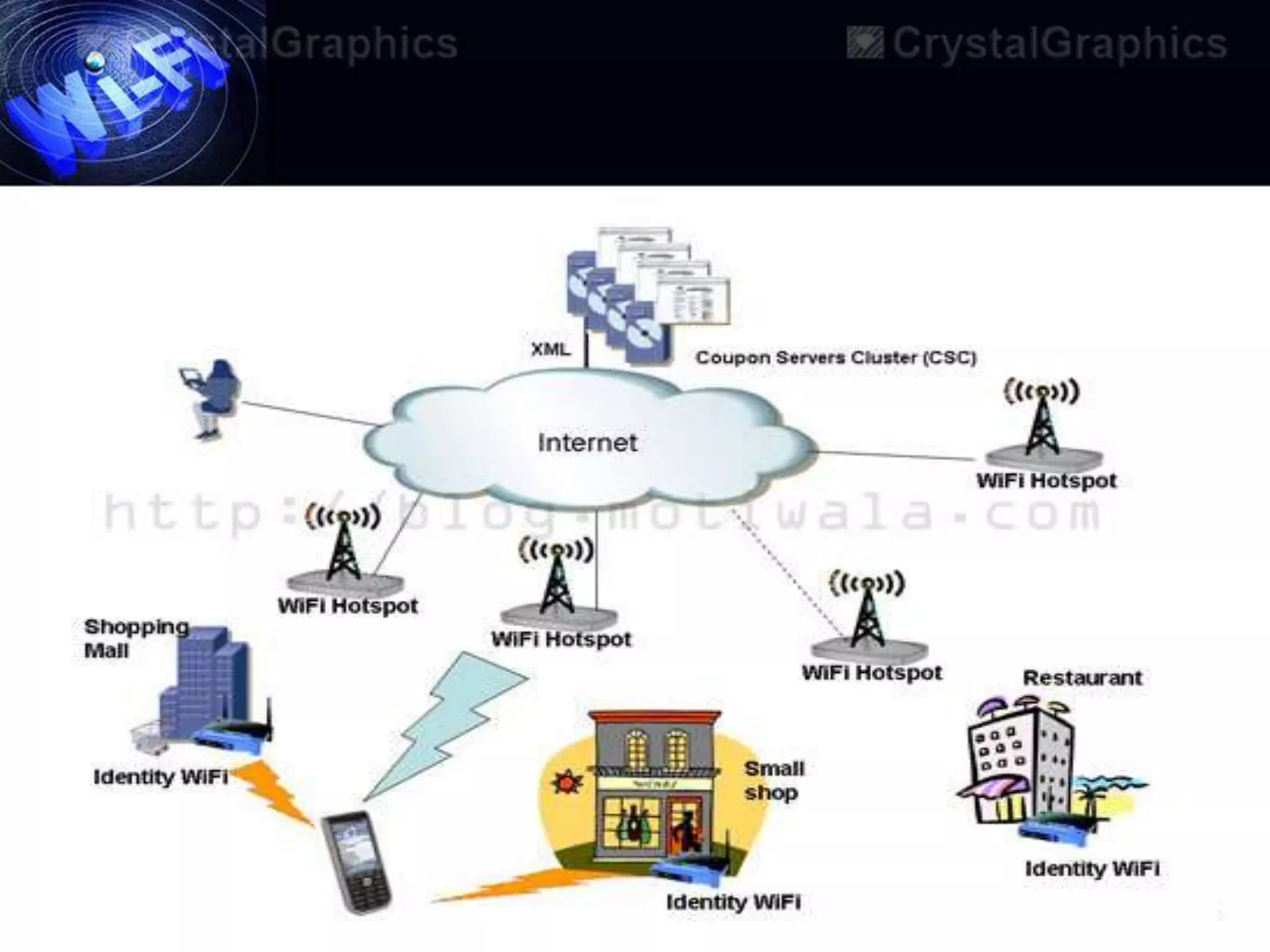
• Many public places are also supplied with
  Wi-Fi connectivity to access internet like
  cafe, restaurants, and clubs to attract the
  clients.
Wi fi and it’s applications

Wi fi and it’s applications

  • 1.
    WI-FI AND IT’S APPLICATIONS GROUP MEMBERS M.Amin Zafar Saad Mazhar M.Azfer
  • 2.
    CONTENTS What is Wi-Fi History Uses Benefits SecurityGoals And Strategies Range Application Of Wi-Fi Technology
  • 3.
    What is Wi-Fi? Wi-Fistands for Wireless-Fidelity. It’s a wireless technology brand that is owned by Wi-Fi Alliance. Alliance is a consortium of separate and independent companies agreeing to a set of common interoperable products based on the family of IEEE 802.11 standards.
  • 5.
    History  802.11 technologyhas its origins in a 1985 ruling by the US Federal Communications Commission that released the ISM band for unlicensed use.  In 1991 NCR Corporation with AT&T invented the precursor to 802.11 intended for use in cashier systems.  Vic Hayes has been called the “Father of Wi-Fi“, he was involved in designing the initial standards within the IEEE.  In 1999, the Wi-Fi Alliance was formed as a trade association to hold the Wi-Fi trademark under which most products are sold.
  • 8.
    Uses • It transferphotos & videos from your digital camera.
  • 9.
    • Share fileswith nearby computers. • Send documents to your printer from any computer or Smartphone.
  • 10.
    Uses • Stream audioto any speakers in the house.
  • 11.
    Uses • Stream moviesto any TV in the house. • Use your Smartphone as a remote control.
  • 12.
    • Sync yourmusic library, photo library, or other files with your Smartphone USB-free.
  • 16.
    Benefits • Wireless Ethernet: Wi-Fi is an Ethernet replacement. Wi-Fi and Ethernet, both IEEE 802 networks , share some core elements. • Extended Access : The absence of wires and cables extends access to places where wires and cables cannot go or where it is too expensive for them to go. • Cost Reduction : The absence of wires and cables brings down cost, no need for trenching, drilling and other methods that may be necessary to make physical connections. • Mobility : Wireless means you have the freedom to change your location without losing your connection • Flexibility : Create opportunities for new applications as well as the possibility of creative new solutions for legacy applications.
  • 17.
    Security Goals &Strategies • Mutual Authentication : The goal of mutual authentication is to make sure that both the client and AP are who they say they are. • Private Communication :The goal of privacy addresses the challenge of sending information through open space, which is accessible to everyone, friend and foe alike. • Data Integrity : The goal of integrity means that the data is intact when it is received.
  • 18.
    Range • A typicalwireless access point using 802.11b or 802.11g with a stock antenna might have a range of 32 m (120 ft) indoors and 95 m (300 ft) outdoors. IEEE 802.11n. • Wi-Fi in the 2.4 GHz frequency block has slightly better range than Wi-Fi in the 5 GHz frequency block which is used by 802.11a and optionally by 802.11n. • The maximum amount of power that a Wi-Fi device can transmit is limited by local regulations, such as FCC Part 15 in the US. • Wi-Fi has fairly high power consumption compared to some other standards.
  • 19.
    Application Of Wi-Fi Technology • There are no boundaries if you are using Wi-Fi. • Computers can be interconnected and enable check and balance whether employs are working or not. • A project can be presented to all the members whether in the form of excel sheet, ppt or word document.
  • 20.
    Application Of Wi-Fi Technology • If 2 or 3 members of your family have their own laptops they would be able to share their data, files and photos.. • Many public places are also supplied with Wi-Fi connectivity to access internet like cafe, restaurants, and clubs to attract the clients.