WHAT’S NEW IN DIABETES CARE? EDITH S. BERMUDEZ,MD,DPAMS,MHSA
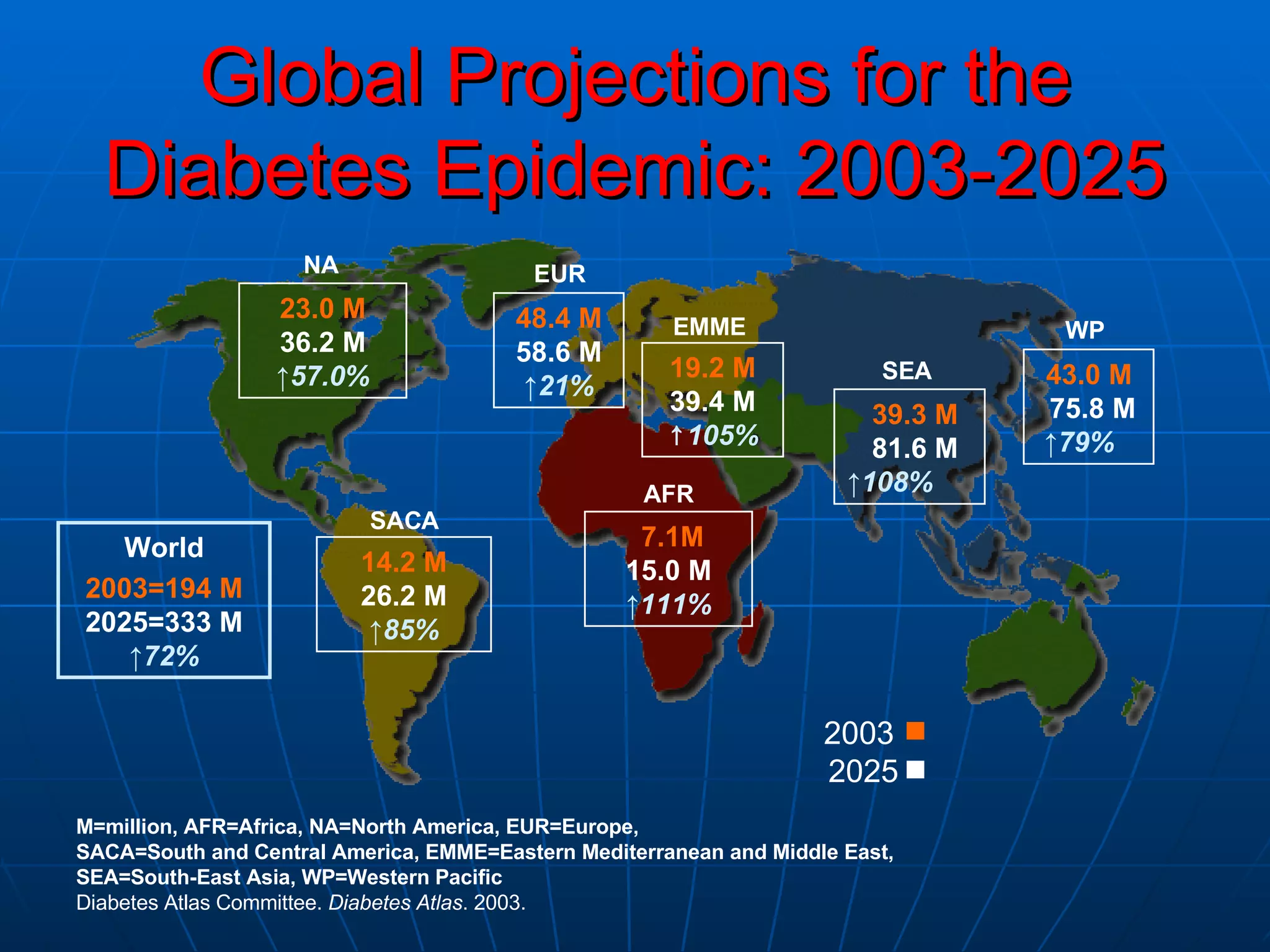
Global Projections for the Diabetes Epidemic: 2003-2025 23.0 M 36.2 M ↑ 57.0 % 14.2 M 26.2 M ↑ 85 % 48.4 M 58.6 M ↑ 21 % 43.0 M   75.8 M ↑ 79 % 7.1M 15.0 M ↑ 111 % 39.3 M 81.6 M ↑ 108 % M=million, AFR=Africa, NA=North America, EUR=Europe,  SACA=South and Central America, EMME=Eastern Mediterranean and Middle East,  SEA=South-East Asia, WP=Western Pacific Diabetes Atlas Committee.  Diabetes Atlas . 2003.  World 2003=194 M 2025=333 M ↑ 72% AFR NA SACA EUR SEA WP 19.2 M 39.4 M ↑ 105% EMME 2003  2025
Over the next 24 hours: 2200 diabetics will be newly-diagnosed 512 diabetics will die 66 diabetics will go blind 77 diabetics will be diagnosed with ESRD 153 diabetes-related amputations i Source: American Diabetes Association
Natural History of Type 2 Diabetes   (Can we change the course of DM?) Glucose Relative to normal -10 -5 0 5 10 15 20 25 30 0 100 200 50 150 Post-prandial glucose Fasting glucose Insulin resistance Insulin level Years At risk for diabetes Beta-cell dysfunction 250 R.M. Bergenstal, International Diabetes Center mg/dL (%) 100 200 150 300 250 350
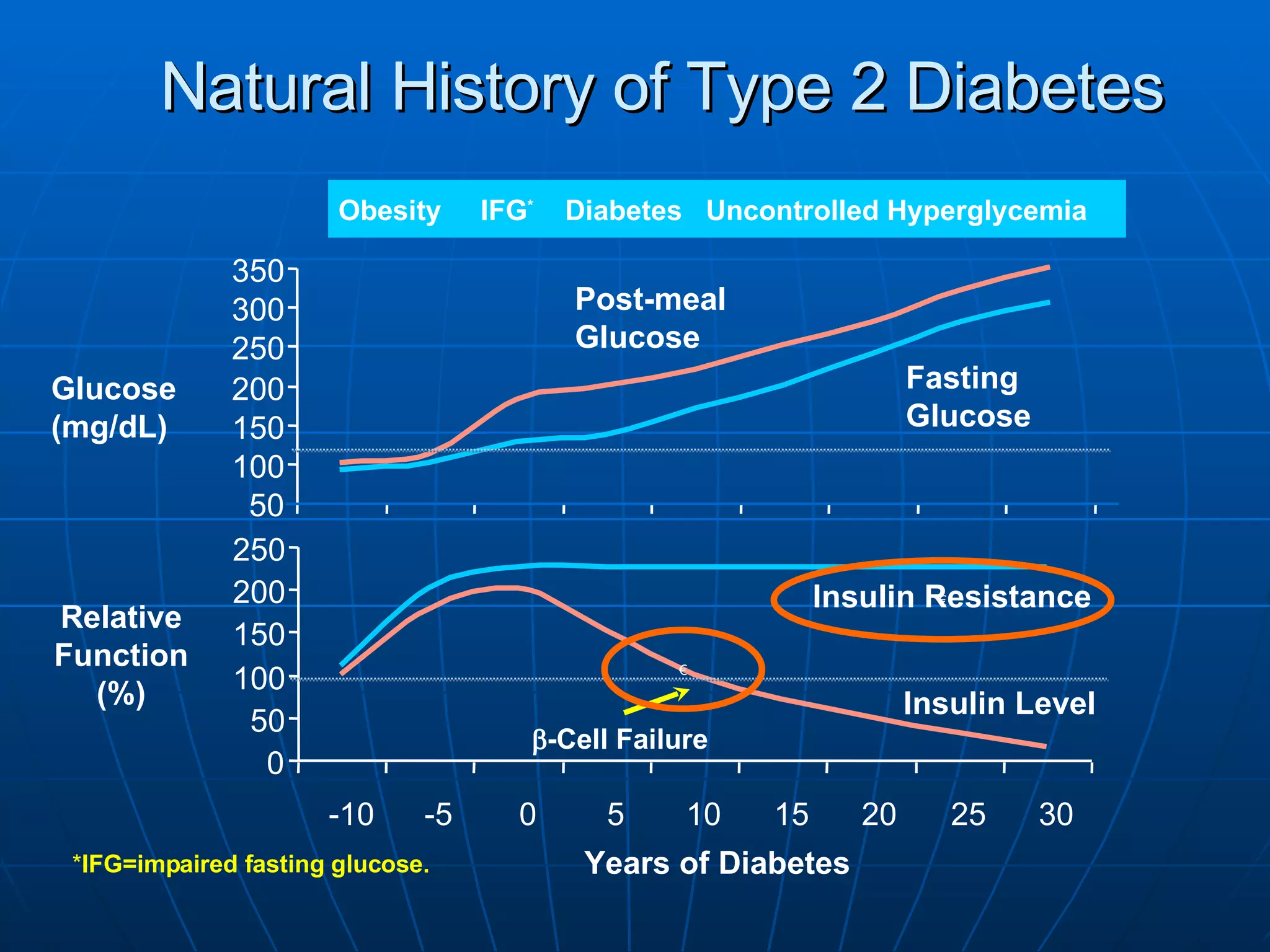
Natural History of Type 2 Diabetes   € 0 50 100 150 200 250 -10 -5 0 5 10 15 20 25 30 Years of Diabetes Glucose (mg/dL) Relative Function (%) Insulin Resistance Insulin Level  -Cell Failure * IFG=impaired fasting glucose. 50 100 150 200 250 300 350 Fasting Glucose Post-meal Glucose Obesity  IFG *   Diabetes  Uncontrolled Hyperglycemia   At Risk
Major Pathophysiologic Defects in Type 2 Diabetes Hepatic  glucose output Insulin  resistance Glucose uptake in muscle and fat Glucagon (alpha cell) Insulin (beta cell) Hyperglycemia Islet-cell dysfunction Adapted with permission from Kahn CR, Saltiel AR.  Joslin’s Diabetes Mellitus . 14th ed.  Lippincott Williams & Wilkins; 2005:145–168. Del Prato S, Marchetti P.  Horm Metab Res . 2004;36:775–781. Porte D Jr, Kahn SE.  Clin Invest Med . 1995;18:247–254. Pancreas Liver Adipose  tissue Liver Muscle
 
 
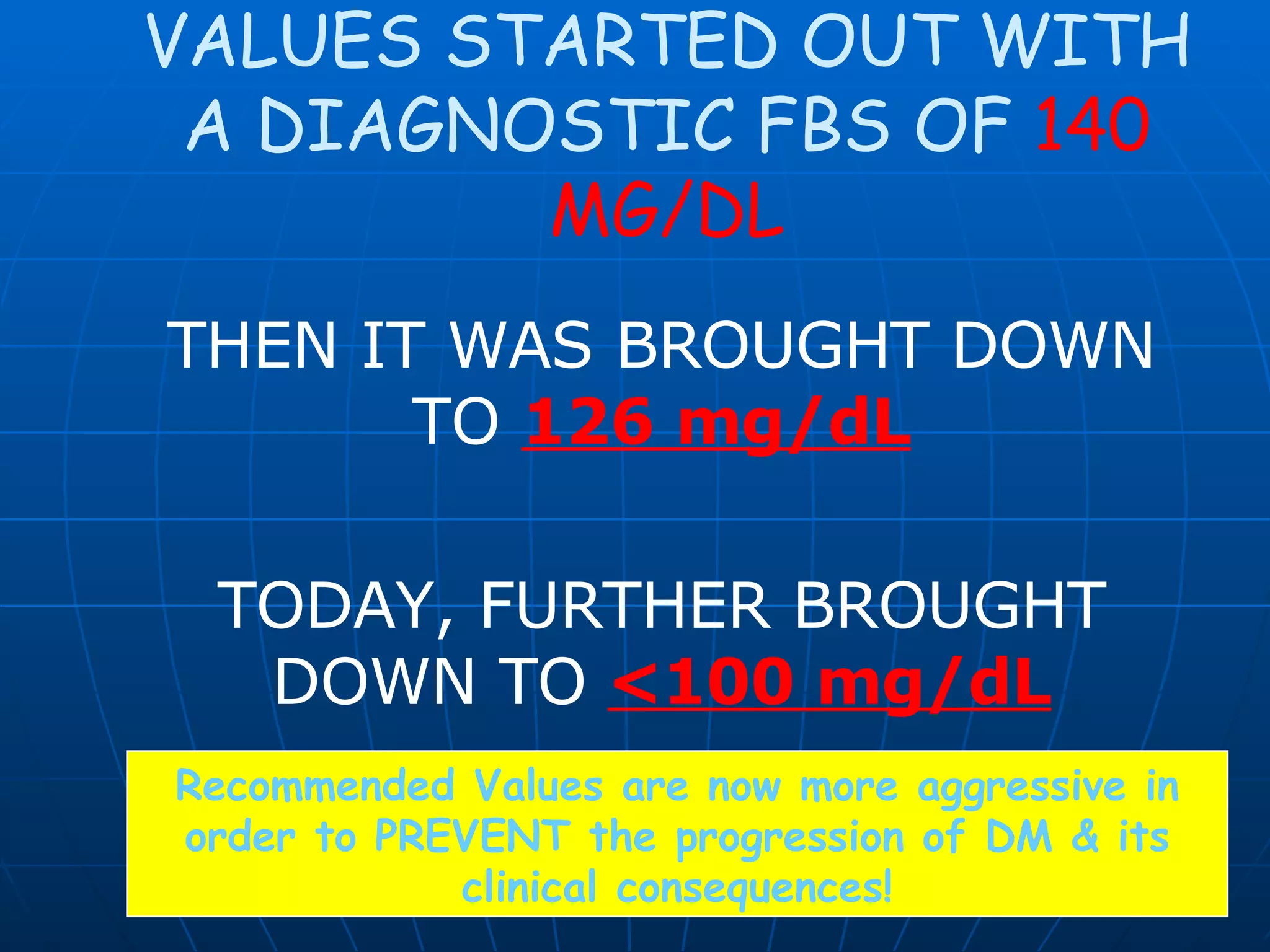
VALUES STARTED OUT WITH A DIAGNOSTIC FBS OF  140 MG/DL THEN IT WAS BROUGHT DOWN TO  126 mg/dL TODAY, FURTHER BROUGHT DOWN TO  <100 mg/dL Recommended Values are now more aggressive in order to PREVENT the progression of DM & its clinical consequences!
Guideline Recommendations Are Becoming More Aggressive 2007 ADA standards 1 “ The A1C goal  for patients in general  is an A1C goal of <7%.” “ The A1C goal  for the individual patient  is an A1C  as close to normal (<6%) as possible without significant hypoglycemia .” [boldface added] ADA=American Diabetes Association; EASD=European Association for the Study of Diabetes. 1.  American Diabetes Association.  Diabetes Care . 2007;30(suppl 1):S4–S41.  2.  Nathan DM et al.  Diabetes Care.  2006;29:1963–1972. ADA/EASD consensus statement 2 “ If lifestyle intervention and maximal tolerated dose of metformin fail to achieve or sustain glycemic goals,  another medication should be added within 2–3 months  of the initiation of therapy or at any time when A1C goal is not achieved.” [boldface added]
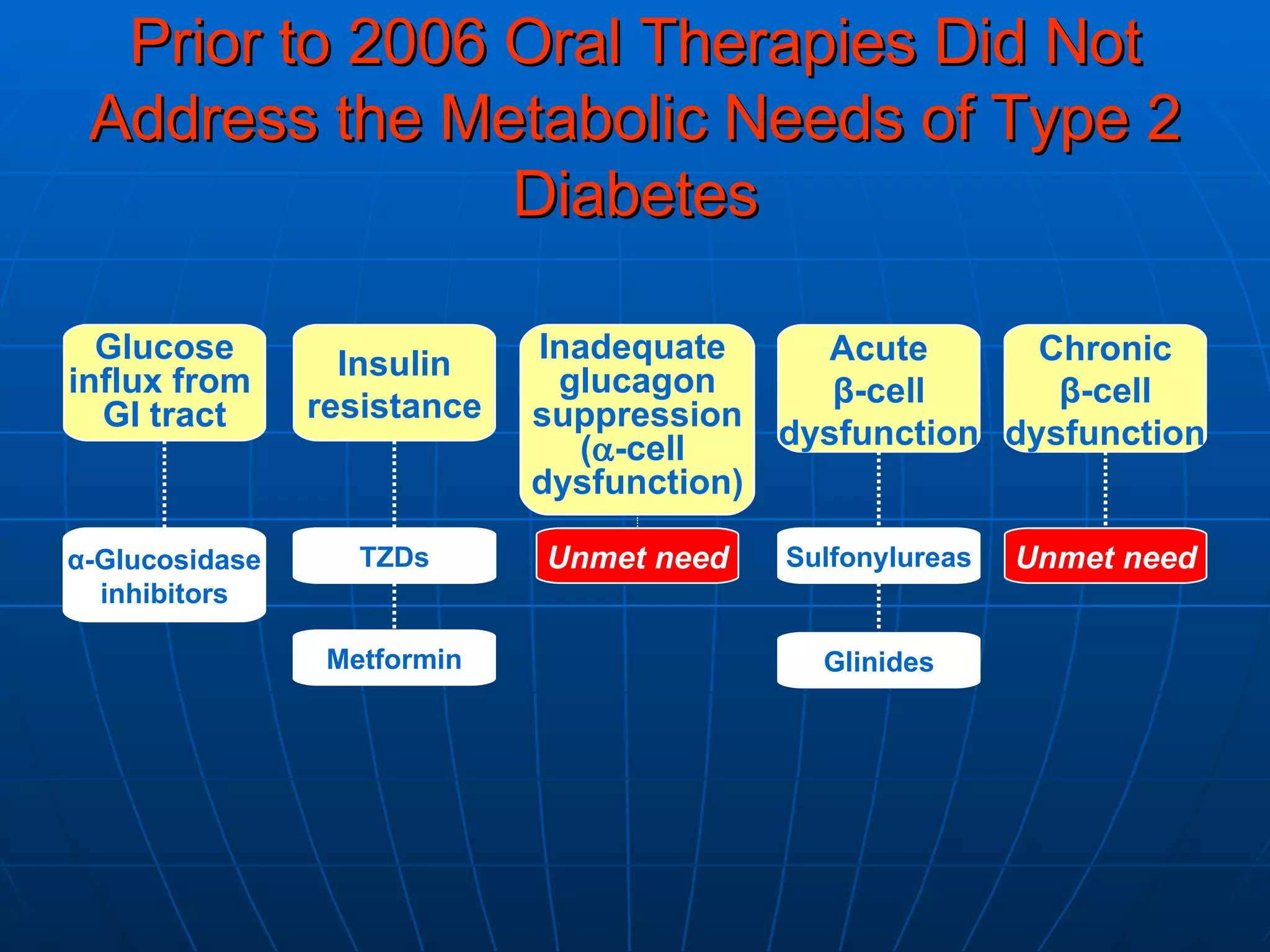
Prior to 2006 Oral Therapies Did Not Address the Metabolic Needs of Type 2 Diabetes Sulfonylureas Glinides Insulin resistance Inadequate  glucagon suppression (  -cell  dysfunction) Glucose influx from  GI tract α-Glucosidase inhibitors TZDs Metformin Chronic β -cell dysfunction Acute β -cell dysfunction Unmet need Unmet need
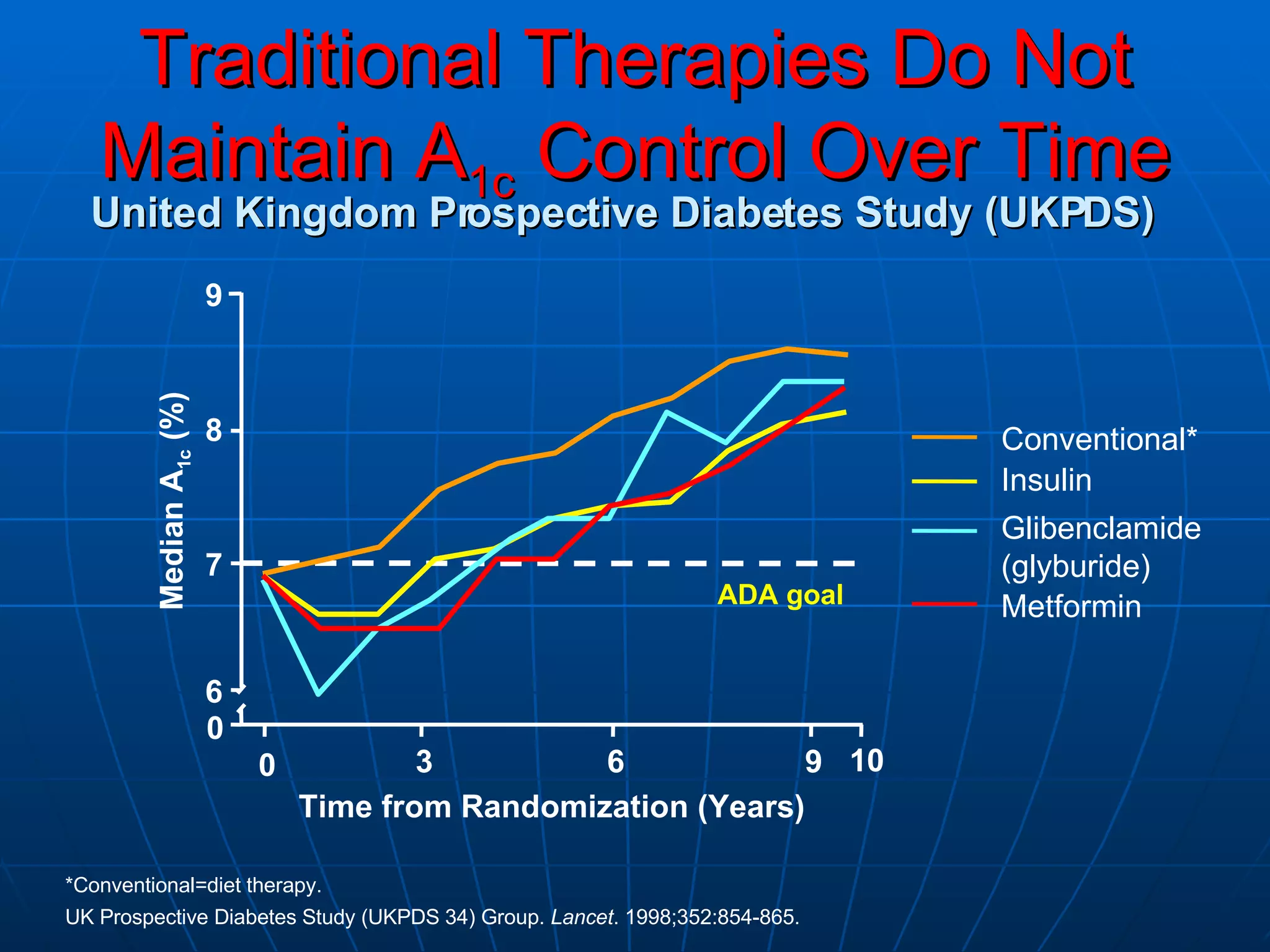
Traditional Therapies Do Not Maintain A 1c  Control Over Time United Kingdom Prospective Diabetes Study (UKPDS) *Conventional=diet therapy. UK Prospective Diabetes Study (UKPDS 34) Group.  Lancet . 1998;352:854-865. Median A 1c  (%) Conventional* Insulin Glibenclamide (glyburide) Metformin 0 3 0 6 7 8 9 6 9 10 Time from Randomization (Years) ADA goal
A More Rational View of Opportunities for Intervention Given T2DM Physiology (treating to change the course of the disease) 25 100 75 0 50 -12 -10 -6 0 2 6 -2 Years From Diagnosis *Metabolic syndrome β -Cell Function (%) 50% of  β  cells may still be functioning  Add TZD to MET or SU; new role for incretin mimetics/enhancers Initiate MET or SU or other agent; ? Incretins *Opportunities for intervention Intensify lifestyle, risk factor modification* Atherosclerosis Hyperglycemia Hypertension Insulin resistance Hyperinsulinemia Dyslipidemia
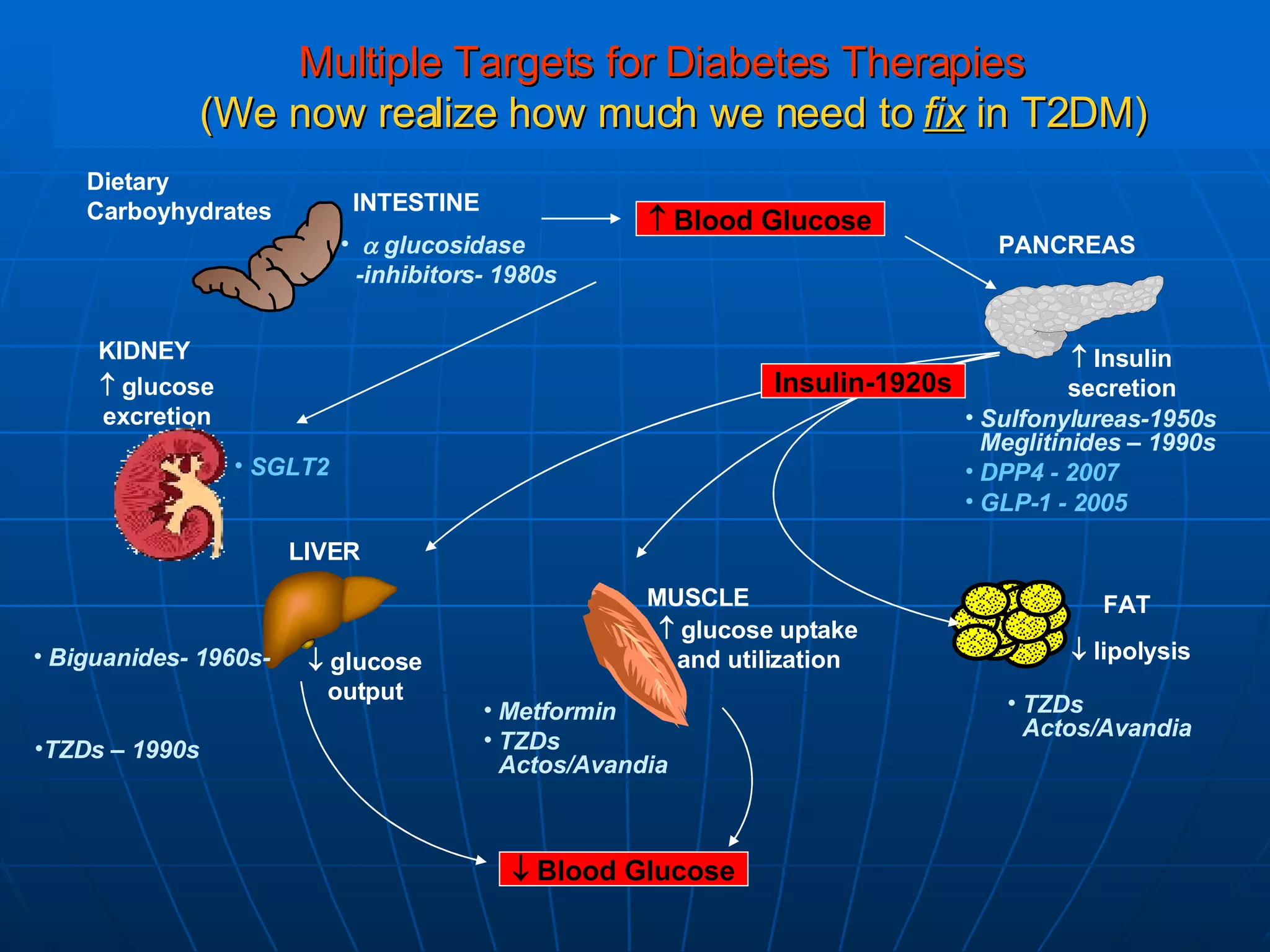
Multiple Targets for Diabetes Therapies   (We now realize how much we need to  fix  in T2DM) Dietary  Carboyhydrates MUSCLE FAT PANCREAS INTESTINE KIDNEY Biguanides- 1960s- TZDs – 1990s Sulfonylureas-1950s Meglitinides – 1990s DPP4 - 2007  GLP-1 - 2005 LIVER    Blood Glucose    Insulin secretion    glucose uptake and utilization    lipolysis    glucose output Metformin TZDs Actos/Avandia TZDs Actos/Avandia  glucosidase -inhibitors- 1980s    glucose excretion SGLT2    Blood Glucose Insulin-1920s
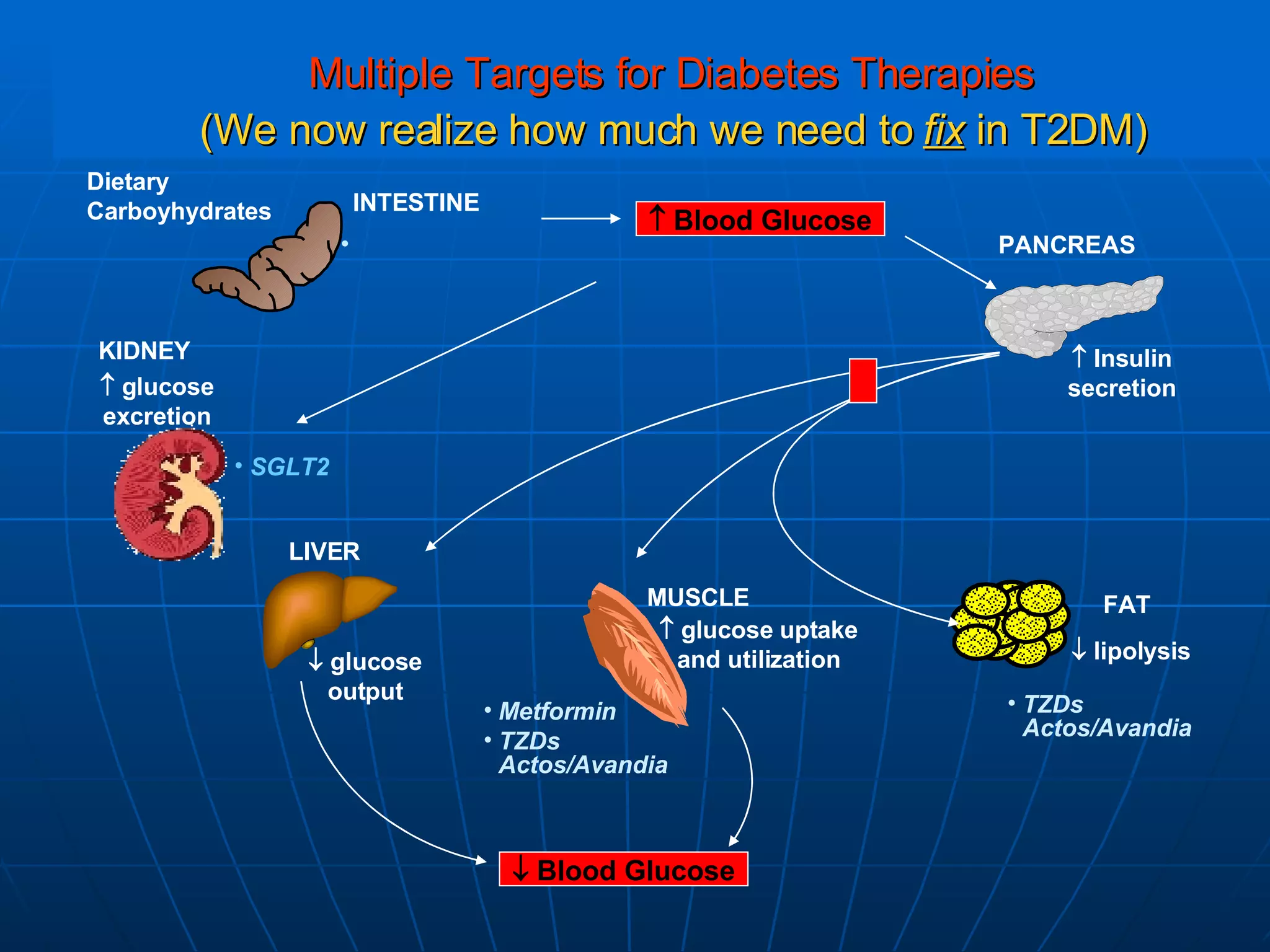
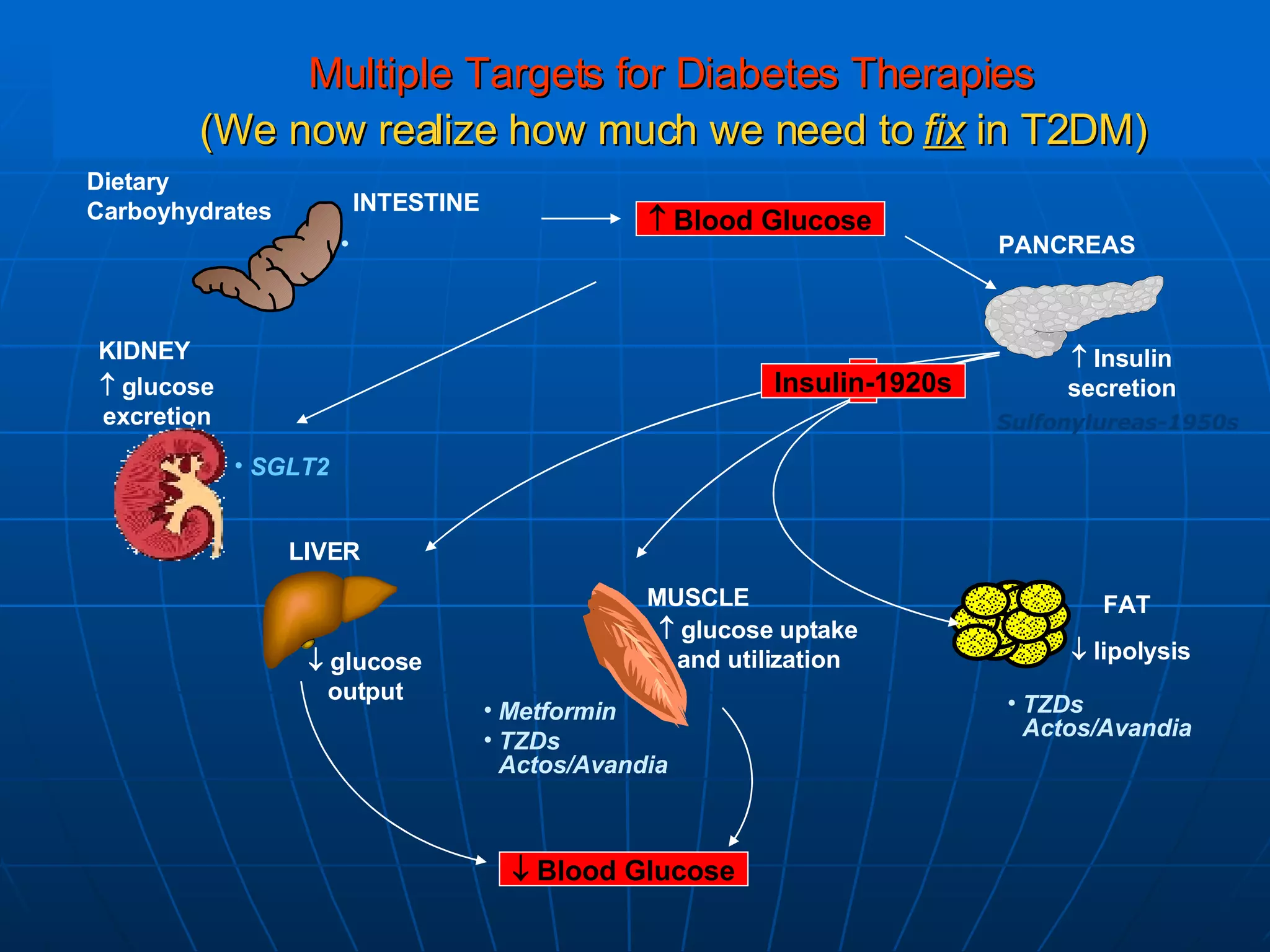
Multiple Targets for Diabetes Therapies   (We now realize how much we need to  fix  in T2DM) Dietary  Carboyhydrates MUSCLE FAT PANCREAS INTESTINE KIDNEY LIVER    Blood Glucose    Insulin secretion    glucose uptake and utilization    lipolysis    glucose output Metformin TZDs Actos/Avandia TZDs Actos/Avandia    glucose excretion SGLT2    Blood Glucose
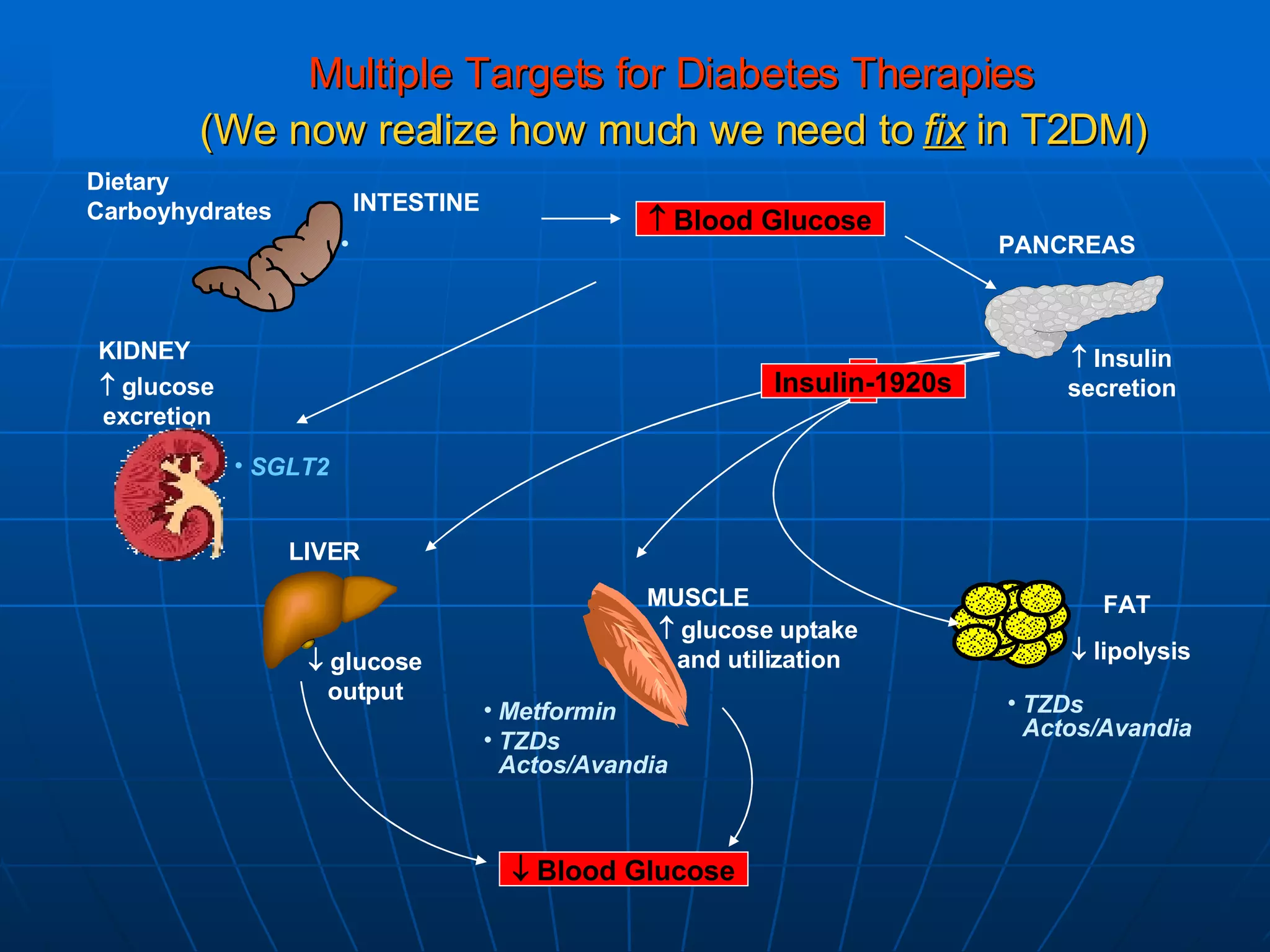
Multiple Targets for Diabetes Therapies   (We now realize how much we need to  fix  in T2DM) Dietary  Carboyhydrates MUSCLE FAT PANCREAS INTESTINE KIDNEY LIVER    Blood Glucose    Insulin secretion    glucose uptake and utilization    lipolysis    glucose output Metformin TZDs Actos/Avandia TZDs Actos/Avandia    glucose excretion SGLT2    Blood Glucose Insulin-1920s
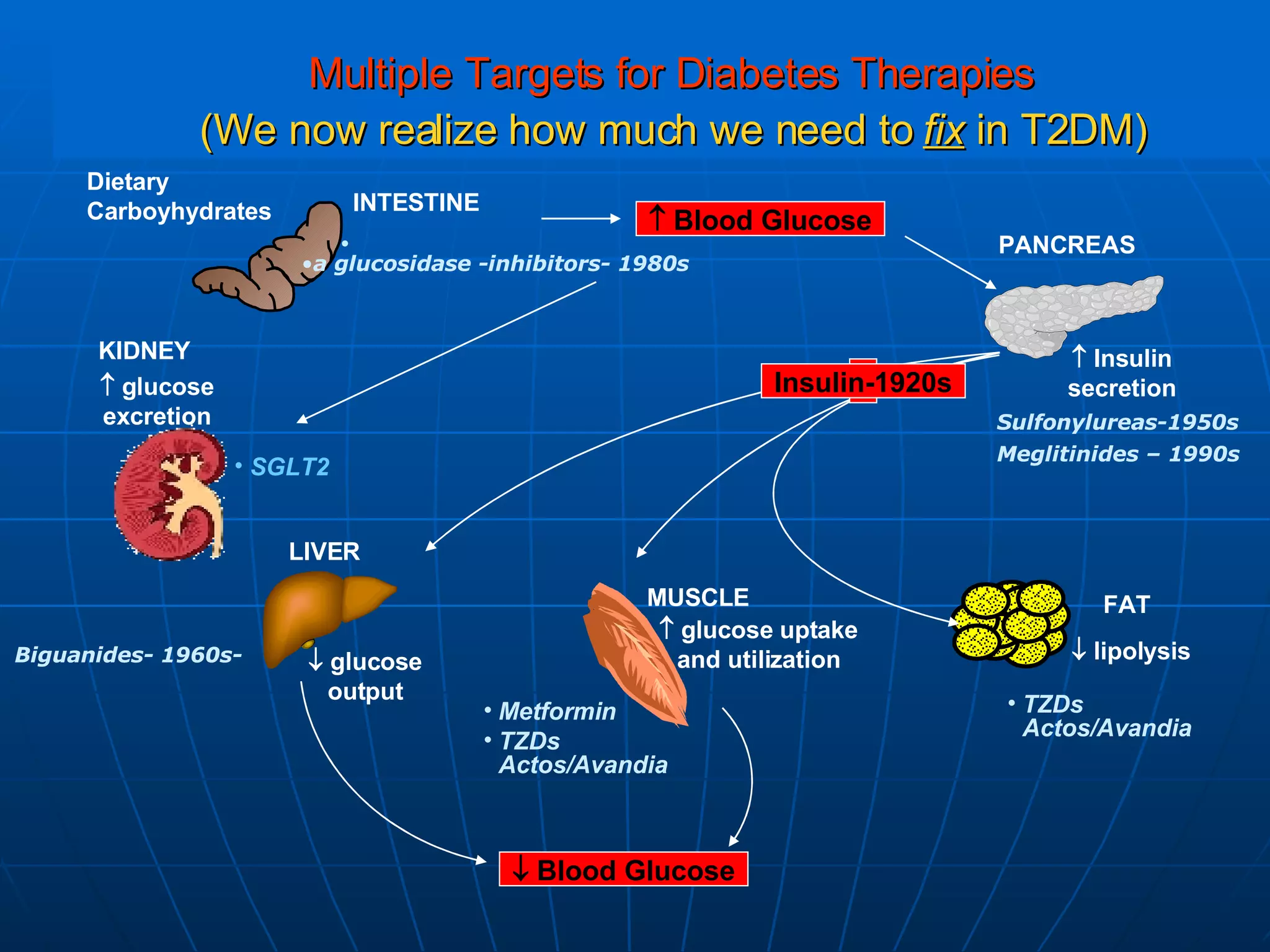
Multiple Targets for Diabetes Therapies   (We now realize how much we need to  fix  in T2DM) Dietary  Carboyhydrates MUSCLE FAT PANCREAS INTESTINE KIDNEY LIVER    Blood Glucose    Insulin secretion    glucose uptake and utilization    lipolysis    glucose output Metformin TZDs Actos/Avandia TZDs Actos/Avandia    glucose excretion SGLT2    Blood Glucose Insulin-1920s Sulfonylureas-1950s
Multiple Targets for Diabetes Therapies   (We now realize how much we need to  fix  in T2DM) Dietary  Carboyhydrates MUSCLE FAT PANCREAS INTESTINE KIDNEY LIVER    Blood Glucose    Insulin secretion    glucose uptake and utilization    lipolysis    glucose output Metformin TZDs Actos/Avandia TZDs Actos/Avandia    glucose excretion SGLT2    Blood Glucose Insulin-1920s Sulfonylureas-1950s Biguanides- 1960s-
Multiple Targets for Diabetes Therapies   (We now realize how much we need to  fix  in T2DM) Dietary  Carboyhydrates MUSCLE FAT PANCREAS INTESTINE KIDNEY LIVER    Blood Glucose    Insulin secretion    glucose uptake and utilization    lipolysis    glucose output Metformin TZDs Actos/Avandia TZDs Actos/Avandia    glucose excretion SGLT2    Blood Glucose Insulin-1920s Sulfonylureas-1950s Biguanides- 1960s- a glucosidase -inhibitors- 1980s
Multiple Targets for Diabetes Therapies   (We now realize how much we need to  fix  in T2DM) Dietary  Carboyhydrates MUSCLE FAT PANCREAS INTESTINE KIDNEY LIVER    Blood Glucose    Insulin secretion    glucose uptake and utilization    lipolysis    glucose output Metformin TZDs Actos/Avandia TZDs Actos/Avandia    glucose excretion SGLT2    Blood Glucose Insulin-1920s Sulfonylureas-1950s Biguanides- 1960s- a glucosidase -inhibitors- 1980s Meglitinides – 1990s
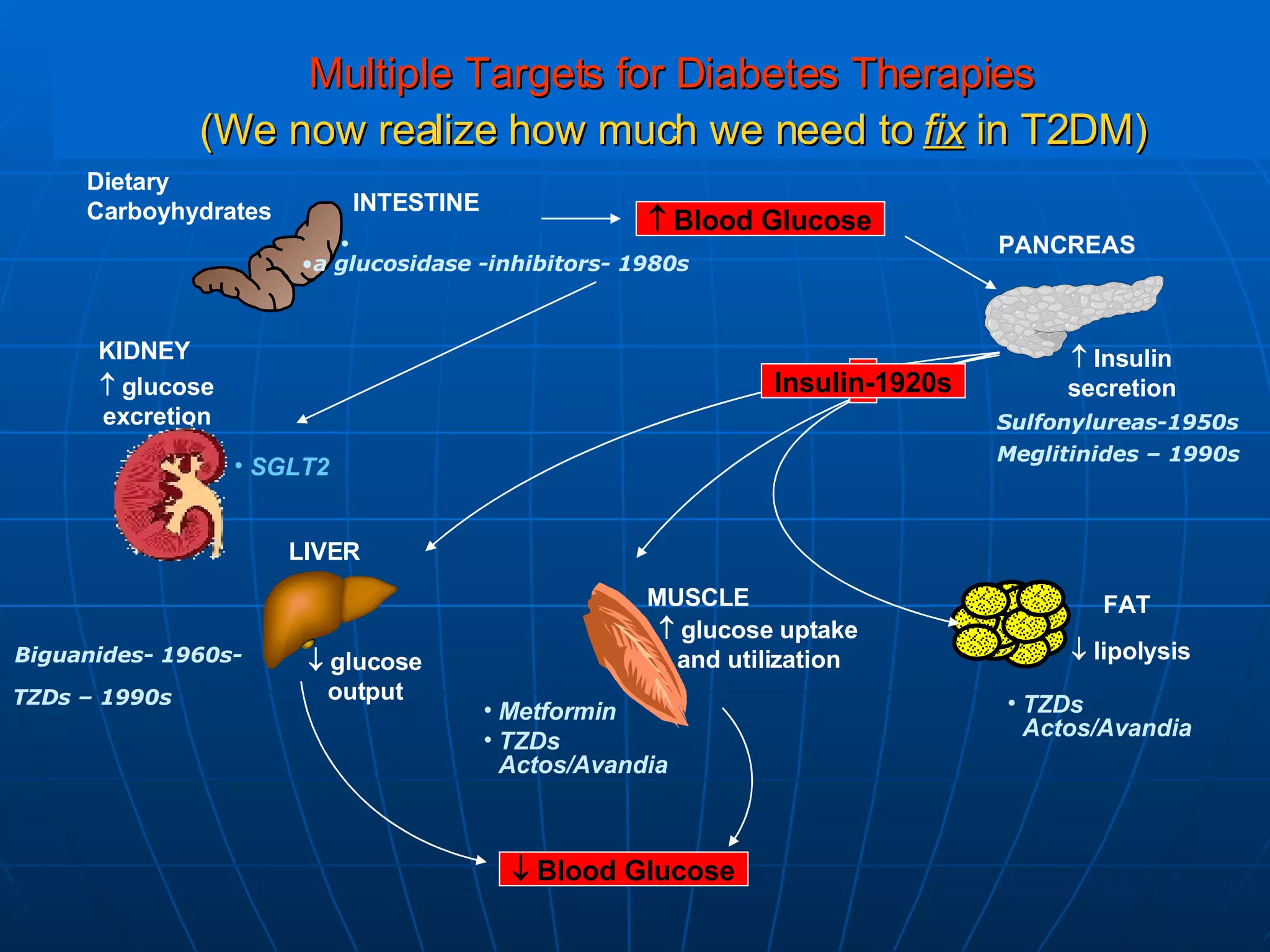
Multiple Targets for Diabetes Therapies   (We now realize how much we need to  fix  in T2DM) Dietary  Carboyhydrates MUSCLE FAT PANCREAS INTESTINE KIDNEY LIVER    Blood Glucose    Insulin secretion    glucose uptake and utilization    lipolysis    glucose output Metformin TZDs Actos/Avandia TZDs Actos/Avandia    glucose excretion SGLT2    Blood Glucose Insulin-1920s Sulfonylureas-1950s Biguanides- 1960s- a glucosidase -inhibitors- 1980s Meglitinides – 1990s TZDs – 1990s
Multiple Targets for Diabetes Therapies   (We now realize how much we need to  fix  in T2DM) Dietary  Carboyhydrates MUSCLE FAT PANCREAS INTESTINE KIDNEY LIVER    Blood Glucose    Insulin secretion    glucose uptake and utilization    lipolysis    glucose output Metformin TZDs Actos/Avandia TZDs Actos/Avandia    glucose excretion SGLT2    Blood Glucose Insulin-1920s Sulfonylureas-1950s Biguanides- 1960s- a glucosidase -inhibitors- 1980s Meglitinides – 1990s TZDs – 1990s GLP-1 - 2005
Multiple Targets for Diabetes Therapies   (We now realize how much we need to  fix  in T2DM) Dietary  Carboyhydrates MUSCLE FAT PANCREAS INTESTINE KIDNEY LIVER    Blood Glucose    Insulin secretion    glucose uptake and utilization    lipolysis    glucose output Metformin TZDs Actos/Avandia TZDs Actos/Avandia    glucose excretion SGLT2    Blood Glucose Insulin-1920s Sulfonylureas-1950s Biguanides- 1960s- a glucosidase -inhibitors- 1980s Meglitinides – 1990s TZDs – 1990s GLP-1 - 2005 DPP4 - 2007
Multiple Targets for Diabetes Therapies   (We now realize how much we need to  fix  in T2DM) Dietary  Carboyhydrates MUSCLE FAT PANCREAS INTESTINE KIDNEY Biguanides- 1960s- Sulfonylureas-1950s Meglitinides – 1990s DPP4 - 2007  GLP-1 - 2005 LIVER    Blood Glucose    Insulin secretion    glucose uptake and utilization    lipolysis    glucose output Metformin TZDs Actos/Avandia TZDs Actos/Avandia  glucosidase -inhibitors- 1980s    glucose excretion SGLT2    Blood Glucose Insulin-1920s TZDs – 1990s
 
 
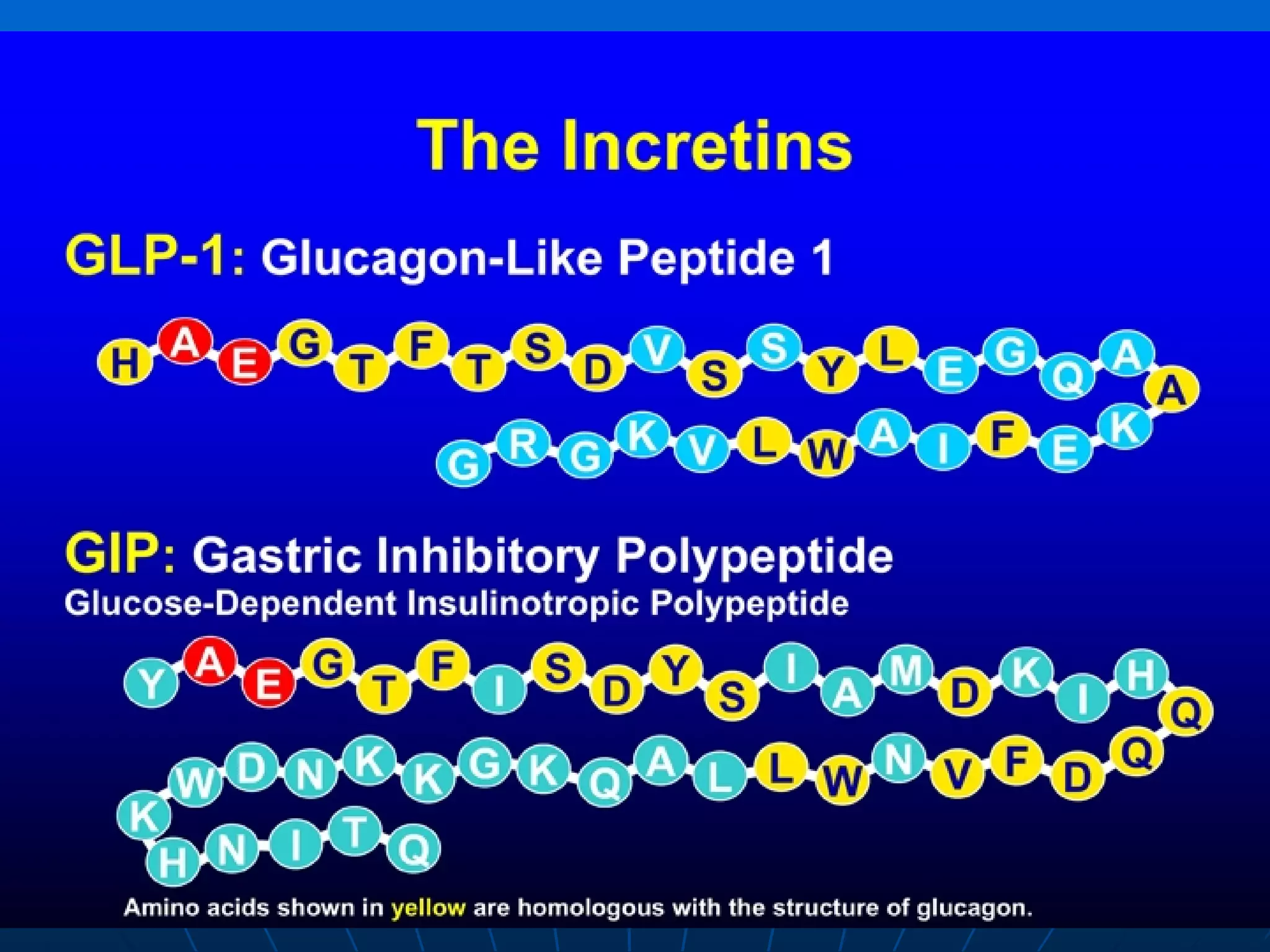
  Gut-Derived Factors That Increase  Glucose-Stimulated Insulin Secretion In –   cre - tin   In testine  Se cre tion  In sulin  Definition Of Incretins Creutzfeldt Diabetologia 28: 5645  1985
 
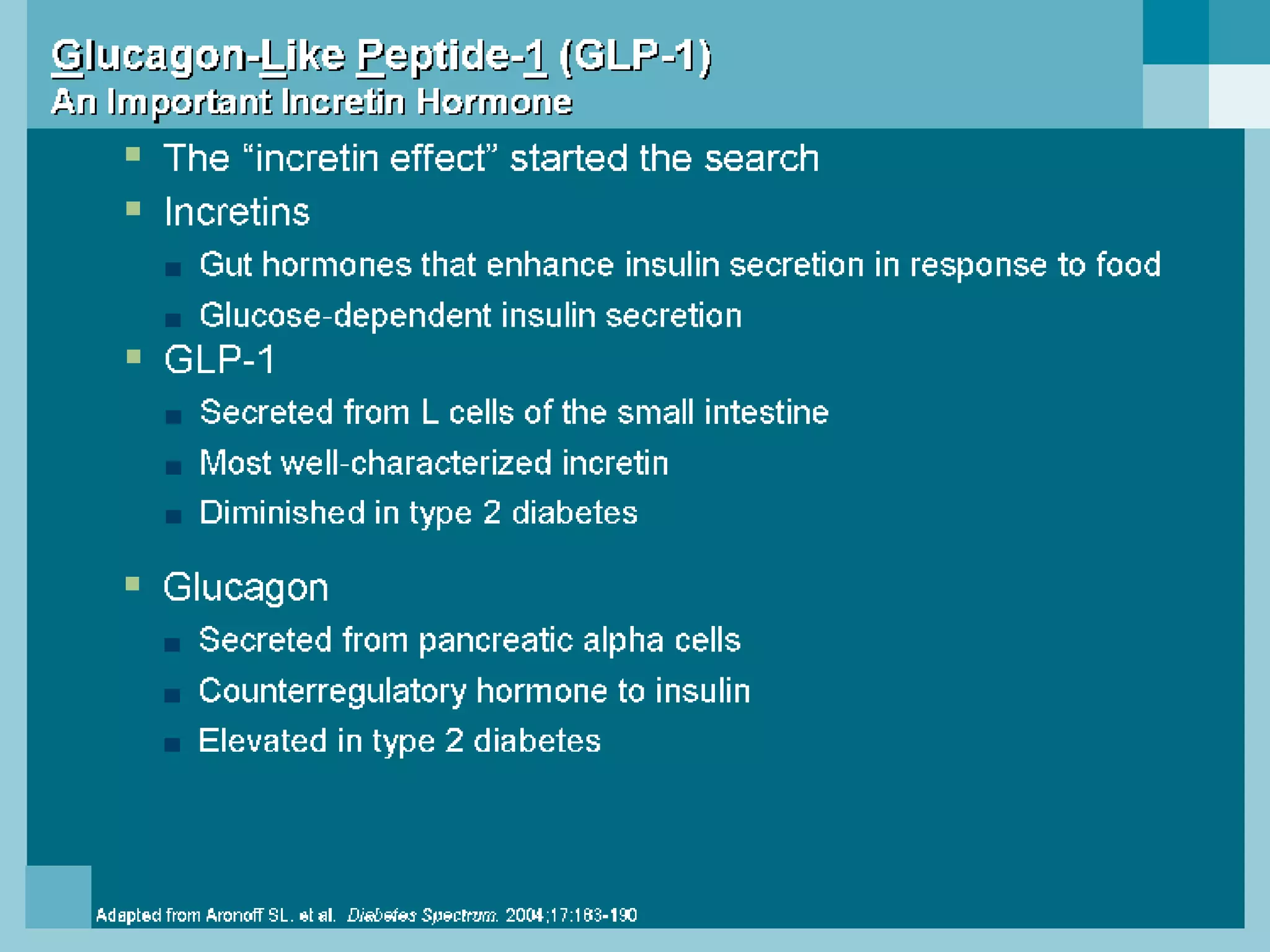
G lucagon- L ike  P eptide- 1  (GLP-1) An Important Incretin Hormone
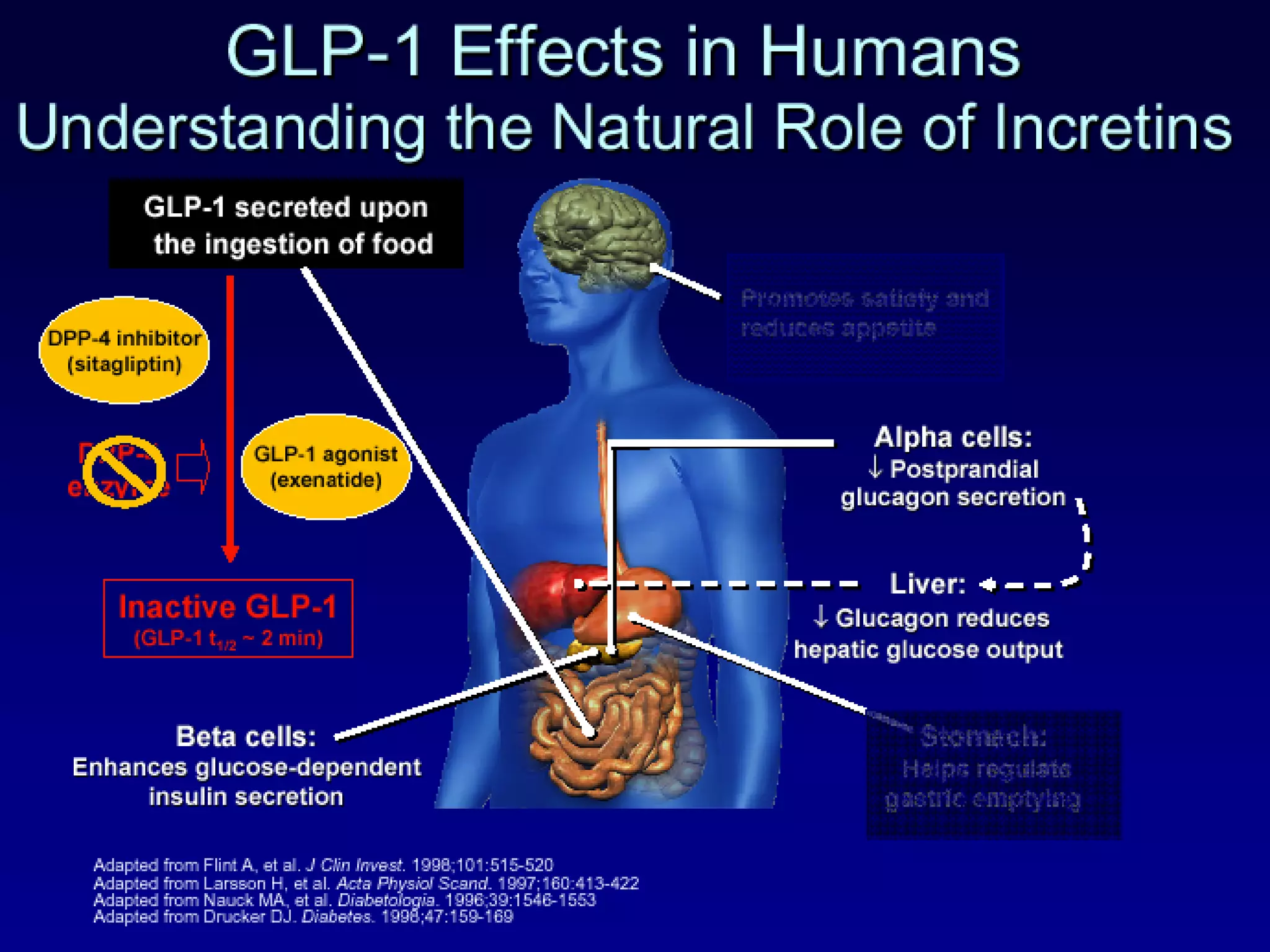
GLP-1 Effects in Humans Understanding the Natural Role of Incretins
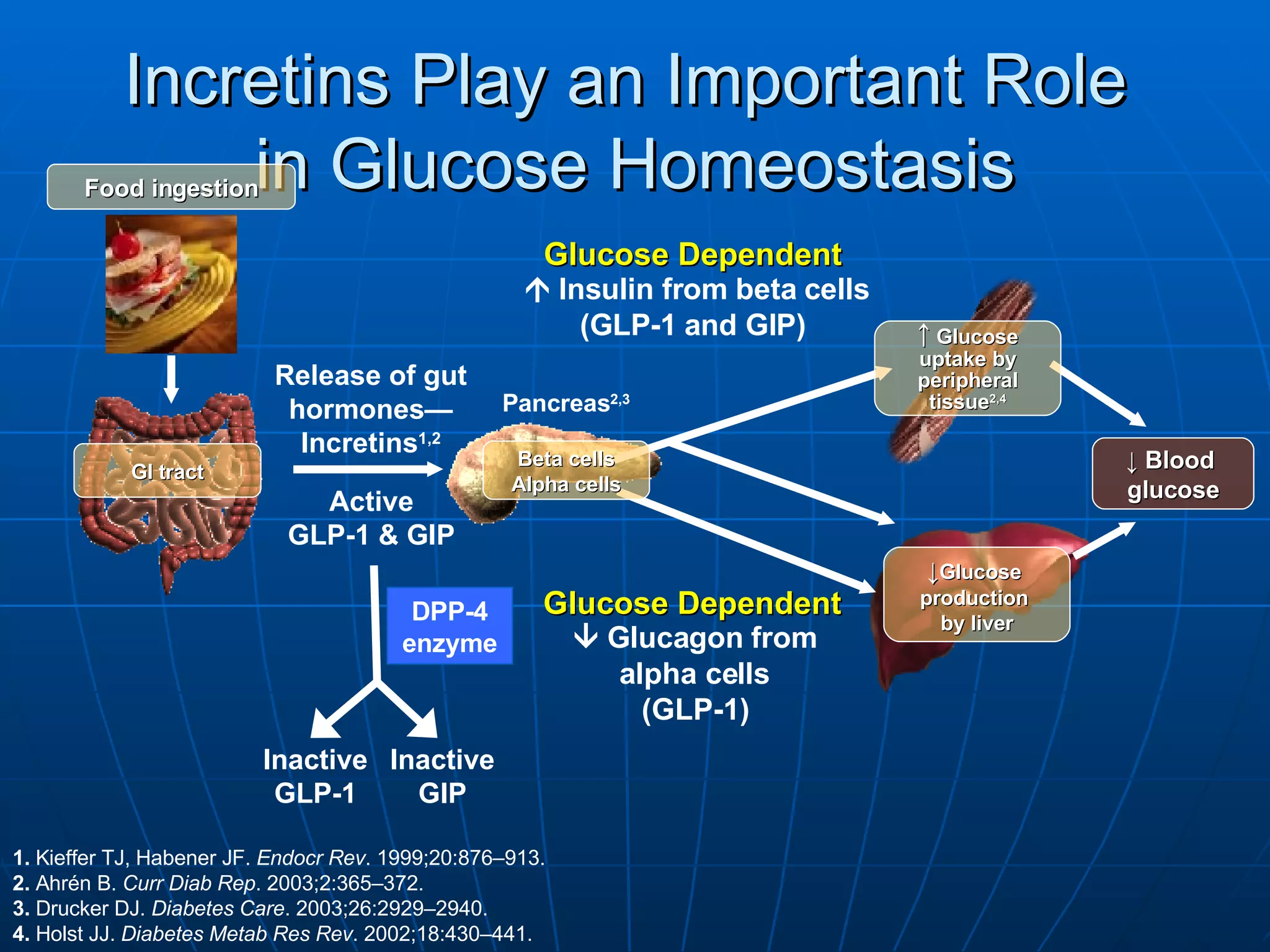
Incretins Play an Important Role  in Glucose Homeostasis 1.  Kieffer TJ, Habener JF.  Endocr Rev . 1999;20:876–913.  2.  Ahrén B.  Curr Diab Rep . 2003;2:365–372. 3.  Drucker DJ.  Diabetes Care . 2003;26:2929–2940.  4.  Holst JJ.  Diabetes Metab Res Rev . 2002;18:430–441.      Insulin from beta cells (GLP-1 and GIP)    Glucagon from alpha cells (GLP-1) Release of gut hormones— Incretins 1,2 Pancreas 2,3 Glucose Dependent Active GLP-1 & GIP DPP-4 enzyme Inactive GIP Inactive GLP-1 Glucose Dependent ↓  Blood  glucose GI tract ↓ Glucose  production  by liver Food ingestion ↑ Glucose  uptake by peripheral tissue 2,4 Beta cells Alpha cells
 
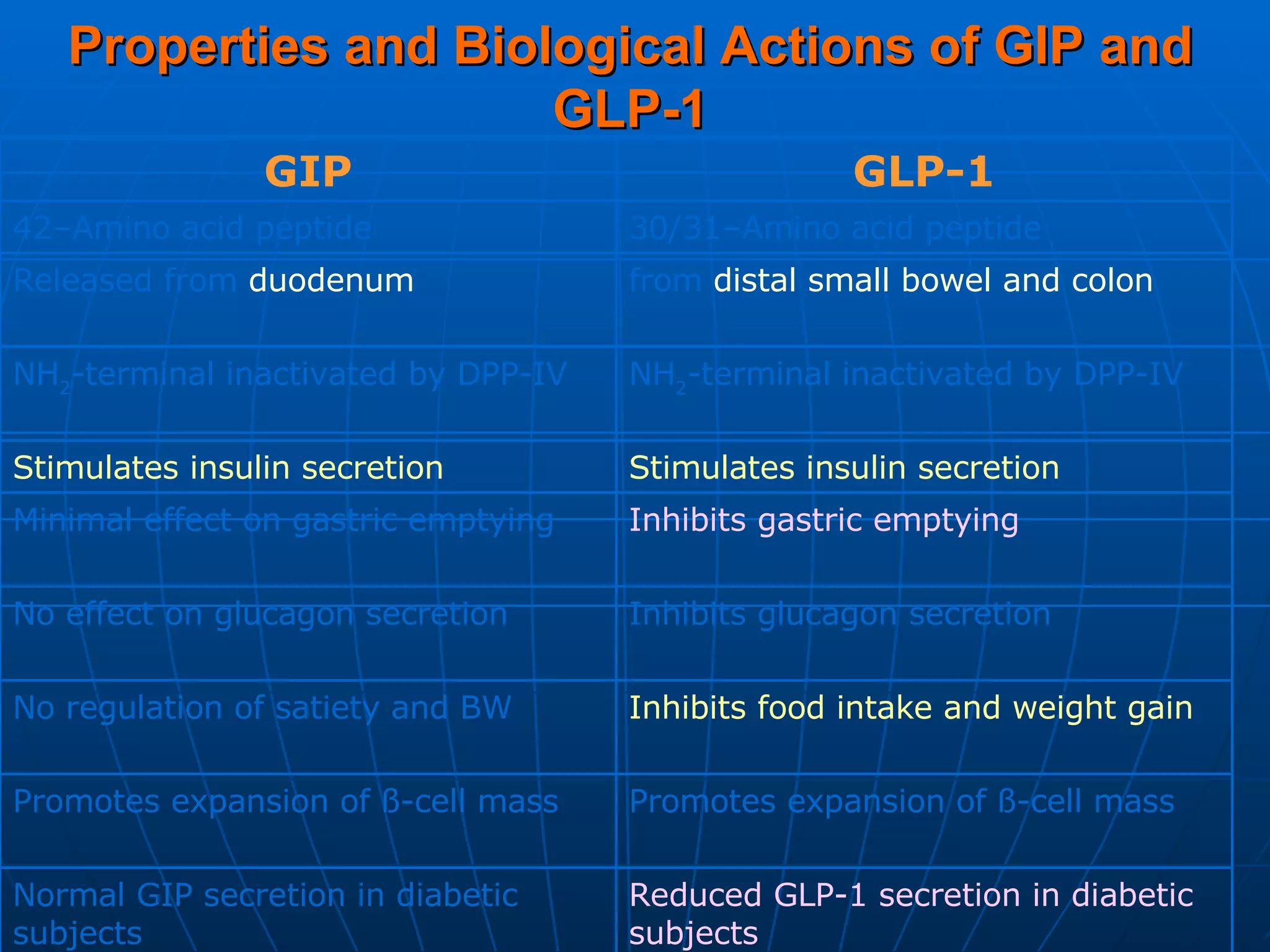
Properties and Biological Actions of GIP and GLP-1 Reduced GLP-1 secretion in diabetic subjects Normal GIP secretion in diabetic subjects Promotes expansion of ß-cell mass Promotes expansion of ß-cell mass Inhibits food intake and weight gain No regulation of satiety and BW Inhibits glucagon secretion No effect on glucagon secretion Inhibits gastric emptying Minimal effect on gastric emptying Stimulates insulin secretion Stimulates insulin secretion NH 2 -terminal inactivated by DPP-IV NH 2 -terminal inactivated by DPP-IV from  distal small bowel and colon Released from  duodenum 30/31–Amino acid peptide 42–Amino acid peptide GLP-1 GIP
Augmenting GLP-1 Levels by Inhibiting DPP-IV Activity   GLP-1 Inactive GLP-1 Actions Mixed meal Plasma Intestinal GLP-1 release DPP-IV Rapid inactivation (>80% of pool) Excreted by kidneys GLP-1 Active Deacon et al.  Diabetes  .1995;44:1126. ©2005.  American College of Physicians.  All Rights Reserved.
GLP-1 Effect : Blocked By DPP-4 GLP-1 Actions Mixed Meal GLP-1(7-36) Active Plasma Intestinal GLP-1 Secretion GLP-1(9-36) Inactive DPP-IV Rapid Inactivation Renal  Clearance Deacon  et al.  Diabetes 1995; 44:1126
GLP-1 Effects in Humans Understanding the Natural Role of Incretins
 
GLP-1 Modes of Action in Humans GLP-1 Is Secreted From the L-cells In the Intestine This in Turn… Stimulates Insulin Secretion Suppresses Glucagon Slows Gastric Emptying Reduces Food Intake Drucker DJ. Curr Pharm Des 2001; 7:1399-1412 Drucker DJ. Mol Endocrinol 2003; 17:161-171 Upon Ingestion of Food…
Incretins Play an Important Role  in Glucose Homeostasis 1.  Kieffer TJ, Habener JF.  Endocr Rev . 1999;20:876–913.  2.  Ahrén B.  Curr Diab Rep . 2003;2:365–372. 3.  Drucker DJ.  Diabetes Care . 2003;26:2929–2940.  4.  Holst JJ.  Diabetes Metab Res Rev . 2002;18:430–441.      Insulin from beta cells (GLP-1 and GIP)    Glucagon from alpha cells (GLP-1) Release of gut hormones— Incretins 1,2 Pancreas 2,3 Glucose Dependent Active GLP-1 & GIP DPP-4 enzyme Inactive GIP Inactive GLP-1 Glucose Dependent ↓  Blood  glucose GI tract ↓ Glucose  production  by liver Food ingestion ↑ Glucose  uptake by peripheral tissue 2,4 Beta cells Alpha cells
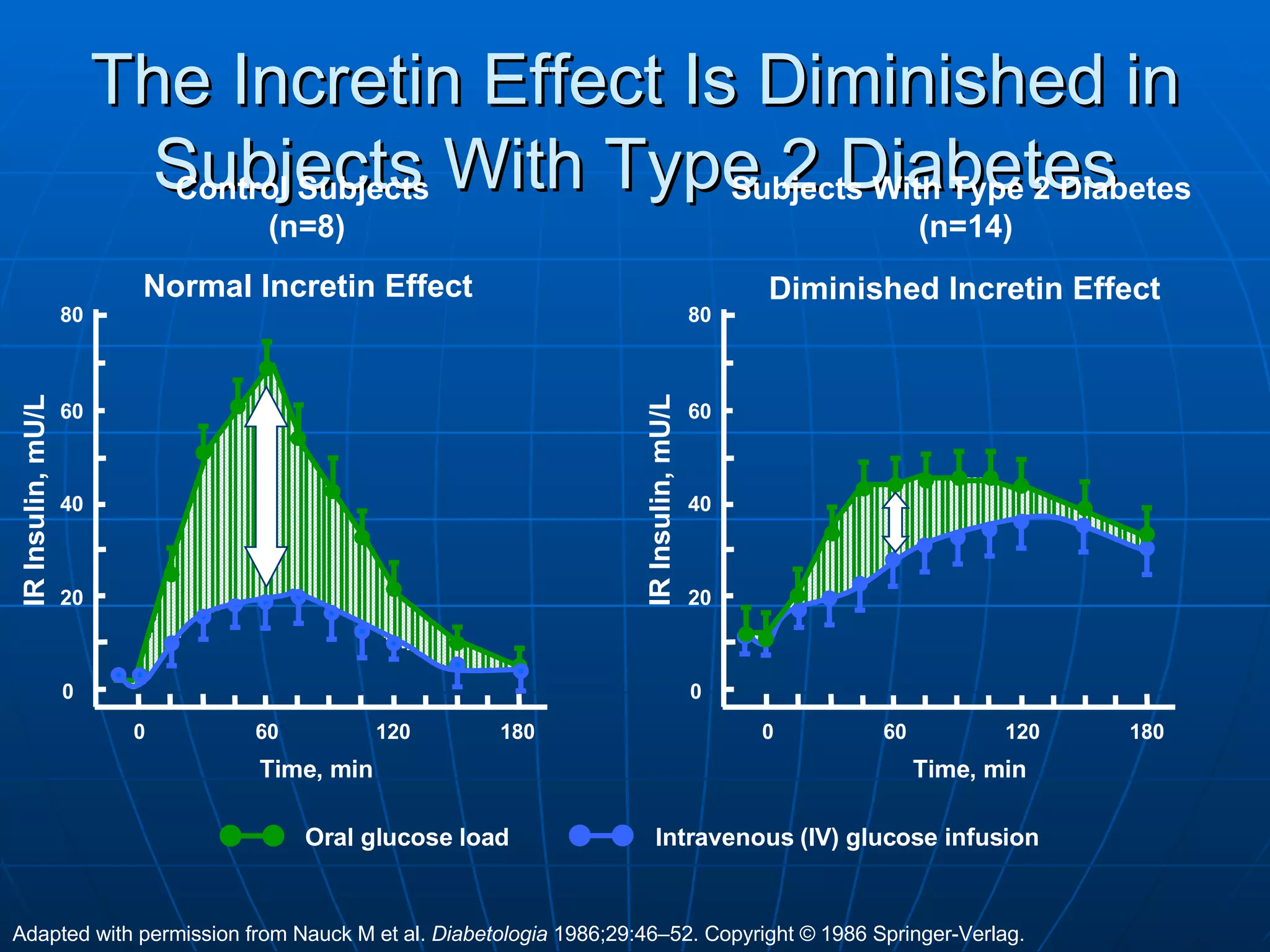
The Incretin Effect Is Diminished in Subjects With Type 2 Diabetes Adapted with permission from Nauck M et al.  Diabetologia  1986;29:46–52. Copyright © 1986 Springer-Verlag. Time, min Control Subjects  (n=8) IR Insulin, mU/L 180 60 120 0 Normal Incretin Effect 180 60 120 0 Subjects With Type 2 Diabetes  (n=14) Diminished Incretin Effect Time, min IR Insulin, mU/L Oral glucose load Intravenous (IV) glucose infusion 80 60 40 20 0 80 60 40 20 0
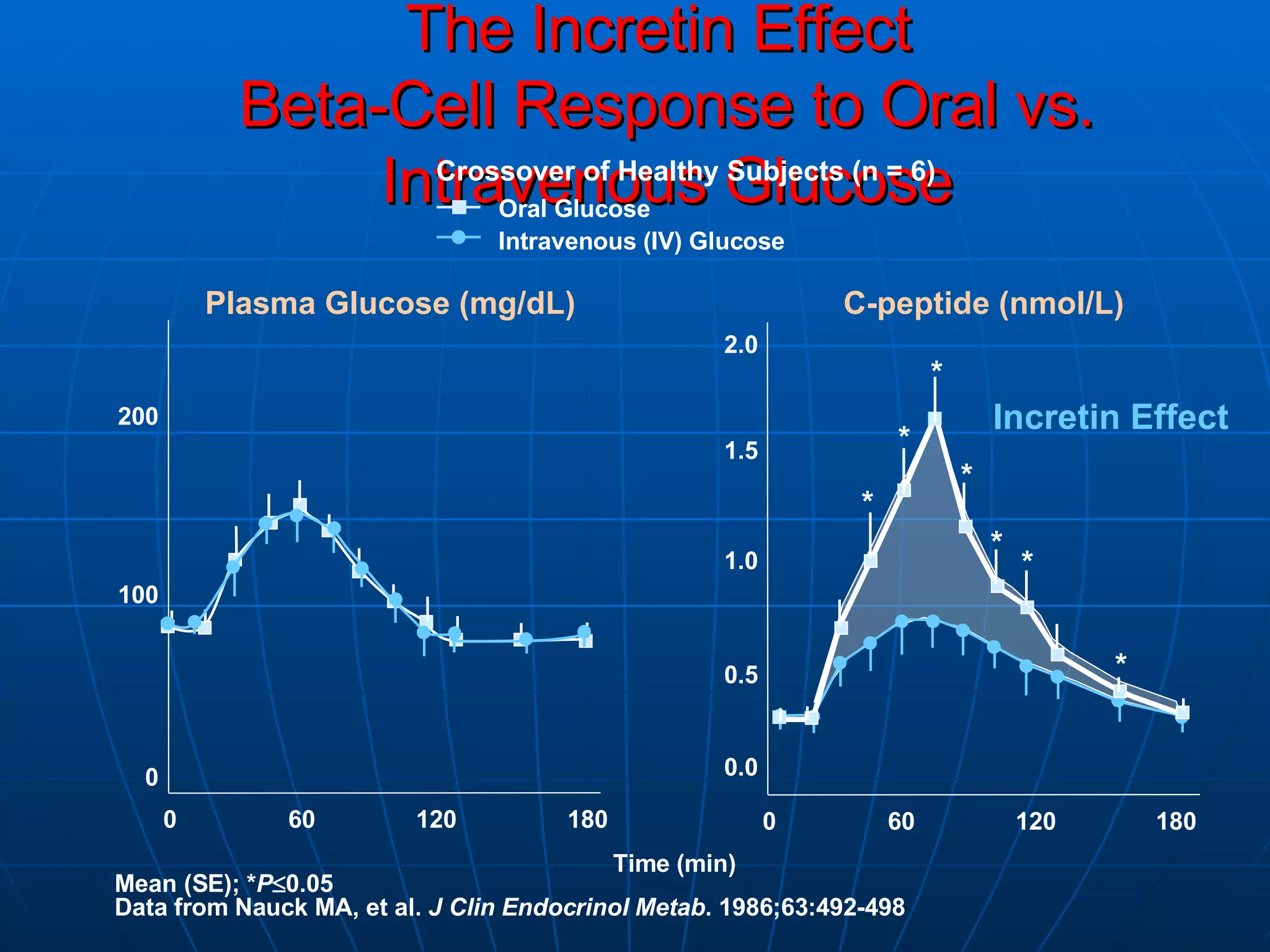
The Incretin Effect  Beta-Cell Response to Oral vs. Intravenous Glucose Mean (SE); * P  0.05 Data from  Nauck MA, et al.  J Clin Endocrinol Metab . 1986;63:492-498 Plasma Glucose (mg/dL) 0 60 120 180 Time (min) C-peptide (nmol/L) 0 60 120 180 Oral Glucose  Intravenous (IV) Glucose Incretin Effect 200 100 0 0.0 0.5 1.0 1.5 2.0 Crossover of Healthy Subjects (n = 6) * * * * * * *
Acutely Improving Beta-Cell Response BYETTA Restored First-Phase Insulin Response BYETTA BYETTA Placebo Placebo
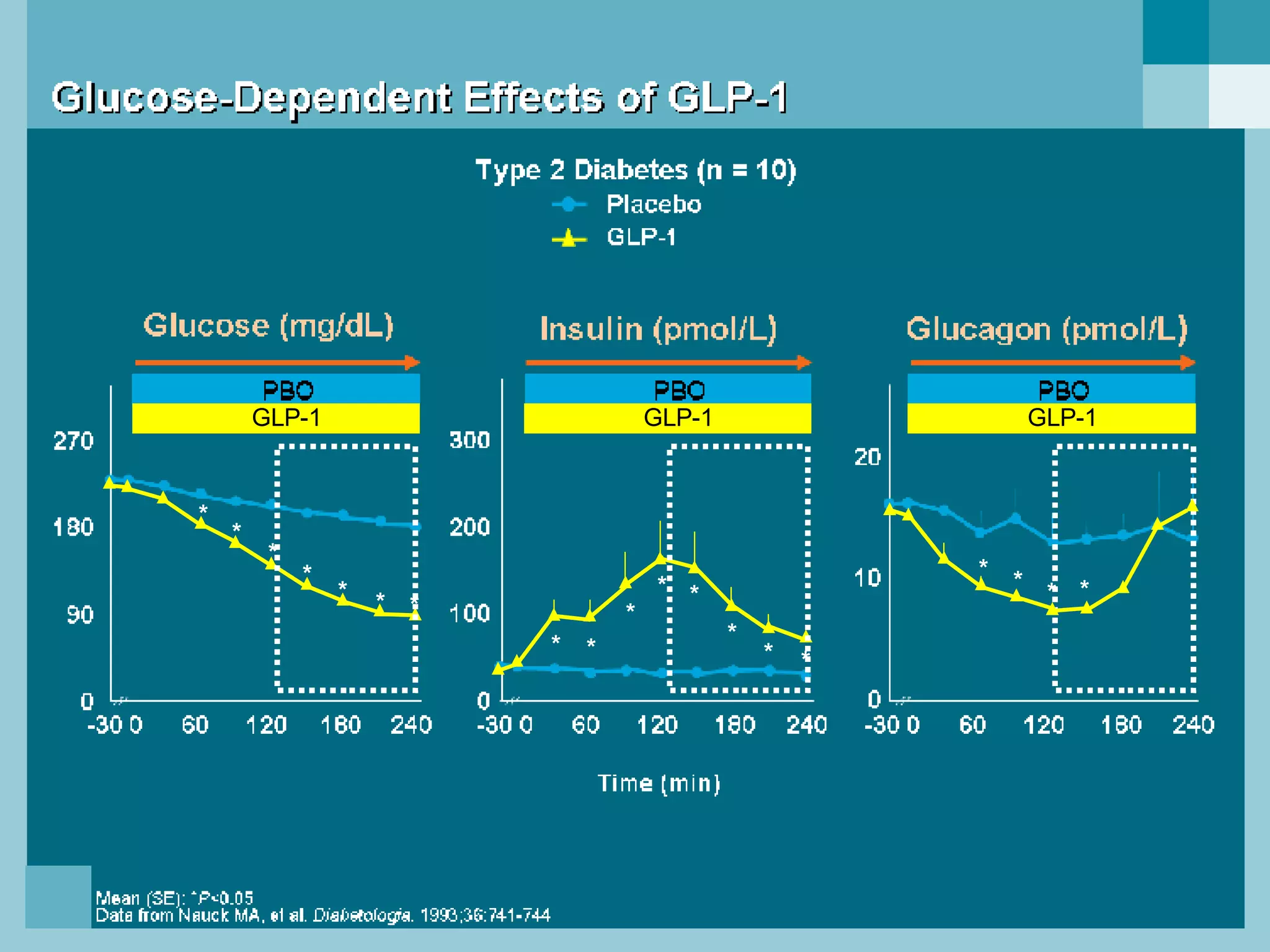
Glucose-Dependent Effects of GLP-1 * * * * * * * * * * * * * * * * * * * GLP-1 GLP-1 GLP-1
GLP-1 Effects in Humans Understanding the Natural Role of Incretins
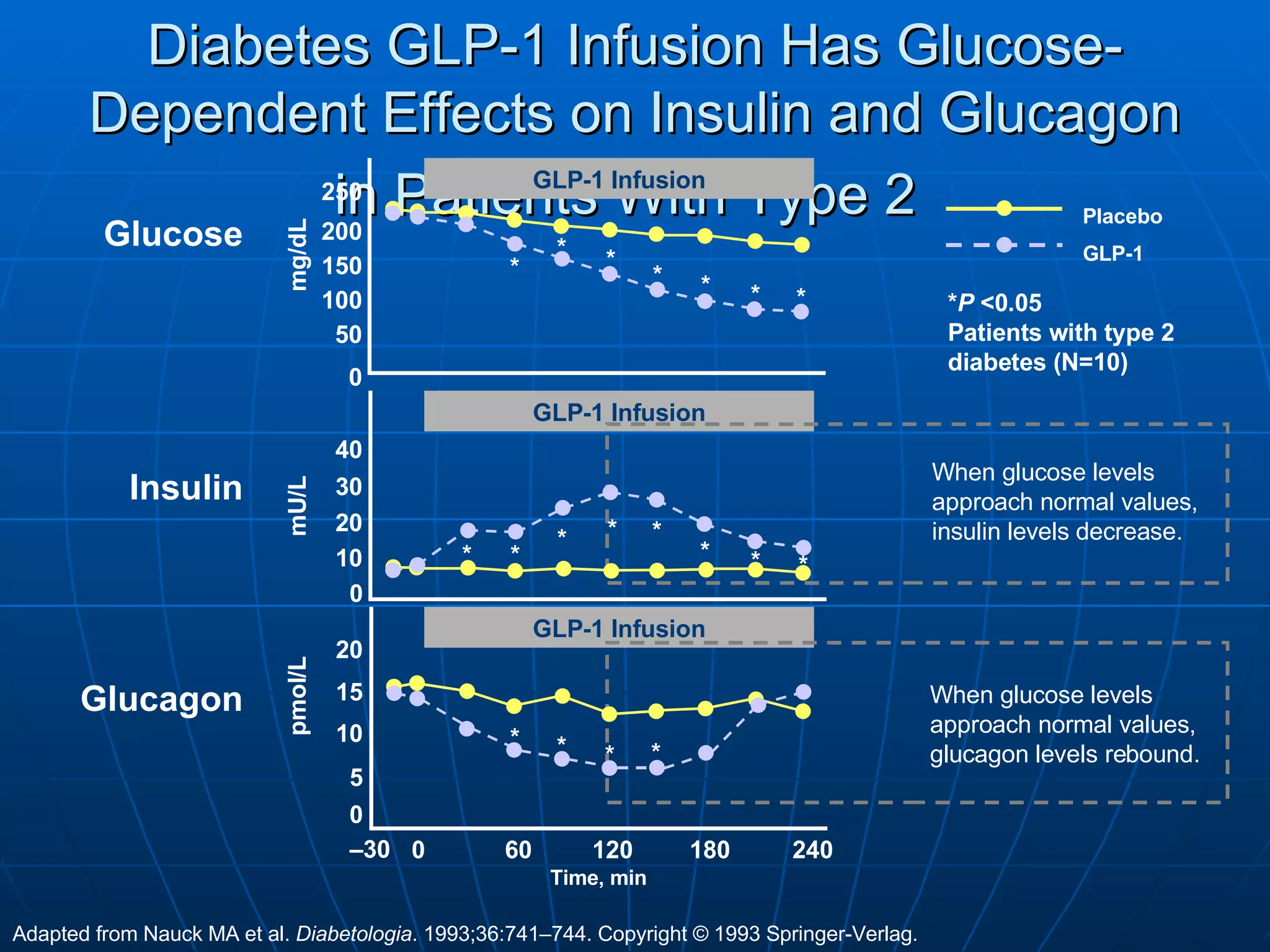
GLP-1 Infusion Has Glucose-Dependent Effects on Insulin and Glucagon in Patients With Diabetes Type 2   GLP-1 Infusion 0 GLP-1 Infusion Glucose Glucagon When glucose levels approach normal values,  glucagon levels rebound. When glucose levels  approach normal values, insulin levels decrease. * P  <0.05 Patients with type 2 diabetes (N=10) 250 200 150 100 50 mg/dL 40 30 20 10 0 mU/L Time, min pmol/L 20 15 10 5 0 60 120 180 240 Insulin 0 Adapted from Nauck MA et al.  Diabetologia . 1993;36:741–744. Copyright  © 1993 Springer-Verlag. – 30 GLP-1 Infusion * * * * * * * * * * * * * * * * * * * Placebo GLP-1
JANUVIA™ (sitagliptin) Targets 2 Physiologic  Glucose-Lowering Actions With a Single Oral Agent Blood  glucose Inactive GIP Inactive GLP-1      Insulin (GLP-1 and GIP)    Glucagon (GLP-1) Release of active incretins GLP-1 and GIP Pancreas Glucose dependent DPP-4 enzyme Glucose dependent GI tract Food ingestion X JANUVIA (DPP-4 inhibitor) Incretin hormones GLP-1 and GIP are released by the intestine throughout the day; their levels  increase in response to a meal. JANUVIA blocks DPP-4 to enhance the level of active incretins for 24 hours. Beta cells Alpha cells Glucose  production by liver  Glucose  uptake by peripheral tissue X
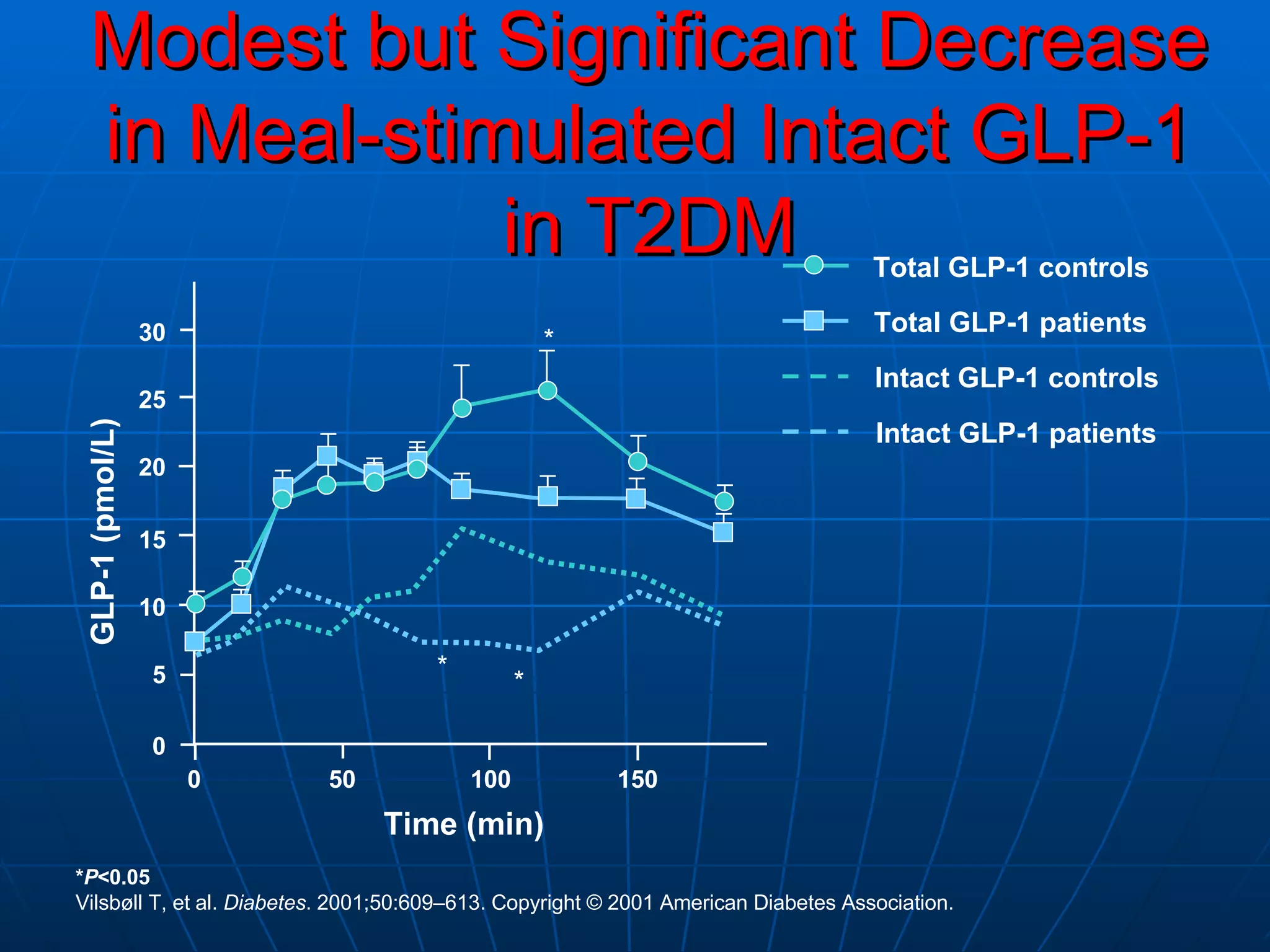
Modest but Significant Decrease in Meal-stimulated Intact GLP-1 in T2DM * P <0.05 Vilsbøll T, et al.  Diabetes . 2001;50:609–613. Copyright  © 2001 American Diabetes Association.  Total GLP-1 controls Total GLP-1 patients Intact GLP-1 controls Intact GLP-1 patients GLP-1 (pmol/L) Time (min) 30 25 20 15 10 5 0 0 50 100 150 * * *
The Effect of GLP-1 and GIP on Insulin  Secretion in Patients With Type 2 Diabetes 0 2000 4000 6000 8000 Time (min) C-peptide (pmol/L) GLP-1 GIP Saline Hyperglycemic Clamp Saline or GIP or GLP-1 -15 -10 0 5 10 15 20 30 45 60 75 90 105 120 150 Adapted from Vilsbøll T, et al.  Diabetologia.  2002;45:1111 - 1119.
Loss of 1st-Phase Insulin Secretion in  Type 2 Diabetes 1st phase, sharp increase in insulin response during 1st 10 min; 2nd phase, persistent increase in insulin concentration from 10 to 120 min  *Based on IV GTT  Adapted with permission from Pfeifer MA et al.  Am J Med.  1981;70:579 Normal* – 30  0  30   60   90   120 Time (min) Plasma Immunoreactive Insulin (µU/mL) Type 2 Diabetes* – 30 0 30 60 90 120 Time (min) 20 g glucose pulse 120 100 80 60 40 20 0 1st phase  (acute release) 2nd phase 120 100 80 60 40 20 0 Plasma Immunoreactive Insulin (µU/mL) 120 100 80 60 40 20 0 20 g glucose pulse
Diabetes GLP-1 Infusion Has Glucose-Dependent Effects on Insulin and Glucagon in Patients With Type 2   GLP-1 Infusion 0 GLP-1 Infusion Glucose Glucagon When glucose levels approach normal values,  glucagon levels rebound. When glucose levels  approach normal values, insulin levels decrease. * P  <0.05 Patients with type 2 diabetes (N=10) 250 200 150 100 50 mg/dL 40 30 20 10 0 mU/L Time, min pmol/L 20 15 10 5 0 60 120 180 240 Insulin 0 Adapted from Nauck MA et al.  Diabetologia . 1993;36:741–744. Copyright  © 1993 Springer-Verlag. – 30 GLP-1 Infusion * * * * * * * * * * * * * * * * * * * Placebo GLP-1
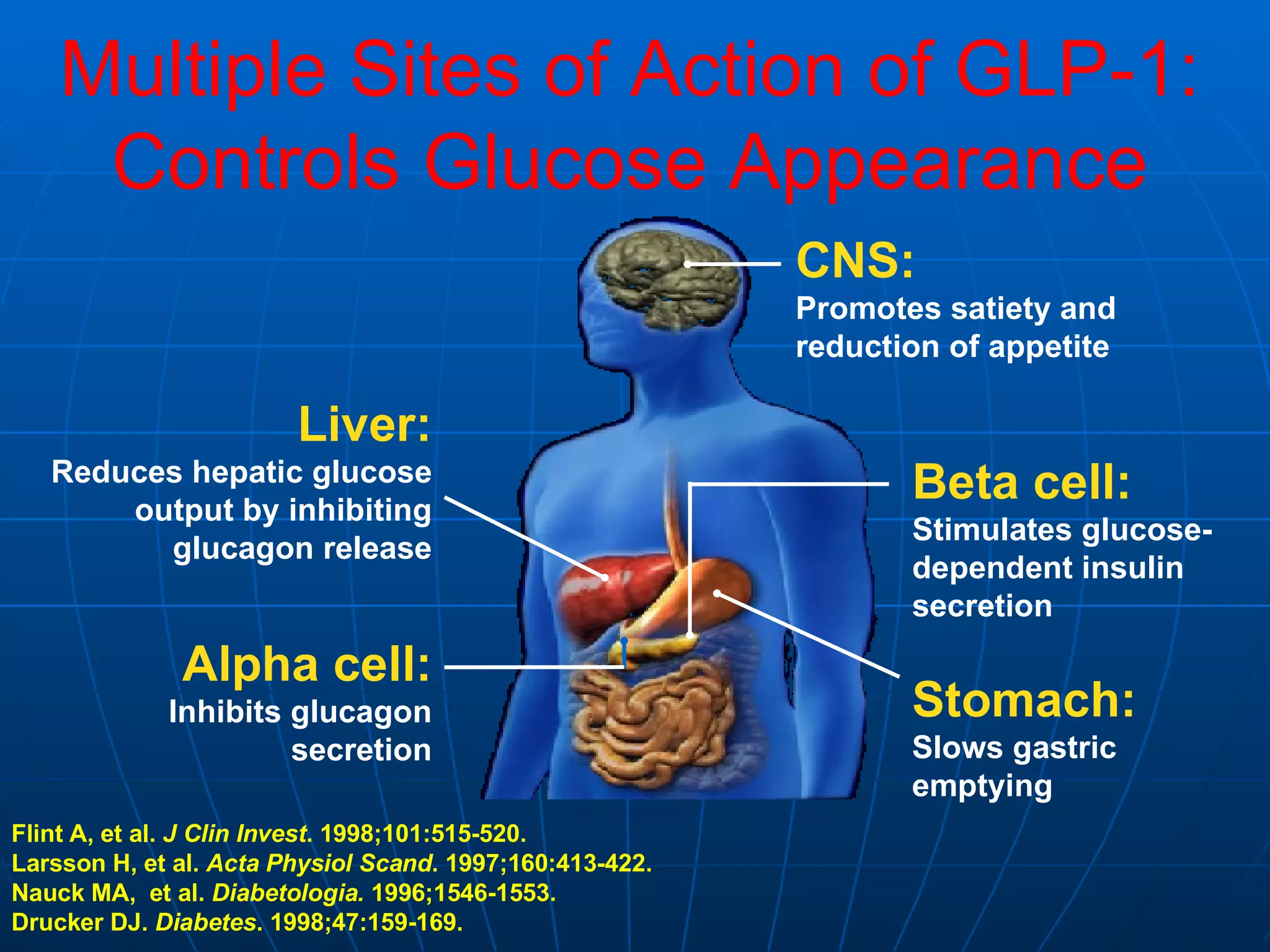
Multiple Sites of Action of GLP-1: Controls Glucose Appearance Flint A, et al.  J Clin Invest . 1998;101:515-520.   Larsson H, et al.  Acta Physiol Scand . 1997;160:413-422. Nauck MA,  et al.  Diabetologia.  1996;1546-1553. Drucker DJ.  Diabetes . 1998;47:159-169. CNS:   Promotes satiety and  reduction of appetite Stomach:   Slows gastric emptying Beta cell: Stimulates glucose-dependent insulin secretion Alpha cell: Inhibits glucagon secretion Liver: Reduces hepatic glucose output by inhibiting glucagon release
Augmenting GLP-1 Levels by Inhibiting DPP-IV Activity   GLP-1 Inactive GLP-1 Actions Mixed meal Plasma Intestinal GLP-1 release DPP-IV Rapid inactivation (>80% of pool) Excreted by kidneys GLP-1 Active Deacon et al.  Diabetes  .1995;44:1126. ©2005.  American College of Physicians.  All Rights Reserved.
The Beginning The Beginning….
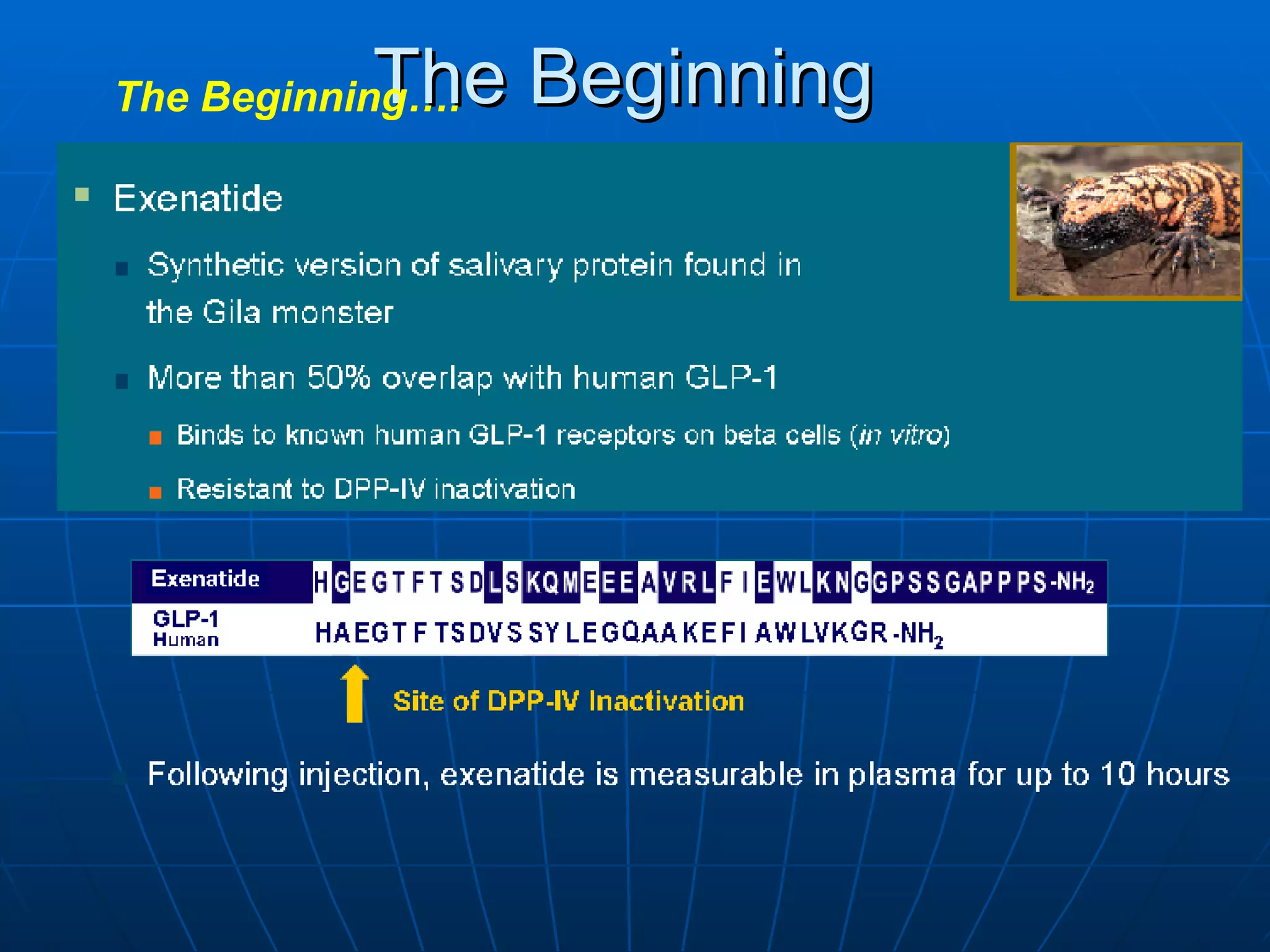
Exenatide  (Exendin-4) Is a Novel Incretin Mimetic   Exendin-4 shares about 50% amino acid identity with GLP-1 Exendin-4 and GLP-1 have similar binding affinity at the GLP-1 receptor  in vitro GLP-1 Receptor Binding Affinity* Amino Acid Sequences *Adapted from  Fehmann  HC, et al .  Peptides.  1994;15:453-456.;  Chen YE, Drucker DJ .  J Biol Chem.  1997;272:4108-4115.;  Neilsen  LL, et al .  Regul Pept.  2004;117:77-88. Reprinted from  Regulatory Peptides , 117, Nielsen LL, et al, Pharmacology of exenatide (synthetic exendin-4): a potential therapeutic for improved glycemic control of type 2 diabetes, 77-88, 2004, with permission from  Elsevier . -11 -10 -9 -8 -7 -6 Zero 0 20 40 60 80 100 Synthetic GLP-1 Exendin-4 Peptide concentration (log molar) Percent specific binding
Exenatide Restored  First-phase Insulin Response Time (min) Healthy Controls IV Glucose IV Glucose -180 -90 0 30 60 90 120 0 10 20 30 -180 -90 0 30 60 90 120 Type 2 Diabetes 0 10 20 30 Insulin (pM/kg/min) Insulin (pM/kg/min) Time (min) Evaluable; N=25; Mean (SE) Data from  Fehse F, et al.  Diabetologia . 2004;47(Suppl 1):A279. Exenatide Exenatide Placebo Placebo
Natural History of Type 2 Diabetes   € € 0 50 100 150 200 250 -10 -5 0 5 10 15 20 25 30 Years of Diabetes Glucose (mg/dL) Relative Function (%) Insulin Resistance Insulin Level  -Cell Failure * IFG=impaired fasting glucose. 50 100 150 200 250 300 350 Fasting Glucose Post-meal Glucose Obesity  IFG *   Diabetes  Uncontrolled Hyperglycemia
No Single Class of Oral Antihyperglycemic Monotherapy Targets All Key Pathophysiologies Major Pathophysiologies 1.   Glyset  [package insert]. New York, NY: Pfizer Inc; 2004.  2.  Precose  [package insert]. West Haven, Conn: Bayer; 2004. 3.   Prandin  [package insert]. Princeton, NJ: Novo Nordisk; 2006.  4.  Diabeta  [package insert]. Bridgewater, NJ: Sanofi-Aventis; 2007. 5.  Glucotrol  [package insert]. New York, NY: Pfizer Inc; 2006.  6.   Actos  [package insert]. Lincolnshire, Ill: Takeda Pharmaceuticals; 2004. 7.   Avandia  [package insert]. Research Triangle Park, NC: GlaxoSmithKline; 2005. 8.   Glucophage  [package insert]. Princeton, NJ: Bristol-Myers Squibb; 2004.            Excess hepatic glucose output Meglitinides 3 Insulin resistance Insulin deficiency DPP-4 Inhibitors Metformin 8 TZDs 6,7 SUs 4,5 Alpha-Glucosidase Inhibitors 1,2 Intestinal glucose absorption
Patient Targets for Incretin-based Therapy DPP-4 Inhibitors* Elderly, more fragile Dysfunctional “needle-phobia” Cardiac, renal disease Children/adolescents Supplement to other OAHs *Advantages include: Oral availability Excellent tolerance Weight neutral “ New” mechanism with possible  β -cell sparing GLP-1r Agonists** Obese T2DM patients Obese IGT patients Patients failing to maintain goals on  combination OAHs Patients ready for injectable Rx Supplement to other agents, including insulin **  Advantages include:  Weight loss Easy dosing “ New” mechanism with  possible  β -cell sparing
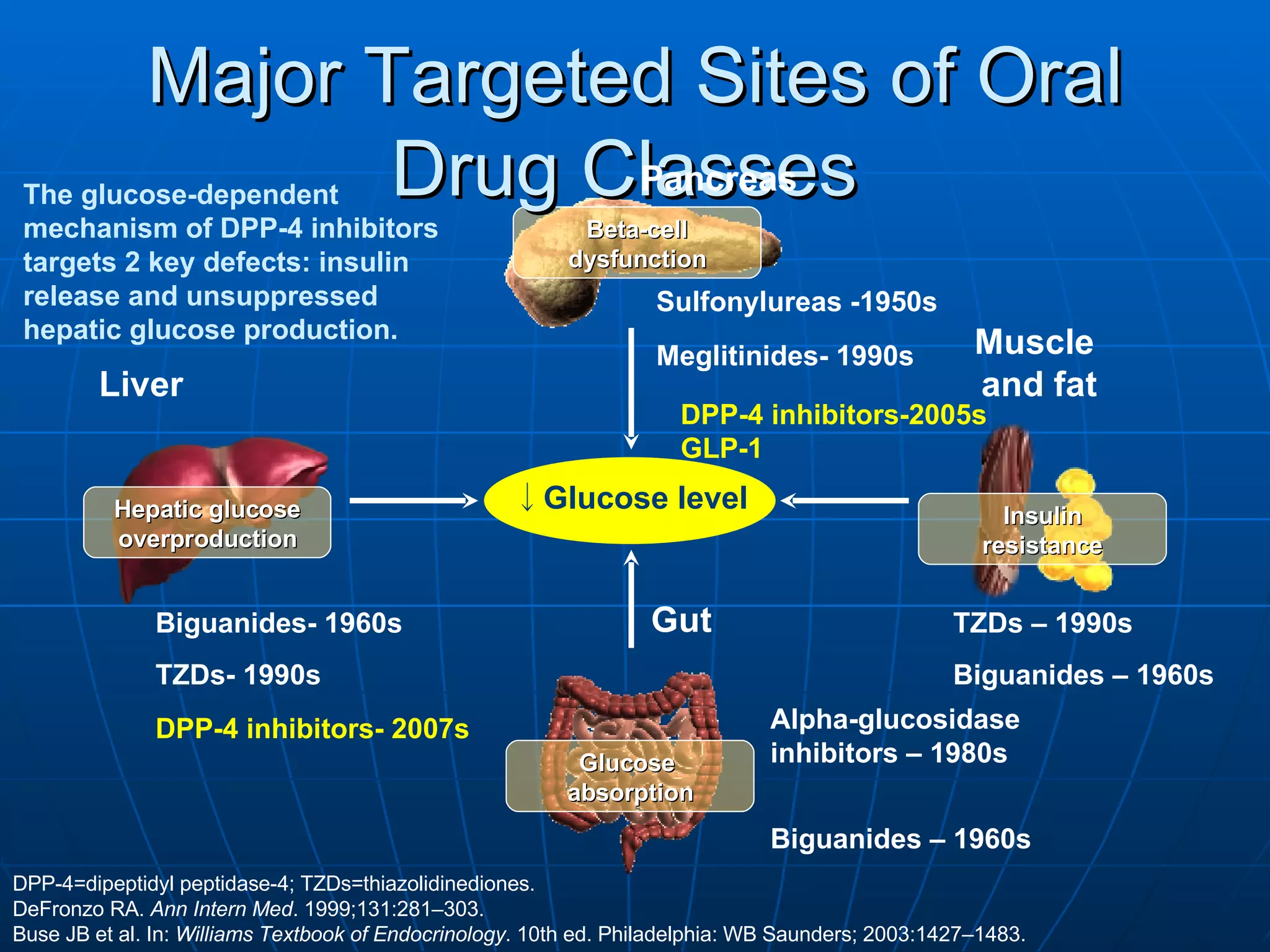
Major Targeted Sites of Oral Drug Classes  Glucose  absorption Hepatic glucose overproduction Beta-cell dysfunction Insulin resistance DPP-4=dipeptidyl peptidase-4; TZDs=thiazolidinediones. DeFronzo RA.  Ann Intern Med . 1999;131:281–303.  Buse JB et al. In:  Williams Textbook of Endocrinology . 10th ed. Philadelphia: WB Saunders; 2003:1427–1483. Pancreas ↓ Glucose level Muscle  and fat Liver Biguanides- 1960s TZDs- 1990s Biguanides – 1960s Sulfonylureas -1950s Meglitinides- 1990s TZDs – 1990s Alpha-glucosidase  inhibitors – 1980s Gut The glucose-dependent mechanism of DPP-4 inhibitors targets 2 key defects: insulin release and unsuppressed hepatic glucose production. DPP-4 inhibitors-2005s GLP-1 DPP-4 inhibitors- 2007s Biguanides – 1960s
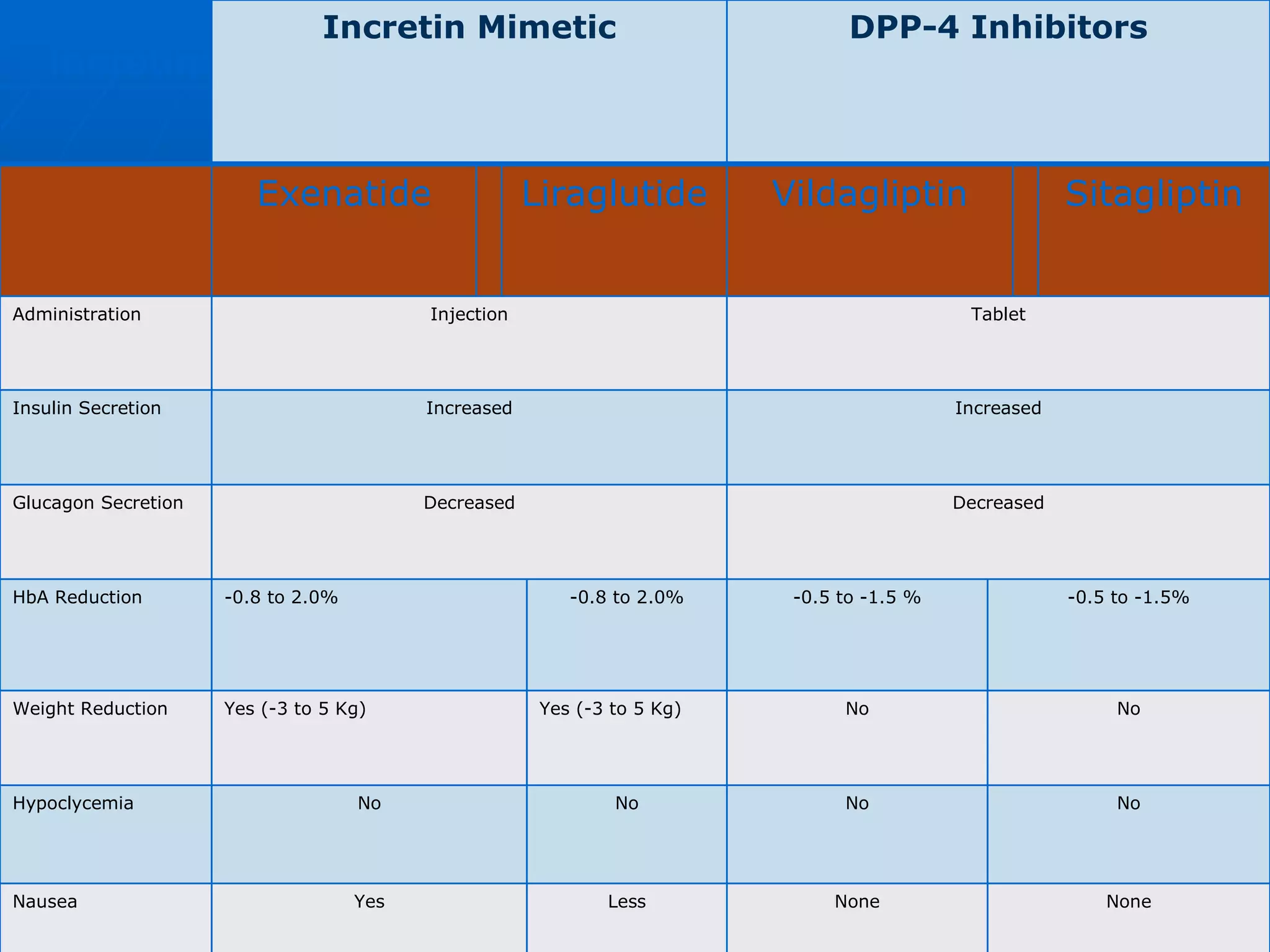
Incretins as Pharmacologic Agents Incretin Mimetic DPP-4 Inhibitors Exenatide Liraglutide Vildagliptin Sitagliptin Administration Injection Tablet Insulin Secretion Increased Increased Glucagon Secretion Decreased Decreased HbA Reduction -0.8 to 2.0% -0.8 to 2.0% -0.5 to -1.5 % -0.5 to -1.5% Weight Reduction Yes (-3 to 5 Kg) Yes (-3 to 5 Kg) No No Hypoclycemia No No No No Nausea Yes Less None None
The Incretins Provide a Powerful Addition to Our Current Treatment Arsenal in Diabetes Care Their unique mechanism of action, with a strong focus on improving the function of islet cells, makes these agents potentially attractive for use in the full spectrum of the natural history of diabetes, from prediabetes to later stages of the disease.
 
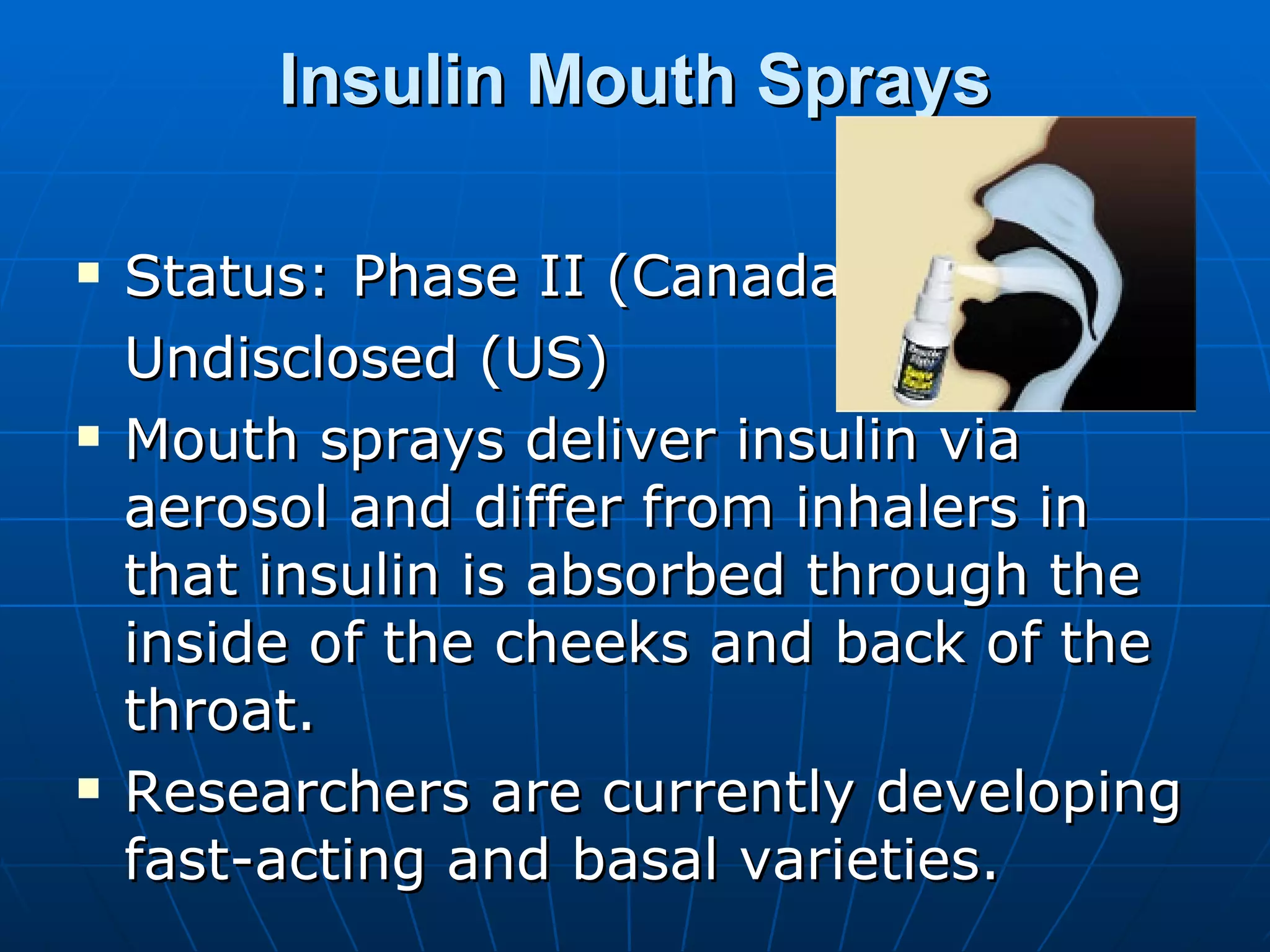
Insulin Mouth Sprays Status: Phase II (Canada) Undisclosed (US) Mouth sprays deliver insulin via aerosol and differ from inhalers in that insulin is absorbed through the inside of the cheeks and back of the throat.   Researchers are currently developing fast-acting and basal varieties.


MiniMed Paradigm Real Time System
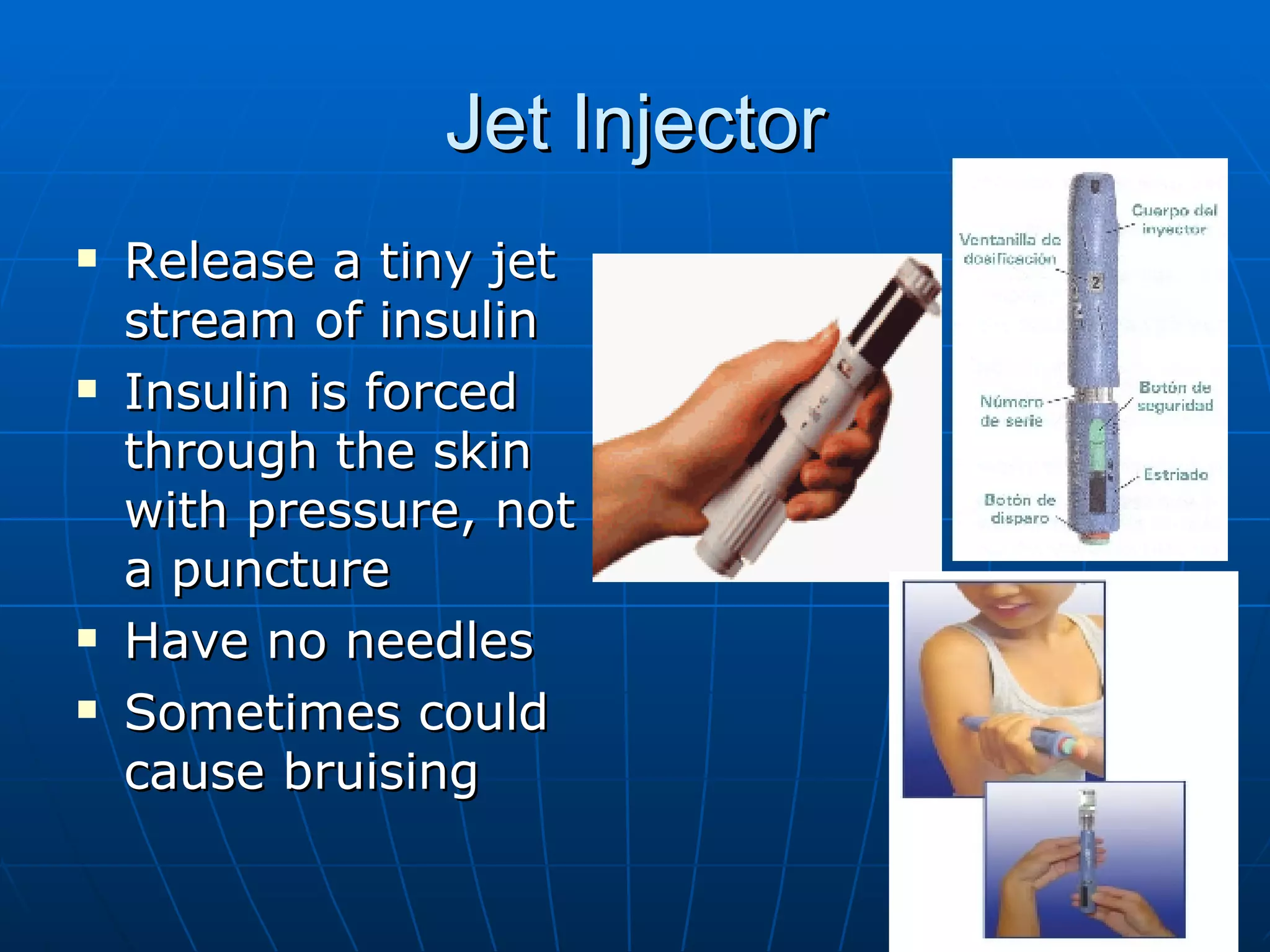
Jet Injector Release a tiny jet stream of insulin Insulin is forced through the skin with pressure, not a puncture Have no needles Sometimes could cause bruising
Insulin Pills Status: Phase II Oral insulin tends to be broken down by the digestive system or passed through intact.   Varieties that resist degradation and/or are better at transversing the gastrointestinal lining.   Insulin would be fast-acting and taken shortly before meals.
Insulin Patch Status: Phase I Patches would deliver  basal insulin Preceeded by perforation of the epidermis to ensure adequate absorption.   Altea's product will either be a one- or half-day patch, depending on the outcome of testing.
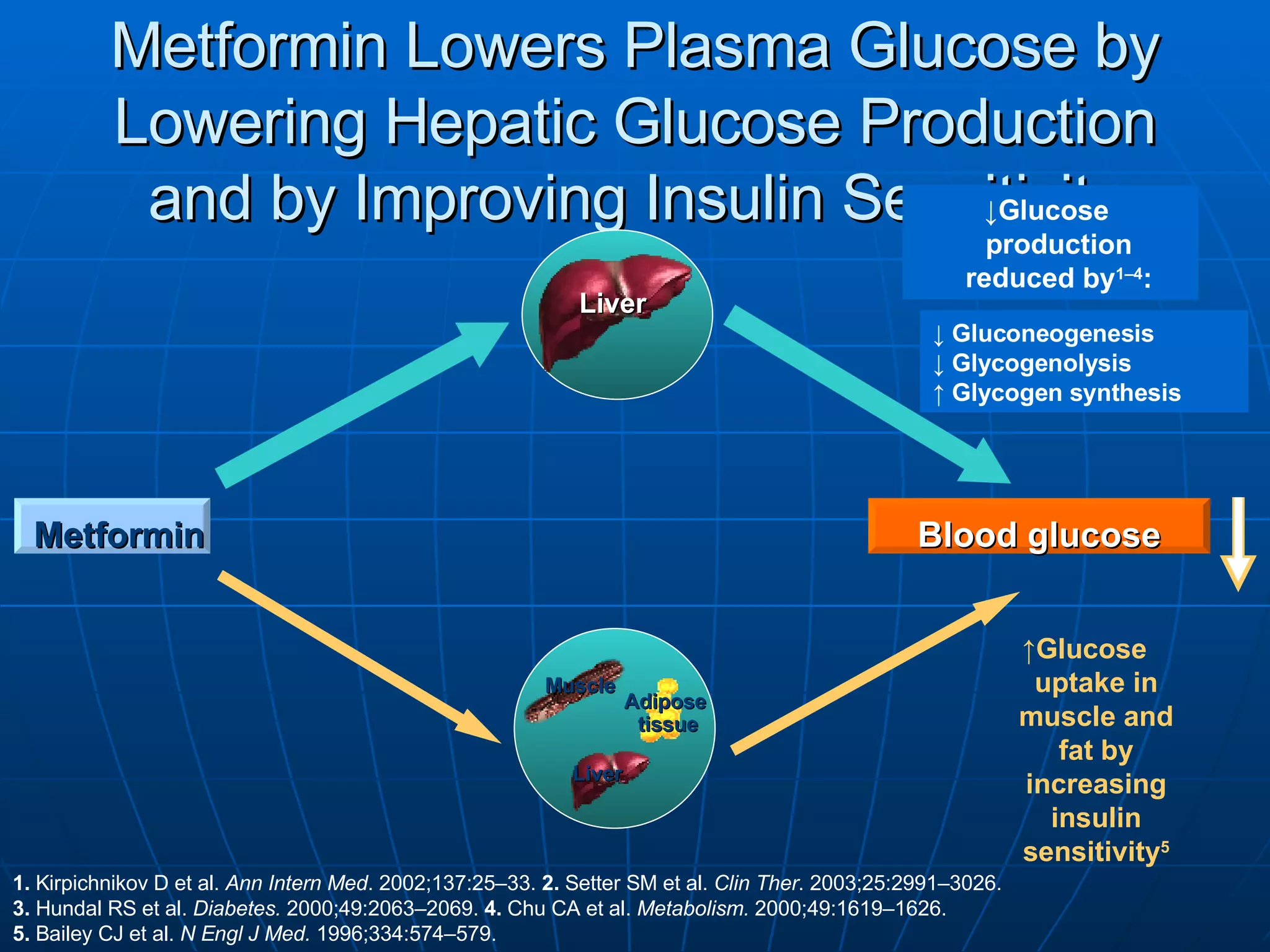
Metformin Lowers Plasma Glucose by Lowering Hepatic Glucose Production and by Improving Insulin Sensitivity Metformin Blood glucose ↑ Glucose  uptake in muscle and fat by increasing insulin sensitivity 5 1.  Kirpichnikov D et al.  Ann Intern Med . 2002;137:25–33.  2.  Setter SM et al.  Clin Ther . 2003;25:2991–3026. 3.  Hundal RS et al.  Diabetes.  2000;49:2063–2069.  4.  Chu CA et al.  Metabolism.  2000;49:1619–1626. 5.  Bailey CJ et al.  N Engl J Med.  1996;334:574–579. Muscle Adipose  tissue Liver ↓  Gluconeogenesis ↓  Glycogenolysis ↑  Glycogen synthesis ↓ Glucose  production reduced by 1–4 : Liver
Sitagliptin Reduces Hyperglycemia Sitagliptin  improves beta-cell function and increases insulin synthesis and release. Sitagliptin  reduces HGO through suppression of glucagon from alpha cells. Metformin  decreases HGO by targeting the liver to decrease gluconeogenesis and glycogenolysis. Metformin  has insulin- sensitizing properties. Beta-Cell Dysfunction Hepatic Glucose Overproduction (HGO) Metformin Reduces Hyperglycemia The Combination of S itagliptin and Metformin Addresses the 3 Core Defects of Type 2 Diabetes in a Complementary Manner Insulin Resistance *Please see corresponding speaker note for references.
Sites of Action by Therapeutic Options Presently Available to Treat Type 2 Diabetes GLUCOSE  ABSORPTION GLUCOSE PRODUCTION Biguanides Thiazolidinediones MUSCLE PERIPHERAL  GLUCOSE UPTAKE Thiazolidinediones (Biguanides) PANCREAS INSULIN Secretion Sulfonylureas Meglitinides Insulin Amylin ADIPOSE TISSUE LIVER alpha-glucosidase inhibitors INTESTINE Sonnenberg and Kotchen.  Curr Opin Nephrol Hypertens  1998;7(5):551–5

Whats New in Diabetes

  • 1.
    WHAT’S NEW INDIABETES CARE? EDITH S. BERMUDEZ,MD,DPAMS,MHSA
  • 2.
    Global Projections forthe Diabetes Epidemic: 2003-2025 23.0 M 36.2 M ↑ 57.0 % 14.2 M 26.2 M ↑ 85 % 48.4 M 58.6 M ↑ 21 % 43.0 M 75.8 M ↑ 79 % 7.1M 15.0 M ↑ 111 % 39.3 M 81.6 M ↑ 108 % M=million, AFR=Africa, NA=North America, EUR=Europe, SACA=South and Central America, EMME=Eastern Mediterranean and Middle East, SEA=South-East Asia, WP=Western Pacific Diabetes Atlas Committee. Diabetes Atlas . 2003. World 2003=194 M 2025=333 M ↑ 72% AFR NA SACA EUR SEA WP 19.2 M 39.4 M ↑ 105% EMME 2003 2025
  • 3.
    Over the next24 hours: 2200 diabetics will be newly-diagnosed 512 diabetics will die 66 diabetics will go blind 77 diabetics will be diagnosed with ESRD 153 diabetes-related amputations i Source: American Diabetes Association
  • 4.
    Natural History ofType 2 Diabetes (Can we change the course of DM?) Glucose Relative to normal -10 -5 0 5 10 15 20 25 30 0 100 200 50 150 Post-prandial glucose Fasting glucose Insulin resistance Insulin level Years At risk for diabetes Beta-cell dysfunction 250 R.M. Bergenstal, International Diabetes Center mg/dL (%) 100 200 150 300 250 350
  • 5.
    Natural History ofType 2 Diabetes € 0 50 100 150 200 250 -10 -5 0 5 10 15 20 25 30 Years of Diabetes Glucose (mg/dL) Relative Function (%) Insulin Resistance Insulin Level  -Cell Failure * IFG=impaired fasting glucose. 50 100 150 200 250 300 350 Fasting Glucose Post-meal Glucose Obesity IFG * Diabetes Uncontrolled Hyperglycemia At Risk
  • 6.
    Major Pathophysiologic Defectsin Type 2 Diabetes Hepatic glucose output Insulin resistance Glucose uptake in muscle and fat Glucagon (alpha cell) Insulin (beta cell) Hyperglycemia Islet-cell dysfunction Adapted with permission from Kahn CR, Saltiel AR. Joslin’s Diabetes Mellitus . 14th ed. Lippincott Williams & Wilkins; 2005:145–168. Del Prato S, Marchetti P. Horm Metab Res . 2004;36:775–781. Porte D Jr, Kahn SE. Clin Invest Med . 1995;18:247–254. Pancreas Liver Adipose tissue Liver Muscle
  • 7.
  • 8.
  • 9.
    VALUES STARTED OUTWITH A DIAGNOSTIC FBS OF 140 MG/DL THEN IT WAS BROUGHT DOWN TO 126 mg/dL TODAY, FURTHER BROUGHT DOWN TO <100 mg/dL Recommended Values are now more aggressive in order to PREVENT the progression of DM & its clinical consequences!
  • 10.
    Guideline Recommendations AreBecoming More Aggressive 2007 ADA standards 1 “ The A1C goal for patients in general is an A1C goal of <7%.” “ The A1C goal for the individual patient is an A1C as close to normal (<6%) as possible without significant hypoglycemia .” [boldface added] ADA=American Diabetes Association; EASD=European Association for the Study of Diabetes. 1. American Diabetes Association. Diabetes Care . 2007;30(suppl 1):S4–S41. 2. Nathan DM et al. Diabetes Care. 2006;29:1963–1972. ADA/EASD consensus statement 2 “ If lifestyle intervention and maximal tolerated dose of metformin fail to achieve or sustain glycemic goals, another medication should be added within 2–3 months of the initiation of therapy or at any time when A1C goal is not achieved.” [boldface added]
  • 11.
    Prior to 2006Oral Therapies Did Not Address the Metabolic Needs of Type 2 Diabetes Sulfonylureas Glinides Insulin resistance Inadequate glucagon suppression (  -cell dysfunction) Glucose influx from GI tract α-Glucosidase inhibitors TZDs Metformin Chronic β -cell dysfunction Acute β -cell dysfunction Unmet need Unmet need
  • 12.
    Traditional Therapies DoNot Maintain A 1c Control Over Time United Kingdom Prospective Diabetes Study (UKPDS) *Conventional=diet therapy. UK Prospective Diabetes Study (UKPDS 34) Group. Lancet . 1998;352:854-865. Median A 1c (%) Conventional* Insulin Glibenclamide (glyburide) Metformin 0 3 0 6 7 8 9 6 9 10 Time from Randomization (Years) ADA goal
  • 13.
    A More RationalView of Opportunities for Intervention Given T2DM Physiology (treating to change the course of the disease) 25 100 75 0 50 -12 -10 -6 0 2 6 -2 Years From Diagnosis *Metabolic syndrome β -Cell Function (%) 50% of β cells may still be functioning Add TZD to MET or SU; new role for incretin mimetics/enhancers Initiate MET or SU or other agent; ? Incretins *Opportunities for intervention Intensify lifestyle, risk factor modification* Atherosclerosis Hyperglycemia Hypertension Insulin resistance Hyperinsulinemia Dyslipidemia
  • 14.
    Multiple Targets forDiabetes Therapies (We now realize how much we need to fix in T2DM) Dietary Carboyhydrates MUSCLE FAT PANCREAS INTESTINE KIDNEY Biguanides- 1960s- TZDs – 1990s Sulfonylureas-1950s Meglitinides – 1990s DPP4 - 2007 GLP-1 - 2005 LIVER  Blood Glucose  Insulin secretion  glucose uptake and utilization  lipolysis  glucose output Metformin TZDs Actos/Avandia TZDs Actos/Avandia  glucosidase -inhibitors- 1980s  glucose excretion SGLT2  Blood Glucose Insulin-1920s
  • 15.
    Multiple Targets forDiabetes Therapies (We now realize how much we need to fix in T2DM) Dietary Carboyhydrates MUSCLE FAT PANCREAS INTESTINE KIDNEY LIVER  Blood Glucose  Insulin secretion  glucose uptake and utilization  lipolysis  glucose output Metformin TZDs Actos/Avandia TZDs Actos/Avandia  glucose excretion SGLT2  Blood Glucose
  • 16.
    Multiple Targets forDiabetes Therapies (We now realize how much we need to fix in T2DM) Dietary Carboyhydrates MUSCLE FAT PANCREAS INTESTINE KIDNEY LIVER  Blood Glucose  Insulin secretion  glucose uptake and utilization  lipolysis  glucose output Metformin TZDs Actos/Avandia TZDs Actos/Avandia  glucose excretion SGLT2  Blood Glucose Insulin-1920s
  • 17.
    Multiple Targets forDiabetes Therapies (We now realize how much we need to fix in T2DM) Dietary Carboyhydrates MUSCLE FAT PANCREAS INTESTINE KIDNEY LIVER  Blood Glucose  Insulin secretion  glucose uptake and utilization  lipolysis  glucose output Metformin TZDs Actos/Avandia TZDs Actos/Avandia  glucose excretion SGLT2  Blood Glucose Insulin-1920s Sulfonylureas-1950s
  • 18.
    Multiple Targets forDiabetes Therapies (We now realize how much we need to fix in T2DM) Dietary Carboyhydrates MUSCLE FAT PANCREAS INTESTINE KIDNEY LIVER  Blood Glucose  Insulin secretion  glucose uptake and utilization  lipolysis  glucose output Metformin TZDs Actos/Avandia TZDs Actos/Avandia  glucose excretion SGLT2  Blood Glucose Insulin-1920s Sulfonylureas-1950s Biguanides- 1960s-
  • 19.
    Multiple Targets forDiabetes Therapies (We now realize how much we need to fix in T2DM) Dietary Carboyhydrates MUSCLE FAT PANCREAS INTESTINE KIDNEY LIVER  Blood Glucose  Insulin secretion  glucose uptake and utilization  lipolysis  glucose output Metformin TZDs Actos/Avandia TZDs Actos/Avandia  glucose excretion SGLT2  Blood Glucose Insulin-1920s Sulfonylureas-1950s Biguanides- 1960s- a glucosidase -inhibitors- 1980s
  • 20.
    Multiple Targets forDiabetes Therapies (We now realize how much we need to fix in T2DM) Dietary Carboyhydrates MUSCLE FAT PANCREAS INTESTINE KIDNEY LIVER  Blood Glucose  Insulin secretion  glucose uptake and utilization  lipolysis  glucose output Metformin TZDs Actos/Avandia TZDs Actos/Avandia  glucose excretion SGLT2  Blood Glucose Insulin-1920s Sulfonylureas-1950s Biguanides- 1960s- a glucosidase -inhibitors- 1980s Meglitinides – 1990s
  • 21.
    Multiple Targets forDiabetes Therapies (We now realize how much we need to fix in T2DM) Dietary Carboyhydrates MUSCLE FAT PANCREAS INTESTINE KIDNEY LIVER  Blood Glucose  Insulin secretion  glucose uptake and utilization  lipolysis  glucose output Metformin TZDs Actos/Avandia TZDs Actos/Avandia  glucose excretion SGLT2  Blood Glucose Insulin-1920s Sulfonylureas-1950s Biguanides- 1960s- a glucosidase -inhibitors- 1980s Meglitinides – 1990s TZDs – 1990s
  • 22.
    Multiple Targets forDiabetes Therapies (We now realize how much we need to fix in T2DM) Dietary Carboyhydrates MUSCLE FAT PANCREAS INTESTINE KIDNEY LIVER  Blood Glucose  Insulin secretion  glucose uptake and utilization  lipolysis  glucose output Metformin TZDs Actos/Avandia TZDs Actos/Avandia  glucose excretion SGLT2  Blood Glucose Insulin-1920s Sulfonylureas-1950s Biguanides- 1960s- a glucosidase -inhibitors- 1980s Meglitinides – 1990s TZDs – 1990s
  • 23.
    Multiple Targets forDiabetes Therapies (We now realize how much we need to fix in T2DM) Dietary Carboyhydrates MUSCLE FAT PANCREAS INTESTINE KIDNEY LIVER  Blood Glucose  Insulin secretion  glucose uptake and utilization  lipolysis  glucose output Metformin TZDs Actos/Avandia TZDs Actos/Avandia  glucose excretion SGLT2  Blood Glucose Insulin-1920s Sulfonylureas-1950s Biguanides- 1960s- a glucosidase -inhibitors- 1980s Meglitinides – 1990s TZDs – 1990s GLP-1 - 2005
  • 24.
    Multiple Targets forDiabetes Therapies (We now realize how much we need to fix in T2DM) Dietary Carboyhydrates MUSCLE FAT PANCREAS INTESTINE KIDNEY LIVER  Blood Glucose  Insulin secretion  glucose uptake and utilization  lipolysis  glucose output Metformin TZDs Actos/Avandia TZDs Actos/Avandia  glucose excretion SGLT2  Blood Glucose Insulin-1920s Sulfonylureas-1950s Biguanides- 1960s- a glucosidase -inhibitors- 1980s Meglitinides – 1990s TZDs – 1990s GLP-1 - 2005 DPP4 - 2007
  • 25.
    Multiple Targets forDiabetes Therapies (We now realize how much we need to fix in T2DM) Dietary Carboyhydrates MUSCLE FAT PANCREAS INTESTINE KIDNEY Biguanides- 1960s- Sulfonylureas-1950s Meglitinides – 1990s DPP4 - 2007 GLP-1 - 2005 LIVER  Blood Glucose  Insulin secretion  glucose uptake and utilization  lipolysis  glucose output Metformin TZDs Actos/Avandia TZDs Actos/Avandia  glucosidase -inhibitors- 1980s  glucose excretion SGLT2  Blood Glucose Insulin-1920s TZDs – 1990s
  • 26.
  • 27.
  • 28.
    Gut-DerivedFactors That Increase Glucose-Stimulated Insulin Secretion In – cre - tin In testine Se cre tion In sulin Definition Of Incretins Creutzfeldt Diabetologia 28: 5645 1985
  • 29.
  • 30.
    G lucagon- Like P eptide- 1 (GLP-1) An Important Incretin Hormone
  • 31.
    GLP-1 Effects inHumans Understanding the Natural Role of Incretins
  • 32.
    Incretins Play anImportant Role in Glucose Homeostasis 1. Kieffer TJ, Habener JF. Endocr Rev . 1999;20:876–913. 2. Ahrén B. Curr Diab Rep . 2003;2:365–372. 3. Drucker DJ. Diabetes Care . 2003;26:2929–2940. 4. Holst JJ. Diabetes Metab Res Rev . 2002;18:430–441.  Insulin from beta cells (GLP-1 and GIP)  Glucagon from alpha cells (GLP-1) Release of gut hormones— Incretins 1,2 Pancreas 2,3 Glucose Dependent Active GLP-1 & GIP DPP-4 enzyme Inactive GIP Inactive GLP-1 Glucose Dependent ↓ Blood glucose GI tract ↓ Glucose production by liver Food ingestion ↑ Glucose uptake by peripheral tissue 2,4 Beta cells Alpha cells
  • 33.
  • 34.
    Properties and BiologicalActions of GIP and GLP-1 Reduced GLP-1 secretion in diabetic subjects Normal GIP secretion in diabetic subjects Promotes expansion of ß-cell mass Promotes expansion of ß-cell mass Inhibits food intake and weight gain No regulation of satiety and BW Inhibits glucagon secretion No effect on glucagon secretion Inhibits gastric emptying Minimal effect on gastric emptying Stimulates insulin secretion Stimulates insulin secretion NH 2 -terminal inactivated by DPP-IV NH 2 -terminal inactivated by DPP-IV from distal small bowel and colon Released from duodenum 30/31–Amino acid peptide 42–Amino acid peptide GLP-1 GIP
  • 35.
    Augmenting GLP-1 Levelsby Inhibiting DPP-IV Activity GLP-1 Inactive GLP-1 Actions Mixed meal Plasma Intestinal GLP-1 release DPP-IV Rapid inactivation (>80% of pool) Excreted by kidneys GLP-1 Active Deacon et al. Diabetes .1995;44:1126. ©2005. American College of Physicians. All Rights Reserved.
  • 36.
    GLP-1 Effect :Blocked By DPP-4 GLP-1 Actions Mixed Meal GLP-1(7-36) Active Plasma Intestinal GLP-1 Secretion GLP-1(9-36) Inactive DPP-IV Rapid Inactivation Renal Clearance Deacon et al. Diabetes 1995; 44:1126
  • 37.
    GLP-1 Effects inHumans Understanding the Natural Role of Incretins
  • 38.
  • 39.
    GLP-1 Modes ofAction in Humans GLP-1 Is Secreted From the L-cells In the Intestine This in Turn… Stimulates Insulin Secretion Suppresses Glucagon Slows Gastric Emptying Reduces Food Intake Drucker DJ. Curr Pharm Des 2001; 7:1399-1412 Drucker DJ. Mol Endocrinol 2003; 17:161-171 Upon Ingestion of Food…
  • 40.
    Incretins Play anImportant Role in Glucose Homeostasis 1. Kieffer TJ, Habener JF. Endocr Rev . 1999;20:876–913. 2. Ahrén B. Curr Diab Rep . 2003;2:365–372. 3. Drucker DJ. Diabetes Care . 2003;26:2929–2940. 4. Holst JJ. Diabetes Metab Res Rev . 2002;18:430–441.  Insulin from beta cells (GLP-1 and GIP)  Glucagon from alpha cells (GLP-1) Release of gut hormones— Incretins 1,2 Pancreas 2,3 Glucose Dependent Active GLP-1 & GIP DPP-4 enzyme Inactive GIP Inactive GLP-1 Glucose Dependent ↓ Blood glucose GI tract ↓ Glucose production by liver Food ingestion ↑ Glucose uptake by peripheral tissue 2,4 Beta cells Alpha cells
  • 41.
    The Incretin EffectIs Diminished in Subjects With Type 2 Diabetes Adapted with permission from Nauck M et al. Diabetologia 1986;29:46–52. Copyright © 1986 Springer-Verlag. Time, min Control Subjects (n=8) IR Insulin, mU/L 180 60 120 0 Normal Incretin Effect 180 60 120 0 Subjects With Type 2 Diabetes (n=14) Diminished Incretin Effect Time, min IR Insulin, mU/L Oral glucose load Intravenous (IV) glucose infusion 80 60 40 20 0 80 60 40 20 0
  • 42.
    The Incretin Effect Beta-Cell Response to Oral vs. Intravenous Glucose Mean (SE); * P  0.05 Data from Nauck MA, et al. J Clin Endocrinol Metab . 1986;63:492-498 Plasma Glucose (mg/dL) 0 60 120 180 Time (min) C-peptide (nmol/L) 0 60 120 180 Oral Glucose Intravenous (IV) Glucose Incretin Effect 200 100 0 0.0 0.5 1.0 1.5 2.0 Crossover of Healthy Subjects (n = 6) * * * * * * *
  • 43.
    Acutely Improving Beta-CellResponse BYETTA Restored First-Phase Insulin Response BYETTA BYETTA Placebo Placebo
  • 44.
    Glucose-Dependent Effects ofGLP-1 * * * * * * * * * * * * * * * * * * * GLP-1 GLP-1 GLP-1
  • 45.
    GLP-1 Effects inHumans Understanding the Natural Role of Incretins
  • 46.
    GLP-1 Infusion HasGlucose-Dependent Effects on Insulin and Glucagon in Patients With Diabetes Type 2 GLP-1 Infusion 0 GLP-1 Infusion Glucose Glucagon When glucose levels approach normal values, glucagon levels rebound. When glucose levels approach normal values, insulin levels decrease. * P <0.05 Patients with type 2 diabetes (N=10) 250 200 150 100 50 mg/dL 40 30 20 10 0 mU/L Time, min pmol/L 20 15 10 5 0 60 120 180 240 Insulin 0 Adapted from Nauck MA et al. Diabetologia . 1993;36:741–744. Copyright © 1993 Springer-Verlag. – 30 GLP-1 Infusion * * * * * * * * * * * * * * * * * * * Placebo GLP-1
  • 47.
    JANUVIA™ (sitagliptin) Targets2 Physiologic Glucose-Lowering Actions With a Single Oral Agent Blood glucose Inactive GIP Inactive GLP-1  Insulin (GLP-1 and GIP)  Glucagon (GLP-1) Release of active incretins GLP-1 and GIP Pancreas Glucose dependent DPP-4 enzyme Glucose dependent GI tract Food ingestion X JANUVIA (DPP-4 inhibitor) Incretin hormones GLP-1 and GIP are released by the intestine throughout the day; their levels increase in response to a meal. JANUVIA blocks DPP-4 to enhance the level of active incretins for 24 hours. Beta cells Alpha cells Glucose production by liver Glucose uptake by peripheral tissue X
  • 48.
    Modest but SignificantDecrease in Meal-stimulated Intact GLP-1 in T2DM * P <0.05 Vilsbøll T, et al. Diabetes . 2001;50:609–613. Copyright © 2001 American Diabetes Association. Total GLP-1 controls Total GLP-1 patients Intact GLP-1 controls Intact GLP-1 patients GLP-1 (pmol/L) Time (min) 30 25 20 15 10 5 0 0 50 100 150 * * *
  • 49.
    The Effect ofGLP-1 and GIP on Insulin Secretion in Patients With Type 2 Diabetes 0 2000 4000 6000 8000 Time (min) C-peptide (pmol/L) GLP-1 GIP Saline Hyperglycemic Clamp Saline or GIP or GLP-1 -15 -10 0 5 10 15 20 30 45 60 75 90 105 120 150 Adapted from Vilsbøll T, et al. Diabetologia. 2002;45:1111 - 1119.
  • 50.
    Loss of 1st-PhaseInsulin Secretion in Type 2 Diabetes 1st phase, sharp increase in insulin response during 1st 10 min; 2nd phase, persistent increase in insulin concentration from 10 to 120 min *Based on IV GTT Adapted with permission from Pfeifer MA et al. Am J Med. 1981;70:579 Normal* – 30 0 30 60 90 120 Time (min) Plasma Immunoreactive Insulin (µU/mL) Type 2 Diabetes* – 30 0 30 60 90 120 Time (min) 20 g glucose pulse 120 100 80 60 40 20 0 1st phase (acute release) 2nd phase 120 100 80 60 40 20 0 Plasma Immunoreactive Insulin (µU/mL) 120 100 80 60 40 20 0 20 g glucose pulse
  • 51.
    Diabetes GLP-1 InfusionHas Glucose-Dependent Effects on Insulin and Glucagon in Patients With Type 2 GLP-1 Infusion 0 GLP-1 Infusion Glucose Glucagon When glucose levels approach normal values, glucagon levels rebound. When glucose levels approach normal values, insulin levels decrease. * P <0.05 Patients with type 2 diabetes (N=10) 250 200 150 100 50 mg/dL 40 30 20 10 0 mU/L Time, min pmol/L 20 15 10 5 0 60 120 180 240 Insulin 0 Adapted from Nauck MA et al. Diabetologia . 1993;36:741–744. Copyright © 1993 Springer-Verlag. – 30 GLP-1 Infusion * * * * * * * * * * * * * * * * * * * Placebo GLP-1
  • 52.
    Multiple Sites ofAction of GLP-1: Controls Glucose Appearance Flint A, et al. J Clin Invest . 1998;101:515-520. Larsson H, et al. Acta Physiol Scand . 1997;160:413-422. Nauck MA, et al. Diabetologia. 1996;1546-1553. Drucker DJ. Diabetes . 1998;47:159-169. CNS: Promotes satiety and reduction of appetite Stomach: Slows gastric emptying Beta cell: Stimulates glucose-dependent insulin secretion Alpha cell: Inhibits glucagon secretion Liver: Reduces hepatic glucose output by inhibiting glucagon release
  • 53.
    Augmenting GLP-1 Levelsby Inhibiting DPP-IV Activity GLP-1 Inactive GLP-1 Actions Mixed meal Plasma Intestinal GLP-1 release DPP-IV Rapid inactivation (>80% of pool) Excreted by kidneys GLP-1 Active Deacon et al. Diabetes .1995;44:1126. ©2005. American College of Physicians. All Rights Reserved.
  • 54.
    Augmenting GLP-1 Levelsby Inhibiting DPP-IV Activity GLP-1 Inactive GLP-1 Actions Mixed meal Plasma Intestinal GLP-1 release DPP-IV Rapid inactivation (>80% of pool) Excreted by kidneys GLP-1 Active Deacon et al. Diabetes .1995;44:1126. ©2005. American College of Physicians. All Rights Reserved.
  • 55.
    The Beginning TheBeginning….
  • 56.
    Exenatide (Exendin-4)Is a Novel Incretin Mimetic Exendin-4 shares about 50% amino acid identity with GLP-1 Exendin-4 and GLP-1 have similar binding affinity at the GLP-1 receptor in vitro GLP-1 Receptor Binding Affinity* Amino Acid Sequences *Adapted from Fehmann HC, et al . Peptides. 1994;15:453-456.; Chen YE, Drucker DJ . J Biol Chem. 1997;272:4108-4115.; Neilsen LL, et al . Regul Pept. 2004;117:77-88. Reprinted from Regulatory Peptides , 117, Nielsen LL, et al, Pharmacology of exenatide (synthetic exendin-4): a potential therapeutic for improved glycemic control of type 2 diabetes, 77-88, 2004, with permission from Elsevier . -11 -10 -9 -8 -7 -6 Zero 0 20 40 60 80 100 Synthetic GLP-1 Exendin-4 Peptide concentration (log molar) Percent specific binding
  • 57.
    Exenatide Restored First-phase Insulin Response Time (min) Healthy Controls IV Glucose IV Glucose -180 -90 0 30 60 90 120 0 10 20 30 -180 -90 0 30 60 90 120 Type 2 Diabetes 0 10 20 30 Insulin (pM/kg/min) Insulin (pM/kg/min) Time (min) Evaluable; N=25; Mean (SE) Data from Fehse F, et al. Diabetologia . 2004;47(Suppl 1):A279. Exenatide Exenatide Placebo Placebo
  • 58.
    Natural History ofType 2 Diabetes € € 0 50 100 150 200 250 -10 -5 0 5 10 15 20 25 30 Years of Diabetes Glucose (mg/dL) Relative Function (%) Insulin Resistance Insulin Level  -Cell Failure * IFG=impaired fasting glucose. 50 100 150 200 250 300 350 Fasting Glucose Post-meal Glucose Obesity IFG * Diabetes Uncontrolled Hyperglycemia
  • 59.
    No Single Classof Oral Antihyperglycemic Monotherapy Targets All Key Pathophysiologies Major Pathophysiologies 1. Glyset [package insert]. New York, NY: Pfizer Inc; 2004. 2. Precose [package insert]. West Haven, Conn: Bayer; 2004. 3. Prandin [package insert]. Princeton, NJ: Novo Nordisk; 2006. 4. Diabeta [package insert]. Bridgewater, NJ: Sanofi-Aventis; 2007. 5. Glucotrol [package insert]. New York, NY: Pfizer Inc; 2006. 6. Actos [package insert]. Lincolnshire, Ill: Takeda Pharmaceuticals; 2004. 7. Avandia [package insert]. Research Triangle Park, NC: GlaxoSmithKline; 2005. 8. Glucophage [package insert]. Princeton, NJ: Bristol-Myers Squibb; 2004.           Excess hepatic glucose output Meglitinides 3 Insulin resistance Insulin deficiency DPP-4 Inhibitors Metformin 8 TZDs 6,7 SUs 4,5 Alpha-Glucosidase Inhibitors 1,2 Intestinal glucose absorption
  • 60.
    Patient Targets forIncretin-based Therapy DPP-4 Inhibitors* Elderly, more fragile Dysfunctional “needle-phobia” Cardiac, renal disease Children/adolescents Supplement to other OAHs *Advantages include: Oral availability Excellent tolerance Weight neutral “ New” mechanism with possible β -cell sparing GLP-1r Agonists** Obese T2DM patients Obese IGT patients Patients failing to maintain goals on combination OAHs Patients ready for injectable Rx Supplement to other agents, including insulin ** Advantages include: Weight loss Easy dosing “ New” mechanism with possible β -cell sparing
  • 61.
    Major Targeted Sitesof Oral Drug Classes Glucose absorption Hepatic glucose overproduction Beta-cell dysfunction Insulin resistance DPP-4=dipeptidyl peptidase-4; TZDs=thiazolidinediones. DeFronzo RA. Ann Intern Med . 1999;131:281–303. Buse JB et al. In: Williams Textbook of Endocrinology . 10th ed. Philadelphia: WB Saunders; 2003:1427–1483. Pancreas ↓ Glucose level Muscle and fat Liver Biguanides- 1960s TZDs- 1990s Biguanides – 1960s Sulfonylureas -1950s Meglitinides- 1990s TZDs – 1990s Alpha-glucosidase inhibitors – 1980s Gut The glucose-dependent mechanism of DPP-4 inhibitors targets 2 key defects: insulin release and unsuppressed hepatic glucose production. DPP-4 inhibitors-2005s GLP-1 DPP-4 inhibitors- 2007s Biguanides – 1960s
  • 62.
    Incretins as PharmacologicAgents Incretin Mimetic DPP-4 Inhibitors Exenatide Liraglutide Vildagliptin Sitagliptin Administration Injection Tablet Insulin Secretion Increased Increased Glucagon Secretion Decreased Decreased HbA Reduction -0.8 to 2.0% -0.8 to 2.0% -0.5 to -1.5 % -0.5 to -1.5% Weight Reduction Yes (-3 to 5 Kg) Yes (-3 to 5 Kg) No No Hypoclycemia No No No No Nausea Yes Less None None
  • 63.
    The Incretins Providea Powerful Addition to Our Current Treatment Arsenal in Diabetes Care Their unique mechanism of action, with a strong focus on improving the function of islet cells, makes these agents potentially attractive for use in the full spectrum of the natural history of diabetes, from prediabetes to later stages of the disease.
  • 64.
  • 65.
    Insulin Mouth SpraysStatus: Phase II (Canada) Undisclosed (US) Mouth sprays deliver insulin via aerosol and differ from inhalers in that insulin is absorbed through the inside of the cheeks and back of the throat.   Researchers are currently developing fast-acting and basal varieties.
  • 66.
  • 67.
  • 68.
  • 69.
  • 70.
  • 71.
  • 72.
  • 73.
  • 74.
  • 75.
  • 76.
  • 77.
  • 78.
  • 79.
    Jet Injector Releasea tiny jet stream of insulin Insulin is forced through the skin with pressure, not a puncture Have no needles Sometimes could cause bruising
  • 80.
    Insulin Pills Status:Phase II Oral insulin tends to be broken down by the digestive system or passed through intact.  Varieties that resist degradation and/or are better at transversing the gastrointestinal lining.   Insulin would be fast-acting and taken shortly before meals.
  • 81.
    Insulin Patch Status:Phase I Patches would deliver basal insulin Preceeded by perforation of the epidermis to ensure adequate absorption.   Altea's product will either be a one- or half-day patch, depending on the outcome of testing.
  • 82.
    Metformin Lowers PlasmaGlucose by Lowering Hepatic Glucose Production and by Improving Insulin Sensitivity Metformin Blood glucose ↑ Glucose uptake in muscle and fat by increasing insulin sensitivity 5 1. Kirpichnikov D et al. Ann Intern Med . 2002;137:25–33. 2. Setter SM et al. Clin Ther . 2003;25:2991–3026. 3. Hundal RS et al. Diabetes. 2000;49:2063–2069. 4. Chu CA et al. Metabolism. 2000;49:1619–1626. 5. Bailey CJ et al. N Engl J Med. 1996;334:574–579. Muscle Adipose tissue Liver ↓ Gluconeogenesis ↓ Glycogenolysis ↑ Glycogen synthesis ↓ Glucose production reduced by 1–4 : Liver
  • 83.
    Sitagliptin Reduces HyperglycemiaSitagliptin improves beta-cell function and increases insulin synthesis and release. Sitagliptin reduces HGO through suppression of glucagon from alpha cells. Metformin decreases HGO by targeting the liver to decrease gluconeogenesis and glycogenolysis. Metformin has insulin- sensitizing properties. Beta-Cell Dysfunction Hepatic Glucose Overproduction (HGO) Metformin Reduces Hyperglycemia The Combination of S itagliptin and Metformin Addresses the 3 Core Defects of Type 2 Diabetes in a Complementary Manner Insulin Resistance *Please see corresponding speaker note for references.
  • 84.
    Sites of Actionby Therapeutic Options Presently Available to Treat Type 2 Diabetes GLUCOSE ABSORPTION GLUCOSE PRODUCTION Biguanides Thiazolidinediones MUSCLE PERIPHERAL GLUCOSE UPTAKE Thiazolidinediones (Biguanides) PANCREAS INSULIN Secretion Sulfonylureas Meglitinides Insulin Amylin ADIPOSE TISSUE LIVER alpha-glucosidase inhibitors INTESTINE Sonnenberg and Kotchen. Curr Opin Nephrol Hypertens 1998;7(5):551–5