Current Evidences with Sitagliptin Role of DPP4 inhibition in the management of  Type 2 Diabetes
Fasting State Blood glucose tends to fall Insulin Secretion lowered Increased Glucagon secretion from Alpha cells Increased Hepatic Glucose output Results Euglycemia Porte D Jr, Kahn SE.  Clin Invest Med . 1995;18:247–254
Postprandial State Rising Blood Glucose Insulin secretion Increases, Glucagon decreases Increased Peripheral uptake of Glucose Decreased Hepatic Glucose output Results Euglycemia Porte D Jr, Kahn SE.  Clin Invest Med . 1995;18:247–254
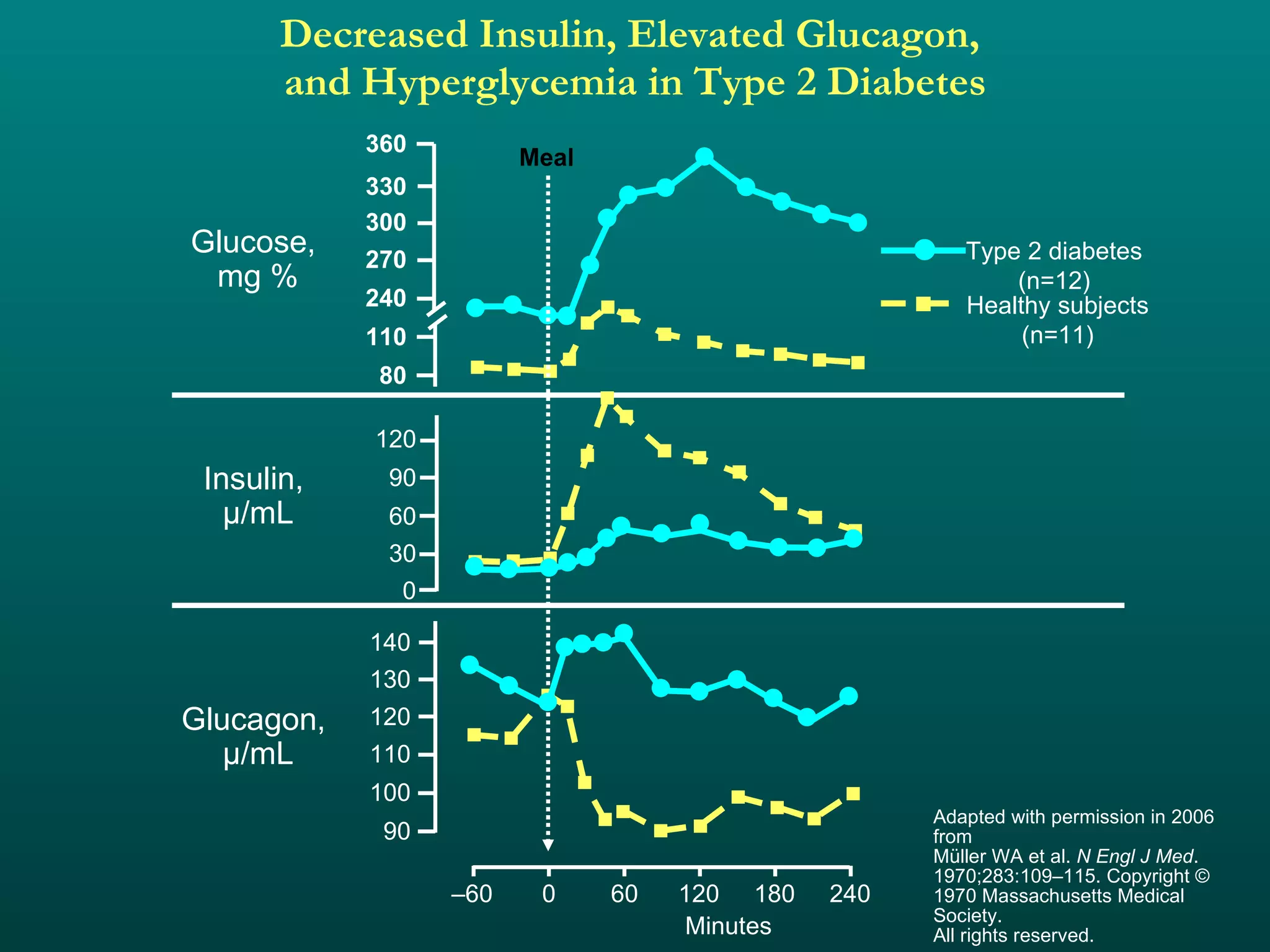
Decreased Insulin, Elevated Glucagon,  and Hyperglycemia in Type 2 Diabetes Adapted with permission in 2006 from Müller WA et al.  N Engl J Med . 1970;283:109–115. Copyright © 1970 Massachusetts Medical Society.  All rights reserved. Glucose,  mg % Insulin,  μ /mL Glucagon,  μ /mL Minutes 360 330 300 270 240 110 80 Meal 120 90 60 30 0 – 60 0 60 120 180 240 140 130 120 110 100 90 Healthy subjects (n=11) Type 2 diabetes (n=12)
Is Insulin Secretion from the beta cells a function of ambient glucose level? A look at the Intestinal Factors in Insulin Secretion; The Incretins
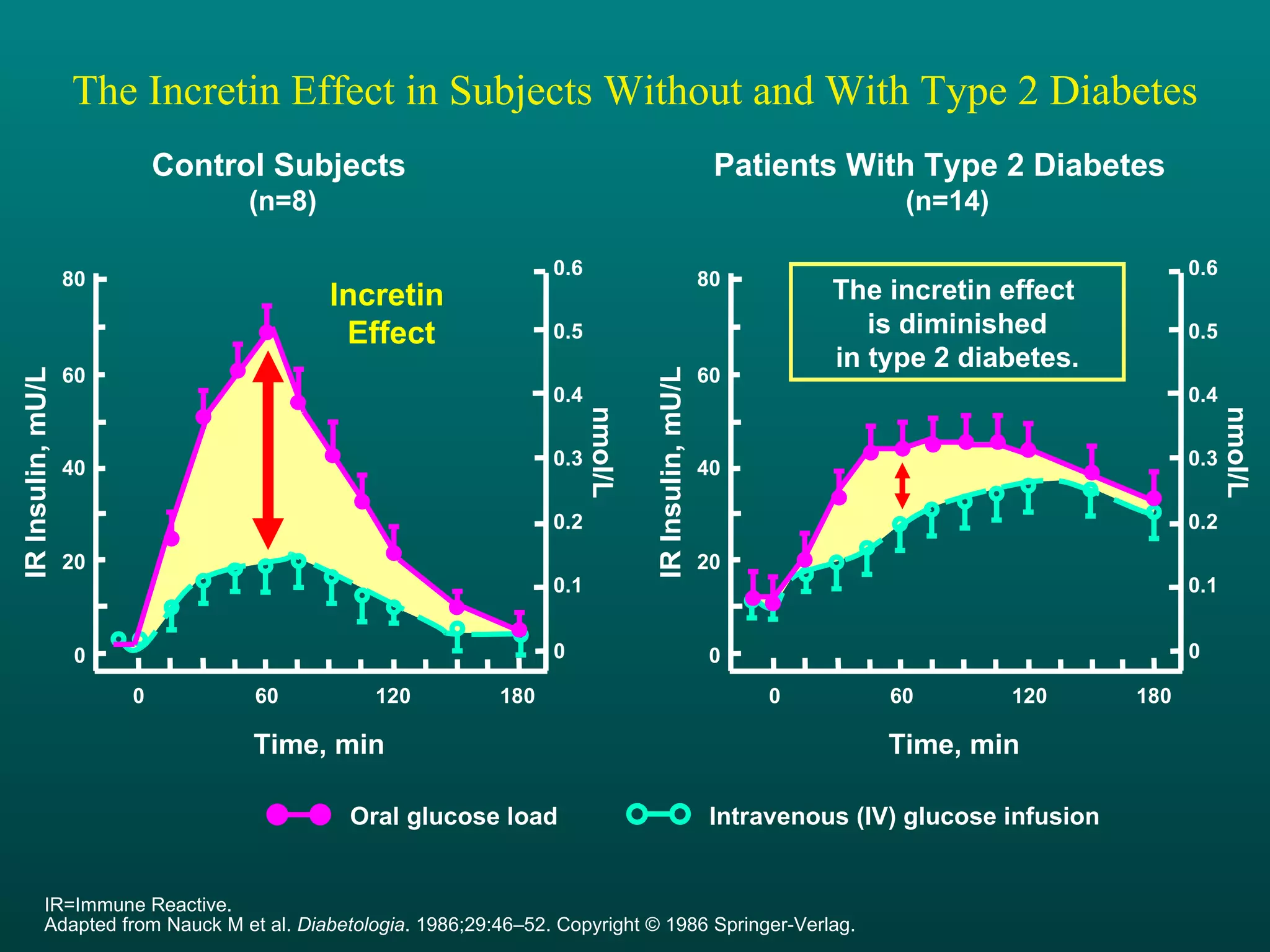
The Incretin Effect in Subjects Without and With Type 2 Diabetes IR=Immune Reactive. Adapted from Nauck M et al.  Diabetologia . 1986;29:46–52. Copyright © 1986 Springer-Verlag. Time, min IR Insulin, mU/L nmol/L 180 60 120 0 Control Subjects   (n=8) Patients With Type 2 Diabetes   (n=14) Time, min IR Insulin, mU/L nmol/L 180 60 120 0 Oral glucose load Intravenous (IV) glucose infusion Incretin  Effect The incretin effect  is diminished in type 2 diabetes. 0.6 0.5 0.4 0.3 0.2 0.1 0 80 60 40 20 0 0.6 0.5 0.4 0.3 0.2 0.1 0 80 60 40 20 0
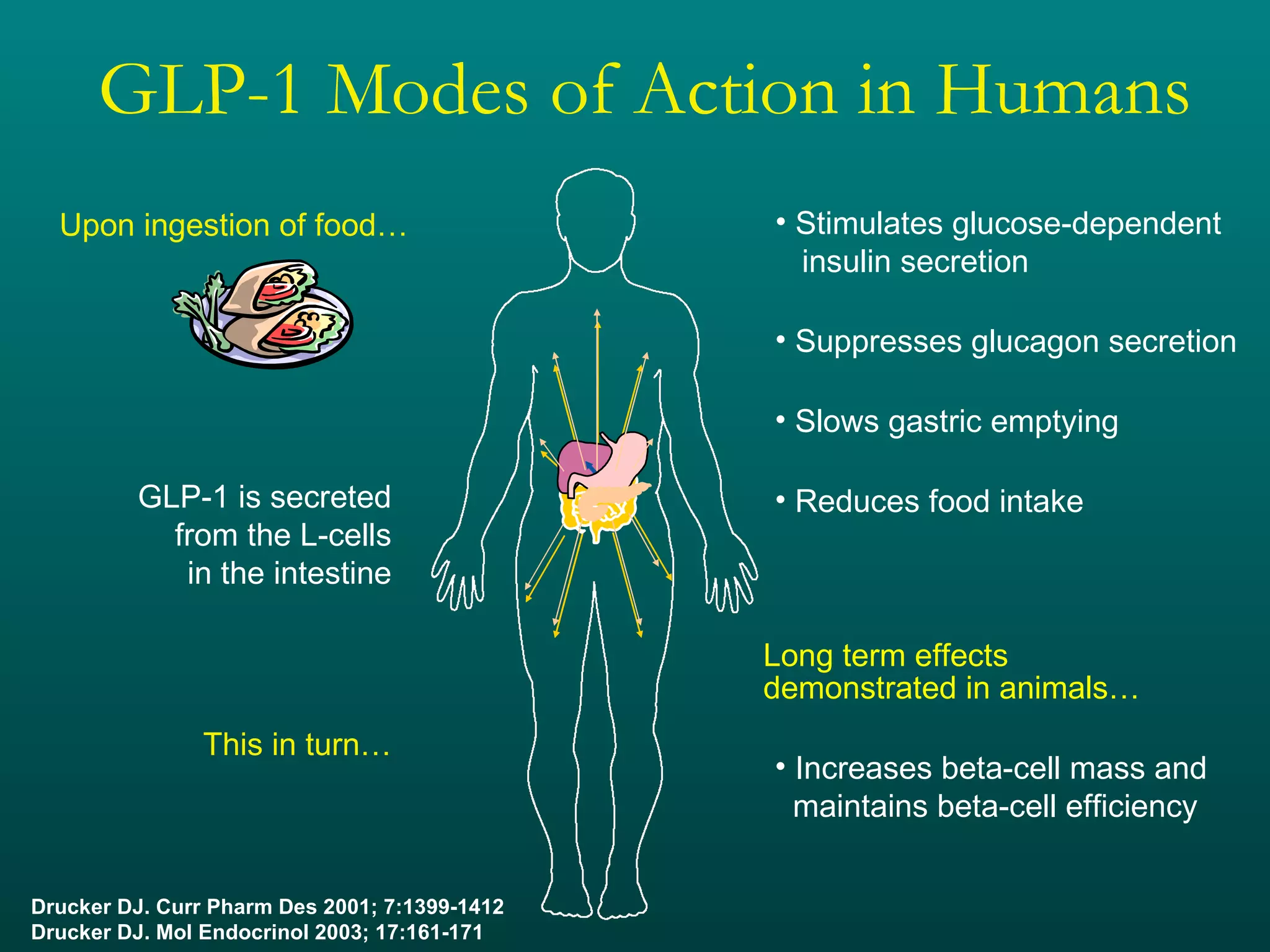
GLP-1 Modes of Action in Humans GLP-1 is secreted from the L-cells in the intestine This in turn… Stimulates glucose-dependent   insulin secretion Suppresses glucagon secretion Slows gastric emptying Long term effects demonstrated in animals… Increases beta-cell mass and   maintains beta-cell efficiency Reduces food intake Drucker DJ. Curr Pharm Des 2001; 7:1399-1412 Drucker DJ. Mol Endocrinol 2003; 17:161-171 Upon ingestion of food…
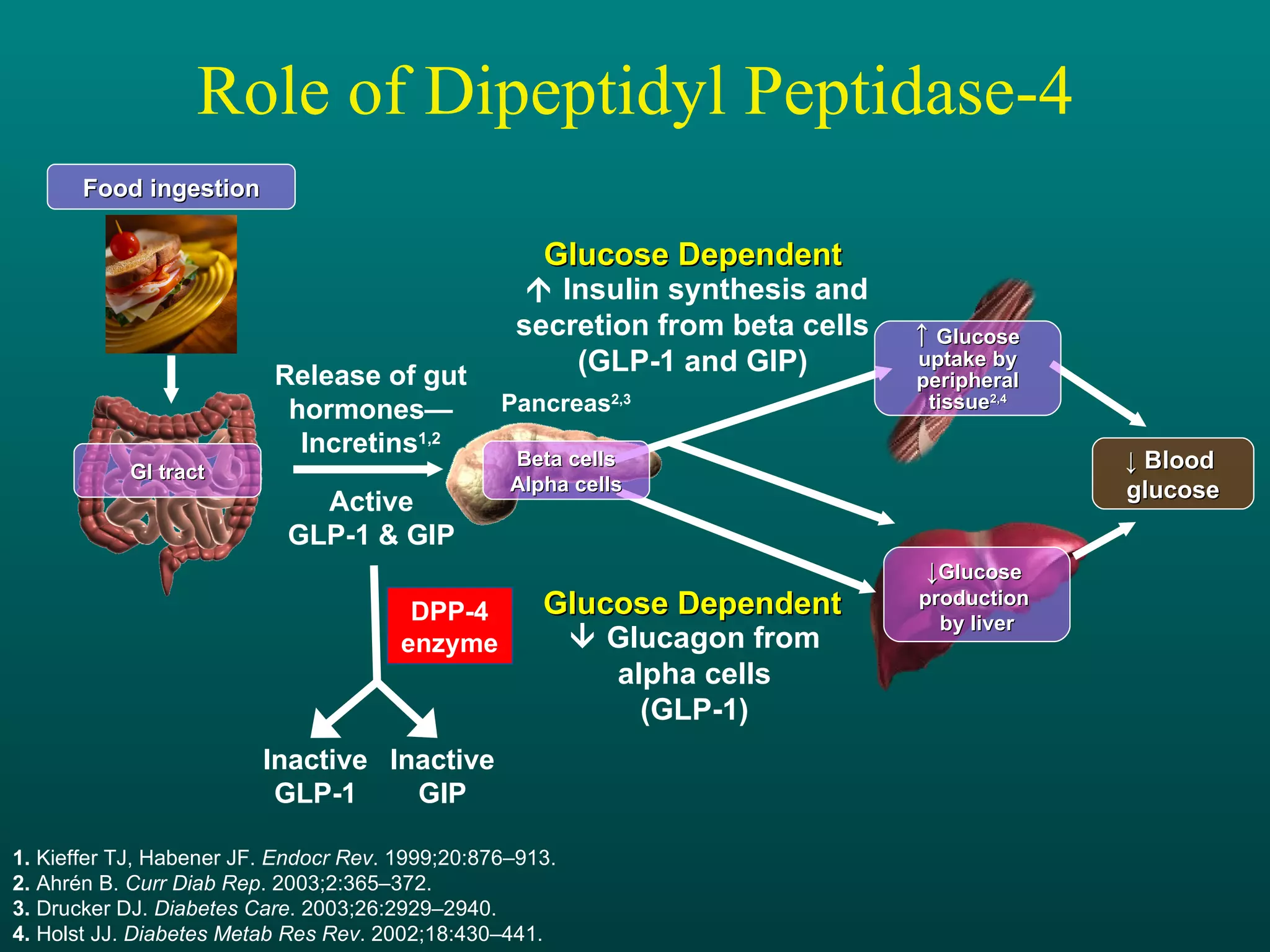
Role of Dipeptidyl Peptidase-4 1.  Kieffer TJ, Habener JF.  Endocr Rev . 1999;20:876–913.  2.  Ahrén B.  Curr Diab Rep . 2003;2:365–372. 3.  Drucker DJ.  Diabetes Care . 2003;26:2929–2940.  4.  Holst JJ.  Diabetes Metab Res Rev . 2002;18:430–441.      Insulin synthesis and secretion from beta cells (GLP-1 and GIP)    Glucagon from alpha cells (GLP-1) Release of gut hormones— Incretins 1,2 Pancreas 2,3 Glucose Dependent Active GLP-1 & GIP DPP-4 enzyme Inactive GIP Inactive GLP-1 Glucose Dependent ↓  Blood  glucose GI tract ↓ Glucose  production  by liver Food ingestion ↑ Glucose  uptake by peripheral tissue 2,4 Beta cells Alpha cells
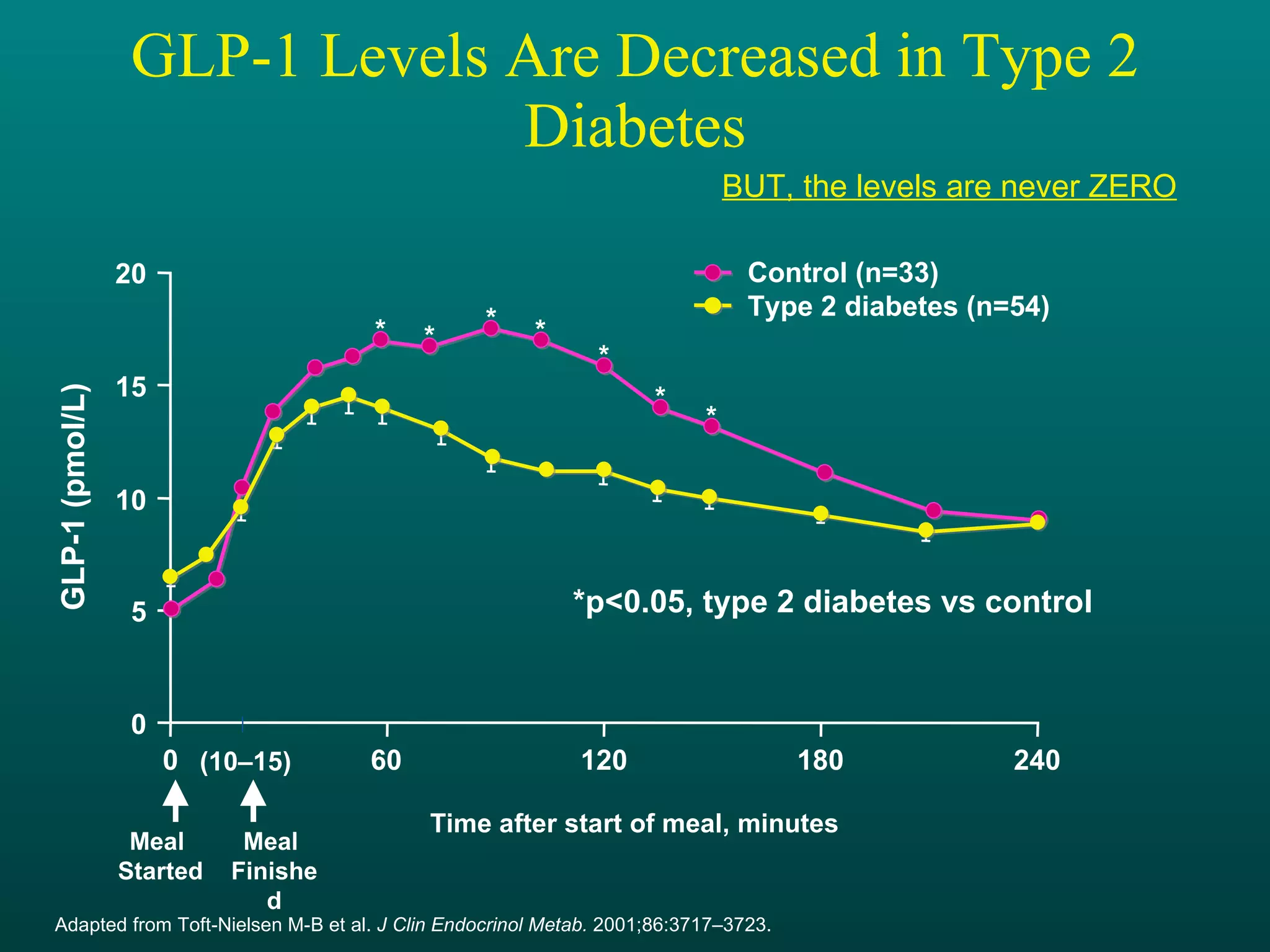
GLP-1 Levels Are Decreased in Type 2 Diabetes * Control (n=33) Type 2 diabetes (n=54) 0 5 10 15 20 0 60 120 180 240 GLP-1 (pmol/L) *p<0.05, type 2 diabetes vs control  Adapted from Toft-Nielsen M-B et al.  J Clin Endocrinol Metab.  2001;86:3717–3723.  Meal  Started Meal  Finished (10–15) Time after start of meal, minutes BUT, the levels are never ZERO * * * * * *
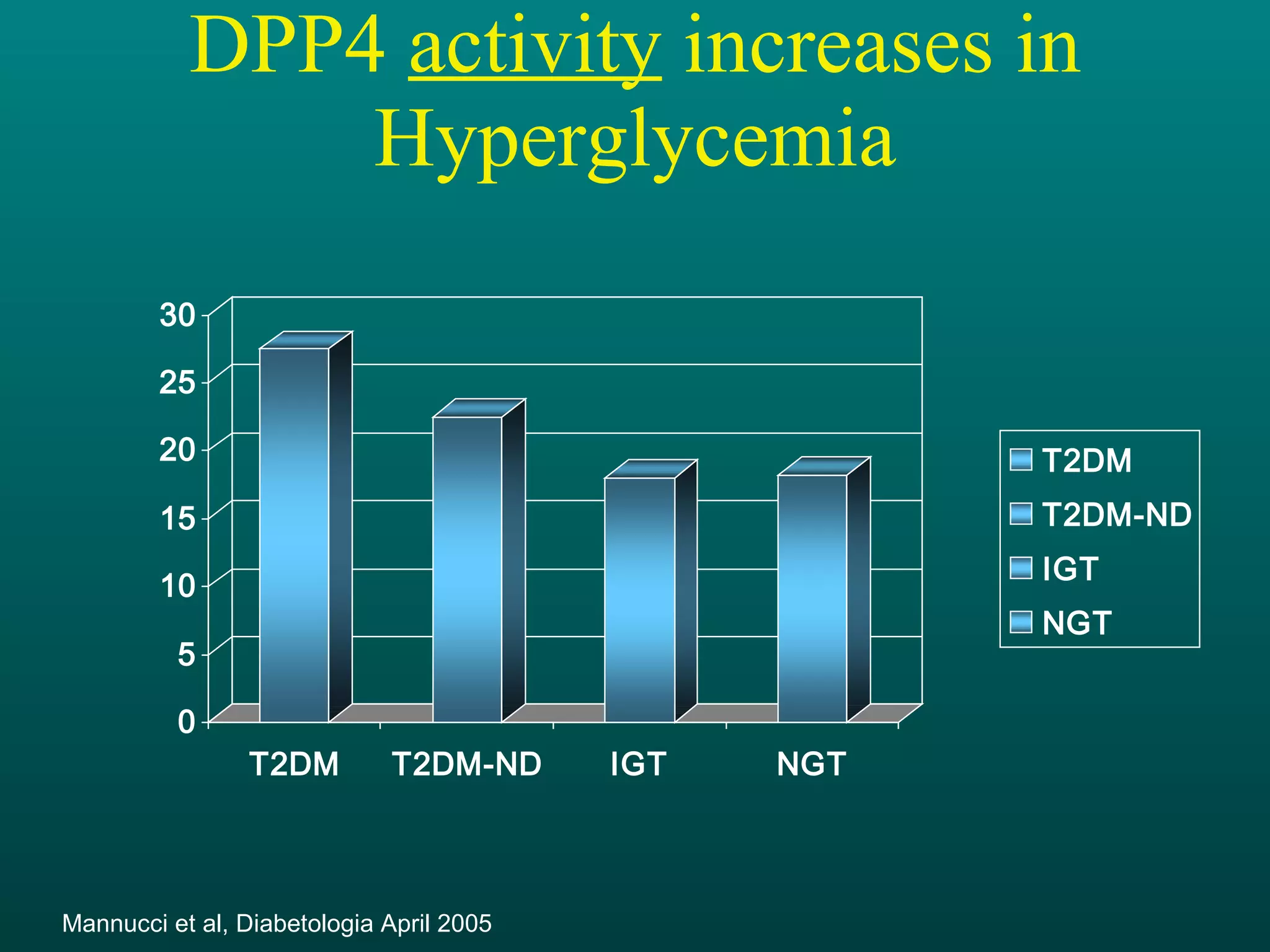
DPP4  activity  increases in Hyperglycemia Mannucci et al, Diabetologia April 2005
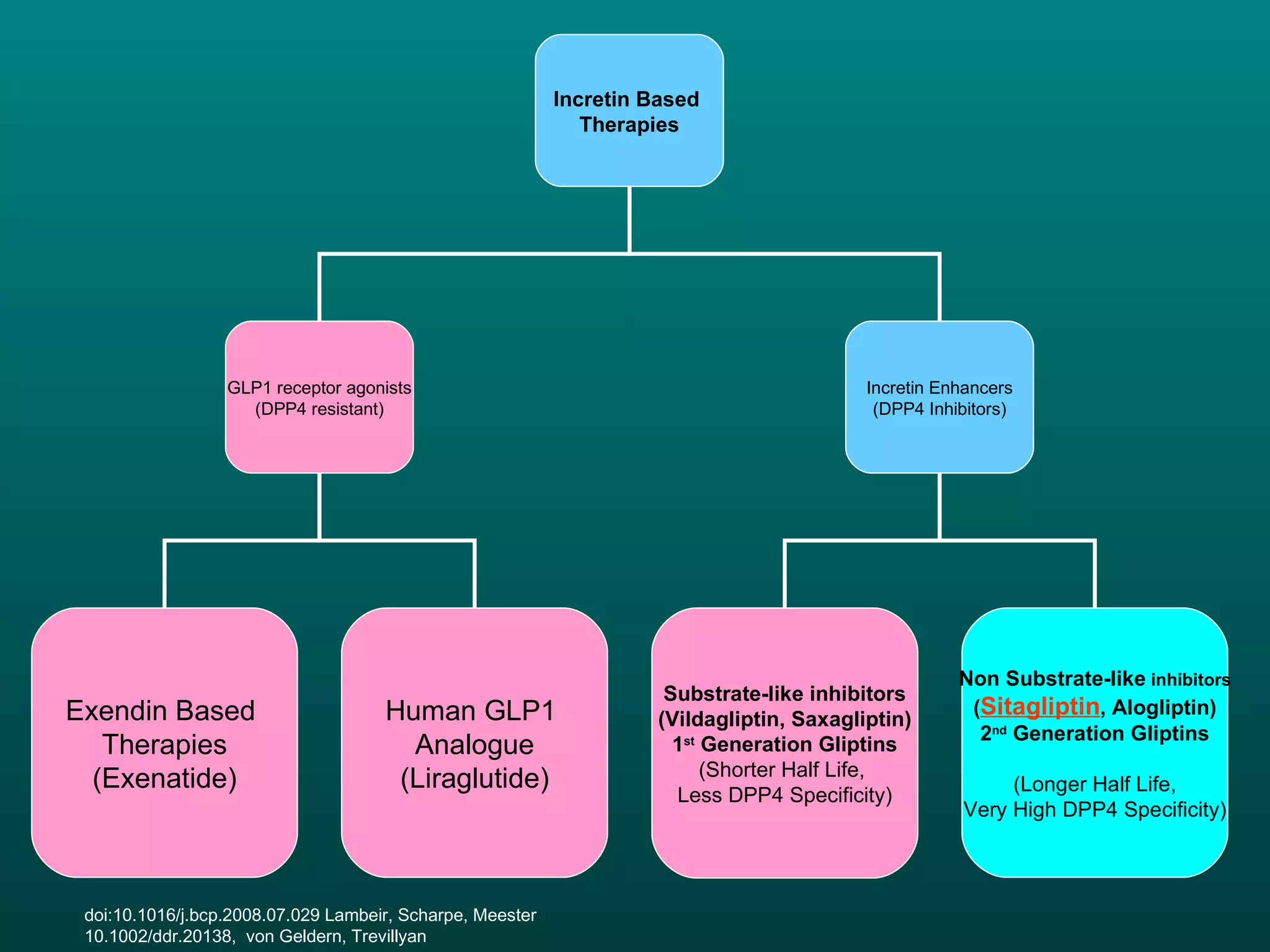
doi:10.1016/j.bcp.2008.07.029 Lambeir, Scharpe, Meester 10.1002/ddr.20138,  von Geldern, Trevillyan Incretin Based  Therapies GLP1 receptor agonists (DPP4 resistant) Incretin Enhancers (DPP4 Inhibitors) Substrate-like inhibitors (Vildagliptin, Saxagliptin) 1 st  Generation Gliptins (Shorter Half Life,  Less DPP4 Specificity) Non Substrate-like  inhibitors ( Sitagliptin , Alogliptin) 2 nd  Generation Gliptins (Longer Half Life, Very High DPP4 Specificity) Exendin Based  Therapies (Exenatide) Human GLP1  Analogue (Liraglutide)
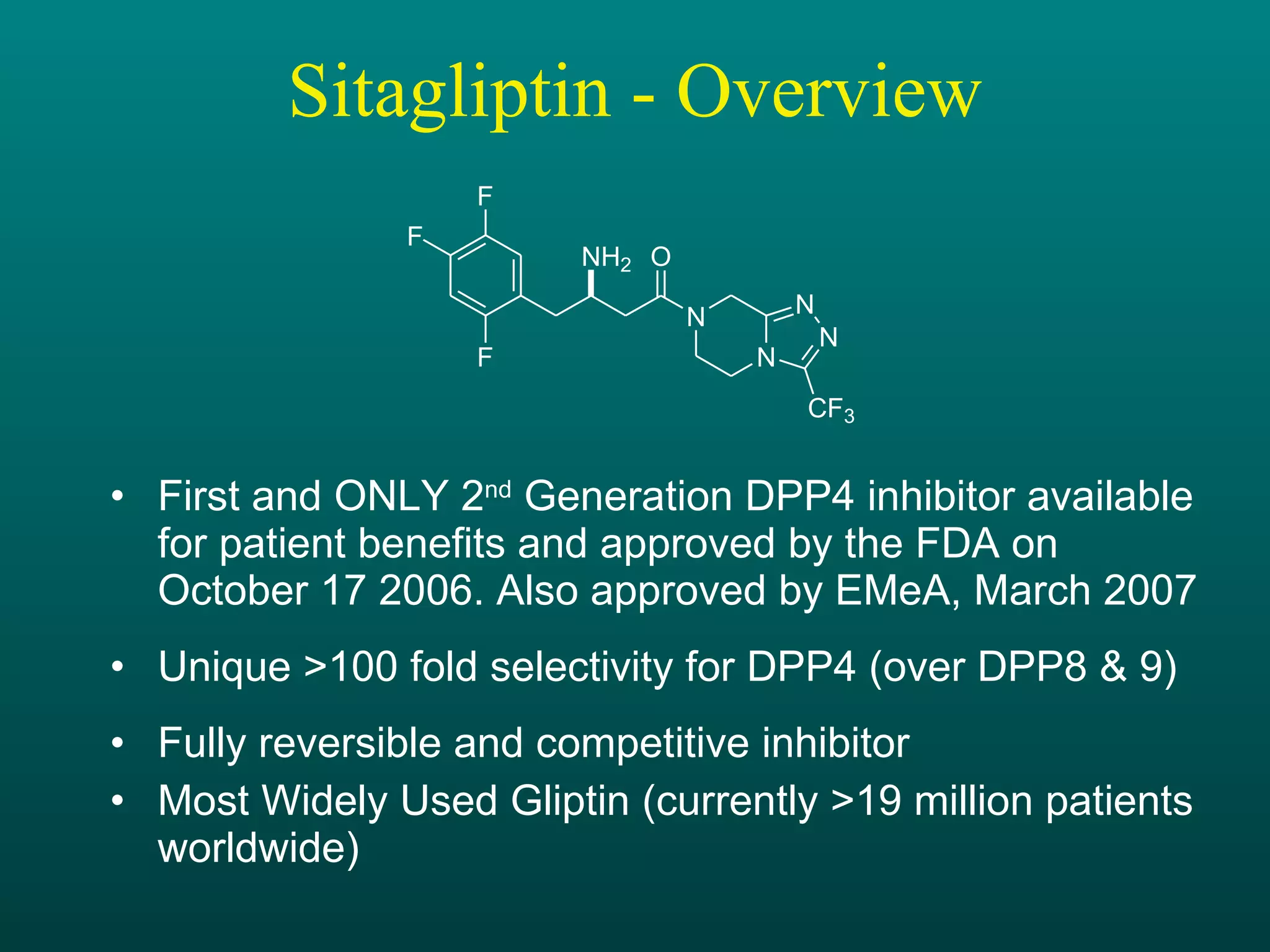
Sitagliptin - Overview First and ONLY 2 nd  Generation DPP4 inhibitor available for patient benefits and approved by the FDA on October 17 2006. Also approved by EMeA, March 2007 Unique >100 fold selectivity for DPP4 (over DPP8 & 9) Fully reversible and competitive inhibitor Most Widely Used Gliptin (currently >19 million patients worldwide)
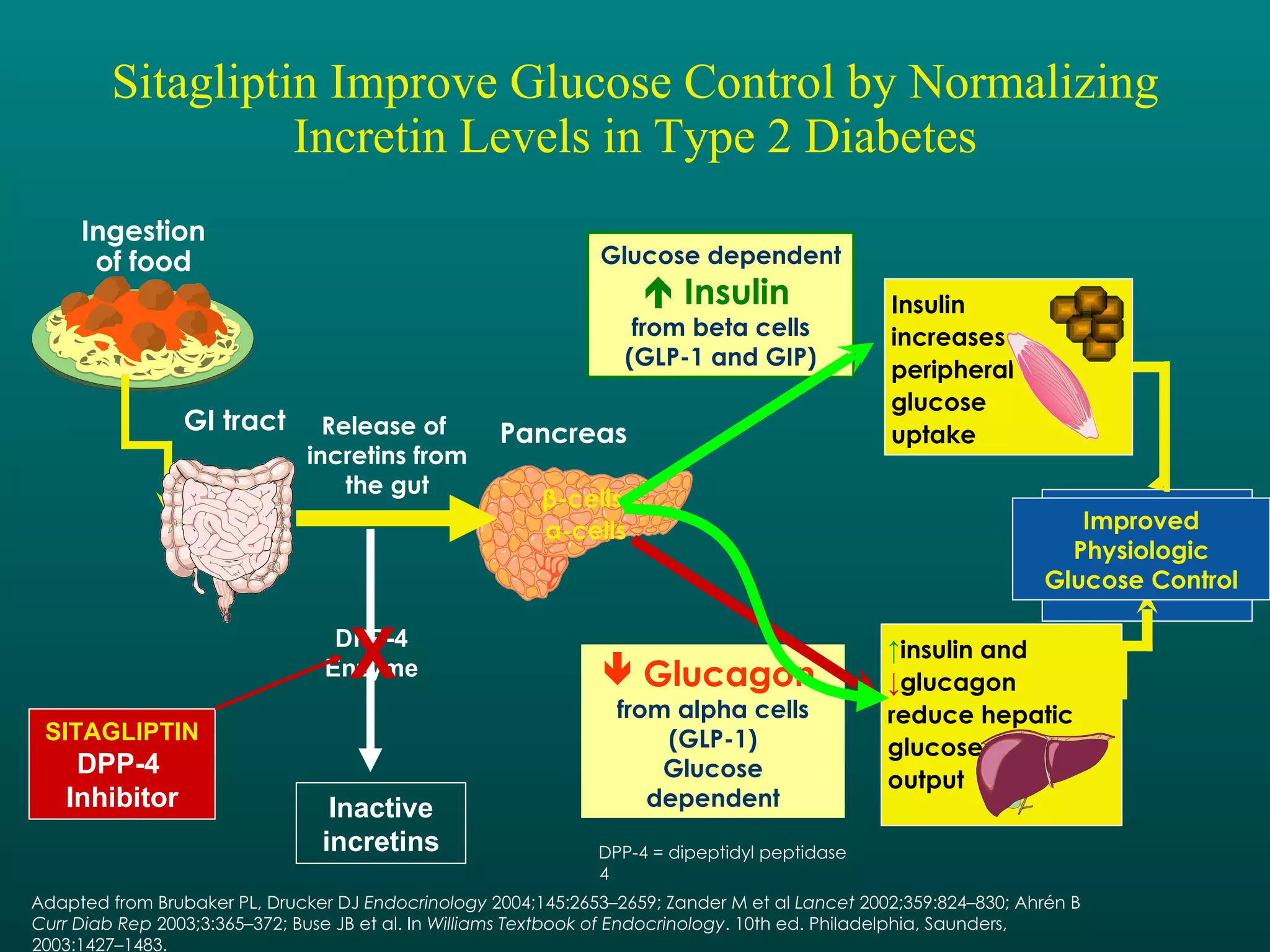
Sitagliptin Improve Glucose Control by Normalizing Incretin Levels in Type 2 Diabetes Glucose dependent Insulin   from beta cells (GLP-1 and GIP) Adapted from Brubaker PL, Drucker DJ  Endocrinology  2004;145:2653–2659; Zander M et al  Lancet  2002;359:824–830; Ahrén B  Curr Diab Rep  2003;3:365–372; Buse JB et al. In  Williams Textbook of Endocrinology . 10th ed. Philadelphia, Saunders, 2003:1427–1483. Hyperglycemia Glucagon   from alpha cells (GLP-1) Glucose dependent Release of  incretins from the gut Pancreas α -cells β -cells  Insulin increases  peripheral  glucose  uptake Ingestion of food Inactive incretins Improved Physiologic Glucose Control DPP-4 Enzyme DPP-4 = dipeptidyl peptidase 4 GI tract ↑ insulin and  ↓ glucagon  reduce hepatic  glucose  output SITAGLIPTIN DPP-4  Inhibitor X
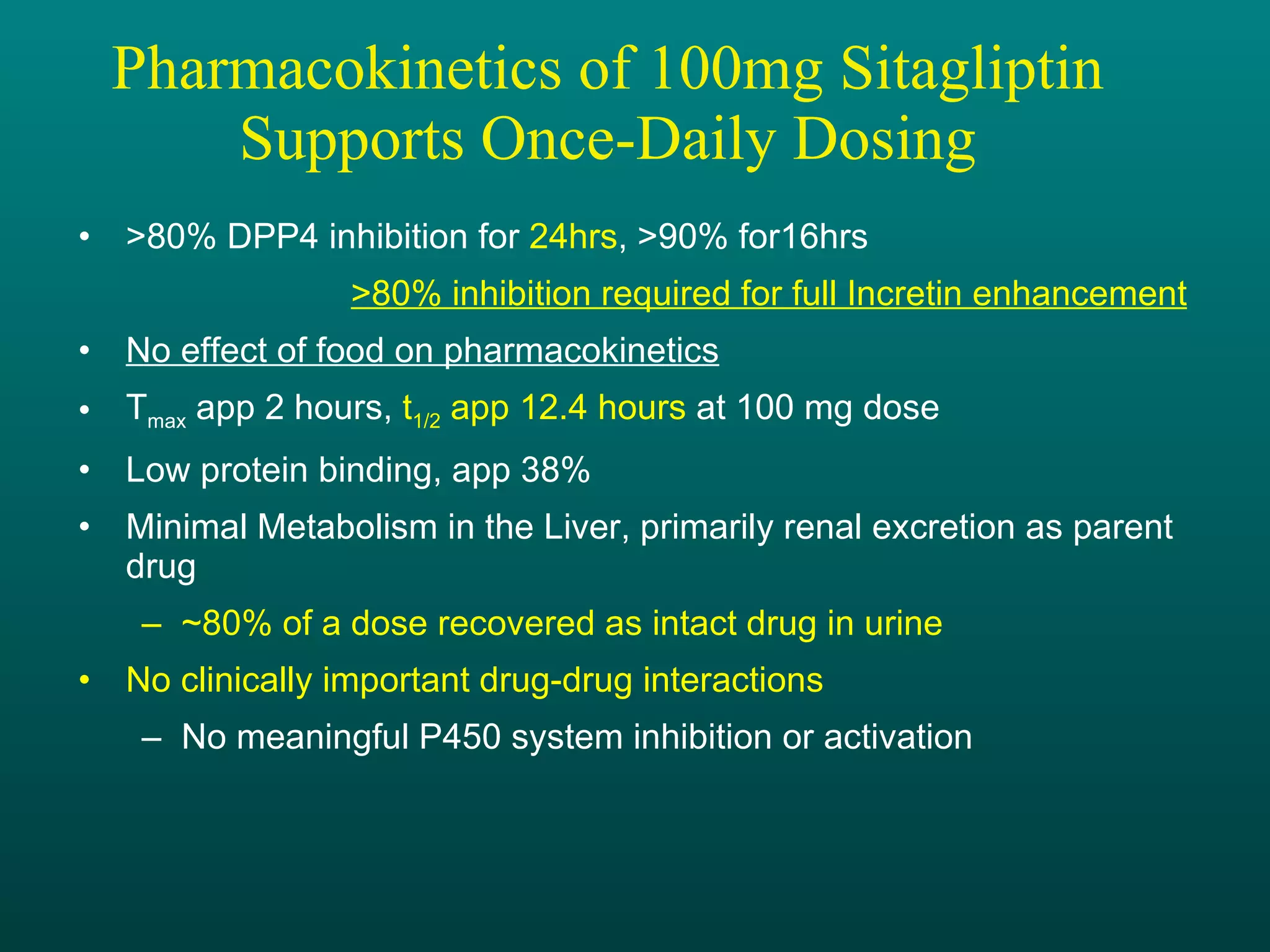
Pharmacokinetics of 100mg Sitagliptin Supports Once-Daily Dosing >80% DPP4 inhibition for  24hrs , >90% for16hrs >80% inhibition required for full Incretin enhancement No effect of food on pharmacokinetics   T max  app 2 hours,  t 1/2  app 12.4 hours  at 100 mg dose Low protein binding, app 38%  Minimal Metabolism in the Liver, primarily renal excretion as parent drug ~80% of a dose recovered as intact drug in urine No clinically important drug-drug interactions No meaningful P450 system inhibition or activation
What is the effect of a Single Tablet of Sitagliptin?
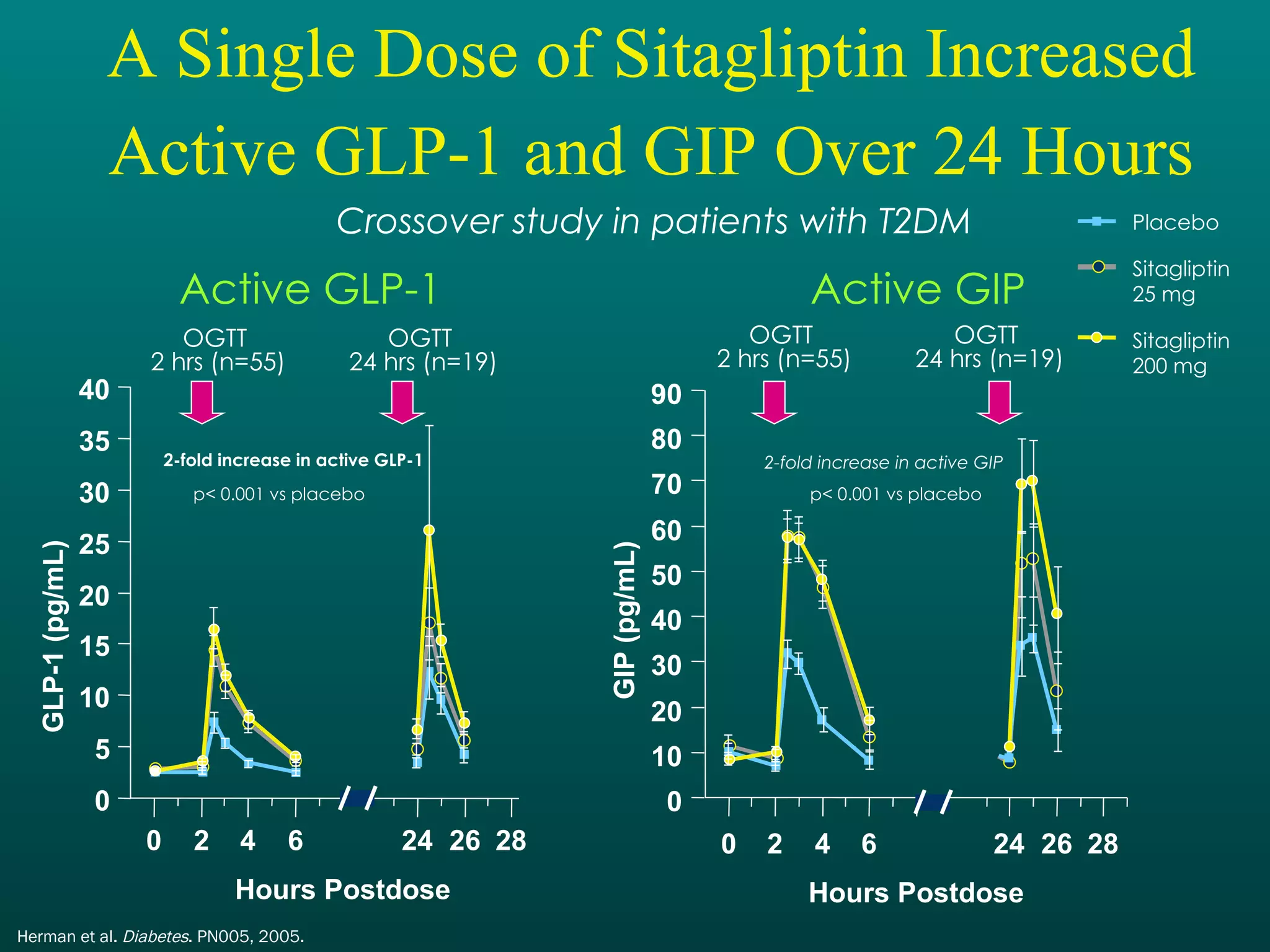
A Single Dose of Sitagliptin Increased Active GLP-1 and GIP Over 24 Hours OGTT  24 hrs (n=19) Herman et al.  Diabetes . PN005, 2005. Active GLP-1 0 5 10 15 20 25 30 35 40 0 2 4 6 24 26 28 Hours Postdose GLP-1 (pg/mL) OGTT  2 hrs (n=55) Crossover study in patients with T2DM Placebo Sitagliptin  25 mg Sitagliptin  200 mg 2-fold increase in active GLP-1 p< 0.001 vs placebo Active GIP 0 10 20 30 40 50 60 70 80 90 0 2 4 6 24 26 28 Hours Postdose GIP (pg/mL) OGTT  24 hrs (n=19) OGTT  2 hrs (n=55) 2-fold increase in active GIP p< 0.001 vs placebo
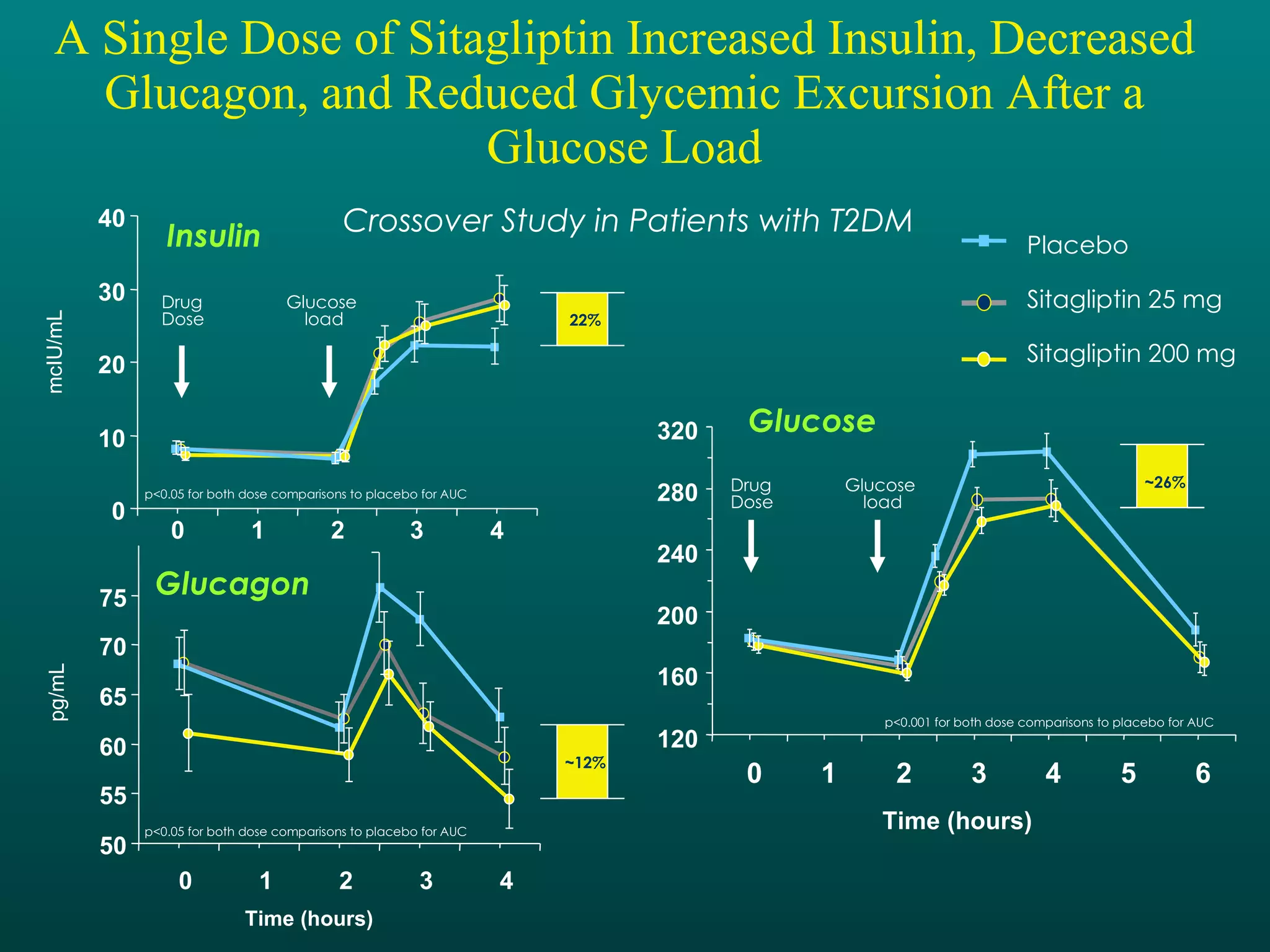
A Single Dose of Sitagliptin Increased Insulin, Decreased Glucagon, and Reduced Glycemic Excursion After a Glucose Load 0 10 20 30 40 0 1 2 3 4 mcIU/mL 50 55 60 65 70 75 0 1 2 3 4 Time (hours) pg/mL Glucose  load Drug  Dose 22% ~12% Insulin Glucagon Crossover Study in Patients with T2DM p<0.05 for both dose comparisons to placebo for AUC p<0.05 for both dose comparisons to placebo for AUC Placebo Sitagliptin 25 mg Sitagliptin 200 mg Glucose  load Drug  Dose 120 160 200 240 280 320 0 1 2 3 4 5 6 Time (hours) Glucose ~26% p<0.001 for both dose comparisons to placebo for AUC
Is Sitagliptin effective as Monotherapy?
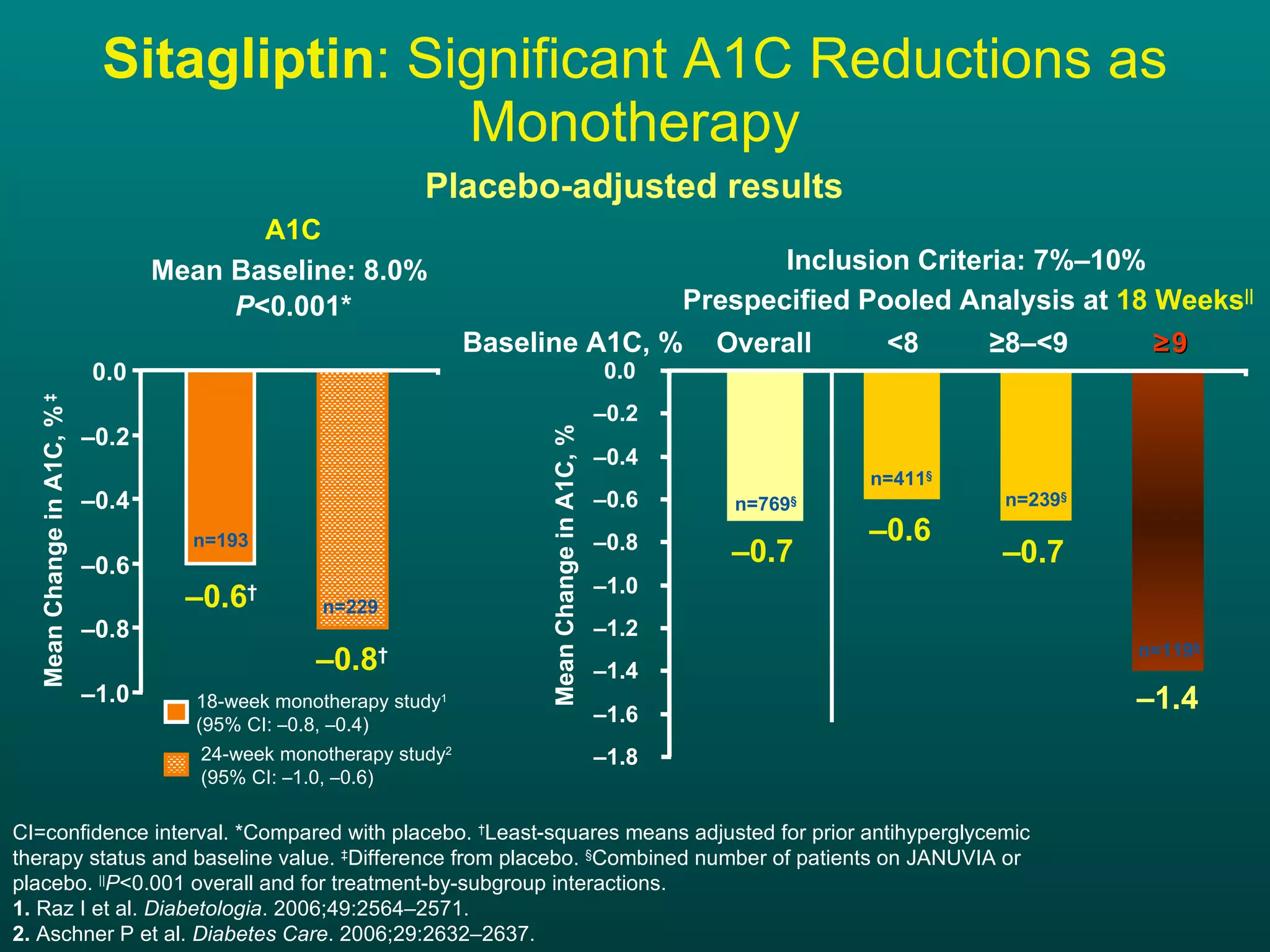
Sitagliptin : Significant A1C Reductions as Monotherapy Mean Change in A1C, %  ‡ A1C CI=confidence interval. *Compared with placebo.  † Least-squares means adjusted for prior antihyperglycemic therapy status and baseline value.  ‡ Difference from placebo.  § Combined number of patients on JANUVIA or placebo.  || P <0.001 overall and for treatment-by-subgroup interactions.  1.  Raz I et al.  Diabetologia . 2006;49:2564–2571. 2.  Aschner P et al.  Diabetes Care . 2006;29:2632–2637. Mean Baseline: 8.0%  P <0.001* – 0.6 † – 1.0 – 0.8 – 0.6 – 0.4 – 0.2 0.0 – 0.8 † Placebo-adjusted results n=193 n=229 Inclusion Criteria: 7%–10% Overall <8   ≥8–<9  ≥ 9 Baseline A1C, % – 1.4 – 0.6 – 0.7 – 1.8 – 1.6 – 1.4 – 1.2 – 1.0 – 0.8 – 0.6 – 0.4 – 0.2 0.0 n=411 § n=239 § n=119 § Mean Change in A1C, % Prespecified Pooled Analysis at  18 Weeks || – 0.7 n=769 § 24-week monotherapy study 2 (95% CI:  – 1.0,  – 0.6) 18-week monotherapy study 1 (95% CI:  – 0.8,  – 0.4)
Is it a PP Drug or a Fasting Drug?
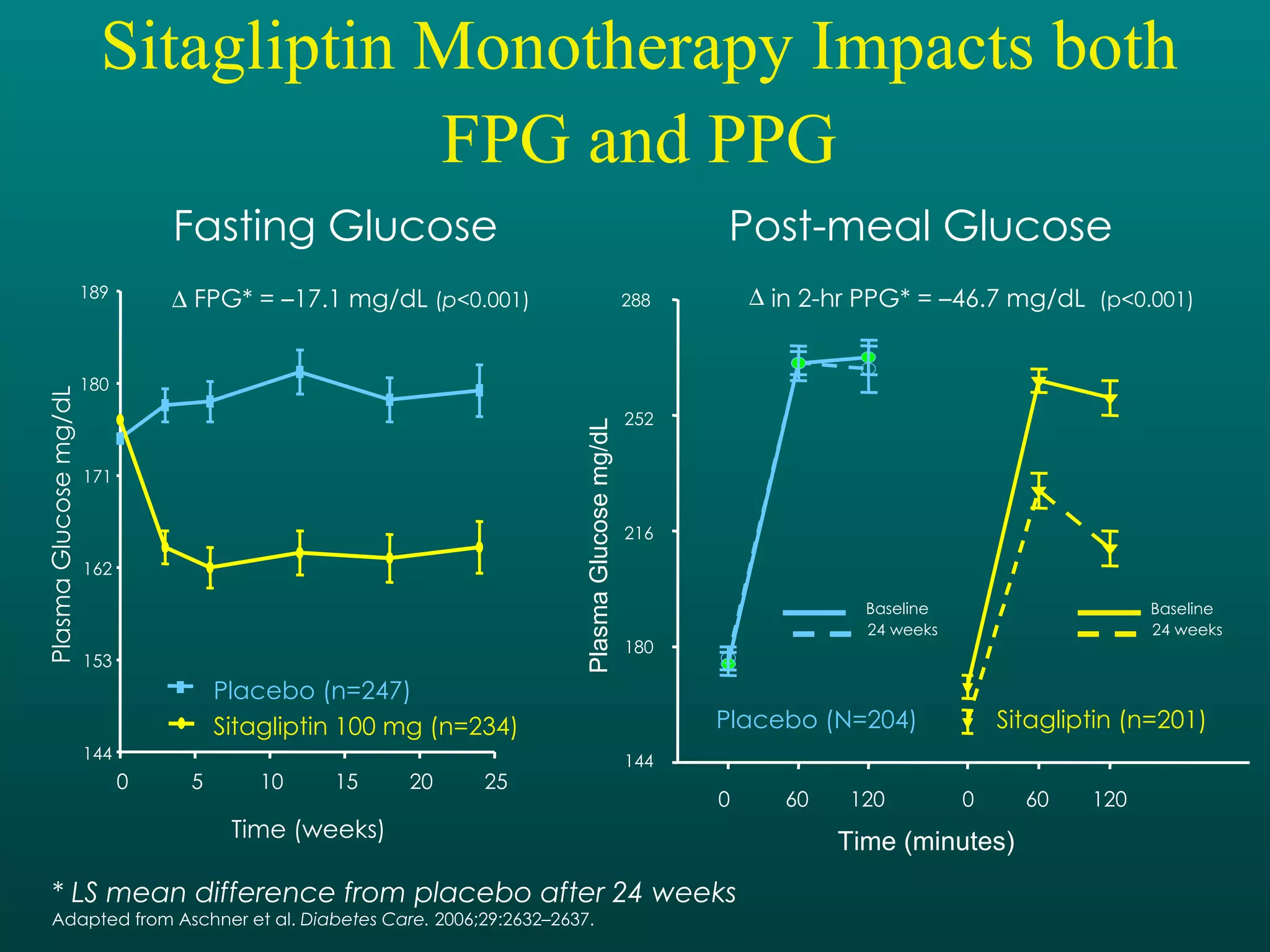
Sitagliptin Monotherapy Impacts both FPG and PPG Fasting Glucose Plasma Glucose mg/dL Time (weeks) 0 5 10 15 20 25 144 153 162 171 180 189 Placebo (n=247) Sitagliptin 100 mg (n=234)      FPG* = –17.1 mg/dL  ( p <0.001) Post-meal Glucose  * LS mean difference from placebo after 24 weeks  Adapted from Aschner et al.  Diabetes Care.  2006;29:2632–2637. Time (minutes) Plasma Glucose mg/dL in 2-hr PPG* = –46.7 mg/dL  (p<0.001) 0 60 120 0 60 120 144 180 216 252 288 Placebo (N=204) Sitagliptin (n=201) Baseline 24 weeks Baseline 24 weeks
How Fast does Sitagliptin Start Working?
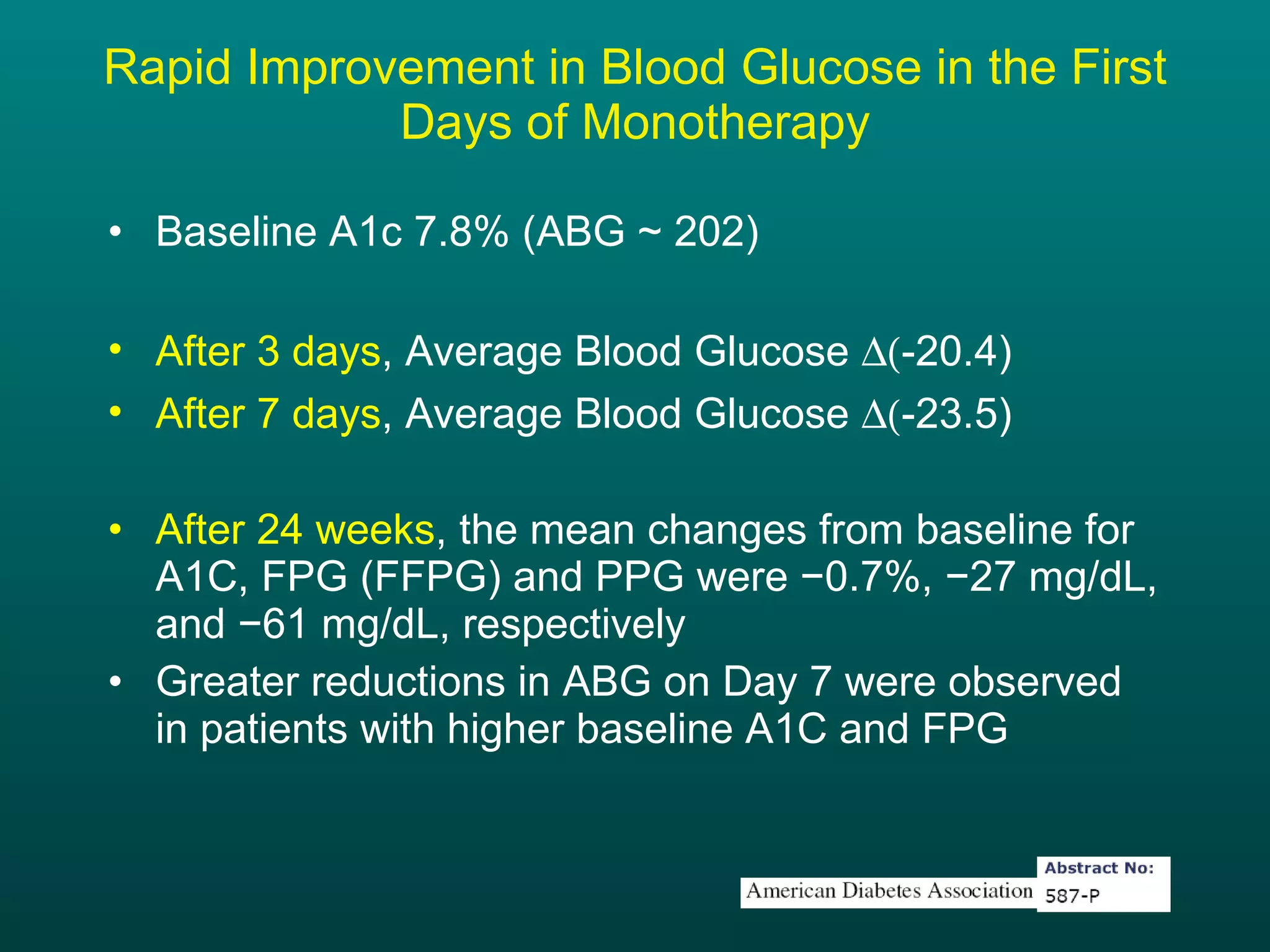
Rapid Improvement in Blood Glucose in the First Days of Monotherapy Baseline A1c 7.8% (ABG ~ 202) After 3 days , Average Blood Glucose   -20.4) After 7 days , Average Blood Glucose   -23.5) After 24 weeks , the mean changes from baseline for A1C, FPG (FFPG) and PPG were −0.7%, −27 mg/dL, and −61 mg/dL, respectively Greater reductions in ABG on Day 7 were observed in patients with higher baseline A1C and FPG
Is Sitagliptin effective when sensitizers fail?
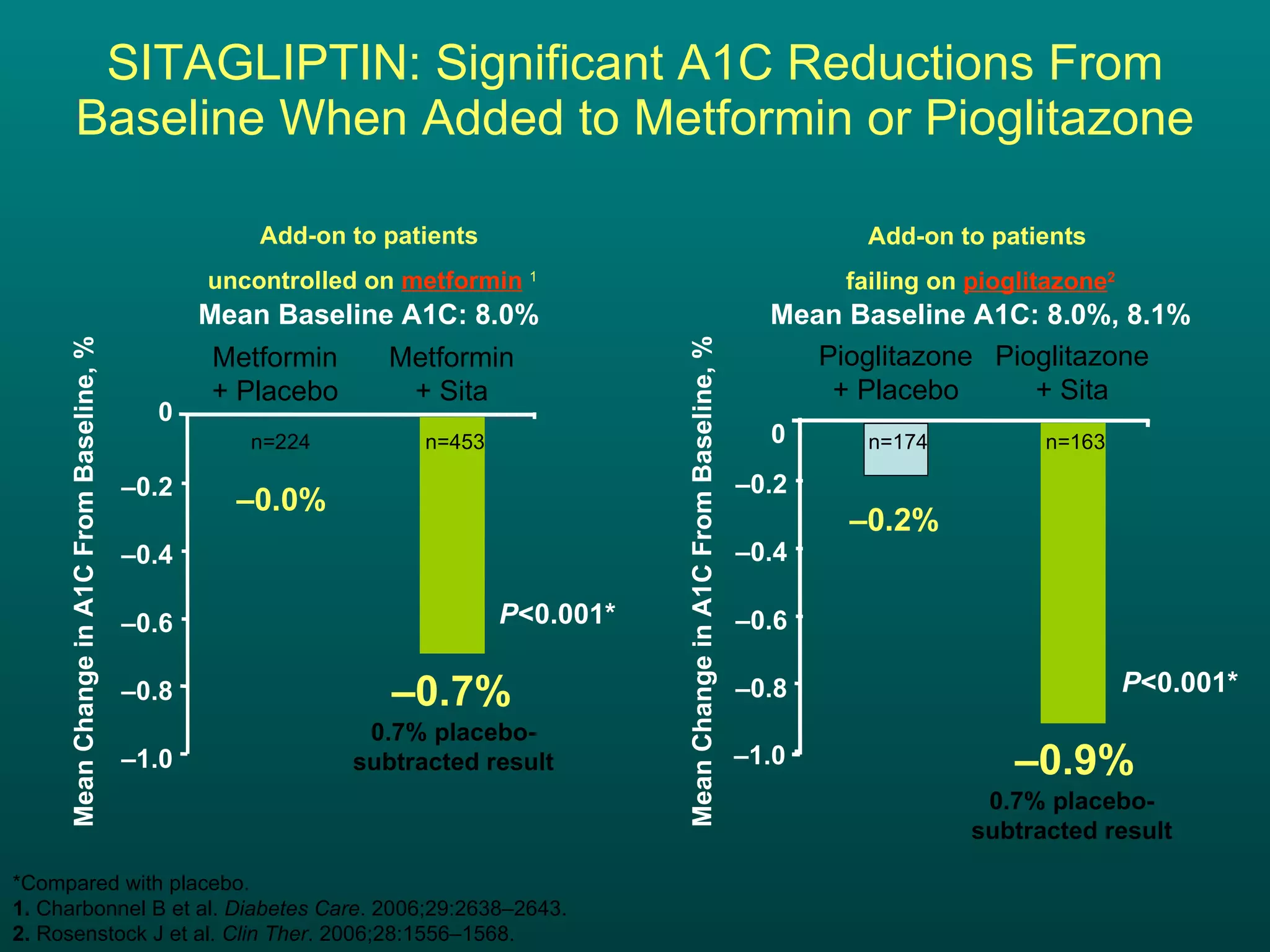
SITAGLIPTIN: Significant A1C Reductions From Baseline When Added to Metformin or Pioglitazone Add-on to patients  failing on  pioglitazone 2 Mean Baseline A1C: 8.0%, 8.1% Mean Change in A1C From Baseline, % n=224 Metformin + Sita – 1.0 – 0.8 – 0.6 0 – 1.0 0 Mean Change in A1C From Baseline, % – 0.7% Mean Baseline A1C: 8.0%  P <0.001* P <0.001* Add-on to patients  uncontrolled on  metformin   1 – 0.0% Metformin + Placebo Pioglitazone + Sita Pioglitazone + Placebo *Compared with placebo. 1.  Charbonnel B et al.  Diabetes Care . 2006;29:2638–2643. 2.  Rosenstock J et al.  Clin Ther . 2006;28:1556–1568. n=453 n=174 n=163 0.7% placebo- subtracted result 0.7% placebo- subtracted result – 0.9% – 0.4 – 0.2 – 0.8 – 0.6 – 0.4 – 0.2 – 0.2%
Is Sitagliptin’s efficacy comparable to that of a Sulfonylurea?
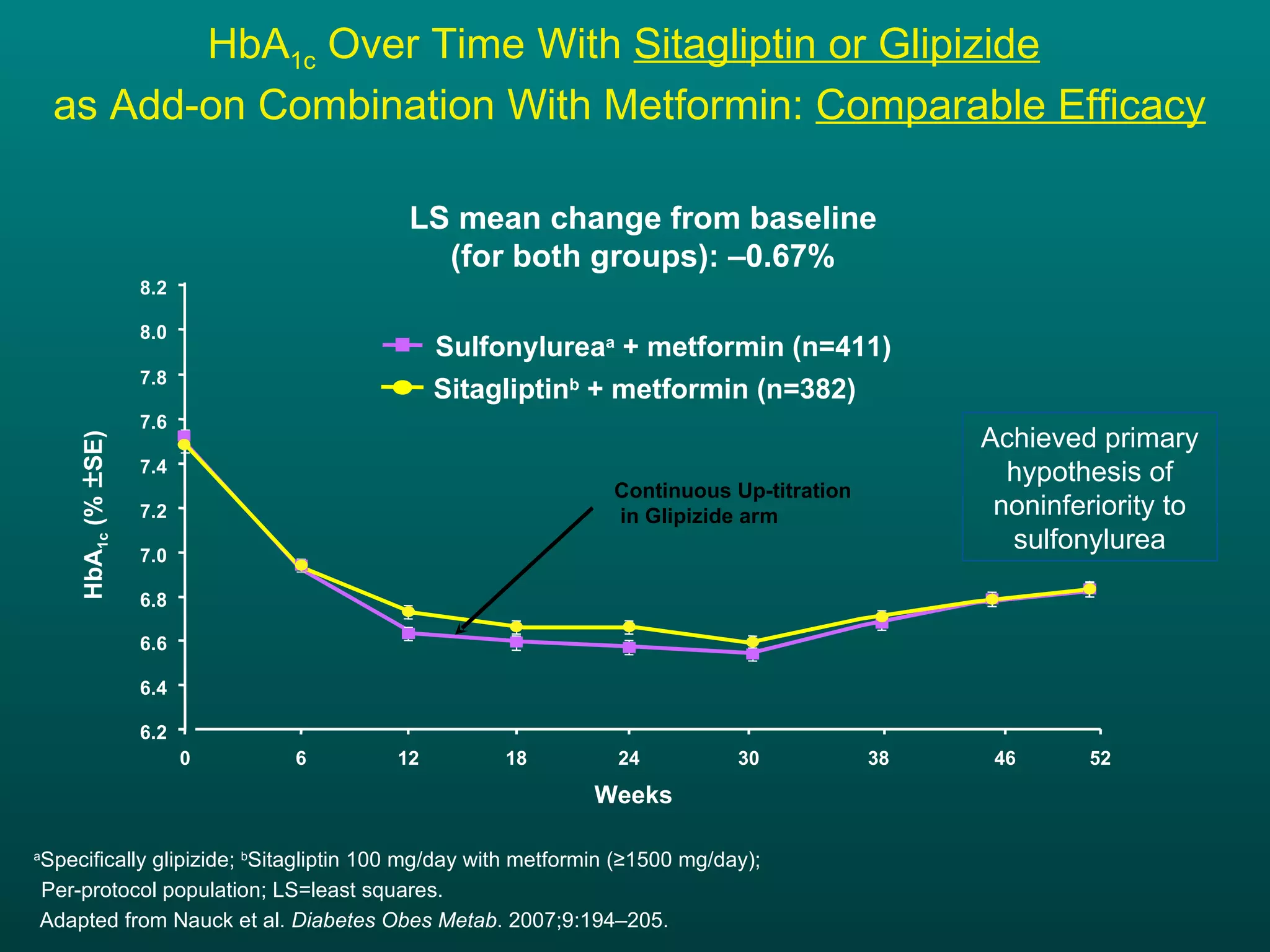
HbA 1c  Over Time With  Sitagliptin or Glipizide   as Add-on Combination With Metformin:  Comparable Efficacy a Specifically glipizide;  b Sitagliptin 100 mg/day with metformin (≥1500 mg/day);  Per-protocol population; LS=least squares. Adapted from Nauck et al.  Diabetes Obes Metab . 2007;9:194–205. Continuous Up-titration in Glipizide arm LS mean change from baseline  (for both groups): –0.67%  Achieved primary hypothesis of noninferiority to sulfonylurea Sulfonylurea a  + metformin (n=411) Sitagliptin b  + metformin (n=382) HbA 1c  (%  ± SE) Weeks 6.2 6.4 6.6 6.8 7.0 7.2 7.4 7.6 7.8 0 6 12 18 24 30 38 46 52 8.0 8.2
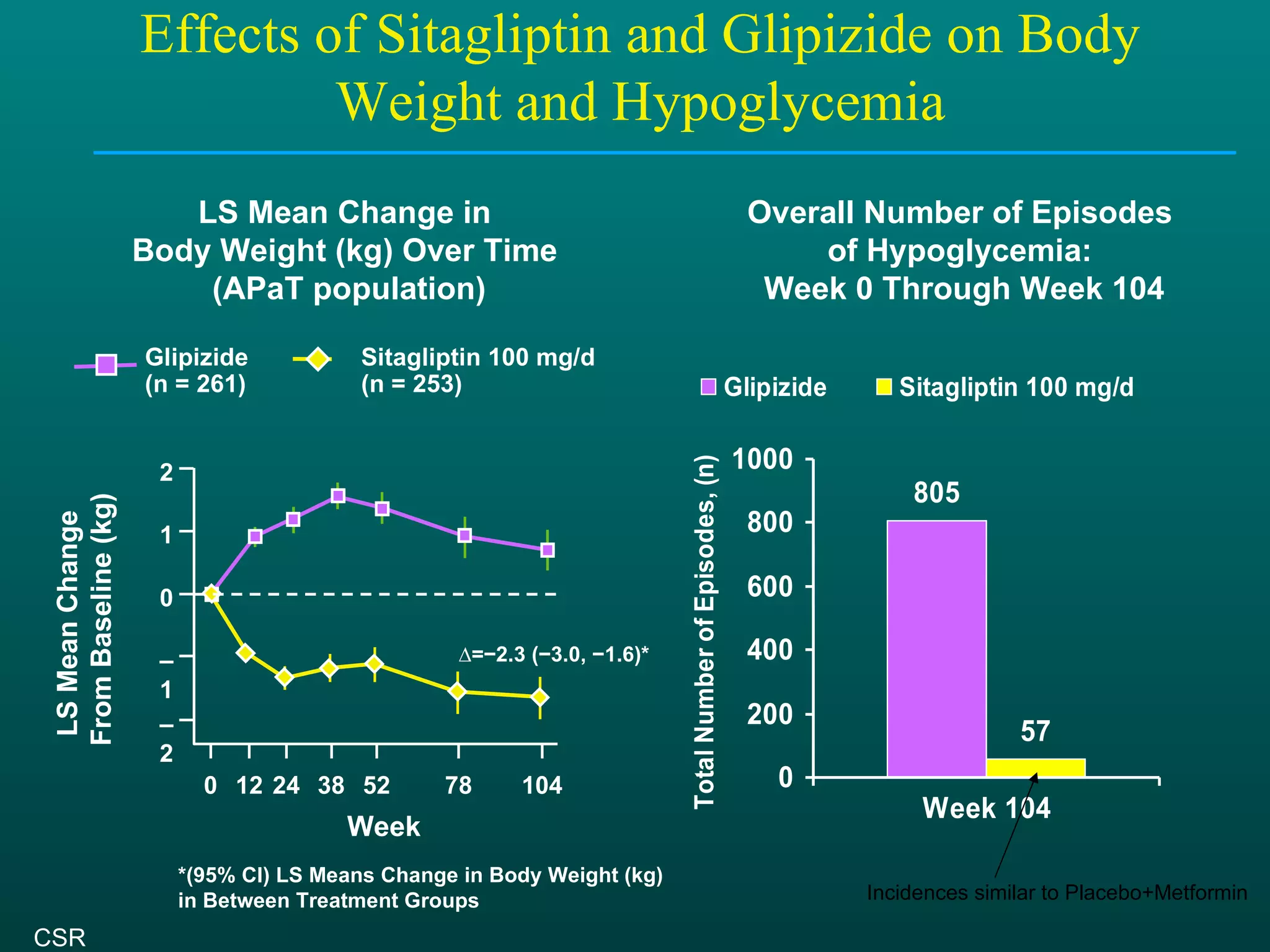
Effects of Sitagliptin and Glipizide on Body Weight and Hypoglycemia *(95% CI) LS Means Change in Body Weight (kg)  in Between Treatment Groups CSR Incidences similar to Placebo+Metformin LS Mean Change in  Body Weight (kg) Over Time  (APaT population) Overall Number of Episodes  of Hypoglycemia:  Week 0 Through Week 104 Sitagliptin 100 mg/d (n = 253) Glipizide (n = 261) LS Mean Change  From Baseline (kg) 0 12 24 38 52 78 104 – 2 – 1 0 1 2 Week ∆ =−2.3 (−3.0, −1.6)*
Will Sitagliptin work in very late Diabetes?
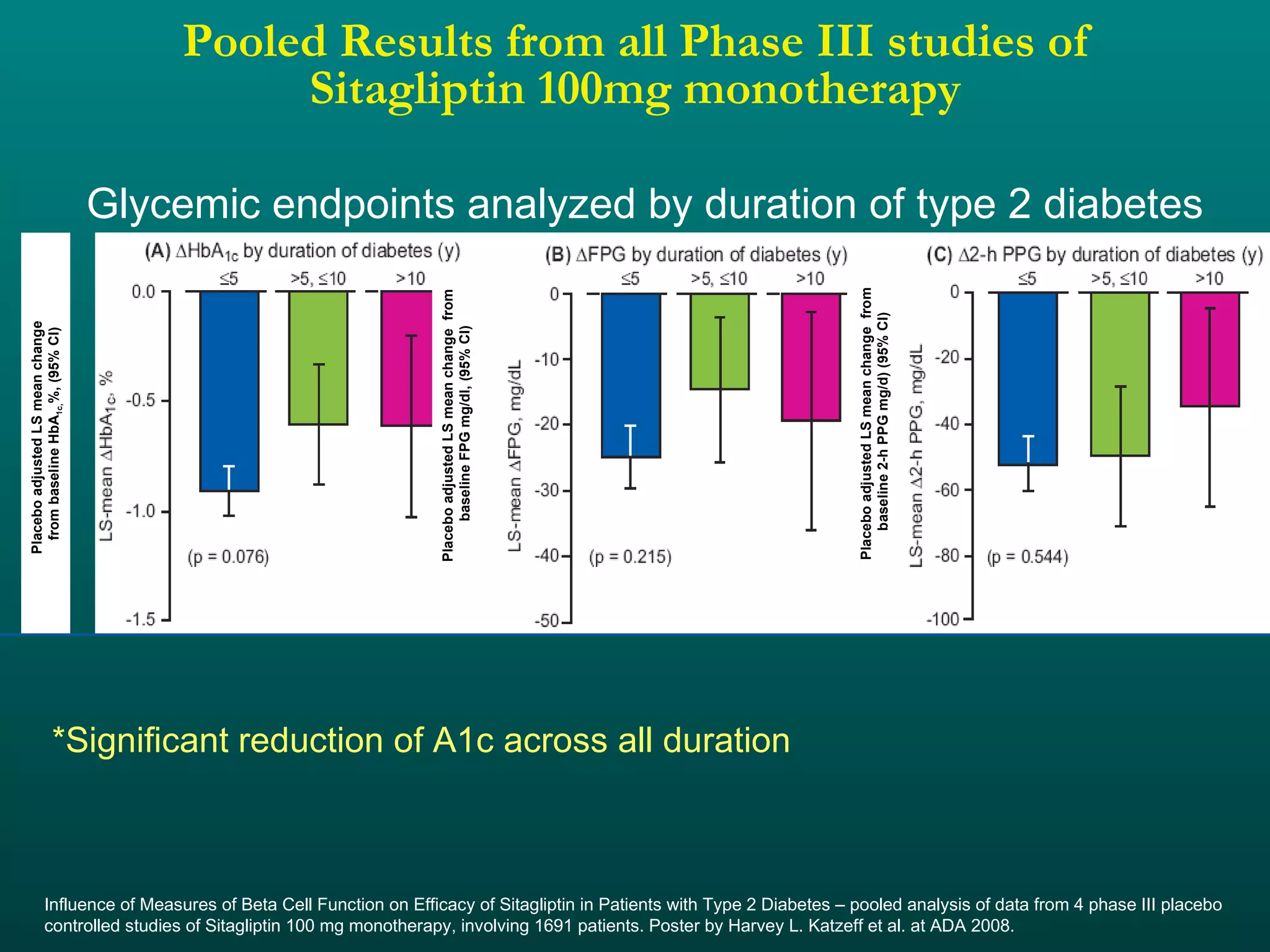
Pooled Results from all Phase III studies of Sitagliptin 100mg monotherapy Glycemic endpoints analyzed by duration of type 2 diabetes Influence of Measures of Beta Cell Function on Efficacy of Sitagliptin in Patients with Type 2 Diabetes – pooled analysis of data from 4 phase III placebo controlled studies of Sitagliptin 100 mg monotherapy, involving 1691 patients. Poster by Harvey L. Katzeff et al. at ADA 2008. Placebo adjusted LS mean change  from baseline HbA 1c, %, (95% CI) Placebo adjusted LS mean change  from  baseline FPG mg/dl, (95% CI) Placebo adjusted LS mean change  from  baseline 2-h PPG mg/d) (95% CI) *Significant reduction of A1c across all duration
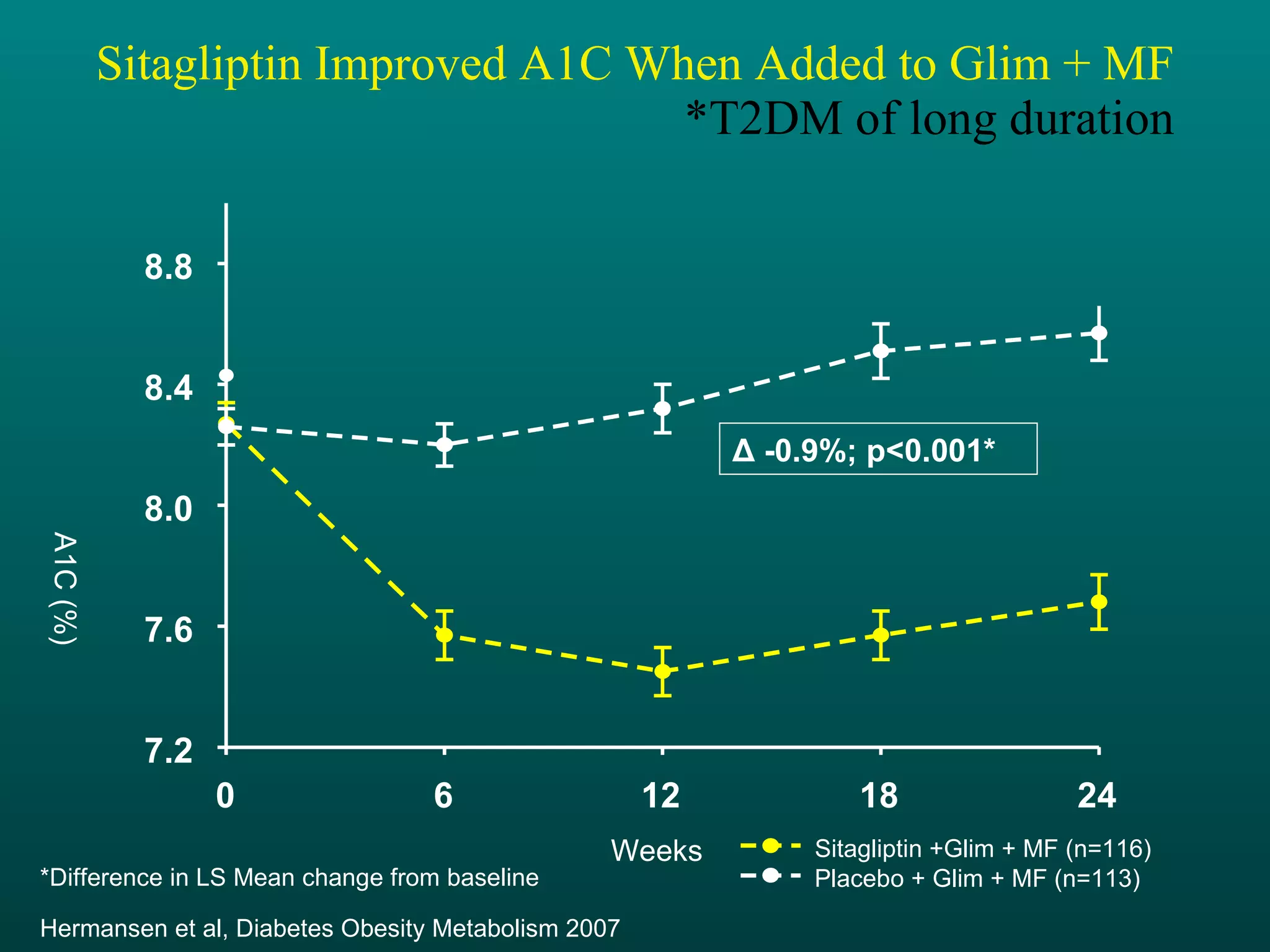
Sitagliptin Improved A1C When Added to Glim + MF *T2DM of long duration Δ  -0.9%; p<0.001* *Difference in LS Mean change from baseline  Hermansen et al, Diabetes Obesity Metabolism 2007 Weeks 0 6 12 18 24 A1C (%) 7.2 7.6 8.0 8.4 8.8 Sitagliptin +Glim + MF (n=116) Placebo + Glim + MF (n=113)
Will Sitagliptin work when Beta cell function is very poor?
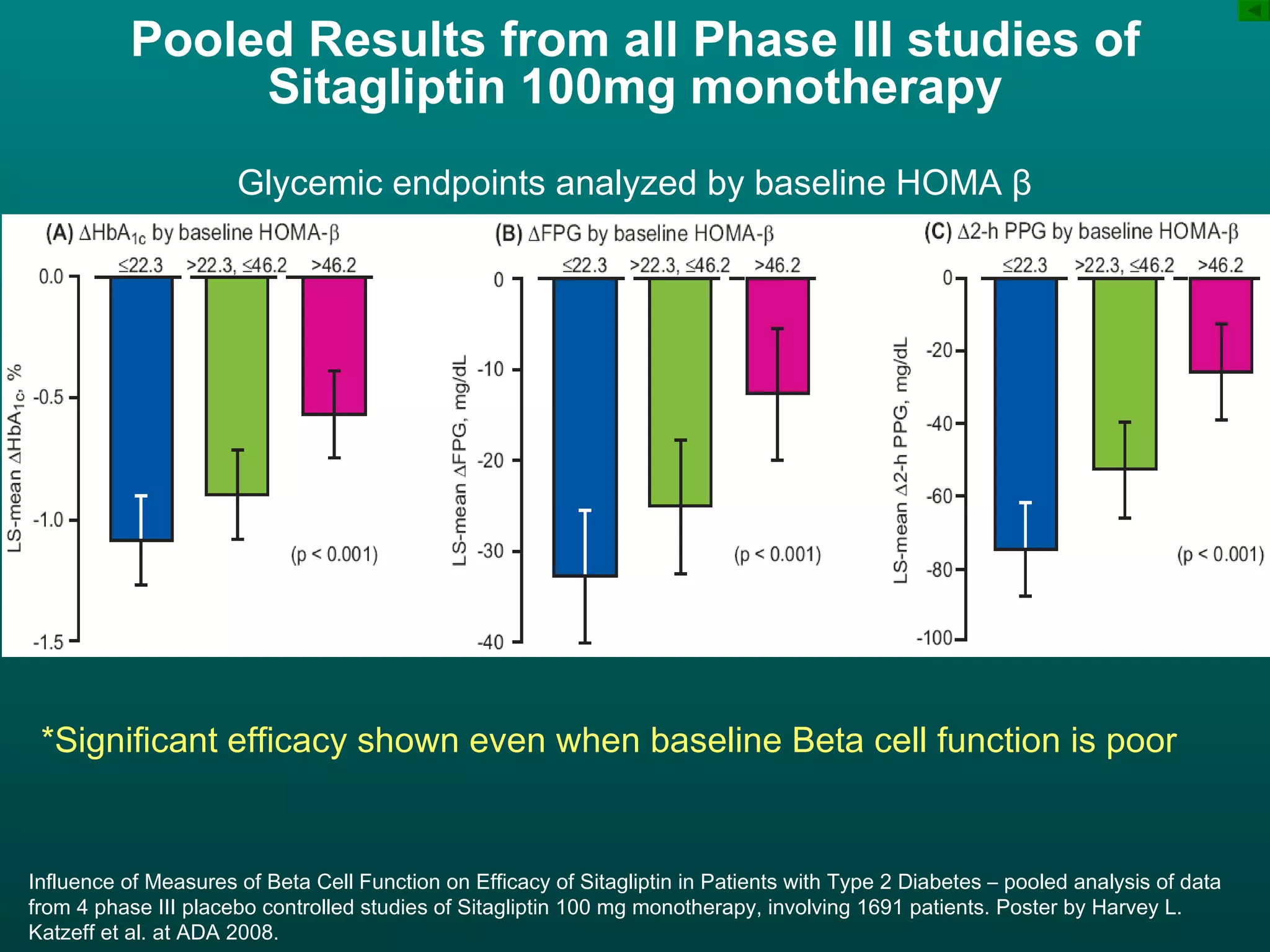
Influence of Measures of Beta Cell Function on Efficacy of Sitagliptin in Patients with Type 2 Diabetes – pooled analysis of data from 4 phase III placebo controlled studies of Sitagliptin 100 mg monotherapy, involving 1691 patients. Poster by Harvey L. Katzeff et al. at ADA 2008. Glycemic endpoints analyzed by baseline HOMA  β Pooled Results from all Phase III studies of Sitagliptin 100mg monotherapy *Significant efficacy shown even when baseline Beta cell function is poor
Any Indian Data with Sitagliptin?
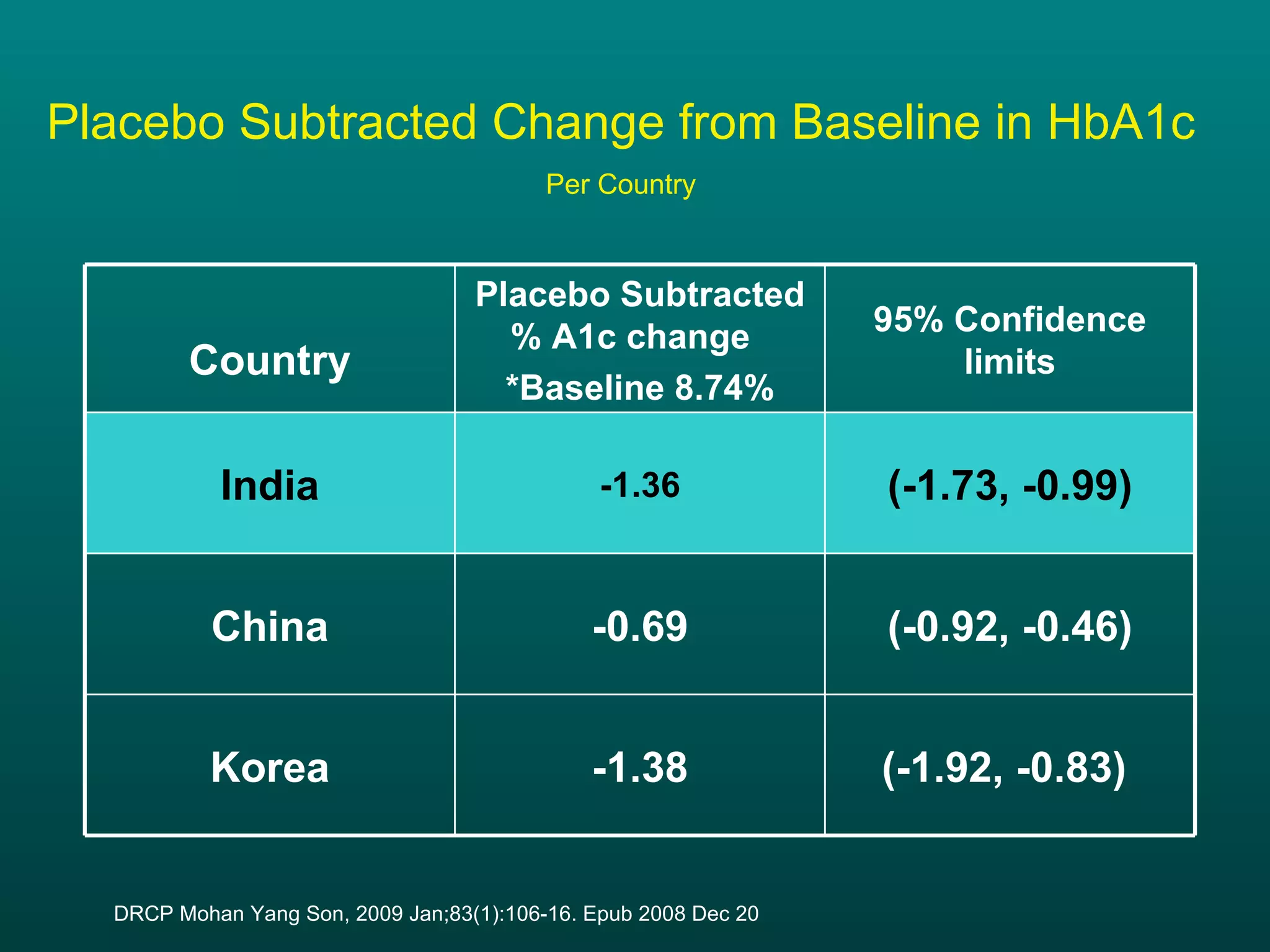
Placebo Subtracted Change from Baseline in HbA1c  Per Country   DRCP Mohan Yang Son, 2009 Jan;83(1):106-16. Epub 2008 Dec 20  (-1.92, -0.83)  -1.38 Korea (-0.92, -0.46) -0.69 China (-1.73, -0.99) -1.36 India 95% Confidence limits Placebo Subtracted % A1c change  *Baseline 8.74% Country
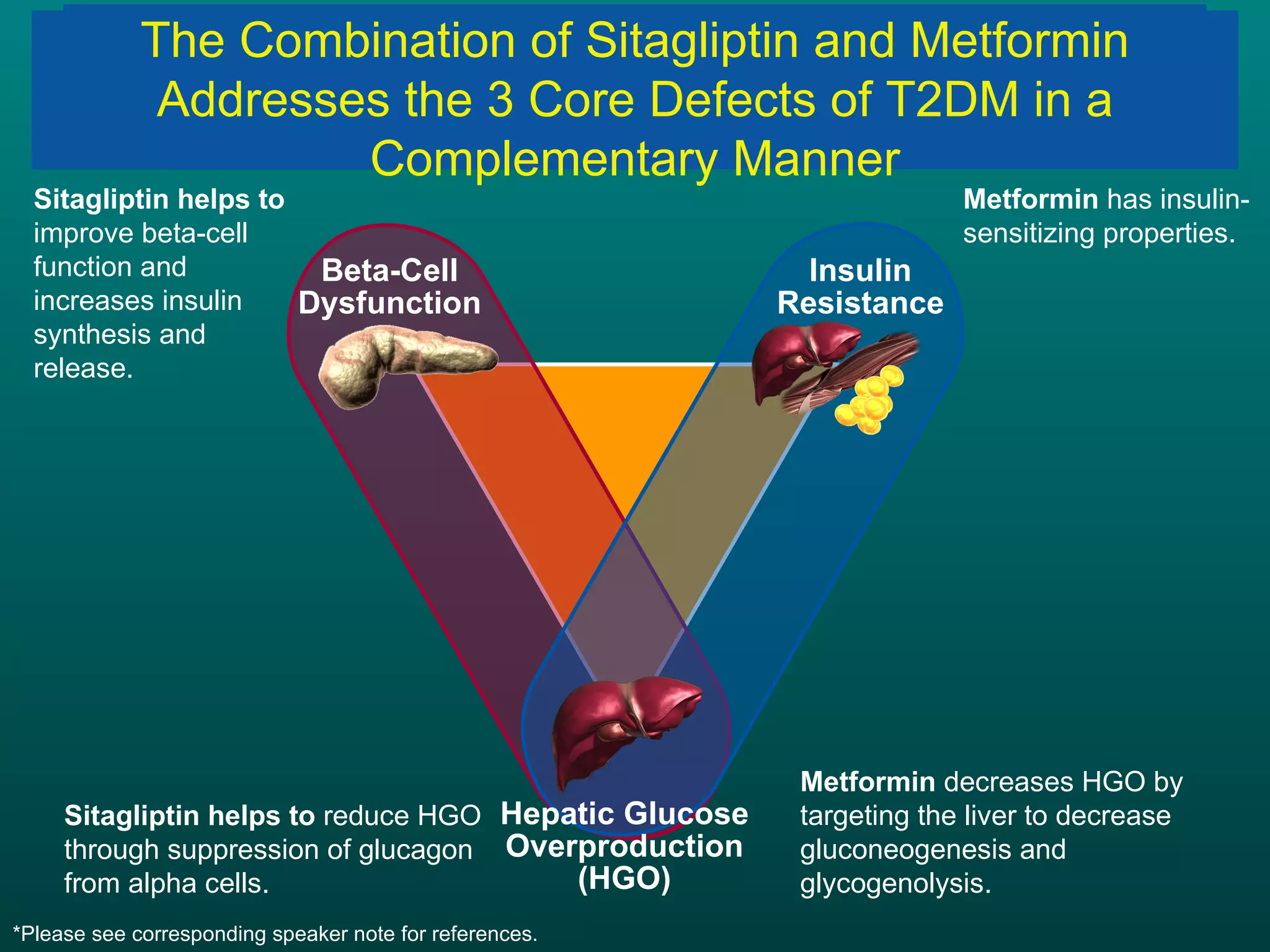
Sitagliptin Reduces Hyperglycemia Sitagliptin helps to  improve beta-cell function and increases insulin synthesis and release. Sitagliptin helps to  reduce HGO through suppression of glucagon from alpha cells. Metformin  decreases HGO by targeting the liver to decrease gluconeogenesis and glycogenolysis. Metformin  has insulin- sensitizing properties. Beta-Cell Dysfunction Hepatic Glucose Overproduction (HGO) Metformin Reduces Hyperglycemia The Combination of Sitagliptin and Metformin Addresses the 3 Core Defects of T2DM in a Complementary Manner Insulin Resistance *Please see corresponding speaker note for references.
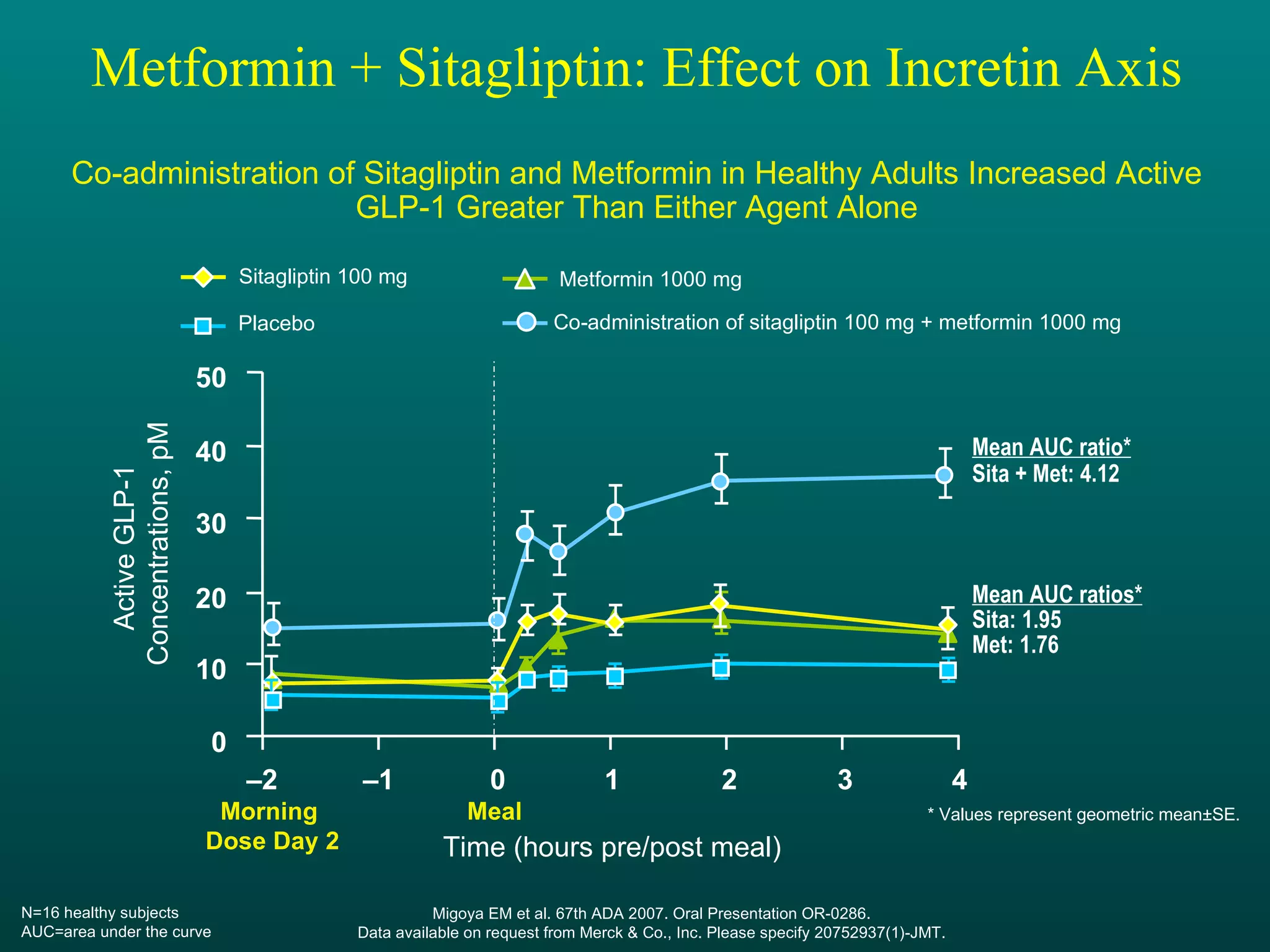
Co-administration of Sitagliptin and Metformin in Healthy Adults Increased Active GLP-1 Greater Than Either Agent Alone * Values represent geometric mean±SE. Placebo Metformin 1000 mg  Sitagliptin 100 mg  Co-administration of sitagliptin 100 mg + metformin 1000 mg  Mean AUC ratio* Sita + Met: 4.12 Mean AUC ratios* Sita: 1.95  Met: 1.76 – 2 0 10 20 30 40 50 – 1 0 1 2 3 4 Active GLP-1  Concentrations, pM Meal Morning  Dose Day 2 Time (hours pre/post meal) N=16 healthy subjects AUC=area under the curve Migoya EM et al. 67th ADA 2007. Oral Presentation OR-0286. Data available on request from Merck & Co., Inc. Please specify 20752937(1)-JMT. Metformin + Sitagliptin: Effect on Incretin Axis
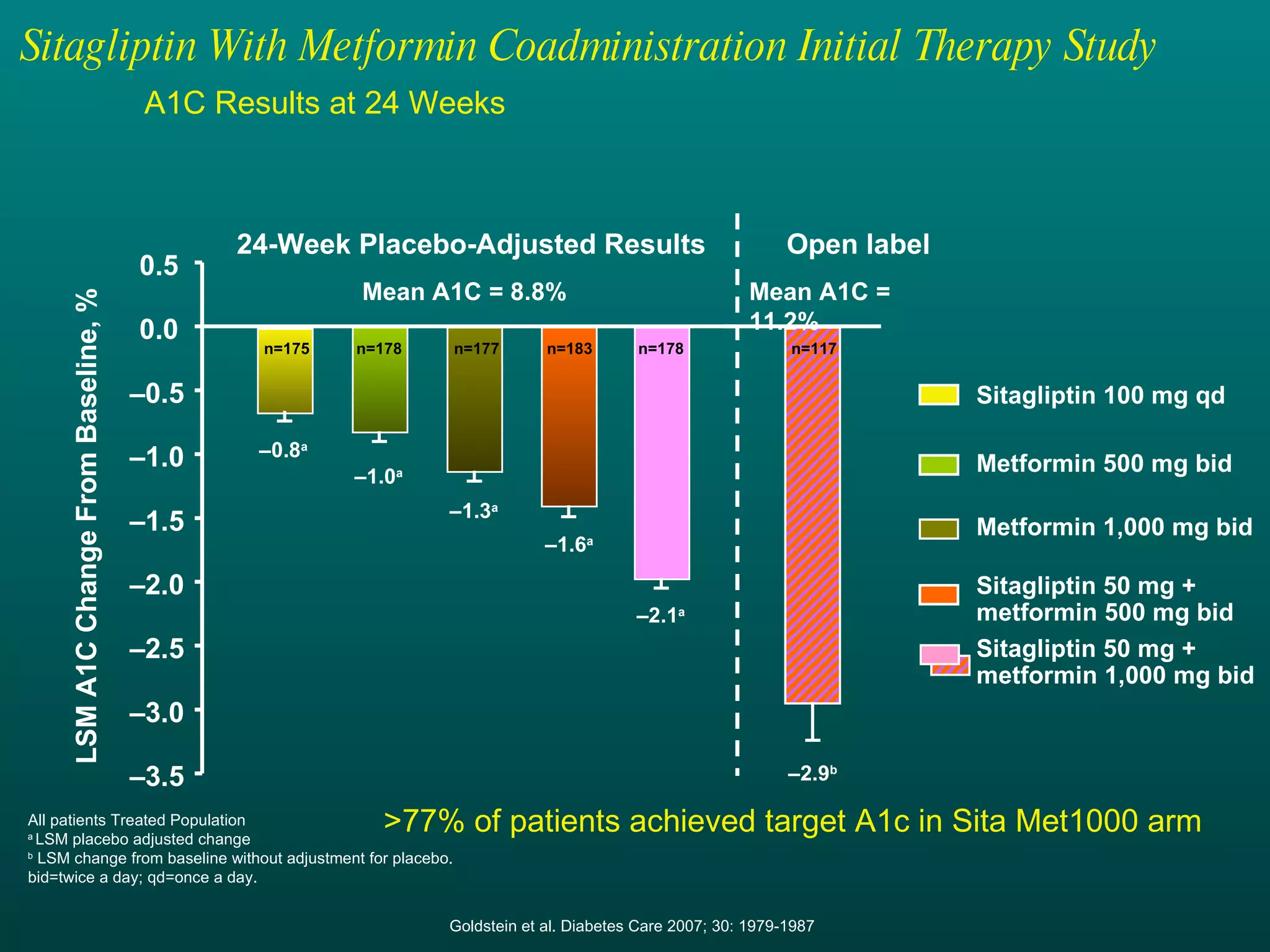
A1C Results at 24 Weeks Mean A1C = 8.8% Sitagliptin 50 mg +  metformin 1,000 mg bid  Metformin 1,000 mg bid  Sitagliptin 100 mg qd  Sitagliptin 50 mg + metformin 500 mg bid  Metformin 500 mg bid  LSM A1C Change From Baseline, % – 3.5 – 3.0 – 2.5 – 2.0 – 1.5 – 1.0 – 0.5 0.0 0.5 n=178 n=177 n=183 n=178 n=175 – 0.8 a – 1.0 a – 1.3 a – 1.6 a – 2.1 a Open label n=117 – 2.9 b All patients Treated Population a  LSM placebo adjusted change  b  LSM change from baseline without adjustment for placebo. bid=twice a day; qd=once a day. 24-Week Placebo-Adjusted Results Mean A1C = 11.2% Sitagliptin With Metformin Coadministration Initial Therapy Study  Goldstein et al. Diabetes Care 2007; 30: 1979-1987 >77% of patients achieved target A1c in Sita Met1000 arm
Efficacy with Other Sensitizers?
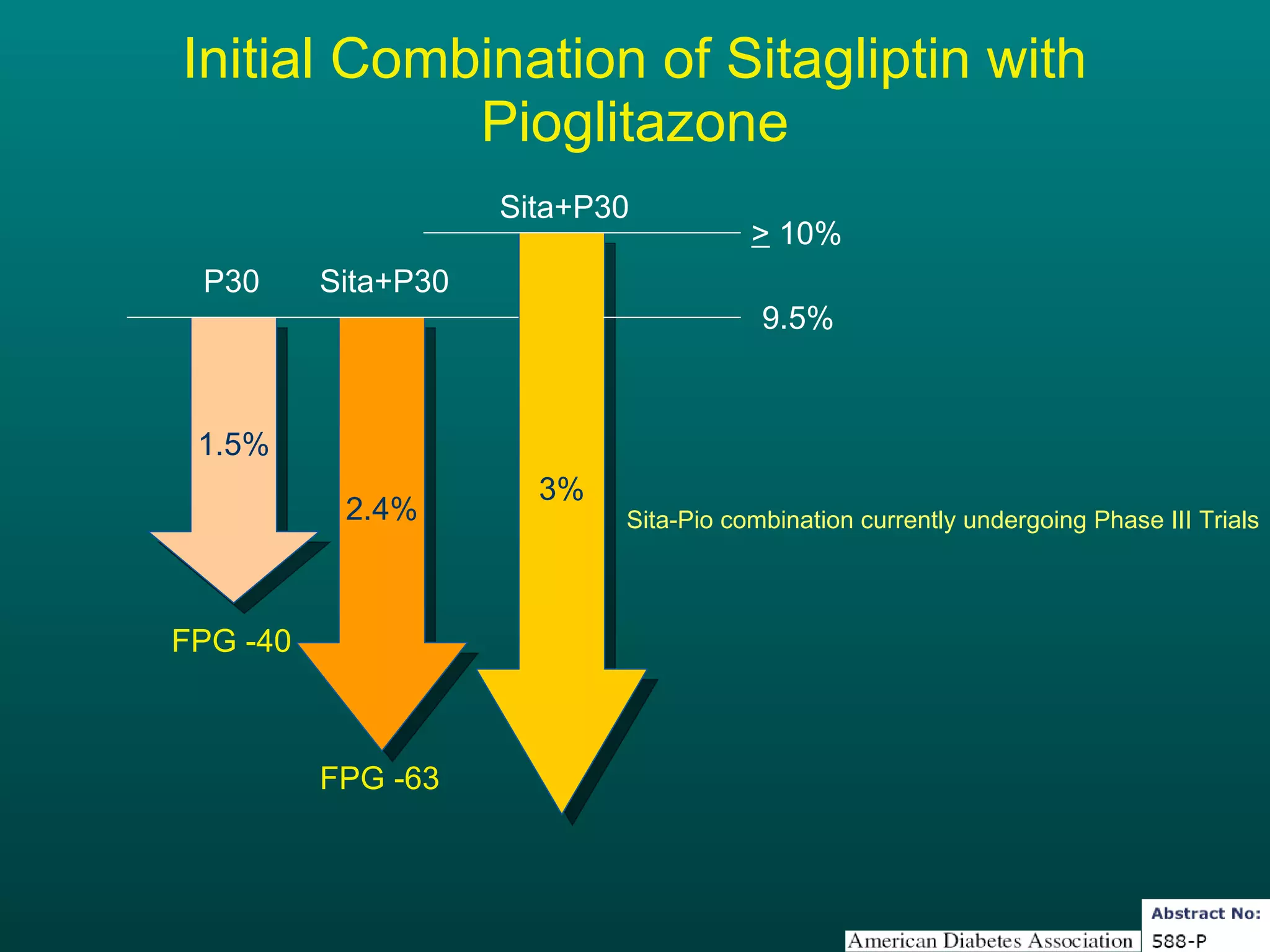
Initial Combination of Sitagliptin with Pioglitazone 2.4% 1.5% 3% >  10% FPG -63 FPG -40 Sita+P30 P30 Sita+P30 9.5% Sita-Pio combination currently undergoing Phase III Trials
For How Long Will Sitagliptin Continue to work?
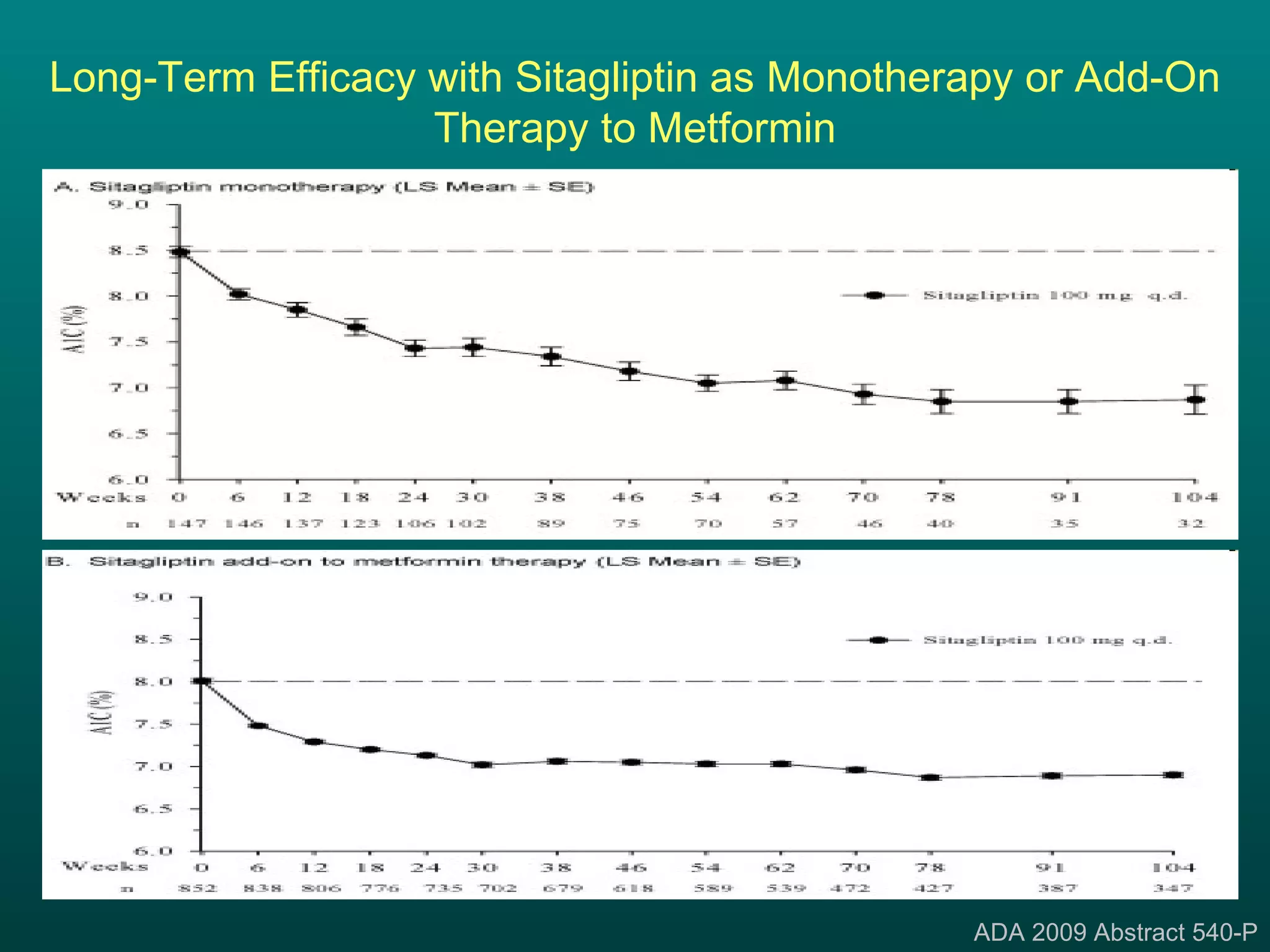
Long-Term Efficacy with Sitagliptin as Monotherapy or Add-On Therapy to Metformin ADA 2009 Abstract 540-P
Can Sitagliptin be used with Insulin?
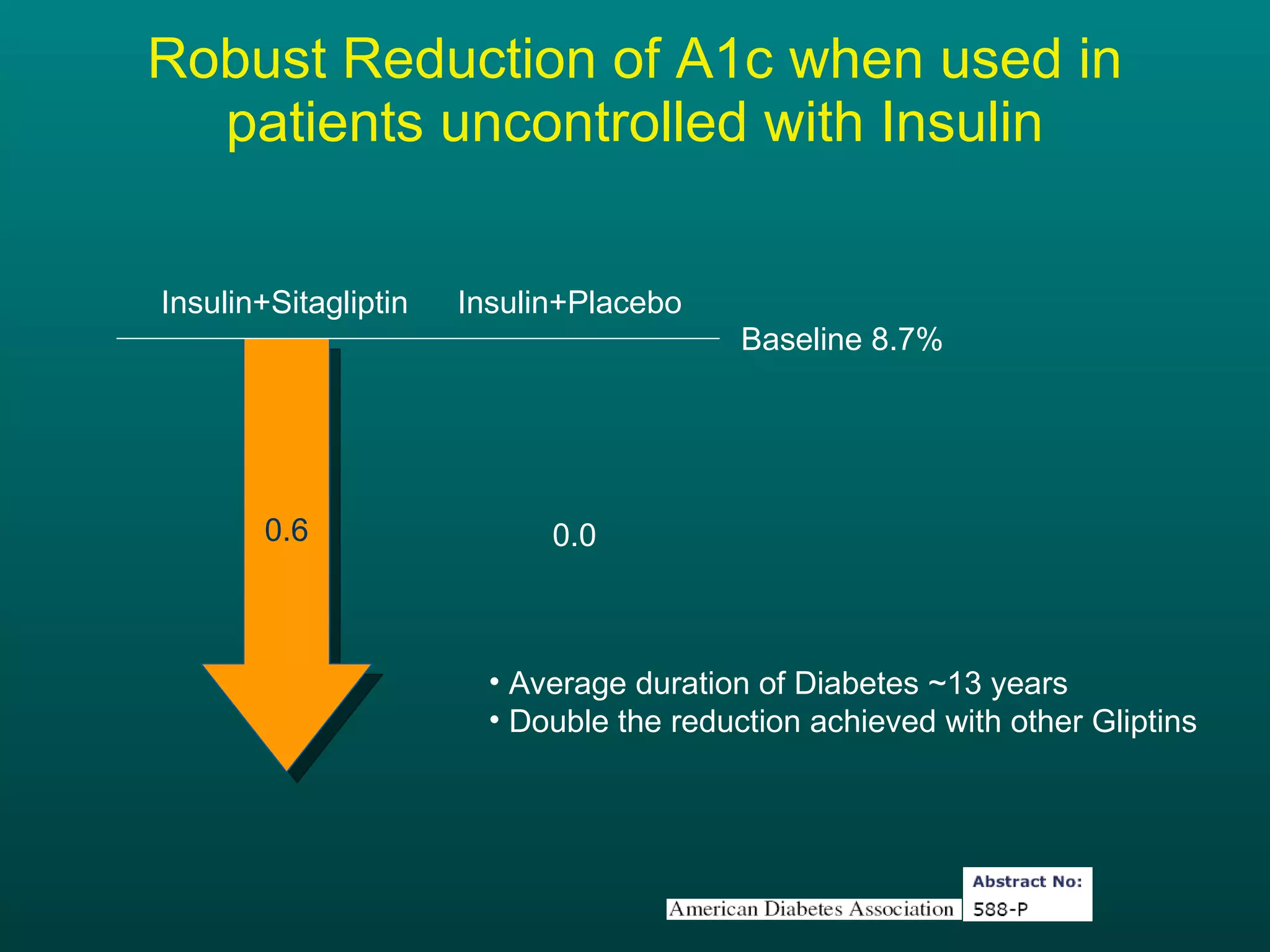
Robust Reduction of A1c when used in patients uncontrolled with Insulin 0.6 0.0 Insulin+Sitagliptin Insulin+Placebo Average duration of Diabetes ~13 years Double the reduction achieved with other Gliptins Baseline 8.7%
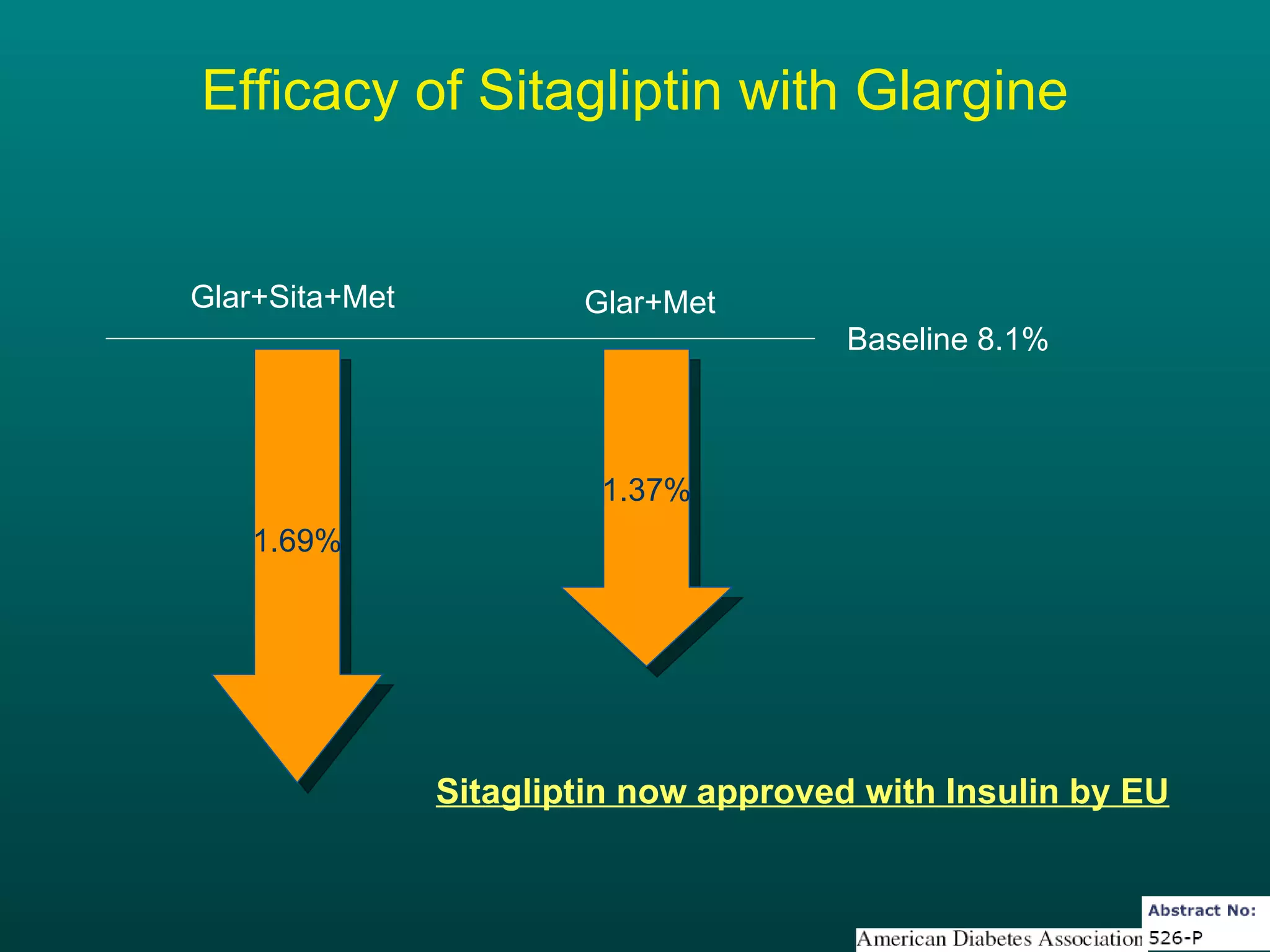
Efficacy of Sitagliptin with Glargine 1.69% Baseline 8.1% Glar+Sita+Met Glar+Met 1.37% Sitagliptin now approved with Insulin by EU
How Safe is Sitagliptin?
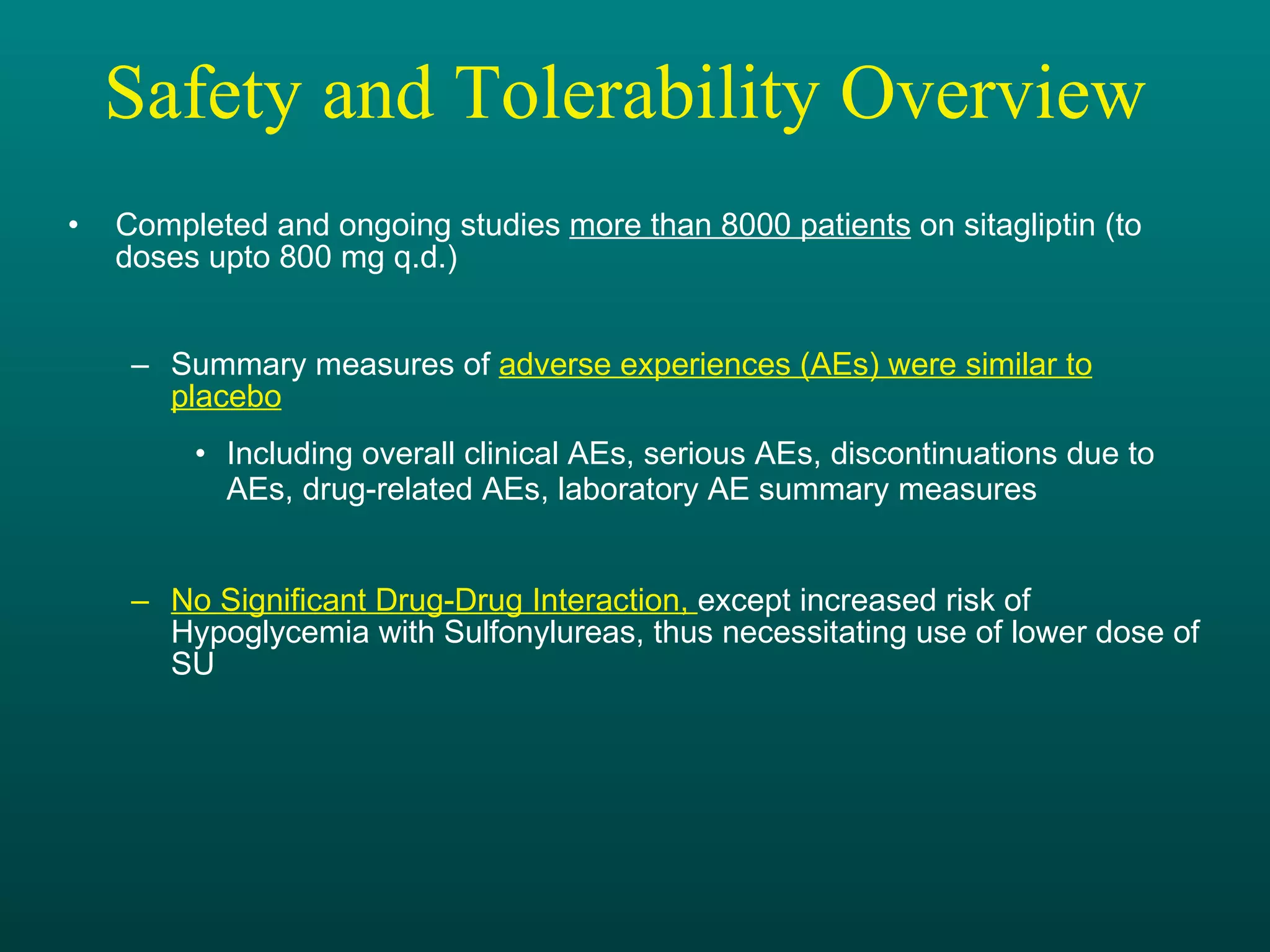
Safety and Tolerability Overview  Completed and ongoing studies  more than 8000 patients  on sitagliptin (to doses upto 800 mg q.d.) Summary measures of  adverse experiences (AEs) were similar to placebo Including overall clinical AEs, serious AEs, discontinuations due to  AEs, drug-related AEs, laboratory AE summary measures No Significant Drug-Drug Interaction,  except increased risk of Hypoglycemia with Sulfonylureas, thus necessitating use of lower dose of SU
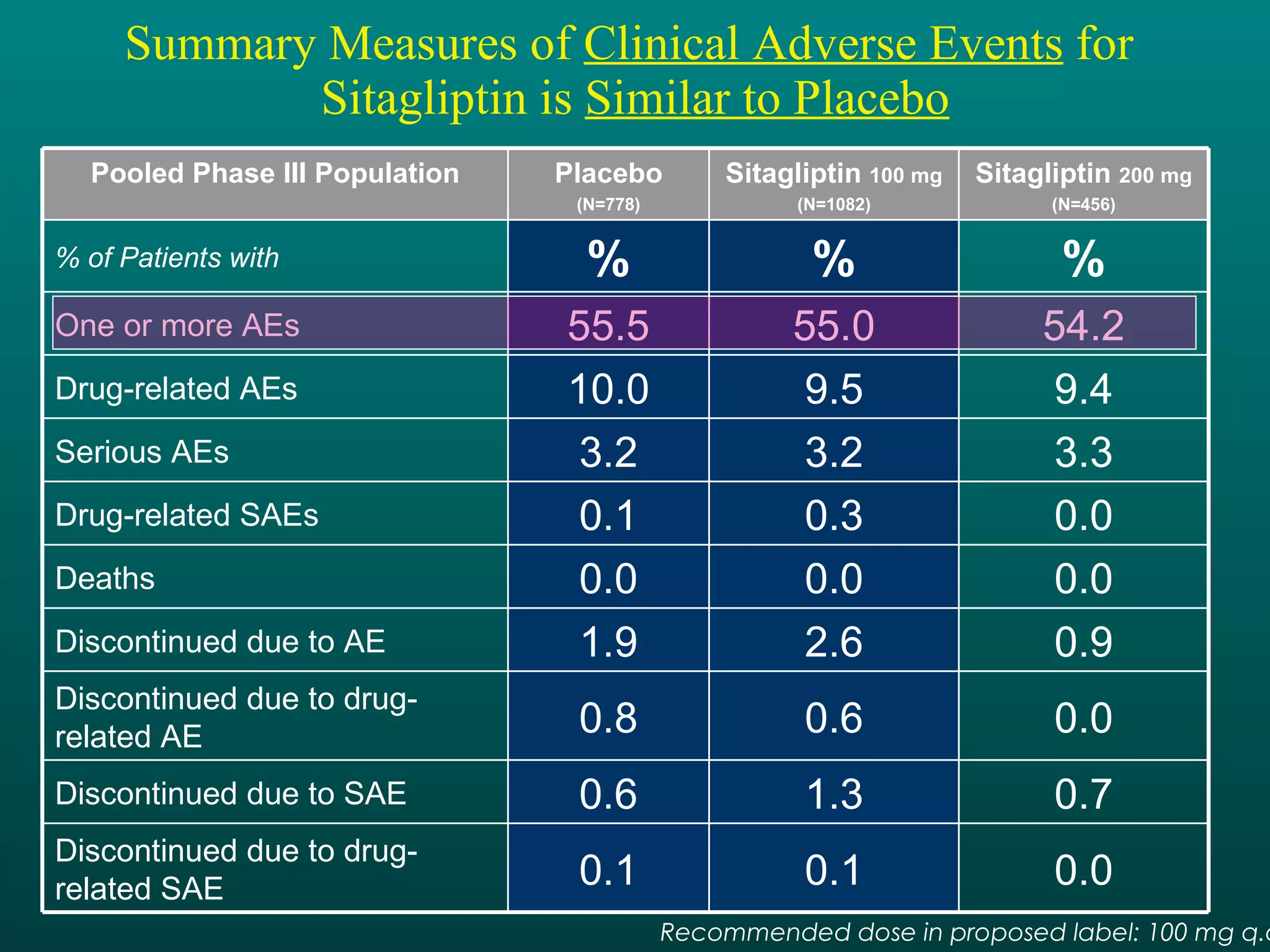
Summary Measures of  Clinical Adverse Events  for  Sitagliptin is  Similar to Placebo Recommended dose in proposed label: 100 mg q.d. 0.1 0.6 0.8 1.9 0.0 0.1 3.2 10.0 55.5 % Placebo (N=778) 0.0 0.1 Discontinued due to drug-related SAE 0.7 1.3 Discontinued due to SAE 0.0 0.6 Discontinued due to drug-related AE 0.9 2.6 Discontinued due to AE 0.0 0.0 Deaths 0.0 0.3 Drug-related SAEs 3.3 3.2 Serious AEs 9.4 9.5 Drug-related AEs 54.2 55.0 One or more AEs % % % of Patients with Sitagliptin  200 mg (N=456) Sitagliptin  100 mg (N=1082) Pooled Phase III Population
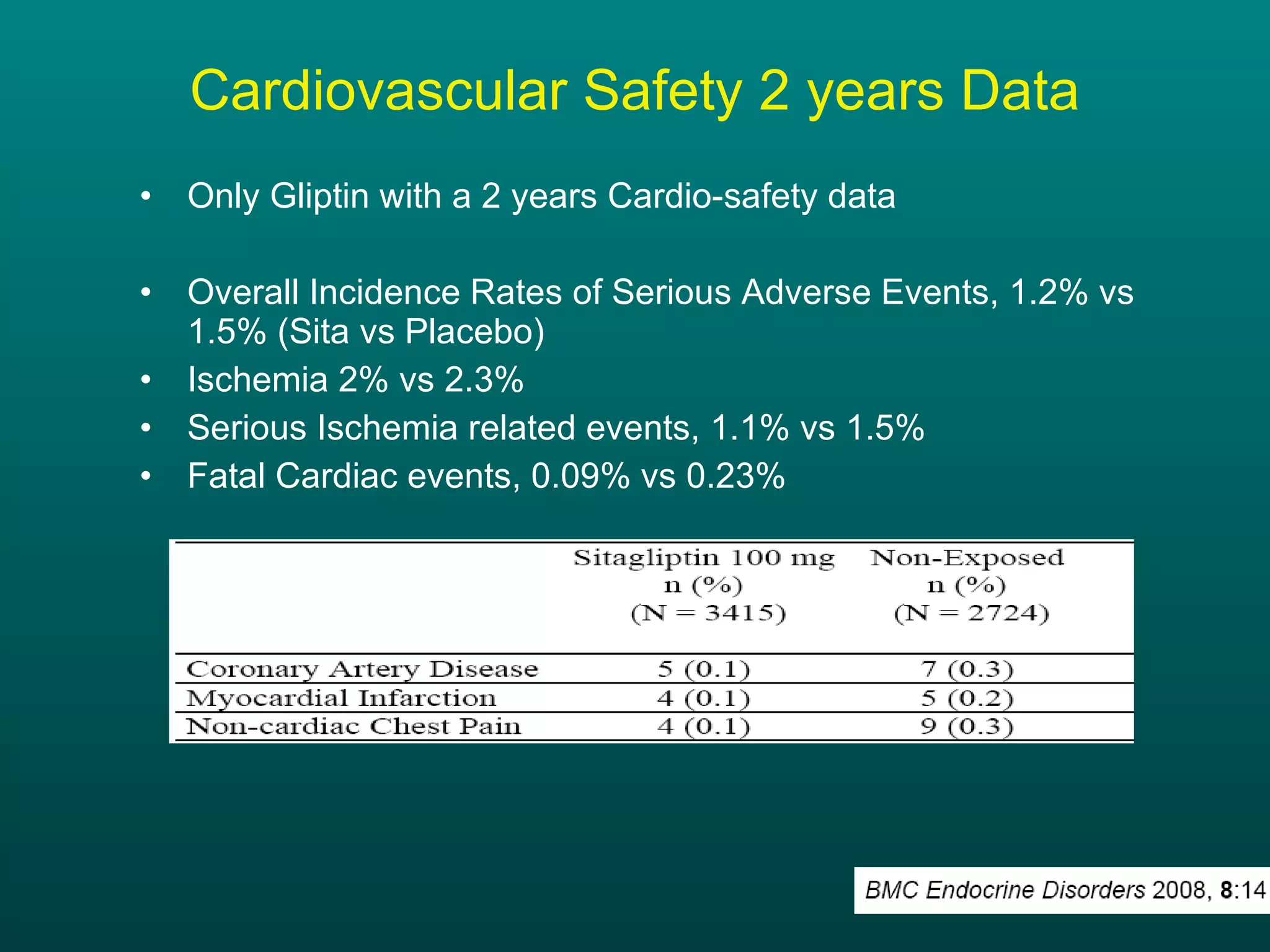
Cardiovascular Safety 2 years Data Only Gliptin with a 2 years Cardio-safety data Overall Incidence Rates of Serious Adverse Events, 1.2% vs 1.5% (Sita vs Placebo) Ischemia 2% vs 2.3% Serious Ischemia related events, 1.1% vs 1.5% Fatal Cardiac events, 0.09% vs 0.23%
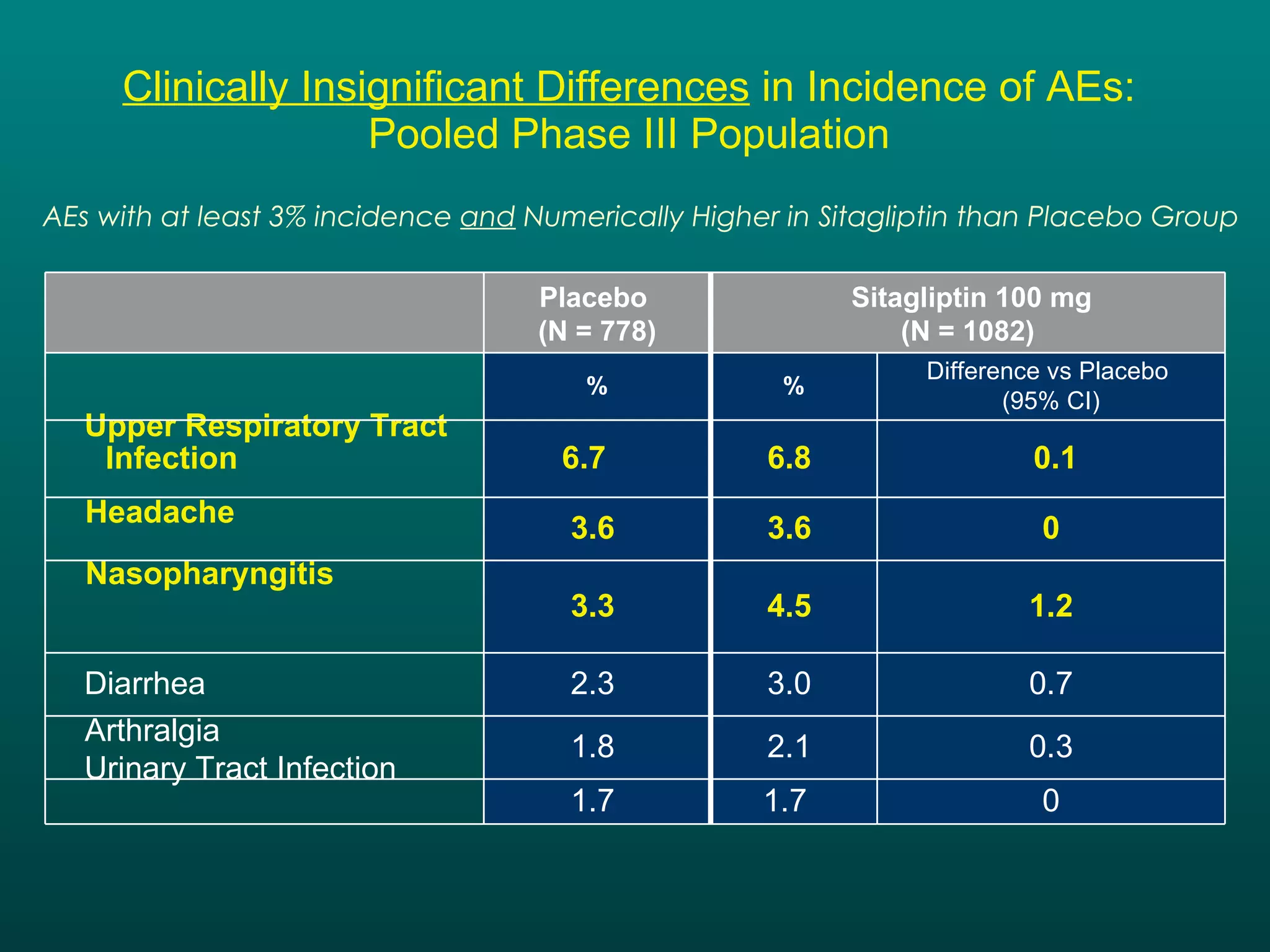
Clinically Insignificant Differences  in Incidence of AEs:  Pooled Phase III Population  AEs with at least 3% incidence  and  Numerically Higher in Sitagliptin than Placebo Group Difference  vs Placebo  (95% CI) 0.1 0 1.2 0.7 0.3 0 3.0  2.3  Diarrhea 3.6  3.6  Headache  6.8  6.7  Upper Respiratory Tract Infection  1.7  1.8  3.3  %  Placebo   (N = 778)  1.7  Urinary Tract Infection  2.1  Arthralgia  4.5  Nasopharyngitis  %  Sitagliptin 100 mg  (N = 1082)
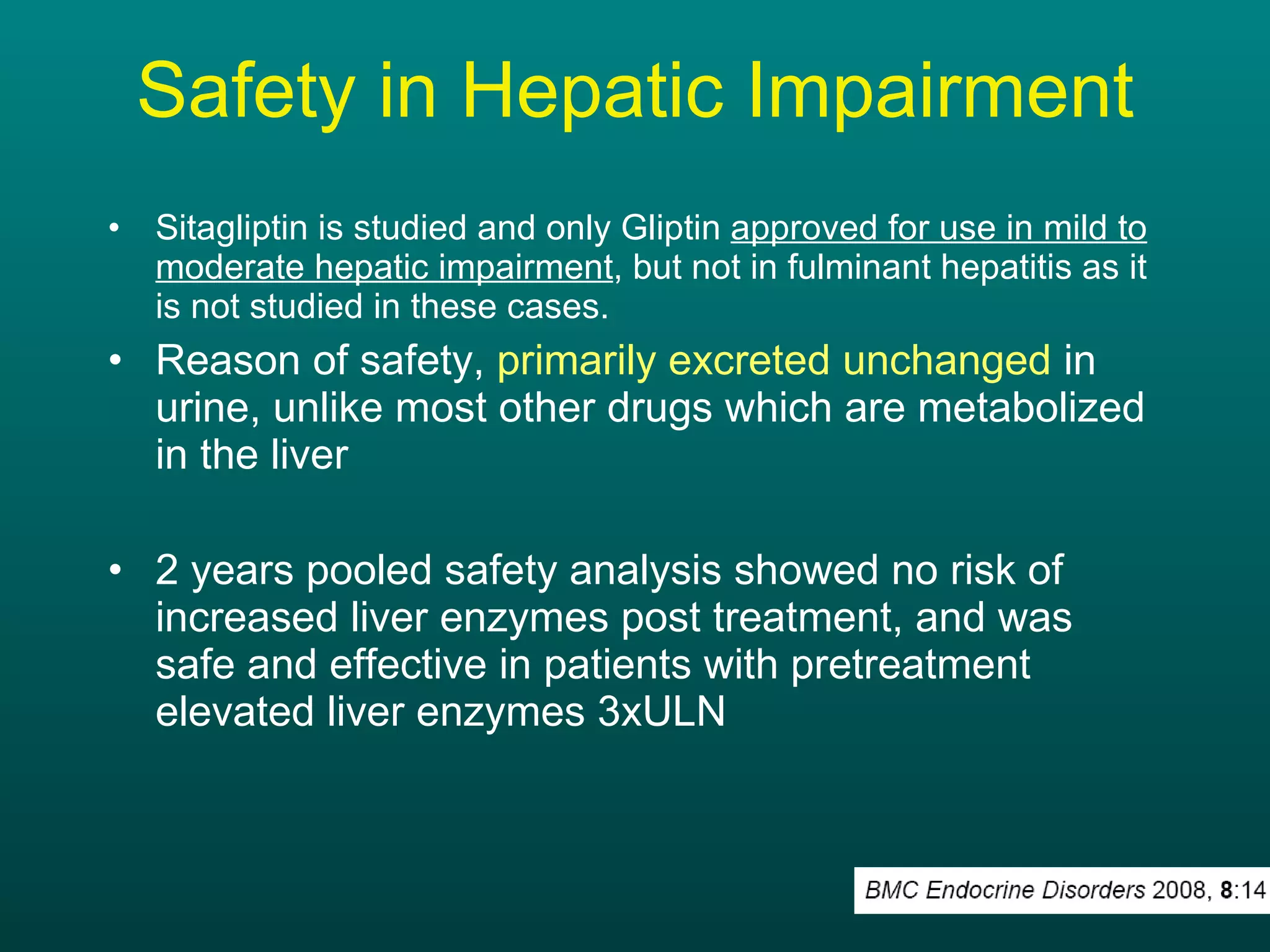
Safety in Hepatic Impairment Sitagliptin is studied and only Gliptin  approved for use in mild to moderate hepatic impairment , but not in fulminant hepatitis as it is not studied in these cases. Reason of safety,  primarily excreted unchanged  in urine, unlike most other drugs which are metabolized in the liver 2 years pooled safety analysis showed no risk of increased liver enzymes post treatment, and was safe and effective in patients with pretreatment elevated liver enzymes 3xULN
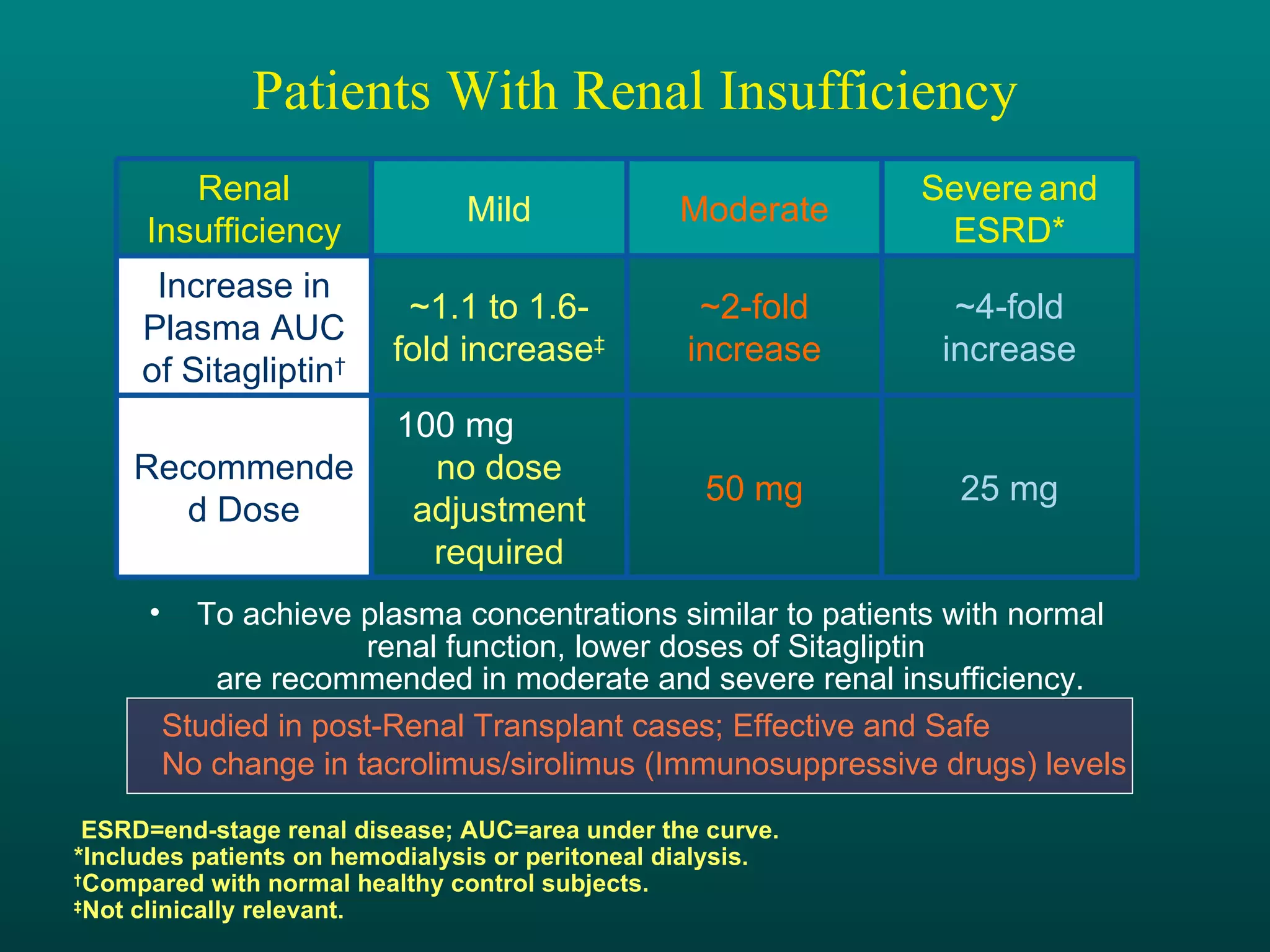
Patients With Renal Insufficiency To achieve plasma concentrations similar to patients with normal renal function, lower doses of Sitagliptin  are recommended in moderate and severe renal insufficiency. ESRD=end-stage renal disease; AUC=area under the curve. *Includes patients on hemodialysis or peritoneal dialysis. † Compared with normal healthy control subjects. ‡ Not clinically relevant. Studied in post-Renal Transplant cases; Effective and Safe No change in tacrolimus/sirolimus (Immunosuppressive drugs) levels Recommended Dose Increase in Plasma AUC of Sitagliptin † Renal Insufficiency 25 mg 50 mg 100 mg   no dose adjustment required Severe   and ESRD* Moderate Mild ~4-fold increase ~2-fold increase ~1.1 to 1.6-fold increase ‡
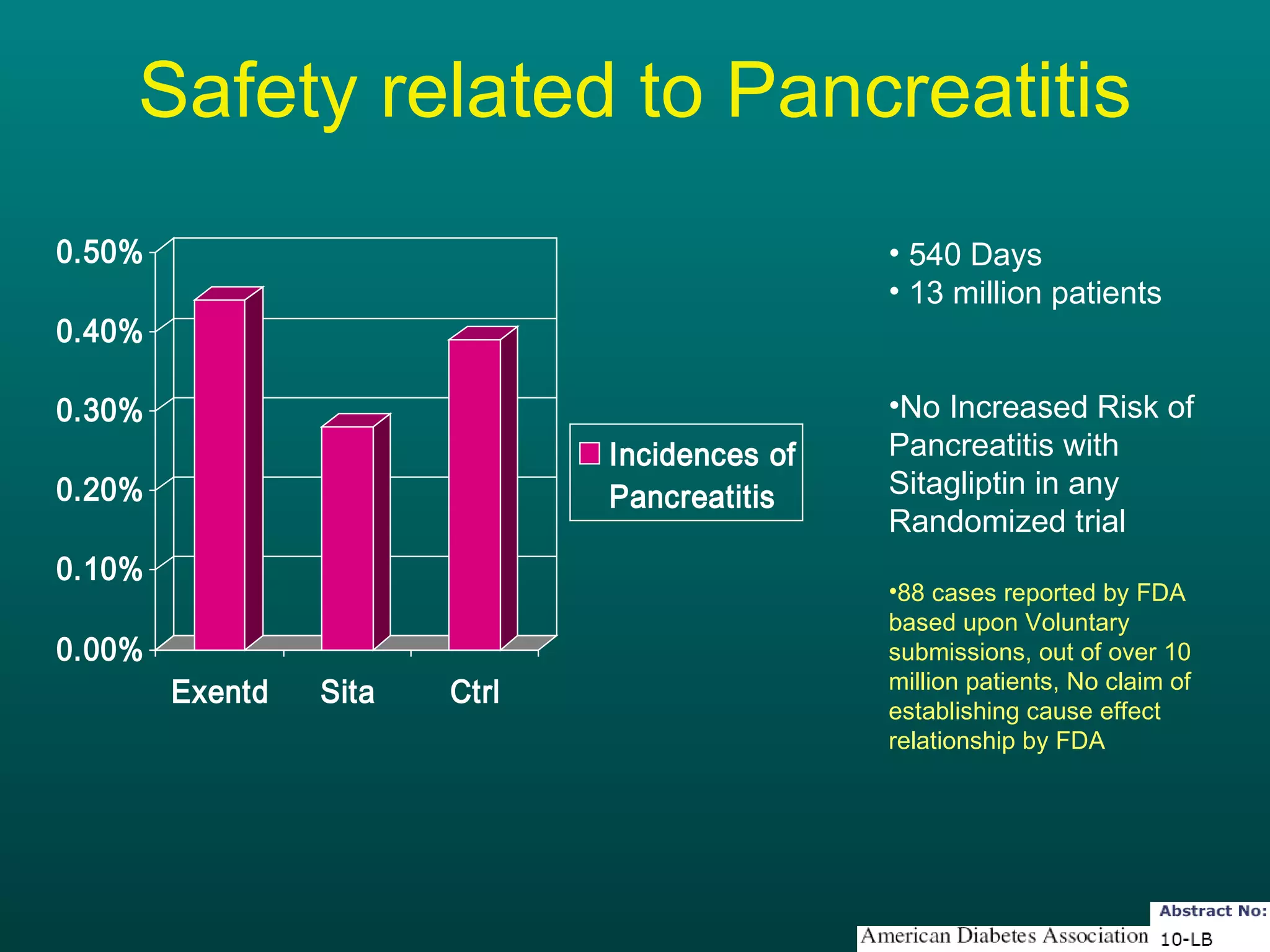
Safety related to Pancreatitis 540 Days 13 million patients No Increased Risk of Pancreatitis with Sitagliptin in any Randomized trial 88 cases reported by FDA based upon Voluntary submissions, out of over 10 million patients, No claim of establishing cause effect relationship by FDA
Hypoglycemia; How Safe is Sitagliptin
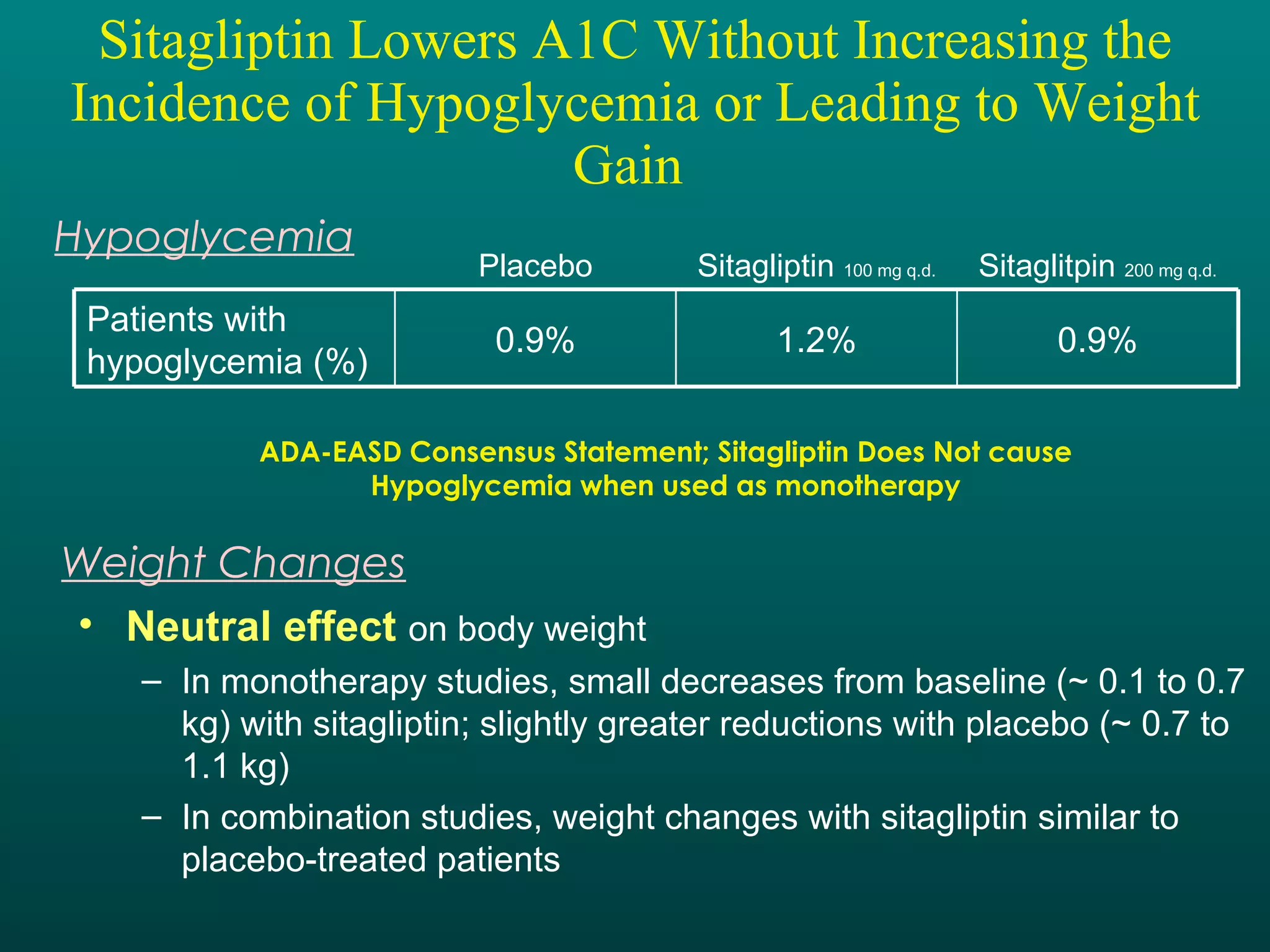
Sitagliptin Lowers A1C Without Increasing the Incidence of Hypoglycemia or Leading to Weight Gain  Neutral effect   on body weight In monotherapy studies, small decreases from baseline (~ 0.1 to 0.7 kg) with sitagliptin; slightly greater reductions with placebo (~ 0.7 to 1.1 kg) In combination studies, weight changes with sitagliptin similar to placebo-treated patients ADA-EASD Consensus Statement; Sitagliptin Does Not cause Hypoglycemia when used as monotherapy Hypoglycemia Weight Changes 0.9% 1.2% 0.9% Patients with hypoglycemia (%) Sitaglitpin  200 mg q.d. Sitagliptin  100 mg q.d. Placebo
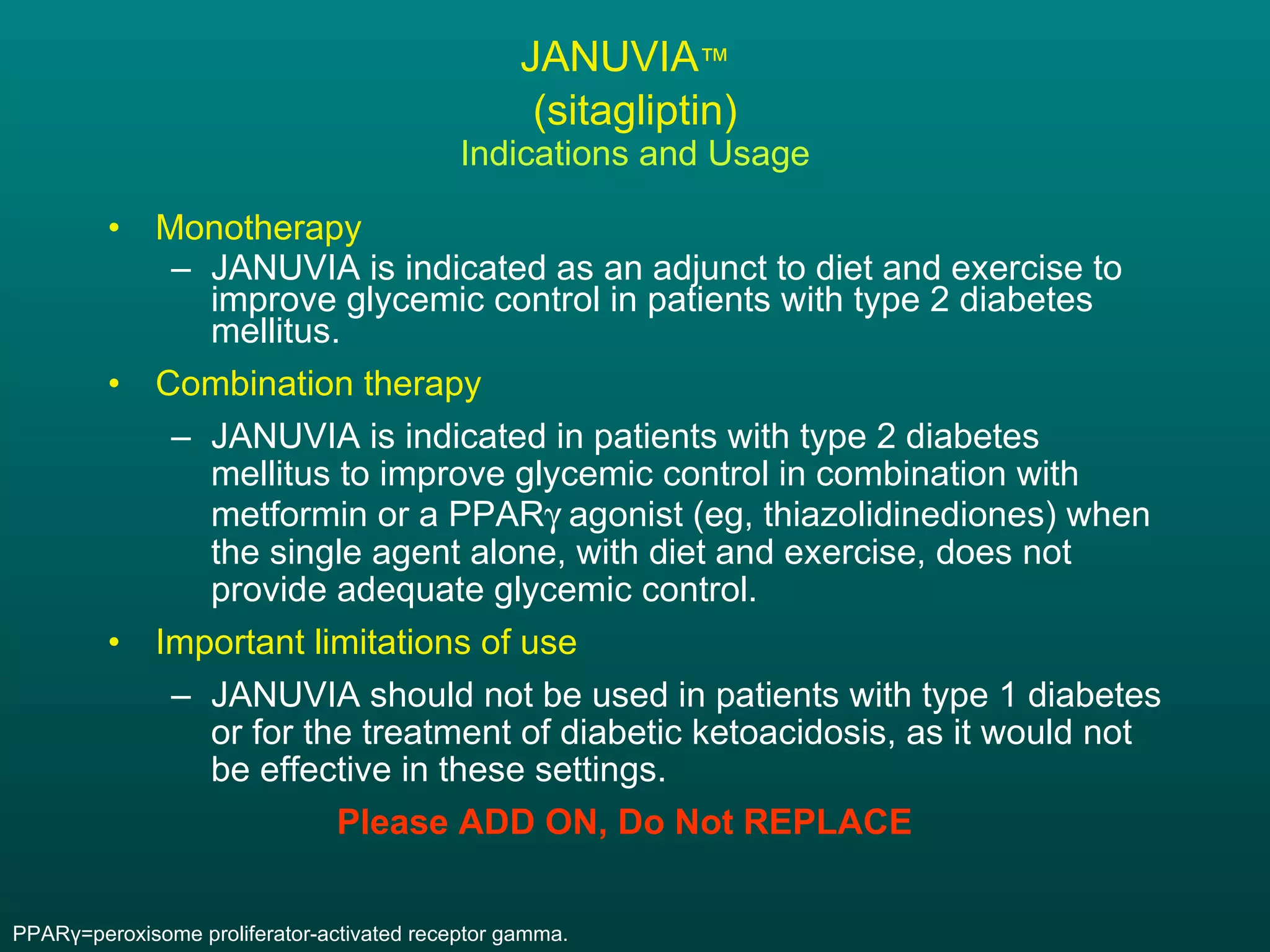
JANUVIA ™   (sitagliptin) Indications and Usage Monotherapy JANUVIA is indicated as an adjunct to diet and exercise to improve glycemic control in patients with type 2 diabetes mellitus. Combination therapy JANUVIA is indicated in patients with type 2 diabetes mellitus to improve glycemic control in combination with metformin or a PPAR   agonist (eg, thiazolidinediones) when the single agent alone, with diet and exercise, does not provide adequate glycemic control. Important limitations of use JANUVIA should not be used in patients with type 1 diabetes or for the treatment of diabetic ketoacidosis, as it would not be effective in these settings. Please ADD ON, Do Not REPLACE PPAR γ =peroxisome proliferator-activated receptor gamma.
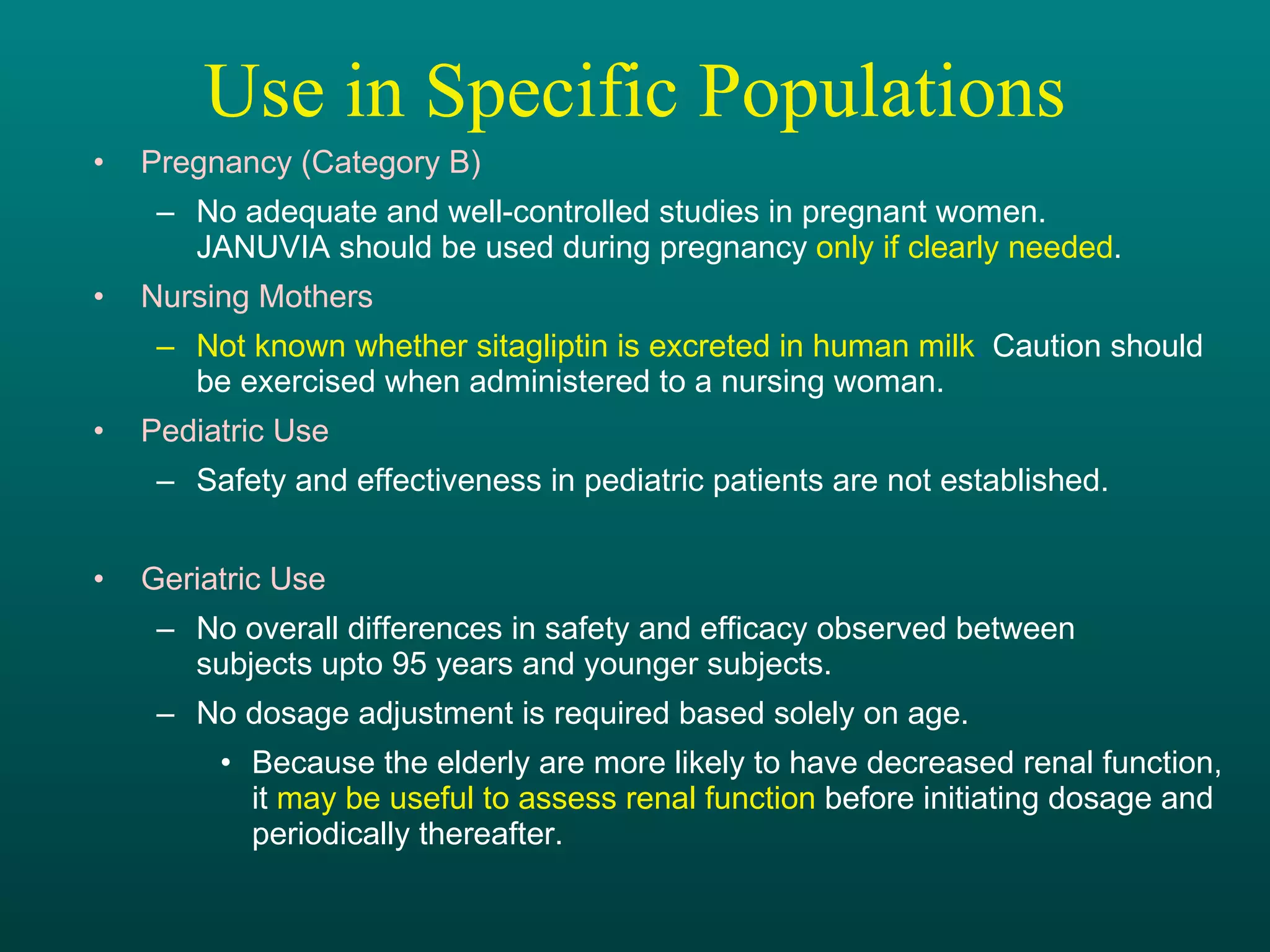
Use in Specific Populations Pregnancy (Category B) No adequate and well-controlled studies in pregnant women.  JANUVIA should be used during pregnancy  only if clearly needed . Nursing Mothers Not known whether sitagliptin is excreted in human milk .  Caution should  be exercised when administered to a nursing woman. Pediatric Use Safety and effectiveness in pediatric patients are not established. Geriatric Use No overall differences in safety and efficacy observed between  subjects upto 95 years and younger subjects. No dosage adjustment is required based solely on age. Because the elderly are more likely to have decreased renal function,  it  may be useful to assess renal function  before initiating dosage and periodically thereafter.
Dosage and Administration Usual Dosing for JANUVIA™ (sitagliptin phosphate)* Patients With Renal Insufficiency* ,† *JANUVIA can be taken with or without food.  † Patients with mild renal insufficiency—100 mg once daily. ‡ ESRD = end-stage renal disease requiring hemodialysis or peritoneal dialysis. CrCl  <30 mL/min (~Serum Cr levels [mg/dL] Men: >3.0; Women: >2.5)  CrCl   30 to <50 mL/min (~Serum Cr levels [mg/dL] Men: >1.7–≤3.0;  Women: >1.5–≤2.5) Severe and ESRD ‡ Moderate 25 mg once daily 50 mg once daily The recommended dose of JANUVIA is  100 mg once daily   as monotherapy or as combination therapy with  metformin or a PPAR   agonist.
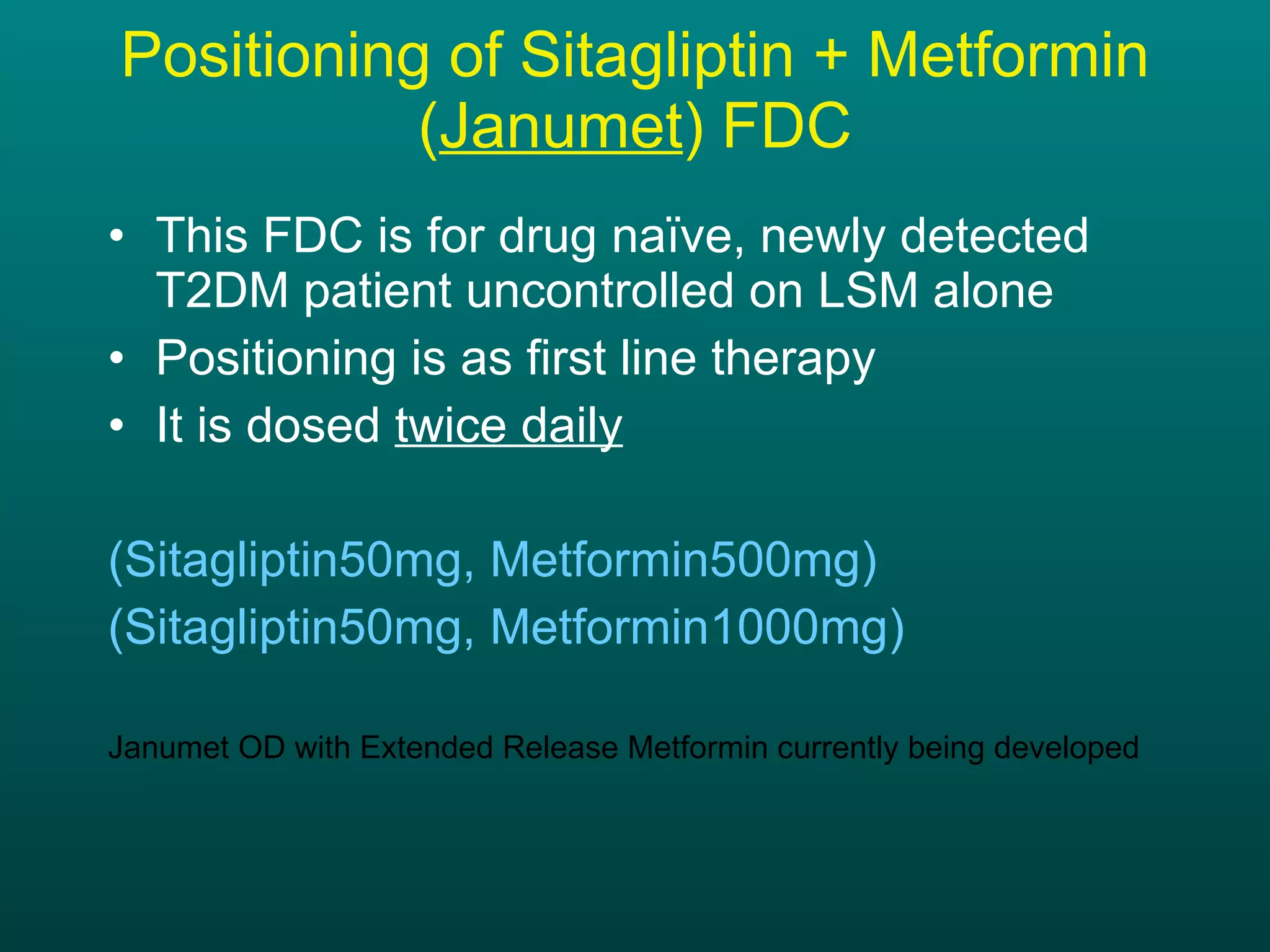
Positioning of Sitagliptin + Metformin ( Janumet ) FDC This FDC is for drug naïve, newly detected T2DM patient uncontrolled on LSM alone Positioning is as first line therapy It is dosed  twice daily (Sitagliptin50mg, Metformin500mg) (Sitagliptin50mg, Metformin1000mg) Janumet OD with Extended Release Metformin currently being developed
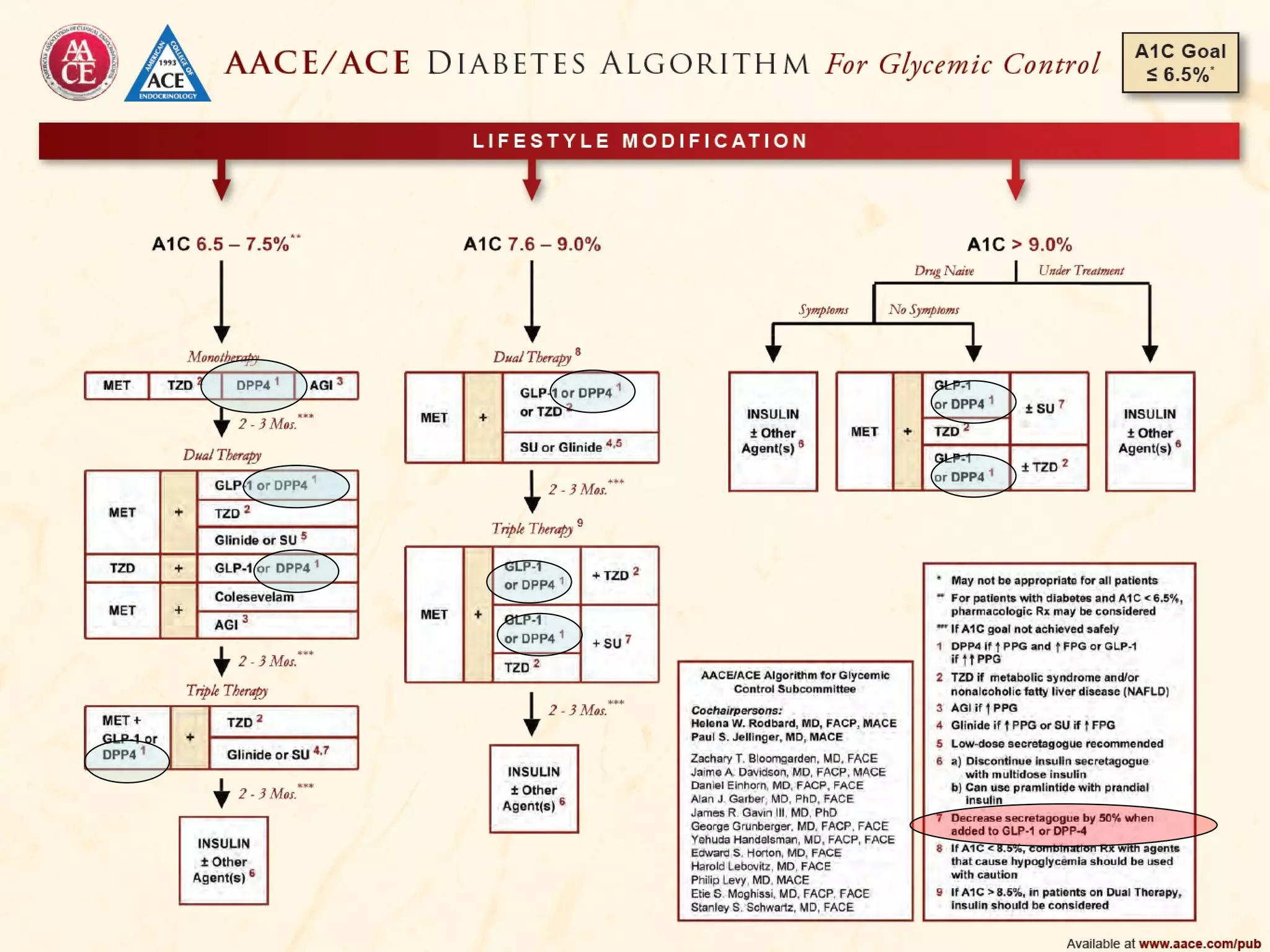
DPP4 Inhibitors, position in Guidelines
 
Thank You!

Dr KA Apicon Master Slide Presentation

  • 1.
    Current Evidences withSitagliptin Role of DPP4 inhibition in the management of Type 2 Diabetes
  • 2.
    Fasting State Bloodglucose tends to fall Insulin Secretion lowered Increased Glucagon secretion from Alpha cells Increased Hepatic Glucose output Results Euglycemia Porte D Jr, Kahn SE. Clin Invest Med . 1995;18:247–254
  • 3.
    Postprandial State RisingBlood Glucose Insulin secretion Increases, Glucagon decreases Increased Peripheral uptake of Glucose Decreased Hepatic Glucose output Results Euglycemia Porte D Jr, Kahn SE. Clin Invest Med . 1995;18:247–254
  • 4.
    Decreased Insulin, ElevatedGlucagon, and Hyperglycemia in Type 2 Diabetes Adapted with permission in 2006 from Müller WA et al. N Engl J Med . 1970;283:109–115. Copyright © 1970 Massachusetts Medical Society. All rights reserved. Glucose, mg % Insulin, μ /mL Glucagon, μ /mL Minutes 360 330 300 270 240 110 80 Meal 120 90 60 30 0 – 60 0 60 120 180 240 140 130 120 110 100 90 Healthy subjects (n=11) Type 2 diabetes (n=12)
  • 5.
    Is Insulin Secretionfrom the beta cells a function of ambient glucose level? A look at the Intestinal Factors in Insulin Secretion; The Incretins
  • 6.
    The Incretin Effectin Subjects Without and With Type 2 Diabetes IR=Immune Reactive. Adapted from Nauck M et al. Diabetologia . 1986;29:46–52. Copyright © 1986 Springer-Verlag. Time, min IR Insulin, mU/L nmol/L 180 60 120 0 Control Subjects (n=8) Patients With Type 2 Diabetes (n=14) Time, min IR Insulin, mU/L nmol/L 180 60 120 0 Oral glucose load Intravenous (IV) glucose infusion Incretin Effect The incretin effect is diminished in type 2 diabetes. 0.6 0.5 0.4 0.3 0.2 0.1 0 80 60 40 20 0 0.6 0.5 0.4 0.3 0.2 0.1 0 80 60 40 20 0
  • 7.
    GLP-1 Modes ofAction in Humans GLP-1 is secreted from the L-cells in the intestine This in turn… Stimulates glucose-dependent insulin secretion Suppresses glucagon secretion Slows gastric emptying Long term effects demonstrated in animals… Increases beta-cell mass and maintains beta-cell efficiency Reduces food intake Drucker DJ. Curr Pharm Des 2001; 7:1399-1412 Drucker DJ. Mol Endocrinol 2003; 17:161-171 Upon ingestion of food…
  • 8.
    Role of DipeptidylPeptidase-4 1. Kieffer TJ, Habener JF. Endocr Rev . 1999;20:876–913. 2. Ahrén B. Curr Diab Rep . 2003;2:365–372. 3. Drucker DJ. Diabetes Care . 2003;26:2929–2940. 4. Holst JJ. Diabetes Metab Res Rev . 2002;18:430–441.  Insulin synthesis and secretion from beta cells (GLP-1 and GIP)  Glucagon from alpha cells (GLP-1) Release of gut hormones— Incretins 1,2 Pancreas 2,3 Glucose Dependent Active GLP-1 & GIP DPP-4 enzyme Inactive GIP Inactive GLP-1 Glucose Dependent ↓ Blood glucose GI tract ↓ Glucose production by liver Food ingestion ↑ Glucose uptake by peripheral tissue 2,4 Beta cells Alpha cells
  • 9.
    GLP-1 Levels AreDecreased in Type 2 Diabetes * Control (n=33) Type 2 diabetes (n=54) 0 5 10 15 20 0 60 120 180 240 GLP-1 (pmol/L) *p<0.05, type 2 diabetes vs control Adapted from Toft-Nielsen M-B et al. J Clin Endocrinol Metab. 2001;86:3717–3723. Meal Started Meal Finished (10–15) Time after start of meal, minutes BUT, the levels are never ZERO * * * * * *
  • 10.
    DPP4 activity increases in Hyperglycemia Mannucci et al, Diabetologia April 2005
  • 11.
    doi:10.1016/j.bcp.2008.07.029 Lambeir, Scharpe,Meester 10.1002/ddr.20138, von Geldern, Trevillyan Incretin Based Therapies GLP1 receptor agonists (DPP4 resistant) Incretin Enhancers (DPP4 Inhibitors) Substrate-like inhibitors (Vildagliptin, Saxagliptin) 1 st Generation Gliptins (Shorter Half Life, Less DPP4 Specificity) Non Substrate-like inhibitors ( Sitagliptin , Alogliptin) 2 nd Generation Gliptins (Longer Half Life, Very High DPP4 Specificity) Exendin Based Therapies (Exenatide) Human GLP1 Analogue (Liraglutide)
  • 12.
    Sitagliptin - OverviewFirst and ONLY 2 nd Generation DPP4 inhibitor available for patient benefits and approved by the FDA on October 17 2006. Also approved by EMeA, March 2007 Unique >100 fold selectivity for DPP4 (over DPP8 & 9) Fully reversible and competitive inhibitor Most Widely Used Gliptin (currently >19 million patients worldwide)
  • 13.
    Sitagliptin Improve GlucoseControl by Normalizing Incretin Levels in Type 2 Diabetes Glucose dependent Insulin from beta cells (GLP-1 and GIP) Adapted from Brubaker PL, Drucker DJ Endocrinology 2004;145:2653–2659; Zander M et al Lancet 2002;359:824–830; Ahrén B Curr Diab Rep 2003;3:365–372; Buse JB et al. In Williams Textbook of Endocrinology . 10th ed. Philadelphia, Saunders, 2003:1427–1483. Hyperglycemia Glucagon from alpha cells (GLP-1) Glucose dependent Release of incretins from the gut Pancreas α -cells β -cells Insulin increases peripheral glucose uptake Ingestion of food Inactive incretins Improved Physiologic Glucose Control DPP-4 Enzyme DPP-4 = dipeptidyl peptidase 4 GI tract ↑ insulin and ↓ glucagon reduce hepatic glucose output SITAGLIPTIN DPP-4 Inhibitor X
  • 14.
    Pharmacokinetics of 100mgSitagliptin Supports Once-Daily Dosing >80% DPP4 inhibition for 24hrs , >90% for16hrs >80% inhibition required for full Incretin enhancement No effect of food on pharmacokinetics T max app 2 hours, t 1/2 app 12.4 hours at 100 mg dose Low protein binding, app 38% Minimal Metabolism in the Liver, primarily renal excretion as parent drug ~80% of a dose recovered as intact drug in urine No clinically important drug-drug interactions No meaningful P450 system inhibition or activation
  • 15.
    What is theeffect of a Single Tablet of Sitagliptin?
  • 16.
    A Single Doseof Sitagliptin Increased Active GLP-1 and GIP Over 24 Hours OGTT 24 hrs (n=19) Herman et al. Diabetes . PN005, 2005. Active GLP-1 0 5 10 15 20 25 30 35 40 0 2 4 6 24 26 28 Hours Postdose GLP-1 (pg/mL) OGTT 2 hrs (n=55) Crossover study in patients with T2DM Placebo Sitagliptin 25 mg Sitagliptin 200 mg 2-fold increase in active GLP-1 p< 0.001 vs placebo Active GIP 0 10 20 30 40 50 60 70 80 90 0 2 4 6 24 26 28 Hours Postdose GIP (pg/mL) OGTT 24 hrs (n=19) OGTT 2 hrs (n=55) 2-fold increase in active GIP p< 0.001 vs placebo
  • 17.
    A Single Doseof Sitagliptin Increased Insulin, Decreased Glucagon, and Reduced Glycemic Excursion After a Glucose Load 0 10 20 30 40 0 1 2 3 4 mcIU/mL 50 55 60 65 70 75 0 1 2 3 4 Time (hours) pg/mL Glucose load Drug Dose 22% ~12% Insulin Glucagon Crossover Study in Patients with T2DM p<0.05 for both dose comparisons to placebo for AUC p<0.05 for both dose comparisons to placebo for AUC Placebo Sitagliptin 25 mg Sitagliptin 200 mg Glucose load Drug Dose 120 160 200 240 280 320 0 1 2 3 4 5 6 Time (hours) Glucose ~26% p<0.001 for both dose comparisons to placebo for AUC
  • 18.
    Is Sitagliptin effectiveas Monotherapy?
  • 19.
    Sitagliptin : SignificantA1C Reductions as Monotherapy Mean Change in A1C, % ‡ A1C CI=confidence interval. *Compared with placebo. † Least-squares means adjusted for prior antihyperglycemic therapy status and baseline value. ‡ Difference from placebo. § Combined number of patients on JANUVIA or placebo. || P <0.001 overall and for treatment-by-subgroup interactions. 1. Raz I et al. Diabetologia . 2006;49:2564–2571. 2. Aschner P et al. Diabetes Care . 2006;29:2632–2637. Mean Baseline: 8.0% P <0.001* – 0.6 † – 1.0 – 0.8 – 0.6 – 0.4 – 0.2 0.0 – 0.8 † Placebo-adjusted results n=193 n=229 Inclusion Criteria: 7%–10% Overall <8 ≥8–<9 ≥ 9 Baseline A1C, % – 1.4 – 0.6 – 0.7 – 1.8 – 1.6 – 1.4 – 1.2 – 1.0 – 0.8 – 0.6 – 0.4 – 0.2 0.0 n=411 § n=239 § n=119 § Mean Change in A1C, % Prespecified Pooled Analysis at 18 Weeks || – 0.7 n=769 § 24-week monotherapy study 2 (95% CI: – 1.0, – 0.6) 18-week monotherapy study 1 (95% CI: – 0.8, – 0.4)
  • 20.
    Is it aPP Drug or a Fasting Drug?
  • 21.
    Sitagliptin Monotherapy Impactsboth FPG and PPG Fasting Glucose Plasma Glucose mg/dL Time (weeks) 0 5 10 15 20 25 144 153 162 171 180 189 Placebo (n=247) Sitagliptin 100 mg (n=234)  FPG* = –17.1 mg/dL ( p <0.001) Post-meal Glucose * LS mean difference from placebo after 24 weeks Adapted from Aschner et al. Diabetes Care. 2006;29:2632–2637. Time (minutes) Plasma Glucose mg/dL in 2-hr PPG* = –46.7 mg/dL (p<0.001) 0 60 120 0 60 120 144 180 216 252 288 Placebo (N=204) Sitagliptin (n=201) Baseline 24 weeks Baseline 24 weeks
  • 22.
    How Fast doesSitagliptin Start Working?
  • 23.
    Rapid Improvement inBlood Glucose in the First Days of Monotherapy Baseline A1c 7.8% (ABG ~ 202) After 3 days , Average Blood Glucose  -20.4) After 7 days , Average Blood Glucose  -23.5) After 24 weeks , the mean changes from baseline for A1C, FPG (FFPG) and PPG were −0.7%, −27 mg/dL, and −61 mg/dL, respectively Greater reductions in ABG on Day 7 were observed in patients with higher baseline A1C and FPG
  • 24.
    Is Sitagliptin effectivewhen sensitizers fail?
  • 25.
    SITAGLIPTIN: Significant A1CReductions From Baseline When Added to Metformin or Pioglitazone Add-on to patients failing on pioglitazone 2 Mean Baseline A1C: 8.0%, 8.1% Mean Change in A1C From Baseline, % n=224 Metformin + Sita – 1.0 – 0.8 – 0.6 0 – 1.0 0 Mean Change in A1C From Baseline, % – 0.7% Mean Baseline A1C: 8.0% P <0.001* P <0.001* Add-on to patients uncontrolled on metformin 1 – 0.0% Metformin + Placebo Pioglitazone + Sita Pioglitazone + Placebo *Compared with placebo. 1. Charbonnel B et al. Diabetes Care . 2006;29:2638–2643. 2. Rosenstock J et al. Clin Ther . 2006;28:1556–1568. n=453 n=174 n=163 0.7% placebo- subtracted result 0.7% placebo- subtracted result – 0.9% – 0.4 – 0.2 – 0.8 – 0.6 – 0.4 – 0.2 – 0.2%
  • 26.
    Is Sitagliptin’s efficacycomparable to that of a Sulfonylurea?
  • 27.
    HbA 1c Over Time With Sitagliptin or Glipizide as Add-on Combination With Metformin: Comparable Efficacy a Specifically glipizide; b Sitagliptin 100 mg/day with metformin (≥1500 mg/day); Per-protocol population; LS=least squares. Adapted from Nauck et al. Diabetes Obes Metab . 2007;9:194–205. Continuous Up-titration in Glipizide arm LS mean change from baseline (for both groups): –0.67% Achieved primary hypothesis of noninferiority to sulfonylurea Sulfonylurea a + metformin (n=411) Sitagliptin b + metformin (n=382) HbA 1c (% ± SE) Weeks 6.2 6.4 6.6 6.8 7.0 7.2 7.4 7.6 7.8 0 6 12 18 24 30 38 46 52 8.0 8.2
  • 28.
    Effects of Sitagliptinand Glipizide on Body Weight and Hypoglycemia *(95% CI) LS Means Change in Body Weight (kg) in Between Treatment Groups CSR Incidences similar to Placebo+Metformin LS Mean Change in Body Weight (kg) Over Time (APaT population) Overall Number of Episodes of Hypoglycemia: Week 0 Through Week 104 Sitagliptin 100 mg/d (n = 253) Glipizide (n = 261) LS Mean Change From Baseline (kg) 0 12 24 38 52 78 104 – 2 – 1 0 1 2 Week ∆ =−2.3 (−3.0, −1.6)*
  • 29.
    Will Sitagliptin workin very late Diabetes?
  • 30.
    Pooled Results fromall Phase III studies of Sitagliptin 100mg monotherapy Glycemic endpoints analyzed by duration of type 2 diabetes Influence of Measures of Beta Cell Function on Efficacy of Sitagliptin in Patients with Type 2 Diabetes – pooled analysis of data from 4 phase III placebo controlled studies of Sitagliptin 100 mg monotherapy, involving 1691 patients. Poster by Harvey L. Katzeff et al. at ADA 2008. Placebo adjusted LS mean change from baseline HbA 1c, %, (95% CI) Placebo adjusted LS mean change from baseline FPG mg/dl, (95% CI) Placebo adjusted LS mean change from baseline 2-h PPG mg/d) (95% CI) *Significant reduction of A1c across all duration
  • 31.
    Sitagliptin Improved A1CWhen Added to Glim + MF *T2DM of long duration Δ -0.9%; p<0.001* *Difference in LS Mean change from baseline Hermansen et al, Diabetes Obesity Metabolism 2007 Weeks 0 6 12 18 24 A1C (%) 7.2 7.6 8.0 8.4 8.8 Sitagliptin +Glim + MF (n=116) Placebo + Glim + MF (n=113)
  • 32.
    Will Sitagliptin workwhen Beta cell function is very poor?
  • 33.
    Influence of Measuresof Beta Cell Function on Efficacy of Sitagliptin in Patients with Type 2 Diabetes – pooled analysis of data from 4 phase III placebo controlled studies of Sitagliptin 100 mg monotherapy, involving 1691 patients. Poster by Harvey L. Katzeff et al. at ADA 2008. Glycemic endpoints analyzed by baseline HOMA β Pooled Results from all Phase III studies of Sitagliptin 100mg monotherapy *Significant efficacy shown even when baseline Beta cell function is poor
  • 34.
    Any Indian Datawith Sitagliptin?
  • 35.
    Placebo Subtracted Changefrom Baseline in HbA1c Per Country DRCP Mohan Yang Son, 2009 Jan;83(1):106-16. Epub 2008 Dec 20 (-1.92, -0.83) -1.38 Korea (-0.92, -0.46) -0.69 China (-1.73, -0.99) -1.36 India 95% Confidence limits Placebo Subtracted % A1c change *Baseline 8.74% Country
  • 36.
    Sitagliptin Reduces HyperglycemiaSitagliptin helps to improve beta-cell function and increases insulin synthesis and release. Sitagliptin helps to reduce HGO through suppression of glucagon from alpha cells. Metformin decreases HGO by targeting the liver to decrease gluconeogenesis and glycogenolysis. Metformin has insulin- sensitizing properties. Beta-Cell Dysfunction Hepatic Glucose Overproduction (HGO) Metformin Reduces Hyperglycemia The Combination of Sitagliptin and Metformin Addresses the 3 Core Defects of T2DM in a Complementary Manner Insulin Resistance *Please see corresponding speaker note for references.
  • 37.
    Co-administration of Sitagliptinand Metformin in Healthy Adults Increased Active GLP-1 Greater Than Either Agent Alone * Values represent geometric mean±SE. Placebo Metformin 1000 mg Sitagliptin 100 mg Co-administration of sitagliptin 100 mg + metformin 1000 mg Mean AUC ratio* Sita + Met: 4.12 Mean AUC ratios* Sita: 1.95 Met: 1.76 – 2 0 10 20 30 40 50 – 1 0 1 2 3 4 Active GLP-1 Concentrations, pM Meal Morning Dose Day 2 Time (hours pre/post meal) N=16 healthy subjects AUC=area under the curve Migoya EM et al. 67th ADA 2007. Oral Presentation OR-0286. Data available on request from Merck & Co., Inc. Please specify 20752937(1)-JMT. Metformin + Sitagliptin: Effect on Incretin Axis
  • 38.
    A1C Results at24 Weeks Mean A1C = 8.8% Sitagliptin 50 mg + metformin 1,000 mg bid Metformin 1,000 mg bid Sitagliptin 100 mg qd Sitagliptin 50 mg + metformin 500 mg bid Metformin 500 mg bid LSM A1C Change From Baseline, % – 3.5 – 3.0 – 2.5 – 2.0 – 1.5 – 1.0 – 0.5 0.0 0.5 n=178 n=177 n=183 n=178 n=175 – 0.8 a – 1.0 a – 1.3 a – 1.6 a – 2.1 a Open label n=117 – 2.9 b All patients Treated Population a LSM placebo adjusted change b LSM change from baseline without adjustment for placebo. bid=twice a day; qd=once a day. 24-Week Placebo-Adjusted Results Mean A1C = 11.2% Sitagliptin With Metformin Coadministration Initial Therapy Study Goldstein et al. Diabetes Care 2007; 30: 1979-1987 >77% of patients achieved target A1c in Sita Met1000 arm
  • 39.
    Efficacy with OtherSensitizers?
  • 40.
    Initial Combination ofSitagliptin with Pioglitazone 2.4% 1.5% 3% > 10% FPG -63 FPG -40 Sita+P30 P30 Sita+P30 9.5% Sita-Pio combination currently undergoing Phase III Trials
  • 41.
    For How LongWill Sitagliptin Continue to work?
  • 42.
    Long-Term Efficacy withSitagliptin as Monotherapy or Add-On Therapy to Metformin ADA 2009 Abstract 540-P
  • 43.
    Can Sitagliptin beused with Insulin?
  • 44.
    Robust Reduction ofA1c when used in patients uncontrolled with Insulin 0.6 0.0 Insulin+Sitagliptin Insulin+Placebo Average duration of Diabetes ~13 years Double the reduction achieved with other Gliptins Baseline 8.7%
  • 45.
    Efficacy of Sitagliptinwith Glargine 1.69% Baseline 8.1% Glar+Sita+Met Glar+Met 1.37% Sitagliptin now approved with Insulin by EU
  • 46.
    How Safe isSitagliptin?
  • 47.
    Safety and TolerabilityOverview Completed and ongoing studies more than 8000 patients on sitagliptin (to doses upto 800 mg q.d.) Summary measures of adverse experiences (AEs) were similar to placebo Including overall clinical AEs, serious AEs, discontinuations due to AEs, drug-related AEs, laboratory AE summary measures No Significant Drug-Drug Interaction, except increased risk of Hypoglycemia with Sulfonylureas, thus necessitating use of lower dose of SU
  • 48.
    Summary Measures of Clinical Adverse Events for Sitagliptin is Similar to Placebo Recommended dose in proposed label: 100 mg q.d. 0.1 0.6 0.8 1.9 0.0 0.1 3.2 10.0 55.5 % Placebo (N=778) 0.0 0.1 Discontinued due to drug-related SAE 0.7 1.3 Discontinued due to SAE 0.0 0.6 Discontinued due to drug-related AE 0.9 2.6 Discontinued due to AE 0.0 0.0 Deaths 0.0 0.3 Drug-related SAEs 3.3 3.2 Serious AEs 9.4 9.5 Drug-related AEs 54.2 55.0 One or more AEs % % % of Patients with Sitagliptin 200 mg (N=456) Sitagliptin 100 mg (N=1082) Pooled Phase III Population
  • 49.
    Cardiovascular Safety 2years Data Only Gliptin with a 2 years Cardio-safety data Overall Incidence Rates of Serious Adverse Events, 1.2% vs 1.5% (Sita vs Placebo) Ischemia 2% vs 2.3% Serious Ischemia related events, 1.1% vs 1.5% Fatal Cardiac events, 0.09% vs 0.23%
  • 50.
    Clinically Insignificant Differences in Incidence of AEs: Pooled Phase III Population AEs with at least 3% incidence and Numerically Higher in Sitagliptin than Placebo Group Difference vs Placebo (95% CI) 0.1 0 1.2 0.7 0.3 0 3.0 2.3 Diarrhea 3.6 3.6 Headache 6.8 6.7 Upper Respiratory Tract Infection 1.7 1.8 3.3 % Placebo (N = 778) 1.7 Urinary Tract Infection 2.1 Arthralgia 4.5 Nasopharyngitis % Sitagliptin 100 mg (N = 1082)
  • 51.
    Safety in HepaticImpairment Sitagliptin is studied and only Gliptin approved for use in mild to moderate hepatic impairment , but not in fulminant hepatitis as it is not studied in these cases. Reason of safety, primarily excreted unchanged in urine, unlike most other drugs which are metabolized in the liver 2 years pooled safety analysis showed no risk of increased liver enzymes post treatment, and was safe and effective in patients with pretreatment elevated liver enzymes 3xULN
  • 52.
    Patients With RenalInsufficiency To achieve plasma concentrations similar to patients with normal renal function, lower doses of Sitagliptin are recommended in moderate and severe renal insufficiency. ESRD=end-stage renal disease; AUC=area under the curve. *Includes patients on hemodialysis or peritoneal dialysis. † Compared with normal healthy control subjects. ‡ Not clinically relevant. Studied in post-Renal Transplant cases; Effective and Safe No change in tacrolimus/sirolimus (Immunosuppressive drugs) levels Recommended Dose Increase in Plasma AUC of Sitagliptin † Renal Insufficiency 25 mg 50 mg 100 mg no dose adjustment required Severe and ESRD* Moderate Mild ~4-fold increase ~2-fold increase ~1.1 to 1.6-fold increase ‡
  • 53.
    Safety related toPancreatitis 540 Days 13 million patients No Increased Risk of Pancreatitis with Sitagliptin in any Randomized trial 88 cases reported by FDA based upon Voluntary submissions, out of over 10 million patients, No claim of establishing cause effect relationship by FDA
  • 54.
    Hypoglycemia; How Safeis Sitagliptin
  • 55.
    Sitagliptin Lowers A1CWithout Increasing the Incidence of Hypoglycemia or Leading to Weight Gain Neutral effect on body weight In monotherapy studies, small decreases from baseline (~ 0.1 to 0.7 kg) with sitagliptin; slightly greater reductions with placebo (~ 0.7 to 1.1 kg) In combination studies, weight changes with sitagliptin similar to placebo-treated patients ADA-EASD Consensus Statement; Sitagliptin Does Not cause Hypoglycemia when used as monotherapy Hypoglycemia Weight Changes 0.9% 1.2% 0.9% Patients with hypoglycemia (%) Sitaglitpin 200 mg q.d. Sitagliptin 100 mg q.d. Placebo
  • 56.
    JANUVIA ™ (sitagliptin) Indications and Usage Monotherapy JANUVIA is indicated as an adjunct to diet and exercise to improve glycemic control in patients with type 2 diabetes mellitus. Combination therapy JANUVIA is indicated in patients with type 2 diabetes mellitus to improve glycemic control in combination with metformin or a PPAR  agonist (eg, thiazolidinediones) when the single agent alone, with diet and exercise, does not provide adequate glycemic control. Important limitations of use JANUVIA should not be used in patients with type 1 diabetes or for the treatment of diabetic ketoacidosis, as it would not be effective in these settings. Please ADD ON, Do Not REPLACE PPAR γ =peroxisome proliferator-activated receptor gamma.
  • 57.
    Use in SpecificPopulations Pregnancy (Category B) No adequate and well-controlled studies in pregnant women. JANUVIA should be used during pregnancy only if clearly needed . Nursing Mothers Not known whether sitagliptin is excreted in human milk . Caution should be exercised when administered to a nursing woman. Pediatric Use Safety and effectiveness in pediatric patients are not established. Geriatric Use No overall differences in safety and efficacy observed between subjects upto 95 years and younger subjects. No dosage adjustment is required based solely on age. Because the elderly are more likely to have decreased renal function, it may be useful to assess renal function before initiating dosage and periodically thereafter.
  • 58.
    Dosage and AdministrationUsual Dosing for JANUVIA™ (sitagliptin phosphate)* Patients With Renal Insufficiency* ,† *JANUVIA can be taken with or without food. † Patients with mild renal insufficiency—100 mg once daily. ‡ ESRD = end-stage renal disease requiring hemodialysis or peritoneal dialysis. CrCl <30 mL/min (~Serum Cr levels [mg/dL] Men: >3.0; Women: >2.5) CrCl  30 to <50 mL/min (~Serum Cr levels [mg/dL] Men: >1.7–≤3.0; Women: >1.5–≤2.5) Severe and ESRD ‡ Moderate 25 mg once daily 50 mg once daily The recommended dose of JANUVIA is 100 mg once daily as monotherapy or as combination therapy with metformin or a PPAR  agonist.
  • 59.
    Positioning of Sitagliptin+ Metformin ( Janumet ) FDC This FDC is for drug naïve, newly detected T2DM patient uncontrolled on LSM alone Positioning is as first line therapy It is dosed twice daily (Sitagliptin50mg, Metformin500mg) (Sitagliptin50mg, Metformin1000mg) Janumet OD with Extended Release Metformin currently being developed
  • 60.
  • 61.
  • 62.

Editor's Notes

  • #5 Insulin and Glucagon Dynamics in Response to Meals Are Abnormal in Type 2 Diabetes A clinical study described postprandial glucose, insulin, and glucagon dynamics in patients with type 2 diabetes mellitus (n=12) vs nondiabetic control subjects (n=11). 1 After a large carbohydrate meal, mean plasma glucose concentrations rose from 228 mg/100 mL to a peak of 353 mg/100 mL in patients with type 2 diabetes mellitus, compared with an increase from 84 mg/100 mL to a peak of 137 mg/100 mL in nondiabetic subjects. 1 Insulin rose in normal subjects from a mean fasting level of 13 µU/mL to a peak of 136 µU/mL at 45 minutes after the meal. The insulin response in patients with type 2 diabetes mellitus was delayed and suppressed in comparison, increasing from a fasting level of 21 µU/mL to a peak of only 50 µU/mL at 60 minutes. 1 Mean plasma glucagon levels declined significantly from the fasting value of 126 pg/mL to 90 pg/mL at 90 minutes (p&lt;0.01) in the control group. By contrast, no significant fall in glucagon was observed in patients with type 2 diabetes mellitus; in fact, the mean plasma glucagon level rose slightly from the fasting level of 124 pg/mL to 142 pg/mL at 60 minutes and returned to 124 pg/mL at 180 minutes. 1 Therefore, this study showed that patients with type 2 diabetes mellitus have a delayed and suppressed insulin response and fail to exhibit the normal postprandial decline in glucagon concentrations. These abnormalities contribute markedly to hyperglycemia both at the level of body tissues where insulin is not sufficient to drive glucose uptake and at the level of the liver where increased glucagon and decreased insulin cause the liver to inappropriately release glucose into the blood, thereby causing fasting hyperglycemia or increasing postprandial hyperglycemia. 1,2 References 1. Müller WA, Faloona GR, Aguilar-Parada E, Unger RH. Abnormal alpha-cell function in diabetes: response to carbohydrate and protein ingestion. N Engl J Med . 1970;283:109–115. 2. Del Prato S. Loss of early insulin secretion leads to postprandial hyperglycaemia. Diabetologia . 2003;46(suppl 1):M2–M8. Purpose : To show the abnormalities in insulin and glucagon secretory patterns in patients with type 2 diabetes. Take-away: In type 2 diabetes, both relative insulin deficiency and a failure to suppress glucagon contribute to elevated glucose after a meal challenge.