Diabetic Nephropathy:
Update Pathophysiology
Ashraf Talaat,MD.
Banha Faculty of Medicine
Nephrology,Diabetes&Endocrinology Units
Global Epidemic of Type 2
Diabetes
•Aging Population
•Global Lifestyle “Westernization”
•Surging Obesity
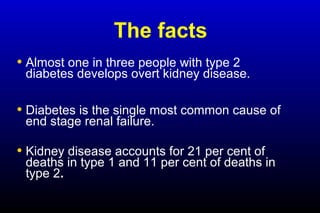
The facts
• Almost one in three people with type 2
diabetes develops overt kidney disease.
• Diabetes is the single most common cause of
end stage renal failure.
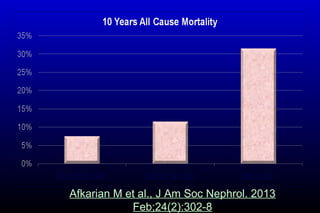
• Kidney disease accounts for 21 per cent of
deaths in type 1 and 11 per cent of deaths in
type 2.
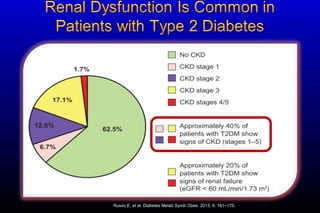
Russo E, et al. Diabetes Metab Syndr Obes. 2013; 6: 161–170.
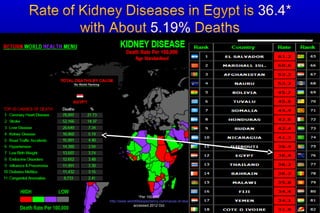
*Per 100,000
http://www.worldlifeexpectancy.com/cause-of-death/kidney-disease/by-country/
accessed 2012 Oct.
Afkarian M et al., J Am Soc Nephrol. 2013
Feb;24(2):302-8
Definition of Diabetic Nephropathy
• Persistent albuminuria from 3 to 6 months in at
least two out of three consecutive urine
collections,with longstanding history of diabetes.
• With presence of Diabetic retinopathy
,hypertention & decreased eGFR.
• With absence of clinical or laboratory evidence of
other kidney or urinary system diseases.
Why is Diabetic Nephropathy
Important?
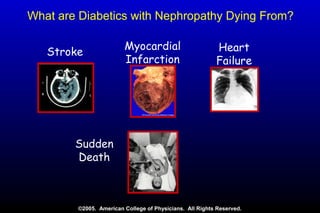
What are Diabetics with Nephropathy Dying From?
Stroke
Myocardial
Infarction
Heart
Failure
Sudden
Death
©2005. American College of Physicians. All Rights Reserved.
What is the Natural History of
Diabetic Nephropathy?
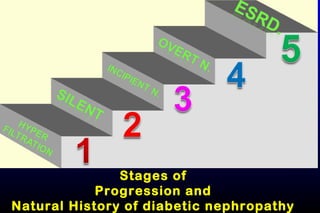
Stages of
Progression and
Natural History of diabetic nephropathy
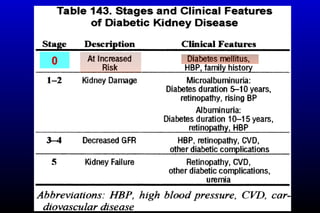
Stages of Diabetic Nephropathy
Stage I II III IV V
GFR H H H L L
uAER N HN MIA MAA MAA
BP N N HN H H
Hypertrophy + ++ +++ + +/-
BM thicken. N + ++ +++ +++
Mesang. Expan. N +/- ++ +++ +++
G.Closure & A. hyalinosis N N N ++ +++
0
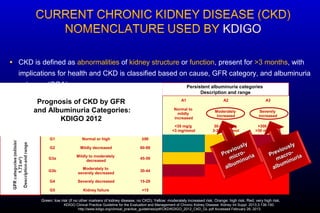
A1 A2 A3
Normal to
mildly
increased
Moderately
increased
Severely
increased
<30 mg/g
<3 mg/mmol
30-300 mg/g
3-30 mg/mmol
>300 mg/g
>30 mg/mmol
• CKD is defined as abnormalities of kidney structure or function, present for >3 months, with
implications for health and CKD is classified based on cause, GFR category, and albuminuria
category (CGA).
KDIGO Clinical Practice Guideline for the Evaluation and Management of Chronic Kidney Disease. Kidney Int Suppl. 2013;3:136-150.
http://www.kdigo.org/clinical_practice_guidelines/pdf/CKD/KDIGO_2012_CKD_GL.pdf Accessed February 26, 2013
G1 Normal or high ≥90
G2 Mildly decreased 60-89
G3a
Mildly to moderately
decreased
45-59
G3b
Moderately to
severely decreased
30-44
G4 Severely decreased 15-29
G5 Kidney failure <15
Persistent albuminuria categories
Description and range
Green: low risk (if no other markers of kidney disease, no CKD); Yellow: moderately increased risk; Orange: high risk; Red, very high risk.
Prognosis of CKD by GFR
and Albuminuria Categories:
KDIGO 2012
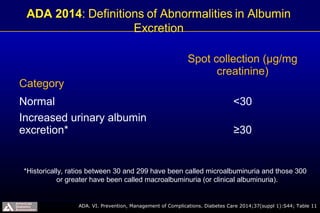
Category
Spot collection (µg/mg
creatinine)
Normal <30
Increased urinary albumin
excretion* ≥30
ADA. VI. Prevention, Management of Complications. Diabetes Care 2014;37(suppl 1):S44; Table 11
*Historically, ratios between 30 and 299 have been called microalbuminuria and those 300
or greater have been called macroalbuminuria (or clinical albuminuria).
Prevalence of different stages of CKD
1st 2nd 3rd
4th 5th
So How Big Is The Risk In Diabetes?
Pathophysiology of
diabetic nephropathy
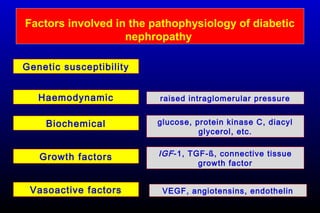
Factors involved in the pathophysiology of diabetic
nephropathy
Genetic susceptibility
Haemodynamic raised intraglomerular pressure
Biochemical
Growth factors
Vasoactive factors
glucose, protein kinase C, diacyl
glycerol, etc.
IGF-1, TGF-ß, connective tissue
growth factor
VEGF, angiotensins, endothelin
Genetic predisposition
• Genetic predisposition to or protection from diabetic
nephropathy appears to be the most important
determinant of diabetic nephropathy risk in both type 1
and type 2 diabetics.
• A polymorphism in the gene that encodes the ACE has
been associated with diabetic nephropathy
• Genes for pyrophosphatase/phosphodiesterase-1,
peroxisome proliferator-activated receptor-γ2 (PPAR-γ2),
glucose transporter 1, apolipoprotein E, and lipoprotein
lipase (HindIII) have been associated with diabetic
nephropathy risk.
• A1a12 allele of PPAR-γ2 may confer protection
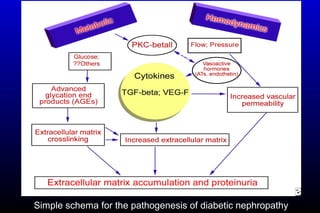
Simple schema for the pathogenesis of diabetic nephropathy
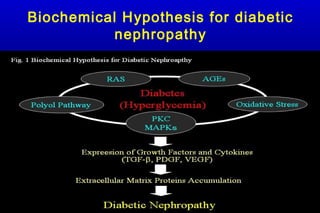
Biochemical Hypothesis for diabetic
nephropathy
Hypertension
• In diabetics who have disordered autoregulation at the
level of the kidney, systemic hypertension can contribute to
endothelial injury.
• Systemic blood pressure levels are implicated in
progression and, as noted earlier, lack of normal
nocturnal blood pressure dipping may be implicated in
the genesis of diabetic nephropathy.
• Intensive blood pressure control has been associated with
decreased rates of progression of diabetic nephropathy in
both normotensive and hypertensive diabetics.
Aldosterone
Sympathetic
activation
Growth
factor
stimulation
↑TGF β, ECM
↑CTGF,PAI-1
NA+
retention
H2O retention
K+
excretion
Mg+
excretion
Vascular
smooth muscle
constriction
↑GP
↓RBF
Angiotensin
converting
enzyme
(ACE)
Angiotensin II
Liver secretes
angiotensinogen
Kidneys secrete
renin
The Renin-Angiotensin-Aldosterone (RAA)
System activation and diabetic nephropathy
Angiotensinogen Angiotensin I
Adrenal cortex
secretes aldosterone
Blood Renin
Non ACE
AT2 R
VD
↑NO
↓ tissue
proliferation
AT1 R
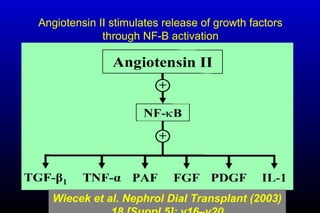
Angiotensin II stimulates release of growth factors
through NF-B activation
Wiecek et al. Nephrol Dial Transplant (2003)
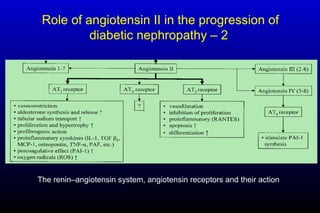
Role of angiotensin II in the progression of
diabetic nephropathy – 2
The renin–angiotensin system, angiotensin receptors and their action
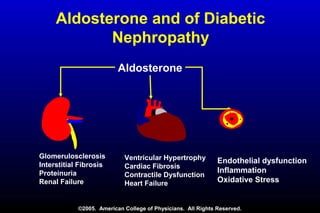
Glomerulosclerosis
Interstitial Fibrosis
Proteinuria
Renal Failure
Ventricular Hypertrophy
Cardiac Fibrosis
Contractile Dysfunction
Heart Failure
Endothelial dysfunction
Inflammation
Oxidative Stress
Aldosterone
©2005. American College of Physicians. All Rights Reserved.
Aldosterone and of Diabetic
Nephropathy
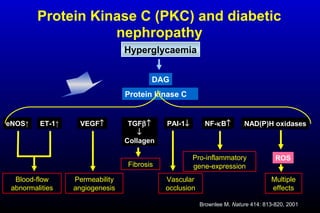
Protein Kinase C (PKC) and diabetic
nephropathy
Brownlee M. Nature 414: 813-820, 2001
Hyperglycaemia
DAG
Protein kinase C
eNOS↑ ET-1↑
Blood-flow
abnormalities
VEGF↑
Permeability
angiogenesis
TGFβ↑
↓
Collagen
Fibrosis
PAI-1↓
Vascular
occlusion
NF-κB↑
Pro-inflammatory
gene-expression
NAD(P)H oxidases
Multiple
effects
ROS
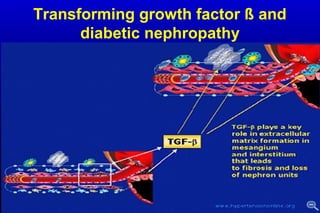
Transforming growth factor ß and
diabetic nephropathy
CV mortality and systolic pressure in diabetics and nondiabetic
SYSTOLIC BP
CVmortalityrateper10000person-yrs
Adapted from Stamler J et al Diabetes Care 1993;16(2):435-444
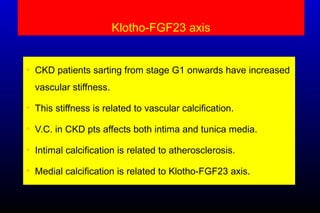
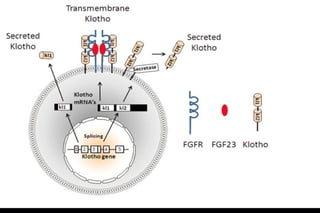
Klotho-FGF23 axis
• CKD patients sarting from stage G1 onwards have increased
vascular stiffness.
• This stiffness is related to vascular calcification.
• V.C. in CKD pts affects both intima and tunica media.
• Intimal calcification is related to atherosclerosis.
• Medial calcification is related to Klotho-FGF23 axis.
Górriz JL ,et al., Clin J Am Soc Nephrol. Apr 7;10(4):654-66, 2015.
Nasrallah MM, et al., Nephrol Dial Transplant, Aug; 25(8): 2679-85, 2010.
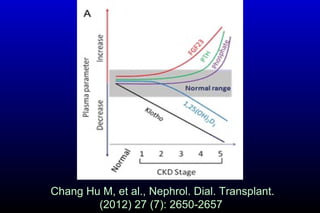
Chang Hu M, et al., Nephrol. Dial. Transplant.
(2012) 27 (7): 2650-2657
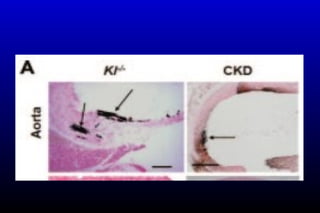
Normal Control Vs FGF23 -/- mice
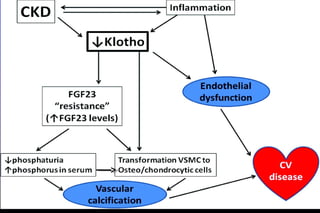
So,
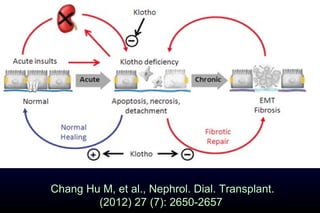
• CKD inflammation Klotho gene  decrease
in Klotho FGF23 resistance increase in FGF23 &
phosphate retension transformation of VSMC to
osteoblasts calcification of vessel wall.
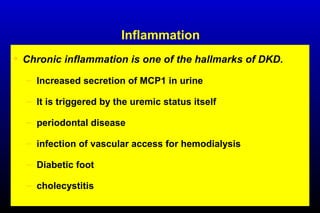
Inflammation
• Chronic inflammation is one of the hallmarks of DKD.
– Increased secretion of MCP1 in urine
– It is triggered by the uremic status itself
– periodontal disease
– infection of vascular access for hemodialysis
– Diabetic foot
– cholecystitis
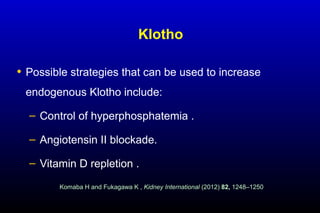
Klotho
• Possible strategies that can be used to increase
endogenous Klotho include:
– Control of hyperphosphatemia .
– Angiotensin II blockade.
– Vitamin D repletion .
Komaba H and Fukagawa K , Kidney International (2012) 82, 1248–1250
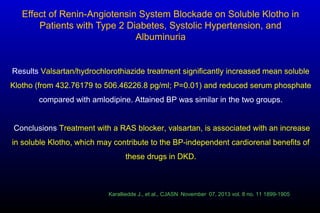
Results Valsartan/hydrochlorothiazide treatment significantly increased mean soluble
Klotho (from 432.76179 to 506.46226.8 pg/ml; P=0.01) and reduced serum phosphate
compared with amlodipine. Attained BP was similar in the two groups.
Conclusions Treatment with a RAS blocker, valsartan, is associated with an increase
in soluble Klotho, which may contribute to the BP-independent cardiorenal benefits of
these drugs in DKD.
Effect of Renin-Angiotensin System Blockade on Soluble Klotho in
Patients with Type 2 Diabetes, Systolic Hypertension, and
Albuminuria
Karalliedde J., et al., CJASN November 07, 2013 vol. 8 no. 11 1899-1905
Chang Hu M, et al., Nephrol. Dial. Transplant.
(2012) 27 (7): 2650-2657
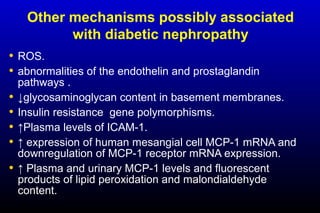
Other mechanisms possibly associated
with diabetic nephropathy
• ROS.
• abnormalities of the endothelin and prostaglandin
pathways .
• ↓glycosaminoglycan content in basement membranes.
• Insulin resistance gene polymorphisms.
• ↑Plasma levels of ICAM-1.
• ↑ expression of human mesangial cell MCP-1 mRNA and
downregulation of MCP-1 receptor mRNA expression.
• ↑ Plasma and urinary MCP-1 levels and fluorescent
products of lipid peroxidation and malondialdehyde
content.
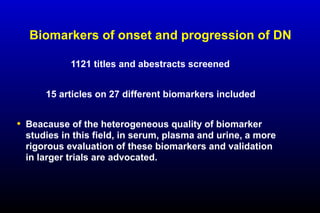
Biomarkers of onset and progression of DN
1121 titles and abestracts screened
15 articles on 27 different biomarkers included
• Beacause of the heterogeneous quality of biomarker
studies in this field, in serum, plasma and urine, a more
rigorous evaluation of these biomarkers and validation
in larger trials are advocated.
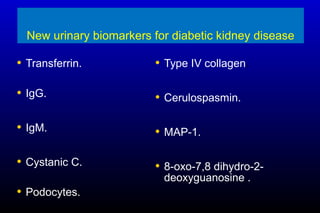
New urinary biomarkers for diabetic kidney disease
• Transferrin.
• IgG.
• IgM.
• Cystanic C.
• Podocytes.
• Type IV collagen.
• Cerulospasmin.
• MAP-1.
• 8-oxo-7,8 dihydro-2-
deoxyguanosine .
Pathology of diabetic
nephropathy
Glomerulopathy Tubulopathy Vascular Interstitial
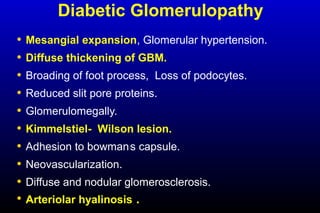
Diabetic Glomerulopathy
• Mesangial expansion, Glomerular hypertension.
• Diffuse thickening of GBM.
• Broading of foot process, Loss of podocytes.
• Reduced slit pore proteins.
• Glomerulomegally.
• Kimmelstiel- Wilson lesion.
• Adhesion to bowman,
s capsule.
• Neovascularization.
• Diffuse and nodular glomerosclerosis.
• Arteriolar hyalinosis .
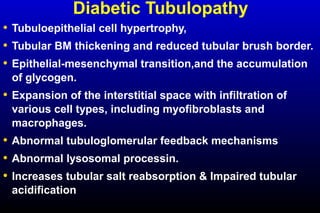
Diabetic Tubulopathy
• Tubuloepithelial cell hypertrophy,
• Tubular BM thickening and reduced tubular brush border.
• Epithelial-mesenchymal transition,and the accumulation
of glycogen.
• Expansion of the interstitial space with infiltration of
various cell types, including myofibroblasts and
macrophages.
• Abnormal tubuloglomerular feedback mechanisms
• Abnormal lysosomal processin.
• Increases tubular salt reabsorption & Impaired tubular
acidification
Clinical diagnosis of diabetic
nephropathy
– Albuminuria.
– Diabetic retinopathy.
– No evidence for another renal disease:
• HTN, renovascular disease, SLE,
vasculitis, paraproteinemia
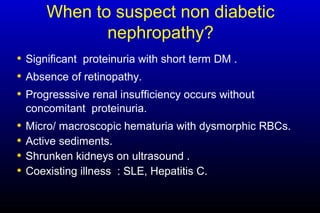
When to suspect non diabetic
nephropathy?
• Significant proteinuria with short term DM .
• Absence of retinopathy.
• Progresssive renal insufficiency occurs without
concomitant proteinuria.
• Micro/ macroscopic hematuria with dysmorphic RBCs.
• Active sediments.
• Shrunken kidneys on ultrasound .
• Coexisting illness : SLE, Hepatitis C.
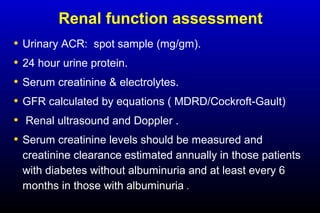
Renal function assessment
• Urinary ACR: spot sample (mg/gm).
• 24 hour urine protein.
• Serum creatinine & electrolytes.
• GFR calculated by equations ( MDRD/Cockroft-Gault)
• Renal ultrasound and Doppler .
• Serum creatinine levels should be measured and
creatinine clearance estimated annually in those patients
with diabetes without albuminuria and at least every 6
months in those with albuminuria .
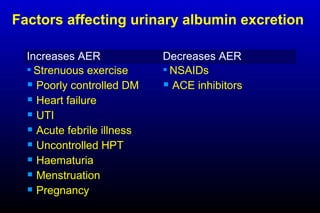
Increases AER Decreases AER
 Strenuous exercise
 Poorly controlled DM
 Heart failure
 UTI
 Acute febrile illness
 Uncontrolled HPT
 Haematuria
 Menstruation
 Pregnancy
 NSAIDs
 ACE inhibitors
Factors affecting urinary albumin excretion
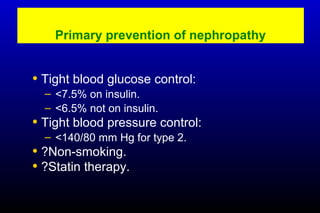
Primary prevention of nephropathy
• Tight blood glucose control:
– <7.5% on insulin.
– <6.5% not on insulin.
• Tight blood pressure control:
– <140/80 mm Hg for type 2.
• ?Non-smoking.
• ?Statin therapy.
What is the Proper Therapy of
Kidney Disease in patients with
Diabetes?
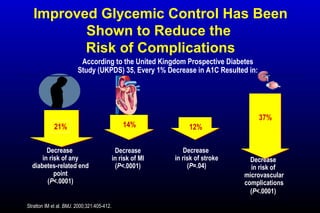
Stratton IM et al. BMJ. 2000;321:405-412.
Improved Glycemic Control Has Been
Shown to Reduce the
Risk of Complications
According to the United Kingdom Prospective Diabetes
Study (UKPDS) 35, Every 1% Decrease in A1C Resulted in:
Decrease
in risk of
microvascular
complications
(P<.0001)
Decrease
in risk of any
diabetes-related end
point
(P<.0001)
Decrease
in risk of MI
(P<.0001)
Decrease
in risk of stroke
(P=.04)
21% 14% 12%
37%
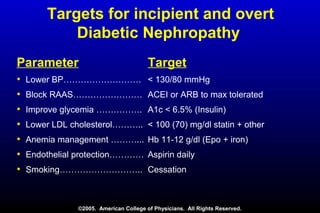
Targets for incipient and overt
Diabetic Nephropathy
Parameter
• Lower BP………………………
• Block RAAS……………………
• Improve glycemia …………….
• Lower LDL cholesterol………..
• Anemia management ………...
• Endothelial protection…………
• Smoking………………………..
Target
< 130/80 mmHg
ACEI or ARB to max tolerated
A1c < 6.5% (Insulin)
< 100 (70) mg/dl statin + other
Hb 11-12 g/dl (Epo + iron)
Aspirin daily
Cessation
©2005. American College of Physicians. All Rights Reserved.
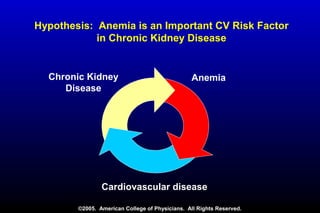
Hypothesis: Anemia is an Important CV Risk Factor
in Chronic Kidney Disease
Chronic Kidney
Disease
Cardiovascular disease
Anemia
©2005. American College of Physicians. All Rights Reserved.
Some Novel Therapies of
diabetic nephropathy
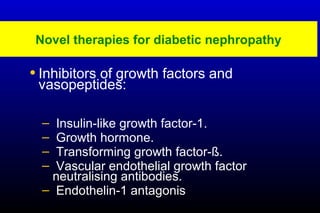
Novel therapies for diabetic nephropathy
• Inhibitors of growth factors and
vasopeptides:
– Insulin-like growth factor-1.
– Growth hormone.
– Transforming growth factor-ß.
– Vascular endothelial growth factor
neutralising antibodies.
– Endothelin-1 antagonis
Other novel therapies
• Pirfenidone –antifibrotic agent
• Sulodexide, an agent postulated to restore
the glomerular charge by repleting the loss of
glycosaminoglycans.
• Histone deacetylase inhibitors
• Raloxifene, a selective estrogen receptor
modulator.
Endothelin antagonists
• Endothelin antagonists have antifibrotic, anti-
inflammatory, and antiproteinuric effects in
experimental studies.
• Wenzel et al conducted a study on the effect of
the endothelin-A antagonist avosentan on UAER
in 286 patients with diabetic nephropathy.
• Avosentan, treatment, were found
to reduce the mean relative urinary albumin
excretion rate (-16.3% to -29.9%, relative to
baseline) in the study's patients.
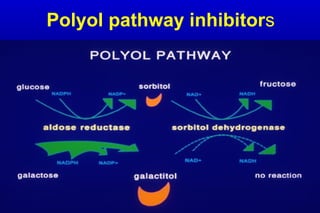
Polyol pathway inhibitors
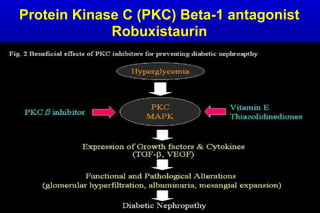
Protein Kinase C (PKC) Beta-1 antagonist
Robuxistaurin
Transforming growth factor ß inhibitors
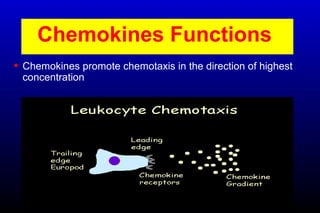
Chemokines Functions
• Chemokines promote chemotaxis in the direction of highest
concentration
Emapticap Pegol
• Pegol means: pegylated monoclonal antibodies
• Emapticap pegol is a Spiegelmer
• Binds and neutralizes CCL2/MCP-1 (C-C
Chemokine Ligand / Monocyte Chemoattractant
Protein-1), a pro-inflammatory chemokine that plays
an important role in diabetic kidney disease.
Emapticap Pegol
• Treatment was for 12 weeks with twice-weekly subcutaneous
emapticap pegol or placebo.
• This treatment period was followed by a 12 week
observational period to study the long-term effect of
emapticap pegol treatment on albuminuria.
• Emapticap pegol was found to be safe and well tolerated.
• For the primary efficacy analysis, patients with major protocol
violations, on dual RAS blockade, or with concomitant
hematuria and leukocyturia were excluded.
Emapticap Pegol
• Results showed relevant, statistically significant reductions in
urinary albumin excretion and improved glycemic control.
• Importantly, these effects were independent of hemodynamic
changes and maintained after cessation of treatment,
suggesting that emapticap pegol interferes with the
underlying pathophysiology of diabetic nephropathy.
• Long-lasting effects on urinary albumin after cessation of
treatment are not seen with agents currently approved to
• Rapamycin (sirolimus): m-TOR inhibitor
– systemic administration of rapamycin, a systemic and
potent inhibitor of mTOR, markedly ameliorated
pathological changes and renal dysfunction in Diabetic
db/db mice as a model of ESRD associated with DN
– Sirolimus lowered the expression and activity of
glomerular TGF-β and VEGF
• Pentoxifylline
– Pentoxifylline administration has prevented Renal
expression of proinflammatory cytokines, such as tumor
necrosis factor-α (TNF-α), interleukin-1 (IL-1), and IL-6
– Pentoxifylline treatment caused regression and
prevented the progression of renal damage
• Advanced glycation end-products inhibitor
– 1) AGE formation inhibitor: ARBs, R-147176, aminoguanidine,
benfotiamine, pyridoxamine
– 2) AGE cross-link breaker (alagebrium)
– 3) RAGE antagonist (PPAR-γ antagonists)
– 4) AGE binder (Kremezin)
– 5) hypoxia-inducible factor (HIF) activator
Management of DM with Failing Kidney
.Early referral to a nephrologist (Scr >2 mg/L ).
• Structured physical and psychological
preparation for RRT.
• Younger patients will usually be offered
transplantation .
• Before transplantation, full cardiovascular
assessment is essential.
• PTCA or even CABG may be required before
transplantation.
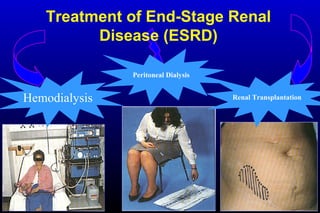
Hemodialysis Renal Transplantation
Peritoneal Dialysis
Treatment of End-Stage Renal
Disease (ESRD)
Summary
• Identifying nephropathy by screening for
albuminuria.
• Multiple risk factors intervention for preventing
DN progression.
• RAAS blockade is the key to prevent
progression.
• Manage acute deterioration of renal function in
DN.
08/30/15
,
.DCDC I7th,5-8 April,2016,Ras Elbarr,Domyat
08/30/15
Diabetic nephropathy, patho physiology update

Diabetic nephropathy, patho physiology update

  • 1.
    Diabetic Nephropathy: Update Pathophysiology AshrafTalaat,MD. Banha Faculty of Medicine Nephrology,Diabetes&Endocrinology Units
  • 2.
    Global Epidemic ofType 2 Diabetes •Aging Population •Global Lifestyle “Westernization” •Surging Obesity
  • 3.
    The facts • Almostone in three people with type 2 diabetes develops overt kidney disease. • Diabetes is the single most common cause of end stage renal failure. • Kidney disease accounts for 21 per cent of deaths in type 1 and 11 per cent of deaths in type 2.
  • 4.
    Russo E, etal. Diabetes Metab Syndr Obes. 2013; 6: 161–170.
  • 5.
  • 6.
    Afkarian M etal., J Am Soc Nephrol. 2013 Feb;24(2):302-8
  • 7.
    Definition of DiabeticNephropathy • Persistent albuminuria from 3 to 6 months in at least two out of three consecutive urine collections,with longstanding history of diabetes. • With presence of Diabetic retinopathy ,hypertention & decreased eGFR. • With absence of clinical or laboratory evidence of other kidney or urinary system diseases.
  • 8.
    Why is DiabeticNephropathy Important?
  • 9.
    What are Diabeticswith Nephropathy Dying From? Stroke Myocardial Infarction Heart Failure Sudden Death ©2005. American College of Physicians. All Rights Reserved.
  • 10.
    What is theNatural History of Diabetic Nephropathy?
  • 11.
    Stages of Progression and NaturalHistory of diabetic nephropathy
  • 13.
    Stages of DiabeticNephropathy Stage I II III IV V GFR H H H L L uAER N HN MIA MAA MAA BP N N HN H H Hypertrophy + ++ +++ + +/- BM thicken. N + ++ +++ +++ Mesang. Expan. N +/- ++ +++ +++ G.Closure & A. hyalinosis N N N ++ +++
  • 14.
  • 15.
    A1 A2 A3 Normalto mildly increased Moderately increased Severely increased <30 mg/g <3 mg/mmol 30-300 mg/g 3-30 mg/mmol >300 mg/g >30 mg/mmol • CKD is defined as abnormalities of kidney structure or function, present for >3 months, with implications for health and CKD is classified based on cause, GFR category, and albuminuria category (CGA). KDIGO Clinical Practice Guideline for the Evaluation and Management of Chronic Kidney Disease. Kidney Int Suppl. 2013;3:136-150. http://www.kdigo.org/clinical_practice_guidelines/pdf/CKD/KDIGO_2012_CKD_GL.pdf Accessed February 26, 2013 G1 Normal or high ≥90 G2 Mildly decreased 60-89 G3a Mildly to moderately decreased 45-59 G3b Moderately to severely decreased 30-44 G4 Severely decreased 15-29 G5 Kidney failure <15 Persistent albuminuria categories Description and range Green: low risk (if no other markers of kidney disease, no CKD); Yellow: moderately increased risk; Orange: high risk; Red, very high risk. Prognosis of CKD by GFR and Albuminuria Categories: KDIGO 2012
  • 16.
    Category Spot collection (µg/mg creatinine) Normal<30 Increased urinary albumin excretion* ≥30 ADA. VI. Prevention, Management of Complications. Diabetes Care 2014;37(suppl 1):S44; Table 11 *Historically, ratios between 30 and 299 have been called microalbuminuria and those 300 or greater have been called macroalbuminuria (or clinical albuminuria).
  • 17.
    Prevalence of differentstages of CKD 1st 2nd 3rd 4th 5th
  • 18.
    So How BigIs The Risk In Diabetes?
  • 19.
  • 20.
    Factors involved inthe pathophysiology of diabetic nephropathy Genetic susceptibility Haemodynamic raised intraglomerular pressure Biochemical Growth factors Vasoactive factors glucose, protein kinase C, diacyl glycerol, etc. IGF-1, TGF-ß, connective tissue growth factor VEGF, angiotensins, endothelin
  • 21.
    Genetic predisposition • Geneticpredisposition to or protection from diabetic nephropathy appears to be the most important determinant of diabetic nephropathy risk in both type 1 and type 2 diabetics. • A polymorphism in the gene that encodes the ACE has been associated with diabetic nephropathy • Genes for pyrophosphatase/phosphodiesterase-1, peroxisome proliferator-activated receptor-γ2 (PPAR-γ2), glucose transporter 1, apolipoprotein E, and lipoprotein lipase (HindIII) have been associated with diabetic nephropathy risk. • A1a12 allele of PPAR-γ2 may confer protection
  • 22.
    Simple schema forthe pathogenesis of diabetic nephropathy
  • 23.
    Biochemical Hypothesis fordiabetic nephropathy
  • 24.
    Hypertension • In diabeticswho have disordered autoregulation at the level of the kidney, systemic hypertension can contribute to endothelial injury. • Systemic blood pressure levels are implicated in progression and, as noted earlier, lack of normal nocturnal blood pressure dipping may be implicated in the genesis of diabetic nephropathy. • Intensive blood pressure control has been associated with decreased rates of progression of diabetic nephropathy in both normotensive and hypertensive diabetics.
  • 25.
    Aldosterone Sympathetic activation Growth factor stimulation ↑TGF β, ECM ↑CTGF,PAI-1 NA+ retention H2Oretention K+ excretion Mg+ excretion Vascular smooth muscle constriction ↑GP ↓RBF Angiotensin converting enzyme (ACE) Angiotensin II Liver secretes angiotensinogen Kidneys secrete renin The Renin-Angiotensin-Aldosterone (RAA) System activation and diabetic nephropathy Angiotensinogen Angiotensin I Adrenal cortex secretes aldosterone Blood Renin Non ACE AT2 R VD ↑NO ↓ tissue proliferation AT1 R
  • 26.
    Angiotensin II stimulatesrelease of growth factors through NF-B activation Wiecek et al. Nephrol Dial Transplant (2003)
  • 27.
    Role of angiotensinII in the progression of diabetic nephropathy – 2 The renin–angiotensin system, angiotensin receptors and their action
  • 28.
    Glomerulosclerosis Interstitial Fibrosis Proteinuria Renal Failure VentricularHypertrophy Cardiac Fibrosis Contractile Dysfunction Heart Failure Endothelial dysfunction Inflammation Oxidative Stress Aldosterone ©2005. American College of Physicians. All Rights Reserved. Aldosterone and of Diabetic Nephropathy
  • 29.
    Protein Kinase C(PKC) and diabetic nephropathy Brownlee M. Nature 414: 813-820, 2001 Hyperglycaemia DAG Protein kinase C eNOS↑ ET-1↑ Blood-flow abnormalities VEGF↑ Permeability angiogenesis TGFβ↑ ↓ Collagen Fibrosis PAI-1↓ Vascular occlusion NF-κB↑ Pro-inflammatory gene-expression NAD(P)H oxidases Multiple effects ROS
  • 30.
    Transforming growth factorß and diabetic nephropathy
  • 31.
    CV mortality andsystolic pressure in diabetics and nondiabetic SYSTOLIC BP CVmortalityrateper10000person-yrs Adapted from Stamler J et al Diabetes Care 1993;16(2):435-444
  • 32.
    Klotho-FGF23 axis • CKDpatients sarting from stage G1 onwards have increased vascular stiffness. • This stiffness is related to vascular calcification. • V.C. in CKD pts affects both intima and tunica media. • Intimal calcification is related to atherosclerosis. • Medial calcification is related to Klotho-FGF23 axis.
  • 34.
    Górriz JL ,etal., Clin J Am Soc Nephrol. Apr 7;10(4):654-66, 2015. Nasrallah MM, et al., Nephrol Dial Transplant, Aug; 25(8): 2679-85, 2010.
  • 35.
    Chang Hu M,et al., Nephrol. Dial. Transplant. (2012) 27 (7): 2650-2657
  • 37.
    Normal Control VsFGF23 -/- mice
  • 38.
    So, • CKD inflammationKlotho gene  decrease in Klotho FGF23 resistance increase in FGF23 & phosphate retension transformation of VSMC to osteoblasts calcification of vessel wall.
  • 39.
    Inflammation • Chronic inflammationis one of the hallmarks of DKD. – Increased secretion of MCP1 in urine – It is triggered by the uremic status itself – periodontal disease – infection of vascular access for hemodialysis – Diabetic foot – cholecystitis
  • 41.
    Klotho • Possible strategiesthat can be used to increase endogenous Klotho include: – Control of hyperphosphatemia . – Angiotensin II blockade. – Vitamin D repletion . Komaba H and Fukagawa K , Kidney International (2012) 82, 1248–1250
  • 42.
    Results Valsartan/hydrochlorothiazide treatmentsignificantly increased mean soluble Klotho (from 432.76179 to 506.46226.8 pg/ml; P=0.01) and reduced serum phosphate compared with amlodipine. Attained BP was similar in the two groups. Conclusions Treatment with a RAS blocker, valsartan, is associated with an increase in soluble Klotho, which may contribute to the BP-independent cardiorenal benefits of these drugs in DKD. Effect of Renin-Angiotensin System Blockade on Soluble Klotho in Patients with Type 2 Diabetes, Systolic Hypertension, and Albuminuria Karalliedde J., et al., CJASN November 07, 2013 vol. 8 no. 11 1899-1905
  • 43.
    Chang Hu M,et al., Nephrol. Dial. Transplant. (2012) 27 (7): 2650-2657
  • 44.
    Other mechanisms possiblyassociated with diabetic nephropathy • ROS. • abnormalities of the endothelin and prostaglandin pathways . • ↓glycosaminoglycan content in basement membranes. • Insulin resistance gene polymorphisms. • ↑Plasma levels of ICAM-1. • ↑ expression of human mesangial cell MCP-1 mRNA and downregulation of MCP-1 receptor mRNA expression. • ↑ Plasma and urinary MCP-1 levels and fluorescent products of lipid peroxidation and malondialdehyde content.
  • 45.
    Biomarkers of onsetand progression of DN 1121 titles and abestracts screened 15 articles on 27 different biomarkers included • Beacause of the heterogeneous quality of biomarker studies in this field, in serum, plasma and urine, a more rigorous evaluation of these biomarkers and validation in larger trials are advocated.
  • 46.
    New urinary biomarkersfor diabetic kidney disease • Transferrin. • IgG. • IgM. • Cystanic C. • Podocytes. • Type IV collagen. • Cerulospasmin. • MAP-1. • 8-oxo-7,8 dihydro-2- deoxyguanosine .
  • 47.
    Pathology of diabetic nephropathy GlomerulopathyTubulopathy Vascular Interstitial
  • 48.
    Diabetic Glomerulopathy • Mesangialexpansion, Glomerular hypertension. • Diffuse thickening of GBM. • Broading of foot process, Loss of podocytes. • Reduced slit pore proteins. • Glomerulomegally. • Kimmelstiel- Wilson lesion. • Adhesion to bowman, s capsule. • Neovascularization. • Diffuse and nodular glomerosclerosis. • Arteriolar hyalinosis .
  • 49.
    Diabetic Tubulopathy • Tubuloepithelialcell hypertrophy, • Tubular BM thickening and reduced tubular brush border. • Epithelial-mesenchymal transition,and the accumulation of glycogen. • Expansion of the interstitial space with infiltration of various cell types, including myofibroblasts and macrophages. • Abnormal tubuloglomerular feedback mechanisms • Abnormal lysosomal processin. • Increases tubular salt reabsorption & Impaired tubular acidification
  • 51.
    Clinical diagnosis ofdiabetic nephropathy – Albuminuria. – Diabetic retinopathy. – No evidence for another renal disease: • HTN, renovascular disease, SLE, vasculitis, paraproteinemia
  • 52.
    When to suspectnon diabetic nephropathy? • Significant proteinuria with short term DM . • Absence of retinopathy. • Progresssive renal insufficiency occurs without concomitant proteinuria. • Micro/ macroscopic hematuria with dysmorphic RBCs. • Active sediments. • Shrunken kidneys on ultrasound . • Coexisting illness : SLE, Hepatitis C.
  • 53.
    Renal function assessment •Urinary ACR: spot sample (mg/gm). • 24 hour urine protein. • Serum creatinine & electrolytes. • GFR calculated by equations ( MDRD/Cockroft-Gault) • Renal ultrasound and Doppler . • Serum creatinine levels should be measured and creatinine clearance estimated annually in those patients with diabetes without albuminuria and at least every 6 months in those with albuminuria .
  • 54.
    Increases AER DecreasesAER  Strenuous exercise  Poorly controlled DM  Heart failure  UTI  Acute febrile illness  Uncontrolled HPT  Haematuria  Menstruation  Pregnancy  NSAIDs  ACE inhibitors Factors affecting urinary albumin excretion
  • 55.
    Primary prevention ofnephropathy • Tight blood glucose control: – <7.5% on insulin. – <6.5% not on insulin. • Tight blood pressure control: – <140/80 mm Hg for type 2. • ?Non-smoking. • ?Statin therapy.
  • 56.
    What is theProper Therapy of Kidney Disease in patients with Diabetes?
  • 57.
    Stratton IM etal. BMJ. 2000;321:405-412. Improved Glycemic Control Has Been Shown to Reduce the Risk of Complications According to the United Kingdom Prospective Diabetes Study (UKPDS) 35, Every 1% Decrease in A1C Resulted in: Decrease in risk of microvascular complications (P<.0001) Decrease in risk of any diabetes-related end point (P<.0001) Decrease in risk of MI (P<.0001) Decrease in risk of stroke (P=.04) 21% 14% 12% 37%
  • 58.
    Targets for incipientand overt Diabetic Nephropathy Parameter • Lower BP……………………… • Block RAAS…………………… • Improve glycemia ……………. • Lower LDL cholesterol……….. • Anemia management ………... • Endothelial protection………… • Smoking……………………….. Target < 130/80 mmHg ACEI or ARB to max tolerated A1c < 6.5% (Insulin) < 100 (70) mg/dl statin + other Hb 11-12 g/dl (Epo + iron) Aspirin daily Cessation ©2005. American College of Physicians. All Rights Reserved.
  • 59.
    Hypothesis: Anemia isan Important CV Risk Factor in Chronic Kidney Disease Chronic Kidney Disease Cardiovascular disease Anemia ©2005. American College of Physicians. All Rights Reserved.
  • 60.
    Some Novel Therapiesof diabetic nephropathy
  • 61.
    Novel therapies fordiabetic nephropathy • Inhibitors of growth factors and vasopeptides: – Insulin-like growth factor-1. – Growth hormone. – Transforming growth factor-ß. – Vascular endothelial growth factor neutralising antibodies. – Endothelin-1 antagonis
  • 62.
    Other novel therapies •Pirfenidone –antifibrotic agent • Sulodexide, an agent postulated to restore the glomerular charge by repleting the loss of glycosaminoglycans. • Histone deacetylase inhibitors • Raloxifene, a selective estrogen receptor modulator.
  • 63.
    Endothelin antagonists • Endothelinantagonists have antifibrotic, anti- inflammatory, and antiproteinuric effects in experimental studies. • Wenzel et al conducted a study on the effect of the endothelin-A antagonist avosentan on UAER in 286 patients with diabetic nephropathy. • Avosentan, treatment, were found to reduce the mean relative urinary albumin excretion rate (-16.3% to -29.9%, relative to baseline) in the study's patients.
  • 64.
  • 65.
    Protein Kinase C(PKC) Beta-1 antagonist Robuxistaurin
  • 66.
  • 67.
    Chemokines Functions • Chemokinespromote chemotaxis in the direction of highest concentration
  • 68.
    Emapticap Pegol • Pegolmeans: pegylated monoclonal antibodies • Emapticap pegol is a Spiegelmer • Binds and neutralizes CCL2/MCP-1 (C-C Chemokine Ligand / Monocyte Chemoattractant Protein-1), a pro-inflammatory chemokine that plays an important role in diabetic kidney disease.
  • 69.
    Emapticap Pegol • Treatmentwas for 12 weeks with twice-weekly subcutaneous emapticap pegol or placebo. • This treatment period was followed by a 12 week observational period to study the long-term effect of emapticap pegol treatment on albuminuria. • Emapticap pegol was found to be safe and well tolerated. • For the primary efficacy analysis, patients with major protocol violations, on dual RAS blockade, or with concomitant hematuria and leukocyturia were excluded.
  • 70.
    Emapticap Pegol • Resultsshowed relevant, statistically significant reductions in urinary albumin excretion and improved glycemic control. • Importantly, these effects were independent of hemodynamic changes and maintained after cessation of treatment, suggesting that emapticap pegol interferes with the underlying pathophysiology of diabetic nephropathy. • Long-lasting effects on urinary albumin after cessation of treatment are not seen with agents currently approved to
  • 71.
    • Rapamycin (sirolimus):m-TOR inhibitor – systemic administration of rapamycin, a systemic and potent inhibitor of mTOR, markedly ameliorated pathological changes and renal dysfunction in Diabetic db/db mice as a model of ESRD associated with DN – Sirolimus lowered the expression and activity of glomerular TGF-β and VEGF
  • 72.
    • Pentoxifylline – Pentoxifyllineadministration has prevented Renal expression of proinflammatory cytokines, such as tumor necrosis factor-α (TNF-α), interleukin-1 (IL-1), and IL-6 – Pentoxifylline treatment caused regression and prevented the progression of renal damage
  • 73.
    • Advanced glycationend-products inhibitor – 1) AGE formation inhibitor: ARBs, R-147176, aminoguanidine, benfotiamine, pyridoxamine – 2) AGE cross-link breaker (alagebrium) – 3) RAGE antagonist (PPAR-γ antagonists) – 4) AGE binder (Kremezin) – 5) hypoxia-inducible factor (HIF) activator
  • 74.
    Management of DMwith Failing Kidney .Early referral to a nephrologist (Scr >2 mg/L ). • Structured physical and psychological preparation for RRT. • Younger patients will usually be offered transplantation . • Before transplantation, full cardiovascular assessment is essential. • PTCA or even CABG may be required before transplantation.
  • 75.
    Hemodialysis Renal Transplantation PeritonealDialysis Treatment of End-Stage Renal Disease (ESRD)
  • 76.
    Summary • Identifying nephropathyby screening for albuminuria. • Multiple risk factors intervention for preventing DN progression. • RAAS blockade is the key to prevent progression. • Manage acute deterioration of renal function in DN.
  • 77.
  • 78.

Editor's Notes

  • #5 Diabetic nephropathy occurs in 20–40% of patients with diabetes and is the single leading cause of ESRD.
  • #17 This table defines abnormalities of albumin excretion and the linkage between albumin-to-creatinine ratio and 24-hour albumin excretion Historically, ratios between 30 and 299 have been called microalbuminuria and those 300 or greater have been called macroalbuminuria (or clinical albuminuria) Because of variability in urinary albumin excretion, two of three specimens collected within a 3- to 6-month period should be abnormal before considering a patient to have developed increased urinary albumin excretion or had a progression in albuminuria Exercise within 24 hours, infection, fever, CHF, marked hyperglycemia, and marked hypertension may elevate urinary albumin excretion over baseline values
  • #55 Other factors affecting urinary albumin excretion such as listed in the table should be excluded.
  • #58 Uncontrolled hyperglycemia can lead to diabetes-related complications. Findings from the United Kingdom Prospective Diabetes Study (UKPDS) demonstrated that lowering A1C reduces the risk of diabetes-related complications. In patients with A1C &amp;gt;6%, every 1% decrease in A1C resulted in a 21% decrease in the risk of any diabetes-related endpoint, a 14% decrease in risk of myocardial infarction, a 12% decrease in the risk of stroke, and a 37% decrease in the risk of microvascular complications. There is no threshold of A1C below which the benefits of reduced complications are not seen. Results from this study highlight the importance of improving glycemic control in the management of diabetes.
  • #60 Let us now consider the role of anemia in the CKD and CVD relationship and new data supporting anemia as the “critical link” between CKD and CVD.
  • #65 Accumulation of polyol by the reduction of galactose rather than glucose owing to the higher affinity of aldose reductase for galactose Osmotic cell damage Decrease in intracellular myoinositol Decrease in Na-K-ATPase activity Shift in redox potential Glucose competitively interferes with myoinositol via a sodium-myoinositol cotransporter Sorbinil Retinopathy Trial (Pfizer)